Space Sunday: to land on Europa

An artist’s impression of the Europa Lander. Credit: NASA

Of all the planets and moons in the solar system, the two that – next to Earth – are likely to be homes to oceans of liquid water are Jupiter’s moon Europa, and Saturn’s Moon Enceladus. The latter, as I’ve noted in this column, has visible evidence of geysers venting water vapour around its southern polar regions, while in November 2019, the the W.M. Keck Observatory indicated they had directly detected water vapour around Europa (see here for more) – evidence that has since been added to through further study of the data gathered by NASA’s Galileo mission that ended in 2003.

Given their distance from the Sun, both of these moons are covered in shell of icy material  that is believed to encase a liquid water ocean, likely heated from within by hydrothermal vents, themselves the result of both moons being “flexed” by the gravitational influence of their parent planets and the other large moons orbiting them. And where there is water, heat and a source of energy for sustenance, there is a possibility that life may also be present – which makes both Enceladus and Europa potential destinations in the search for life beyond our own world; and of the two, Europa is somewhat “easier” to reach.

A high resolution image of Europa’s chaotic surface taken by the Galileo mission. It shows terrain where blocks of material have shifted, rotated, tilted and refrozen. Credit: NASA/JPL

To this end, and again as has been written about in this column, in 2024 NASA intends to send the Europa Clipper to the Jovian system, placing it in a orbit around Jupiter that will allow it to make repeated fly-bys of Europa, joining the European Space Agency’s Jupiter Icy Moons Explorer allowing it so study the moon in detail, and characterise its surface and any ocean that might lay beneath.

However, to have a real chance of detecting any evidence of microbial life on Europa, scientists argue that a landing there is required, and as planetary scientist Conor A Nixon reminded me via Tweeter, a proposal to put a lander on the surface of Europa has been in development for over two years – although it has yet to reach the point of actually being funded. Were it to go ahead, it would – amongst other things – be the heaviest robot mission launched from Earth; so heavy, it would require either the Falcon Heavy or NASA’s massive Space Launch System (SLS) to throw it on its way to Jupiter – with the SLS being the preferred vehicle, as it would allow the mission to reach Jupiter after just a single gravity assist from Earth, shortening the flight time.

The proposed Europa Lander mission outline, as it stood in 2018, and reviewed in 2019. Credit: NASA

The primary objectives of the mission would be to search for subsurface biosignatures; to characterise the surface and subsurface properties at the scale of the lander to support future exploration of Europa and determine the proximity of liquid water and recently erupted material near the lander’s location; and assess the habitability of Europa via in situ techniques uniquely available to a landed mission. Under current plans, last revised in 2019, the mission  – outside of this launcher – will comprise five core elements:

  • The Europa Lander: a battery-powered vehicle intended to operate on the surface of Europa for 22 terrestrial days, and carrying a suite of around 14 scientific instruments / experiments.
  • The Descent Stage (DS): to reduce the risk of contaminating / damaging the lander’s touch-down point, it will be winched down to the surface by a “sky crane” vehicle similar to the one used to put the Curiosity lander on Mars and will be used with the Perseverance rover in February 2021. Once the sky crane has done its job, the sky crane will boost itself into an orbit where it will eventually burn-up in Jupiter’s upper atmosphere.
    • Together, the lander and the DS form what NASA call the Powered Descent Vehicle (PDV).
  • The De-Orbit Stage (DOS): a propulsion unit intended to slow the PDV into a decent to the surface of Europa.
    • When combined the DOS and PDV form the De-Orbit Vehicle (DOV).
  • This assembly is carried to Jupiter within the carrier stage, comprising two parts:
    • The carrier vehicle, which provides communications, power and flight management hardware and software.
    • A protective bio-barrier dome designed to protect PDV from the risk of contamination / damage during the 5-year trip to Jupiter.
The Europa Lander’s component element. Credit: NASA

Continue reading “Space Sunday: to land on Europa”

Space Sunday: rockets, landers, FRBs and the Moon

The Long March 5B booster heads towards orbit, carrying China’s next generation crew capsule on its first (uncrewed) flight, Tuesday, May 5th. Credit: China TV

China has successfully completed an uncrewed test-flight of its next generation of space vehicles that will support future crewed operations in Earth orbit and be a part of missions to the Moon – and possibly beyond.

The new craft – which resembles the Apollo command and service module (CSM) combination used by NASA in the 1960s and early 1970s (or, if you prefer, Boeing’s current CST-100 Starliner capsule and service module) – was launched atop a Long March 5B rocket, China’s most powerful launch vehicle, on Tuesday May 5th. From the launch pad at the Wenchang launch site on the southern island of Hainan, the vehicle took 8 minutes to rise to its initial orbital separation altitude, where it successfully entered orbit. A second payload – that of a cargo return capsule also undergoing tests – also successfully separated from the booster.

A significant difference between the new crew capsule and China’s Soyuz-derived Shenzhou is in the use of three, rather than one, parachutes, during descent to landing. Credit: CASC

While the crew capsule test vehicle would remain in space for several days, allowing it to complete a series of automated tests, the cargo capsule – designed to return equipment and experiments from China’s upcoming space station – had been due to return to Earth on Wednesday, May 6th. Unlike the crewed vehicle, the cargo unit is designed to use an “inflatable” heat shield during re-entry.

Called a “ballute” (a portmanteau of balloon and parachute), this approach to inflatable systems was initially developed in the last 1950s as a parachute-like braking device optimised for use at high altitudes and supersonic velocities. In the 1960’s, ballutes were included as part of the astronaut escape system in NASA’s Gemini missions. More recently, a number of organisations and countries have been looking at there use as re-entry systems as they are lighter and potentially less complex than conventional re-entry systems.

The capsule on the ground, the white thermal protection of the hull scorched after re-entry, the airbags used to soften the impact of land deflated. The open compartment to the right is one of the airbag containers. Credit: Xinhua

In this instance, it appears the ballute may have failed. Following re-entry, the China National Space Agency (CNSA) announced the cargo vehicle has suffered an “anomaly” that was being investigated – with no further information forthcoming.

The crew capsule, however, completed its mission entirely successfully, performing a number of orbital manoeuvres, testing the deployment of the vital solar panels and carrying out a series of communications tests.

The extended orbit of the vehicle carried it some 8,000 km altitude – greater than that of the Orion uncrewed flight test in 2018. This meant it would be able to make an atmospheric entry at speeds matching a return from the Moon – putting the heat shield to its ultimate test.

Ths initial de-orbit burn took place on Friday, May 8th, at 5:21 UTC, after which the capsule separated from its service module. Following a successful atmospheric entry, the vehicle deployed three main parachutes to make the descent over the planned Dongfeng desert landing area. Shortly before landing, self-inflating airbags were deployed to soften the impact, which occurred at 5:49 UTC. In all, the vehicle spent more than 2 days and 19 hours in orbit.

When crewed flight commence, the vehicle will be capable of carrying a combination of crew and cargo, with a minimum of 3 crew (and up to 500 kg of cargo, if required) required for a launch and operation of the vehicle, with a maximum of 6 (or 7 according to some Chinese sources) crew. The core of the capsule is designed to be used over a maximum of ten flights, with the heat shield being completely replaced after each flight, with the side thermal protection system also being refurbished.

The success of the flight, together with that of the Long March 5B – making its first launch – has been reported as now opening the door to a slate of 11 missions revolving around space station construction, with CNSA indicating they plan to complete space station construction by the end of 2022.

However, one side-effect of this flight is that the 20-tonne core stage of rocket also reached orbital velocity. It is expected to make an uncontrolled re-entry into the atmosphere on Monday, May 11th, the largest man-man object to date to do so. Any elements surviving re-entry should splash down in the Indian ocean.

Continue reading “Space Sunday: rockets, landers, FRBs and the Moon”

Space Sunday: China’s missions and a disappearing “planet”

An artist’s impression of China’s Tianwen Mars lander with the rover vehicle on its back. Credit: CNSA

China is readying for the next phases of its space ambitions.

In July, the country is due to launch its first mission to Mars. Officially referred to as the Mars Global Remote Sensing Orbiter and Small Rover mission, it comprises an orbiter, a lander vehicle and a small rover, with the orbiter and rover between them carrying the majority of the mission’s 18 scientific instruments.

The priorities for the mission include finding evidence of current or previous microbial life, and evaluating the planet’s surface and environment. In addition, solo and joint explorations of Mars, the orbiter and rover will produce maps of the Martian surface topography, and obtain data on soil characteristics, material composition, water ice, atmospheric composition, ionosphere field intensity, and other scientific data.

On April 24th, the Chinese announced the lander vehicle is to be called Tianwen, or “Quest for Heavenly Truth.” It will use a landing system comprising a parachute, retrorockets, and an airbag to achieve a soft landing. The rover will be solar powered, as with China’s Yutu family of lunar rovers.

A test article of the Mars lander undergoing retro-rocket tests in China, November 2019. Credit: CNSA

The name represents the Chinese people’s relentless pursuit of truth, the country’s cultural inheritance of its understanding of nature and universe, as well as the unending explorations in science and technology.

– China’s National Space Administration (CNSA) statement

The Chinese tend to be fairly close-lipped about their space missions (among many other things), but from what has been announced, the mission is being built along similar lines to both NASA surface missions like InSight and MSL, and Europe’s ExoMars orbiter / lander missions. Following its arrival in Mars orbit in February 2021, the combined orbiter / lander will remain there for an unspecified period while the intended landing site is confirmed.

Once on the surface, the 200 gram 6-wheeled rover is expected to operate for at least 3 months, with a selection of its science systems comprising Ground-Penetrating Radar (GPR), to image about 100 m below the Martian surface, a magnetic field detector, a Mars meteorological instrument and multiple camera instruments. The rover is expected to be given its own name in due course.

Chinese national television footage of a 53.7 m tall Long March 5B launch vehicle, carrying the first of China’s new generation of crewed launch vehicle, being rolled out to the launch pad.

At the same time, China rolled out a Long March 5B launcher in preparation for a mission to prove space station launch capabilities and to test a new spacecraft for deep space human space flight. It is expected to lift-off on, or around, May 5th 2020, carrying the first of China’s new generation of crew-capable vehicles designed to supersede the Soyuz-derived Shenzhou craft.

The new craft resembles an Apollo command and service module (CSM) combination, comprising a conical capsule vehicle protected by an atmospheric entry heat shield, and a cylindrical service module that provides the primary source of power and propulsion when operating in space. For the first flight, it will carry around 10 tonnes of fuel, intended to allow the vehicle to offer a similar mass to the core stage of the upcoming Chinese space station. The fuel will also allow the vehicle to reach a high orbit and and achieve a fast re-entry velocity.

This latter is important as the the new vehicle is intended for deep space crewed missions, including acting as the carrier for crews engaged in future missions to the Moon. Such missions will – like America’s Orion coming back from the Moon – return to Earth as a higher velocity than an orbital craft. As such, the first flight of this new Chinese vehicle will be somewhat similar in nature to the Orion’s first uncrewed flight in 2018.

The 14-tonne and 20-tonne next generation Chinese crewed vehicles. Credit: Beijing Institute of Space Mechanics and Electronics

To achieve its full envelope of uses, the new crew vehicle comes in two variants: a capsule and small service module which together weigh 14 tonnes, to be used in local orbital flights, and a version with a larger service module, giving a mass of 20 tonnes for the combined craft. This will likely be used for missions into deeper space. Either craft be able to carry up to six astronauts, or three astronauts and 500 kg of cargo to low Earth orbit.

Overall, the May launch of the vehicle has a lot hinging on it. A successful flight will clear the way for the two-month-long launch campaign required for the Mars Global Remote Sensing Orbiter and Small Rover mission mentioned above, using a Long March 5. In will also be see as opening the way for the Long March 5B vehicle to undergo a series of launches ahead of placing the 20-tonne Tianhe module, intended to be the core element of China’s new space station, due in early 2021. Weighing 20 tonnes, the module’s launch will mark the first in about a dozen that will be needed to complete the station between 2021 and 2022 /23.

When is an Exoplanet Not and Exoplanet?

As I’ve frequently remarked in these pages, we’ve so far confirmed the presence of over 4,000 exoplanets orbiting other stars. The number is such that it’s easy to think that detecting these worlds is just a matter of observing and waiting for that regular tell-tale dipping of brightness in a starts luminosity as seen from our orbiting telescopes, and which has been the more common means of detecting the worlds around other stars.

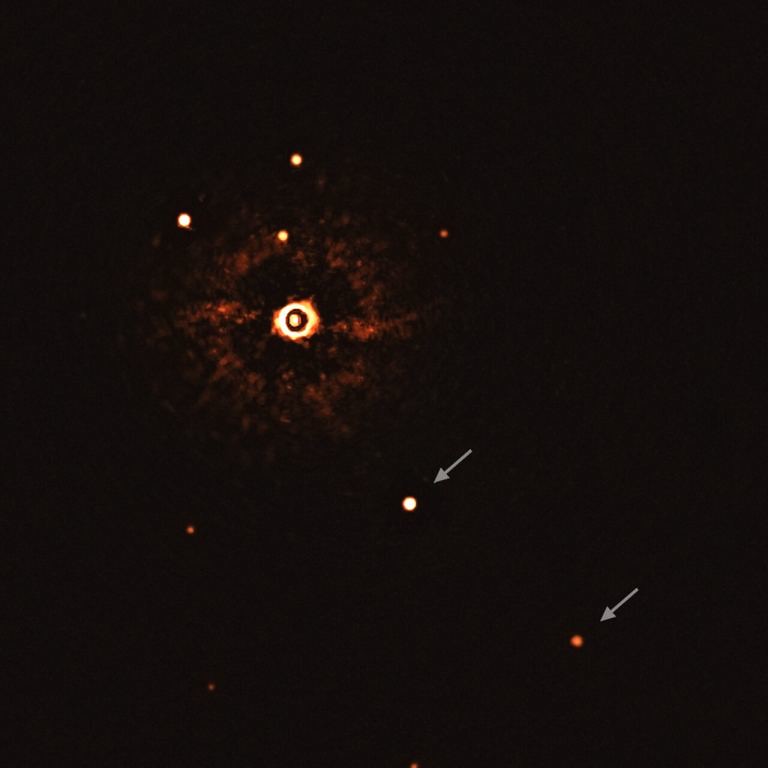
However, finding and confirming the presence of exoplanets is a complicated process, one that can be ripe with false positives. An example of this is Fomalhaut b, which has been puzzling astronomers since it was first observed in 2004. Orbiting the A-type main-sequence star Fomalhaut, some 25 light-years from Earth in the constellation of Piscis Austrinus, the planet was first observed by the Hubble Space Telescope, marking as the first to be detected in visible wavelengths (that is. the Direct Imaging Method).

Hubble images of the dust cloud around Fomalhaut. Credit: NASA/ESA/A. Gáspár and G. Rieke (University of Arizona)

Continue reading “Space Sunday: China’s missions and a disappearing “planet””

Space Sunday 30 years with HST; planets in lockstep

Hubble’s 30th anniversary image: a colour-enhanced view “Cosmic Reef” showing two nebulae – star forming regions – the blue NGC2020 (actually material ejected from a single, massive star 200,000 times brighter than our own), and the red NGC 2014. Both are part of the Large Magellanic Cloud, a satellite galaxy to ours, 163,000 light-years away. The clarity of the image reveals the star-forming region of HGC 2014 in stunning detail, and offers testament to the deep field imaging capabilities of the Hubble Space Telescope. Credit: NASA / ESA.

On April 24th, 1990, the Space Shuttle Discovery thundered into a spring Florida sky on one of the most important missions of the entire space shuttle programme: the launch of the Hubble Space Telescope (HST), one of the four great orbital observatories placed in orbit in the closing years of the 20th century.

At the time of its launch, the telescope probably didn’t surface to any great degree in the broader public consciousness, although in the 30 years it has been in operation it has become if not a household name, then certainly one most people will recognise, even when abbreviated down to just “Hubble”.

April 24th, 1990: space shuttle Discovery rises from Lunch Complex 39B at Kennedy Space Centre, carrying aloft the Hubble Space Telescope. In the foreground can be seen the external tank and a solid rocket booster attached to the shuttle Columbia, sitting on pad 39A, as it awaits its own launch date. Credit: NASA

As I noted when marking 25 years of HST operations, Hubble’s roots go well back in history  –  to 1946, in fact;  while the whole idea of putting a telescope above the distorting effects of the Earth’s atmosphere can be traced back as far as the early 1920s. A joint NASA / European Space Agency operation, HST faced many challenges along the road to commencing operations: it’s low Earth orbit – vital for it to be within reach of servicing astronauts – meant it had to face bot extremes of temperature as it orbited the Earth, passing in and out of sunlight, and it would also have to contend with a slow but inexorable atmospheric draft, so would have to be periodically boosted in its altitude.

However, these issues paled into insignificance after HST was launched, when the commissioning process revealed something was badly wrong with the telescope’s optics, resulting in badly blurred images being returned to Earth. The problem was traced back to an error in the production of the 2.4m primary mirror – one side of which has been ground an etra 2.2 nanometres (a nanometre being one billionth of a metre) compared to the other, leaving it “out of shape”. Small as the error was, it was enough to prevent Hubble focusing correctly, leading to the blurred images  –  and the entire programme being seen as a huge white elephant around the world, despite HST completing some excellent science between 1990 and 1993.

Before and after: on the left, an image of the spiral galaxy M100 taken on on November 27th, 1993, without the corrective optics and camera system. On the right, M100 imaged by Hubble on December 31st, 1993, after the installation of the corrective optics and camera system

Again, as I reported five years ago, the optical error lead to a “Hubble rescue mission” in 1993, when the crew of the space shuttle Endeavour arrived to give HST corrective optics called COSTAR and an updated imaging system, the Wide Field and Planetary Camera (WF/PC). Together these effectively gave HST a corrective set of glasses that overcame the flaw in the primary mirror. In doing so, they assured Hubble’s place in history, as they allowed the telescope to exceed all expectations in its imaging capabilities, turning into into perhaps the most successful astronomical / science instrument of modern times.

When launched, HST could see both in the visible light and in the ultraviolet (the region in which it saw outstanding results even before the operation to correct its “eyesight”). In 1997, during another servicing mission which saw the Discovery return to the telescope it had launched and deployed, HST was given a set of infra-red eyes as well. These allowed it to see farther into space (and thus further back in time) than we’d been able to do previously, and they allowed Hubble to peer into the the dusty regions of the galaxy where stars are born, opening their secrets.

A HST image released on April 6th 2020 showing the barred spiral galaxy NGC 2273, some 95 million light years from our own. It is unusual because it comprises two arms extending from a central bar made up of densely-packed stars, gas, and dust, and which conceal a second set of spiral arms within them, giving the galaxy two pairs of curved arms. Credit: NASA / ESA

Together, Hubble’s various eyes and its science instruments – and the men and women supporting HST operations here on Earth – have given us the ability to look back towards the very faintest – and earliest – light in the cosmos, study star clusters, look for planetary systems around other stars, increase our understanding of our own galaxy, look upon and study our galactic neighbours, help to verify Einstein’s theories of the universe, and do so much more.

Before Hubble, we knew essentially nothing about galaxies in the first half of the life of the universe. That’s the first 7 billion years of the universe’s 13.8-billion-year life. Now Hubble, through remarkable surveys like HXDF [Hubble Extreme Deep Field] capability, has probed into the era of the first galaxies. Through this type of work, Hubble has discovered galaxies like GN-z11, the most distant discovered by Hubble. Just 400 million years after the Big Bang, Hubble is looking back through 97% of all time to see it, far outstripping what can be done with the biggest telescopes on the ground.

– Garth Illingworth, HST project scientist

The Hubble Space Telescope with the aperture door open to allow light into the optics, as seen from the space shuttle Columbia during the 2002 servicing mission

Hubble is a truly unique platform in this regard. Despite issues over the years such as with its various flywheels (the gyroscopes designed to hold it in place whilst it is capturing images), it can remain rock-steady for extended periods with no more than 0.007 arcseconds of deviation. To put this into context, that’s the equivalent to someone standing at the top of The Shard in London and keeping the beam of a laser pointer focused on a penny taped to the side of the Eiffel Tower in Paris, for 24 hours without wavering.

HST’s science mission is so broad, it occupies the working days of literally thousands of people around the globe. Dedicated teams manage the programme for both NASA and ESA, with the Space Telescope Science Institute (STScI) located at the Johns Hopkins University Homewood Campus in Baltimore being the primary operations centre, supported by the European Space Astronomy Centre (ESAC), Spain, both of which will manage operations with the James Web Space Telescope when it is launched. Beyond these teams, scientists and astronomers around the globe can request time using HST and its instruments for their projects and observations, all of which makes the telescope one of the most used globally.

A visible light image of Jupiter captured by Hubble composited with an ultraviolet image of the planet’s northern aurora. Credit: NASA / ESA

Many of those currently working with Hubble share a unique link to it: they have either grown up with it as a part of their lives, learning about it at school and through astronomy and science lessons, or they been with Hubble since its launch, and have lived their entire careers with it.

Hubble has changed the landscape of astronomy and astrophysics,. It has far exceeded its early goals — no other science facility has ever made such a range of fundamental discoveries. It’s been a privilege to be associated with this effort that has become embedded in the culture of our time.

– Colin Norman, HST manger and senior manager, STScI (1990-2020)

Continue reading “Space Sunday 30 years with HST; planets in lockstep”

Space Sunday: an exoplanet, a star and an asteroid

An artist’s impression of Kepler-1649c (foreground) – an Earth-type world that might be Earth-like in some respects, and its parent star, Kepler-1649, with it’s companion planet, Kepler-1649-b visible beyond the star. Credit: NASA/Ames Research Centre/Daniel Rutter

The Kepler Space Telescope might be shut down, but the work of analysing the data it gathered on possible exoplanets continues, and an international team of scientists reviewing some of the earliest data from the mission have confiemd what had been thought of as a “false positive” is in fact an Earth-size exoplanet orbiting within its star’s habitable zone, the area around a star where a rocky planet could support liquid water.

The planet, Kepler-1649c orbits its small red dwarf star some 300 light years from Earth. It is so close to its parent, that its year is the equivalent to 19.5 Earth days. It is actually the second planet to have been found orbiting the star, hence the “c” designation in its name, and the system as a whole contains a series of points of interest for astronomers that make it particularly intriguing.

The first is that the data Kepler gathered on the planet suggest it is one of the closest in terms of size to Earth so far discovered, being just 1.06 times larger. The second is that its parent, Kepler-1649, is a class-M red dwarf with relatively low luminosity, so that despite it’s close proximity, that planet receives around 75% of the sunlight Earth receives from Sol. so it is entirely possible that if it has an atmosphere, conditions on it surface might be somewhat similar to our own in terms of average temperatures and with regards to surface water.

However, whether the planet does have an atmosphere has yet to be determined. As I’ve previously noted in this column, red dwarf stars are so small they rely on convection as the main form of energy transport to the surface, and this can give rise to violent solar outbursts which over time can rip away a nearby planet’s atmosphere. There’s also the question of how stable any atmosphere might be. Again, its close proximity to its parent means it is liable to be tidally locked, always keeping the same face towards its star. This is liable to make any atmosphere the planet does have could be exceptionally turbulent and prone to storms along the terminator dividing the light and dark halves.

An Artist’s impression of Kepler-1649c compared to Earth. Credit: NASA/Ames Research Centre/Daniel Rutter

However, Kepler-1649 has thus far shown itself to be one of the more stable M-class stars that has been observed over the years from Earth – which means it may well still possess a temperate atmosphere. If this is so, the combination of size and atmosphere then of all the red dwarf orbiting exoplanets thus far discovered, Kepler-1649c could be closer to Earth than most so far discovered.

An additional intrigue with the Kepler-1649 system is that the two planets share an unusual orbit resonance: for every nine times Kepler-1649c orbits its parent, the inner planet, Kepler-16949b, orbits almost exactly four times, giving a 9:4 ratio. This indicates the system is extremely stable, likely to survive for a long time.

9:4 is also something of a unique ratio; usually resonances take the form of ratios like 2:1 or 3:2. As such, it is thought that the Kepler’s system’s resonance might be indicative of a third planet between Keplert-1649b and Kelper-1649c, which would give the system a more regular pairing of 3:2 resonances between the middle and inner planets and the middle and outer planets. However, the existence of any third planet has yet to be confirmed.

An artist’s impression of the view of the surface of Kepler-1649c, should t have a water-rich atmosphere, with the crescent Kepler-1649b also in the sky. NASA/Ames Research Centre/Daniel Rutter

In the meantime, the discovery of Kepler-1649c adds significantly to our understanding on exoplanets around M-class stars.

The more data we get, the more signs we see pointing to the notion that potentially habitable and Earth-size exoplanets are common around these kinds of stars. With red dwarfs almost everywhere around our galaxy, and these small, potentially habitable and rocky planets around them, the chance one of them isn’t too different than our Earth looks a bit brighter.

– Andrew Vanderburg, co-author of a paper on Kepler-1649c exoplanet

Curiosity: A New Level of Remote Working

As the SARS-CoV-2 virus continues to prevent us from working normally, members of NASA’s Mars Science Laboratory Curiosity team have revealed how they’ve been continuing with normal operations since the Jet Propulsion Laboratory (JPL) shut down operations in February 2020.

Of course, in some respects the rover team has always been working remotely from their “office”, the rover never being at least 56 million km from Earth. However, the shut-down of NASA facilities ordered by Administrator Jim Bridenstine brought additional challenges to operating a rover so far away – and I’m not talking about distractions caused by the need to feed the cats or take the dog for a walk, being reliant on e-mail and video conferencing, etc.

Curiosity: a “selfie” taken in late 2016. Credit: NASA/JPL

Take driving the rover, for example. This requires a complex process of scanning the rover’s surroundings to build up a complete view of the rover’s environment, having the means to view this in 3D and to compare it to high-resolution images of the rover’s surroundings captured from orbit, then mapping a potential route that avoids any aspects of the landscape that present a risk to the rover whilst also encompassing points of interest, converting the commands into software code, testing it, and finally transmitting it to the rover for execution. Similarly, manoeuvring and using the rover’s robot arm requires precision and care, rehearsal and coding.

Much of this work requires high-powered computers. Analysing potential route from images, for example, requires not only high-resolution image processing, but also high-end gaming PCs and 3D headsets to give a greater depth of field and better visualisation of contours of the landscape and rocks. A similar approach is used to manoeuvring and manipulating the robot arm. The problem is, not all of the systems required to achieve all of this could easily be transitioned from JPL’s facilities to home use. Teams are, for example, restricted to using laptops, rather than gaming PCs; they’ve therefore had to swap from using specialised 3D headsets that rapidly shift between left- and right-eye views to better reveal the contours of the landscape, and instead rely ordinary anaglyph glasses to achieve the same ends.

Members of the Curiosity drive team recorded images of themselves of March 20th, 2020 the day they successfully completed transmitting their first remotely-generated set of commands to the rover. Credit: NASA/JPL

Space Sunday: Apollo 13, 50 years on

The Apollo 13 crew: Fred Haise, Jack Swigert and Jim Lovell. Credit: NASA

It is hard to believe fifty years after the fact, that with only two missions to surface of the Moon, America was ready to end its love affair with NASA by the time Apollo 13 lifted-off from Kennedy Space Centre’s Pad 39A at 19:13 UTC (14:13 EST) on Saturday, April 11th, 1970.

Already by that date, the Saturn V construction programme had been cancelled, leaving NASA with enough vehicles for seven more flights, and one of those (formerly Apollo 20) had been re-assigned to fly what would become the Skylab orbital laboratory (Apollo mission 18 and 19 would be later be cancelled completely their launch vehicles relegated to museum pieces).

Even Apollo 13 itself had something of a rocky path to the launch pad. Under the prevailing NASA crew rotation protocols, the prime crew for the mission was to have been Gordon Cooper, Edgar Mitchell, and Donn F.Eisele, but NASA’s Director of Flight Crew Operations Donald “Deke” Slayton vetoed any participation in a prime crew by Cooper, who had a lax attitude towards training, and by Eisle as a result of incidents that occurred in the Apollo 7 flight and for bringing the agency’s public image into disrepute as a result of an extramarital affair.

Up until two days before launch, Ken Mattingly had been Apollo 13’s Command Module Pilot

Instead, Slayton placed the crew due to fly Apollo 14 forward to take the prime slots for Apollo 13, with US Navy captain and veteran of three previous space flights, James Arthur “Jim” Lovell Jr., as commander and fellow test pilots Fred Haise (USAF) Thomas Kenneth “Ken” Mattingly II (USN) as the lunar module pilot (LMP) and command module pilot (CMP) respectively.  Their back-up crew were John Young, Charles Duke and John Leonard “Jack” Swigert Jr, with whom they shared time in training and simulation work for the mission.

Seven days prior to launch, Charles Duke was diagnosed with rubella, and Mattingly was the only man in the two crews not immune through prior exposure. Because of this, flight surgeons insisted he be removed from the prime crew in case he developed symptoms during the mission, and two days before launch, he was replaced by Swigert from the back-up crew (Mattingly subsequently never developed symptoms, and would eventually fly to the Moon on Apollo 16).

Even during the launch, the mission suffered what at the time appeared to be a relatively minor issue. Shortly after the separation of the Saturn V’s first stage the centre-most of the S-II second stage’s five engines was abruptly shut down automatically just 4 minutes into a planned 6.4 minute burn. The remaining four engines performed flawlessly, and no more thought was given to the issue at the time. Two and half hours later, the S-IVB upper stage motor was re-lit and Apollo 13 started its journey to the Moon.

Except for the launch, the three major TV networks showed little interest in Apollo 13. Planned broadcasts by the crew were not transmitted live, and America and the world carried on as if Apollo 13 wasn’t there.

After six successful Apollo flights, including two lunar landings, people were getting bored.

– Apollo 13 commander Jim Lovell reflecting on the lack of public
interest in the Apollo13 flight

All that changed on the night of April 13th/14th 1970, when the flight was almost 56 hours old and Apollo 13 was 330,00 km from Earth and less than a day from the Moon. The crew had just completed yet another televised transmission that had been ignored by the networks (and which included Richard Strauss’ Also Sprach Zarathustra, used as the iconic theme for Stanley Kubrick’s 2001 A Space Odyssey –  the latter being the command module’s (CM) call-sign), when mission control requested the crew carry out a number of tasks minor tasks, including one for Swigert, as CMP, to “stir” both of service module’s (SM) oxygen tanks.

The television broadcast that took place just before the Apollo 13 accident, and at least watched by mission control. Fred Haise can be seen in on the large screen while in the centre foreground, lead flight director Gene Kranz looks on. Credit: NASA

These two tanks supplied oxygen both to the CM’s cabin and to the three fuel cells alongside them that provided electrical power to the entire command and service module (CSM) combination. Due to solar heating the oxygen in the tanks would “stratify”, so each day fans in to the tanks would be turned on to normalise the temperature and pressure readings. However, an extra stir had been requested in the hope of eliminating an incorrect pressure reading.

Swigert duly turned on the fans in both tanks as requested, and 90 seconds later, Apollo 13 was rocked by a “pretty large bang” that caused the attitude control system (ACS) to automatically fire to stabilise the vehicle, and the CM’s instruments to register sudden power fluctuations within the Main Bus B, one of the two electrical power distribution systems delivering electrical power to the CM.

The bang and fluctuations prompted Swigert and Lovell to both report to Earth that the vehicle had had a problem – but as instrument readings returned to normal, astronauts and engineers were momentarily confused. Lovell actually thought Haise had opened the LM’s cabin repressurisation valve (which also caused a bang) in an attempt to startle his crew mates. But Haise’s expression as he came up through the docking tunnel from the LM indicated he was as equally confused by the noise. Then the electrical output from both the power distribution systems started falling.


“OK Houston, we’ve had a problem here…” Swigert and Lovell in turn report Apollo 13 could be in difficulties

Checking the status of the three SM fuel cells, Haise found two completely dead and the third dangerously low. Swigert, engaged in checking the slowly decreasing pressure in oxygen tank 1 flipped the displays to check tank 2, only to find it completely depleted. Moving to the CM’s windows, Lovell reported the SM appeared to be venting “a gas of some sort” and the vehicle as being surrounded by a cloud of fine debris – clearly, something was seriously wrong.

Worse, struggling to maintain power levels, the surviving cell  was drawing on oxygen from the CM’s surge tank. This was a reserve of oxygen intended to supply the crew with a breathable atmosphere at the end of a mission, between the CM detaching from the SM and splashing down on Earth. Were that supply to be depleted, the crew would face certain death.

Realising the significance of the surge tank situation, veteran flight controller and White Team leader Eugene Francis “Gene” Kranz, ordered the fuel cell immediately isolated from the surge tank’s oxygen supply. This left the crew with an estimated 2 hours of oxygen to in tank 1 to power the remaining fuel cell before it was also depleted, killing the command module – and the crew. With that realisation, Apollo 13 switched from being a lunar landing mission to a rescue mission.

My concern was increasing all the time. It went from, “I wonder what this is going to do to the landing?” To “I wonder if we can get back home again?”

– Apollo 13 commander Jim Lovell at a post-flight press conference,
May 1970.

Two options were available for bringing the crew home: a direct abort or a free return. The first involved turning the CSM / LM combination through 180° and then using the big service propulsion system (SPS) on the SM to reverse course and fly back to Earth, which would take about 2 days.

The free return option involved continuing on around the Moon and using its gravity, combined with an engine burn, to return to Earth in about 4 days. Both approaches would require the crew to power down the CM and use the LM as a lifeboat – something that NASA had actually planned for just after the first Apollo flight to the Moon (Apollo 8, which also had Jim Lovell as a member of the crew).

Gee, I think back in Apollo 9 we first started looking at the LEM [Lunar Excursion Module, NASA’s original official title for the lunar module] as more-or-less a lifeboat and fortunately, although the exact procedures do not tailor the exact case we’ve got, we looked at the utilisation of the LEM for an awfully long time. So we knew what the limitations were and we developed workaround procedures wherever it was possible. I think the LEM spacecraft is in excellent shape and it’s fully capable of getting the crew back.

– Lead Flight Director, Apollo 13, Gene Kranz during a press conference,
April 14th, 1970

A crowd Vilnius, Soviet Latvia, watch Russian coverage of Apollo 13 through a store window. Credit: delfi.lv