
SpaceX has been keeping busy over the last week.
On Sunday, August 30th, the company launched Argentina’s SOACOM-1B Earth observation satellite (and two other payloads piggybacking on the flight) from Space Launch Complex 40 at Cape Canaveral Air Force Station, utilised a Falcon 9 first stage make its fourth successful launch and landing (returning to the SpaceX Landing Zone, also at Cape Canaveral, nine minutes after lift-off), after boosting the rockt’s upper stage and payload safely on its way.
The launch marked the first into a polar orbit – vital for Earth observing satellites as it allows them to pass over just about every point of Earth at some point during their orbits – from Cape Canaveral since 1969. Such launches were suspended that year after a section of a Thor rocket launch came back to Earth over Cuba, allegedly killing a cow on impact, and causing something of an international incident.

On Thursday September 3rd, and after delays due to weather, the company launched another Falcon 9 vehicle, this time from Pad 39A at Cape Kennedy. It carried 60 Starlink Internet satellites into orbit, the rocket’s first stage successfully returning to Earth to land on the autonomous landing ship Of Course I Still Love You.
Starlink is designed to provide a global Internet service from orbit using a constellation of some 12,000 satellites operating in three “shells” (different altitudes) around the Earth. However, the system has come in for fierce criticism for the way – with less than 1,000 satellites currently in orbit, it is already causing noticeable levels of pollution is is impacting astronomers.
While SpaceX has tried to minimise the amount of light the satellites reflect, CEO Elon Musk has also demonstrated a cavalier attitude towards the concerns of astronomers, and also towards those voicing concerns over the potential for the system to greatly add to the amount of debris orbiting the Earth over time, particularly if SpaceX opt to expand the programme to a long-term goal of flying 42,000 Starlink satellites.
Also on September 3rd, the company completed the second successful Starship prototype launch from their Boca Chica, Texas, facilities. Starship is the upper section of their huge interplanetary launch vehicle that is central to Musk’s “plan” to “colonise” Mars (although initially the vehicle will be used to ferry cargo such as multiple satellites to orbit – for example, a single Starship could carry 400 Starlink satellites).
The second Starship prototype flight, utilising vehicle SN6 (which again only comprises the cylindrical fuel tank section of the vehicle, topped by a 23-tonne mass simulator, all powered by a single Raptor engine), was again to a modest 50 metres altitude, the same height as achieved during the SN5 prototype flight some 3 weeks ago. This was sufficient for the vehicle to clear the launch platform and translate a short distance to the landing area and make a successful landing.
As I noted following the SN5 flight (see: Space Sunday: Hops, glows, plans and Perseids), SpaceX plan to build out a test programme incrementally, moving from an unspecified number of low-altitude flights to flights of increasing height and complexity, including those using a “complete” prototype vehicle flying up to 20 km, allowing the vehicle’s horizontal descent and handling capabilities using the planned aerodynamic surfaces, as well as the vehicle’s ability to translate to a vertical orientation for landing.
Alongside the ongoing Starship prototype flights, SpaceX plan to commence test of prototypes of the reusable Super Heavy booster intended to push Starship vehicle reach orbit. The launch platform for the prototypes of these behemoths is currently being constructed at Boca Chica, as is the enormous “high bay” building where the prototypes will be assembled.

Initial Super Heavy prototypes will be powered by just two of the enormously powerful Raptor engines, with the production vehicle likely being powered by 28 of the motors. This is reduction in the number of motors from 31 or 32, and this number may decrease further if SpaceX can further improve on the Raptor’s performance as they aim to try to operate it as an very of 250 tonnes of force (that’s well over half a million pounds of thrust) per motor. If this can be achieved operational Super Heavy boosters will have slightly more than twice the launch thrust as both NASA’s Saturn V rocket and the agency’s upcoming Space Launch System.
Musk reckons the the first Super Heavy prototype vehicle is liable to fly in early 2021. That’s also the year he has timetabled for the first Starship prototype flight to 20 km altitude flights.
Toyota’s Lunar Rover Gets a Name
Back in July 2019, I reported on an agreement reached between the Japan Aerospace Exploration Agency (JAXA) and the world’s second largest manufacturer of motor vehicles, Toyota, for the latter to develop a pressurised rover for use on the Moon.
Since then, both JAXA and Toyota have been working on the design and developing / testing elements of the vehicle, which has the goal of being powered by fuel cells and capable of an operational cruising range of up to 10,000 km (allowing it to practically circumnavigate the Moon on one set of fuel cells). At just over 6m in length and 5.2m wide, the vehicle is intended to provide some 13m³ (460 ft³) of living / working space for crews of 2-4 at a time, and will be delivered to the lunar surface by a dedicated automated lander to be built by Mitsubishi Heavy Industries.

At the end of August, Toyota and JAXA announced the unofficial name for the rover: Lunar Cruiser, a nod towards Toyota’s Land Cruiser 4×4 utility vehicle, first developed in the 1950s and which are still in production today as luxury and capable SUVs. The Land Cruiser in turn has a heritage rooted in rugged 4×4 designs – notably America’s original Willy’s Jeep and the UK’s Land Rover (from which Toyota “borrowed” the first part of their 4x4s name).
Japan plans to fully develop the vehicle and its lander over the next 8 years, and make it available in support of human missions to the Moon, such as the Artemis programme.
China launches Secretive Space Plane
China launched an experimental reusable spacecraft on Friday, August 4th, following months of low-key preparations at the Jiuquan Satellite Launch Centre. It was delivered to orbit via a Long March 2F launch vehicle, with the launch reported by the Chinese state media Xinhua some three hours after the rocket lifted-off.
No images of the launch vehicle or the space plane have so far been released; however, orbital images of the Jiuquan facilities captured in July revealed modifications being made to a launch pad there, which suggest it has been updated to handle Long March Long March 4F with a 5 metre diameter payload fairing. This in turn suggests the Chinese space vehicle could be roughly comparable to the US Air Force X-37B automated space plane.
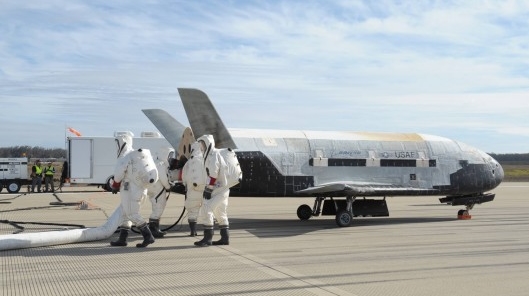
The vehicle remained in orbit for several days, during which time it is reported to have been used to test reusable technologies that will be used to provide “support for the peaceful use of space” according to the Chines state media agency.
China first indicated it is in the process of a space plane in 2017. Under a “space operations roadmap” released at the time, the China indicated it plans to have a single stage to orbit (SSTO) space plane capable of taking off and landing horizontally. It’s not clear if the launch of this experimental vehicle was part of the programme, or a separate initiative. However, Chinese officials have indicated this will be the first in a series of launches of the vehicle to verify rapid re-launch and repeated use capabilities, and to reduce the country’s cost of payload access to space.






 Inara Pey: Living in a Modemworld