Space Sunday: Moon, Mars, and abort systems

Lockheed Martin: trying to assist NASA in putting humans back on the Moon in 2024. Credit: Lockheed Martin

On Tuesday, March 26th, Vice President Mike Pence directed NASA to accelerate plans to send humans back to the Moon, moving the planned first landing from 2028 to 2024. That presents an incredibly short time frame for the US space agency, given all that needs to be done.

Rather than going to the Moon directly – as with Apollo in the 1960 through 1972  – NASA’s plans for a return to the Moon require the establishment of an orbital facility around the Moon – the Lunar Orbital Platform-Gateway – plus the development of the vehicle to get to and from it (the Orion MPCV), and a vehicle to get from it to the surface of the Moon and back. This, coupled with trying to develop a completely new and complex launch vehicle – the Space Launch System – capable of putting all this hardware where it needs to be, means NASA has a huge mountain to climb to achieve their goal and maintain things like operating the International Space Station – and will need a lot of funding to achieve it, something which doesn’t as yet seem to be forthcoming.

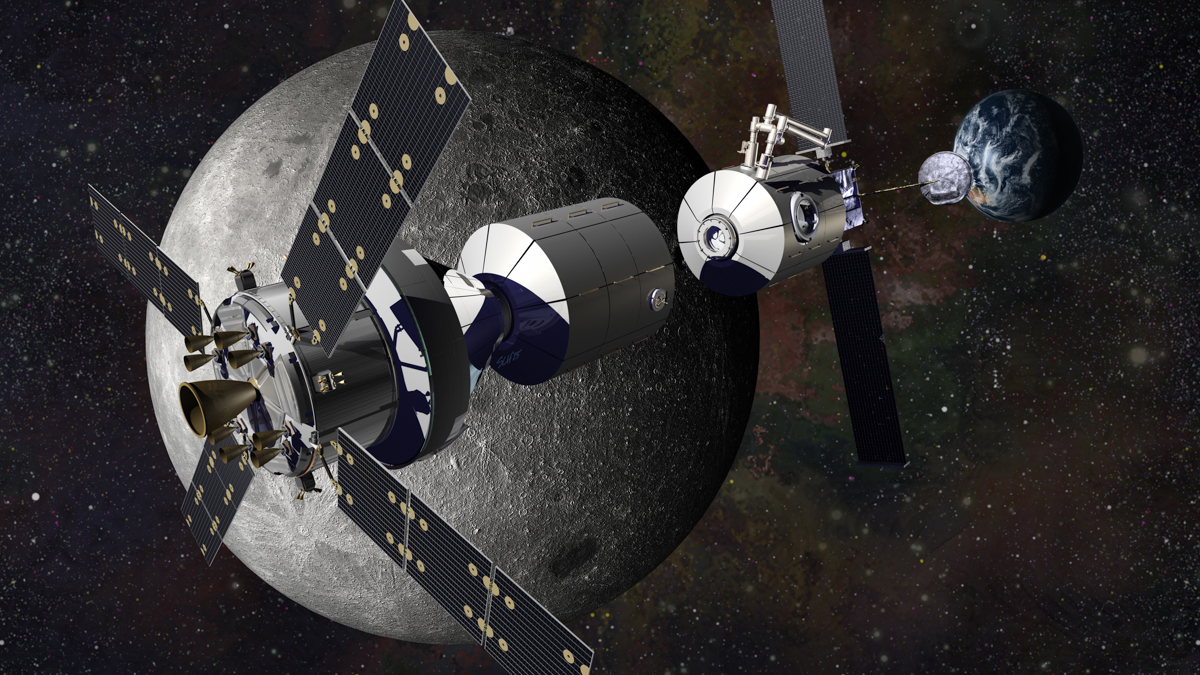
The Lunar Orbital Platform-Gateway is a complex idea, potentially equalling the ISS in requirements – and development / construction time frame, making it improbable that it would be ready in full for 2024 lunar landing. Credit: NASA

As it is, the SLS, as recently noted in these pages, has yet to fly, and has seen a number of programmatic changes in order to try to meet a time frame that was already tight before Pence give his March directive. Following the announcement of the shift to a 2024 landing, NASA actually wavered over using it, mulling the idea of using a commercial launch system instead (the Delta IV Heavy is capable of launching the Orion, for example) before deciding they would push to use SLS. However, in doing to, the agency then suggested they could cut the “green run” test of the SLS first stage, potentially shaving 6 months from the development / flight schedule for the first launch.

Viewed as a crucial pre-flight test, the “green run” would see the completed first stage shipped from the Michoud Assembly Facility, Louisiana, to the Stennis Space Centre, Mississippi, where its four RS-25 engines would be fired for eight minutes, simulating the actual flight of the vehicle prior to upper stage separation. It has been regarded as a crucial test, intended expose the untried first stage to the full force of a simulated launch to gather vital data on the stage performance and to see how the entire assembly stands up the rigours of launch and what might need to be re-worked, etc. The suggestion was that NASA skip it in favour of individual tests of the four RS-25 motors – potentially shaving 6 months off the SLS development schedule.

But on April 25th, the Aerospace Safety Advisory Panel (ASAP) met to discuss this idea and strongly advised NASA not to avoid the “green run”.

There is no other test approach that will gather the critical full-scale integrated propulsion system operational data required to ensure safe operations. Shorter-duration engine firings at the launch pad will not achieve an understanding of the operational margins, and could result in severe consequences. I cannot emphasize more strongly that we advise NASA to retain this test … as NASA evaluates different paths to potentially accelerate the EM-1 flight, it cannot lose sight that the ultimate objective of that flight is to mitigate risk and provide a clear understanding of the risk posture prior to the first crew flight.

– Patricia Sanders, ASAP Chair

The ASAP as recommended NASA doesn’t skip the “green run” integrated test of the SLS core stage – which adds pressure to meeting a 2024 lunar landing time frame. Credit NASA

NASA has yet to formally respond to the recommendation, but it would seem unlikely they’d go against the ASAP. This potentially means that SLS will be unlikely to make its first uncrewed flight – Exploration Mission 1 (EM-1) in 2020, and the ripples may spread further, affecting the time line for the first crewed test of SLS and Orion, and on onwards towards affecting the 2024 goal.

Another issue is that of how NASA will actually get to and from the Moon’s surface. Originally, the agency planned a “two-step” approach to lunar lander development: issue a procurement notice for the development of a lunar lander ascent vehicle, designed to lift a crew off of the Moon tat the end of their say, and a second notice for the transfer and descent stages of the vehicle – presumably allowing different companies to work on the various elements.

To assist NASA in the 2024 goal, Lockheed Martin has re-vamped its Moon lander into a two-stage vehicle, the upper ascent / command module of which will utilise elements from the Orion MPCV craft. Credit: Lockheed Martin

However, on April 26th, NASA altered the procurement notice to seek proposals for a fully integrated lander vehicle. The idea is to speed-up the lander’s design and development and potentially reduce issues of integration of elements built by different contractors.

Certainly, one company that could benefit from this switch is Lockheed Martin, prime contractors for the Orion vehicle, and potential major supplier of the Lunar Orbital Platform-Gateway (LOP-G), the lunar space station seen as a pre-requisite to any crewed landings on the Moon. They first  announced their concept for a fully integrated lunar lander in October 2018, and on April 10th, 2019, the company outlined changes to both their lunar lunar and LOP-G designs in response to the push for s 2024 landing.

The revised Lockheed Martin lunar lander with the ascent / command module mated to the descent / landing stage. Credit: Lockheed Martin

Under their October 2018 plans for a lunar lander, Lockheed Martin proposed building a single, fully reusable vehicle, a 62 tonne (when fully fuelled) behemoth capable of taking 3 or 4 astronauts and a tonne of equipment to / from the lunar surface (by comparison, the Apollo lunar module weighed 16.4 tonnes fully fuelled).

This giant vehicle would support stays of up to 14 or 15 days on the lunar surface, prior to the entire vehicle returning to the LOP-G where the crew would use the Orion to fly back to Earth, while the lander refuelled itself from supplies shipped to the LOP-G and stored there.

However, such a vehicle presupposes the availability of a fully operational LOP-G, and there is simply no way such a facility could be designed, built, launched, assembled in lunar orbit and tested ready for operational use by 2024. This being the case, Lockheed Martin is now proposing a semi-reusable 2-stage lunar lander modelled along the same lines as the Apollo Lunar Excursion Module – although again, much larger.

In the revised design, the new lander would comprise a large descent and landing stage, only carrying sufficient fuel to get the complete vehicle onto the surface of the Moon and carrying various equipment lockers and bins. This would be topped by a combined command / ascent module that will would employ a modified version of the European-built Orion Service Module, complete with main motor and power generation systems, as its lower half. This would serve to propel the module and crew back up to the LOP-G at the end of a surface mission. The command section at the top of the module would include elements from the Orion vehicle for flight control, a dedicate lunar surface command deck and the necessary living space for a crew of around 3 for 14-15 days on the Moon.

Making the lander semi-re-usable means the Lockheed Martin do not need a fully operational LOP-G to support the fully re-usable version of their lander. Instead, a “bare necessities” LOP-G could be placed in orbit around the Moon  – little more than a propulsion / power module and a docking adaptor – in order for lunar missions to commence. These could then proceed whilst the LOP-G is itself built-out to accommodate more advanced missions.

Continue reading “Space Sunday: Moon, Mars, and abort systems”

Space Sunday: exoplanets and Mars missions

An artist’s impression of Proxima-b with Proxima Centauri low on the horizon. The double star above and to the right of it is Alpha Centauri A and B. Credit: ESO

In 2016, astronomers reported their discovery of a planet orbiting our nearest stellar neighbour, Proxima Centauri (see: Space Sunday: exoplanets, dark matter, rovers and recoveries). Since then, the debate has swung back and forth on the potential of it being suitable for life.

While the planet – called Proxima-b – lies within it’s parent star’s habitable zone, there are, as I’ve previously reported, some significant barriers to it being a potential cradle for life. In particular, red dwarf stars are volatile little beasts (Proxima Centauri is just 1.5 times bigger than Jupiter), with their internal activity convective in nature. This tends to give rise to massive stellar flares that can bathe planets orbiting them in high levels of biologically harmful radiation. In addition, many planets discovered orbiting red dwarfs are so close to their parent as to be tidally locked – always keeping the same face towards their sun. This means they are liable to extremely hostile conditions: high temperatures on one side, freezing cold on the other, with the region around the terminator liable to violent weather – assuming they have an atmosphere; over longer periods of time, the onslaught of X-ray radiation and charged particle fluxes from their parent star can literally strip away any atmosphere, unless a planet can replenish it fast enough.

This latter point is the conclusion reached by a team of scientists at NASA’s Goddard Space Flight Centre in Greenbelt, Maryland in reference to Proxima Centauri b in 2017 (see: Space Sunday: Curiosity’s 5th, Proxima b and WASP-121b), although they were working largely from computer modelling.

The Earth-sized Proxima-B and its parent star

However, all that said, if Proxima-b does still have an atmosphere, then a new study conducted by researchers from the Carl Sagan Institute (CSI) suggests life might have got started on Proxima-b, and might even still exist there.

In essence, the team from CSI examined the levels of surface UV flux that planets orbiting M-type (red dwarf) stars like Proxima-b would experience and compared that to conditions on primordial Earth. At that time, some 4 billion years ago, Earth’s surface was hostile to life as we know it today, thanks to a volcanically toxic atmosphere and the levels of UV radiation reaching the surface from the Sun; however it is believed the it was the period when life first arose on Earth.

In particular, the team modelled a range of possible surface UV environments and atmospheric compositions of four nearby “potentially habitable” exoplanets: Proxima-b, TRAPPIST-1e, Ross-128b and LHS-1140b. These models showed that as atmospheres become thinner and ozone levels decrease, more high-energy UV radiation is able to reach the ground – which was to be expected. But when they compared the models to those developed for Earth as it was 4 billion years ago, things got interesting: the exoplanet models suggest that the UV levels they experience are all lower than the Earth experienced in its youth, when the first (pre-oxygen) life is believed to have existed – suggesting that despite their harsh conditions, life might have gained a toehold on them.

With Proxima-b this is particularly interesting, as it is liable to be somewhat older than the Earth, possibly by as much as 200 million years. This means there is a possibility that if simple life arose there early enough after the planet’s formation, it might well have had enough time to adapt to the development environment as atmospheric conditions changed, and thus survived through to current times.

The news from Proxima Centauri doesn’t end there. A team of researchers from the University of Crete and the Observatory of Turin has found possible evidence of a second planet orbiting the star.

Proxima Centauri b was identified using two instruments operated by the European Southern Observatory in Chile, which recorded “wobbles” in Proxima Centauri’s spin as a result of planetary gravitational influences. One of those instruments, called HARPS, has been the focal point for the team claiming there’s evidence for a second planet orbiting the star. By studying data gathered over the last 17 years, they believe they have found sufficient evidence to suggest a second planet could be affecting the star’s spin.

The team estimate that this second planet could have a mass approximately six times that of Earth, putting it in the category of a super-Earth / mini Neptune class of planet in terms of potential size, and that it likely orbits its parent at a distance of approximately 1.5 AU (1.5 times the average distance between the Earth and the Sun) once every 5 terrestrial years. . At such a distance, it’s likely that the surface temperatures of the planet is likely to be around -230oC.

Confirmation that the new planet does actually exists is now required – hence the research time offering their report for further peer review.

Curiosity Samples Clay on Mars

Curiosity has been on the road for nearly seven years. Finally drilling at the clay-bearing unit is a major milestone in our journey up Mount Sharp.

– Curiosity Project Manager Jim Erickson

With these words, issued in a press release on April 11th, the Mars Science Laboratory team announced a major goal for Curiosity rover had been achieved.

While it may seem are to believe, despite seven years on the surface of Mars, and with multiple drilling samples obtained, gaining a direct sample of clay rock has proven elusive. While the rover has previously sampled clay deposits and the minerals they contain, these have been contained in samples of mudstone the rover has sampled, rather than from an actual layer of clay.

“Aberlady” and the sample drill hole, April 6th, 2019. Credit: NASA/Caltech/MSSS

The primary goal for the mission is to determine whether Mars ever have the right conditions for microbes to live. It’s a question that can be answered by sampling the planet’s soil, air, and rock and carefully analysing it. This goal was actually met in the first several months of the rover’s time on Mars while it was still exploring the crater floor, but the more evidence Curiosity can gather, the clearer our understanding of past conditions in Gale Crater and on Mars become.

In this, clays play an important role. They form in water, a key requirement for life, and can act as repositories for chemical and minerals that might be indicative of conditions suitable for past life. This particular sample of clay came from a rock formation on the side of “Mount Sharp” dubbed Aberlady, which Curiosity drilled on April 6th, 2019.

Continue reading “Space Sunday: exoplanets and Mars missions”

Space Sunday: black holes, Falcons and moonshots

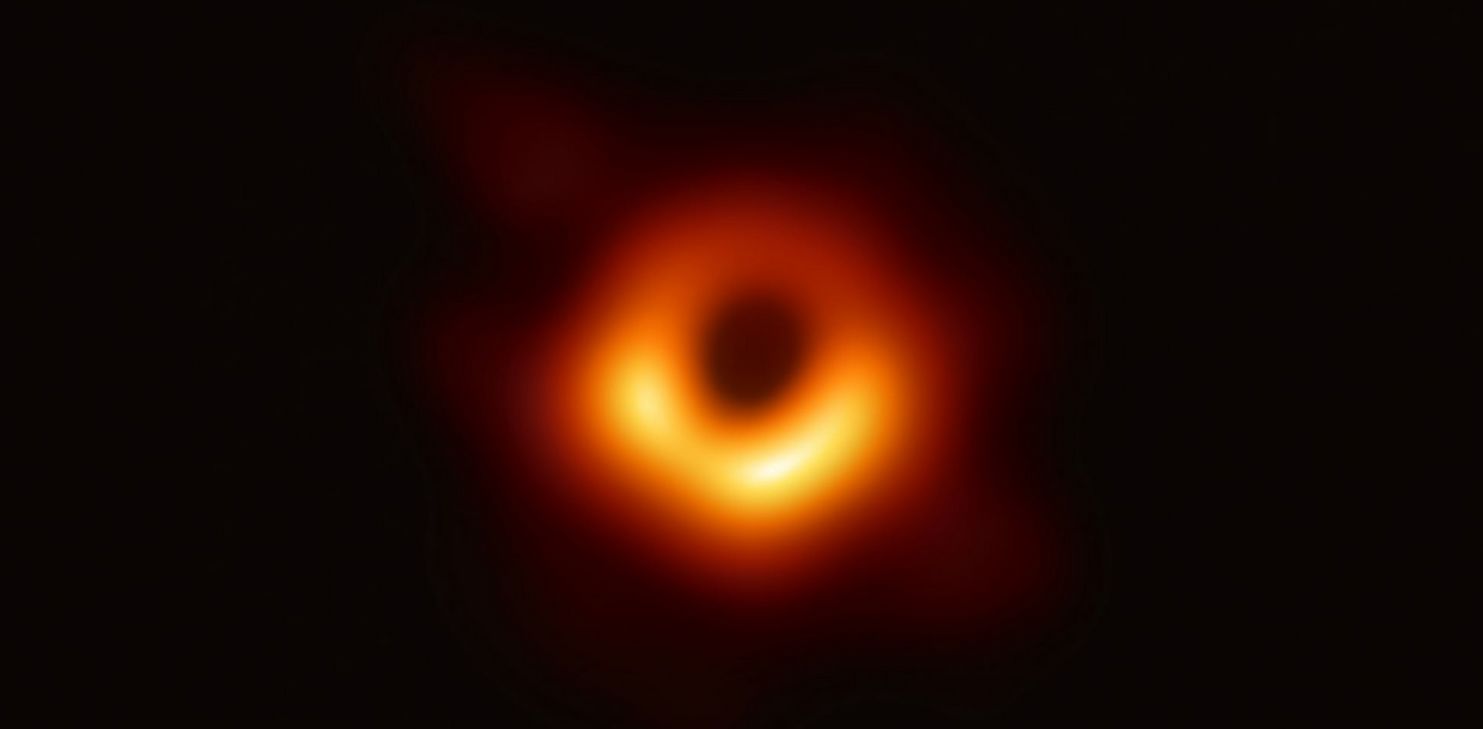
The first ever direct image of a black hole: M87* at the heart of the galaxy M87, 55 million light years from Earth, released on April 10th, 2019. Credit: the EHT Collaboration

The black hole in the above image resides at the centre of Messier 87 (M87), around 16.4 million parsecs (53 million light-years) from Earth, and part of the Virgo galactic cluster of about 12,000 galaxies. It marks the first time we have directly imaged a black hole – and it is a remarkable achievement for a number of reasons.

Thanks to Hollywood, we’re all very probably familiar with the idea of black holes: a point is space where matter is so compressed that it creates a gravity field from which not even light can escape. However, black holes come in a variety of forms, of which the most unusual might well be those that exist at the centre of many galaxies – including our own. Referred to as “supermassive black holes” on account of their extreme mass, they on a scale many times larger than your typical stellar black hole (which, despite being referred to as “massive” – a reference to their gravitational attraction.

Left: M87 in the Virgo cluster of galaxies, as imaged by the European Southern Observatory’s Very Large Telescope. Note the 5,000 light year-long jet of gas (arrowed) rising from the galaxy. Right: a closer view of M87 and the gas jet captures by the Hubble Space Telescope. Extending well beyond the galaxy, and move at relativistic speeds, the jet is believed to be generated by the black hole at the heart of the galaxy. Credits: ESO (l); J. A. Biretta et al., (STScI /AURA), NASA

We don’t actually understand how galactic black holes like the one at the heart of M87 – and called M87*) formed, but being able to examine them directly could answer some fundamental questions about the nature of the universe and physics, as well as helping us to understand the role they play in the evolution of galaxies. The problem is, actually directly imaging any black hole is actually very hard simply because they are – well, black, and thus not the easiest of things to see against the blackness of space.

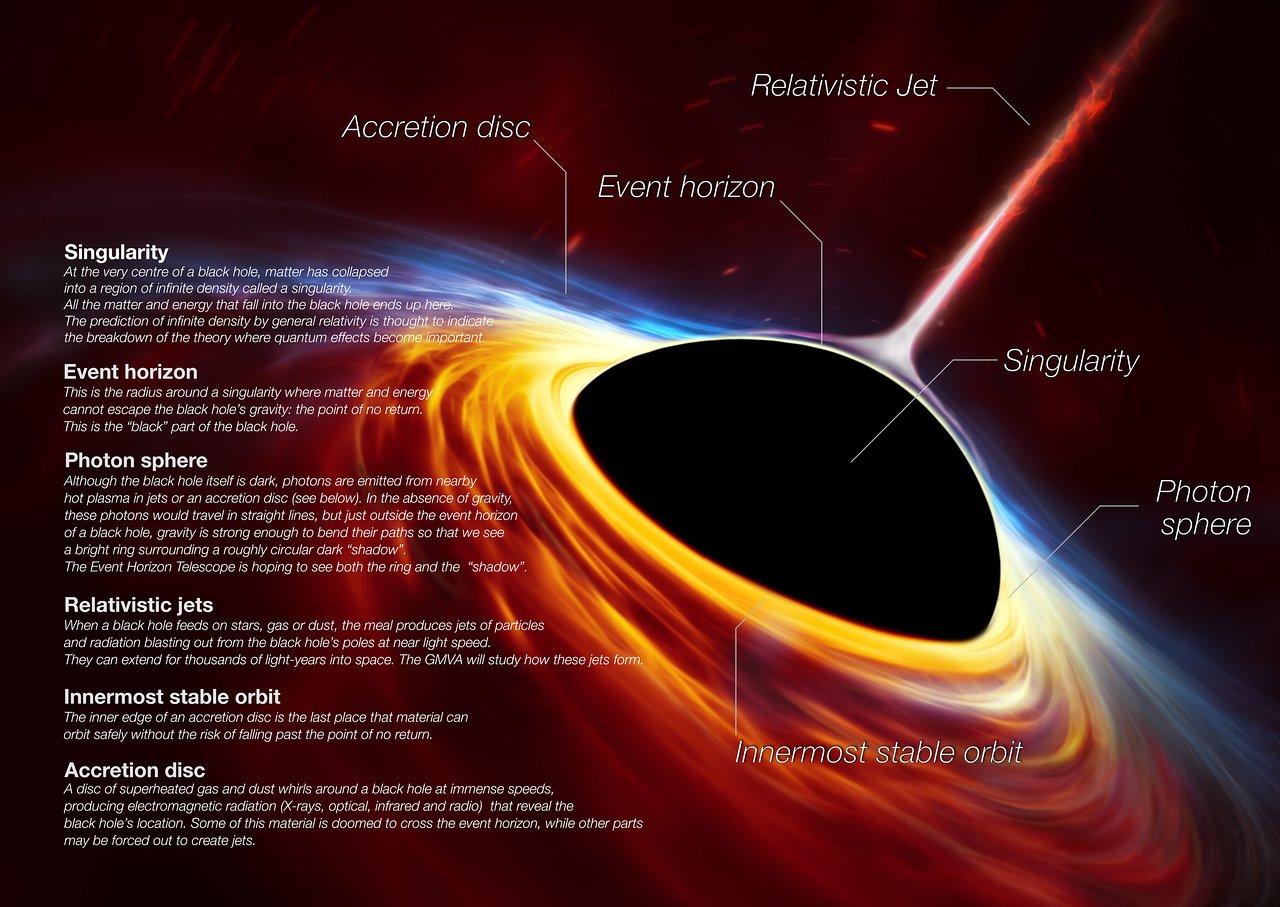
Fortunately, there is a way around this problem: black holes are not alone. Their massive gravity means they attract dust and gas, which forms an accretion disk around the black hole, spinning around them at enormous speeds and producing radiation in a range of wavelengths including radio, optical and infra-red. Given given the right capabilities, we can image a black hole against the radiation from this accretion disk.

The composition of a black hole. Credit: ESO, ESA/Hubble, M. Kornmesser/N. Bartmann

But even with an accretion disk to shed light around a galactic black hole has its own set of issues. To image the one at the centre of our own galaxy, for example, is the equivalent of trying to stand in New York’s Times Square and being able to count the dimples on a golf ball 4,000 km (2,450 mi) away; and this despite the fact that the black hole at the centre of our galaxy is thought to be at least 60 million kilometres across.

Nor is trying to image them optically particularly helpful. They need to be imaged across a range of wavelengths – the problem here being that to do so, you need a radio telescope effectively the size of the Earth.

To achieve this, and following an idea first put forward 26 years ago by German radio-astronomer Heino Falcke, the idea of the Event Horizon Telescope (EHT) was developed. This involves linking numerous radio telescopes together so they can jointly examine a single target and gather data on it.

To image M87*, eight of the world’s most powerful radio telescopes and telescope arrays were linked together. Over a period of about a week in 2017, they were used to gather 4 petabytes of data about the light from M87* in the millimetre wavelength. The drives containing this data were then physically shipped from the observatories to the Haystack Observatory and the Max Planck Institute for Radio Astronomy, where they were plugged into a  grid computer made from about 800 CPUs linked through a 40 Gbit/s network, with the data processed by four independent teams using a series of tested algorithms to ascertain the reliability of the results. The final processing run was completed using the two most established algorithms to produce the image seen here.

This is in fact only the first galactic black hole image to b released. As well as studying M87*, the global EHT array has also gathered data on the black hole at the centre of our galaxy (and called Sagittarius A*), and at least two other supermassive black holes. However, imaging our own galactic black hole proved much harder, and delays in getting the physical hardware containing the data captured by the South Pole Telescope shipped from Antarctica to the Haystack Observatory has  meant that processing the data is still in progress.

According to theoretical physics – such as Einstein’s theory of relativity – scientists already knew what the image should look like: the aforementioned glowing accretion disk and the shadow of the black hole at its centre (so beloved of sci-fi films that feature black holes). However, simply seeing an image that matches what we believe we should be theoretically seeing helps further confirm Einstein’s theories about the nature of the universe around us.

Theoretical physics, such as Einstein’s general theory of relativity, had given scientists a means of simulating what an image of a black hole might look like, as with the above picture of M87*, released by the EHT team in April 2017 as they were about to commence their data gathering. Credit: Bronzwaer/Davelaar/Moscibrodzka/Falcke, Radboud University

From the actual image on M87*, scientists have already been able to confirm Einstein’s general theory of relativity under extreme conditions – notably the prediction of a dark shadow-like region, caused by gravitational bending and capture of light. They have also confirmed the shadow is consistent with expectations for that of a spinning Kerr black hole, which Einstein again predicted. Further, by combining the asymmetric nature of the accretion disk with the angle of the relativistic plasma jet created by M87* (not actually visible in the black hole image), astronomers believe M87* is spinning in a clockwise direction.

Further, the image has refined estimates of M87*’s size – 40 billion km across the event horizon (that’s 270 AU or 0.0042 light years; roughly 2.5 times smaller than the shadow circle shown in the image) – and its mass, estimated at 6.5 billion solar masses (± 0.7 billion).

We have taken the first picture of a black hole. This is an extraordinary scientific feat accomplished by a team of more than 200 researchers.

– Sheperd S. Doeleman, EHT project director

The image itself is shown in false colour to indicate the intensity of the emissions from the accretion disk. Yellow represents the most intense emissions, dropping to red as the lower intensity emissions, and black for little or no emissions. Were we able to see M87* with the naked eye, the colours would lightly be white, perhaps slightly tainted with blue or red. And while it has yet to be 100% confirmed, the colour bias towards yellow on the southern arc of the ring, together with its asymmetry, is thought to be the result of the gases in that region moving more in our general direction.

While this image has already revealed much, there are numerous questions we have yet to fathom. We may now know the nature of M87*, but we still don’t know how it was formed, or why so many galaxies have black holes at their centres. Nor do we as yet understand why some (like M87*) produce the great plumes of relativistic gas while others, such as the black hole at the centre of our galaxy do not.  So expect more to come as a result of studies arising from the work of EHT.

Continue reading “Space Sunday: black holes, Falcons and moonshots”

High Fidelity changes direction: the reality of VR worlds today (& tomorrow?)

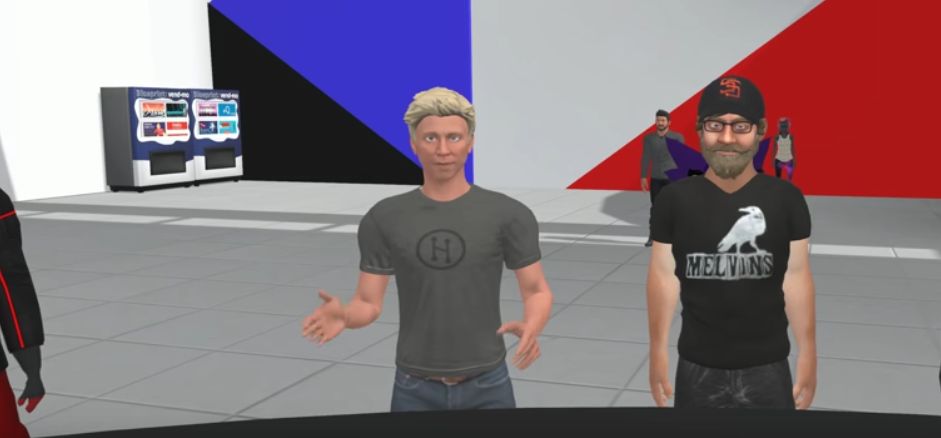
Philip Rosedale, High Fidelity founder and CEO (centre left) addresses the weekly General Assembly meeting in High Fidelity, Friday, April 5th, 2019. Credit: High Fidelity

On Friday, April 5th, Philip Rosedale stunned attendees at High Fildelity’s weekly General Assembly meeting (see the video here and embedded at the end of the article), when he announced that the company would no longer be sitting within the content creation / public space provisioning area with its platform, and that forthwith all public spaces hosted by the company, together with the large-scale events they have been hosting would cease as the company switches tracks to focus sole on software / platform development.

The news was greeted with a sense of shock by High Fidelity users, and the company certainly moved very quickly to follow through on the announcement, shutting down all of the public spaces it has hosted, included social spaces and their flagship Avatar Island, which opened just over a year ago as a means of showcase virtual commerce, shopping and the power of the platform’s micro payments capabilities (see Commerce in High Fidelity, this blog, February 2018).

One of the driving forces behind the decision is that High Fidelity is currently unable to gain major traction – and this despite major pushes to do so with some large-scale events pushed out to the media for promotion, and the former monthly stress tests of the system, trying to push concurrency rates up to determine just how well High Fidelity domains can handle multiple hundreds of avatars. Which is not to say all events are coming to an end: the platform’s popular bingo sessions are set to continue and – taking a leaf from Sansar’s book – High Fidelity is promoting coverage of the first operational launch of the SpaceX Falcon Heavy rocket with an in-world event on Thursday, April 11th.

High Fidelity have, until now, straddled themselves across the software development, content creation and event hosting environments in both trying to generate an audience for their platform and develop the platform itself. Going forward, they plan to focus solely on the latter

However, moving away from large-scale event hosting and hosting domains and environments to try to encourage user growth and instead turning to users and (I assume) suitable partners for audience-generating content, means the company will no longer be pulling against itself trying to both develop the software and platform and provide engaging content and events intended to acquire an audience and encourage their retention.

Which, when you think about it, is pretty much what Linden Lab have, for the most part, been trying to do with Sansar. While the company have provided various social spaces, for the most part they have left content development to users, or have facilitated content creation on behalf of partner organisations (Intel, HTC, the Smithsonian, OpTic Gaming, Roddenberry Entertainment to name a handful) through Sansar Studios – and it has recently been indicated that we’ll be seeing more of this in the future.

One potential benefit of the move for High Fidelity domain creators is the move will hopefully spur more interest in their environments, as Rosedale noted:

By shutting down our public servers, I actually make the prediction that there will be… more people concurrent across the servers that you guys run than us. So I’m not saying that we’re giving up on the servers, I’m saying that I want you to run them.

– Philip Rosedale, April 5th, 2019

Another aspect of the decision is the slow growth of VR in the broader public marketplace. In this, High Fidelity is possibly more vulnerable than other platforms, in that while it has a Desktop option, it has largely marketed itself as “the” VR virtual spaces company. All of their major event activities; for example, the monthly One Billion in VR events, the FutVRe Lands festival, etc. (bold emphasis my own), have all been VR-centric in their titles, potentially spurring a feeling among a broader audience that High Fidelity isn’t for them due to the lack of any personal HMD.

One of the factors influence High Fidelity’s decision is the slow take-up of consumer VR

Which is not so say others platform built to try to ride the wave of VR don’t also face issues building an audience. For example, much is made of the “success” of VRChat (which can be played both in VR and via desktop), yet the fact is, its average and peak hourly concurrency is only roughly one tenth that of Second Life. But, having said that, the take up is likely to come in time. In fact, as I’ve noted in other articles on VR, right now there are clear niche markets / environments where VR can have a significant impact  – if someone can leverage them correctly: education; training / simulation; architecture / design / prototyping; healthcare; visualisation and computer modelling, etc. And in the future, as VR / AR (or more particularly MR / XR)  do start to gain a broader consumer audience traction, then opportunities for broader virtual environments will arise.

There is perhaps a broader take-way from the High Fidelity announcement: and that is, companies like High Fidelity, Linden Lab, Altspace VR, etc, are likely to face something of an uphill battle to gain an audience for their emerging platforms, even when VR does gain a firmer consumer foothold.

This is not Second Life in 2004. Second Life actually took off like a rocket, once it got working. Even though it had tons and tons of problems… but it took off like an absolute rocket. And the reason that it did, I think, was that this experience of bringing a lot of people together and letting them build things together live, well, in the time frame when we built Second Life, it had never, ever been seen by anyone …

The problem we have today is that that’s just not true. The internet affords us many, many, many, many different ways to be together as people, for example, or just to chat. And so one of the things we are up against here is that there is not as much of a genesis moment … Coming on-line you just don’t have the kind of meme in the sense of a grand or cultural meme kind of written out there like Second Life did. That doesn’t mean that we’re not going to make it. It simply means that we have to be more clever and the strategy that we use to get people in here has to be somewhat different.

– Philip Rosedale, April 5th, 2019

In other words, Second Life has been successful because, at the time of its birth and in the years of its initial growth, it was largely unique on all fronts in the way it captured people’s imaginations*, and its broadness of scope and its ability to embrace people’s imaginations and desires meant it could gather an audience to its shores long before anything came along to seriously challenge it.

This is no longer the case. Today, the digital realms we have at our fingertips are limitless, be they for gaming, socialising, sharing, entire virtual environments, and so on. Whatever we might be seeking, the chances are there is already something there to sate appetites. Even creators can build and mod for a range of games and environments and – through the likes of Unity and Unreal and so on – build environments, all without necessarily getting too hung up on arcane tools built-in to platforms.

Thus, and even if / when VR does become far more consumer mainstream, any attempt to build a world-girdling, audience-rich metaverse is going to face something of a challenge without a significant fiscal weight behind it. Not just in terms of developing the technology, but also into the marketing and PR and – most importantly – the licensing of content. To put this last point another way: were OASIS real, would all the models, characters, and so on from major franchises / brands seen within it really be user-built, or would they more likely be the result of hefty licensing deals that brings the content to the platform whilst protecting the rights (and royalties) of the licensors?

But this is looking further down the road. Right now, High Fidelity’s decision is worth marking; how much of a wider impact it has is a matter yet to be seen.

* Revised, from the original after Will Burns correctly reminded me Active Worlds predated SL.

Space Sunday: Starliners, Martian “eclipses” and dates

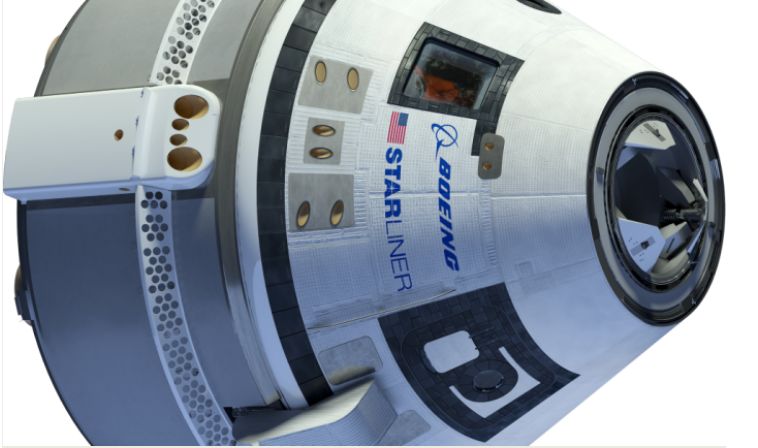
The CST-100 Starliner: further delays, with the crewed test flight potentially being extended into an “operational” flight – something NASA discussed with Boeing in 2016. Credit: NASA / Boeing

Boeing has opted to delay the first launch of its CST-100 Starliner, designed to fly crews to and from the International Space Station. The uncrewed launch, referred to as the Orbital Flight Test, has been pushed back from April to August 2019, with the company citing a tight schedule and conflicts with another launch – that of the Advanced Extremely High Frequency (AEHF) 5 military communications satellite due in June 2019 – as the reasons for the delay.

The “tight schedule” meant that the launch would likely slip into May – but the AEHF-5 launch would mean that the Starliner would only have a 2-day launch window before its own Atlas 5 booster would have to be removed from the launch complex in order to make way for the classified military launch.

Our Starliner team continues to press toward a launch readiness date later this spring,” the company said, which also included the completion of a final set of testing milestones. In order to avoid unnecessary schedule pressure, not interfere with a critical national security payload, and allow appropriate schedule margin to ensure the Boeing, United Launch Alliance and NASA teams are able to perform a successful first launch of Starliner, we made the most responsible decision available to us and will be ready for the next launch pad availability in August.

– Boeing statement

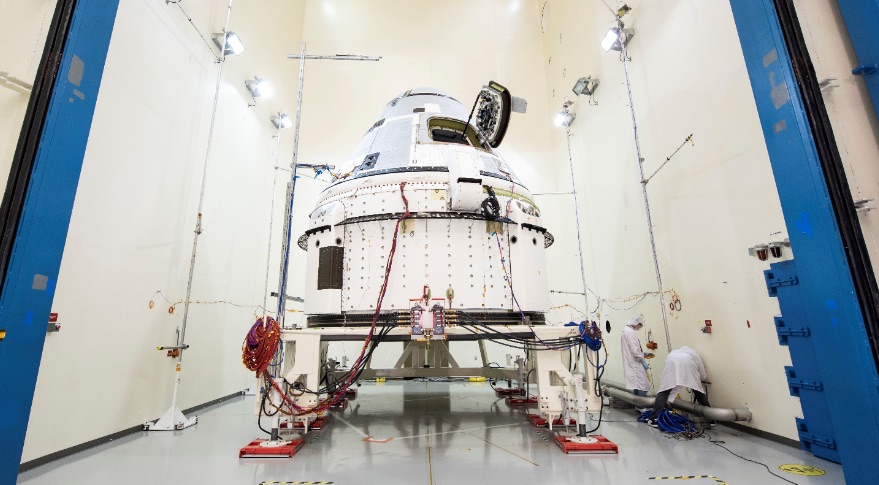
The CST-100 due to make the first crewed flight, at Boeing’s CST-100 processing facility. Credit: Boeing

The delay means that the second test flight of the vehicle, due to fly a crew of two NASA astronauts, Nicole Mann and Mike Fincke, together with Boeing test pilot Chris Ferguson, to the International Space Station, will also be delayed. That flight had been due to take place no earlier than August, but Boeing now state it will take place “later in the year”, with industry experts suggesting it will not proceed any earlier than November 2019.

Following the announcement, NASA indicated that the crewed flight for Starliner will include an extended stay at the International Space Station, lasting several months (the extract length of the stay still to be determined). This extension will effectively allow NASA to turn the mission from a test flight into a crew rotation mission – an idea that had been first mooted in 2016. All three of the crew have been training for ISS operations, and the move could offset the need for an extended use of Soyuz vehicles. As it is, in February, 2019, NASA issued a procurement notice to purchase two additional Soyuz seats from the Russian state space corporation Roscosmos, seats that the Russians didn’t plan to use for their own cosmonauts in order to help ease potential problems were either SpaceX or Boeing to encounter programme issues with their respective vehicles, the Crew Dragon and the CST-100.

While we have already made substantial progress this year, this shift gives us the time to continue building a safe, quality spacecraft capable of carrying crews over and over again after a successful uncrewed test, without adding unnecessary schedule pressure.

– John Mulholland, VP and Program Manager, Boeing CST-100 programme

Mars: of “Eclipses”, and Evidence of Ancient Life?

In March 2019, NASA’s Mars Science Laboratory rover Curiosity was able to record a “double eclipse” as the two Martian moons, Phobos and Deimos passed between the rover and the Sun; although while the media referred to them as “eclipses”, such is the size differential between the tiny moons and the Sun, they are technically transits.

The first transit took place on March 17th when Deimos, the more distant of Mars’ two captured moons, passed across the face of the Sun, its passage recorded by Curiosity’s Mastcam. The second event took place on Mars 26th, when the much larger – and closer – Phobos (11.5 km across) passed in front of the Sun, again filmed by Curiosity’s Mastcam. This event was the more dramatic of the two, not only because of the larger apparent size of Phobos, but because the Moon actually cast a visible shadow, which was captured by the rover’s navigation cameras. Images of all of the events were subsequently strung together to make a short video (below).

However, movie making isn’t the primary objective in observing the transits. Each set of these types of observations – which have also been made by the now-defunct Mars Exploration Rovers, help scientists further refine each moon’s orbit of Mars. When observations of Deimos commenced from the surface of Mars, for example, estimates for where it should be were about 40 km off.

According to NASA, scientists are in agreement present-day Mars is without life. However, whether there might once have been life there is open to debate, and a team from Hungary believe they have found organic material embedded in a Martian meteorite found here on Earth in the late 1970s.

Officially named ALH-77005, the Martian meteorite was found in the Antarctica’s Allan Hills during the Japanese National Institute of Polar Research mission of 1977 / 78. If the reference “ALH” and “Allan Hills” sounds familiar, it might be due to a furore that occurred around another Martian meteorite fragment in the late 1990s.

ALH-84001 caused a lot of controversy – not helped by the media – in the late 1990s

That fragment – ALH-84001, found in Allan Hills in 1984 – is one of the oldest fragments of Mars rock to have fallen to Earth, being dated at 4 billion years of age. When studying the fragment, a US team thought it might contain evidence for microscopic fossils of Martian bacteria within it.

From the start, the claims were considered controversial – although the way the White House and the media over-reacted at the time didn’t help. However, extensive and international study of shavings from the fragment revealed that all of the unusual features discovered within the meteorite could be explained without requiring the intervention of microbial life, and the wider scientific community rejected the hypothesis that the fragment offered evidence of past life. Nevertheless, the events surrounding ALH-84001 pushed the science of astrobiology firmly into thee public domain.

In their report on ALH-77005, Hungarian scientists Ildiko Gyollai, Marta Polgari and Szaniszlo Berczi state they have been able to determine the presence of mineralised organic matter within the rock, such as different forms of bacteria within the meteorite, suggesting that life could once have existed on the Red Planet.

Our work is important to a broad audience because it integrates planetary, earth, biological, chemical, and environmental sciences and will be of interest to many researchers in those fields. The research will also be of interest to planetologists, experts of meteorite and astrobiology as well as researchers of the origin of life, and to the general public since it offers an example of a novel aspect of microbial mediation in stone meteorites.

– Ildiko Gyollai from HAS Research Centre for Astronomy and Earth Sciences in Budapest

While the work will require independent study and review, and the lessons of ALH-84001 could result in some remaining sceptical of the Hungarians’ findings. Nevertheless, there report could change the examination of meteorites in the future. In light of their discovery, the authors posit that solar system materials should be studied to establish whether there is evidence of microbial forms within space rocks as well.

Continue reading “Space Sunday: Starliners, Martian “eclipses” and dates”

Space Sunday: rockets, planets and Martian helicopters

The Trump Administration has ordered NASA to achieve a human return to the Moon by 2024

After US space agency NASA indicated their schedule for the new Space Launch System (SLS) rocket is to undergo revision, with launches liable to be pushed back, the White House has stepped in with an apparent contradiction: NASA is to accelerate plans to return humans to the Moon, achieving the goal no later than 2024 –  a target that requires a fully operational SLS.

The order came via an address by Vice President Mike Pence at a meeting of the National Space Council on March 26th in Huntsville, Alabama. He couched the order in terms of addressing rising concerns about delays to SLS and the “threat” of international competition. However, alternative views are that the demand is more about the Trump administration trying to achieve a Kennedy-like legacy before any possible second term for the administration has expired.

Following the address, NASA Administrator James Bridenstine backpedalled away from statement made two weeks previously, in which he indicated that NASA would look at options for initial flights of the completed Orion capsule and its European-built Service Module using commercial launch vehicles, rather than relying on the SLS, to allow more time for troublesome elements of that vehicle to be completed. Instead, NASA will now attempt to focus on getting the SLS up and running for the initial Exploration Mission flights, themselves seen as necessary precursors to a Moon landing.

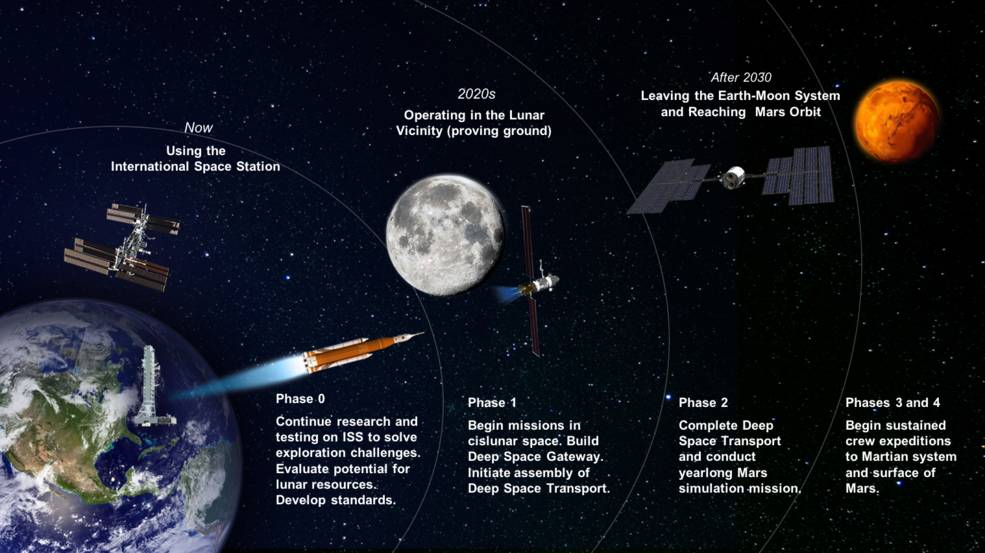
NASA’s plans for the human exploration of the Moon and Mars rely on the SLS – but the plans themselves have always been woolly. The White House is seeking to give aggressive focus to the lunar element – perhaps to aggressive. Credit: NASA

As I’ve noted in recent Space Sunday reports, there are some significant issues around the SLS core stage and its advanced Exploration Upper Stage (EUS) that has been seen as crucial to lunar operations. The issues with the latter were such that Brindenstine had indicated it would be placed on hold, and NASA would utilise the less powerful Interim Cryogenic Propulsion Stage (ICPS) at the rocket’s upper stage. Following Pence’s announcement, the NASA Adminstrator confirmed the emphasis would be back on getting the EUS completed, and a 45-day study has been initiated to determine how development of the rocket’s core stage might be accelerated.

One of the ideas for the latter that is being floated is to cut a “green run” test of the first completed core stage main engines at full power for 8 minutes, which would require the completed stage being shipped from the Michoud Assembly Facility, Louisiana, to the Stennis Space Centre, Mississippi, and instead deliver the completed  stage directly to Kennedy Space Centre for integration with the rest of the vehicle for its first launch. This would cut several months from the launch schedule, but also leave the stage untested.

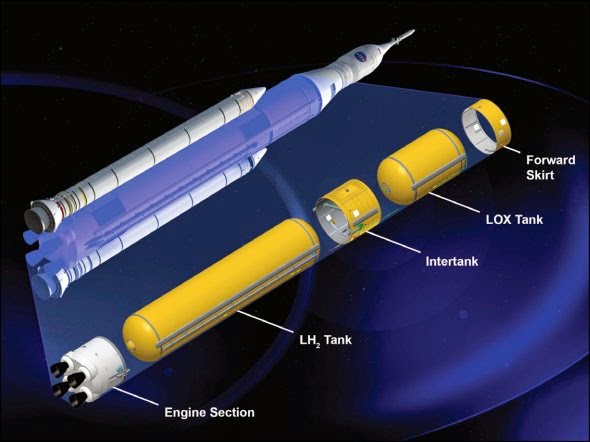
The massive core stage of the SLS is a massively complex undertaking, and somewhat behind schedule. Credit: NASA

Bur even with such cuts, the 2024 goal is regarded as a “very aggressive goal”. To achieve it, NASA will not only have to accelerate work on the first SLS vehicle, they will need an increase in funding across multiple related projects. For example, following the first two EM launches, NASA would need to gear-up to two SLS launches a year in order to lay the groundwork for a lunar landing – including placing the initial elements of the Lunar Gateway in orbit around the Moon. This alone requires the building of a second mobile launch platform (yet to be funded by Congress).

Another issue is what will happen to the robotic precursor missions seen as stepping-stones towards a human mission. Currently, it is unlikely any of these will be ready to fly before 2021 – and no formal contracts have been awarded to the nine companies competing to fly them. Then there is the not insignificant question about the development and testing of the actual lunar lander vehicle. As such, while some organisations have responded enthusiastically to Pence’s announcement, others have sounded more cautionary notes.

Though we support the focus of this White House on deep space exploration and the sense of urgency instilled by aggressive timelines and goals, we also are cognizant of the resources that will be required to meet these objectives. Bold plans must be matched by bold resources made available in a consistent manner in order to assure successful execution.

– The Coalition for Deep Space Exploration

In order to meet a 2024 goal, many programmes would have to be accelerated: SLS, the Lunar Gateway, the development of a lunar lander, etc. Credit: NASA

Even some in NASA have voiced very public misgivings against the acceleration of goals given the overall state of the SLS and supporting programmes.

Do you want to kill astronauts? Because this is how you kill astronauts. There’s no reason to accelerate going to the Moon by four years. It’s ridiculous. 

– Holly Griffith Orion Vehicle Systems Engineer, speaking to AFP.

Certainly, if NASA is to meet a 2024 target date, it will need something of an increase in funding – and this is where Pence’s words fall flat: For 2020, the Trump Administration is seeking to decrease NASA’s budget by half a billion dollars compared to 2019 actual budget – and actually seek to decrease spending on SLS by 17.4% compared to 2019.

WFIRST on the Chopping Block. Again

Another programme hit by the Trump 2020 NASA budget proposal is the astrophysics flagship mission, the Wide Field Infrared Survey Telescope (WFIRST).

WFIRST’s layout and instruments. Credit: NASA

As I’ve previously noted in these updates, the Trump Administration tried to cancel WFIRST in their 2019 budget proposal, citing in part its expense – this despite the mission being one of the most cost-effective on NASA’s books, given it is able to use a lot of parts developed as back-ups to the Hubble Space Telescope – including the 2.4 metre diameter primary mirror.

A second reason for the 2019 cancellation – which was prevented by Congress – was a claim that WFIRST “duplicated” work to be undertaken by the James Webb Space Telescope (JWST), and other aspects of the WFIRST mission could be achieved via “cheaper” means. In actual fact, WFIRST and JWST are able to mutually support one another’s mission, rather than duplicating mission elements. Nevertheless, it is the ongoing delays with JWST which are now being pointed to as the reason to de-fund WFIRST, the argument being that until JWST is launched, WFIRST isn’t a priority.

NASA Administrator Brindenstine has suggested WFIRST’s funding could be brought back up to speed once JWST has been deployed. The problem here is that once a project has been de-funded, it can be very difficult to revive, as doing so tend to foreshorten desired time frames in order to get a mission launched, resulting in much larger additional costs than might have been the case had funding been allowed to continue through the intervening years. Further, 2020 is a crucial year from WFIRST: a design review for the overall mission is scheduled for October, and is due to be followed by what is called “Key Decision Point C”, and formal mission confirmation. Without funding, these milestones cannot be reached, potentially leaving the project in an uncomfortable limbo.

Continue reading “Space Sunday: rockets, planets and Martian helicopters”