Space Sunday: happy 65th, NASA!

The NACA and NASA “meatball” logos. Credit: NASA

On October 1st, 1958 the National Aeronautics and Space Administration officially commenced operations, just two months after then-President Dwight D. Eisenhower signed the US National Aeronautics and Space Act into law.

NASA’s birth essentially arose out of what would become known as the “Sputnik crisis”. In October 1957 Russia launched Sputnik 1, the world’s first artificial satellite. Worse, just a month later, they launched Sputnik 2, which not only carried a living animal into orbit (the dog Laika, doomed to expire in orbit as the technology did not exist for the craft to re-enter the atmosphere and land safely), it demonstrated Russia had a launch system vehicle could be used relatively rapidly. This put US space launch efforts – activities largely split between the three branches of the military – into something of a tailspin, with the realisation that any civilian / science space programme could not be reliant on competing military programmes.

To this end, it was decided to place military space development under the auspices of a new agency within the US Department of Defense: the Advanced Research Projects Agency (ARPA – now the Defence Advanced Research Projects Agency, or DARPA), which was also charged with managing all aspects of emerging technologies research as they related to military use. Meanwhile, civilian space research would be placed in the hands of a new agency, with the National Advisory Committee for Aeronautics (NACA) charged with coming up with a structure for that organisation.

A replica of Sputnik-3 on display at the U. S. S. R. Industrial Exhibition, 1958, held in Moscow. The 4-metre long, 1.3 tonne spacecraft was 100 times the mass of its American counterpart, Explorer-1, and its launch and that of the earlier Sputnik-1 and Sputnik0–2 missions did much to speed the creation of NASA. Credit: Pathé News

Further haste was given to the need to determine the best direction of the US civilian space programme in May 1958, when Russia launched Sputnik-3 to mark the International Geophysical Year. Massing 1.3 tonnes, or 100 times that of the US satellite launched 3 months earlier with the same goal, Sputnik-3 demonstrated Russia had a payload to orbit capability well beyond anything within the United States, and a technical capability to fly large suites of science instruments on a single vehicle (12 instruments in the case of Sptnik-3).

In being instructed to study options for a new civilian space agency, the NACA was uniquely placed. Founded in 1915, it had (at that time) been at the forefront of aviation development in the United States for more than forty years, and following the end of the Second World War, it had become increasingly involved in aerospace research. For example, NACA was responsible for the initial design concept of what would become the X-15 hypersonic aircraft after developing and flying a number of supersonic craft during the early 1950s, and worked with the US Air Force to develop the vehicle from 1954 through until the establishment of NASA in October 1958.

A 1952 photograph of the NACA High Speed Test Force at Edwards Air Force Base during flights of the Douglas D-558-2 Skyrocket, the first aircraft to exceed Mach 2.0 (November 1953). Credit: Armstrong Photo Gallery.

After due consideration, NACA submitted a report and after reading it, James Killian, the then-chair of the Science Advisory Committee realised that NACA was not only well-placed to recommend what form the new space agency should take, it was ideally placed to become the foundation of the new organisation, informing Eisenhower via a memorandum the to Eisenhower stating the new agency should be formed out of a “strengthened and re-designated NACA, a going Federal research agency with 7,500 employees and $300 million worth of facilities” and which could expand its role “with a minimum of delay”. His suggestion was accepted and incorporated into the National Aeronautics and Space Act.

As a result of the decision to transition NACA into NASA, the new agency was able to hit the ground running, gaining three major research centres – Langley Aeronautical LaboratoryAmes Aeronautical Laboratory, and Lewis Flight Propulsion Laboratory, and the NACA budget and staff. In the months immediately following NASA’s establishment, those elements of the US Army and US Navy trying to build and operate orbital rocket systems were transitioned over to the new agency (including the US Army team utilising Wernher von Braun and other former German rocket engineers), together with the California Institute of Technology’s Jet Propulsion Laboratory, which has become world-famous as the developmental and mission operations centre for the majority of NASA’s robotic deep space missions.

As a part of its very first research activities, NASA took over the hypersonic X-15 programme mentioned above, overseeing all 199 flights of that craft along with the US Air Force. At that time NASA came into existence, the NACA and the USAF had been collaborating on the idea of extending the X-15 into an orbit-capable vehicle to be launched vehicle a family of modified missiles, thus allowing the US to gain valuable insight into the design requirements and operating nature of space-capable aircraft, which were even at that time being seen as the future of manned spaceflight.

Conceptual illustrations of the X-15B orbital vehicle with various launch options, and (r) the X-20 Dyna-Soar. Credit: Mark Wade

In particular, the USAF was keen to gather data to help with a  concept for a multi-role “space glider” which would evolved into the X-20 Dyna-Soar project of the early 1960s (although this was ultimately cancelled in 1963). However, NASA’s new leadership preferred a more cautious approach to putting men in space, determining primates should be flown first and recovered for post-flight study. Therefore, the X-15B concept, with its need for a skilled pilot at the controls, was rules out in favour of the less capable but easier to fly Mercury capsule. Thus was NASA’s manned spaceflight programme born.

Today, whilst still a relatively small organisation in terms of manpower when it comes of federal agencies (the Federal Aviation Administration, for example, numbers 48,000 employees to NASA’s 18,000), and with a modest budget (less than US $26 billion from the US mandatory federal budget of US $4.1 trillion – which admittedly and conversely is still around 4.5 times more than the FAA’s), NASA is an incredibly diverse and far-reaching organisation.

NASA’s rarely-noted administration headquarters at 300 E Street SW, Washington DC. Credit: NASA (1997)

Not only does it manage all of America’s civilian space activities through ten major research and operations centres across the United States (as well as numerous smaller facilities and centres), it continues to carry out wide-ranging aeronautical research and development in what is a continuance of the cutting-edge work started by the NACA more than 100 years ago.

In addition, NASA is involved in R&D and operations across many disciplines and areas of research, including communications; vehicle and transportation safety; environmental monitoring (climate and weather in partnership with the National Oceanic and Atmospheric Administration (NOAA); pollution control, environmental management, global land use, deforestation monitoring, agricultural monitoring, etc (much in partnership with the US Geological Survey, or USGS); research into alterative and sustainable energy systems; nuclear research; multiple avenues of general science research as they pertain to the planet and to healthcare; and in promoting education, science, mathematics and the harnessing of technology through a range of STEM initiatives in the US and around the world.

So, happy anniversary NASA. You may be at retirement age in human terms – but here’s to many more!

Updates

OSIRIS-REx Samples

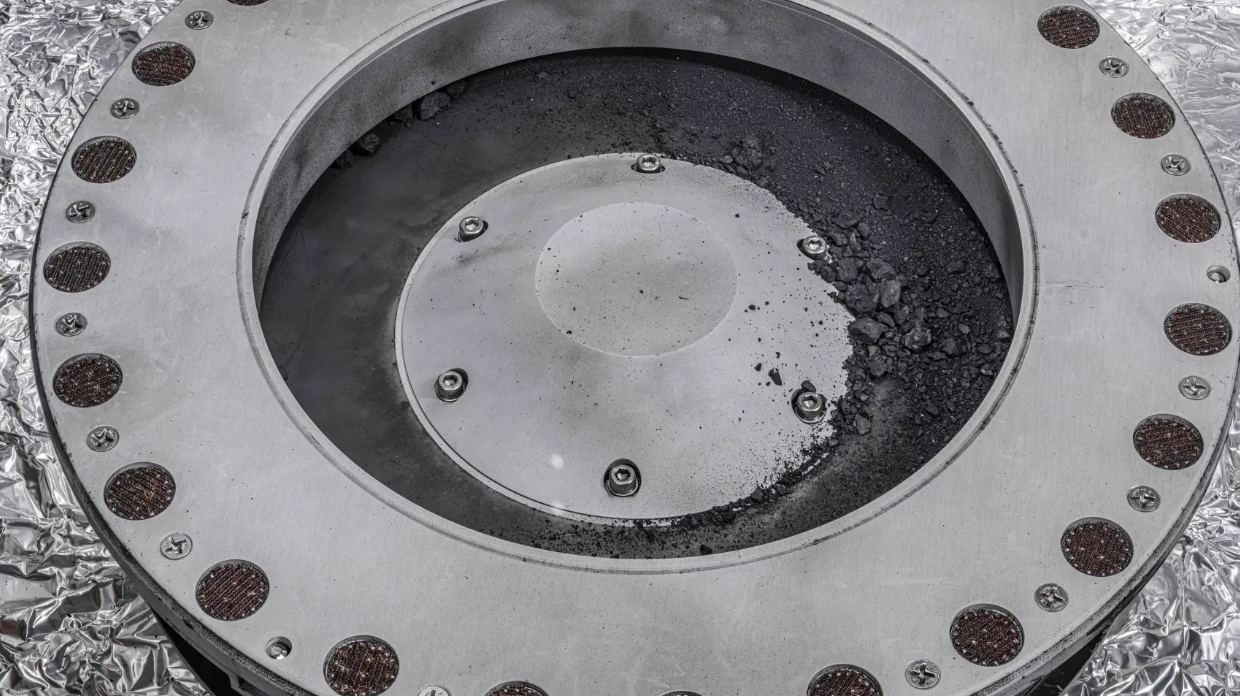
Previously on Space Sunday (as they say on TV shows) NASA’s ORISIS-REx mission returned to Earth samples captured from 101955 Bennu, a carbonaceous near-Earth asteroid. As we left that story, the sealed capsule containing the estimated 250 grams of material was pending a transfer to NASA’s Johnson Space Centre (JSC), Texas.

The first glove box unit at the ARES facility, JSC, purpose-built to handle the disassembly of the ORISIS-REx sample return capsule so that the samples of asteroid Bennu it contains can be removed for examination and analysis. Credit: NASA / Robert Markowitz

That transfer occurred on Tuesday, September 26th, 2023, with the sample capsule being airlifted from the US Army’s Dugway Proving Ground in Utah, some 31 kilometres from where it landed, to Ellington Field Joint Reserve Base near Houston, Texas. From here the special transpiration container with the capsule inside was move by road to the Astromaterials Research and Exploration Science (ARES) centre at JSC.

ARES is home to the world’s largest collection of “astromaterials” (samples returned from space), and is usually the first US centre to examine such samples brought to Earth by US space missions. As such, it is the ideal permanent home for the OSIRIS-REx samples, and will be the centre that carries out an initial sample analysis and then divvy it up for distribution to research centres around the world and to museums.

How it should have gone – the OSIRIS-REx TAGSAM “touch-and-go” mechanism recovering samples from the surface of asteroid 101955 Bennu in 2020. As it turned out, the asteroid’s surface was so brittle, the sample head and arm smashed through it to a depth of around 50cm.

Continue reading “Space Sunday: happy 65th, NASA!”

Space Sunday: the return of OSIRIS-REx

The OSIRIS-REx Sample Return Capsule (SRC) in the landing zone at UTTR, September 24th, 2023. Credit: NASA TV

On September 8th, 2016 at 23:05 UTC, an Atlas V 411 rocket lifted-off from Space Launch Complex (SLC) 41, Cape Canaveral Air Force Station (now Space Force Station). Launched by United Launch Alliance (ULA), the rocket carried aloft NASA’s Origins, Spectral Interpretation, Resource Identification, Security, Regolith Explorer (OSIRIS-REx), an ambitious mission to study a carbonaceous near-Earth asteroid and obtain as large a sample of material as possible for a return to Earth.

More recently, on September 24th, 2023, the mission achieved its goal, returning an estimated 250 grams of material – four times the minimum amount scientists hoped to obtain at the start of the mission – from the 500m diameter asteroid 101955 Bennu. It is not the first mission to return a sample of material from an asteroid; Japan holds that record with its Hayabusa and Hayabusa-2 missions. The first rendezvoused with asteroid 25143 Itokawa in 2005, the second with asteroid 162173 Ryugu in 2018; however, given both these missions returns a total sample cache of under 6 grams, OSIRIS-REx is the most successful to date.

A ULA Atlas 5 launches OSIRIS-REx on its way to a rendezvous with asteroid Bennu

Over the intervening seven years since its launch and return, OSIRIS-REx completed a round-trip journey of some 6.4 billion kilometres. Along the way it performed a fly-by of Earth some 12 months after launch, allowing it to enter an orbit around the Sun from which it could intercept Bennu. This passage around the Sun allowed OSIRIS-REx to past through the Earth-Sun Lagrange L4 position, where it performed a search for a class of near-Earth objects known as Earth-Trojan asteroids. Whilst no previously unknown asteroids were located during the 11-day survey in February 2018, the exercise yielded valuable data on vehicle manoeuvring for the kind of precise imaging required on reaching Bennu.

As it approached OSIRIS-REx Bennu in late 2018, OSIRIS-REx was able to observe Jupiter, adding to his science mission, prior to entering an initial orbit at the start of December 2018. It then spent most of the month generally characterising the asteroid, detecting hydrated minerals in the form of clay across the asteroid’s surface, suggesting it was once a part of a larger object rich with frozen water, offering a further pointer to how life-forming minerals and water may have been carried to Earth and the inner planets.

On December 31st, 2018 OSIRIS REx closed to just 1.75 km above Bennu’s surface, allowing it commence an extensive remote mapping and sensing mission which allowed the science team to identify potential areas which might be suitable for gathering one or more samples. In reaching that altitude, OSIRIS-REx set a new record for the closest distance any spacecraft has orbited a celestial object, beating ESA’s Rosetta mission’s orbit of 7 km around the comet 67P/Churyumov–Gerasimenko.

In all, 14 months were spent carefully surveying Bennu, allowing for potential sample-gathering sites to be identified, with the spacecraft closing to just 1 km above the asteroid, breaking its own record and allowing a final survey of the four preliminary landing sites so a final selection could be made. In the end, a site dubbed “Nightingale”, a fairly open shallow depression on the asteroid’s surface, was selected, and the mission moved to the rehearsal phase.

Image sequence showing the rotation of Bennu, imaged by OSIRIS-REx at a distance of around 80 km. Credit: NASA Goddard

In order to collect samples, OSIRIS-REx had to make physical contact with the asteroid in a “touch and go” (TAG) manoeuvre. This would see the spacecraft deploy a robot arm underneath itself. Called the Touch-And-Go Sample Arm Mechanism or TAGSAM, this spring-loaded arm carried a camera system and, on its end, a sample gathering system. The craft would then use its thrusters to gently push itself down towards Bennu, bringing the sample head into contact with the asteroid’s surface.

At this point, several things would happen in rapid succession: the springs in the arm would absorb the spacecraft’s motion, allowing it to maintain contact for a second or two as a jet of inert nitrogen would be directed at the surface under the sample head in order to blast material up into it while Velcro-like rings on the end of the head would snag dust particles and the like. Then, as the springs in the arm recoiled under the mass of the spacecraft and very gently push it back away from the asteroid, allowing a Mylar cap to close over the sample head, trapping whatever had been captured inside the head. Finally, once the spacecraft was sufficiently clear of the asteroid – 40m or so -, OSIRIS-REx would fire its thrusters an position itself back in orbit a few hundred metres above the asteroid, where the sample gathering operation could be assessed for success and from which, if required, a further attempt made to grab material.

A computer simulation of OSIRIS-REx making contact with asteroid Bennu. Credit: NASA

All of this was obviously quite complex – and due to the the delay in communications between vehicle and Earth, had to be carried out entirely autonomously. Hence the rehearsal phase of the mission. These were carried out in April and August 2020, with the first bringing the craft to within 65 metres of the sample site and the second stopping just 40 metres above it. Both saw the craft go through all phases of the TAG operation, sans actually touching the asteroid, with a small burst from the thrusters substituting from the recoil of the TAGSAM springs to push it away from the asteroid once more. Both rehearsals were flawless and paved the way for the first – and only, as it turned out – sample gathering attempt.

Continue reading “Space Sunday: the return of OSIRIS-REx”

Space Sunday: hycean worlds and seeking signs of life

An artist’s impression of the (potentially) hycean world K2-18b. Credit: NASA, CSA, ESA, J. Olmstead (STScI), N. Madhusudhan (Cambridge University)

“Hycean world” may not be a term familiar to many. It refers to a type of hot, water-covered planet with a hydrogen atmosphere – “hycean” being a portmanteau from HYdrogen and oCEAN – sitting somewhere between Earth and Neptune in size, and which could be promising candidates for harbouring life, as they would be naturally warm and wet. However, there is a slight wrinkle in this theory: up until now, hycean planets have been purely hypothetical – although several contenders for the title have been identified.

One such contender is K2-18b, an exoplanet 124 light years away. It sits within the habitable zone of a relatively mild-mannered red dwarf star called K2-18 (and also EPIC 201912552), located within the constellation of Leo when viewed from Earth. First discovered by the Kepler mission in 2015, K2-18b is referred to as a “super Earth” because it is around 3 times the size and 9 times the mass of Earth, but smaller than Neptune (3.9 times the size and 17 times the mass of Earth).

From the start, it was known that K2-18b had an atmosphere dominated by hydrogen. Studies also showed that while it orbits in close proximity to its parent star, taking just 33 terrestrial days to complete an orbit – such is the star’s low energy output (just 2.3% that of the Sun), K2-18b receives a very similar amount of solar energy to the Earth: 1.22kW per square metre compared to our own average of 1.36kW per square metre. This means the planet likely has a global temperature range of between averages of −23°C at the poles and +27°C in the tropics, making it potentially ideal for hosting liquid water.

A hypothetical example of composition of an exoplanet’s atmosphere obtained during a transit, when the light from the star passes through the atmosphere of the planet to be captured by an observatory’s spectrograph, allowing it to be broken down and the elements within the planet’s atmosphere identified. Credit: NASA, ESA, CSA, STScI, Joseph Olmsted (STScI)

In 2019, the Hubble Space Telescope (HST) found evidence that water vapour is present in K2-18b’s atmosphere, further edging it towards hycean status. However, the jury has remained out on the matter. The HST observations of 2019, for example, appeared to also find traces of ammonia and hydrocarbons – two elements which should not exist if there is also a large amount of liquid water present (as it would absorb them). Further, a 2021 study suggested that if K2-18b is tidally locked with its star (that is, always keeping the same side facing towards the star, which given their proximity to own another would seem likely), then any water on the sunward side of the planet would likely be in a supercritical state, making any form of liquid ocean impossible.

However, using the Near Infrared Spectrograph (NEARSpec) and Near-Infrared Imager and Slitless Spectrograph (NIRISS) detectors on the James Webb Space Telescope (JWST) a team of astronomers from the UK and USA are attempting to build a comprehensive – if not yet complete – view of K2-18b’s atmospheric spectra. Their initial findings have been published in a new paper, and suggest that K2-18b might yet prove to be a hycean planet.

In particular, the paper confirms that HST did find water vapour in K2-18b’s atmosphere, it was wrong about the presence of ammonia and hydrocarbons; the team having found no trace of either – although they have found both methane and carbon dioxide in the atmosphere, both of which also lean themselves to a potential for the planet having a liquid ocean.

The chemical composition of K2-18b’s atmosphere. Credit: NASA, CSA, ESA, R. Crawford (STScI), J. Olmsted (STScI), Science: N. Madhusudhan (Cambridge University)

More interestingly, the team also appear to have detected dimethyl sulphide, (CH3)2S – DMS for short. This is potentially a critical discovery, and so far as we know, DMS is the result of a wholly organic process: marine life and plankton giving vent to flatulence. If this is as true for K2-18b as for Earth, then the case for that planet having a liquid water ocean becomes pretty clear.

However, a note of caution needs to be struck here. As the researchers themselves make clear, the signal for DMS within K2-18b’s atmosphere is only 2 sigma. While this equates to a 98% confidence level in the instruments on JWST having correctly identified it, the results nevertheless fall far short of the 5 sigma (over 99.9% confidence) required by science to indicate the instruments have correctly identified the presence of a particular element within the atmosphere of another world. As such, further examinations of K2-18b’s atmosphere need to be made to see if that 5 sigma level can be achieved – or if the DMS traces fade away to nothing.

And even if the DMS readings prove to be correct, it again doesn’t automatically mean the planet is home to life. Whilst the sole cause for DMS here on Earth is that of marine life farts, the same may not be true for other places in the galaxy; it might yet be show the some strange geological or chemical cause might be responsible for its presence. Nevertheless, the data thus far obtained by JWST do suggest that K2-18b could be a warm, naturally wet planet – and potentially points the way to other such worlds existing within the galaxy.

Are Pollutants a way to find Industrial Civilisations?

Using the transit method of analysing the atmosphere of a planet, as with the case of K2-18b above, is one of the best ways we have at our disposal to determine its potential to support life. However, it might also be the means of detecting technological life itself – as pointed out by an international team led by Canadian–American astronomer and planetary scientist Sara Seager.

As we’re only too aware, humanity has developed a nasty habit of buggering up Earth’s atmosphere with pollutants. Some of these have very clear spectral signatures and cannot be produced in quantity by natural means. As such, looking for them elsewhere might be indicative of the worlds where they are found being home to industrial civilisations.

Analysing the atmospheres of exoplanets through the transit method for signs of pollutants / inorganic elements in large qualities might indicate the presence of an industrial civilisation. Credit: sciencing.com

Take sulphur hexafluoride (SF6) and nitrogen trifluoride (NF3), as Seager and colleagues suggest. These are two inorganic greenhouse gases (NF3 for example, is 17,000 times more effective at warming the atmosphere than CO2). Both are artificially created, and are used by a number of modern industries. What’s more, they have very distinctive spectral signatures and very long half-lives; as such they have the potential to make ideal “technosignatures” if they were to be detected in the atmosphere of an exoplanet.

Of course, this also requires that any extra-solar civilisation follows something of a similar development path as we are on, but it is an intriguing idea. In fact, and as Seager and her team note, whilst fluorine might be the 13th most abundant element on Earth, very little of it occurs naturally in any form; most of it is produced (and used) in industrial processes. So again, should the analysis of an exoplanet’s atmosphere reveal multiple fluorine elements, there’s a fair chance (again using Earth as a model) they might point to a technological civilisation being present.

Resuming the Hunt for “Planet Nine” – Or Its Economy Sized Version

I’ve covered the conundrum of Planet Nine – the Neptune-sized planet some believed to be orbiting the Sun at an average distance of around 460 AU and responsible for chucking a number of Kuiper Belt Objects (KBOs) into highly unusual orbits of their own well outside of the plane of the ecliptic – numerous times (see here, here, and here, for more).

Most vigorously proposed and pursued by Mike Brown, a leading planetary astronomer at the California Institute of Technology, it was a contentious idea – most notably because of the small data pool from which Brown and his colleagues drew on to establish the whole idea of “Planet Nine”. It was also one that quickly came into doubt as repeated attempts to locate the mystical world failed to do so and evidence against such a large planet existing continued to mount.

It had been thought that Planet Nine, if it exists, might equal Neptune in size. However, a 2020 study largely pushed this idea out of the window. Now it has been suggested a smaller body – closer to Earth in size – might be lurking far out in the solar system and exerting a possible influence on KBOs / TNOs. Credit: Caltech / R. Hurt

When I last wrote about this situation, back in June 2020, it was to cover the work of Professor Samantha Lawler, an assistant professor of astronomy, University of Regina, Canada. Due in part to her involvement in the Outer Solar System Origins Survey (OSSOS), coupled with models such as the Nice Model (as in the town in France, not “nice”) of planetary migration, she was able to demonstrate the vast majority of eccentric KBOs could be accounted for through purely natural gravitational interaction. Most, that is, but not all; as she noted in her findings, small groups of KBOs remain a outliers, defying explanation for their eccentricities.

Some of the latter lie within a sub-category of KBOs referred to as trans-Neptunian objects (TNOs). These are objects with obits close enough to that of Neptune so as to be directly influenced by its gravity, which forces them into very defined modes of behaviour. However, a small percentage of TNOs (approx. 13% of the total) refuse to show any sign of being under Neptune’s influence, almost as if there is something else acting on them gravitationally and limiting Neptune’s ability to call them to heel; something perhaps like a yet-to-be discovered “Planet Nine”; albeit one on a much smaller scale than previously imagined – its economy-sized version, if you will.

The idea has grown out of unrelated research concerning the early development of the solar system. In running hundreds of simulations on how the solar system may have formed, and the planets – particularly the gas giants – migrated away from the Sun, researchers noted their models repeatedly formed multiple Earth-sized planets in the outer solar system. The exact number varied with each simulation, but they all shared the common fate of either being completely ejected from the solar system thanks to the outward migration of the gas giants, or – in the case of a small handful – being pushed into very distant orbits around the Sun where they have yet to be found.

Most interestingly, the researchers noted that if just one of these small planets – one with a mass around twice that of Earth – were to be pushed into a high inclination orbit – say 45º – and at an average distance of just 200 AU from the Sun, then it could have the potential to exert influence over the recalcitrant TNOs in a manner pretty close to their actually behaviour, and similarly affect other outlier KBOs.

Those behind the study are not proposing that there is a “mini-me” Planet Nine tap dancing its away around the Sun; merely that their work has thrown up some potentially interesting results. Nevertheless, in some quarters it has somewhat reinvigorated the whole idea of a distant planet (or even planets) still awaiting discovery as they make their way slowly around the Sun, and so the hunt may yet resume.

Space Sunday: More from India and Japan, plus SLS & Starship

An Indian Polar Satellite Launch Vehicle (PSLV) lifts-off from the Satish Dhawan Space Centre (SDSC) at 06:20 UTC on September 2nd, 2023, marking the start of the Aditya-L1 mission to observe the atmosphere of the Sun and solve some of its mysteries. Credit: ISRO

In my previous update, I noted that the Pragyan rover element of India’s Chandrayaan-3 lunar mission had been put to sleep in preparation for the onset of the long lunar night settling in, the little rover having completed its core mission. Within hours of that report being published, and again, a little ahead of schedule, the Vikram lander was commanded to place itself in hibernation in readiness for some 15 days without sunlight.

Again, the reason for this was simple: the lander had completed its entire primary mission, and controllers hoped that by allowing it time to fully charge its batteries ahead of the onset of the lunar night-time, it will have sufficient power to run its electrical circuits through until the Sun rises over the landing zone on around September 22nd, 2023.

This image of the Vikram lander was captured by the navigation camera on the Pragyan rover during the Chandrayaan 3 mission to the Moon’s South Polar Region. Credit: ISRO

Neither lander nor rover have any direct heating systems with which to keep themselves warm, and so both are reliant on the heat produced by the batteries being sufficient to keep their electrical circuits from freezing in temperatures which may get as low as -120oC, and that the batteries will last long enough so they can be recharged once sunlight does return.

Most impressively, shortly before the command to go into sleep mode was sent, Vikram was commanded to perform a short “hop” on September 2nd, using its landing motor to jump around half a metre, turning itself in the process so its solar array will more directly face the rising Sun.

The mission’s success and catapulted India’s growing space ambitions into the spotlight – the country is well along the road to gaining a human spaceflight capability thanks to the in-development Gaganyaan vehicle, capable of flying up to 3 people to orbit for up to 7 days. Currently, this project is targeting 2024 for two uncrewed test flights for the craft, to be followed by a crewed launch in 2025, which would make India the 4th nation to have an independent humans-to-orbit capability after Russia, the United States and China.

An artist’s impression of India’s Gaganyaan crewed space capsule and service module, due to make its first uncrewed test flight in 2024. Credit: ISRO

Meanwhile, and in terms of science missions, India has already followed Chandrayaan-3’s success with another ambitious mission: that of its first dedicated solar observatory, Aditya-L1 (“Aditya” being the Sanskrit for “Sun”).

Launched via India’s medium-lift Polar Satellite Launch Vehicle (PSLV) from the Satish Dhawan Space Centre (SDSC), Sriharikota, at 06:20 UTC on September 2nd, the observatory separated from the launch vehicle around 63 minutes into the flight to start a 109-day journey to the Sun-Earth Lagrange L1 position, 1.5 million km from Earth, and lying between Earth and the Sun.

The first part of this comprised a series of polar orbits around the Earth carried out through until September 10th, which increased the vehicle’s apogee to move it further from Earth using minimum propellants. Two more such manoeuvres will take place during mid-September, allowing the observatory to transfer itself across to a halo orbit around the L1 position, which it should reach in early December 2023, and from where it can observe the Sun continuously.

The Sun-Earth Lagrange points and the flight of India’s Aditya-L1. Credit: ISRO

The mission’s primary objectives are:

  • Observation of the dynamics of the Sun’s chromosphere and corona. In particular, to engage in studies of chromospheric and coronal heating, examine the physics of partially ionised plasma, of coronal mass ejections (CMEs) and their origins, and observe coronal magnetic field and heat transfer mechanisms, and flare exchanges.
  • Observation of the physical particle environment of its immediate surroundings.
  • Probe drivers for space weather, and the origin, composition and dynamics of solar wind.

A unique aspect of the telescope will be its ability to obtain near-simultaneous images of the different layers of the solar atmosphere, allowing scientists to observe how energy is channelled through it. This will allow scientists to make determinations about the sequence of processes in multiple layers below the corona that lead to solar eruptions. One of the mysteries of the Sun is that its upper atmosphere has a temperature of 1,000,000ºK, as opposed to just 6,000ºK at the Sun’s surface. As such, it is hoped that this kind of simultaneous observation of multiple layers of the Sun’s atmosphere will reveal a new understanding of solar dynamics and the interplay of solar weather and Earth which had thus far escaped understanding.

Japan Launches XRISM and SLIM

Although 10 days later than originally planned, Japan has launched its XRISM (pronounced “crism”) space observatory and SLIM Moon lander (also called “Sniper”), when a H-2A rocket lifted off from Tanegashima Space Centre at 23:42 UTC, and both craft deployed successfully less than an hours after the launch.

As I’ve previously reported, the Smart Lander for Investigating Moon, massing the 590 kg including its propellants, is Japan’s first attempt to land on the Moon. It is primarily a technology demonstrator, due to land within the relatively young (and small – just 270m across) Shioli impact crater, located just below the Moon’s equator, in 3 to 4 months time. Despite its tiny size, the lander is equipped with a suite of science instruments and will also deploy two palm-sized lunar rovers.

An illustration of SLIM approaching the moon’s surface. Credit: ISAS/JAXA

XRISM – the X-Ray Imaging and Spectroscopy Mission – has a much closer destination than the Moon: an orbit just 550 km above the surface of Earth. Here, over an initial primary mission of 3 years, the 2.3 tonne telescope – defined officially as an “interim” observatory, which should not be taken to mean its role is unimportant –  will attempt to provide breakthroughs in the study of structure and formation of the universe, outflows from galaxy nuclei, and dark matter.

A successor to Japan’s Hitomi X-Ray telescope, lost in March 2016, just a month after its launch in February 2016 thanks to an attitude control system failure, XRISM is also an international venture, involving both NASA and the European Space Agency. In particular, it will not only be a science instrument but also a technology demonstrator for ESA’s Advanced Telescope for High Energy Astrophysics (ATHENA) telescope, due to be launched in 2035.

XRISM carries two instruments for studying the soft X-ray energy range, Resolve and Xtend, each with its own telescope. Resolve is an X-ray micro calorimeter developed by NASA’s Goddard Space Flight Centre, whilst Xtend is an X-ray CCD camera. Both will operate in concert with one another, with a combine focal length of 5.6 metres.

NASA’s SLS “Unsustainable”

The US Government Accountability Office (GAO) has issued an audit report in which it notes that NASA’s Space Launch System (SLS), the backbone of the American-led Artemis Project to return humans to the Moon, is at risk of becoming “unsustainable”.

With one successful flight under its belt – Artemis 1 – the project has thus far cost NASA US $11.2 billion since development commenced in 2011 (an amount which covered everything up to and including Artemis 1). A further US $11.2 billion has been requested by the White House to sustain SLS from 2024 through until the end of 2028, to allow NASA to further develop and enhance the system.

The core stage of the Artemis 2 SLS launch vehicle under construction. the US GAO suggests the costs associated with the SLS programme are “unsustainable” unless NASA becomes more transparent in its costings. Credit: NASA

This is somewhat at odds with a 2022 announcement by NASA that it plans to develop a contract with Boeing and Northrop Grumman, the prime contractors for SLS and operating under the name Deep Space Transport, which the agency states will include up to 10 SLS launches while will over time reduce the production costs for those vehicles by up to 50%.

In their report, the GAO points out that the methodologies NASA uses to determine the costs associated with SLS are not easy to define. As, such, while there has been “some progress” in the agreement with Deep Space Transport, there is a real risk SLS costs will spiral, and suggests NASA starts to be more transparent in their SLS estimates and in how it manages expenditure.

NASA does not plan to measure production costs to monitor the affordability of the SLS programme. These ongoing production costs to support the SLS program for Artemis missions are not captured in a cost baseline, which limits transparency and efforts to monitor the program’s long-term affordability.

US GAO Audit, September 2023

In this regard, the GAO notes that while NASA has been forced to acknowledge the overall timeline for Artemis continues to slip for assorted reasons, costs associated with various missions have not been updated to reflect this. As such, whilst NASA has stated the cost of building the SLS vehicles to be used with Artemis 3 and 4, the reality is that the costs for these vehicles are actually increasing. As a result, an despite statements to the contrary by NASA, GAO believes SLS launches are liable to remain at around US $4.1 billion each rather than decreasing over time to around US $2 billion each.

The report is the latest of a string of GAO audits across almost a decade, all of which have critiqued NASA over a lack of proper baselining and transparency with regards to Artemis and SLS. At the time of writing, NASA had yet to respond.

SpaceX Starship Update

The Federal Aviation Authority (FAA) has issued the final version of a report into the failures of the first orbital launch attempt by SpaceX using their massive Starship / Super Heavy vehicle. The report, production of which was led by SpaceX, will not be made public due to “proprietary and export-controlled information”, identified “multiple root causes” for the failure of the Booster 7 / Starship 24 combination – none of which are to be made public either.

In a separate statement, SpaceX pointed to “propellant leaks” within the engine bay resulting in fires which severed connections with the primary computer system being a significant factor on the vehicle loss. Whilst in essence accurate, the statement totally avoids mention of the fact the leaks were most likely due to the force of the Super Heavy’s thrust excavating the unprotected concrete apron directly under the the launch mount, throwing significant amounts of concrete up to a kilometre from the launch site – and almost certainly into the engine bay to cause damage which may have resulted in at least dome of the leaks.

Some of the concrete debris scattered on the beaches of the Boca Chica wildlife reserve following the failed launch attempt of SpaceX Starship 24 / Booter 7, April 20th, 2023. Credit: AP News

As many – myself included – noted, the April 20th flight was on questionable value even before it lifted-off. Since then SpaceX have sought to rectify the most glaring omission from the launch facility – a water deluge / sound suppression system (which has shown promise under a couple of short, partial-power tests, but which has yet to prove itself under the full thrust of a Super Heavy booster, and likely will not do so until the next launch).

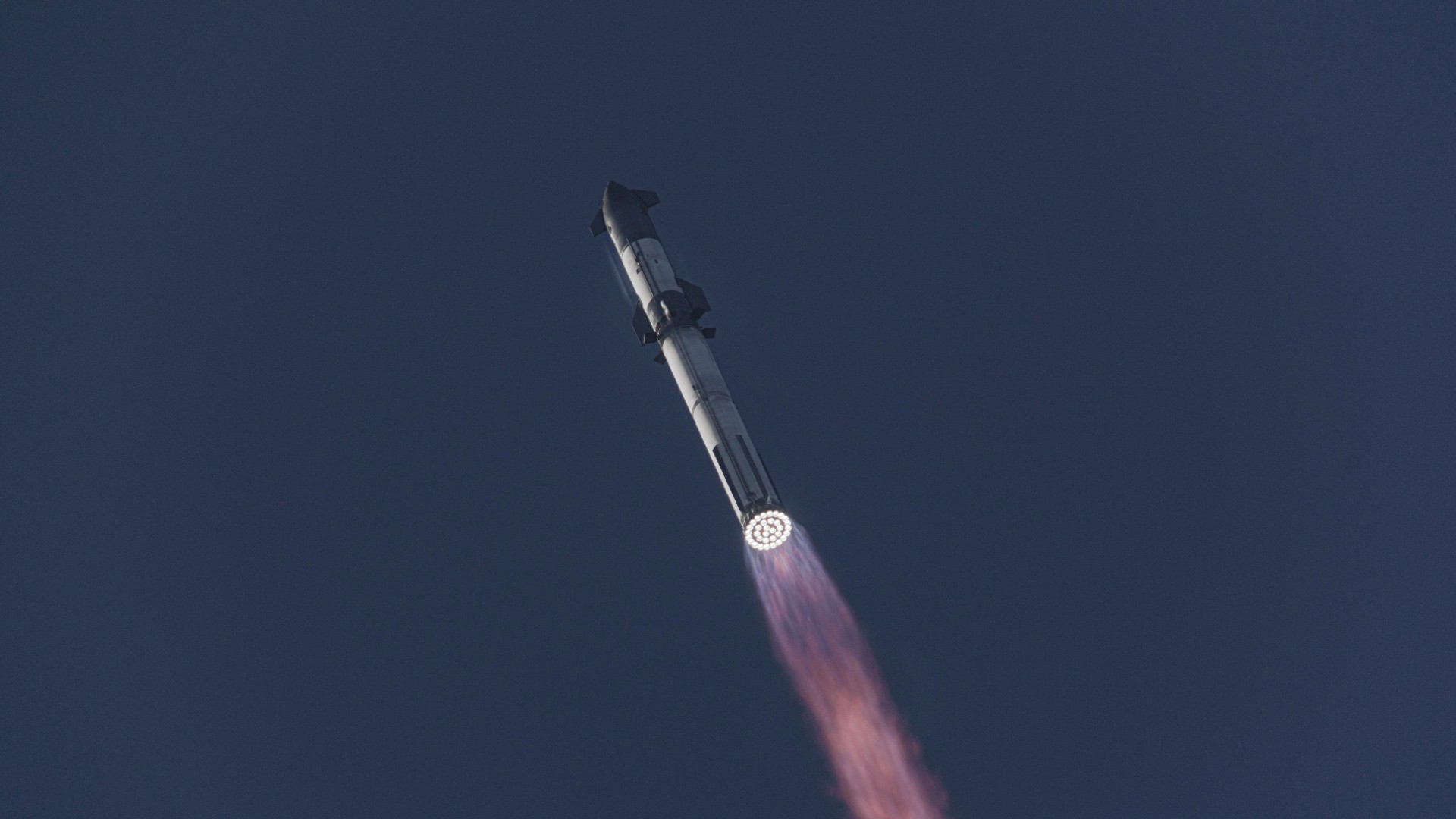
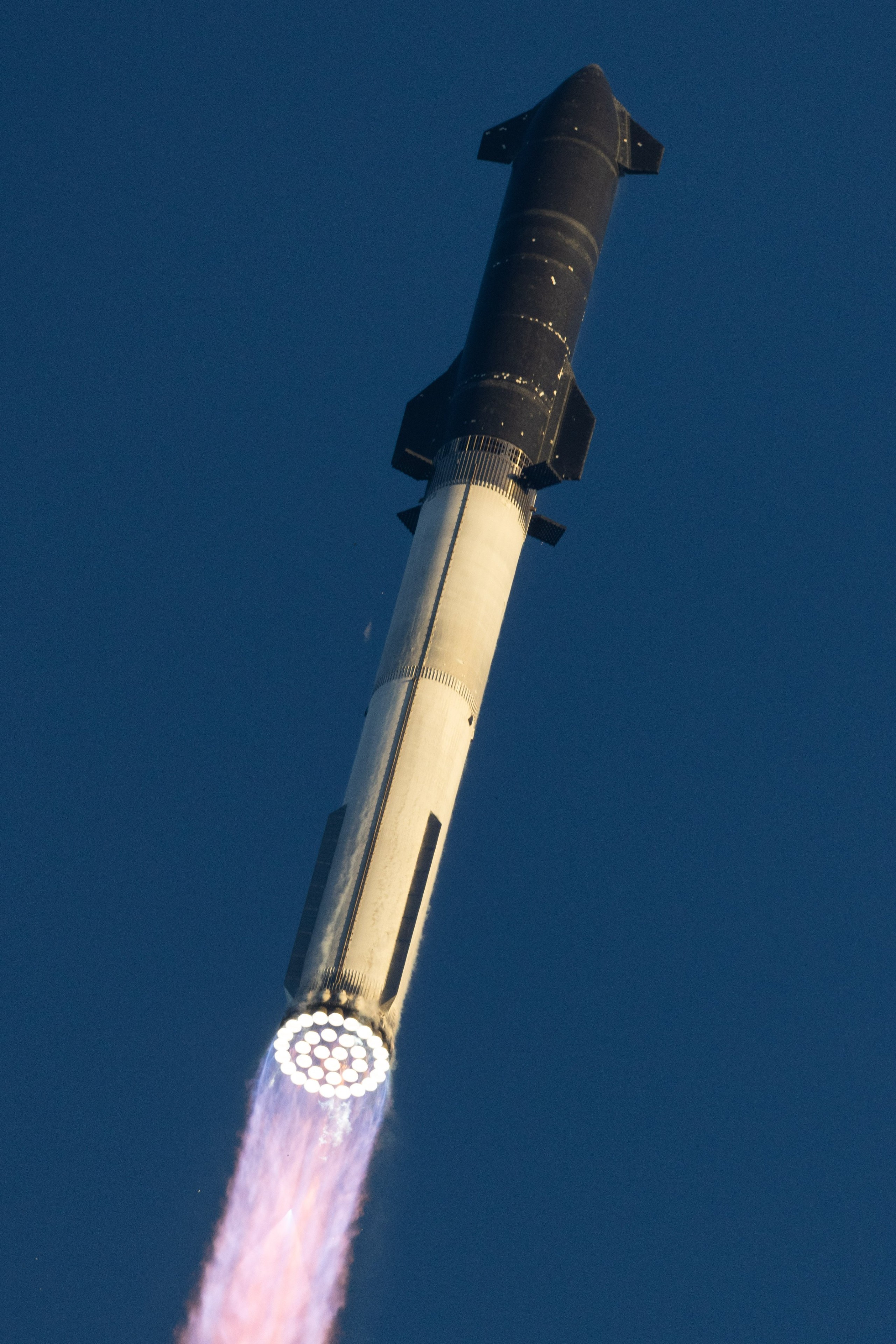
In addition, there have been multiple changes to the flight software and systems, together with a wide range of physical updates to the vehicles, some of which pre-dated the April 20th launch attempt and rendered Booster 7 pretty much obsolete. How many of the modifications count towards the 63 “corrective actions” the FAA report states must be made before it will grant SpaceX a license for a further launch attempt, is unclear. Finally, and whilst unrelated to the launch failure, SpaceX have further altered the design to allow for  “hot staging”: allowing Starship to ignite some of its engines prior to separation from the Booster, potentially increasing the payload-to-orbit capability.

Booster 9 and Starship 25 stacked at the SpaceX orbital launch facility in Boca Chica, Texas. Credit: SpaceX

And if it sounds odd that SpaceX led the investigation into the loss of its own vehicle, it is not. The FAA simply doesn’t have the breadth of expertise to complete such an investigation itself. Instead, it relies on input from a range of agencies as required – such as the National Transportation Safety Board (NTSB), the US Air Force, the US Space Force, NASA, etc., and, in the case of a commercial launch provider – the provider and its contractors, as and where required.

Meanwhile, in a move which has SpaceX fans making assorted proclamations about an imminent further launch, the next vehicles designated to attempt to reach orbit – Booster 9 and Starship 25 – have been “stacked” on the repaired and updated launch mount. However, and in response to comments on such an “imminent” launch from fans (and Musk himself), the FAA has indicated that the original launch license was only for the April 20th launch – so SpaceX must show it has complied with the accident report and apply for a further license before it will be allowed to proceed.

A further twist to this is that the FAA is itself being sued by a number of environmental and other groups over the SpaceX site at Boca Chica. They claim that by allowing SpaceX to largely author the original Programmatic Environment Assessment (PEA) relating to SpaceX’s use of the site, combined with the April 20th failure, the FAA has materially failed to meet its obligations, and should therefore be ordered to carry out a full Environmental Impact Study (EIS) – a process which could take 2-3 years. Depending on when hearing on the case are held, it is possible the groups involved could seek an injunction on launches until the court rules in the matter of the EIS.

Space Sunday: China’s space station, data and a rover

A China State Television (CCTV) animation showing Tiangong with the new module and docking adapter (foreground), and the crewed vehicle replacement for the Soyuz-based Shenzhou crew vehicle about to dock at the central hub. Note the Wentian and Mengtian science modules to either side are shown with additional solar arrays extending away from them. Credit: CCTV

With orbital operations well underway, China is considering a further further expansion to its Tiangong space station as well as opening the station to both the nascent Chinese commercial space sector and international participation.

In particular, the latest 5-year plan produced by the China Manned Space Agency (CMSA) and the China Academy of Space Technology (CAST) for the period 2026-2030, appears to confirm statements made in December 2022 and February 2023 that China is considering expanding the station with the addition of a fourth module.

Exactly what form the new module will take has been open to debate for several months, with initial reports suggesting it would be physically and functionally similar to the existing three modules – the Tianhe-1 core module and the Mengtian and Wentian science modules – with a mass of around 21-22 tonnes, and up to 51 cubic metres of internal habitable space.

Drawn from images captured by multiple satellites in orbit, this annotated animation provided by Australia’s HEO Robotics, a company specialising in “non-Earth imaging” (i.e. capturing images of object in space using other satellites) showcases the assembly of the Chinese Space Station from September 2021 through until the arrival of the Shenzhou-14 mission in June 2022. Credit: HEO Robotics

However, more recently, it has been suggested that the additional module would be of an entirely new design, providing as much interior space as Tianhe-1, together with a new 6-way multi-function docking adapter and support scientific payloads being mounted on its exterior.

It now appears China is leaning towards this second option, with Wang Xiang, the director of space station systems at CAST indicating the increased docking capability and internal space will achieve a three-fold design function:

  • It would allow more vehicles to dock with the station together with more research space and – Wang has suggested – room for space tourists to visit the station as well.
  • It would allow the station to act as a hub for the testing and development of vehicles and technologies intended to help expand China’s lunar and deep space ambitions.
  • It could potentially encourage greater international participation in the Chinese space programme as well as encouraging the Chinese commercial space sector.
Two renderings of the proposed expansion to the core Tiangong space station. Left: using a Tianhe-1 / Wengtian/Mengtian-derived module (Green). Right: using a smaller (but roomier) module of a new design (green), equipped with a 6-way docking adapter, which would also enable further modular expansion (yellow). Credit: Wang Xiang, Zhang Qiao, Wang Wei, CAST

With regards to the latter point, Ji Qiming, an assistant director at CMSA has indicated that CMSA will be accepting proposals from the Chinese commercial space sector for vehicles capable of resupplying the station with consumables. Additionally, he indicated that China has repeated its offer to the international community to join with it in research opportunities on the station. This has been offered in two ways: cooperation in research through the provision of experiments, and the direct participation of astronauts to join Chinese tiakonauts in training for, and participating in. flights to and from the station from China.

The move towards greater international cooperation is seen by some as a significant game-changer for the Chinese space programme, further opening the door to build on agreements with a number of European nations, together with Mexico, Japan and Peru and with the UN to fly experiments on Tiangong and an agreement with Italy which includes flying astronauts to the station. In particular, China may be looking to court partnerships with India and Pacific Rim nations such as Australia and New Zealand, both of whom are looking to expand their involvement in space exploration and development.

A rendering of the Xuntian Chinese Survey Space Telescope (CSST), due to be launched towards the end of 2024 and operate in cooperation with Tiangong. Credit: Jaimito130805

No launch date for the module has been given, although if it is to be of an entirely new design, it would be unlikely to be ready for launch before the early 2030s.

In the meantime, and as soon as the end of 2024, Tiangong will be indirectly expanded with the launch of the Xuntian Chinese Survey Space Telescope. This is a free-flying observatory which will be placed in a co-orbit with Tiangong, allowing it to operate both independently but also periodically dock with the station for servicing.

NASA’s DSN at Risk of Collapse?

One of the most critical elements of NASA’s infrastructure is, oddly enough, one that tends to be the most taken for granted. It’s not a launch centre or mission control facility or a research centre or astronaut training facility. It’s most obvious elements are three huge communication centres located in California, Australia and Spain. It is known by the simple acronym DSN, meaning Deep Space Network – and without it, NASA would be unable to maintain contact with any of its missions beyond Earth orbit.

More than 50 years old, the core of DSN has been in service since before Apollo. While its primary function is data communications and relay, the DSN also carries out science of its own when capacity allows, in the form of radar and radio astronomy. However, while the intervening years the broader supporting infrastructure for DSN communications between its various centres has been updated, the facilities at the centres – the primary centres have been under increasing strain, whilst at the same time, the budget allocated for both DSN operations and systems development / enhancement – has been steadily decreasing year-on-year. In 2010, for example, the DSN budget was US $250 million. Ten years later, it was down to US $200 million. As a result of this, DSN’s core capabilities have been steadily degrading.

This came to a head during the 25-day Artemis 1 mission in November / December 2022. This required dedicated DSN activity across 1774 hours – 903 hours for tracking the Artemis 1 mission, and the rest in monitoring the 8 cubesats launched as secondary payloads with the mission – the majority of which saw the DSN operating in a “search and rescue” mode, simply monitoring the cubesats in case any of them ran into problems. As a result, NASA science missions such as those operating around Mars or at the outer edge of the solar system or beyond, and so on, were almost completely denied any data communications through the DSN.

NASA’s Deep Space Network facilities near Canberra, Australia. Credit: Ryan Wick

Warnings that the DSN is over-subscribed have been available for some time. As recently as July 2023, NASA’s own Office of Inspector General (OIG) issued a report saying budget reductions mean that the network will remain over-extended throughout the rest of the 2020s and into the 2030s, even if work on updating it is prioritised.

Whilst attempts have been made to ease some of the load – a cloud-based data communications and data handling system was introduced to support the Goldstone, California DSN site, even these have struggled to keep pace with emerging technologies such as cubesats. This was again demonstrated during Artemis 1 when a system designed to handle some of the cubesat data load itself suffered a 33-hour outage, belatedly forcing NASA to realise that over-extending data communication through multiple additional rideshare payloads during a major undertaking such as an Artemis flight perhaps isn’t a good idea.

Even so, the demands of Artemis remains a major concern to those responsible for DSN, because it has the potential to cripple other missions; something which has led to the formation of a committee to outline a 4-point plan to help combat the issue.

When Artemis comes online, everybody else moves out of the way, and it’s an impact to all the science missions We either have to clear everybody off the network or we struggle — and our experience with Artemis 1 was struggling with trying to move everybody around.

– Suzanne Dodd, director of NASA’s interplanetary network directorate

The DSN antennae at NASA Goldstone, California. Credit: NASA/JPL

Some of the recommendations under consideration include implementing a new suite of six 18-metre antennae called LEGS at the DSN Goldstone centre which will be used solely for use by the Artemis programme, and also the implementation of a network of relay satellites  in orbit around the Earth and Moon to handle more of the data load required by Artemis.

However, these solutions require a budget expenditure which NASA currently doesn’t have, nor is it likely to receive in the foreseeable future, and time to implement. And even then, programmes like LEGS fall short of the overall data capabilities NASA will require for long-term human operations on the Moon.

We have reached a really critical point with the DSN’s aging infrastructure. This scares us very much.  We’ve clearly gotten a five-alarm fire bell.

– Sandra Cauffman, deputy director of NASA’s astrophysics division

Both Cauffman and Dodd are members of the committee responsible for making recommendations like LEGS to NASA, so that the agency can consider options and request funding.  However, before even this can be done, the committee can do even this, the recommendations they make must be reviewed and approved by the NASA Advisory Council, which is not scheduled to meet again before November, which means NASA will likely be unable to make any formal requests for increasing DSN’s budget until fiscal year 2025.

Continue reading “Space Sunday: China’s space station, data and a rover”

Space Sunday: roving on the Moon

An artist’s rendering of Chandryaan-3 on the surface of the Moon. Credit: ISRO

On August 23rd, 2023, India became the 4th nation to successfully land a vehicle on the Moon, after Russia, the United States and China – and the first nation to manage to do so within the South Polar Region of the Moon.

Following its separation from the propulsion module on August 17th, the Chandrayaan-3 lander Vikram completed a series of small adjustments to which allowed it to reduce the lowest point in its orbit to just 30km above the Moon. It was from this altitude that the lander fired all four of its landing motors to drop it into a gentle ballistic descent towards the lunar surface easing it down to an altitude of 7.2 km over a period of 11.5 minutes.

India’s Chandrayaan-3 mission took this photo of the lunar surface shortly after landing on the moon on August 23rd, 2023. Credit: ISRO)

At this point the lander used its thrusters to orient itself into a vertical position in preparation for landing. Then, at 150 metres above the surface the lander held its position using two of its decent engines to hold position for around 30 seconds in order to carry out a final scan of its proposed landing area before continuing to a soft landing at 12:32 UTC.

The landing came as a source of national and international celebration – and some relief for the Indian Space Research Organisation, the mission in part being the result of the loss of the Chandrayann-2 lander / rover combination when they deviated from their planned descent to the surface of the Moon on July 22nd, 2019, striking the Moon at an estimated 50 m/s (180 km/h / 112 mph), rather than the required 2 m/s (7.4 km/h / 4.6 mph) required for a soft landing.

The entire mission operations right from launch until landing happened flawlessly, as per the timeline. I take this opportunity to thank navigation guidance and control team, propulsion team, sensors team, and all the mainframe subsystems team who have brought success to this mission. I also take the opportunity to thank the critical operations review committee for thoroughly reviewing the mission operations right from launch till this date. The target was on spot because of the review process.

– Chandrayaan-3 project director P. Veeramuthuvel

The mission has a number of objectives, with the lander and its small rover – called Pragyan (“wisdom”) – primarily focused on the probing the composition of the lunar surface and attempt to detect the presence of water ice and to examine the evolution of the Moon’s atmosphere. However, the mission is also about the rover itself and demonstrating India’s ability to build and operate a rover vehicle.

Following landing, and after surveying its surroundings, Vikram was ordered to extend a ramp ahead of the rover’s deployment. This occurred at 03:00 UTC on August 24th, 2023, when – after as series of checks, the rover was released from its locked on the lander and commanded to roll down the ramp onto the lunar surface, watched over by the lander’s cameras.

Following initial deployment, the rover paused at the foot of the ramp, before commands were passed for it to roll forward several metres and commit a turn to test its steering.

In all, both lander and rover are expected to operate for a total of 15 days within landing area – the length of time the Sun will be above the horizon in order to provide energy to the solar-powered vehicles. It is hoped that the studies the mission performs will add to our understanding of the Moon’s south pole and its role in host water ice – a resource of enormous potential and importance to future aims for the human exploration of the Moon, and being planned by the US-led Artemis programme (of which India is a member through the Artemis Accords) and China.

This image of the Chandrayaan-3 lander Vikram was taken shortly after the landing by the Chanrayaan-2 orbiter, which has continued to operate successfully in lunar orbit following the loss of that mission’s lander and rover. Credit: ISRO

Yutu-2 Keeps Rocking

Meantime, on the lunar far side, China’s Yutu -2 (“Jade Rabbit”) rover continues to explore Von Kármán crater more than 4.5 years after arriving, making it the longest operational lunar rover to date, and the only rover operating on the far side of the Moon.

A part of the Chang’e-4 mission, the 6-wheeled rover is operating in conjunction with the mission’s lander, with both rover and lander having far exceeded their primary missions of 3 and 12 months respectively. For the rover, which has to contend with the harsh lunar nights, this is a remarkable achievement. During its time on the Moon it has covered a distance of around 1.5 km, exploring features within the crater and probing below the surface.

Footage of Yutu-2 captured from its initial deployment on the Moon in 2019, strung together into a movie. Credit: CNSA

The latter is achieved through the use of a two-channel ground penetrating radar (GPR) capable of “seeing” to depths of around 300-350 metres. This has revealed the Moon’s surface structure under Von Kármán crater to be remarkably complex, with at least 5 layers of rock stacked one above the last in a manner of sedimentation. However, rather than the result of water action, these appear to have been the results of volcanism, with at least three of the five layers primarily comprising basalt.

This points to the region having once been a site of significant volcanism and helps in further understanding of the Moon’s early history. In addition the different degrees to which the layers spread help inform scientists on how the decreasing thermal activity within the Moon directly correlates to the loss of volcanism and the settling of lunar features.

Following missions like Yutu-2 and Chang’e-4 isn’t easy, as the Chinese space programme is mixed in terms of the information and frequency with which it makes information publicly available. However, given the fact that this study is part of broader research into the Moon’s upper layers being carried out by the Planetary Science Institute in Tucson, Arizona utilising data provided by China, demonstrates the latter’s commitment to sharing the results of their robotic space research with science institutes around the world.

Continue reading “Space Sunday: roving on the Moon”