HTC: Vive pre-orders open Feb 29; company split denied

The HTC Vive Pre (image: HTC)

Following the end of the 2016 Consumer Electronics Show (CES) earlier in January, HTC announced that their Vive VR system will be available for pre-order from February 29th, with shipping to commence in April.

The Vive demonstrated at CES was the “2nd generation” Vive Pre, which boasted significant improvements over the first development unit in terms of headset sized, general ergonomics, fit, comfort and capabilities. In particular the unit boasts a front-mounted pass through camera, (which HTC has sometimes referred to as the “chaperone system”), and a correction tool to present a clearer view of the VR environment on the headset screens.

The Vive Pre features a central, front mounted pass through camera system (image: HTC)

The pass through camera allows the user to see an overlay of the room around them projected into their virtual view. This fades in if they approach a physical object (e.g. a wall or desk, etc.), or can be manually triggered via the hand controllers. While some have critiqued it as “breaking” the VR experience, others have seen it as a useful means for a Vive user to re-orient themselves within their physical space.

Mura correction” (“mura” being a Japanese term meaning “unevenness” or “lack of uniformity”) removes the inconsistent brightness levels between one pixel and the next on earlier Vive headsets, giving rise to what HTC called a “linen like quality” to VR scenes. The result is a far more uniform and cleaner image, as shown in the exaggerated image below, courtesy of Road to VR.

"Mura correction" improves the VR image seen on the Vive's headset lenses, as illutrated by this exaggerated representation, courtesy of Road to VR - click to enlarge
“Mura correction” improves the VR image seen on the Vive’s headset lenses, as illustrated by this exaggerated representation, courtesy of Road to VR – click to enlarge

The pre-order price for the Vive has yet to be confirmed, but it is anticipated it will be somewhat more that the Oculus Rift. Even allowing for the  fact the price will include hand controllers and room sensors, this leaves HTC with a potentially awkward situation.

While the US $599 (+ tax and shipping) for the Rift took many by surprise, the take-up among early adopters has been positive; so much so that orders are now being backdated to July 2016. That’s good for Oculus VR – but it also means HTC could find the market for early adopters considerably smaller given so many have pre-ordered the Rift; and if the Vive does come in at a significantly higher price, they could find those who have held by from placing an order with Oculus VR to see what HTC do offer, swinging back towards it in favour of the Vive. Nor do the problems necessarily end there.

As I recently noted, tethered VR systems could face an uphill battle in trying to reach a more general market among the populace at large when compared to the cheaper, more accessible opportunities available through mobile VR.

Nvidia plan a "GeForce GTX VR Ready" logo for computer systems capable of meeting tethered VR requirements, and will be offering Nvidia has set out specific minimum requirements that must be met in order for consumer PCs to be able to cope with virtual reality graphics
Nvidia will offer a “GeForce GTX VR Ready” label for consumer PCs capable of meeting tethered VR requirements, and is working on a new range of GPUs specifically to meet the needs of VR (image: Nvidia)

While the latter may limited in capability and scope in comparison to tethered rigs, they are far more affordable and accessible, dampening any interest people have in paying for the tethered rig and the necessary hardware on which to run it. Particularly given that Nvidia estimate less than 1% of computers in household use will be capable of running tethered VR systems. Thus, HTC could find themselves right out in the cold if the Vive is significantly more expensive that the Rift among the wider public who might have a system capable of supporting VR headsets and are willing to give it a go as units hit retail outlets.

HTC was also the subject of intense, if brief, speculation on Sunday, January 18th and Monday, January 19th 2016. It started when the Chinese language Commercial Times, Taiwan’s largest financial newspaper ran a story claiming HTC’s Chairwoman, Cher Wang, was considering spinning-off the fledgling VR business into a separate company.

HTC Chairwoman Cher Wang: enthusiastic about VR, but not planning to split it into a separate entity.

The report was picked-up through other news outlets, and gained widespread reporting in the VR media, and saw HTC’s share price rise by 5.23%. However, on Monday, January 19th, the company issued a statement to investors, labelling the media claims as incorrect, and stating the company has no plans to split the VR business into a separate entity.

At what price VR?

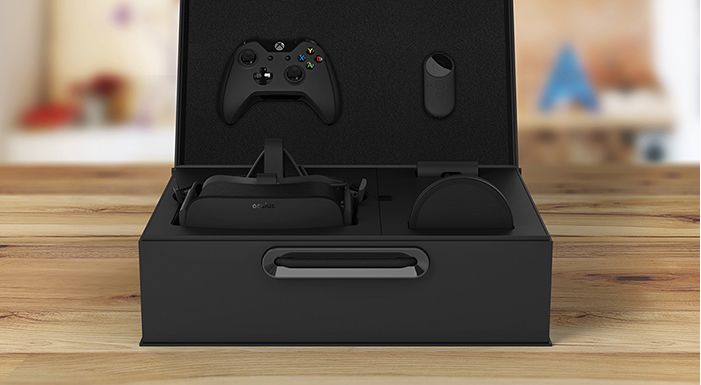
Oculus CR-1 with microphone, Oculus Remote and Xbox wireless controller
Oculus CR-1 package (image: Oculus VR)

On Wednesday, January 6th, and as I reported, Oculus VR announced the price of the first generation Oculus Rift VR headset as being US $599 (€699 in Europe and £499 in the UK) + shipping at applicable taxes, with the unit available for pre-order.

The price has caused some consternation around the globe, even though Palmer Luckey had, since September 2015, been indicating the headset would be more than the assumed price of US $350, as my colleague Ben Lang over at The Road to VR quoted Luckey saying at the time.

As it is, the Oculus Rift is apparently heavily subsidised by Facebook; had it not been so, then the price might have been north of the US $1,000 mark . Further, and like it or not, the HTC / Valve Vive is likely to have a price point somewhat more than the Rift – although it will include hand controllers and room sensors, which the Rift does not. In addition, the latest version of the Vive sports a “chaperone system”: a front-mounted camera which allows the user to overlay their VR environment with images of the room around them, making for easier physical movement when using the headset.

Elsewhere, there has been speculation about the possible price of Sony’s PlayStation VR (PSVR), particularly after Forbes reported Amazon Canada had it listed at CAN $1,125 (roughly US $800). The listing price was later removed, with Sony stating it was an error and that the final price of the PSVR has yet to be determined – but it has left people wondering.

And while the Oculus Rift price may seem steep, it might be worth pointing out that the Vuzix iWear, an OSVR-based headset initially aimed at the immersive film experience, but capable of supporting VR games and applications, is currently available for pre-order at US $499, and comes with a specification somewhat below that of the Rift.

Sony PSVR - Amazon Canada quoted a price of US $800, quickly countered by Sony - but some speculate it might be accurate
Sony PSVR – Amazon Canada quoted a price of US $800, quickly countered by Sony – but some speculate it might be accurate or at least close to the truth (image: Sony Computer Entertainment)

So does this mean the US $599 price tag for the Oculus Rift is justified? Given that the first pre-order batch apparently sold-out within minutes, one might be tempted to say “yes”. However, the initial rush could be deceptive; while there are undoubtedly a lot of early adopters out there willing to pay a premium for the hardware, they aren’t likely to be in the majority.

And here is where consumer-focused VR could end-up being hoist by its own petard, and in a number of ways, some of which are pointed to by Chris Kohler, writing at Wired.

The first is that VR as a term is already being badly abused.Much is made of 360-degree video (already a thing through Google Cardboard systems), but it really isn’t VR as many would accept it.

The second is there is already a rising tide of headsets offering “VR experiences”. Most of these are (again) Cardboard-based and utilised a mobile ‘phone. The problem here is that inevitably, the quality of the experience isn’t all it could be. What’s more, it often hooks back into the idea that VR is pretty much stuff like 360-degree video.

Samsung's Gear VR sits at the top of the mobile VR pyramid, and could be said to be indicative of where Oculus VR would like to go: a self-contained, lightweight system which doesn't necessarily tether the user to their computer
Samsung’s Gear VR sits at the top of the mobile VR pyramid, and could be said to be indicative of where Oculus VR would like to go: a self-contained, lightweight system which doesn’t necessarily tether the user to their computer (image: Samsung)

The issue here is that despite these factors, these low-end headsets and units such as Samsung’s Gear VR, are presenting VR as something that’s easily affordable (given most people are liable to have a suitable ‘phone to use with them). The experience may not be terribly clever when compared to the Rift or the Vive – but it is there, and it is coupled with a possible perception that VR is about 360 film / sports experiences.

Thus, unless the Rift and the Vive et al can convince the greater populace they offer a truly unique, high-end, head-and shoulders-above-the-rest type of VR experience that instantly compels people to shell out the readies for them, there is a risk that they could be seen a “just another headset”, and passed by in favour of the cheaper albeit less capable headsets, at least until the price point is seen to come down – and that could put something of a pin in the side of the VR bubble, if only in the short-term.

Oculus Rift now available for pre-order

The Oculus CR-1 - now available to pre-order
The Oculus CR-1 – now available to pre-order (image: Oculus VR)

Following a pre-announcement on Tuesday, January 5th, Oculus VR have confirmed that the Oculus Rift headset is now available for pre-order (for Windows users) for shipment to the following countries: Australia, Belgium, Canada, Denmark, Finland, France, Germany, Japan, Iceland, Ireland, Italy, Netherlands, New Zealand, Norway, Poland, Spain, Sweden, Taiwan, United Kingdom, United States.

The price for the headset and accessories is a nominal US $599 (€699 in Europe and £499 in the UK), although as the announcement notes, this is exclusive of tax and shipping costs, and the price may vary for non-USD purchases.

Oculus VR indicate that pre-ordered set will start shipping on March 28th, 2016, and limited stocks will be available to retailers later in April 2016. However, Engadget report even the March 28th ship date may have slipped due to the initial volume of orders already received by Oculus VR, and that some outside of the US may have had problems in placing orders.

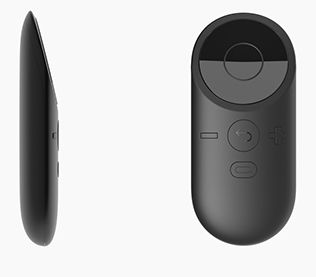
The Oculus Remote is "esigned to make it simple and intuitive to navigate VR experiences"
The Oculus Remote is “designed to make it simple and intuitive to navigate VR experiences” (image: Oculus VR)

The complete package comprises the Rift headset with built-in headphones and microphone, sensor, and an Xbox One controller and the Oculus Remote.

Those pre-ordering also secure the opportunity to pre-order the Oculus Touch hand controllers when they become available later in 2016 (the  release of the latter was pushed back to the second half of 2016 to allow further time for development  / testing).

Also included in the package is a copy of Playful’s Lucky’s Tale, a platform game which has enjoyed much exposure and positive response as a part of Oculus Rift demonstrations, and also EVE: Valkyrie.

Those pre-ordering are reminded that a fairly hefty PC is required to obtain a suitable Rift experience, with the specifications listed as : NVIDIA GTX 970 / AMD R9 290 equivalent or greater GPU;, an Intel i5-4590 equivalent CPU or greater; at least 8Gb of RAM; compatible HDMI 1.3 video output; 3 free USB 3 ports (and 1 USB 2 port) and Windows 7 + SP1 or greater.  Oculus also report that PCs supplied by manufacturers meeting this specification will start to ship with an “Oculus Ready” logo, and the company will be making suitable PCs with headset available for pre-order in February (presumably in the US only) at a starting price of US $1499.

A compatibility tool is available for download to help determine if your PC is “Oculus ready” and those wishing to pre-order can do so through the Oculus Shop.

The compatibility test will tell you if your PC is ready for the the best Oculus Rift experience
The compatibility tool will tell you if your PC is ready for the best Oculus Rift experience

There has already been some excitement following the announcement by those SL users who are interested in the Lab’s upcoming virtual worlds platform, “Project Sansar”, as this is being built very much with the Rift in mind (although use of a Rift headset with “Sansar” is not a requirement).

While the experience is acknowledged to be somewhat less-than-optimal, it’ll be interesting to see of the Oculus VR announcement spurs the Lab on update the Second Life Oculus Rift project viewer for those wishing to try the headset in Second Life. There have been promises that such an update is coming down the pipe, but until now it has likely been sitting at the back of the queue while the Lab pushes out updates and capabilities liable to be more widely appreciated by SL users.

Oculus CR-1 with microphone, Oculus Remote and Xbox wireless controller
Oculus CR-1 with sensor, Oculus Remote and Xbox wireless controller (image: Oculus VR)

As noted above, Engadget report that the initial response to the pre-order announcement has been positive. There is undoubtedly a lot of interest in HMDs from gamers around the world, and most likely from the curious and those with specific uses for the headset. However, it’ll be interesting to see how things go over the coming year. Whichever way you look at it, the Oculus Rift CR-1 and its nearest rival, the HTC / Valve Vive represent fairly hefty investments, and many might prefer to wait and see how the market develops in terms of newer, more compact headsets, lower prices, etc., before committing.

I confess to being in the latter category. To me, the potential of VR still lies down the road, and I’m more than happy to see how the hardware side of things shapes up, and what really develops in support of it in terms of practical applications which might appeal to me (games most certainly ain’t it). I also have to admit augmented reality holds far more fascination for me in terms of it potential for “every day” use than do most things so far imagined with VR.

In the Press: the future of VR with Bloomberg

Emily Chang from Bloomberg Business discusses the future of VR with Ebbe Altberg and AltspaceVR CEO Eric Romo
Emily Chang from Bloomberg Business discusses the future of VR with Ebbe Altberg and AltspaceVR CEO Eric Romo (via Bloomberg Business)

On Monday, December 7th, Linden Lab CEO Ebbe Altberg appeared alongside AltspaceVR’s CEO and founder, Eric Romo  on Bloomberg Business with Emily Chang, to discuss How to Find Realistic Timeline for Virtual Reality. In the interview, which lasts just under 5 minutes, the three discussed the potential of VR including.

The foundation for the interview is a report by TrendForce which proclaims the VR market will be worth around US $70 billion by 2020, with some US $20 billion coming from hardware purchases and US $50 billion from software and applications. It’s the latest in a bullish series of predictions on the future of the technology, many of which have gone unchallenged – and even then, TrendForce believe their prediction is an “understatement”. But how likely is it?

The Trend Force prediction for VR growth (via Bloomberg Business)

US $70 billion represents a tenfold increase in market worth for an industry slated to generate around US $6.7 billion in 2016. However you look at it, that’s a pretty steep growth curve. Both Ebbe and Eric see it as “reasonable”, with the latter citing the idea that a lot of companies which might not be considered as “VR companies” seeing a value proposition in the technology and leveraging it within their business model. In particular, he refers to the expected upsurge in VR as a paradigm shift comparable to that witnessed with the smartphone revolution.

Others are more cautious, as is the case with Oculus VR CEO Brendan Iribe, who is shown commenting:

We definitely believe the mass market … there’s going to be a lot of adopters, early adopters, of VR. but if you’re looking at the kind of smartphone scale, you know, billions of users out there, that’s going to take a long time.

While not nay-saying the potential of VR, other analysts view the TrendForce report as being unhelpful. When approached by Tweak Town, for example, Moor Insights & Strategy’s VR Analyst Anshel Sag, had this to say:

$70 billion by 2020 is more than extremely ambitious, $70 billion assumes that VR is a mature and mainstream market. There is no way that VR will explode into such a mature market within effectively 4 years. While I am extremely optimistic about the future of VR, such projections do nothing but hurt the future of VR by setting unrealistic expectations. There are no players in any part of the market that could turn this industry into a $70 billion industry in 4 years.

During the Bloomberg discussion, there is an acceptance that VR needs to overcome certain technical hurdles to gain more of a mass-market appeal. Certainly, these issues – cost, reliance on high-end supporting technology, etc. – are real, and doubtless will be overcome. But they aren’t the single issue facing VR in terms of its adoption.

Like it or not, VR is actually an isolating experience. Sure, you can in theory see anything, go anywhere, etc., while using it. But you do so at the expense of pretty much cutting you off from the rest of the world around you. It curtails your ability to properly interact with the things around you, to multi-task, etc. For many people and situations, even those seen as potential VR use-cases, that could curb the appeal.

There’s something else as well to be considered when discussing VR and its potential; what might be called the elephant in the room: augmented reality.

While AR is off to a slower start that VR, it is fair to say that it has the potential to reach into many of those markets and use-cases as seen to be ideal for VR, and offer a more attractive option in doing so. Initial AR systems are far more self-contained and portable; those on the horizon promise a wealth of capabilities (up to and including VR). More to the point, they do not isolate users from the world around them, something which could make AR far more practical and appealing for everyday use in the house, at work, on the street, etc.

By the time VR is really in a position to offer low-cost, lightweight systems freed from requiring high-end computing power, it could be facing stiff competition from AR for many of the markets seen as "ideal" for its use
By the time VR is really in a position to offer low-cost, lightweight systems freed from requiring high-end computing power, it could be facing stiff competition from AR for many of the markets seen as “ideal” for its use (image via CastAR)

So, it could be said that AR appears to be a far more natural proposition for widespread adoption and use, becoming a far more natural evolution from (and with) mobile and smartphone technologies. Hence why some put AR’s market worth as being in excess for US $100 billion by 2020.

Which is not to say that VR doesn’t have a place in the future. There are very niche and compelling cases where it will gain momentum. But whether it will ever reach the level of adoption comparable to the smartphone, as is so often cited, is questionable. There is no reason why, that for many of those potentially uses of VR outside of entertainment and gaming, AR might not offer a far better value proposition for take-up when compared to VR, leading to the latter being subsumed by it well before it has the opportunity to reach the scale of growth predicted for it.

You can catch the Bloomberg video by flowing the link towards the top of this piece, or you can catch the audio below.

Magic Leap reveals a little more about their AR system

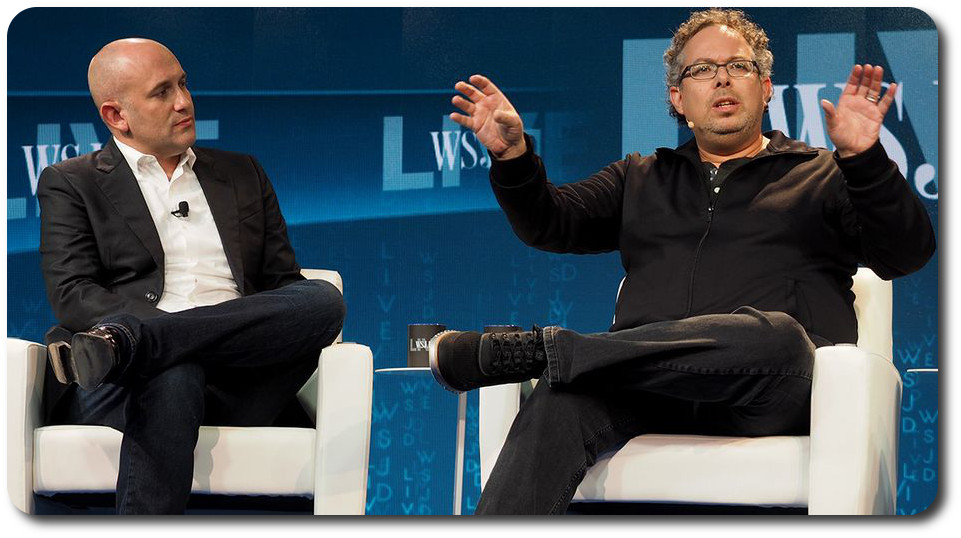
Romy Abovitz talks Magic Leap at WSJD Live (image courtesy of engagdet)
Romy Abovitz talks Magic Leap at WSJD Live (image courtesy of Engagdet)

Magic Leap, the augmented reality company established by enigmatic entrepreneur Rony Abovitz, and which gained over US $500 million from the likes of Google in 2014 (see my article from October 2014),  revealed a little more about its product during a WSJD Live interview recently.

As reported by Nicole Lee for Engadget, Abovitz and Chief Content Officer Rio Caraeff talked in general terms about the system which has caused no small amount of excitement among those who have actually seen it in action. People such as Google’s CEO Sundar Pichai, who sits on the Magic Leap board and was one of the driving forces behind Google’s lion’s share of the half-billion funding mentioned above, and who shares a place on the board with Qualcomm’s executive chairman, Paul Jacobs, another investor from that round of funding.

The technology has also wowed leading lights from the entertainment industry such as Weta Workshop’s co-founder Richard Taylor (one of the first to invest in Magic Leap), and Thomas Tull, CEO of Legendary Entertainment (aka Legendary Pictures). For those outside, however, Magic Leap has perhaps come over as a riddle bordering on smoke and mirrors.

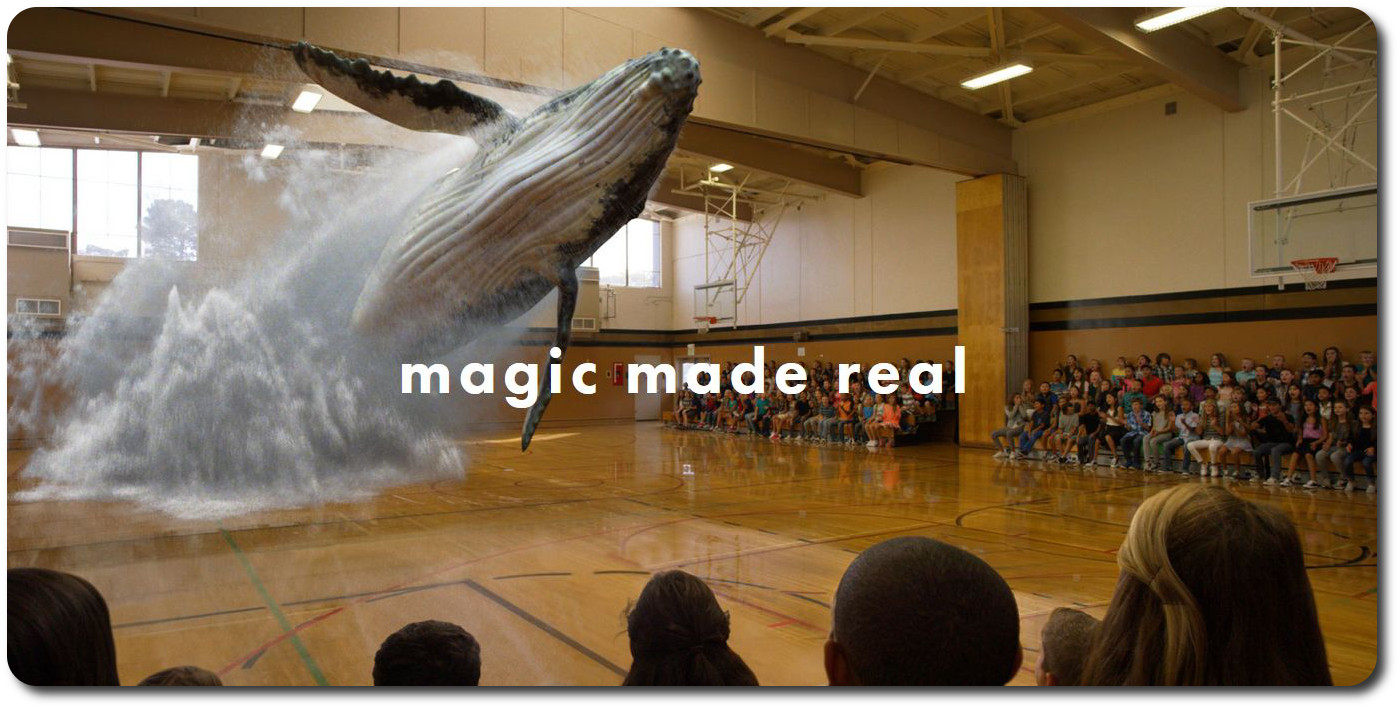
Magic Lap's website splash screen (no pun intended)
The Magic Leap website splash screen (no pun intended)

Talking at the WSJD event, Abovitz indicated Magic Leap won’t be tied to a particular platform or OS, but will be entirely self-contained and with a dedicated OS. He also indicates that in difference to those dismissing AR on the grounds that “no-one likes to wear glasses for long”, the form factor for the unit will be something people won’t fight shy of wearing. He also states it will allow them to maintain a normal relationship with others when in use – a little dig, no doubt, at the first generation of cumbersome and isolating VR headsets about to hit the market.

Alongside of the interview, Magic Leap also released a new video which they state is filmed entirely through Magic Leap technology and with no special effects or compositing.

Quite how the system works, however, is still a mystery. No headsets are shown in any of the company’s promotional material, and much is made of the use of a “Dynamic Digitized Lightfield Signal” (which we can call “Digital Lightfield™”). In speaking at WSJD, Abovitz and  Caraeff both skirted specifics, with the former only saying, “We treat human biology as our centre point; everyone already has a head-mounted display. It’s your head!”

This suggests the company is perhaps pursuing direct retinal projection, possibly in some form of headset unit that is less intrusive than the kind of units suggestive in the patent filings the company has made in the past. And if this sounds like science-fiction, remember Abovitz made his money developing medical technology, and the company has apparently devoted considerable effort into researching the relationship between the photonic light field and the way the brain functions.

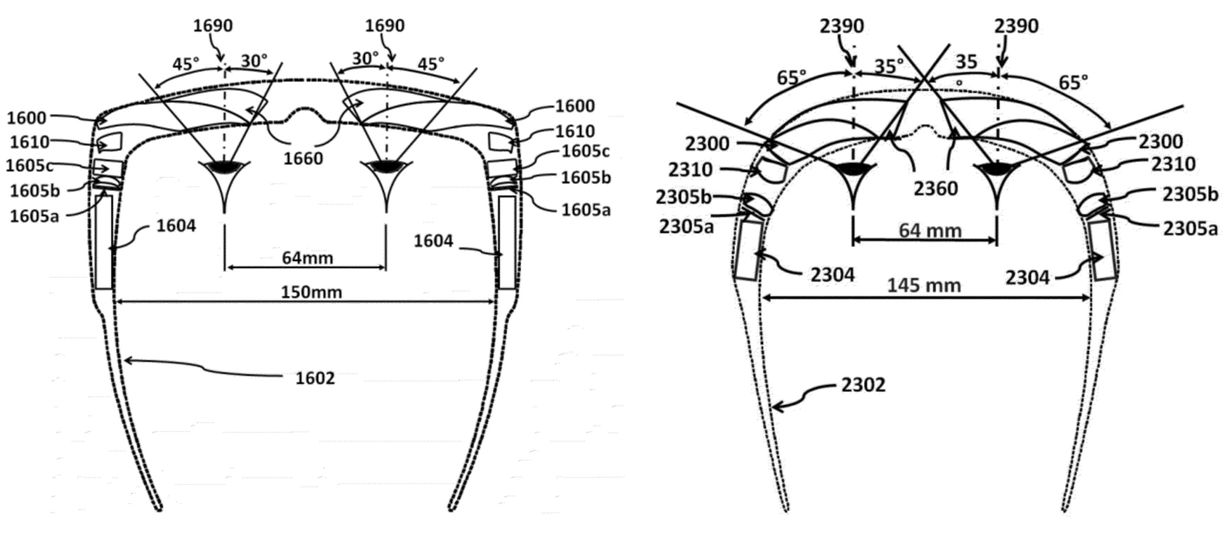
Patent filed for Magic Leap by , draws extensively on one of earlier patents for augmented reality headsets styled in both "regular glasses" and "wrap-around" form factors (US 20120162549 A1)
Patent WO 2014043196 A1, filed for Magic Leap by Chunyu Gao for augmented reality headsets styled in both “regular glasses” and “wrap-around” form factors, suggesting some form of headset will be a necessary part of the system – click for full size

So what is the purpose of all this? Caraeff indicated the ultimate am is for Magic Leap to provide broad-based platform for visual computing. “Anything that you can do on your smartphone, on your computer; you’ll be able to do on Magic Leap,” he said, then added, “Where the world is your screen.”

“We believe the future of computing should be natural,” Abovitz stated. “With Magic Leap, your brain doesn’t distinguish what’s real and what’s Magic Leap, because as far as your brain’s concerned, it is real.”

I admit to being far more persuaded that AR will generate a greater mass market presence than VR. Despite the negative memes about people not liking glasses and Google’s misplaced Glass product, AR would appear to be far more inclusive in its use than VR, and have the same potential reach into many of the markets being hailed as VR’s territory: business, medical, education, healthcare and entertainment.

Whether Magic Leap will actually pave the way in this regard as units start to roll off the company’s new production line in Florida at some point in the future, is open to debate. I do, however, admit to being more intrigued by the potential of AR systems like it and CastAR than I am with the first generation of VR headsets we’re about to see.

Additional material on the WSJD Live event via The Verge.

CastAR announce US $15 million funding

The CastAR banner
The castAR website banner

CastAR, formerly Technical Illusions, the company behind the augmented reality castAR headset with a VR capability and which I’ve been covering in this blog, has announced the completion of a US $15 million round of funding.

Former Valve employees  Jeri Ellsworth and Rick Johnson founded the company in 2013 after being let go by Valve – and given the blessings of Gabe Newell, Valve’s founder and Managing Director, to take the IP used within castAR with them.

Since then, they’ve been developing the headset with the aim of producing a low-cost, self-contained AR system initially aimed at games and entertainment, but with a wide range of other potential applications – including VR, through the addition of a clip-on that allows for wide field-of-view VR experiences.

The Development Kit / Kickstarter version of the CastAR headset
The Development Kit / Kickstarter version of the castAR headset (image via Engadget)

The early stages of the company’s work was largely funded by a Kickstarter campaign in late 2013 which raised just over US $1 million. This provided sufficient capital to get the company running, albeit on the small scale, and in October 2014, they were able to start shipping the first of the Developer / Kickstarter backer kits whilst also relocating from Seattle, Washington, to Mountain View, California, a move overseen by the newly hired CEO, David Henkel-Wallace.

However, fulfilling the obligations of the Kickstarter campaign has been difficult – so far the company has only been able to produce and ship around 1/3 of the pledged headsets. The Series A round of funding, which has been chiefly backed by Playground Global, co-founded by Andy Rubin of Android Inc. fame, will enable the company to take on staff, complete its Kickstarter obligations and lay the foundations for the future.

The news of the investment round was announced to Kickstarter backers in a personal note from Jeri and Rick, which reaffirms their commitment to their original supporters, reading in part:

What does this mean for Kickstarter? Delivery! We remain committed, as we always have, to giving our Kickstarter backers a high quality product and experience. Of course with only nine people and an ambitious engineering plan, it clearly has taken us longer than we had planned, but among other things, this investment will make sure we complete the Kickstarter in the next several months.

We recognise every day that we would not be where we are at without the support of you, our backers. You believed in us when we put together a video showing a product of 90% hot glue, some friends using it, and some crude software. That support reassured us that we weren’t crazy, and it helped send investors the message that there is significant excitement for castAR.

The conceptualised castAR production headset and VR clip-on system (image: Technical Illusions)
The conceptualised castAR production headset and VR clip-on system (image: CastAR)

The slightly ungainly – at least in its development form – headset uses projectors mounted on it to bounce light of a retro-reflective surface in an effect Ellsworth came across by accident, setting her with the initial idea for the system. The light from the projectors is delivered back to the wearer’s eyes through active-shutter glasses which also track the user’s position, allowing the projection to be updated in real-time.

Projections seen when wearing the headset appear as holographic elements directly in front of the user’s field of vision, which can then be manipulated via a “wand” hand controller.  Because the retro-reflective material bounces light back to its origin, multiple users can use the same surface simultaneously without experiencing any interference from other headset, allowing multiple headsets to be used in the same physical space for game play or other activities.

A key aim of the headset is to be affordable, ease-to-use system which users of all ages can immediate grasp conceptually and use with ease.

“When we say a consumer product, we mean a consumer price point,”  Henkel-Wallce told GamesIndustry.biz when discussing the funding announcement. “The Oculus headset is only a few hundred dollars but then you need a $1000 PC to run your games. That’s not a consumer product, that’s not something you’re giving to your kids.

Making CastAR fun, affordable and self-contained is key to the unit's success
Daivd Henkel-Wallace: Making CastAR fun, affordable and self-contained seen as key to the unit’s success

“Our vision is that Christmas day Grandma has bought these for the kids, they tear open the paper, they open the box, they’re eight and ten years old, they put down the game board and within a minute they’re playing. That’s where we want to get to.”

It was this approach which attracted Playground Global’s interest, with Rubin stating, “I was really intrigued by [their] approach to tackling the problem of how to drive mainstream adoption of AR. They’re the only company I found to be simplifying the utility and application of augmented and virtual reality technology into a fun, accessible, and portable system that will wow kids and adults alike.”

The company’s change in name was also announced alongside of the funding news, and is seen as a natural step for the fledgling company, as Rick Johnson explained when writing to Kickstarter backers:

One observation we’ve made along the way is that people kept calling us “castAR” as a company name. We used the financing as an excuse to change our official company name to castAR.

The Series a funding round comes on top of an undisclosed seed round of funding for the company. Together these demonstrate that castAR is a viable investment concern, opening the door to additional round of investment in the future, if / when needed. As Henkel-Wallace informed Gamesindustry.biz, “This money really marks an inflection point from being just a raw start-up to actually allowing us to become a really fully functioning company.”

Congrats to Jeri, Rick, David and the team.

Sources