On Tuesday, July 11th, Linden Lab issued an updated Terms of Service, which is due to come into effect on July 31st, 2017. As is the Lab’s usual practice, anyone logging-in to one of the Lab’s services for the first time after the new Terms have come into force will be required to accept them. As such, a read through is advisable beforehand.
A restructuring of the Terms to include terms and conditions that apply to all Linden Lab products, with separate product-specific references (such as Linden Dollar and LindeX for SL) now contained within product-specific policies. The new Second Life Terms and Conditions contains all the Second Life-specific references that were previously in the Terms of Service.
Reference to the Lab’s wholly owned subsidiaries, Tilia Inc. and Tilia Branch UK Ltd., have been added. These companies will be handling payment services on our behalf under certain circumstances. I first wrote (albeit somewhat speculatively) about Tilia Inc in November 2015.
Minor text revisions to clarify that Linden Lab has discretion to undertake certain account actions.
An updated the arbitration provision in accordance with applicable law.
The first of these bullet points sees the most extensive changes to the ToS, with the removal off sections formerly specific to SL, and the removal of references related to the Second Life (e.g. “inworld”) to more generic terms. These are all clearly part-and-parcel of adopting the ToS to encompass Sansar, and some of the amendments make for interesting reading – such as the definition of terms.
While the blog post refers to “the Second Life Terms and Conditions”, there is no actual link to such a document at present. There is a link to the Community Standards – which are still specific to Second Life. However, it is unclear if this is what is meant by “the Second Life Terms and Conditions” – and if so, they have not as yet been updated to reflect elements of the ToS specific to SL – such as the operation of “bots” or to Skill Gaming / for profit games of chance, Linden Dollars, the LindeX, etc. Nor are the ancillary policies to Second Life listed (e.g. the Machinima policy, Mainland Policy, etc.).
Excluding the changes specific to Second Life (i.e. removal of references and clauses). The most extensive changes to the ToS can be found in the following sections:
1.1 – updates to defined terms
2.2 – licences granted, specifically the section on “Linden Content”
3 Eligibility To Use the Service
4.3 – payment service providers (including Tilia Branch in the UK)
9.6 – Unsolicited Ideas and Materials Prohibited; No Confidential or Special Relationship with Linden Lab
10.2 – Exceptions to Requirement to Arbitrate (dispute resolution).
I’ve not had time to do more than run through a rough comparison between this updated ToS and the current version (last archived via the Wayback machine in April), so my apologies if I’ve missed anything.
Meet the Lindens is a series of conversations / Q&A sessions with staff from Linden Lab, held as a part of the SL Birthday celebrations in-world. They provide opportunities for Second Life users to get to know something about the staff at the Lab: who they are, what they do, what drew them to Second Life and the company, what they find interesting / inspirational about the platform, and so on.
Tuesday, June 20th saw Landon Linden sit down with Saffia Widdershins, and this article hopefully presents some “selected highlights” of the chat, complete with audio extracts from my recording of the event. The official video of the event is embedded at the end of this article.
About Oz and Grumpity Linden
Oz Linden is the Technical Director for Second Life. He joined the company in 2010 specifically to take on the role of managing the open-source aspects of the Second Life viewer and managing the relationship with third-party viewers – in his previous role, he had been responsible for leading the company his was working for in taking their product from closed-source to open-source and then managing the technical side of the product as a open-source project for a number of years.
Over the first two years of his time at the Lab, he was primarily focused on the open-source viewer work and in refining the overall viewer maintenance process, before his role started expanding to encompass more and more of the engineering side of Second Life. When Work on Sansar started in earnest, he pro-actively campaigned within the Lab for the role he has now, with responsibility for managing all of the engineering side of the platform.
He came to Linden Lab out of a desire to do something “fun” after working in the telecommunication arena, notably with voice over IP systems (VOIP), which he defines as being “really interesting technology with some really fascinating challenge”, but in terms of it being fun, it really didn’t do what I wanted it to do.”
He classifies the attraction to working with Second Life as perhaps falling into three core areas: through the open-source nature of the viewer, he is directly involved with how SL users are using the viewer and what they do with it – which can often times take the Lab entirely by surprise; through the fact that the Second Life offers the challenge of trying to implement new technologies alongside of (rather than simply replacing) older technologies; and working with the operations team and others to ensure SL constantly evolves without (as far as is possible) breaking anything – a process he refers to and rebuilding the railway from a moving train.
Grumpity Linden is the Director of Product for Second Life, enjoying what she and Oz jokingly refer to as a “symbiotic relationship”. She actually started at Linden Lab in 2009 as a contractor working for The Product Engine, a company providing end-to-end consulting and software development services, and which support the SL viewer development. She became a “full-time Linden” almost three years ago.
As Director of Product she manages the product team, which oversees a wide range of SL-related activities alongside of Oz’s team. This can involve coordinating the various teams involved in bringing features and updates to Second Life (e.g. coordinating the engineering teams and the QA teams, liaising with legal, financial and compliance to ensure features and capabilities meet any specific requirements in those areas, etc.). This work can also involve looking at specifics within various elements of the overall SL product, such as UI design and layout, etc.
Grumpity has a background in psychology and computer science, but has worked in the oil and gas industry. On moving to the San Francisco area, she crossed over into working within the tech industry, eventually settling at Linden Lab as a contractor, working on the Viewer 2.0 project. She enjoyed working at the Lab so much, she resisted all attempts by her employers to move her elsewhere, finally joining the Lab full-time in 2015.
Like Oz, Grumpity is passionately committed to seeing Second Life continue.
Q&A Session
How much control and input do you have over the direction of second life?
Grumpity: I will let Oz speak more to that, but Bento was conceived and reared and launched all through the efforts of Oz’s team and of Engineering. Certainly, Product took a part in defining that, but this is a great an example of one of the long-time Lindens [Vir Linden] suggesting this as a possibility and then this feature getting worked on.
There was a tonne of time spent defining that work with residents, which I’m also very proud of, I think we absolutely took the right path there, but as to the development of that project – Oz, do you want to speak to it?
Oz: Just to comment to that one point about Bento. The general direction of the project we started out with changed very significantly, once we got residence involved. The essential concept of extending the avatar skeleton and adding capabilities, that was the concept we began with, [but] the specific additions we made to the skeleton changed very dramatically after we got resident designers involved.
Oz Linden
We were planning on doing a quite simplified hand, for example, and the designers came back to us and said, “look, we really need every joint in every finger”, and ultimately they convinced us that was the right thing to do, and in retrospect, it’s obviously worked out really well.
The broad question of who or how we set that direction; it’s one of the things that’s really great about working at the Lab … We have an incredibly collaborative process. Pretty much everyone involved, up to and including the residents – emphatically including the residents, I should say – is empowered to put forward ideas. And so our job isn’t so much thinking up what’s going to happen to Second Life, as it is from just picking from among a myriad of possibilities. We could have a staff of 500, and we wouldn’t have enough to do all of the really cool things that we might in theory be able to do.
So it’s picking and choosing, and we try to shift who we’re making happy at any given time, so we’re spreading it around a little bit … My job is to think about what the technology impact of anything is going to be, how difficult it’s going to be to do, and how long it’s going to take to do it; although even more so that most engineering groups, I think we’re really challenged in figuring out how long it’s going to take for things to happen.
And the Product team, headed by Grumpity, thinks about what the implications are for the way that affects the business, affects the activities people are already doing in Second Life – to the extent that we know! And we work together to pick from the things that are possible and can be done in a time frame that’s good. We try to make sure that we’re doing something new fairly regularly; so we can’t pile on everybody to a project that’s going to take two years, because then for two years, nothing would happen. Well, the company did that once, and we all know how that went…
But yeah, between us, we have a lot to say about it. There are aspects of the way that Second Life evolves that are not really our space. For example, we’re not heavily involved in Governance issues; we’re not heavily involved in thinking how much things may cost. That’s mostly other people. But how it works and what it can do – that’s what we spend our time on!
Grumpity: And to mention, we’re not necessarily heavily involved in compliance issues … but we do spend a lot of time trying to figure out how to minimise the impact of compliance while actually adhering to the needs.
As inventory in the viewer is just pointers to assets on the Lab’s servers, could Linden Lab provide a means for redelivering lost inventory items?
Oz: We have recently put out some changes that are intended to reduce some of the ways we think people were unintentionally deleting things, and we’ve fixed some bugs that may have been responsible for things going astray that shouldn’t [updates reviewed here & now in the release viewer] … She’s right, your inventory is a set of pointers to assets; we have the assets, we don’t have a record of what those pointers were. The pointers are ephemeral; they change dynamically, and we don’t today have a journal of what all the changes were that went through.
That’s an area of concern; unfortunately, solving that problem very likely falls into that project that would take at least two years category that I talked about before, that’s difficult to tackle on the whole. So we’re trying to find aspects of it that we can attack and improve … So we’re trying to find ways to do incremental steps that make inventory more and more robust. If I were to go to Grumpity and say, “this is what it would take to completely solve the inventory problem,” she would end-up saying we can’t commit that large a fraction of our resources for that long to that problem. So we have to find ways to break it down into small pieces, and that’s what we’re doing.
Unfortunately, that means we can’t say all the inventory problems will be solved by the middle of next week or even next year, necessarily.
Grumpity: We spent a lot of time investigating this recent uptick in reports of inventory going to Trash accidentally and getting deleted, and we’ve put in a bunch of viewer-side changes to prevent that, and Firestorm has merged those in. so please make sure your viewer is updated. The new Firestorm release [reviewed here] has all of them, and even some that we haven’t released but are in the latest Maintenance RC viewer [version 5.0.7.327250 at the time of writing this transcript].
I would also like to use this platform to say that we absolutely need viewer logs from the session where the deletion or the disappearance of inventory happened, to continue to diagnose this problem. So if you’re in a position to provide those logs from the session where the inventory loss happened, please, please do. There are multiple JIRA already open – file a new one, reply on the forum, we’ll see all of them, and I will be thrilled to take up the cause and find out what has been going on.
Oz: That’s a point worth emphasising. We don’t keep all the logs for a long time; we couldn’t, they’re just too big. Id you report that three weeks ago, you lost 100,000 things, there is no hope whatsoever that we’re going to learn anything from that report. Those those logs are long gone; we cannot tell what you did or what happened to what you lost.
If you report it the day that you lose something, and we see that report – and we’re watching those reports, we have people who watch those reports all the time – and you attach a viewer log, and there’s a page on the wiki about how to find the logs. And you tell us “I was in this region, at this time, and the following stuff disappeared”, or even: “I was in this region at this time, and I knew that I had it then, but two hours later I noticed that it was all gone.” That gives a window where there’s some hope of us finding information about it. And we can use that information to figure out what happened.
We often will not be able to recover your lost items; occasionally it happens, but unfortunately it’s not the normal. But it would be an enormous help to us to get reports that have that kind of information on them promptly, so we can dig out and try to learn what happened and what went wrong, and then those cases at least, we can fix.
Grumpity: So, for the record. In all of the reported cases where we were able to get logs from the server-side for this inventory loss and actually find the log records for when the deletions happened; from our end it looks like it was a regular case of the user deleting inventory. So in order to figure out what’s going on, we absolutely need viewer logs so that we know what the viewer was doing and why those messages were sent to delete inventory, if you did not intentionally do it.
… Again, I’m going to use this soapbox to say we triage incoming bugs pretty much every [working] day, sometimes we skip a day when there are other things that get in the way. We triage incoming feature requests on a regular basis as well, not quite as frequently, and we pay attention to what’s going on. It is our hand on the pulse, and it is also your best bet for getting bugs addressed. If you write about a bug on the forum, maybe somebody else will file it, but may not, and maybe it will never get to us. If you are sure it’s a but – write a JIRA, and then we’ll see it.
Linden Lab has issued a reminder / warning about the need for Second Life users to keep their account details secure.
It comes as a result of tools such as viewer “wrappers” (third-party applications which must be launched in order to run the viewer) which effectively takes away a user’s ability to control their account. by making changes to both the account password and the e-mail address associated with the account (thus effectively preventing the user from ever recovering their account). In some cases, these viewers / wrappers may even effectively pass control of an account to another user.
All of the above is not only dangerous in terms of account security / integrity – it is also against Linden Lab’s Terms of Service.
The blog post carrying the warning is reproduced in full below, was issued by the Governance Team. It is designed to clarify the use of such viewers / wrappers, and provide Second Life users with guidelines on keeping their accounts secure. Please read and keep in mind.
Hey everyone,
It’s recently come to our attention that there has been an increase in the use of a third-party tools that give account credentials and control over a Resident’s account to another Resident. This and similar products can change an account password and/or details, such as email address, which could prevent an owner from accessing an account, or even from being able to recover the account.
We want to remind everyone that giving another Resident access to your account or account information, by any means and for any reason, is both dangerous and not permitted by the Terms of Service. An account is intended to be used solely by its creator, and keeping your account details secret and secure helps you keep it that way.
We’d like to provide you with some quick tips on how to keep your account secure:
Choose a secure password with upper- and lower-case letters, numbers, spaces, and symbols, and avoid common dictionary words or phrases. For instance, “password” is not a good password, but “wh4tAr g@t4P55!” is much better (though you shouldn’t use that last one either, now that all of Second Life just read it, too).
Choose a secret security question answer. To keep your information extra secure, choose an answer that you will remember, but that no one else could possibly guess. For example, answering “What is your favourite vacation spot?” with “Potsdam, Pennsylvania” isn’t secure if you have that listed as an interest on your social media accounts. Answering “The Wide Wide World of Sports” might be much more secure!
Keep your password and the answer to your security question secret from everyone, regardless of their relationship to you. Only you should know this information; not your significant other, family member, casual acquaintance, person with an honest look in their eye, or anyone else.
Keep your password unique and special to Second Life. Reusing the same password across different platforms or websites makes your account vulnerable if one of those sites suffer a data breach.
No Linden will ever ask for your password. Likewise, there is never a reason for you to enter your password to unlock an item, receive a discount, or anything else.
Use only the official Second Life Viewer, or a Third Party Viewer from the Third Party Viewer Directory. If the viewer does not allow you to log directly into your account for any reason, the viewer is NOT secure.
If you have any problems accessing your account—especially if you believe that your password or security information may be known to anyone other than you—please contact the support team by opening a support case.
In mid-March 2017, Linden Lab introduced a new member of the board of directors via a press release.
William “Bing” Gordon is a man with impressive credentials. The Chief Product Officer of Kleiner Perkins Caufield & Byers (KPCB), where he serves as an advisor and General Partner, Gordon worked with Electronic Arts for 26 years from its founding in 1982, driving the company’s branding strategy with EA Sports, developed EA’s pricing strategy for package goods and on-line games, created EA’s studio organization, and contributed to the design and marketing of many EA franchises, including John Madden Football, The Sims, Sim City, Need for Speed, Tiger Woods Golf, Club Pogo and Command and Conquer. As well as EA and KPCB, he has He has served on the boards of public companies Amazon and Zynga, and was a founding director at Katango (acquired by Google 2011), ngmoco (acquired by DeNA 2010) and Audible (acquired by Amazon in 2008).
William “Bing” Gordon
One of the acknowledged experts in computer gaming, Bing Gordon was awarded the Academy of Interactive Arts & Sciences’ Lifetime Achievement Award in 2011, and he held the game industry’s first endowed chair in game design at The University of Southern California’s School of Cinematic Arts. He is a robust thinker and, unlike many in the tech industry, retains a level head when it comes to the subject of VR – in 2015, he spoke to Fortune.com about the risks involved for companies leaping into the emerging VR market.
In joining Linden Lab, Gordon will will advise on strategy, product, marketing and other issues as Linden Lab continues to improve Second Life and brings to market its new platform for user-created social VR experiences, Sansar – with the Lab particularly emphasising the latter for understandable reasons, CEO Ebbe Altberg noting:
We’re honoured to have Bing join our board of directors and work with our team,” said Ebbe Altberg, CEO of Linden Lab. “He’s helped to bring to life some of the most influential entertainment experiences in recent memory, and as we prepare to open Sansar for all creators, his insights, expertise, and counsel will prove invaluable.
Bing Gordon isn’t the only relatively recent appointee to the Lab’s board of directors. He joins Mark Britto, in adding his name to LL’s board. Britto is most recently the founder/chairman of Boku, Inc., a mobile on-line payments company he founded in 2009 and which now is the leading name in mobile payments, servicing 50 countries through more than 200 carrier partners. Mr. Britto also serves on the Boards of Angieslist, PayNearMe and Sonder.
Mark Britto
After starting his career in banking, Britto co-founded Accept.com, a peer-to-peer payments company which was purchased by Amazon in 1999, where it became the primary backbone of Amazon’s global payments platform. Britto himself worked for Amazon as a Senior Vice President of Worldwide Services and Sales, prior to departing the company to take over the helm of Ingenio, a communication and e-commerce platform acquired by AT&T in 2007, and more recently re-established as an independent company in May 2013.
From this, it is clear that Britto has a wealth of experience in developing and managing payment services which would appear to be of particular merit to Linden Lab as they continue to operate their micro-currency systems for Second Life and Sansar, together with their Tilia Inc., subsidiary.
Interestingly, Mark Britto joined the Lab’s board in August 2016. However, his biography notes only appeared on the company’s leadership page in April 2017, when it was updated with Bing Gordon’s details.
Together, Mark Britto and Bing Gordon join Jed Smith, Bill Gurley and Dana L. Evan as serving members of the board at Linden Research Inc.
Griefing, be it through word, action, noise, or object (as seen here), etc., is one of the items covered by the Abuse Report
The following notes are drawn from a presentation Governance Team manager Tommy Linden and team member Corky Linden are making to various communities within Second Life as part of an initiative to better disseminate information about the Governance Team, and on filing Abuse Reports (ARs). The hope is that the information provided will give users a better understanding of what the Governance Team hope to see provided in an Abuse Report in order to fully investigate it.
Note that official information on Abuse Reports can also be found in the Knowledge Base.
The team is relatively small – under a dozen in size – but handles an average of 400-500 Abuse Reports per day
All Abuse Reports get reviewed as the first stage of an investigation, with priority given to those seen as critical (such as an in-progress griefing attack).
All ARs that can be investigated are investigated. However:
How far the investigation goes largely depends on whether the AR is filed against something Governance is empowered to investigate, and how much meaningful information is supplied in it.
The Governance Team intentionally does not report back on the outcome of their investigations for a number of reasons. Just because the outcome might not be visible to the reporter / match their expectations when filing an AR, does not mean the report was ignored.
One of the biggest issues with incoming Abuse Reports is that they often lack the basic information required in order for an investigation to be properly carried out.
What is an Abuse Report?
The Abuse Report (AR) is for reporting any individual or group of avatars or any in-world object engaged in an activity deemed inappropriate under the Second Life Terms of Service / Community Standards and/or is in contraction to the maturity rating for a region.
ARs apply to: griefing, spamming, age play, assault / pushing / disturbing the peace, disclosure of personal information, fraud, harassment, indecency and Skill Gaming violations. In addition, there are Welcome Area Guidelines governing places like Infohubs, which contain restrictions on what should not be done in those areas with any violations also subject to ARs. Report.
There are also certain things that do not apply to ARs. For example, being banned from a particular group or region or parcel, or a dispute over rental payment between residents are not actionable via AR.
ARs can be filed by anyone suffering abuse, or by those directly witnessing an abusive act. However, this does not mean teleporting multiple people into a location and having them file reports as well. Rather than “speeding up” any investigation, it can actually slow down the entire process by forcing Governance to spend time reviewing dozens of additional (and possibly contradictory) reports.
What Is The Governance Team Looking for in a Report?
The Governance Team is looking for clear, concise and consistent information in an Abuse Report, as summaries in the image below and expanded upon in the following sections.
A “good” Abuse Report, presenting all the information and making good use of a screen shot – click to open the slide in a separate tab for easier reading. With thanks to Corky Linden
Accessing the Abuse Report Floater
The AR floater can be accessed via:
Menu bar > Help > Report Abuse.
By right-clicking on an avatar or object and locating / selecting Report Abuse from the context menu / pie menu.
Make sure you have the right avatar / object selected when doing this.
Launching the AR floater using either of these two options will auto-complete parts of the form.
The following guidelines are intended to help with filing an AR.
Screen Shots
Where possible, try to include a screen shot of the situation you are reporting. It can be the most effective means of illustrating what is going on, and gives the Governance Team clear visual proof / evidence of what has happened. It can also make up for information missed from the rest of the report.
The slide below outlines some of the key points to remember when using the AR floater to capture a snapshot – click to enlarge it in a separate browser tab for ease of reading.
Abuse Report snapshots: click on the slide to open it in a separate browser tab for easier reading
Note that most viewers do not have a refresh button for the snapshot preview, so try to make sure all the information you wish to capture is on your screen. If you are unable to get a screen shot for whatever reason, it is important you provide clear, accurate information in the Summary and Details section of the report (see below).
Object Picker
The Object Picker allows you to identify an abusive object (e.g. a particle / noise spammer, a weapon, etc.), and include its name and owner in the body of your Abuse Report. Instructions on how to use it are included in the AR floater, and this section will be auto-completed if you launch an AR by right-clicking on an abusive object. Remember you can further verify the item by including it in a snapshot with the Edit floater open to show the object name & owner.
Report Categories
The Abuse Report floater includes a pre-defined, drop-down list of categories which should be used when filing a report. Notes on the *valid* categories can be found here. Note that filing under the wrong category doesn’t prevent a report from being investigated, but it can slow things down, particularly if there is insufficient information provided elsewhere in the report.
Abuser Name
This allows you to grab the name of someone causing abuse from those around you. If you launch an Abuse Report by right-clicking on an object or avatar, this section will auto-complete (make sure you have selected the right avatar), otherwise click the Choose button and follow the on-screen instructions.
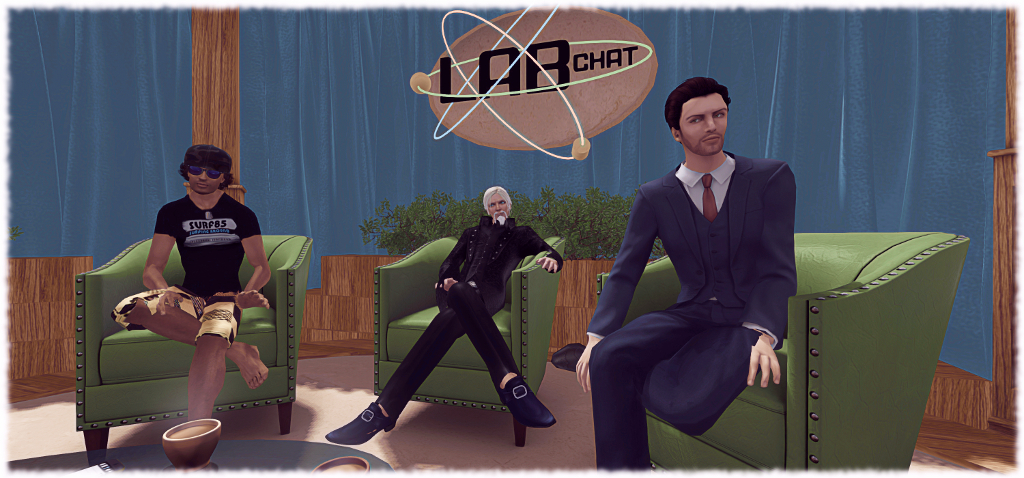
Friday, May 6th saw the third in the Lab Chat series take place in-world, featuring guests Oz Linden, the Director of Second Life Engineering, Troy Linden, a Senior Producer of Second Life and of course, Linden Lab CEO, Ebbe Altberg, in his alter-ego of Ebbe Linden.
You can find the full transcript, with audio extracts, as previously published in these pages by following this link.
However, I’ve been asked by a number of people if I could summarise things, rather than them having to read the entire transcript or just having a list of up–front links. I’ve therefore produced this summary, complete with links to the full answers within the transcript. If this approach proves popular with readers, I’ll adopt it as the lead-in to future transcripts.
Work in progress: Aki Shichiroji demonstrates a wearable wyvern utilising Bento bones for animation.
Project Bento
How will creators make poses and animations for the new bones (wings, fingers, facial expressions, etc)? Creators will be able to use existing plug-ins (MayaStar, Avastar) to create animation content for Project Bento as is currently the case. Full answer.
Will there be any in-world tools for Bento pose and animation creation?At this point, Second Life doesn’t have any in-world animation creation tools, and Bento does not attempt to add them. Instead it leverages existing out-world tools. Full answer.
Will Bento have the ability to animate (or pose) separately? Yes. Second life does already support isolating animations to certain parts, and Bento is no different. Full answer.
Will any of the work on the Bento facial bones be incorporated into the default/system avatar for expressions, etc? The default system avatar has not at this point been re-rigged to use the new Bento bones. However, custom mesh heads, when rigged to the bones, will be able to make use of them. Full answer.
Will there be, or are there any plans to introduce animated mesh into Second Life (e.g. animated pets, etc)?No comment on whether or not animated meshes will be supported in the future. However, Bento bones can be used to provide a level of animation of creatures, objects, attached to an avatar (e.g. bats flying around your head). Full answer.
Will any attempts be made to have the new bones be scriptable for the use in user-created animation rigs like Anypose?There are no plans to add scripting capabilities that are specific to Bento at this time. Full answer.
The new Experience Keys based Social Islands – see below
Can we have tools inside inventory to help manage it? The Lab is focused on improving inventory operation robustness, and will have a new viewer offering this soon. Better inventory management interfaces and tools are a terrific idea, and something TPVs could even contribute. Full answer.
Will we see similar edutainment-type experiences as the new social islands, but aimed at more advanced users? Yes, very probably in time. Full answer.
Why doesn’t Second Life have gift cards which can be purchased in stores like other games? Probably more interesting to think of ways to sort-of refer a friend, maybe, with an associated gift card to get them into the world. But something to examine. Full answer.
Any plans to provide more robust photography tools similar to Firestorm’s Phototools? Will existing tools be updated? Lab prefers not to comment on things until close to release; photography floater updates an excellent opportunity for TPV / open-source contributions. Full answer.
Can sound files be increased in length beyond the 10 second limit? Yes, and animation file sizes can be increased. By how much isn’t clear, and the work will be dependent on moving the assets to CDN delivery first. Full answer.
Will we be able to texture more than 8 faces when editing mesh in-world? The change made in Sept 2015 refers to allowing more than 8 textureable faces as a part of the upload process, not to in-world editing. No further changes planned at present. Full answer.
Will any similar incentive to the private island buy-down offer be presented to Mainland owners? Not at present. Time is required to analyse the other impact of the buy-down offer and determine its overall benefit (or otherwise). So nothing planned for Mainland at the moment or immediate future. Full answer.
Will anything be done to address vehicle region crossing issues, particularly with large vehicles, which have become worse over the past year? Lab not aware of any changes that should have made things worse, but will look into matters. However, large vehicles have always been problematic on region crossings, so no promises. Full answer.
Will RLV functionality be added to the official viewer? Longer-term, Lab will add more capabilities to Experience Keys which will be similar to, but not compatible with, RLV. Full answer.
Will Experience Keys be opened to Basic members to create Experiences? Experience Keys will remain Premium-only do to potential griefing abuse. Premium helps ensure accountability. Full answer.
Will Experience Search (and other search) be improved? The current focus is the Marketplace search beta, using Elasticsearch. This will likely become the default MP search engine soon. The Lab may then use Elasticsearch on other search capabilities. Full answer.
Will the Marketplace Listing Enhancement issues & JIRAs be addressed? The Lab believes they have a fix for a major cause, which is in the process of being implemented and may clear up most issues. Full answer.
Can the number of Estate Managers be increased? Will be looked at. Full answer.
What’s the best way to report group spammers? Single or Multiple reports? Via the Abuse Report, Quality of report, not quantity is important. Many reports aren’t actionable as they are incomplete. Full answer.
Does LL give employees time to use SL? Yes & all staff are encouraged to spend time in SL when first starting. Oz Linden also looks to recruit from SL users where possible. Full answer.
Any thoughts on Vulkan graphics support for SL? For SL, no. Sansar, yes.
Can we have an update on Linden Realms and the grid hunt games available through the portal parks? New Linden content is coming, but no details given.
 On Tuesday, July 11th, Linden Lab issued an updated Terms of Service, which is due to come into effect on July 31st, 2017. As is the Lab’s usual practice, anyone logging-in to one of the Lab’s services for the first time after the new Terms have come into force will be required to accept them. As such, a read through is advisable beforehand.








 Inara Pey: Living in a Modemworld