Sojourner Auditorium, Virtual Ability: 14th annual Mental Health Symposium
The Virtual Ability community in Second Life is hosting its 14th annual Mental Health Symposium on Thursday, May 15th, 2025. The theme for this year’s event is Facing Our Fears: Managing Anxiety About Life’s Uncertainties.
Fear is a built-in human reaction. Fear of large carnivores, fire, dark, starvation and strangers likely contributed greatly to the survival and early evolution of humanity. The modern world has given people even more causes for fear: community violence, biased public institutions, horrific war, climate change, racism, gender violence and artificial intelligence, among many others. Fear can at times be useful, but it also impacts quality of life. Disabling fear is a treatable condition. The varied causes and levels of intrusiveness of a fear demand individualized therapeutic approaches. The broad theme of this conference allows us to look at the topic of fear from a number of different perspectives.
Virtual Ability Mental Health Symposium 2025 introduction
Virtual Ability Inc (VAI) and the Virtual Ability community hosts this annual Symposium to share information about mental health and mental disabilities with the general population. Within this cross-disability community are people who deal with a variety of mental health issues. So, not only is this an opportunity for community members to learn more about topics related to mental health from experts they probably would not have an opportunity to otherwise meet, it also allows the general public to attend a professional conference for free.
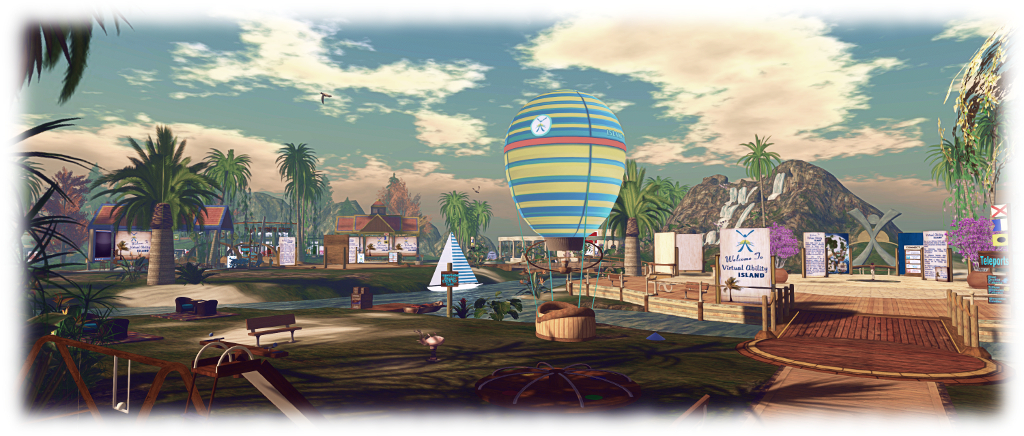
Virtual Ability Island
The symposium will once again feature an international group of presenters offering a wide interpretation of the theme, based on their interests and academic backgrounds.
Speakers
(All times SLT)
07:00: Dr. Manish Kumar Asthana, Indian Institute of Technology, Roorkee – Attenuating conditioned fear using imagery-based interventions.
08:00: Mr. Aman Kumar Prajapati, Invertis University (India) – Near death experience and transformation of afterlife belief.
09:30: Ms. Maria Nieves, Catholic University of Pelotas (Brazil) – Worry related to climate change among Brazilian adults.
10:30: Ms. Jen Johnson, Private Practice, Learning from the Land: Growing Emotional Resilience in the Climate Crisis.
12:00 Noon: Dr. Mustafa Demir, John Jay College of Criminal Justice, New York, USA – Effects of trust in government, counterterrorism policies, and counterterrorism laws on fear of cyberterrorism and fear of terrorism.
15:00: Dr. Veró Caridad Rabelo, San Francisco State University – When Safety for You Means Danger for Me (interview).
Panel Discussions
(All times SLT)
12:30: Peer Support and Fear – Second Life panel discussion featuring Viola Mole, Pet Karu, Kip Yellowjacket and Demelza McGinnis. Moderator: Itico Spectre.
13:30: Fear within Specific Disabilities – panel discussion featuring: Dr. Kathryn Post (Massachusetts General Hospital’s Cancer Outcomes Research & Education (CORE) Programme); Dr. Leigh Brosof (clinical psychologist specializing in research on and treatment of eating disorders) and Gloria Kraegel (Team Leader at Brain Energy Support Team, and Chief Groundskeeper at Etopia Sustainable Communities). Moderator: Cicero Kit.
All speaker sessions and panels will be available via the Virtual Ability You Tube channel.
Virtual Ability, Inc. is a non-profit corporation, chartered in the state of Colorado, USA. We are a non-profit tax exempt organization under section 501(c)(3) of the United States Internal Revenue Code. This means that for US citizens, contributions made are deductible as a charitable donation for federal income tax purposes.
For further information on the board of directors, please visit the Virtual Ability About Us page.
The following notes were taken from the Tuesday, May 13th, 2025 Simulator User Group (SUG) meeting. They form a summary of the items discussed, and are not intended to be a full transcript, and were taken from my chat log of the meeting. Pantera also recorded the meeting, and that recording is embedded at the end of this piece – my thanks to Pantera, as always, for providing it.
Meeting Overview
The Simulator User Group (also referred to by its older name of Server User Group) exists to provide an opportunity for discussion about simulator technology, bugs, and feature ideas.
Meetings are open to anyone with a concern / interest in the above topics, and form one of a series of regular / semi-regular User Group meetings conducted by Linden Lab.
Dates and times of all current meetings can be found on the Second Life Public Calendar, and descriptions of meetings are defined on the SL wiki.
Om Wednesday, May 14th, the RC channels should be restarted without update.
Upcoming Deployment – Fig Newton (2025.06)
Yes, the name changed in the passage of a week.
This is still being put together, and is unlikely to surface before June, as the simulator team has been focusing on some necessary internal work which has drawn attention away from feature work on the simulators.
SL Viewer Updates
Default viewer: 2025.03 7.1.13.14343205944, issued April 9th and promoted April 15th.
Because when PBR was implemented they did not separate the colour value from the alpha. The two are stored internally as a single number. Since the simulator does not have the actual value from the material (it does not read materials) there is no way to change one without impacting the other. Doing so would have required a protocol change in the way overrides are sent and protocol changes are big deals since they break the viewer.
He went on to note that overrides are among a number of things he would like to revamp and improve upon.
The above led to a request for creators refreshing older products with PBR to be able to supplement llSetLinkAlpha to some sort of llSetLinkPBRAlpha, without having to “dual stack” materials.
Rider Linden indicated that this would require adding a new function, and as such perhaps best done when overrides are being revamped, per the above comment.
Leviathan Linden further noted that Geenz Linden is currently thinking about how to overhaul GLTF override system, as fallout of planning on how to support object hierarchy.
Most of the meeting revolved around Blinn-Phong, glTF, alpha and colour overrides, most of which I, frankly, am not qualified to talk about in a meaningful way. Please refer to the video.
The latter half of the meeting involved the potential for physical region crossings between regions that are non-contiguous (e.g. your are on “Region A” and can “see” and “cross into” (walking, via vehicle) “Region B” directly (no actual manual teleport trigger), even though “Region B” is on the 2other side” of the grid. See: “Wormhole Regions” (Non-Cartesian region crossing).
This is something that has apparently been raised a lot within LL and seen and a “neat idea” and potentially possible. But it would be “way down on a list, below all sorts of important stuff to fix.”
Leviathan Linden is still trying to work out the “sometimes objects don’t show up on login” problem. He now has a reliable repro for this issue and is using it to try to understand why and where things are going wrong.
The fact that the off-lines show up in a second session suggests that they were never successfully requested by the viewer in the earlier session, since otherwise they would have been cleared (considered delivered) at the server. So we’re wondering: why isn’t the viewer correctly invoking some cap?
† The header images included in these summaries are not intended to represent anything discussed at the meetings; they are simply here to avoid a repeated image of a rooftop of people every week. They are taken from my list of region visits, with a link to the post for those interested.
‡That’s a Hitch Hiker’s Guide Reference, in case you read this far.
Logos representative only and should not be seen as an endorsement / preference / recommendation
Updates from the week through to Sunday, May 11th, 2025
This summary is generally published every Monday, and is a list of SL viewer / client releases (official and TPV) made during the previous week. When reading it, please note:
It is based on my Current Viewer Releases Page, a list of all Second Life viewers and clients that are in popular use (and of which I am aware), and which are recognised as adhering to the TPV Policy.
This page includes comprehensive links to download pages, blog notes, release notes, etc., as well as links to any / all reviews of specific viewers / clients made within this blog.
By its nature, this summary presented here will always be in arrears, please refer to the Current Viewer Release Page for more up-to-date information.
Outside of the Official viewer, and as a rule, alpha / beta / nightly or release candidate viewer builds are not included; although on occasions, exceptions might be made.
Official LL Viewers
Default viewer: 2025.03 7.1.13.14343205944, issued April 9th and promoted April 15th.
New UI element for water exclusion surfaces: Build / Edit floater → Texture Tab → Hide Water checkbox.
The maximum amount of Reflection Probes can now be adjusted to better accommodate low VRAM scenarios.
Values will be set automatically depending on your chosen graphics quality. OR
Use Preferences → Graphics → Advanced Settings → Max. Reflection Probes to manually set.
An issue with being unable to see Sky Altitude values in the Region/Estate window has now been resolved.
Preferences → Graphics → Max. # of Non-Imposters has been renamed Max. # of Animated Avatars for clarity.
Bug and performance fixes and memory optimisations.
Chat Mentions (Early Support): Type @ then pick a name. To follow: audible alerts and highlight colour pickers.
My Outfits subfolders: now supports the use of subfolders.
Key updates:
Build Floater improvements: increase to scale boundaries; Physics Material Type now updates when selecting linked objects; Repeats per Meter value no longer incorrect for non-uniform sized objects
Hover height: the minimum/maximum is now +/- 3 meters.
Snapshot floater: L$ balances can be hidden independently of the rest of the UI.
Preference Search bar: general usability and readability improvements.
Refer to the release notes for full updates and fixes.
Second Life Project Lua Editor Alpha, version 7.1.12.14175675593, April 2nd.
Radegast client version 2.46, May 11 – release notes.
SL Mobile (Beta) version 2025.5.550 / 0.1.541 – May 12 2025 (Avatar rendering improvements; select which Group notifications you wish to receive; Return to Lobby; Log-out option now Menu > [your name] > drop down arrow).
Kondor Art Square, May 2025: Mareea Farrasco – Landscapes
Landscape photography is an art I greatly admire. Within Second Life it offers a means to capture settings and places which – the nature of the platform being what it is – might otherwise prove transient for a wide variety of reasons. Through the images taken of them, we might revisit places which might otherwise have vanished forever, rather than aging and changing with time and allow us multiple opportunities to revisit and appreciate.
As a demonstration of this, the Kondor Art Square, part of Hermes Kondor’s art hub, is hosting an exhibition of exceptional Second Life landscape art captured by Mareea Farrasco. Comprising 20 images gathered from across Second Life, the collection is called simply Landscapes, with each piece capturing its subject uniquely and beautifully. Each has been carefully and perfectly post-processed to give the impression of having been painted, adding a further sense of depth to their presentation, as well as demonstrating the validly of such editing when performed by an artist who understands the proper use of the tools at her disposal.
Kondor Art Square, May 2025: Mareea Farrasco – Landscapes
These are places which may be recognised by seasoned SL explorers – or, equally, they may not. However, whether or not you happen to recognise any given place is the collection doesn’t actually matter. What is of import is the beauty within each piece.
In this, Mareea’s eye, framing and editing combine to produce pieces which are immediately and richly engaging, drawing one into each of them in turn, offering hints of narrative and suggestions of memory. They speak to the purity of art in its ability to portray and present beauty for its own sake, without necessarily carrying a deeper meaning.
Kondor Art Square, May 2025: Mareea Farrasco – Landscapes
“Landscapes with a message” is very much the theme of the second exhibition I’m covering here: that of Blip Mumfuzz’s Landscapes from a Lost World, currently open at Serena Art Centre.
Blip is another artist whose work I admire immensely, hence why I cover so many of her exhibitions. Like Mareea, she has an innate ability to draw us into the heart of her images, together with an ability to direct our focus and weave stories. Her use of colour, angle and editing is such that her images can have both clarity and at times border on the abstract.
Serena Art Centre, May 2025: Blip Mumfuzz – Landscapes from a Lost World
Blip’s art is often capable of speaking to a wider theme; and such is this case with Landscapes from a Lost World. Set within an environment – the abandoned, fading structures of an old farm – specifically created by Blip in which to display them, and which is thus as much a part of the exhibition as the images, the exhibition actually presents a mix of landscape images and life studies, all focused on a message highly relevant to the physical world in which we currently live.
However, rather than offer my own interpretation of the setting and images, I’ll instead offer Blip’s own description and, like her, leave you to follow the advice on viewer settings and explore the exhibition so that the images, indoors and out, to speak to you within the framing of Blip’s words.
Serena Art Centre, May 2025: Blip Mumfuzz – Landscapes from a Lost World
In the face of the imminent climate-induced collapse of our modern technological civilization, the decrepit farm carries a multiplicity of meanings: societal decay, ways of life forever lost, economic and social collapse, and stands as an indictment of the sociopathic billionaires who are abandoning the rest of humanity and all its magnificent achievements in order to save themselves and to hold onto their power as long as possible.
Looking back from a time 25 years in the future, the images, which are scattered around the “farm”, should be seen as nostalgic dream images of our lost world. A world that was once, within living memory, alive and vibrant; full of life, culture, love, hopes, and dreams, now being destroyed by the greedy and powerful.
– Blip Mumfuzz
Serena Art Centre, May 2025: Blip Mumfuzz – Landscapes from a Lost World
Two very different, be equally engaging exhibitions open through May 2025, and I recommend both to your eyes and thoughts.
A model of a Soviet-era 3MV (3rd generation Mar-Venus vehicle with a 1-metre diameter Venera lander attached (the spherical object, foreground), flanked by the vehicle’s solar arrays. The far end of the vehicle (to the left) is the propulsion module, the umbrella-like object is the high-gain communications antenna and the hemispherical object flanking the solar array mounts are the thermal radiators. Credit: Anatoly Zak, RussianSpaceWeb.
A Soviet-era space mission finally drew to a close on Saturday, May 10th, 2025 (UTC) after 53 years in space – although admittedly, that wasn’t really the plan when it was launched. Also, it’s fair to say that for the vast majority of that time, it has been little more than a hefty lump of space junk looping repeatedly around the Earth rather than doing anything useful.
However, its return marks an opportunity to recall an interesting period of the early era of the space age. A time when both the US and the Soviet Union were just starting to get to grips with lobbing humans into orbit, but when the latter already had grander designs in mind – starting with an aggressive programme to study Venus.
Initiated in 1961 – the same year as a human first flew into space – the Soviet Venus, or Venera, programme was a daring and high-stakes programme given the overall reliability and sophistication of rocket vehicles and space probes at the time. Thus, over a period of 23 years and 29 missions, it had a fair few highs and lows.
Massing 1.5 tonnes and standing some 2 metres tall, Venera 9 and its sister, Venera 10, were the first to Venus landers to return images of the surface of the planet to Earth. They are also, to date, the heaviest vehicles to land on Venus. Credit: K. E. Tsiolkovsky Museum of the History of Cosmonautics
For example, of those 29 missions, 12 never even made it Venus, while several others didn’t go fully to plan. However, of those that did get to Venus, their successes were remarkable, whether or not all mission objectives were achieved:
The first fly-by of another planet (Venera 2, 1965/66- although contact was lost prior to any data being returned).
The first vehicle to impact the surface of Venus (Venera 3, 1965/66 and twin to Venera 2, although a failure with the carrier vehicle meant that again, no data was returned).
The first vehicle to reach the atmosphere of another planet and return data to Earth (Venera 4, 1967).
The first vehicles to perform a deep analysis of the atmosphere of Venus, down to an altitude of around 20 km (Venera 5 and Venera 6, 1969).
The first vehicle to successfully land on another planet and return data from it (Venera 7, 1970).
The first vehicles to successfully return images from the surface of Venus (Venera 9 and Venera 10, 1975).
The first vehicles to return colour images from the surface of Venus and the first to record sounds from Venus -the wind the mechanical operations associated with the landers. (Venera 13 and Venera 14, 1982).
The first vehicles to deploy balloons on Venus (Vega 1 and Vega 2, 1985).
Among these missions, some are worth a little further highlighting. For example, because it was still considered that the surface of Venus could have liquid water present, Venera 4 was designed to float in event of a splashdown, despite massing 383 kg. It was also fitted with antenna deployment locks made of sugar.
The idea behind this latter point was that if Venera 4 landed on water, the impact force might not be sufficient to trigger the release of the locking mechanism and allow the main communications antenna deploy. However, the impact on water would result in the locking mechanism being splashed with water – which would (in theory) dissolve the mechanism, allowing the antenna to be deployed!
First view and clear image of the surface of Venus, taken by the Venera 9 lander on October 22nd, 1975. Credit: Soviet Academy of Sciences
It was initially thought that Venera 4 was the first vehicle to actually reach the surface of Venus. However, due to a combination of error margins built into some of the instruments coupled with inconsistencies between data obtained by Venera 4 and later probes, it is now believed that Venera 4 only reached somewhere between 55 and 26 km above the planet’s surface before succumbing to the harsh conditions.
Whilst Venera 5 and Venera 6 also failed to reach the surface of Venus in an operational capacity, they are remarkable as they were able to remain aloft for more than 50 minutes each, drifting under their parachutes and gathering data on the nature and composition of the planet’s atmosphere, gently descending to with 20 km of the surface before finally being overwhelmed.
The story of Venera 7 is in part one of diligence over dismissal. Immediately after receiving confirmation the vehicle was on the surface of Venus, mission controller seemed to lose all contact with the lander. Attempts were made to re-establish contact, with the recording tapes on the communications link still recording. Eventually, unable to diagnose the issue, the mission was dismissed as lost without data.
However, several weeks later, radio astronomer Oleg Rzhiga decided to review the recordings of the landing and subsequent events. In doing so, he found 23 minutes of faint, data-carrying signal had in fact received from the lander. Venera 7 hadn’t failed, it had simply been knocked off-axis on landing, resulting in its radio signal only being faintly received but passed unnoticed by mission controllers at the time.
A model of Venera 7, the first human-made craft to land on another planet, as displayed at the at the Sergei Pavlovich Korolyov Museum of Cosmonautics. Credit: Emerezhko via Wikipedia
Finally, there are the two Vega missions, remarkable for a number of reasons. “VeGa” is actually a westernisation of ВеГа, itself taken from the first two letters of the Russian for “Venus” (Венера) and Галлея (“Halley” – or “Galleya”). This latter part of the name indicated their primary mission focus – rendezvousing with Comet Halley, which was making one of its (on average) 76-year revisits to the inner solar system.
However, in order to reach the comet, the probes would need a gravity assist from Venus. This meant that they could also piggyback Venus-centric missions, releasing them as they approached Venus for their fly-by. The Venus element comprised two landers of a similar design to earlier Venera craft, and intended to study both the atmosphere and surface of the planet. Unfortunately, turbulence encountered during descent caused the surface instruments on the Vega 1 lander to activate before touch-down, so that only the mass spectrometer returned data once on the surface. The Vega 2 lander was more successful, returning data for a period of 56 minutes, post-landing.
Vega balloon probe model on display at the Udvar-Hazy Centre of the Smithsonian Institution. Credit: Geoffrey A. Landis
The more fascinating part of these missions was the use of balloons. These were released as a package by the landers at some 60 km above the surface of Venus. Parachutes initially slowed their descent to a point where, at an altitude of around 50 km, a mechanism attached to the parachute systems inflated each balloon with helium, the parachute and inflation system then being jettisoned. This allowed both balloons, each dangling a 7 kg gondola of instruments, to climb back to an altitude of some 53 km, which they drifted 11,000 km around Venus – 30%of its circumference – transmitting data to their respective Vega craft for relay to Earth. Both balloons were still actively transmitting when the Vega craft passed out of communications range, 45 minutes after the balloons started sending data.
Of the failures, the majority came, not unreasonably, in the early days of the programme. Of the first eight attempts to reach Venus between February 1961 and April 1964 (launch dates), all failed. As a result, six were never officially designated – as was the Soviet approach in the first years of their space programme (i.e. if it doesn’t have an official designation, it didn’t happen and so couldn’t have failed). Of the remaining two, one gained the Venera 1 designation, as it made it out of Earth orbit (but failed while en route to Venus) and the other being designated a “Kosmos” mission.
Originally, “Kosmos” was a catch-all designation for Soviet Earth-orbiting uncrewed missions. It was intended to obfuscate and confuse western agencies, in that it didn’t matter the object in question was a piece of test hardware or a surveillance satellite or a communications relay, or a navigation beacon, or a weather satellite or whatever. If it was orbiting the Earth, it was called “Kosmos” and given a number. In 1962, the designation was extended to include any Soviet interplanetary probe that failed to leave Earth orbit, allowing failure to be hidden in plain sight. Only after a mission was on its way to its intended destination would it be given an actual mission designation (e.g. Venera 1, etc.).
Within the Soviet-era Venera programme, five vehicles gained the Kosmos designation:
Kosmos 27 (one of two Zond missions for Venus launched on March 27th, 1964, and breaking-up in the upper atmosphere 24 hours later after failing to achieve a stable orbit).
Kosmos 96 (launched on 23rd November 1965, failed to depart Earth orbit, burned-up in the upper atmosphere on December 9th, 1965, possibly resulting in the Kecksburg UFO incident).
Kosmos 359 (launched on 22nd August, 1970, suffered an upper stage motor failure and re-entered the atmosphere on November 6th, 1970)
Kosmos 482 – the cause of this article, and of which more below.
Intended to be the partner probe to Venera 8 (keeping to the naming convention to the actual run of successes), what was to become Kosmos 482 was launched on March 31st, 1972. However, a malfunction occurred as the upper stage booster motor was re-lit to transfer the probe onto its trajectory to rendezvous with Venus, and the vehicle broke up.
Some of the debris from the break-up fell to Earth in the form of 38-cm diameter, 13.6 kg titanium pressure spheres, most likely from the booster stage. These struck crop fields just outside of Ashburton, New Zealand, 48 hours after launch. However, the two larger elements of the break-up were pushed into 210 km x 9,800 km elliptical orbit around Earth, initially travelling close together, gaining the Kosmos 482 designation.
In the west, there larger of these two elements was identified as the remnants of the booster rocket and the Venus Bus, intended to provide power to the 495 kg lander. They were given the Designation 1972-023A. The smaller of the two was identified as most likely being the lander itself, clearly separated from its bus and booster, and so designated 1972-023E.
Over the next nine years, the two travelled in partnership, looping around the Earth, each pass having an increasing effect of 1972-023A, which gradually started breaking up, depositing pieces of itself to burn-up in the atmosphere (some surviving to fall on poor New Zealand again!) until it succumbed to atmosphere friction and burned-up on re-entry in mid-1981.
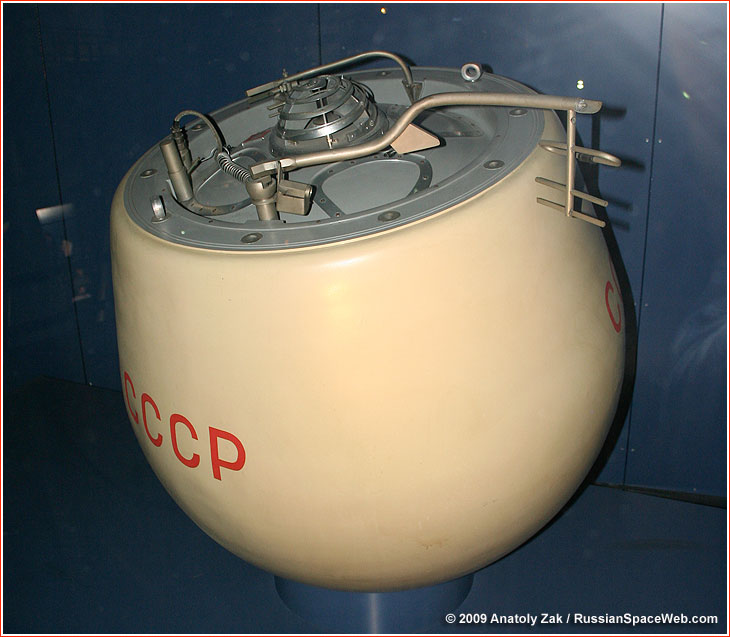
A Venera V-72 Venus lander, the same type of lander launched in 1972 as a part of the mission later designated Kosmos 482. Credit: Anatoly Zak, RussianSpaceWeb.
The lander – or 1972-023E – was made of sterner stuff, and continued to loop around Earth largely unfazed and forgotten. But each time it did make a close flyby there was exchange: a little velocity here, a little change in trajectory there. Over the decades, these little changes served to pull the craft closer and closer to Earth, such that by this year, it was looping around us once every 80-90 minutes, with its apogee and perigee both slipping into sub-200 km altitude figures. All of which meant that atmospheric entry was all but certain; the question was when? By the start of May 2025, NASA and ESA were looking to a re-entry window extending from May 9th through May 13th,which was then quickly narrowed down to the early hours of May 10th (UTC) – albeit with an initially wide margin of error (+/- 3.3 hours).
Given the orbital track of the debris, and the fact it was designed to survive the much tougher entry into the atmosphere of Venus, there were fears it could come down intact on a populated area. However, this was always unlikely, given that while it did pass over population centres each and every orbit, it also passed over large tracts of largely empty land (in human habitation terms), and even greater amounts of open ocean. Further, even if it did survive re-entry (not an absolute certainty given that both its age and the fact it would likely start tumbling during an uncontrolled atmospheric and most likely break-up / burn-up), it would not come crashing through the atmosphere at a huge velocity and explode in a massive air-burs. Rather, it would fall with a maximum velocity of around 250 km/h – enough to be decidedly upsetting if it hit a building or similar, but not enough to result in something like a city-wide disaster.
As it is, and at the time of writing, Roscosmos have stated that the vehicle re-entered the atmosphere at 06:24 UTC on May 10th over the Bay of Bengal, 560 km west of the Andaman Islands and prior to impacting the Indian Ocean somewhere west of Jakarta, Indonesia. However, this had yet to be confirmed by other agencies, although ESA indicated the vehicle potentially re-entered the atmosphere between 06:04 and 07:32 UTC, which would place its impact point most likely somewhere in the Indian or Pacific Oceans.
Kosmos 482 marked the last failure within the Soviet-era Venera programme, and its return to Earth acts as a very physical closure to that era of space history. However, it does not close the book on Russia’s ambitions where Venus is concerned. Currently, Russia is planning a return to Venus as it resumes its Venera programme with Venera D.
This mission – which is subject to a lot of ifs and maybes, already having been delayed on multiple occasions. When first conceived in 2003, it was targeting a 2013 lunch date; currently, the mission is slated for a launch no earlier than 2031, although it has yet to have its science packages finalised and developed. Comprising an orbiter and lander, if it does go ahead, Venera D (also sometimes called Venera 17) will deliver heavyweight (1.6 tonne) lander to the surface of Venus with the intentions of it being able to survive and carry out science studies for up to 3 hours after landing.
The following notes were taken from my chat transcript + the video recording by Pantera (embedded at the end of this summary) of the Third-Party Developer meeting (TPVD) held on Friday, May 9th, 2025. My thanks to Pantera as always for providing it.
Meeting Purpose
The TPV Developer meeting provides an opportunity for discussion about the development of, and features for, the Second Life viewer, and for Linden Lab viewer developers and third-party viewer (TPV) / open-source code contributors to discuss general viewer development. This meeting is held once a month on a Friday, at 13:00 SLT at the Hippotropolis Theatre.
Dates and times are recorded in the SL Public Calendar, and they are generally conducted in text chat.
The notes herein are a summary of topics discussed and are not intended to be a full transcript of the meeting.
Official Viewers
Default viewer: 2025.03 7.1.13.14343205944, issued April 9th and promoted April 15th.
New UI element for water exclusion surfaces: Build / Edit floater → Texture Tab → Hide Water checkbox.
The maximum amount of Reflection Probes can now be adjusted to better accommodate low VRAM scenarios.
Values will be set automatically depending on your chosen graphics quality. OR
Use Preferences → Graphics → Advanced Settings → Max. Reflection Probes to manually set.
An issue with being unable to see Sky Altitude values in the Region/Estate window has now been resolved.
Preferences → Graphics → Max. # of Non-Imposters has been renamed Max. # of Animated Avatars for clarity.
Bug and performance fixes and memory optimisations.
Currently includes the following new features and updates:
Chat Mentions (Early Support): Type @ then pick a name. To follow: audible alerts and highlight colour pickers (New).
This does not support generic mentions such as @everyone or @here.
My Outfits subfolders: supports for the use of subfolders (new).
Build Floater improvements: increase to scale boundaries; Physics Material Type now updates when selecting linked objects; Repeats per Meter value no longer incorrect for non-uniform sized objects
Hover height: the minimum/maximum is now +/- 3 meters.
Snapshot floater: L$ balances can be hidden independently of the rest of the UI.
Preference Search bar: general usability and readability improvements.
Bug fixes as listed in the release notes (link above).
glTF Mesh Uploader
Originally planned for inclusion on the 2025.04 RC, this now looks as if it will be initially shipped as a project viewer.
2025.05 RC Viewer
This is being primed to contain the backporting of up fixes and updates originally intended for 2024’s Maintenance C RC. Details to follow as they are made available.
In Brief
Meeting format:
Following the previous TPVD meeting being held in local chat, the decision has been made to continue in chat only.
Both the TPVD meeting and the Open Source Development meeting now look on track to be combined into a single, text-only meeting, date and time going forward TBA.
Chromium Embedded Framework (CEF) Updates: used for the likes of media handling / web page presentation within the viewer, the current version of CEF is increasingly out-of-date. How to update it has been a subject of internal discussions at the Lab, with Geenz Linden noting:
Current line of thinking is just have one CEF instance – use CEF’s tab mechanism. Seems to be the preferred solution by CEF as well for cookie management. It’s more work, but it’s also generally what seems to be the “preferred” route from CEF land.
Now that being said.. Depending on when we can get that work scheduled (we have _a lot_ on our plates right now), we may be open to a stop gap with that work on the docket in the future. We want to do this by the book as best as we can, I want to be clear about that. We are well aware of how out of date CEF is in the viewer, and it is something we want to fix. We’re still figuring out the path to do so – do we have a stop gap for now with a firm commitment to a proper upgrade later? Do we just skip to upgrade? We’re still discussing it.
This discussion revolved around a suggested approach to update used within the Cool VL Viewer and submitted to (and rejected by) LL. Further discussions on both the Lab’s thinking on the CEF tab mechanism and a possible discussion on interim options such as the Cool VL Viewer approach.
Terrain texture blending: there can be a noticeable difference is results when trying to blend terrain textures when seen on viewers running on different operating systems.
The issue appears to be the manner in which the Windows viewer applies a randomiser for blend textures between different elevations compared to Mac OS / Linux (see: SL Wiki : Creating Terrain Textures – Elevation Ranges).
This discussion became mixed with one concerning issues with PBR mirrors yielding different results / failing to work at log-in (notably under Windows), and the discussion of potential fixes, although the root cause seems to be similar in nature.
It terms of any “fix” for terrain blending issues, the problem is that any adjustment made to the calculations could end up impacting some percentage of users in some way.
LL’s view (at the meeting) was to lean towards keeping the calculations used by Windows untouched, and to try to adjust Linux / MacOS to match; the reasoning for this is that as around 90% of the user base is running Windows (and potentially landscaping in Windows), they are seeing things “correctly”.
This led to something of a debate along the lines of the “needs of the many”; the question of ROI on fixes of one types or another (time to implement, overall impact, etc.).
This discussion took up much of the latter half of the meeting, but no firm view on any likely “fix” or time-frame at this point.
† The header images included in these summaries are not intended to represent anything discussed at the meetings; they are simply here to avoid a repeated image of a gathering of people every week. They are taken from my list of region visits, with a link to the post for those interested.






 Inara Pey: Living in a Modemworld