Logos representative only and should not be seen as an endorsement / preference / recommendation
Updates from the week through to Sunday, December 3rd, 2023
This summary is generally published every Monday, and is a list of SL viewer / client releases (official and TPV) made during the previous week. When reading it, please note:
It is based on my Current Viewer Releases Page, a list of all Second Life viewers and clients that are in popular use (and of which I am aware), and which are recognised as adhering to the TPV Policy. This page includes comprehensive links to download pages, blog notes, release notes, etc., as well as links to any / all reviews of specific viewers / clients made within this blog.
By its nature, this summary presented here will always be in arrears, please refer to the Current Viewer Release Page for more up-to-date information.
Note that for purposes of length, TPV test viewers, preview / beta viewers / nightly builds are generally not recorded in these summaries.
Official LL Viewers
Release viewer: version 7.0.1.6894459864,the glTF / PBR Materials viewer, issued November 17, promoted November 28 – NEW.
Alchemy – GLTF PBR 7.1.1.2251 (Beta build) November 30 (Beta build, but listed here due to the official release of PBR Materials in SL) – download and release notes.
Black Dragon updated to version 5.0 (PBR) on December 2 – release notes.
Firestorm updated to version 6.6.16.70339 (non-PBR) on November 29 – release notes; my overview.
V1-style
Cool VL viewer updated to version 1.32.0.0 (Stable) (PBR) on December 2 – release notes.
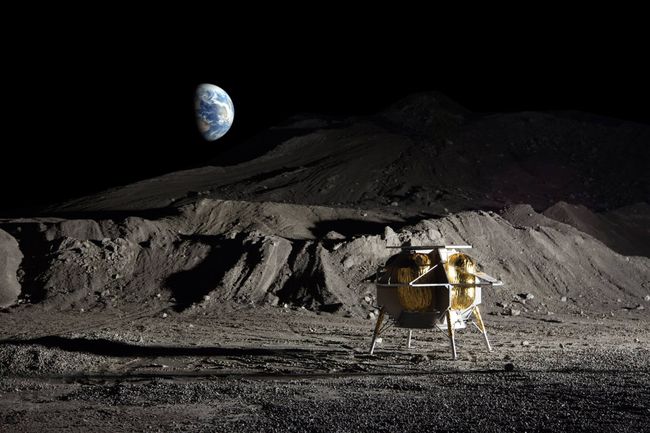
The Peregrine Mission One lander on the surface of the Moon, as imaged by Astrobotic Technology, the company responsible for the lander’s design and construction. Credit: Astrobotic Technology
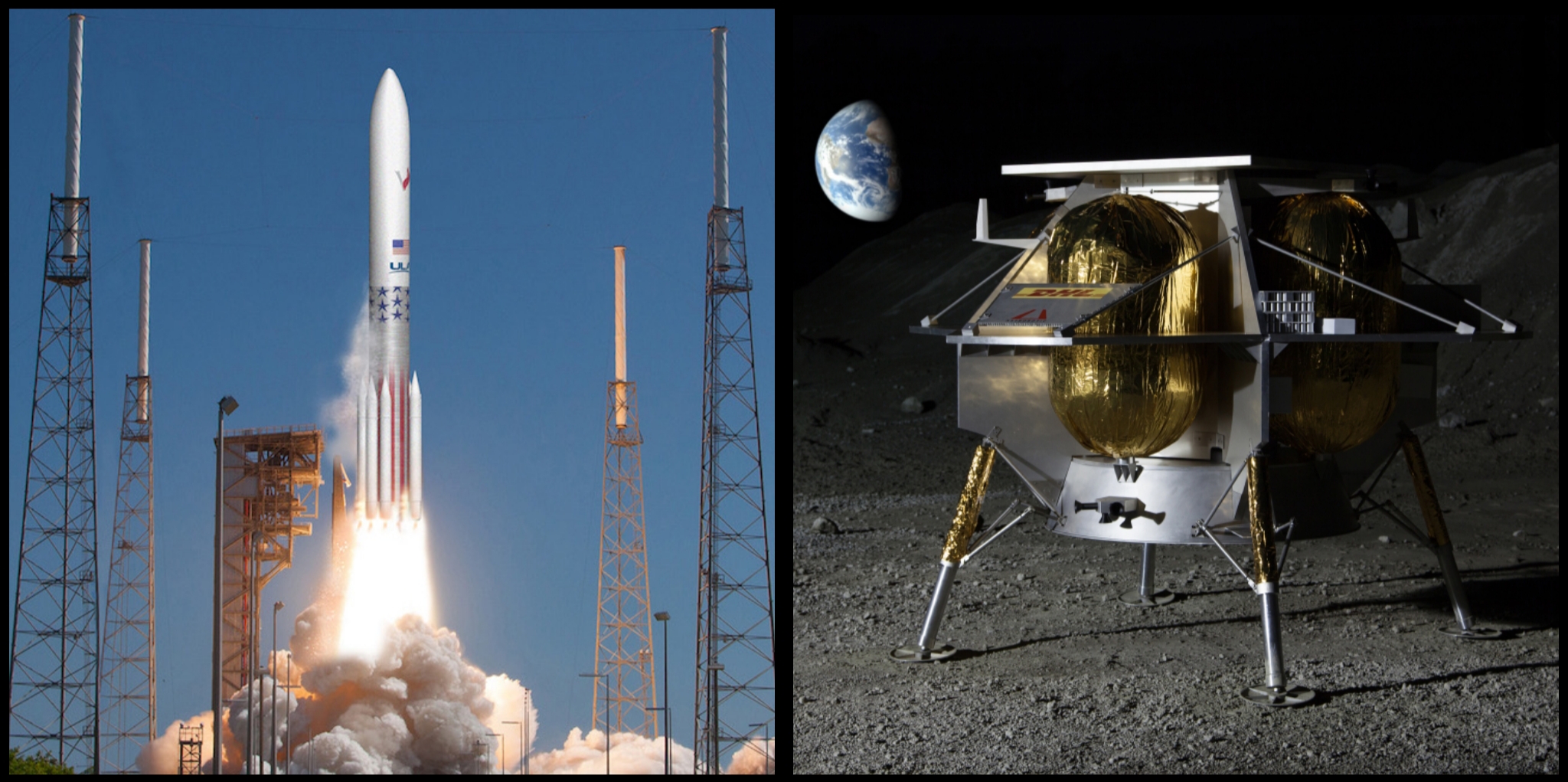
America’s return to the surface Moon as a part of government-funded activities will start in earnest over Christmas 2023, with the launch of the NASA-supported Peregrine Mission One and the Peregrine lander, built by Astrobotic Technology, which will take to the sky on December 24th, 2023 atop a Vulcan Centaur rocket out of Cape Canaveral Space Force Base, Florida.
Originally a private mission, Mission One qualified for NASA funding under the agency’s Commercial Lunar Payload Services (CLPS) in 2018, effectively making it the first lander programme funded by NASA under the broader umbrella of the Artemis programme. In this capacity, the mission will fly 14 NASA-funded science payloads in addition to the original 14 private payloads planned for the mission.
The mission will be the inaugural payload carrying flight for the Vulcan Centaur, with the lander arriving in lunar orbit after just a few days flight – but will not land until January 25th, 2024, the delay due to the need to await the having to wait for the right lighting conditions at the landing site.
I’ll have more on this mission closer to the launch date, but in the meantime, as the Peregrine Mission One launch date is getting closer, the date for America’s return to the Moon with a crewed mission is slipping further away.
The Peregrine Lander (r) will mark the first flight of United Launch Alliance’s (ULA) new Vulcan Centaur launch vehicle (l). Credits: ULA and Astrobotic Technology
In terms of the Artemis crewed programmed, there have been a number of flags raised around the stated time-frame for Artemis 3, the mission slated to deliver the first such crew to the surface of the Moon in 2025, over the past few years. These have notably come from NASA’s own Office of Inspector General (OIG), but similar concerns have also started to be more openly voiced from within NASA.
These concerns largely focus on whether or not SpaceX can provide NASA with its promised lunar lander and its supporting infrastructure in anything like a timely manner, given that SpaceX has yet to actually successfully fly a Starship vehicle. In this, the awarding of the lander vehicle – called the Human Landing System (HLS) in NASA parlance – to SpaceX, who propose using a specialised version of the Starship vehicle, was always controversial. For one thing, Starship HLS will be incapable of being launched directly to lunar orbit. Instead, it will have to initially go to low Earth orbit and reload itself with propellants – which will also have to be carried to orbit by other Starship vehicles.
Infographic produced by Blue Origin highlighting the likely launch requirements for a Starship HLS. Credit: Blue Origin
At the time the contract for HLS was awarded (2021), competing bidders Blue Origin noted that according to SpaceX’s own data for Starship, a HLS variant of the vehicle would require the launch of fifteen other starship vehicles just to get it to the Moon. The first of these would be another modified Starship designed to be an “orbiting fuel depot”. It would then be followed by 14 further “tanker” Starship flights, which would transfer up to 100 tonnes of propellant per flight for transfer to the “fuel depot”. Only after these flights had been performed, would the Starship HLS be launched – and it would have to rendezvous with the “fuel depot” and transfer the majority of propellants (approx. 1,200 tonnes) from the depot to its own tanks in order to be able to boost itself to the Moon and then brake itself into lunar orbit.
Despite such claims being made on the basis of SpaceX’s own figures, SpaceX CEO Elon Musk pooh-poohed them, claiming all such refuelling could be done in around 4-8 flights, not 16. Despite their own OIG and the US Government Accountability Office (GOA) agreeing with the 16-flight estimation, NASA nevertheless opted to accept Musk’s claim of 4-8 launches, going so far is to use it in their own mission graphics.
A NASA infographic showing the Artemis 3 mission infrastructure. Note the (optimistic) 6 Starship launches required to get the SpaceX Starship HLS to lunar orbit. Credit: NASA/SpaceX
However, the agency appeared to step back from this on November 17th, 2023, when Lakiesha Hawkins, assistant deputy associate administrator in NASA’s Moon to Mars Programme Office, confirmed that SpaceX will need “almost 20” Starship launches in order to get their HLS vehicle to the Moon, with launches at a relatively high cadence to avoid issues of boil-off occurring when storing propellant in orbit.
Now the US Government Accountability Office (GOA) has re-joined the debate, underlining the belief that SpaceX is far from being in any position to make good on its promises regarding the available of HLS. In particular the report highlights SpaceX is still a good way from demonstrating it can successfully orbit (and re-fly) a Starship vehicle, and it has not even started to demonstrate it has the means to store upwards of 1,000 tonnes of propellants in orbit, or the means by which volumes of propellants well above what has thus far been achieved can be safely and efficiently be transferred between space vehicles, and it has yet to produce a even a prototype design for the vehicle.
Nor does the report end there; it is also highly critical of the manner in which NASA has managed the equally important element of space suit design, firstly in awarding the initial contract for the Artemis lunar space suits to Axiom Space – a company with no practical experience in spacesuit design and development – rather than a company like ILC Dover, which has produced all of NASA’s space suits since Apollo; then secondly in failing to provide Axiom with all the criteria for the suits, necessitating Axiom redesigning various elements of their suit to meet safety / emergency life support needs.
As a result, the GAO concludes that it is likely Artemis 3 will be in a position to go ahead much before 2027; there is just too much to do and too much to successfully develop for the mission to go ahead any sooner. In this, there is a certain irony. When Artemis was originally roadmapped, it was for a first crewed landing in 2028; however, the entire programme was unduly accelerated in 2019 by the Trump Administration, which wanted the first crewed mission to take place no later than December 2024, so as to fall within what they believed would be their second term in office. Had NASA been able to stick with the original plan of 2028, there is a good chance that right now, it would be considered as being “on target”, rather than being seen as “failing” to meet time frames.
Hubble Hits Further Gyro Issues
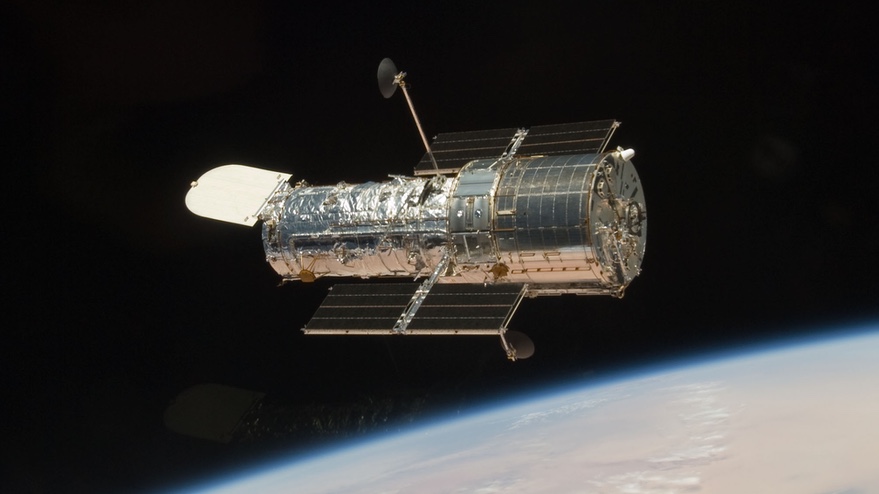
On November 29th, 2023, NASA announced that the ageing Hubble Space Telescope (HST) had entered a “safe” mode for an indefinite period due to further troubles with the system of gyroscopes used to point the observatory and hold it steady during imaging.
In all, HST has six gyroscopes (comprising 3 pairs – a primary and a back-up),with one of each pair required for normal operations. To help increase the telescope’s operational life, all three pairs of gyros were replaced in the last shuttle mission to service Hubble in 2009, and software was uploaded to the observatory to allow it to function on two gyros – or even one (with greatly reduced science capacity) should it become necessary.
Today, only 3 of those gyros remain operational, the other three having simply worn out, and on November 19th, one of those remaining 3 started producing incorrect data, causing the telescope to enter a safe mode, stopping all science operations. Engineers investigating the issue were able to get the gyro operating correctly in short order, allowing Hubble to resume operations – only for the gyro to glitch again on November 21st and again on November 23rd, leading to the decision to leave the telescope in its safe mode until the issue can be more fully assessed.
The Hubble Space Telescope. Credit: NASA
The news of the problems immediately led to renewed calls for either a crewed servicing mission to Hubble or some form of automated servicing mission – either of which might also be used to boost HST’s declining orbit. However, such missions are far more easily said than done: currently, there isn’t any robotic craft capable of servicing Hubble (not the hardware or software to make one possible). When it comes to crewed missions, it needs to be remembered that Hubble was designed to be serviced by the space shuttle, which could carry a special adaptor in its cargo bay to which Hubble could be attached, providing a stable platform from which work could be conducted, with the shuttle’s robot arm also making a range of tasks possible, whilst the bulk of the shuttle itself made raising Hubble’s orbit much more straightforward.
Currently, the only US crewed vehicle capable of servicing HST is the SpaceX Crew Dragon – and it is far from ideal, having none of the advantages or capabilities offered by the space shuttle, despite the gung-ho attitude of many Space X supporters. In fact, it is not unfair to say that having such a vehicle free-flying in such close proximity to Hubble, together with astronauts floating around on tethers could do more harm than good.
A further issue with any servicing mission is that of financing. Right now, the money isn’t in the pot in terms of any funding NASA might make available for a servicing mission – and its science budget is liable to get a lot tighter in 2024, which could see Hubble’s overall budget cut.
On Sunday, December 3rd, 2023, Bay City will once again be hosting their annual Christmas Tree Lighting and fund-raising event. With it comes an opportunity to support Child’s Play Charity, a 501c3 non-profit organisation offering on-line communities such as the Bay City Alliance the ability to help seriously ill children around the globe during their hospital stays via the purchase and donation of games and gaming equipment.
Activities will commence at 13:00 SLT and run through until 16:00 SLT, taking place at the Bay City fairgrounds. On offer will be:
Live entertainment by performers Wolfie Starfire and Essence Bilasimo, and music by DJ GoSpeed Racer.
A skating party around the base of the tree.
The tree lighting itself.
Refreshments and fun.
Funds will be raised via a silent auction that will run through until the close of the event. On offer is an impressive range of items kindly donated by designers and creators from across Second Life, including Madpea, the Genus Project, Javatar Mocha, Buzzbox Munro, Junk Food, Cica Ghost, Shippe & Saille, Plato Novo, Caly Applewhyte, ChristiSart, Dutch Mainsail, and Vicious Hollow. Bids are made via vendor, and should your bid be exceeded by another, your Linden dollars will be automatically refunded. You can, of course, increase your bid if you wish. Items will be awarded to the highest bid when the auction closes.
Bay City Christmas Tree Lighting 2023
In addition, donation kiosks are be provided in the Fairgrounds for those who would like to support Child’s Play without participating in the auction. The 2022 Tree Lighting raised L$15,1576 for the charity, and the organisers are hoping to exceed that this year – and such is the impressive range of items in the auction, I’m pretty sure they will!
About Bay City and the Bay City Alliance
Bay City is a mainland community, developed by Linden Lab™ and home to the Bay City Alliance. The Bay City Alliance was founded in 2008 to promote the Bay City regions of Second Life and provide a venue for Bay City Residents and other interested parties to socialize and network. It is now the largest Bay city group, and home to most Residents of Bay City. To find out more, contact Marianne McCann in-world.
Bay City and the Bay City Alliance and Child’s Play
Bay City and the Bay City Alliance have a long history of fund-raising for Child’s Play, and in 2016, they received special recognition by the charity, being awarded Silver Level sponsor on the Child’s Play’s website.
The following notes were taken from my chat log transcript and audio recording of the December 1st, 2023 Third Party Viewer Developer (TPVD) meeting, together with the video recording of the meeting made by Pantera – my thanks to her as always for making it and allowing me to embed it in these summaries.
Meeting Overview
The TPV Developer meeting provides an opportunity for discussion about the development of, and features for, the Second Life viewer, and for Linden Lab viewer developers and third-party viewer (TPV) / open-source code contributors to discuss general viewer development.
Puppetry project viewer, version 6.6.12.579958, May 11.
General Viewer Notes:
The promotion of the PBR Materials view marks the second promotion of a viewer built using the Github Actions build page.
It is uncertain whether or not there will be a further viewer promotion in 2023. If there is, the most likely candidate would by the Emojis viewer, although at the time of writing, this had had to go through the Github build process (which it naturally will when merged with the release viewer code-base).
PBR Materials was shipped with a number of known bugs and issues, none of the former of which were considered to be significant enough to block the release, whilst some of the latter required further investigation for repros, etc., and the Lab decided to release whilst investigating.
This means a maintenance update is already in progress which will continue additional fixes, and this will also be used to catch issues and bugs reported post-release.
One of the post-release bugs uncovered is that – for reasons unknown – disabling transparent water impacts animation playback; see: BUG-234759.
Another issue revealed by PBR is that the viewer draws Linden Water twice. (not the entire scene, an issue previously remedied, just Linden Water), and this is being corrected.
The request is for bug and issues to keep being reported, simply because PBR Materials now has far more eyes on it, and so things that may have been missed due to the limited number of eyes on things in testing / the multiplicity of ways people use SL, means that some edge-cases, etc., may have been missed.
A question was asked if LL had considered off the exposure adjustments (adjusted within a set range through the Sky settings) to prevent the viewer from rendering some scenes excessively bright.
The response to this was that the exposure is tied to tone-mapping and a controlled HDR range, as such LL would rather users adjust to designing environments in accordance with the new (glTF-defined) tone mapping, then introducing more granular options into the viewer (such as which tone mapper to use).
[Video: 14:58-15:55] However, it was also noted that if TPVs wish to provide their own tone mapping options, this would not be seen as violating the so-called “shared user experience”, as they are regarded as post-processing effects (then don’t actually physically manipulate how objects appear in-world) and they are subjective in how they are seen by individual users.
Part of this future work will be to look at how automatic LODs for mesh objects are produced, and whether to continue to support them through the uploader (which is limited in its abilities) or to direct content creators to other solutions for generating LODs prior to upload (e.g. via Simplygon and Blender).
This conversation also encompasses various limitations common to SL which glTF might alter / improve upon as it is further adopted (such as meshes currently being limited to eight faces due to the platform’s data entry model regarding meshes as prims), plus the potential impacts of changes. Please refer to the video for specifics on this discussion.
One issue that is proving hard to consistence repro is that of frequent slow-downs with NVIDIA GL drivers which can result in significant FPS loss in the viewer – see: BUG-234706 for more details.
At the time of writing, both LL’s QA and others are trying to consistently repro the problem, however, so of the thinking is is related to a mix of CPU core and GL optimisations running on the host system.
The concern here is that where it has been repro’d, it has been with systems using 8-core CPUs and NIVIDIA GPUs (although what the correlation between the two might be in terms of a cause for the problem, is unclear), which could impact a fair percentage of SL users if it proves to be a widespread issue (particularly if it is unresolved when Firestorm makes a PBR release).
Those who feel they are experiencing a performance loss over time logged-in which reflects the notes presented in the bug report, and who can dig down into their system data for possible causes, are asked to add relevant comments to the Jira.
Some of these may pre-exist PBR or be related to the PBR release:
Objects not rendering at log-in due to the inventory frame load locking main processing with the result that messages to the viewer about some in-world objects are simply dropped, and they are never rendered other than via a re-log (or TP out / back?). LL has a fix for this in progress, but as it causes some additional issues, not ETA on when it might be deployed.
There is an issue with mesh objects in particular not rendering (see BUG-234700 “[GLTF] Mesh objects randomly not rezzing properly at login”), but it is currently unclear if this is related to the above issue or the result of something else.
BUG-234616 “[PBR] Lights outside of camera frustrum are not rendered until within camera frustrum” – has been accepted by LL, but is still an open issue under investigation.
General Notes
[Video: 13:18-13:54] The “Fall Colours” simulator update (currently on the BlueSteel and Preflight RC channels) has a bug related to collision sounds (see: BUG-234757 “Repetitive Collision Sound?” and this forum thread) which is under investigation. It was also noted that Fall Colours is liable to be the last simulator update for 2023.
[Video 17:24-25:15] The question was asked if LL would accept either the entire RLVa API (Restrained Life Viewer alternative, as maintained by Kitty Barnett and used by several third-party viewer and analogous to RLV) or a subset thereof.
RLV/a have been shown to have a wide range of uses outside of their original intent, some of which have, to a degree been matched / had some level of equivalence via things like Experience Keys in the viewer, while others still remain useful for multiple applications – such as the use of either to manage wardrobe / outfit systems, for example).
The short response to this via Runitai and Vir Linden was “probably”, as LL are aware that the widespread use of RLV/a features does create something of a schism between TPVs and the official viewer. As such, a pull request of code / the opportunity to discuss has been offered.
This led to a wider conversation on how RLV/a works and just what form of open-source platform SL should be in terms of extensibility / code contributions – please refer to the video for more.
[Video 33:41-34:20] Linden Lab Office Closure for Holidays: Linden Lab will be closed other than for emergency coverage from end of business on December 22nd through until start of business on January 2nd, 2024.
This means that a No Change window for simulator and official viewer releases will be in place from Monday, December 18th, 2023.
There is a project in development for upping the simulator and viewer to HTTP/2 (although the viewer will require a Curl update in order to handle it).
Requests have been made to extend this work to encompass the Asset Store, which internally at the Lab is seen as a nice to have / good to have, but no actual work in that direction in currently in-hand.
[Video: 48:00-End] General discussion on better support for the viewer on Linux, segueing into a discussion of possibly adopting voice options other than Vivox, and what needs to be improved within voice in general.
Next Meeting
Currently slated for 13:00 SLT, Friday December 22nd, 2023, at the Hippotropolis Theatre, but may move to Friday January 5th, 2024. Check the SL Public Calendar to confirm.
† The header images included in these summaries are not intended to represent anything discussed at the meetings; they are simply here to avoid a repeated image of a gathering of people every week. They are taken from my list of region visits, with a link to the post for those interested.
NovaOwl Gallery: Lisa Dartmouth – See Through My Eyes, December 2023
Currently open (for a while longer at least, having formally opened in mid-November!) at the ground level gallery NovaOwl, operated and curated by ULi Jansma, Ceakay Ballyhoo & Owl Dragonash, is a small exhibition of Second Life photographic art by Lisa Dartmouth entitled See Through My Eyes.
The collection presents a baker’s dozen of images Lisa has put together, representing twelve of the places she has visited during her journeys through Second Life. For those – like myself – who are fellow travellers / explorers, these are places instantly recognisable by name, being some of the most enduring and photogenic spots in-world, popular for both their appearance and the fact that those responsible for them remain every willing to re-invent them and provide new visions and imaginings to be explored and appreciated, or for bring the beauty of the physical world to SL.
NovaOwl Gallery: Lisa Dartmouth – See Through My Eyes, December 2023
Thus, among this selection we can find Panjin with it brilliant “ref beach” growths of Suaeda salsa (see here for more), Whimberley, Grauland, Bella’s Lullaby, 80 Days (in its Wild West iteration, Wind River) and Elvion (featured twice in the exhibition), all of which have appeared in these pages multiple times over the years, thus imbuing for me, a real sense of attachment / recognition with Lisa’s work.
The displayed images are beautifully framed and cropped, with a lightness of post-processing to allow the natural beauty of the regions they represent to show through. Each one is also gently personalised by Lisa through the appearance of her avatar making her way through each location, generally (but not exclusively) on horseback. Further depth of touch is given to several of the images through the inclusion of 3D elements which help extend their presence into the gallery: a grass-tufted dune with feeding Avocets flowing outwards from the sandy expanse of Arum; a growth of yellow nanohana watched over by a scarecrow drawing the eye to the fields of rapeseed at Whimberley; a tall lighthouse sitting between coastal shots of Bella’s Lullaby and Fall @ Florence, and so on.
NovaOwl Gallery: Lisa Dartmouth – See Through My Eyes, December 2023
All of which makes See Through My Eyes both a personal personal retrospective by the artists and a veritable catalogue of reasons why exploring Second life can be so rewarding for the virtual traveller.
Leloo’s Jingle Bells Trails, November 2023 – click any image for full size
LeLooUlf is back with another setting for the end-of-year holiday season, Leloo’s Jingle Bells Trails. This delightful sky platform setting is probably best described using LeLoo’s own words:
An enchanting outdoor Holiday Season festival that promises a magical experience for all! Bring your skates and get ready to glide around the frozen pond using the skating system for singles and couples. You can also skate along the beautiful icy paths with the soft glow of twinkling lights. Then take a well-deserved break and visit the outdoor café for some hot cocoa or a cup of mulled wine … Everyone is Welcome to this PG event!
– Jingle Bells Trails
Leloo’s Jingle Bells Trails, November 2023
This is a place that is unabashed in its celebration of the modern spirit of Christmas; there’s a Christmas market, ice skating, snow, reindeer, snowmen, decorated trees, baubles, a mistletoe kissing booth, hot chocolate – the list goes on.
Two paths lead away from the landing point. One is signposted the Skating Path, and the reason becomes clear as to why after travelling along it for a short distance visitors will find it turns to ice and a skate giver and sign where it does – allowing them to continue along the path on foot or by skating along it, passing under a pair of trestle tunnels with glittering lights as the path meanders onwards to reach a junction.
Leloo’s Jingle Bells Trails, November 2023
Here the main path turns to the right, whilst a short stretch continued onwards into the Playful Pond, where a little skating can be had (if the pond is not too crowded for you!). Passing onwards, however, the main path allows visitors to reach a little chapel which, in keeping with the Christmas theme, has a little nativity scene and a decorated tree within.
From here the way loops back towards the landing point once more, a small junction and a footpath enticing visitors to drop in on the setting’s one house, a cosy little place with a fire in the hearth and goodies to be enjoyed in the kitchen. Meanwhile, running westwards, the skating path once again slips under a couple of light-festooned trestle tunnels, one with another path leading away from it to offer a further little diversion – this to visit the setting’s horses.
Leloo’s Jingle Bells Trails, November 2023
Prior to getting back to the landing point, this arm of the path provides access to the main skating pond (around which it largely loops) where among other things, you can join a slightly odd-looking but fun-filled snowman in a dance (or several!) if the skating doesn’t appeal; and he certainly knows his dances (up to and including David Brent’s spectacularly weird dance from The Office – that’s the original UK version, not the US remake). That said, the skating options displayed under the tree occupying the middle of the pond offer an extensive range of opportunities for having a little icy fun.
Just beyond the entrance to the pond, the icy surface of the path gives way to snow, and that to cobbles and the setting’s café, where hot drinks and suchlike are on offer. From here, it is a short walk back to LeLoo’s little market and the landing point. But there is also much more the see and enjoy as you wander: there are little comic vignettes to cause a smile, polar bears who seem to be making the most of the wintery setting, LeLoo’s art to be enjoyed and lots of little photo opportunities. All of which makes for an engaging visit in preparation for the upcoming holidays.





 Inara Pey: Living in a Modemworld