Space Sunday: Administrators and directions

Jared Isaacman in orbit aboard the Crew Dragon Resilience during his Polaris Dawn mission, 2024. Credit: Polaris Dawn

Billionaire Jared Isaacman was confirmed by the US Senate as NASA’s new Administrator under the Trump administration – more than half a year after his appointment had originally been expected. The delay in the confirmation was the result of Trump himself, who withdrew Isaacman’s nomination virtually on the eve of his initially expected confirmation, possibly as a result of Trump’s public falling-out with the CEO of SpaceX, with whom Isaacman has close ties.

Those ties were a cause of concern back in April 2025, and rose again in the December hearings on Isaacman’s re-nomination, with some within the Senate questioning how unbiased he might be when it comes to making decisions around NASA’s human space efforts – particularly with regards to the Artemis Programme. In particular, questions have been raised over Isaacman’s financial ties to SpaceX – a company he has twice used for private-venture launches which have seen him gain almost 8 days experience in orbit with two crews. Isaacman himself has remained opaque on his precise financial ties with SpaceX, stating NDAs prevent him being more candid, whilst offering – at least prior to his confirmation – to seek release from his obligations by SpaceX to disclose them.

Jared Isaacman’s official portrait as the 15th NASA Administrator. Credit: NASA

Another cause for concern over her appointment lay in the form of the 62-page Project Athena document. Penned by Isaacman and his team earlier in the year, this outlined a radical direction for NASA which many saw as not particularly in the agency’s best interests.  Within it, Isaacman pushes for various aspects of NASA’s research work to be handed over to the private sector whilst also seeking to continue the – contentious, as I’ve noted in these pages in the recent past – work of apparently winding down the many functions and much of the work of the Goddard Space Flight Centre (GSFC) by either transferring them (e.g. to the Johnson Space Centre) or “deleting” them.

Whilst there is nothing wrong with commercialisation where it can be carried out properly and with the right supervision, history has already shown that when it comes to R&D and development, it doesn’t always work out.

Boeing’s Starliner is perhaps the most identifiable case in point here, even allowing for the company having to absorb the majority of the cost over-runs; however, it also overlooks SpaceX, which remains the greatest benefactor of NASA funding with absolutely no return to the American taxpayer. Without NASA’s intervention in the early 2000s, SpaceX would have failed completely with the Falcon 1 rocket, NASA effectively covering the lion’s share of development costs associated with Falcon 9, and with both the Dragon and Crew Dragon vehicles.

For his part, Isaacman has continued to deflect from the Athena document, calling it a set of “ideas” and “thoughts” rather than an actionable plan – this despite the fact that a) it is actually entitled a “strategic plan” for NASA, and b) it lays down a pretty clear roadmap that is heavily biased towards commercialisation, even in areas where it is difficult to see commercial entities being willing to engage unless assured of significant government financing.

However, all of this might now by a side note in terms was to what happens at NASA next, given that on the very day Isaacman took up his new post at NASA, December 18th, 2025, Trump issued an executive order outlining much of NASA’s immediate future priorities – and in places, quite ironically so.

Trump’s New Executive Order for “American Superiority” In Space

Whilst not including anything Earth-shatteringly new, the December 18th executive order focus on four areas:  expanding America’s human exploration of space, but with the focus confined to the Moon and Earth orbit; expanding America’s strategic and national security needs in space; “growing a commercial space economy”; and “developing and deploying” advanced technologies “to enable the next century of space achievements”.

Specifically with regards to NASA, the order calls for:

  • Returning Americans to the Moon by 2028 via Artemis.
  • Establishing the initial elements of a Lunar South Pole outpost by 2030.
  • Enabling the use of nuclear power in Earth orbit and on the surface of the Moon.
  • Further NASA’s reliance on commercial launch vehicles and providers.
  • Streamline NASA’s procurement processes, again with a bias towards buying-in rather than in developing.
  • Offset costs by decommissioning the International Space Station (ISS) in 2030, and moving to private sector space research and orbital facilities.

In addition, the Executive Order requires that in his first 90 days, Isaacman must submit a report on how the above – and other goals impacting NASA, such as financing commercial space activities – are to be achieved.

Both Blue Origin’s Blue Moon Mark 2 HLS (l) and SpaceX’s Starship HLS (r) face some significant challenges if they are to be ready for a 2028 lunar landing. Credits: Blue Origin and SpaceX

The goal of landing humans on the Moon by 2028 remains something of a reach. As was noted by Acting NASA Administrator Sean Duffy – and despite the SpaceX CEO’s protestations otherwise – it is very hard to see the SpaceX Human Landing System – the vehicle needed to get crews from cislunar space to the surface of the Moon and back again – and its many complex requirements being anywhere near ready and fully tested by 2028.And while Blue Origin, with their slightly less complicated Blue Moon Mark 2 HLS apparently well ahead of the curve in terms of development – including active astronaut testing of various elements of the vehicle as well as having a launch vehicle proven to be able to reach Earth orbit with a payload in place – it is not without complexities of its own which could yet impact on its ability to overtake the SpaceX Starship-derived system.

Mid-2025 saw Blue Origin work with NASA to test a mock-up of the airlock section of the Blue Moon Mark 2 HLS with the Neutral Buoyancy Lab (“Wet-F tank”) at Johnson Space Centre to assess its suitability for crew egress and return and crew rescue scenarios. Credit: NASA / Blue Origin

Perhaps the biggest issue facing both of these vehicles is NASA’s own insistence that they use cryogenic propellants. This makes both vehicles massively more complex than the likes of the Apollo Lunar Lander, which used a hypergolic motor system and thus it required no complex turbopumps or other systems in its engines, and the propellants did not require an external ignition source (they would ignite on contact) and could be stored relatively compactly.

Cryogenic propulsion, whilst providing a potentially greater bang, does require more complex engines, an ignition source, and substantial storage as they are bulky. Ergo, for either of the two HLS systems NASA plans to employ, there exists a requirement to be able to “refuel” the HLS vehicle when on-orbit, with the SpaceX HLS requiring substantially more in the way of propellant reloading than Blue Moon.

Further, and as the name suggests, cryogenics propellants require very low temperatures in order to remain in a liquid state (essential for reducing their bulk and enabling their flow). That’s hard enough when on Earth; in space, where either HLS vehicle will spend much of its time in the full blazing heat of the Sun, it’s much harder.

Thus, for both HLS vehicles to work, SpaceX and Blue Origin must be able to develop and test a reliable system to transfer tonnes (hundreds in the case of SpaceX HLS) of propellants between craft, and develop a means to minimise potential boil-off and loss through gaseous venting of side cryogenics. Again, neither company is anywhere near achieving either of these milestones.

Establishing the elements of a lunar outpost by 2030 is at best an ambiguous goal within the executive order, in that no effort is made to expand on whether this means on the surface of the Moon or just in cislunar space, such as by the positioning of initial elements of the Lunar Gateway station.

Gateway is a further questionably element of Artemis, with critics pointing to the fact that it is not actually needed for any return to the Moon by America. And while NASA promotes it as a “command and control centre” for lunar operations and a potential “safe haven” in emergencies, the fact remains that it is anything but.

When deployed, the station will likely occupy a 7-day near-rectilinear halo orbit (NRHO) around the Moon, making its closest passes (1,500 km altitude) over the lunar North Pole, and extending out as far as 70,000 km from the lunar South Pole, the area selected for surface operations, thus limiting its ability to respond to any surface emergency.

That said, the lack of any indicators as to what is meant in terms of a lunar outpost within the executive order does give Isaacman a relatively free hand with his response.

Similarly, the reference to the use of nuclear power is somewhat ambiguous. While there have been studies and proposals on using compact nuclear plants on the surface of the Moon (see: Space Sunday: propulsion, planets and pictures), nothing concrete has been put forward for Artemis, which gives Isaacman some room. However, in terms of propulsion systems (if these are included in the order’s reach), it is interesting to note that the joint DARPA-NASA DRACO project, which would have potentially seen a nuclear propulsion demonstrator flown in 2027, was cancelled earlier in 2025 because – irony – the Trump administration was looking to cancel it anyway under the 2026 budget proposal.

A conceptual rendering the DARPA-NASA DRACO nuclear thermal propulsion (NTP) demonstrator as it might have been. Credit: DARPA

Looking to leverage more commercial launch services is something that fits with Isaacman’s Athena document, as mentioned above. Also as mentioned, there is nothing wrong with this if it s done right, but this is harder to achieve than might otherwise appear to be the case (again, note the comments vis Boeing / Starliner and SpaceX Starship), and too much reliance on commercial entities can led to delays and issues as much as seen with SLS, simply because commercial entitles can have their own goals and requirements which can come at a higher priority.

Again, part – not all, given the fubar over the Artemis space suits – of the fact that Artemis 3 slipped from a 2026 date to 2028 is down to SpaceX consistently failing to prove Starship can do what is promised of it. This includes statements from the company’s CEO that a Starship would fly around the Moon with a crew of 8 in 2023, and the HLS version would make an unscrewed demonstration landing on the Moon in 2024. As such, there is much to be cautious about when it comes to any off-loading of capabilities to commercial entities.

The ISS retirement is easier to rationalise. Like it or not, the entire structure is aging and much of it is passing its planned operational lifespan. Even the most recent large Russian module to join the ISS – Nauka, launched in 2021, started construction in the early 1990s, marking its core structure older than its planned operational lifespan of 30 years. But the Russian modules are not alone, the US Unity module was constructed in the 1990s and launched in 1998, and thus is sitting on top of its 30-year planned lifespan.

The International Space Station, showing the US / International modules “below” the horizontal truss and the Russian modules “above” (to the rear of the US / international elements). Credit: NASA

As such, while there is no reason much of the ISS could continue beyond 2030, it is not without increasing risks and / or rising issues. Thus, decommissioning it does, sadly make a degree of sense.

What does not make sense, however, is the failure to plan for any real replacement for it in Earth orbit and simply relying on “commercial entities” to continue the tradition of research and science established by the ISS. The latter, as a government operation, does not have to generate a return on investment and is ideally suited by its governing articles to be a centre of research and study. Commercial entities, however, will be driven by a need to be profitable – hence why, while there are a number of commercial space stations is development (take Blue Origin’s Orbital Reef as an example, being perhaps the largest), their focus leans far more towards orbital tourism, their operators intending them to become resorts in space for those who can afford a ticket. Using them as a centre of research sits some way behind this, and will not be without a range of its own costs, both in terms of getting to / from a station and in actually spending time aboard it, as well as the time researchers might be permitted to stay.
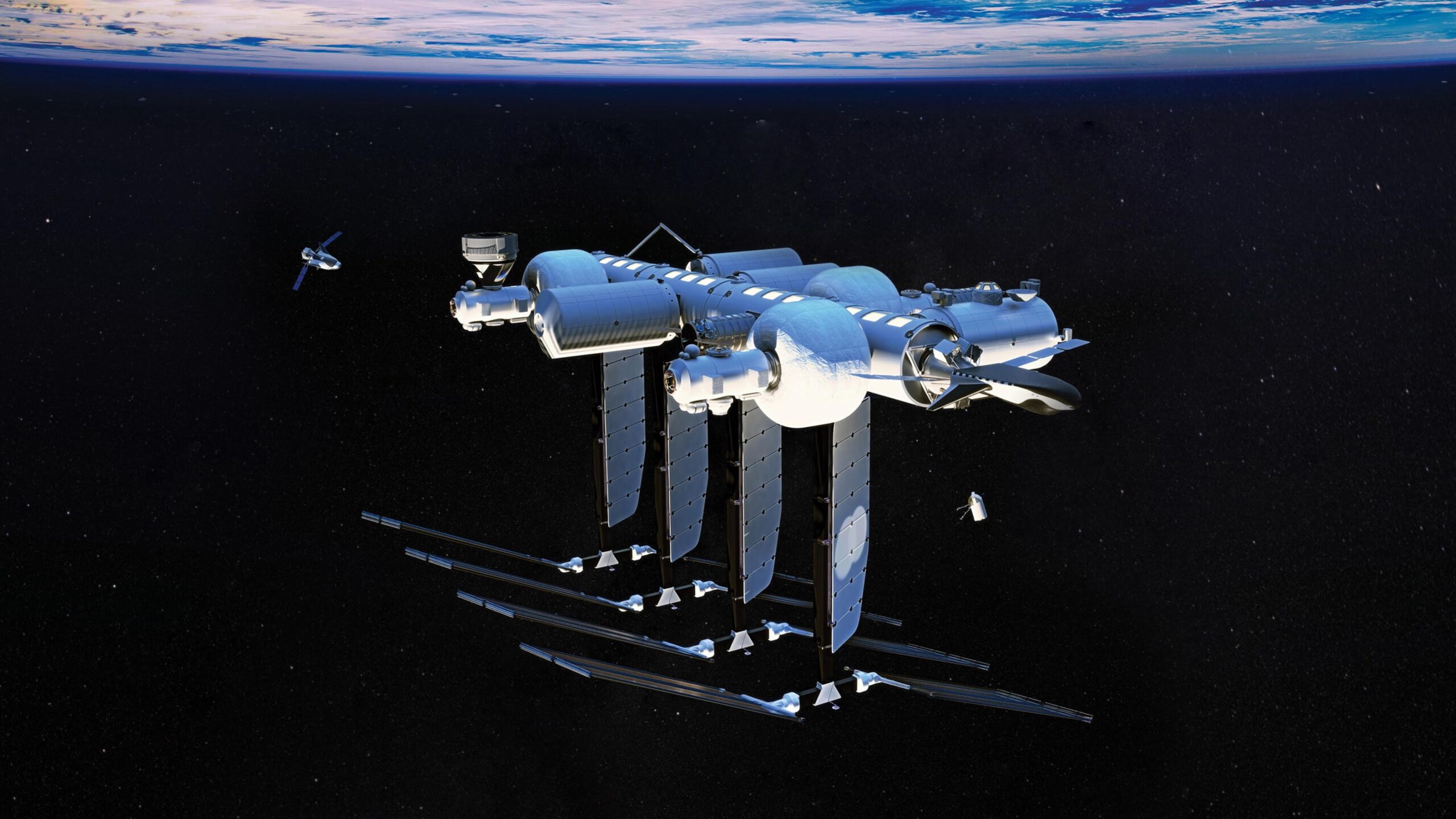
The Blue Origin / Sierra Space-led Orbital Reef space station design, prioritise space tourism rather than research of the kind performed aboard the ISS. Credit: Blue Origin / Sierra Space / Boeing

Another risk in ending the ISS and not supporting any form of replacement potentially undermines the Trump administration’s desire (and the concerns of Congress and the Senate) to curtail (or at least slow) China’s growing ascendency on the international stage. With the ISS gone, Tiangong will become the only large-scale and potentially expandable orbital research facility – thus it could become the hub of international space-based research.

Which is a long way of saying that Jared Isaacman has come into NASA at a time of potential turmoil and with a possible agenda which could do much to completely alter the agency.  But whether this is to its betterment or not will have to be seen in time.
2025 week #51: SL CCUG and Open Source (TPVD) meetings summary

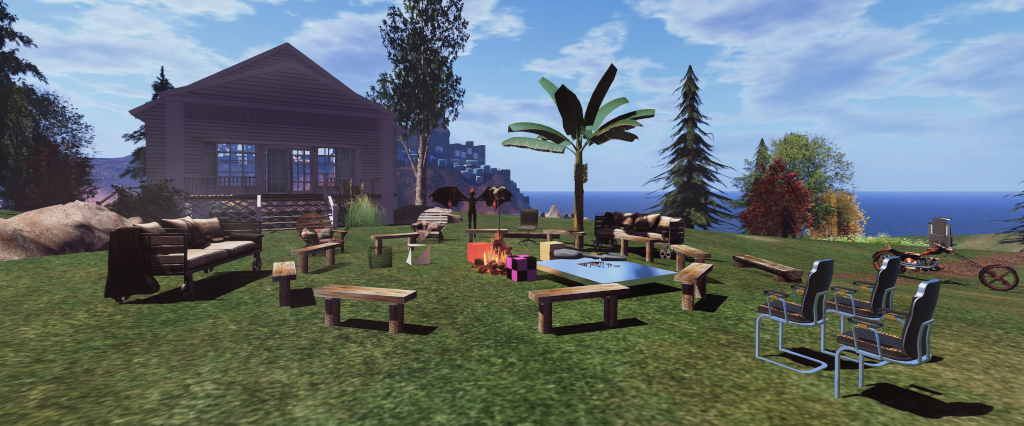
Hippotropolis Campsite: venue for CCUG meetings
The following notes were taken from:

  • My chat log of the Content Creation User Group (CCUG) meeting of Thursday, December 18th, 2025 and my chat log of that meeting
  • Pantera’s video (embedded at the end of this article) and my chat log of the Open-Source Developer meeting held on Friday, December 19th, 2025.
Table of Contents

Please note that this is not a full transcript of either meeting but a summary of key topics.

Meeting Purpose

  • The CCUG meeting is for discussion of work related to content creation in Second Life, including current and upcoming LL projects, and encompasses requests or comments from the community, together with related viewer development work.
    • This meeting is generally held on alternate Thursdays at Hippotropolis and is held in a mix of Voice and text chat.
  • The OSUG meeting is a combining of the former Third Party Viewer Developer meeting and the Open Source Development meetings. It is open discussion of Second Life development, including but not limited to open source contributions, third-party viewer development and policy, and current open source programs.
    • This meeting is generally held twice a month on a Friday, at 13:00 SLT at the Hippotropolis Theatre and is generally text chat only.
  • Dates and times of meetings are recorded in the SL Public Calendar.

Official Viewer Status

  • Default viewer 2025.08 – 7.2.3.19375695301 – maintenance update with bug fixes and quality of life improvements – December 2.
    • Notable addition: new VHACD-based convex decomposition library for mesh uploads.
  • Second Life Project Lua Editor Alpha version 7.2.3.19911032641, December 5.
  • Second Life Project Voice Moderation viewer 26.1.0.20139269477, December 12.

Viewer Updates

Viewer Side Voice Moderation

  • Introduces the ability to moderate spatial voice chat in regions configured to use webRTC voice.
  • Allows region  / parcel owners (the latter subject to local region permissions) to moderate Voice chat (i.e. muting people if required) on their land.
  • Allows existing Group moderators to moderate Voice chat, if used within their groups.
  • This function is viewer-side and limited to muting people.
    • Muting remains active through the muted individual’s log-in session (i.e. if they TP out of a parcel where they are muted, then TP back, they will still be muted; however, if they log out / in, then they will be unmuted until moderation is re-applied).
    • This approach is to make the moderation more a social tool – e.g. muting someone who has left their microphone open and are accidentally flooding the channel with background sounds whilst AFK.
  • For more obnoxious users on Voice, the currently-existing ban methods are recommended.

Viewer 2026.01 – One-click Installer / Updater

Viewer 2026.01 is in progress. This will include:

  • Improved bugsplat support (we want better reporting for freezes, and just generally better crash reporting). This work builds on the successes of 2025 in detailing with viewer crashes and reducing overall causes for crashes.
  • A new one-click installer:
    • To be powered by a new dependency called velopack.
    • The process will literally be: click once, and a (small) pop-up is briefly displayed stating the viewer is being installed, and the viewer is launched when done.
    • On Windows, the viewer will default to installing under Apps/Local; on Apple OS it will remain as a drag-and-drop; Linux is still TBD.
    • It will be possible to tell the installer to install to a custom location, if preferred, but initially, this will be via a command line argument.
    • Config files and such are not changing. Anything that counts as user data will not change. It’s only where the viewer is installed by default that is changing.
    • In addition:
      • Older viewers will need to be uninstalled.
      • NSIS installer scripts will still be around for projects that prefer that.
      • Velopack does output “portable” viewer installs – literally a zip file with everything needed to install the viewer, if required.
      • The new installer will be offered as an opt-in to TPVs wishing to make use of it.
    • The one-click install capability will likely be an alpha (formerly project) viewer, which will be made available “in the coming days” in order to gain some user feedback.
    • These changes will not affect the current viewer repos, channels, cohorts, etc., as currently used by TPVDs.
  • It is also hoped to include a new updater to make viewer updates more transparent, running the the background without the need for direct user intervention.
    • So, when there is a new version of the viewer available and a user attempts to launch their current version of the viewer, the new version will be downloaded, installed and launched.
    • It will still be possible to disable automatic viewer updates from within the Viewer Preferences.
  • The idea behind the new installer  / updater is to make installing and updating the viewer a less onerous task for newer users.

General Viewer Notes

  • Viewer 2026.02 will likely be UI-focused. This might include:
    • Changes to the UI font See: https://github.com/secondlife/viewer/issues/2023), which will likely require some updates to various floaters and panels in the viewer.
    • Adoption of some of the UI updates made to the Project Zero (viewer in a browser) version of the viewer.
    • More information will be available on this viewer as plans are settled.
  • As a general note on viewer performance, and within the official viewer, Geenz Linden notes that at the start of the year, LL was tracking an average viewer FPS of around 40 on the official viewer, but as the end of year approaches, the average has “moved well past that”, and “getting pretty close” to tracking above 50 FPS.

General Discussion – Both Meetings

  • No plans to offer larger sizes for prim creation at present.
  • WebRTC voice:
    • Still needs further adjustments (e.g. such as with voice roll-off with distance).
    • Can have issues of “muffling” when moving the camera, and these are still being looked at.
    • Is now available on the Project Zero viewer.
  • A general discussion on colour palette spaces in the colour picker for saving colours (e.g. providing more, and whether it might be better served as a list).
  • A further debate on having a dedicated chat bar exposed in the official viewer.
  • A general discussion on the derender capability found in various TPVs (very useful for photographers / machinima makers; silencing noisy  / spammy objects, etc).
  • A discussion in the OSUG on the upcoming viewer font update.

Next Meetings

Naughty Panda’s Return of the Light in Second Life

Naughty Panda – Return to the Light, December 2025 – click any image for full size

Occupying a quarter Full private region leveraging the Lab’s Land Capacity bonus, lies the realm of the Naughty Panda, created by Alice Embervale (Alice Sakura) and her SL partner, Krow Embervale (Poetic Doll). From now through until January 4th, 2026, the setting is home to Return to the Light, a Japanese-inspired celebration of the Winter Solstice.

Called Toji (冬至) in Japanese, the solstice is one of Nijushi-sekki – the 24 divisions of the solar year. Occurring around December 22nd at ecliptic longitude 270o, it refers to a period between the day and the beginning of the following sekki called shokan (the lesser cold season). It is the shortest day and longest night of the year, with the lowest culmination altitude of the sun, in the northern hemisphere.

Naughty Panda – Return to the Light, December 2025

Within Return to the Light, visitors are invited to take a lantern and follow a winter mountain walk. Along the path, guardians mark the way, offering information on the season, together with a riddle that leads to the next of their kind.

Thus, those travelling the route learn about the legend of Toji, solve a challenge and receive a special gift. Afterwards, there is the chance to relax in warm yuzu-infused hot springs and enjoy a shared feast in a peaceful courtyard setting. Yuzu is a citrus fruit, and it is said in Japan that taking yuzu-yu (a yuzu citron bath) is part of the traditions of the day, as is eating Toji-gayu (winter solstice rice gruel).

Naughty Panda – Return to the Light, December 2025

Whilst referred to as a quest, Return to the Light is not intended to be a race or in any way competitive. Rather, it is a personal journey, a reflection of the passage of life as we move through the depths of winter and towards the return of the light and warmth of the Sun. As such, it should be approached gently, with consideration and an openness to discovery and learning.

The Landing Point for the setting doubles as the starting point for the quest. It is here that visitors can collect their lantern and read instructions on starting the quest along the path to reach the kitsune temple.

Naughty Panda – Return to the Light, December 2025

But before starting, I would recommend – as per the introductory notes provided with the lantern – the setting should be experienced using the local environment settings and the custom audio stream. The latter’s music will not only soothe, but encourage you to take your time and appreciate the quest and the setting all the more.

Five stone Jizo – little carvings of a bodhisattva – form the aforementioned guardians along the route. Jizo is (in the simplest terms) the protector of all souls on their journey through life and reincarnation. Here, the little statues serve as the means to impart the story of Toji and its significance in Japanese tradition, before passing on a short riddle in which lies the clue to finding the next Jizo.

Naughty Panda – Return to the Light, December 2025

On reaching the shrine, visitors should hand over their lantern to hear the words of the wise kitsune – but do note, there are no shortcuts; wisdom only comes by following the path from point to point. After Kitsune has spoken, visitors are asked a five question challenge before a gift is given, and the journey can be taken back to the landing point.

Returning to the lowlands will bring visitors to a series of building built around a large onsen pool.  Here is where the feast mentioned in the setting’s notes might be found, and – on December 18th, it will host a solstice music event commencing at 13:00 SLT and continuing through until 18:00.

Naughty Panda – Return to the Light, December 2025

Small, engaging and with a wealth of easy learning to be had, Naughty Panda’s Return of the Light is a genuinely unique take on the time of year, and well worth a visit.

SLurl Details

Eira’s charming wintertime setting in Second Life

Eira, December 2025 – click any image for full size

Occupying a Homestead region, Eira is a cosy wintertime island offering a mix of quiet retreat and opportunities for activities and fun. The work of Yoon (Toyono), apparently supported by estate holder AMExperience, it is a delightful location well-suited to its role, and sitting under very appropriate environment settings.

Ruggedly steep, the island is crowned by snow-frosted pine and birch trees which in turn surround a modern cement-and-wood cabin (open to the public) and a large wooden gazebo forming a covered ice skating rink. The main Landing Point (not enforced) sits close by the cabin, making it and the gazebo an obvious first point of exploration.

Eira, December 2025

A path winds away from the cabin and past the gazebo, heading west. As it does so, it passes a close-range snowball fight area to reach wooden decks and steps as they dogleg down to a frozen-over cove on the west side of the island to offer more ice skating (together with the opportunity to pick up some seasonal goodies as a gift from Yoon and – across the bay – to have a little posing fun with a snowman!).

The skating here looks a little more risky as the ice is clearly cracked and there is a warning of thin ice as it hugs the coast around a headland to the south, where a further shallow bay sits.  This is backed by a ski / sledding slope running down from the cabin and gazebo (rezzers at the top), with the chance to go skiddling out onto the ice if not careful!

Eira, December 2025

For those preferring a more traditional way of enjoying the ice, a further skating rezzer can be found at the foot of the slope, whilst off to one side on a shelf of snow-coated rock there’s a little place to sit and warm hands before a fire.

Just beyond the trees marking the rezzer for the southern ski slope lays another snowy path winding between the trees. Travelling east to start, it turns more to the south-east to descend down wooden stairs to a deck build out over the water and another chance to go skating.

Eira, December 2025

More skiing / sledding can be had from the top of the east-side slope of the island, where rezzers sit just behind the Landing Point, and angled snow slope dropping away from them, this time with a fence at the bottom to prevent any zooming out into icy waters (unless one steers for the gap in it! Also at the bottom of this slope, people can opt to shovel snow or (again) take to skates out on the ice.

Also reached via a path leading away from the west side of the cabin is a further path. After descending a set of steps, it branches, one arm running on down to where a little dock sits, offering both a skating rezzer and a little rowing boat for sitting and cuddling. The second arm of the path runs around the shoulder of the hill, offering places to sit and spend time.

Eira, December 2025

Skaters setting out from the dock can easily make their way over to the smaller island sitting off to the north-east, which offers a couple of little attractions of its own, reached via steps running up from its north coast. I should also perhaps here note that the other little island sitting to the north-west can also be skated to and explored, but is given over entirely to nature (and so might be a good backdrop for photography).

Those not wishing to explore entirely on foot should also keep an eye out for the tall directional signs. These are actually teleport boards and allow for quick hops around the setting’s major features (or a quick hop back to the Landing Point if you get lost!).

Eira, December 2025

Throughout all of this, Yoon has added plenty of little details to enjoy, together with a subtle soundscape of birdsong and the bubbling, rushing of the local stream and it tumbles over rocks and falls to the sea. For those who would like a Christmas-y soundtrack to go with their explorations, Yoon provides a curated selection of song on the region’s audio stream via Listen.fm.

In all, and as noted, Eira is a delightful, photogenic and enjoyable location!

Eira, December 2025

 Slurl Details

  • Eira (Karma Isles, rated Moderate)

Kitten’s Asphalt World at Nitroglobus in Second Life

Nitroglobus Roof Gallery, December 2025: Joanna Kitten – Asphalt World

Joanna Kitten (Joaannna) makes a fourth – and welcome – return to Nitroglobus Roof Gallery, curated and operated by the talented Dido Haas, with an exhibition to see out the year.

It was at Nitroglobus that I first encountered Kitten’s work in a dedicated exhibition, and I was immediately captivated by her work. Until that point, she’d largely focused on landscape images; but with Noir, featured at Nitroglobus in October 2022, she moved towards more avatar-centric and narrative collections, often presented in monochrome, as was also witnessed by her second and third exhibitions at Nitroglobus: Fourth Wall in July 2023 and Nude in January 2025.

Nitroglobus Roof Gallery, December 2025: Joanna Kitten – Asphalt World

All three of these past exhibitions were engaging in the way in which they offered a narrative flow; one that was not necessarily linear in nature, but which nevertheless offered insights into a world both built by Joanna and somewhat reflective of her own as she lives it in SL. With Asphalt World, which opened at Nitroglobus on November 15th, 2025, Joanna continues this interweaving of narrative, imagination and images whilst adding a fourth strand: music:

Anyone familiar with my Flickr feed will know that music plays a big part in my creative process. One of my favourite bands is Suede, formed in the 1990s and credited with kick-starting the Britpop movement in the UK. They may be less well known than their more famous contemporaries, Oasis, but they have infinitely more depth.
In 1994, Suede released their album Dog Man Star, which features the song The Asphalt World—a track that, for me, evokes the vision of a dark, gritty cityscape.  …  This is the world I aimed to create in my images—enhanced with a touch of science fiction inspired by novels such as Neuromancer by William Gibson and Neal Stephenson’s Snow Crash.

– Joanna Kitten (Joaannna), describing Asphalt World

Nitroglobus Roof Gallery, December 2025: Joanna Kitten – Asphalt World

Thus, within Asphalt World we have a collection monochrome images captured within the region of Voodoo Land, a nocturnal urban setting. This forms a perfect backdrop for Joanna to offer her captivating studies, each one of which in turn offers flashes of the song’s lyrics wrapped in a film noir approach and edged with touches of science-fiction.

Given the use of the song as an inspiration for the exhibition, I would strongly recommend listening to it when visiting Asphalt World. This is what I did, and whilst viewing Joanna’s images I was struck by the way the lyrics could flow between them, sometimes a line or two landing in one, only to drift away and land on another, to be replaced by a different line.  Thus, Asphalt World became even more enticing fluid as a narrative in my eyes.

Another aspect of the images I appreciated – which might be accidental, to be sure, is the way several of the sculptures places across the gallery floor resonate with the song’s lyrics. Sisyphus, for example, with its representation of the hopeless act of pushing a rock uphill whilst knowing it will only tumble back own, seems to embody the song’s central hopelessness in trying to discern what goes on in the head and life of the featured girl when she is out of the lyricis’s sight – and control. Similarly, Easy Murdering perhaps offers a (very viscerally, admittedly) twist on how it feels when the sex turns cruel, and leads to a broken heart.

Nitroglobus Roof Gallery, December 2025: Joanna Kitten – Asphalt World

In all, Asphalt World is richly engaging in and of itself; a clear demonstration of Joanna’s skill and growth as an artist-photographer, elegantly framed within Nitroglobus.

SLurl Details

2025 SL viewer release summaries week #50

Logos representative only and should not be seen as an endorsement / preference / recommendation

Updates from the week through to Sunday, December 14th, 2025

This summary is generally published every Monday, and is a list of SL viewer / client releases (official and TPV) made during the previous week. When reading it, please note:

  • It is based on my Current Viewer Releases Page, a list of all Second Life viewers and clients that are in popular use (and of which I am aware), and which are recognised as adhering to the TPV Policy.
  • This page includes comprehensive links to download pages, blog notes, release notes, etc., as well as links to any / all reviews of specific viewers / clients made within this blog.
  • By its nature, this summary presented here will always be in arrears, please refer to the Current Viewer Release Page for more up-to-date information.
  • Outside of the Official viewer, and as a rule, alpha / beta / nightly or release candidate viewer builds are not included; although on occasions, exceptions might be made.

Official LL Viewers

  • Default viewer 2025.08 – 7.2.3.19375695301 – maintenance update with bug fixes and quality of life improvements – December 2 – No Change.
    • Notable addition: new VHACD-based convex decomposition library for mesh uploads.
  • Second Life Project Lua Editor Alpha (Aditi only), version 7.2.3.19911032641, December 5 –  No Change.
  • Second Life Project Voice Moderation viewer 26.1.0.20139269477, December 12 – NEW.
    • Introduces the ability to moderate spatial voice chat in regions configured to use webRTC voice.

LL Viewer Resources

Third-party Viewers

V7-style

  • Kokua: 7.2.2.58037 (no RLV) and 7.2.3.61786 (RLV variants), December 13 – release notes.

V1-style

  • Cool VL viewer Stable: 1.32.4.13, December 13 – release notes.

Mobile / Other Clients

  • SL Mobile (Beta) version 2025.1075 (A) / 0.1.1075 (iOS) – December 12 – Avatar loading improvements

Additional TPV Resources

Related Links
