Space Sunday: updates on launches and Goddard

Shenzhou 22 lifts-off from the Jiuquan Satellite Launch Centre, northwest China, 12:11 Beijing time, November 25th, 2025. Credit: CMSA

A handful of updates for this week covering some previous reports and articles.

Shenzhou 22launches to Tiangong

In my previous Space Sunday article, I covered the unfolding situation aboard the Chinese Tiangong space station, where three tiakonauts – Zhang Lu, Wu Fei and Zhang Hongzhang – “stranded” on the station. This was because their Shenzhou 21 spacecraft had been used to return three other tiakonauts – Chen Dong, Chen Zhongrui and Wang Jie – to Earth after their vehicle was deemed unfit to bring them home following a strike by orbital debris, thus leaving the first three without a return vehicle.

At the time of writing that piece, I noted that China was ramping work on Shenzhou 22, originally due for launch with a crew in 2026, so it could launch to Tiangong in an uncrewed state to provide the three crew on the station with a return vehicle, and that this mission could launch as soon as November 25th.

A camera aboard Shenzhou 22 shows it with solar panels deployed in orbit, November 25th, 2025. Credit CMSA

This is precisely what happened, with the vehicle launched atop a Long March 2F/G rocket from the Jiuquan Satellite Launch Centre in northwest China at 04:11 UTC on November 25th (12:11 Beijing time). The vehicle, flying under automated control, rendezvoused with Tiangong at 07:50 UTC, less than four hours after launch.

As it was flying without a crew, Shenzhou 22 brought with it additional supplies for the space station, including additional fresh fruit and vegetables for the crew, medical supplies, and equipment the crew might be able to use to repair the damaged viewport on Shenzhou 20’s orbital module, which also remains docked at Tiangong.

Shenzhou 22 (on the right) at Tiangong. Credit: CMSA

If this can be done, then Shenzhou 20 is liable to be returned to Earth under automated control; if not the Chinese Manned Spaceflight Agency (CMSA) has indicated it will be abandoned in orbit to free the docking port it currently occupies ready for the arrival of Shenzhou 23 in April 2026.Presumably, if abandoned, and giving the risk of collision, Shenzhou 20 will be commanded to make a controlled re-entry into the upper atmosphere to largely burn-up with any surviving elements targeting Point Nemo in the South Pacific Ocean.

Russia’s Only Active Manned Spacecraft Launch Pad Damaged

On Thursday, November 27th, at just before 09:28 UTC, Soyuz MS-28 lifted-off from the Baikonur Cosmodrome, Kazakhstan. Aboard were the Expedition 73/74 crew bound for the International Space Station (ISS) comprising carrying cosmonauts Sergey Kud-Sverchkov (mission commander) and Sergey Mikayev, and US astronaut Christopher Williams (NASA).

The flight proceeded smoothly, with the Soyuz vehicle achieving orbit and rendezvousing with the ISS a little over three hours after launch, docking with the nadir port on the Rassvet “mini-module” (formerly known as the docking Cargo Module) of the Russian section of the station.

Soyuz MS-28 (foreground), docked against the Rassvet module of the ISS, November 27th, 2025. Credit: Roscosmos

However, during the launch from Site 31/6, damaged was caused to the launch facilities, with the Service Platform apparently collapsing into the pad’s flame trench (used to direct a rocket’s super-heated exhaust away from the vehicle and pad during lift-off).

A three-decked unit, the Service Platform sits under the actual launch pad and Soyuz  the Soyuz rocket when in its upright position when on the pad, supported by three gantries on the pad itself (which open like jaws when the rocket lifts-off). Prior to launch, the service platform provides critical access to the lower portion of the booster as well as providing the mechanism required to support the rocket’s base. Its loss has temporarily rendered Site 31/6 inoperable.

A computer-generated model of the Soyuz Service Platform (aka maintenance cabin) used at Site 31/6 at Baikonur. Credit: unknown

What is particularly significant about this is the Site 31/6, first used in January 1961 and which has seen over 400 launches since then, is that currently, it is the only launch pad at Baikonur available for launching Soyuz and Progress. A second facility – Site 1, which was used as the launch pad for Yuri Gagarin’s historic flight, was decommissioned in 2020 due to lack of funds required for essential updates.

This means that, for the time being, Russia has no means to launch either Progress or Soyuz craft to the ISS. Following the incident, the Russian Space Agency Roscosmos issued a short statement confirming the damage, and stated that all the parts required to affect repairs are available, and repairs will be completed in the “near future”.

Site 31/6 at Baikonur following the launch of Soyuz MS-28 on November 27th, 2025, with the wreckage of the collapsed service platform circled. Credit: Roscomos

Russian spaceflight expert Anatoly Zak, who runs the Russian Space Website, and whom I’ve quoted in the past in these pages, notes that the platform could take up to 2 years to fully repair, but the pad itself could be brought back into use by Roscosmos “borrowing” the necessary hardware from the decommissioned Site 1, which is still standing.

Currently, the next planned launch from Site 31/6 is that of the uncrewed Progress MS-33 mission, due in late December 2025. At the time of writing, Roscosmos had provided no update on the status of that launch in light of the pad damage.

Boeing Starliner Update

NASA and Boeing have announced that the next flight of the latter’s troubled CST-100 Starliner crew vehicle will be an uncrewed flight to the ISS, and that overall, the number of operational crewed flights the vehicle will fly to the ISS will be reduced from 6 to 3 (for a total of four flights overall).

A Boeing CST-100 Starliner with its forward docking hatch open, approaches the International Space Station in preparation for docking during the uncrewed Orbital Flight Test 2 in 2022. Credit: NASA

Starliner has been the subject of numerous articles in these pages, having suffered a series of embarrassing flaws and issues, the most recent being during the vehicle’s first crewed flight test, which saw issues with the vehicle’s thruster systems and resulted in the flight crew of Barry “Butch” Wilmore and Sunita “Suni” Williams remaining on the ISS for a total for 286 days rather than their originally planned 7-14 days.

On Monday, November 24th, NASA announced the next launch of Starliner to the ISS – targeting a possible April 2026 lift-off – will be uncrewed and only carry supplies to the space station. Officially referred to as Starliner-1 and originally intended to be the first operational flight of the vehicle with a crew of 4, the flight is viewed by NASA as a further flight test to confirm Starliner’s suitability to commence crewed flights to the ISS.

Breakdown of Boeing CST-100 Starliner. A: Crew capsule (reusable), comprising: 1. hinged nosecone protecting the docking mechanism. 2: parachute compartment cover. 3: Crew access hatch 4: MR-104J RCS thrusters (25 in total). 5: 6 auto-inflating airbags for landing. 6: Heat shield (ejected during landing). 7: NASA Docking System 8: Parachute compartments (x3) 9: Window (x3) B: Service module (expended) 10: power and consumables umbilical connecting to the capsule. 11: Radiators (x4) 12: “Doghouse” thruster unit (x4 and location of the vehicle’s thruster issues). 13: Propellant tanks. 14: Doghouse roll control RCS thruster. 15: 4 x RS-88 engines for launch escape capability in the event of an abort. 16: Solar panels. Credit: NASA

In the same announcement, NASA indicated that in light of the delays to Starliner operations, they had agreed with Boeing that the number of planned flights using the vehicle will be reduced from the contracted 6 to 4 – including the Starliner-1 mission. This means Starliner will now only be used for three operational crewed flights to the ISS, the remaining two being held as “options” by NASA.

This does raise some questions around the entire CST-100 contract. In 2014, NASA agreed a fixed-price contract of US $4.2 billion for the development of Starliner and six operational crew flights (Starliner-1 through Starliner 6). In 2016, NASA amended the contract to pay Boeing an additional US $287.2 million per launch for the original Starliner-3 through Starliner-6 missions. As such, it is not clear if holding on to what would effectively be the “starliner-5 and “Starliner-6” flights as “options” is to avoid NASA and Boeing getting into an argument over refunds in the original contract.

A completed Boeing CST-100 Starliner vehicle within a clean room at Boeing’s facilities at Kennedy Space Centre, Florida. Credit: NASA

Overall, the Starliner project is now estimated to be some US $2 billion over-budget. While much of the additional cost has been paid for by Boeing, adding to the company’s word on top of the 737 MAX debacle, it is still a major embarrassment to NASA. For its part, Boeing may still hope to salvage its reputation (and generate revenue) by using Starliner in conjunction with the Blue Origin / Sierra Space led Orbital Reef commercial space station, in which Starliner a designated the crew transfer vehicle (a role Sierra Space also hope to fulfil if it can successfully implement the crew-capable  version of their Dream Chaser space vehicle).

Lawmakers Seek to Support Goddard

I’ve covered the disturbing situation at NASA’s Goddard Space Centre a few times in these pages recently (notably: Space Sunday: of budgets and proposed cuts and Space Sunday: more NASA budgets threats and Space Sunday: Goddard fears and comet updates), in which the NASA management appear to be facilitating a shut-down of facilities at the centre in accordance with the unapproved Trump administration budget for 2026, using the “20 year plan” for refurbishing and updating the centre as cover. It now appears that US lawmakers are asking questions as to what exactly is going on – and requesting NASA’s Office of Inspector General (OIG) carry out a full audit to make a proper determination on whether the actions are harming individual projects based at Goddard – or NASA as whole.

The effort is being led by Zoe Lofgren, Ranking Member of the House Science Committee, who has been joined by 15 other lawmakers, including Valerie Foushee Ranking Member on the Subcommittee on Space and Aeronautics. The letter, forwarded to NASA OIG on November 21st, 2025, followed a November 10th letter Lofgren to NASA Acting Administrator Sean Duffy and Goddard centre management stating the closures “must cease” until such time as NASA has submitted the changes for oversight by Congress and OIG.

The concerns from Congress stem from the fact that while initiated prior to the government shutdown, the closures and moves at Goddard were accelerated during the shutdown period, with many staff at NASA being ordered to pack their offices and data whilst technically on furlough and without any of the necessary paperwork required to allow them to work during a shutdown – called federal work exceptions – being submitted by Goddard Centre management.

In particular, it has emerged that pressure has been placed on two of NASA’s flagship science projects – the Dragonfly quadcopter mission to Saturn’s moon Titan (see: Space Sunday: A Dragonfly for a moon) and the Nancy Grace Roman Space Telescope (shortened to RST).
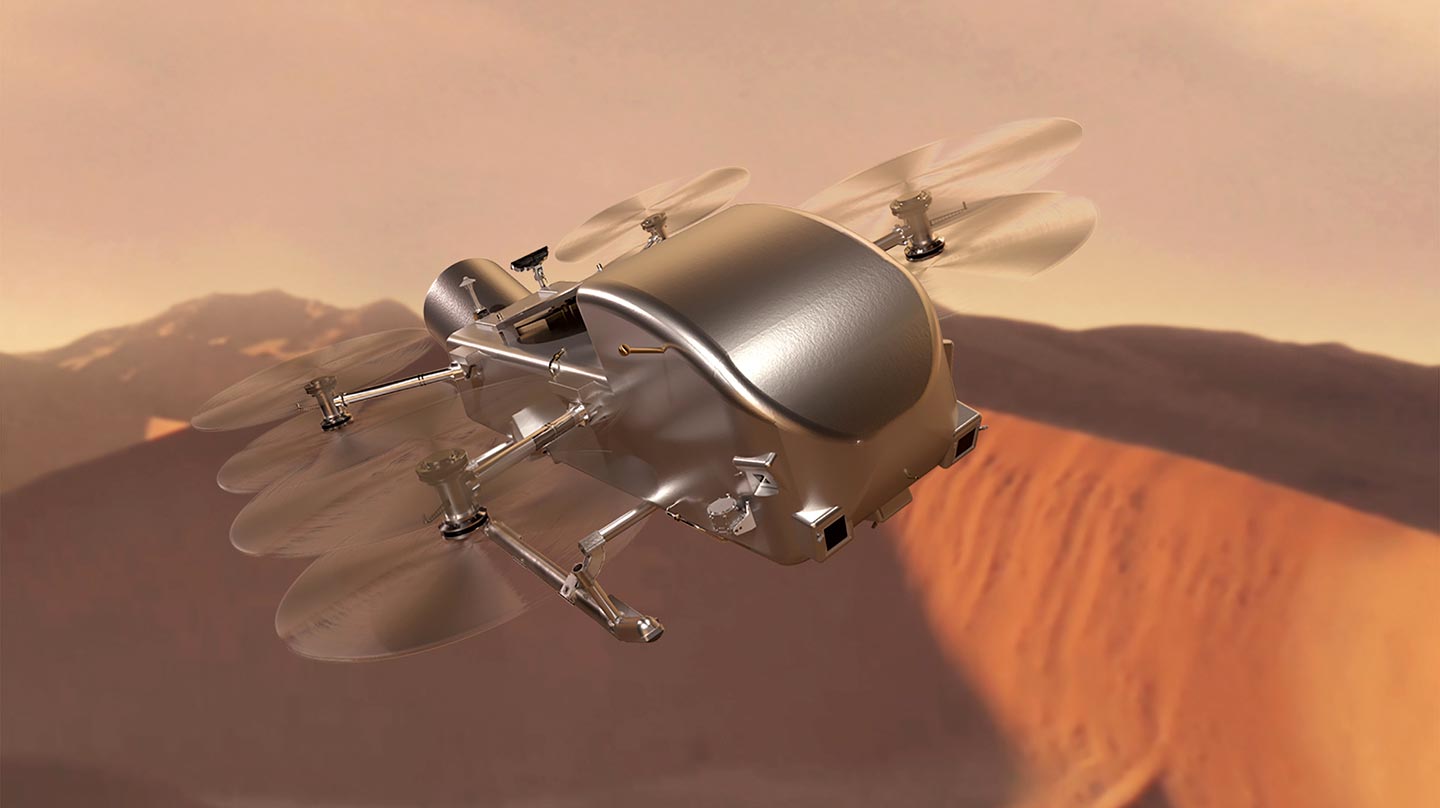
The Dragonfly quadcopter is due to launch to Saturn’s moon Titan in 2028, but has faced upset at Goddard due to staff being forced to relocate. Credit: JHU/APL

Both of these missions are based within Goddard’s Building 11, one of those earmarked for update. Prior to the acceleration of the emptying of facilities under the “20 year plan”, those involved in both projects were assured their work would not be affected, and both would be allowed to continue within Building 11 through until July 2026. However, on November 3rd, both were informed they had just 4 business days to pack-up their work and move out of the building. This was followed by reports that contract movers arrived following the deadline and started to remove highly sensitive equipment from the RST laboratories without proper Office of Safety and Mission Assurance (OSMA) oversight to ensure proper safety protocols were followed, potentially risking equipment to damage. Whilst these moves should not be taken as a sign either mission is at risk of cancellation, the lawmakers note in their letter to NASA’s OIG:

The rushed move introduced completely unnecessary cost, schedule and risk factors for Roman and Dragonfly that could have been avoided or mitigated if the agency had acted with due caution, care and patience … If this is how the agency handles one of its most high-profile flagship missions, how many other missions are in imminent danger of being irrevocably lost?
Building 11 at NASA’s Goddard Space Flight Centre (GSFC). Credit: NASA

A further cause of concern is revelations that equipment including 3D printers, test instruments – even entire laboratories – with a value potentially reaching into the millions of dollars, has been labelled to be either given away or simply disposed of.

In requesting the NASA OIG – which is charged with oversight of NASA’s operations, specifically to prevent and detect crime, fraud, waste, abuse, and mismanagement, as well to promote efficiency, effectiveness, and economy throughout the space agency – the letter requests that the OIG assesses cost impacts of the changes at Goddard, determine how the moves were funded and identify any negative effects on Roman, Dragonfly and other missions based within Goddard’s facilities.

Responding to Lofgren’s initial concerns and the letter to the OIG, Goddard Acting Director Cynthia Simmons and the associate administrator for NASA’s science mission directorate, Nicola Fox have stated what is happening at Goddard is “merely” an implementation of the 20-year plan (which was designed to be a phased approach to renovating / replacing  / closing many of the older facilities at the space centre over a 20-year period between 2017 and 2037), further claiming the current actions will reduce costs at Goddard by US $10 million per year and avoid US $64 million in deferred maintenance costs over the remaining years of the plan.

Rising operations and maintenance costs over a prolonged period have forced NASA to implement efforts to ensure the centre’s long-term viability through more efficiently utilizing available space and consolidating or reconstituting facilities. … All these efforts are in alignment with NASA Science Mission Directorate leadership and are designed to position Goddard for the future and protect ongoing missions, many of which are in pursuit of key decadal priorities and Congressional direction.

– Letter to Congresswoman Zoe Lofgren from Goddard Acting Director Cynthia Simmons and Nicola Fox, associate administrator for NASA’s science mission directorate

Whilst potentially accurate, the response from Simmons and Fox does not explain why the changes at Goddard are being carried out without the proper oversight from OSMA, and apparently without the proper transparency on the part of Goddard’s management or NASA Headquarters.

At the time of writing, George A Scott, NASA’s Acting Inspector General, has yet to respond to the lawmaker’s letter. Whilst OIGs frequently respond to Congressional requests for investigations by doing so, they are independent entities and so not actually obligated to do so. However, Scott is regarded as a capable and unbiased IG, having joined the office in June 2018 as NASA Deputy IG and following a 30 year career within the Government Accountability Office (GAO). He has previously been highly critical in how NASA manages itself and it funds, specifically with regards to contracts around major projects – such as the Space Launch System and its associated hardware – and in demanding better transparency by the space agency.

The blossoming of Sakura Islands in Second Life

Sakura Islands, November 2025 – click any image for full size
Sakura Islands is a richly detailed Japanese-inspired space with three immersive zones: a funky rooftop cityscape, a dreamy night skybox nestled among cherry trees beneath starry skies, and lush, pastoral islands blanketed with cherry blossoms. Enjoy contemplation and quiet reflection or a peaceful balloon ride. You may even spot a forest troll!

– Sakura Islands Destination Guide and About Land description

I’m always drawn to evocative Oriental-themed settings in Second Life – as I’ve oft mentioned, I spent a fair amount of time in the Far East at one point in my life (and still like to return when the opportunity presents itself), and it left a lasting impression on me. So when I came across the Destination Guide entry for Sakura Islands, I had to hop over and take a look.

Sakura Islands, November 2025

Occupying just over one-sixth of a Full private region leveraging the Land Capacity bonus available to such regions, Sakura Islands is the work of Nic Belmonte-Voxel (Nic Voxel). As its description notes, it is vertically split into three parts, with the rooftop setting serving as the main Landing Point (although this is not enforced).

The latter is a small setting that is not without its quirks, such as the chairs held aloft by little balloons and available for the intrepid looking for somewhere to it. It’s also a place clearly under the control of our feline overlords (you know what they say: dogs have owners, cats have – staff).

Sakura Islands, November 2025

Visitors arrive on the “central” rooftop, a place where a figure of Totoro, the first of several references to the acclaimed 1988 Japanese animated fantasy film, My Neighbour Totoro, stands under an umbrella, presumably waiting to greet new arrivals. Another reference to the film is also hidden in plain sight, but I’ll leave you to find it (clue: mouseover things, and assuming no-one else has left it running!).

A little penthouse-like room sits to one side of the roof, offering places to sit (and a third reference to the film 🙂 ) while soot sprites bounce around in a corner. Outside, bridges span the alleyways between buildings, presenting access to three more rooftops. One of these looks like a flying saucer out of the 1950s or 1960s, a steel-and-concrete frame with stairs climbing up to it giving the impression it is hovering above the roof over which it sits.

Sakura Islands, November 2025

Facing the flying saucer / UFO on the opposite side of the Landing Point rooftop is a shipping container reached by a makeshift bridge and which has been converted into a little cabin, presumably for a painter. The remaining accessible roof has a lean towards the industrial. Watched over by a Japanese ghost floating over it, it also has a shower tub sitting on it – possibly for use by the cabin owner? The other visible rooftops are not directly accessible, but are home to blossoming sakura.

Moving between the three main locations is via teleport boards and the use of a local Experience (with the ground level offering two destinations – one on the higher reaches of the setting (which I would recommend as a good arrival point during a first-time visit), and one at the foot of high waterfalls.

Sakura Islands, November 2025

Meanwhile, the second skybox in the region is located at a higher altitude, and presented within a sky sphere giving it the Oblivion-like impression of being set high in the sky, looking down on surrounding peaks, with rocky lands rich in more sakura below it. It’s a quiet place offering places to sit, the skybox itself one of Cory Edo’s designs.

However, it is the ground level which really caught my attention. Rugged, it is lined on two sides by high curtain walls of rock separating it nicely from the rest of the region, leaving the remain two sides looking out over water to off-region islands, the tall tower of a lighthouse rising from a nub of rock to stand as a sentinel between the setting and the islands to the south.

Sakura Islands, November 2025

If you follow my suggestion vis. ground level teleporting, you’ll find yourself standing on a flat-topped table of rock forming an attract wildling garden crossed by two main footpaths. One of these, running east-to-west connects the garden with bridges providing access to two of the other highland areas, whilst the north-south path provides access to the shoreline on the southern side of the setting and to the shingles of the gorge separating the larger islands from the more northern parts of the setting.

Within this garden, and reached by a separate path, is a dry landscape / rock /Zen garden (pick your preferred name!), and also a hot spring with seating for those wanting to relax in the water. Meanwhile, the main garden continues westward on the far side of the bridge, where the second of the table-topped islands resides.

Sakura Islands, November 2025

Roughly the same size as the first island, this is home to the summer / tea house and again offers indoor and outdoor seating, together with more sakura sprinkling blossoms over paths, grass and flowers. A bridge has been slung across the cleft between this island and the smallest of the three (which can also be reached via a further bridge reaching out to it from the landing point rock), where sits a small shrine.

Eastwards from the landing point rock, the land juts out from the surrounding cliffs to form a promontory alongside the high waterfall feeding the main gorge. This again forms a garden space with room to sit down under the watchful eyes of a goat. Stone steps curve down from here to arrive at the foot of the falls, presenting a further means to reach the main gorge and explore its length, with a little bridge and stepping stones helping you to keep your feet dry as you head for the waterside tea house or the steps leading up to the north side of the setting.

Sakura Islands, November 2025

Throughout all of this there is much to discover – such as the hot air balloon rezzer (which is not the only means to taking to the air by balloon and drafting around the setting; again, mouseover things! 🙂 – plus, a third balloon is also present, but it is static in nature); the raft and rowing boat out on the waters offering their own little retreats; the prone Totoro tucked away and perhaps not too obvious to at first spot, but nevertheless offering another place to sit.

There are a couple of oddities that perhaps need correcting – a floating tree, water tumbling out of mid-air (unless a part of the landscape was simply refusing to load in my viewer!) – but these in no way detract from the setting’s beauty and sense of calm. In all, Sakura Islands is perfectly conceived and executed, and – needless to say – very photogenic.

Sakura Islands, November 2025

SLurl Details

Sakrisoya: a touch of Norwegian beauty in Second Life

Sakrisoya, November 2025 – click any image for full size

Sakrisoya is the name given to the latest region setting from the combination of Dandelion Rabbit (formerly Tolla Crisp) and Dandy Warhlol Terry Fothrington), and presented under Tolla’s Frogmore estate brand.

I’ll note up front that it is a setting with access restricted to members of the Frogmore Land Management Group, which requires a payment of L$500 – but this does include rezzing rights and unfettered access to all of the estate’s public locations, many of which I’ve covered in these pages. In this case, my own attraction to the setting is that it is inspired by Lofoten, a dramatic archipelago extending into the Norwegian Sea from Norway, lying within the Arctic Circle.

Sakrisoya, November 2025

Lofoten is not a place I’ve visited, but I have seen photographs of several of the islands and as a result have often wondered about visiting. They are marked bay dramatic mountains as well as stunning bays and sheltered beaches and largely untouched beauty, despite attracting up to a million visitors a year. The link between the region and Lofoten is stated in the region’s About Land description:

Lofoten:
Picasso’s brush strokes reflect
 onto the fjord’s arctic mirrored surface
ethereal landscape expanding
where mountains meet the sea
Sakrisoya, November 2025

It’s a perfect description of both locations, with Sakrisoya beautifully encapsulating much of Lofoten’s renown: towering mountains and peaks, a rugged landscape carpeted by hardy grass and the presence / passage of water have had a particular role to play in shaping the land.

This is a place showing limited signed of human habitation – a wooden chapel, an dry stone barn and a couple of cosy cabins (one of which is furnished) sitting above a stretch of coast. These in particular added a touch of familiarity for me personally, having visited similar turf-roofed homes in Iceland.

Sakrisoya, November 2025

The setting is surrounded by water, allowing it to have a rocky coast complete with shallows and deep waters coming directly up to the shoreline, much as might be found in a landscape formed by fault-derived ridges and graben. The Landing Point sits towards the centre of the region, close to the junction of two highways rushing through the region to split it into three parts.

The Landing Point faces north over the longer of the two streams and towards rocky uplands marked by two square peaks and from which wall falls to fill a large body of water split by a smaller fall, before dropping down to the surrounding water. A broad shoulder of grassland lies between the stream and the peaks, on which the local chapel can be found. This shoulder of land extends out into a lower-lying finger of land extended out to the west and offering a couple of places to sit and look back at the rest of the island.

Sakrisoya, November 2025

The portion of the island on which the Landing Point sits forms the lowlands of one half of a high horseshoe of rock with its back to the southern waters. Falls drop on the inland side of this horseshoe to where it has formed a deep, open-ended bowl  largely walled by basalt columns, suggesting something of a volcanic past to the island. It is on this portion of the island that the cabins mentioned above sit, dry stone walls marking their property, with outdoor seating for people to enjoy. Close to these is one of the two bridges connecting the north sides of the setting to the southern.

The remaining portion of the setting, lying to the south-west, offers a further semi-rugged area, backed to the south by the remaining half of the rocky horseshoe, the lower portion of the land given over to rough grazing for a local herd of horses, the dry stone barn offering them some shelter for them against harsher weather.

Sakrisoya, November 2025

There are two ways to reach this side of the island: take a plunge into the waters of the stream separating the north side of the island from the rest and then crossing back over the stream via the bridge sitting below the chapel,  or by walking up to the bridge mentioned above and then along the northern island and down to the second bridge. Doing so is worthwhile for explorers, as there is a walk to be taken out to the setting’s lighthouse, and another that is neatly tucked away among the rocks that leads up to the flattened heights of the southern horseshoe.

The one small regret I have with the setting – and it is purely personal – is that it doesn’t directly abutting the off-region mountain surround. Had it done so, I feel that it would give the location greater depth, allowing it to feel a part of something much larger in terms of a mountainous, rugged island in the manner of those forming Lofoten. Doing so might not be easy, hence why I call this a very minor quibble.

Sakrisoya, November 2025

That thought put to one side, Sakrisoya is an engaging and highly photogenic region that sits well on the eye and easy on the viewer. Yes, there is a fee to access it, but as noted, that does allow rezzing and unfettered access to all of the public settings within the Frogmore estate.

SLurl Detail

Avalonian Gallery, November 2025 in Second Life

Avalonian Gallery, November 2025

As I continue to try to catch up on what’s going on in Second Life, I took the opportunity to hop over to the Avalonian Gallery, operated and curated by Moon (Moon Dragonheart), a 20-year veteran of Second Life (and fellow “Brit”) and his SL partner Luanamae Heartsong. This is one (which might actually be relatively new to the SL art world) of the many smaller, boutique-style galleries which can often pass unnoticed in the scheme of things, especially by those of us who blog art, so a slap across my writs in this regard, but which nevertheless quietly hosts engaging exhibitions.

Located on its own sky platform above the Mainland continent of Heterocera, the gallery is housed within one of Cain Maven’s instantly recognisable and elegant buildings. A large terrace bordered by hedgerows sits before the gallery, offering both the Landing Point and (presumably) space for event openings.

Avalonian Gallery, November 2025: Dante Helios

At the time of my visit, the gallery was hosting an untitled exhibition of art by Dante Helios (Dantelios). Also hailing from the UK, Dante splits his SL work between landscape images and erotica, noting:

Both of these themes fascinate me and continue to bring me pleasure in SL. I enjoy exploring beautiful sims and trying to capture the feeling of being there. I also enjoy seeing how women are far freer to express their sexuality in SL through their avis than they are in RL.

For this exhibition, the focus is on Dante’s landscape work, which I find to be rich, evocative and finely balanced in the use of post- (and possibly pre-?) processing to create pieces that can open the door to the imagination, allowing it to paint stories of its own – or which can simply be appreciated for their beauty.

Avalonian Gallery, November 2025: Dante Helios

The gallery building is split into two rooms, large and smaller, and Dante’s exhibition might be seen as being loosely split between the two.

Within the larger L-shaped room, entered directly from the terrace, is a display of images largely (entirely? I admit, there were two I didn’t recognise) within a region I’ve always found to be richly engaging on many levels: Buddha Garden, the work of Gian (GianArt Clip). It’s a place I’ve visited numerous times since 2022 (the most recent having been in August 2025), and the images Dante presents here offer and entirely new outlook on the setting, presenting it with a sense of mystical beauty that is quite marvellous.

Avalonian Gallery, November 2025: Dante Helios

The smaller room presents a collection of eleven pieces captured from around Second Life. They again include personal favourites – the now departed (and missed) Elvion, the ever-captivating Chou-Chou (the cathedral of Memento Mori perfectly captured and instantly recognisable as I place I’ve spent a lot of time within and have filmed in the past).

Also to be found (although I admit I had to peek at the name of the pictures for these) are Luane’s World, Angel of Pain, and Storybook, all of which have been locations featured in these pages, and the spirit of all of them is perfectly captured in Dante’s images.

Avalonian Gallery, November 2025: Dante Helios

I’m not sure how frequently exhibitions are staged / changed at Avalonian Gallery or how long this exhibition has been running. The latter being the case, I would recommend hopping over and viewing sooner rather than later. In terms of the former, I fully intend to keep an eye on the gallery’s group notices and outlets such as the various SL Arts groups for future exhibitions.

SLurl Details

2025 week #48: SUG meeting summary

Goddess Temple, August 2025 – blog post

The following notes were taken from the Tuesday, November 25th, 2025 Simulator User Group (SUG) meeting. These notes form a summary of the items discussed, and are not intended to be a full transcript. They were taken from the video recording by Pantera, embedded at the end of this summary – my thanks to Pantera for providing it.

Meeting Overview

  • The Simulator User Group (also referred to by its older name of Server User Group) exists to provide an opportunity for discussion about simulator technology, bugs, and feature ideas is held every other Tuesday at 12:00 noon, SLT (holidays, etc., allowing), per the Second Life Public Calendar.
  • The “SUG Leviathan Hour” meetings are held on the Tuesdays which do not have a formal SUG meeting, and are chaired by Leviathan Linden. They are more brainstorming / general discussion sessions.
  • Meetings are held in text in-world, at this location.

Simulator Deployments

  • All simhosts appear to be undergoing restarts this week, with no deployments. This will be due to it being Thanksgiving in the US.
  • One final simulator release for 2025 is in the works.
    • 2025.10 is to be code-named “Jackfruit”, and will comprise crash fixes, optimisations, some internal updates and also work on “some early [WebRTC] Voice moderation features” which will not be exposed to users for the time being.
    • First panned deployment is to the BlueSteel RC channel on Wednesday, December 3rd.
  • The first simulator release for 2026 will be 2026.01 “Kiwi” – details TBA.

SLua Work

  • The SLua beta is now available on the Main grid (Agni). Official information on this is to be blogged either on Wednesday, November 26th, or early in the week after US Thanksgiving.
  • The nine beta test regions are centred on SLua Beta Void (mind the water!).
  • Harold Linden is working on the SL-specific JSON encoding so you can encode and decode vectors and keys, etc., and have them decode as actual keys.
    • This work is implemented within the SLua repository, but has yet to be deployed.
  • The question was asked on when it will be possible to get require from script assets. Rider Linden noted that LL likely doesn’t have plans on the drawing board to include directly from a script asset in inventory, although it could be done with the JSONRPC (plugin makes the request, viewer finds the script, plugin includes it in the pre-processed code) – however, you’d have to have full rights to the script you are including.
  • Official VScode plugin notes:
    • It is not yet available on the VScode marketplace.
    • Issues and PRs for code submissions can be made here, and the plugin downloaded.
  • A general discussion on possible SLua capabilities.

SLua Resources

WebRTC Update

  • Roxie Linden noted that there has been a WebRTC voice server update. This provides HRTF (better spatialization) as well as server crash fixes. It’s still regarded as “beta”, but the WebRTC team is looking for feedback on its usability.
  • WebRTC remains limited to selected Linden-owned regions (on the Preflight RC channel).
  • There have been discussions on expanding the number of Main grid regions supporting WebRTC, but there are no firm plans as to when this might happen.
  • There have also been some internal experiments with voice transcription (captioning).
    • The above led to general requests about text-to-speech and how it “should” work. Roxie made it clear that while the capability has been discussed, no work has thus far been scheduled for it.

In Brief

  • Rider Linden was on call for the past week, so his attention has been split. He has fixed an issue with one of the mail in scripts and keeping on top of the Pull Requests into the VSCode plugin and monitoring the SLua regions on Agni.
  • Leviathan Linden has been carrying out Voice related work, but is now “almost done” with that. He is currently focusing back on simulator crash and performance issues.
  • Monty Linden has been working on an SL Mobile project and will be working on some simulator fixes over the holiday period.
    • He also hopes to find time to write-up all he knows about TP/RC failures and the systems that contribute to them. This is work that will be looked at in the New Year.
  • A general discussion on the use of Discord, including as and official channel for Second Life communications, the pros and cons with the platform, its generally popularity and the requirements for joining various Discord channels (including the SL official).
  • A discussion on SL supporting various chat tools.

Date of Next Meetings

  • Leviathan Linden: Tuesday, December 2nd, 2025.
  • Formal SUG meeting: Tuesday, December 9th, 2025.

† The header images included in these summaries are not intended to represent anything discussed at the meetings; they are simply here to avoid a repeated image of a rooftop of people every week. They are taken from my list of region visits, with a link to the post for those interested.

2025 SL viewer release summaries week #47

Logos representative only and should not be seen as an endorsement / preference / recommendation

Updates from the week through to Sunday, November 23rd, 2025

This summary is generally published every Monday, and is a list of SL viewer / client releases (official and TPV) made during the previous week. When reading it, please note:

  • It is based on my Current Viewer Releases Page, a list of all Second Life viewers and clients that are in popular use (and of which I am aware), and which are recognised as adhering to the TPV Policy.
  • This page includes comprehensive links to download pages, blog notes, release notes, etc., as well as links to any / all reviews of specific viewers / clients made within this blog.
  • By its nature, this summary presented here will always be in arrears, please refer to the Current Viewer Release Page for more up-to-date information.
  • Outside of the Official viewer, and as a rule, alpha / beta / nightly or release candidate viewer builds are not included; although on occasions, exceptions might be made.

Official LL Viewers

LL Viewer Resources

Third-party Viewers

V7-style

  • Black Dragon for Windows –  5.5.0 November 21 – release notes.

V1-style

  • No updates.

Mobile / Other Clients

  • SL Mobile (Beta) version 2025.1067 (A) / 0.1.1067 (iOS) – November 20 – Avatar rendering improvements.

Additional TPV Resources

Related Links
