On Tuesday, April 29th, 2025, Linden Lab announced the latest Linden Home theme to receive an update: the Log House Theme.
As well as continuing to periodically release new Linden Home themes, the last being the Premium / Premium Plus Aspen theme (which I looked at here), the Lab has been revamping older offerings, expensing them with additional styles and options. For the Log Homes, this means for new designs which both fit the existing styles whilst also offering something new. They also appear to have a touch of PBR in their finish.
Linden Log Homes update: the Pinecone
Mixing stone and timber builds, the four new style comprise:
Bearstone: a partially stone-framed, two storey unit with covered verandas to the front and rear (1/2 length). The front door opens open a lobby space with dog-leg stairs going up and rooms opening to the left and right. The left, L-shaped ground-floor room is accessed either through an open arch or via a door under the stairs. A further door provides access to the rear veranda. The room to the right is also accessed via an open arch, with windows to the front, side and rear aspect. The two upstairs rooms (one large, one small) are accessed via a landing area at the top of the stairs.
Oakridge: a two-storey unit again with partial stone rendering and with potentially the largest footprint of the four new units. The front door provides access to a lobby area with stairs to the upper floor and a door leading to a small front room. The rear of the house is taken up by a full-width room, strategically-placed archways indicating that it could be spilt into two. Glazed double doors provide access to a full-width veranda to the rear, partially covered. Upstairs, a small hall provides access to three rooms, one overlooking the front aspect and two the rear. The larger of these has a narrow balcony space.
Linden Log Homes update: the Bearstone
Pinecone: potentially the smallest in terms of footprint / space. A covered deck runs almost all the way around the unit’s perimeter. The central front door opens direct into a room with stairs to one side. These serve a central landing with rooms opening off it to the front and rear. An archway connects the ground-floor front room to one of near-equal size to the rear, with a door from here opening onto what amounts to a narrow hall leading to the back door.
Timberline: a single-storey unit in the form of a cross. Two large reception rooms run front-to-back through the house, linked by archways. Above the front reception room is a large gallery space overlooking the rear reception room with its large fireplace, and large windows overlooking the front aspect. Bedrooms open off of this gallery to either side, each with a further rectangular room beneath it opening off of the reception rooms.
Linden Log Homes update: the Timberline
These updates are different enough to the original Log Homes to likely be popular among those using the theme, while their overall styling matches the overall look of the original styles such that they won’t stick out like a recently hammer-hit thumb when placed among the older styles.
And – could it be that someone at LL actually heard me bemoaning the lack of back doors among the Log Homes (and Aspen?†. Some of these designs do indeed sport doors to the rear aspect. In fact, the Oakridge is such that, depending on how it is placed in a parcel (and your feelings on such things / the road access you have) the side of the house with its glazed double doors could conceivably act as the front of the house.
Footprint-wise, the majority of these new offerings feel larger than most of the originals, and do provide (for the most part) more rooms to furnish. I’m quite sold on my Lincoln style Log Home so in no hurry to change things around; however, I have a feeling I might be trying on the Oakridge for size at some point, if just for curiosity’s sake.
Linden Log Homes update: Oakridge rear view
For those who don’t have a Log Home and wish to try out the new styles for themselves, they can be previewed at the BelliHub Linden Home Demo area and at the demo area within the Second Life Welcome Hub.
“Old” Linden Homes Removed from Linden Home Portal
As I noted at the time, the Aspen Homes release coincided with the announcement that the Lab is finally looking to move ahead with the “retirement” of the original 2010 Linden Homes (now referred to as “legacy Linden Homes”). To that end, the release of these new Log Home styles came as the original Linden Homes were removed from the Linden Homes pages.
† Short answer: No. I raised the point two weeks ago, and obviously, Linden Homes don’t just sprout up in an instant; design and testing, approval, etc., all need to come first. so clearly the provision of back doors was already well in-hand!
The following notes were taken from the Tuesday, April 29th, 2025 Simulator User Group (SUG) meeting. They form a summary of the items discussed, and are not intended to be a full transcript, and were taken from my chat log of the meeting.
Meeting Overview
The Simulator User Group (also referred to by its older name of Server User Group) exists to provide an opportunity for discussion about simulator technology, bugs, and feature ideas.
Meetings are open to anyone with a concern / interest in the above topics, and form one of a series of regular / semi-regular User Group meetings conducted by Linden Lab.
Dates and times of all current meetings can be found on the Second Life Public Calendar, and descriptions of meetings are defined on the SL wiki.
Simulator Deployments
On Tuesday, April 29th, the Main SLS channel was restarted without any update
On Wednesday, April 30th:
BlueSteel and a snack channel should be updated with the Elderberry simulator update (see below).
All remaining RC channels should be restarted without any change.
Upcoming Deployment – Elderberry
A new option to llDerezObject – DEREZ_TO_INVENTORY, which returns the targeted object to inventory and saves its current state (e.g. has the same behaviour as Build → Object → Save Back to Object Contents.
llIsLinkGLTFMaterial – which can can determine if a face on a linked prim is PBR.
REZFLAG_DIE_ON_NO_REZZER – which will cause a rezzed prim to die if its rezzer is no longer present in the region.
llSetGLTFOverrides, rather than changes to llSetColor and llSetAlpha to work with PBR, as changing the latter was “starting to lead down some very scary paths WRT ‘What is the right thing to do'”.
Possibly a fix for llSetGroundTexture, which currently has the NE & SW values swapped. The question was asked in this was in the release, but the question wasn’t fully answered.
SL Viewer Updates
Default viewer: 2025.03 7.1.13.14343205944, issued April 9th and promoted April 15th – No Change.
New UI element for water exclusion surfaces: Build / Edit floater → Texture Tab → Hide Water checkbox.
The maximum amount of Reflection Probes can now be adjusted to better accommodate low VRAM scenarios.
Values will be set automatically depending on your chosen graphics quality. OR
Use Preferences → Graphics → Advanced Settings → Max. Reflection Probes to manually set.
An issue with being unable to see Sky Altitude values in the Region/Estate window has now been resolved.
Preferences → Graphics → Max. # of Non-Imposters has been renamed Max. # of Animated Avatars for clarity.
Bug and performance fixes and memory optimisations.
Second Life Project Lua Editor Alpha, version 7.1.12.14175675593, April 2nd.
A (reasonable) request was made to have simulator release names (“Elderberry”, “Puff Pastry” or whatever) actually reflected on the release notes rather than referencing them solely by release number.
Is the clean-up procedures after de-rezzing any different to other objects? Should not be, the; the object is killed from in-world on receipt of the derez command, then a new asset is generated to replace the deleted one in the rezzing object’s inventory.
Is DEREZ_TO_INVENTORY to to any capability? No. The code was originally set up to respond to a message from the viewer and so would report messages back that way; however it is being updated to be smarter than that to avoid missed messages, etc.
A feature request to allow attachment rezzing directly from another object’s inventory has been received (e.g. to assist with changing outfits). It is regarded as a large project and, if accepted, has yet to be added to the development roadmap.
A feature request to Add function to get a list of objects in the region (somewhat similar to the Area Search in some TPVs) has been submitted and is currently being tracked. Upvote if you’d like to see it get onto the roadmap for implementation.
A discussion on prim manipulation and LSL and differences between viewer-side and simulator-side disconnects (e.g. LSL cant set sphere taper, and viewer can’t set floating text or particle). This drifted into discussion of prim / linkset ordering and an actual node hierarchy for the same that is known to the viewer, together with a means to set the linkset number for a given object in the linkset / “click and assign” root prim for a linkset.
Leviathan Linden offered some feedback to those testing the SLua regions on Aditi:
One thing I was working on a week or two ago but currently on hold: people on the Lua servers were using the faster scripts to thrash a log of prim properties, which would generate a storm of Full Updates. Someone noticed some hot spots in the generation/sending of those updates, slowing things down making the problem look like Lua’s fault. So, I was working on a speed-up there. Wasn’t done, got side-tracked. Will get back to it.
† The header images included in these summaries are not intended to represent anything discussed at the meetings; they are simply here to avoid a repeated image of a rooftop of people every week. They are taken from my list of region visits, with a link to the post for those interested.
Logos representative only and should not be seen as an endorsement / preference / recommendation
Updates from the week through to Sunday, April 27th, 2025
This summary is generally published every Monday, and is a list of SL viewer / client releases (official and TPV) made during the previous week. When reading it, please note:
It is based on my Current Viewer Releases Page, a list of all Second Life viewers and clients that are in popular use (and of which I am aware), and which are recognised as adhering to the TPV Policy.
This page includes comprehensive links to download pages, blog notes, release notes, etc., as well as links to any / all reviews of specific viewers / clients made within this blog.
By its nature, this summary presented here will always be in arrears, please refer to the Current Viewer Release Page for more up-to-date information.
Outside of the Official viewer, and as a rule, alpha / beta / nightly or release candidate viewer builds are not included; although on occasions, exceptions might be made.
Official LL Viewers
Default viewer: 2025.03 7.1.13.14343205944, issued April 9th and promoted April 15th – No Change.
New UI element for water exclusion surfaces: Build / Edit floater → Texture Tab → Hide Water checkbox.
The maximum amount of Reflection Probes can now be adjusted to better accommodate low VRAM scenarios.
Values will be set automatically depending on your chosen graphics quality. OR
Use Preferences → Graphics → Advanced Settings → Max. Reflection Probes to manually set.
An issue with being unable to see Sky Altitude values in the Region/Estate window has now been resolved.
Preferences → Graphics → Max. # of Non-Imposters has been renamed Max. # of Animated Avatars for clarity.
Bug and performance fixes and memory optimisations.
Second Life Project Lua Editor Alpha, version 7.1.12.14175675593, April 2nd – No Change.
Saturday, April 26th saw the opening of the latest addition to Tolla Crisp’s Frogmore / Witherwood Thicket estate (Tolia also holds Goblin’s Knob under the Frogmore banner, but that sits apart from Frogmore / Witherwood Thicket on the grid). All three locations tend to be collaborative works by Tolla and landscaper Dandy Warhlol (terry Fotherington), and I’ve covered them on numerous occasions in this blog.
However, the new area is entirely Tolla’s own work, and has been causing no small amount of excitement in the Frogmore group in the run-up to it opening.
Nemo, April 2025
It is called simply Nemo, and it’s name should give away the fact that it is an underwater environment. In this it both stands apart from the Gothic mystery of Witherwood Thicket itself whilst perhaps also adding another chapter to that location’s enigmatic presence.
Whilst comparatively small in size when compared to the above water element of the region in which it sits, Nemo is by no means a quick, easy visit. There is rather more to be discovered than might at first be apparent from an initial cam-around on arrival (part of the setting are nigh-on a half-region walk from the Landing Point. It is also a setting rich in detail – and I really do mean rich; a casual hop-in / hop-out a waste of time – Nemo is a place to be experienced.
Nemo, April 2025
That said, it is also a place leaning heavily into the use of PBR materials. I’m not sure of Blinn-Phong fallbacks are provided (I no longer run any non-PBR viewers), so if you’re not running a PBR-capable viewer, consider this a warning that Nemo might not appear at its best for you.
In terms of design, the setting really does bring together a lot. Tolla has made superb and considered use of lighting, colour density, reflection probe ambience and animated mesh elements to give a real sense of being undersea. The sea floor is beautifully carpeted in a mix of swamp grasses and ferns, corals, seaweeds, sea anemone, trees and vines as to create the sense of a living, breathing ecosystem warmed by groups of fumaroles.
Nemo, April 2025
Within this environment, all manner of (largely tropical) fish swim, including clown fish. Turtles might also be found together with the odd shark – although his grin suggests he’s not into causing mischief – while jellyfish rise and fall. The Landing Point sit within a ruined structure, its arches suggesting it might have once been a place of worship – although given the Witch King styled statue standing to one side, one has to ask who or what might have once been worshipped…
It is actually one of several submerged structures to be found within the setting. some of these appear to be as equally old; others perhaps more recent, their wooden forms having yet to give in to the predations of water and salt. There is an intriguing mix of detritus and jetsam to be found. An old canon which might be indicative of a ship having come to grief here (and indeed, there is a partial wreck a short distance away) vies with the car from a Ferris wheel for the attention of local growths, the car also sitting close to part of a carousel, suggesting both might have been tossed into the sea intentionally.
Nemo, April 2025
Paths wind through all of this, leading to ruins and structures, caverns and corners as if in a natural maze. Paths are lit by sunlight filtering through from above, the glow of phosphoresce from plants and from what might have once been aboveground lamps which sometimes share space with marble and stone statues. Rock walls also mark routs and divide these underwater gardens into more discrete settings.
With a name like Nemo, the “Finding” part (as I’ve used here) easily comes to mind – but is the setting really about fishy adventures? Sure, there are clown fish – there’s even one on his own waiting to be found. However, to consider the name a direct reference to the Disney / Pixar film (and its sequel) might be a mistake. There is another Nemo worthy of consideration here; one again the subject of the Disney treatment – albeit in live action format in his case, as embodied by James Mason (although he is far from the only actor to have taken on the role in question).
Nemo, April 2025
I’m of course referring to Jules Verne’s anti-hero, Captain Nemo, commander and designer of the marvellous Nautilus. The reason I feel the “Nemo” reference is more to him than a clown fish is simple: within the set it is possible to find Nemo’s Study, a very human retreat, albeit it now flooded. There is also a submerged library – and Captain Nemo was most certainly a learned man; while clown fish may have many gifts, I’m not convinced reading is one of them!
Of course, we’re all free to let our imaginations construct theories and stories to go with the setting – and leave us not forget, it does lie under waves that wash against Witherwood Thicket, as if the setting might once have been a part of that landscape. So perhaps there is a story there as well. But whatever paths our imaginations take, one thing is abundantly clear, Nemo offers a richly engaging visit.
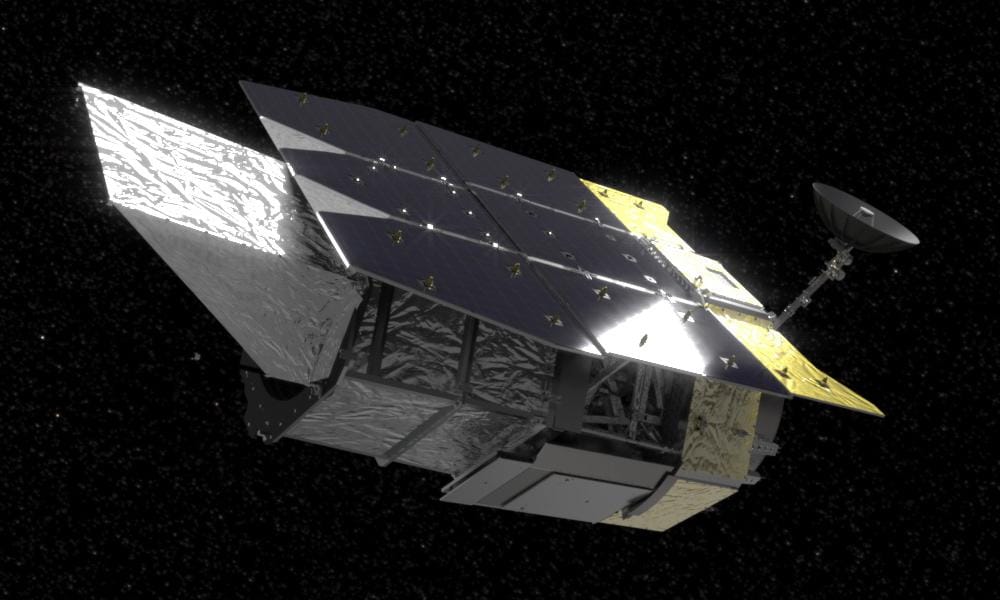
The Trump administration is seeking a 20% reduction in NASA’s budget for 2025/26. If met, it would likely killed projects such as the Nancy Grace Roman Space Telescope, seen here in an artist’s rendering. Credit: NASA
The National Aeronautics and Space Administration (NASA) has been a pioneer in all fields of space exploration, planetary Sciences, Earth sciences, meteorology (alongside of its sister agency, the National Oceanographic and Atmospheric Administration (NOAA) and its predecessor, the Environmental Science Services Administration (ESSA)). It has also been responsible for many advances in aircraft systems and aviation safety ever since its formation in 1958.
NASA, like any bureaucracy, hasn’t always got things right. Nor has it always gone about things in the right way – Project Artemis currently standing as prime example of this. But, in term of its size and federal budget allocation, NASA is perhaps one of the most cost-effective and successful US federal organs in modern history, with an ability to achieve so much with what amounts to so little.
As an illustrations of what I mean by the above. In 66 years of operations, NASA’s budget has rarely exceeded 1% of the US federal budget in any given year. In fact its peek budgetary allocations came – unsurprisingly – in the era of Apollo, but even then only reached a peak of 4.41% of the total US budget (1966). By the start of this century, NASA’s budget represented just 0.80% of federal spending and was in decline as a whole. For the last 15 years it has stabilised, but has rarely exceeded 0.50%.
In 66 years, NASA’s budget has rarely exceeded 1% of the US federal budget. It’s peak period lay in the Apollo era, when it averaged 2.43% over a 13-year period (1962-1974, including Apollo Skylab)
That’s a long way from being the kind of black hole of federal expenditure far too many people take it to be, and in terms of overall expenditure, NASA represents bloody good bang for the buck. Yet – and perhaps because of that incorrect public assumption – it remains a soft target with it comes to cutting the federal budget. Sometimes, admittedly, these cuts are driven by economic needs at the time, others are due political priorities pointing elsewhere. However, it is fair to say none have ever been driven a dogma of intentional deconstruction fuelled by ignorance; but that is what NASA is now facing under the current US administration’s budget proposals, leaked in part on April 11th, 2025.
These call for NASA’s budget to be reduced by 20% in the name of “cost-saving”. As the lion’s share of NASA’s budget – 50% in total – is devoted to all aspects of human spaceflight, and thus considered inviolable when it comes to cuts, the proposal directly targets NASA’s science, aeronautics, technology research and administrative budgets. They involve calls for the complete closure of at least one NASA research centre and a slashing on NASA’s overall science budget by as much as 50%.
There is nothing accidental about this targeting; the architect of the NASA cuts proposal is Russell Vought, one of those behind Project 2025, and a man known for his profound anti-science beliefs and doctrine. Such is his animosity – shared by others in the administration – towards subjects such as climate change, Earth observation and resource management, he is seemingly content to take a meat cleaver and hack off what is potentially NASA’s most cost-effective limb, one consistently responsible for delivering a wealth of invaluable knowledge to the world as a whole, simply to end the agency’s ability to carry out research into subjects he views with personal enmity.
Chief among these cuts is a two-thirds reduction in astrophysics spending (reduced to US $487 million); a 50% cut in heliophysics (down to US $455 million); more than 50% slashed from Earth sciences (down to just over US $1 billion) and 30% cut from planetary sciences (reduced to under US $2 billion).
A 2010 view of a part of the NASA Goddard Space Flight Centre, Maryland. NASA’s first – and largest – research centre, the largest combined organization of scientists and engineers in the United States dedicated to increasing knowledge of the Earth, the Solar System, and the Universe via observations from space – under threat of closure. Credit: NASA
The budget also specifically earmarks the Goddard Space Flight Centre (GSFC), NASA’s first and largest science facility, with a staff of 10,000, for closure. The rationale for this, again, appears to be GSFC’s involvement in climate studies. However, such is the breadth and depth of its work, any such closure would cripple much of NASA’s research and science capabilities – something I’ll come back to below.
Within NASA, the proposal – initially dismissed by acting Administrator Janet Petro as “rumours from really not credible sources” when word surfaced about it ahead of its publication – is now being regarded as an “extinction level event” for NASA’s entire science capability.
The proposal has drawn sharp response from Capitol Hill, including the bipartisan Congressional Planetary Science Caucus, together with threats to “block” the budget’s move through the Senate.
If enacted, these proposed cuts would demolish our space economy and workforce, threaten our national security and defence capabilities, and ultimately surrender the United States’ leadership in space, science, and technological innovation to our adversaries. We will work closely with our colleagues in Congress on a bipartisan basis to push back against these proposed cuts and program terminations and to ensure full and robust funding for NASA Science in Fiscal Year 2026 appropriations.
Nominee for the post of NASA Administrator, Jared Isaacman, who is going through his confirmation process during April and already facing questions over his relationship with the SpaceX CEO (who is already impacting NASA through his DOGE scheme and in trying to influence the White House’s thinking over projects such as the ISS), described the budget proposal as “not optimal”, and stated that if confirmed, he would advocate “for strong investment in space science—across astrophysics, planetary science, Earth science, lunar science, and heliophysics—and for securing as much funding as the government can reasonably allocate.”
But while there may well be vows to block the proposed cuts and to “advocate” for science, concern has already been raised at to how effective or real they might be. The Trump administration has established a strong track record for decision-making by fiat, bypassing Congress altogether – and Congress (notably the House) has been largely content to sit and watch the edicts from the White House whoosh by.
Under US law, there is the means for the Executive to arbitrarily impose budgets on federal agencies. The process is referred to as “impoundment”. In theory it can only be used following the start of the next government fiscal year – in this case, October 1st, 2025 – and then only if Congress and the White House remain at loggerheads over budgets. However, it has been reported that those in the White House see impoundment as a means to set budgets by executive decree, regardless of whether October 1st has been reached, in the expectation that should push come to shove, Congress will continue to sit on its hands.
GISS – First of 1,000 cuts?
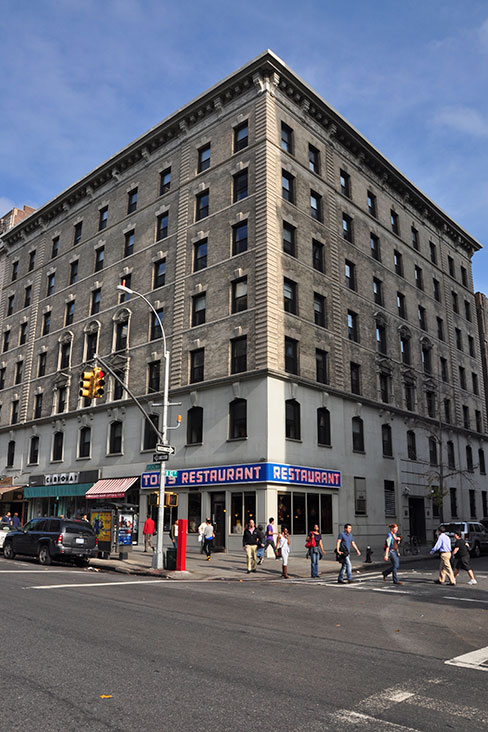
Some proof of this might be evident in the case of the Goddard Institute for Space Studies (GISS). Established in May 1961, GISS is a research division of the Goddard Space Flight Centre, and since 1966 it has been located at the Armstrong Hall (named for Edwin Armstrong, not Neil), New York City.
Armstrong Hall, home of the GISS in New York City since 1966, now cut from federal building leases. Credit: NASA/Robert Schmunk
In the decades since its establishment, GISS has become renowned for its Earth Sciences research across a variety of disciplines, including agriculture, crop growth and sustainability and climatology. It has built some of the largest dataset on current and past climate trends and fluctuations. It has also contributed to the fields of space research, both on a cosmological scale and through multiple NASA solar system missions from Mariner 5 to Cassini-Huygens. Researchers at the GISS have been awarded the Nobel Prize for Physics, the Heinz Award and the World Food Prize for contributions to physics, science, environmental awareness, and improving the availability of food around the world.
In other words, it is a major centre for US scientific achievement.
However, on April 25th, 2025, the Trump Administration summarily cancelled the lease on Armstrong Hall – operated by Columbia University – ending GISS’s tenure there as from May 31st 2025. Again, The reason for this has been given “government waste of taxpayer’s money” (the lease had a further 6 years to run at a cost of US $3.3 million a year) – but the aim appears to be ending the GISS’s ability to conduct climate research.
Responding to the news in an e-mail to staff, GSFC director Dr. Makenzie Lystrup stated a confidence that the work of the GISS will continue, as its value is in “data and personnel”, not location, and promised to find the GISS a new home. However, given that GSFC is itself under threat, it remains to be seen whether a long-term future can be found for GISS and its data. In the meantime, all GISS staff have been placed on “temporary remote working agreements”.
Hubble at 35
The news of budget reductions potentially hitting NASA’s science capabilities come at a time when arguably what is one of its most iconic missions – the Hubble Space Telescope (HST) – celebrates 35 years of almost continuous operations (allowing for down-times due to on-orbit servicing and the odd moments in “safe” modes as a result of on-board issues).
Launched in 1990, Hubble’s story is one of triumph over near-disaster. On reaching orbit, a tiny error on the manufacture of is 2.4 metre diameter primary mirror came into focus – or rather, out-of-focus. Polishing on the perimeter of the mirror meant it was “too flat” by some 2200 nanometres (that’s 1/450 mm, or 1/11000 in). While tiny, the error was catastrophic in terms of Hubble’s clarity of vision, and effectively ended any chance of it carrying out cosmological observations before they started.
Fortunately, as we all know, NASA had the space shuttle, and Hubble had been specifically designed to be launched and serviced by that vehicle. It was therefore possible to come up with an ingenious solution to correct the error in the primary mirror – not by replacing it, but by giving Hubble a pair of “glasses” to correct its vision.
The first “lens in the glasses” took the form of deliberately introducing errors into the optics of the Wide Field and Planetary Camera 2 (WF/PC-2), an instrument already in development at the time Hubble was launched, and due to replace a similar instrument already on the telescope. These errors would completely cancel out the defects in the mirror’s surface, allowing the camera to take the required super-high resolution images with complete clarity.
The second “lens in the glasses” was an entirely new instrument called COSTAR (Corrective Optics Space Telescope Axial Replacement), designed to eliminate the mirror’s flaws from impacting the other science instruments on the telescope, until such time as these instruments could also be replaced by units with their own in-built corrective elements. COSTAR did require the removal of another instrument from Hubble – High Speed Photometer – but it meant Hubble would be able to carry out the vast majority of its science activities unimpeded.
To celebrate 35 years of observations by the Hubble Space Telescope, four iconic images to summarise the telescope’s abilities. Top left: Mars seen from a distance of 97.6 million km in December 2024. Top right: planetary nebula NGC 2899, some 3,000-4,000 light-years from the Sun. Bottom left: a portion of the Rosette Nebula some 5,000 light-years from our Sun. Bottom right: The galaxy NGC 5335, which is a flocculent spiral galaxy approx. 236 million light years from our Sun. Credit: NASA / ESA / STScI; Image Processing: Joseph DePasquale (STScI), Alyssa Pagan (STScI)
In December 1993, the shuttle Endeavour delivered the WF/PC-2 and COSTAR to Hubble, where they were successfully installed. By 2002, subsequent servicing missions had successfully updated all of the remaining science instruments on Hubble, allowing COSTAR to be returned to Earth. This occurred in 2009 when the final shuttle servicing mission replaced COSTAR with the Cosmic Origins Spectroscope (COS).
Throughout its life, Hubble has made thousands of observations and contributed massively to science programmes, our understanding of our solar system, galaxy, and the greater cosmos. It has participated in studies conducted around the world and contributed to a huge volume of science and education endeavours. And despite failures, aging equipment and other issues, it repeatedly allows itself to be pulled out of every “safe” mode and resume operations through servicing missions and – since 2009 – via remote diagnostics and correction.
Such is its capacity to keep right on going, it is affectionately known as NASA’s Energiser Bunny by many in the programme.
All of which is made all the more poignant by the fact that NASA’s entire space observatories mission is at risk of closure as a result of the proposed Trump budget. Hubble, together with its semi-siblings, the James Webb Space Telescope (JWST) and Chandra X-ray Telescope (itself only saved from abandonment in March 2024) are all financed out of NASA’s Astrophysics budget, which the Trump administration wants to cut by 66%. Were this to happen, NASA would likely be unable to continue to operate all three telescopes – or even two of them – and certainly would be unable to complete and launch the Nancy Grace Roman Space Telescope. And even if one or more of the observatories were to survive the cuts, all are dependent on the Goddard Space Flight Centre for their operational and engineering infrastructure and support – which again, the budget proposing closing, a move that would kill the telescopes.
Hopefully, none of this will happen, but one cannot deny the dark shroud it casts over Hubble’s anniversary.
NOAA As Well
As noted, one of the most unsettling aspects with the proposed NASA cuts is the idea that the White House might seek to impose cuts and reductions by fiat, bypassing Congress with the use of executive orders.
This threat, is given weight by the fact that an initial 800 employees of the National Oceanographic and Atmospheric Administration (NOAA) were abruptly fired at the end of February 2025 on the grounds of “cutting costs”, the fact that they were “probationary” employees being disingenuously used to suggest they somehow weren’t qualified to work at the agency. Currently, it appears that a further 1,000 positions at the agency still hang in the balance.
Nor does the threat to NOAA end there. The Trump budget proposal recommends cutting NOAA’s comparatively tiny US $7 billion budget by 25%. Specifically – and unsurprisingly – chief among the agency’s work targeted by the cuts is anything related to climate studies. In fact, in this area, the proposed cuts are closer to 75%, effectively ending all of NOAA’s research into climate change and weather (and no, the two are not the same).
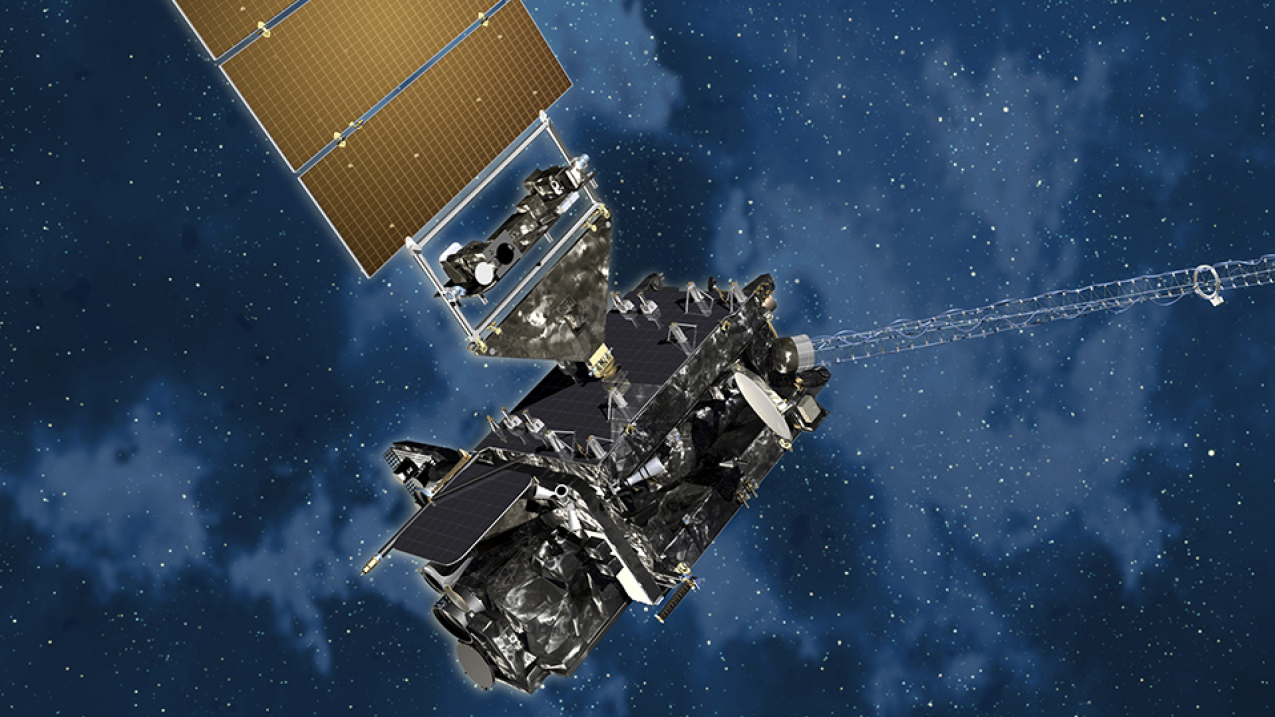
GOES – Geostationary Operational Environmental Satellite – is a network of geostationary satellites jointly operated by NASA / NOAA for weather monitoring. Development of their next generation replacements could be put at risk as a result of proposed government budget cuts. Credit: NOAA / NASA
Although the administration has stated the National Weather Service will “not be touched”, both the layoffs in February and the proposed cuts could have potentially far-reaching impacts in that service’s capabilities. NOAA, in collaboration with NASA, currently operates three large Geostationary satellites for both weather forecasting and for gathering data on climate (called GOES). All three of the current units (only two of which are operational) are scheduled for replacement between 2032 and 2035. However, the Trump administration is also looking to end many joint ventures between NASA and NOAA. This, coupled with the proposed budget cuts means development of the replacement satellites could be impacted in the near future.
Further, by conflating “weather observations” with “climate change”, the administration has already severely impacted NOAA’s ability to carry out vital research into the development and operation of climate interactions that give rise to weather phenomena such as hurricanes.
NOAA was already stretched thin and understaffed. It’s going to go from stretched thin to decimated. NOAA provides most of the raw data and the models that predict hurricanes, and the hurricane forecasts many Americans see on their phones or TVs are created by the agency. Reducing the research and observation capabilities of the agency in this regard could regress hurricane forecasting capability by the equivalent of decades.
– Dr. Andrew Hazelton, former member of NOAA’s Hurricane Research Division.
All this comes at a time when the evidence for human activity being the single greatest release of greenhouse gasses into the environment, and thus the primary driver of climate change over and above any natural shifts in climate, are becoming more and more evident. As such, threats to Earth science budgets like those currently being proposed by the US administration, together with their headlong rush to increase US reliance on fossil fuels represents a further threat to our collective well-being.
Cica Ghost’s latest turn of whimsy opened in Second Life towards the end of April, bringing with it another opportunity to leave the weight of the world behind and just have a little fun and let a smile or six crease your lips.
Rocks and Drums is another charming setting featuring giants, strange houses, beautiful flowers, vehicles, dancing, and a sense of fun. It comes with a line from American singer, songwriter, poet, painter, author, and photographer, Patricia Lee “Patti” Smith, If you don’t have what you need, just rock with what you’ve got!
Cica Ghost, April 2024: Rocks and Drums
Given the core aspect of this installation is rock, it’s an apt quote. This is a place of rocky hills, rocky cairns, stone of primitively-hewn rock, and most notably rock giants and strange houses hewn from rock. Some are on the ground, other balance precariously on the top of stacks of flat rocks or rocky plinths. Like the stone giants, the houses are topped by tufted grass-like hair.
Across the land, grass and flowers grow tall, and people can wander freely. The stone giants are not the only creatures here, huge friendly treemen can also be found, and can rocks with fair-sized teeth!
Cica Ghost, April 2024: Rocks and Drums
While the houses on the ground are easy enough to access, those atop rock piles and plinths present something of a problem. However, the answer comes in the form of flat rock tablets. Some have balloons attached, others are propellor-driven. Simply step up onto one as it reaches the ground and then allow it to carry you elevator-like up to one of the houses.
Those who fancy a shot of making like Fred and Barney can jump on one of three rock car rezzers and go for a drive around the setting. And of course there are Cica’s familiar dance stations and places to sit. So, go on over and let Cica’s creations raise a smile. Her shop means you can even bring some of them home with you if you like!









 Inara Pey: Living in a Modemworld