Space Sunday: ESA’s future of spaceflight; Vulcan readies to fly

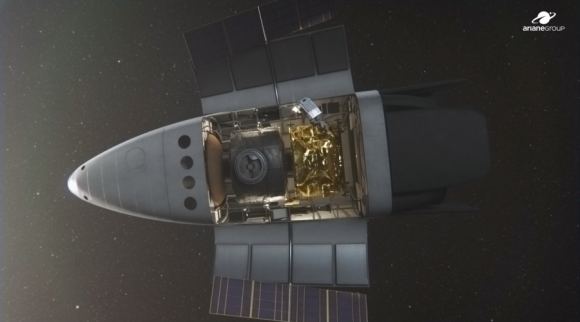
A screen cap of how ESA’s proposed SUSIE cargo / human-capable orbital vehicle might look in orbit. Credit: ArianeSpace

For 40 years, the European Space Agency (ESA) has been at the forefront of space innovation and exploration – although its work and contributions have oft been overshadowed by those of NASA and Russia -, and that drive to innovate is set to continue through the next decade and beyond.

To demonstrate this, on January 3rd, 2024, ESA issued a video showcasing upcoming projects and innovations which will help define the future of crewed and uncrewed voyages into orbit which are being driven from with Europe, either as direct ESA projects, ESA partnerships or ESA-supported private ventures. In particular, the 2:32 minute video (including end credits) showcases the following projects and launch vehicles:

  • 0:26: Space RIDER:  (Reusable Integrated Demonstrator for Europe Return) – a small-scale reusable lifting body supported by an expendable service module and capable of delivering 600 kg of payload to low-Earth orbit on missions of up to 2 months at a time. Payloads are intended to be experiments and science instruments, which the vehicle returns to Earth at the end of a mission. Designed to be launched atop ESA’s Vega-C launch vehicle, Space Rider will land horizontally, gliding to a landing under a parafoil, and the vehicle’s qualification flight is expected to take place in 2025.
An artist’s impression of ESA’s Space RIDER in orbit. The black module with solar panels to the rear is the vehicle’s expendable service module. Credit: ESA
  • 0:33: Prime Micro-launcher – a UK-led (by Orbex) private sector launcher designed to leverage the growing cubesat market, and deliver up to 150 kg of payloads to 500 km Sun-synchronous orbit (SSO), primarily from the UK’s SaxaVord Spaceport in the Shetland Isles, and potentially from Portugal’s Azores International Satellite Launch Programme (ISLP) facilities, currently being developed on the island of Santa Maria.
  • 0:44: Skyrora XL – a UK-developed 3-stage vehicle designed to place up to 315 kg into a 500 SSO from the UK’s SaxaVord Spaceport. Skyrora will be powered by its own in-house developed engines, including the Skyforce-2 70 kN motor, which is the focus of the video, and which uses liquid kerosene created from waste plastic as its propellant.
  • 1:06: Isar Spectrum – a German-led project to develop a two-stage launch vehicle designed to deliver up to 1 tonne to LEO orbits out of Europe’s Spaceport at the Guiana Space Centre, Kourou in French Guiana, and up to 500 kg to SSO from the Andøya Spaceport, Norway.
  • 1:26: second launch of Miura-1 – a Spanish-developed sub-orbital, reusable rocket system for flying experiments of up to 200 kg to altitudes between 80 and 110 km. The initial flight of the vehicle occurred in October 2023, but was only a partial success – range safety concerns limited the flight to less than 50 km altitude and the vehicle sank after splashdown, potentially due to its lower than intended altitude resulting in velocity-induced damage on impact with the sea. Once operational, Minura-1 will be Europe’s first fully-reusable launch vehicle and help pave the way for the Miura-5 orbit-capable launcher.
  • 1:32: RFA-1 – a German-led project to build and fly a three-stage multi-role launch vehicle capable of delivering up to 1.6 tonnes to LEO, 1.35 tonnes to polar orbit or 450 kg to geostationary transfer orbit (GTO). The first orbital flight attempt is due to take place from the UK’s SaxaVord Spaceport in the summer of 2024.
  • 1:52: Smart Upper Stage for Innovative Exploration (SUSIE) – potentially Europe’s most ambitious launcher vehicle development programme. A25-tonne lifting body intended to be launched atop the Ariane 64 booster, SUSIE – which is being developed for ESA by ArianeSpace – will be able to deliver either payloads of up to 7 tonnes to orbit when operating autonomously, or crews of up to five astronauts to orbital space facilities. The vehicle is intended to form the upper stage of the launch vehicle, requiring no fairings to protect it during orbital ascent. Following atmospheric re-entry, the vehicle will make a tail-first propulsive descent and landing in a manner akin to the DC-XA demonstrator vehicle, flown in the mid-1990s.
A comparison chart showing the proposed ESA SUSIE and the current crew launch vehicles operated by the United States and Russia. Credit: Ken Kirtland
  • Propulsion systems featured in the video include:
    • 0:40: M10 liquid methane-liquid oxygen motor currently being developed for use on ESA’s future Vega-E booster by Italy’s Avio aerospace company.
    • 0:50: Parafin-liquid oxygen hybrid propulsion – an in-development rocket motor by Germany’s HyImpulse, and designed to power the first and second stages of the company’s proposed SL1 launcher, designed to lift up to 500 kg to low-Earth orbit (LEO).
    • 1:44: Prometheus – a reusable methane-fuelled rocket motor, currently in development on behalf of ESA and intended to power a reusable test vehicle called Themis, starting in 2025. Both Prometheus and Themis are intended to pave the way for the semi-usable Ariane Next, which will replace Ariane 6 in the 2030s.

 Athena: a Space Engine in the Palm of Your Hand

One European innovation not featured in ESA’s video is the Spanish-developed Athena propulsion system. A palm-sized unit specifically designed to manoeuvre small satellites and cubesats once they are in orbit, thus helping them to become more flexible in the range of uses to which they might be put. And it does so in a highly innovative manner – via an electrospray.

An electrospray is an apparatus which uses and electrical current to disperse a liquid through an emitter. The idea itself is not new; its underpinnings were theorised in the 1960s by Sir Geoffrey Ingram Taylor, after whom the most ideal form the liquid is forced into under the influence of the electrical current – the Taylor cone – is named.
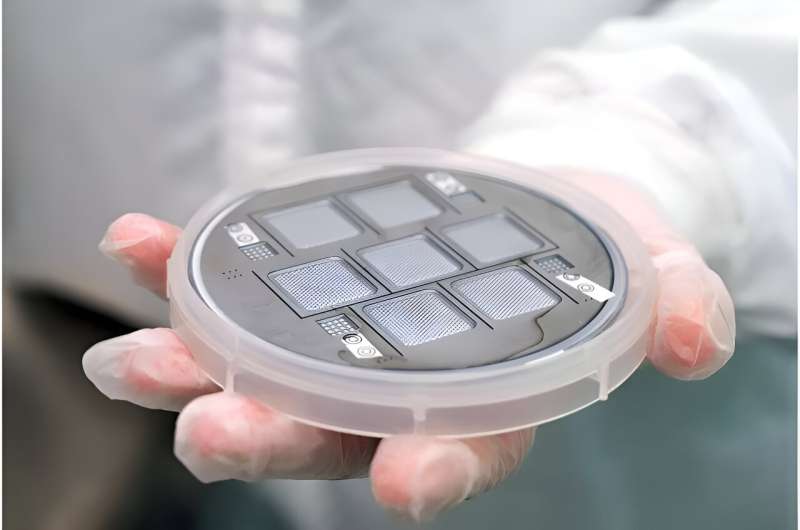
Sitting in a plastic handling tray, an Athena electrospray thruster system for smallsats and cubesats. Credit: IENAI Space

Electrosprays are used in a number of fields of science, and they have spurred the use of electrical currents to direct the thrust of cold gas thrusters on satellites However, what makes Athena (the name standing for Adaptable, THruster based on Electrospray powered Nanotechnology, rather than being drawn from mythology, as is the case with main space-related projects) so unique is a combination of its tiny size coupled with the use of a non-toxic propellant that does not require complex tank storage and pressurisation.

The system comprises a set of seven electrostatically charged thrust emitters, each about two finger tips across and containing an array of 500 pinhole-sized thrust ports each. A conductive salt is passed through these emitters, the electoral charge accelerating the particles and directing them into a cone of unified thrust which can be turned on and off by applying / removing the electrical current. The result is a set of tiny thrusters with practically no moving parts and a propellant which can be stored in a simple, compact container. This means that the overall mass of Athena thrusters and their propellant source is much lower than “traditional” cold-thrust systems, but they are capable of exceptionally fine control.

The current versions of Athena can be used on satellites of up to 50 kg, and can produce a sustained thrust of up to 20 m/s, if required. They are ideal for use on 10-cm-on-a-side cubesats, with the team behind them hoping to scale them up for use with smallsats of up to 300 kg mass.

Vulcan Set to Send Peregrine to the Moon

Monday, January 8th, 2024, is a major date for America’s United Launch Alliance (ULA), as the company seeks to successfully complete the first launch of its new Vulcan Centaur rocket.

Designed to replace ULA’s workhorse Atlas V and Delta IV rockets, Vulcan Centaur has had its share of hiccups and delays in getting to this point. This maiden flight had originally been targeting a 2019 date – although that was admittedly highly ambitious, given ULA only really started developing the vehicle in 2014 and hit some technical issues along the way as a result; other matters outside of ULA’s control – such as the SARS-COVID 19 pandemic and issues with the development of its payload – also contributed to the 4-year delay.
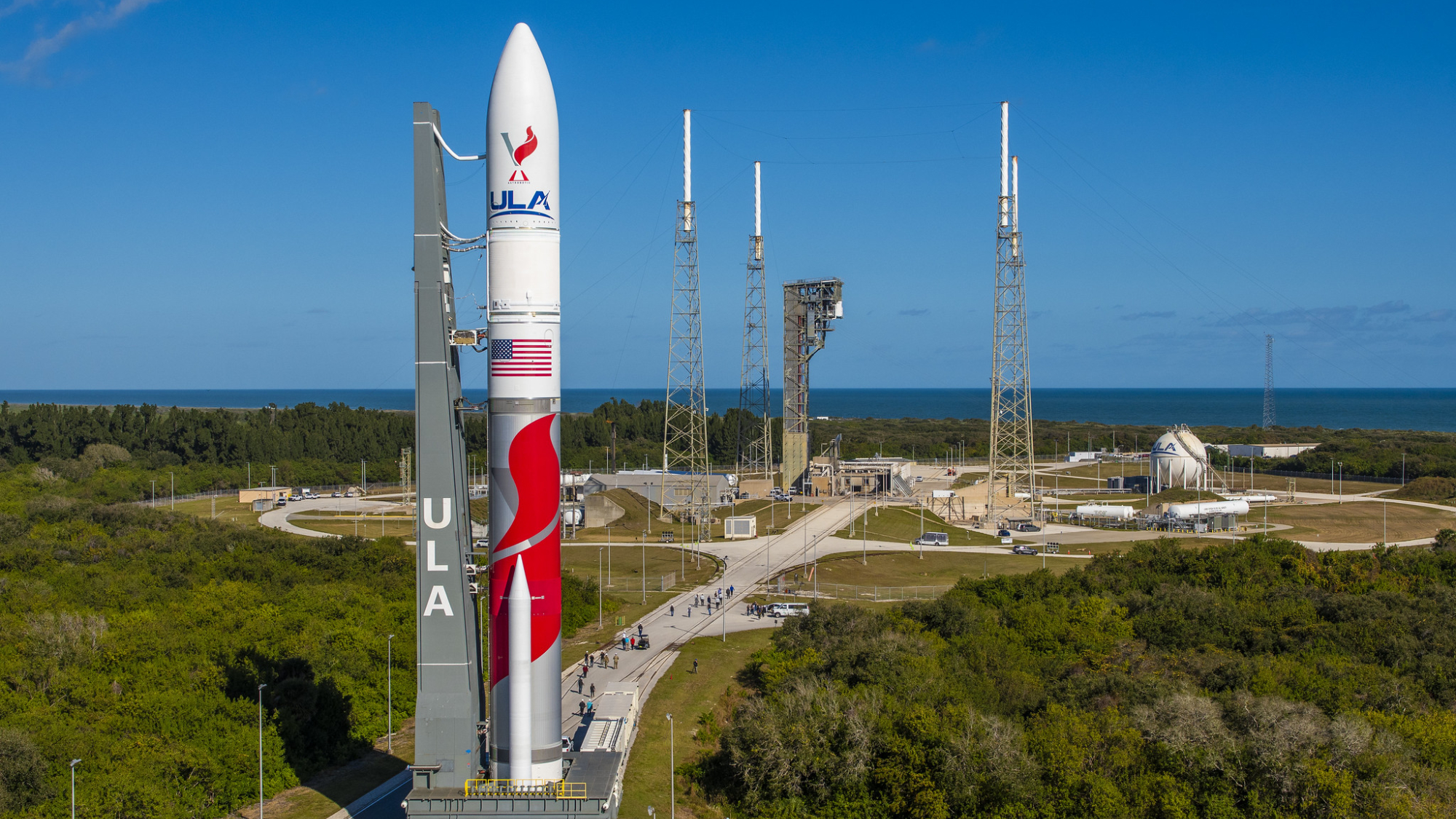
The Vulcan Centaur being transferred to the launch pad at Cape Canaveral Space Force Base, sitting on its mobile launch gantry, January 5th, 2024. Credit: ULA

For the company, a lot is riding on this launch. Technically referred to as a certification flight, rather than an operational launch, the two-stage rocket will nevertheless be carrying a functional payload in the form of Peregrine Mission One (aka Peregrine One). This is a privately-built but NASA-funded lunar lander, developed as a part of the agency’s Commercial Lunar Payload Services (CLPS) programme, designed to help pave the way for the agency’s crewed Artemis Moon landings with various robotic missions and vehicles supplied by the private sector.

The launch is designed to be the first of seven through the year, with the second (in April) serving as the final certification flight, although it will also carry a payload aloft in the form of the first Dream Chaser cargo vehicle to fly into space and delivery supplies and equipment to the International Space Station. After this, Vulcan Centaur will complete a series of US government military launches. Assuming this first flight is a success, and the same is true for the rest planned for 2024, they will vindicate the faith customers have in Vulcan Centaur – despite he delays in its development, the rocket already has 70 customers lined-up and waiting their turn to fly payloads aboard it.
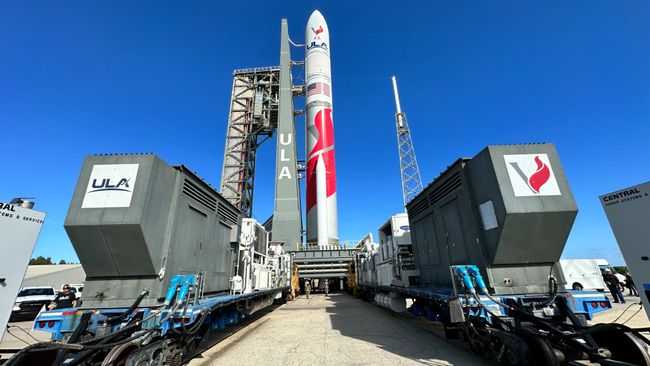
The first Vulcan Centaur to fly, seen on the pad from between the arms of the railcars used to move the rocket and its payload from the integration facilities. Credit: ULA

This maiden flight is important in two other ways as well. It will be the first operational use of the Blue Origin BE-4 engine. This the the engine that will be used to power the first stage of Blue Origin’s upcoming heavy lift launcher, New Glenn. The latter is due to make its maiden flight towards the end of the year, so the data gathered from this flight and those that follow between it and the first flight of New Glenn will provide invaluable data on overall engine performance for Blue Origin as they move ever closer to their own launch.

Finally, and as I’ve recently noted, ULA is apparently up for sale. Ergo, a good maiden flight for the Vulcan Centaur would significantly enhance the company’s attractiveness to its potential buyers – whilst equally, a failure could cause one or more of the trio of potential buyers to either rethink or withdraw their offer.

For Astrobotic Technology, the company behind Peregrine One, the launch is equally important; after proposing and subsequently cancelling two prior lunar missions, it represents the company’s chance to both become the first private venture space vehicle to (hopefully) land on the Moon and confirm their position as a capable supplier of lunar lander services to NASA (in fact, the company is due to fly a second mission to the Moon in November 2024, also funded via NASA’s CLPS and featuring NASA’s VIPER lunar rover).

Peregrine One will deliver 90 kg of mixed payload to Mons Gruithuisen Gamma in the northern hemisphere of the Moon. Comprising experiments from the United States and Germany, the payload also includes time capsules from both of those nations, plus Argentina, Canada, Hungary, Japan, the Seychelles and the UK, as well as small rover vehicles – Iris, built by Astrobotic Technology and Carnegie Mellon University, designed to be a technology demonstrator; and Mexico’s Colmena, a set of 5 tiny little rolling landers, each just 12 cm across and weighing 60 grams, which will be catapulted from the lander and operate wherever they roll / bounce to.

The Peregrine Mission One lander undergoing preparations for integration into its payload fairings at the Astrotech Space Operations Facility near Kennedy Space Centre. Credit: NASA / Isaac Watson

If successful, Peregrine Mission One will likely be followed by two further Peregrine-class landers in additional to the November 2024 Griffin Mission One which will carry NASA’s VIPER rover, as mentioned above. Each of the follow-up Peregrine landers will carry increasingly heavier payloads, thus demonstrating the lander’s overall capabilities.

In the meantime, objections to the Peregrine Mission One landing have been lodged by the Navajo Nation. Their objections have been raised as the lander will carry a sealed container bearing DNA samples from Star Trek creator Gene Roddenberry and his late wife, Majel Barratt-Roddenberry (Christine Chapel from the original series / Lawaxana Troi from The Next Generation / Deep Space Nine and the voice of the computer in both the original series and The Next Generation), and DNA samples together with memory files and some of the cremated remains of Star Trek actors Nichelle “Uhura” Nichols, James “Scotty” Doohan and Deforest “’Bones’ McCoy” Kelley). In particular the Navajo Nation state that placing human DNA on the Moon would desecrate a sacred place. In response, it has been pointed out by some associated with Peregrine Mission One  that human DNA is already present on the surface of the Moon in the form of human waste contained within the 100 bags of waste material collectively dumped out of their vehicles by the six Apollo crews who landed on the Moon between 1969 and 1972, whereas the container of DNA as remains will stay within the lander vehicle, and will not be deposited on the lunar surface.

The Vulcan Centaur launch is scheduled for 07:18 UTC, Monday, January 8th, 2024 from Cape Canaveral Space Force Base at the start of a 45-minute window, and will be livestreamed on You Tube. Further launch opportunities are available at 24-hour periods through the 9th to 11th January, with launch windows of between 1 and 9 minutes. Assuming the launch goes ahead as planned, the lander will depart Earth orbit 1 hour and 18 minutes after launch, boosted by the Vulcan Centaur’s upper stage. It is due to land on the Moon on February 23rd, 2024.

Containers: an artistic voyage of expression and constraint in Second Life

IMAGOLand Galleries: Scylla Rhiadra – Containers

There is something oddly serendipitous (or at least, curiously reflective) in receiving and invitation from Mareea Farrasco to attend a new exhibition of art by Scylla Rhiadra, which opened on January 5th, 2024 at her IMAGOLand Art Galleries. I say this because Containers in some ways encapsulates a subject of which I’ve been very much focused upon in my physical world for the last few months as a project to completely refurbish the house insides and out continues: the Ying / Yang relationship between who we are in life, and the spaces we inhabit.

As Scylla notes in her introduction to the exhibition, the spaces we occupy, be they at home or at work or somewhere between, whether public or private, can both help organise and protect us as individuals whilst also giving us the freedom to fully express who we are, whilst at the same time they can also inform, contain, and constrain us in how we reveal ourselves to the world at large – and perhaps actually to ourselves as well.

At a metaphysical level, no-one is truly an “individual”; we are all (and here, having raised the subject of metaphysics, I’m going to horribly mangle perdurantism and endurantism, simply because the “truth” likely encompasses elements of both even though they are treated as rivals) all collections of experiences and reactions, and of growth and change through time and events.

IMAGOLand Galleries: Scylla Rhiadra – Containers

Perhaps the easiest way to explain this is to take an obvious set of examples: how we project ourselves at work is not how we project ourselves at home; how we face the world when attending a religious service is not the same as when we are joining with like-minded supporters at a sporting event; how we behave within a crowd is generally not the same as when socialising with a smaller, closer group of friends. Of course, how we project ourselves in each of these circumstances is in part the result of accepted social frameworks – when at work, it is expected that we are “professional”; when attending a place of worship, we are expected to exhibit some degree of piety; and so on.

However, it cannot be denied that how we slip between these different personas is also driven by the spaces we have created in order to engage in these activities. For example, a building of worship both naturally constrains our behaviour even before we have entered it; the structure itself demands a more pious behaviour as we approach it; similarly, entering a place of work requires we become “professional” in outlook and attitude. Even at home, the spaces we build so easily inform us as much as we have sought to inform them through the choices we have made in terms of our choices in their décor, the placement of furniture within them, and the “rules” society has placed around them.

IMAGOLand Galleries: Scylla Rhiadra – Containers

This is where Containers stuck that serendipitous / reflective cord within me. For the last few months I’ve been very engaged in a complete re-vamp of the place where I both live and work within the physical world; the work is far from over (and in places hasn’t entirely gone as planned!) but it encompasses everything from general room redecoration through the complete refurbishment of entire rooms – including the remove of walls, the shifting of doorways, the use of lighting, and much more.

Throughout all of it, I’ve become increasingly aware of that Ying/Ying nature in how we express ourselves at home through the décor we chose for the rooms, etc., and how the rooms actually shape – and go as far as to confine our thinking in terms of how we can / should express ourselves through them. That awareness has actually done a lot to alter thinking on how some of the rooms in the house should actually be refurbished such that their use need not be so constrained by convention or how it impacts upon thinking.

IMAGOLand Galleries: Scylla Rhiadra – Containers

Within Containers, and with a lot more subtlety that I’ve used here, Scylla explores the idea of how rooms both express and constrain, not only using images but – as is becoming her trademark – through the use of considered quotes (which also, perhaps, reveal more about her – they certainly further encourage a sense of kinship I hold towards her (and which itself is rooted in multiple facets of her personality she has expressed both through SL and other mediums we share). Together, each image and its accompanying text offer a rich, contemplative exploration of our relationship with the spaces / structures we create (an exploration in which doorways and windows play as much a role as the rooms themselves, offering as they do both suggestions of escape and (as I noted somewhat differently above) the coming constrains a space might try to impose.

Whether drawing us together or as a means to provide separation (be it “personal space” or in some other form), the rooms and spaces  – the containers – we create have a power to be an extension of who we are, both in terms of the freedoms of expression they allow and the constraints they demand.

SLurl Details

2024 week #1: SL CCUG meeting summary: PBR and MP

Blue Finch Frosty Hollow, November 2023 – blog post

The following notes were taken from my audio recording and chat log transcript of the Content Creators User Group (CCUG) meeting held on Thursday, January 4th, 2024.

  • The CCUG meeting is for discussion of work related to content creation in Second Life, including current and upcoming LL projects, and encompasses requests or comments from the community, together with viewer development work.
  • As a rule, these meetings are:
    • Held in-world and chaired by Vir Linden, in accordance with the dates and times given in the the SL Public Calendar, which also includes the location for the meetings.
    • Conducted in a mix of voice and text.
    • Open to all with an interest in content creation.
  • The notes herein are a summary of topics discussed and are not intended to be a full transcript.

Official Viewers Status

No updates through the week, leaving the current crop of official viewers as:

  • Release viewer: version 7.1.1.7039128750, formerly the Maintenance V(ersatility) RC viewer, issued December 1, promoted December 14 – displaying user-customized keybindings in chat – NO CHANGE.
  • Release channel cohorts (please see my notes on manually installing RC viewer versions if you wish to install any release candidate(s) yourself).
    • Maintenance-W RC viewer, version 7.1.2.7213596294, December 18 – bug and crash fixes.
    • glTF PBR Materials Maintenance RC, version 7.1.2.7215179142 issued December 15 – numerous bug fixes and improvements.
    • Maintenance X RC, version 7.1.1.7088410646, December 7 – usability improvements.
    • Maintenance Y RC, version 6.6.17.6935642049, issued November 21 – My Outfits folder improvements; ability to remove entries from landmark history.
    • Emoji RC viewer, version 6.6.15.581551, August 31.
  • Project viewers:

General Notes

  • It appears that the glTF PBR Materials maintenance RC viewer is being fast tracked for promotion to de facto release status. This could happen in the next few (working) days.
  • The Emojis viewer is currently held up due to some viewer library merging issues and some other unspecified issues. However, the hope at the Lab is that this will be the next viewer promotion after the glTF PBR maintenance release.

Client-Side Scripting

  • This has been the subject of some discussions at a number of recently User Group meetings and also internally at the Lab. Key areas of use for such a capability are seen by the Lab as:
    • Allowing viewer modifications to the UI.
    • Enabling client-side script testing.
    • Providing support for viewer-side functionality.
  • Those as the meeting saw the ability to use client-side scripting to generate HUDs (with the ability for the client scripts to trigger server-side supporting LSL events / functions); ability for custom menu generation for products, etc.
  • In terms of HUDs, it was suggested by Vir Linden that a more cohesive approach might be to provide support directly through the existing viewer UI and using commands native to the UI rather than part of an additional scripting capability to build / operate HUDs.
  • Note that this is not at present an active project, more the fact that discussions are going on about the potential for such a capability.

PBR Materials

  • Runitai Linden has been working to improve the look of the PBR EEP settings in light (no pun intended) of the significant negative user feedback concerning it.
  • Whilst it does have a large number of fixies and improvements, the glTF PBR maintenance viewer does not address all issues users have reported, and a further maintenance viewer for PBR is anticipated some time after the current update has been promoted.
  • A discussion was raised on the inability to have PBR materials on a object together with “classic” (Blinn-Phong) materials underlying them as a fall-back (as to get to the “classic” materials, the PBR must effectively be stripped from the object.
    • As the two approaches are essentially incompatible, an effective means of making this possible is not seen as easy / possible. The decision to separate them was also a conscious one on LL’s part, specifically because they did not want to burden creators with the idea that they must provide two sets of materials for their content in order for that content to “look good” under bot PBR viewers and non-PBR viewers (particularly as glTF / PBR is seen as the future of Second Life .
    • One suggestion was to perhaps used the PBR albedo texture as the defuse texture with “classic” materials. However, it was pointed out that again, PBR albedo textures are not the same as diffuse textures, so whilst it might work in some cases, it probably won’t work in all cases, and mileage on effectiveness subsequently vary.
    • Given that PBR is intended to be the way forward for the majority of SL, the preferred approach (from LL’s perspective) is that where a need to offer products with both Blinn-Phong (classic) materials and PBR materials, then produce two versions of the product.
  • A request was made to have more PDR assets added to the Library (notably PBR EEP settings). It was indicated that LL are looking to add more PBR content to the Library, which may well include additional sky settings.

Marketplace Discussion

  • As members of the Commerce Team were present at the meeting, there was a further discussion on how the MP is being gamed. This focused on how some sellers are exploiting the fact that items which are intended for gifting to others must have a Linden Dollar value against them in order for the “Add Item To Cart As Gift” button to be available.
    • The gaming involves placing the term “gift” and multiple product titled, then charging only L$1.00 for each item
    • This results in multiple items being sold in high volumes, helping to promote the seller(s) to the top of the Marketplace Best Selling Products listing.
    • Garfield Linden indicated he had some ideas to help address this, but needed to discuss them internally.
  • The above led to a wider discussion on Gifting through the Marketplace – such as clarifying the gifting process so people don’t end up using Buy Now in error, and sending an intended gift to themselves, and also on providing the means for creators to send copies of their own products as gifts through the MP (e.g. to bloggers for review purposes).

Next Meeting

† The header images included in these summaries are not intended to represent anything discussed at the meetings; they are simply here to avoid a repeated image of a gathering of people every week. They are taken from my list of region visits, with a link to the post for those interested.

January 2024 SL Web User Group summary: Marketplace issues

The Web User Group meeting venue, Denby

The following notes cover the key points from the Web User Group (WUG) meeting, held on Wednesday January 3rd, 2024. They form a summary of the items discussed and is not intended to be a full transcript. A video of the meeting, recorded by Pantera Północy, is embedded at the end of this summary – my thanks as always to Pantera for recording it and making it available.

Meeting Overview

  • The Web User Group exists to provide an opportunity for discussion on Second Life web properties and their related functionalities / features. This includes, but is not limited to: the Marketplace, pages surfaced through the secondlife.com dashboard; the available portals (land, support, etc), the forums.
  • As a rule, these meetings are conducted:
    • On the first Wednesday of the month and 14:00 SLT.
    • In both Voice and / or text.
    • At this location.
  • Meetings are open to anyone with a concern / interest in the above topics, and form one of a series of regular / semi-regular User Group meetings conducted by Linden Lab.
  • Dates and times of all current meetings can be found on the Second Life Public Calendar, and descriptions of meetings are defined on the SL wiki.

Marketplace

The meeting started with an apology for the issue over the New Year period which included items merchants were trying to list failing to appear, items and stores failing to show up in search results (see BUG-234924). The Lab believe the causes of the issues have been fixed, and processes have been put in place for the back-end systems to better alert support / engineering when issues of this nature occur.

A request was also made for any merchants still experiencing problems in trying to list items or in having their items / stores show up in searches, to file a Jira with LL.

The above was followed by a meeting-length discussion with what are seen as getting to be long-term terms issues with the MP, some of which are the results of changes which have inadvertently given rise to opportunities for the Marketplace to be gamed, and merchants losing revenue as a result. Key among the complaints being made were (but not limited to):

  • Active stores seeming to vanish from the Marketplace entirely.
  • Listed items failing to show up in any searches.
  • Exploits such as items being falsely labelled in the Product title field producing misleading search results.
  • Exploits being opened as a result of the 2022/23 overhaul of ElasticSearch (the engine powering MP searches), and relevancy weightings being given to product titles .
  • Exploits allowing spamming through the features tab which further influences search results in favour of those doing the spamming.

It was noted that these issues – including the problems of items and stores not appearing in searches – go back over several months (rather the the issue witnessed over the new year period being a “one off”), and they are giving rises to across-the-board upset and frustration among MP merchants, and with their customers.

The conversation was very much one in which people spelled out the issues being experienced, whilst Lab representatives at the meeting mostly listened and took notes. This being the case, and rather than risk parsing the meeting through my own subjective presence as someone who is not a merchant, I will refer readers to the video of the meeting as embedded below, and encourage anyone experiencing any of the issues raised to file a Jira bug report with Linden Lab on the matter.

Marketplace Styles

  • Part of the above discussion touched on Marketplace Styles (allowing things like different colour variants for a product in a single listing).
  • This was promised as being an active project throughout 2022, with (the since departed) Reed Linden stating in November 2022 (see November 2022 Web User Group: new “Plus” subscription level) the capability could appear before the end of that year or in 2023.
  • As more than a year has passed without mention, I raised the topic at the end of the meeting, requesting the actual status of the work (particularly as when it was raised in 2023, not long after Sntax Linden has taken over the WUG meetings, he did not appear to be aware of the project). The response was:
Styles is at the top of my list for things for MP. Just need to find the right time to slot it in. I can’t promise when but I am hopeful we can make headway on it this year. 

– Sntax Linden

  • Which probably means that if you are a Merchant who has been looking forward to this capability, probably best not to hold your breath for its arrival. Unless you’re especially fond of blue.

Next Meeting

  • Wednesday, March 6th, 2024.

2024 SL SUG meetings week #1 summary

The Hamptons, November 2023 – blog post

The following notes were taken from the Tuesday, January 2nd, 2024 Simulator User Group (SUG) meeting. They form a summary of the items discussed, and is not intended to be a full transcript. A video of the meeting is embedded at the end of this summary, my thanks as always to Pantera for recording the meeting and providing it.

Meeting Overview

  • The Simulator User Group (also referred to by its older name of Server User Group) exists to provide an opportunity for discussion about simulator technology, bugs, and feature ideas.
  • These meetings are conducted (as a rule):
  • They are open to anyone with a concern / interest in the above topics, and form one of a series of regular / semi-regular User Group meetings conducted by Linden Lab.
  • Dates and times of all current meetings can be found on the Second Life Public Calendar, and descriptions of meetings are defined on the SL wiki.

Simulator Deployments

  • No scheduled deployments, just region restarts.

Viewer Updates

The current official viewers list starts the year unchanged from where it saw out the old year.

  • Release viewer: version 7.1.1.7039128750, formerly the Maintenance V(ersatility) RC viewer, issued December 1, promoted December 14 – displaying user-customized keybindings in chat – NO CHANGE.
  • Release channel cohorts (please see my notes on manually installing RC viewer versions if you wish to install any release candidate(s) yourself).
    • Maintenance-W RC viewer, version 7.1.2.7213596294, December 18 – bug and crash fixes.
    • glTF PBR Materials Maintenance RC, version 7.1.2.7215179142 issued December 15 – numerous bug fixes and improvements.
    • Maintenance X RC, version 7.1.1.7088410646, December 7 – usability improvements.
    • Maintenance Y, version 6.6.17.6935642049, issued November 21 – My Outfits folder improvements; ability to remove entries from landmark history.
    • Emoji RC viewer, version 6.6.15.581551, August 31.
  • Project viewers:

In Brief

  • A quiet meeting as a number of the engineering team are on extended vacation (so no Rider, Leviathan, et al).
  • LL are continuing to work on the issue of repeating collision sounds on the RC channel and the Fall Colors update (see:
  • BUG-234835 “Can hear Collisions “play” on RC channels”). This should have been reverted over the holiday period to minimise the annoyance, but no news on when an actual fix is likely to be deployed.
  • Simon Linden has been poking at the Avatar Appearance message, so that at some point soon it will get both a list of attachments as well as some info on pending attachments. He’s also tweaking ObjectUpdate for root prims so it will  include the number in the linkset.
  • A lot of general conversation on region crossings, PBR (and the issues being experienced by those on PBR-enabled viewers). Please refer to the video below for specifics.

† The header images included in these summaries are not intended to represent anything discussed at the meetings; they are simply here to avoid a repeated image of a rooftop of people every week. They are taken from my list of region visits, with a link to the post for those interested.

2023 SL viewer release summaries week #52

Logos representative only and should not be seen as an endorsement / preference / recommendation

Updates from the week through to Sunday, December 31st, 2023

This summary is generally published every Monday, and is a list of SL viewer / client releases (official and TPV) made during the previous week. When reading it, please note:

  • It is based on my Current Viewer Releases Page, a list of all Second Life viewers and clients that are in popular use (and of which I am aware), and which are recognised as adhering to the TPV Policy. This page includes comprehensive links to download pages, blog notes, release notes, etc., as well as links to any / all reviews of specific viewers / clients made within this blog.
  • By its nature, this summary presented here will always be in arrears, please refer to the Current Viewer Release Page for more up-to-date information.
  • Note that for purposes of length, TPV test viewers, preview / beta viewers / nightly builds are generally not recorded in these summaries.

Official LL Viewers

  • Release viewer: version 7.1.1.7039128750, formerly the Maintenance V(ersatility) RC viewer, issued December 1, promoted December 14 – displaying user-customized keybindings in chat – NO CHANGE.
  • Release channel cohorts (please see my notes on manually installing RC viewer versions if you wish to install any release candidate(s) yourself).
    • No updates.
  • Project viewers:
    • No updates.

LL Viewer Resources

Third-party Viewers

V6-style

  • Alchemy for Windows updated to version  7.1.2.2304 (Beta PBR), December 27 – no release notes.
  • Black Dragon for Windows updated to version 5.0.3 (PBR), December 27 – release notes.

V1-style

  • Cool VL viewer updated to 1.32.0.4 (PBR), December 30 – release notes.

Mobile / Other Clients

  • No updates.

Additional TPV Resources

Related Links
