
India has finally launched its third lunar exploration mission, Chandrayaan-3, after a series of delays pushed it back from a November 2020 target to August 2022 (thanks largely to the COVID pandemic), and then back to July 2023. Part of an ambitious programme initiated by the Indian Space Research Organisation to join in international efforts to explore the Moon (under the umbrella name of Chandrayaan – “Moon Craft” – initiated in 2003), the mission is also the result of an earlier failure within the Chandrayaan programme.
The first mission – Chandrayaan-1 – delivered a small orbiter to the Moon in 2008. It scored an immediate success for ISRO, when a lunar penetrator fired into the Moon’s surface by the orbiter confirmed the existence of water molecules trapped within the lunar sub-surface, whilst the orbiter did much to profile the nature of the Moon’s almost non-existent atmosphere.
In 2019, ISRO launched Chandrayaan-2, comprising an orbiter, a lander (Vikram, named after cosmic ray scientist Vikram Sarabhai, regarded as the founder of India’s space programme), and a small rover called Pragyan (“Wisdom”).
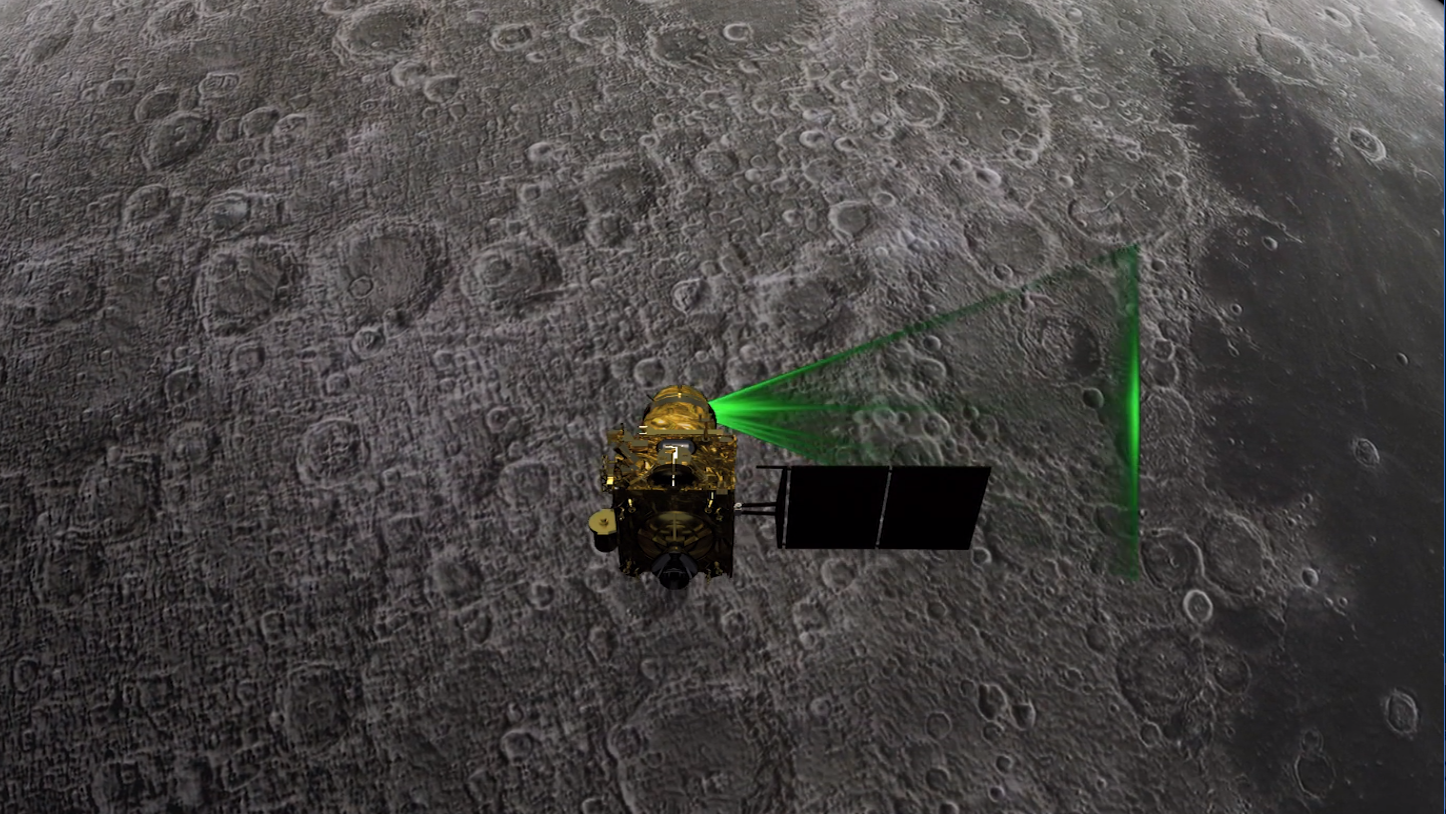
The orbiter is currently approaching the end of its fourth year of continuous lunar operations out of a planned 7.5-year primary mission. However, following a successful separation from the orbiter in September 2019, the Vikram lander deviated from its intended trajectory starting at 2.1 km altitude, eventually crashing onto the Moon’s surface, destroying itself and the rover, apparently the result of a software glitch.
Originally, that mission was to have been followed in 2025 by Chandrayaan-3, part of a joint mission with Japan and referred to as the Lunar Polar Exploration Mission. However, following the loss of the Chandrayaan-2 lander and rover – both of which were also testbeds for technologies to be used in 2025 -, ISRO decided to re-designate that project internally as Chandrayaan-4, and announce a new Chandrayaan-3 mission to replicate the lander / rover element of Chandrayaan-2 mission.
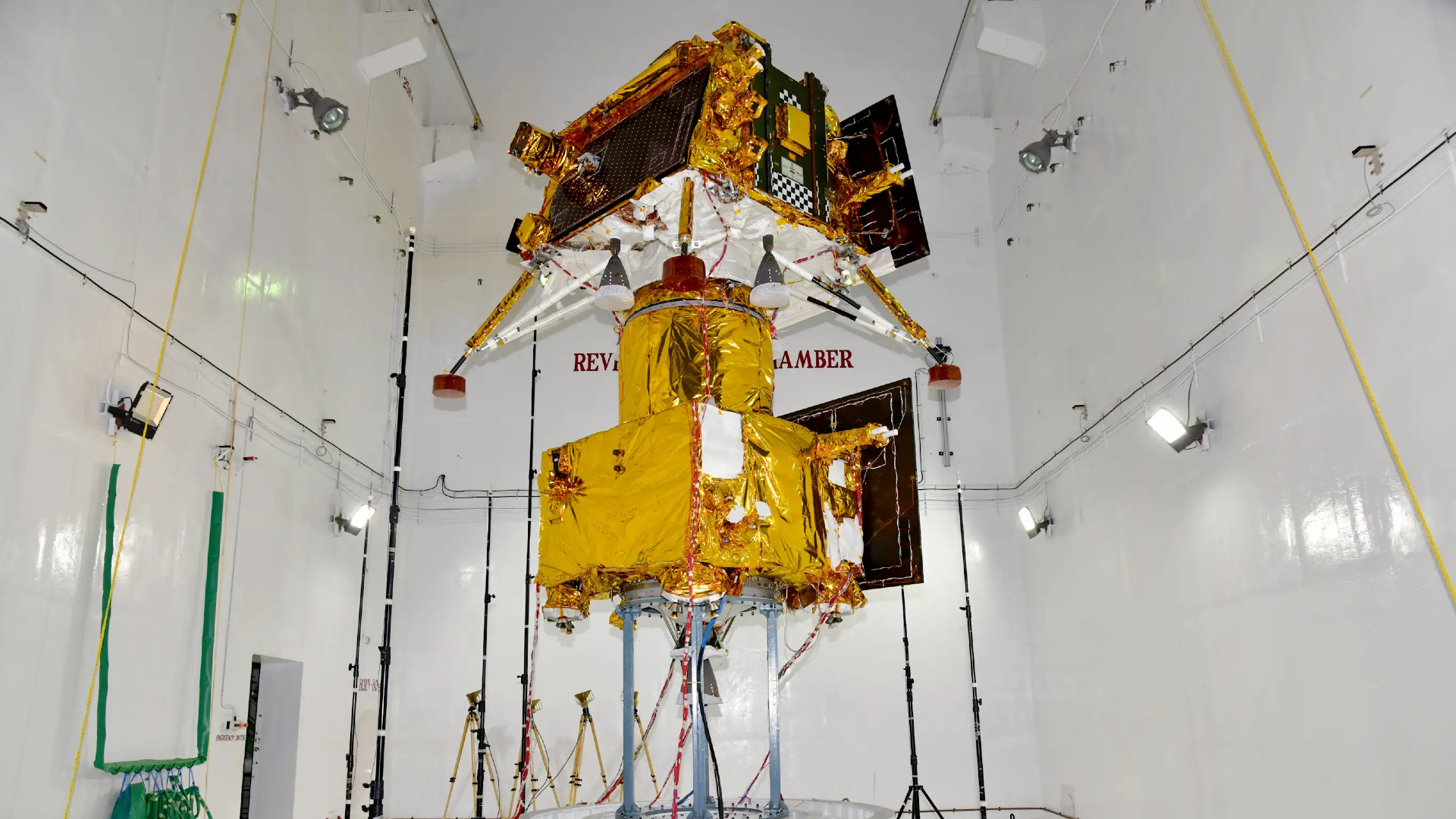
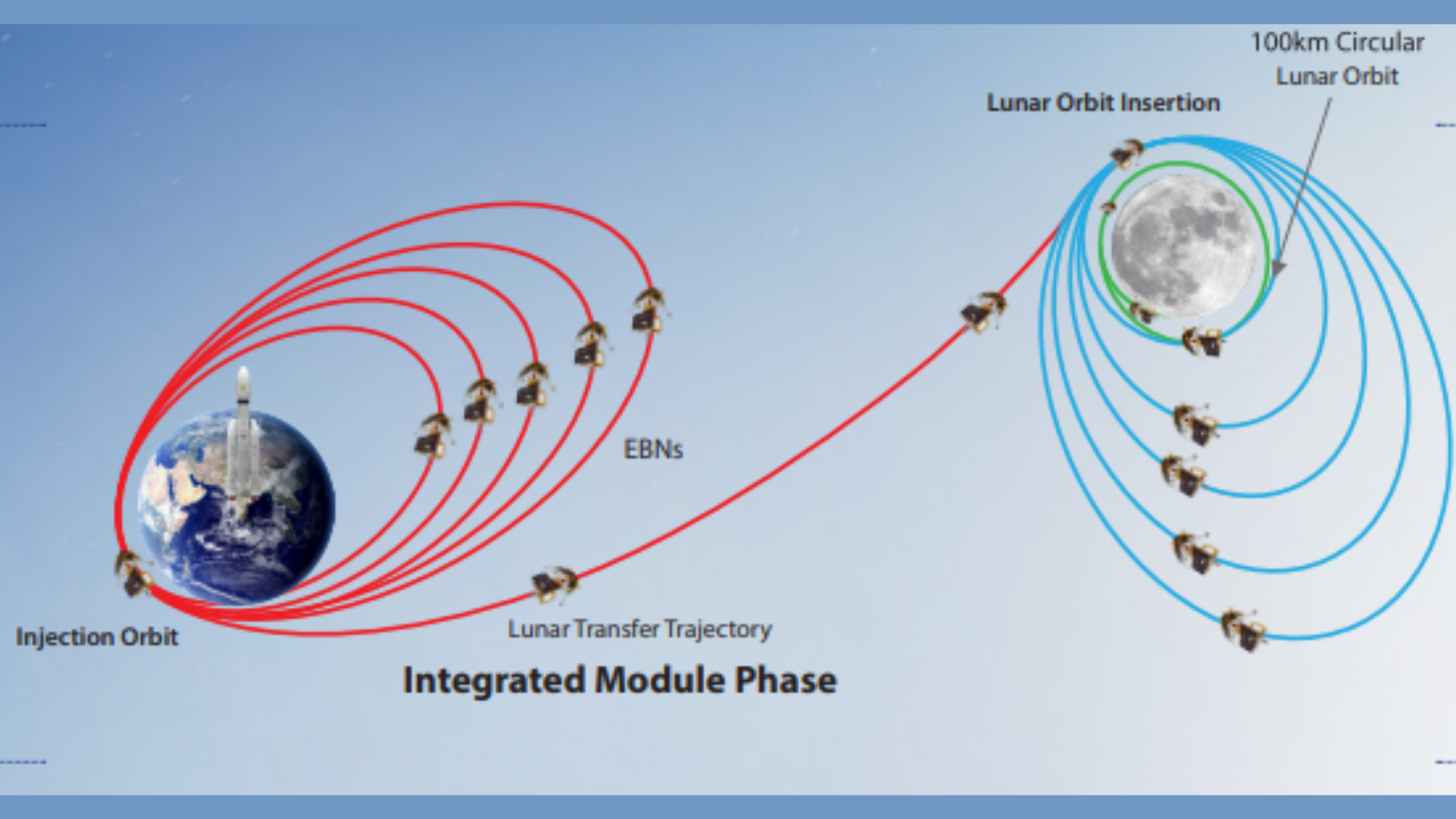
The revised Chandrayaan-3 mission lifted-off Satish Dhawan Space Centre at 09:05 UTC on July 14th, entering an elliptical orbit around Earth with a perigee of 173km and apogee of 41,762km. Over the next couple of weeks, the mission’s power and propulsion module will use 5 close approaches to Earth to further extend its orbit’s apogee further and further from Earth until it can slip into a trans-lunar injection flight and move to an initial extended orbit around the Moon around August 5th.
After this, the orbit will be reduced and circularised to just 100km above the Moon’s surface at this point, around August 23rd or 24th, 2023, the lander – also called Vikram, this time meaning “valour” – will separate from the propulsion module and attempt a soft landing within the Moon’s south polar region.
If successful, rover and lander will then commence a 15-day mission – the length of time sunlight will be available to power them before the onset of a month-long lunar night. The lander will conduct its work using three science instruments, and the 6-wheeled rover using two science payloads. These will be used to probe the composition of the lunar surface and attempt to detect the presence of water ice in the lunar soil and also examine the evolution of the Moon’s atmosphere. Communications with Earth will be maintained by both the orbiting propulsion module and the Chandrayaan-2 orbiter. If, for any reason, a landing on August 23rd or 24th cannot be achieved, the lander and rover will remain mated to the propulsion module through until mid-September, when the Sun will again deliver light (and power) to the landing area, allowing the landing attempt to be made.
How Old is the Universe?
It’s long been assumed that the universe is around 14 billion years old – or 13.7, according to a 2021 study using the Lambda-CDM concordance model. However, such estimates fail to account the likes of HD 140283, the so-called “Methuselah star”, which also estimated to be between 13.7 and 12 billion years old – as old as the universe itself, which in theory it should be a good deal younger.
This oddity has been further compounded by the James Webb Space Telescope locating numerous galaxies which appear to have reached full maturity – in cosmic terms – within 300 million years of the birth of the universe, rather than taking the billions evidenced by the vast majority of the galaxies we can see – including our own.
In an attempt to try to reconcile these oddities with our understanding of the age of the universe, a team led by Rajendra Gupta, adjunct professor of physics in the Faculty of Science at the University of Ottawa, has sought to develop an alternate model for the age of the universe – and appear to have revealed it could be twice its believed age.
They did this by combining a long-standing (and in-and-out of favour) theory called “tired light” with tweaked versions of certain long-established constants. “Tired light” suggests light spontaneously loses energy over time, and as it travels across the cosmos over billion years, it naturally red-shifts and so gives a false suggestion of cosmic expansion. It’s an idea which fell out of favour when other evidence confirmed cosmic expansion, but has regained so popularity since JWST started its observations; however, it doesn’t work on its own, so the researchers turned to various constants deemed to by immutable in terms of the state of the universe – the speed of light, the charge of an electron, and the gravitational constant.
By tweaking these, in a manner that is possible given our understanding of the universe, Gupta and his team found that it is possible to model a universe that appears younger than it actually is – in their estimation, 26.7 billion years of age. However, there is a problem with the idea: when you start tweaking known constants which cannot be proven to have changed, and it is potentially possible to come up with any model to fit an assumption. Ergo, the research cannot be seen as in any way definitive.
To counter this, Gupta points out there are a couple of hypothetical constants we use to account for the universe appearing and acting as it does – dark matter and dark energy. As I’ve noted previously, the latter is believed to be in part responsible for the expansion for the universe, and thus its age. However, its influence is currently hypothetical, and thus also subject to potential revision as such, the study suggests that if in influence of dark energy is found to be different to what is generally believed, it might yet indicate that the universe is a good deal older than is generally accepted.
Time will tell on this, but with ESA’s recently-launched Euclid mission is attempting to seek and characterise and potentially quantify both dark matter and dark energy, an answer might be coming sooner rather than later.
NASA Newsbeat
Happy Anniversary JWST!
On July 12th, 2022, the James Webb space Telescope (JWST) officially started its science operations after a period of on-obit commissioning. Since then, it has chalked-up some impressive finds and repeatedly proven its capabilities, looking both deeply into our universe and within our own solar system.
To celebrate 12 months of formal operations, the agencies operating JWST issued a stunning image of the Rho Ophiuchi cloud complex, lying between 360 and 460 light-years from Earth. It is one of many star-forming regions in our galaxy – and also one of the closest to our solar system[ what’s more, it thought to be very similar in nature to the cloud which gave birth to our own Sun, 4.5 billion years ago.
In fact, many of the stars recorded within Rho Ophiuchi have been found to be very similar to our own Sun – with 50 such stars visible within the JWST image. In time, these stars will drift away from their birthplace, just as our own did; also like our own Sun, many have protoplanetary disks circling them which may eventually form systems of one or more planets.

As such, this image is not only a picture of the incredible beauty of the cosmos in which we live, it is a mirror reflecting memories of our own birth within the cosmos – and the fact that we are, each and every one of us, is connected to the universe because we are all, quite literally, star stuff.
NASA’s Budget to Shrink in 2024
During budget proposal mark-up sessions on the Commerce, Justice and Science (CJS) spending bill for fiscal year 2024, both houses of the US Congress indicating they are both looking to reduce NASA’s budget from the US $25,384 awarded for 2023, with the Senate looking to award $25.0 billion, and the House US $25.367, both significantly less than the US $27.185 billion the space agency requested.
In structuring their budgets, both houses have emphasised NASA’s human exploration programme, with both Senate and the House pretty much fully funding the various elements of Project Artemis to the amounts requested by NASA. Where differences occur, it is with NASA’s Earth Sciences and heliophysics programmes; while the Senate wishes to fully fund these – both of which encompass climate change studies, – whilst the House is looking to slash them to the tune of US $880 million.
Neither bill expressly breaks down NASA’s robotic exploration programme to any great degree, so it is not clear how these missions – planned and underway – might be affected. However, the Senate bill does directly target the proposed Mars Sample-Return mission (MSR), designed to bring regolith samples collected by the Mars 2020 Perseverance rover by to Earth for direct study.
Intended to be a joint NASA / European Space Agency mission, the US side MSR has been subject to constant flux, rising costs and other uncertainties which have started to impact other potential missions and interrupt ESA’s own budget management and mission planning. Within its version of the CJS bill, the Senate directs NASA to develop a mission profile for no more than $3.5 billion through to launch, with all time frames and significant milestone outlined. Failure to do so could result in the Senate pushing for the mission to be cancelled in order to minimise impact on other science activities.
Orion Production on a Roll
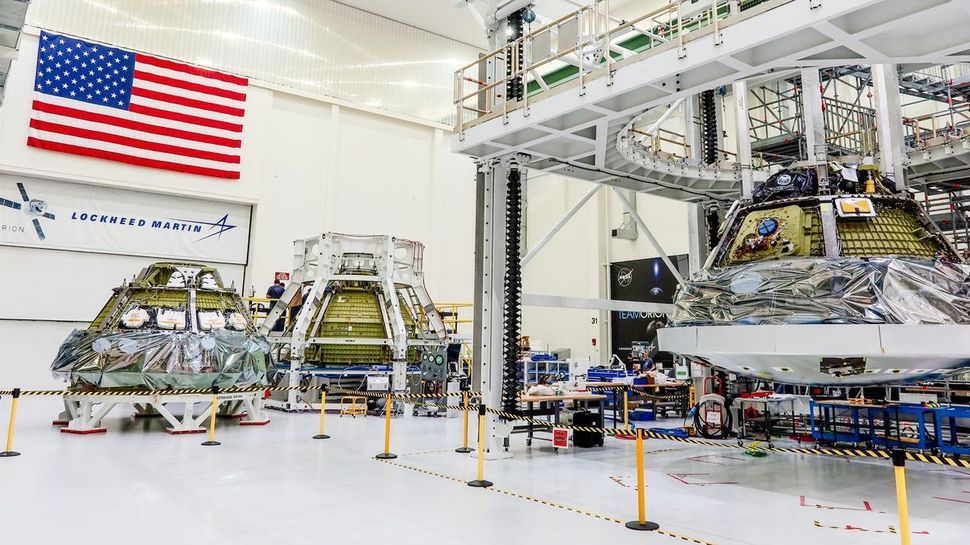
Production of the Orion Multi-Purpose Crew Vehicle (MPCV), the capsule which will primarily be used to carry astronauts to / from the vicinity of the Moon as a part of the Artemis Project, is now rolling forward, as prime contractor Lockheed Martin showed on Friday, July 14th, 2023 with the release of a photograph of three Orion vehicles in various stages of assembly.
The craft in the image comprise the capsule to be used with Artemis 2, due to fly on an extended trip around the Moon is 2024 carrying a crew of four: NASA astronauts Reid Wiseman, Victor Glover and Christina Koch, along with Canadian Space Agency astronaut Jeremy Hansen, Artemis 3, which will carry the first crew to actually set foot on the lunar surface, and Artemis 4, which had originally been a dedicated lunar orbital mission to work on the Gateway lunar-orbiting space station, but which will now also perform a crew expedition to the surface of the Moon.
Exactly when Artemis 3 and 4 will fly is currently open to debate; Artemis 3 is currently targeted at “no earlier” than 2026. However, both missions are entirely dependent on the SpaceX Human Landing System (HLS) derivative of SpaceX’s yet-to-prove-itself Starship system[ such is the state of the Starship programme as a whole, coupled with a lack of any real HLS development work being performed by SpaceX, that NASA officials have recently admitted it is causing them the greatest amount of concern in being in any position to achieve a 2026 launch date for Artemis 3.
Change of Tack (Again) for Spacesuit Development
In mid 2022, I noted the decision by NASA to select Axiom Space – a company with no prior experience in the field – to supply the space suits to be specifically on Artemis lunar surface missions, pushing the far more experienced Collins Aerospace + ILC Dover (who have produced all US space suits since Apollo) to one side.
Collins / ILC were then offered the opportunity to obtain a contract for a new – and separate to the Axiom design – EVA space suit for use on the ISS and in space in general. This contract, potentially worth US $3.5 billion through to 2035, as duly awarded in December 2022.
Now NASA has decided the two suits should be capable of both EVA work in micro-gravity and for use on the surface of the Moon, providing a “crossover” capability between the two systems and has awarded a total of US $10 million to both companies to start the work of adopting their design to its “alternate” role.
The move potentially benefits Axiom, inasmuch as the company is already developing its own EVA suit for their private orbital missions and space station, potentially allowing them to offset the on-going cost of that development against NASA funding. For Collins / ILC, the decision is a vindication of their long-standing expertise in suit development – including that gained in developing the only space suit thus far to be used on the Moon.
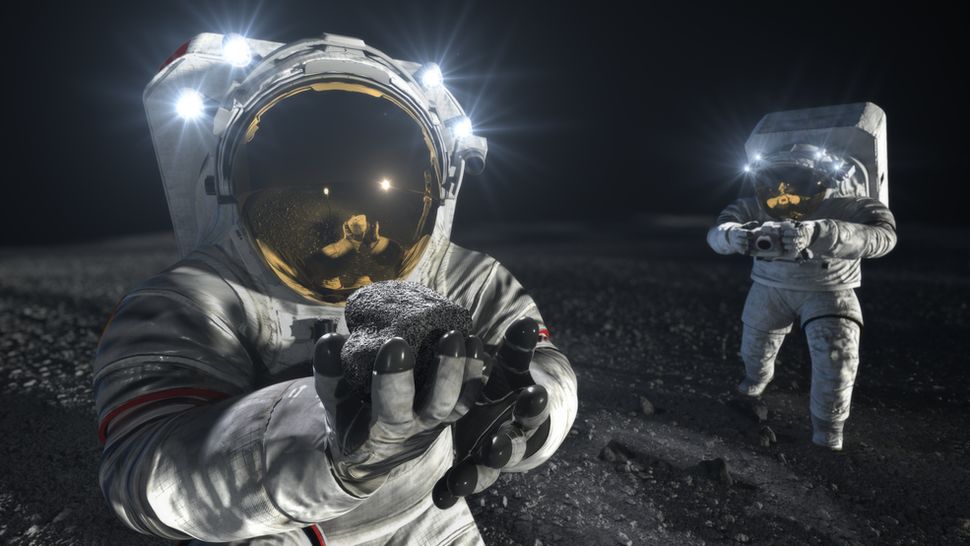
Whilst the “crossover” approach is promoted in terms of redundancy among missions, with either suit being capable of lunar work and EVAs, it also means that in the future, should NASA face a squeeze on contract costs by Axiom or Collins / ILC (as they will essentially lease the suits from both companies), they could use the ability to switch to a sole provider as a means to hold down any proposed cost increases on the part of either company during contract renegotiations.
Artemis Goes Heavy Metal
To further promote Artemis – and specifically Artemis 2 – NASA has turned to an interesting partner: US heavy metal rock band Metallica. Specifically, the US space agency has licensed the band’s third single, Fuel, originally released on their 1997 album Reload, for a series of video shorts highlighting Artemis, starting with the upcoming 2024 mission.
It might seem an odd combination – but members of the band have a genuine interest in space flight, and in 2017 lead guitarist Kirk Hammett revealed Metallica had put out “feelers” to NASA concerning playing aboard the space station or – prior to its retirement – the space shuttle years ago, while drummer and co-founder Lars Ulrich has said they band would “love” to be the first rock band to play in space, noting:
I think we’ve shown over the last few decades that that sense of spirit, that sense of adventure still burns in us. We would love to, and would bend over backwards to, make anything out of the ordinary happen. I don’t really want to commit to anything other than to say that if there really is a possibility for this to happen, then we will happily be at the very front of that line.
– Lars Ulrich, Metallica

 Inara Pey: Living in a Modemworld
We definitely live in interesting times. Metallica Concert in Space? Oh yeah baby! — where do I get a ticket? 🙂
LikeLiked by 1 person