2017 Viewer release summaries week 21

Logos representative only and should not be seen as an endorsement / preference / recommendation

Updates for the week ending Sunday, May 28th

This summary is published every Monday, and is a list of SL viewer / client releases (official and TPV) made during the previous week. When reading it, please note:

  • It is based on my Current Viewer Releases Page, a list of all Second Life viewers and clients that are in popular use (and of which I am aware), and which are recognised as adhering to the TPV Policy. This page includes comprehensive links to download pages, blog notes, release notes, etc., as well as links to any / all reviews of specific viewers / clients made within this blog
  • By its nature, this summary presented here will always be in arrears, please refer to the Current Viewer Release Page for more up-to-date information.

Official LL Viewers

LL Viewer Resources

Third-party Viewers

V5-style

V1-style

Mobile / Other Clients

  • No updates.

Additional TPV Resources

Related Links

Space Sunday: Jupiter revealed, methanol found

Jupiter’s chaotic polar regions as revealed by JunoCam. Credit: J.E.P. Connerney et al., Science (2017)

The first science findings from NASA’s Juno mission were published at the end of May 2017, revealing Jupiter to be far more complex a world than had been previously envisioned.

The Juno mission hopes to answer many questions about Jupiter – the structure and composition of its atmosphere, a greater understanding of the forces driving that atmosphere and the distinctive upper layer cloud formations, its magnetic field, weather patterns, and so on. It is also hoped the mission will resolve the question of what actually lies at Jupiter’s core.

Two theories have tended to dominate thinking around the latter: that Jupiter either has a relatively compact solid core 1 to 10 times as massive as Earth or it has no solid core at all, just gases compressed to a liquid state. However, the data returned by the spacecraft since it arrived in orbit around Jupiter in July 2016 doesn’t support either hypothesis. Instead, it suggests Jupiter has a large, partially dissolved core of ices and rock.

Juno is probing deep into Jupiter’s atmosphere in an attempt to understand the planet’s structure and driving forces Credit: NASA/JPL / SwRI

This conclusion comes via measurements of the magnitude planet’s magnetic field, which has not only proven to be significantly higher than expected, but also exhibits large spatial variations, being significantly higher than expected in some locations, and markedly lower in others. These results suggest that Jupiter’s core has a molecular hydrogen layer which appears to be the dynamo layer driving Jupiter’s magnet field, sitting over a metallic hydrogen layer which gradually transitions into a “fuzzy core” of ices and rock.

The Juno data also suggest the turbulent “meteorological layer” of Jupiter’s atmosphere, where the familiar bands of cloud exist, extends downwards more than 1,000 km (625 mi), with the tropical zoning of banded cloud layers extending down to pressures of up to 100 bars – or 100 times Earth’s air pressure at sea level), before transitioning to slightly less turbulent regions.

It had been thought that somewhere beneath the cloud layers the gasses present in the atmosphere would be more well mixed. But again, the Juno data suggests otherwise. “We’re finding that that’s just not true at all,” Dr. Scott Bolton, Juno’s principal investigator said as the first set findings was published on May 25th. “There’s structure down deep, but it doesn’t seem to match the zones and belts. And so we’re still trying to figure it out.”

“What we’ve learned so far is earth-shattering. Or should I say, Jupiter-shattering,” he also stated. “Discoveries about its core, composition, magnetosphere, and poles are as stunning as the photographs the mission is generating. Juno is re-writing all we thought we knew about Jupiter.” It is also adding new mysteries to Jupiter’s story as well.

One of the most remarkable aspects of the Juno mission so far have been the amazing images of the planet’s north and south polar regions. Rather than being banded, as with the rest of the atmosphere, or uniformly regimented into a geometric form, like Saturn’s north polar region, the atmosphere over Jupiter’s poles is a chaotic mix of swirling cyclones and storms, some of them 1,400 km (870 mi) across, towering bove the bluish backdrop of Jupiter’s deeper atmosphere.

“it’s ‘s unclear what, exactly, drives these polar cyclones,” Bolton states. “Over the course of the mission, we’ll be able to watch the poles and see how they evolve. Maybe these cyclones are always there, but maybe they just come and go.”

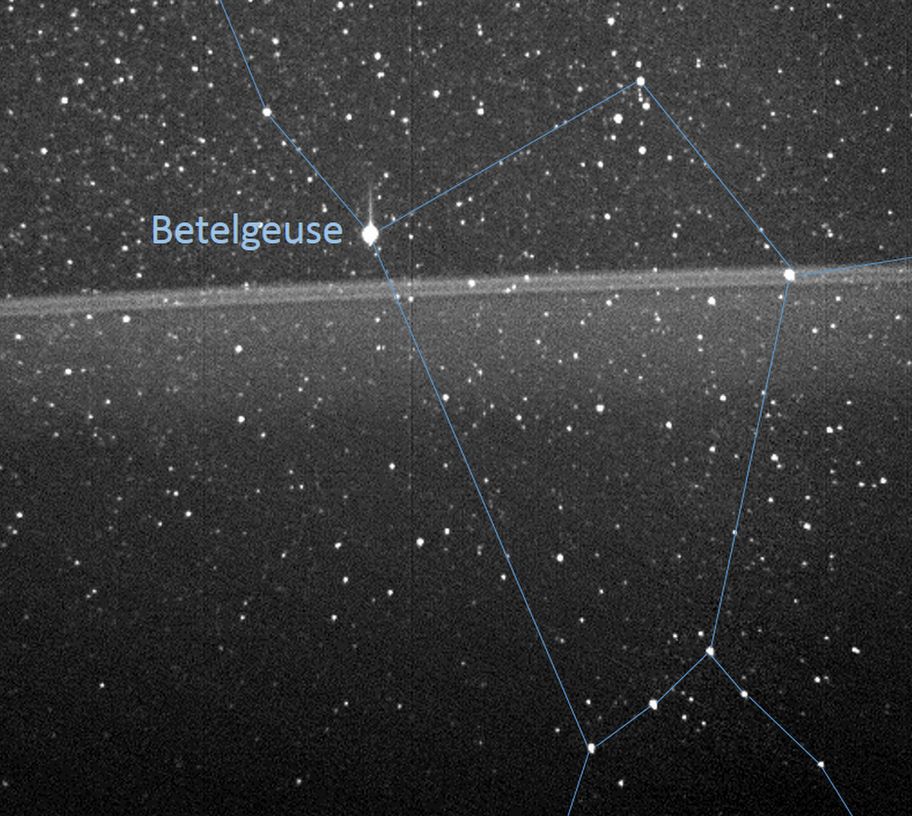
Captured by Juno’s Startracker navigational camera, is Jupiter’s ring system, which lies some 64,000 km (40,00 mi) out from the planet. Outlined in the backdrop of stars is the constellation of Orion (an excellent navigational aid), showing Betelgeuse (named), Bellatrix (Orion’s other shoulder, sitting on the line of Jupiter’s “gossamer rings”), and the stars apparently forming the line of Orion’s belt: Alnitak, Alnilam and Mintaka (l-to-r) sitting below the haze from the broadest and innermost ring as it disperses sunlight. This image was captured by the Juno mission on August 27th, 2016, during the vehicle’s first operational pass over Jupiter’s cloud tops. Credit: NASA/JPL / SwRI

Juno has also suggested the cause of Jupiter’s auroral displays might be more complex than previously thought.

Earth’s auroras result when the solar wind — charged particles streaming from the sun — are funnelled by the planet’s magnetic field to slam into the atmosphere over the north and south pole in a complex two-way interaction which results in the glow of the northern and southern lights.

It had been thought to be the massive flux tube linking the polar regions of Io, Jupiter’s innermost Galilean moon, and Jupiter’s own polar regions was the driver of the planet’s auroral displays thanks to the 5 million ampere electrical current flowing through the flux. However, data from Juno, which has been combined with observations from Japan’s Hisaki  satellite and the Hubble Space Telescope suggest the gases spreading outward from Io as a result of its extreme volcanism, undergo a complex interaction with the “shock wave” formed by the solar wind as it strikes the outer limits of Jupiter’s massive magnetic field.

An auroral display over Jupiter’s south pole captured by Juno. Shown if false colour, the light colours indicate auroral emissions at high altitudes, the redder colours, those occurring deeper into Jupiter’s atmosphere. Some of these may be caused by the flux tube interaction between Io and Jupiter, others possibly by the energetic interaction involving gases from Io and the solar wind. Credit: NASA/JPL / SwRI

This interaction deflects energy from the gases back towards Jupiter at velocities of between 400 and 800 kilometres a second (250 and 500 miles per second). When this energy strikes and penetrates Jupiter’s atmosphere, it gives rise to bright, transient aurora. In addition, it is being theorised that this energy, when it reaches icy Europa and Ganymede – both of which are thought might harbour basic life in the oceans beneath their icy crusts, could provide support for chemical processes on their icy surfaces. This is liable to be something scientists will be considering carefully as more data from Juno is scrutinised.

Continue reading “Space Sunday: Jupiter revealed, methanol found”

A Chess Wonderland in Second Life

Chess Wonderland, Egypt; Inara Pey, May 2017, on Flickr Chess Wonderland – click any image for full size

Chess Wonderland, is a fascinating Homestead region which caught my eye a couple of weeks ago after seeing images pop-up on  Twitter and Flickr, marking it as a place to visit as time allowed.  Designed by EgyptRocker, it is a surreal place with the focus – as indicated in the name – on chess, which is seen not so much as a game of strategy but as an eternal melee of close-quarter fighting.

Visitors are presented with an undulating landscape covered in the black and white tiles of a chess board, which rises into chequered monochrome walls surrounding the region. These walls in turn rise into a roof high overhead, giving the region a gigantic, room-like feel, heightened by the great ceiling light suspended from high overhead which casts a glowing aurora over the top of a great tree occupying the centre of the region.

Chess Wonderland, Egypt; Inara Pey, May 2017, on Flickr Chess Wonderland

This aurora is mirrored by softly rippling sheets around the edge of the landscape as misted pools slowly turn between the hills, and sheets of ocean mist drift beneath the boughs of gigantic trees. Unmissable due to their size, the trees are matched in height by massive chess pieces – knights, rooks, bishops and queens – apparently standing guard over the region while candles cast additional ghostly light.

The battle between black and white is located across the region from the landing point, where Mistero’s Hifeng’s chess pieces have been placed on the tiles of the land. Far from presenting a genteel game of carved pieces on a flat board, they are engaged in a vicious a battle involving blade and arrow.

Chess Wonderland, Egypt; Inara Pey, May 2017, on Flickr Chess Wonderland

Close by sits a huge table, braced by two equally huge armchairs. The table holds a traditional chess board and pieces, and the armchairs smaller copies of themselves suitable for avatars to sit in. The chess board is playable, offering those who sit in the smaller armchairs the opportunity to engage in a more traditional match or two.

Further around the region, guarded by a pair of giant chess kings, sits a castle. Possibly the point of contention between the warring pieces, it also appears to be the location for events – on our visit, a fair few people were gathered with its walls.

Chess Wonderland, Egypt; Inara Pey, May 2017, on Flickr Chess Wonderland

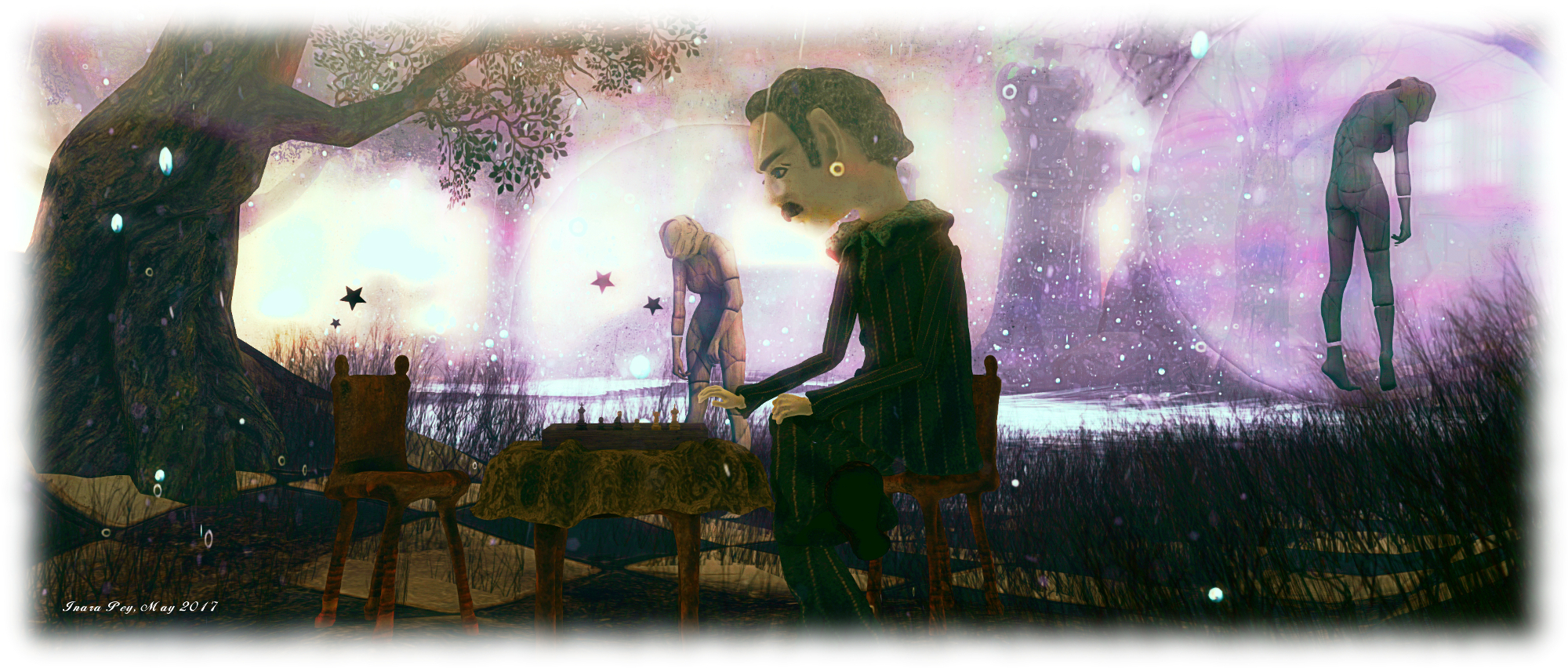
Mistero Hifeng isn’t the only artist represented here, both through his chess pieces and several other sculptures. Sitting close to the landing point is Cica Ghost’s chess player from Strings (which you can read about here), while the string quartet and their pianist from the same installation can be found further around the region, playing under the cover of a fold in the land.

Chess Wonderland is a surreal, beautiful region, unusual in form, softened in look through the considered windlight and use of auroral effects (probably best appreciated with Advanced Lighting Model enabled in the viewer). The presentation of the art pieces by Mistero and Cica – two of my favourite 3D artists – is both imaginative and eye-catching, making for a fascinating and rewarding visit.

Chess Wonderland, Egypt; Inara Pey, May 2017, on Flickr Chess Wonderland

SLurl Details

Stories, tales, and podcasts in Second Life

It’s time to kick-off another week of storytelling in Voice by the staff and volunteers at the Seanchai Library. As always, all times SLT, and events are held at the Library’s Second Life home at Bradley University, unless otherwise indicated.

Sunday, May 28th 13:30: The Thin Man

New York, 1932. Nick Charles, a retired west coast private detective, and his wealthy socialite wife, are in the Big Apple for Christmas. It’s a place where Nick is perfectly happy getting drunk in their hotel room or in speakeasies. Which is not to say the couple are unhappy; far from it. They enjoy witty repartee and banter with one another, and Nora is every inch Nick’s match in wit and intelligence.

Things change when Nick is visited by Dorothy Wynant, the daughter of a former client, businessman Clyde Wynant, who has apparently vanished ahead of his daughter’s wedding. Nick reluctantly – and to Nora’s amusement – agrees to find the missing businessman (the titular Thin Man). But what starts as a search for a missing man quickly turns into the hunt for a murderer after Wynant’s secretary is found dead, with all the evidence points to Wynant himself as her killer.

Corwyn Allen, John Morland, Kayden Oconnell, and Caledonia Skytower read Dashell Hammett’s 1933 classic, which became the first in a series of films following Nick and Nora’s adventures, as played by the inimitable William Powell and Myrna Loy.

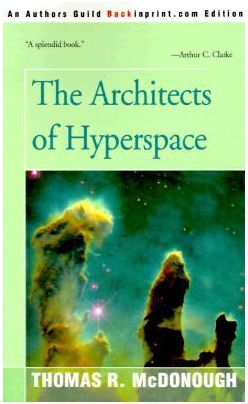
Monday, May 29th 19:00: Architects of Hyperspace

Humour, hard science and speculative science fiction all combine in this novel by Thomas R. McDonough, who has worked with both the SETI Institute and The Planetary society.

A trio driven by personal ambitions comes together after a dying man’s last words send them in search of the secrets of a lost alien civilisation. Critic’s review:

A wonderful tongue in cheek story backed by great speculative science. The combination of the sometimes screwball comedy with the specifics of how hyperspace could work and the details of the time lags of space communication, etc, made for a believable and well-formed diegesis. There were times reading this book that I just had to stop to laugh. The book reminds me a great deal of Red Dwarf.

Join Gyro Muggins as he reads this unusual story.

Tuesday, May 30th 19:00: Old Mother West Wind

Welcome to the timeless world of the Green Forest, the laughing Brook, and the Smiling Pool. Here young readers will meet a menagerie of funny and fascinating animal friends — Peter Cottontail, Jimmy Skunk, Reddy Fox, Grandfather Frog and many more — and learn about their exciting adventures.

In this beloved classic, the first in a series of highly popular animal tales by Thornton W. Burgess, children discover the answers to such questions as why Grandfather Frog has no tail and why Jimmy Skunk wears stripes.

There’s also great fun to be had in reading or hearing about the grand goings-on at Mink’s swimming party, Little Joe Otter’s slippery slide, and Reddy Fox’s fishing expedition. These and many other adventures are told in a warm, whimsical way that combines gentle lessons about nature and wildlife with the fun of a good story.

Join Faerie Maven-Pralou to hear more from Thorton Burgess’ story.

Wednesday, May 31st 19:00: The 100 Word Stories Podcast “Dozenaversary”

Story writer, story-teller, commentator, raconteur – Crap Mariner is all of these, and more. On May 31st, 2005, after being inspired by both a friend and Woody Allen to write 100-word stories  – or “dabbles” – Crap created the 100-word Story podcast, promising to write a story a day until the day he dies.

Today, 12 years on, Crap is still writing  – and still reading his stories in what is quite probably the longest-running daily podcast of original material in the world.

Seanchai Library is therefore delighted to host the “dozenaversary” of the 100-word story podcast, with Crap reading more of his stories, which will cover a wide range of topics, just like his podcasts. There might even be a George the Pirate story in there somewhere 🙂 .

Thursday, June 1st

19:00: GOLD FEVER – Miner’s Tales of the Wild West

With Shandon Loring. Also presented in Kitely hop://grid.kitely.com:8002/Seanchai/108/609/1528.

21:00: Seanchai Late Night

Contemporary Sci-Fi adventures with Finn Zeddmore.


Please check with the Seanchai Library’s blog for updates and for additions or changes to the week’s schedule.

The featured charity for May through July is Alex’s Lemonade Stand, raising awareness of childhood cancer causes and funds for research into new treatments and cures.

SL project updates week 21/3: Content Creation UG w/audio

The Content Creation User Group meeting, at the hippotropolis Camp Fire (stock)

The following notes are taken from the Content Creation User Group meeting, held on  Thursday, May 25th, 2017 at 1:00pm SLT at the the Hippotropolis Camp Fire Circle. The meeting is chaired by Vir Linden, and agenda notes, etc, are available on the Content Creation User Group wiki page.

Audio extracts are provided within the text, covering the core points of the meeting. Please note, however, that comments are not necessarily presented in the chronological order in which they were discussed in the meeting, but are ordered by subject matter.

A video recorded at the meeting by Medhue Simoni is embedded at the end of this update, my thanks to him making it available. However, do not that this cuts out mid-way through the meeting. Timestamps in the text below refer to this recording.

Applying Baked Textures to Mesh Avatars

[1:54] This was announced as a new project – see my separate update for details.

The meeting saw additional questions asked about the baking service, which are summarised below.

Will the Baking Service Support Animated Objects?

  • Not initially. Baked textures are only relevant to your Current Outfit Folder (COF), affecting your appearance only. Animated objects will not have any notion of a COF (as they do not have an associated inventory structure as avatars do), so whose textures would an animated object show?
  • Also, even if you could assign your own COF-defined appearance to an animated object, it would only be valid until you change your own appearance, which would discard the bake used by the object, probably leaving it blank.
  • One solution might be allowing arbitrary textures to be sent to the baking service (see below). Another would be to allow animated objects to have their own notion of a COF contained within the object itself which the baking service could somehow reference
    • WERE this kind of work to be adopted, this would be Vir’s preferred approach. However, it is not currently a part of either the animated objects project or baking textures on meshes.

Baking Arbitrary Textures

Would it be possible to have a LSL function to request baking arbitrary textures?

  • Not as a part of applying baked textures to mesh, although it might be considered in the future.
  • However, the baking service could offer considerable flexibility of use were it to be extended, simply because of the way it defines the body area (head, upper body, lower body).
  • A problem is that, as noted above, baked textures are held only so long as your current avatar appearance defined via your COF is relevant, after which they are discarded. For the system to be useful with arbitrary textures, the resultant composite textures would need more rigorous storage, perhaps as a new asset class or retained in some form of “temporary” texture store – either of which would have to be defined and allowed for.
  • Thus, the problem is the amount of work involved in extending the baking service and (potentially) the asset handling required to support it.

HTTP Asset Viewer

[4:22] The HTTP Asset viewer was updated to version 5.0.6.326593 on Friday, May 26th. This update primarily bring the viewer to parity with the recently promoted release viewer, and so primarily comprise the revised region / parcel access controls, and the updates to Trash emptying behaviour.

Supplemental Animations

[6:53] As well as working on animated meshes, Vir is now also working on the LSL side of supplemental animations alongside of LSL changes need for animated objects. The work is designed  to overcome issues of animations states keyed by the server-side  llSetAnimationOverride() conflicting with one another.

Animated Objects

Current Project Status

Vir has got basic prototyping working in a “hacked up” single version of the viewer. He’s now working on the shared experience – how is an animated object seen by multiple viewers.

There is still no details on what limits beyond land impact which may be applied to animated objects (e.g. number of animated objects – not avatars – permitted per region type, etc), as there is not at this point any solid data on potential performance impact to help indicate the kind of limits which might be required..

Number of Allowed Animation Motions

[8:52] Currently, SL supports a total of 64 animation motions playing at one time per agent (hence walks, arm swings, wing flaps, tail swishes, etc., all of which can happen at the same time). It’s not been tested to see how much of an actual load running multiple animations places on a system. The limit might have to be changed as a result of animated objects – or it might not; it’ll come down to testing.

Other Items of Discussion

Avatar Scaling

[12:24-video end] There is a lengthy discussion on avatar scaling.

  • Essentially, the size slider works within a certain range; go beyond this, and distortions of body parts (e.g. facial features) can start to occur, as some sliders stop working properly.
    • Obviously, it is possible to scale avatars using animations, but again, doing so also doesn’t play nicely with the sliders.
  • This problem is particularly impactful with Tiny and Petite  avatars (although it also affects really large avatars). One workaround is to upload a mesh without joint positions of the affected bones, but this causes breakages in the mesh.Thus, having a slider which could handle the avatar’s scale over a broader range might be beneficial. However:
    • Changing the definition of the current scale slider to work over a broader range isn’t an option, due to the risk of existing content breakage.
    • Adding a new “global scale” slider to the system might be possible. However, while its is relatively simple at the viewer end of things, SL is already close to its limit of 255 sliders, and any additional global slider will require significant changes to the back-end.
  • A further problem is motion is not affected by scale, but is keyed to the current avatar size range. So, additional work would be required to the locomotion system to ensure the distance covered by an avatar’s stride is consistent with its size, adding further complexity to any changes.
  • Also, the ability to scale avatars would also require using rotations only, as any use of translations could result in locomotion issues noted above (e.g. so a really small avatar would appear to zip along at 100s of miles an hour), and rotation-only animations are somewhat limiting.

BUG-20027: Allow joint-offset-relative translations in animations

Created during the Bento project, this feature request was originally closed as something the Lab could not implement. It has now been re-opened as people wanted to add further feedback to it. So, if you have an interest – please go and comment on the JIRA.

Cost of Animating via Bones vs. Using Flexis

The Lab views animating via flexis as being very inefficient, but have no numbers for a direct comparison to the cost of animating bones.

Improving IK Support

General requests have been made for SL to better support Inverse Kinematics (IK) to add greater flexibility of joint / extremity positioning. Vir has requested that if someone could start a feature request JIRA, open for comments, on what might be sought, it would be helpful.

Next Meeting

The next CCUG meeting will be Thursday, June 8th, 2017.

Mental health awareness in Second Life

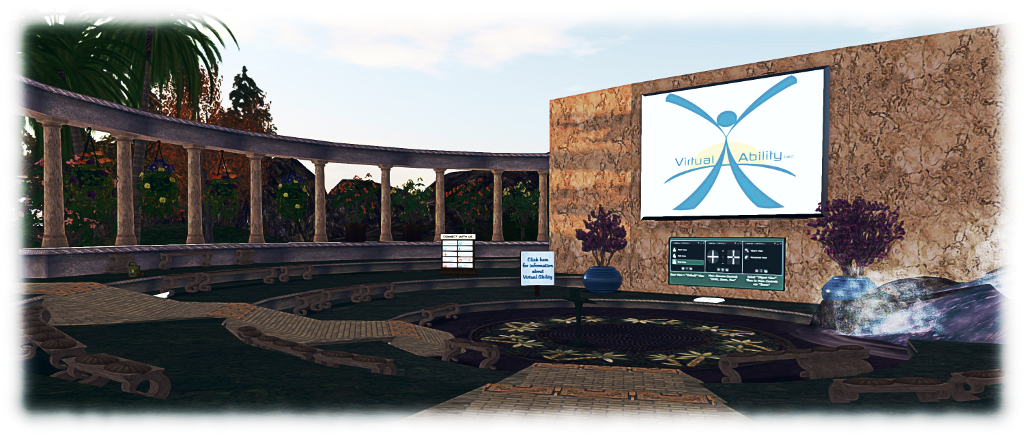
Virtual Ability Island

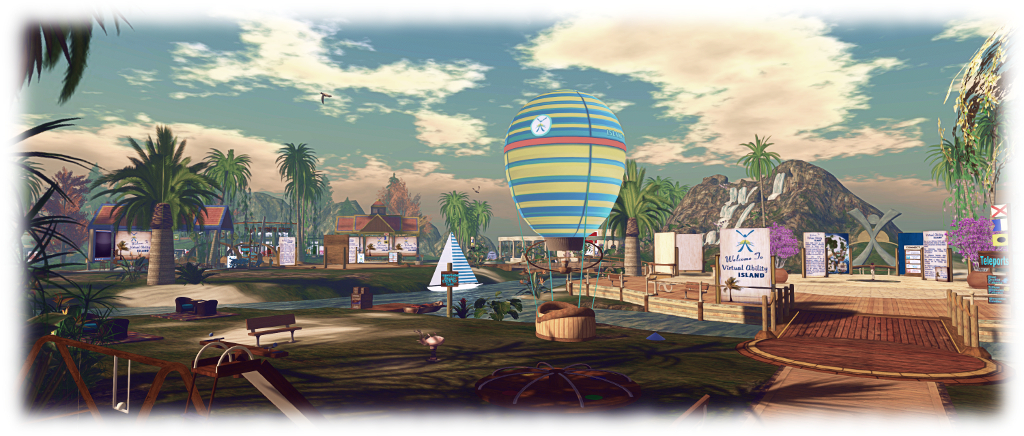
The Virtual Ability community in Second Life is hosting its sixth annual Mental Health Symposium on Saturday, May 27th, 2017, commencing at 06:00 SLT.

Virtual Ability Inc  (VAI) and the Virtual Ability community hosts this annual Symposium to share information about mental health and mental disabilities with the general population. Within this cross-disability community are people who deal with a variety of mental health issues. So, not only is this an opportunity for community members to learn more about topics related to mental health from experts they probably would not have an opportunity to otherwise meet, it also  allows the general public to attend a professional conference for free.

The theme of this year’s event is I can relate to that. It features an international presenters offering a wide interpretation of the theme, based on their interests and academic backgrounds. Attendees will learn ways to promote mental health for themselves and their families, how diet affects mental health, and how first responders and medical clinicians can improve their own mental health.

Sojourner Auditorium

The schedule is as follows (all times SLT):

  • 06:00: Tracy Burrows –  Diet, Nutrition and Food Addiction.
  • 07:30: Sarah Henderson and Kristin Klimley – First Responder Mental Health: The Importance of Training and Intervention.
  • 09:00: Joel Edman – Nutritional and Holistic Approaches to Stomach and Intestinal Disorders: Practical guidelines that can also be helpful for chronic and/or complex health issues.
  • 10:30: A selection of tours of sites related to mental health in Second Life – see below for more.
  • 12:00 noon: Ian Colman – Mental health promotion: What can you do for you and your loved ones?.
  • 13:30: Karen Davison  – Bridging the Divide: Exploring research in nutrition, mental health and food security.
  • 15:00: Diana Anderson – Virtual Windows: Design solutions to improve the mental health of clinical staff.
  • 16:30: Namaara MacMoragh  – Mental Health Following Brain Injury.

The Symposium takes place in Virtual Ability’s Sojourner Auditorium, on Virtual Ability island.

Mental Health Awareness exhibits, HealthInfo Island

May has traditionally been designated as Mental Health Awareness Month; so in addition to the symposium, and as noted above, the Virtual Ability community has a series of exhibits and displays related to mental health on its Healthinfo Island. Open to the public, these comprise:

When visiting an exhibit, click the title poster or display to get a full text note card; click each poster for live links and text chat. Other exhibits and displays on Healthinfo Island during May include:

About Virtual Ability

Virtual Ability, Inc. is a non-profit corporation, chartered in the state of Colorado, USA.  We are a non-profit tax exempt organization under section 501(c)(3) of the United States Internal Revenue Code. This means that for US citizens, contributions made are deductible as a charitable donation for federal income tax purposes.

For further information on the board of directors, please visit the Virtual Ability About Us page.

For those wishing to keep up with Virtual Ability news and updates when on the move, you can follow them on Twitter.

Related links