Of seeking respite in Second Life

France Portnawak, Dreamworld Volcano; Inara Pey, May 2015, on Flickr France Portnawak, Dreamworld Volcano (Flickr) – click any image to enlarge

There are times, no matter how you try, when the words you want to put into an article refuse to either run from fingers through keyboard to screen, or when on the screen, simply don’t want to order themselves in the way you’d like.

When this happens, you can really only do one of two things; wrestle with the words in the hope of getting them to submit and line-up the way you’d like – or go seek respite by doing something else entirely. For me, the latter generally involves a bath full of hot water and bubbles, music and a book (and perhaps a glass of wine on the side). Today however, I decided to find respite from my block by jumping into SL, albeit with no clear idea of where I Might go or what I might do.  Fortunately, there are plenty of places in-world to captivate us and carry us far from the roubles of the physical world – and even the worries of what to do.
France Portnawak, Dreamworld Volcano; Inara Pey, May 2015, on Flickr France Portnawak, Dreamworld Volcano (Flickr)

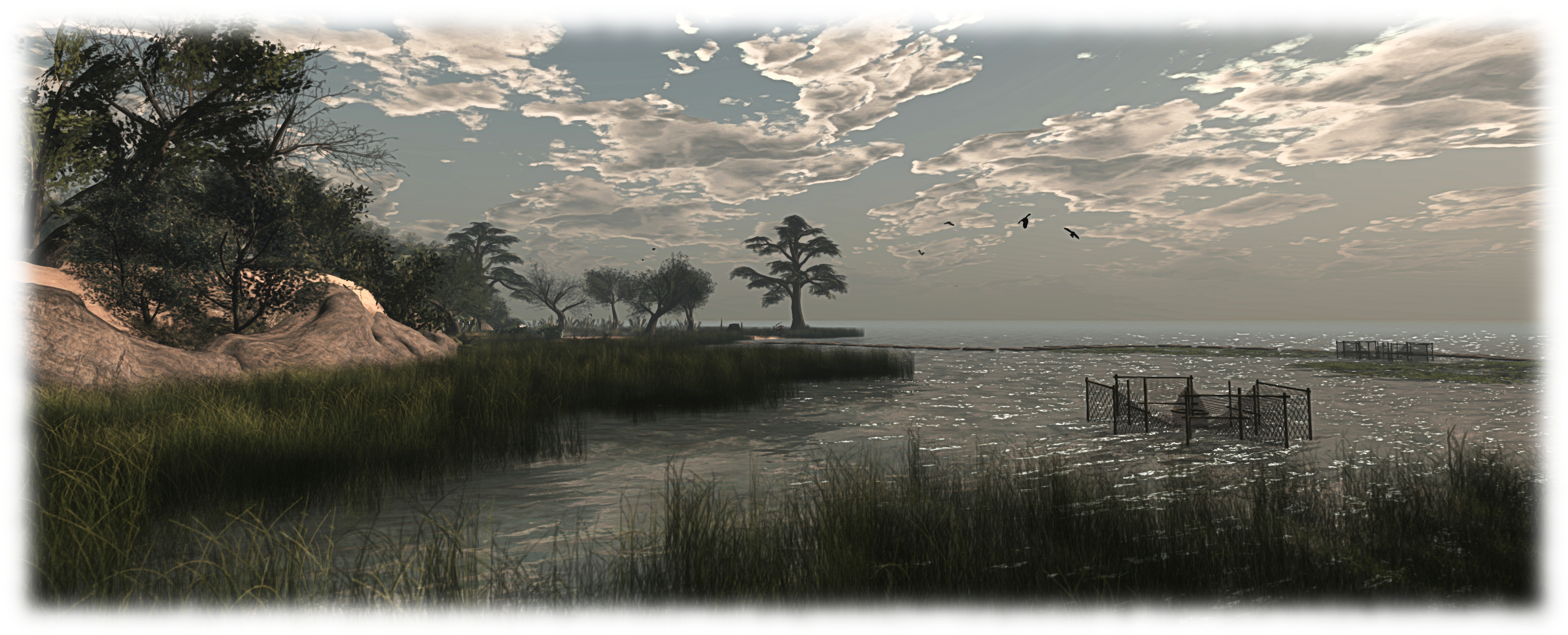
Places like Leico Arado’s region of France Portnawak, which has recently undergone one of its regular make-overs, and has been given the theme name of Terracotta.

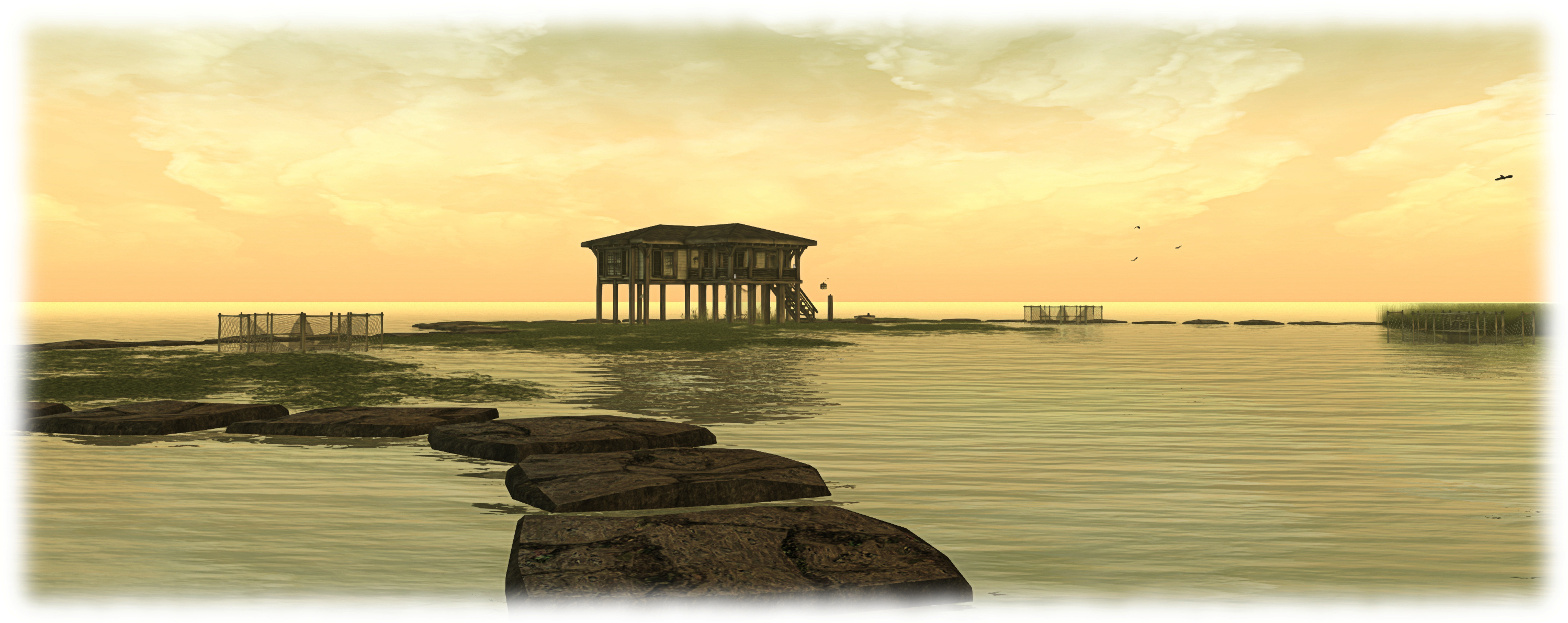
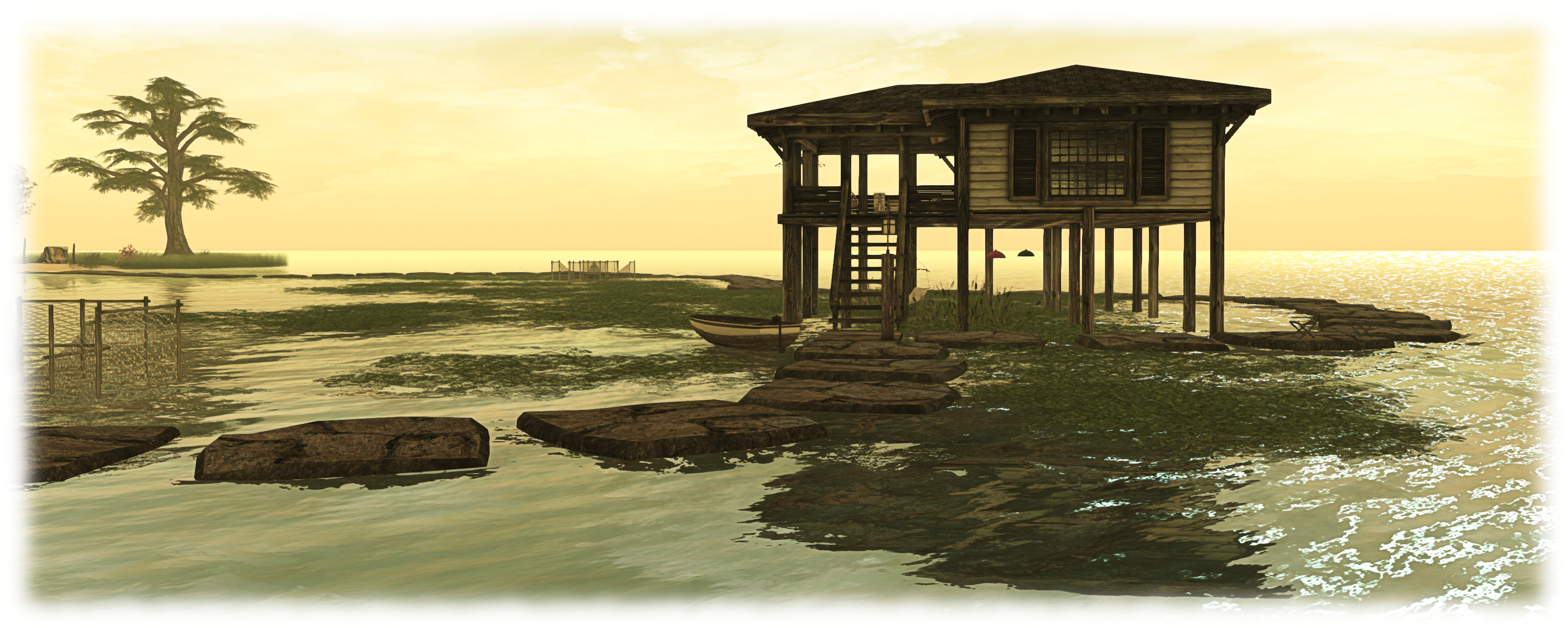
The last time I visited, autumn was just settling-in for a stay; now it is the turn of a balmy, semi-tropical summer evening, the sun casting a golden glow across the sky and the sea from the west, the haze in the sky all but masking shadows on the ground (see the images that top and tail this article).

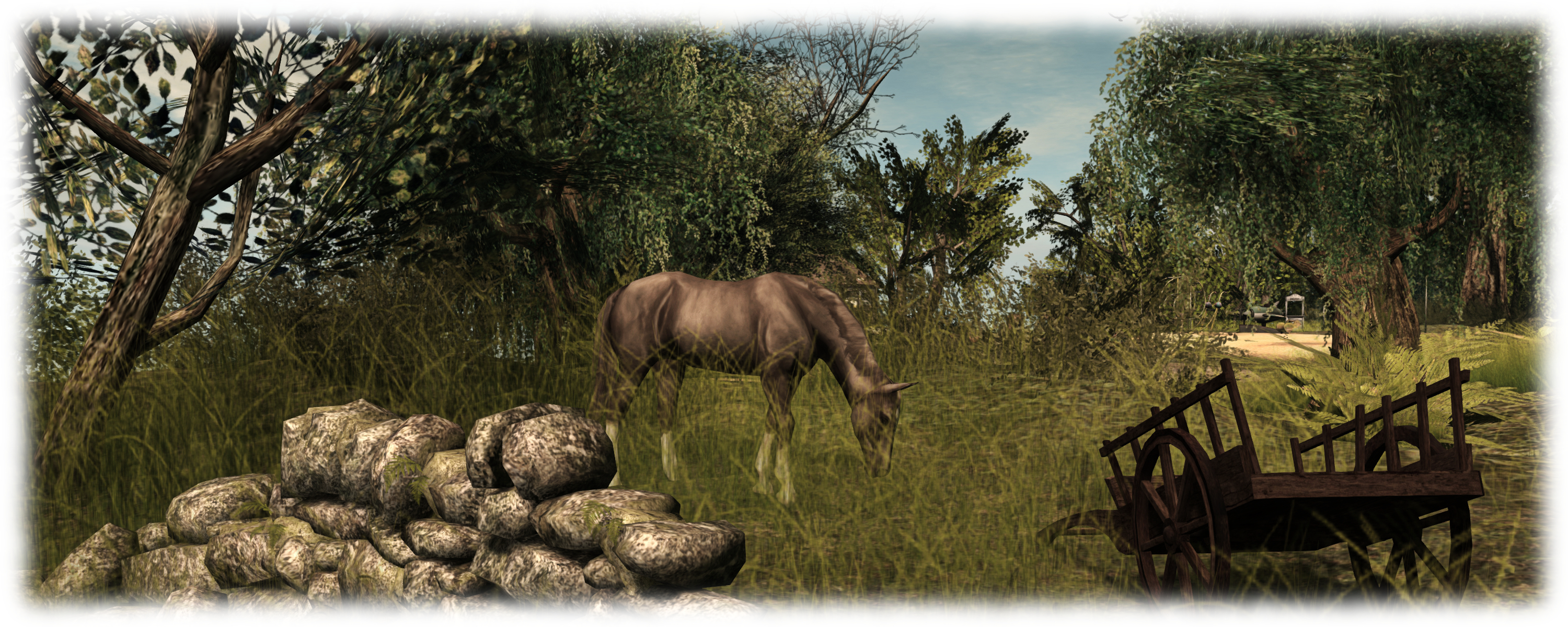
The region has been crafted into a west-facing island that is intriguing in its mix of tropical and deciduous flora; groups of palms standing amidst or close to trees from more temperate climates. Scattered around the landscape, which varies from low-lying sands and grass to rocky outcrops, can be found a number of houses and outbuildings, each with its own ambience and story.
France Portnawak, Dreamworld Volcano; Inara Pey, May 2015, on Flickr France Portnawak, Dreamworld Volcano (Flickr)

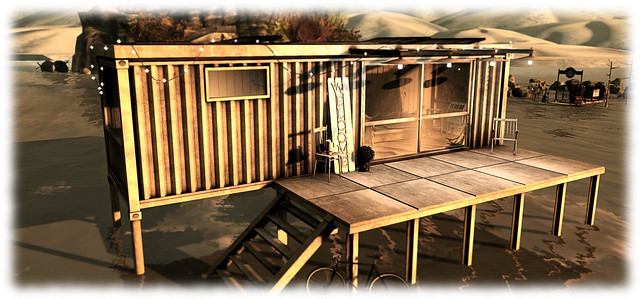
One of the houses sits out on the water on stilts, reached by a meandering path of stones which forms something of a breakwater. Within the rough circle formed by the stones, fishing nets awaited attendance, marsh plants float idly and long grass marches out from the shore, claiming a large part of the watery enclosure. Motor boats apparently offer a means to shuffle back and forth between the shore and the house in place of walking; but be warned – the enclosed water is bounded by a number of submerged physical invisiprims which tend to interfere with navigation.

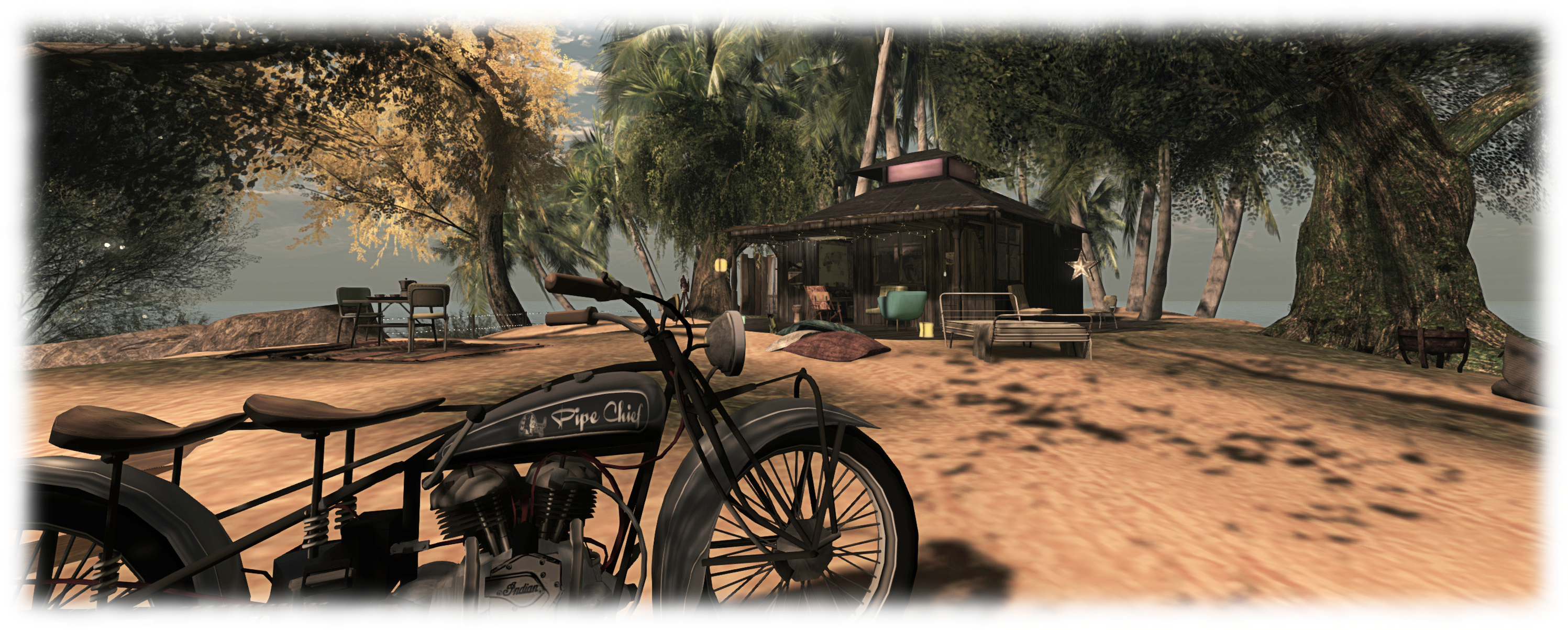
The house on stilts appears to be the lodge of a hunter / fisherman – at least going by the wall decor. The other houses also have a particular character of their own; the one on the coast closest to the stone path, for example, suggests a woman’s touch and the presence of children. Not far from this, behind steep sand dunes, sits what might be a den used by teenagers, sitting under the metal roof of an open-sided hut.
France Portnawak, Dreamworld Volcano; Inara Pey, May 2015, on Flickr France Portnawak, Dreamworld Volcano (Flickr)

Quite what the stories are to these and the other places to be found on the island is up to you as the visitor to decide – and there’s more than enough scattered around each of them to get the imagination rolling with narratives. But, if dwelling on possible stories isn’t to your mindset, there are also plenty of places to simply sit and while away the time, either on your own or with a friend, while a climb up to the highest point on the island will bring you to a rather interesting little temple.

In its latest iteration, France Portnawak offers a curious juxtaposition of looks and styles which somehow simply works, with everything flowing together to present visitors with a chance to wander, wonder and simply relax.

Which is just what I needed to do.
France Portnawak, Dreamworld Volcano; Inara Pey, May 2015, on Flickr France Portnawak, Dreamworld Volcano (Flickr)

Related Links

SL project updates Week 21/1: server, viewer CDN change, SL network update

WindWept, Dolly; Inara Pey, May 2015, on Flickr Windwept (General) May 2015 (Flickr) – blog post

Server Deployments, Week 21

As always, please refer to the server deployment thread for the latest updates / news.

On Tuesday, May 19th the Main (SLS) channel received the server maintenance package previously deployed to the three RC channel, comprising:

  • Internal server logging changes
  • Back-end system bug fixes
  • Reply-To email changed in postcard sends

As previously noted in these pages, the “reply-to email changed in postcard sends” relates to changing the way snapshots forwards to e-mail are handled. Until now, the Lab has substituted the user’s e-mail address in the “from” field of snapshots sent to e-mail, rather than displaying the “secondlife.com” address.

However, this added to issues of e-mail originating from “secondlife.com” being treated as spam by a/v software and ISPs. With the new format employed with this change, the sender’s e-mail address is given as the “reply to” address in the snapshot, and the “from” is “no-reply@secondlife.com”, thus avoiding the issue of LL looking like spammers who are forging invalid addresses.

There will be no RC deployment on Wednesday, May 20th.

SL Viewer

The week has not so far seen an RC viewer promoted to release status. If there is any promotion, it would most likely be the Layer Limits RC (currently version 3.7.29.301305). The Experience Tools RC viewer is still awaiting the completion of back-end work, while the Attachment Fixes RC (Project big Bird) currently has an elevated crash rate compared to the current release viewer, which includes a crash-on-exit bug, so further work is required on that RC.

CDN Provider Move

The Lab has been moving between CDN providers, and as a result, some people may have been experiencing particular texture / mesh / avatar rendering delays of late. Commenting on the process at the Simulator User Group meeting on Tuesday, May 19th, Oz Linden said:

We’ve just finished moving from one CDN provider to another, and it may take the caches a little while to catch up. We tried to do it gradually in a way that would be minimally disruptive, but when you’re dealing with as much data as we are, there are no perfect solutions.

One of the cases it is hoped the move will assist is with SL users in Florida (and neighbouring states) in the US who use Mediacom as their ISP, and who have found that there have been what appear to have been issues with Mediacom throttling the service at certain times of the day. Preliminary feedback from users so affected who have been involved in testing with the new CDN provider has been positive.

What Goes Through the CDN, And How

During the CDN conversation Oz reinterated the data that is currently delivered to the viewer through the CDN: textures, world map tiles, avatar baking data, and mesh data. In terms of in-world objects, two distinct operations are taking place:

  • Where an object is, how big it is, and so on, comes to the viewer via the simulator, together with the UUIDs fr the relevant objects / textures
  • The viewer then uses the UUIDs to fetch the mesh and texture data directly from the CDN.

As previously noted on these pages, this should mean faster loading of things like textures and mesh in-world, as the data is coming from a CDN node that is “local” relative to you, rather than coming to you from the Lab and through the simulator itself. However, experience is showing that for a small number of people, this isn’t always the case, and there can be situations where mesh and texture loading aren’t what might be expected. However, the Lab continues to try to improve things.

Second Life Network Architecture

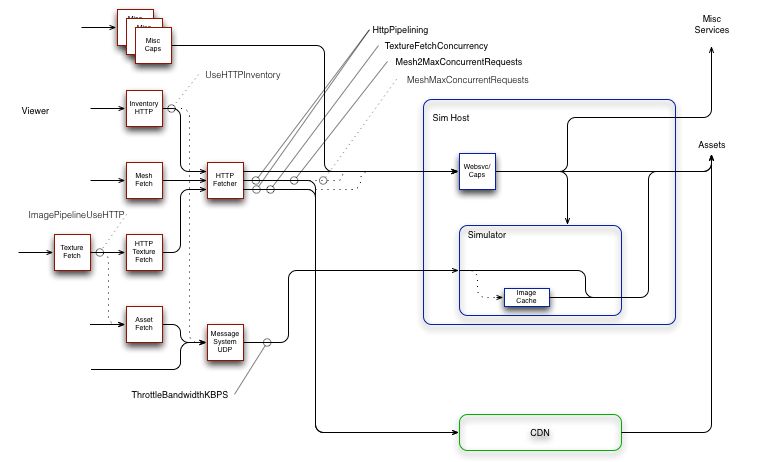
Writing on the forums, noted SL photographer Jackson Redstar recently asked meshmaxconcurrentrequests – does anybody know the real setting? In the ensuing debate, Monty Linden offered an updated overview of the SL network architecture.

Monty Linden's updated SL network diagram
Monty Linden’s updated SL network diagram

To borrow from Monty’s explanation:

  • On the left, in red, are pieces of the viewer; on the right, in blue are simhost/simulators and other backend services; at the bottom (green) are new CDN services
  • Solid lines with arrowheads are communication paths, either UDP or TCP/HTTP; dashed lines are legacy communication paths that are now or soon will be deprecated, obsoleted and/or deleted
  • Sold ball-and-stick indicators (e.g. TextureFetchConcurrency) indicate a viewer debug setting and the communication path or paths that setting influences; dashed ball-and-stick indicators (e.g. MeshMaxConcurrentRequests) indicate obsolete debug settings.

Monty goes on to say:

Generally, things are moving in the direction of simplification and less resource conflict.  The mesh and texture HTTP traffic, which is usually the greatest load, tends to part ways with the UDP traffic a few network hops after a user’s router or modem.  Lacking TCP’s throttling mechanism, UDP often wins in a fight (give-or-take the efforts of fairness algorithms along the path).  Allowing UDP to overrun the path between viewer and simulator does still degrade the experience and the bandwidth setting remains an effective tool for avoiding this problem.

Other settings should generally be left alone.  A lot of bad advice was spread around in the community in an effort to work around throughput problems.  We’re trying to undo that history and get back on track with more typical (albeit aggressive) HTTP patterns.

 Viewer Caching

During the Simulator UG meeting, Oz repeated a call he originally made at a TPV Developer meeting recently, asking that if there is developer wishing to volunteer for a “deep dive” into viewer caching, he’d like to hear from them.

While interest list updates made key changes to how the viewer’s cache is used, there are numerous issues which appear to be viewer-side caching related, so a deep investigation into the code could go further towards improving things.

One long-standing issue, which is thought to be caching related, is If someone uses a texture rezzed in-world same texture for a group profile image or their avatar profile image or in a profile pick, the object will never fully load the texture.

So, if you’re a developer willing to looking into viewer-side caching, Oz would like to hear from you.

Ebbe Altberg: “The Future of VR is User-Created” (a look at SL + Sansar from the VR perspective)

Now into its second year, the Silicon Valley Virtual Reality (SVVR) Conference opened on Monday, May 18th. Among the presentations and panel discussions that marked the day’s events was a 20 minute piece by Linden Lab CEO Ebbe Altberg, intriguingly entitled The Future of VR is User Created.

Ebbe Altberg: address the 2015 SVVR audience on May 18th, 2015

The presentation can be found in this official SVVR video, starting at the 39:00 mark. It was also recorded by Ruthalas Menovich, whose video I have taken the liberty of embedding below. Timestamps in the summary that follows in this article refer to Ruthalas’ video.

Those who may have been hoping to gain more of an insight into the Lab’s Next Generation Platform (aka Project SANSAR) will perhaps be disappointed by this presentation. As the title suggests, it isn’t so much focused on the Lab’s NGP, but rather on user generated content (UGC).

Thus, it forms something of an exploration of the potential of UGC within VR environments, as seen through the focusing lens of Second Life, and what Second Life has taught the Lab about some of the potential constraints posed by both supporting UGC and Second Life itself, which the Lab are now seeking to address. In doing so, it also touches upon some of the broader challenges facing platform providers as well, particularly in areas such as the state of VR technology itself, issues of monetisation for users, etc.

I’ll likely have some comments of my own on SANSAR in an upcoming article. For now however, I’m restricting this piece to a summary of Mr. Altberg’s presentation, with timestamps to the relevant points in Ruthalas’ video for those wishing to listen to them in full.

00:31 – 02:28: Democratising Content

The premise here is that the power of VR will be in democratising content – making VR such that those who wish to can create and share content among friends and audiences; not just necessarily in having it fed to consumers by high-end organisations with considerable technical skills.

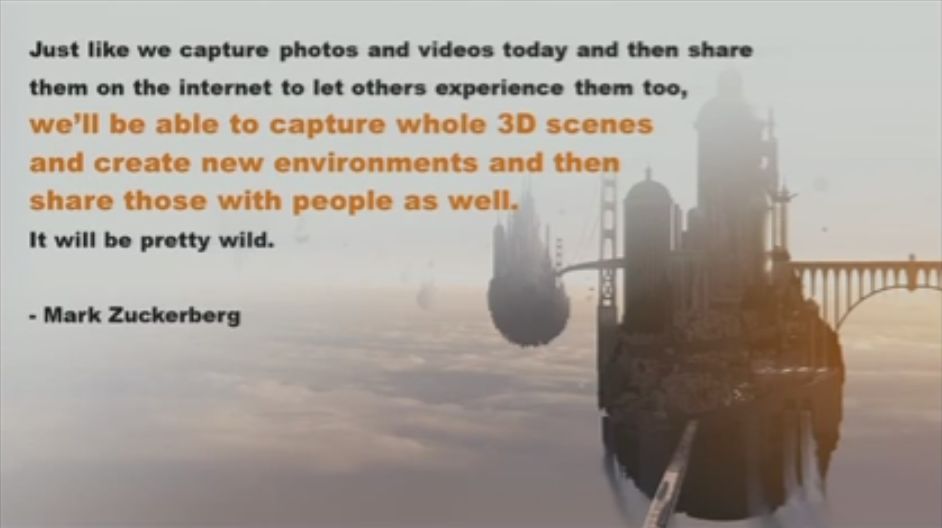
As a demonstration of this, he quotes Mark Zuckerberg, and points to the idea that just as self-expression is a natural part of our physical lives – how we decorate our homes, the clothes we wear, the interests we pursue – so too is it important for VR to allow us similar levels of self expression, such as through the freedom to create the environments we enjoy. In support of this view, he also points to the enormous popularity of sites on the Internet which today enable us to express ourselves through the content we crate, be it video, photography, the written word, or other mediums.

Mark Zuckerberg on VR's potential, quoted by Ebbe Altberg at SVVR
Mark Zuckerberg on VR’s potential, quoted by Ebbe Altberg at SVVR

02:28 – 14:30: UGC in Second Life and the challenges within SL

The focus moves on to Second Life and the challenges faced by anyone looking to enter the immersive VR environment with UGC.

Here he covers the rich diversity of user-generated content, which not only covers a huge range of interests and activities – social, educational, training, healthcare, business, entertainment, etc., and fulfils a massive variety of needs – homes, fashion, hobbies, landscaping, and so on -, but which is extraordinarily successful for both the company operating the platform and those providing the in-world content and services. In this he again cites the fact that in 2014, creators and providers redeemed some US $60 million from Second Life. The varying business models and their limitations – such as land – are mentioned.

The Lab’s work on making SL compatible with the Oculus Rift headset is touched upon, and a fair caveat is given on the aspect of performance. Ebbe notes that the work has to date really been more a useful tool for demonstrating to creators the difference between witnessing their creations on-screen and being immersed within them.

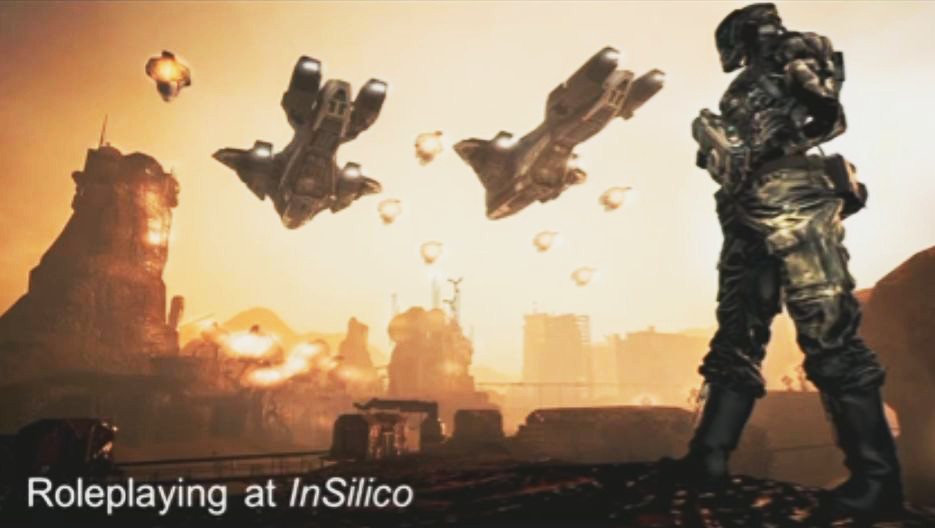
The InSilico RPG was mentioned to help illustrate the wide variety of SL content
The InSilico RPG was mentioned to help illustrate the wide variety of SL UGC

The limiting factors of Second Life are also discussed. Again, the land revenue model and its limitations (including scalability) are mentioned, as are the limits of region concurrency numbers and the challenges of trying to hold really large-scale gatherings in-world. The fact that user-generated content can itself be a problem is also mentioned; that users don’t necessarily know how to properly optimise their content to be efficient in terms of rendering and running, so the Lab will need to find a way to optimise that content.

Broader challenges in presenting an environment which allows everything that Second Life already does are also touched upon – such as issues of compliance and control given what are collectively vary large amounts of money flowing through the platform (with a GDP of half a billion US $ a year) supported through a floating exchange used to convert real-world currency into game tokens and back again, in order to ensure money laundering, etc., isn’t an issue.

Ease of use is also touch upon; not just in terms of SL’s own notorious learning curve, but also in the fact that VR itself is still very much a fluid environment in terms of technology and the devices which might be used within it – controllers, headsets, peripherals, etc – It simply isn’t clear (outside of head mounted displayed themselves) as to exactly what will come into commonplace use and what, out of all that is being suggested, developed, trialled or hyped, will fall by the wayside.

Continue reading “Ebbe Altberg: “The Future of VR is User-Created” (a look at SL + Sansar from the VR perspective)”

Caught in Eternal Suspense

The Eternal Suspense, Giovanna Cerise - LEA 21
The Eternal Suspense, Giovanna Cerise – LEA 21

The Eternal Suspense is the title of Giovanna Cecise’s latest full region installation now open at the Linden endowment for the Arts, as a part of the 8th round of the Artist in Residence programme.

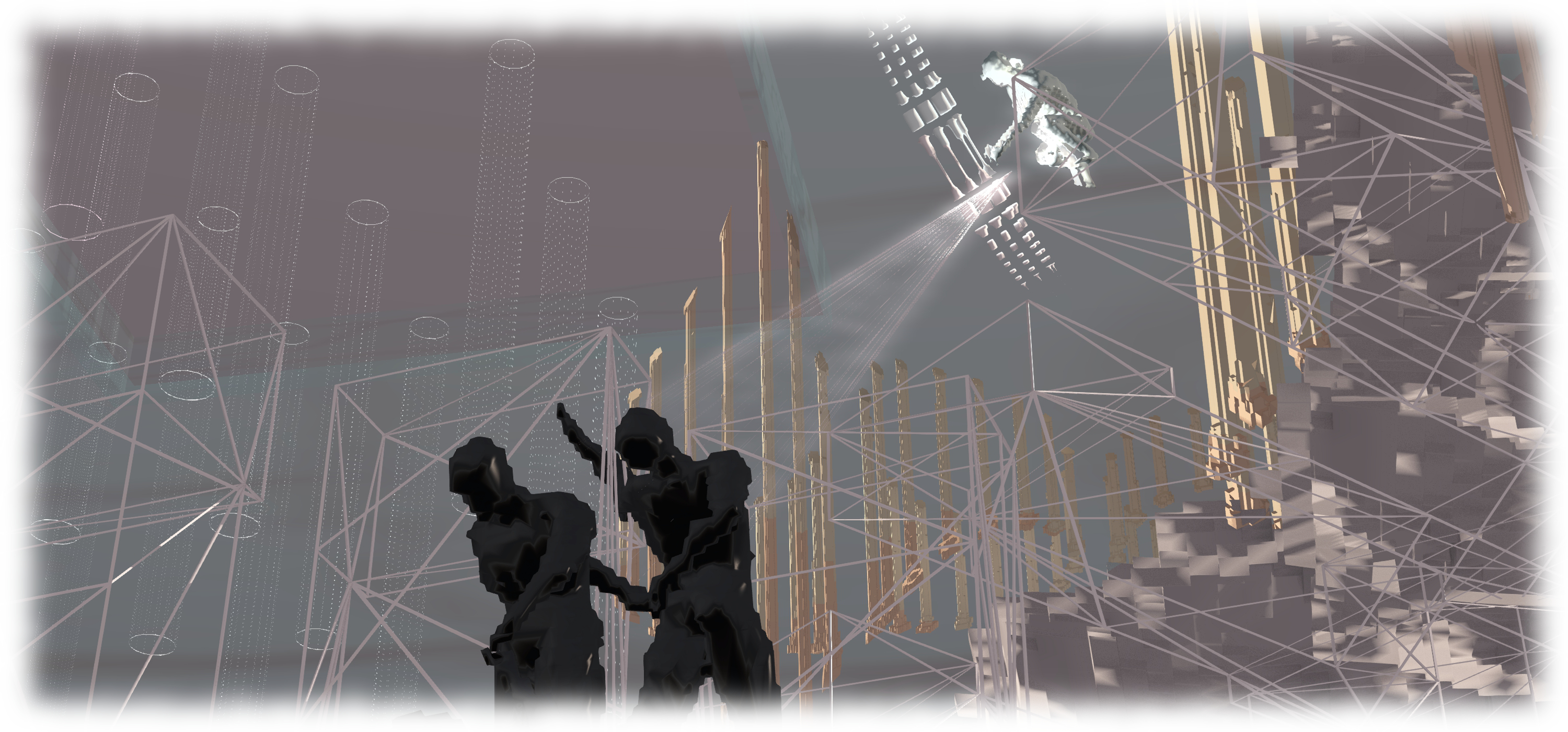
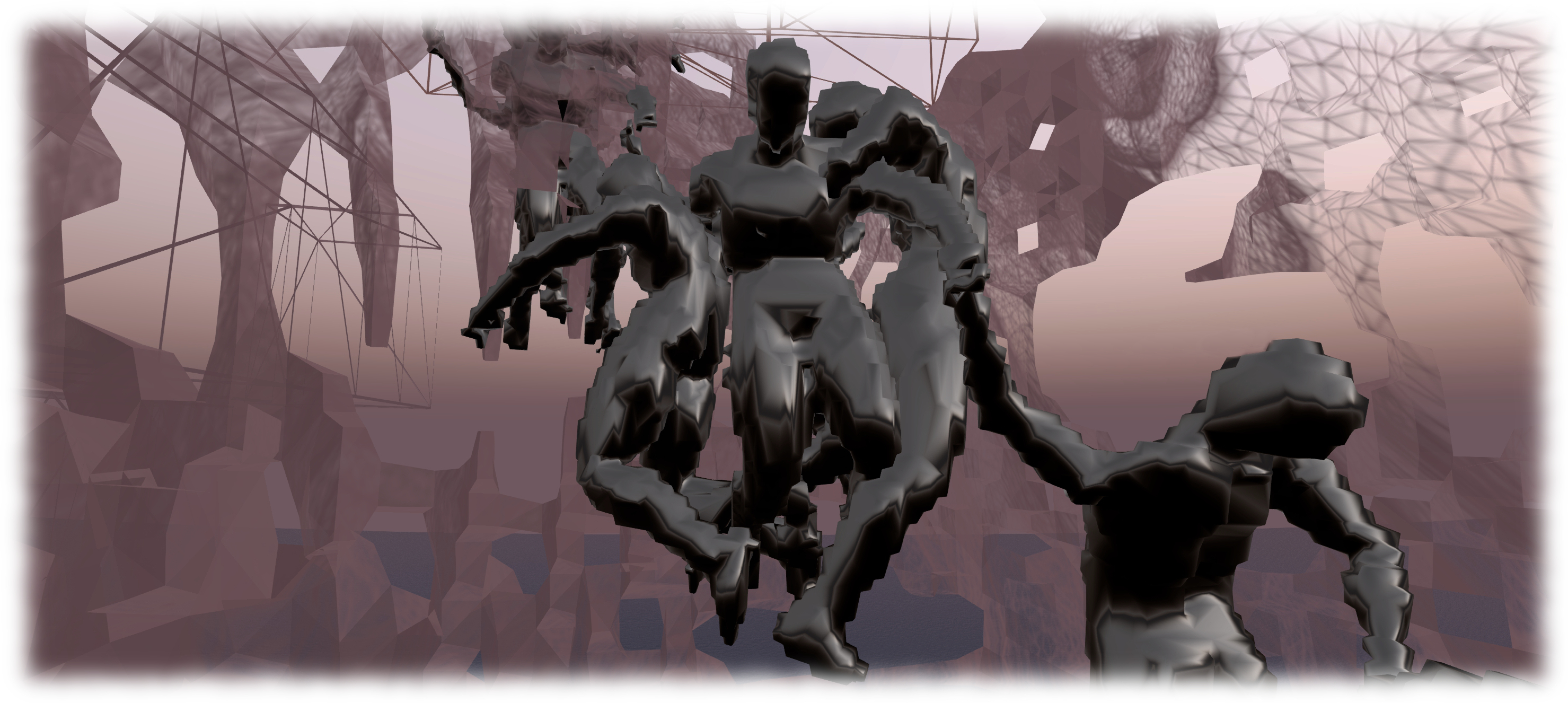
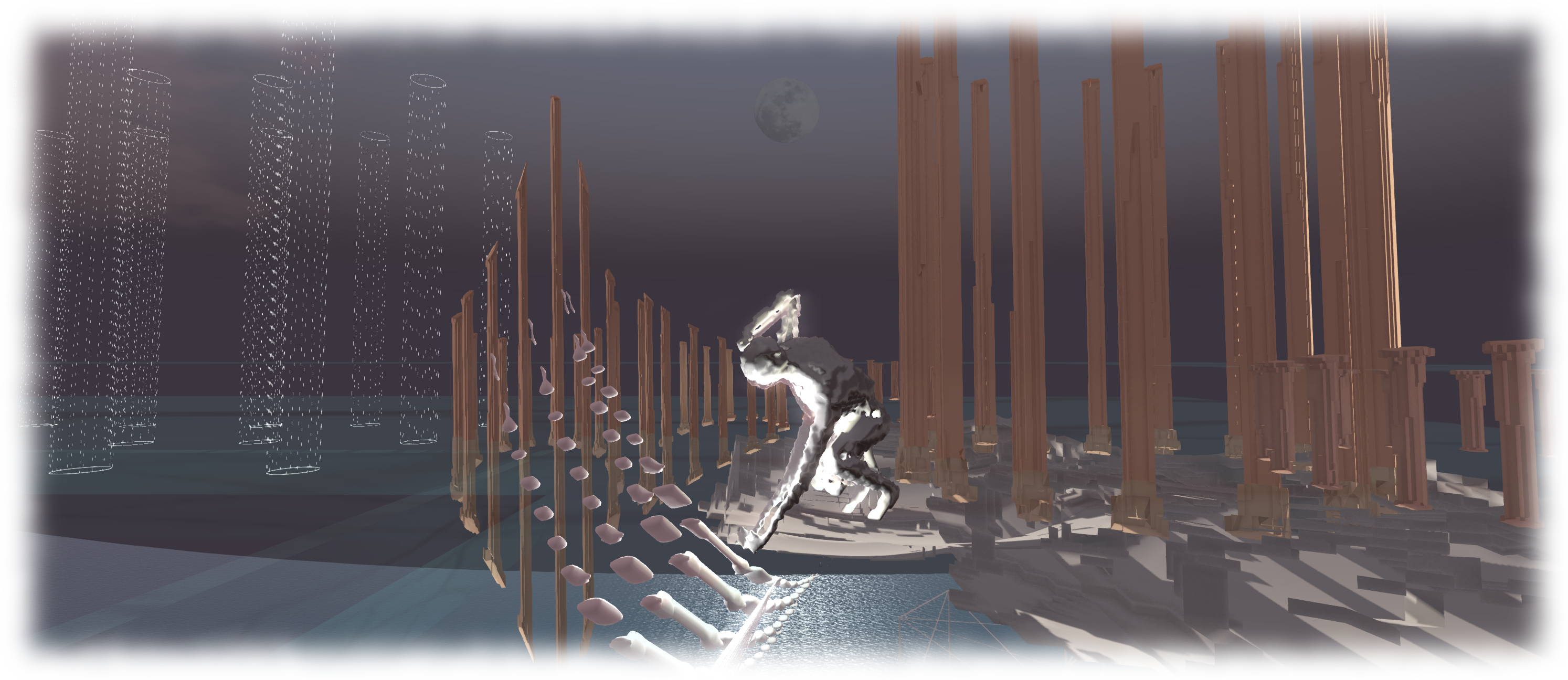
A complex piece mixing geometrical forms with human elements, the installation extends several hundred metres into the air, encompassing a number of distinct levels. Within the lattices and sphere which give a sense of order to the the build, there is also an element of disorder: human figures rising from the lowest platform, climbing the lattices upwards into the sky, stretching up towards a white figure crouched at the highest level.

The Eternal Suspense, Giovanna Cerise - LEA 21
The Eternal Suspense, Giovanna Cerise – LEA 21

Giovanna has taken as her theme the Apollonian and Dionysian philosophical dichotomy, perhaps most famously expounded within Friedrich Nietzsche in his 1871 study, The Birth of Tragedy. in which he examines the nature of Greek Tragedy before going on to use the Greek model to understand the state of modern culture.

The central concept of the Apollonian and Dionysian dichotomy is that Apollo is the god of reason and the rational, while Dionysus is the god of the irrational and chaos; therefore the core of all great tragedy grows out of the interplay between the differing world views they represent.

The Eternal Suspense, Giovanna Cerise - LEA 21
The Eternal Suspense, Giovanna Cerise – LEA 21

Within The Eternal Suspense Giovanna embodies and interprets this concept artistically. “Man is poised between two or more emotions, he is always in a delicate step,” she states, “in a hazardous environment. Its location is never easy, he is a tightrope imprisoned in constant tension between his Dionysian side and the Apollonian one. But [do] you have really to choose? Or you have really to find a balance?”

Thus, this interplay is defined between the lattice (ordered and rational) and the mass of figures climbing it (disorder, chaotic). But it also runs deeper. The figures themselves are rising from a scene somewhat chaotic in nature, with what appears to be roiling waves (or perhaps flames) mixed with revelry; but while their ascent up through the lattice may seem chaotic, it is both purposeful (rational) and encompasses cooperation (order), the figures all assisting one another. Thus the tension we can experience in trying to find a balance between our Apollonian and Dionysian “sides” is embodied in their form and efforts.

The Eternal Suspense, Giovanna Cerise - LEA 21
The Eternal Suspense, Giovanna Cerise – LEA 21

To get around the work, you can either fly, or use the teleport spinning tops (the first is located at the landing point). Right click on them and select TELEPORT, and they take you up through each level. Giovanna recommends a sunset windlight for the piece; I’d actually suggest something more towards a dusk level of lighting.

The Eternal Suspense will be open through until the end of June 2015.

2015 viewer release summaries: week 20

Updates for the week ending: Sunday, May 17th, 2015

This summary is published every Monday, and is a list of SL viewer / client releases (official and TPV) made during the previous week. When reading it, please note:

  • It is based on my Current Viewer Releases Page, a list of all Second Life viewers and clients that are in popular use (and of which I am aware), and which are recognised as adhering to the TPV Policy. This page includes comprehensive links to download pages, blog notes, release notes, etc., as well as links to any / all reviews of specific viewers / clients made within this blog
  • By its nature, this summary presented here will always be in arrears, please refer to the Current Viewer Release Page for more up-to-date information.

Official LL Viewers

LL Viewer Resources

Third-party Viewers

V3-style

  • UKanDo updated on Windows to version 3.7.28.34230 Beta on May 11th – core updates: Viewer-Managed Marketplace – release notes

V1-style

  • Cool VL Viewer Stable branch updated to version 1.26.12.43, and the Experimental branch to version 1.26.13.12 both on May 16th (release notes)

Mobile / Other Clients

  • No updates.

Additional TPV Resources

Related Links

Nightfall madness, magic from the marsh and a galaxy far, far, away

It’s time to kick-off another week of fabulous story-telling in voice, brought to our virtual lives by the staff and volunteers at the Seanchai Library.

As always, all times SLT, and unless otherwise stated, events will be held on the Seanchai Library’s home on Imagination Island.

Sunday, May 17th, 18:00: The Reluctant Dragon

With Caledonia Skytower at Magicland Park.

Monday May 18th, 19:00: Nightfall

NightfallGyro Muggins opens the pages of Isaac Asimov’s 1941 short story.

Lagash (or Kalgash, in the novel-length version of the story as penned by Asimov and Robert Silverberg) is a planet orbiting a sun in a close-knit cluster of six stars, such that total darkness is almost never known, and the illumination of the six stars is such that it blots out any view of the cosmos beyond the cluster.

It is also a planet with a strange history; just over every 2,000 years, it appears that civilisation collapses in a huge conflagration. But why? Slowly, a number of scientists uncover the truth: once every 2049 another object orbiting Lagash’s primary star causes a total eclipse as see from the surface of the planet, removing much of the planet’s light, and bringing forth a very brief night.

Thus the theory is born that when these eclipses occur, civilisation goes mad, setting fire to almost everything in order to “bring back the light”, destroying itself in the process. With another eclipse approaching, the scientists set about preparing themselves and the people for the coming Nightfall. 

Only when it does come, they discover it is not the darkness which causes madness…

Tuesday May 19th, 19:00: New voices Potpourri

An evening sharing some voices not, perhaps, new to the story floor, and other who are making their debut reading at Seanchai Library tonight. Featuring: Bhelanna Blaze, Arletta Martian, Stranger Nightfire, and Trolley Trollop.

Wednesday May 20th

06:00: Forever Erma

Erma BombeckErma Bombeck achieved great popularity for her newspaper column that described suburban home life from the mid-1960s until the late 1990s. She also published 15 books, most of which became bestsellers. From 1965 to 1996, Erma Bombeck wrote over 4,000 newspaper columns, using broad and sometimes eloquent humour, chronicling the ordinary life of a mid-western suburban housewife. By the 1970s, her columns were read twice-weekly by 30 million readers of the 900 newspapers in the U.S. and Canada

Join Freda Frostbite and Trolly Trollop as the delve into Erma’s wit and wisdom of everyday life.

19:00: Christie’s Detectives

Join Caledonia Skytower as she presents short stories featuring Agatha Christe’s beloved detectives: Parker Pyne, Jane Marple and Hercule Poirot.

Thursday May 21st, 19:00: Marsh Magic

Shandon Loring opens the covers of Silver Birch, Blood Moon, the anthology of fairy tales re-written for an adult audience and this week dips into Marsh-Magic by Robin McKinley. Drawing on the story of Rumplestiltskin.

In a far-away land, a fragile peace is maintained between a kingdom and the magical folk of the marshes he story features a kingdom where peace is maintained by a bargain struck between the king and a tribe of magical people dwelling in the marshes. The bargain means that as each new king comes of age, he will be wed to a bride selected from the marsh people by his royal advisor. To the people of the marsh, the arrangement appears to be increasingly one-sided, so when one of their women is selected for the most recent king, and decides on a subtle form of revenge for all those who had come before her…

Saturday May 23rd, 12:00 Noon, Seanchai Kitely: Star Wars Saturday

So, where were you in 1977?  Do you remember the first time you saw the first film?  The first 25 times you saw the first film?  Maybe you have never seen it at all.  Join Caledonia on Seanchai Library’s Spaceworld to enjoy for the first time (or re-live the joy) of those first adventures from an edition penned by Director George Lucas himself!

With Shandon Loring at Seanchai Kitely (grid.kitely.com:8002/Inis Eirc).

—–

Please check with the Seanchai Library SL’s blog for updates and for additions or changes to the week’s schedule. The featured charity for April / May is Habitat for Humanity, with a vision of a world where everyone has a decent place to live – a safe and clean place to call home.

Related Links