Ebbe Altberg talks Second Life, Sansar and VR to Bloomberg

A promotional image for Project SANSAR

On June 15th 2015, Ebbe Altberg participated in a Bloomberg Advantage podcast with hosts Cory Johnson and Carol Massar, discussing what is going on with Linden Lab in the run-up to the Second Life 12th anniversary celebrations.

The interview, which is some eight minutes long, unsurprisingly focused more on VR and its pcoming consumer focused headsets, together withe the Lab’s Next Generation Platform (codenamed Sansar) more than it did on Second Life, but what is said makes for interesting listening.

I’ve embedded an MP3 of the interview below, together with a transcript of the core discussion for those who prefer to read than listen. The transcript picks -up from the 28 second point into the interview, following general introductions. Breaks in the transcript, indicated by “…” are where the conversation includes asides or comments outside of immediate interest.


Cory Johnson (CJ): I want to talk about what’s going on with one of the kings of virtual reality, Second Life.

Ebbe Altberg (EA): Yeah. Second Life is still doing very well. It’s this month having its 12th birthday…

Carol Massar (CM): OK for those who might not know what Second Life is, those from the East Coast (laughter) I’m raising my hand for everyone on radio. Just for other folks out there who might not know.

Bloomberg's Carol Massar and Cory Johnson talk VR, SL and Sansar with Ebbe Altberg
Bloomberg’s Carol Massar and Cory Johnson talk VR, SL and Sansar with Ebbe Altberg

EA: So, Second Life is a virtual world that we created, but all the content and all the experiences in it are created by the users. so it’s a little like the real world … So you have a huge range of experiences in their ranging from role-playing to education, to health to art, and music. Just like in real life, people like to have all sorts of things in their world, and users have created all these things inside of Second Life.

And there’s a virtual economy where users can buy and sell digital goods and services to each other, and last year alone, creators of content and experiences in Second Life cashed out $60 million dollars. So a lot of people make a living creating and playing in Second Life.

CM: Where do you want to take it?

EA: We’re like the pioneers in this area, and the world around us is starting to catch-up a little bit …

CM: Competition out there?

EA: Yeah, a little bit of competition, but also with all these virtual reality headsets, these HMDs from Oculus, etc., is going to allow us and many others to take it to the next level. So we’re really excited about what’s happening right now, and we’re been hard at work for well over a year, investing heavily in a new platform  from the ground up that will take advantage of virtual reality hardware as it comes out later this year and early next year.  So we want to make sure we remain in a leading position when it comes to virtual reality experiences.

CJ: Well let’s talk about this a little bit. So Oculus sort-of has mind share, at least. When people talk about virtual reality now, then tend to think of these goggle-like experiences from Oculus. [But] there’s been academic work, particularly out of Stanford, suggesting that game-play might not be the thing; that it’s so immersive that it’s exhausting. That people can sit in front of their Xbox or PlayStation for 4, 6, or eight hours, but that you can’t do that with Oculus. What do you think?

EA: I think you will be able to. Part of why people say that is because the quality quality of the experience hasn’t quite got there yet.

CJ: So you’re looking at an image where your mind and your eye have to do so much more work, that it’s physically exhausting.

EA: No … when you see the latest generation of these things coming out now, it is not that exhausting any more; it’s actually quite relaxing.  You put these things on, an you’re wherever you want to be; you can be anybody you want to be and anywhere you want to be. And it’s it’s going to be comfortable …

CJ: The thing about when you put an Oculus goggles set on … first of all, the software right now is kind-of boring. The stuff that I’ve seen isn’t really gripping. It’s like, “Oh, this is cool. Imagine what you could do with it…”

EA: Did you try the Crescent Bay and the demos that came with it?

CJ: I haven’t done that.

EA: OK, so [with] the latest generation … you’ll forget about the hardware, you’ll forget about these pixels in front of you. You’re just there.

CJ: What is the experience you’re experiencing with that?

EA:  They’re still passive; they’re still basically playing things for you, that you watched. And you will have video-like experiences, but in 360; so you’re inside the video, rather than looking at the video, all the way to like what we do, which is social interaction and doing things like we’re doing right now in the studio, just hanging-out, meeting with people.

CM: Well, let me ask you Ebbe, I’ve been at Caterpillar and I’ve done their 3D world, or virtual reality world, where you pretend you’re in one of their big pieces of equipment to see how it worked and if the tools were in the right place. That’s my experience with it.  what about in a practical world? Are there applications that you guys are looking at?

A part of the interactive learning environment operated by Wendy Keeney-Kennicutt as part of the Texas A&M chemistry studies in SL
A part of the interactive learning environment operated by Wendy Keeney-Kennicutt as part of the Texas A&M chemistry studies in SL, and referred to in the interview (read more here)

EA: Absolutely, and they’re happening already today. Texas A&M is teaching chemistry in Second Life, and there are a lot of educational opportunities to teach …

CJ: How so? Is it, “pour this file into this beaker, but if it blows up, you’ll blow somebody up”? Or is it, you’re seeing the DNA or molecules?

EA: It’s a combination of actually doing lab experiments and pouring liquids and seeing what happens, as well as being able to interact with molecules, and you can sit on them, and you can do anything you want. So the ability to visualise information is way more powerful than reading it from a text book or watching it from a video.

CM: Is that potentially a big market there for you guys? Or Healthcare? We’ve just briefly toured around Seagull, and they’ve got a whole idea about what you’ve just called about; virtual reality and doing surgery, and having virtual reality to help a surgeon in that process.

EA: Yeah, it can can be for training, or it can help people with both mental and physical disabilities of all kinds. In Second Life already we have this older woman who has Parkinson’s; and because of Second Life she can run around, swim, fly, and exercise her brain. And because of that, she’s found that she has an easier way of moving in real life. So it can have a lot of really powerful impact on treatment or all kinds of phobias. I mean, right now here in our Lab, you can be on top of the golden Gate bridge and just get a sense of height …

In the interview, Ebbe Altberg indicates that one of the test VR experiences the Lab has developed for Project Sansar puts people on top of the Golden Gate bridge in San Francisco (view via wdievisionpans.com)
In the interview, Ebbe Altberg indicates that one of the test VR experiences the Lab has developed for Project Sansar puts people on top of the Golden Gate bridge in San Francisco (note: the above is not from Sansar, it is an image courtesy of wdievisionpans.com)

CJ: So, specifically, how do you manage the game play of Second Life? If you were to describe something that is the “common” Second Life experience now, and then what it would be like in this more augmented, 3D world of Oculus or whatever?

EA: Well, it’s taking immersion to a whole other level, where the brain starts not being able to tell the difference between what’s virtual and what’s real. And we take people through experiences in this next generation platform we’re working on – we’re calling it “Project Sansar” right now, it doesn’t have a final name. But you have people that are afraid of heights, for example, just getting really freaked out by being in the virtual space.

For example, Jeremy Bailenson of [the Virtual Human Interaction Lab at] Stanford … When he removes the floor underneath you in his Lab and tells you to walk this plank over this abyss, 30% of the people doing that in his lab cannot cannot walk the plank, it feels that real.

CM: I was thinking about the rides in Disney World or whatever; they can use this stuff.

EA: Oh yeah, they will!

CM: Cool stuff!

At his point the interview quickly wound down with the end of the podcast.

Again, not much is given away about the Lab’s Next generation Platform, and little is said in detail about Second Life. However, both Nassar and Johnson exhibit genuine interest in the subject of virtual environments and virtual reality, and to their credit don’t fall into the clichéd trap we’re all (or most of us at least) are so tired of hearing.

What is interesting to me is the the framing of the commentary around Sansar and the Golden Gate demonstration. This suggests that the Lab is creating something where the content potentially has a far higher level of fidelity than can perhaps be achieved with Second Life when placed within the immersive context of something like the Oculus Rift.

The message that Linden Lab is attempting to position itself as a major player in the emerging VR market does seem to be getting out. A recent report in Investor’s Business Daily, which estimates the potential market for VR / AR devices, etc., could hit US $62 billion by 2025, lists Linden Lab alongside of Valve, Magic Leap, Next VR, Jaunt VR and others as one of the private companies looking to carve itself a share of that market.
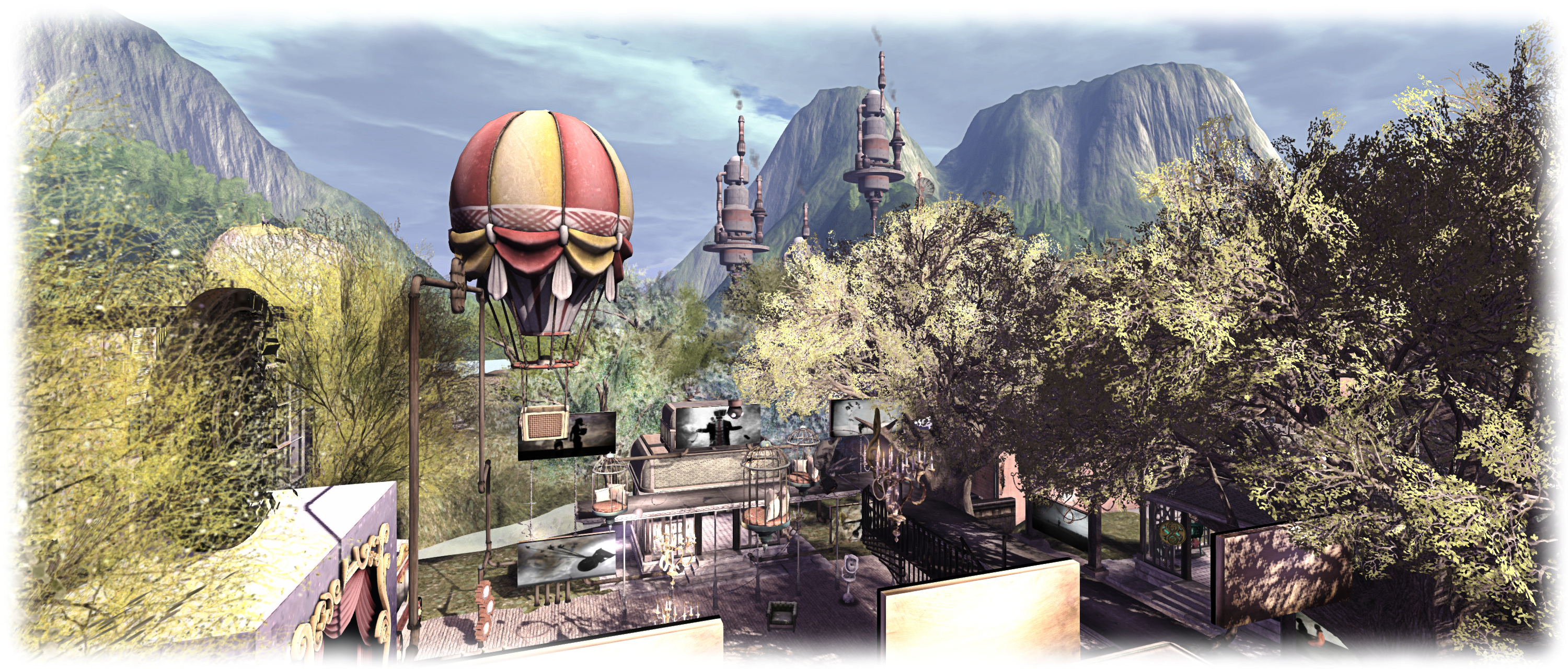
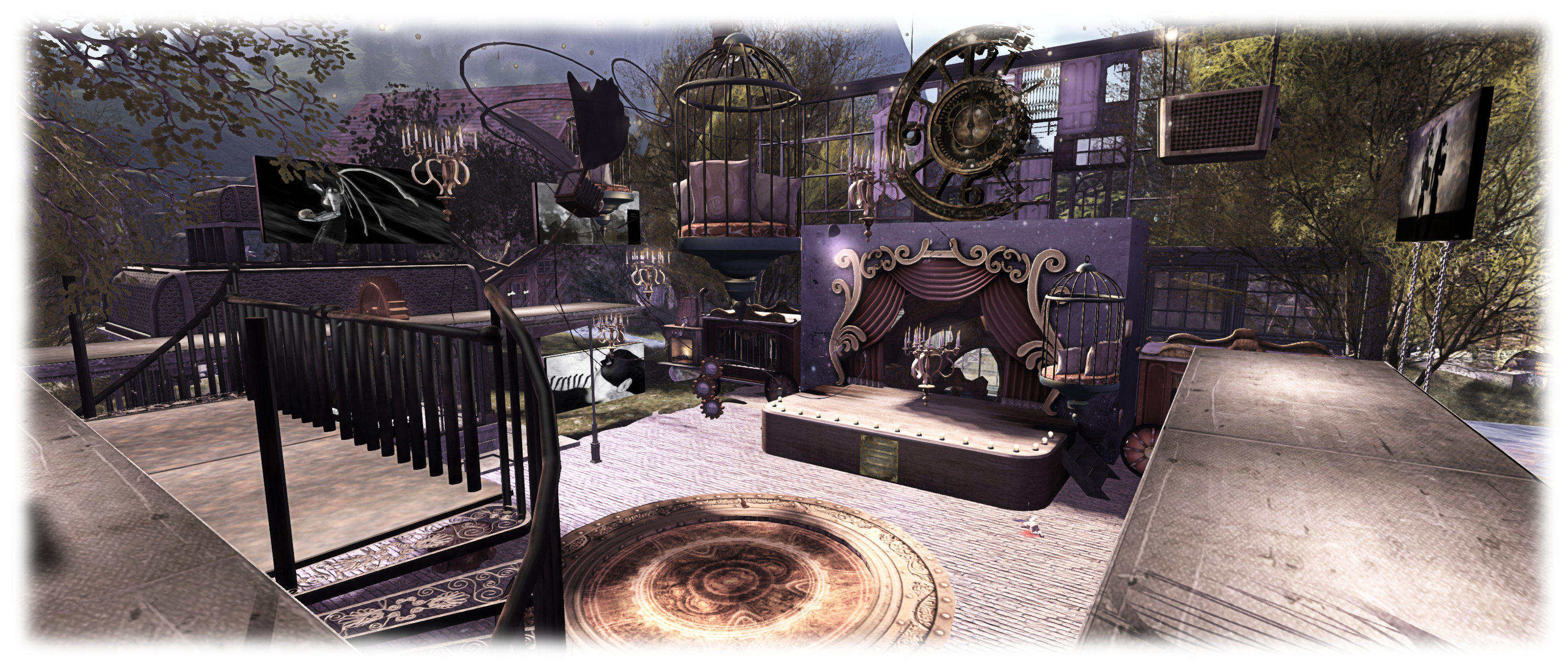
A Carnival of the Arts: celebrating 2 years in Second Life

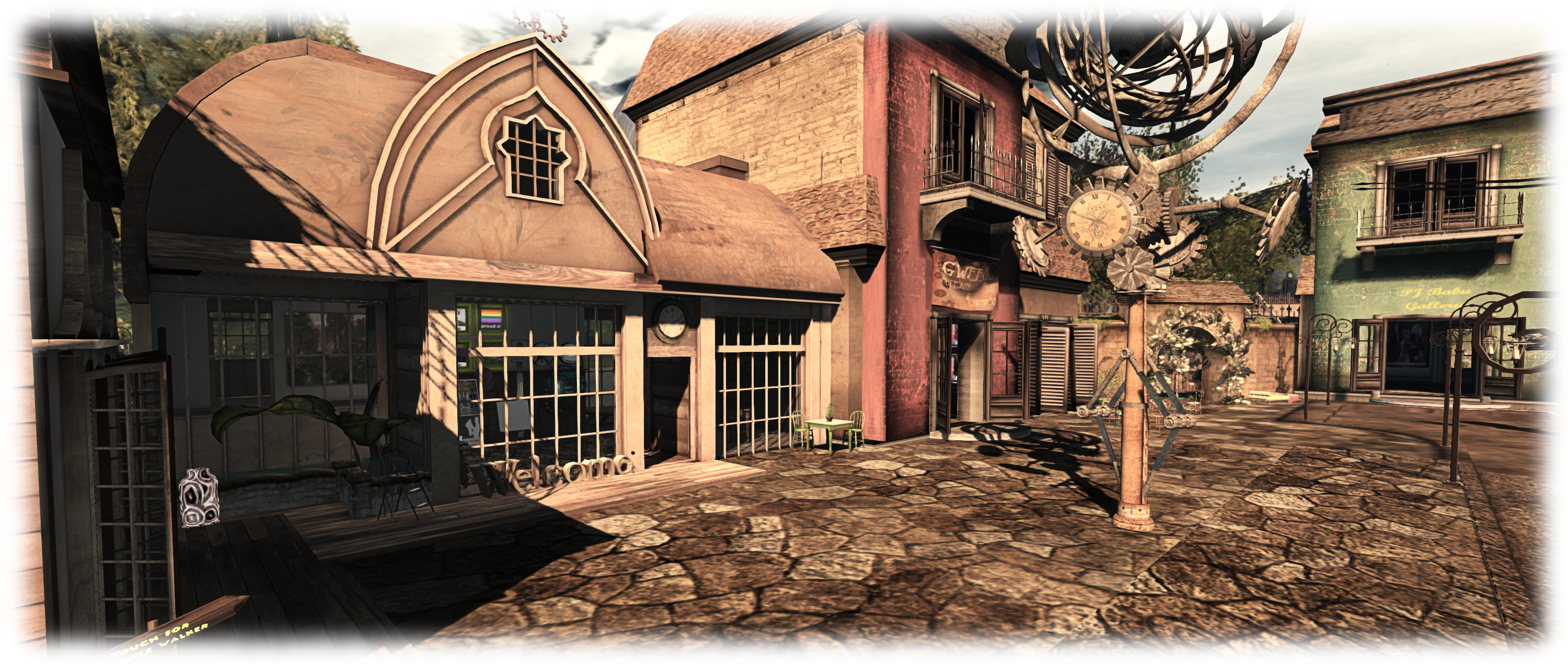
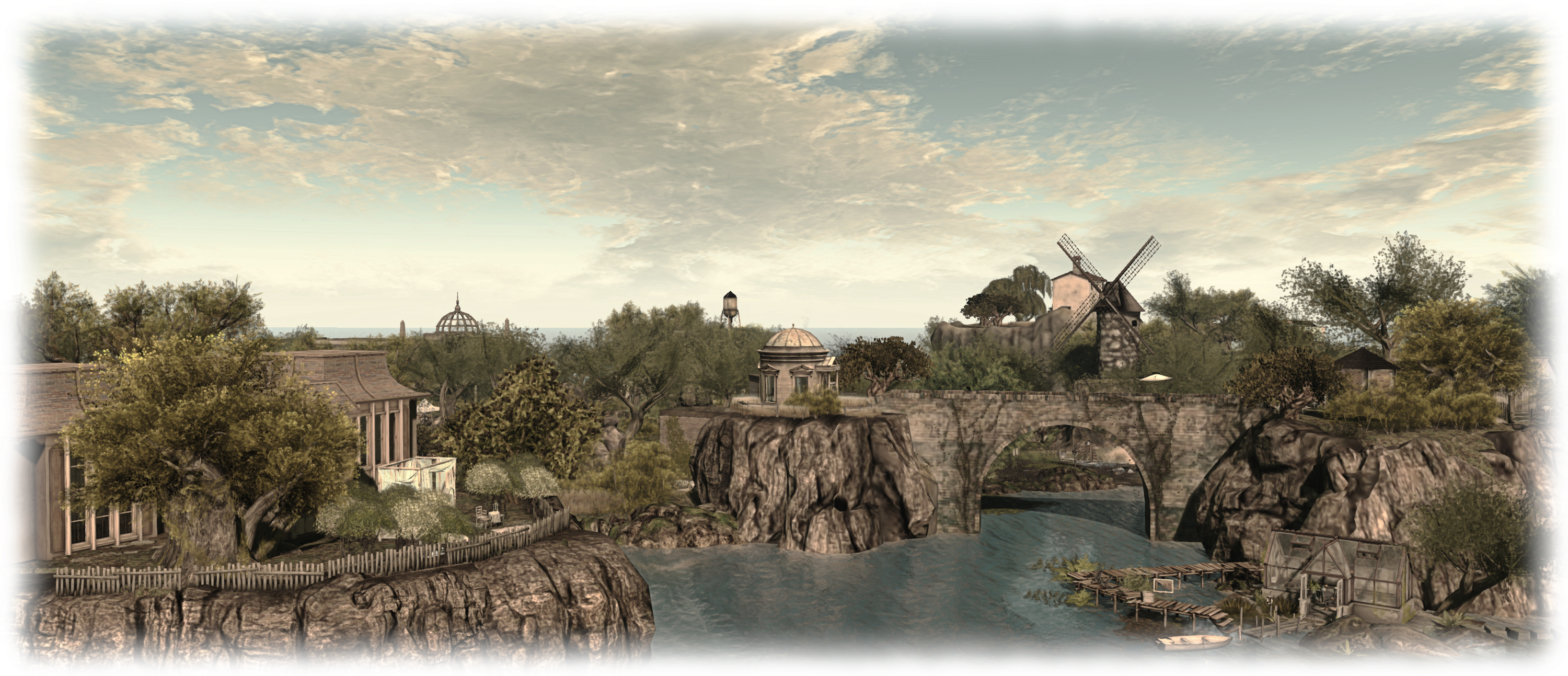
Jasmine's Hollow; Inara Pey, June 2015, on Flickr Jasmine’s Hollow (Flickr) – click an image for full size

Two years ago I visited Jasmine’s Hollow and the Dirty Grind for the first time (you can read about my visit here). Back then it was relatively new to Second Life, offering a community environment blending a mix of styles – rural, small town, steampunk – presenting a mix of residential accommodation, music and entertainment and photographic opportunities, all of which came together to present a rich environment, pleasing to the eye and pleasant to visit.

Since that time, Jasmine’s Hollow and the Dirty Grind have grown into an arts-centric community run by Lisa Witterdoodlesteinbeauchamp (aka (jasmine0alaya) and her partner, Ian Witterdoodlesteinbeauchamp (Ian McConach), offering a unique environment in which live music and the arts are actively encouraged and promoted.

Jasmine's Hollow; Inara Pey, June 2015, on Flickr Jasmine’s Hollow (Flickr

To mark the community’s second anniversary, Jasmine’s Hollow and the Dirty Grind is hosting a special 4-day celebration between Thursday, June 18th, and Sunday, June 21st. A Carnival of the Arts will kick-off at The Dirty Grind at 16:00 SLT on Thursday, June 18th, and features live music throughout the weekend, and the work of featured artist, Sina Souza.

While there may be further changes to the schedule (so please check with the official website), at the time of writing the music line-up for the celebrations was as follows (all times SLT):

Thurs 18 June Fri 19 June Sat 20 June Sun 21 June
16:00: KatRose 15:00: Suzen JueL 15:00: Kiesta Aljon 14:00: The Matthew Show
17:00: David Csiszer 16:00: Gypsy Dhrua 16:00: Bat Masters 15:00: Frytown Toughs
18:00: Phemie Alcott 17:00: Neomaximus Brandenburg 17:00: Wald Schridde 16:00: Effinjay
19:00: Anidi Huet 18:00: Winston Ackland 18:00: Shannon Oherlihy 17:00: Beth Odets
20:00: Senjata Witt 19:00: Grace McDunnough 19:00: DJ Chry 18:00: Kinagree Smith
21:00: Gweeb 20:00: Ren & Quai  19:00: Reggie Sunset

Jasmine's Hollow; Inara Pey, June 2015, on Flickr Jasmine’s Hollow (Flickr)

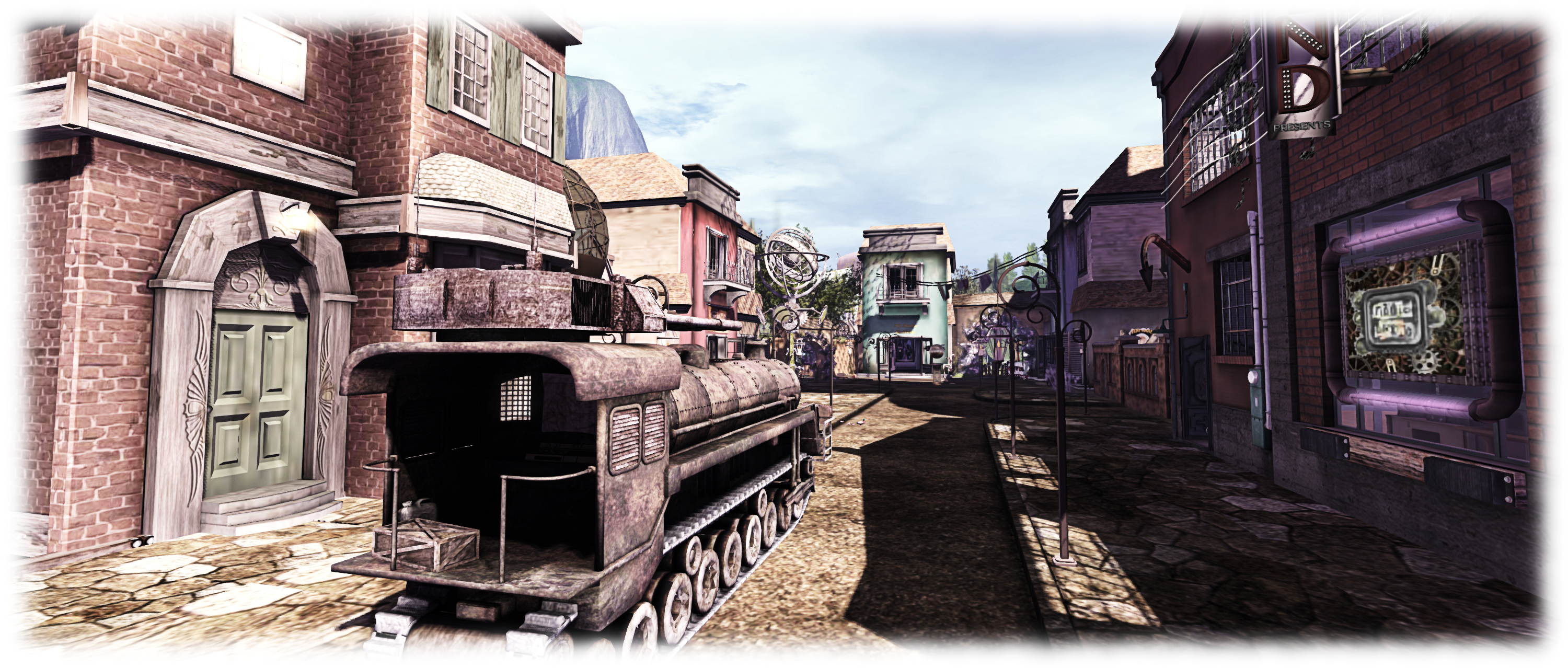
Much has changed in Jasmine’s Hollow since my original post. The rental properties are still there, including the delightful LAQ cottage sitting on a tree platform, but the little town has seen various changes over the years, and there is now a wonderful airship “tram” plying between the ground and aerial locations (The Dirty Grind itself and a quaint old wooden roller coaster). An armoured train appears to be guarding the tram station at ground level, but don’t let it intimidate you! 🙂 .

Radio Grind has a warehouse-like HQ in the region, and you can tune-in to broadcasts via Shoutcast,  or pop inside and use the listening booths to catch the singers and musicians within the community singing through a variety of websites.

Jasmine’s Hollow remains a great place to visit, steeped as it is in music, and with a strong support for art. As a photogenic location, it has a lot to offer visitors, and makes for an enjoyable (and entertaining) visit. So why not find a little time over the weekend to hop over to wish Lisa, Ian and the team a happy anniversary?

Jasmine's Hollow; Inara Pey, June 2015, on Flickr Jasmine’s Hollow (Flickr)

Additional Links

A small pilgrimage in Second Life

The Tabard Inn, Second Life - your starting point for your very own Canterbury Tales pilgrimage
The Tabard Inn, Second Life – your starting point for your very own Canterbury Tales pilgrimage

One of the books I genuinely fell in love with whilst studying literature at school was Chaucer’s Canterbury Tales, the story of a group of pilgrims en route to Canterbury Cathedral and the tomb of Saint Thomas Becket, and the tales they tell one another in order to pass the time on their journey.

Now, courtesy of Desideria Stockton and Royce Sommer, Second Life residents can go on a pilgrimage of their own and enjoy an introduction to the Canterbury Tales and the life and times of Geoffrey Chaucer through their Canterbury Tales Virtual Pilgrimage.

A part of the non-profit Literature Alive! project run by Desideria and Royce, Canterbury Tales Virtual Pilgrimage is a modest, but engrossing activity using point-and-click to inform people about Chaucer, the society of his day, religious views, science, justice, the social classes and so on. Most of this can be obtained within the walls of the Tabard Inn, where in the book, the teller of the best tale will be rewarded with a free meal. It is also at the Inn that one can learn something of Thomas Becket, the 12th Century Archbishop of Canterbury, the reason for the pilgrims’ journey.

Find the crosses to read about 12 of the Tales, then reward yourself with a little prize from a treasure chest for each tale

It is in the tavern that the Prologue to The Canterbury Tales can be read (in Middle English, if you like!), which acts as a good lead-in to the rest of the activity. Scattered around the grounds of the Inn are 12 wooden crosses, each one with its own treasure chest nearby. Touch the cross, and you’ll receive a synopsis of one of the Tales. Then, touch the chest if you like, and correctly answer the question it asks about the tale you’ve just read, and you can gain a little prize.

While it may sound simple, Canterbury Tales Virtual Pilgrimage is a great introduction to Chaucer’s book, the synopsis of each tale perfectly capturing its essence and, where appropriate, its humour – many of Chaucer’s pilgrims were a bawdy lot!  I confess to experiencing a flashback to classroom sniggering in reading the outline of The Millers Tale, the humour is so well captured. Also, the mix of tales presented through the virtual pilgrimage captures some of  Chaucer’s ironic finger poking at the social strata of his day.

This is the first of two new projects under the Literature Alive! banner, and I admit to enjoying my meandering through the tall grass of a summer’s field and reading the synopses. Their second is set to be The House of Usher at the SL12B Community Celebration, and I’ll be keeping an eye out for it!

SLurl Details

Alchemy 3.8.0: Experience this, and colour that

Alchemy-logoUpdate: Drake Arconis has pointed-out an inaccuracy in the original version of this review in relation top the Avatar Hover Height slider and spinner. I’ve now corrected the article to reflect his feedback.

Alchemy released their latest beta viewer on Tuesday, June 16th. Version 3.8.0.35816 is described as “another step in the road to Alchemy’s first major release and includes hundreds of new fixes and improvements over it’s predecessors.”

Quite what all the fixes and improvements are is a little hard to tell without pouring over this and the last release, as the release notes are light on details – assuming the “hundreds” in the description for the release is not hyperbole. Ergo, this review is more a set of highlights for the release.

What we do know is that this beta brings Alchemy right up to date with the Lab’s most recent 3.7.30 code base, and includes the Experience Tools updates (which, as they are at RC status in the official viewer, and there are no known issues with them, are ripe for incorporation in RPVs).

Installation

The viewer comes in Windows 32/64-bit, a Mac universal 32/64 bit and Linux 64-bit flavours via the download page, However, some Windows users may see the following message when trying to run the viewer:

The application was unable to start correctly (0xc000007b)

As per the Alchemy release notes, should this happen, please download and install one of the following two files from Microsoft:

(The above links will take you to the respective download pages at Microsoft, where you can review the file details prior to downloading.)

Experiences

Alchemy 3.8.0 supports the Lab’s new Experience Keys / Tools. This means that when you visit a location using the Experience Keys capabilities, you will receive complete information on the Experience and the permissions it requires you to give in order to join it, as opposed to the brief summary which is displayed by viewers that do not currently have the Experience Keys code included in them.

In addition, it also means you can review the details of the experiences you have joined, and those to which you may have contributed, through the Experience floaters, accessed via Me > Experiences.

Alchemy now includes support for Experience Keys, allowing users to see full details of an experience and the permissions it is requesting (l), use the persmisions floater to search for experiences and review the details of those they've joineed / to which they have contributed or those they own (c) and review the details of individual Experiences they've joined (r)
Alchemy now includes support for Experience Keys, allowing users to see full details of an experience and the permissions it is requesting (l), use the permissions floater to search for experiences and review the details of those they’ve joined / to which they have contributed or those they own (c) and review the details of individual Experiences they’ve joined (r)

For details on Second Life experiences, please read my early review of the official experiences release candidate viewer (note a more updated review of Experience Keys will be produced when the capability has been formally rolled-out).

Avatar Hover Height

Hover
The Avatar Hover Height slider / spinner can be found in Alchemy’s Quick Preferences

Alchemy 3.8.0 includes the on-the-fly Avatar Hover Height capability from the Lab. However, rather than being a slider / spinner control accessed from the avatar right-click context menu, it has been implemented as a chat command: “/hover”, followed by the amount by which you wish to adjust your avatar’s apparent height. For example, “/hover 0.1” will raise your avatar’s apparent height by 0.1 metres, and “/hover -0.1” will decrease you avatar’s apparent height by the same amount.

Update: As noted in the comment from Drake Arconis, the slider for Avatar Hover Height can be found on the Alchemy Quick Preferences (use the cog at the top right of the screen to display – see above right right or the floater itself).

Continue reading “Alchemy 3.8.0: Experience this, and colour that”

Second Life project updates week 25/1: server, viewer

Flux Sur Mer; Inara Pey, June 2015, on Flickr Flux Sur Mer (Flickr) – blog post

Server Deployments Week 25

As always, please refer to the server deployment thread for the latest updates / news.

  • On Tuesday, June 16th, the Main (SLS) channel received the server maintenance package previously deployed to the three RC channels, comprising further Internal server logging changes.
  • There will be no deployment or restart to the three RC channels on Wednesday, June 17th.

SL Viewer

On Friday, June 12th, the Lab issued a new viewer directly to release status. Version 3.7.29.302599 offers no functional changes to the the previous release viewer, but does include two DLL files – MSVCP100.DLL and MSVCR100.DLL which were missing from the Windows version of the viewer, and as a result causing problems for some users by their absence.

As a result of this release, the Attachment fixes RC viewer (Project Big Bird) RC viewer updated to version 3.7.31.302640 on Tuesday, June 16th, and the Experience Tools viewer updated to version 3.8.0.302622.

An “obsolete platform viewer” has also been issued by the Lab. Version 3.7.28.300847 of the viewer is a “static” release of the viewer which is aimed at providing users on Windows XP or versions of OS X below 10.7 to be able to continue to log-in to SL following the upgrade of the tools used to build the viewer. As I reported at the time, the key points to note about this viewer are:

  • It will not receive new features or bug fixes
  • It will not be promoted to release status
  • It does not change the Lab’s support policy on Windows XP or versions of OS X below 10.7, and is purely – as noted – an interim offering to help people
  • It will be provided for as long as is reasonable – but not indefinitely.

 Other Items

 Experience Keys  / Tools

As noted above, the Experience Tools RC viewer has been updated to match the current release version as the Lab continue to work on the back-end services. One issue that has been encountered  – albeit it in a single case so far – is that access to the KVP store used to hold information on the experience can be delayed in very permissive areas where there is a lot of natural in-world rezzing going on (e.g. public sandboxes) – see BUG-9027. This is because access to the store uses the same resources as used for rezzing objects.

The concern with the problem is that it could have an impact of grid wide experiences. However support for running experiences on a grid-wide basis is, in the Lab’s eyes, “still some time in the more distant future”, as they are focused on the region / parcel level and ensuring the capability works within these extremes first. As such, this issue is unlikely to prevent the initial deployment of the Experience Tools capability, although the Lab will look into this particular matter at a latter date.

Combat and Damage

During the Simulator User Group meeting on Tuesday, June 16th, the subject of damage, combat and protection within regions controls. Commenting on the matter Simon Linden said, “I’m beginning to think more and more we need regions set to different modes … something safe for general use, then raise the limits for combat (and the like) where you are freer to hurt yourself.  It’s just an idea at this point, but the one-setting-for-everything seems to always make someone unhappy.”

The problem here is that the existing Linden Damage system is seen as being somewhat inflexible, hence the development of various combat systems within SL. However, that there are so many systems now available, makes the Lab hesitant to change things, as Simon went on to explain:

We’ve talked before about working on the damage feature but I think that’s a case where everyone has their own usage, and so it would be better to have the features so others can make the damage systems they want. We probably can’t alter the current one. I’m sure somewhere somebody is using it and we can’t break their content. We could add to it, if it’s backwards compatible, but like I said, I think it would be better to hear what the CS and other system builders want to make their system nicer.

As Simon states, this doesn’t mean the Lab are about to make changes, or consider making changes where combat systems and damage are concerned; just that they are aware of the limitations within the current land settings.

That said, a recent change within the LL viewer has been noticed. Under it, damage cannot be set it the parcel level only; also, the viewer does not display the health meter on damage enabled parcels, but people can be “killed” and teleported home.  While Oz acknowledged this may be due to the Lab not fully following through on a set of changes to the viewer code, Simon also pointed out that the two-state on / off capabilities between regions and parcels has never really been fit for purpose:

Basically if you have any larger or high level setting, as well as a smaller scale (like regions vs parcels)  the higher one can’t just be “on” or “off”. It needs to be “on with override smaller settings” , “on without override”, “off override smaller settings” , “off without override” … It just doesn’t work with simple on/off settings.   You need more info about the intent on how it relates to the smaller areas

However, he again warned against anything being done on this in the near future, commenting, “if we want to fix this in SL, it means viewer UI changes, new data being passed back and forth to the simulator (which can be a hassle depending on the messages), new values in the database (which is another issue) and of course simulator changes.” In other words, were anything to be done, it would be a large-scale project, something which the Lab has yet to even consider taking on.

SL12B Community Celebration: not long now

The train now arriving (or is that leaving...?) platform ? ...
The train now arriving (or is that leaving…?) platform ? …

The clock is counting down to the start of the SL12B Community Celebration.  On Sunday, June 21st, the gates will be thrown wide, for a week of events and and attractions, after which they’ll remain open for a further week so people can tour and enjoy without the celebratory events and activities.

With the count ticking down the hours and minutes, the remaining schedule in the lead-up to the start of celebrations reads like this:

  • Wednesday June 17th (noon SLT) at noon SLT – Thursday, June 18th: Sims closed for walk-through
  • Friday, June 19th and Saturday, June 20th: Extra time for adjustments
  • Saturday, June 20th: Press day
  • Sunday, June 21st (noon SLT): Sims open!

And, of course, Tuesday, June 23rd marks the actual day of Second Life’s 12th anniversary!

If you’ve applied to be a part of the Press Day on Saturday, June 20th, you should hear about things soon, with an invite to join the press group. In the meantime, a final sneak peek video from me, also available on the SL12B website.