Quartz offers a gem on Sansar, VR and Second Life

“come with me!” – in , Could the Oculus Rift help give Second Life a second life? Alice Truoung examines the promise of avatar-based virtual spaces

There has been another recent spate of articles on Linden Lab, Project Sansar, Second Life and the potential for avatar-based virtual spaces with the upcoming advent of VR. Even Moviepilot, whom I took to task in 2014, has been busy looking at what’s going on, while Gamasutra rushed out what is essentially a nutshell version of Eric Johnson’s excellent Re/code article examining the question of the metaverse, which I looked at here.

However, the pick of the latest crop has to be Alice Truong’s article published in Quartz: Could the Oculus Rift help give Second Life a second life?  While the title might sound Second-Life centric and suggestive of a piece looking at how it will faire under the Rift (“not very well”), it is anything but.

What is actually presented is a well-rounded piece on the future of avatar-based virtual spaces which uses Second Life as the measure of their mark and launchpad for their future. Within it, Second Life is examined from a number of angles and Sansar is explored, together with a nodding look towards High Fidelity.

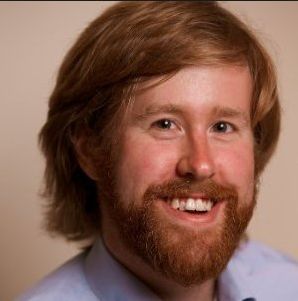
Alic Troung: thought on virtual spaces and avatars in Quartz (image credit: Quartz.com)
Alice Truong: thought on virtual spaces and avatars in Quartz (image credit: Quartz.com)

As with most of the pieces which had appeared over the last month or so, little real news on Sansar (or SL’s development for that matter) is given out. This is hardly surprising, as the Lab does like to hold its cards close to its chest – the relative newness (and thus the difficulty in highlighting specific tablets-of-stone facts) of Sansar notwithstanding.

What makes this article a joy, is that it provides a solid framing for the subject of the Lab and virtual worlds, reaching back to 1999 and the original efforts with The Rig. This is nicely packaged and offers a solid foundation from which Ms. Truong expertly weave her piece. Some of the path she takes will be familiar, particularly where SL and Sansar is concerned. We get to hear about SL’s growth, revenue, the US $60 million collectively cashed-out of the platform by many of its users, etc.

We also get fair mention of the decline in the number of active users on the platform, but again, this is properly framed. At its peak, SL had around 1.1 million active users; eight-ish years later, that number stands at around 900,000. A decline, yes. but as Ebbe Altberg points out hardly any kind of “mass exodus”; and certainly nowhere near the dire haemorrhaging of users we tend to hear proclaimed to be happening every time the Lab makes what is perceived as an irksome decision.

For Sansar, similarly familiar ground is covered – the revenue model (and the comparison with SL’s model and its weakness), the promise of VR, the opportunity to grow a platform for “tens, if not hundreds” of millions of users, the aspect of much broader “discoverabiilty” / ease of access for Sansar in order to help generate more appeal, and so on.

Mention is made of the Lab planning to “commercially release” Sansar by the end of 2016. Given what has been said by the Lab to date concerning time frames for future work, and allowing for Ebbe’s comments of perhaps having something worthy of a “version 1.0” label by the close of 2016, I’m taking the comment to be more of a misunderstanding on Ms. Truong’s part than any revelation as to Sansar’s roadmap.

Hunter Walk (l), the Lab's former
Hunter Walk (l), the Lab’s former “Director of Everything Non-Engineering” as well as a founder of the company, and now a VC in his own right, and Bernard Drax, aka Draxtor Despres (r) offer thoughts on Sansar

Another enjoyable element of this article is that Ms. Truong casts her net wide for input; thus she captures both Hunter Walk and Draxtor Despres. Their comments serve to both offer the means by which ideas can be further explored in the piece, and serve to offer a measure of counterpoint to the assumed mass appeal spaces like Sansar and High Fidelity will have.

Hunter Walk, for example, underlines the most critical problem in growing users Second Life has faced throughout its lifetime – that of accessibility and use. As he states, “ultimately, the work you had to put in was, for most people, more than the fun you got out.”  Not only does this underline the essential truth about SL’s longest-running issue (it’s as true today for many as 2003/4), it lays the foundation for an exploration of some of Sansar’s fundamental differences to SL later in the article.

Hunter also passes comment on the idea of these spaces finding many millions of users, pointing out that “tens of millions” was always an unrealised dream at the Lab for Second Life; perhaps a cautionary warning about focusing on user numbers. He also seems to offer something of a warning on investment returns in such ventures as well, again referencing Second Life, although if intended as a warning, it is more relevant to High Fidelity (which has received around US $16.5 million in investment to date).

Draxtor similarly questions whether user numbers should necessarily be the focus / rationale for building these kind of virtual spaces. Like him, I’m far from convinced Sansar will have the kind of broad-ranging reach to draw in “hundreds of millions” (or, if I’m honest, even more than  the low tens of millions). I’ve explained some of the reason why I think in my review of Eric Johnson’s piece linked to towards the top of this article, so I won’t repeat them here.

Could the promise of 2mixed reality
Could the promise of 2mixed reality” technologies which combine VR, AR and physical world activities yet serve to keep avatar-based virtual spaces a niche endeavour? (image: Magic Leap, via the New York Times)

If I’m honest, my only regret is that while Ms Truong’s tone is (rightly) sceptical in places, there is no outright challenge to the idea that people will embrace avatar-based interactions on a massive scale just because VR is on our doorstep.

Right now, there is a lot going on in the world of technology: VR, AR, the potential to fuse the two; faster communications capabilities, much better mobile connectivity, and so on. All of these could serve to dramatically marginalise any need to persistently engage in avatar-based interactions outside of very defined areas. As such, the inescapable whiff of “will we build it, they will use it” (to utterly mangle an already oft-misquoted line from a certain film) which seems to pervade the talk of high Fidelity and Sansar does perhaps deserve a degree of challenge.

Perhaps I should drop a line to Peter Gray suggesting an interview on those lines…

In the meantime – go read Alice Truong.

Related Links

BURN2: A Carnival of Mirrors coming to Second Life

Inside the Temple: BURN2, 2014

BURN2 2015 will be opening its gates on Saturday 17th October, and will run through until Sunday 25th October 2015, culminating in the burning of the Man on Saturday, October 24th and the burning of the Temple on Sunday, October 25th.

The official press release describers the theme as being:

About mirrors and masks, mazes and merger. It will be a kind of magic show that takes the form of an old­ fashioned carnival. This Carnival of Mirrors asks three essential question:  within our media­ saturated world, where products and people, consumption and communion morph into an endlessly diverting spectacle, who is the trickster and who is being tricked, and how might we discover who we really are?

Classic carnivals, as theatres of illusion, upheld a very strict dividing line that separated  carnies, cast as showmen, from members of a naïve public who were labelled chumps and  suckers, marks and rubes. Our carnival, however, will perform an even more subversive trick  — its motto is Include the Rube. The wall dividing the observer from observed will disappear,  as by an act of magic; through the alchemy of interaction, everyone at once can be the carny  and the fool.

BURN2 2014: The Man
BURN2 2014: The Man

The plot sale is now open, as is the Plot Lottery and Juried Art Applications. You can purchase a plot for BURN2 directly from the kiosks on the playa, with parcels priced as follows:

  • 512 sq m / 117 LI – L$2,500
  • 1024 sq m / 234 LI – L$5,000
  • 208 sq m / 468 LI – L$10,000
  • 4096 sq m / 936 LI – L$10,000

Please ensure you read all the information on an application forms, and that you also read the
Builder Guidelines and Ten Principles before you submit your application. Aesthetics mirroring the Black Rock Desert are in effect for this event.

In addition, the BURN2 organisers have opened a sim name survey, and are asking BURN2 supporters to indicate their five favourite region names from past BURN2 events. The five most popular names will then be used for the 5 additional regions for the Carnival of Mirrors. The deadline for the completion of the survey is 20:00 SLT, Thursday, August 20th, 2015.

About BURN2

BURN2 is an extension of the Burning Man festival and community into the world of Second Life. It is an officially sanctioned Burning Man regional event, and the only virtual world event out of more than 100 real world Regional groups and the only regional event allowed to burn the man.

The BURN2 Team operates events year around, culminating in an annual major festival of community, art and fire in the fall – a virtual echo of Burning Man itself.

Related Links

Jewell Wirefly enters the Living Room in Second Life

Jewell Wirefly - The Living Room
Jewell Wirefly – The Living Room

Tuesday, August 4th saw the opening of the latest art exhibition at The Living Room, the music and arts venue operated by Owl Dragonash and Daallee. This month, the venue features the work of Jewell Wirefly, who offers a series of images from her travels around Second Life.

Jewell says of her work, “I have been in SL now for almost 9 years and have been taking pictures for nearly 6 years, and I still enjoy it as much as the very first shot.  My art is nearly always inspired by a song and sometimes a quote or a poem.  However, the one thing they all have in common is that they express my emotions.  I like to take a variety of pics, including a lot of fantasy ones, and not keep to any particular type or style. ”

Jewell Wirefly - The Living Room
Jewell Wirefly – The Living Room

The images displayed at The Living Room reflect this approach to her work; having mostly been captured out and about in Second Life, each with its own particular style and emotive content. However, while she has tended to mostly eschewed the use of studio shots for her work, she does admit to more recently to building her own sets to capture some of the images that come to mind, and this side of her work is reflected here as well.

While there is a narrative and emotional content in all the images, I found myself most strongly drawn to four in particular (seen at the top of this article). I’ve no idea if their relatively close placement was intentional, but individually and collectively, I found them to be very evocative in terms of mood, narrative and image.

Jewell Wirefly - The Living Room
Jewell Wirefly – The Living Room

All told, another welcome, and personal display from an SL artist which will remain open to visitors through until August 25th, 2015, when there will be a special party to mark the end of the exhibition featuring the music of Laralette Lane, starting at noon SLT.

August also brings with it another night of live music at The Living Room, with August 13th seeing Billy Thunders on stage at 17:00 SLT, followed by The Vinnie Show at 18:00 SLT.


SLurl Details

Ebbe’s fireside chat: Sansar, Second Life and VR

Nick Ochoa and Ebbe Altberg talk Sansar, SL and virtual spaces (image courtesy of UploadVR)

On August 3rd, Upload VR posted a video chat to YouTube which features a cosy fireside chat between Nick Ochoa and Linden Lab CEO Ebbe Altberg, which examines Sansar and virtual environments – touching on Second Life in some places.

The 30-minute  conversation is very relaxed and approachable; Ebbe is clearly at ease (possibly helped by the glass of red wine!) and Nick is a very competent host in his ability to keep a conversational flow going. The camera is a tad wobbly in places, suggesting whoever was holding it may have been enjoying a sip or six of the wine / beer (!), but not excessively so. A lot of ground is covered in the time, and while it may be frustrating that some items are passed on rather than followed-up, keep in mind that this is more a conversation than in-depth interview / QA, serving to offer a non-SL audience a flavour of what that Lab is up to.

In terms of Sansar, we do get to learn that times are running very slightly behind schedule, in that we’re still a “couple of weeks” away from the start of initial closed alpha testing under NDA, but everything else remains pretty much as stated: NDA Alpha ramp-up through 2015 into 2016 and a more public beta in 2016.

(image courtesy of UploadVR)

We do get to learn a little more about how the closed alpha will run: those invited to join will be able to install and application with hooks into Maya, the tool of choice for initial testing. They build their “scenes” (“experiences”)  in Maya and push a button in the application to “publish” the results on Sansar and obtain links they can share with others involved in the testing. Given Ebbe’s previous comments about “optimising” content for delivery across Sansar, I wonder if this approach will be how things are handled when Sansar is broadened to encompass other external content creation tools.

Beyond this, we get more on the Sansar / WordPress.com analogy, which first came to the fore in an article published by Variety online. This whole aspect of Sansar is a fascinating point of speculation to me, in that it suggests the platform is conceptually analogous to the concept of a Platform as a Service (PaaS), something which I think stands to make Sansar potentially far more powerful and flexible than people perhaps credit. However, as this is only speculation on my part, I’ll leave that to one side for now – but promise I will explore it further in a future article.

Within the UploadVR discussion, Ebbe’s focus on the WordPress.com analogy is tightly focused on the aspect  of “discoverability”. The idea that right now and with SL, people have to join the platform in order to discover the experience, whereas Sansar should be more like WordPress – where people discover the blogs and don’t necessarily care about the platform on which the blogs are run.

A clearly relaxed Ebbe gets into talking avatar dancing
A clearly relaxed Ebbe gets into talking avatar dancing (image courtesy of UploadVR)

Sansar’s revenue model gets a little more clarification, with the “sales tax” aspect clearly being applied to the platform’s GDP as a whole – which is Second Life’s case is an estimated half billion US dollars a year. Previously, there had been some confusion as to precisely where the “sale tax” might fall, particularly following an article in Xconomy.com, so the further clarification is welcome.

A direct parallel is drawn to on-line retail sites where up to 30% might be charged in commission. However, I wouldn’t take this to mean that’s necessarily what the Lab is looking to charge; Ebbe is making comparisons, not stating policy.

A more meaningful question to ask here is to how rapidly can Sansar realistically grow in user numbers order for such a model to be able to push the platform into the black? Unless there is some immediate and large influx of users, it could take a while for the Sansar economy to really get rolling; so conceivably, and depending on the associated overheads in providing the platform, the Lab could be operating Sansar as something of a loss leader for a time after it is “launched” to the world at large.

From here, the conversation broadens out to discuss the virtual opportunities that already exist in Second Life, from content creation through activities to monetization for users, to an overview of the many different communities present in-world, all of which almost seamlessly blends into more of a general chat on the potential and perils of VR which in turn bounces across health, the work of Jeremy Bailenson at Stanford University, and more besides. This actually makes for the interview’s most entertaining 10 minutes, as Ochoa and Altberg, obviously at ease, forget the presence of the camera as they chat.

Overall, this is a comfortable and pleasing discussion – not revelatory or packed with news, but one which is nevertheless interesting and within its own personal richness – not the least is the rapport which is clearly present between Altberg and Ochoa.


Rediscover Paradise Lost in Second Life, and enter a L$20K prize pool contest

In 2014, Paradise Lost: The story of Adam and Eve’s Original Sin was, for me, the performance art event of Second Life. conceived, produced and directed by the creative pairing of Harvey Crabsticks and Canary Beck and staged by the Basilique Performing Arts Company.

This was a production that I was privileged to see in development, including spending time with both Canary and Harvey in conversation about how the production developed from the experiences they gained producing  Romeo + Juliet. When I later reviewed the production and referred to it as a masterpiece of performance art in SL, I did so without hyperbole.

In essence, Paradise Lost combined John Milton’s blank verse epic of the same name with the music of the Süssmayr completion of Mozart’s Requiem Mass in D minor. And I’ll say again without any exaggeration at all, that those who did not manage to see the production on stage truly missed out on something extraordinary. HOWEVER – there’s now an opportunity to make up for things!

Iconic scene: Satan's fall and arrival in hell
Iconic scene: Satan’s fall and arrival in hell – Paradise Lost by the Basilique Performing Arts Company, 2014

At 12:00 noon SLT on Saturday September 19th, 2015, registered guests will be able to watch the specially commissioned Paradise Lost: The Movie. Filmed and produced by Forren Ashford, and featuring the cast and original sets from the production, all directed by Canary Beck, the film captures the full 2-hour production for posterity on video.

To  see the film, all you need to do is register your e-mail address to be a part of this very special event. The film will be shown via Canary’s own website, canarybeck.com, but only to those who have pre-registered.

L$20,000 Prize Pool Contest

WindlightTo mark the film’s première and in association with Windlight Magazine, Canary has launched a special photography contest, with a total prize pool of L$20,000 plus special media service awards to the top entries worth an additional L$10,00.

Taken together, the prizes are:

  • 1st Place Photo – L$ 5,000, a 2-page story in Windlight Magazine together with a double page ad; and 1 month’s exhibition space at the Windlight Gallery
  • 2nd Place Photo – L$ 3,000, a  Windlight blog article and one double page ad
  • 3rd Place Photo – L$2,000, and one double page ad in Windlight Magazine
  • Additional awards 10x L$1000 for the best scene photos.

For full details on how to enter, together with guidelines, rules, judging and  prize awards, please refer to the competition webpage.

All entries must be posted to the official Paradise Lost Flickr group. Note that for scene awards, entries will be selected each week, so entries should be uploaded before the sets change (as indicated in the competition page schedule). Weekly winners will be announced via canarybeck.com and via social media, and will be informed directly via Flickr messaging.

The grand prize winner will by announced on Saturday, October 24th via the same means.

Good luck to all who enter – and don’t forget to register to see the movie!

Examining the reality of the metaverse

Th obligatory Sansar promo image :) (please can we have some new ones?) - Linden Lab
Th obligatory Sansar promo image 🙂 (please can we have some new ones?) – Linden Lab

Eric Johnson has a thought-provoking article over on re/code. In Welcome to the Metaverse, he ponders the lot of avatar-based virtual spaces, past and future, and how a number of companies – the Lab included – are betting that the “new era” of VR is going to be the means by which such spaces will become mainstream.

It’s an interesting piece, offering plenty of food for thought, starting with an opening statement by the Lab’s CEO, Ebbe Altberg, on defining human life:

What humans do is create spaces. Some spaces are mobile, like a bus. San Francisco is a space that was created by its users. Whether you go into a pub, a bar, a classroom, a bowling alley, an office, a library … We create spaces and we have people come together in those spaces, and then we communicate and socialize within those spaces.

This is actually the first thing about the article that leaves me with a familiar feeling of feeling at odds with the prevailing view of all things metaverse, albeit for a slightly different reason. With due respect to Mr. Altberg, people didn’t come together as a result of building spaces. They built spaces as a result of coming together. However, as an opening gambit for a study of this thing we call the “metaverse”, it’ll do as an opener.

Eric Johnson, Associate editor, Gaming at Re/code (via LinkedIn)

From here, Mr. Johnson give us the pocket introduction to “the metaverse” via the obligatory (and rightful) nod to Neal Stephenson while simultaneously dispensing quickly with a look at the “past promise” of virtual spaces that didn’t in the end measure-up to the expectations.

This leads the way to a clever little nod to the book which has become this decade’s “Snowcrash”  in the form of  Ernest Cline’s Ready Player One (which is actually a very good read) – as a means to introduce the main three companies he sees as currently vying for space in “the metaverse” – the Lab,  High Fidelity and AltspaceVR.

Chances are the Sansar and High Fidelity are already well-known to people reading these pages, which AltspaceVR may have passed some unnoticed. As the article points out, they’ve been developing avatar-based VR for the last couple of years, focusing on shared spaces (watching a film with a friend who is halfway across the world for example), and scheduled events, including gaming weekends, etc.

AltspaceVR also has some ideas for business applications with their environments, which they are planning to offer on a pay-to-use basis. And while their avatars main have been viewed with disdain by some, there are a couple of points to bear in mind where the company is concerned.

The first is that as a result of watching some of AltspaceVR’s virtual interactions, Mark Zuckerberg caught the social VR bug, and Facebook went after Oculus VR, with the subsequent $2 billion acquisition (which was actually quite a modest punt when compared to the $19 billion the company had earlier spent on a proven technology in WhatsApp).

The second is that the company, which has been around about as long at Philip Rosedale’s High Fidelity, has almost raised a comparable amount in funding – around $15.7 million to date (SEC filings indicate High Fidelity has raised around $16.5 million), and both are working at solving many of the same technical issues – head and motion tracking, eye tracking, etc.,

Beyond this, others interested in making a pitch into the metaverse space, as Mr. Johnson mentions are IMVU, which has around 15% of it’s 130+ staff now working on trying to integrate VR into its existing spaces (a-la the Lab’s early effects with SL and the Rift), and a small New York based start-up, focusing on VR social games with around $300,000 in seeding money. called Surreal, the 4-person company is billing itself as “the first fully immersive virtual world”, which is focused entirely on using VR HMDs (Oculus, Gear VR and Cardboard).

Johnson attempts to split his examination of the metaverse into two views: the short-term and the long-term. In doing so, he inevitably points to the elephant in the room: Facebook. In this, he quotes Palmer Luckey, who gives a fair warning as to whether or not “the metaverse” is around the corner, and which stands as a cautionary warning, in more ways than one:

I think at this point the term ‘metaverse’ is a bit undefined. For any one company to say, ‘We are building the metaverse’ is pretty hyperbolic. Building all the pieces is going to be hard, and the way you imagine things in sci-fi doesn’t always translate over to the way things will be in the real world.

Palmer Luckey: precient words on
Palmer Luckey: prescient words on “the metaverse”?

He has a very valid point; and with today’s rapidly evolving pace of technology, it’s one worth keeping in mind; the technical issues people see today as only being surmountable through the use of avatars may not actually be technical issues a few years hence.

Interestingly, Johnson places this in the “short-term” view – although both Oculus VR and Facebook have always talked in terms of “the metaverse” still being around a decade away. For the longer term, Johnson looks in particular at High Fidelity’s work and also the Second Life revenue generation success (and, despite the naysayers out there SL is a commercial success, both for the Lab and its users, the latter of whom benefited with collective revenues of $60 million from the platform in 2014), before taking another look at AltspaceVR.

There is a lot to be digested in the piece, and it makes for a good read. However, for me, Palmer Luckey’s warning that how things don’t always match the real world tends to stand out a lot when a lot of the approach being then with avatar-based virtual spaces tend to smack of the “if you build it, they will use it” approach.

I don’t doubt for a minute that spaces will have a lot of applications among various vertical markets. It is no coincidence that the likes of Philip Rosedale and Ebbe Altberg talk much of the same language concerning them: education, training, healthcare, business; there is potential for avatar-based VR spaces in all of them. But I’m still not convinced that longer-term, such spaces are going to claim a much large market among causal consumers than is currently the case, for a couple of reasons.

The first is that the vast majority of people really haven’t seen the need to “climb in” to an avatar for their social interactions – and getting a shiny new headset (which Johnson quotes some rather interesting demographics about) isn’t actually going to change that. The second is connected to the headsets themselves.

High Fidelity and Linden Lab see the education sector as a major focus for their efforts – and neither is wrong. But are avatar-based virtual spaces really going to go consumer mass market?

Simply put, it would seem likely that this brave new world of VR could end-up delivering so many fantastic experiences and opportunities to the casual user, that the majority still won’t see the need to invest time and effort in creating a virtual alter-ego of the kind we desire (and we, as SL / OpenSim users are a niche), because so much else is being delivered to them pre-packaged and ready-to-go. Thus, as Palmer Luckey indicates, the chances are “the metaverse” could well arrive in our lives in a manner very different to that being envisaged by High Fidelity and Linden Lab, thus leaving their approach still very much niche-oriented.

Not that there is anything wrong with that either. As both Rosedale and the Lab can demonstrate, it’s done them rather nicely over the years. And it is fair to say that “niche” this time around a liable to be somewhat larger, simply because of the vertical market opportunities they’re looking at.

Even so, and as mentioned, there is this optimistic we “build / they come” aspect to the whole idea of avatar-based vertical spaces that it would be nice to see an article probing the pros and cons a little more. Perhaps that might be something for a follow-up from Mr. Johnson? In the meantime, Welcome to the Metaverse is a thought-provoking read, and for reasons I’ve not even scratched at here (such as the question of on-line abuse), as such, it’s not one to miss.

Related Links

With thanks to Indigo Mertel for the Google+ pointer at the weekend.