LL’s mesh avatars updated

In May 2014, Linden Lab launched a new line of mesh avatars. These were made available on both the sign-up page for new users, and as library avatars within the viewer.

These avatars met with a mixed reception; many of the human avatars looked somewhat bland and perhaps suffered from weak skin textures, but some could also look pretty stunning given the inclusion of materials within them, as Caitlin Tobias powerfully demonstrated (sorry, couldn’t resist the pun).
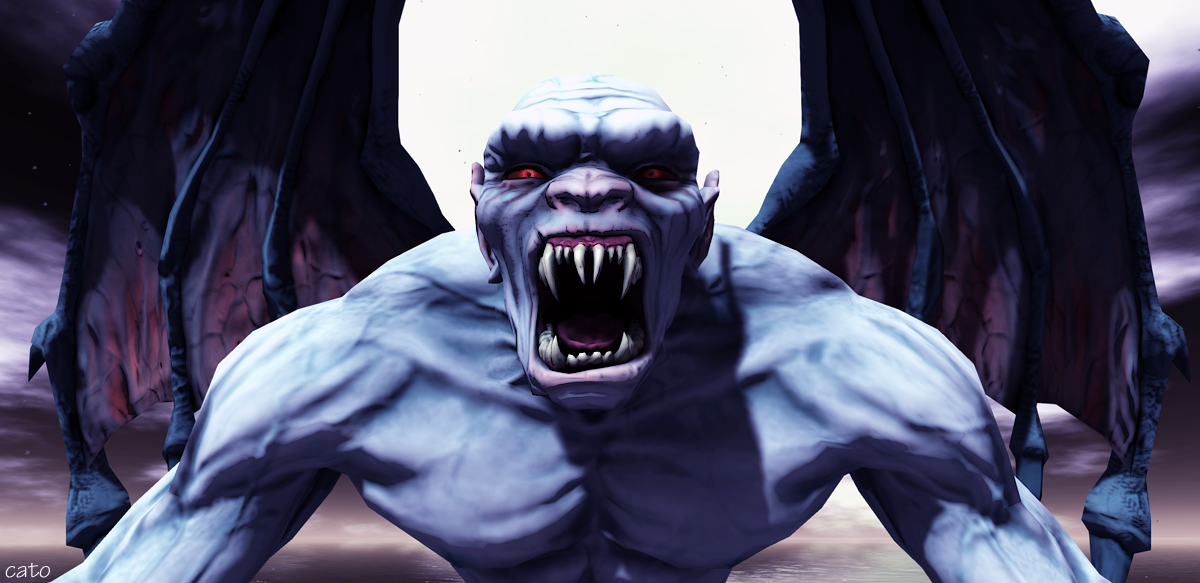
The demon avatar supplied by LL and as pictured by Caitlyn Tobiason FlickrThe demon avatar supplied by LL and as pictured by Caitlin Tobias on Flickr – click for original

However, several of the new avatars did exhibit issues; there AOs resulted in their feet being buried in the ground, hair styles were not overly appealing. Perhaps most noticeable of all – although the avatars were promoted as taking advantage of fitted mesh, they were released with base shapes set to No Modify.

As I commented at the time of the release, making the base shapes No Modify pretty much undermined the entire fitted mesh aspect of the avatars, since it meant the avatars could not by default be customised using the shape sliders to adjust height, build, etc. To be able to do so meant swapping-out the base shape first, something new users would likely be oblivious of, and thus see the avatars as “not working”.

At the time of the launch, I raised this point directly with Ebbe Altberg, and in fairness, he took it on the chin:

fuck you

On June 10th,  The Lab announced this issue, and those relating to things like AO problems for those avatars supplied with AOs had been fixed, and the avatars duly updated.  The blog post reads in part:

Following community feedback about these new avatars, we’ve made some adjustments, and today we’re re-deploying them with a few updates.

Most significantly, users will now have the ability to edit the avatar shape for the human form avatars. Because these avatars are mesh, not all sliders will affect the shape, but many of them will. Play around and personalize the body, torso, and legs using the sliders now supported with the updated, modifiable shape. Some of the head and eyes sliders will also now work to adjust the avatars’ faces.

Additionally, Sara (the blonde female avatar) got a fuller hairdo with more body and volume, and we’ve fixed the hover position for several of the avatars which helps prevent sinking into the ground.

I’ve only had the briefest time playing with the updated avatars, but they do now appear to work as expected. Some problems still remain – the hands on some of the female avatars still look like they’d be more at home on a guy, for example, but then the avatar meshes themselves doesn’t appear to have been reworked. Some people trying them did report some inventory related issues, which I confess I’ve not had time to poke at.

As it is, the update is welcome, and hopefully will see the new avatars enjoy wider use within SL. That said, I confess I won’t be using them. I’m still a stick-in-the-mud where mesh is concerned, and anyway, I’m more than happy with my avatar as she is, shape warts and all!

SL projects update week 24/1: server, viewer

Server Deployments Week 24

As always, please refer to the server deployment thread for the latest information / news on deployments.

Due to the need to make a necessary security update to the simulators in week 23, this weeks deployments effectively return the server channels to the condition they were in (albeit briefly) following the week 23 deployments:

  • There was no deployment to the Main (SLS) channel on Tuesday June 10th. However, the channel was still restarted as a part of scheduled maintenance on the grid
  • On Wednesday June 11th, the release candidates should be updated as follows:
    • BlueSteel should return to the inventory update.  This project enables support for a new version of the inventory service, AISv3, which requires the updates found in the Sunshine RC Viewer
    • LeTigre should return to the group ban project this week.  As the name implies, this project adds the ability to ban users from groups -see the release notes for details
    • Magnum should return to the Experience Tools project this week, and receive some minor changes – release notes

 SL Viewer

There has been no release candidate viewer promoted to the de facto release viewer as yet this week.

The MemPlug release candidate and the Sunshine / AIS v3 candidate with both withdrawn from the viewer release channel. As noted in week 23, both of these release candidate viewers have been combined into a single viewer, the MemShine RC, version 3.7.9.290582, which has now officially replaced both of them.

The Zipper (fast installation) viewer has yet to return to the release channel, having been removed on May 30th.

Please refer to my Current Viewer Releases page for information on current viewer releases (SL and TPV).

Upcoming Snowstorm RC and XP Version Checking

The upcoming Stormstorm RC viewer will include Windows XP version / updates checking as a part of the installer

The upcoming Snowstorm RC viewer which should be entering the release channel shortly will, as reported in my last TPV developer meeting update, include the STORM-1831 updates to LSL syntax highlighting.

It will also include STORM-1966, which, in keeping with recent updates to the minimum hardware specifications for Second Life, require that Windows XP systems have the latest patches installed. For 32-bit XP, this means having Service Pack 3 installed, and for 64-bit XP, having Service Pack 2 installed. Any XP system not meeting these requirements will be unable to install the viewer until such time as they are updated. In addition, the installer will warn Vista and Windows 7 users if they are lacking a Service Pack update (but it will not prevent the viewer from being installed on these systems).

Other Items

Light Reflections on Materials

There has been a report that use of materials on adjoining prims can lead to issues with light reflections over what should contiguous surfaces, even when all of the parameters and setting across all of the maps used on the surfaces are identical (see this sample image – the reflected light should be uniform across the two prims). It’s currently not clear how often this occurs or under what lighting angles. Anyone who has encountered the problem and can reproduce it, is asked to raise a JIRA.

Profile Feeds Photo Upload Issue?

There may be a problem (possibly intermittent) with uploading snapshots to the profile feeds, with snapshots getting stuck during processing (e.g. your feed displays a message similar to: You have X snapshots being processed”). This is apparently indicative of a back-end processing problem located somewhere between the snapshot being uploaded for display and actually being displayed on a feed. The problem has been reported by several people and has been noticed by the Lab, so hopefully it will be getting something of a poke to try to sort it out.

With thanks to Mona Eberhardt for note from the Content Creator’s meeting, Monday June 9th

Of pigeons and a Meaningless wander

Pigeon Island, Neverending; Inara Pey, June 2014, on FlickrPigeon Island, Neverending (Flickr – click any image for full size)

Amelie Knelstrom (Raein) offers visitors to her homestead region two very different places to explore, both of which invite the imagination to create little stories to suit them.

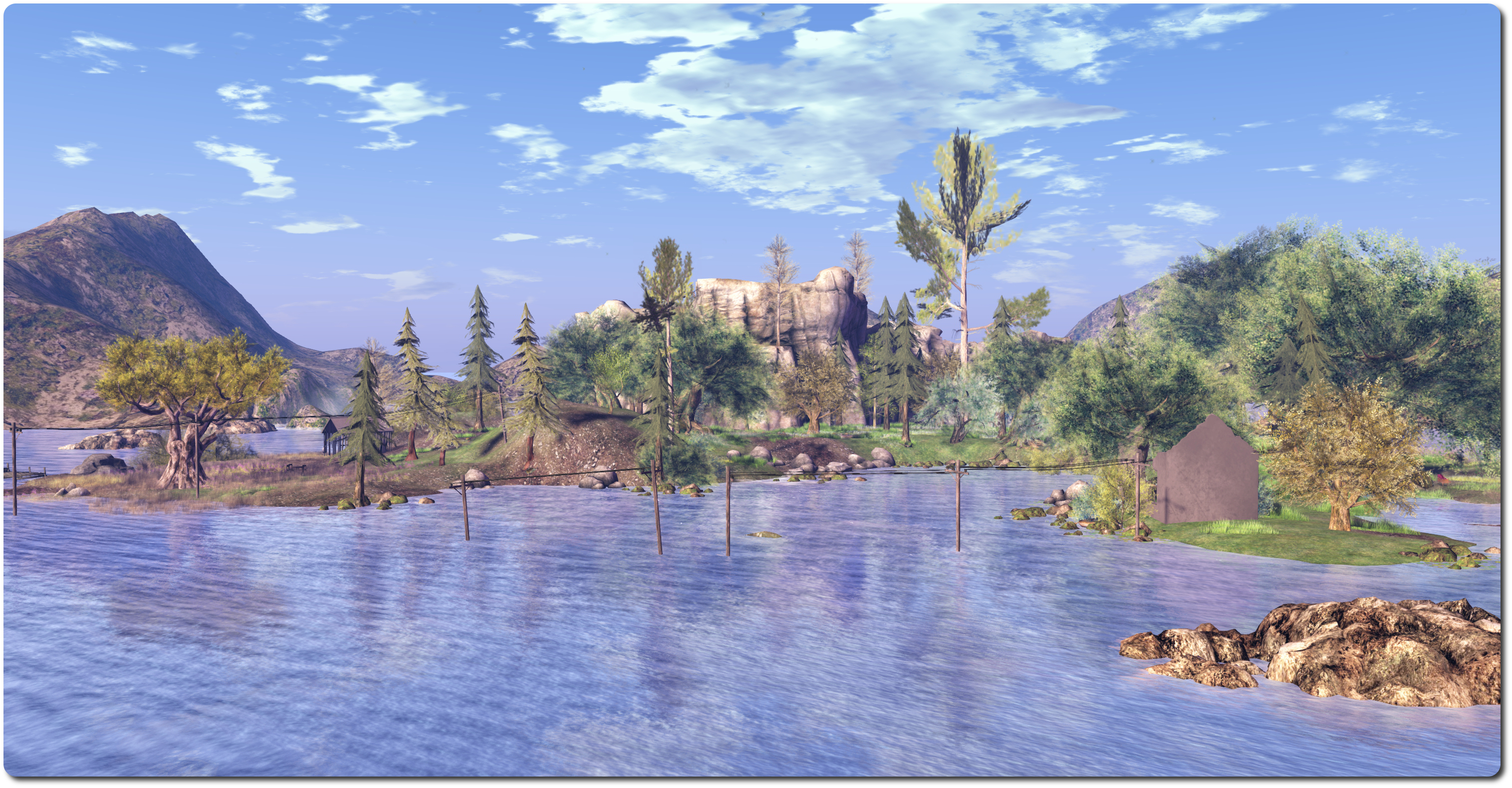
The first is Pigeon Island, which is also the arrival point for visitors. This is a slightly rugged island of temperate disposition, sitting in a bay (or perhaps a fjord?) which, given the lush green of the grass, may see more than its share of rain at times.

A farm looks to have once been here, although little now remains, other than the ruins of a small house or cottage (the actual landing point for the region) and an old shed which faces it across the curve of a rocky little bay. Old telegraph poles march out into the waters of the bay in two lines, still carrying their wires and looking like they may have once met, but their comrades have at some point either fallen into the blue waters or have been taken away. Did the lines running between them carry messages, or did they once bring electrical power to this little place?

Pigeon Island, Neverending; Inara Pey, June 2014, on FlickrPigeon Island, Neverending (Flickr)

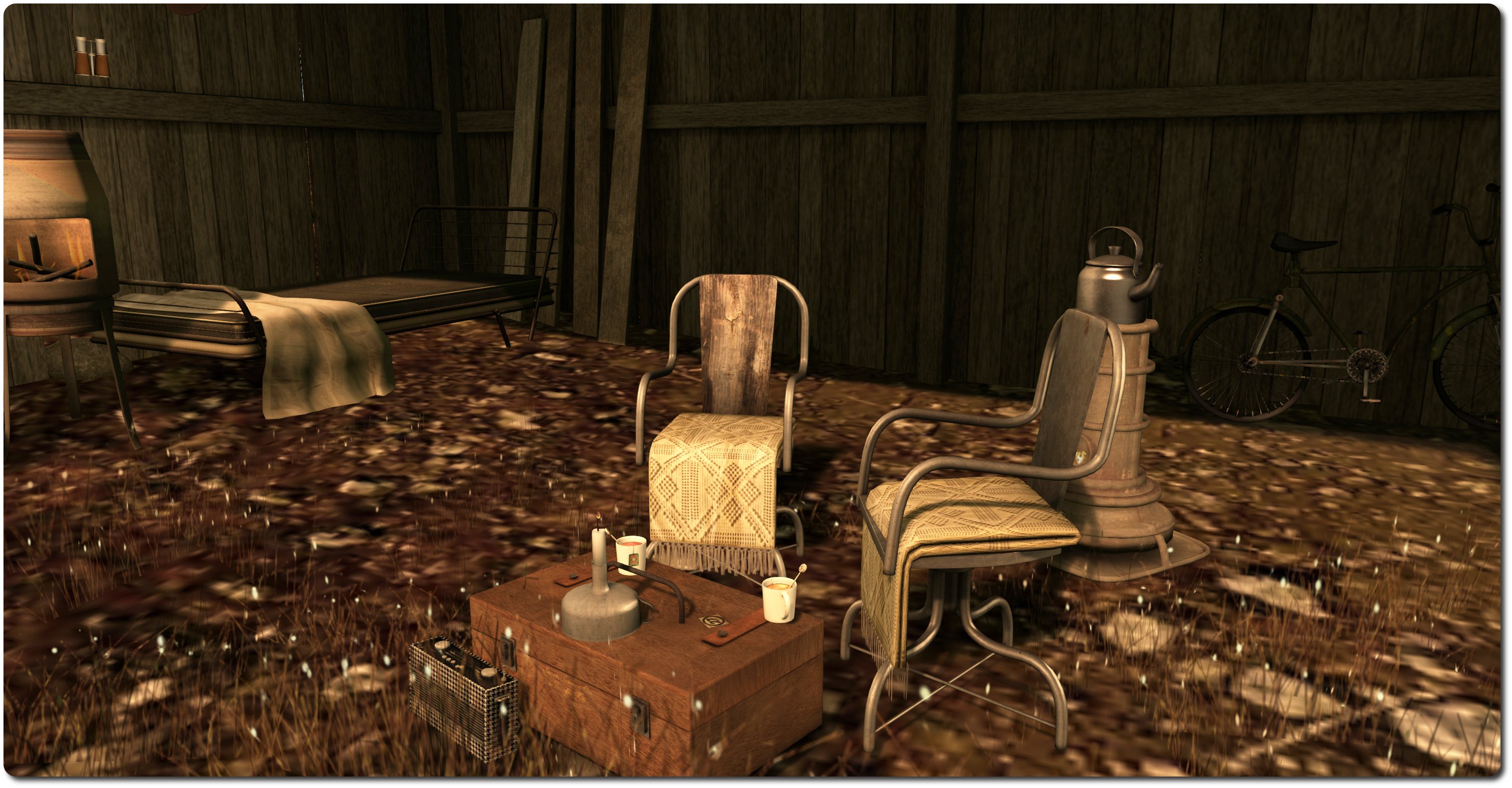
Not that the island is deserted; far from it. Sheep wander the low-lying parts of the island, grazing on the grass, and the little shed shows signs of habitation: there are chairs and couple of wood-burning stoves (one with a kettle atop it), while a bed sits in the corner; all signs that someone finds their way to the island, perhaps to make sure the sheep are fairing well, or perhaps to escape some noisier place across the water. There are other signs of life to be found as well: a hammock here, swings there, a table and chairs under the open sky, blankets out on a wooden pier, a telescope … all await your discovery.

The western side of the island is given over to a huge upthrust of rock. Flat-topped and with stair and path cut into its flank, it overlooks both island and bay, a gravel-like beach of stone and eroded rock separating it from the blue waters of the latter. Follow this rough path around the base of the rock, and you’ll find your way to a secluded beach sheltered between rocky shoulders, and more signs of habitation: a bed made in an old rowing boat and a small tent pitched well back from the water, while an old fishing boat sits at anchor.

Pigeon Island, Neverending; Inara Pey, June 2014, on FlickrPigeon Island, Neverending (Flickr)

Pigeon island is a wonderful rustic coastal scene, ripe for the SL explorer and photographer. But it’s not all that can be found here. Sitting in the wall of the old farmhouse / cottage is a single wooden door. Open it, and you can be transported high overhead to the streets of Meaningless City.

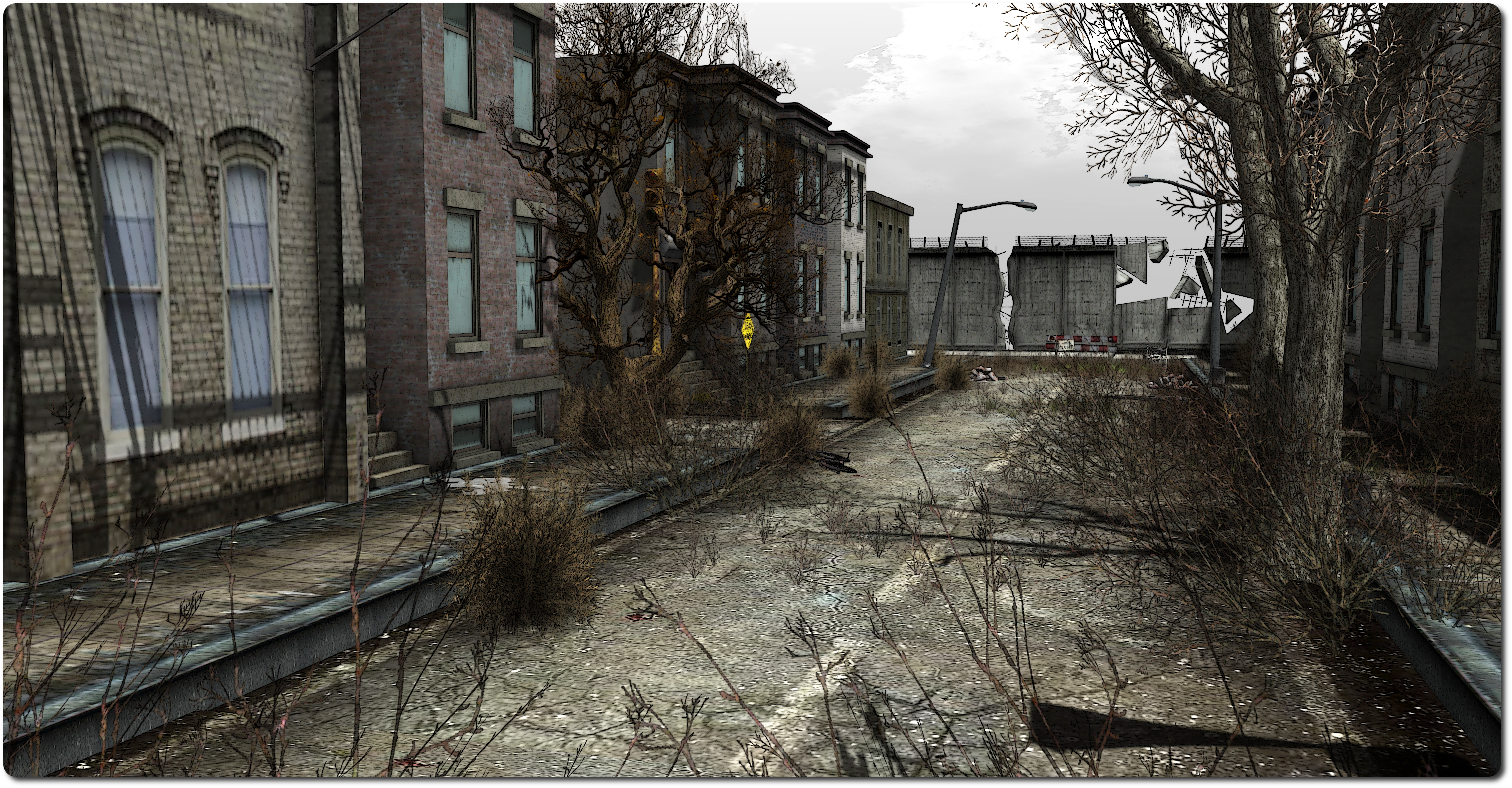
Here is a place very different to the island’s natural beauty. The streets are deserted, their tarmac cracked and breaking, weeds and grass pushing their way up through the gaps;  concrete walls are cracked and damaged, holes revealing their steel reinforcement. All of the houses stand deserted, grime and dirt turning their empty windows into opaque, sightless eyes as crows circle overhead. In the playground, a lone children’s slide stands rusting and forgotten, barrels with flammable warnings adorning their sides sitting close by…

Pigeon Island, Neverending; Inara Pey, June 2014, on FlickrPigeon Island, Neverending (Flickr)

It is clear something has happened to cause the inhabitants to leave this place – but what? Do those barrels with their dire warnings of fire offer a hint, or is it something else? Why are the streets all closed-off by the gaunt forms of concrete walls, the barbed wire along their tops ominously turned inward? And what of the tall, silent sentinel of an old siren standing at one end of a street? What part does that play in the stories waiting to be told here?

Pigeon Island and Meaningless City are poles apart, yet such are the strong contrasts between them, coupled with the strands of stories running through them, that they complement one another in many ways.

Why not pay them both a visit and see what tales they whisper to you?

Related Links

The Drax Files Radio Hour interviews: defining the real and the virtual

radio-hourEpisode #22 of  The Drax Files Radio Hour was posted on Friday June 6th. With the “live” podcasts currently on hiatus until August 2014, this is the first of a series of more in-depth interviews with people from across Second Life and beyond.

As usual, and as well as being available on the show’s website and on Stitcher, episode #22 is also on YouTube, and embedded at the end of this article.

This first interview show primarily focuses on Tom Boellstorff (Tom Bukowski in SL), a professor of anthropology at the University of California, Irvine, who has studied such subjects as the anthropology of sexuality, the anthropology of globalisation, the anthropology of HIV/AIDS, and linguistic anthropology, publishing numerous books and papers along the way.

Tom has been involved with and in Second Life for over a decade, being one of the early pioneers on the platform, at a time (2004) when there were perhaps 2,000 active SL accounts and concurrency was measured in the hundreds. He has authored and co-authored two notable titles on the subject of virtual worlds in that time, namely Coming of Age in Second Life: An Anthropologist Explores the Virtually Human, (Princeton University Press, 2008), and Ethnography and Virtual Worlds: A Handbook of Method (Princeton University Press, 2012, co-authored with Bonnie Nardi, Celia Pearce & T. L. Taylor).

Tom’s name may also been familiar to some for his involvement in the story of Fran Swenson (Fran Seranade in SL), a Parkinson’s Disease sufferer, whom I wrote about in 2013, and who was also featured in The Drax Files: World Makers segment #13, in November 2013.

Tom Boellstorff (image: Univ. of California)

This is a wide-ranging interview, commencing at 05:06 into the recording,  which encompasses, but is not limited to, such diverse but inter-related topics as how we define – or perhaps should define – virtual worlds; the differences (and similarities) between virtual worlds and other digital spaces; the challenges of defining what is meant be “real” and what is meant by “virtual”; and a discussion on communities of intent and their role within Second Life – and SL’s role with them. Along the way there are some thought-provoking challenges to how we perhaps think about SL and how we may actually contribute, to a degree, to the broader misconceptions surrounding SL simply through the language we use when referring to it.

In terms of providing a definition of virtual worlds and virtual environments, Tom offers up the idea that they can be defined as any place or activity which allows you to “go AFK” (away from keyboard) – that is, you can stop interacting with others involved in the same space / place / activity and then return, and whatever was going on prior to your stepping away continues (and perhaps, in some cases, evolves) during your absence, and is still there where you return.

This is something of a mind-boggling concept and definition, particularly when Tom goes on to suggest that the very first virtual environment came about not in the digital era, but in the earliest days of the telephone, when two people were engaged in a conversation, and one momentarily put the telephone handset down to do something, then rejoined the conversation without actually hanging-up. As such, it’s liable to have some frowning at the idea.

However, when taken alongside his comments about place (or the sense of place), one can see where he is coming from. With place entered into the equation (actually, one of the foundations of the discussion), then it is easier to understand his contention, and to agree with his view that standalone games, as immersive to the individual as they may well be,  are not really virtual spaces in the sense that Second Life, or even a Skype call, can be considered virtual spaces. Second life continues after we log-off, the same way that life at either end of Skype call continues after the call ends; stop playing a standalone game, and that’s it, there is nothing else until you start playing it again.

Such definitions of virtual worlds might sound very academic: interesting for a thesis or a book, but with little other meaning. However, as Tom goes on to explain, this is actually not the case:

I actually think it’s very important because it is amazing how much confusion there is out there about all of these technologies. There’s a lot of misunderstanding and confusion, and so … I spend a lot of time doing definitions, and i think it is just as important as the interesting, sexy stories about the cool things people are doing, because if we don’t have a basic understanding of what we’re looking at, it really makes it hard to figure out why its important.

Continue reading “The Drax Files Radio Hour interviews: defining the real and the virtual”

Prim Perfect asks what makes a strong SL community, and wants to hear from you

We talk a lot about community in Second Life. It’s a concept that touches on many areas, be it the locations and people where we opt to establish a virtual home, the role-play or other groups where we spend much of our in-world time and a part of what keeps us logging-in.

Community touches on many different aspects of discussion about SL, from how the platform is promoted to the world at large, through new user sign-ups  and user retention through to possible directions the platform and Linden Lab should take to achieve and maintain real growth for SL.

Now Prim Perfect wants to hear from you about the topic and concept of community in Second Life, with a view to exploring feedback as a part of the Prim Perfect interactive installation at the SL11B Community Celebration.

The Prim Perfect pavilion under construction at SL11BCC

Whether you have views on how SL should be advertised or on matters of user retention, the training which might be given to new users – or both of these together, Prim Perfect would like to hear from you.

Most of all, they’d like to  explore what “community” means to you: what is important about SL? What keeps you logging-in? What type of community would you like to live in? What do think a community in Second Life needs to remain vibrant?

If you’d like you views to for a part of the installation, please complete the form below, reproduced here on behalf of Prim Perfect (note you are not limited to the size of the text boxes when responding to the questions).


Viewer release summaries 2014: week 23

Updates for the week ending: Sunday June 8th, 2014

This summary is published every Monday and is a list of SL viewer / client releases (official and TPV) made during the previous week. When reading it, please note:

  • It is based on my Current Viewer Releases Page, a list of all Second Life viewers and clients that are in popular use (and of which I am aware), and which are recognised as adhering to the TPV Policy. This page includes comprehensive links to download pages, blog notes, release notes, etc., as well as links to any / all reviews of specific viewers / clients made within this blog
  • By its nature, this summary presented here will always be in arrears, please refer to the Current Viewer Release Page for more up-to-date information

Official LL Viewers

  • Current viewer release: no change from version 3.7.8.289922
  • Release channel cohorts (See my notes on manually installing RC viewer versions if you wish to install any release candidate(s) yourself):
    • SL MemShine RC version 3.7.9.290582 released on June 3 – combines the MemPlugs RC (fixes to address memory leaks in the viewer) and the Sunshine / AIS v3 RC viewer (stability and performance improvements for SSA) (download and release notes)
  • Project viewers:
    • No updates

LL Viewer Resources

Third-party Viewers

V3-style

  • Black Dragon updated to version 2.3.9.9 on June 9th – core updates: please refer to the release notes (included here as the update had been published at the time of going to press)

V1-style

  • Cool VL viewer updated on June 7th – Stable release to version 1.26.12.3 and Legacy version 1.26.8.61 – core updates: please refer to the release notes

Mobile / Other Clients

  • No updates

Additional TPV Resources

Related Links