The Drax Files 3: “Second Life is too beautiful a tool…”

The third in Draxtor’s Despres series looking inside Second Life, The Drax Files, premiered on Friday April 5th. In it, he talks with artist and creator Eshi Otawara, a six-year veteran of Second Life.

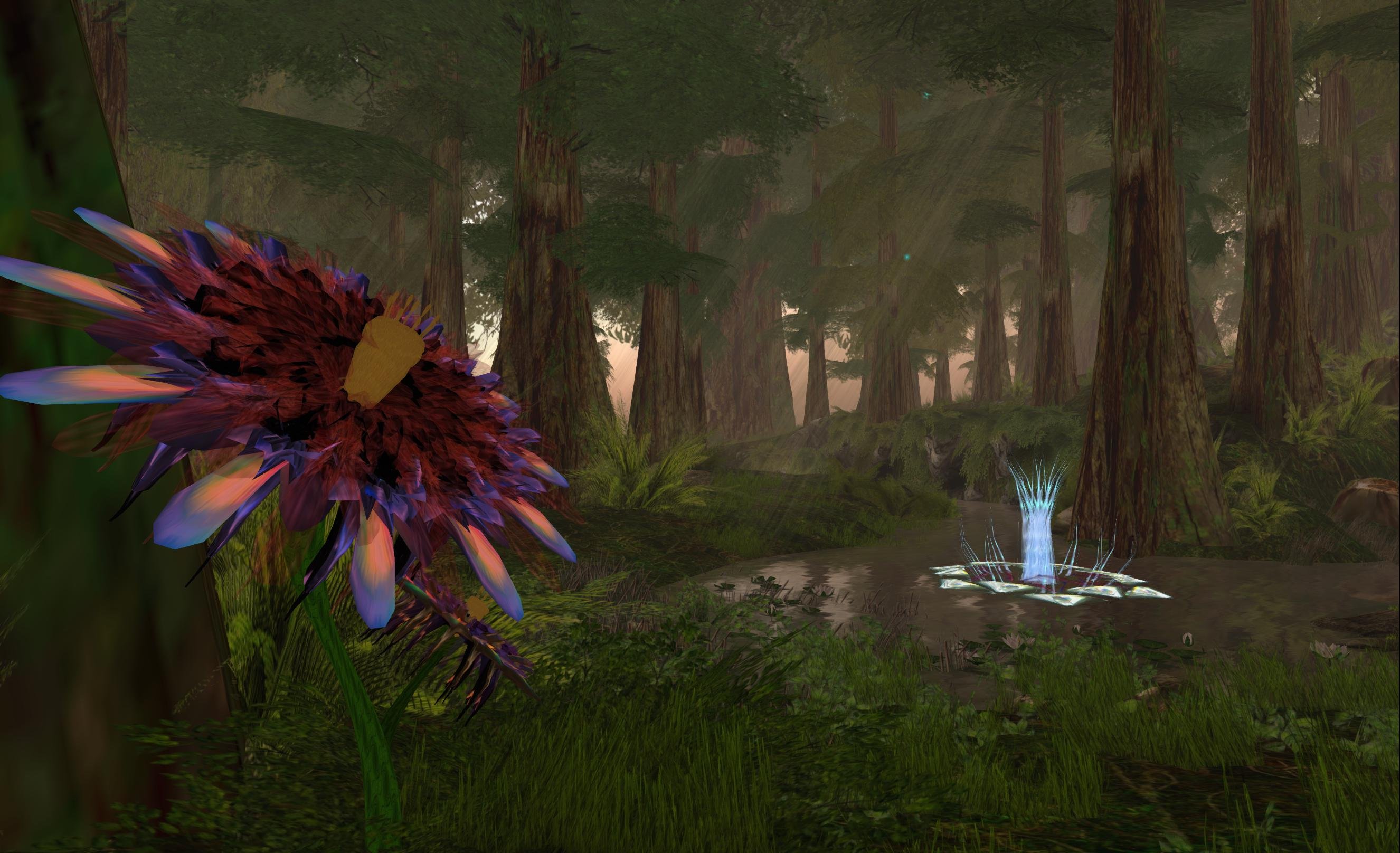
Perhaps best known for her clothing designs in SL, Eshi is also an artist in her real life, and also  lends support to other SL projects as well. In what only can be serendipity, prior to watching this segment ahead of the release, I blogged on Chakryn Forest a region in which  Eshi has had a hand in helping to design.

Eshi's beautiful and restful build within Chakryn Forest
Eshi’s beautiful and restful build within Chakryn Forest

As someone who has been involved in SL for a good while, and who invests a considerable amount of time and talent in the platform, Eshi offers a considered and insightful view of Second Life, and which perfectly frames both the immersive and augmentive opportunities presented by the platform.

“At the beginning,” Eshi candidly tells us early on in the piece, “I created my avatar to be everything that I was not. She was super, super tall, super, super skinny, [and] had super long hair. When I realised that my personality and my spirit continued to experience life no matter what kind of packaging I put myself into; nowadays I’ve just kind-of become a complete shape-shifter….”

There are times when those of us involved in SL perhaps define it a little too sharply, picturing it as either augmentive or immersionist, with a distinct division between the two – a division which may well have been broadened of late by the Lab’s focus on enhancing the more immersive elements of the platform possibly at the expense of the more augmentive. This may even be a reason why some feel that SL has “failed” and so lost its appeal; because they do place themselves on one side or the other of the divide.
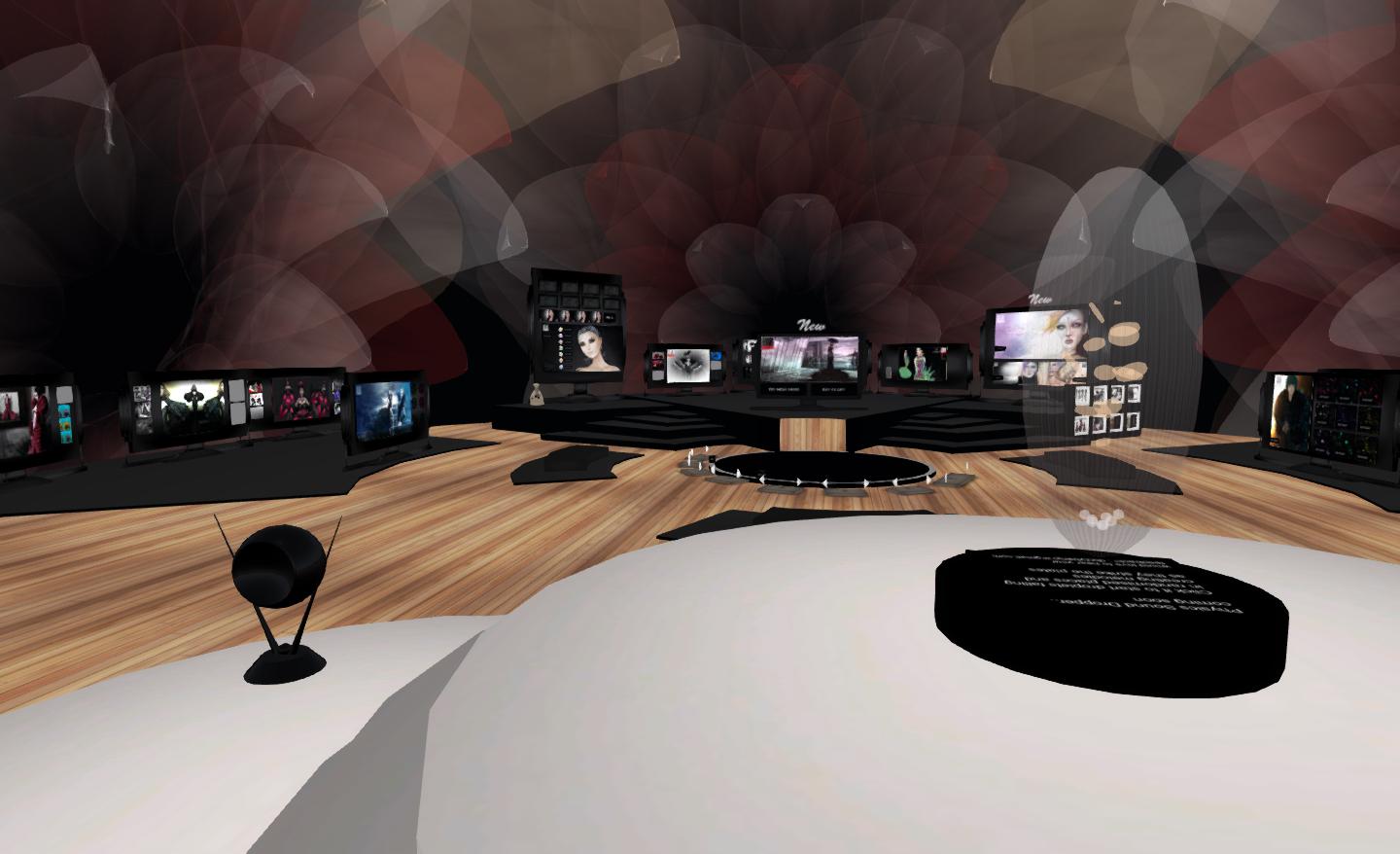
Eshi
Eshi Otawari’s stylish in-world store

Eshi’s words, however, serve as a reminder that SL doesn’t have to be one or the other. It always has been, and remains, a blend of the two – and that really, so much of how we perceive and interact with the platform is really down to our own nature. Her attitude to her avatar, to me at least, is very much a reflection of this: she can both immerse herself in the world through her shape-shifting use of her avatar while simultaneously augmenting her natural talent and love of art and design in ways she notes aren’t always possible in real life and which allow much of her spirit and personality shine through her avatar. In doing so, she has a perception of Second Life which can all too easily be lost after several years of engagement with the platform, but which she has clearly managed to keep very much alive.

Her views on the creative power inherent in Second Life clearly speak to the appeal of the platform. “It’s not a non-existent universe,” she tells us later in the video, “It’s there. It exists. If you just release yourself of that prejudice towards what’s virtual; that’s it’s not real, it will make you happy.”

This is another outstanding piece examining Second Life which again, as with the first two segments (though hardly touched upon in my reports to date) speaks as much to those of us involved in SL as to those new to the virtual world. They help to remind us as to why we’re here and (possibly) reinvigorating our love of the platform.

For me, out of the segments Drax has published to date, it is the one which resonates the most – for reasons I can’t quite put my finger on. Perhaps it is because Eshi touches on the immersive / augmentist elements of SL (which I’ve been thinking about a lot lately) or that her enthusiasm for the platform as a means of extending her both her creativity and her ability to interact with other is so infectious; maybe it is simply that having experienced something of a pendulum attitude towards Second Life over the course of the last year, her insights into the platform as a whole resonate more strongly with me.

Whatever the reason, this another pitch-perfect exploration of Second Life and the many ways it can appeal to us and offer us something magical. Congrats to Drax on again striking precisely the right editorial balance and to Eshi for painting such a vibrant picture of Second Life and her involvement with it.

Related Links

The Linden Dollar: token or currency? The US Treasury ponders …

secondlifeA recent set of interpretive guidelines (PDF) issued by the US Department of the Treasury’s Financial Crimes Enforcement network (FinCEN) is starting to see questions asked as to the possible future status of the Linden Dollar.

In short, since April 30th, 2010 the Linden Dollar has, under the Lab’s Terms of Service (ToS), been classified as a “token” rather than (as was previously the case, a “currency”). Section 5 of the ToS states:

5.1 Each Linden dollar is a virtual token representing contractual permission from Linden Lab to access features of the Service. Linden dollars are available for Purchase or distribution at Linden Lab’s discretion, and are not redeemable for monetary value from Linden Lab.

However, under the guidelines issued by FinCEN, the Linden Dollar actually meets criteria specified for being recognised as a virtual currency in that: it operates through an “official” exchange, the Lindex (as well as some third-party exchanges); Linden Lab falls under FinCEN’s view that they are both “an administrator and an exchanger of virtual currency”; and Linden Dollars effectively have a real world exchange rate (around L$260 to the USD).

US Treasury's FinCEN: examining virtual currencies
US Treasury’s FinCEN: examining virtual currencies

Alex Kadochnikov, who has been looking into virtual currencies and the FinCEN guidelines as they might affect them, has blogged on the possible ramifications for the Lab should FinCEN’s view move beyond guidelines. He notes that while the guidelines should not have any significant impact on casual SL users (i.e. you and me), the situation may not be the same for LL:

Linden Lab does not want to consider the Linden Dollar as a virtual currency. Second LIfe’s terms of service refer to Linden Dollar as a transferable license. Also according to Linden Lab, when a player “sells” the Linden Dollar, that player transfers a license, not currency. However, Linden Lab terms of service will play no role in FinCEN’s decision to classify Linden Dollar as virtual currency.

FinCEN goes by the approach “If it looks like a duck, and quacks like a duck, it is a duck.” And Linden Dollar sure does “quack” like one. Linden dollar is a virtual currency because it has value in real currency.

As such, should the guidelines result in a more regulatory stance being taken by the US Treasury towards virtual currencies, then it is unlikely the Linden Dollar (and Linden Lab) will be entirely unaffected. Again, Alex Kadochnikov comments:

It matters for Linden Lab because they are now both an administrator and an exchanger of virtual currency.  Both of these are a Money Services Business (“MSB”) under the treasury regulation. An MSB must register with the Treasury Department and make Anti-Money Laundering and periodic reports. These reports are not little one page chores a trained monkey can do. There is a reason corporate compliance departments are stacked with lawyers and accountants. As you can imagine both of these items cost a lot of money.

This has led some commentators to the opinion that it’ll set the Lab back a pretty penny, while others speculate it is the reason behind “rumours” of a possible sell-out to Amazon.

Money laundering - a significant threat to Second Life?
Money laundering – a significant regulatory threat to Second Life?

But there would appear to be questions as to how justified concerns over compliance (and the cost thereto faced by the Lab) actually are.

When it comes to money laundering in particular, Linden Lab already has a number of safeguards in place. Whether these are compliant with any requirements specified by the US Treasury is open to debate; I’m certainly not conversant with the details and therefore not in a position to comment reliably. However, it would seem unlikely that such safeguards would be without reference to any legal / regulatory compliance, even  if they only meet the bare minimum required.

As such, the potential impact on the Lab may not be as great as imagined. There are also arguments to suggest that despite the apparent size of the SL economy, the safeguards the Lab have already put in place make the platform unsuitable for “serious” money-laundering operations.

There is another aspect to these guidelines as well, which hasn’t been really touched upon – the flip side of the coin, if you will pardon the expression – and which is perhaps more positive.

Were the Linden Dollar to become a recognised digital currency, it could encourage further transparency in terms of how the Lab manages the SL economy, and make it and the Linden Dollar more trustworthy. In turn, both of these factors could in turn make SL a more viable proposition for potential investors and / or those wishing to utilise the platform as a business enabler.

However one looks at the FinCEN document, it is evident that virtual currencies are very much in the US Treasury’s sights, possibly more so now due to the meteoric rise of Bitcoin over the last few years. Doubtless, they are also going to be the subject of more detailed thinking on the part of the EU and others. As such, this isn’t a matter which is liable to go away. Whether this is a good or bad thing for Second Life is still very open to debate.

Related Links

With thanks to Mona Eberhardt and Trinity Dejavu

Of flying and forests

I had intended to write-up my most recent experiences with region crossings and vehicles; some of which were a tad bizarre following yesterday’s RC deployments, which should have seen the fix for vehicles reach the entire grid. Things were initially a lot better today – until Firestorm decided it was going to repeatedly crash on me due to texture memory errors (likely down to my poor old GPU struggling), and then the official beta viewer repeatedly refusing to render worn attachments / attach additional items (like my flight HUD).

Chakryn Forest
Chakryn Forest

In these circumstances, there is only one of two things you can do. Rant at the screen or go seek something more calming. While I’m getting rather good at the former (my PC and I are going through the “adversarial” stage of our relationship at the moment), I opted that this time I’d do the latter and visit Chakryn Forest.

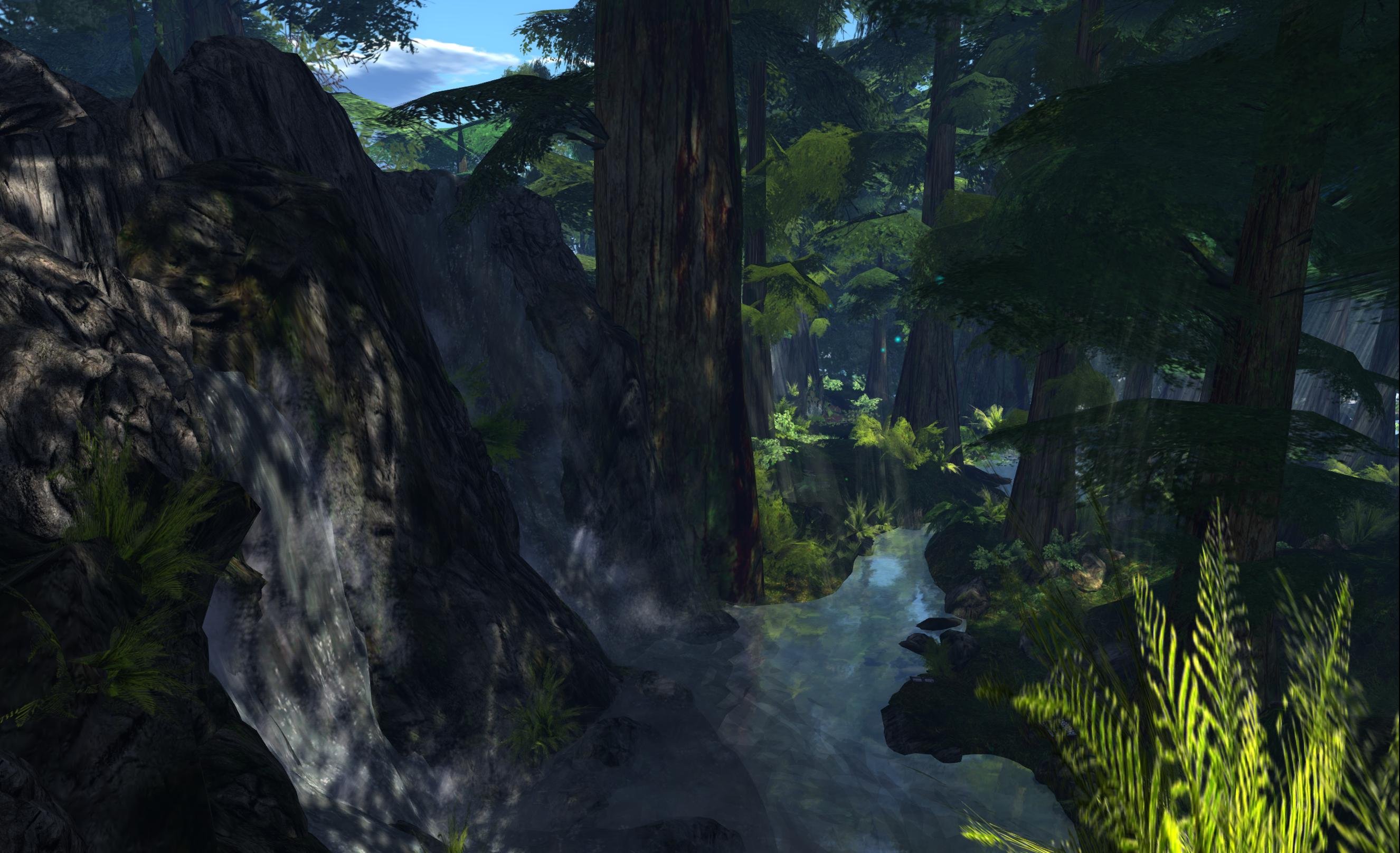
This is a region which at first glance lives up to its name: it’s a sim and it’s a forest – but it is also much more than that. It’s a collaborative effort by Bettina Tizzy, Thomtrance Otoole (who provides the Homestead region), landscape / sim artist Andrek Lowell (who has a store in the forest) and Eshi Otawara. It’s also a natural work of art.

Chakryn Forest
Chakryn Forest

You arrive amid stunningly tall redwoods and, if you have sound on (and I recommend you do), the sounds of a forest – and more. Here you can wander between the tall trees and admire the flowers and other flora or you can find places to sit and watch the world go by.

Floating on the water / among the trees are Elementals, some of which may have a communications orb floating nearby. Click on this, and the Elemental will task you with a quest which will see you roaming the forest in search of certain items which, once gathered, must be returned to the Elemental.

Chakryn Forest
Chakryn Forest

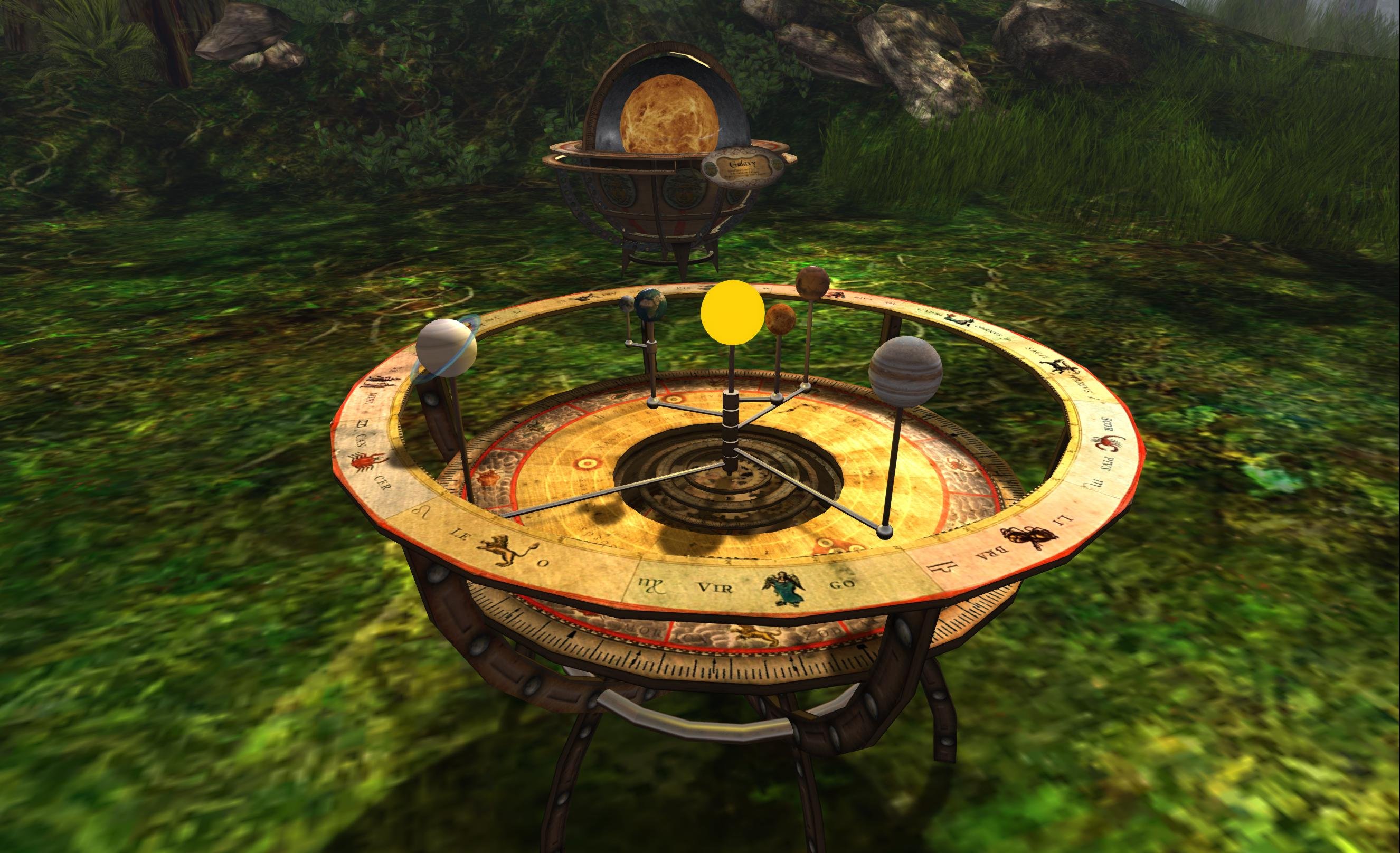
For those not given to quests, there are caves to explore and hidden places to find. The latter may be as simple as a hammock nestled in a rocky dimple, or as encompassing as and entire underground room by Eshi Otawara. There are also other lovely “finds” to discover.

Object entry is open (although auto return is set to one minute), so if you’re minded to put down a blanket you can; just make sure you’re sitting on it before the minute expires – and remember to pick it up.

Chakryn Forest
Chakryn Forest

For those who enjoy photography, this is another of those regions which encourage toying with windlight. I seriously doubt I’ve done the forest any justice at all; but for those who enjoy their SL photography, there is also a Flickr group.

Andrek Lowell is responsible for a number of forest themed regions across Second Life, including: Fruit Island’s Tropical Rain Forest, the Enchanted Unicorn Sanctuary and Magical Forest, and Brooks Forest, a part of Indigo Mertel’s marvellous East River Community (and adjacent to the airport there (see how I cleverly circled the subject back to the theme of my opening comments? 🙂 ).

And speaking of flying – region crossings can wait another day. I’m just going to sit under a tree here and ponder for a while…

Chakryn Forest
Chakryn Forest

Related Links

“Missing” prims: collaboration confirms viewer issue

As noted in my week 14 (2) update, prims missing from linksets  / builds is not a new issue, it’s been going on for some months now. In my own case, I’ve found that on teleporting to my home, an internal wall I’ve added to the build is routinely missing from my view. Right-clicking on the area of the wall has caused it to immediately render. As the wall in question tends to rez OK when I log-in to SL, I’ve tended to look on the matter as a viewer issue.

However, following the week 14 deployments, the incidences of missing linksets seems to have both risen in both numbers and size of “missing” prims. There have been numerous reports on the deployment discussion thread, including questions as to whether it is a viewer issue or server issue, and things seem to have become a lot more visible.

My Linden Home and "missing" prims on Wednesday 2nd April
My Linden Home and “missing” prims on Wednesday 3rd April. House is located on the SLS (Main) channel

My personal experience has been that things are worse – as shown in the image above. Prior to the April 2nd, The wall on the far side of the house, with the two pictures and turning to run under the bedroom balcony rails, would fail to render following a teleport. Since the Main channel deployment on Tuesday April 2nd, that wall now renders flawlessly – but a huge section of the linkset for the house itself is almost constantly missing following a teleport home. Camming around my home region reveals other houses in the same condition.

Such has been the level of discussion on the thread about the matter, lead by Wolfbaginski Bearsfoot and others, that Maestro Linden stepped-in and posted some pointers to help people determine if they have a viewer or a server-side issue, stating:

Hi Wolfbaginski, I would do the following to determine whether objects are missing due to a server bug or viewer bug:

1) Note whether the missing objects are whole linksets or only certain prims in linksets.  Interest list issues would generally affect whole linksets.  A viewer rendering issue or maybe a message-packing/decoding issue would seem more likley if only certain prims in linksets are affected.  It sounds like you’re seeing at least part of the linkset, since you’re able to select it.

2) While the prims are missing, enable Develop -> Render Metadata -> Bounding Boxes, and see what bounding boxes appear.  You should see a prim-aligned bounding box for each prim, as well as a world-aligned bounding box that covers the linkset.  If you see a bounding box where a missing prim is located, or if the linkset bounding box extends to include the missing prims, then it’s almost certainly the viewer’s fault.  

3) While the prims are missing, enable Develop -> Show Info -> Show Updates to Objects.  With this setting enabled the viewer will render a particle from each linkset/prim that it got an update for:

  • Red means a full update was received from the server (which has a full description of the object’s visual parameters)
  • Blue means a terse update was received (which only includes information about a few properties, such as position and velocity)
  • Green means that an ‘objectdelete’ update was received (meaning that the object was either derezzed or is out of range for the viewer)

If you enable this feature, and observe that the missing prims appear without a full object update being sent, then it’s probably a viewer bug (in that the viewer knew about the missing prims the whole time, but initially failed to render them).

 4) If you leave a region, then return to it, the viewer will load cacheable objects from the local cache, instead of getting the object details from the simulator.  If the object was loaded from cache and the appearance has been either fixed or broken since the last time you saw it, this would indicate a viewer bug.  You can verify that an object was loaded from viewer cache by enabling Develop->Rendering Metadata->Update Type; objects loaded from cache are shaded blue, with this mode enabled.

Continue reading ““Missing” prims: collaboration confirms viewer issue”

Pixieviewer Updated

Thomas Buchauer continues to work on Pixieviewer the in-browser viewer he’s developing for OpenSim use. The new release still sees the viewer restricted to his own Pixiegrid environment – which has also been updated – and brings with it changes to the UI and promises of things to come.

The new version surfaced at the end of March, together with a blog post from Thomas outlining the updates and looking ahead to what he’s planning to add to the viewer. The latter items Thomas lists as:

  • Private Messages and  User Profiles
  • Media Tools which will allow the display any Document (ppt, pdf, doc, xls etc) or any Image directly in-world without converting them first, and which will also will support video streaming
  • Guest Logins which will allow logins directly from a link without any questions and registration – clicking the link will open Pixieviewer and deliver a user to the desired destination.

Updated UI

Logging-in to Pixieviewer remains unchanged. However, once in-world the updates to the UI are immediately clear. The somewhat bland UI I critiqued in terms of viewability in my original look at Pixieviewer has been replaced by a series of coloured buttons which do much to improve using  the viewer when using it on smaller screens.

The updated Pixieviewer UI

The buttons at the foot of the window are divided into three groups – what I’ve mentally labelled “personal”, “tools”, and “system”.

  • On the left are the “personal” buttons:
    • A “Home” button for teleporting you home (which currently returns you to the default Welcome area of Pixiegrid
    • A “User Profile” button – which will eventually provide access to … user profiles
  • In the centre are the “tool” buttons:
    • Chat
    • IM
    • Find Places – list and visit other locations
    • Media tool – not yet active
    • Build – the in-world building tools
  • On the right are the “system” buttons:
    • File a bug report / suggestion
    • Open the Pixieviewer blog (in a separate browser tab)
    • View statistics on the current scene
    • Log-out of Pixieviewer

There is one additional button, located in top left corner of the screen. the Audio / Video Conferencing button. According to the blog entry for the update: “If a Place has Conferencing enabled, you will see a blue conference icon that allows you to join or create a realtime Audio Video conference with unlimited number of users.”

The initial Audio / Video Conference window and activating camera / nictrophone access
The initial Audio / Video Conference window and activating camera / microphone access

The option is currently being tested, and the Welcome Area has conferencing enabled. Clicking on the button opens a window which includes a an option to allow Pixieviewer to grab control of your microphone / camera, together with options for accessing camera and microphone set-up. There are also buttons to log-out of a conference and hide the conference window (handy if you are engaged in voice-only conferencing while doing things). It currently appears as if anyone clicking on the Audio / Video Conferencing button will join an existing conference.

All of the buttons are labelled with icons, but rolling the mouse pointer over them displays easy-to-read hovertips.

Places

PixA2-3The Places button allows users to teleport elsewhere on a grid. Clicking it opens a floater listing the available places, complete with an image of each. Clicking on the blue arrow iconed button to the right of a place in the list will teleport you there.

Currently, Pixie grid has three available areas: Welcome Area (to which you can also return by clicking the Home button on the bottom left of the screen), a sandbox and a “Mirror Island” region.

The sandbox region is obviously an area designed to encourage people to try-out Pixieviewer’s build tools (which remain unchanged in this release), although all three regions are at present all build enabled. Given the sandbox is available, people are encouraged to us it when trying the viewer, rather than cluttering-up the Welcome area.

Continue reading “Pixieviewer Updated”

Bay City Fashion Week 2013 announced

BayCityFashionMarianne McCann brings word that the Bay City Fashion Week 2013 will be held from the 20th through 29th April 2013.

The press release on the event reads in part:

Mid-Century Designers welcomed back

BAY CITY, SL (2nd April, 2012) – Bay City is again welcoming back designers of mid-century fashion for their second annual Fashion Week. The event seeks to show off the best of fashion that typifies Bay City’s theme: the American urban experience, between 1940 and 1965, perhaps best typified by Chicago circa 1950 and marked by a distinct deco influence.

Established designers will be provided with a space in the Bay City Fairgrounds, in the North Channel region, from April 20-29 to present the best in mid-century modern fashions for all Second Life avatars. Runway space and other amenities will be provided to help them highlight their designs.

According to the press release, designers already planning to present at the event include: 1-800-BETTIES, Vita Bella, Delicate Sensibilities, Electica, Fin, Ingenue, Sonatta Morales, Rhapsody, Schadenfreude, Volstead, and Robin (Sojourner) Wood.

About Bay City

Bay City is a mainland community, developed by Linden Lab™ and home to the Bay City Alliance. The Bay City Alliance was founded in 2008 to promote the Bay City regions of Second Life™ and provide a venue for Bay City Residents and other interested parties to socialize and network. It is now the largest Bay city group, and home to most Residents of Bay City.

For more information, or to participate in the event, please contact Marianne McCann in-world.