With the prize pool now standing at over L$560,000, the first entries in the University of Western Australia’s Pursue Impossible Art & Film Challenge have gone on display / are available for viewing.
As I’ve again had the honour to be a part of the jury this year, covering the event is something of a balancing act: as entries continue to be made, I may not be able to cover all of them; at the same time, as a blogger, I hope to be able to help promote the event and encourage people to both take part and see the art and machinima. So with this in mind, entries, etc which may be highlighted in this pages in the coming weeks should not be taken as any indication or personal preference on my part insofar as judging the challenges is concerned; but rather to illustrate any updates that appear.
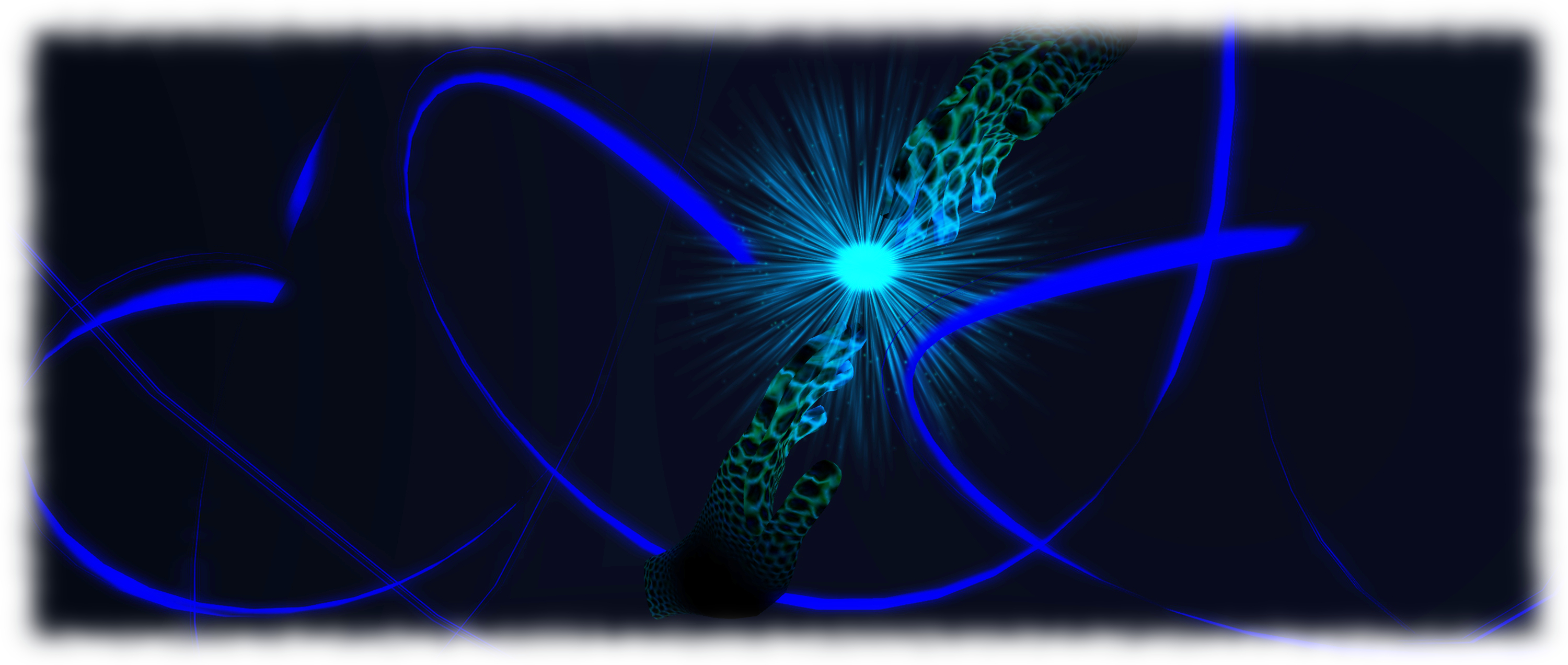
Delain Canucci: “Connecting with the world and unite” – Pursue Impossible
Entrants to the Pursue Impossible are free to submit to either the art category (1 item per entrant) or the machinima category (multiple entries if they wish) – or both. They are invited to consider what their “impossible” might be.
Is it, for example, the goal they have achieved or which they’ve seen achieved by their loved ones, friends, family or heroes achieved and which has sought to inspire them? What have they overcome which they once thought to be impossible? How do virtual environments empower people to visualise, create and push the boundaries of the possible? What are those things we deem to be impossible, but which we may still pursue and conquer as individuals or collectively? What are the impossibilities of the mind or heart or soul? Do we see the seemingly impossible and try to overcome it, or do we allow it to overpower us?
Art submissions must have COPY permissions, and must not exceed 150 LI, and must be free from any copyright issues – if third-party content is used in an entry, permission must and been sought and granted from the creator for its inclusion in the Challenge. Machinima entries should preferably no longer than 4 minutes and 30 seconds, must be specifically made for this challenge. All submissions should allow casual viewers to interpret how the theme is represented, or provide a means by which the piece can be understood in the context of the challenge theme.
For full details on the challenge, including submission guidelines and rules, please refer to the UWA’s Pursue Impossible announcement.
The closing date for all submissions is midnight SLT, on October 31st, 2015, and winners will be announced in December 2015.
As well as the art and machinima category prizes, there will also be special cash prizes for audience participation. The prize pool for this currently stands at L$15,000 apiece for the two categories (art and machinima). So even if you’re not submitting an entry yourself, it’s worth visiting the UWA’s gallery space to view the art entries and keeping an eye on the UWA blog and the SL Artist UMA MachinimUWA VIII pages for machinima entries.
I’ll have news on the audience participation requirements once they have been officially announced by the UWA directly.
On Saturday August 1st, 2015, the University of Western Australia (UWA) announced the opening of their 2015 Grand Art and MachinimUWA Challenges. Jointly entitled Pursue Impossible, between them, they feature an opening prize pool in excess of L$400,000.
The Challenges are sponsored by Tom Papas & SciFi Film Festival, Reign Congrejo & BOSL, LaPiscean Liberty & SL Artist, AviewTV, Pixel Bits, Virtlantis, Phillip Vought, Carolyn Steele & York University (Canada), Taralyn Gravois, UWA Marketing & Communications, as well as the UWA Virtual Worlds Project.
Pursue Impossible invites entrants to consider what their “impossible” might be. Is it the goal they have achieved or which they’ve seen achieved by their loved ones, friends, family or heroes achieved and which has sought to inspire them? What have they overcome which they once thought to be impossible? How do virtual environments empower people to visualise, create and push the boundaries of the possible? What are those things we deem to be impossible, but which we may still pursue and conquer as individuals or collectively? What are the impossibilities of the mind or heart or soul? Do we see the seemingly impossible and try to overcome it, or do we allow it to overpower us?
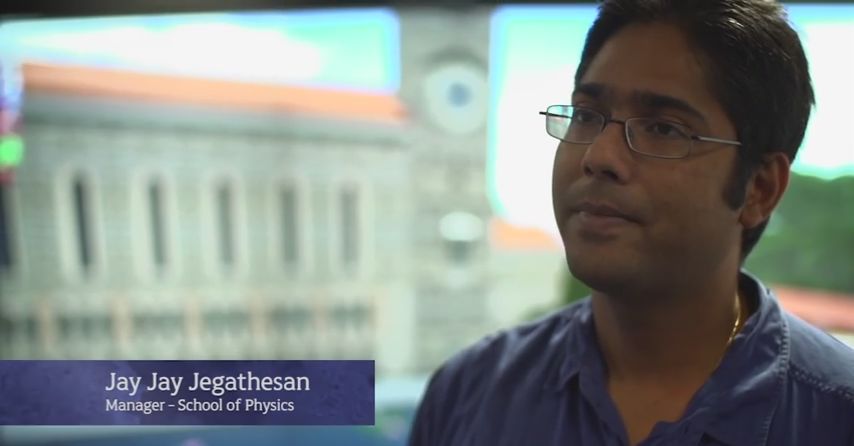
Jay Jay Jegathesan (Jayjay Zifanwee in SL), discusses Second Life and the achievements it has brought in a special video marking the launch of the UWA’s new brand, which is reflected in the new Grand Art and Machinima Challenge
“Those who pursue what may at first seem impossible are the ones who keep the world turning,” UWA’s Jayjay Zifanwe, Manager of the School of Physics at the university states of the theme. “What if Ghandhi did not believe he could overcome the impossible for his country? What if Dr Fiona Wood did not believe in second skin for burn victims? What if Professor Barry Marshall did not believe in himself and use himself as a human guinea pig for the benefit of mankind?”
The theme is also a reflection of a new brand launched by UWA in May 2015, which featured Jayjay’s work in developing a UWA presence in Second Life, and which is promoted by the university in video which may help get entrants to the Challenge thinking as well.
Please refer to the official UWA blog post for the major rules and considerations in entering the Challenge, and to find out about the prizes in the art and machinima categories. However, in summary:
Each category (art and machinima) currently has a prize pool of L$195,000, with a L$50,000 first place prize, and 11 prizes overall
Entrants are free to submit entries to either the art or the machinima categories, or to both if they wish
Art entry notes:
Art entries are limited to one per entrant, should preferably by submitted with COPY permissions, and must not exceed 150 LI, and must be free from any copyright issues – if third-party content is used in an entry, permission must and been sought and granted from the creator for its inclusion in the Challenge
Sounds, lighting, particle effects, etc., should be scripted to turn off when not in use. You may be asked to provide a revised entry if it is too intrusive or interferes with the display of other works
Exceptionally large or complex builds will be placed on platforms above the gallery with a teleport (TP) device and poster on the gallery floor and a return TP on the platform. You may provide a TP object and/or poster (no more than 2 LI) or we can place one for you. TP objects should be set to copy/mod and given to FreeWee Ling to add scripts and to place
Machinima entry notes:
There is no limit to the number of machinima pieces an entrant might submit; and while not a “hard” rule, machinima entries should preferably be no more than 4 minutes and 30 seconds in length, although this is not a “hard” rule
All submitted machinima must be made specifically for this challenge, and must include “For The University of Western Australia’s MachinimUWA VIII: Pursue Impossible” in the opening credits
Machinima entries do not have to be filmed within the UWA’s Second Life regions, but there will be a special prize available for a film which starts at the Winthrop Clock Tower and Reflection Pond, the starting pond for the UWA’s own Pursue Impossible video (above)
All entries to the challenge should be able to be interpreted by the casual viewer as representative of the theme.If the link is difficult to ascertain within a piece of art, it should be referenced in a note card accompanying the work; if it is difficult to ascertain in a video, it should be referenced in the notes accompanying the film on the web.
Never Say Never – Love Transcends Borders, by Sharni Azalee, the arts category Grand Prize winner in the 2014 Grand Art and MachinimUWA Challenge – will you be this year’s winner?
Art submissions should be made via the art entry receiver at the UWA Art Challenge Platform in Second Life, accompanied by a note card which includes your name, city, name of artwork and a description of artwork.
Machinima entries should be uploaded to any publicly accessible location, preferably YouTube or Vimeo, and the details of the entry (name, creator, location, etc.) supplied to Jayjay Zifanwe and LaPiscean Liberty in-world or by e-mailing the details to Jayjay (jayjayaustralia@hotmail.com).
The closing date for entries is midnight SLT, on October 31st, 2015. Winners will be announced in December 2015.
When entering, do please note that as with all the UWA’s public programmes, an entry may not be accepted if it is deemed to be excessively abusive, violent, offensive, bullying, harmful, insulting, or contains inappropriate material or excessively foul language. Depictions of explicit sexual activity, as well as material deemed offensive based on race, religion, gender, or sexual orientation are not appropriate for the Challenge, and may be rejected. Final decisions in these matters will be made by the UWA Cultural Precinct.
As with the UWA’s Grand Challenges, there will also be a set of audience participation prizes available. The pool for this currently stands at L$15,000 apiece for the two categories (art and machinima), and I’ll have more details on how you can enter this aspect of the challenge in due course.
Above: Tutsy Navarathna’s Grand prize winner in the Machinima category 2014 Grand Art and MachinimUWA Challenge
Over the last few years, it has been a delight and pleasure for me, through these pages, to help showcase the UWA’s work benefiting the arts in Second Life. Entries to their Challenges a special arts programmes have always been of an incredible standard, and I’ve enjoyed viewing them as a both a member of the public and more recently as a member of the judging panel. It is in this latter capacity that I’m looking forward to seeing the diversity of entries submitted in both categories this year, and would like to offer all those who do enter, the very best of luck!
JayJay Zifanwee of the University of Western Australia (UWA) informs me that The Sci-Fi Film Festival will once again be held in Australia, hosted and sponsored by the Parramatta City Council.
Taking place over the three days of October 30th through November 1st inclusive, the Festival will once again include the Project Sci-Fi Challenge, in which film makers and machinima makers from around the world are challenged to create a short sci-fi film in just 30 days.
The UWA is once again partnering with Project Sci-Fi organisers Screen My Shorts, and will cover the Challenge entry fees for any machinima filmed in Second Life. There is a prize pool of AU $5,750 on offer, and according to JayJay, Second Life machinima makers should be eligible for the Animation and International Film categories as well as the overall prizes.
“We feel that in a SciFi category, those filming in Second Life have a huge advantage over those using conventional filming methods, and we hope that all of you machinimatogtraphers and filmmakers in Second Life use this advantage fully,” Jayjay said.
It has certainly been fertile ground for SL machinima makers in the past. In 2013, Tutsy Navarathna was the best overall winner in the machinima category of the 2013 Challenge (then sponsored by Western Digital) with his brilliant The Residents, a remarkable tale of worlds within worlds, and a clever twist involving SL (seen above), with Erythro Asimov taking the 2nd prize with Looking Around (below), as well as several other prize-winning entries.
So, if you’re interested in applying, take a read through the guidelines linked-to above, and make sure you read the Project Sci-Fi Guidelines and the official rules to fully understand the requirements of entry and the competition time line. When you enter, please consider letting Jayjay know, either via in-world contact or via e-mail (jayjayaustralia-at-hotmail.com), and good luck!
FreeWee Ling is perhaps best known for her tireless work on behalf of the University of Western Australia (UWA), and co-organiser and curator of the UWA’s art-related projects, activities and galleries within Second Life.
At the end of 2014, she rightly gained recognition from the Australian Department of Education for this work, and was awarded an Endeavour Executive Fellowship that allowed her to travel from her home in the eastern United States to spend four months at the UWA in Perth, Australia, where she was based with the UWA’s Department of Physics.
FreeWee was encouraged to apply for an Endeavour Executive Fellowship by colleague Jayjay Zifanwe (Jay Jay Jegatheva in the physical world, Manager of the School of Physics at UWA) and her application was supported by a letter of recommendation from UWA.
Now, JayJay, FreeWee and the UWA are encouraging other Second Life residents to take the opportunity to follow in FreeWee’s footsteps, and applying for a 2016 Endeavour Executive Fellowship and, if selected by the Australian Department of Education, travel to UWA.
News of this was passed to me by Carmsie Melodie, who Tweeted me to point to a write-up on her blog. The same write-up is also available on the UWAinSL blog, where FreeWee has also written about her experience as a Fellowship awardee – so if you are interested in applying, do make sure you read FreeWee’s article.
What is the Endeavour Executive Fellowship?
The Endeavour Executive Fellowship is one of a number of Endeavour Scholarships and Fellowships offered by the Australian government to international applicants from participating countries who are considered high achievers in business, industry, education or government.
The Endeavour Executive Fellowship is a 4-month study period in Australia, focusing on learning and building skills and knowledge through a host work environment in the applicant’s field or area of expertise, rather than through formal enrolment in a study programme. It offers financial support (up to Australian $18,500) towards professional development opportunities for the successful applicant, and an opportunity to study at UWA for four months.
Image courtesy UWA
Commenting on her experience in applying, FreeWee said:
The Endeavour application process was fairly easy, all done online. You need to describe what you want to do, get a couple of people to write recommendations, get certified copies of transcripts, etc. But it’s all carefully laid out in the online application. I’m happy to answer any questions you might have about it. You can’t win if you don’t enter!
Once I was notified that my application was approved, the program turned me over to a caseworker who supported me from leaving for Perth to arriving back home. My caseworker was great, always responded quickly to any concerns I had and monitored my progress throughout my stay.
Should you decide to apply for the Executive Fellowship, please be sure to contact Jayjay (in-world via IM or note card or via e-mail to: jay.jay-at-uwa.edu.au) and / or FreeWee (in-world via note card) for advice and support on how the UWAinSL can assist you in your application.
Do note as well that submissions for Fellowship applications close on Tuesday 30th June, 2016.
With thanks to Carmsie Melodie for the pointer via Twitter.
Now open at LEA 6, in what is the final installation under the UWA’s Full sim Art series as we’re currently familiar with it, is Rebeca Bashly’s When Life Gives You Apples … Run
As Jayjay Zifanwee notes while introducing the piece in the UWA blog, it is fitting that Rebeca should be the final artist to participate in the Full sim Art series in its current format; in 2011, she was the very first artist to participate in the series – indeed, in any LEA exhibition – when her remarkable interpretation of Dante’s Inferno opened in October of that year (my review of which you can read here).
When Life Gives You Apples … Run Offers a provocative look at the subject of the abuse of women, either by others or by themselves. “Looking at various myths, legends and fairy tales, apple seems to be pretty unfortunate for a woman. When an apple appears in a story, you know that something will go bad,2 Rebeca says of the piece. “From Eve, thru Greek mythology to Snow White there was always a catch with an apple. It is beautiful, delicious, tempting, seductive. A Perfect disguise for all bad that can come. I use it as a symbol for the monstrosities that woman too often don’t recognise as such in its early stages.”
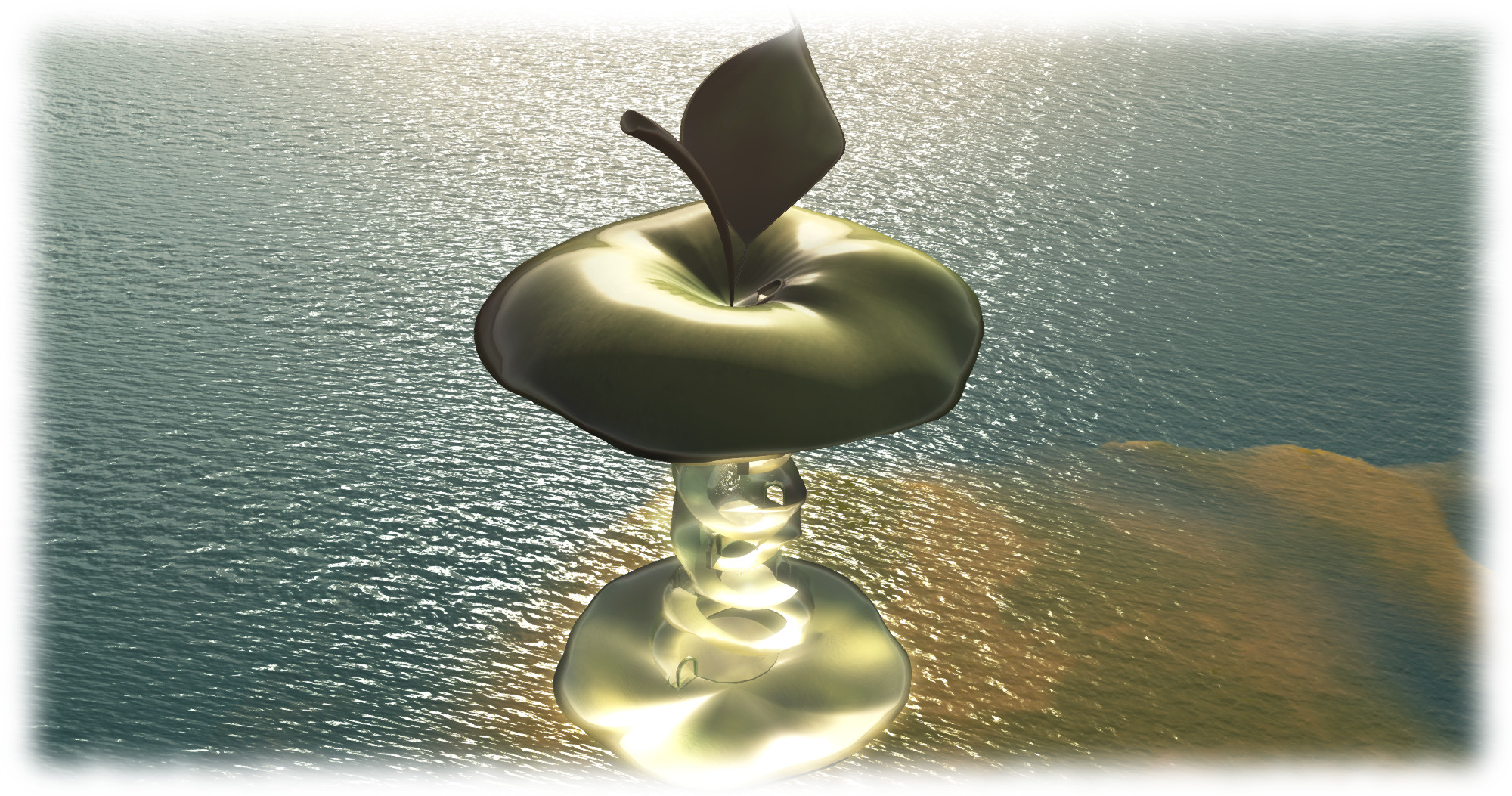
And indeed, the central part of the installation is – an apple. A quiet incredible apple in fact – or at least the core of one, as it has clearly been eaten. Constructed of mesh and over 70 metres tall, the apple sits on the ground, stalk pointing to the sky, the uneaten flesh at its lower end serving as the arrival point, where a smaller apple sits, offering visitors an introductory note card.
Winding up through the the core of the apple is a tunnel visitors are asked to follow. This leads the way up to a couple of teleport platforms at different levels within the apple’s core, a sculpture in occupying the space between them; and it is by taking these teleports that the visitor is led to the parts of the installation dealing more directly with the theme of abuse (or perhaps “subjugation” might be an equally valid term) either inflicted from within or without.
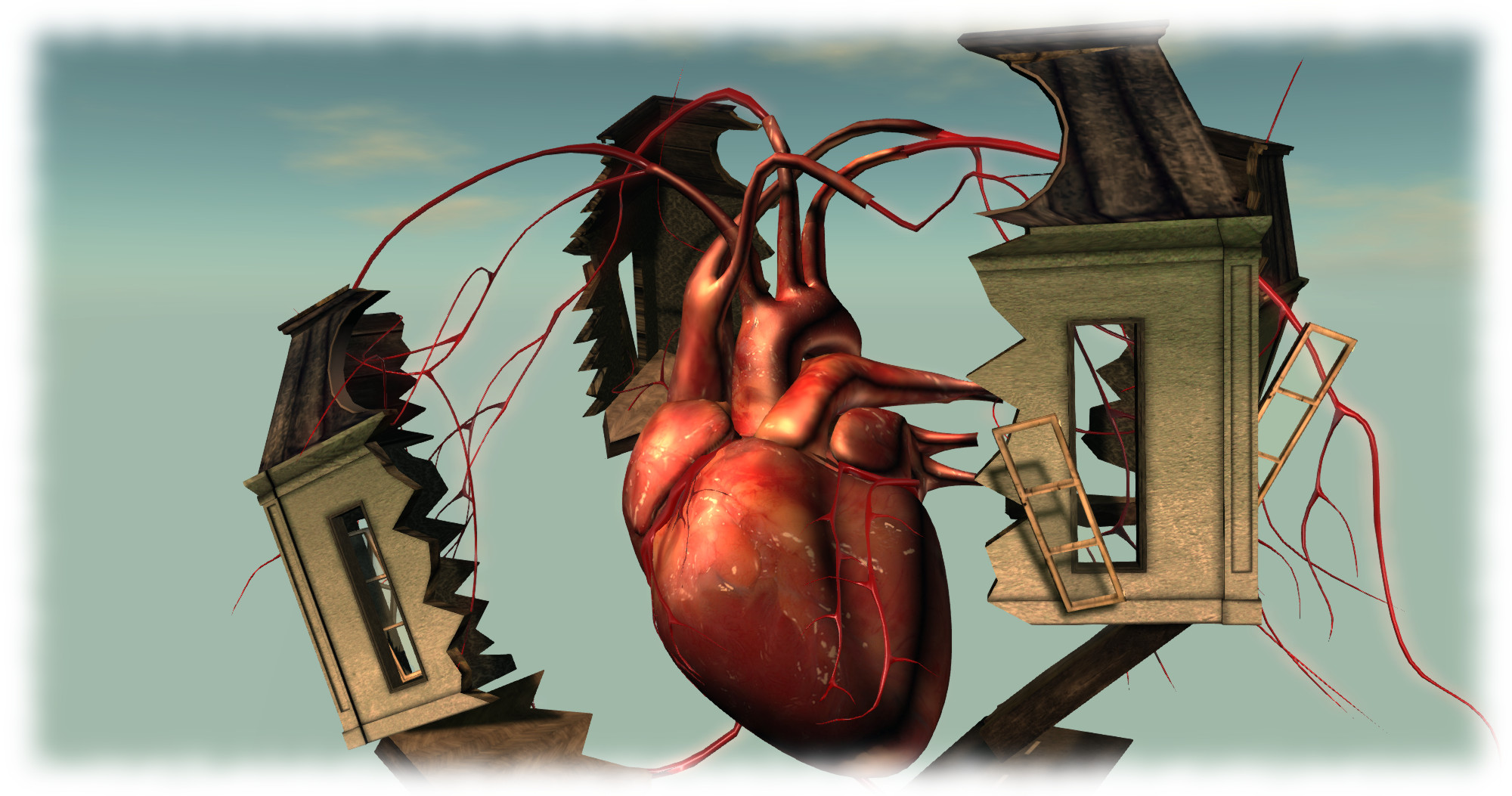
In the first, Home Sweet Home, we see a house being torn apart by a giant heart, both suspended above an open road – itself an image of freedom. The accompanying story suggestive of a person caught in a relationship marked by the abuse of lairs, deceptions, stories, words, finally breaking the circle and finding freedom in herself and in the world at large.
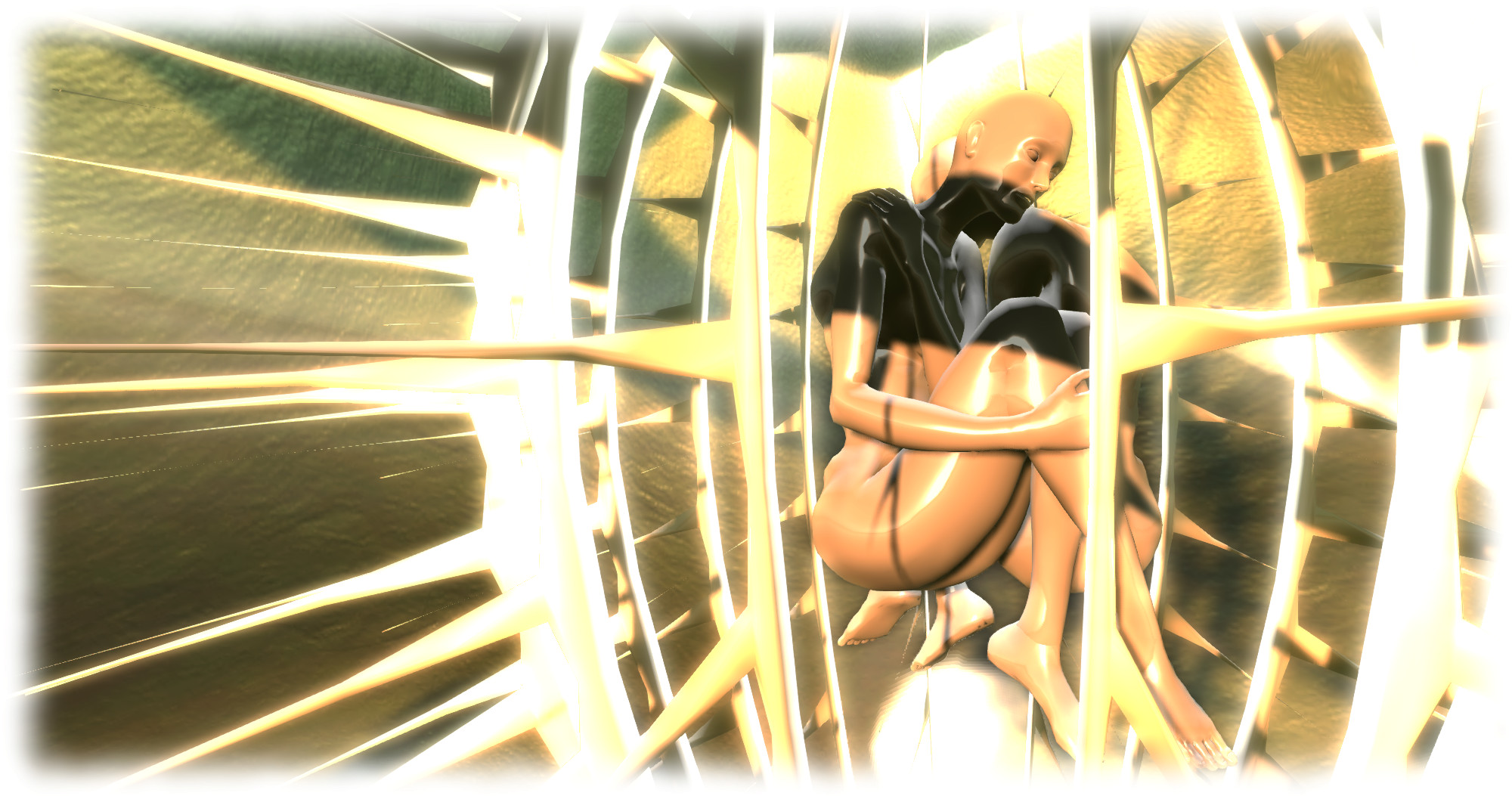
In the second, the subject matter focuses on self-abuse in the form of anorexia nervosa and Bulimia nervosa, and the destructive effects they can have on those stricken with them. This is also accompanied by a story, that of the Doll’s House.
There is strong symbolism throughout this installation, be it with the story platforms, or the sculpture of the caged women. Even the tunnel winding up through the apple core has a meaning of its own, for example; an echo of the way in which maggots can bore through an apple, ruining its wholesome appearance via decay from the inside, just as relationships or lives which might appear whole from from outside are slowly decaying from within, as with the vignettes presented by this build.
As noted towards the top of this article, When Life Gives You Apples … Run is a provocative piece; but one of Rebeca’s strengths is that she’s never fought shy of making people think. As such, this is a worthy piece on which to close the current UWA Full Sim Art series.
Launched on Monday July 21st, 2014, the University of Western Australia (UWA)’s Transcending Borders brought together their 7th MachinimUWA and their 5th UWA Grand Art Challenge into one event, with a combined prize pool in excess of L$ 1.03 million.
Transcending Borders challenged entrants to interpret the title of the competition in any fashion they deem applicable, and produce a 3D artwork (in no more than 150 prims) or short film based on their interpretation, be it on transcending borders of space and time, love and loss, nationally or culture or language, or the real and the virtual, and so on. The result was a glittering array of 67 artworks and 38 machinima, representing a broad diversity of interpretations of the theme, with the winners celebrated at a special awards ceremony held on Sunday, December 14th, 2014, which I was honoured to attend as a member of judging panel, and which I reported on here and here.
On Saturday, January 24th, the UWA announced that a special catalogue of the challenge has now been produced. At 212 pages in length and lavishly illustrated, the book covers both the art and machinima challenges, with individuals photographic spreads covering each of the art entries, complete with the artists’ statements on their work, and the machinima entries presented by individual stills from each of the films entered.
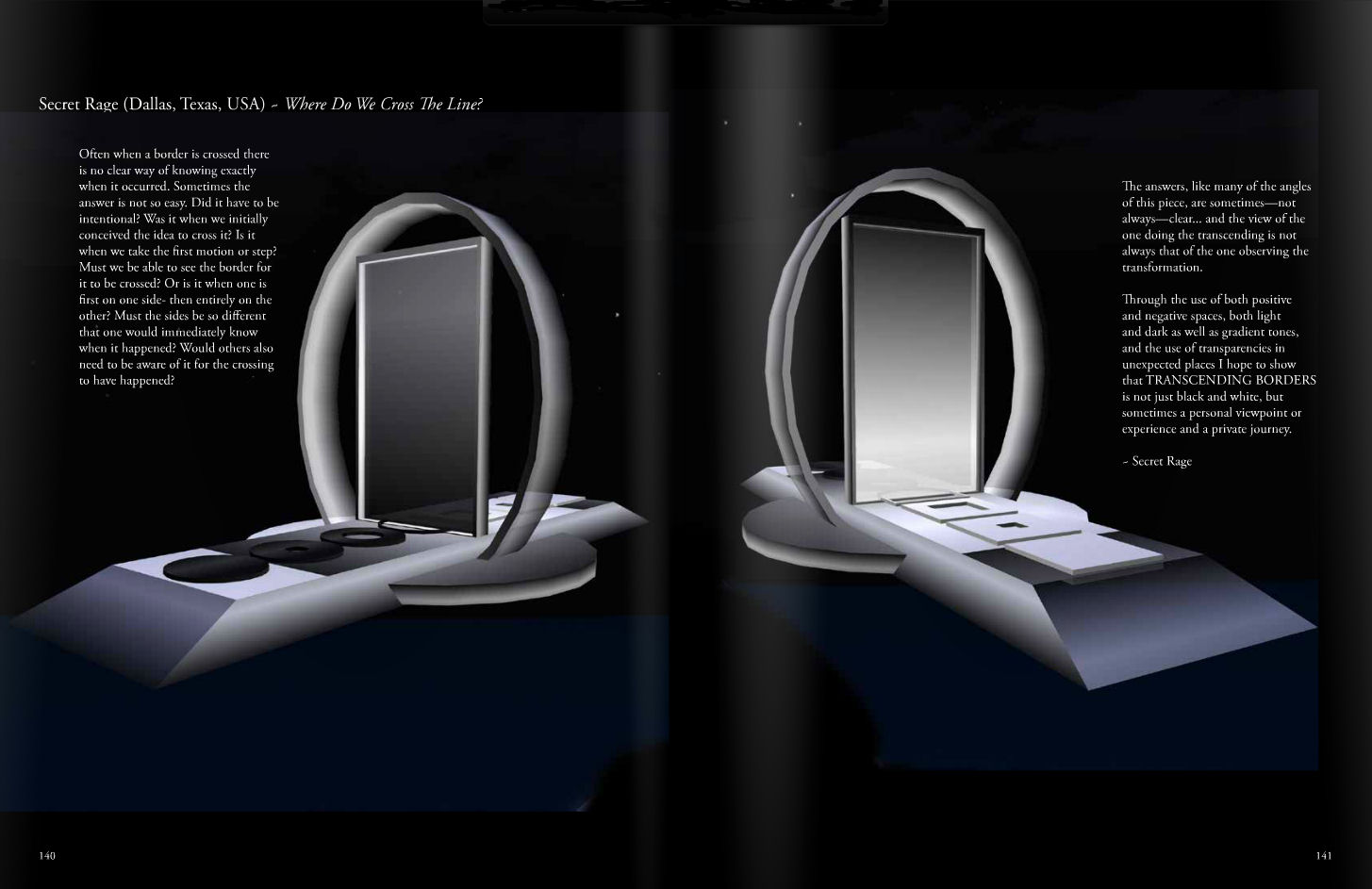
Art entries from Transcending Borders are present in 2 or 4 page photographic spreads, complete with notes from the artists
The book, Transcending Borders has been produced as a part of the UWA Studies in Virtual Arts e-journals (SiVA) series, and can be viewed on-line. Printed copies can also be obtained from the UWA and shipped to you. Those interested in owning a copy as a commemoration of the challenge and of both art and machinima in virtual worlds, should contact Jayjay Zifanwe in-world.
As someone fortunate to have a copy of the last title in the series, Project Freedom, I cannot stress enough how beautifully produced the books in the SiVA series are. Edited by the UWA’s curator, FreeWee Ling, books in the series are compiled and produced with a huge amount of care, and the photographs of the artwork always capture the essence and beauty of each piece.
In the meantime, and if you haven’t done so already, you can see all of the art pieces on display for the time being at the UWA Challenge Gallery, while a list of machinima entries, with links to each film is also available.





 Inara Pey: Living in a Modemworld