Boldly going …

On August 25th 2012, while the eyes of the global space community were focused almost entirely on the happenings in a crater on Mars, a significant event took place approximately 18 billion kilometres (11 billion miles) from Earth. Voyager 1 passed through the heliopause, the boundary between what is regarded as the “bubble” of space surrounding the solar system (heliosphere) which is directly influenced by the Sun, and “true” interstellar space.

The heliosphere and its component elements

That the spacecraft might be nearing the so-called “bow shock” area where the solar wind meets interstellar space was indicated by engineers and scientists working on the Voyager project in June 2012; however, it was not until September 2013 that NASA JPL felt confident enough in the data they’d received to confirm that Voyager 1 had in fact passed into interstellar space in August 2012, the first man-made object to have done so, some 35 years after having been launched from Earth in what was a highly ambitious programme of deep-space exploration.

The Voyager programme actually had its roots in a much more ambitious programme, the so-called Grand Tour. First put forward by NASA engineer Gary Flandro,  The Grand Tour proposed the use of a planetary alignment which occurs once every 175 years, together with the potential to use the gravities of the planets as a means by which space probes could explore the outer planets of the solar system.

The idea of using gravity of the planets to help propel a space craft had first been realised by a young mathematician, Michael Minovitch, in 1961. With the aid of the (then) fastest computer in the world, the IBM 7090, Minovitch had been trying to model solutions to the “three body problem” – how the gravities of two bodies (generally the Earth and the Sun) influence the trajectory and velocity of a third (generally a comet or asteroid) moving through space; something astronomers and mathematicians had long wrestled with.

The men behind Voyager: Michael Minovitch (l), circa 1960; Gary Flandro (c), circa 1964; and Ed Stone (r), the project scientist and long-time advocate of the mission, circa 1972 (Stone later when on to serve as NASA's Director at JPL)
The men behind Voyager: Michael Minovitch (l), circa 1960; Gary Flandro (c), circa 1964; and Ed Stone (r), the project scientist and long-time advocate of the mission, circa 1972 (Stone later went on to serve as NASA’s Director at JPL)

Through his work, Minovitch showed how an object (or space vehicle) passing along a defined trajectory close to a planetary body could, with the assistance of the planet’s gravity, effectively “steal” some of the planetary body’s velocity as it orbited the Sun, and add it to its own.

At the time, his findings were received with scepticism by his peers, and Minovitch spent considerable time and effort drawing-up hundreds of mission trajectories demonstrating the capability in order to try to get people to accept his findings. But it was not until 1965, when Flandro started looking into the upcoming “alignment” of the outer planets (actually a case of the outer planets all being on the side of the Sun, rather than being somehow neatly lined up in a row) due in the late 1970s, that Minovitch’s work gained recognition.

Recognising the opportunity presented by the alignment, Flandro started looking at how it might be used to undertake an exploratory mission. In doing so, he came across Minovitch’s work and realised it presented him with exactly the information needed to make his mission possible, and so the Grand Tour was born.

Voyager: the most prominent element of the vehicle is the communitactions dish; below and to the left of this is the nuclear RTG power source; extending out to the top left is the insstrument boom, and to the right the imaging boom and camera system
Voyager: the most prominent element of the vehicle is the communications dish; below and to the left of this is the nuclear RTG power source; extending out to the top left is the instrument boom, and to the right the imaging boom and camera system

This mission would have originally seen two pairs of spacecraft launched from Earth. The first pair, departing in 1976/77 would form the MJS mission, for “Mariner (then the USA’s most capable deep-space vehicle)-Jupiter-Saturn”. These would fly by Jupiter and Saturn and then on to tiny Pluto; while a second pair of vehicles launched in 1979 which would fly by Jupiter, Uranus and Neptune.

Budget cuts at NASA following Apollo eventually saw the Grand Tour scaled-back to just two vehicles, Voyager 2 and Voyager 1, but the overall intent of the mission remained intact under the Voyager Programme banner, now led by Ed Stone. In the revised mission, both spacecraft would perform flybys of Jupiter and Saturn, with Voyager 2 using Saturn to boost / bend it on towards Uranus and from there on to Neptune, while Voyager 1 would approach Saturn on a trajectory which would allow it to make a flyby of Saturn’s huge Moon Titan, of significant interest to astronomers because of its thick atmosphere.  This route would preclude Voyager 1 from reaching Pluto, as it would “tip” the vehicle “up” out of the plane of the ecliptic and beyond even Pluto’s exaggerated orbit around the Sun, and push it onto an intercept with the heliopause.

Continue reading “Boldly going …”

A Dragon of a different kind

As I’ve previously posted here on occasion, and as friends on Twitter will know, I has a soft spot for space exploration. Last year I wrote some pieces about the space shuttle Endeavour, and included some favourite images of her prior to her final return to Earth.

Endeavour and the shuttle fleet have now gone; retired to museums and their missions confined to history. However, the last week or so saw the opening of a new chapter in low-Earth orbit space operations as the Dragon space vehicle, developed by Internet entrepreneur Elon Musk’s SpaceX Corporation, became the first privately funded vehicle to dock with the ISS under NASA’s Commercial Orbital Transportation Services programme.

May 22nd 2012: Dragon lifts-off atop SpaceX’s own Falcon 9 launch vehicle (image: SpaceX)

First flown in 2010, the Dragon space vehicle was put through its paces during May 2012 in an aggressive mission to demonstrate its core capabilities of launching a payload to orbit, rendezvousing with the ISS, where it would be captured by a robotic arm on the station and manoeuvred into a hard dock for cargo transfer, before returning to Earth with a payload from the station (in this case, 590 kilos of items, including “quick return” packages intended to demonstrate that SpaceX could return time-critical experiments from the ISS and deliver them to NASA within 48 hours of the Dragon vehicle detaching from the station).

Dragon is designed to be a highly versatile workhorse vehicle, capable of delivering some 3,310kg of cargo to the ISS and returning up to 2,500kg safely to Earth. What’s more the vehicle’s heat shield is designed to withstand re-entry velocities from possible lunar and Mars missions.

Russia’s Progress (l), Europe’s ATV (c) and Japan’s HTV (r)

The ability to make a return to Earth places Dragon is a league of its own compared to the other cargo vehicles currently operating to resupply the ISS. The Russian Progress vehicle, European ATV and Japan’s HTV all burn-up in the upper reaches of the Earth’s atmosphere after departing the space station.

Nor will Dragon be limited to cargo flights: development is under way of the DragonRider variant – a vehicle capable of lifting up to seven people to  / from the ISS. Two further variants of the vehicle are under development: DragonLab, which will see the vehicle operate commercially on its own as an unmanned orbital research platform, with full return-to-Earth capabilities; and RedDragon, which has been proposed as a NASA Discovery mission slated for 2018, which would see a modified version of the unmanned Dragon fly to Mars and deliver a 1-tonne payload to the surface in order to try to sample subsurface water reservoirs.

Dragon approaching the ISS, May 25th 2012 (NASA)

Dragon was launched on its initial COTS mission on May 22nd, 2012. Once successfully in orbit, it commenced a 2-day “chase and rendezvous” flight with the ISS, gradually easing its way up to the space station, where it performed a series of check-out manoeuvres, prior to making its final approach to the station ready for capture and docking on May 25th.

The ISS captured by Dragon’s thermal camera prior to final rendezvous and capture (SpaceX)

Rather than docking directly with the station, as with the likes of the Shuttle, Progress and Europe’s ATV, Dragon gently manoeuvres up close to the station prior to a robotic arm on the ISS itself being used to “grab” the vehicle and then gently ease it into a berthed positioned against the station’s Harmony module.

May 25th capture: “Houston, we have a Dragon by its tail!” Astronaut Don Petit reported upon successfully grappling the vehicle with a robot arm (NASA)

Once successfully docked, Dragon spent several days mated to the ISS while the station crew off-loaded some 460kg of food, water and other items, then packed the vehicle with 560kg of equipment and items for the return to Earth.

Docked! (NASA)

Return operations commenced on May 31st, when the robot arm was used to detach Dragon from the ISS and move it to a distance of some 10 metres before releasing it. Manoeuvring thrusters then gently backed the vehicle away from the ISS prior to it commencing a series of manoeuvres that moved it ahead of the station by a few hundred kilometres, and started the de-orbit process.

Departure (NASA)

After successfully re-entering the Earth’s atmosphere, the main capsule having been detached from the orbital “trunk” of the craft, Dragon safely deployed its parachutes and splashed-down on-target a little under 900 kilometres off the coast of California, where it was recovered by waiting support ships, bringing the flight test phase of the mission to a successful conclusion.

A Dragon in the water (SpaceX)

Dragon is due to fly to the ISS once more in September 2012 in the first official Cargo Resupply Mission, which will see it carry a full load into space. This will be followed in October by Orbital Science’s Cygnus vehicle (which, like Progress et al, is designed to burn-up on re-entry), to mark the further expansion of the COTS programme.

Orbital Sciences’ Cygnus vehicle

For now, however, all eyes remain on SpaceX and their remarkable – and potentially highly versatile – Dragon vehicle; here’s to a successful mission in September! In the meantime, I’ve put together a little slideshow of images from NASA and SpaceX images highlighting the mission.

(Click here to see the slideshow full screen)

Wow…just wow!

Dad e-mailed this video link, shot from Soyuz TMA-20 on the 8th June 2011.

Endeavour: home for the last time

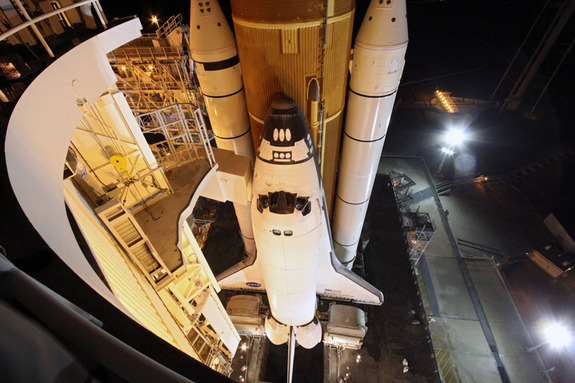
Endeavour on the launch pad prior to STS-134 (image NASA / Space.com)

The space shuttle Endeavour returned home safe and sound today, after her last 16-day flight into space – congratulations to Commander Mark Kelly and his crew on a remarkable mission which saw the last ever space walks to be conducted from a space shuttle, and the effective completion of the International Space Station – a task Endeavour herself started. Best wishes as well to Commander Kelly’s wife, Gabrielle Giffords, on her continued recovery following the terrible events in Arizona.

I’ve already written as to why the Endeavour is special to me, and I included a few facts about her, as well as posting some of my favourite images of her. To round-out her career, I thought I’d look at her “by the numbers”.

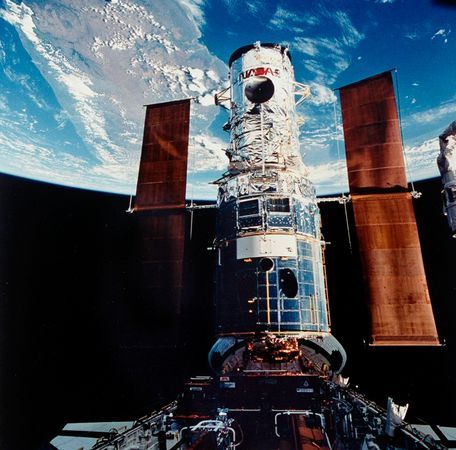
1: The number of times Endeavour has visited the Hubble Telescope in orbit. She undertook the first servicing mission (STS-61) in December 1993. The mission famously corrected the telescope’s faulty optics, effectively giving it a contact lens to wear.

3.5: The number of years it took construct Endeavour. Work commenced in September 1987, and was completed in April 1991.


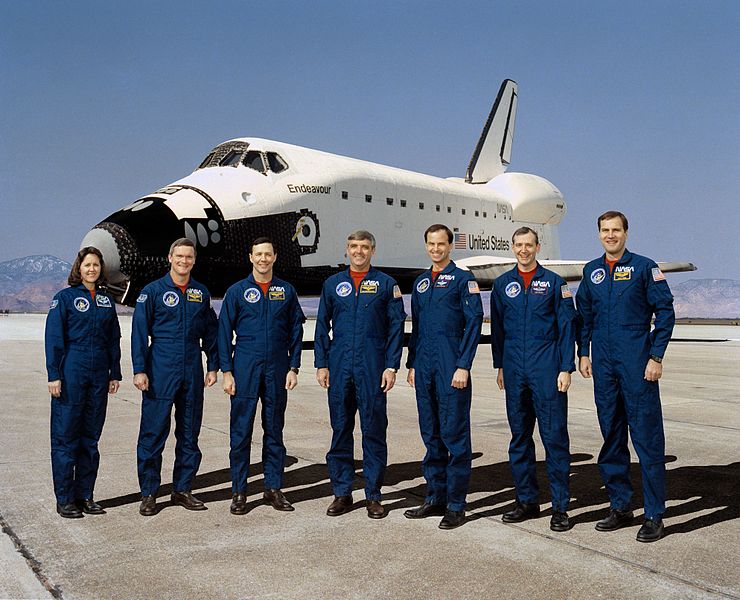
The First: The crew of STS-49, Endeavour’s first mission into space

7: The number of times Endeavour landed at Edwards Air Force base, California.

10: The original anticipated lifespan (in years) for each shuttle vehicle in the fleet.

12: The number of times Endeavour visited the International Space Station. She started with the very first US mission to the station (STS-88, December 1998, carrying the Unity module), and finished with the final construction flight for the station, STS-134 in May 2011.

15 days, 17 hours, 38 minutes, 51 seconds: duration of Endeavour’s final mission.

19: The number of years Endeavour saw service. She first flew on May 7th, 1992, on mission STS-49, and was last launched on May 16th, 2011, returning home on June 1st on STS-134.

25: The number of missions Endeavour flew in her career.

100: total number of missions each shuttle was originally expected to undertake.

173: The number of crew Endeavour has flown into orbit. to orbit.

280: The total number of days Endeavour has spent in space.

4,429: The number of orbits Endeavour has made of the Earth.

The Last: the crew of STS-134, Endeavours final mission

6,154: The number of entries students gave to call the new space shuttle Endeavour after HMB Endeavour, the vessel captained by James Cook on his voyage to the South Pacific.

17,400: The speed (mph) at which Endeavour travels to remain in orbit (roughly Mach 25, five times the speed of a bullet).

122 million: total distance (rounded in miles) Endeavour has travelled during 25 missions.

$450 million: Average cost to launch a space shuttle.

$1,500 billion: Average cost of a complete shuttle mission.

$1,800 billion: How much it cost to build the Endeavour (in 1987 terms), or around 1/2 the cost of the original shuttle vehicles in the fleet, thanks to the use of “spare parts” that were available.

The last touchdown: Endeavour returns to Kennedy Space Centre, June 1st, 2011

Endeavour: Favourite images

I’ve already blogged about the affinity I have for the space shuttle Endeavour and how it came about, and while there are many, many photographs from NASA and others that define the space shuttle era, these are the ones that symbolise, for me, the career of the Endeavour.

Ready to fly: STS-49, Endeavour’s maiden flight (Crew (L-to-r): Mission Specialist (MS) Richard J. Hieb, Pilot Kevin P. Chilton, Commander Daniel C. Brandenstein, MS Thomas D. Akers, MS Pierre J. Thuot, MS Kathryn C. Thornton, and MS Bruce E. Melnick)


STS-61: the First Hubble Servicing Mission, December 1993
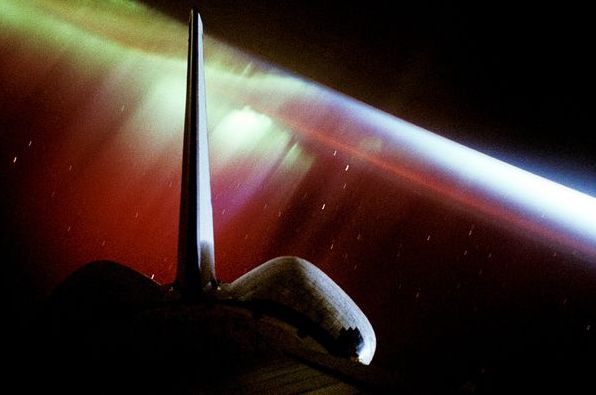
The Borealis Australis, STS-59, April 1994
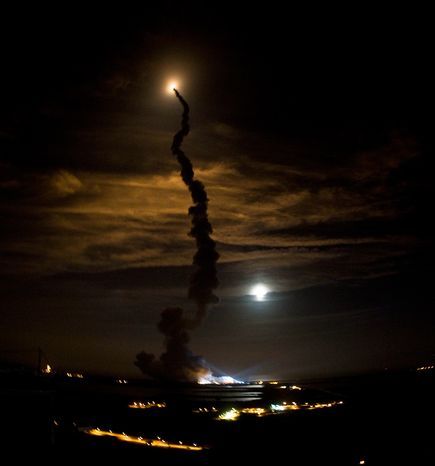
STS-126 night launch, November 2008
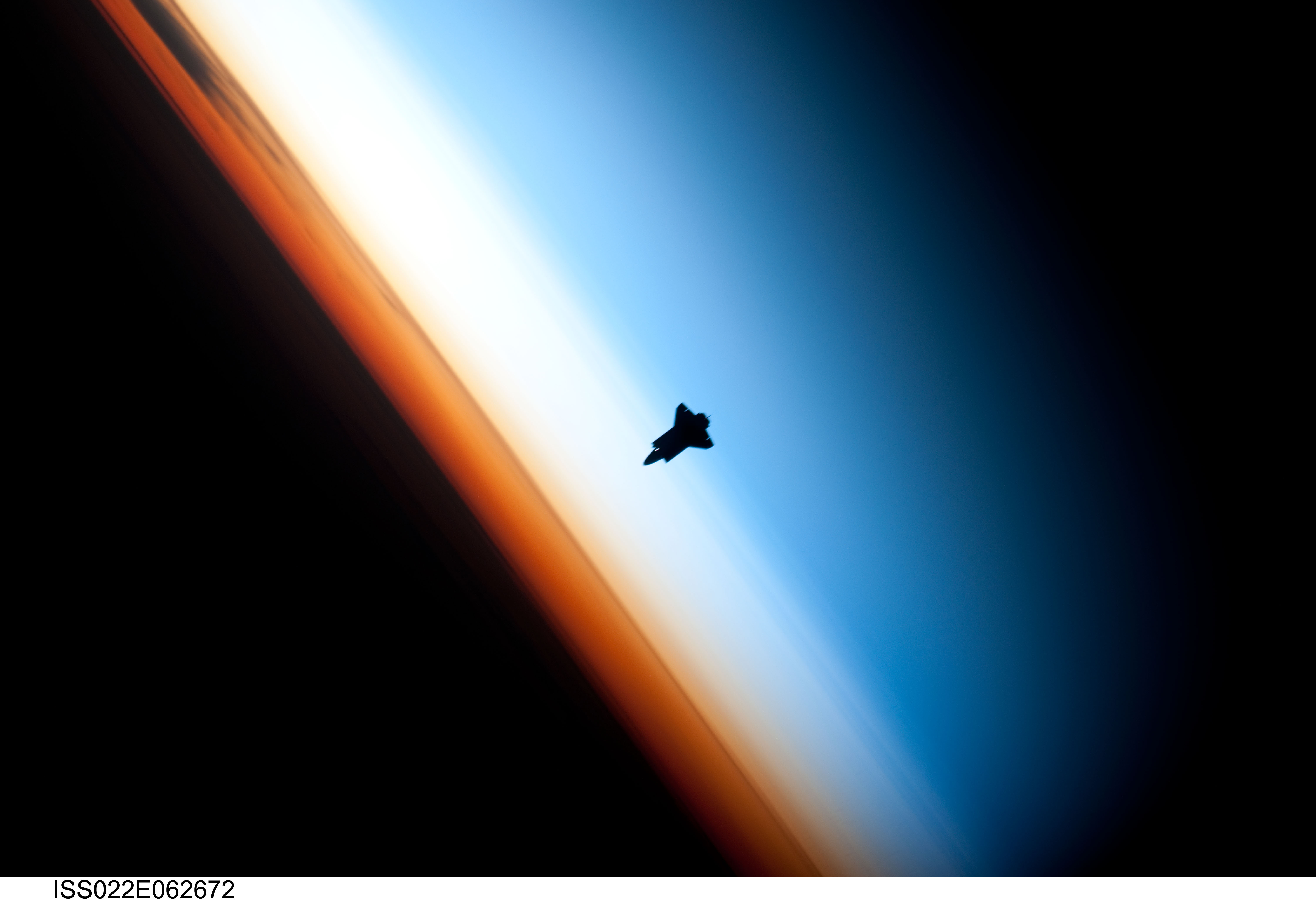
On the limb of the world, STS-130, February 2010
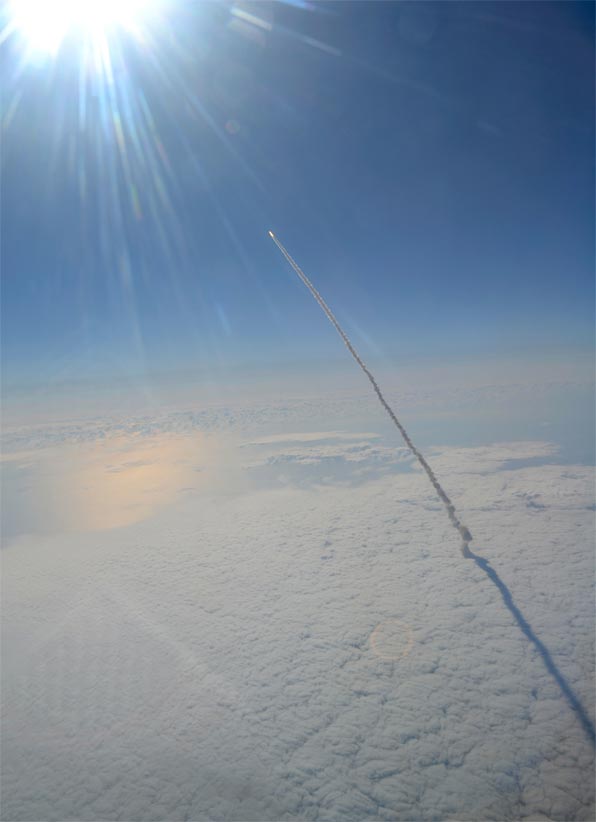
Final ascent: STS-134, May 2011

Endeavour – a personal memory

STS-49: Endeavour’s maiden flight

I don’t tend to write about personal stuff, but today is an exception. In my life, my Dad has been responsible for many things – most of them for the good (other than when the need to tell me off came up!). I’ve shared a lot with him over the years, but three things in particular draw us together with a shared passion: Formula 1 racing, flying, and all things related to astronomy and space exploration.

It’s the latter that prompts this blog post, as Dad has always followed the space shuttle missions. He has the official NASA videos (now all on DVD, although I can remember when he had them on VHS!) of all the major missions – the docking missions with the Russian space station Mir, the Hubble Space Telescope launch, the first “satellite rescues”; the triumphs and tragedies.

If I’m honest, I never paid much attention to these things as a child – space was a “boy” thing. That changed in 1992 when Dad dragged us to Florida to see the maiden flight of the space shuttle Endeavour. He’d seen other launches, but this was the first family trip to see one. If I’m honest, I was more interested in spending two weeks in Florida and doing everything else we’d planned (Disney, Universal Studios, driving, shopping…). As it turned out, the shuttle launch was the highlight of the trip.

Through contacts, Dad had got us a pass into the space centre on the day of the launch, and we had instructions to drive down to the Air Force base south of the space centre, where we were met (along with about 100 other cars!) by a security escort and were led up through the launch facilities to a vantage point about 4 miles from the launch pad, which was visible on the horizon, across a wide river.

We were there for hours with little to do. I remember Mum being very tolerant while Dad was like a small boy at Xmas, faced with lots of new toys. He had a 35mm camera with a huge zoom lens, another with a wide-angle lens, he charged Mum with a third and me with the video camera, and was constantly fussing and checking and re-checking them, putting batteries back on the little portable chargers, swapping the chargers in and out of the cigarette lighter socket in the car, and so on.

I remember being bored and cold a lot of the time. It was May, and the weather had been overcast, and the wind really cut across the flat land. When they mentioned a delay, and possible weather issues, I was actually ready to pack up and go back to the house we’d rented.

That changed when the countdown resumed. I really cannot describe the excitement that went through the crowd when it was announced the launch would go ahead. I do remember that distant blur on the horizon becoming the focus of everyone’s attention and the excitement running up and down the shoreline like something palpable. I also remember fighting Dad for use of his binoculars and looking at the shuttle “up close” and thinking how beautiful it looked. I think that was the point Dad’s “shuttle bug” (as Mum called it) bit me.

The launch itself was thrilling; the countdown over the speakers lining the public area reached 10, I was holding the video camera, the REC light bright in the viewfinder pressed to my eye, and seconds later I saw the faint glow of the main engines as they ignited just before the booster rockets ignited  – and the shuttle vanished in a huge, billowing cloud of smoke – then burst from it, climbing so fast I remember hurriedly zooming out and tipping the camera  – losing the shuttle in the process, but getting it in frame quickly, trying to holding the camera steady.

All around, people were whooping and cheering, the shuttle was climbing into a bronze sky and – it was absolutely silent. There wasn’t a sound from it until a crackling boom! rolled across the water, followed by the sound of about a million firecrackers going off. This was the oddest thing of all – you expect the shuttle to make a long, loud roar, but it’s nothing like that – not over a distance of 4 miles, anyway.

As the speakers gave the call, “Endeavour, go at throttle up,” I honestly remember everyone going quiet. This was the point where the Challenger had exploded. Then, with the shuttle just points of light in my viewfinder, I saw the solid rockets detach; two glowing pinpoints of light – and everyone around me started cheering and jumping, people were hugging one another; I panned the camera down as the shuttle vanished behind cloud, following this long, crooked  trail of smoke back to the empty launch pad, and then stopped filming. Dad was hugging Mum wildly, and he grabbed me, and was shouting things like “Magnificent!” and “Wonderful!” – and was wiping tears from his eyes.

Since then, the Endeavour has remained his “favourite” shuttle; he has every DVD NASA has released of her missions. And today marks the start of her final flight, 19 years to the day that she completed that maiden mission in 1992, when she landed in California.

STS-134: Endeavour’s final mission

It would have been wonderful to be in Florida to witness her final launch, but it was not to be. Instead, with her final flight – and with then entire shuttle era, something that has run the greater part of my life amazingly enough, coming to a close,  it’s time to recall some facts about this, the “baby” of the shuttle fleet.

  • Endeavour is the “youngest” shuttle of the surviving fleet, built to replace the lost Challenger
  • Endeavour was the first shuttle to be fitted with systems to enable long duration missions (up to 28 days in space) to be undertaken
  • Endeavour performed the first Hubble Servicing mission
  • Endeavour brought the Space Station “into being” with the delivery of the Unity module in 1998
  • Endeavour lifted the first African-American woman into space (Mae Jemison), the shuttle’s first Japanese astronaut (Mamoru Mohri) and the first married couple to fly on the same space mission (Mark Lee and Jan Davis)
  • Endeavour flew Barbara Morgan, originally the back-up for Teacher-in-Space Susan Christa McAuliffe who was killed in the Challenger disaster, in August 2007 on mission STS-118
  • Undertook the longest-ever space shuttle mission, STS-126, lasting 15 days, 20 hours, 30 minutes and 34 seconds
  • Only shuttle to ever land on the “temporary runway” at Edwards Air Force Base, requiring a unique braking technique to be used
  • Became the only shuttle prepped for a “triple role” launch option: as the launch vehicle for STS-127 mission, and as the rescue vehicle for either the Discovery on STS-119 (rescue mission coded STS-327) or the Atlantis on STS-125 (rescue mission coded STS-400)
  • Was the last shuttle to occupy Launch Pad 39B
  • Endeavour undertook that final night launch for the shuttle fleet on the 8th February 2010 during mission STS-130.

During STS-134, Endeavour will achieve two final “firsts”:

  • She will perform the first-ever “dual rendezvous” with the space station: one will be to dock with the station to undertake the main elements of her mission; the second will be a rendezvous that will terminate prior to docking, to test new navigation sensors that will be used in future space vehicles
  • Her crew will undertake the final spacewalks during a shuttle mission, when they install the Alpha Magnet Spectrometer-2 and the Express Logistics Carrier-3.

There is still one more mission to come, STS-135 with the Atlantis, but for me, personally, this is the mission that holds the greatest resonance as the shuttle era comes to an end.

Godspeed to Endeavour and her crew.