Space Sunday: reusability, habitability, survivability

SpX-13 lifts-off from Space Launch Complex 40 at Cape Canaveral Air Force Station, Florida, marking the first time SpaceX has launched a previously-flown Dragon 1 resupply capsule atop a previously flown Falcon 9 first stage, in SpaceX’s 17th launch for 2017. Credit: NASA

SpaceX Has completed its first mission to the International Space Station with a Falcon 9 first stage and a Dragon 1 resupply vehicle which have both previously flown.

The launch took place at 15:36 GMT (10:36 EST) on Friday, from Space Launch Complex 40 at Cape Canaveral Air Force Station. As well as being the first time a previously used Falcon 9 first stage and Dragon capsule have flown together, the launch also marked the first from SLC-40 since a pre-launch explosion of a Falcon 9 rocket in September 2016, which completely destroyed the rocket and its Israeli payload, and severely damaged the launch facilities.

Three minutes after the launch, the first and second stages of the Falcon 9 separated, the latter continuing towards orbit while the former performed its “boost-back” manoeuvre, and completed a safe return to Earth and a vertical landing at SpaceX’s Landing Complex 1 at Canaveral Air Force Station. The landing marked the 20th successful recovery of the Falcon 9 first stage – with 14 of those recoveries occurring in 2017.

The Dragon capsule, carrying some 2.2 tonnes of supplies for the ISS, was first used in a resupply mission in April 2015. In its current mission, it reached the station on Sunday, December 17th, where it was captured by the station’s robotic arm and moved to a safe docking at one of the ISS’s adaptors where unloading of supplies will take place. The capsule will remain at the station through January, allowing science experiments, waste and equipment to be loaded aboard, ready for a return to Earth and splashdown in the Pacific ocean, where a joint NASA / SpaceX operation will recover it.

The SpX-13 Dragon sits alongside the International Space Station on Sunday, December 17th, waiting to be grappled by one of the station’s robot arms and moved to its docking port. Credit: NASA/JSC

The mission is a significant milestone for SpaceX, bringing the company a step closer to it goal of developing a fully reusable booster launch system. Thus far the company has successfully demonstrated the routine launch, recovery and reuse of the Dragon 1 capsule and the Falcon 9 first stage. On March 30th, 2017, as part of the SES-10 mission, SpaceX performed the first controlled landing of the payload fairing, using thrusters to properly orient the fairing during atmospheric re-entry and a steerable parachute to achieve an intact splashdown. This fairing might be re-flown in 2018. That “just” leaves the Falcon 9 upper stage, the recovery of which would make the system 80% reusable.

However, recovering the second stage is a harder proposition for SpaceX – at one point the company had all but abandoned plans to develop a reusable stage, but in March 2017, CEO Elon Musk indicated they are once again working towards that goal – although primary focus is on getting the crew-carrying Dragon 2 ready to start operations ferrying crews to and from the ISS.

The major issues in recovering the system’s second stage are speed and re-entry. The second stage will be travelling much faster than the first stage, and will have to endure a harsher period of re-entry into the Earth’s denser atmosphere. This means the stage will require heat shielding and a means to protect the exposed rocket motor, as well as the propulsion, guidance and landing capabilities required for a full recovery.

SpaceX has proven the reusability of the Falcon 9 first stage (left) and the Dragon capsule system (right). All that remains is developing a reusable second stage, most likely for use with the Falcon Heavy – or as a part of the ITS / BFR. This image shows the discontinued proposal for a reusable Falcon 9 second stage. Credit: SpaceX

The problem here is that of mass. The nature of rocket staging means that – very approximately, every two kilos of rocket mass on the first stage reduces the payload capability by around half a kilogramme.  With a second stage unit, this can drop to a 1:1 ratio. So, all the extra mass of the re-entry / recovery systems can reduce the total payload mass, making the entire recovery aspect of a Falcon 9 second stage both complex and of questionable value, given the possible reduction in payload capability. However, with the Falcon Heavy due to enter service in 2018, a reusable second stage system does potentially have merit, as the combined first stages of the system can do more of the raw shunt work needed to get the upper stage and its payload up to orbit.

The Habitability of Rocky Worlds Around a Red Dwarf Star

Red Dwarf stars are currently the most common class (M-type) of star to be found to have one or more planets orbiting them. Many of these worlds appear to lie within their parent’s habitable zone, and while that doesn’t guarantee they will support life, it does obviously raise a lot of questions around the potential habitability of such worlds.

There tend to be a couple of things which often run against such planets when it comes to their ability to support life. The first is that often, they are tidally locked with their parent star, always keeping the same face towards it. This creates extremes of temperature between the two side of the planet, which might as a result drive extreme atmospheric storm conditions. The second is – as I’ve noted in past Space Sunday articles – red dwarf stars tend to be extremely violent in nature. Their internal action is entirely convective, making them unstable and subject to powerful solar flares, generating high levels of radiation in the ultraviolet and infra-red wavelengths. Not only can these outbursts leave planets close to them subject to high levels of radiation, they can cause the star to have a violent solar wind which could, over time, literally rip any atmosphere which might otherwise form away from a planet. This latter point means that one of the most vexing questions for those studying exoplanets is how long might such worlds retain their atmospheres?

In an attempt to answer to that question, planetary astronomers have turned to a planet far closer to us than any exoplanet: Mars.

Continue reading “Space Sunday: reusability, habitability, survivability”

Space Sunday: rockets and rovers

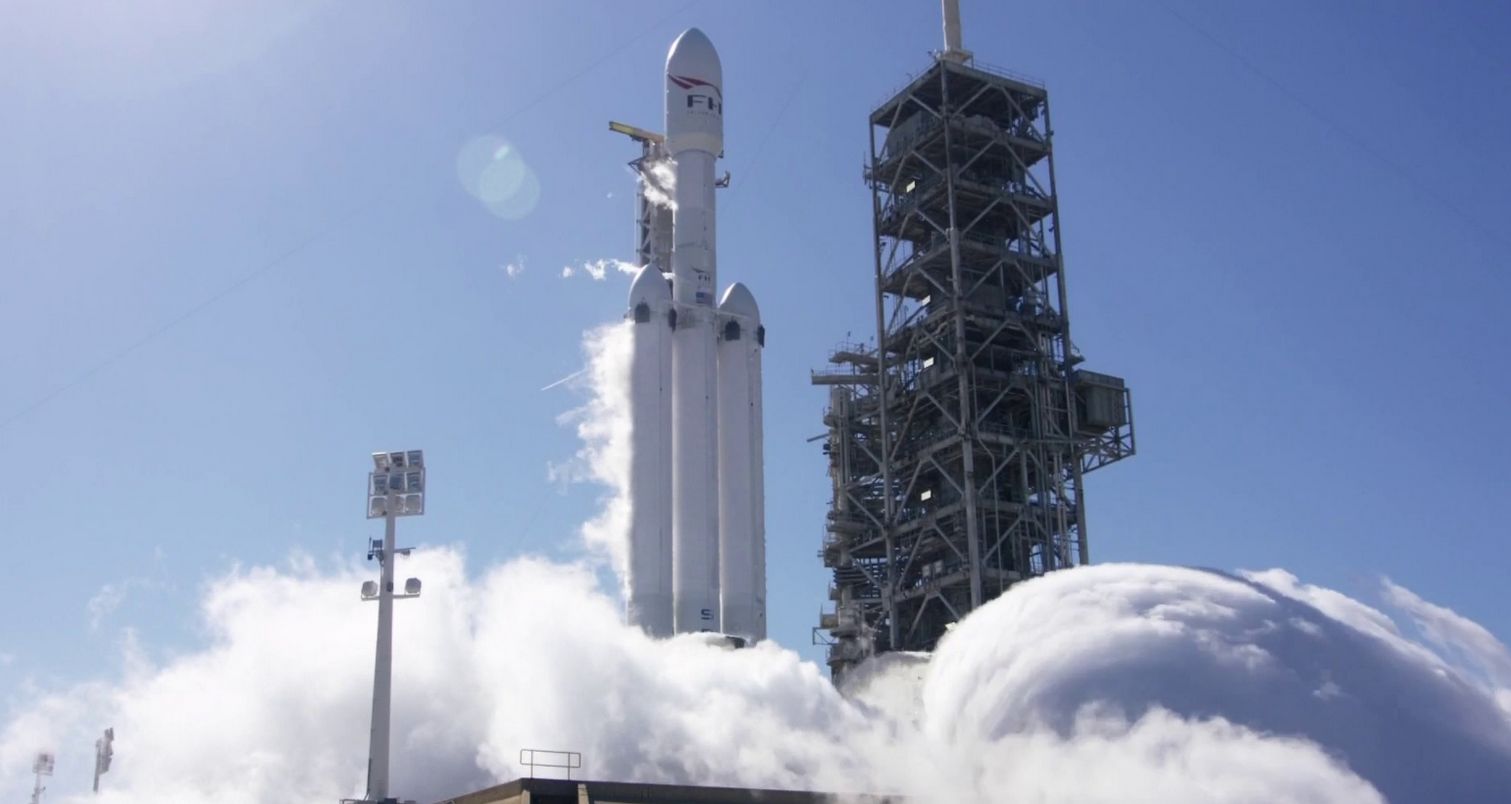
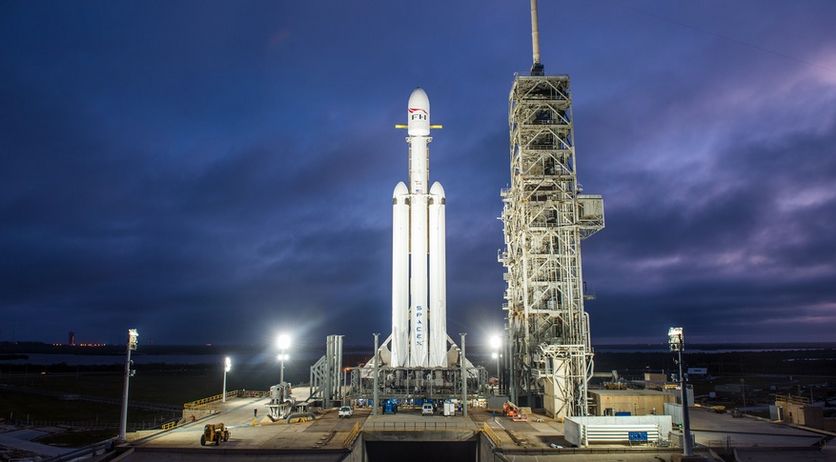
SpaceX is planning the maiden flight of its Falcon Heavy booster to take place in January 2018 – with an unusual payload. Credit: SpaceX

Elon Musk has announced the first payload that will be flown aboard the SpaceX Falcon Heavy, together with an ambitious goal in mind.

The maiden flight of the new heavy lift launcher had been expected to take place in December, as a part of an ambitious end-of-year five launch schedule. However, in tweets on Friday December 1st, 2017, Musk indicated the Falcon Heavy flight will now take place in January 2018. When it does, and if all goes according to plan, be sending Musk’s own car on its way to Mars – and possibly beyond.

Announcing the push-back on the Falcon Heavy launch

A car might sound a weird payload, but it is entirely in keeping with SpaceX’s tradition; the first Dragon capsule test flight in 2010 carried a giant wheel of cheese into space.

The first tweet on the launch also underlines Musk’s own uncertainty about its potential success; he has previously stated that he expects the first flight of the Falcon Heavy may end in a loss of the entire vehicle, simply because of the complexities of the system.

And the announcement about the payload and its (initial?) destination.

Comprising three Falcon 9 first stages strapped together side-by-side and firing 27 main engine simultaneously at launch means the vehicle will be generating a tremendous amount of thrust requiring all three stages to work smoothly together. They’ll also be generating a lot of vibration during the rocket’s ascent through the denser part of the Earth’s atmosphere. Only so much of this can be simulated and modelled; a maiden flight is the only way to find out where the remaining issues might lie.

However, if the launch is successful, it will be spectacular, involving the recovery of all three Falcon 9 stages to safe landings back on Earth. It will also boost Musk’s car towards Mars – which raises a question. Does SpaceX aim to orbit the car around Mars, or will the mission simply be a fly-by?

Elon Musk and his Tesla Roadser. Credit: Tesla.

Any attempt to achieve Mars orbit would require some kind of propulsion system to perform an orbital insertion burn, something which adds complexity to the mission. However, given Musk’s ambitions with Mars, placing even such an unusual payload into Mars orbit could yield valuable data for SpaceX. The car weighs 1.3 tonnes, so the total mass launched to Mars – car (likely modified somewhat, although the stereo will – according to Musk – be playing David Bowie’s Space Oddity during the ascent) payload bus, propulsion system, fuel, some kind of science system (why orbit Mars only to pass up the opportunity to gather data?) – could amount to around double that, if not more.

Musk’s comment about the payload being in “deep space for a billion years” seems to suggest the mission might by a fly-by, sending the car onwards and out across the solar system and beyond. Again, with a science payload sharing the space with the car, this could generate useful data. Either way the launch of such an unusual payload is likely to require additional US Federal Aviation Authority (FAA) approval; it will certainly require a launch license – which the FAA has yet to grant.

NASA Turns to Lunar Rover to Help With Next Mars Rover Mission

I’ve followed the Mars Science Laboratory (MSL) mission, more generally referred to as the Curiosity rover mission since 2012, tracking the discoveries made and the ups and downs of the mission. Overall, the rover has carried out some remarkable science and made a range of significant discoveries concerning ancient conditions within Gale Crater on Mars and the overall potential for the planet to have been able to potentially support microbial life at some point in its history.

But there have been hiccups along the way – computer glitches, issues with some of the rover’s hardware, and so on. These included was the 2013 discovery that Curiosity’s wheels were starting to show clear signs of wear and tear less than a year into the mission. The discovery was made during a routine examination of the rover’s general condition, carried out remotely using the imaging system mounted on Curiosity’s robot arm.

This image taken on April 18th, 2016 (Sol 1,315) by the Mars Hand Lens Imager (MAHLI) camera on the rover’s robot arm revels areas of damage on Curiosity’s centre left wheel, the result of periodically traversing very rough terrain since the rover arrived on Mars in 2012. Credit: NASA/JPL

The images captured of the rovers six aluminium wheels, each some 50 cm (20 inches) in diameter, revealed tears and a number of jagged punctures in one of them (above), the result of passage over the unforgiving, uneven and rock-strewn surface of Mars. While damage was not – and has not – become severe enough to threaten Curiosity’s ability to drive, at the time they were found, it did cause mission planners to revise part of the rover’s mission as it drove along the base of “Mount Sharp” near the centre of the crater, in order to avoid traversing a region shown from orbit to be particularly rugged. Since then, care has been taken to avoid exposing the rover to particularly rough areas of terrain.

Continue reading “Space Sunday: rockets and rovers”

Space Sunday: exoplanets and launch systems

An artist’s impression of Ross 128. Credit: ESO / M. Kornmesser

The European Southern Observatory (ESO), responsible for finding a planet orbiting the Sun’s nearest stellar neighbour, Proxima Centauri (see here for more), has now discovered another exoplanet orbiting a nearby star.

The star in question is Ross 128, a red dwarf located in the constellation of Virgo. As I’ve previously noted, red dwarf stars tend to be extremely violent in nature. Their internal action is entirely convective, making them unstable and subject to powerful solar flares, generating high levels of radiation in the ultraviolet and infra-red wavelengths which can leave planets like the one orbiting Proxima Centauri or those orbiting TRAPPIST-1 unlikely to support life.

However, Ross 128 is different. It is a “quiet” red dwarf; it experiences less in the way of flare activity, meaning any planets orbiting it will be exposed to less radiation and stellar wind. In particular, the planet discovered by ESO could potentially be habitable.

The planet, designated Ross 128 b, was discovered using the ESO’s High Accuracy Radial velocity Planet Searcher (HARPS), located at the La Silla Observatory in Chile. HARPS uses measurements of a star’s Doppler shift in order to determine if it moving back and forth, a sign that it has a system of planets. The data gathered by the instrument allowed astronomers to confirm Ross 128 b is a rocky world, with roughly 35% more mass than Earth, orbiting Ross 128 at a distance of about 0.05 AU, and with a period of 9.9 Earth days.

Measurements of Ross 128’s likely radiative output, combined with the planet’s distance from the star put it on or near the star’s habitable zone – the region around a star where a solid body planet might have both an atmosphere and liquid water on the surface. It receives around 38% more light from its star than Earth does from the Sun. This has allowed the team making the discovery to estimate that Ross 128 b’s equilibrium temperature is likely somewhere between -60 °C and 20 °C – close to what we experience here on Earth, making it a temperate planet.

That Ross 128 is a “quiet” older red dwarf, less prone to violent outbursts, means Ross 128 b may well have retained any atmosphere which may have formed around it. Whether or not Ross 128 b has an atmosphere has yet to be determined; if it does, given the planet is likely to be tidally locked, with the same same side always facing towards its star, any atmosphere the planet may have could be subject to extreme weather.

Even so, given what is currently known about Ross 128 b, were it to have an atmosphere and liquid water on the surface, it would be the closest potentially habitable exoplanet to Earth so far discovered. This alone means Ross 128 b is liable to be the subject of a lot of additional study over the coming months.

Nor is this the first time Ross 128 has been in the news this year. In July 2017, Abel Méndez, an astrobiologist at the Arecibo Radio Telescope, reported that on May 12th, 2017, during a 10-ten observation of Ross 128, the telescope received a 10-minute wide-band radio signal “almost periodic” in natures, and which decreased in frequency.

While some were quick to link this event with the November discovery of Ross 128 b, it’s worth pointing out that Arecibo, the Green Bank Telescope in West Virginia and the Allen Telescope Array (ATA) in northern California, have all spent time listening to Ross 128 without any of them hearing any repeat of the signal. Currently the most widely accepted explanation for the May 2017 signal is radio frequency interference from a satellite orbiting the Earth.

A Lava World with an Atmosphere?

And staying with exoplanets, 55 Cancri e, also named Janssen, has also been in the news this week.

One of the few exoplanets discovered prior to the Kepler mission, it is one of five planets orbiting 55 Cancri A, the G-class main sequence star which forms one half of the binary star system 55 Cancri, some 41 light years away from the Sun, in the constellation of Cancer. At 7.8 Earth masses, and with a diameter almost 50% that of Neptune, it has the distinction of being the first “super-Earth” discovered in orbit around a main sequence star similar to the Sun.

An artist’s impression of super-Earth exoplanet 55 Cancri e and its parent star. Credit: NASA/JPL

Discovered in August 20o4, the planet has been subject of extensive study. As the closest planet to its parent, it takes 2.8 days Earth days to complete one orbit, and is tidally locked, always keeping the same side facing its parent. A study of the planet using the Spitzer space telescope in 2013 led astronomers to the conclusion 55 Cencri e is likely carbon planet, dominated by lava flows on its sunward side. In 2016, observations using the Hubble Space Telescope indicated the planet may have a thin hydrogen and helium atmosphere with suggestions of hydrogen cyanide.

However, an international team led by Cambridge University in the UK, has been re-examining the data gathered by the Spitzer space telescope. Using an improved model of how energy would flow throughout the planet and radiate back into space, their findings indicate that temperatures on the “dark” side of the planet average 1,300 to 1,400 oC (2,400 to 2,600 oF), much closer to to the average 2,300 oC (4,200 oF) on the sunward side than previously thought.

These finding suggest 55 Cancri e has a far denser, more complex atmosphere than had been thought, one which acts as transfer mechanism for circulating heat around the planet. What’s more, this atmosphere may well contain nitrogen, water vapour and even oxygen—molecules found in our atmosphere, too—but with much higher temperatures throughout.

The overall conditions on the surface of the planet preclude free-flowing water or the opportunity for life to arise, but they also present a further mystery. Given its proximity to its parent star, in theory 33 Cancri 2e’s atmosphere should have been stripped away aeons ago by the solar wind. so there are still mysteries with the planet yet to be resolved.

Continue reading “Space Sunday: exoplanets and launch systems”

Space Sunday: SLS, Falcon and Dream Chaser

Orion’s first deep space mission, EM-1 will be an extended uncrewed flight to cislunar space, officially targeted for June 2020, but which may still make a December 2019 lift-off. Credit: NASA

NASA has provided an update on the first integrated launch of the Space Launch System (SLS) rocket and Orion spacecraft.

Planned as an uncrewed mission, Exploration Mission-1 (EM-1), planned as a flight to cislunar space and back, is a critical test on the road to NASA’s human deep space exploration goals, designed to verify the SLS / Orion’s capabilities in handling missions between Earth and the Moon.

The update comes after the completion of reviews of both the Space Launch System and the Orion vehicle systems – the latter of which took place on both sides of the Atlantic, given the Orion’s Service Module, which is providing the vehicle with power and propulsion, is being built by the European Space Agency. NASA initiated the reviews as a result of early studies, which raised concerns over meeting a December 2019 launch date as ambitious, leading to the agency pushing it the launch back to June 2020.

EM-1 will utilise the “Block-1” Space Launch System booster, with a 70-tonne payload capability. Credit: NASA

As a part of the update, NASA points to June 2020 still being the planned launch date, but indicates it is also working to keeping the December 2019 launch a possibility, providing no significant setbacks or issues arise, as several of the risks indicated in the earlier report have not been realised. However, even if EM-1 still achieves the 2019 launch date, the follow-up EM-2 mission, which will carry a crew into space, will still take place in 2023, rather than 2021 as originally planned, to allow additional time for the development of the SLS Block 1B launch vehicle which will be used in that mission.

As part of the recent reviews, and in order to help meet the December 2019 launch opportunity, the update indicates that a flight test of the  Orion’s launch abort system, critical to SLS operations, and must occur prior to EM-1, have been brought forward to April 2019. Known as Ascent-Abort 2, it will validate the launch abort system’s ability to land the crew safely during descent, and also help ensure that the agency can remain on track for the EM-2 crewed flight in 2023.

To build the SLS and Orion, NASA is relying on several new and advanced manufacturing techniques, including 3D printing, which is being used to fashion more than 100 parts for the Orion capsule.  In Germany, integration of the first Service Module is progressing. Recently, the 24 orientation thrusters were installed, complementing the eight larger engines that will back up the main engine, and more than 11 km of cables are being laid and connected to send the megabytes of information from the solar panels, fuel systems, engines, and air and water supplies to the module’s central computers.

With the SLS booster, welding has been completed on all the major structures for the mission and is on track to assemble them to form the largest rocket stage ever built and complete the EM-1 “green run,” an engine test that will fire up the core stage with all four RS-25 engines at the same time.

EM-1 will see a crew-capable space craft travel further from Earth than at any point in time since the dawn of the space age. Following launch, the vehicle will commence a 4-day flight to cislunar space, where it will remain in extended orbit around the Moon, before making a 4-day return to Earth.

SpaceX Looks to Falcon Heavy Launch and Operational Return of Pad 40

With NASA still looking at a potential of December 2019 for the maiden launch of the Space Launch System rocket, SpaceX is preparing for a December 2017 maiden flight of their new launch system, the Falcon Heavy. Originally scheduled for November 2017, the launch is now pencilled for December 29th, 2017 and will be one of five launches SpaceX plan to round-out the year.

SpaceX Falcon Heavy, slated for a December 29th maiden flight. Credit: SpaceX

The Falcon Heavy, when operational, will be capable of hoisting a maximum payload of 63.5 to low Earth orbit, although the more usual LEO payload limit will be around 55 tonnes. It will also be capable of lobbing 14 tonnes to the Moon, 10 tonnes to Mars and even 3.5 tonnes to the outer solar system.

The maiden flight, however, will carry little more than a dummy payload, but it will hopefully include the recovery of the three Falcon 9 rockets which make up the core of the Falcon Heavy.

Two of these rockets form “strap on boosters” for the Falcon Heavy, and are jettisoned first. If all goes according to plan, these will perform automated “boost back” manoeuvres and fly themselves to safe landings.. The central booster will continue until its fuel is almost expended, then separate from the upper stage, perform its own boost back manoeuvre and return to Earth.

Eventually, SpaceX plan to make Falcon 9 and Falcon Heavy fully reusable with the addition of a “fly back” upper stage as well.

Also in December, SpaceX plan to re-active their launch facilities at Launch complex 40 at Canaveral Air Force Station alongside Kennedy Space Centre, Florida. This has been out of commission sine September 1st, 2016, when a Falcon 9 booster exploded on the pad during a pre-launch test, completely destroying itself, its payload and severely damaging the pad.

Since that time, SpaceX’s east coast operations have been confined to launch complex 39A at Kennedy Space Centre, which will be used for all Falcon Heavy launches and – eventually – for the launch of the SpaceX Interplanetary Transport System.

Despite Canaveral Pad 40 being out of service, SpaceX has achieved its highest cadence of launches to date in 2017, and hopes to be able to commit to an even higher rate of launches in 2018 using both pad 40 and pad 39A.

The first scheduled flight from the repaired pad 40 should be a commercial cargo resupply services mission to the International Space Station (ISS), and subject to NASA approval, might utilise a previously flown Falcon 9 first stage.

Continue reading “Space Sunday: SLS, Falcon and Dream Chaser”

Space Sunday: when neutron stars collide

When neutron stars collide: an artist’s impression of the point when two neutron stars collided in the galaxy NGC 4993, 130 million years ago, and which are now increasing our understanding of neutron stars and the universe. Credit: SF/LIGO/Sonoma State University/A. Simonnet

Around the world on August 17th, 2017, some 70 telescopes and observatories – including the Laser Interferometer Gravitational-Wave Observatory (LIGO), responsible for confirming the existence of gravitational waves (see here and here for more) – quietly turned their attention on the same spot in the constellation Hydra.

“I don’t think it’s out of the question that this is the most observed astronomical event ever. It’s a thrilling notion, and a little overwhelming,” said LIGO spokesperson David Shoemaker. “We’ve got somewhere between a quarter and a third of all the world’s astronomers working with us.”

The reason? Hours earlier, an observatory in Chile had detected gravitational waves followed by a burst of gamma radiation – potentially the signature of two neutron stars colliding far beyond our galaxy. If so, the detection would be the first time gravitational waves have been observed originating from something other than the merger of two black holes. Hence, an alert was issued to observatories around the globe, resulting in the massed focusing on instruments on that single point in space.

Over the coming days, the data revealed that a collision between two neutron stars in what is referred two as a “kilonova”  – which sits between a star going nova and a super-massive star going supernova.  It marks the first confirmation that neutron star mergers can cause gamma ray bursts. However, there is much more to the event.

Neutron stars are the dense remnants of massive stars that long ago exploded as supernovae. The two stars in question are located in galaxy NGC 4993, 130 million light years from Earth. Originally, these stars were each around 10-20 times the mass of our sun; after each went supernova, they collapsed down to bodies around 16 km (10 mi) in diameter, comprised entirely of neutrons so densely packed, that despite their small size, each still had a mass perhaps twice that of our own Sun.

These two neutron stars, located close together, were gradually drawn together over the course of perhaps 11 billion years by their mutual gravities until they collided, venting huge amounts of energy across the spectrum and space-time in what astronomers call a “multi-messenger event”. It was the arrival of the light waves and gravitational waves here on Earth, 130 million years later, that astronomers from around the world were keen to observe, marking the first time a cosmological event of this nature has been observed in both gravitational waves and light, producing a huge amount of data for researchers to study.

How the kilonova was initially observed through the initial days of visible light observation following the first indication of the collision through to the falling off of light from the initial explosive outburst of energy. Credit: Sarah Wilkinson / LCO.

Thanks to the alert sent out by the Chilean observatory, over 3,500 astronomers and more than 100 instruments  – including LIGO and a the Hubble Space Telescope responded, making the event the first to be observed through the detection of visible light and gravitational waves. Their findings are now being made public, and include some remarkable facts.

These include the first confirmation that neutron star mergers can cause gamma ray bursts – although there is some questions over what this might in fact mean. It also marks the first measurement of the universe’s expansion using gravitational waves.In addition, as the collision was recorded in wavelengths right across the electromagnetic spectrum, from radio to gamma rays, it is the first time a cosmological event of this nature has been observed in both gravitational waves and light. A further result of the observations is that astronomers have witnessed heavy elements being formed from the aftermath of the event.

“People have long suspected that heavy elements were made in neutron star mergers, but this is really the first time we’ve nailed that down,” Andrew Levan, an astronomer at the University of Warwick in the UK. “This merger made something like the mass of the Earth in gold, along with other heavy elements such as platinum, lead and uranium.”

The kilonova as seen from the Hubble Space Telescope a few days after the explosion, tracking it as the initial light faded. Credit: NASA and ESA. Acknowledgement: A.J. Levan (U. Warwick), N.R. Tanvir (U. Leicester), and A. Fruchter and O. Fox (STScI)

It was actually the discovery that heavy elements were being formed in the material resulting from the collision which confirmed the event was an actual collision of two neutron stars. The elements would only be formed if neutrons were being ejected from the two stars to collide with lighter atoms in the surrounding space. Material would only be ejected if the objects in collision each had a surface, something black holes don’t have – they only have an event horizon.

This in turn indicated the event was far closer that the previous five detections of gravitational waves which have occurred since 2015. These have been the result of pairs of black holes merging, none of which have been closer than 1.3 billion light years away. That the gravitational waves were observed alongside of light waves also gave further confirmation of another of Einstein’s general relativity predictions: that light and gravitational waves travel and more-or-less the same speed.

Observations and data gathering continued after the initial explosion was detected, although the light from the collision faded over the 6-8 days following the event, and astronomers are keen to discover what has been left behind. Currently, the region of NGC 4993 where the kilonova occurred is obscured behind a cloud of matter and heavy elements, leading to questions on whether or not the two stars may have merged to form an even larger neutron star, or whether they collapsed into a black hole. Some of those studying the data gathered believe the gamma ray burst recorded after the initial detection of gravitational waves might be indicative of the latter, the result of matter left over from the event and collapse being drawn into the event horizon.

Summing up the significance of the event, astronomer Tony Piro from the Harvard–Smithsonian Centre for Astrophysics said, “The ability to study the same event with both gravitational waves and light is a real revolution in astronomy. We can now study the universe with completely different probes, which teaches things we could never know with only one or the other.”

Continue reading “Space Sunday: when neutron stars collide”

Space Sunday: radiation, rings and pollution

Missions like Elon Musk’s hopes for Mars need good radiation protection for crews – and NASA is working to bring this about. Credit: SpaceX

I’ve written several times about the risk radiation poses to dee space missions; particularly Galactic Cosmic Rays (GCRs), the so-called “background radiation” left over from the big bang. As I’ve noted, while solar radiation – up to and including Solar Particle Events (SPEs or “solar storms”) can be reasonably well dealt with, on account of the particles being relatively low-energy – 13 centimetres (5 inches) of water or similar liquid – is pretty good protection against the primary radiation threat of SPEs, for example – GCRs are far harder to deal with.

However, there are materials which can block them. Again, I’ve written about Hydrogenated boron nitride nanotubes (BNNTs). These are something being developed by NASA’s Langley Flight Centre in Virginia; extremely flexible, they can be used in the construction of key elements of space vehicles – walls, floors, ceilings, for example – and can even be woven into a material used as a lining in space suits to protect astronauts.  Similarly, borated polyethylene – already used for radiation shielding in nuclear reactors aboard US naval vessels, medical vaults and linear accelerators, among other applications – offers a means to provide primary radiation protection within the structure of space vehicles.

However, these are only effective in stopping primary radiation damage – that is, damage cause by the direct impact of radiation on living cells. A far, far greater risk people in deep space will face is from so-called secondary radiation,  particularly in the case of GCRs.  simply put, when a GCR particle collides with another, it sends energetic neutrons, protons and other particles in all directions, which can collide with others. It’s like a bullet striking something and scattering shrapnel, potentially doing damage to a lot of cells if they strike a living body. The problem here is that the more material used to block the effects of primary radiation damage, the more the risk of secondary radiation damage is increased.

Materials such as BNNTS and borated polyethylene could be used for surface vehicles and equipment as well

This means that there is unlikely to be a single solution to the issue of radiation exposure on deep space missions such as to Mars. Which is why scientists aren’t looking for one. NASA, for example has been conducting research into technologies such as BNNTs and magnetic shielding for space vehicles for over a decade. The latter, if possible, would use a magnetic field around a space vehicle to protect the crew, much as Earth’s magnetic field protects us. The problem here is that such systems currently require huge amounts of electrical power and can add a significant amount of mass to a space vehicle.

Another avenue of research being investigated is the use of pharmaceuticals as possible radiation inhibitors. Drugs such as potassium iodide, diethylenetriamine pentaacietic acid (DTPA) and the dye known as “Prussian blue” have for decades been used to treat radiation sickness. The theory is now that they could be used as part of a preventative regime of preventative treatment for astronauts on deep space missions.

The whole subject of radiation protection has become a focus in light of NASA’s “new” directive to return humans to the Moon and also because of Elon Musk’s determination to send humans to Mars, possibly as early as the mid-2020s. Because of this, NASA has been highlighting its research into radiation exposure management of late, which also includes solar weather forecasting (to help warn crews in deep space about the risk of SPEs, etc.), and in looking at 20+ years of orbital operations aboard the shuttle ISS and Russia’s MIr space station. All of this is leaving some at NASA feeling very positive about efforts to send humans beyond Earth orbit, as Pat Troutman, the NASA Human Exploration Strategic Analysis Lead, stated in a NASA press statement on the matter:

Some people think that radiation will keep NASA from sending people to Mars, but that’s not the current situation. When we add the various mitigation techniques up, we are optimistic it will lead to a successful Mars mission with a healthy crew that will live a very long and productive life after they return to Earth.

Whether progress on all fronts will be sufficiently advanced to encompass something like Elon Musk’s aggressive approach to human missions to Mars remains to be seen. However, with the “new” directive for NASA to return humans to the Moon, there’s a good chance we’ll see some of the current initiatives in radiation protection bearing fruit in the next few years.

The Risk Posed by Tiangong 1

Tiangong 1 (“Heavenly Palace 1”), the first Chinese orbital facility has been creating some sensationalist headlines of late.  Launched in 2011, the facility saw two crews spend time aboard it, prior to it being run on an automated basis from 2013. On March 21st, 2016 the Chinese Manned Space Engineering Office announced that they had disabled the facility’s data service in preparation for shifting their focus to the (then) upcoming Tiangong 2 facility and in allowing Tiangong 1’s orbit to decay so it would burn-up re-entering the upper atmosphere.

Tiangong 1. Credit: CMSE

The time-frame from re-entry was predicted to be late 2017 / early 2018. However, around the time Tiangong 2 was launched the Chinese space agency admitted they’d lost attitude control of the laboratory, so they could no longer orient it as it orbits the Earth. As a result, the facility has been under scrutiny from Earth by individuals and groups monitoring the rate of its orbital decay.

One of these observers is astrophysicist Jonathan McDowell of Harvard university. In early October he released a statement indicating that as a loss of attitude control coupled with increased atmospheric friction has resulted in a sharp decline in Tiangong 1’s altitude to the point where it could see the vehicle re-enter the Earth’s atmosphere in the next few months. He also noted – accurately – that some elements of the 8.5 tonne vehicle could survive re-entry and reach the surface of the Earth (something the Chinese have always noted).

Unfortunately, his report led to some sensationalist responses from portions of the media. For example, one UK media tabloid blasted: “Out-of-control space station to smash into Earth THIS MONTH…and it could hit ANYWHERE. … A MASSIVE space station is hurtling towards Earth!” (block capital their own, not mine); other newspapers also highlighted the upper-end of the risk posed by the vehicle’s re-entry.

Needless to say such reports wildly over-egg the situation. The reality is that Tiangong’s orbit carries it over vast swathes of ocean and large areas of sparsely populated land. As such, while there is a risk of parts of the station reaching the ground, the chances of them hitting a populated area are remote. In this, Tiangong reflects the US Skylab mission in 1979 and the Russian Salyut 7 / Cosmos 1686 combination of 1991. Both of these where much larger than Tiangong 1 (77 tonnes and 40 tonnes respectively), both made an uncontrolled re-entry, and in both cases, wreckage did not cause loss of life.

Continue reading “Space Sunday: radiation, rings and pollution”