
Virgin Orbit is – weather and systems permitting – due to make history on January 9th, 2023, with the first attempt to deliver a payload to orbit from UK soil (and Western Europe as a whole).
Clues that the launch – delayed from late 2022 due to final bureaucratic issues in the delay in a launch permit being issued by the UK’s Civil Aviation Authority (CAA) – first appeared on Wednesday, January 4th, 2023, when maritime navigation warnings were issue by the UK and the Republic of Ireland identifying a region of open sea close to both denoted as “hazardous operations area for rocket launching”, and keen-eye observers noted it was consistent with the airspace identified as the drop zone for Virgin Orbit’s LauncherOne rocket.
The formal announcement of the launch attempt, which confirmed the warnings had been issued in relation to it, was made on Friday, January 6th, 2023. This indicates that the mission – called Start Me Up – is due to get underway at 22:16 UTC, when Virgin Orbit’s 747 carrier aircraft Cosmic Girl will take off from Spaceport Cornwall (aka Newquay Airport), the LauncherOne rocket mounted under the port wing, inboard of both engines.
The aircraft will then climb to an altitude of 11,000 metres, turning out over the sea to reach the launch zone where LauncherOne will be released and Cosmic Girl will enter a climbing turn, allowing the rocket to ignite its motor and accelerate into a near-vertical ascent to orbit. On board the rocket will be a total of nine smallsats with a total combined mass of roughly 100 kg or one-third of the launchers payload capability when launching into a Sun-synchronous orbit (SSO – also referred to as polar orbit), or one-fifth its payload capacity when delivering payloads to low Earth orbit (LEO).
Highlights of a 2021 Virgin Orbit launch
As well as being the first payload-to-orbit and rocket launch originating out of the UK / Western Europe, the mission marks the first joint launch mission by the US National Reconnaissance Office (NRO) and the British Ministry of Defence (MOD), managed under the guidance of the UK’s Space Operations Centre. Their intent is to place two cubesats, Prometheus 2A and 2B, into orbit to test the ability of such shoebox-sized satellites to perform a range of tasks including communications, GPS navigation data relay, and image gathering.
Following the launch, Cosmic Girl will return to Spaceport Cornwall and, later in the month, make a return flight to Virgin Orbit’s main operations centre at the Mojave Air and Spaceport, California, where it will remain for the rest of 2023 carrying out at least seven further LauncherOne flights. It is currently unclear when the next such flight will take place from UK soil.
NASA 2023 Budget Causes Tensions (As Usual)
The NASA budget for fiscal year 2023 has been set at US 25.4 billion in the Congressional Omnibus Spending Bill signed-off during the final session of the 2022 Congress. On the surface, the Bill represents an apparent 5.6% increase in the agency’s spending over 2022, but comes in at less that the US $26 billion requested by the Biden Administration and initially matched by the US Senate. As such, it is a compromise between the proposed Senate budget and the somewhat lower House budget proposes for the agency.
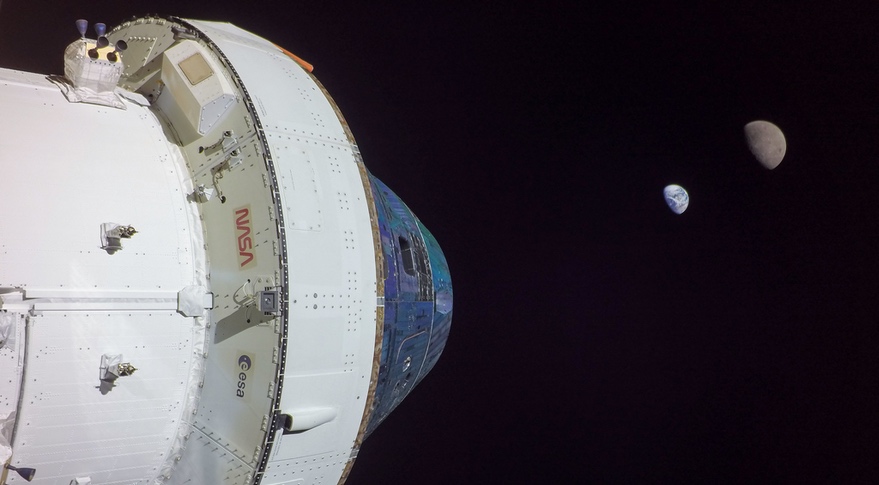
In terms of the human Exploration programme, the budget sees a US $88 million decrease in spending on both for the Space Launch System and the Orion Multi-Purpose Crew Vehicle (MPCV), which is in line with NASA’s proposed spending on both vehicles.
This is more than offset by an increase of US $300 million in spending on the Human Landing System (HLS) required to transport crews between lunar orbit and the surface of the Moon. However, and of potential interest is the fact that none of this money is to be directed towards the use of the SpaceX HLS despite NASA indicating it was looking to exercise “Option B” on that programme for a second lunar landing beyond Artemis 3, the money instead being solely directed towards additional funding for a n additional (i.e. replacement, in the long term) HLS vehicle.

No budget is (again)is directly provided for the Lunar Gateway station; however, the budget report specifies NASA shall, before the end of the first quarter 2023, provide a breakdown on how it proposes to spend the US $2.63 billion of funding defined as the Artemis Development Programme, which may offer a breakdown of proposes spending on the Gateway. In addition, part of this $2.63 billion may be used in the development if a “habitation systems programme office” to provide recommendations on the capabilities and technologies required to develop sustainable lunar surface habitats.
In terms of space sciences, the budget initially appears to offer an increase in spending over 2022. However, this again hides some harder realities. The total budget allowance for science missions is US $3.2 billion – some US $80 million more than 2022. However, the majority of this increase – as per the 5.6% total increase in NASA’s budget – will be absorbed in costs incurred as a result of the COVID pandemic (which also impacted the 2022 budget), coupled with cost increases linked to inflation.
This means that in practical terms, NASA’s science operations are under enormous pressure. While some relief has been gained through missions such as the Mars Sample Return mission being pushed back by two years (2026 to 2028), allowing their costs to be spread more, NASA is also having to juggle other missions.

As a result, the agency has already announced the VERITAS mission to Venus will now launch “no earlier” that 2032 rather than the planned 2029, to allow the Psyche asteroid mission to achieve its planned October 2023 launch date. Elsewhere, the triple Earth Observation Science missions of Terra, Aqua and Aura, thought to have their funding secured through what is effectively their 21st year of operations, have been asked to submit justifications for their continued funding through 2023 and beyond, despite the fact that, while all three satellites are running low in station-keeping propellants and are thus drifting slightly in their orbits, they continue to return excellent data on the global environment.
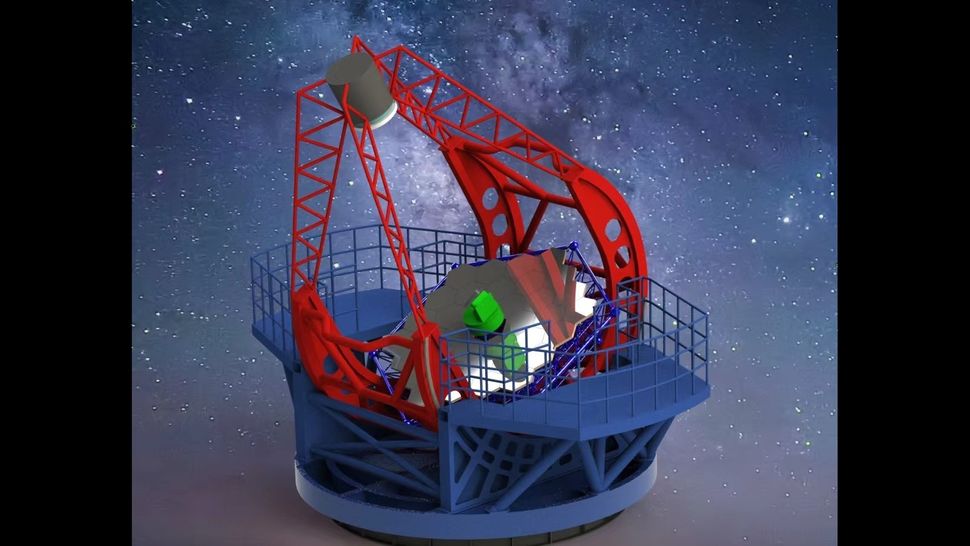
Some of the pressure on science budgets has caused both the Senate and the White House to try to intervene. In a joint letter to the Office of Management and Budget (OMB), they have requested an additional $150 million be provided each to NASA and the National Science Foundation (NSF) in order to support ground and space-based telescopes. If awarded. the NSF’s extra $150 million would go directly to continued funding of the prestigious Giant Magellan Telescope (GMT), the massive 25.5 metre diameter primary mirror optical telescope currently under construction at the Las Campanas Observatory facility, Chile.

Overall, the 2023 budget is being championed as the 10th successive increase in NASA’s budget, lifting it from US 17.7 billion in 2014 to US $25.4 billion – an apparent increase of almost US $8 billion. However, when inflation alone is accounted for, this amounts to just a US $2.54 billion increase in the same period, the majority of which has been taken up by increases in labour, materials, and other costs.
Nor is this money devoted to just highly-visible projects and space missions; the NASA budget covers a broad range of science, aerospace and R&D programmes, as well as STEM activities, materials development, small business funding and grants (aerospace and science related), university research grants, and more. All of which mean that, in real terms and accounting for inflation, NASA – despite the greater demand being placed on it to develop ever more complex human space capabilities – continues to be a highly cost-effective government organisation.
Continue reading “Space Sunday: a launch, a budget, a station & an astronaut”










 Inara Pey: Living in a Modemworld