Esbee and Charlar – gone

Tateru posts news that Chalar and Esbee Linden have both been laid-off from the Lab.

Sarah Kuehnle

Esbee – aka Sarah Kuehnle (nee Hutchinson) in real life, had previously had responsibility for the SL Viewer, prior to departing from the Lab in January 2011 of her own free will, but returned in June. While active on Twitter, her public-facing profile at LL was quite low following her return.

At SLCC-2011, she was part of the team that demonstrated some of the gaming mechanisms the Lab were then experimenting with (some of which eventually found their way into Linden Realms). During the presentation, it was announced that she would be taking-on the role of “Subject Matter Expert” for “role-play” – but so far as I’m aware, did not have a major user-facing roles as such, and didn’t host and user group meetings related to this.

I didn’t really “know” Esbee (as much as anyone can get to know Lab personnel), but we did swap a few tweets and other bits, and she always came across directly as someone who was warm and fun-loving, and I remember that at SLCC-2010, after coming in for a lot of criticism for the level of spin around Viewer 2, she Oz and Q had and open forum on the (then) new Project Snowstorm, and that by-and-large they were more aware of worries and concerns from both users and devs than perhaps they’d been given credit.

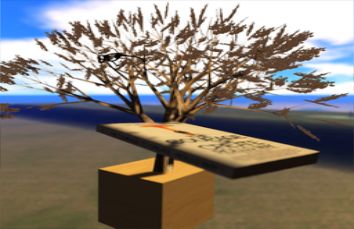
Charlar’s famous tree avatar

Charlar has had a fairly high-profile role at LL, firstly with regards to mesh, which rolled out last year, and then within the Content Creators group. He’s enjoyed something of a mixed reputation in the eyes of users, but I will say that I had the opportunity on several times to chat with him one-to-one, and we swapped ideas and points-of-view via profile direct messages, and I always found him to be polite, thoughtful and with a keen sense of humour.

News of the departures is bound to bring mixed reactions across the community. However, being laid-off is never a pleasant experience, so I certainly hope that both Esbee and Charlar find safe havens work-wise soon.

Rodvik blogs: No Last Names

So, Rodvik has blogged on the subject of last names.  In sort: they’re not coming back. The overall direction of the post is pretty obvious from the outset – that last names won’t be making a return just yet  – simply because the first couple of paragraphs ramble somewhat – as if Rodvik knows what he is about to say is going to draw howls of disappointment.

As the Lab can’t strike a balance between freedom of choice and pre-set last names, they’re not doing either. However, special characters are being introduced to the sign-up process to allow some degree of freedom. This means, as Rodvik says, the someone signing-up can be “Horatio-Nelson”; it’s a step forward, given that the Lab are also looking to expunge all last traces of “Resident” (and Rodvik has asked to be informed if people come across any) – but it’s a very small step.

I have to admit, I found the claim that pre-set last names appeared to cause more new-user sign-up angst than the current system surprising. Admittedly, it’s been  a long while since I signed-up, and almost as long since I was forced to create what is now my “crash test alt”, but I can’t ever remember feeling frustrated by being limited to a list of pre-sets (which was pretty extensive). Rather the reverse, in fact – I found I was dallying over the name selection as the available presets were intriguing – a make of name-up names, names from history and fiction, ethnic names, and so on which (I do remember) got me thinking on the whole question of identity and how I wanted to project myself in Second Life – what aspects of my personality, which interests, and then playing with various name options to see how they worked before I made my final choice.

But then, I’m weird like that.

So as the Lab can’t strike a balance between pre-set and free-form last names, neither will be making a return to the sign-up page for new users. In the meantime Rodvik will be kicking-off a new Profile Feed “round-table” to discuss recapturing the “frontier feel” of SL, probably next Monday. Interestingly, one of the ideas he put up for discussion what that of allowing new users pick from a list of pre-set last names after having been involved in SL for six months or so. Also offered-up for discussion is the potential to re-think Linden Homes (which I thought they were doing anyway…or did I simply dream I’d received a survey on linden Homes last month…?), and the idea for a new “Mainland-like region” – something that is bound to intrigue / cause concerns ahead of the actual discussions.

Rodvik’s post can be read in full here.

TPVP changes – Oz provides further explanation, Tateru gets answers

As concern over the latest TPVP changes continues, Oz has offered-up additional information on what section 2.k in particular means, and how it affects TPVs is terms of official Viewer releases, etc.

In a comment on the thread Questions about new TPV policy initiated by Cummere Mayo, Oz states:

Thanks for taking the time to pull your questions together, Cummere. I know a number of others have had similar questions, and I wanted to take a minute to address them here. I hope this will help clarify things.

1) What is meant by shared experience?

Making a simple statement that covers all possible cases is not easy … there is an unavoidable element of judgement in interpreting this rule; I’ll try to answer below, but that should not be taken as modifying the policy itself.  We will certainly help developers with proposals to understand whether or not a feature might fall under it.  It’s worth noting that the vast majority of all changes made by third-party viewers have certainly not been a problem.  The fact that there have been some problems in the past motivated our adding this rule so that in the future developers would work closely with us to prevent any more like them.

A shared experience change is one that modifies the definition of the elements that make up the virtual world, or how they behave, in such a way that users on other viewers don’t experience the same virtual reality.  

This rule does not affect changes to rendering, user interface, or the controls a viewer offers for interacting with the world.

2) What counts as the latest released Linden Lab viewer?  Do the Snowstorm and Beta viewers count as released?

The Release viewer is the benchmark, but the difference in time is normally quite small (a few weeks).  If the relative release schedules of our viewer and that of some TPV are causing a problem, then we will discuss making allowances for that if the stability of the feature makes that a reasonable thing to do.  The whole point of the Development and Beta viewer builds is to test things – which implies that those tests may reveal the need to modify the feature, potentially including changes that would not be compatible with the earlier version, so the likelihood of this kind of problem would have to be taken into consideration.

3) Does this mean systems like RLV and integrated AO’s are no longer allowed?

No.

4) Does this mean that third-party viewers may no longer experiment with and help test new features?

No – if the feature would fall under the 2.k rule, then it is faster and easier for everyone if the primary development and testing of it be done based on the common upstream code we make available to everyone, but parallel work by developers in test versions (not the default downloads) of TPVs will usually be ok as long as everyone (including the users of those test viewers) understands that the feature may change in incompatible ways, or even in an extreme case be withdrawn (such as if it is found to be harmful in some unresolvable way).

5) Does this mean that text only viewers or “voice only” viewers would no longer be allowed?

No – failing to provide a common feature is not the same as adding a new feature.   Users who choose to use such viewers are making a choice that is up to them. 

In terms of impact on TPV, the core paragraphs are:

A shared experience change is one that modifies the definition of the elements that make up the virtual world, or how they behave, in such a way that users on other viewers don’t experience the same virtual reality.  

This rule does not affect changes to rendering, user interface, or the controls a viewer offers for interacting with the world.

These give unequivocal clarification to a misunderstanding I’ve seen posted on a number of blog commentaries: that UI changes developed by TPV are unaffected by the policy update. To be fair to Oz, he made this very clear in the meeting last week when the changes were announced – but some commentators still seem to have the wrong end of the stick when it comes to UI changes.

To put it simply: the policy changed doesn’t impact on things like revised Build floaters, additions to the Snapshot floater (to upload to Flickr, for example) and improved Camera control floaters, etc. Similarly, things like object derenders are well outside the scope of the policy, as is the ability to audio or visually mute others (which is a concern I’ve seen raised elsewhere, despite the fact it is LL themselves who are introducing Visual Auto-mute), so people have no reason to worry on these scores.

I still find “shared experience” as defined in the policy itself to be far too vague – Oz’s clarifications notwithstanding; and it is the policy that will be used as a yardstick, not additional comments in a forum which may well be lost in archives over time. As such, it would be useful if wording such as Oz gives in the two paragraphs above were cited within the policy as examples as to where the line is drawn.

Better yet, I’d like to see the Lab take-up Tateru Nino’s suggestion. Over on her blog, she publishes the answers she has had to date on the policy changes (and if you’ve not read them, I urge you to do so). In particular Tateru suggests:

A well-documented baseline feature-set, that content-creators could refer to with confidence, would make a lot of sense, and probably be of broad utility and benefit…

Which is an excellent suggestion. Such a baseline document doesn’t have to be within the TPVP itself. LL have a wiki, and it could be placed there as a part of resources for TPV developers or those wishing to get into TPV development – as long as the policy provides a link to the baseline,then the needs of the policy are served and people get a clearer understanding as to what is “allowed”, etc.

Tateru’s piece raises the spectre of enforcement – and Section 8 of the policy is somewhat vague to the point of unpredictability, as Tateru states. It was an issue back when the policy was first introduced, and these latest changes bring those concerns back into focus. Again, providing an outline set of exceptions (say, alongside the baseline feature-set mentioned above) would go some way to further focusing developer’s thoughts and people’s understanding.

That said, and in fairness to LL, where problems have occurred with TPVs over the past few years, they’ve made every effort to sit down and discuss issues with the developers concerned, and provided opportunity and time for ways to be mended rather than simply dropping the hammer. As such, I doubt that they are going to stop any such dialogue as a result of these policy changes which may be required in the future. Again, as I’ve said elsewhere, LL isn’t the malicious ogre as can sometimes be portrayed.

I still have concerns that section 2.k will have an adverse affect on broader Viewer innovation than perhaps the Lab anticipates – which is not so say I don’t understand the reasons for the Lab taking this step (which Oz also moved to clarify in part in a comment he made in reply to my original piece on the policy changes). Hence why I feel that were the Lab to take one or two additional steps in the matter and provide a baseline functionality document, together with some examples of  potential exceptions that might cause problems (with any required caveats about such a list not necessarily being  complete, etc.), would actually help the wider audience of concerned SL users understand what is happening and why, as well as providing TPV developers old and new with a more solid foundation for their work going forward.

Related Links

Help the Lab help you

The recent TPV Policy changes brought with them the news that the functionality of llRequestAgentStatus, popularly used to obtain someone’s actual on-line status would be changed at some point in the near future as a matter related to users’ privacy.

The ability to determine someone’s on-line status has been the subject of debate for some time now, as evidenced by JIRA SVC-4823.  The JIRA itself has received a lot of attention since the news on the TPV Policy changes broke, which both highlights the level of concern where potentially legitimate uses of llRequestAgentStatus is concerned, but conversely doesn’t help the Lab clearly understand all cases where this is so.

Yesterday, Oz put on a request on the JIRA, thus:

Everyone…. I don’t know if this will help or not, but I’m going to give it a try and see….

We hear what you’ve all said, we understand the issues, and we’re going to discuss what we can and should do about them.

Nothing is final.

We appreciate that Phoenix is moving appropriately to remove the privacy violation from their next release, and hope that they’ll do that soon, but we understand that these things take time.

In order to help us to have a better understanding, I appeal to the many of you who are posting messages that essentially say “I agree – this will be bad for me too” as opposed to describing a specific use case not already described here (and thank you to the many posts that have done a good job describing use cases): please stop with these “me too” posts – they just make it harder to read the full stream (and yes, I at least am reading all of every comment). We know that for every use case there are many users… we don’t need each of them to post something

This is a fair and reasonable request, and while it is understandable the many want to add their name to one or more instances where the function does have a positive use, it’s also essential the LL get a fair chance to establish the how and where and what in terms of what needs to be done in order to avoid causing undue upset or pain in altering the functionality – if indeed this happens.

If you do have a potential user case that hasn’t been listed in the JIRA (or perhaps hasn’t been fully explained), then now is the time to help Linden Lab help you by providing a clear and concise explanation of how the function is used and how altering it could be detrimental to the SL experience. If you just want to add a “me too” comment, without specifics, I would encourage you to consider Oz’s plea and resist the temptation, so that LL stand more of a chance of sifting through the feedback and properly taking all they need to understand into account.

Again, you can reach the JIRA to add your examples by clicking here.

LL update their TPV Policy

Linden Lab have issued an update to the Third Party Viewer Policy, and it is causing something of a stir.

The key additions to the policy are sections 2.a (iii), 2.i, 2,j, and 2.k. These were discussed during the Viewer development meeting, and additionally announced via a blog post which followed the meeting.

Each of the clauses are given below together with key bullet points for each of them taken from Oz Linden’s presentation given during the Viewer Developer’s meeting. An audio transcript of the entire meeting is also available on-line.

Privacy Clauses

Three of the four new clauses (2.a.(iii), 2.i and 2.j are related to privacy issues.

2.a.(iii): “You must not provide any feature that circumvents any privacy protection option made available through a Linden Lab viewer or any Second Life service.”

  • Any privacy protection options that are coded into the Viewer cannot be removed, but must be implemented within a TPV in a compatible manner
  • This does not in any way limit or impact the use of client-side radar tools
  • If there is a feature in Profiles, a Second Life Service or the official Viewer which says, “I do not wish people to see this about me”, then the function cannot be overwritten or ignored
  • Directly affects “on-line truth” tools, whether built-in to a Viewer or scripted via LSL (llRequestAgentData())
    • The function will be altered such that it will only return true presence data if the script or object containing the script is owned by or created by the subject of the request
    • When the change is made, it is anticipated that any scripts using the function will simply return a false value (unless the subject is the owner or creator) rather than breaking
    • Objects like club or store-based on-line indicators will still work, providing they contain scripts created by the individuals whose status is being checked
  • For Viewers such as Phoenix, which include the functionality within the Viewer code, it means the capability will be removed in the next update (via Jessica Lyon in a Phoenix Viewer blog update)
  • The code change is in development, but LL do not currently have a release date for it
  • There is a possible use case situation with regards to sandbox tools (and similar) that run a check to see if a person is still within the region prior to requesting / running a clean-up of their prims, and this will be investigated for impact

2.i: “You must not display any information regarding the computer system, software, or network connection of any other Second Life user.”

2.j: “You must not include any information regarding the computer system, software, or network connection of the user in any messages sent to other viewers, except when explicitly elected by the user of your viewer.”

  • These more-or-less directly applies to Third Party Viewer client tags
  • A region update scheduled for next week (Tuesday / Wednesday) will be break the tagging system for all Viewers
    • The changes to be implemented will also break people’s abilities to set colours against the tags they see in their own world view
  • These clauses do not impact the ability for a TPV to include a check box users can use to specify their Viewer within, for example, Group chat (again as is the case with Phoenix / Firestorm support, as such a system in “opt-in”
  • An “opt-in” capability for people who wish to display their Viewer tag will not be allowed
  • These  clauses do not prevent people from voluntarily adding the name of the Viewer they are using to a Group tag

Shared Experience

2.k: “You must not provide any feature that alters the shared experience of the virtual world in any way not provided by or accessible to users of the latest released Linden Lab viewer.”

This is the hardest clause to summarise, and the one that presents the greatest number of issues.

Essentially, LL are ring-fencing certain aspects of Viewer development – a move which is liable to stifle a degree of innovation within TPVs. To help understand the clause, Oz cited a couple of examples of what the clause isn’t directly about:

  • The clause is not about different ways of presenting the world – so things like an improved renderer, such as seen in the likes of Niran’s Viewer or Exodus, is not (to quote Oz), “A big deal”
  • The clause is not about changes to control mechanisms – so if someone develops a new means of moving objects in-world, that’s not an issue providing the way in which the object moves is seen to be the same no matter what Viewer is used by anyone witnessing the object in motion
  • The clause is intended to prevent is having a Viewer change the manner in which objects and / or the world behave without working in concert with Linden Lab.
    • As an example of this, Oz cited the old “second attachment” system initially seen in the Emerald Viewer, in which objects additionally attached to an avatar using Emerald’s secondary attachment point (“hand 2”, “shoulder 2”, etc.), would present “correctly” to other users of the same Viewer, but would not be presented correctly to anyone using any other Viewer (they would generally appear to be trailing along behind the wearer’s bum)
  • In terms of developing such “shared experience” features within the Viewer, Oz said: “That’s fine, that’s good. But you have to do it with us, and we have to get it into our Viewer and then propagate it out from there.”
  • Linden Lab is working hard to improve its responsiveness to Viewer shared experience feature requests and to better engage with developers – Qarl’s Parametric Deformer was cited as a case in point
  • However, if a shared experience feature is rejected by Linden Lab, then it cannot appear in any TPV used on Second Life
  • LL hope to “work as fast as we can” to get things done on the server-side, and then work as fast as possible with TPV developers to get things done on the Viewer side
  • LL request that in order to make this work, that TPV devs work on the LL code base rather than their own code when it comes to shared experience functions
  • The stated reason behind the addition of this clause is (51:06): “We have observed user confusion and problems that result from  the fragmentation of the experience depending upon what Viewer you are running. And we think that all users should have … fundamentally the same world to be in, regardless of which Viewer it is.”

Thoughts on the Changes

I’ll be honest and say that the first three changes to the policy leave me in a neutral frame. The proposed changes to llRequestAgentData() strike me – admittedly a non-coder – as fair and reasonable and that they should overcome issues relating to fear of breakages.

TPV tags (and colours) are something I’ve never had an interest in, and while I can see cases where they are useful, I don’t actually see their removal as that big a loss. Certainly, when it comes to the issue of user harassment based on Viewer usage, I will say that Oz is not the first person I’ve heard this from; much the same has been said in TPV development circles – so eliminating tags could be a good thing.

The final clause, 2.k, on the subject of “shared experiences” is proving to be the real kicker however, stirring a lot of reaction – most of it negative.

I actually find myself sitting in the middle of the road somewhat when looking at it. Which probably means I’ll get run over from both directions…

On its own, the idea of ensuring all users are presented with a world that behave predictably the same way not matter what Viewer is in use, and with which users are assured they are seeing and sharing the same experiences as those around them are seeing and experiencing, is fair enough. There is actually a lot to be said for the approach in principle –  as was said in the meeting, “It doesn’t help anybody, really, if someone implements a feature half-arsed … in whatever manner they can manage without the proper back-end support, versus the whole feature getting a project and … get proper back-end support and get it on-line properly for everyone at once, versus it getting half implemented and getting used, say like, by half the grid instead.”

There is also the fact that Linden Lab has, as a company, changed somewhat over the past year or so. While they do still have problems within and of themselves, the fact is that they have become more responsive, are putting more time into the platform, dealing with issues and working hard to bring the Viewer on. They’ve responded to user irritation with the V2 / V3 UI, they’ve taken-on feature development such as region Windlight settings (whether this is a result of Viewer parcel Windlight settings or hasn’t quite been implemented as some hoped isn’t entirely relevant – the point is, the Lab responded). We’ve seen them begin to solicit TPV developers for help in general Viewer functionality (such as with Kitty Barnett porting and re-coding her Spell Check for inclusion in the official Viewer). As such, when it comes to the company stating they want to work with TPV developers in order to implement accepted shared experience features as quickly as possible, one should perhaps take them at face value.

But in trying to ring-fence specific aspects of Viewer development, Linden Lab risks unravelling what has otherwise been years of highly innovative and beneficial (for users, to the grid and to LL itself) Viewer development which has not only dramatically improved their product as a whole, but which has been able respond to user requests and implement them with a level of flexibility and imagination that Linden Lab cannot hope to emulate, allowing the Lab to remain focused on core issues.

There is a very real risk that this policy change will completely stifle Viewer innovation – or even drive it away from Second Life entirely. One can well understand developers no longer wishing to invest their unpaid time into code and functions that LL might ultimately decide is unsuitable for the Viewer and SL as a whole.

Even if a feature is accepted by Linden Lab, things don’t appear to get any easier for the TPV developers. For a start, the function will have to propagate through LL’s development and release cycle – which means it is at the whim of the Lab’s own priorities well beyond the control of the developer. Then there is the added fact that should LL opt, for whatever reason, to alter the submitted code / function, the TPV also has no choice but to go back and change their original code to match. Finally, even if the code is accepted and percolates through the Lab safely, the TPV developer still can’t release it until after it has reached a release version of the official Viewer. All of which could leave even the most stout-hearted thinking, “Why even bother?”

Of course, it should again be emphasised that clause 2.k doesn’t apply to every function developed by a TPV. As such, it is currently hard to see how this will pan out. Certainly, TPVs are going to have to mull over the revised policy and determine how they are going to respond in terms of their development plans. Perhaps they’ll opt to bite the bullet and move ahead as best they can; perhaps they’ll opt to refocus efforts purely on those aspects of the Viewer that are not affected by clause 2.k.

One thing that is clear is that with Viewer tags due to be broken next week as a result of the server-side changes – something that is bound to bring matters to the attention of a wider public within SL –  coupled with requests for the matter to be discussed at the next developer meeting, this is an issue that will be reverberating for a while to come.

Related Links

ISM: looking to the future

There has been some speculation circling as to the state-of-play with the International Spaceflight Museum in Second Life. The ever-vigilant Daniel Voyager first reported the sims had vanished from the SL map, alongside that of NASA’s CoLab sim (ISM is not in any way linked to, or affiliated with, NASA). since then, questions have popped up elsewhere regarding the status of the project.

ISM: Down – but far from out

As the ISM has been such a landmark feature of Second Life, I decided to contact Kat Lemieux, a prime mover behind the project, to find out what is happening and what the future might hold.

The first order of business was to establish why the ISM regions – Spaceport Alpha and Spaceport Bravo – had vanished from the grid. Rather than being “gone forever” from SL, their absence has been the result of a number of circumstances combining at the wrong time to leave bills unpaid. However, matters are in hand to get things up and running again, as Kat confirmed to me, “Right now I’m trying to straighten out an issue between PayPal and LL billing, but that should be resolved in a day or so, and the sims will be back soon afterwards.”

And when they are back – expect a grand re-opening party to be announced!

Nor does the good news end there.

While much is still in flux, and the longer-term future of the ISM needs to be carefully considered, Kat remains confident that it will continue to be a presence in SL and may even look towards opening “branch museums” on other suitable grids at some point – but the focus will remain on Second Life.  “I don’t foresee ISM leaving SL completely as long as we can afford to stay,” she told me. “Several island owners have offered to host us on their land if we decide to sell the sims, but whatever we decide, SL is still where the people are, so we need to have a presence there.”

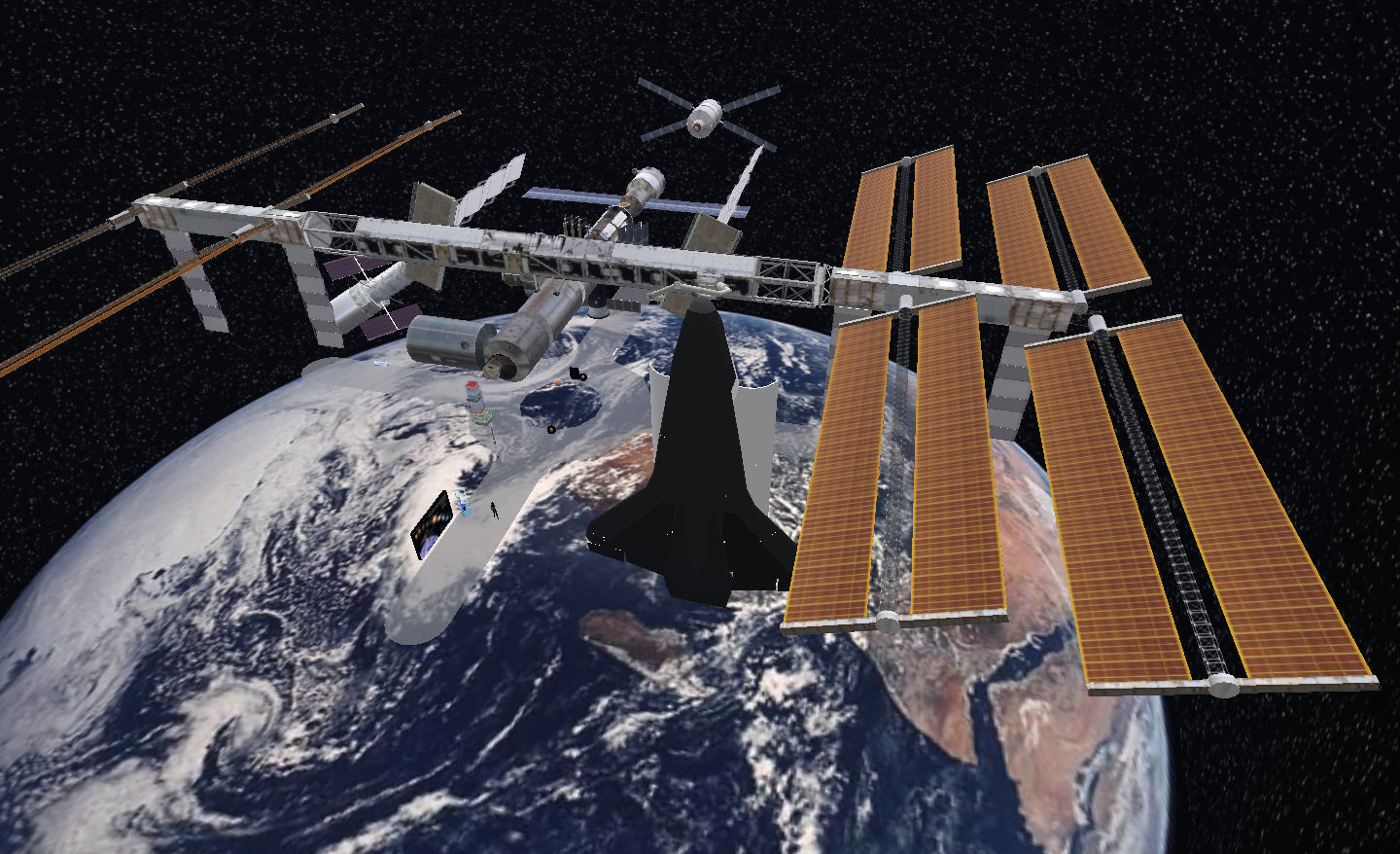
ISM has been cataloguing humanity’s achievements in space within Second Life since 2005

Other changes may be less obvious, but are important to the future running of the museum. The ISM Corporation, for example, has been wound down, and will be replaced by a more focused team working on the project.  “Since we created it for the purpose of obtaining tax-exempt status, and that didn’t happen, there was no reason for it to continue, and it was just sucking up resources,” Kat explained in reference to the decision to wind-down the corporation – an understandable move in the circumstances. The ISM website, however, will be continuing, and updates are due to be put out in the near future – although again, initial focus will remain on getting the ISM regions back up and running smoothly in the short-term. In addition to the website, there are plans in hand to launch a public Facebook page for the ISM to help further raise the profile of the project.

As with all large-scale operations,  ISM has had a few internal issues to deal with along the way that have tended to slow things down a little – fund-raising and business management being two of them, as Kat candidly explained to me. “Trying to pay for maintenance and running a business as opposed to playing with prims and textures just aren’t as much fun for the kinds of people who were initially attracted to starting the museum. Even running events, which we did quite a bit, wasn’t the same. That’s fair, as there is no law saying the same people have to enjoy every aspect of such an enterprise; but we didn’t seem to have enough of those willing to do the business side.” These aren’t issues that will easily go away, and one senses that if there is someone out there with the passion and drive to lend their weight to the project in these areas, their help and support would be most welcome.

But for now, things are looking decidedly bright for the ISM – and the current down-time will hopefully shortly become little more than an unscheduled interruption to what has been one of SL’s finest and most informative destinations since 2005.

If you would like to help support the ISM and volunteer your time and abilities, contact Kat Lemieux in-world. If you would like to show your support for the project via a donation, you can do so via PayPal to ismuseum-at-gmail.com (remember to replace the “-at-” with “@”!) or in Linden Dollars paid to AyeEss Emms in-world. 

Related Links