Catching a Cat – but not by its tail!

The Shana Carpool PBY6A: graceful and fun
The Shana Carpool PBY-6A: graceful and fun

As regular readers here will know, I’ve been bitten by the SL flying bug. It’s not something I do all the time, but it is something I enjoy; so much so that I’ve gained a (very) modest collection of aircraft over the past couple of years, of which I tend to use my EC-135 helicopter, Spitfire and Terra Stingray the most.

However, these three now have a competitor for my time and attention: a Consolidated PBY Catalina, which is affectionately referred to as the “Cat” by aviation enthusiasts. It’s one of those aircraft I fell in love with while going around airshows; being a flying boat, there is something very graceful about its lines that not even the frog-like “blister” canopies on the sides or the gawky, sticky-outy main wheels (on the amphibious version) can spoil.

Starting-up the engines at Second Norway airport, ready for an early morning flight home

So when I was out investigating air racing locations in SL (of which, more anon) and I came across Shana Carpool’s PBY-6A (the “A” being for “amphibious”), I got completely sidetracked (sorry Terag!), and couldn’t help but click the button labelled “PAY”. And I’m glad I did; this aircraft is simply beautiful.

This is actually a new addition to the Shana’s impressive range of aeroplanes, and two variants are provided in the package: the flyable version, which weighs-in at a LI of 49 and a physics weight of around 9; and a static “display” model, which has a LI of 38 and roughly the same physics weight. The scaling of the aircraft is idea for SL flying, and the dual controls make it fun to fly with a friend.

One of the great things about flying in SL is the chance to discover things - such as these glorious paddle steamers!
One of the great things about flying in SL is the chance to discover things – such as these glorious paddle steamers!

Being the amphibious version, the PBY-6A rezzes with wheels down, ready for a land-based take off. However, simply sit it in Linden water, get in, and with two quick commands you can lower the wing-tip floats raise the wheels, and be ready to take off from the sea. The controls are pretty typical, the usual WASD or arrow keys for up/down and left/right and PAGE UP and PAGE DOWN for the throttle. Other commands are single-letter commands – “g” for raising / lowering the wheels, “v” for lowering / raising the wing-tip floats, etc. In addition to this, the side “blister” canopies can be opened / closed at a click, as can the rear gangway.

Starting the Cat causes the two engines to turn over in sequence; the big radials giving a puff of smoke as they cough into life. Both on land and water, the plane is very responsive to control movements, with ailerons, flaps and rudder responding nicely in response to input.

Passing a favourite landmark: the Fastnet Rock lighthouse on Blake Sea

With land based take-offs, the plane pretty much takes care of itself; simply get up to airspeed and it’ll lift itself off of the runway very smoothly, so with just a touch on the controls, you’re climbing out nicely, ready to bring the wheels up. On water it is slightly different – as it should be. Take-off requires a good head of speed and a firm (not too heavy!) pulling back on the yoke in order to get the water to agree to let you go.

Landings are slightly harder. I’m not a qualified pilot in the physical world, nor am I an expert in dynamics; but I assume that huge overhead wing is responsible; once in the air, it doesn’t want to come back down to Earth, and I found myself drifting quite a distance down the runway before actually getting the wheels on the ground during my initial attempts. Whether the real Catalina is like this, I’ve no idea; but it felt very real, and certainly adds to the experience of flying the plane.

This wasn't planned; but while over Blake Sea I happened across this vintage aircraft carrier
This wasn’t planned; but while over Blake Sea I happened across this vintage aircraft carrier, and a quick snap was too good to pass up

As well as the exterior detail, the PBY6A has a nicely detailed cockpit, complete with the distinctive overhead throttles. The aircraft also comes with a painting kit, with three supplied finishes: white, dirty white and US Navy. UV maps and instructions are supplied for those wishing to create their own livery for the Cat, although I’m hoping we might see an extension pack (as my graphics design skills are non-existent!). I’d happily buy a pack offering RAF Coastal Command colours :). Given you can also deploy a “rescue boat” to help those in distress in the water, perhaps some form of coastguard colours in a pack wouldn’t go amiss (although I assume the boat is for combat pilots who have crashed into the sea).

Region crossings with the PBY6A were no different from when flying my Spitfire or EC-135; the expected “”rubber banding” and / or barrel rolling as a result of the hand-off between regions was the same, and the occasional skewing of the camera to one side of the aircraft was encountered. Neither a fault of the design, just a fact of life with SL region crossings.  However, given it can carry up to nine (2 crew + 7 passengers) I do wonder how things will fair on multiple region crossings under a full load.

The camera slewing issue, when it occurs has led me to start flying more in Mouselook; it’s either that or edited the ‘plane mid-flight and quickly standing/sitting again to reset. I have to say that for some reason, I found doing so a lot more fun in the Catalina than in the Spitfire or EC-135. Perhaps this is simply because flying the Cat is new to me; but I certainly enjoyed myself attempting landings in ML a lot more!

There are some lovely touches to this aeroplane; just witness the way the main wheels tuck themselves up into the fuselage recesses on being raised; similarly the lowering and raising of the wingtip floats is somehow poised and graceful. All told a fabulous aircraft, and one which really is a must for any SL aviation fan, and which also now has me thinking maybe I should be moving to somewhere larger, where I can park it on display :).

Shana Carpool PBY6A Catalina price at the time of writing: L$2,100. Available from Shana Carpool headquarters and vendors across SL.

Whirling around the skies of Second Life

Spijkers Aviation & Marine EC-135 over Blake Sea Half Hitch

While visiting RiTai recently, I took time out to fly a helicopter modelled on the Eurocopter EC-135. I’ve never really fussed that much with helicopters in SL (one has been sitting in my inventory forever but it is so old, a Havoc update way beck in … 2009? 2010? broke it and as I’d already stopped using it, I never really bothered with the updated version). As such, I was a little curious to see if my attitude had changed.

Well, flying the machine, even on the one region, proved to be a lot of fun; so much so that I got, well, hooked. Since then, and as time has allowed, I’ve been shuffling around SL looking at various makes and models of helicopter with a view to getting one, and repeatedly found myself drawn back to the EC-135 design as being particularly attractive. My poking around led me to Spijkers Aviation & Marine where, after much mmming and ahhing (and not a few flights in  the demo aircraft there) I picked up Tig’s civilian version of the EC-135.

Spijkers Aviation & Marine EC-135 - passing the Fastnet light
Spijkers Aviation & Marine EC-135 – passing the Fastnet light

I’ve barely put it down since.

Weighing-in with a land impact of 27, the helicopter is well made and looks good. Seating the pilot and up to five passengers, it offers plenty of opportunities for flying with friends – but that’s just the icing on the cake.

For a start, the pack itself contains not one, but three variants of the helicopter: flyable, static (unscripted), and “desktop” (which is small and beautifully formed), each of which is offered in three basic colours: red, white and blue. As the full-size versions are MOD, also included in the pack are additional texture sets allowing the purchaser to mix and match the three finishes to produce a very individual aircraft – and if that is not enough, Tigs and Amy offer to produce  custom textures upon enquiry.

As well as the various models of the helicopter and the texture options, the pack includes two sets of instructions and two HUDS – “full” or “light” depending on your preference. Neither is absolutely required for flying, and each has a number of buttons not applicable to the civilian version of the EC-135.

The texture packs made customising one of the default versions a breeze. As I have a thing for red and white (witness Lady of Calas and Lady of Calas 2),  I wanted my new toy to be ranged in the same colours, and it took me less than 3 minutes to have a two-tone EC-135 ready to fly. And flying this little helicopter is fun.

Spijkers Aviation & Marine EC-135 - original red (r) and my 3-minute "custom" finish (l)
Spijkers Aviation & Marine EC-135 – original red (r) and my 3-minute “custom” finish (l)

Page Up and Page Down act as the collective, the arrow keys function as the cyclic for forward / reverse and turning / banking. Other commands are accessed via typing (“s” to start / stop the engine, “l” for lights, “ld” for opening / closing the left door, etc.), or via the HUDs, if used, if used. Handling-wise, the EC-135 is very responsive, and once one has got the hang of using the controls, staying airborne and enjoying oneself is a breeze.

One of the reasons I opted for this model compared to others are the range of additional options. FlySafe, for example turns the aircraft and passengers phantom – handy if you’re flying over mainland only to find someone has parked their skyhome on your flight path and evasive flying might not be that easy due to other buildings, etc., also hanging in the sky.

More importantly (from my viewpoint, at least) is the fact that – like many of Tig’s aircraft – the EC-135 can be configured so that a co-pilot can take the controls (a copy of either HUD can even be given to them). Having been a passenger on flights myself more than a few times, I know how boring sitting and letting someone else pilot you around can get be. so being able to turn over control to a friend and let them experience flying the helicopter for a while, strikes me as a neat idea and helps share the flying experience.

Spijkers Aviation & Marine EC-135 - the controls are ideal for my avatar's height
Spijkers Aviation & Marine EC-135 – the controls are ideal for my avatar’s height

I also like the optional floats that come with this model. While these can only be activated / deactivated when the engine is off, they’re a handy addition for someone like me, who lives on the edge of Blake Sea and is surrounded by water 🙂 .

There a lot more I could say about this helicopter, but I’m not going to – just take it from me, if you’re looking for a helo for yourself and you’ve not tried Spijkers Aviation & Marine, then I thoroughly recommend you hop over to their in-world headquarters and give their demonstrators a go. I doubt you’ll be at all disappointed.

Spijkers Aviation & Marine EC-135 - making an inspection pass near the Second Norway airport tower
Spijkers Aviation & Marine EC-135 – making an inspection pass near the Second Norway airport tower

Related Links

I have slipped the surly bonds of Earth …

I had some genuinely “free” time to myself today; no RL worries, nothing to rush to or get done in-world (well, nothing that couldn’t wait…), so I gave myself an hour of pure indulgence. It’s been a while since I’ve had the opportunity to take to the air in SL, but this is September, and while there are still a few days still to go before the 15th, I decided that heading over to Santa Catalina’s Hollywood Airport and putting my Spitfire IX through its paces sounded like a good idea.

I’ve reviewed the aircraft – a quite generous gift from the creator, Eric Gregan – in the past, so am not going to do so again here. Suffice it to say, I think it is once of the best aircraft I’ve flown in SL, and I’m totally in love with it.

Post start-up checks, getting ready to taxi, Hollywood Airport

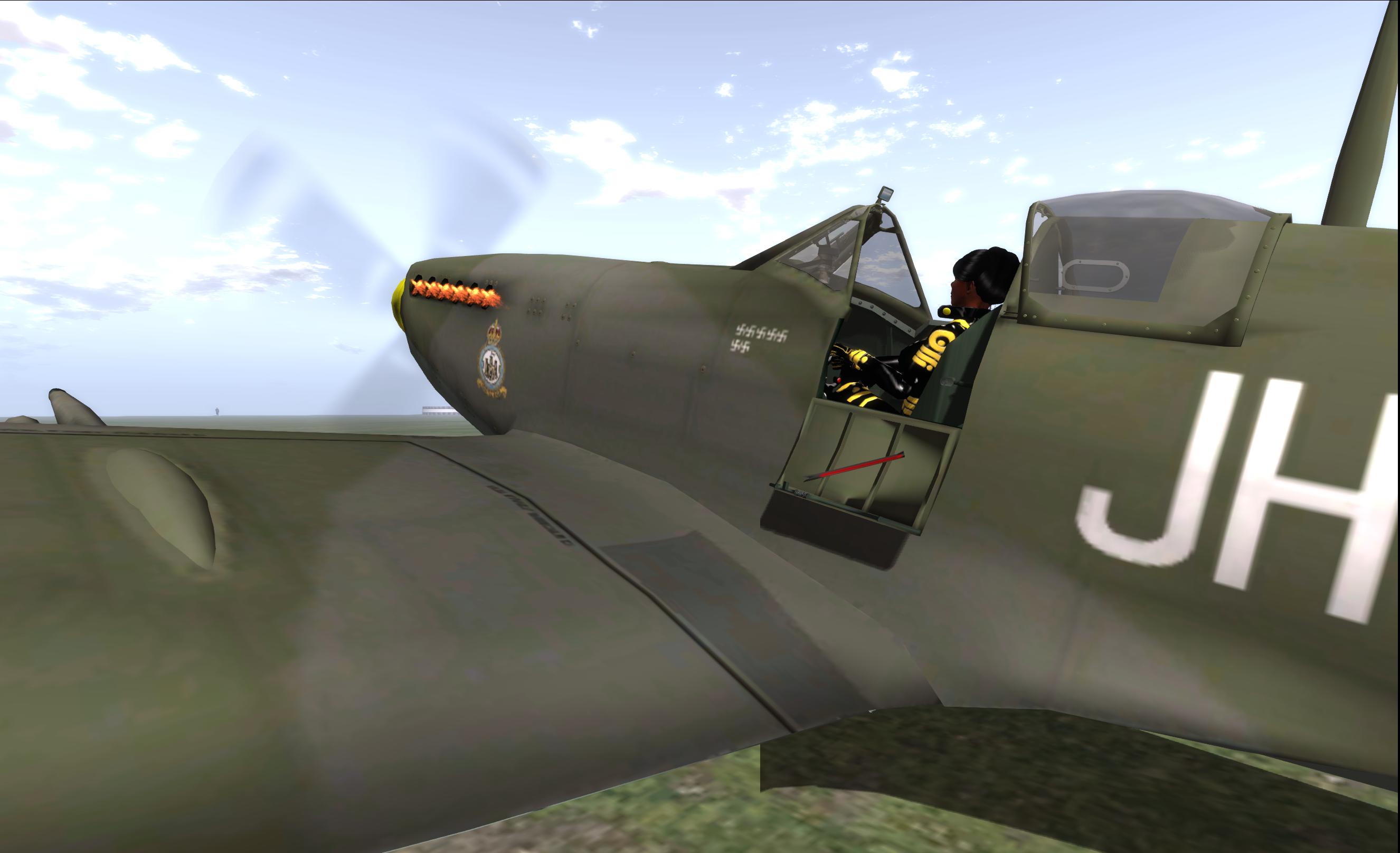
Having run through pre-start-up checks, I hit the ignition and waited as the big Merlin coughed, paused, coughed, and then with a snort of flame from the exhausts, roared into life. Confirming all my switches were set, I ordered the chocks away and opened the throttle a touch more and eased the plane around for taxiing.

Heading over Crows Nest

I was admittedly a little leery about taking off; coming out from the other side of the airport was a humongous great US air force bomber (which, given the little avatar running frantically along side of it as it turned out onto the runway, may have forgotten / lost someone…). As I didn’t fancy impersonating a leaf in autumn and back flipping in the jet wash from the beast, I gave it plenty of room before turning out myself and pushing the throttle all the way to the stop and giving the engine a little bit of boost.

Flying out of Hollywood airport can at time be a little ugly. The end of the runway is the region boundary, which can make things a tad interesting when the grid is in a mood. Not this time, however. Letting the tail come up, I eased back and to the right on the stick and started a climbing turn to the west, wheels coming up tidily.

Somebody call for a low-level pass?

Continuing west, I passed over Crows Nest and the Fastnet light house, one of the great landmarks of Blake Sea, then dipped the nose for a fast pass over Half-Hitch. This took me over Barbarossa as well, And I spent some time flying around the two before heading back east towards Santa Catalina, before finally turning south and then west to put down at Honah Lee Surf.

Happy to oblige!
Happy to oblige!

The last couple of times I took to the air things were not that pleasant when it came to region crossings. This time, while I encountered three rough moments (one of which I actually recovered from by editing the plane and dragging it back to the middle of a region after getting snagged on the Blake Sea Arabian / Blake Coast regions), things were very smooth, and even rapid and repeated region crossings while flying in a tight circle caused few problems. About the only major issue I did have was in trying to fly the plane and position the camera for a decent snapshot …

All-in-all it was a good trip and fun to be back in the air – although I need to brush up on my landings. A couple were decidedly rough; there’s an art to alanding atail-dragger I’ve not quite mastered – but plenty of time to get better! I can say that I certainly didn’t miss finding myself sitting at 0,0,0 sans ‘plane and thinking”?!?” this time around :). I think I even pleased someone with a couple of low fly overs!

Climbing sunward ...
Climbing sunward …

September 15th is approaching, so I’ll be airborne again to mark the day; hope I can do something a little special.

Related Links

Flying high in SL

Update March 26th: Erick has sent me a copy of the “full” version of the Spitfire’s Hud, which does include a comprehensive set of control switches.

As regular readers know, I was bitten by the flying bug towards the back-end of 2012. I started out humbly enough with a couple of “freebie” aircraft (although the term doesn’t do them justice at all) a Terra Stingray by Steve “Cubey Terra” Cavers and a Pitts S2C by Michie Yokosuka. As noted back then, I’d had some flying vehicles prior to these two, but they marked my “real” entry into the world of flying in SL.

Since then, my aircraft collection has expanded somewhat, with several more from the Cubey Terra range entering my ownership, and even Warbugs getting my attention. If I’m totally honest, the Stingray has remained my out-and-away favourite – it handles beautifully and is equally at home whether in the air or on (and even under!) the water – which is really handy when out on Blake Sea.

However, my collection of aircraft gained a massive boost recently when I unexpectedly came into ownership of an aeroplane I have, like anyone remotely connected to or interested in RL flying, loved from afar: A Supermarine Spitfire. Specifically a Mark IX as made by Erick Gregan.

Just a gal and her Mark IX

The “Spit” came my way while Erick and I were visiting the Magnum Sandbox regions in order to poke sticks at the region crossing bug fix deployed this week by LL in an attempt to cure much of the misery surrounding vehicle region crossings resulting from the recent roll-out of interest list code.

Those who are familiar with Erick’s work know this his aircraft are all exquisitely put together and detailed – and the Spitfire is no exception. A mesh construction, It is perhaps one of the most detailed SL aircraft I’ve seen, and it is clear that he has poured an enormous amount of creative talent into it. I confess that it was love at first sight when he rezzed it in front of us.

Fabulous detail
Fabulous detail

It is also fabulously scripted – the one aircraft having four flight modes:  an “easy fly”, a “realistic fly” (handling pretty much as a “real” aeroplane would, and requiring as much care and respect), and both an “easy combat”, and a “realistic combat” version for those who feel a little more bloodthirsty.

All four variants come in a single Mark IX rezzer which itself is pretty neat. Pull it out of inventory, let it rez and then click to select which variant of the aircraft you’d like. The “flyable” version then replaces the rezzing version, which self-deletes, leaving the flyable version occupying the same space.  Also included in the box is a low-impact (non-flying) “display” version, suitable for parking in a hanger, a full set of instructions and a parachute – just in case.

In the air
In the air

The Spitfire uses the usual flight controls: Page Up / Down for throttle, the arrow keys for climb / descend / banking, together with a huge range of chat commands  – there is no active HUD for flight settings, although you can display an instrument HUD on your screen.

In terms of capabilities and control, Erick has packed a lot in, and sought to make the aircraft as real to fly as possible, particularly in the “realistic” modes. In the latter, a correct start-up process needs to be followed in order to get the big Merlin engine turning over; there’s a battery to turn on, fuel pumps and mixture to set, throttle to open, etc., before attempting start-up. When the engine does start to turn over, you’re treated to unburnt fuel “flaming” in the Merlin’s exhaust pipes as well as getting the life-life sound of the engine coughing and roaring into life. All-in-all an aviation enthusiast’s dream.

"Contact!" The Mark IX's Merlins starts ...
“Contact!” The Mark IX’s Merlins starts …

Once in the air, the Spitfire is a delight to fly, and is very responsive to keyboard inputs, with flap, ailerons and rudder all visibly moving in response to inputs. I can say that aerobatics, are a joy – providing you have a good sense of spatial awareness :). I had a lot of fun barrel-rolling and looping around the sky once I’d got settled.

Care does need to be taken when flying the plane in “realistic” modes, however. Get things out of shape on landing, for example, and you’re liable to tip the nose into the ground … as I found out *cough*cough*. Oh, and don’t forget to refuel between flights :).

There is a HUD to go with the Spitfire, but it is “passive” in the sense that while it records airspeed, altitude, heading, etc., there are no switches or options to click; all commands outside of the flying controls are given via chat. The commands themselves are simple enough, with many abbreviated for ease of use (“cc” to close / open the canopy, “ch” to remove / place the wheel chocks, “br” for brakes, etc).

I’ve not actually tried my hand in combat, as that is not something which particularly draws me (Warbugs notwithstanding!), bot the Spitfire comes with an impressive array of weapon options using the VCE combat system for those who are combat enthusiasts.

As to region crossings? While, these have been an issue of late, as I’ve been covering in my weekly SL project updates. However, and while it has, at the time of writing, yet to be deployed to the entire grid – which should happen in week 13 (commencing Monday 25th March), the fix for BUG-1814 works. Neither Erick nor I encountered any issues crossing between regions in the Magnum Sandbox area. Hopefully this will be the majority finding for everyone who enjoys flying / driving / sailing in SL once the fix has been fully rolled-out.

And the Spitfire? Well, suffice it to say, I’m well and truly flying high.

Spit-7_001

Related Links

Bitten by the (War)bug

So, it’s no secret to regulars to these pages that I’ve become somewhat hooked on SL sailing and flying. I still only have the one premium gift sail boat in my inventory – it is more than enough to keep me happy and has room enough for friends – but my collection of SL aircraft is slowly growing, with the latest addition being a Warbug.

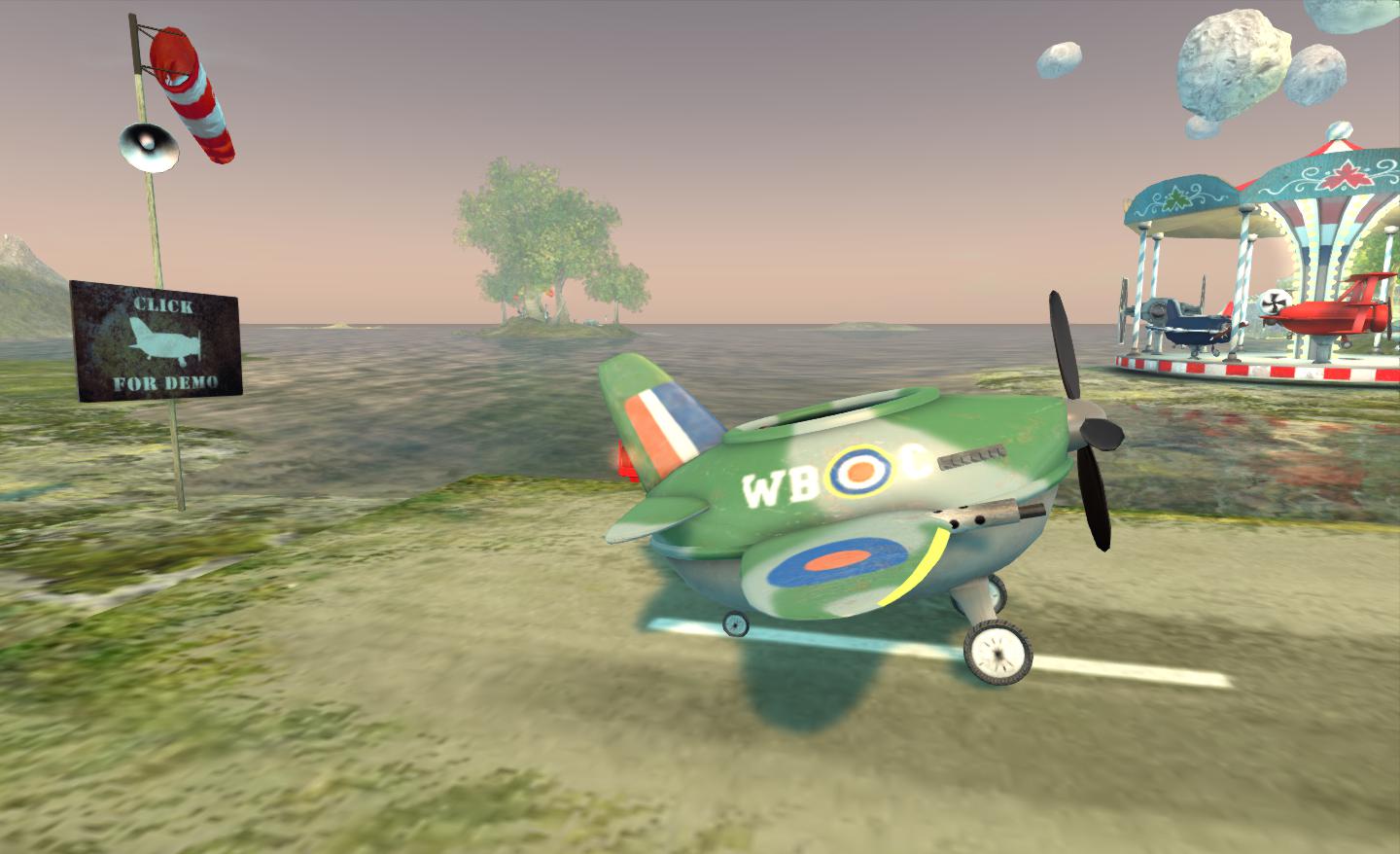
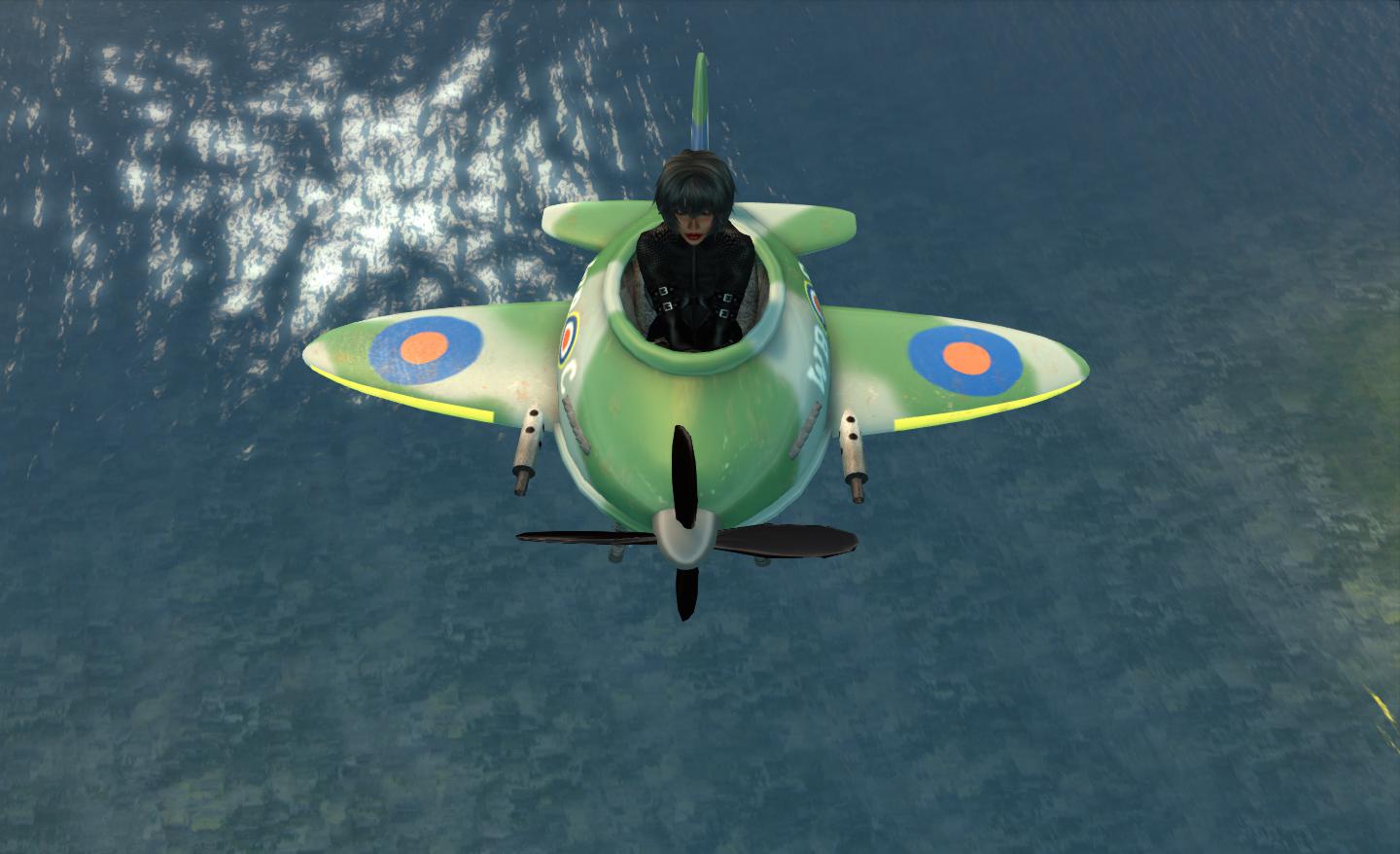
For those unfamiliar with them, Warbugs are little egg-shaped aeroplanes with air-to-air combat capabilities which are, in a word, fun!

I first came across them by chance browsing the SL Marketplace, but it was Lindal Kidd who piqued my curiosity when she mentioned she had a Warbug airfield on her land (along with a skydiving jump zone). Created by Arduenn Schwartzman, Warbugs can be flown for fun, pleasure or air-to-air fighting, and are possibly unique in SL as they allow “full size” avatars to take to wing within a single region without risking running out of airspace – which is not to say they are unable to handle region boundaries.

The aircraft come in a variety of forms which cover everything from World War I through to spaceships (including a set of Star Wars items which could draw a frown or two from Disney…). They can be bought on the Marketplace or via the Warbugs HQ, which also offers free-to-fly variants of some of the models available via a rezzing system (the rezzing systems themselves also being available to buy).

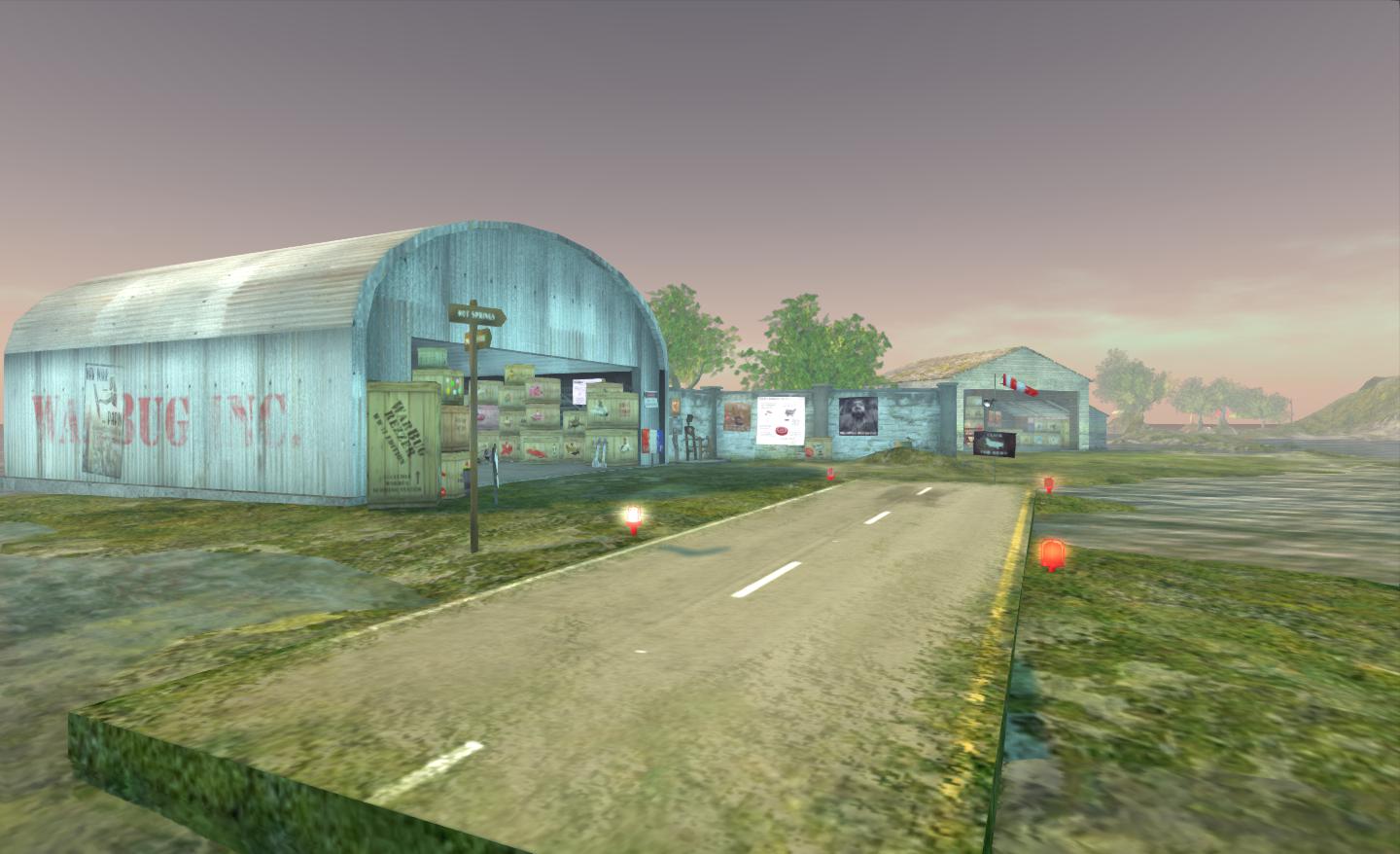
Warbugs HQ

It was through the rezzing system that I had my first exposure to flying a Warbug – and quickly got addicted. The aerial combat aspect requires flying around using the standard controls (arrow keys for up/down, left/right) PAGE UP and PAGE DOWN for the throttle) and trying to line-up your guns on the “opposition” (the left mouse button fires your guns). Aircraft which are purchased come with a gun sight HUD, which makes the latter a little easier, but given the manoeuvrability of these little planes, not by much.

My Spitfire awaits…

The cockpit is a little cramped, but it’s cute watching your avatar fold herself / himself into it. once in, the engine starts, with suitable sounds, and then it’s open the throttle and – away you go!

Air combat can be frenetic – these little planes are highly responsive to the controls, and only have a screen in front of you, tracking the opposition can get hard – even with aids such as the Mini-map and radar tracking (cheats! :)).

Airborne!

Given that the Warbugs on offer represent various “sides” – RAF and USAAF  … Luftwaffe … Rebels … Empire… it is possible to use them for “group” combat as well as having a “free for all” (although the latter does seem to predominate around the Warbugs HQ), which can add an additional element to the flying. And you certainly know it when you’re hit! Not only are you told in chat, the Warbug spews forth black smoke as you spin towards the ground, being ejected shortly before impact, leaving you either to pick up your bruised ego and battered ‘plane and try again or  – when using a rezzer – trudging back to call-up a replacement…

I’m Hit! Mayday! Mayday!

There are various additions for the enthusiast as well – missiles can be added to some aircraft and a conversion kit means that you can try target bombing rather than blowing one another out of the sky. There are also a range of texture and conversion packs, and even a script pack which can be added to your own custom Warbug builds. Other accessories into an asteroid base for the spaceship units, planets (which can be blown up and leave disturbances in the Force), a complete WW I range of accessories, and so on.

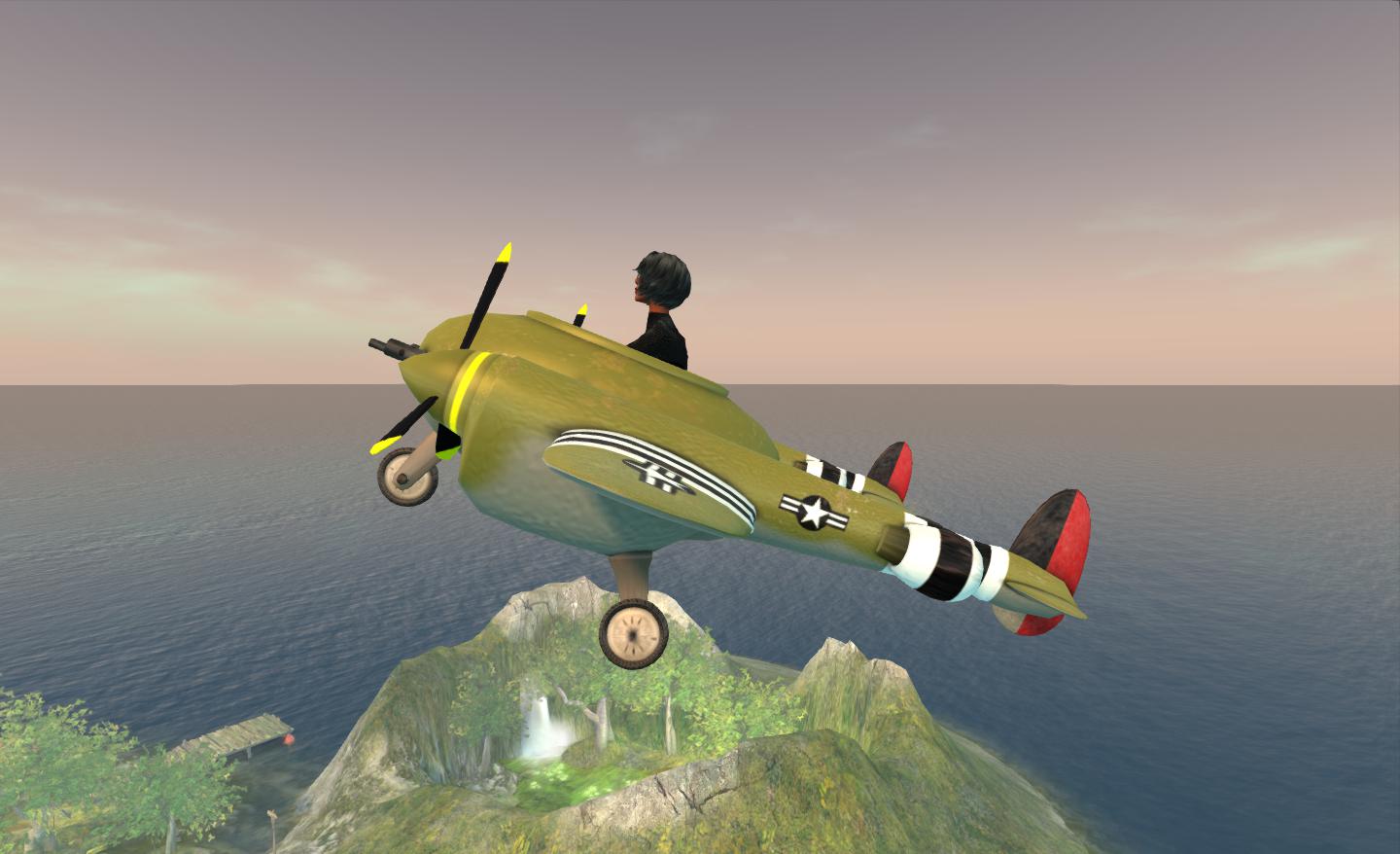
Taking to the air in a P-38 to try my hand at target bombing

There is a website dedicated to Warbug flyers across the grid, which also tracks “aces” and scores. This also adds to the nature of the competition, as “aces” are not only tracked in terms of their point, but also their “value”. The first time you shoot down an “ace” you are awarded whatever value has been assigned to them, rather than just the 10 points usually awarded for shooting someone down. This tends to make “aces” a hunted breed for those after points…

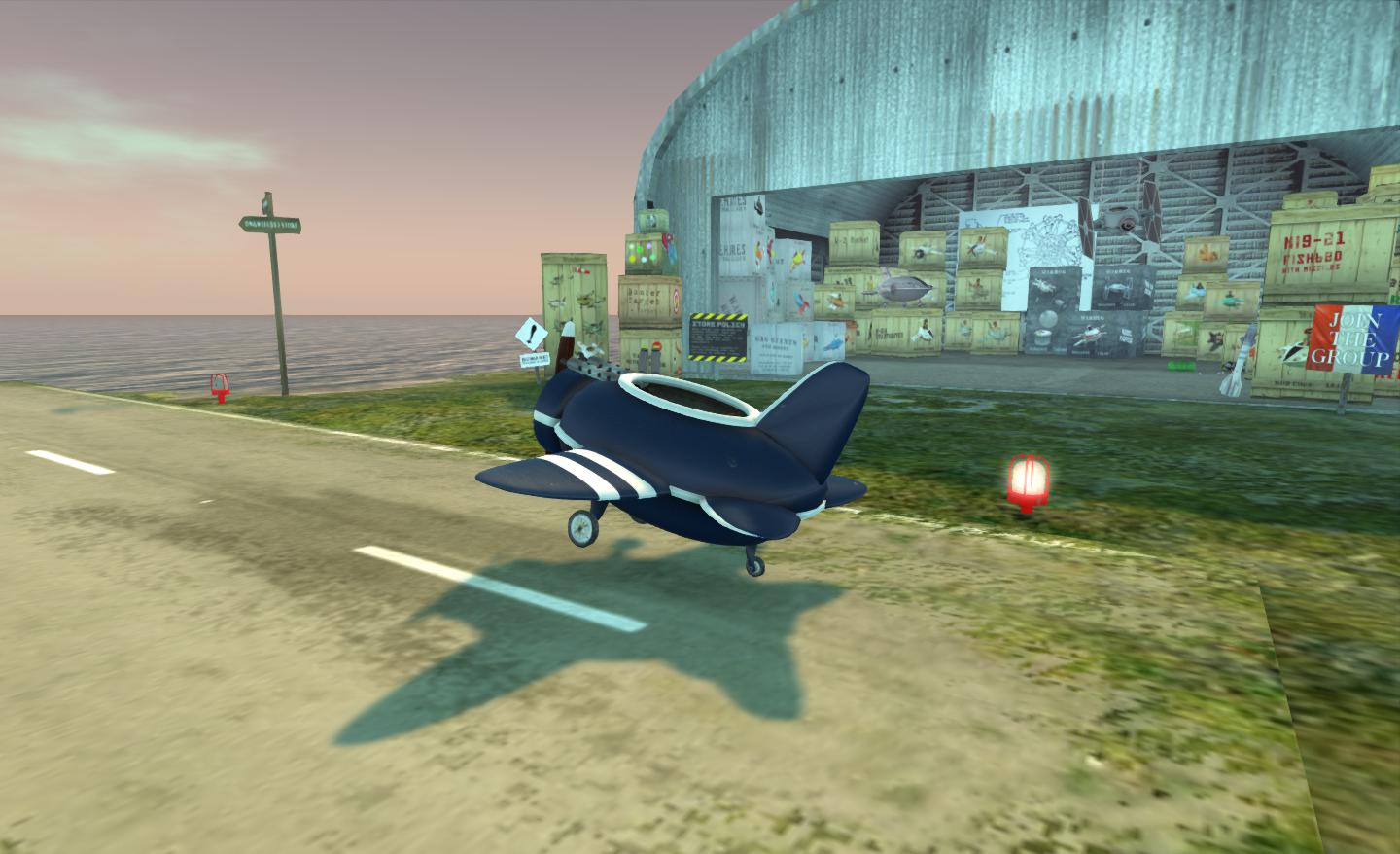
My first Warbug

In the latter regard, I was rather surprised to find myself sitting at #17 in the “aces” list after just a couple of turns in actual combat. Scores are recorded locally by any active rezzer / windsock in operation in a region as well.

Flying with Lindal from her home region proved a lot of fun as well – and how well the Warbugs handle region crossings. Even the skyhomes and sky boxes scattered around made things a lot of fun and provided a means for nipping around obstacles and trying to get a “jump” on one another.

If you’re into flying and haven’t tried out Warbugs, I’d really encourage you to try them out. If you’re into competitive games with a difference (and some of the Warbug people are very competitive!), again, there’s a lot of fun to be had with these little ‘planes. I’ve been bapping about in them for the last few days (and am currently considering adding a Sopwith Camel and / or the Spitfire to my growing collection of aircraft).

Great fun!

Related Links

Fly / drive: having fun behind the wheel

In the Air

Earlier in the week, Salazar Jack dropped a lovely picture into Twitter of a magnificent steampunk-esque flying machine being flown by Tish Coronet. He included a link to the SL Marketplace, and I set off to look, rather intrigued.

The photo that piqued curiosity: Tish Coronet’s Lepidoptera (captured by Tish, uploaded to Twitter by Salazar Jack)

The machine itself is the Mechanical Lepidoptera, a partial mesh build which is being offered free by its creator, Bunnys Fride, who describes it thus:

By visiting the Jules Verne Museum in Nantes (french town, west coast) I noticed a painting that represents this machine to takeoff from one of the most beautiful place of Nantes. This same painting appears in the foreground on the poster for the International Festival of Science Fiction of Nantes in 2009, named Utopiales.

I propose you this beautiful concept of lepidoptera mechanical imagined and painted by James Gurney, a talented artist, famous illustrator and creator of Dinotopia.

Standing next to my Lepidoptera

The Lepidoptera is exquisitely detailed, with a two-tone metal body, beautiful passenger cabin (the vehicle will take up to eleven passengers, included one seated beside the pilot / owner) and detailed cockpit in the “head”. Detailing continues through the landing legs, which “droop” below the body when in flight, just like the legs of a flying insect seem to hang limply beneath its body. On landing (on the ground), the legs splay out, again in a life-like look. Another lovely piece of detailing is in the mechanical operation of the wings themselves.

Detailing

Flying the machine requires a HUD, which allows you to correctly set your camera position, and which controls the start-up of the machine and the forward / interior lights. This attaches to the top right of your screen. To fly the Lepidoptera, right click on it and select FLY from the menu, this will sit you in the cockpit. Tap ESC to position your camera correctly (if required – or use the HUD options), and then click on START on the HUD to set the wings flapping (complete with engine / mechanical sounds). Flight controls are then use PAGE UP / DOWN to ascend / descend, and the arrow keys / WASD keys to manoeuvre (you’ll need to key the UP / W key depressed to maintain forward motion).

Airborne!

Natascha Randt has produced a great video showcasing the Lepidoptera:

On the Ground

Flying the Lepidoptera reminded me that a few months back I picked up another freebie from SLM, the Autoworks Classic 43S GT by Angie Xenga / Ed Zaurak.

The Autoworks Classic 43S GT

A two-seat sports coupe, the 43S GT is sleek and attractive – and quite a handful if you’re not used to SL driving, as I found out when given the chance to try it out on a multi-sim racing circuit for the first time yesterday!

The basic controls are simple enough: UP key / W to accelerate, LEFT / RIGHT or A / D to turn, and DOWN / S to break. PAGE UP / PAGE DOWN operate the gear changes (although there is an automatic option). However, there are a range of other options and capabilities that can make driving an Autoworks car pretty much the same experience as driving a high-performance car in RL: 50% fun, 50% seat-wetting and 100% adrenalin! There is also an option HUD displaying speed and revs which you can attach to your screen.

Additional menu options allow you to alter the colour of the car  – royal blue is the default, but I like the silver look – adjust your driving position, adjust the transmission options, the engine – and a whole lot more. Touching the car allows you to open the bonnet (“hood”) or the doors.

Ready to get behind the wheel

The cockpit itself is nicely detailed, and I love the fact that this car is designed to be driven on the correct side of the road being right-hand drive  ;-). All-in-all, great fun to have, if you can find the space to use it (the handling is such that you can rapidly run out of sim!).

If anything spoiled it for me, it was not the car, but the fact that to appreciate it fully you do need to drive across multiple sims – and this brings up the ogre of region crossings. Given the speeds you can reach behind the wheel, this means it is easy to find yourself on top of one before you realise, and you’re suddenly sailing off into infinity. Hopefully, with multi-threaded region crossings on the way plus other improvements, this will reduce the problem, but it did put a bit of a dampener of the thrill of driving this superb car.

Ready to roll

As well as the Classic 43S GT, the package comes with the Autoworks Type ZII, a single-seat car that offers a broadly similar range of options, but didn’t, for me, have the same appeal.

Apparently the Classic 43S GT represents the first in a new range of cars Autoworks will be producing “just for the fun of it”, the business itself having closed as an SL commercial venture in February 2012. It is a sample of what is to come; so far one more car has been added to the free range, and I’m intrigued to see what else is produced in time!