Visiting the Hollywood Art Museum in Sansar

Sansar: Hollywood Art Museum

The Hollywood Art Museum (HWAM) opened in Sansar on Saturday, December 9th, 2017. A joint endeavour between Sansar Studios and renowned director, designer, writer, producer, and practical effects professional, Greg Aronowitz. Mr. Aronowitz – whose credits such as Jurassic Park: Lost World, X-Files, Saving Private Ryan, Contact, Terminator 2, and Dark Crystal: Age of Resistance – is an avid collector who has amassed an incredible collection of Hollywood production art, from storyboards to costume sketches, concept drawings, models, and more.

Greg Aronowitz

The aim is to provide an environment where digital reproductions of items from Mr. Aronowitz’s collection – spanning a period from Citizen Kane to Transformers: The last Knight offer visitors a unique and intimate view of the creative processes involved in some of the world’s most beloved films. Through this, HWAM hopes to encourage artists in the digital medium to find fresh inspiration in the traditional arts of Hollywood’s past, through the preservation and education of art used in entertainment.

For this inaugural exhibition is featuring a special exhibition of production pieces from the Star Wars franchise films – which comes ahead of the US opening of the latest film in the series Star Wars: The Last Jedi.

Unfortunately, while I had a ticket for the event – the timing: 03:00 onwards on the morning of Sunday, December 10th, UK time, meant I was unable to attend. So instead, I hopped in as soon as time allowed.

Anyone who has been able to visit Paramount Studios, just off of Melrose Avenue in los Angeles might find the spawn point for the experience to be somewhat familiar. Directly behind it is an arched gateway, echoing the iconic entrance to Paramount, with some of the buildings also echoing some of the architectural styling of building within Paramount’s grounds.

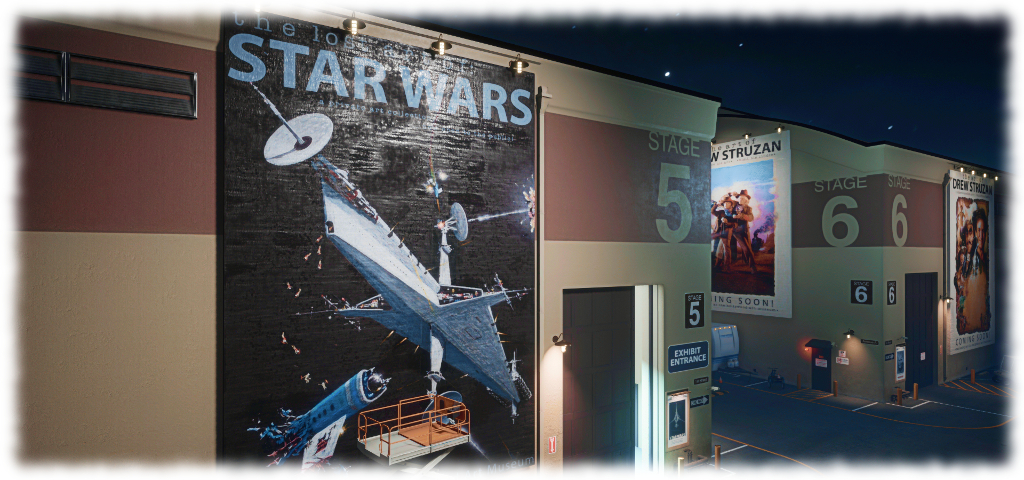
Facing the spawn point are two massive soundstages (which also carry a similarity to those of the Warner Brothers studios). These provide the first clue on how exhibitions at HWAM are to be handled: the entrance to each is in fact a teleport point to an exhibition. Right now, only Stage 5 is accessible, a huge poster on the wall announcing it as the Star Wars exhibition. However, Stage 6, just across the way will provide access to an exhibition of Drew Struzan’s magnificent art.
Sansar: Hollywood Art Museum

Step through the door to stage 5, however, and you enter the Star Wars soundstage. This offers a mock-up of an interior, complete with plain outer wooden walls, scaffold supports and a pair a green screens. A ramp runs up into the set, resembling the boarding ramp of a space vessel, the green screens either side suggesting CGI of the underside of the ship would be added post-production.

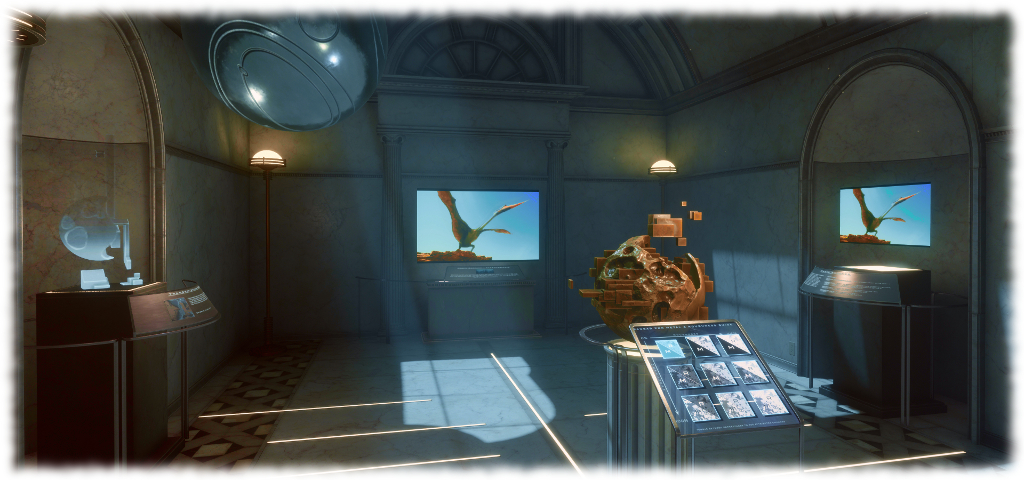
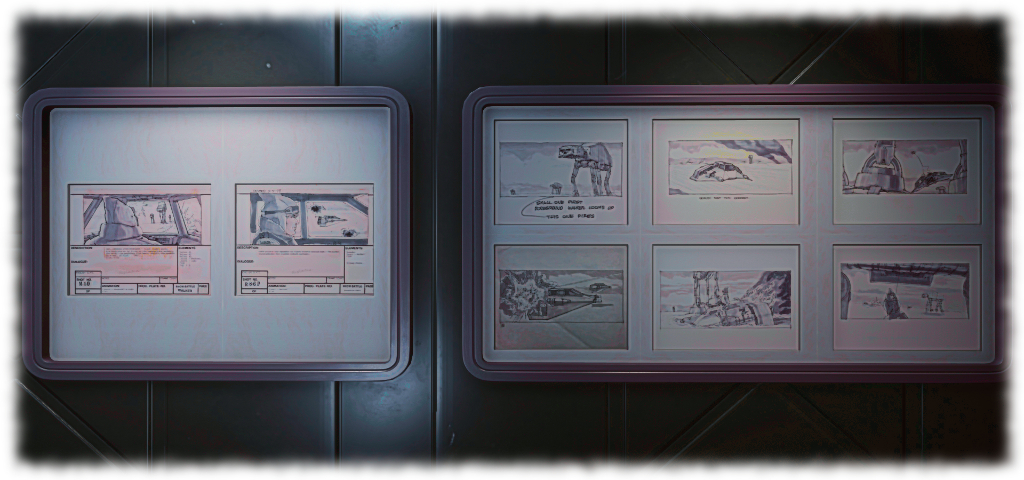
Aboard the ship visitors pass through a series of spaces featuring artwork, production sketches and reproductions of props from the film; there are even reproductions of casts used to make merchandise and models of that merchandise.
Sansar: Hollywood Art Museum – “Use the Force, Luke … Let go!”

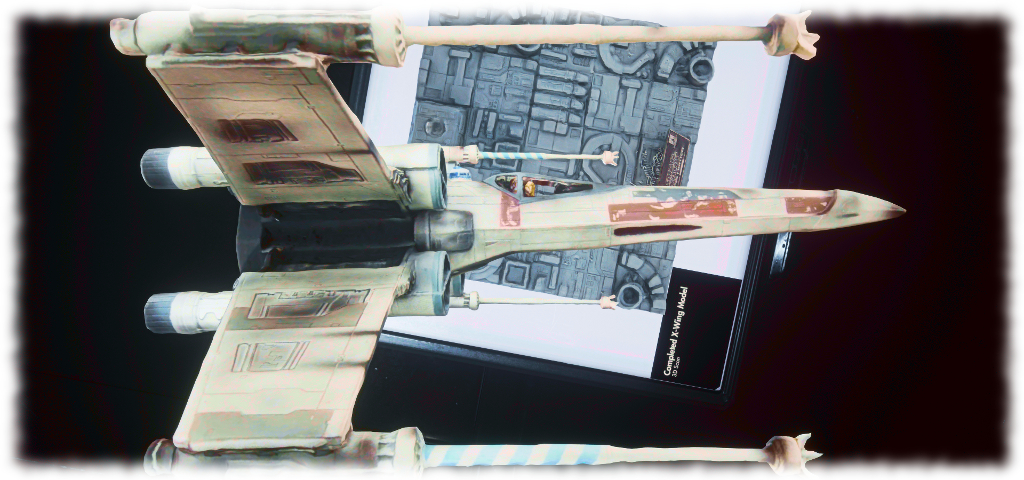
The spaces are organised into themes. The Beginning: Spaceships guides visitors through the design of various Star Wars craft, with a notable focus on the veritable X-Wing fighter (above). Races and their modes of dress, etc., comes next, before a broader look at the worlds of Stars are examined and then, finally, a peek into the world of merchandise.

The work of many of the behind-the-scenes bigger hitters for production design are featured in the exhibition, including Joe Johnston, the late, great Ralph McQuarrie, Phil Tippett, and Colin Cantwell – the man most closely associated with the X-Wing and the Death Star designs.

Sansar: Hollywood Art Museum

Wall panels also provide text information, and collision volumes before wall and free-standing displays will trigger audio explanations of images and models  (VR users can press the audio buttons alongside display sections). This means that HWAM works for both VR and Desktop users, providing information equally to both – kudos to the Sansar Studios team for this!

There is, however, a slight bug: some of the models can be picked up and dropped  – this is particularly prevalent in Desktop mode, where an accidental left-click can see you wearing an X-Wing or Admiral “It’s a trap!” Ackbar’s head. This can result in some of the models being scattered on the floor, and is an  a general issue in Sansar which will hopefully be addressed to prevent “non-movable” objects getting accidentally moved.

Fortunately, each time the experience spins-down when no-one is using it, things get replaced on the next spin-up (the reset buttons on the various stands do not appear to work). Note, as well, that the Exit door to one side of the last exhibition space will drop you back into the Star Wars spawn point, on the sound stage.

Sansar: Hollywood Art Museum

This is a superb exhibition, and it is clear that a huge amount of thought has been put into it. The artwork has been beautifully reproduced and the models are exquisite – particularly those for the merchandise spin-off section (above), some of which are small when compared to an avatar, but still wonderfully produced – just take a look at the Cantina Bar scene or the model and cast for Ben Kenobi.

With the Drew Struzan exhibit “coming soon” to sound stage 6, I’m looking forward to repeat visits to the Hollywood Art Museum and seeing what other gems Greg Aronowitz and the Sansar Studios team offer us! And if you do like Star Wars, keep an eye on the Sansar blog and the Atlas Events calendar (when visible) for more activities in the week commencing Monday, December 11th, 2017.

Sansar: Hollywood Art Museum – the Cantina Bar model reproduction, with me alongside to give an indication of scale

Experience URL

Anu’s mystery in Sansar

Anu

I first became aware of Anu’s existence in Sansar courtesy of a Product Meeting which took place there. Built by AnuAmun (aka (AnuAmun Alchemi in Second Life), it is an intriguing build, bringing together a curious mix of ancient and future, in what is simply described as “a happy place, filled with smiling faces”.

The first thing that tends to strike visitors on arrival is the lighting. Set at what appears to be sunset, the sky a burnished orange, the lighting is one of the major features of the experience – as becomes clear as you explore. The spawn point seems to be the corner of a park, and gives the first indications of the juxtaposition between old and possibly futuristic: the ground is partial covered with strange hexagonal elements, themselves covered in part by soil; odd metal structures and panels sit with ruined stone walls and bare rock faces.

Anu

Facing the spawn point is a set of aged stone step and footpath, guarded by plant-bearing statues and lit by tall (electric? gas?) lamps. These point the way to a small greensward, again mixing futuristic metal stairs and free-standing hexagons with more traditional park benches. More stone steps set into the slope lead the way up to a paved plateau where sits what might be an old temple, the stonework weathered and partially exposed beneath what might once have been pristine white daub, but above which rises a new-look tiled roof.

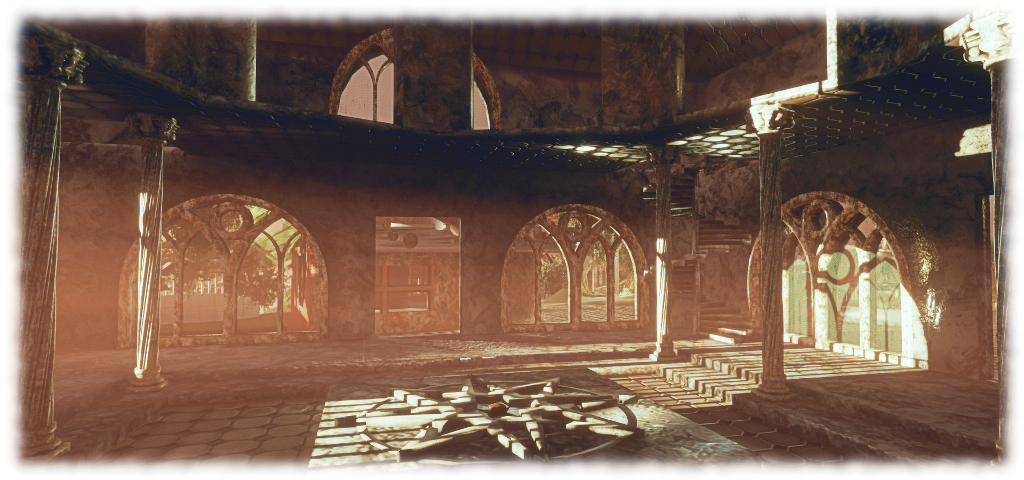
Alongside this temple is a small, more modern-looking building, the walls neatly squared and at least partially covered in a painted stucco finish and the windows neatly framed in wood.  Empty inside, save for s set of stairs, this smaller building has both a balcony and rooftop terrace for looking out over the scene. The temple is more impressive: the wide, tall windows with their intricate stone arches suggest windows from a Norman cathedral, and allow the light of the lowering sun to stream through in streams of God rays, illuminating the temple’s interior and the cobbled area before it.

Anu

While seemingly natural from above, the plateau on which these buildings sit overlooks a lower area, paved by a mix of the hexagonal elements and stone, and where the sides of the “plateau” reveal they are the walls of an industrial-looking structure built back into the hill. Thus the question is raised: which came first: the industrial-like structure with its walls partially scrawled with graffiti, or the temple above it?

The area before this (non-accessible) structure can be reached via a slightly circuitous route from the spawn point – just wall out onto the grass to the right of the park area where the table and chairs can be seen, and follow the route under the stone arch a short distance from them, and you’ll find the way. This route also provides access to an old stone stairway climbing another hill, where sits a large platform facing the temple across the shallow valley between the two – although (at the time of writing) there’s no means to reach the top of the platform.

Anu

Walk to the paved area before the more industrial elements beneath the temple site, and you’ll find a bridge spanning the steam flowing through the setting, and which provides access to a long tunnel burrowing under the platform-topped hill. There’s also a lighthouse-like tower rising from a corner of this paved area, a further set of step apparently providing access to it – although for some reason attempts to access it bounce you back down the steps.

All-in-all, Anu is a mystical, mysterious setting. You can’t help but feel there is a story waiting to be told here – a story yet to reveal itself. I’ve no idea if the experience is still a work-in-progress, but parts of it had that kind of feel about it notably around the structure on which the temple sits, the tunnel through the hill across the valley, and the area around the platform above it. If it is a WIP, then further visits may well be in order to see how it develops, and whether that story starts to unfold.

Experience URL

A Paranormal Investigation in Sansar

Paranormal Investigation

Paranormal Investigation is an experience by Abramelin Wolfe – of SL Abranimations fame – built specifically for the Sansar’s Scariest competition, which concluded in October. It was judged runner-up up in that competition – and deservedly so.

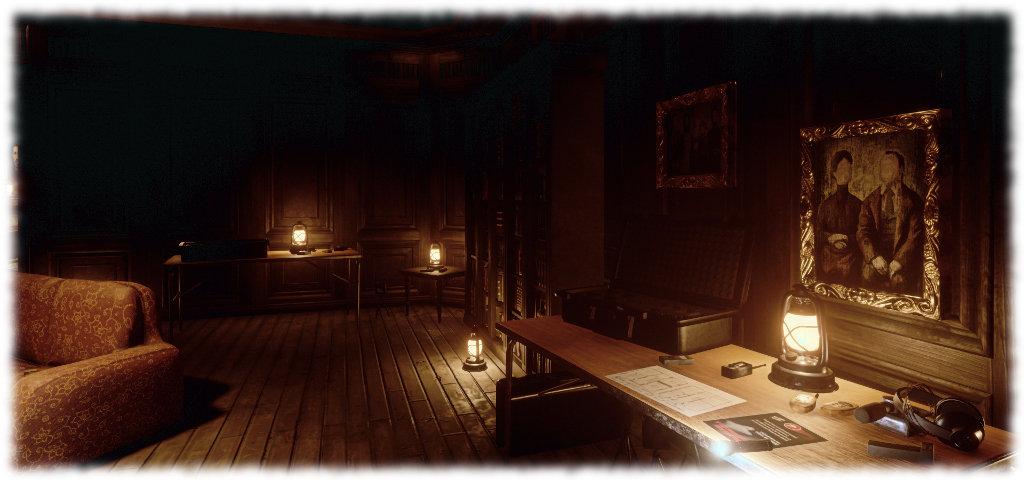
Given it was built for Halloween, this is – in lighting terms – a dark experience in which visitors are invited to join ghost hunters exploring a haunted house. As one might expect from such a place, the main lights are out – presumably to help spot spectres. However, lanterns have been placed out along floors and hallways to help illuminate the way, although it can seem a little dark for those in desktop mode.

Paranormal Investigation

A visit starts in the lounge of the house, where the ghost catchers have obviously set-up a base of operations, a case of equipment on the floor, and a table against one wall where a record of their work is being kept. This is worth getting a look at, as it includes a floor plan of the house (try first-person (F3) if in desktop or, if you’re handy with the movement keys and the mouse, freecam (F4) over to this and zoom in – use the – and + to reduce / increase the zoom speed).  Easy to fix the in mind, the plan helps with explorations as you move on through the house.

This is perhaps the quietest room in the house, and offers a doorway through to a study where the first hints of paranormal happenings are going on – books float through the air, a Ouija board is being kept busy by something. The books are worth watching; they don’t randomly fly around, rather, they are carefully removed from their place in the bookshelves, float around and are then returned to their resting place, as if removed and replaced with deliberate intent.

Paranormal Investigation

At the back of the house and across the hall from the lounge are the kitchen and dining room respectively, where more signs of odd goings-on can be found, as can the first indication of a ghostly presence. More apparitions can be found upstairs – including a skeleton seemingly determined to keep in trim. However, the biggest delight in this experience is to be found up in the attic, where the Thing That Goes Bump In The Night clearly has an interest other than haunting!

What makes this experience a delight is the attention to detail. There are various nods to paranormal investigations – the use of the term “ghost catchers” puts one in mind of the Ghost Hunters TV series; in the bedroom there’s both a jumping bed and a revolving head a-la The Exorcist, while elsewhere bodies float or appear as you explore. Again, if you are handy with freecamming in Desktop Mode, you might want to zoom into the bookcases in the lounge and study and check the titles of the book spines, such is the care poured into this design.

Paranormal Investigation

With a little interaction possible (chairs can be moved around), a good use of trigger volumes to generate things like the appearance of the floating body and localised sounds, Paranormal Investigation makes for a fun visit for those still looking for a bit of a spooky experience.

SLurl Details

Nature’s beauty in Sansar

Skye Naturae Virtualis

Alex Bader is one of the foremost creators of landscape elements in Second Life – trees, plants, land forms, textures, building kits, and so on, for temperate and tropical settings (he also produces a range of castles and buildings).

He’s also been working in Sansar as a part of the overall Creator programmed (Closed and Beta), and a visit to his experience there was added to my list of places to visit after Cube Republic (another creator of excellent plants and landscaping items in Second Life) prodded me about it recently.

Skye Naturae Virtualis

Unsurprisingly, Alex’s experience – called Skye Naturae Virtualis – is focused on nature: plants, trees, rivers, trails – which have been the hallmark of his work in Second Life. What is marvellous about it is the depth of realism Alex has achieved within it. So much so, that I can honestly say it is perhaps the first virtual environment I’ve seen that has made me regret not having ready access to a VR headset, just so I could experience visual immersion for the sheer pleasure of the setting, rather than out of any technical curiosity. It’s a place that quite honestly makes you want to be there.

You arrive on a woodland trail, rocks and cliffs visible through the trees, the sounds of birds and of flowing water. Ahead, the trail leads between tree trunks, fork to the left and right. Some paths are only short, others lead onwards, splitting again, crossing a bridge, offering a way to grassy slopes.

Skye Naturae Virtualis

This is very much a work-in-progress, with Alex noting that he plans to add to the setting over time as he creates more plants, trees and other elements for Sansar. This can be evidenced by one of the paths winding its way into a rocky cleft, the way only to be blocked by boulders, the path beyond them petering out in a space that looks like it is waiting to have detail added.

Alex says his hope is to, “Create a natural virtual space, just as exciting and captivating as the real (no harm in dreaming the impossible!).” On the strength of what is already available within the experience, I’d say he is achieving the impossible. Skye Naturae Virtualis is one of the most natural-looking environments that can be enjoyed in a virtual space, almost perfectly bringing together setting, sky, sunlight and sounds into a whole. Beautiful in Desktop mode, I can well imagine that in VR mode it could leave you feeling you’re almost anywhere in the temperate world, be it one of the national parks of the United States, the forests of Canada, the lowland Alps of Europe, the woodlands of Germany or anywhere else you care to think of.

Skye Naturae Virtualis

Experience SLurl

Sansar’s Creator Academy: Hall of Materials launches

Creator Academy: Hall of Materials

Linden Lab has launched its Creator Academy: Hall of Materials experience. It is intended to help creators explore and better understand the materials capabilities of Sansar, learn about the various shaders and physics materials using interactive kiosks, and how texture values interact and impact one another.

The hall comprises two sections; the first covers media surfaces, stereoscopic media, UV animation materials, emissive materials, standard materials, and metals. Overhead, spheres float as a physics demonstration. The second, rotunda-like section, provides insight into audio materials and materials layering.

Creator Academy: Hall of Materials

Kiosks provide overviews of specifics aspects of using mateirals, and some of these are are interactive. In the rotunda for example, walk across the different surface types (sand, water, ceramic, glass, carpet, etc) – to trigger the corresponding sound. With other, proximity might trigger a level of interaction.

However, it has to be said that some of the interactive elements appear to be more geared towards those in VR mode – as indicated in the introductory video. Some kiosks, for example, use panels of buttons which are currently largely inaccessible to those in Desktop mode. While this may well change as Desktop mode interactivity improves, it nevertheless limits the effectiveness of Hall of Materials as learning experience right now.

Creator Academy: Hall of Materials

Also, while I favour tutorials, it has to be said that Sansar’s very nature perhaps limits the effectiveness of experiences like this. Unless you tweak the client or have multiple accounts, you can’t visit the experience and simultaneously try things out directly for yourself in Sansar’s Edit mode, and fix concepts in your head by doing so. As such, I did wonder if the effort in building the experience might not have been better served in producing a series of short videos on the subject matter, perhaps in the manner of Torley’s famous SL TuTORials.

Given these points, Hall of Materials should perhaps be viewed as an experiment in teaching / learning more than anything else, and it’ll be interesting to see where the concept goes and how it develops. In the meantime, I’ll leave you with the introductory video, which provides a basic overview of the experience, in its own somewhat “novel” approach.

URL Details

A judge’s look at Sansar’s Scariest and a Win 10 MR hint

The Diner

As I recently reported, the winners for the two recent Sansar contests – Top Props and the Halloween themed Sansar’s Scariest  – were officially announced on Monday, October 30th.

For the latter competition, in which users were asked to create a spooky / scary experience in the spirit of Halloween (although not necessarily limited to the theme of Halloween), and the final decision on the overall Grand Prize winner and honourable mention were decided upon by journalist and VR consultant Alice Bonasio.

In issuing the official announcement, the Lab included some feedback from Alice on her decisions, and on Wednesday, November 1st, Alice offered an expansion on her thoughts around the entries and on Sansar in a piece written for VR Scout.

The Diner – faces at the window!

Of the grand prize winner, The Diner by C3erb3rus, Alice comments:

Even by Sansar standards, the lighting and textures in this experiences were amazing, incredibly nuanced. From the giant flying saucer spinning away to the MGM lion roaring from the drive-in movie screen in the distance, every element felt well-executed and real. Which is probably why it produced the best—spoiler alert—“jump out of your skin” moment of any of the experiences I tried.

Having spent time exploring the experience, I can only agree. The Diner is fabulously atmospheric, a wonderful throwback to the horror B-moves of the 1950s, complete with spooky diner, things that jump up in the night, flying saucers and more. There’s even a B-movie feature – the British black-and-white 1958 movie, Fiend Without a Face – playing at the drive-in alongside the titular diner. Careful exploration is recommended indoors and outdoors, as there is much to be discovered in the diner, down at Area 51 and even at the drive-in.

Paranormal Investigation

The Honourable Mention for the contest was Paranormal Investigation by Abramelin Wolfe, an experience I visited just after it opened, but have yet to write about. In it visitors take on the role of the paranormal investigator in a haunted house. A more traditional kind of Halloween build, but one that is fun nonetheless. It’s a dim, occasionally hard to explore setting when in Desktop mode, but one that’s worth taking the time to explore, as you might discover that the bumps in the night you might occasionally hear in the attic might not necessarily be caused by things trying to spook you. Commenting on the experience, Alice said:

This felt like something I would have paid for if it was a console game. Carefully crafted visuals, well-timed and well-judged sound effects, this is an experience that has something for everybody, including Ghostbusters fans like myself, who will delight in having the library books floating off the shelves all around them. Definitely not the most original in terms of theme and composition, but absolutely beautiful to look at and a pleasure to explore.

Paranormal Investigation

Alice also lists a number of other experiences she enjoyed – one in particular of which still stands as one of my favourite experiences in Sansar, in terms of both presentation and potential. This is Tyler Scarborough’s Stasis Interrupted – Chapter 1, which I’ve reviewed here. This is really a superb setting for the opening of a story, and Alice nails the description:

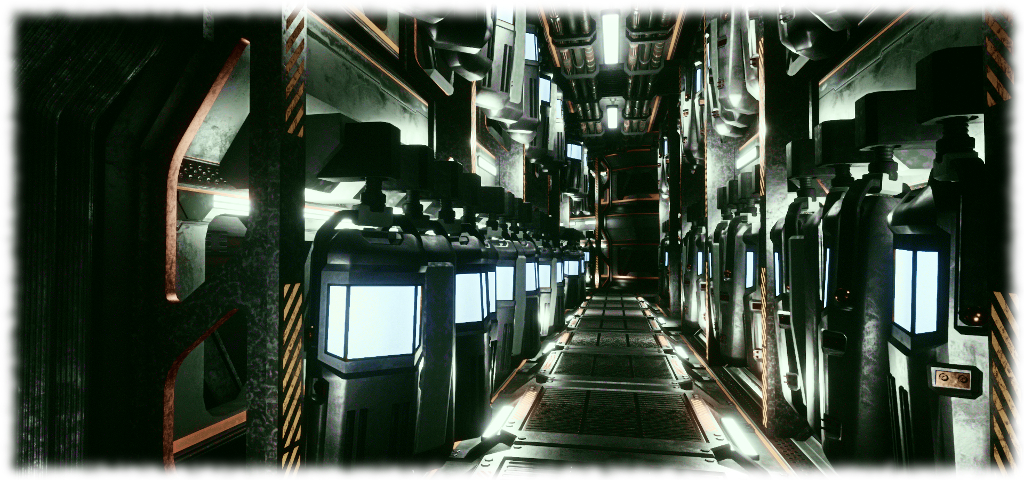
It’s like Alien, but with Zombies.” If you’re a fan of either genre (or, like me, preferably both) you will probably like this experience quite a lot. The creators got the slick look and foreboding mood of Ridley Scott’s original masterpiece just right, something that can be surprisingly challenging … This is all about building up suspense and atmosphere, and even during my relatively short test-drive it managed to do that.

Stasis Interrupted – Chapter 1

Alice goes on to mention Miner Difficulties by Through The Waterfall (Jasmine and Galen), which I’ve also reviewed, together with Joyride by Alex, and several more experiences were mentioned in the official blog post about the competition.

Alice Bonasio: Sansar’s Scariest special judge

The fact that so many were singled out beyond the grand prize winner and honourable mention underlines a point raised about contests like this:  a single large cash prize doesn’t really reflect the amount of effort put into entries, and might even dissuade people from entering future competitions. The Lab has indicated that they’re aware of this, and are looking to possibly revise the prize pool in future contests.

In commenting more generally on the contest, Alice doesn’t shy away from pointing out that Sansar does have some problem which need to be ironed-out, particularly around the area of processing power (I’d also raise a question on performance; while my PC may no longer be top-of-the-line specs-wise, it is still an i4 system with 16Gb RAM and a GTx 970 4Mb GPU, and there is still at least one experience in Sansar I cannot load).

True, she raises the issue more around the VR aspect of the platform and the current high cost of entry into VR (something not exactly Linden Lab’s fault), but performance issues are there within the platform, and can limit access in Desktop mode – which is important, given the relatively slow take-up of VR, if Linden Lab wishes to reach a broader audience with Sansar until such time as (or even if) VR gains more of a broad-based market footing.

In drawing attention to performance, Alice appears to look to the new Windows 10 Mixed Reality headsets as a possible solution, securing an answer to a question I recently asked at a Sansar Product Meeting, without gaining a definitive answer: would Sansar be supporting these headsets in the future? Alice has more success than I, quoting Bjørn Laurin, the Lab’s VP of Product as saying, “We’ve been experimenting with some of the Windows Mixed Reality headsets, and do plan to make it possible to use Sansar with them in the future.”

It’ll be interesting to see whether the new headsets increase people’s interest in VR / AR – right now the price differential between the higher-end versions of the headsets and the Oculus Rift isn’t that great, which might limit the appeal of at least some of them. I’m also curious as to how quickly the Lab’s experiments with the new headset might product user-visible support. In the meantime, Alice’s VRScout article makes for interesting reading alongside the Lab’s own competition blog post.