ReShade: overlaying your SL world view with shader effects. In this image, I’m using the ReShade split screen option to show a real-time view of Oyster Bay, with the original windlight-based view on the left, and a preview of effects overlays on the right. (which have been deliberately exaggerated for effect)
ReShade is an application which has been generating a bit of buzz around Second Life for the last couple of weeks. When installed on a Windows PC (7, 8 or 10), it allows you to overlay you Second Life world view with a wide range of shader-based effects, which can be used in screen captures for images, or when recording machinima to offer real-time visual effects.As it is an overlay system, it also works with OpenSim environments.
I first got to hear about ReShade from Whirly Fizzle at the start of August (she in turn got to learn of it through Caetlynn Resident), and having been playing with the beta since then. Just how practical it might be is a matter of personal choice / want / ability with more traditional post-processing tools, etc. However, as version 1.0 launched on August 10th, with some much-need clean-up, I thought I’d offer a write-up on it, together with a few thoughts.
Remember, ReShade is third-party application, LL and TPVs cannot provide assistance in using it – and nor can I. If you need help with it, please refer to the ReShade forums. As relatively new software, it can be a little buggy, and it doesn’t always run with the viewer when installed – again, if you have problems getting it going, neither viewer support teams nor I can really help.
A quick and dirty demo video showing how ReShade effects can be used in real-time machinima capture in Second Life
Set-up
Please ensure you’re logged-out of Second Life when setting-up ReShade.
Download the ReShade Framework ZIP file from the ReShade website.
Unzip the contents of the downloaded file to a location of your choice.
Navigate to the unzipped folder location and right-click on ReShade Mediator and Run As Administrator.
The Mediator will launch to display the configuration tab (shown below). This is the UI element used to apply and adjust effects.
You now need to create a profile for Framework to work with your viewer.
Your first step is to configure the Framework Mediator to recognise your viewer
Under the Profile section on the left of the Mediator, click Add. A file picker will open Use it to navigate to your viewer’s installation folder.
Locate the viewer’s .EXE file in the installation folder and click it once to highlight it, and then click the Open button in the picker
You will be returned to the Mediator panel, and the viewer name or “Second Life” should be displayed in the profile drop-down (below) – note that some TPVs may display their own name or may display “Second Life”, it makes no difference.
Make sure OpenGL has been correctly identified. Click on the Confirm button to create a profile for your viewer.
When adding a viewer to ReShade Framework, note it may display as “Second Life” rather than the viewer’s name – this doesn’t prevent things from working
When Mediator has finished creating the profile, click Apply at the top right of the panel.
The set-up process is now complete. However:
Note that this has created two files in your viewer’s installation folder: reshade.fx and opengl32.dll. These must be deleted if you decide to remove ReShade from your PC.
Also, as I’ve found ReShade to be slightly flaky, before going any further, copy the opengl32.dll and save the copy in another location – I’ll explain why later.
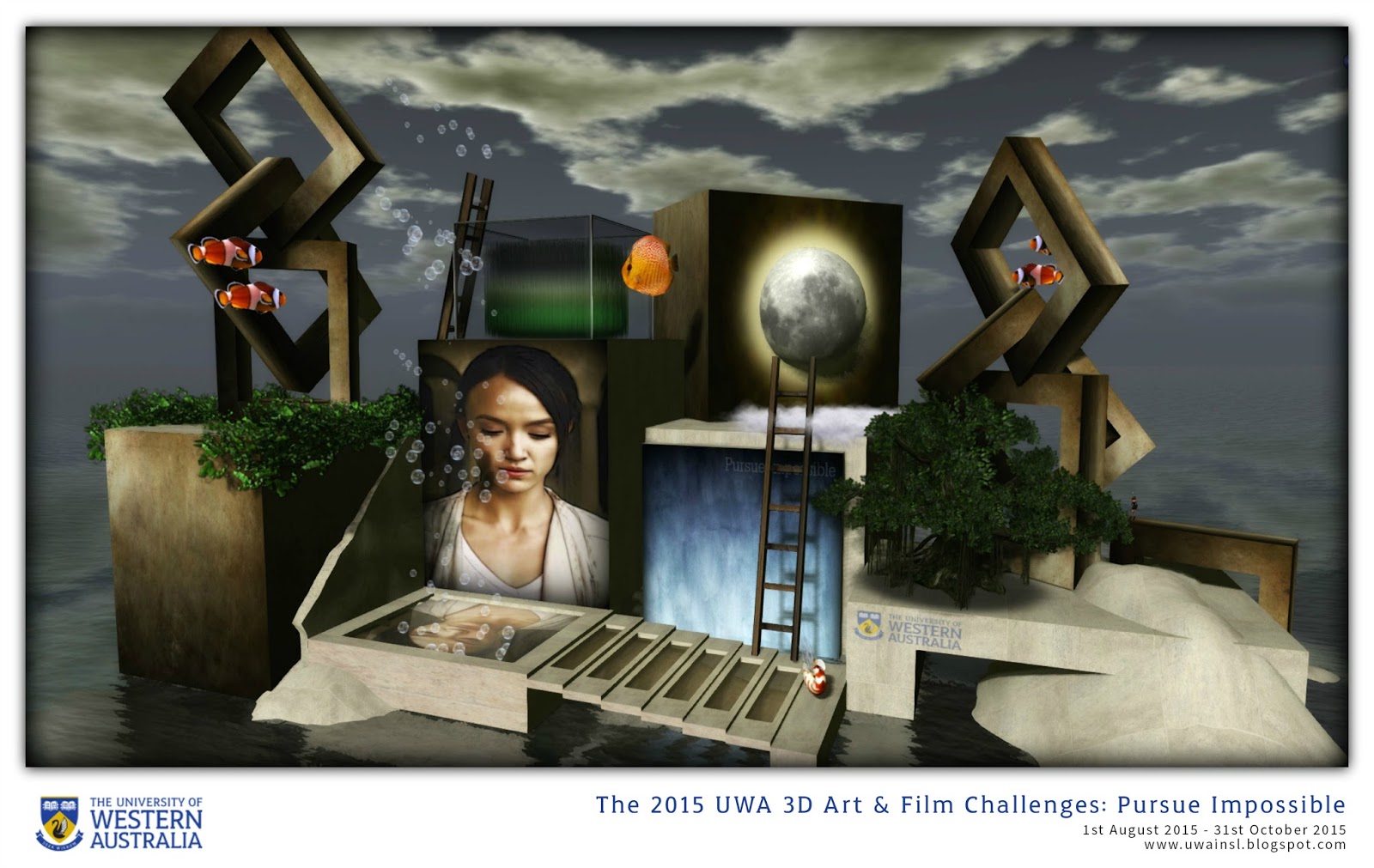
On Saturday August 1st, 2015, the University of Western Australia (UWA) announced the opening of their 2015 Grand Art and MachinimUWA Challenges. Jointly entitled Pursue Impossible, between them, they feature an opening prize pool in excess of L$400,000.
The Challenges are sponsored by Tom Papas & SciFi Film Festival, Reign Congrejo & BOSL, LaPiscean Liberty & SL Artist, AviewTV, Pixel Bits, Virtlantis, Phillip Vought, Carolyn Steele & York University (Canada), Taralyn Gravois, UWA Marketing & Communications, as well as the UWA Virtual Worlds Project.
Pursue Impossible invites entrants to consider what their “impossible” might be. Is it the goal they have achieved or which they’ve seen achieved by their loved ones, friends, family or heroes achieved and which has sought to inspire them? What have they overcome which they once thought to be impossible? How do virtual environments empower people to visualise, create and push the boundaries of the possible? What are those things we deem to be impossible, but which we may still pursue and conquer as individuals or collectively? What are the impossibilities of the mind or heart or soul? Do we see the seemingly impossible and try to overcome it, or do we allow it to overpower us?
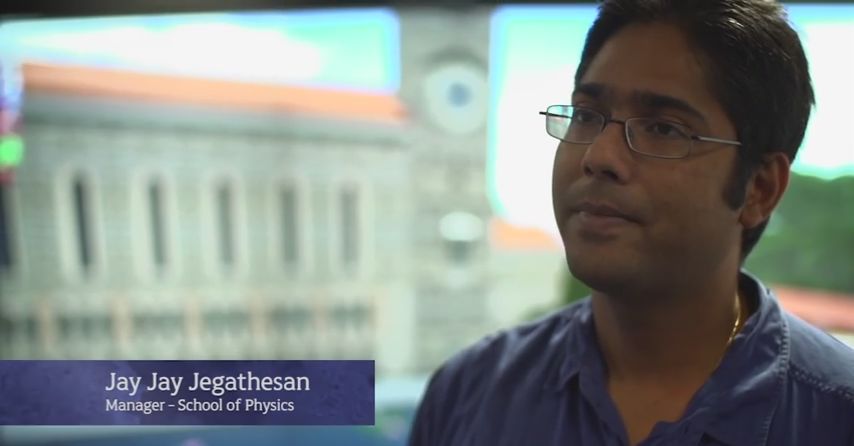
Jay Jay Jegathesan (Jayjay Zifanwee in SL), discusses Second Life and the achievements it has brought in a special video marking the launch of the UWA’s new brand, which is reflected in the new Grand Art and Machinima Challenge
“Those who pursue what may at first seem impossible are the ones who keep the world turning,” UWA’s Jayjay Zifanwe, Manager of the School of Physics at the university states of the theme. “What if Ghandhi did not believe he could overcome the impossible for his country? What if Dr Fiona Wood did not believe in second skin for burn victims? What if Professor Barry Marshall did not believe in himself and use himself as a human guinea pig for the benefit of mankind?”
The theme is also a reflection of a new brand launched by UWA in May 2015, which featured Jayjay’s work in developing a UWA presence in Second Life, and which is promoted by the university in video which may help get entrants to the Challenge thinking as well.
Please refer to the official UWA blog post for the major rules and considerations in entering the Challenge, and to find out about the prizes in the art and machinima categories. However, in summary:
Each category (art and machinima) currently has a prize pool of L$195,000, with a L$50,000 first place prize, and 11 prizes overall
Entrants are free to submit entries to either the art or the machinima categories, or to both if they wish
Art entry notes:
Art entries are limited to one per entrant, should preferably by submitted with COPY permissions, and must not exceed 150 LI, and must be free from any copyright issues – if third-party content is used in an entry, permission must and been sought and granted from the creator for its inclusion in the Challenge
Sounds, lighting, particle effects, etc., should be scripted to turn off when not in use. You may be asked to provide a revised entry if it is too intrusive or interferes with the display of other works
Exceptionally large or complex builds will be placed on platforms above the gallery with a teleport (TP) device and poster on the gallery floor and a return TP on the platform. You may provide a TP object and/or poster (no more than 2 LI) or we can place one for you. TP objects should be set to copy/mod and given to FreeWee Ling to add scripts and to place
Machinima entry notes:
There is no limit to the number of machinima pieces an entrant might submit; and while not a “hard” rule, machinima entries should preferably be no more than 4 minutes and 30 seconds in length, although this is not a “hard” rule
All submitted machinima must be made specifically for this challenge, and must include “For The University of Western Australia’s MachinimUWA VIII: Pursue Impossible” in the opening credits
Machinima entries do not have to be filmed within the UWA’s Second Life regions, but there will be a special prize available for a film which starts at the Winthrop Clock Tower and Reflection Pond, the starting pond for the UWA’s own Pursue Impossible video (above)
All entries to the challenge should be able to be interpreted by the casual viewer as representative of the theme.If the link is difficult to ascertain within a piece of art, it should be referenced in a note card accompanying the work; if it is difficult to ascertain in a video, it should be referenced in the notes accompanying the film on the web.
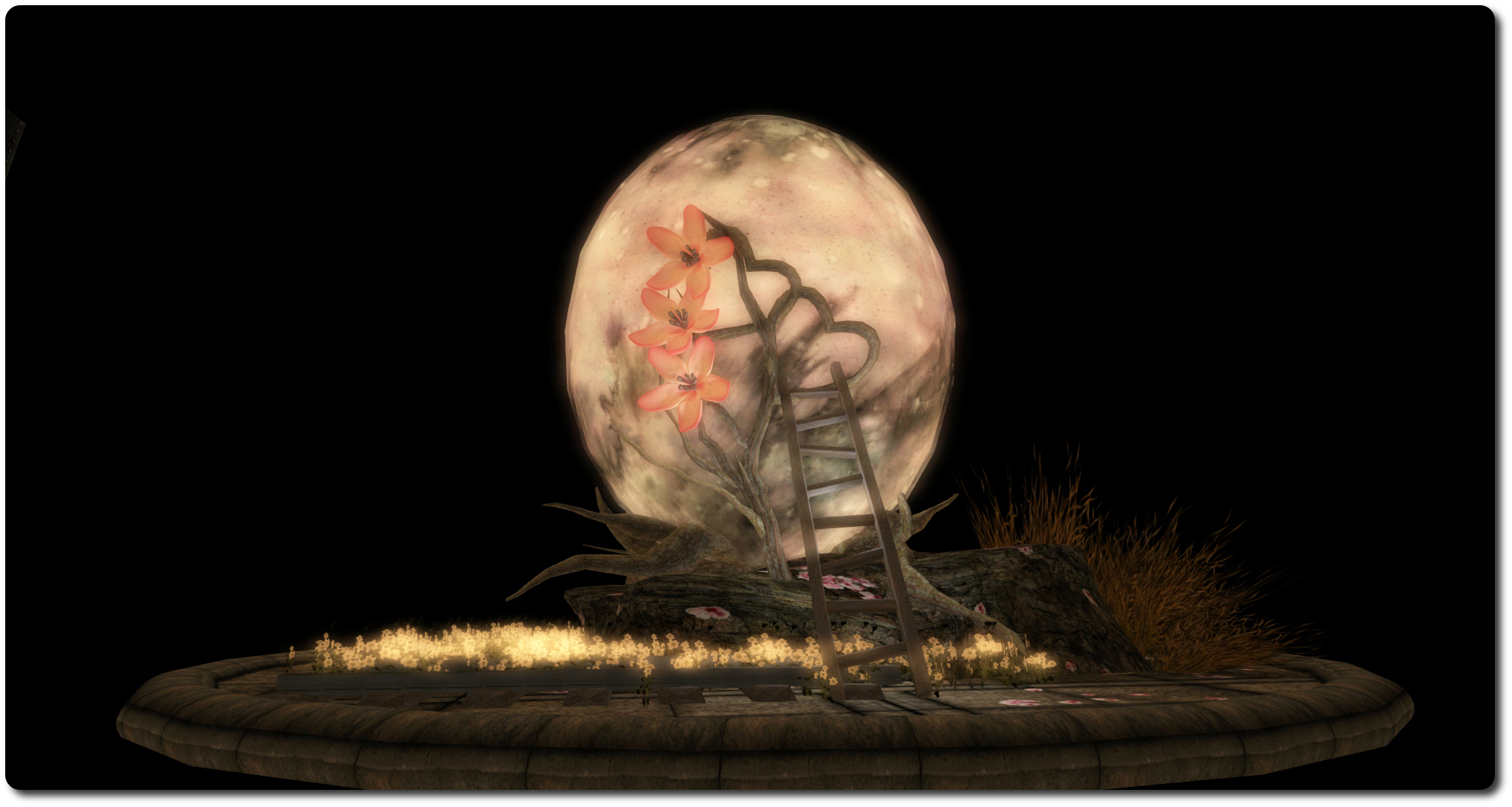
Never Say Never – Love Transcends Borders, by Sharni Azalee, the arts category Grand Prize winner in the 2014 Grand Art and MachinimUWA Challenge – will you be this year’s winner?
Art submissions should be made via the art entry receiver at the UWA Art Challenge Platform in Second Life, accompanied by a note card which includes your name, city, name of artwork and a description of artwork.
Machinima entries should be uploaded to any publicly accessible location, preferably YouTube or Vimeo, and the details of the entry (name, creator, location, etc.) supplied to Jayjay Zifanwe and LaPiscean Liberty in-world or by e-mailing the details to Jayjay (jayjayaustralia@hotmail.com).
The closing date for entries is midnight SLT, on October 31st, 2015. Winners will be announced in December 2015.
When entering, do please note that as with all the UWA’s public programmes, an entry may not be accepted if it is deemed to be excessively abusive, violent, offensive, bullying, harmful, insulting, or contains inappropriate material or excessively foul language. Depictions of explicit sexual activity, as well as material deemed offensive based on race, religion, gender, or sexual orientation are not appropriate for the Challenge, and may be rejected. Final decisions in these matters will be made by the UWA Cultural Precinct.
As with the UWA’s Grand Challenges, there will also be a set of audience participation prizes available. The pool for this currently stands at L$15,000 apiece for the two categories (art and machinima), and I’ll have more details on how you can enter this aspect of the challenge in due course.
Above: Tutsy Navarathna’s Grand prize winner in the Machinima category 2014 Grand Art and MachinimUWA Challenge
Over the last few years, it has been a delight and pleasure for me, through these pages, to help showcase the UWA’s work benefiting the arts in Second Life. Entries to their Challenges a special arts programmes have always been of an incredible standard, and I’ve enjoyed viewing them as a both a member of the public and more recently as a member of the judging panel. It is in this latter capacity that I’m looking forward to seeing the diversity of entries submitted in both categories this year, and would like to offer all those who do enter, the very best of luck!
JayJay Zifanwee of the University of Western Australia (UWA) informs me that The Sci-Fi Film Festival will once again be held in Australia, hosted and sponsored by the Parramatta City Council.
Taking place over the three days of October 30th through November 1st inclusive, the Festival will once again include the Project Sci-Fi Challenge, in which film makers and machinima makers from around the world are challenged to create a short sci-fi film in just 30 days.
The UWA is once again partnering with Project Sci-Fi organisers Screen My Shorts, and will cover the Challenge entry fees for any machinima filmed in Second Life. There is a prize pool of AU $5,750 on offer, and according to JayJay, Second Life machinima makers should be eligible for the Animation and International Film categories as well as the overall prizes.
“We feel that in a SciFi category, those filming in Second Life have a huge advantage over those using conventional filming methods, and we hope that all of you machinimatogtraphers and filmmakers in Second Life use this advantage fully,” Jayjay said.
It has certainly been fertile ground for SL machinima makers in the past. In 2013, Tutsy Navarathna was the best overall winner in the machinima category of the 2013 Challenge (then sponsored by Western Digital) with his brilliant The Residents, a remarkable tale of worlds within worlds, and a clever twist involving SL (seen above), with Erythro Asimov taking the 2nd prize with Looking Around (below), as well as several other prize-winning entries.
So, if you’re interested in applying, take a read through the guidelines linked-to above, and make sure you read the Project Sci-Fi Guidelines and the official rules to fully understand the requirements of entry and the competition time line. When you enter, please consider letting Jayjay know, either via in-world contact or via e-mail (jayjayaustralia-at-hotmail.com), and good luck!
As many know, I’ve been gradually getting my head around machinima, and specifically music videos. I’ve got a way to got to get up to the likes of the real exponents of the art, but hopefully I’m making progress.
One of my favourite places in SL is Binemist, Biné Rodenberger’s region – if you’ve never visited it, you should; it is a absolute delight. It’s been an aim of mine to capture it on video for myself; a daunting task, as Biné is herself an accomplished machinima maker, and I still cannot eliminate all of the judders from my footage as (I assume) the capture software and the viewer fight for attention.
I did actually capture footage over a couple of visits, but I was then stuck for music; nothing seemed to fit. Until, that is, I was listening to chorales on Christmas Eve; one in particular stuck out, so I thought I’d have a little play.
Binemist isn’t a “winter” or “seasonal” region right now, so there is no hidden message in the choice of music; the piece just seemed to fit the video clips as I was playing around; I certainly hope Biné doesn’t mind that I’ve set her region to a traditional hymn!
Anyway, rather than prattle on, I’ll leave you with the video.
Sponsored by the Parramatta City Council, and a part of the Parramatta Sci-Fi Film Festival activities, the 2014 Project Sci-fi competition, in partnership with Screen My Shorts, challenges filmmakers from around the globe to write, film, edit, produce and upload to YouTube a 3-10 minute long film with a science-fiction theme. On offer are prizes totalling $5,500 Australian dollars.
The competition is open to both live action and machinima entries, and filmmakers are responsible for putting together a team, cast and crew (producers, directors, cinematographers, writers, etc..), as well as securing equipment, locations, and costumes. Each team needs to be represented by a Producer. The challenge sets no limits on age or budget and welcomes all filmmakers.
Films can be submitted by individuals and groups but those wishing to participate must register with the competition by October 3rd, 2014.
When submitting their entires, participants are asked to nominate two of the following themes for their film:
Sci-romance – love between aliens, robots and more! (Can be happy, sad, tragic)
Sci-comedy – sci-fi that is humorous in nature. The Hitchhiker’s Guide to the Galaxy is a good example of sci-fi comedy
Save the Environment: a theme focuses on saving the dying planet and/or ecosystem
Zombie / disease: a theme focuses on the effect of a disease in the future
Apocalyptic / post-apocalyptic sci-fi: stories about the extinction or near extinction of humankind either by forces of nature or by our own means. Post- focuses on telling the tale of the survivors of an apocalypse
Spy-fy: Science fiction about futuristic spies and espionage, and the effects of technological advancement on their professions
Super hero: stories related to super heroes who get their powers from technology or because they are from another world. Often focuses on futuristic superheroes
Robots / AI – fiction in which the science of Artificial Intelligence and robotics is a central theme, typically relating to Robot stories
First contact / alien: the various scenarios in which humanity makes contact with other civilizations
Social sci-fi: – fiction in which future societies are extrapolated, explained and often criticised, usually for the purpose of social satire. The social sciences are the over-riding theme in this type of fiction; however, science and technology will usually play a central role in the structure of the extrapolated society.
Prior to Kick Off of the competition on Friday, 3rd October 2014 at 7 pm (19:00) local time in each participating city and town , the organisers will then e-mail each entrant with one (1) of their nominated subjects/topics. The entrants then have 30 days in which to make and edit their film. All films must be uploaded to YouTube (and set to Private) no later than midnight local time in each participating city and town on Sunday November 2nd November 2014. An e-mail with the YouTube link should be sent to info@scifilmfestival.com as notification of the film’s completion.
Above: Tutsy Navarathna’s “The Residents“, overall winner in the machinima category of the 2013 Project Sci-Fi challenge
The total prize list for the competition comprises (all in Australian dollars):
SciFi Best Film $2000
Project SciFi Runner Up Film $1000
Project SciFi Best Performance – $500
Project SciFi Best Cinematographers – $500
Project SciFi Best Special Effects – $500
Project SciFi Best Production Design/Art Direction – $500
Project SciFi Best Machinima Film – $300
Runner up Machinima Category – $200
In addition, the UWA has determined that machinima makers wishing to enter the same film to both this challenge and the UWA’s Transcending Borders Machinima Challenge may do so, providing the theme requires of both challenges are met in the same film.
Judging will be by a panel of selected jurors, and a special awards ceremony will be held on Sunday, November 16th 2014 at the RiversIde Theatres, Parramatta, commencing at 18:30 local time, as a part of the Parramatta Sci-fi Film Festival.
For further information, please refer to the links below.
MachinEVO logo, used in accordance with licence requirements
I received a poke about MachinEVO, a 5-week workshop for language educators to learn how to create machinima in virtual worlds, which is once again taking place in Second Life.
Building upon the successful 2012 and 2013 series, this year’s workshop commences on Monday January 13th, 2014, and concludes on Friday February 28th, 2014 with a special film festival and awards ceremony hosted at the 7th SLanguages Annual Symposium.
The entire workshop is offered free-of-charge, and registrations are now open and will remain thus until Sunday January 12th. Those interested in participating can register via the MachinEVO Google group. General information on the workshop can be found at the MachinEVO wiki.
“Moving pictures, sound and stories are the most powerful way of communicating learning content,” Heike Philp, one of the workshop’s organisers states. “MachinEVO takes up the challenge of ‘video as a new language of learning’ and purposes to train and equip language teachers to produce visually appealing videos in virtual worlds, commonly called machinima. In this EVO session we will learn how to create machinima, from filming to post-production until the video has been uploaded onto a video hosting sites. ”
Location and Schedule
The five-week course will primarily take place on EduNation Island, but will include visits elsewhere in-world. The workshop will comprise the following activities (also listed on the event’s Google Calendar):
Kick-off event: Sunday January 12th, at 11:00 SLT (19:00 GMT / 20:00 CET).
Week 1: January 13th – 19th, 2014:
SL Fast Track – for those educators who have not used Second Life or virtual worlds before, the fast track course offers essentials in logging-in, movement (including the camera), communications, outfit changing, shopping, etc.
Film crew group building – brainstorming ideas and forming film crews, developing ideas into a storyboard, etc.
Week 2: January 20th – 26th, 2014 – Basic Filming and Editing: This includes selecting actors, props and scenarios for filming (using the storyboards developed in week 1), learning basic film production techniques and how to upload videos.
Week 3: January 27th – February 2nd, 2014 – Advanced Filming and Editing: building on week 2 to add things like animation, lip synching, add music, credits, pictures, video-in-video (including live footage) and other essential skills of the filmmaker.
Week 4: February 3rd – 9th – Advanced Editing Techniques: Enhancing productions with special effects, credits and music. Search for free music on the web and learn how to create an intro and an outro (credits) for a video.
Week 5: February 10th – 16th – Final Editing & Uploading:finalising a video and handing-over for jury review. All videos must be handed-over for inclusion in judging for the festival and awards ceremony by February 16th.
Throughout the five weeks, participants will receive practical guidance and feedback from the workshop moderators and also feedback from their peers, making the workshop a collaborative, interactive learning environment. Additionally, the courses will be streamed via Adobe Connect.





 Inara Pey: Living in a Modemworld