Rod Humble talks-up new products, creativity and Second Life

Lelani Carver pointed me towards a further interview with Rod Humble on the subject of new products which appeared in the Gamesbeat pages of VentureBeat on October 12th. The interview is pretty much what has been said elsewhere insofar as the new products are concerned, but there are some very interesting nuggets of information sitting within it.

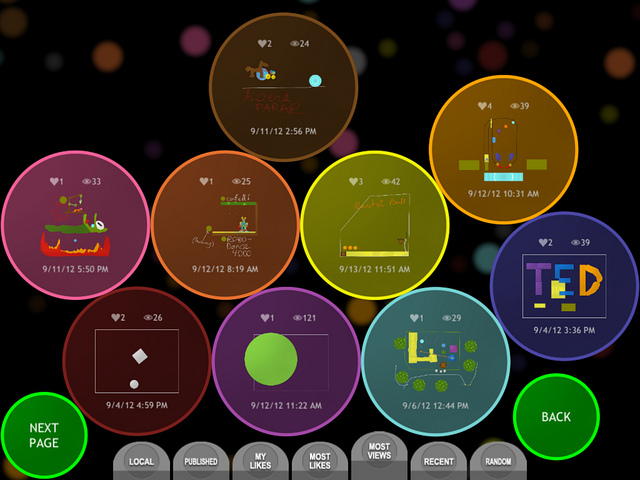
Pride of the father: Rod Humble shows-off Creatorverse (images coutesy of VentureBeat)

Patterns and Creatorverse are primarily mentioned in the piece, with Humble again commenting on the company’s new-found philosophy established out of Second Life:

“At Linden Lab, we believe that creativity is within all people and that it empowers them like nothing else,” said Humble. “We make digital spaces where people can have fun while exploring and sharing their creativity with others. Millions of people around the world have enjoyed that in Second Life, and we look forward to inspiring even more creativity.”

Some people have already taken issue with the use of the past tense (“have enjoyed”) when used in reference to Second Life on the Lab’s corporate website, and they are liable to feel the same way seeing Humble use the same phrasing here. While I don’t necessarily support such views, I would say that when commenting on Second Life to the wider community, media or otherwise, use of the present tense might underline the fact that SL is still out there and people are enjoying it and what it has to offer. Hope you’re reading this, Rod! ;-).

The feature is light on details for both Dio (which gets a throwaway mention) and Versu (which gets no mention at all); whether this is down to the interviewer missing them, or Humble not being in a position to speak about them at the time of the interview, is unclear. However, what he does say in reference to all three which do get a mention (Patterns, Creatorverse and Dio) is that people will be able to monetize them.
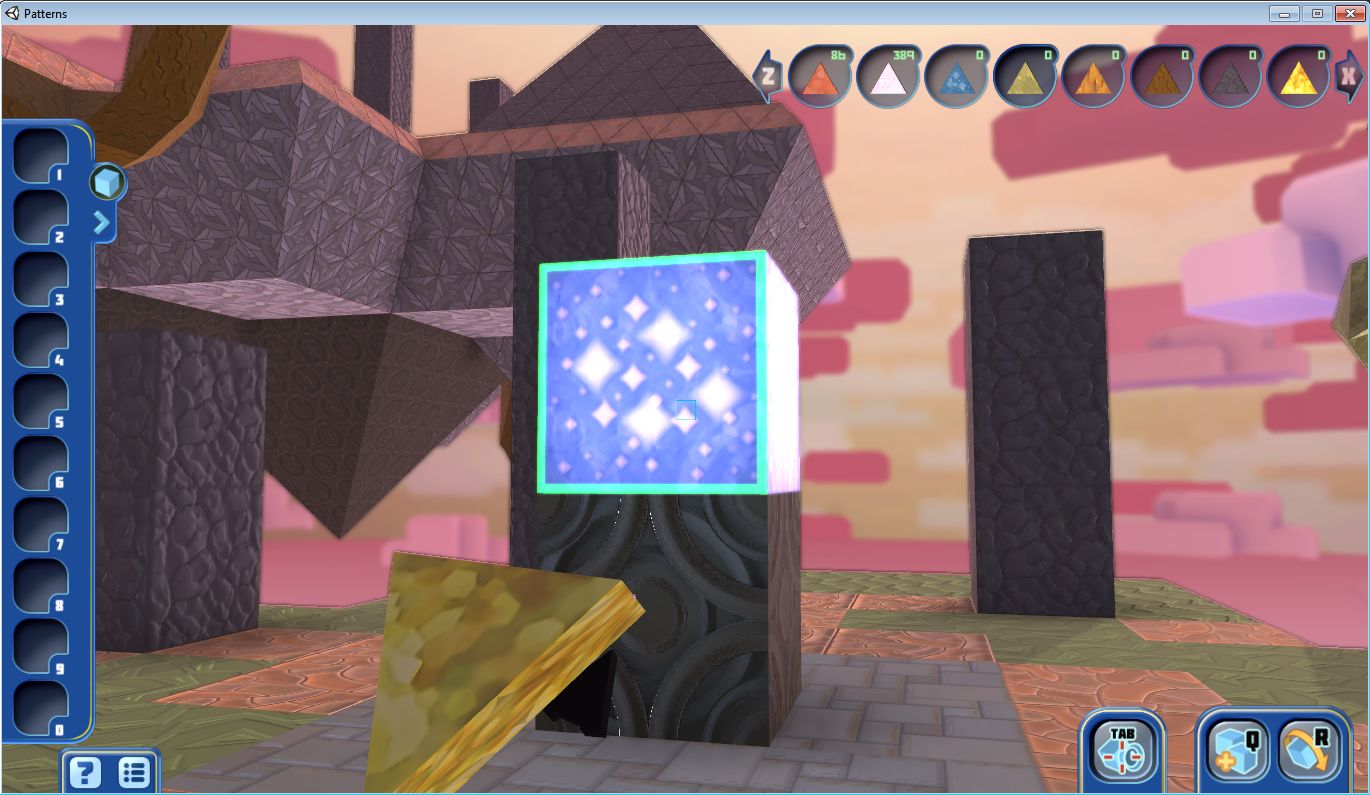
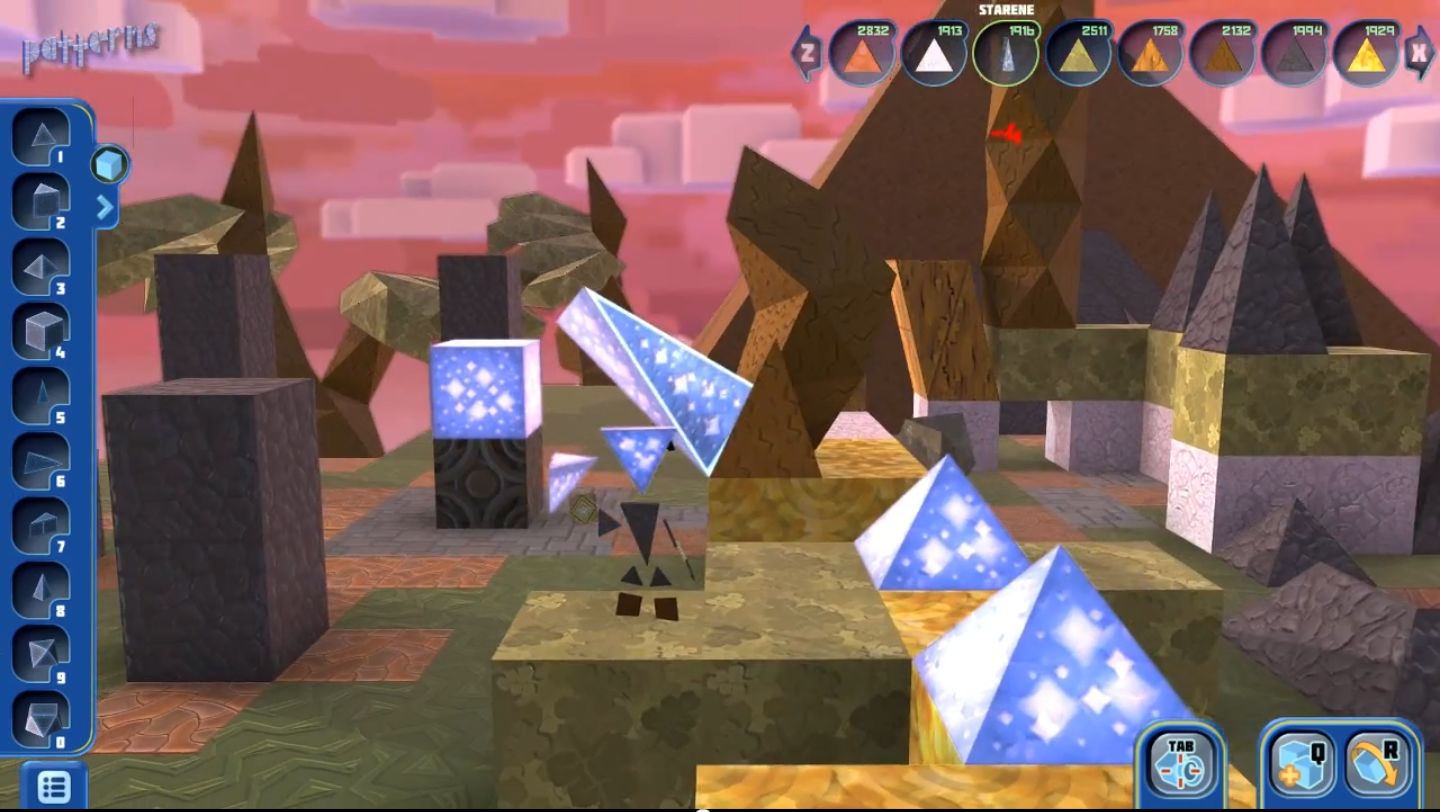
Patterns: users to be able to monetize it in the future?

This is something he lightly touched upon in his interview with Giant Bomb, specifically with reference to Creatorverse, and I mused in passing on his comment and whether it would be applicable to all of LL’s new products. Well, it would seem so.

For those curious about Linden Research itself, the article contains some interesting elements:

Today, Second Life survives with 1 million monthly active users. The world generated $75 million in revenues last year and it is operating profitably. That has allowed Humble to expand his team to 175 employees and go after the markets beyond the virtual world.

There is also mention of the 2010 lay-offs, although these are again referred to slightly out-of-context, failing to mention that during his tenure, Mark Kingdon actually recruited some 125 people into LL, expanding it by as much as 50% in order to fuel (for the most part) the company’s failed (some would say misguided) attempt to enter the enterprise market. As such, while the lay-offs did hurt, at the time they actually returned the company to more-or-less the “pre-Kingdon” expansion, a move in line with the company also dropping all aspiratiosn of entering the enterprise applications market.

However (and ignoring the perjorative “survives” in the Gamesbeat comment), the reference to “expanding” the team to 175 is an eye-opener; it suggests that the continuing run of those departing the company / being asked to leave has been cutting somewhat deeper than may have previously been appreciated given that 200-220 employees has tended to be the considered figure for the number of people employed by the Lab.

Nor does the article ignore Second Life. In referring to SL, Humble tells Gamesbeat that it is also getting a major upgrade this year, and that Linden Lab is “still investing in 3D virtual worlds.” This is liable to lead to some speculation as to what the “major upgrade” may be. For my part, and given that this week sees some shuffling of regions onto new hardware together with the recent network optimisation tests, I’m thinking Humble is talking more in terms of the company’s much-touted hardware and infrastructure investment, rather than a mega new in-world feature.

Also quoted in the article, LL board member Will Wright makes mention to SL in a maner which may draw frowns from some:

Rod has a great sense of player communities and the forces that drive them. At Linden Labs [sic] I know he’s focused on trying to evolve a very established community into something much broader and more inviting.

While this probably refers to opening-out Second Life to Steam and potentially generating a wider appeal for the platform than is currently the case, that Wright refers to Humble trying to make the existing SL community “more inviting” might easily be taken the wrong way. Many within SL are already feeling increasingly alienated as a result of some of LL’s actions under Humble’s tenure as CEO; so the idea that some at board level are still of the opinion that the existing SL user community is somehow less-than-inviting isn’t going to do much to dispel these feelings or that there is perhaps something of an adversarial attitude within the Lab towards its existing users.

Issue might also be taken with Humble’s own closing statement in the interview, in which he says, in part:

“We are still investing in 3D virtual worlds,” he said. “But shared creative spaces is what we do. There is an opportunity to embrace the new way of developing things. A lot of this could be done inside Second Life. But you get more creativity in the hands of more people by building on new platforms”

This could be seen as something of a dismissal of Second Life; however, I’d hesitate in seeing it that way. The sentiment behind the comment could just as easily be born out of an acknowledgement that from a business perspective, 3D immersive environments are still a niche market and are liable to remain so for some time to come. Thus, it is actually easier for the company to rapidly grow a new user base (and revenue streams) and leverage new platforms through the development of new products. As such, when looking at Humble’s words from the persepctive of SL, perhaps the the key phrase to focus upon is, “We are still investing in 3D virtual worlds.”

You can read the full article here.

Patterns to update on October 18th

It appears Linden Lab are keeping to their promise of “rapid iterations” for Patterns, as an update will be released on Thursday 18th October, two weeks after the initial Genesis Release launch.

The e-mail announcing the update reads in full:

Hello Patterns Customer,

Our first update is right around the corner. We’re going to be updating to a bigger world, adding more shapes to find in the world and –  based on your feedback – we’re adding the ability to place formations on your own creations as well as ours. We’re also fixing plenty of bugs.

Our plan is to update on Thursday October 18 on Steam. We’ll keep you posted on our progress.

Thanks for all the great feedback and thanks again for being an early adopter of Patterns!

Patterns: expanding on Thursday 18th October

I’ll be looking forward to the update; things have been a trifle dull in Patterns land of late, as I’ve run out of shapes I can think of to build.

Hmmm… I feel a review update coming on as well – you have been warned! :).

Rod Humble reveals more on LL’s upcoming new products

Talking to Giant Bomb, Rod Humble has revealed more about the Lab’s upcoming new products, all of which appear set for launch in October.

We already know about Patterns, which is already available in its Genesis Release, and which has had something of a positive response among those in the gaming community who have tried it.

Patterns: generally positive reception to initial Genesis Release

We also know that Creatorverse will also be appearing shortly, and will initially be aimed at the iPad (but is currently still awaiting Apple’s approval), although it appears it will eventually be available for the PC and Mac as well going by comments in the article. The description of a demonstration of Creatorverse given by Humble is somewhat amusing:

Humble loaded up the app, which starts with a white screen. First, he drew a box, colored it in and tried to convince me it was a car. He made a better argument when two circles were underneath it, but when he clicked “play,” everything fell apart. By tapping the left side of the screen and pulling up his toolbox, Humble added joints that merged the “wheels” with the “car,” and gave the wheels a movement ability. Finally, he added a squiggly green line beneath everything, and clicked play again. The car roared to life…and then quickly fell off, tumbling into oblivion.

Probably not the intended result, but it does raise a smile. However, the really interesting part of the news about Creatorverse is in the paragraph which follows:

Each creation can be uploaded into the cloud, and both played and edited by anybody. The goal is to bring some Second Life sensibilities to Creatorverse eventually, too, such as giving users the ability to charge for them. (That can’t happen on iOS, though.) One of the more ambitious toys created by pre-release users was a pinball machine.

So not only would shared creative spaces appear to be a concept being carried forward from SL into their new endeavours by LL, but also the opportunity for users to monetize their creations…

Creatorverse: shared creative space and monetization? (copyright Linden Lab)

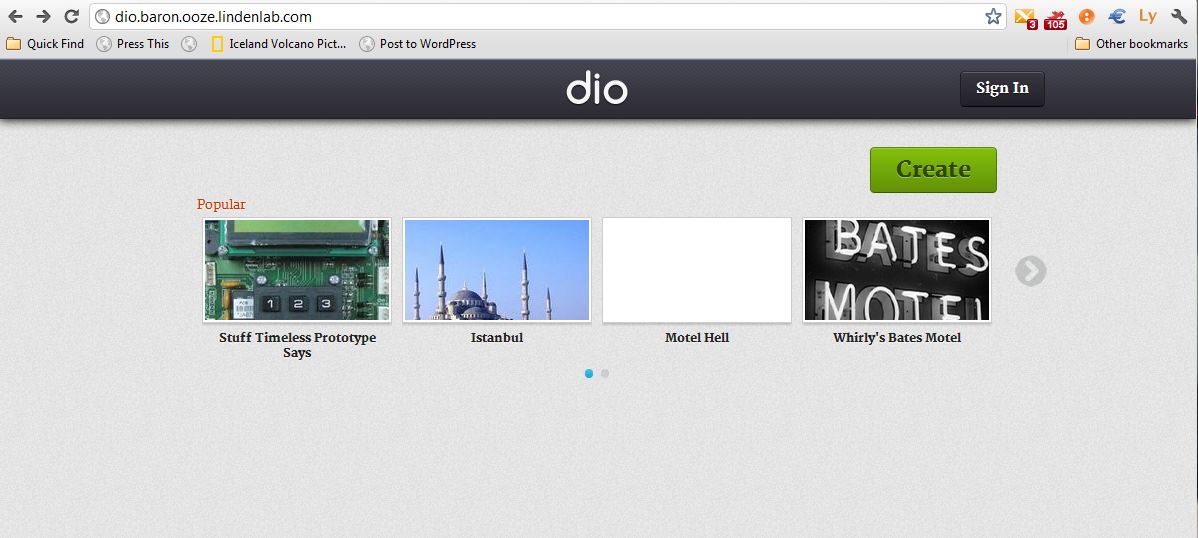
Of the remaining two products up for launch, one is Dio, which has been known about in essence, if not in content for a while. It is described as a “room creator, in which players can do everything from construct a choose-your-own adventure to develop an interactive wedding album.” This had been thought to be a product arising from the acquisition of Little Text People earlier this year. However, the fruits of that collaboration would appear to be in the fourth product in the lie-up.

Dio: to appear in October as well

This fourth product is to be called Versu, and is described as a storytelling toolset, in which players assign characters a set of motivations. The characters react to the actions of the player based on these motivations, and the story is procedurally generated. The first release is aimed at murder mystery and romance stories.

The timing of the launches so close to one another is intentional, with Humble hoping that the close proximity of the launches to one another will change people’s perception of Linden Lab, and encourage those who wrote it off as “just the Second Life company” to come back and have another look.

Hopefully, if successful, this may encourage people to take a look at Second Life as well…

With thanks to Laetizia Coronet

Making Patterns

Patterns became the first of Linden Lab’s new products to be made available to the public with an initial debut on Thursday October 4th in what the Lab calls the “Genesis Release”. This has been (and remains) available at a discount price of $9.95 on the Patterns website. The “full” release of the product will apparently not be until “late” 2013 – presumably to give both users and Linden Lab plenty of time to add to the Patterns universe and make it something truly unique – and at a price of $19.95.

As I pre-ordered my copy back in September, I was quite keen to find out what Patterns is like – and provide some initial feedback.

Downloading and Installing

Patterns is being made available through Steam, so you’ll need to sign-up there if you’re planning to try the Genesis Release for yourself. To download the software, you’ll need an activation code, which will be e-mailed to you. Use this with the Product Activation process within the Steam client to initiate download and installation – full instructions accompany the activation key. Installation is an automated process, leaving you with the option of starting Patterns from your Steam Library, your desktop, via shortcut, your start menu, and so on. No fuss, no bother, as with all Steam installations (or all (three) that I’ve seen). In this lies a hint as to how Second Life will arrive on people’s computers once the SL / Steam link-up is completed.

Start-up and First Looks

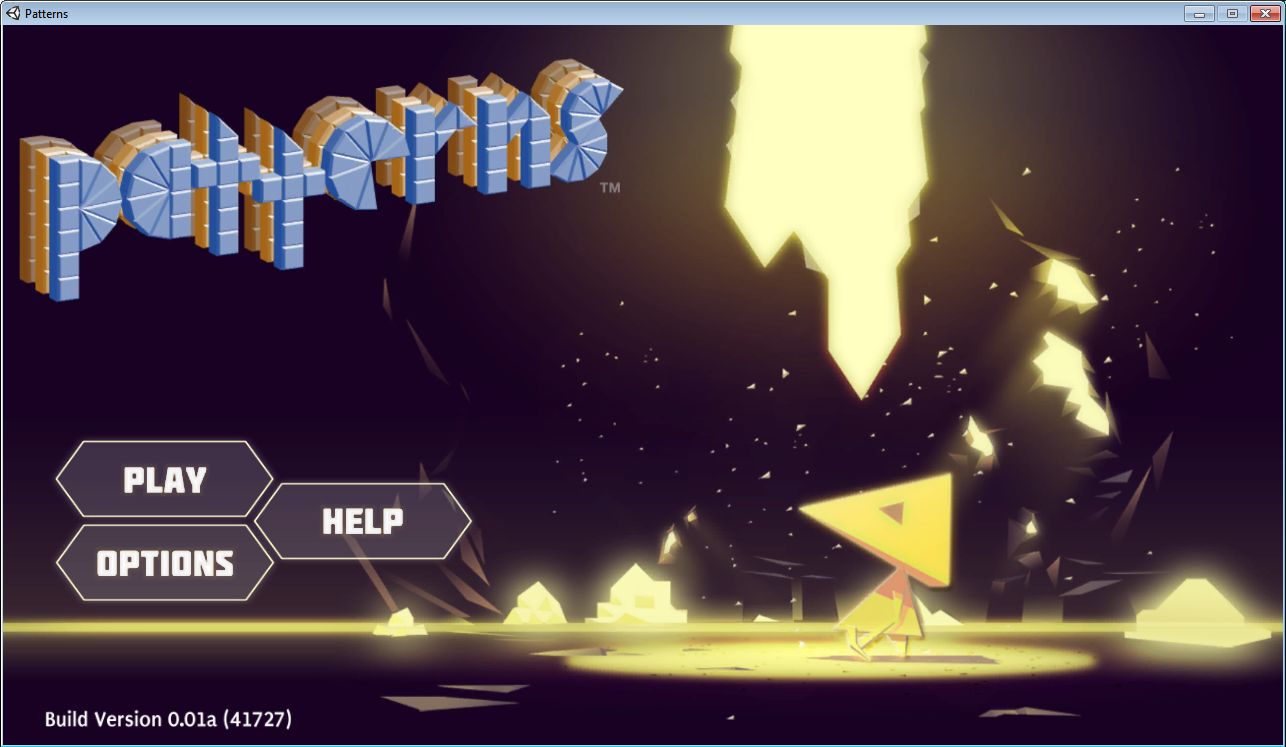
Launching Patterns is somewhat similar to the first use of SL: the first thing you’re asked to do is to agree to a very familiar Terms of Service (although it has some notable and obvious exceptions, the term “boilerplate” sprang to mind reading it – but then, why should LL reinvent their legal wheel?). Confirming your acceptance of the ToS brings up the Patterns splash screen in full.

Clicking PLAY presents you with the options to RESUME, or start a NEW session. HELP displays  some basic instructions for using Patterns (how to move, how to collect materials, how to build, etc.), while OPTIONS displays those setting you can tweak. The look of both these latter screens is perhaps best termed “retro”.

NEW gives you three options: 1, 2, 3. These refer to the number of individual game sessions you can create and save – so it is possible to have up to three sessions of Patterns ongoing, although you can only ever use one of them at a time.Start and save three sessions, however, and you’ll have to overwrite one of them the next time you select NEW.

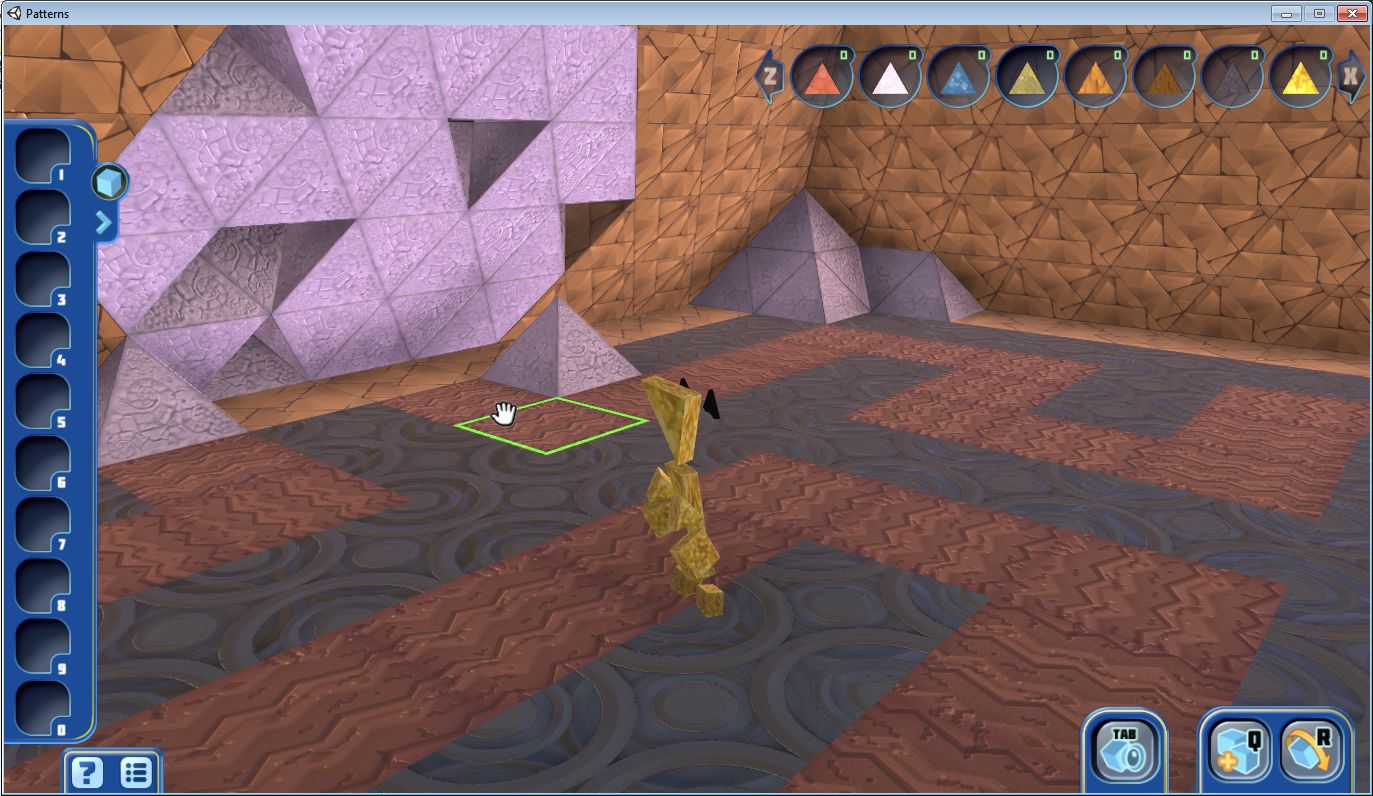
Once you’ve started a session and the game has loaded, you’re inside a large pyramid, and need to break out. This is done by pressing and holding the right mouse button and “busting” some of the material comprising the pyramid’s walls. This breaks the material (“substance”, in Patterns parlance, which left me wondering if I was guilty of substance abuse when smashing up walls and objects…) into its component triangles, which you can then collect as you “fire” at them – they are added to the requisite substance counter at the top of the screen. You can then use any substances you have acquired (up to the total number collected) to build objects of your own.

Starting out

Note that not all materials appear to be “bustable”; some may collapse as you fire at them, some may not (such as the “bedrock” supporting each of the floating platforms). Also note that “busting” objects and walls, etc., is range limited, with out-of-range objects being outlined in yellow, and those you can break-up in green.

Once outside, you’re in a platform-like world, where you can continue use the right mouse button to assist you in collecting a range substances you may wish to use for building later, differentiated by look and texture, each with differing properties to be discovered as you gain familiarity with the game.

In order to build, you must first start collecting shapes. This involves finding special “starene” objects in-world and then busting them. Building is done using the left mouse button to select a shape from your shape tray (or use the number keys), then selecting the preferred substance from the menu of substances at the top right of the screen (you can only use the substances you have collected). There are a couple of basic rules for building, which are square faces will only snap to square faces and triangles to other triangles. suitable surfaces are outlined in green. It’s here that the different properties of the substances come into their own: some are better suited to certain tasks / situation than others.

A “starene” object which contains a building shape

There is also the small matter of physics as well, which can make itself felt whatever you’re doing (try bridging a gap between platforms with the wrong materials, and you’ll see what I mean). Be wary of trying to jump between platforms, or stepping off the edge of the one you’re on. If you fall a decent distance, you’ll come to the shattering conclusion it may have been a mistake. Be careful of anything overhead as well, when building upwards.

Shapes can also be rotated using the R key. Shape placement is a matter of determining what you want to do, and manoeuvring the camera to a position where you can actually do it – and, use the green outline of shape faces as a guide. Here is where Patterns again follows the Second Life model: camera placement leaves a lot to be desired. You can toggle between views using TAB, and move the camera up/down, left/right by moving the cursor around the screen, but it is still something of a PITA – moreso if you’re an SL user, as the temptation is to tap ESC to try to reset the camera is strong; however, in Patterns, all it will do is display the main menu.

Woot! My first bridge Continue reading “Making Patterns”

Patterns launched

Linden Lab has officially launched Patterns, the first of their new products. In a Press Release on October 4th, 2012, Linden Lab state that the Genesis Release of the game is now available at a “50% discount” to those who pre-ordered, putting the retail price at $19.90 for the full release, when this is made available.

The Press Release on the launch reads in full:

Linden Lab Introduces a New Digital Universe for Creativity: Patterns

2012-10-04

Discounted Genesis Release Available Now for Founding Users

SAN FRANCISCO – October 4, 2012 – LindenLab®, the makers of SecondLife® and other shared creative spaces, today announced the ‘genesis release’ of a new product called PatternsTM.

Patterns is a new 3D digital universe to explore and shape with your creativity. Beginning on an archipelago floating in space, you explore and discover the shapes and patterns that form this world. As you collect materials of varying strength and durability, you can use them to build anything from large-scale structures that reach the sky to bridges that traverse chasms and much more – all while the pull of gravity challenges your construction techniques.

Today, the earliest version of Patterns – the ‘genesis release’ – is available at a 50% discount for adventurous early adopters, who will be the game’s founding users. Updates to the product will be offered on a recurring basis leading up to the launch of Patterns 1.0 late next year. In addition to receiving early access to Patterns, genesis release users will help to shape the final product with their feedback, will be entitled to have their names in the credits, and will receive all updates up to and including version 1.0 at no additional cost.

“At Linden Lab, we believe that creativity is within all people and that it empowers them like nothing else,” said Rod Humble, CEO of Linden Lab. “We make digital spaces where people can have fun while exploring and sharing their creativity with others. Millions of people around the world have enjoyed that in Second Life, and we look forward to inspiring even more creativity with Patterns, Creatorverse™, and the other new products we’ll be releasing this year. Today is just the first step for Patterns.”

For more information, including a video trailer and product screenshots, and to purchase an access key to download the Patterns genesis release, please visit BuildPatterns.com.

About Linden Lab

Founded in 1999 and headquartered in San Francisco, LindenLab makes shared creative spaces that inspire and empower users to explore and share their creativity with others.

In 2003, the company released SecondLife, the pioneering virtual world filled by the unique creations of its users, who can build anything they can imagine, socialize with others from around the world, and share or sell their creations in a thriving real-money marketplace.

In 2012, Linden Lab is expanding its portfolio to include four new digital entertainment products, including Patterns, a new 3D universe for users to shape, and Creatorverse, an iPad game that allows users to set their creativity in motion.

For more about Linden Lab, its products, and career opportunities please visit LindenLab.com.

—-

Contact:
Peter Gray
presscontact@lindenlab.com
415-547-7367

LL’s new products aren’t the end of Second Life

It’s been interesting to watch reactions toLinden Lab’s recent announcement on the forthcoming launch of two of their new products – Creatorverse and Patterns.

While many have responded positively to the announcement, it is fair to say that some have not, categorising LL’s diversification as a sign that either the company given up on Second Life, or that the company can now only develop products or continue to develop SL rather than doing both. I find both attitudes completely unfathomable, although in the case of the latter, not entirely new. When it comes to even trivial, easy-to-make changes that are essentially crowd pleasers, there can often be a response from commentators who feel that company is only doing so at the expense of working on more serious matters – as if LL can only do one or the other.

Patterns: some see LL’s move to diversify as a sign the company has “given up” on SL (image courtesy of Linden Research Inc.)

They’re Still Working On It

The view that LL are developing new products because they’ve “given up” on Second life is one I find curious because in the 13 months following Rod Humble announcing the company would be diversifying, Linden Lab has clearly shown that it actually is continuing to develop and enhance SL – and what’s more, the work is taking place alongside the development of their new products. Since the beginning of 2012 alone we’ve seen LL:

  • Making what they refer to as being one of the largest investments in hardware and infrastructure for SL to date (which came on top of a major hardware investment in 2011)
  • Investing heavily in manpower, time and effort to bring greater and broader capabilities to Second Life, including:
    • Pathfinding
    • Materials processing – which should revolutionise how SL looks compared to modern games
    • A new HTTP library capability aimed at eliminating many of the major issues we’ve long complained about, with texture load times and large group loading / management fixes being the first two to rolling-off the development line
    • Advanced creation tools which will (permissions allowing) help enhance SL in a wide variety of ways
    • Re-working interest lists and object rezzing to develop a faster, more logical way in which objects are rezzed around us when we teleport in-world
    • Providing a new avatar baking process to eliminate bake fail
    • Developing multi-threading region crossing to help eliminate sim boundary issues
  • Purchasing a Havok sub-licence arrangement which, despite worries over TPVs and connectivity, could in the future yield significant improvements to SL through the provisioning of dedicated Havok libraries accessed by the viewer
  • Pro-actively working to find a new audience for SL through the forthcoming link-up with Steam
  • Working to nail down long-standing issues within the viewer – memory leaks and so on – in order to make the whole SL experience less prone to bumps, thumps and outright crashes
  • Seeking to improve their customer support, and working towards providing better assistance for TPV users where it is logical for them to do so.
Materials processing: enhancing Second Life

True, we may not necessarily like the way the company is developing the platform (pathfinding being the current bug-a-boo). There are also decisions the company has made and is making which may confound us or seem counter-intuitive; I’m still very much frustrated at their willingness to even engage in an ongoing one way dialogue towards users, for example. While such moves and decisions may well cause us concern and / or regret, they don’t actually point to the company as having “given up” on SL; and we shouldn’t confuse the two issues.

It’s Not Time Taken from SL

When it comes to the actual development of the new products themselves, there appears to be a misconception among some that LL has only been able to do so by taking time and resources away from Second Life. Yet, outside of senior management, this would hardly appear to be the case. For a start, and since mid-2011, Linden Lab has been recruiting very specialist skills aimed specifically at developing new products separate from SL itself. Secondly, we need to remember that in the case of at least two of the three new products we know about, the creative resources have (at least in part) come from outside of SL. Dio is being developed by Richard Evans and Emily Short, both formerly LittleTextPeople, a company acquired by LL and who have had little if anything to do with SL; while Patterns is being produced in partnership with games developers Free Range Software.

Continue reading “LL’s new products aren’t the end of Second Life”