Ascension: rising through very mixed feelings

Update: An alternative viewpoint as to the reason for the music venues has been posted in the comments, which is also worth reading. Ziki Questi has also posted on the installation as well.
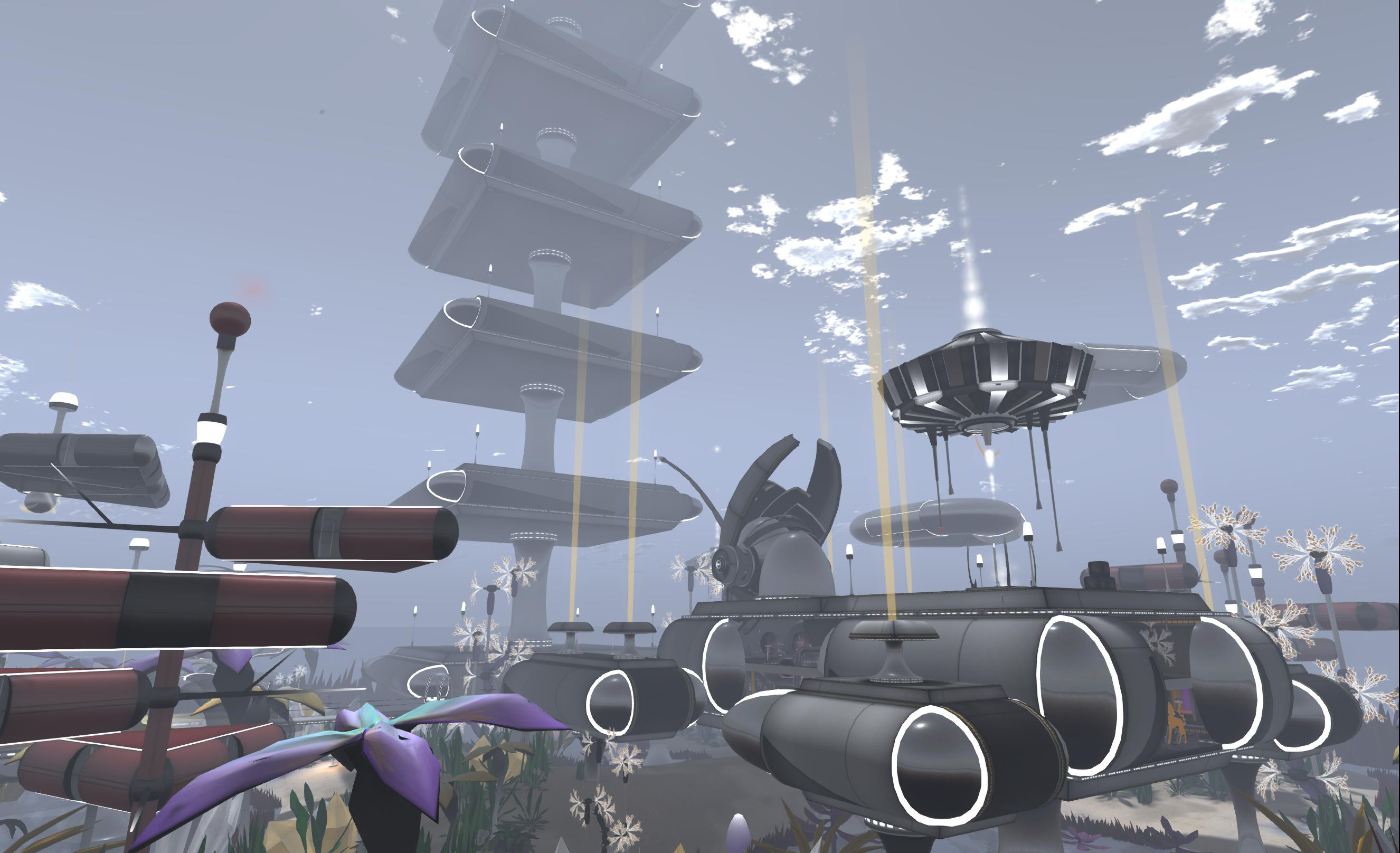
Ascension
Ascension

Ascension is a full sim art installation by Mantis Oh (Cari Lekebusch in real life) as a part of the 2013 Artist in Residence series at the Linden Endowment for the Arts.

Mantis Oh is well-know is SL art circles, and his work tends to fuse ancient and futuristic elements into his builds – and this is much in evidence here, as the visitor is invited to explore a tall tower sitting to one side of a region filled with strange plants, hovering buildings and structures (from Mantis Oh’s Hybrid Productions range) and a huge and very futuristic Sphinx, and which features ancient-looking symbols scattered throughout.

It is  – to be clear on this point – a very impressive build and very photogenic. Whether it  qualifies as a full sim art installation as a part of the LEA’s Artist-in-Residence series, however, is a matter of personal interpretation.
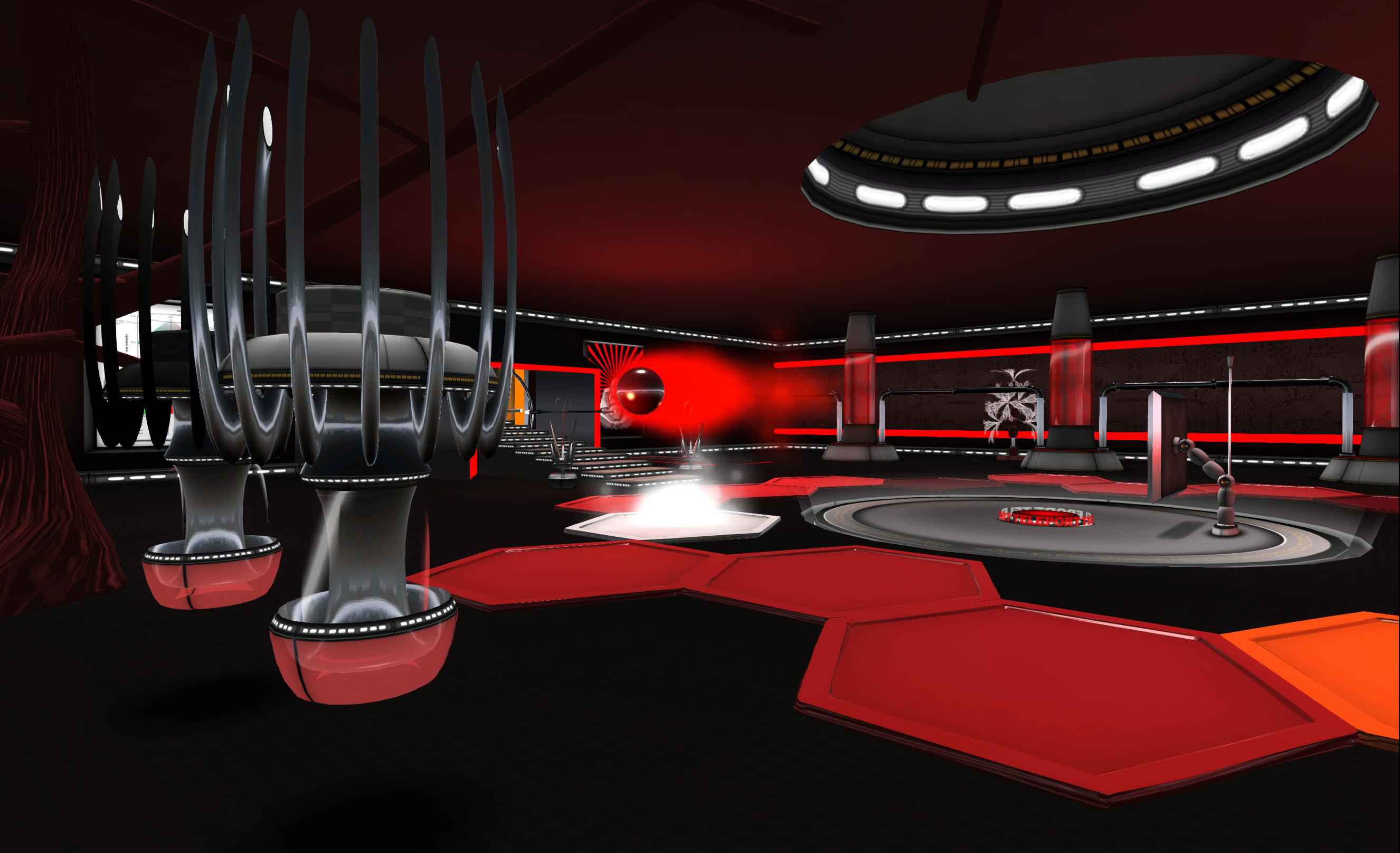
Ascension: the root level

The LEA’s blog piece on the installation reads:

 Ascension is a combined art installation and sound experience that encourages the visitor to explore the seven levels of a cubic, tower like structure. Loosely based on the seven chakras (energy centres) of the human body, visitors begin the journey by stepping down twelve steps that each release a musical note underfoot, before entering the base level room which is bathed in deepest crimson red. Music and sound are intrinsic to this build, and you can create your own unique musical compositions by stepping onto the trigger objects on each of the levels. If you explore the sim with friends, together you can create sound patterns in a truly social and fun environment.

So far, so good – and it has to be said that a trip through the tower is an interesting diversion (you’ll need sound and particles, etc., enabled and be prepared to poke and prod at things).  You start at the base level, as the description notes – analogous to the root chakra, and work your way up via teleporters to the uppermost crown (or “spirit” in this case) level. Each level presents a different environment in which you are encouraged to walk on things, touch things and play with things to create sound and light, either on your own or in the company of whoever is with you, be they friend or fellow visitor.
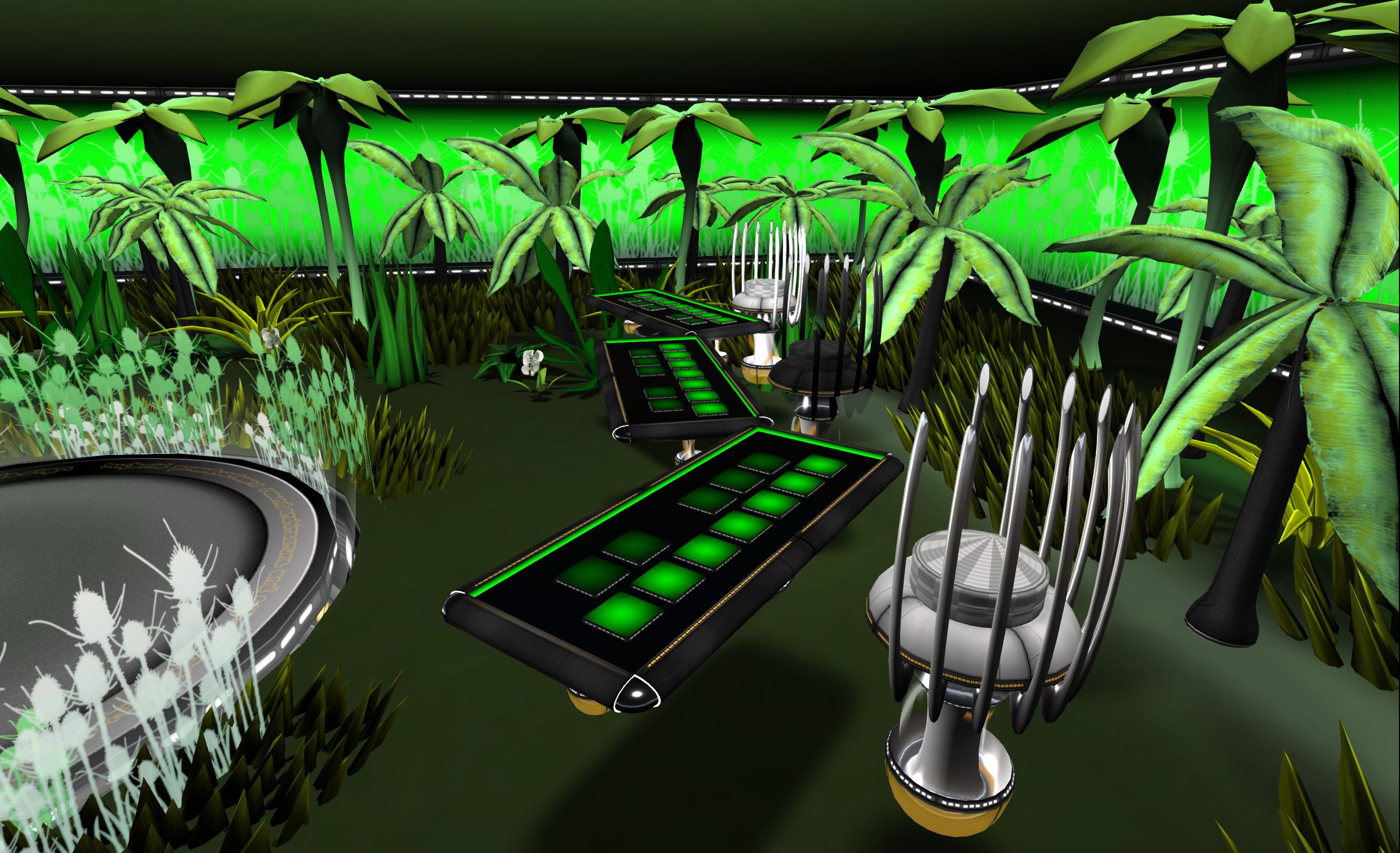
Ascension
Ascension

This is all fine, and very much in keeping with the idea of an art installation. What troubles me is that it isn’t actually something which requires the provisioning of a full region. The tower takes up less than a quarter region area. The rest of the region, while undoubtedly visually stunning and photogenic, came across – and I’m simply being honest here – as being more about using the provided space as a promotional opportunity than as a medium for expressive art.

Alongside the tower there are no fewer than three dance venues in the region – the “Beach Club”, the “Ultra Club” and the “Sphinx Club”. According to the LEA’s blog post on the installation these are “designed to host seven Techno music and DJ events that will take place during the lifetime of the build and well-known Techno DJ’s from real life record label H-Productions will be performing in-world.”

Now there is absolutely no reason why music and art cannot mix, or for music to be used as an art form in and of itself. As such, were these “clubs” to be used as an extension of the main exhibit itself, one could understand their inclusion. However, from the given description in the LEA blog, this appears not to be the case; the implication is that the venues will be used to host techno parties promoting Mantis Oh’s real-life record label, and this leads me to very mixed feelings on the installation.

Ascension
Ascension

It might be argued that the dance venues offer a means of presenting techno as a progressive form of art, and are therefore in keeping with the aims and ideals of the LEA. However – and I’ve wrestled with this exact issue for a considerable time in writing this article – I cannot escape the feeling that such an argument is perhaps hollow. Certainly, given the immersive nature of SL, I would suggest that if the intent is to demonstrate “techno rock as an art form”, then it could perhaps be achieved more immersively and interactively than slipping it a few dance floors and inviting people to come boogie down.

As mentioned, I came away from Ascension with very mixed views. The trip through the tower is an interesting diversion, and as a photographic, set the entire build is impressive. Both of these points can make a visit worthwhile. However, I cannot escape the feeling that the three dance venues are less about any expression of art and more about the promotion of a specific genre of music for the sake of entertainment – and that as such, there are better venues outside of the LEA where this could be achieved.

Related Links

Art on nine immersive planets

Quan Lavender invited me to a preview of Betty Tureaud’s immersive  / interactive installation The 9 Art Planets.

Betty describes the piece thus:

The Art Planets is an art installation where I want to give the visitors 9 different emotional feelings, reflected in their subconscious mind. One level is inspired by Char Davies who I think invented the Immersive Virtual Art. I am using space, colors and sound and some interactive objects to reach my goal in The 9 Art Planets. So turn on your sound and music … The Art Planets have a music stream especially composed for this place, by Ultraviolet Alter. a French composer and good friend of mine. Set your light two midday. Sound should be set to hear sound and music. Media should not be set to autoplay, you will see a note where to switch on.

9 Planets: where something as easy as opening a door can blow you away...
9 Planets: where something as easy as opening a door can blow you away…

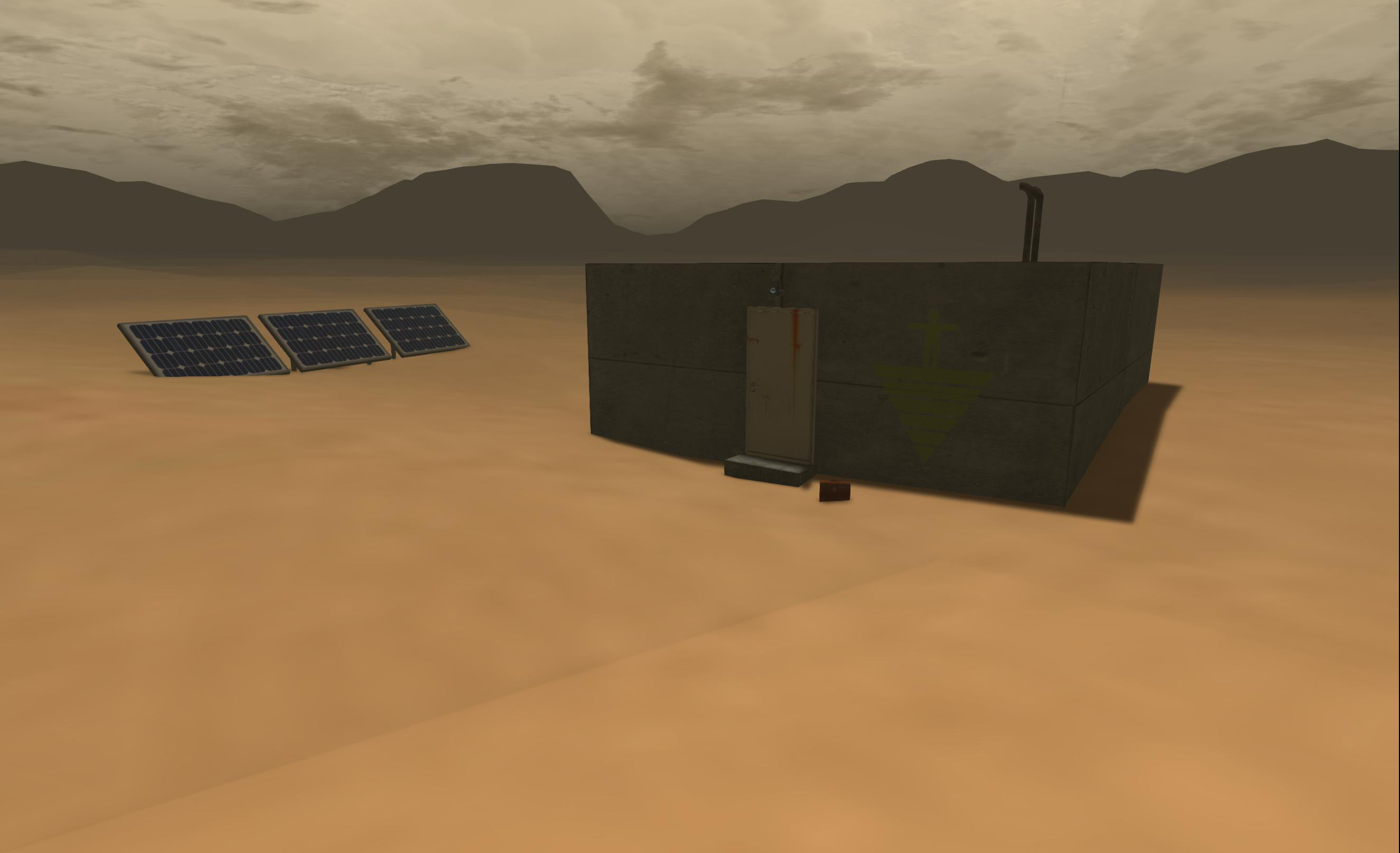
Your journey through these nine planets commences on a Mars-like plain, a Geiger counter clicking away somewhere and a building before you. A small case outside the building will provide you with a visitor’s HUD to get around the installation and also an introductory notecard.

As the name implies, there are nine elements to the installation to visit, with the HUD providing easy access to all of them. Whether you go in the suggested left-to-right order suggested by the HUD (the start location being on the left-hand end of the HUD, or whether you pick destinations according to curiosity is up to you.

9 Planets
9 Planets

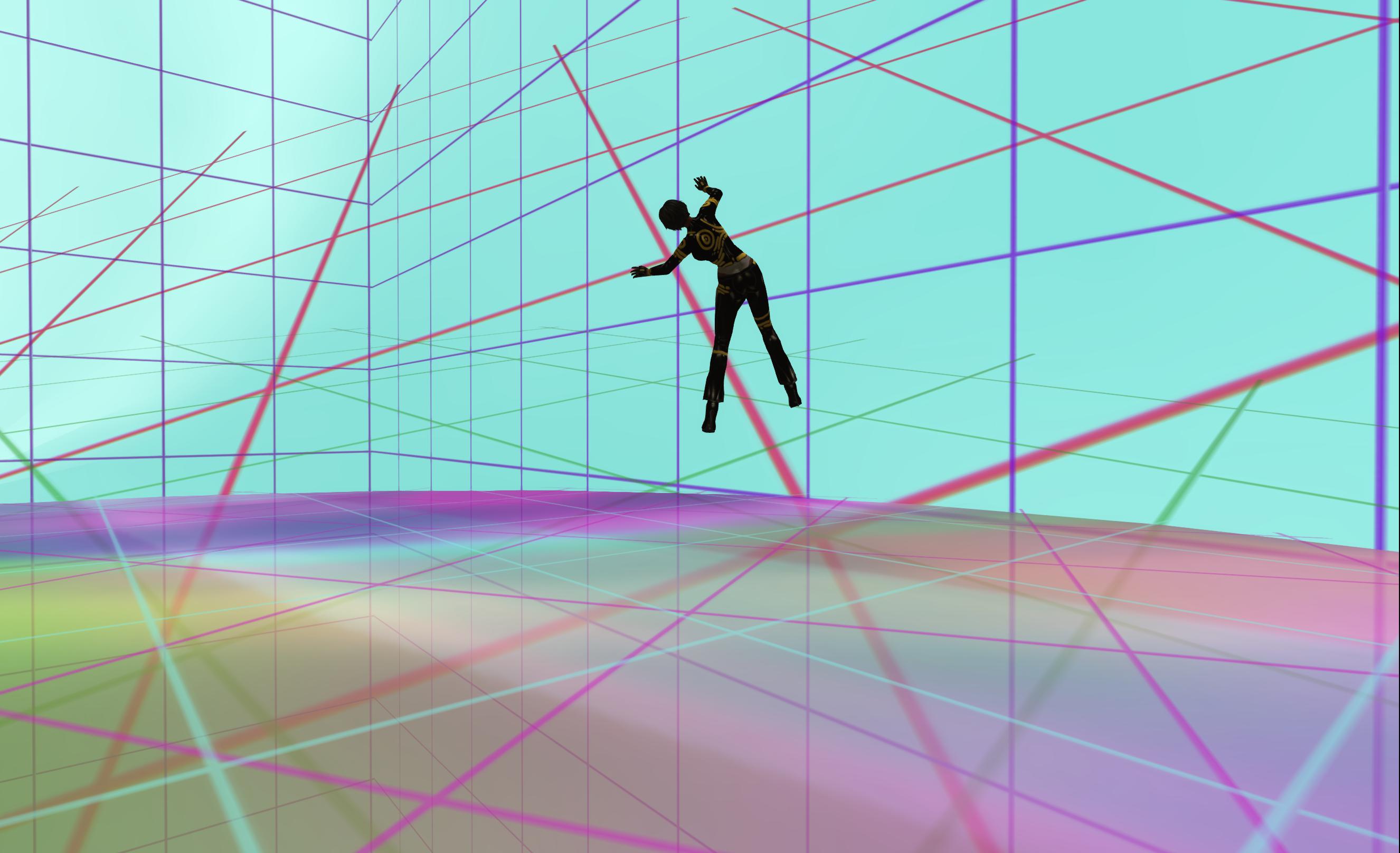
Despite some resemblance to parts of the solar system, this is not an installation which presents art against a backdrop of the planets orbiting our sun. Rather, as Betty’s introduction states, the aim is to induce an emotional response based on colour, light, sound, music and interaction. This last part is important, as it is easy to pass through sections and miss interactive elements. Some of these may set you flying, others leave you dancing. Some may require a degree of passive observation. Some are also more active than others – such as the maze, in which you place yourself in the role of a “mouse” seeking the “cheese”. Whether you attempt the hard or easy route is agin up to you…

9 Planets
9 Planets

Given the nature of the piece, it is actually hard to quantify; given the immersive / interactive nature of the various elements, it really is something which has to be explored and experienced. For those of a mind to do so, there are little gifts scattered around the various elements, which can be collected along the way. And again, as Betty’s notes explain, be ready with media;  Ultraviolet has produced some wonderful pieces to accompany the installation, and the experience really isn’t the same without them.

All-in-all, very much worth a visit – just even yourself time to explore, experience and enjoy.

The 9 Art Planets opens its doors to the public on Friday, April 19th at 14:00 SLT.

Related Links

9 Planets
9 Planets

Down the rabbit hole for Easter

I first came across Ginger Lorakeet’s work at SL9B in 2011, where she had an exhibit on the region of Nove. I find the concept of 3D art in an immersive 3D environment fascinating – so was intrigue to discover Ginger had been selected as one of Artists in Residence for the 4th round of the Linden Endowment for the Arts season of that name – and have been awaiting the opening of her installation.

Putting yo in the frame - Inside Art at LEA23
Putting you in the frame – Inside Art at LEA23

Inside Art opened recently, and is more than worth a visit – not only does the installation feature some of Ginger’s Inside Art pieces for you to enjoy – and be a part of -, it also invites you to follow in Alice’s footsteps, and visit interpretations of scenes from Lewis Caroll’s famous works featuring her adventures. By combining the two, Ginger presents an engaging view of art in Second Life while also allowing visitors to visit some unique takes on Alice’s adventures.

You start standing outside a piece of art which demonstrates a clever use of 3D forced perspective. Nearby is a large magnifying glass – step through it and start your journey!

Inside Art / Alice in Wonderland - LEA23
Inside Art and scenes from Alice’s adventures – LEA23

Rather than presenting “traditional” views of Alice’s tales, however, Ginger has largely opted to go for more unusual interpretations – some of which put you firmly in the role of Alice, particularly after you take a drink from a bottle found along the way, or lick a waiting mushrooms.

Here there is no waiting Queen of Hearts or sleepy attendants at any tea-party (which is not to say the tea party is absent the piece!). However, many of the characters from the stories do appear, if in an unusual guise.

Inside Art - Alice's adventures
Inside Art – a tea party awaits

Scenes are presented to you as you follow a trail through the region, starting with a maze where each turn is worth looking around before you find the exit and move on. Along the way, signs, presented with Carroll-like arrowed hints (“that way”, “wrong way”), ensure you keep to the path (not that it is hard!). As mentioned above, there are also familiar things to pick-up along the way, and which “help” you into the next scene or two. Drink from the bottle before entering one part of the installation, for example, and you’ll appear to share Alice’s experience of shrinking…

Inside Art
Inside Art

This really is a wonderful and whimsical installation which offers those visiting a lot to enjoy as they follow the path to Ginger’s gallery and at the gallery itself, where she presents a number of her works – including some for petites to share – which very firmly put you in the frame of things…

Absolutely worth a visit or two.

Related Links


Inspiring Orientation: getting users started, stage 2

In June 2012, I reviewed MetaHarpers’ The Inspiring Orientation, an installation intended to be part gallery, part orientation course, with various interactive elements intended to teach new users the basics of getting around in Second Life – walking, flying, chatting, using the camera, sitting, etc.

The originia Inspiring Orientation - from the outside
The original Inspiring Orientation – from the outside

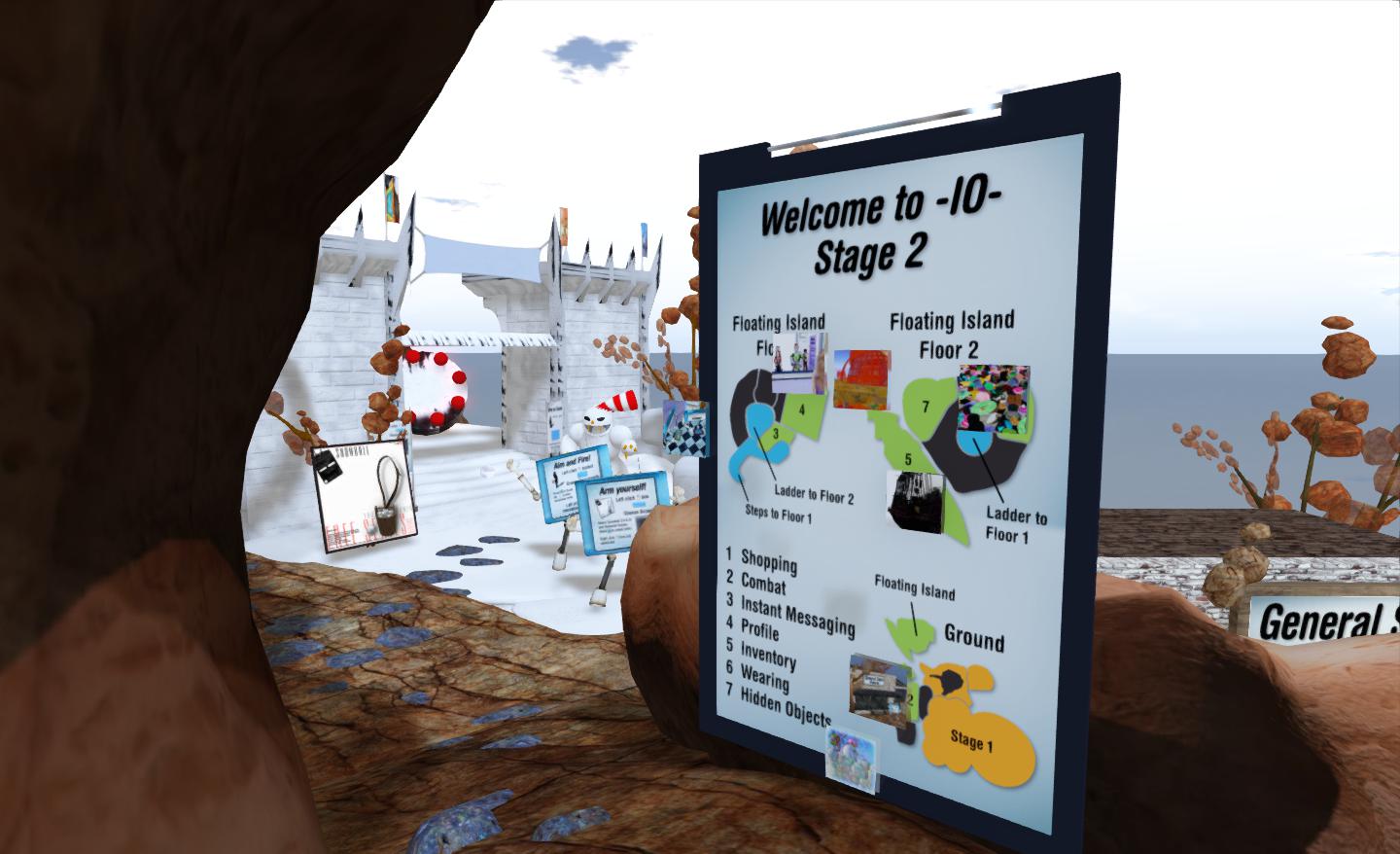
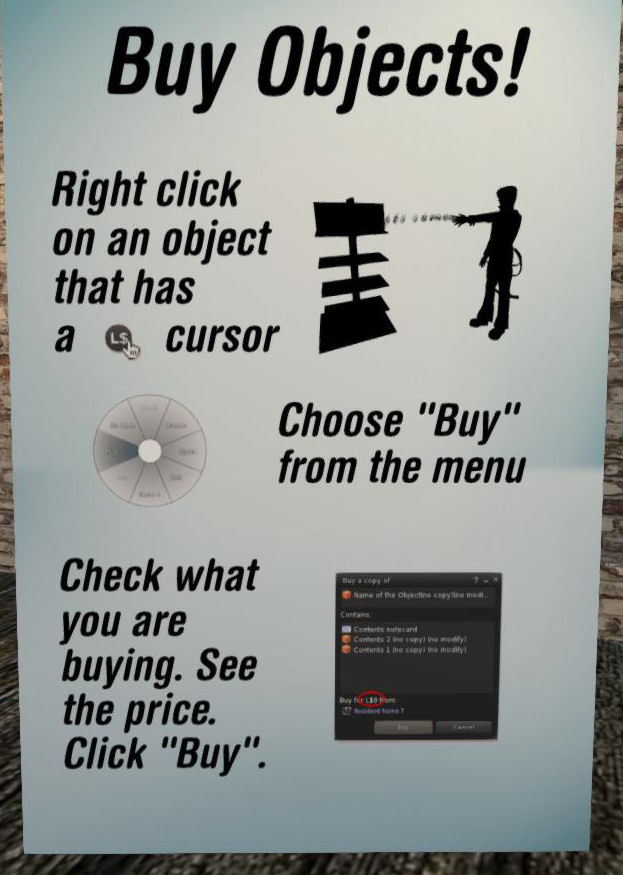
Opened to the public on February 5th, The Inspiring Orientation, Stage 2 now takes the concept a step further by providing additional interactive lessons covering such diverse subjects as in-world shopping, instant messaging, inventory management, profile creation, in-world combat and games, and exploration. At the same time, it revamps the original installation, and incorporates features such as media-on-a-prim. So what is it like?

On arrival, the installation appears familiar – the welcome area is the same as its first iteration, and the familiar tablet-like guides are still there. However, on stepping inside, it is clear things have been changed. Basic movement – walking and jumping – is quickly dealt with before moving onto the basics of camera control, which used to come somewhat later in the piece, and which is dealt with in a more compact manner. The rest of the initial elements of the piece remain largely unchanged until one arrives at the teleport portals, which in the original more-or-less marked the end of the process. While people can still teleport away at this point, a sign points the way to the new additions waiting to be explored.

Inspiring Orientation Stage 2
The Inspiring Orientation Stage 2

Here people can learn about shopping, instant messaging, profiles, inventory (including attachments, clothing layers, etc), dealing with “hidden objects” and combat, all in discrete units linked by footpaths, chair lifts and ladders.

There are several routes around this part of the installation, which can lead to a degree of repetition in instructions (accessing inventory, for example). However, this is no bad thing in that it allows for easy re-caps on lessons and pointers.

The Inspiring Orientation Stage 2

The inclusion of combat options might at first glance seem a little odd, but it actually does make sense given that, while “Second Life is not a game”, many people actually do join SL in anticipation of engaging in roleplay (which can include combat elements) and engaging in combat-related activities (the dreaded zombie hunting beloved of the official SL promo videos, etc). Ergo, getting people started on how weapons, HUDs, mouselook, etc., all work within the realms of combat isn’t necessarily a bad thing.

Whither the context menu?

The use of media-on-a-prim in the portal area, is both new and subtle. Drawing on the Destination Guide to provide a click-through list of destinations and descriptions related to the selected portal, it does much to present users with far more choice on where they go next, and on seeing where they are likely to meet other users.

That said, there are a few niggles with the update. Given this is an exhibition intended to demonstrate a new user orientation, the almost exclusive use of screen shots of a popular TPV is surprising. Yes, it may weel be the most popular viewer in use in SL, but given this is a new user experience, and presumably something the creators would hope users would encounter early-on in their explorations of Second Life, I can’t help but feel that there should perhaps be more emphasis on the official viewer – particularly as this is the viewer the majority of new users will initially be using when they log-into SL.

It could also be argued that other essentials are missed or given scant explanation as well – such as the Marketplace, the use of the world map, search and the concept of teleports (although teleports is touched upon throughout the exhibit, if not fully explained). However, the piece is a work-in-progress (the team behind it plan to move it to a location of its own at the conclusion of its time at the LEA), so these are matters which may still be addressed.

One thing that does still disappoint me with the update, though, is that it still fails to reference the viewer’s own means of providing help to users. The How To guide still goes unmentioned, as does the Help options in the menu. The How To guide is certainly worth a reference, given it forms an easy aide-mémoire to some of the lessons given during the orientation tour.

Some might argue that The Inspiring Orientation fails to offer any significant advantages over a more straightforward approach to user orientation such as that provided by the Phoenix Firestorm Support Region. In some respects, I’m inclined to agree; the latter has the beauty of keeping to a KISS approach which make progress perhaps seemingly less time-intensive. However, The Inspiring Orientation perhaps offers greater visual and aural stimulation, and thus may better hold a new user’s attention than a more traditional “walk-and-read” approach.

Whether it is viewed as a prototype / alternative approach to engaging new users and unlocking some of the mysteries of the viewer or whether it is seen purely in terms of an art installation which encompasses learning experiences, The Inspiring Orientation remains an interesting insight into how an engaging and interactive user experience might be built. As such, it has always made for  an interesting visit, and the Stage 2 updates provide plenty of additional food for thought, particularly for those interested in the new user experience ethos.

Related Links

Les évolutions dangereuses

This month sees the third round of the Linden Endowment for the Arts Artist-in-Residence programme drawing to a close. With applications for round 4 now open, I thought it time I caught-up on some LEA-related posts on various exhibits which have been in draft form over the past for weeks and got them blogged.

Given that science forms the basis for a large part of my non-SL posts here, I thought I’d begin with Kicca Igaly and Nessuno Myoo’s Danger in Evolution, currently on display at LEA27.

Danger in Evolution
Danger in Evolution

The artists describe the work, which comprises two separate but interlinked installations by each of them respectively, as:

The contradiction that is at the heart of any technological and scientific evolution when there is not  growth, maturity and an awareness of value potential risks that this implies evolution in the life of everyone. Especially when interests of prevarication or economic, social, religious interests come into play.

It’s a dark piece – literally, given the recommended windlight settings and overall hue and tone of the builds themselves – which is both provocative and rich in imagery, challenging us to consider the ethical, moral and religious challenges, both positive and negative, inherent both in the pursuit of science and technological development.

Danger in Evolution
Danger in Evolution

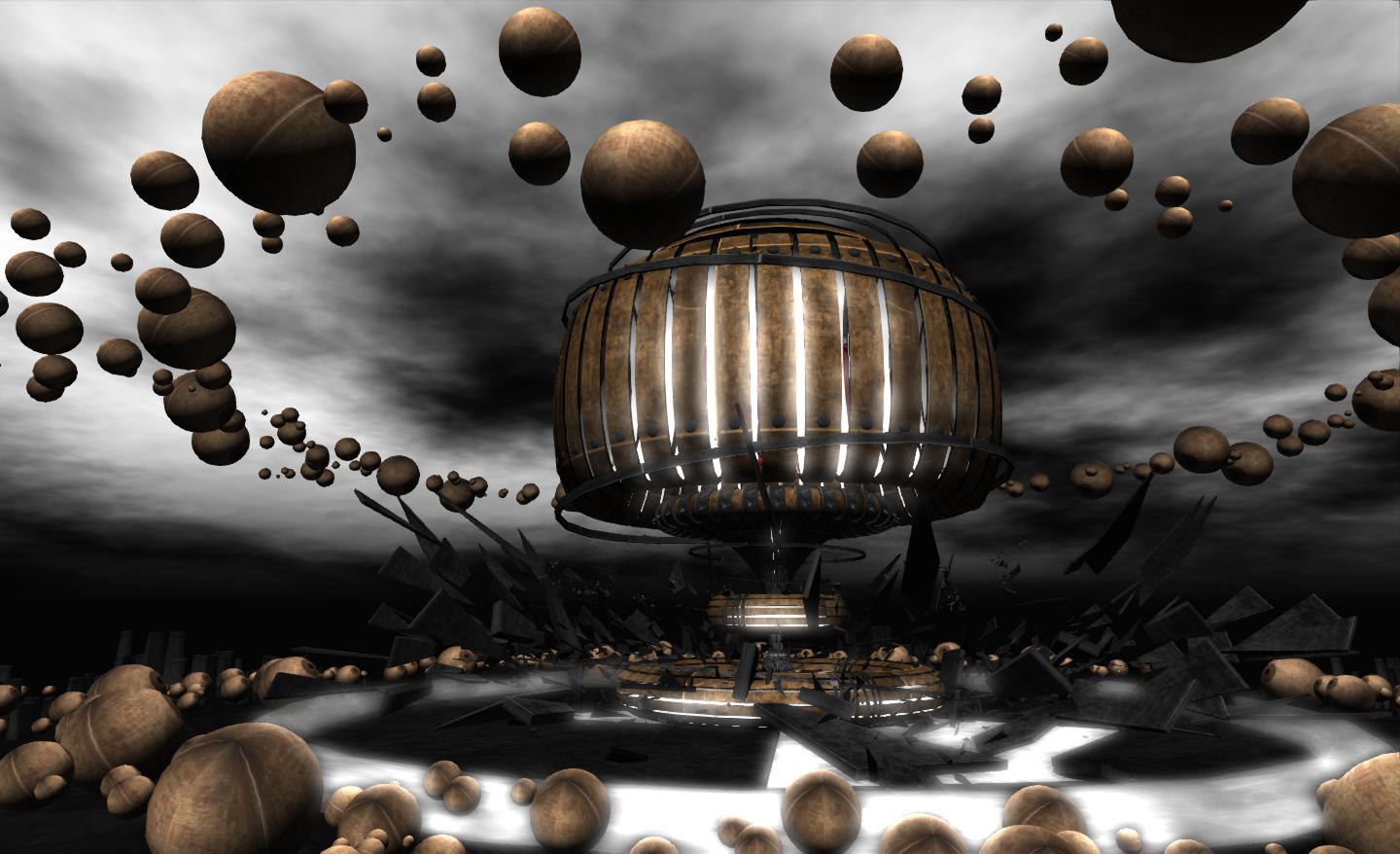
Nessuno Myoo presents us with a scene which is both chaotic and yet potentially joyful – a huge carousel-like ball on which people ride. From a distance all seems to be fun and laughter – but as one draws closer, it is apparent that this is not the case. Those riding the carousel are perhaps not really in control, but are perhaps trapped by the very thing they sought to create.

Closer examination still reveals that the carousel is far from innocent; at its heart lay a representation of of the atomic structure of uranium 235, of which the nucleus is that of “Little Boy”, the first atomic weapon ever used in anger, which exploded over the city of Hiroshima on August 6th, 1945. This brings the carousel’s design into sharp relief – it is in fact the mushroom cloud of a nuclear explosion, and thus the surrounding chaos can be understood, as can the myriad of eyes witnessing the scene.

Danger in Evolution
Danger in Evolution

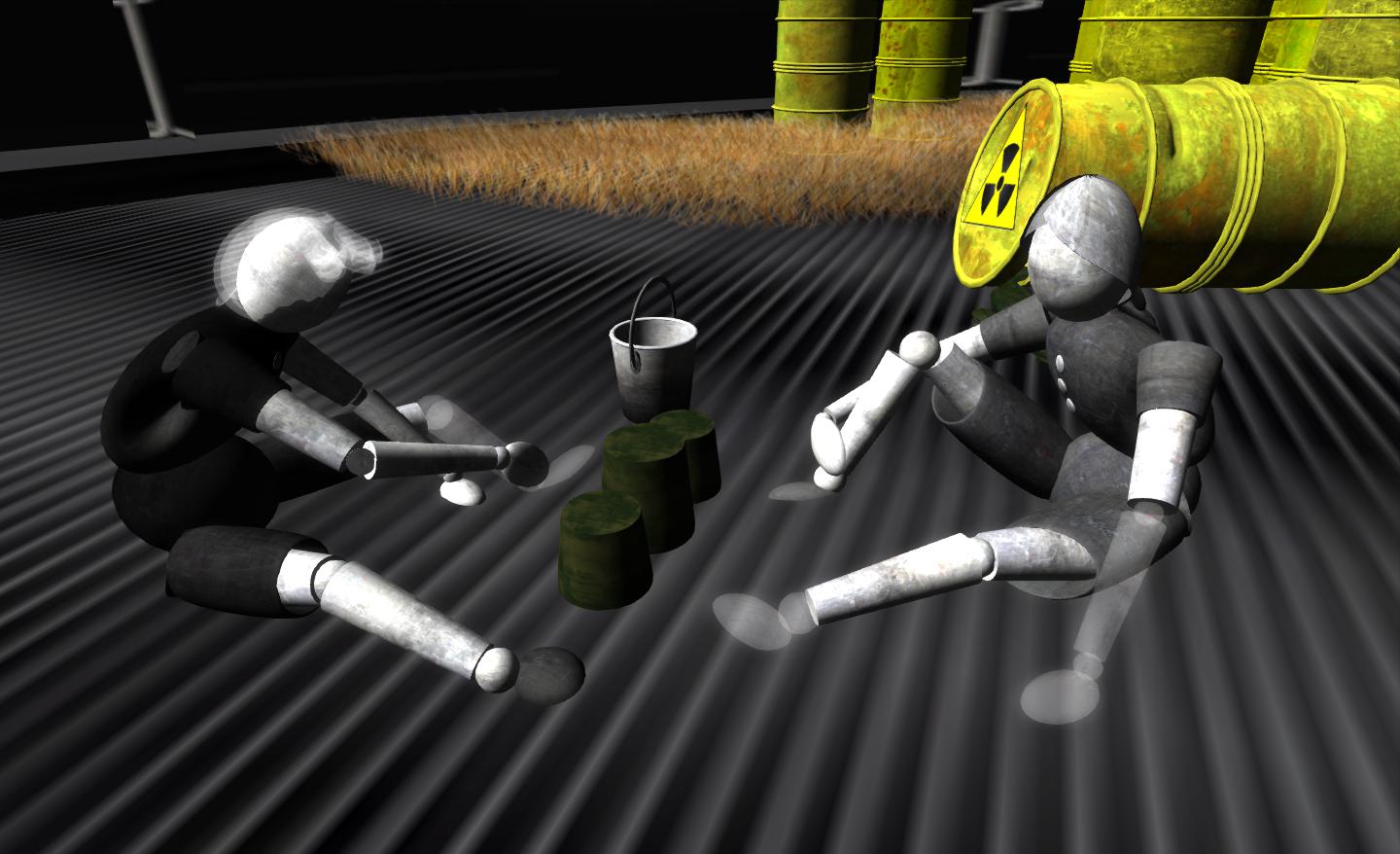
In her piece, Kicca Igaly continues the nuclear theme central to Nessuno’s work, as she presents a piece depicting nuclear research, wherein those performing the work are seemingly oblivious to the fact that while they have the benefit of every protection which can be afforded them in their work, the real nightmare is already out in the world in the form of nuclear waste which is poisoning the world, and ruining lives, as shown by the two children who innocently play with toxic waste, themselves seemingly oblivious of their own missing parts…

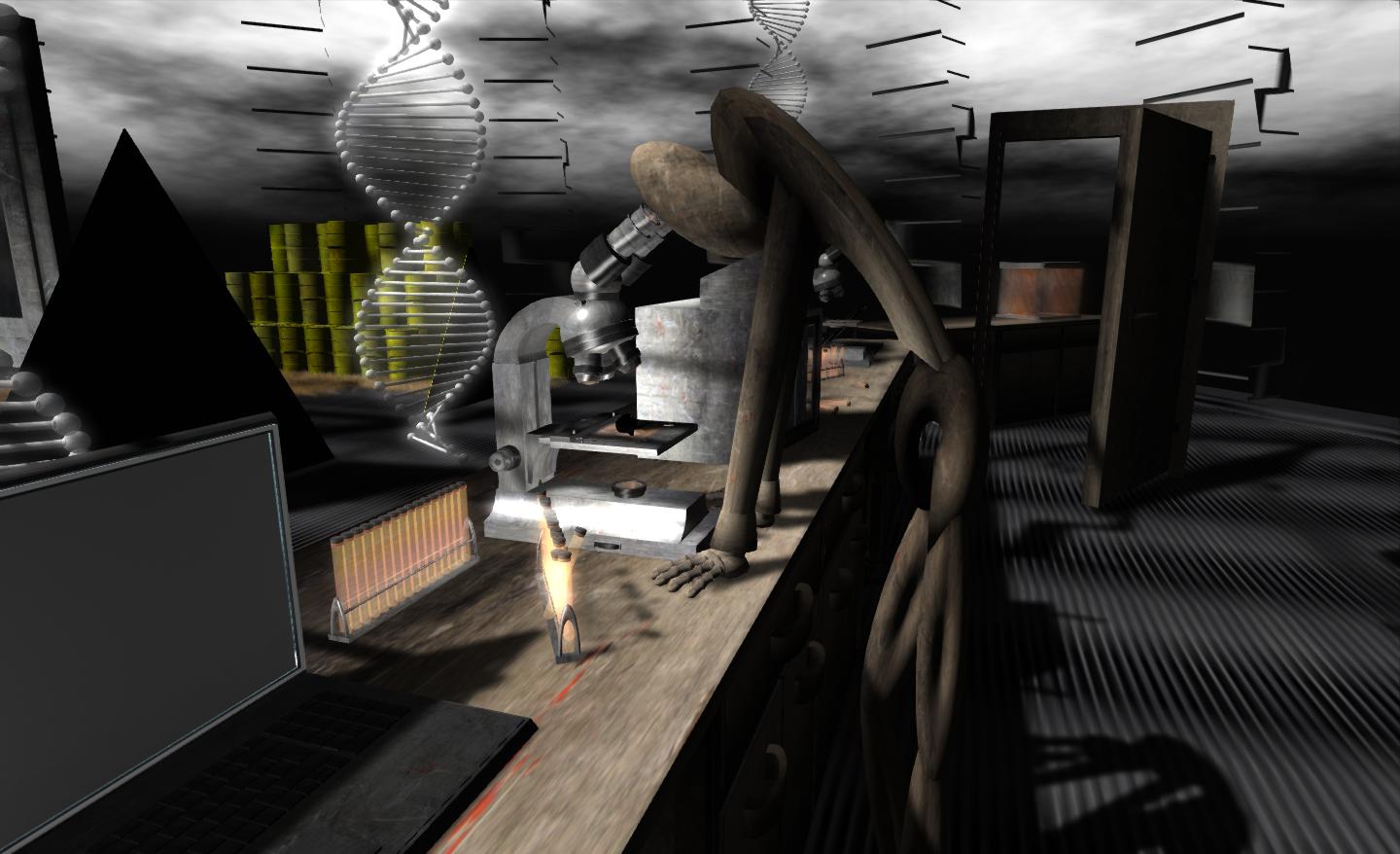
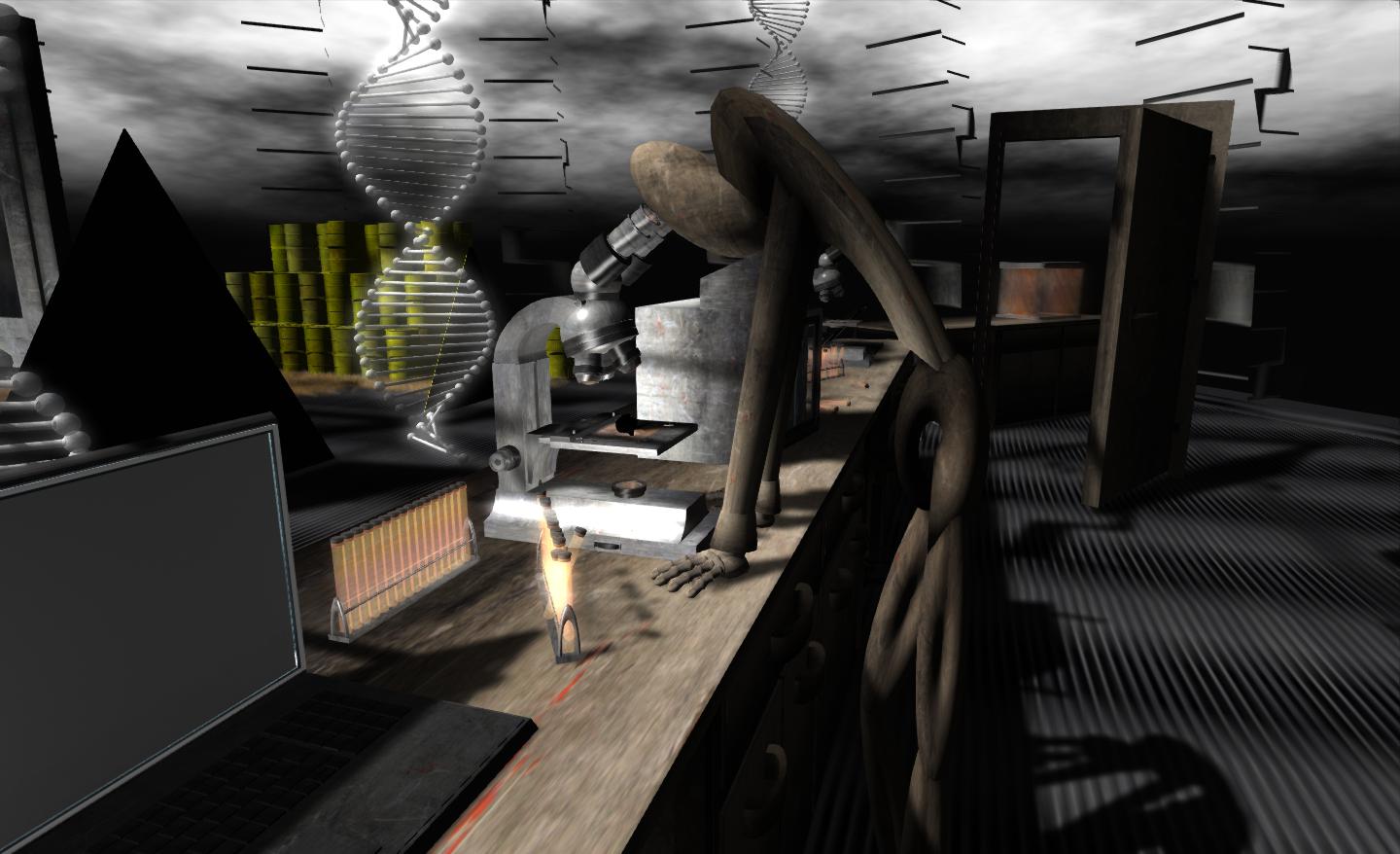
The children are perhaps a link into the second aspect of Kicca’s work, as she also presents a tableau depicting genetic research as a scientist, surrounded by models of DNA, peers steadfastly into a microscope. Will he find a new means of aiding the sick or overcoming sickness – or will his research result in further chaos and destruction? As Kicca notes, “The timing of the research are often too short to fully evaluate the consequences of what is produced afterwards. I wanted to emphasize in these scenes, that these aspects need to be taken into extreme account by researchers and by who finances them and often influence their activities, with cursory expectations. ”

Danger in Evolution
Danger in Evolution

Of course, scientific and technological advancement are often rarely without risk. That does not mean we should turn out backs on either – and neither Kicca nor Nessuno are implying we should. But we have reached a point in our own understanding of both science and technology where we do need to be more aware of both the broader potential and impact of scientific discovery and development. As such, we perhaps move to free ourselves from both the imperatives of financial gain arising from research and  – equally – the religious ignorance which often prevails against the potential for life-saving / life-enhancing research and development, and look upon things in a broader light – particularly where our endeavours can have such a wide-ranging impact on both our evolution and on the world around us.

Danger in Evolution is a powerful, evocative piece, however one looks at it, both directly and indirectly. The imagery is both intense and also subtle, challenging us to consider matters of evolution, development, research and science from all parts. Walking through Nessuno’s part of the installation in particular, I could not help but hear Oppenheimer’s quote when looking back on the detonation of the very first A-bomb during the Trinity tests in New Mexico, when he referred to a passage from the Bhagavad Gita,  “Now, I am become Death, the destroyer of worlds.”

This is also a piece that again demonstrates the sheer power of environments such as Second Life for staging immersive works of art which can so challenge our perceptions and thinking – and as such, it is not one to be missed.

Danger in Evolution
Danger in Evolution

Related Links

The Arrival of a question of departure …

The Arrival
The Arrival

Rose Borchovski’s latest installation at the Linden Endowment for the Arts opened on January 11th. I missed the actual event, but popped along to visit last week, and thought it time I got around to putting words to thoughts and reactions to the piece.

The Arrival is a full sim installation which is both a standalone piece and a continuation of the saga of her Susa’s – child-like beings of a mischievous and sometimes malevolent bent. Here they have captured a fish, and celebrations of the fact turn to questions as the fish dies literally beneath them as they use it as a stage for their jubilation; are they to blame for the poor fish’s demise?

The Arrival
The Arrival

Or that’s one of four explanations Rose gives for the piece. The others include memories from childhood, the inspiration of other artists, and even the influence of religion. In introducing the piece on the LEA blog, Rowan Derryth provides thought-provoking insight into the work which includes more on the possible origins of the piece – and I’ll leave you to go read her thoughts.

Quite how you interpret the work is up to you – you can follow Rowan’s thoughts, which are themselves based on commentary from Rose herself, or you can let your own thoughts percolate as your explore. The latter, by the way, is best done by using the teleport at the arrival point to get you started.

The Arrival
The Arrival

For my part, I found the piece something of an allegory / metaphor for how we humans behave, always busy exploiting this, that or the other, congratulating ourselves on what we can achieve and how we can enjoy everything, with little thought for what might happen when things are gone and we’re left to ponder our own role in their disappearance / extinction …

The Arrival is a fully immersive installation. The level of detail is stunning and ranges from the macro to the micro, plus there is a complete sound scape to take-in (scripted sounds rather than a media feed, so you’ll need sounds active to fully appreciate the work), and all manner of things to touch and prod – and which may surprise you in return. You’ll need to take your time as you explore, not only to make sure you experience all the interactive elements, but also because the detail really is amazing – a genuine tour-de-force as to what can be achieved in SL both in terms of art and in immersive, engaging environments. Make sure, as well, that you accept the region’s windlight settings on arrival, if asked. They are as much a part of the piece as anything else.

The Arrival
The Arrival

The Susas themselves are (as ever) marvellously made and beautifully expressive, particularly when there are grouped together when their child-like innocence is dispelled by looking into the eyes of several of them and witnessing a mischief which might border on malice lurking there. There also seems to be something of a hierarchy among them, as well, which is also hinted at in their expressions.

There is a charm and a disquiet about the piece. The charm comes in part from the very evident care with which all the piece within the installation have been created created – witness the line of peguins going for a dive towards the top of this piece. It also comes from the early sections of the piece where there is much merry-making and happiness, and well as wonderful little touches which are a delight to find (a little book with swimming fish!).

The Arrival
The Arrival

Move deeper into the installation as the story progresses, and the disquiet grows. Full credit here to Caer Balogh, a long-time collaborator with Rose, and her incredible scripted sound scape, which does much to set the mood as it is realised the fish is dead and questions arise. It was towards the middle of the piece that my own conscience was pricked and my thoughts turned to the potential for the piece being a allegory / metaphor, as mentioned above. A scene with two Susas tearing at one another’s faces and biting one another did little to quieten the unease; and while it certainly gave pause for thought, it most certainly did not put me off continuing my explorations. Like many outstanding pieces of art, The Arrival seeks to challenge, not offend.

The Arrival
The Arrival

All in all, this is a fabulous piece of art for all of these reasons and more, and very definitely worth a visit to explore, consider and participate in.

So, now you’re hooked, why not go and see what tales you can land for yourself?

Related Links

The Arrival
The Arrival