Of Heritage and Vestige in Second Life

Heritage: Vestiges - Gem Preiz
Heritage: Vestiges – Gem Preiz

Heritage is the over-arching title of two immersive installations created by Gem Preiz. The first, Vestiges, opens On Thursday, January 7th,  with the second, Wrecks commencing on Monday, March 7th 2016.

“Heritage is the theme of the two exhibitions,” Gem explains of the pieces. “The heritage passed to us by our predecessors, and the one we shall bequeath to our descendants in the endless fight of life against Time.”

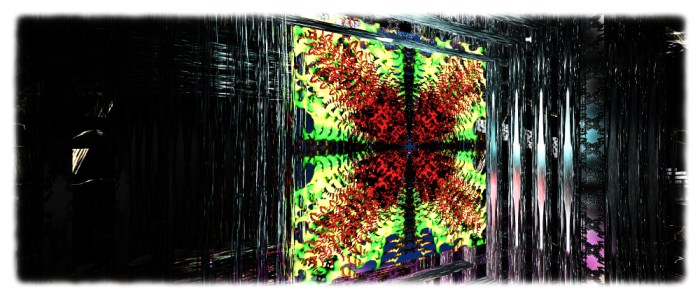
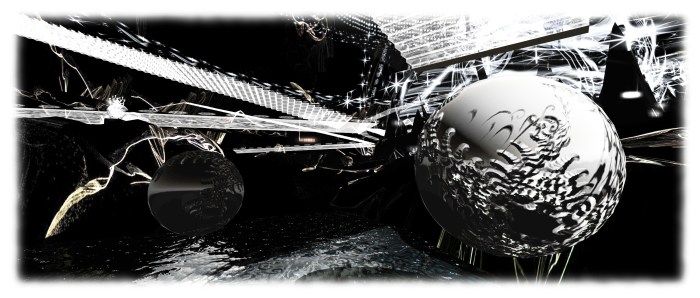
Vestiges evokes the first of these aspects: the heritage passed down to us by others; a journey through the past, visiting the ancient places and secrets of long-past civilisations – but are they the civilisations which gave rise to us, or are we perhaps archaeologists travelling through space and time, witnessing the past of worlds and those who inhabited them, the examination of their past causing us to reflect upon what we might leave for those who follow us?
Heritage: Vestiges - Gem Preiz
Heritage: Vestiges – Gem Preiz

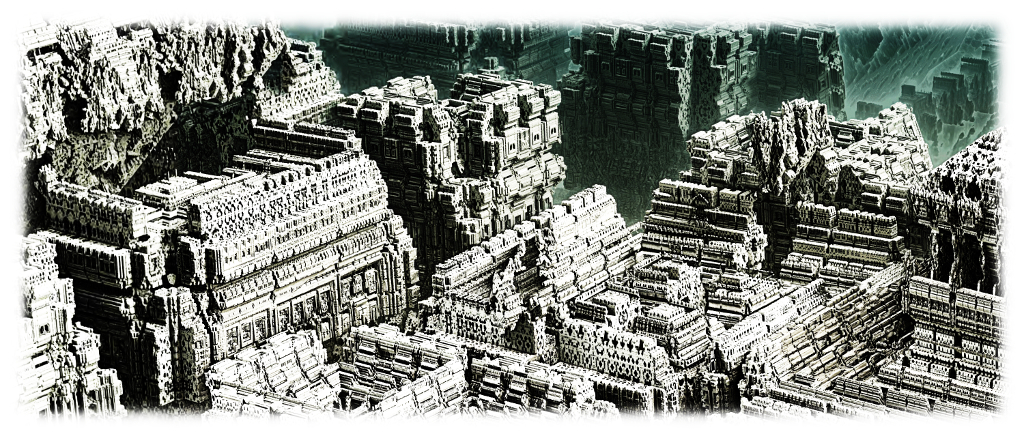
This is a huge installation, eighteen rooms in total, through which the visitor travels as if on a quest. Those who are familiar with Gem’s fractal art will know he can produce huge and beautifully complex pieces, rich in detail and grandeur, and the rooms the visitor travels through are intended to enhance the feeling of being immersed within the scenes they present.

The arrival point offers notes  on the installation, presenting a wealth of background material as well as providing guidelines on how to both best experience your time spent exploring them, and how best to set your viewer.
Heritage: Vestiges - Gem Preiz
Heritage: Vestiges – Gem Preiz

A teleport system (which will only be available to the public once the installation has opened to the public on January 7th) then carries visitors to the first room, and the start of their journey. Do make sure you enable the music stream here to enjoy the compilation of music Gem has created specifically for the installation.

From here you journey comprises alternating between witnessing the exteriors of vast citadels and then visiting “hidden” chambers within them, each with its own treasure to be found. The way forward is variously indicated by rocks on the ground marking a path, or pillars between which a footpath is set, or arches under which you must travel. Guidance is given in chat, and invisiprims help to ensure yo stay on the right track, gently nudging you in the right direction and lifting you to the phantom passages between rooms (use CTRL-ALT-T to see them if you find this easier).
Heritage: Vestiges - Gem Preiz
Heritage: Vestiges – Gem Preiz

Some of the citadels have a certain familiarity about them; there is s distinctly Egyptian feel to the second, for example, while another suggested to me an echo of the ancient orient. Whether these citadels represent our own distant past or that of another civilisation entirely is for you to decide. For while all we see is somewhat familiar, so to is it so very alien; And thus the installation – and the images within – toy gently with our sense of perspective, causing us to stop, examine, and ponder.

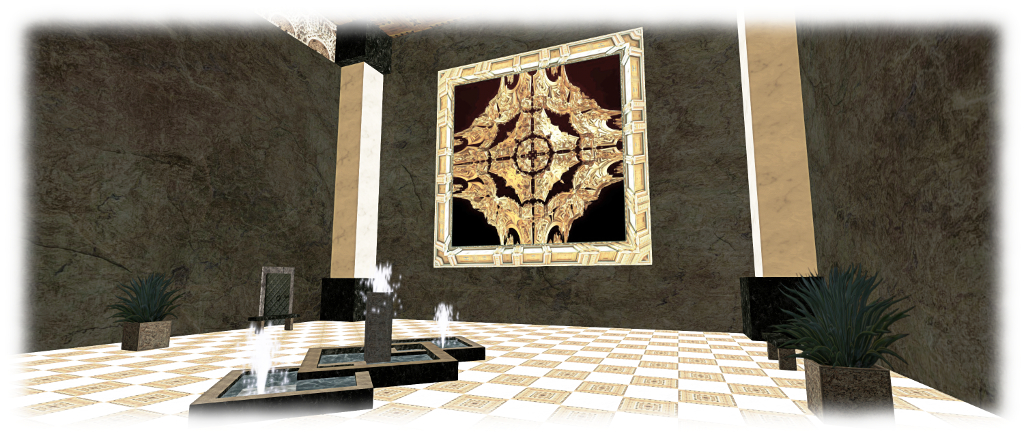
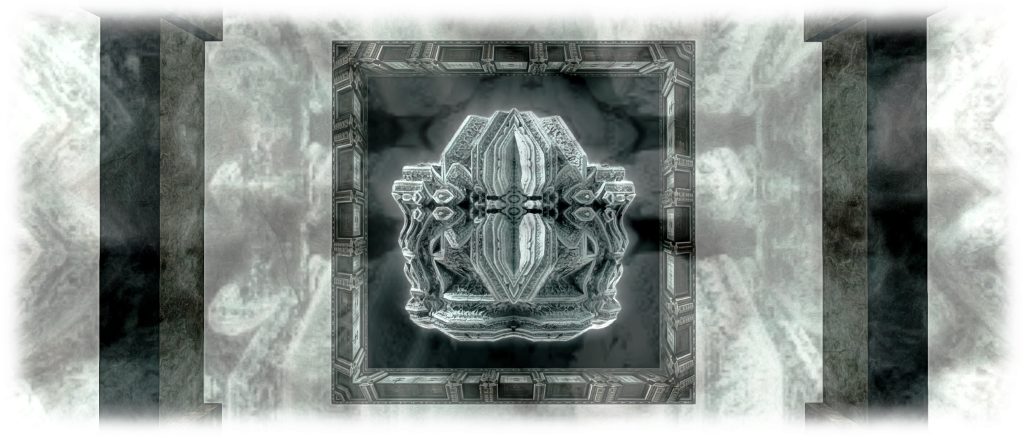
The intricacy of Gem’s fractal art is always a marvel to behold, and this installation is a veritable tour de force of his work, where the extent to which he has used fractals may not always be immediately apparent, and so considered study of both citadels and chamber images is required. The former are of such a huge scale that only careful camming can really bring out their beauty, allowing our impressions about what they are and represent to flow freely as we move across them. Similarly, it is only through considered study of the images within the chamber we can fully appreciate the extent to which Gem has used fractals in their construction.

Heritage: Vestiges - Gem Preiz
Heritage: Vestiges – Gem Preiz

If I’m totally honest, such is the scale and presentation of some elements, that it can, on repeated visits diminish their overall impact. But these instances are in the minority, and more than compensated for by the knowledge of what is to come. One thing I would recommend is that if you plan to make one more repeat visits (I found myself drawn back a number of times to specific rooms and scenes), they try to do so in the company of a friend who hasn’t previously visited Heritage; sharing in their reaction experience of seeing these cityscapes and images for the first time can be as involving as any first solo visit.

As noted earlier, Heritage opens to the public on Thursday, January 7th.

SLurl Details


Glass and Light in Second Life

Glass and Light Breakwave

I’m a long-standing admirer of Frankx Lefarve’s art in Second Life; he’s a master of immersive art, using light, colour and particles with intricate designs with the appearance of glass to create extraordinary environments which captivate the eye and gently play with the mind. His latest work, Glass and Light Breakwave, which is open through until at least the end of November 2015, stands as a further demonstration of his art and skill.

I first became aware of Frankx’s work almost two years ago, at the start of 2014, when I entered his realm of glass and light for the first time. since then, we’ve become friends and I’ve been fortunate enough to witness his work at several installations, such as Insidious and Quilia. However, it is with that first  installation I visited back in January 2014 that Glass and Light Breakwave shares the closest relationship; so much so, that is it possible to see echoes of the former in the current piece, as see just how much further Frankx’s expression and creativity have evolved.

Glass and Light Breakwave

To try to describe a piece like this is impossible; as an immersive environment it really has to be experienced first. Those who do remember his earlier glass and light works and Frankx’s alien landscapes will likely recognise certain motifs within this installation, which seems to bring together a number of ideas and melds them into a unified whole, mesh, prims, particles, colour and light blending to create a fully three-dimensional installation best experienced by flying in Mouselook mode or, if you have a Space Navigator or suitable controller, via flycam.

What I will say about Glass and Light Breakwave is that it is an installation that should not be missed, as I hope the short video below demonstrates.

The Seasons of Life in Second Life

Seasons of Life - LEA 4
Seasons of Life – LEA 4

Now open at LEA 4 is Seasons of Life by John (Johannes1977 Resident), a Second Life photographer who has been rightfully gaining a respected reputation in-world for his photographic studies, which straddle the virtual and the physical worlds. As a serving member of the US Marines, for example, he shot a series of photographs showing military life whilst on deployment to Afghanistan, and these were recently featured in an exhibition at The Rose Gallery, Angel Manor.

Seasons Of Life is focused squarely on John’s work as an in-world artist, and is his first exhibition at the LEA. In his words, it represents “a person’s life cycle combined with the scientific seasons of the Earth”.

It sees the region, which is largely flooded at ground level, divided into five areas. Four of these are devoted to the four seasons – Winter, Spring Summer and Autumn, each presided over by portraits of its Guardian, as modelled by Draakje Dailey (Spring), Eleseren Brianna (Summer),  Emma Portilo (Winter) and Issy Flatley (Autumn). The fifth area is given over to the Guardian of the Night, modelled by  Seashell Dench.

Seasons of Life - LEA 4
Seasons of Life – LEA 4

The portraits are individually and collectively fascinating, presented in a variety of styles which offer strong contrasts to one another, while at the same time complimenting their individual seasonal theme,

For example, the Winter Guardian is presented in two monochrome / grey-scale images, providing a subtle emphasis of the cold grip winters holds. However, where one has a bold, charcoal-like thrust to it, the other offers a more gentle, light-handed pencil feel to it. Thus they contrast with one another while at the same time complementing the scene they present – the stark boldness of the darker image emphasising the Guardian’s power as she towers over the landscape, arms raised and outstretched as if in invocation.

Similarly, Autumn uses a more painting-like finish to each of the images (both watercolour and oil), allowing colours to be over-emphasised, echoing the rich natural hues of nature at that time of the year.

Seasons of Life - LEA 4
Seasons of Life – LEA 4

Clever use is also made of animated gifs in places which again adds depth to the images concerned. The Guardians seem to shimmer into existence as you cam onto the portraits, for example, while in an Autumn images, the waters are the Guardian’s feet ripples gently. The animations can take a number of seconds to fully work given the rain, show and lightning effects in the installation, but the end result is certainly eye-catching.

All told, an intriguing installation which will be open through until the end of October, I believe – but do take care when walking around. Step off the walkways, and you might find the water a tad bit deeper in some places than in others 🙂 .

SLurl Details

A Tudor love story in Second Life

Love, Henry, LEA 8
Love, Henry, LEA 8

Now open at LEA 8 is Tahiti Rae’s Love, Henry. Created with the assistance of Sonic Costello, Augurer Resident, Caryl Meredith, Annu Pap, Mitsuko Kytori, Abel Dreamscape, this is an interactive examination of the relationship between King Henry VIII of England and Anne Boleyn, from their courtship to her becoming his wife and Queen Consort, through to events immediately prior to her death just 1,000 days later.

An outline sketch of events would be to say that Henry was bound in childless wedlock to Catherine of Aragon when Anne caught his eye (having in earlier years taken Anne’s older sister, Mary, as one of his mistresses), causing him to desire her to the point of having his marriage annulled so that he might wed her. Thereafter, and unable to provide him with a son and heir, she also suffered a fall from grace, largely engineered, to suffer execution in the Tower of London.

Love, Henry
Love, Henry, LEA 8

Obviously, the full story is far more complex, involving as it does several figures key to England’s unfolding political and religious landscape, including Cardinal Thomas Wolsey, Thomas More, Thomas Cromwell and  Thomas Cranmer, and the upheavals of the English Reformation; however, part of the intent of Love, Henry is to encourage people to explore Tudor history for themselves, so I’ll leave it at that.

As a love story, Love, Henry focuses on two things: a letter said to have been written or dictated by Anne Boleyn following her incarceration in the Tower of London, and a “new discovery” author Sandra Vasoli claims to have made. The provenance of the letter has been hotly debated over the years, and is believed to have never come before the eyes of the King, having been withheld and hidden by Cromwell. However, Vasoli claims to have found evidence that on his deathbed, Henry expressed remorse for his actions towards Anne. Thus Tahiti poses her question to visitors and invites their thoughts and feedback: did Henry come to regret his decision to have Anne executed?

Love, Henry
Love, Henry, LEA 8

The installation itself is split into three parts, which visitors are guided through in turn, from the welcome area, which offers information necessary to fully enjoy the experience together period costumes which can be optionally worn during the rest of the visit; through the Tudor Library, which forms the main interactive element of the installation, and is built around Anne’s letter from the Tower, together with notes on Sandra Vasoli’s “new discovery”; to a  ground level build focused on a grand Norman-style cathedral set within a beautiful garden space, in which there are secrets to be uncovered.

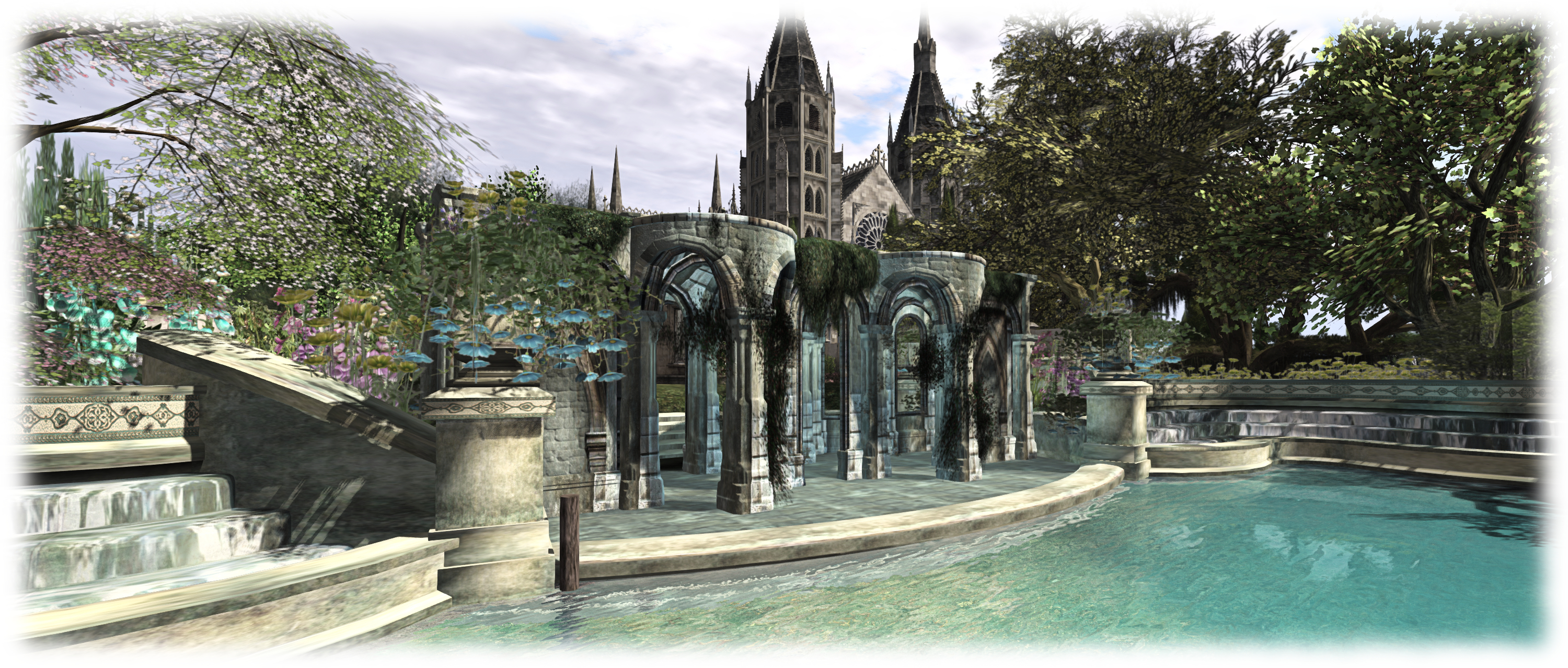
Love, Henry, deserves to be explored carefully. Not only because of the wealth of information it contains and opportunities to provide input and feedback of your own (which aren’t restricted just to the Library, which really does offer a lot), but because it is beautifully put together. For example, the garden contains a loggia which appears to have been inspired by the one at Hever Castle, Anne Boleyn’s home. Further, the cathedral the garden surround may be an imposing centrepiece, but it is also very symbolic, representing marriage and death, both of which have obvious significance where Henry and Anne are concerned, while simultaneously also reminding us of the religious strife their relationship caused. Nor are these the only touches to be found as one explores; hints of Anne’s fate might be seen, together with reminders of the brutality of the age.

Love, Henry
Love, Henry, LEA 8

The slant to the installation might be a little romanticised – the relationship between Henry and Anne was born as much out of ambition on both sides as out of love; but that doesn’t matter. This is supposed to be a romantic “what if”, one which encourages the visitor to explore one of England’s important periods of history, both through the information presented here and for themselves.

As mentioned above, do keep in mind when exploring that there are secrets to be found – including the gateway to the “final chapter” of Henry and Anne’s story. However, as bloggers have been asked not to reveal too much about these,  I’ll say no more here. Also, do make sure you have the audio stream enabled with exploring. Excellent and considered use is made of music by Canadian composer Trevor Morris, which adds further depth to Love, Henry.

Love, Henry
Love, Henry, LEA 8

Tahiti says that contributions from those willing to provide their thoughts and feedback will be incorporated into the installation, and she welcomes requests to bring in student or group tours to visit Love Henry.

Very definitely recommended.

SLurl Details

The mystery of the Egg in Second Life

The Egg
The Egg, LEA 19

Now open at LEA 19 as a part of the 9th Artist in Residence series is Livio Korobase’s The Egg. And a curious installation it is (slight pun intended).

The introductory notes provide a Theosophy Trust treatise on the role of the egg throughout human history. It’s a comprehensive piece, guiding the reader from the creation myth of the Cahuilla Indians by way of Scandinavia, Russia and China, through the Laws of Manu and asks us to consider the role of the egg in reproduction, the power of life, of creation, that it contains.  It’s also quite heady, and something that may well leave the reader just how it and the installation might relate to one another.

The Egg
The Egg, LEA 19

This presents a giant egg, supported atop a scaffold, and itself topped by a meditative frog. Below and around this lies a gently undulating landscape, semi-flooded and overlaid in places by mandalas. On this sits what I can only describe as a series of scenes, each one individual in style and presentation (and each uniquely identifiable as Livio’s work). Some of these offer elements those familiar with Livio’s past installations may recognise. Some of them are wonderfully interactive (touching and clicking is strongly encouraged, as is having local sounds enabled).

But what is their relationship with the introductory notes? Obviously, if one seeks meaning hard enough, it will be found; and in truth there are some subtle echoes between text and installation. The egg sits at the centre of everything, much as it is represented as being at the heart of all creation; and certainly, there is a lot of creation evident in the installation: scaffolds, ladders, wheelbarrows, and cement mixers. The egg is the source of life, and there are  references to life and love to be found. The egg is a cultural symbol, and there are cultural symbols in evidence here as well; some perhaps more obvious than others.

The Egg
The Egg, LEA 19

But all that said, I cannot help but feel that when all is said and done, Livio has approached this installation with a very large twinkle in his eye. While the Theosophy treatise on the egg may well stir the grey matter, he’s actually telling us not to look too deeply for a connection, but simply accept – and enjoy.

However you opt to interpret the installation, do be sure to visit – and make sure you spend time poking and touching and listening and enjoying. Above all, do make sure you pay a visit to the area under the egg, and follow the arrow (that is, click on it). It will lead you to the heart of the egg itself.

 SLurl Details

Cica’s Dreamers in Second Life

Dreamers, LEA 24
Dreamers, LEA 24

The ninth round of the Linden Endowments for the Arts (LEA) Artist In Residence (AIR) programme kicked-off on July 1st, with the awarding of the LEA’s 20 AIR regions to their respective grantees. Under the terms of the AIR grants, those awarded a region have up to 4 months in which to prepare it for their installation, and have it formally open to the public for at least two months – although the set-up period is flexible, and can be a lot shorter if the artist(s) wish(es).

Cica Ghost opted to really maximise the time people could enjoy her work. While she only received the region on July 1st, it officially opened to the public on July 6th (an event I had to miss due to being away between the 5th and 7th inclusive).

Dreamers, LEA 24
Dreamers, LEA 24

Dreamers is a marvellous build which extends from the ground up into the sky, where eight scenes await visitors. The ground level presents a fantasy environment, perhaps lifted from a dream, full of bright colours and fantastical creatures and wheeled vehicles on a huge scale, all waiting to be explored, and bearing Cica’s colourful paintings, making careful examination of all of them a must.

Within the midst of this marvellous landscape sit sixteen long-necked heads, faces lifted towards the sky, eyes closed – the Dreamers of the installation’s title. Touch eight of them, and they will each allow you to share in their dream, transporting you to one of the eight skyborne scenes Cica has created overhead.

Dreamers, LEA 24
Dreamers, LEA 24

These will each be immediately recognisable to anyone familiar with Cica’s work, presenting as they do little extracts from past installations she’s created. So it is that through the Dreamers we once more get to see the likes of Little Town, Ghostville, Ruins, and Living in a Bowl, to name but four of the scenes on offer.

Small in size, these little scenes are enough to either pique curiosity (for the first-time visitor) or awaken memory (for those who visited the originals), setting one on a personal daydream. I could write a whole lot more about Dreamers, but really the best way to experience it is to go see it for yourself and have a little fun; it is a bright, uplifting place, full of images and daydreams, and there are more than a few poses and things to be found throughout which let you become a part of the settings, at least for a while.

Dreamers, LEA 24
Dreamers, LEA 24

Given only eight of the 16 Dreamers currently allow people to share in their dreams, I wonder if Cica might be adding to the installation as time progresses through to December, and the end of this round of AIR grants, allowing the remaining eight heads to share their slumbering imaginings with us. Or perhaps something else might appear in LEA 24 in due course.

Either way, I took the liberty of making a short film of what is there to enjoy now, if only to give a further flavour and whet appetites. So – enjoy!

SLurl Details