The Blue Pond of Second Life

Aoi-ike, November 2022 – click any image for full size

Jade Koltai has opened a new region design in the tradition of the work she started with the late (and still missed) Serene Footman. It offers a personal interpretation of Japan’s famous Blue Pond  (青い池, Aoi-ike), located in the country’s second-largest island, Hokkaidō.

Occupying a homestead region, Aoi-ike presents the pond in the depths of winter, offering visitors a setting blanketed in snow to explore and plenty of opportunities for suitable time-of-year photographs. Pride of place is given to the pond itself, the waters the rich azure blue of the original, albeit caught beneath a cloud-laden sky.

Aoi-ike, November 2022 – click any image for full size

The physical world Blue Pond is entirely artificial, the result of work intended to protect the town of Biei following the December 1988 through March 1989 eruptions of Mount Tokachi. These caused a series of pyrrolastic events and associated mudflows which threatened the town, so following them, a series of dams were built to prevent future eruption-generated mudflows which might use the Biei River as a root through the locale.

In doing so, the dam trapped the water of the Shirahage waterfall, a series of falls passing over a cliff rich in aluminium to reach the river. This aluminium, coupled with volcanic sulphates in the water which whiten the rocks on the bed of the pond and so heightening their light-reflecting nature, gives the water of the pond its distinctive blue sky colour.

Aoi-ike, November 2022 – click any image for full size

This unlikely colour is not the only interesting feature of the lake; the plants present also participate in the surreal atmosphere of the place. While the pond is surrounded by living trees, in the middle there are skeletons of larch and birch that once grew on the ground before the formation of the pond. These trees are also present in Jade’s build, although the upriver falls are understandably absent.

Blended with a region surround that helps represent the surrounding mountains (the region around Biei is famous for a mountainous hiking trail that loops between Mount Tokachi and the (slightly) smaller Mount Biei as it sits between the Biei and Shintoku townships). While this loop is too big to recreate in a region, it is possible to circumnavigate the pond on foot along both trails and open ground – although if you have a wearable horse, the setting is also ideal for horse riding.

Aoi-ike, November 2022 – click any image for full size

The lightly wooden and most flat land is heavy in snow and light on structures – the latter comprising a Finnish-style suoja, a metal watchtower, a covered bridge, a little Japanese hut, and a flat-roofed cabin. Cosily furnished, the cabin offers the best respite from the snow and cold, the décor continuing the Japanese theme very nicely. The souja offers a small retreat with a comfy bed and the bridge includes a trio of theatre-like chairs warmed by a heater and where those using them can have a hot cup of tea.

Perhaps the most unusual feature in the setting is located on its northern edge, a short walk from the landing point. It takes the form of a large stone sculpture of a cat seated on a stone plinth and backed by a lower stone wall. It appears a little shrine-like in nature (if a big shrine!), and adds an interesting twist of character to the setting.

Aoi-ike, November 2022 – click any image for full size

Wildlife can be found scattered across the region – deer, owls, bear, cranes, weasels, and black swans – although some might need a little seeking out in order to spot. Also waiting to be found are further places to sit outside of those already mentioned: benches, deck chairs, and so on.

Easy to explore, reflective of the location that inspired it without being heavily tied it it, Aoi-ike presents an engaging winter setting for people to enjoy, entirely free from the more usual “seasonal” trappings generally found in winter-themed reasons at this time of year.

Aoi-ike, November 2022 – click any image for full size

SLurl Details

  • Aoi-ike (Overland Hills, rated Moderate)

Hotel Del Salto in Second Life

Hotel Del Salto, May 2020 – click any image for full size

Recently opened in Second Life is a new Homestead region designed by Jade Koltai. An experienced region designer in her own right, Jade also used to work with Serene Footman in producing some of the most extraordinary builds in Second Life based on physical world locations. With this latest build, she further demonstrates her skill in bringing places from around the globe to life in the virtual.

Hotel De Salto is a region based on the hotel located in San Antonio del Tequendama, Colombia some 30 km south-west of Bogotá. It sits alongside the Salto del Tequendama (Tequendama Falls),a 157m high waterfall that drops into a deep gorge.

Hotel Del Salto, May 2020

According to a legend of the Muisca people of the Andean plateau, the waterfall was created by Bochica, who used his staff to break the rock and release the water that covered the Bogotá Savannah. In their language, Chibcha, the name means “he who precipitated downward”, and stems from a further legend in which the Muisca were said to escape subjugation by the Spanish conquistadors by jumping off the falls to become eagles, flying to their freedom.

The hotel actually started life in 1923 as a mansion built by architect Carlos Arturo Tapias along French lines and intended to celebrate the wealth and elegance of the country’s elite. It continued in the role for several years, undergoing expansion which also saw it converted into its luxury hotel, which opened to customers in 1928.

Hotel Del Salto, May 2020

The hotel operated for 50 years, drawing tourists from across the world to it. Some were attracted by its unique views, others by a darker desire. Drawn by the tale of the Muisca legend of people leaping from the falls to become eagles, the broken-hearted came to the hotel to leap to their deaths from the cliffs beside it.

However, by the 1970s, the hotel was facing issues. Bogotá had grown exponentially in the intervening years, and without all the necessary supporting infrastructure; the result was much of the city’s raw sewage entered local river to make its way down to the Tequendama Falls and the gorge below the hotel, contaminating it. At the same it, an upstream hydroelectric dam was built on the main Bogotá River, which often starved the impressive falls of water, reducing them to trickling dribbles dropping into the gorge from above.

Hotel Del Salto, May 2020

These factors saw trade at the hotel decline from the late 1970s through until its closure in the early 1990s. For a brief time during the hotel’s decline there was talk of renovating it, but for come 15 or so years it was left to moulder in the high Andean forests and weather – a forbidden place, rich in legend.

Then in 2011 the National University of Colombia’s Institute of Natural Sciences joined with the Ecological Farm Foundation of Porvenir to launch extensive renovations of the hotel, turning it into a cultural museum. The first exhibition at the new museum, Caverns, ecosystems of the subterranean world, opened in 2013.

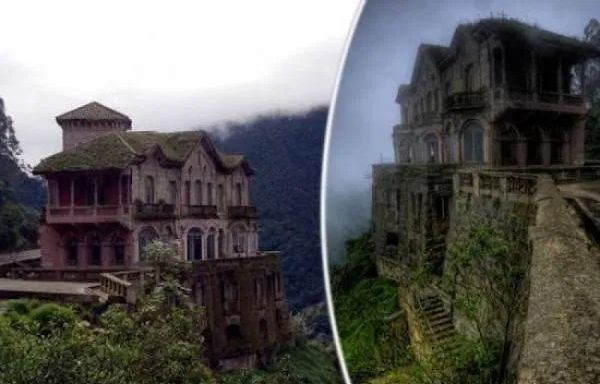
Two views of the Hotel Del Salto as it was while empty. Via moco-choco.com

For her build, Jade offers both a homage to, and interpretation of, the hotel during those years when it lay abandoned. As with the original, it sits atop a deep gorge, facing the Tequendama Falls on the region’s north side.

The shelf on which it sits is perhaps broader that that occupied by the actual Hotel Del Salto, which means some of the on-the-edge grandeur of the original is lost, but there is no mistaking the architectural style that has been captured by this interpretation.

Hotel Del Salto, May 2020

The building is overgrown, vines hanging within mouldy rooms like drapes, furnishings braking and rotting as a result of the humidity no doubt brought about by the heat and damp, the terrace around it broken and given over to weeds and 50’s style cars. Like the original, stairs descend the cliffs below the hotel, although these don’t pass any basement levels. Instead they provide access to a bridge spanning the gorge, and further stairs down to the floor of the gorge, where ancient ruins lay, offering the suggestion of a place perhaps once belonging to the Muisca.

Throughout the build can be found numerous platforms and seating points intended to provide places from which the hotel and the gorge with its falls – presented in full spate – can be appreciated. Adding to the setting are wheeling birds, a rich sense of forest, parrots and toucans,  while the sound scape gives incredible depth to the region’s visual splendour.

Hotel Del Salto, May 2020

Completed by a region surround that strongly evokes the Andean uplands of Colombia to provide the perfect backdrop, this is a build fully deserving of a visit and in spending time exploring.

SLurl Details

A trip to Huntington Beach in Second Life

Huntington Beach, October 2019 – click any image for full size

Note: The Huntington Beach build has closed, and the region reposed.

Huntington Beach is a seaside city in Orange County in Southern California, located 35 miles south-east of down town Los Angeles.

– From About Land, Huntington Beach

So reads the introduction to Jade Koltai’s new public homestead region of Huntington Beach that opened to the public earlier in October. Jade is, as many will be aware, Serene Footman’s long-time collaborator in s range of region designs, many of which I’ve written about in these pages down through the years. So on hearing about this build (via my ever-vigilant region spotter, Shawn Shakespeare 🙂 ), I was keen for us to go take a look – more so, perhaps, as (a good while ago now) I travelled through the real Huntington Beach while on a trip following the Pacific Coast Highway.

Huntington Beach, October 2019

Today, the town is best known for its almost 16 km (10 mi) long beach, the tides of which have led to Huntington Beach to becoming known as Surf City, and being granted trademarks as “Surf City USA” (both of which were the cause of, and factors within, a long-running dispute with Santa Cruz, California that was finally settled in 2008). However, the city has a long and colourful history, part of which is reflected in Jade’s design.

Huntington Beach perhaps came to prominence in the early part of the 20th century (although settlements in the area obviously go back much further than that). At that time, people were encouraged to settle in the area by an encyclopaedia company offering free parcels of land in the area to those purchasing the entire set of their books for US $126 (roughly US $3,200 in today’s terms). Those who did so found their parcels ballooned in value when oil reserves were found beneath them, leading to something of a oil rush. The first well to extract this oil was established in May 1920 – and within 18 months, the number of well heads had grown to 59, giving the coastline of Huntington Beach its distinctive “forest” of giant oil derricks dominating the skyline – and it is this aspect of the city that is reflected most clearly in Jade’s design.

Huntington Beach, October 2019

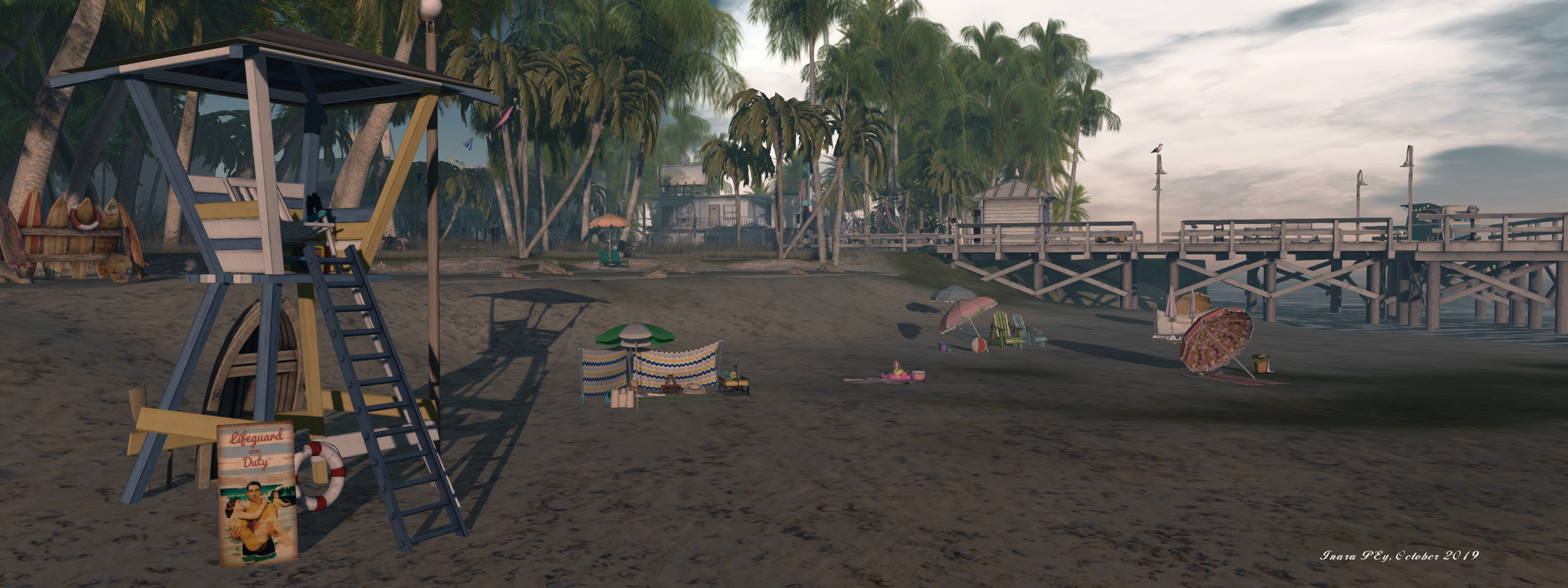
For her inspiration, Jade uses a series of photos of the Huntington Beach and the neighbouring coastline as it appeared during the heydays of oil production, headlined by one taken from Huntington Beach Pier (one of the city’s lasting landmarks) in the 1960s. These sit to the south east of the region, the beach running north-west, complete with a nod towards the pier (first established in 1904). The latter is understandably not as grandiose as the original, because that would take a couple of additional regions to achieve, given it is 560 metres in length, but it presents a starting point for exploration, home as it is to the region’s landing point.

The derricks are divided by a central road, reflecting a further photo in the series, albeit one of derricks divided by a road in Long Beach, a little further north around the coast. However, it is largely with the initial 1960’s image to which Jade sticks: at the northern end of the road is a smattering of buildings suggesting the edge of a town, all of which – along with the cars scattered among them  – have a ’60s vibe to them.

Huntington Beach, October 2019

The beach has a similar feel to it as well, the sand looking a tad tired and the advertising in that 50’s-60’s style, although unlike its namesake, this beach benefits from palm trees hiding the marching lines of oil towers from those deciding to partake a walk along the sand or out onto the pier.

Oil production does continue at Huntington Beach today, although the massive derricks have long since been removed to leave the city looking a lot more naturally suburban, the ocean front and beach protected from over-development. However, production is in decline; the US Geological Survey estimates no more than perhaps 866 million barrels of oil remain, although best estimates put the amount that can be reasonably extracted at some 370 million barrels. This means that the remaining oil extraction work is liable to come to an end in the near future, leaving Huntington Beach city fairly exclusively reliant on tourist and vacation trade for revenue generation – hence the city filing for, and being granted, multiple trademarks related to it being “Surf City USA”.

Huntington Beach, October 2019

While fossil fuel extraction and use are both messy and driving a fair amount of pollution, Jade’s Huntington Beach nevertheless offers a reminder of a boom-time past in America’s history, one that burst into life on the west coast in the early decades of the 20th century and echoed through to the end of the millennium. Needless to say, it offers numerous opportunities for photography, although I personally found the default Windlight perhaps a little too oppressive – not that others cannot be used if you feel the same way. Photos that are taken may be submitted to the region’s Flickr group, and tips towards the region’s upkeep are welcomed at the pier.

SLurl Details

North Brother Island, “the last unknown place”, in Second Life

North Brother Island; Inara Pey, June 2019, on FlickrNorth Brother Island, June 2019 – click and image for full size

Update: in keeping with Serene and Jade’s approach to offering their region builds for approximately a month before moving to a new location and project, North Brother Island has closed, and SLurls therefore removed from this article.

For their July 2019 region design, Serene Footman and Jade Koltai bring us their vision for what photographer Christopher Payne called The Last Unknown Place in New York City – North Brother Island; and like all of their builds, it is a true wonder to behold and explore.

North Brother Island is one of two small islands located on New York’s East River, its slightly smaller companion now being known as South Brother Island. Both were claimed in 1614 by the Dutch West India Company and originally called De Gesellen (“the companions”), which eventually became transposed to “the Brothers”. Both island have a fascinating history, with that of North Brother perhaps being the more complex – and the more tragic.

North Brother Island; Inara Pey, June 2019, on FlickrNorth Brother Island, June 2019

In 1904, it was the final resting place of the General Slocum, a massive side-wheel paddle steamer built in the 1890s, she caught fire whilst carrying 1,342 passengers and through a combination of neglect by the owners, foolhardiness by the Captain (he failed to use opportunities to either make a safe landing or run the ship aground before the fire overwhelmed the vessel), 1,021 of those souls perished either aboard the ship or as a result of drowning in the East River – many of their bodies washing up on North Brother Island in addition to as the vessel running aground there.

In addition, Serene goes on to note the island was the home to:

Riverside Hospital, which moved here from Roosevelt Island in 1885 … Following World War II North Brother Island was inhabited by war veterans during the nationwide housing shortage, before being abandoned again in the early 1950s. It was then was used as the site of a treatment centre for adolescent drug addicts, but the centre closed amidst controversy – it was said that heroin addicts were held against their will and locked in rooms until ‘clean’ – in the 1960s.

– Serene Footman, writing about North Brother Island

North Brother Island; Inara Pey, June 2019, on FlickrNorth Brother Island, June 2019

Riverside Hospital, originally founded in the 1850s, was designed to isolate and treat victims of smallpox, with its mission expanding to cover other diseases requiring quarantine. In this role – as Serene also notes – it took in those stricken with typhoid, including “Typhoid Mary”, Mary Mallon. An Irish-American cook, she was the first person in the United States identified as an asymptomatic carrier of the pathogen associated with typhoid fever. It is believed she infected between 47 and 51 people during her career as a cook, and was twice forcibly isolated by public health authorities, the second time finally passing away in Riverside Hospital in 1938, after a total of nearly three decades in isolation.

In 1943, a large tuberculosis pavilion was constructed on the island but was never used for that purpose, already being obsolete by the time it opened. Instead, it was used as a dormitory by a number of New York City’s colleges, students transported to and from the island via the East 134th Street Ferry Terminal.

North Brother Island; Inara Pey, June 2019, on FlickrNorth Brother Island, June 2019

In the late 1950s  / early 1960s, the same ferries were used to transport adolescents to the island to be “treated” for drug abuse. The idea had been to provide care for up to 100 males and 50 females away from jails where drugs could still be obtained, with stays at the pavilion being for up to six months. But the hospital gained a reputation for keeping adolescent addicts against their will – it merely required their parents to place them there, with or without the agreement of the courts. Once there, the young people were frequently locked away and left to go cold turkey as a means to break their addiction.

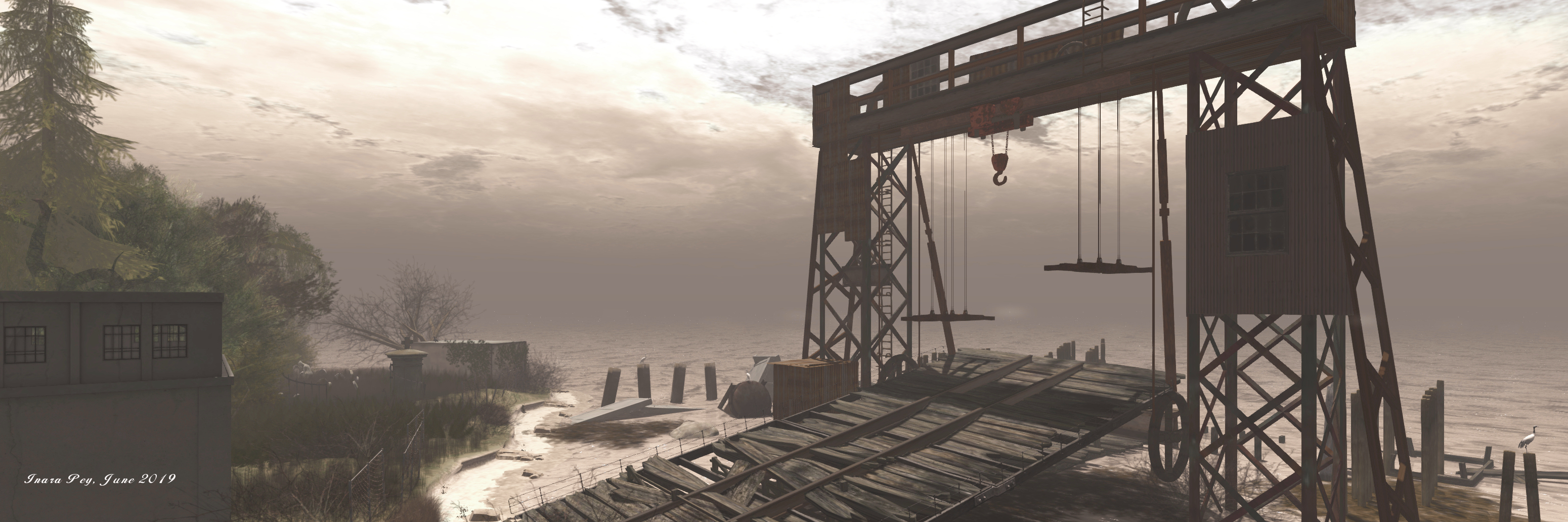
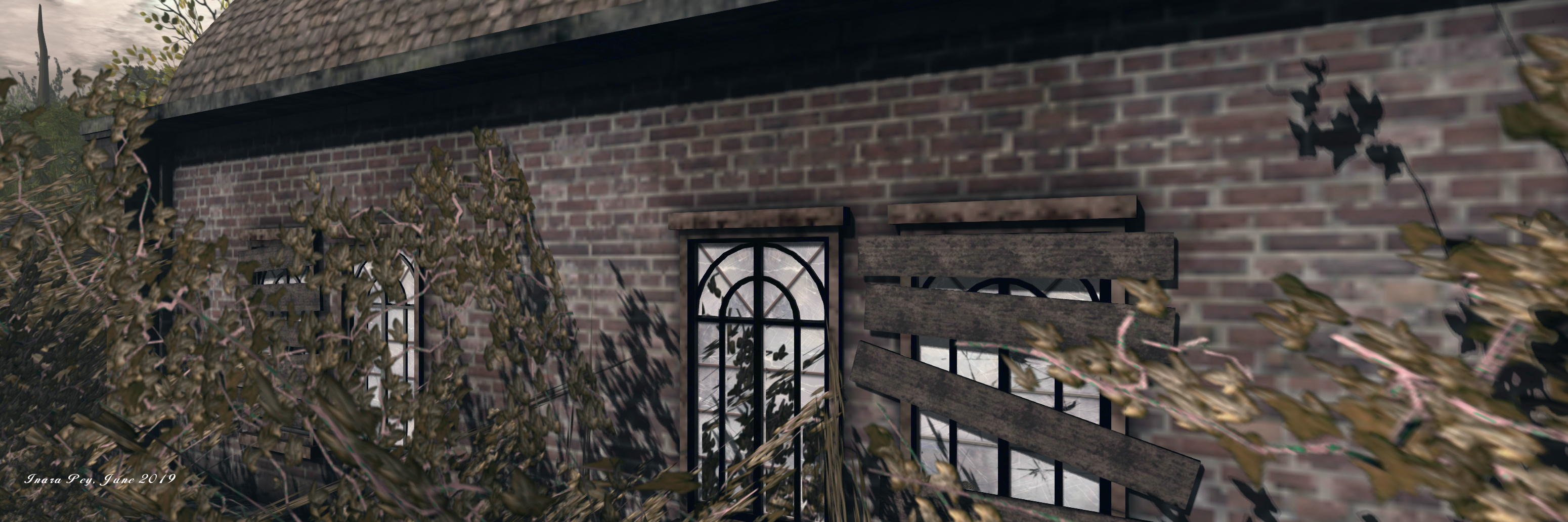
The hospital finally closed in the 1960s, and North Brother Island abandoned, its many building and facilities – including the ferry wharves and giant gantry crane, many of the hospital buildings and facilities, left to rot. However, many of them have now been captured in this interpretation of the island by Serene and Jade.

For our reconstruction of North Brother Island, we have relied on maps which contain details of where specific buildings – the hospital itself, staff quarters, the physician’s house, the morgue, tennis courts, and so on – were located. (For reference, we have labelled and dated the island’s buildings in-world.)

– Serene Footman, writing about North Brother Island

North Brother Island; Inara Pey, June 2019, on FlickrNorth Brother Island, June 2019

In addition they have called upon the resources of Christopher Payne’s catalogue of photos of the island: North Brother Island The Last Unknown Place in New York City. The result of five years of being allowed to visit the island  – today both North and South Brother islands are designated wildlife sanctuaries, and so protected (North Island is additionally regarded as being too dangerous for the public given the state of its buildings) – Payne carefully constructed a visual history of the island. This, together with their own extensive research, have allowed Jade and Serene have produced a region that powerfully captures North Island as it stands today, its past history, and the pathos and pain of that history.

The latter is particularly well captured in the small details to be found throughout the region. Take, for example, the bed frame converted to a seat and that sits on a little dock. A suitcase  sits behind it, while a short distance away, a little motor boat sits on the water; the entire scene brings to mind the longing of the young people held on the island to return home.

North Brother Island; Inara Pey, June 2019, on FlickrNorth Brother Island, June 2019

To say North Brother Island is visually stunning is to do it a disservice. As with all of Serene and Jade’s builds, it must be seen to be appreciated and understood – and there are plenty of places within it that allow visitors to contemplate on the history of the island – or whatever else might be on their minds.

Related Link

The stunning beauty of Ukivok in Second Life

Ukivok; Inara Pey, March 2019, on FlickrUkivok – click any image for full size

Update: in keeping with Serene and Jade’s approach to keeping their region designs open for approximately a month, Ukivok has closed, and SLurls have therefore been removed from this article, as the host region is under private holding. 

As I’ve frequently noted, Serene Footman and Jade Koltai are the creators of what are arguably the most evocative region designs made for Second Life.Each of their creations tends to last for a month, and when available, should not be missed, given they are so beautifully presented and perfectly reflect the physical world locations that form their inspiration.

Each and every design – the majority I have written about in this blog – are exquisite, but I confess there is something about their latest design – Ukivok – that is utterly breathtaking; quite the most visually impressive presentation of a rugged, isolated island, one that offers an informative look at a part of the world perhaps unknown to most.

Ukivok; Inara Pey, March 2019, on FlickrUkivok

Our new sim is a recreation of the abandoned Alaskan village of Ukivok … Once home to around 200 Iñupiat, the village is located King Island, which is situated in the Bering Sea, around 64km off the Alaskan coast and 145km from Nome.

– Serene Footman, describing Ukivok

The Iñupiat (or Inupiaq) are native Alaskan people whose traditional territory extends from Norton Sound on the Bering Sea to the Canada–United States border. Those who once lived on Ling Island called themselves Aseuluk, “people of the sea” or Ukivokmiut – a name combining the name of the village and “miut”, meaning “people” (and so might translate as “people of Ukivok”).

Ukivok; Inara Pey, March 2019, on FlickrUkivok

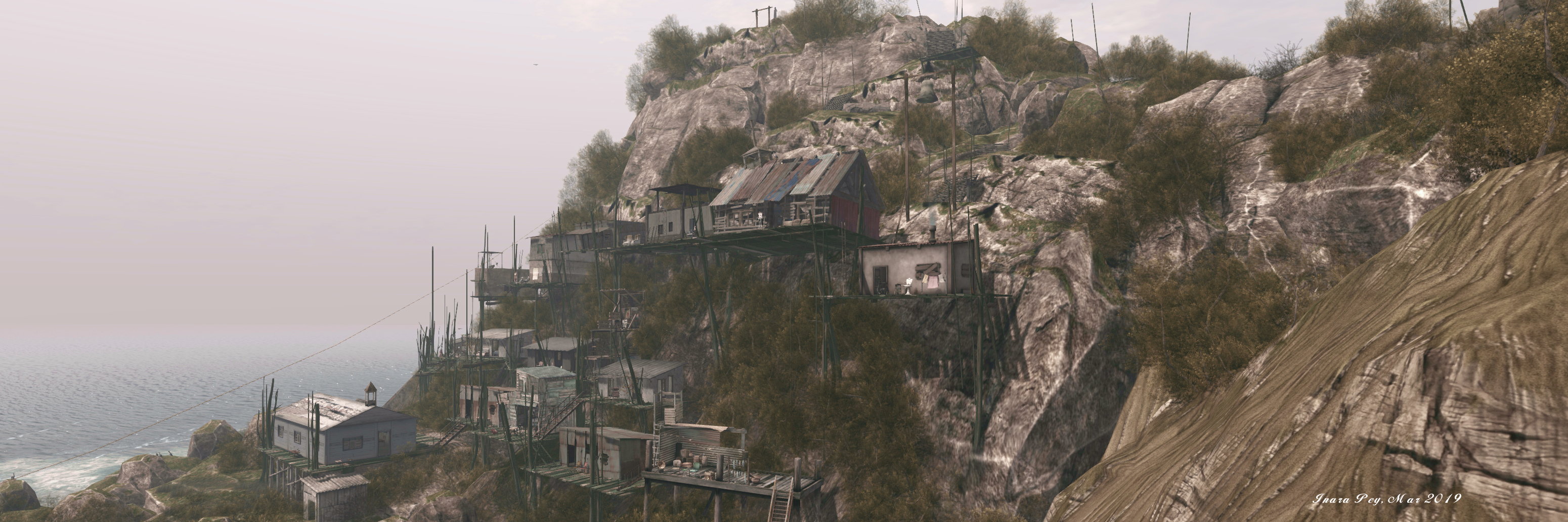
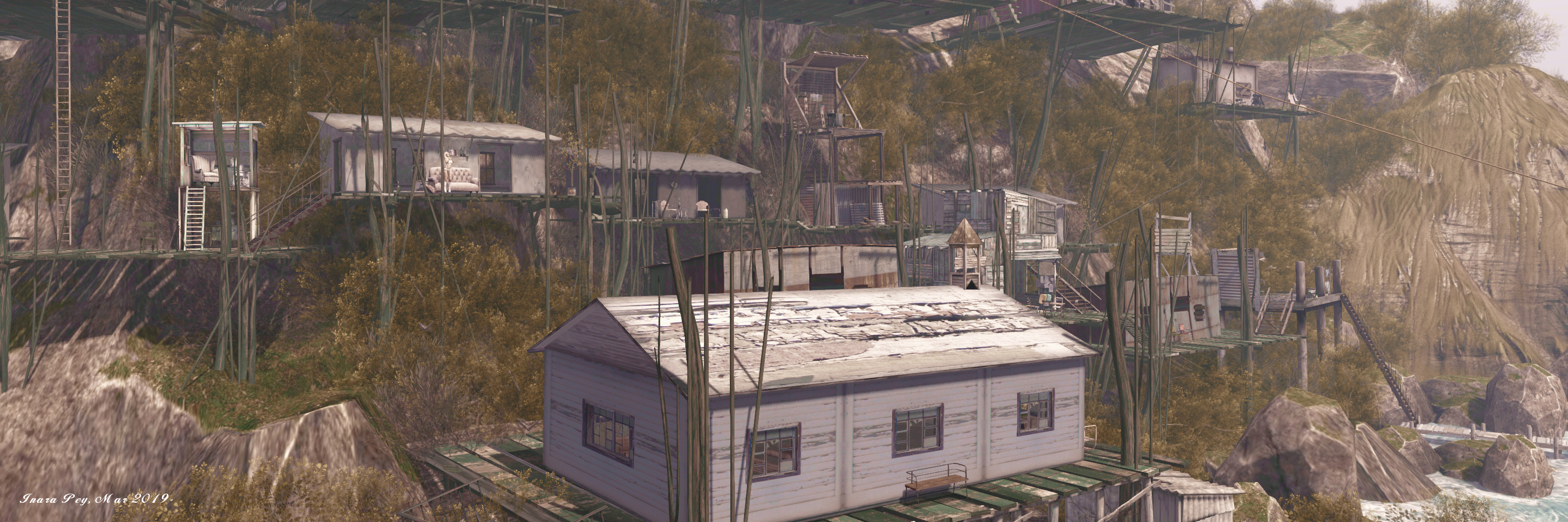
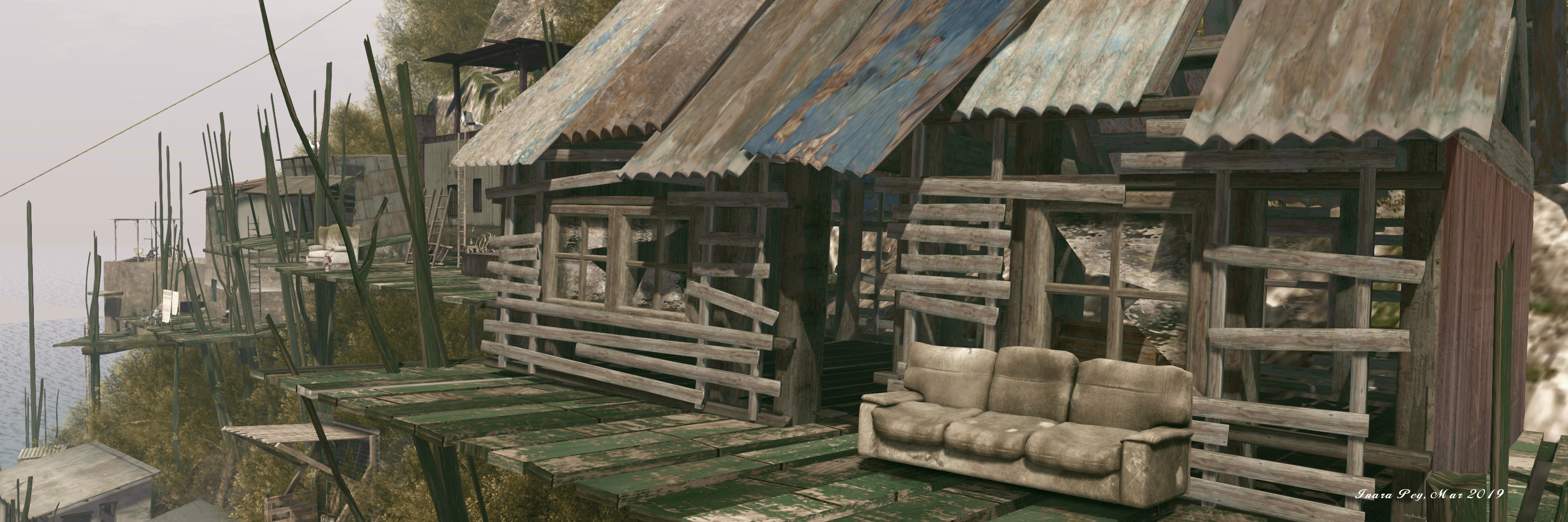
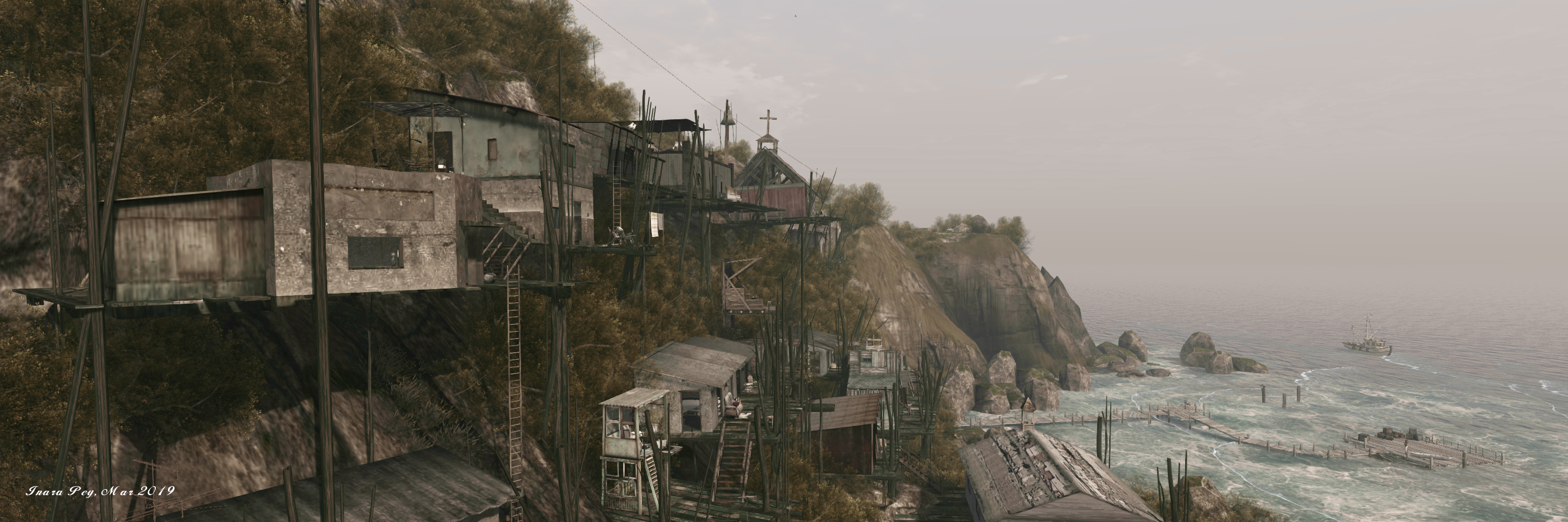
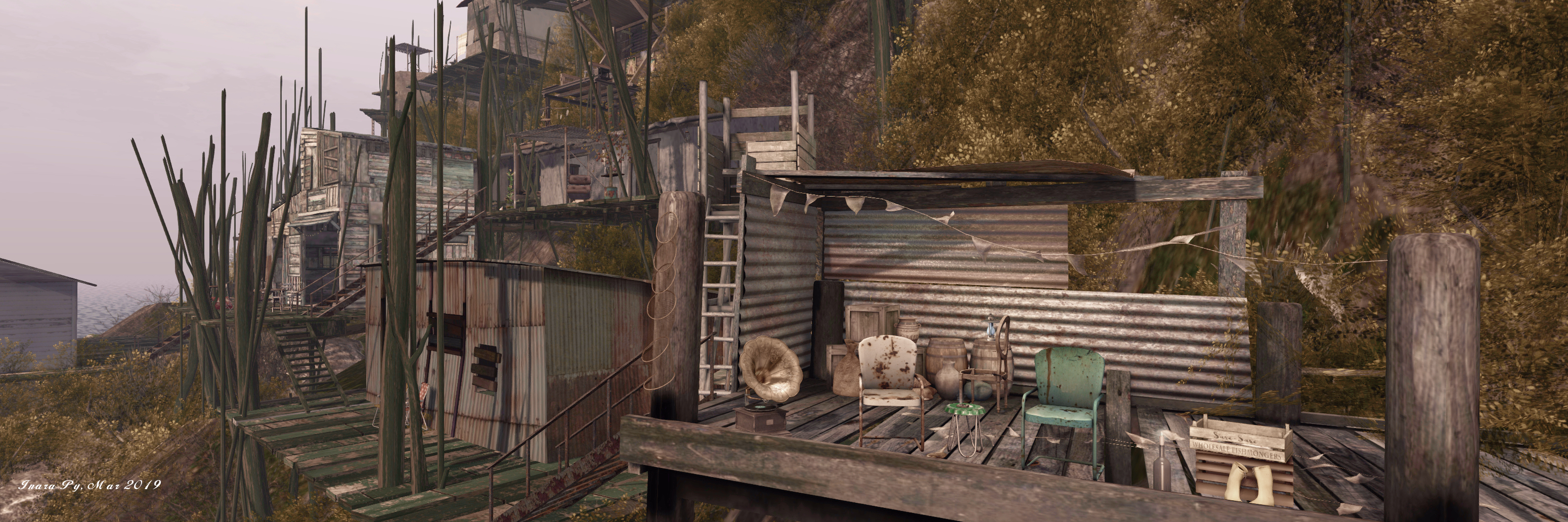
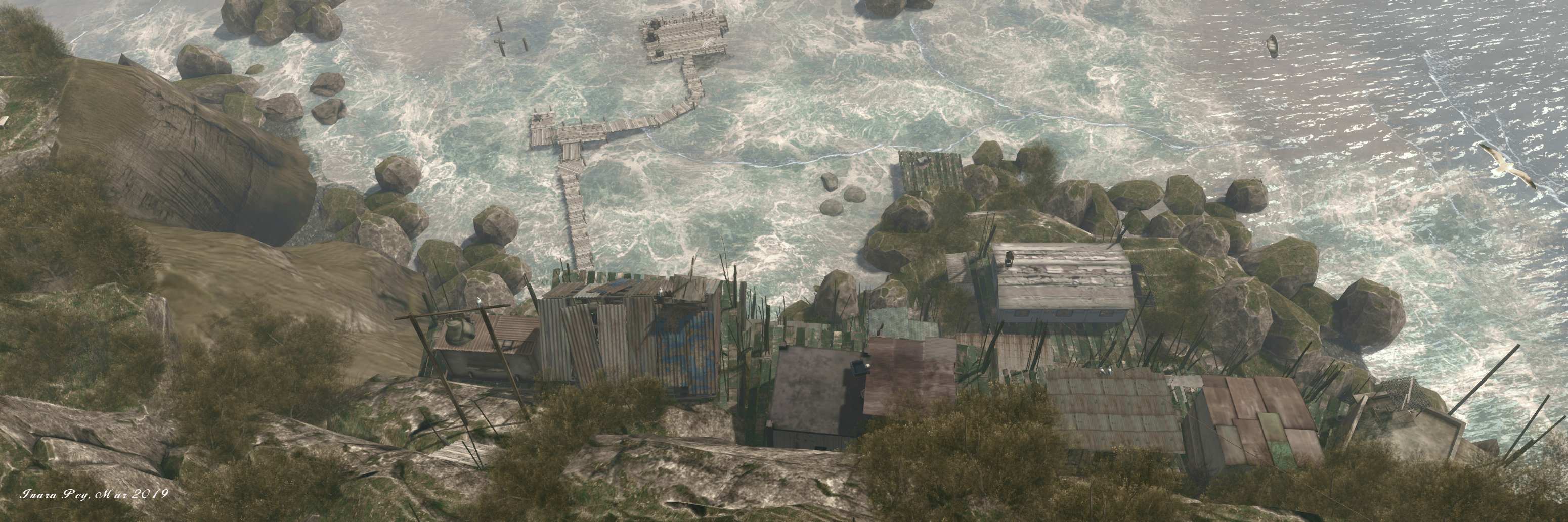
The village itself seems an impossible place; built against a rocky slope of the island’s flank as it rises at a 45-degree angle from the sea. Houses and community buildings sit upon wooden platforms, themselves standing on stilts, with the platforms rising in uneven tiers, connected by rickety looking wooden walkways and steps. Nestled between the frigid sea below and the desolate upper slopes of the island, the most recognisable building in the village is perhaps the 2-storey faded white block of the former Bureau of Indian Affairs school, the closure of which in the latter part of the 20th century marked the beginning of the end of village life on the island.

For their build, Jade and Footman could not recreate all of King Island, which is 1.6 km wide (and, as an aside, was named thus by Captain James Cook in 1778, in recognition of Lieutenant James King, a member of his crew). Instead, they have focused on the bay the village sits above, and the village itself.

Ukivok; Inara Pey, March 2019, on FlickrUkivok

And the reproduction perfectly captures the windswept, elemental look and feel of the now-deserted Ukivok perfectly, including a homage to the school mentioned above. The landing point sits off-shore platform that provides a glorious first look at the island as it rises from the waves, reaching an impressive, and entirely natural 108 metres above the surrounding sea floor.

Even without the village, the island makes for an incredible sight, and it’s clear considerable thought an effort has gone into designing and building it; if you can, make sure you cam all the way around it to fully appreciate the beauty of the design. A board walk links the landing point with the shoreline, where a steep set of steps offer the way up to the first platform – and the start of an adventure up through the village, using steps and ladders (click the latter to ascend / descend them), passing through areas that offer echoes of the lives once lived here, and opportunities to sit and appreciate the island as a whole.

Ukivok; Inara Pey, March 2019, on FlickrUkivok

The Ukivokmiut were subsistence hunters and whalers who had lived on King Island for centuries. Their activities on and around the island included hunting for seals and walruses, crab fishing, and gathering bird eggs and other foods.

– Serene Footman, drawing on notes about the Aseuluk of King Island

Above the upper levels of the village are more steps, linking shelves of rock one to the next. Some of these steps might be easy to find, others hidden by the scrub hedges that cling to cliff and slope. Follow one group, and you may find your way to the north-eastern headland, which again offers a stunning view back across the rest of the island to the village. This route will also take you past an homage to an entirely natural tor of rocks that crown the physical world King Island.

Ukivok; Inara Pey, March 2019, on FlickrUkivok

The crown of this Jade and Serene’s version is a little different, and lies to the south-east. It is marked by a single statue looking down over the village, and the view gives a further understanding of Ukivok’s seemingly precarious position on the island. Close to the statue is a zip line which descends steeply (and quite rapidly) down to an outcrop of rock and shingle close to the landing point. Should you take the ride, you’ll have to fly back to the landing point or to the island; or you can rest a while on the chairs set out on the rock.

Set under an ideal windlight, surrounded by ocean foam and perfectly placed submerged terrain that is naturally suggestive of rocky shallows close to the island, Ukivok is completed by another superb sound scape. And once having seen it, I think you might find it hard to deny it is one of the natural wonders of Second Life – so many sure you visit it while it is here.

Ukivok; Inara Pey, March 2019, on FlickrUkivok

The lost islands of Chesapeake Bay in Second Life

Chesapeake Bay; Inara Pey, February 2019, on FlickrChesapeake Bay – click any image for full size

Update: in keeping with Serene and Jade’s approach to having their region designs open for approximately a month, Chesapeake Bay has now closed and the host region is under private holding. SLurls have therefore been removed from this article.

Serene Footman and Jade Koltai have opened their February region design – called Chesapeake Bay – and, given it is by two people who always produce the must stunning vistas in Second Life, it is utterly captivating.

Our latest sim is located in the Chesapeake Bay, an estuary in the US states of Maryland and Virginia.  The Chesapeake Islands are famous for the simple reason that they disappeared. Built on clay and silt, over the course of a century the islands were gradually submerged as a result of erosion exacerbated by sea level rise. They were the islands that sank.

– Serene Footman, introducing Chesapeake Bay

Chesapeake Bay; Inara Pey, February 2019, on FlickrChesapeake Bay – click any image for full size

For the build, Jade and Serene have focused on two islands in particular:  Holland Island and Sharps Island, with a particular focus on the former while blending features of both into a unique setting and memorial to both with all of the attention to detail and care in design that make their work among the best to be found in Second Life. As with all of their regions, this design carries within it a story – or rather stories. The first – and primary – story is that of the attempts of a husband and wife team to save Holland Island and the last remaining house standing upon it, all that remained of a place once home to over 400 watermen and farmers, and their families.

Stephen White, a waterman and Methodist Minister, first visited Holland Island when he was a boy. Years later, he was visiting one of the island’s three cemeteries when he saw an inscription on one of them.
The discovery inspired Stephen White to embark on a campaign to stop Holland Island from disappearing into the sea. He purchased the island for $70,000, and set up the Holland Island Preservation Foundation. For fifteen years, Stephen and his wife waged their own battle against the sea. Spending $150,000, they built wooden breakwaters, laid sandbags and carried 23 tons of rocks to the island and dropped them at the shoreline.

– Serene Footman, describing Stephen White’s attempt to save Holland Island

Chesapeake Bay; Inara Pey, February 2019, on FlickrChesapeake Bay – click any image for full size

The waters of the Chesapeake were not to be held back, however, and in 2010 that last house, originally built in 1888, collapsed, forcing the Whites to admit defeat and sell the island. The remnants of  that last house was completely lost to the waters of the bay in 2012.

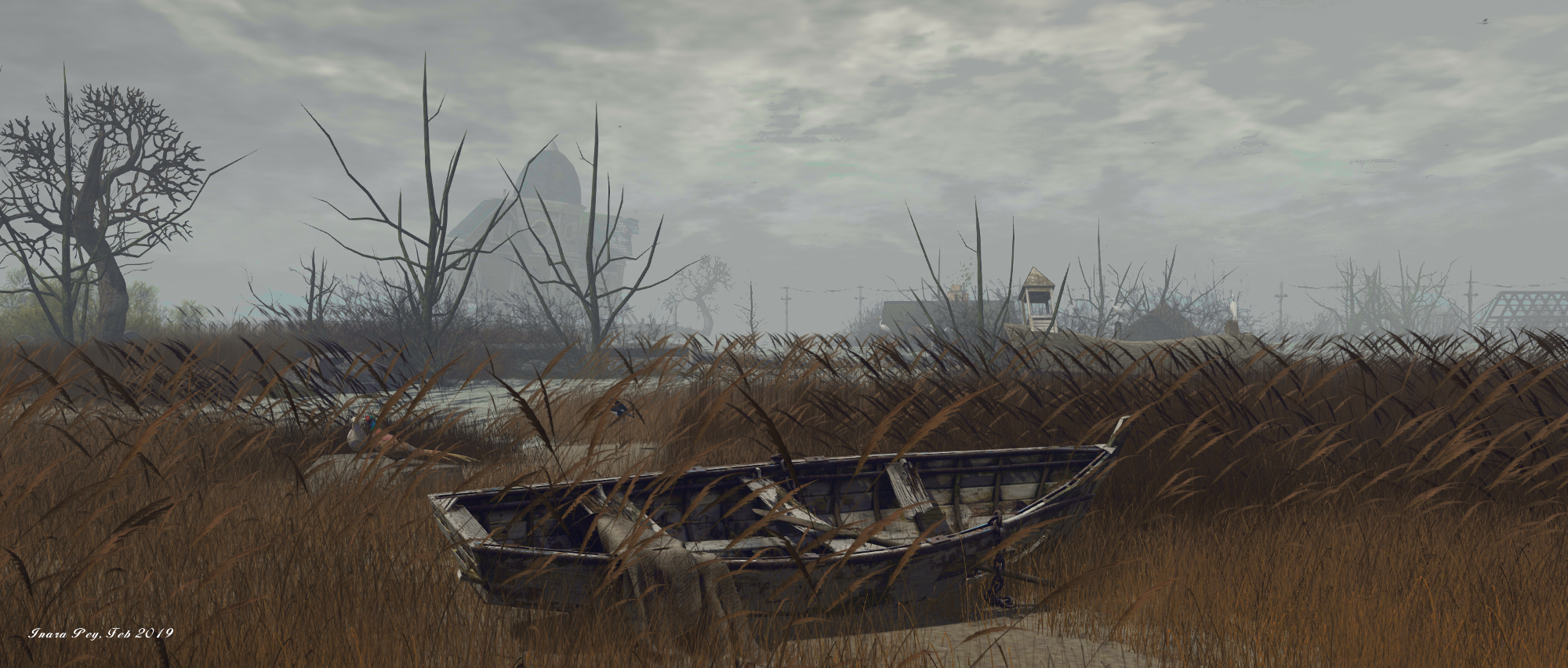
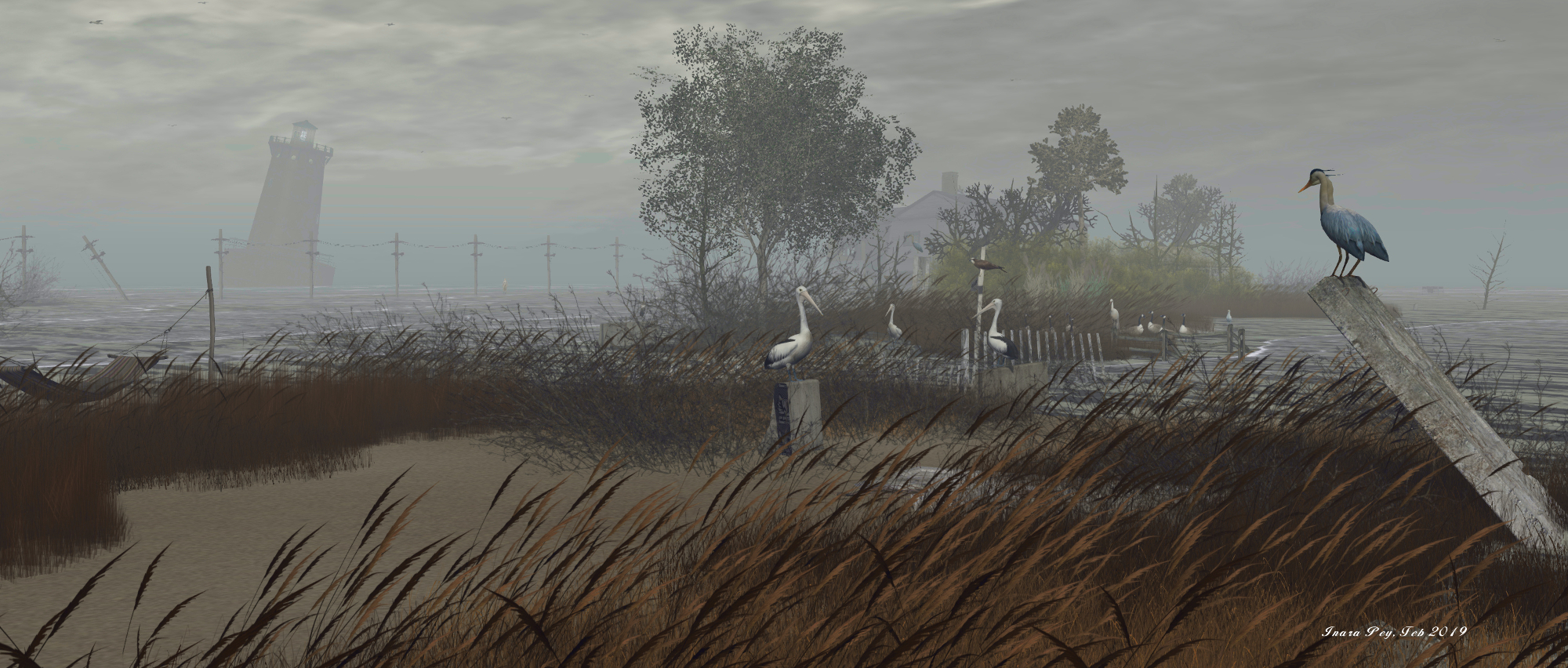
Hoewever, for this incarnation and in recognition of the Whites’ attempts, the house remains, much as it appeared in 2010 after the initial collapse. It sits on the west side of the island, the carcasses of the vehicles used to try to shore up the land around it slowly drowning under the rising waters, watched over by sea birds and waterfowl.

Chesapeake Bay; Inara Pey, February 2019, on FlickrChesapeake Bay – click any image for full size

North of the Last House is an automated lighthouse sitting on a platform, marking the second story commemorated by the region: that of lighthouse keeper Ulman Owens. The light sits atop a platform once home to the Holland Island Bar Lighthouse, also built in 1888, and manned through until 1960, when the automated tower replaced it on the platform. In 1931, keeper Owens was found dead in the lighthouse kitchen amidst a scene of apparent violence, including a bloodied butcher’s knife close to the body and bloody stains within the room, although the body itself showed no significant wounds.

Initially, his death was ruled the result of a fit, rather than foul play. But subsequent investigations and an autopsy suggested Owens may have been murdered by local rum runners or that, given he had at least two affairs that caused the women involved to leave their husbands, he might have been set upon by an angry husband. However, as the autopsy revealed Owens had heart disease, the ruling of accidental death was held, and the case closed.

Chesapeake Bay; Inara Pey, February 2019, on FlickrChesapeake Bay – click any image for full size

Sharps Island, although some distance from Holland Island in the physical world, is represented in the region by a reproduction of the “leaning tower” of the (deactivated) Sharps Island Light, and the ruins of a second large house. The latter represents the popular (if short-lived, due to the island’s continuing erosion) hotel built by Miller R. Creighton in the late nineteenth century. Sharps Island itself finally vanished under the waves in 1960.

Today, Holland Island is marshlands and sandbars, home to a great many varieties of birds and waterfowl, and Serene and Jade have captured this within their design, which is finished with an atmospheric windlight and superb sound scape.

As with all of Jade and Serene’s builds, Chesapeake Bay won’t be around forever, so do make a point of visiting; you won’t be disappointed. Be sure, as well, to read the excellent piece on the region and its inspiration on the Furillen blog.