We’re all probably familiar with the story of Fran Swenson, now 86, a Parkinson’s sufferer who has seen something of an overall improvement in her condition which she attributes to Second Life.
It’s a remarkable story, initially broken by Hamlet Au in February 2013, which has again demonstrated the therapeutic impact of Second Life which is not always obvious to many of us, and which can itself become the subject of wider study.
Now Fran, who is known in-world as Fran Seranade, and her story are again being picked-up by mainstream media as the San Diego Union-Tribune (Fran is a San Diego resident, rl) provides more insight into Fran’s life and that of her family, together with thoughts and feedback from Tom Boellstorff, an anthropology professor at UC Irvine, who took interest in Fran’s situation back at the start of the year, and Donna Davis, a strategic communications professor at the University of Oregon.
Fran Swenson with her avatar (in the blue gown) Fran Seranade, and her daughter’s avatar, Barbi Alchemi – image courtesy of San Diego Union-Tribune / Bill Wechter
Pam Kragen, author of the piece, provides a very focused and heart-warming article which not only encompasses Fran’s life and her family, it also does much to overturn the “accepted” view of Second Life so often adopted by those outside of SL.
Some of the benefits offered by the platform may appear obvious even to those uninitiated into Second Life, as Fran explains in the article, “It’s a place that gives me great satisfaction. I’m dancing now and I can run, hop, jump and have fun. I’m not just in my apartment, I have the whole world now. It’s thrilling.”
But it’s the underlying benefits which make the real story here, and which have drawn Fran to the attention of Boellstorff and Davis, and now the San Diego U-T. In real life, Fran has reported she feels mentally better as a result of the time she spends engaged in SL; she has seen her physical capabilities and freedom of movement improve, and has felt a corresponding uplift in her overall quality of life.
Having lost her husband to Parkinson’s in 2003, Fran found herself diagnosed with the illness the following year. As a result, her son Ken, living on the other side of the country in Florida, proposed the idea of using Second Life as a means of bringing the family together more easily, offering to build a home for them in-world.
Fran Swenson (Fran Seranade) and her daughter Barbara Richard (Barbi Alchemi) – image courtesy of San Diego Union-Tribune / Bill Wechter
Elizabeth Behm-Morawitz, assistant professor of communication in the University of Missouri’s College of Arts and Science, who lead the study
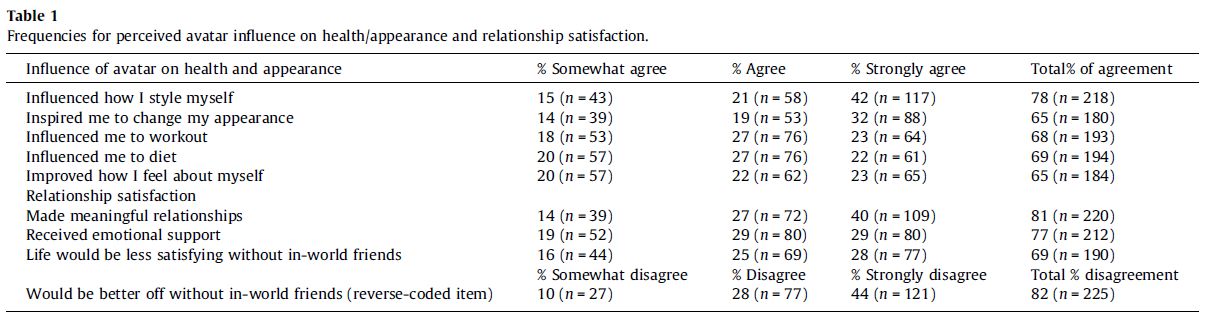
Dr. Elizabeth Behm-Morawitz surveyed 279 Second Life users to study how their choice of avatars affected their real-world existence. She found that the amount of self presence, or identifying with a virtual representation, predicted the amount of influence an avatar had on a person’s life in the physical world. A strong sense of self-presence improved how they felt about themselves and promoted better health and well-being.
“The creation of an avatar allows an individual to try on a new appearance and persona, with little risk or effort,” Behm-Morawitz, communications professor at the University of Missouri, said in a press release accompanying the report. “That alter-ego can then have a positive influence on a person’s life. For example, people seeking to lose weight could create fitter avatars to help visualize themselves as slimmer and healthier.”
Those in the study who indicated they have a high degree of self-presence within SL indicated that they felt their relationship with their avatar improved how they felt about themselves in the real world. Self-presence also correlated to greater satisfaction with online relationships.
This isn’t the first published study to delve into the possible benefits of Second Life. In June of 2011 Indiana University reported that Second Life could be used to practical ends to achieve real weight-loss, with the results of a 12-week study involving both in-world and real-world meetings being widely reported in the media at the time.
In the Indiana University study, researchers found that, over a period of twelve weeks, people attending weight-loss / fitness programmes within Second Life tended to lose the same amount of weight as those attending equivalent real-world programmes. However, they further discovered that those engaged in the programme through Second Life reported significantly greater gains in behaviours that could help them live healthier and leaner lives – again underlining the strong psychological link people can develop with their online alter-ego.
The University of Missouri’s study – which actually pre-dates the University of Indiana’s study inasmuch as iot place in February / March 2011 – did not involve physical activities, but focused on participants completing an online questionnaire. The 279 respondents involved in the study represented 30 countries, with some 65% residing in the United States. Some 56% of respondents were female and 41% male, with the remaining 3% identifying themselves as transgender, male-to-female. The average age of respondents was 41 years, with an overall age range spread of 18 through 70.
The questionnaire iteself was structured to measure feedback against a number of hypotheses established ahead of the study as a result of factor analysis with five questions being asked of the participants.
Perceived avatar influence on health / appearance and relationship satisfaction (click to enlarge)
The format of the study means that it is somewhat flawed – the data has gathered from what is effectively a single point in time. A more accurate measure of the relationship between our real and online selves requires that study should be carried out over a more extended period, with experiences and the effects of their avatar on their human condition being tracked over multiple points.
Nevertheless, both this study and that of the University of Indiana highlight the very strong physical and psychological link people can develop with their avatar. This caused Dr. Behm-Morawitz’s team to extend the concept of “mirrored worlds” (as proposed by Joe Sanchez in 2009 to describe how ‘worlds complete with social and financial dynamics such as Second Life and World of Warcraft can “seep out” of cyberspace to both mirror and impact offline life) to encapsulate the idea of “mirrored selves”, in which the investment we make in out avatars can be both reflected back on, and have impact with, our real lives in meaningful ways.
Many involved in Second Life will view the outcome of the study as unsurprising simply because they have an understanding and awareness of the investment they have made in their avatar. Even so, for those interest in the nature of our relationship with out virtual selves and the degree with which one can positively impact the other, it does make interesting reading.
For Dr. Behm-Morawitz, it has revealed that Second Life and virtual worlds are a rich source of behavioural study, and she is already investigating ways in which avatars may be used to encourage tolerance of diversity. “I am also interested in studying how using an avatar with a different race or ethnicity may increase empathy and decrease prejudice,” she said in the press release announcing the study. “This may occur through the process of identification with an avatar that is different from oneself, or through a virtual simulation that allows individuals to experience discrimination as a member of a non-dominant group might experience it.”
Doctors in the United States have put a virtual environment to a remarkable use. The double-handle of physically “cancelling” the visual / audible stimulus that can trigger fear and heighten the sensations of pain together with the more subtle psychological factor of placing the user into a “cool” environment far removed from any association with the trauma he faced is extremely clever.
The medical potential of virtual worlds, at least for those who can afford / have access to such treatment, really is staggering, and move something like World Builder – which some find “creepy” or manipulative – into a more practical and achievable use, the benefits of which cannot be denied.


 Inara Pey: Living in a Modemworld