I don’t usually blog on fashion in SL, but this is something special, and I extend my thanks to Strawberry Singh for bringing it to my attention.
66 million girls around the world are not in school simply because of their gender. Do it in a Dress is an Australian-led campaign run by One Girl which is helping to change this by raising money to help educate young girls in Sierra Leone, a country where only one in six girls aged 11 or over receives an education.
The blue design and blouse from Juno Mantel in the Do It In A Dress range
Designer Juno Mantel has now brought the campaign to Second Life.
Under the Do it in a Dress banner, Juno is offering a vintage school dress, available in 5 individual colours, for L$250 (or whatever over that you’d like to pay) – with 100% of the purchase prices going directly to the campaign.
The dress is mesh, and includes and alpha layer. A demo is available for those who wish to try before they buy. Both the dress and the demo can be obtained from the special display in Juno’s store, and for those who don’t wish to buy the dress, they can contribute directly through Juno’s campaign page, where the total raised to date can be tracked.
Men, women and children have been joining the Do it in a Dress campaign, which is held annually in the physical world every October. Since it started in 2001, it has raised over AU$326,800, helping to educate 1089 young girls in Sierra Leone, where the average cost of a girl’s education amounts to AU$300.
Now’s the chance for avatars to join in the effort as well, with Juno’s campaign running from through to December 7th. When you’ve purchased your dress, why not show-off photos of you wearing it around SL on the Do it in a Dress Flickr group? and remember, guys, this is one for you as well!
In April, I followed the Lab’s lead in reporting on a new Massive Open Online Course (MOOC) designed to help Spanish-speaking educators in the use of Second Life as a starting point in their interaction with emerging and innovative environments that can be used for education.
Professor Max Ugaz, UMSP
Since that time, and as the Lab again reports, the course has been improved and updated, and a new session is set to start on Monday September 29th. The course has been developed by the Universidad de San Martín de Porres (USMP), located in Santa Anita, Lima, Perú, under by the university’s Project DirectorofVirtual Worlds, Professor MaxUgaz. The course will comprise three week-long modules with a total of 17 lessons and an average workload of around 5 or 6 hours per week.Details on the course, together with a registration form for interested parties, are available the university’s website, which includes an introductory video for the course (in Spanish). The course will take place at one of the USMP’s teaching areas in Second Life, commencing on Monday September 29th, as noted. As my own Spanish is poor to non-existent, I’ve taken the liberty or reproducing the Spanish portion of the Lab’s blog post below:
l Proyecto en Mundos Virtuales de la Universidad de San Martín de Porres de Perú, inicia este 29 de setiembre la segunda edición del curso en la modalidad MOOC (Curso Masivo Abierto En línea) titulado “Introducción a Second Life para Educadores 2da. Ed.”. El curso es gratuito y está diseñado para capacitar a educadores y público en general de habla hispana en el uso del mundo virtual Second Life, a fin de ofrecer conocimiento que permita desempeñarse en este entorno y aprovechar su potencial, especialmente en el ámbito educativo.
Si tú o alguien que tú conoces pueden beneficiarse de un curso como éste, pueden acceder al vídeo de introducción y registrarse en la página web. Inicio: 29 de Set.
Además se puede visitar la sede del curso dentro del mundo virtual desde nuestra Guía de Destinos.
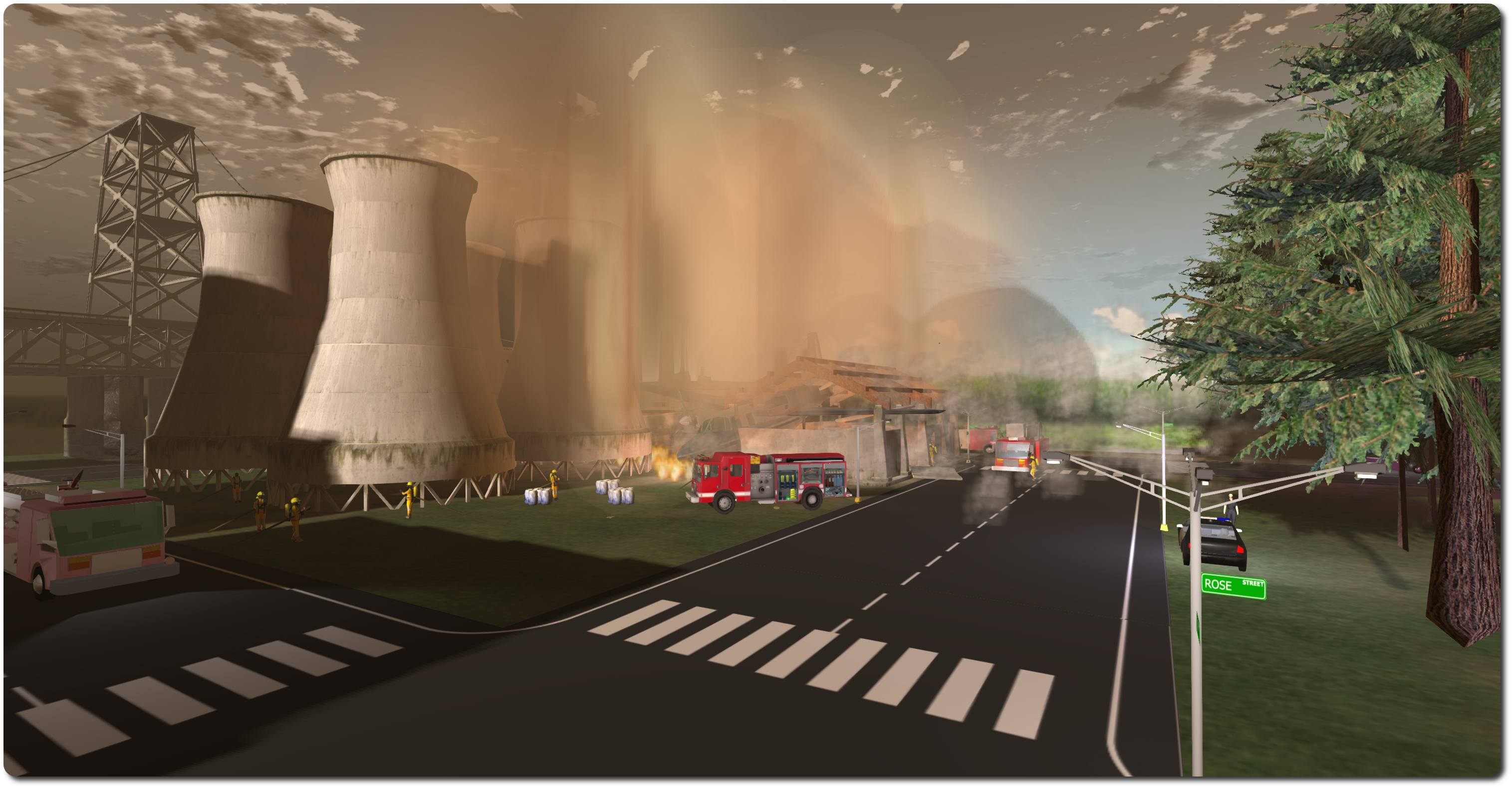
RezMela is an interactive training and simulation environment in Kitely. Here I’m dealing with an air crash situation involving a power plant
Update, July 28th: As per the comment following this artilce, the competition deadline has been extended through until August 31st, 2014.
I recently received an e-mail concerning RezMela, a scenario-building tool intended for training and simulation hosted on Kitely, and which is currently running a competition with prizes totalling $500 USD up for grabs.
RezMela, currently in an alpha / beta mode, essentially allows subject matter experts to create and deliver interactive training within a virtual environment. It comprises a classroom-style theory space, where students can learn about and watch presentations on the subject being taught, and a practice space which is dedicated to learning-by-doing, through the use of immersive simulations.
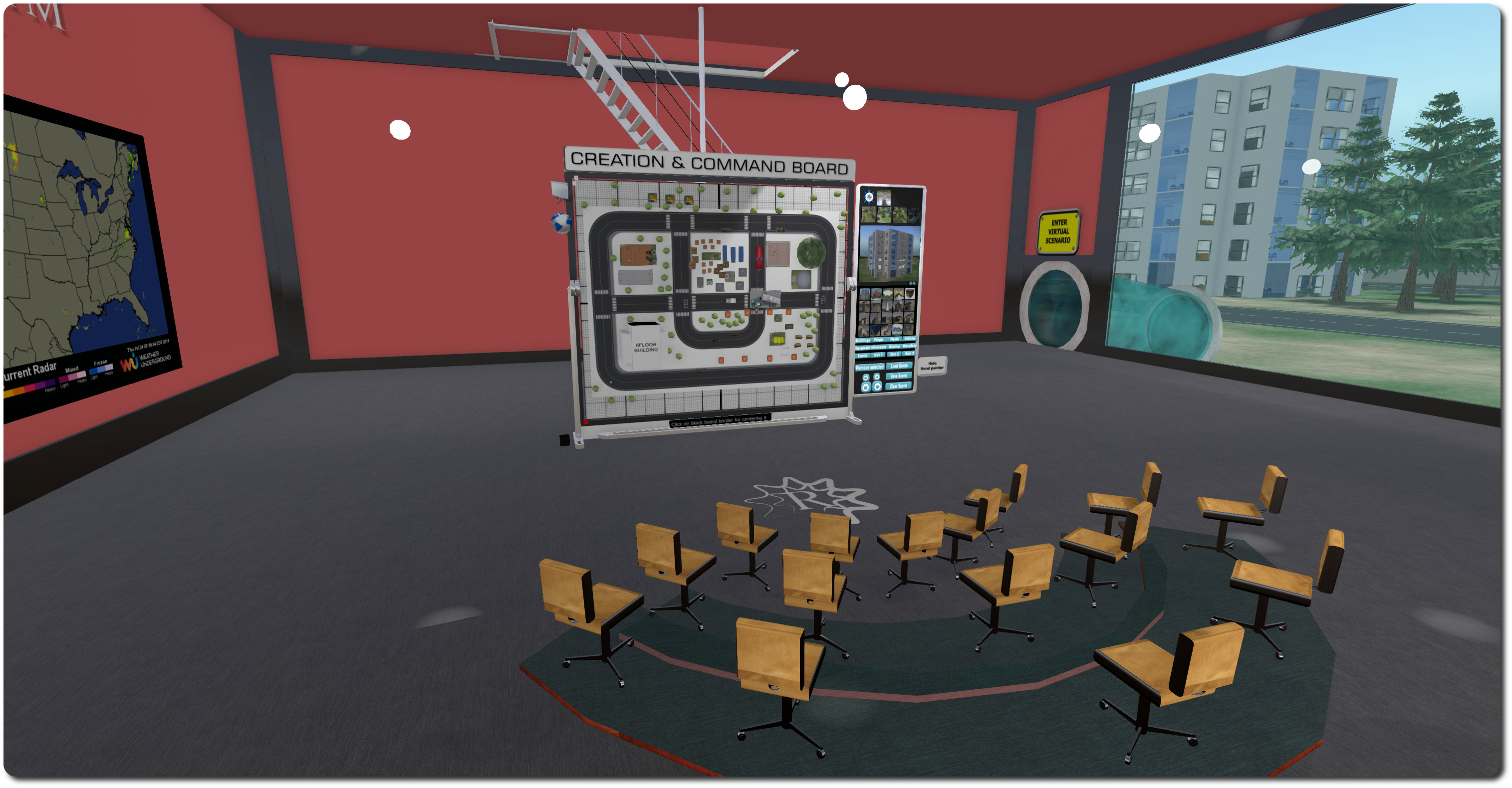
The RezMela theory space, with the Creation and Control board
Simulations – referred to as scenarios in the RezMela documentation – can be rapidly developed and deployed using the Creation and Control (C&C) board. The C&C board provides the subject matter expert with access to a wide range of simulation “primitives” (not to be confused with the basic building blocks of OpenSim and Second Life). These RezMela “primitives” are trees and plants, buildings and structures, vehicles, terrains and so on, and a selection of different types of non-player characters (NPCs), which can be combined to create a required training scenario.
The C&C board presents simple 2D map on which icons representing the various “primitives” can be positioned, rotated, etc. As this happens, the actual simulation objects are placed out in the practice area of the RezMela environment, thus allowing a simulation to be quickly put together. Once the scenario has been built, additional elements such a weather, fires, smoke, dust, etc., can be added, and the time of day for the scenario set. When everything is ready, the scenario can be saved to the RezMela system, allowing it to be instantly recalled and created within the practice space at the click of a button.
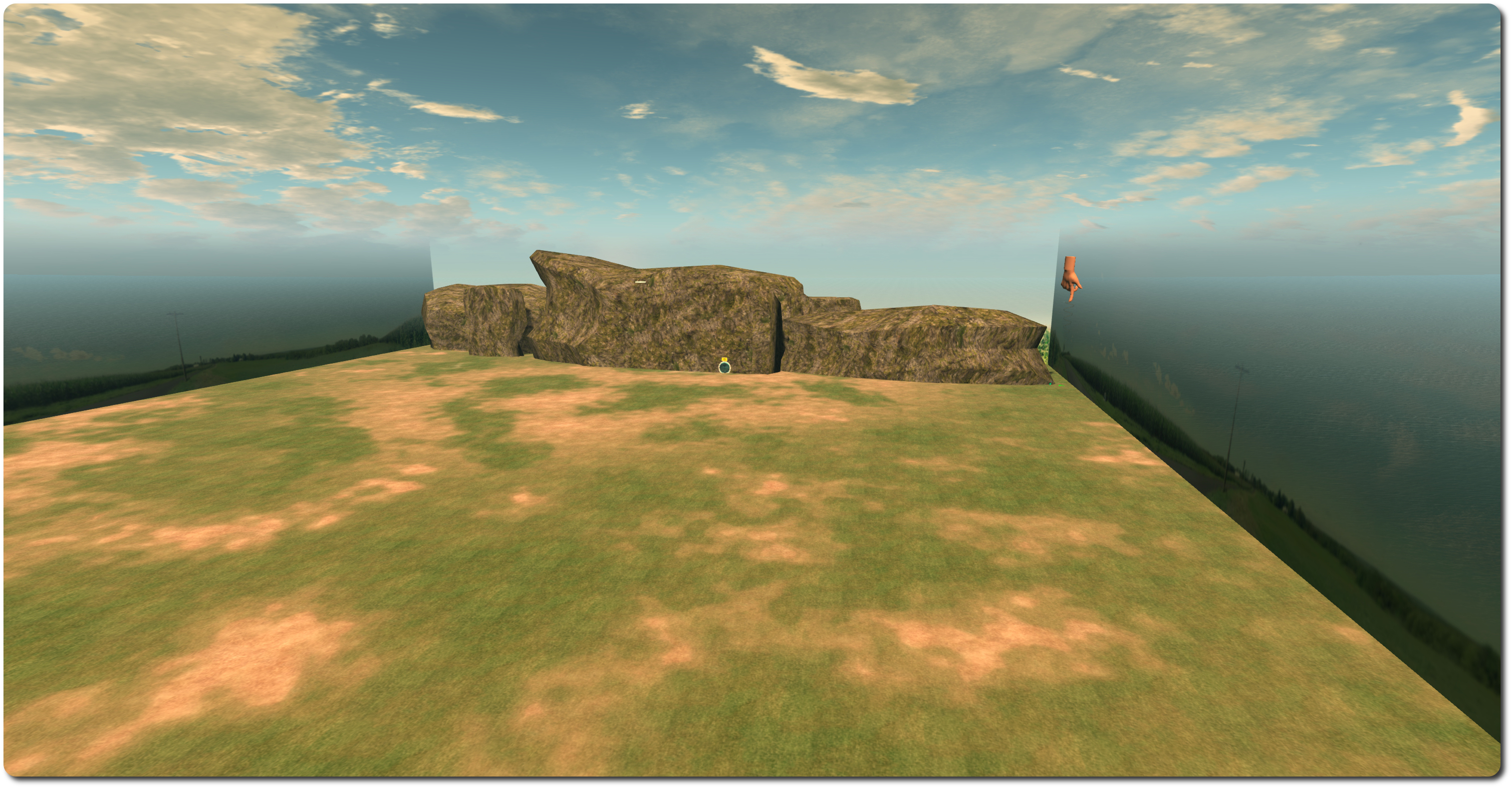
The RezMela practice space. the rock formation in the background houses the theory space classroom
NPCs and Objects within a scenario are not necessarily static or empty shells. Building and structures can have interiors, lending themselves to many different uses, and student can interact with various objects and vehicles, while NPCs will respond to stimuli around them. As well as enabling easy creation of scenarios, the C&C board can also be used to deliver classroom videos and presentations on the subject matter.
Combining the theory and practice spaces allows subject matter experts to provide information and guidance on a specific learning / training environment within the theory space via the C&C board, and then monitor students’ performance in real-time as they tackle the challenges presented in the scenario in the practice area.
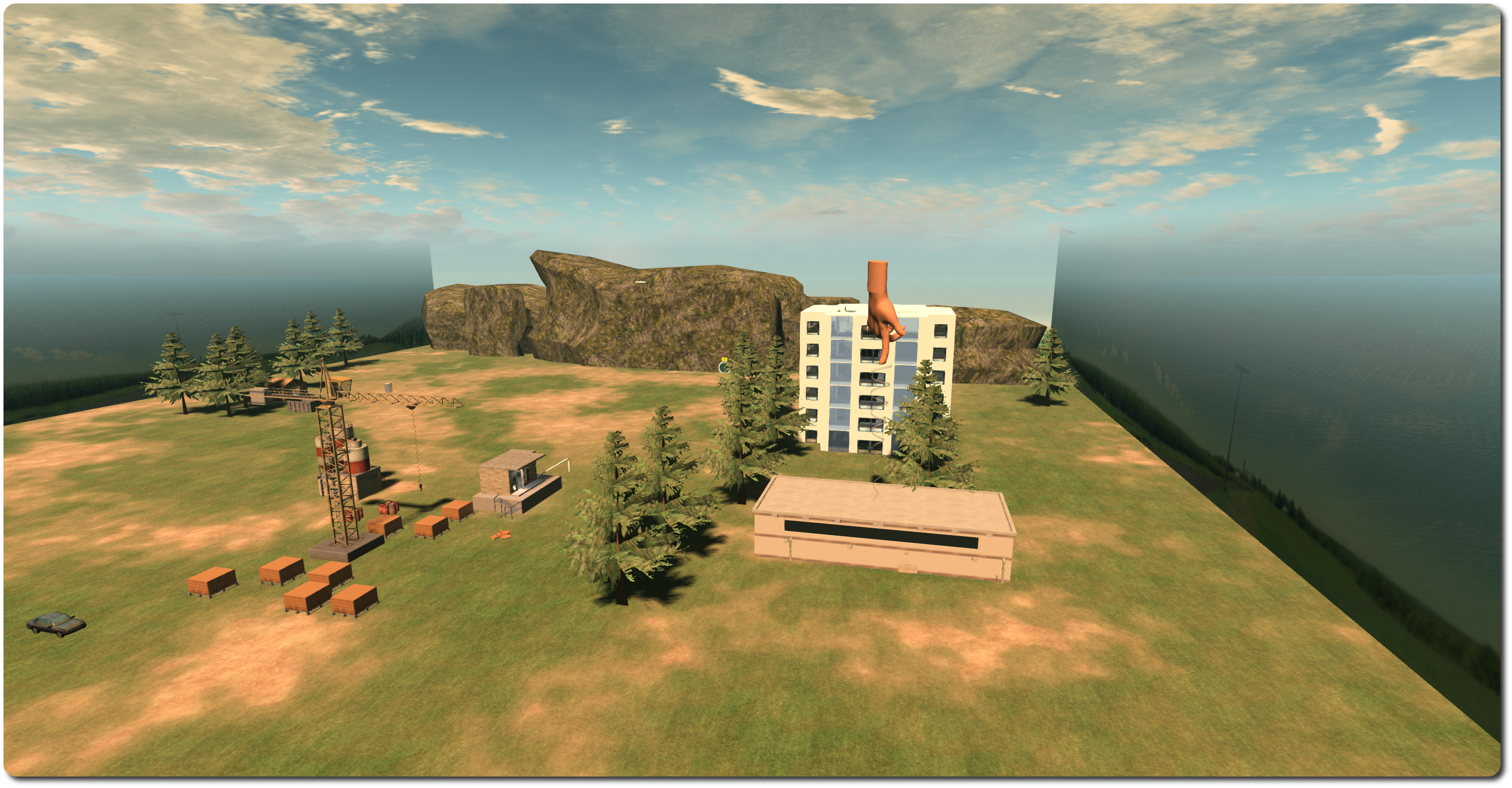
A prepared scenario being rezzed by the Creation & Control board. The pointing hand indicates the currently selected object
Scenarios can be entirely created from scratch to suit a specific training / teaching requirement, or can be based on physical world situations, such as emergency or disaster management situations which have occurred, allowing students gain additional insight into such situations and events. The system can also be used for educational purposes as well, such as for teaching health and welfare or in teaching environmental matters and so on.
To help explain how the system works, DeepSemphore LLC, the company behind RezMela, have provided a range of videos and a slideshow introducing the basics of the beta system. There is also an in-world campus and workshop regions available to RezMela users where further information can be obtained.
There is no doubting that Second Life is an excellent platform for teaching and learning. That’s been demonstrated time and again, with many and varied educational and distance learning programmes being run through the platform, and with many schools, colleges, universities and other organisations making use of Second Life for a wealth of education and learning activities over the years.
Sweet Success is a programme developed by the Australian Digital Futures Institute (ADFI) and the International Centre of Applied Climate Sciences (ICACS) at USQ. It uses machinima created in Second Life to encourage Queensland’s sugarcane farmers to consider sustainable farming practices (including their own environmental impact on the land), and to stimulate discussion about how to incorporate an understanding of climate risk into their decision-making.
Sweet Success sought to better inform sugar cane farmers on climate and environmental impact using digital techniques, including machinima filmed in Second Life
The videos are set in an environment typical of that found in Queensland’s cane growing region, and feature a number of individuals typical of the character and disposition of Queensland cane farmers. Lasting some 3-5 minutes, the films serve as both a focal point for discussion and as a means to introduce the farmers to the climate information, interactive models, etc., which might be used to better inform their farming decisions.
The initial programme involved around 20 sugar cane farmers who were able to watch the films, study the material and discuss the issues and ideas raised. While there was some initial scepticism, the farmers admitted the videos were a positive means of passing on information on things they may not have thought about.
Dr. Helen Farley, one of the researchers involved in Sweet Success, and her SL alter-ego
Dr. Kate Farley, one of the Digital Futures faculty members involved in the project, and herself a long-term advocate for the use of virtual worlds for learning and teaching in higher education, describes the decision to use Second Life as being primarily a matter of finance and convenience: Second Life allowed the films to be put together at a far lower cost and much quicker than would have been the case with live action location shooting.
Matt Kealley, senior manager of environment and natural resources for the Canegrowers industry group sees the approach as potentially offering the means to deliver a lot of information on farming, climate, weather and so on to his members. He also believes that once the novelty of being presented with a film shot in a virtual environment had worn off, his members found the information presented to be “compelling” in content and value.
In fact, such has been the success of the pilot programme, the project has now been expanded to include some 400 Queensland sugarcane growers.
Dr. Kate Reardon-Smith of the ACSC
While the cost-effective nature of using Second Life as a film medium might have been the primary consideration in using it for the Sweet Success films, Dr. Farley, together with fellow researcher, Dr. Kate Reardon-Smith, believes that the approach has other benefits as well.
Leading a series of presentations on the work, both Dr. Farley and Dr. Reardon-Smith point to the use of Second Life as being ideal for addressing matters of climate risk assessment, sustainable farming methods and so on for a wide variety of farming locations and systems, simply through the use culturally appropriate clothing, language and design. In addition, the digital nature of the finished product makes it easy to package with the supporting material for dissemination anywhere in the world.
Nor is Sweet Success the only activity undertaken by USQ to use Second Life as a means of educating farmers. In 2010, ICACS, under its old title of the Australian Centre for Sustainable Catchments (ACSC), joined with the Asia-Pacific Network to use Second Life avatars as a means to present real world climate-based scenarios to farmers in the Andhra Pradesh region of India. The aim of the project was to challenge farmers about on-farm decisions that involve seasonal climate risk. As a distance learning project, it was delivered to Internet kiosks within the region where farmers could then discuss and debate the issues raised.
The ACSC-APN project in the Andhra Pradesh region of India also used Second Life as a means to engage farmers on the subject of seasonal climate risk and farming decisions
All told, both of these projects present a unique and fascinating extension of the use of Second Life as an educational medium and for distance learning.
On Monday July 7th, Linden Lab CEO Ebbe Altberg and the Lab’s Director of Global Communications, Peter Gray, met with members of the education community to answer questions on the future of education in Second Life.
The video is embedded below, and the transcript is time stamped against it for reference. When reading / listening, please remember:
This is not a word-for-word transcript of the entire meeting. While all quotes given are as they are spoken in the recording and the audio files, to assist in readability and maintain the flow of conversation, not all asides, jokes, interruptions, etc., have been included in the text presented here
If there are any sizeable gaps in comments from a speaker which resulted from asides, repetition, or where a speaker started to make a comment and then re-phrased what they were saying, etc, these are indicated by the use of “…”
The transcript picks-up with the first question asked.
0:04:42 Aldo Stern (AS): Will the educational discount be stable over time, so that education organisations can take [it] into account for their budget cycles? So I think that reflects right off of the top one of the things that people will have a concern about.
0:05:00 Ebbe Altberg (EA). Yes. Well, it’s very unfortunate that back in the day … that the discount was taken away. I thought it was very fortunate that it was re-instituted before I showed-up here, and I can tell you we have absolutely no intent whatsoever to make the pricing worse for you guys. none whatsoever.
And over time, as some of you have heard about, we’re starting work on a next generation platform, I think that ultimately an extremely large and vibrant and successful virtual world, prices have to come down all the time.
Today, we’re constrained by a number of factors: technology, business models, what have you, and user experience, that sort-of limits the size of the market for a product like this. for example, if we were to cut prices in half, we would have to get at least twice the number of users – or more, actually – to end up with the same revenue. Right now, I’m not convinced we have a product that could attract two extra users at half the price.
But I’d be happy to lower prices to get more users and make it up in volume, once we know we have a product that can achieve that. I think it’ll be an interesting conversation at that time, especially with the educational sector. would an even lower price … let’s say we take the current discount that you have, which I think is about a hundred and fifty bucks for a region; if we cut that in half again and say it’s seventy-five bucks, would we have twice as many of you buying simulators? If that’s the case, then it might be worthwhile for us to do; but if it only increases by 5% the number, then it’s just hurting us and our ability to invest in the future.
But I feel very confident in stating that we’re not going to mess with the current pricing you have in a negative way for you.
0:07:55 AS: I think that’s very encouraging to us, and I wanted to ask if anybody had any further comment before the next question?
0:08:08 Comment: Well, it is encouraging to hear that; but I think there are a number of related issues that make the current platform problematical for educators, and a number of questions we’ve identified I think will get at that, if you want to move down the list.
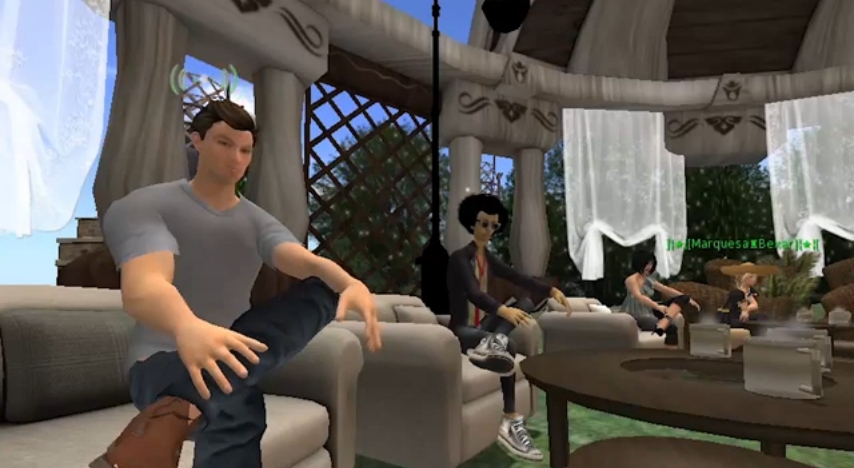
Ebbe Linden (Ebbe Altberg) and Pete Linden (Peter Gray) at the meeting with representatives from the education and non-profits community
0:08:26 Comment: I did want to say something about the pricing real quick. If you did lower the price for educators you might not see the number of buyers go up right away, because I’m not sure if you understand how the education funding cycle works, and probably everyone in the room here can explain that much better than I can. But that is the issue: getting into the funding cycle ahead of time to make sure that you have funds available for your projects. So if you implemented that today, cutting it in half again, you have to give the education community time to get that in their budget and make that happen.
0:09:27 EA: Absolutely, and there’s way to solve that. I could say, it’s a hundred and fifty bucks now and it’s 75 bucks starting next quarter, so you can put it in your plans. how much advanced notice do you need to be able to get it into your budget cycle?
0:09:48: About a year.
0:09:49 EA: My lord! (Chuckles).
0:09:53: And that’s why, when the funding was cut, it was so devastating, when the discount was cut, because no-one had enough notice to get their funding back up to what they needed, and so it was very frustrating for a lot of educational folks.
0:10:14 EA: I understand. I can’t even begin to understanding the reasoning behind why that whole thing happened. I’m just very glad it was reversed before I came here, otherwise I would have done that myself. So you can at least be confident that we’re not going to make that mistake again.
Following the recent Virtual Worlds Best Practices in Education Conference (April 9th-12th, 2014), Linden Lab has moved to help promote an upcoming Massive Open Online Course (MOOC) designed to help Spanish-speaking educators in the use of Second Life as a starting point in their interaction with emerging and innovative environments that can be used for education.
Professor Max Ugaz, USMP
The course has been developed by the Universidad de San Martín de Porres (USMP), located in Santa Anita, Lima, Perú, by the university’s Project DirectorofVirtual Worlds, Professor MaxUgaz.
Commencing on Monday, May 19th, the course will comprise three week-long modules with a total of 15 lessons and an average workload of around 5 or 6 hours per week.
The course details and registration form are available the university’s website, which includes an introductory video for the course (in Spanish).





 Inara Pey: Living in a Modemworld