ragVR: imagination and expression in Second Life

ragVR
ragVR

RAG Randt is a content creator and designer who is perhaps best known for his work with MadPea, having worked on many of their games over the years. However, he recently departed the MadPea team to focus on his own work, and as we’ve been friends for several years, having worked closely on a project together, I was delighted to receive an invitation from him to see what he’s been up to within the region he’s been working on for the past few months.

“I’ve been putting together a portfolio site,” he explained as I arrived next to a DC3 sitting at the edge of a long runway, a fitting arrival point for visitors to his island. “Some of it is still under construction, but I’ve opened it to the public.” Called ragVR, the region is a veritable tour-de-force in RAG’s skills as a scripter, creator, builder and environment designer – and makes for a completely engaging visit.
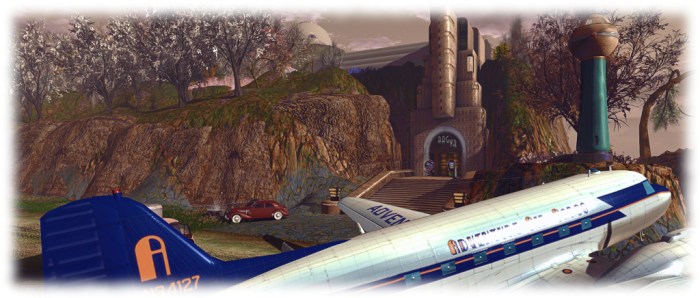
ragVR: arrival
ragVR: arrival

From the airfield landing point, a flight of steps leads visitors to the stunning Art Deco frontage of an elevator tower rising above the sheer cliff face against which it is built. Two kiosks stand before the doors to the tower, one of which invites visitors to click it, thus getting one into the habit of touching similar kiosks across the region to obtain information on the various locations one can visit. The second kiosk provides background information on RAG himself and the region, and should be read.

Summoning the elevator via the button next to the doors will bring the first of many smiles to your face, as the distant sound of the lift clunking and purring into its descent is gradually mixed by music in keeping with the Art Deco look of the tower, which gently grows in volume as the car approaches – as one might naturally expect. When the elevator doors open, so the music naturally increases in volume again, but not painfully so, inviting you to step inside. When you do, you’ll find this is no ordinary elevator. In keeping with the Art Deco look and feel, it retains a skilled (and charming) operator. Touch him to select your destination, and watch him operate the elevator’s control lever.
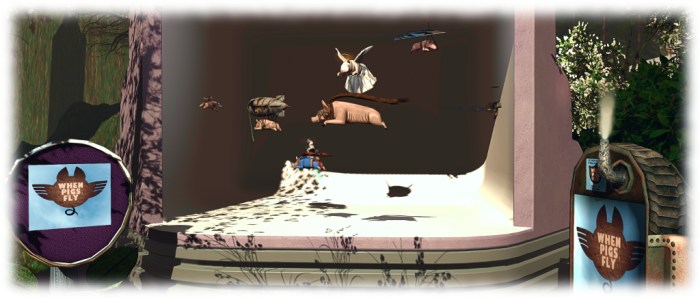
ragVR: pigs really can fly! RAG's gacha flying pig collection
ragVR: pigs really can fly! RAG’s gacha flying pig collection

On arrival at the upper floor, and with the elevator’s music fading behind you as the doors close, you’ll find yourself on the first part of a self-guided tour of the region and RAGs work. This starts with a retrospective of his early 2D work in SL, which built on his experience as an illustrator. Once again, a kiosk offers background notes on the display, together with a comment that while visitors are free to wander around the region whichever way they choose, the recommended route to take the exit to the left, relative to the elevator station, and follow the path.

Winding between trees and bushes, the path will take you by way of hill, dale and building, around and over the region, and the displays of RAG’s work. To list all of them would be to spoil a visit. However, as a few points of note, there are the gacha goods booths with delights such as RAG’s flying pigs (I have one at home 🙂 ), the MadPea centre where sets RAG build for a number of MadPea games are on display, and the model of the school Live And Learn Kenya  / Feed A Smile are building for Kenyan children, and which was the subject of a major MadPea fund-raising drive.
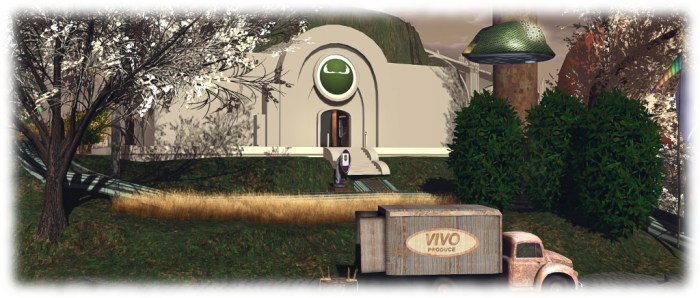
ragVR: celebrating MadPea

“There will be teleporters to skyboxes as well” RAG informed me, “And models of some of the items I will have on sale.” For those interested in the Horizons community, these items for sale will include two house styles designed to fit in with the theme  – and I’ll hopefully have more on these in a future piece on Horizons. “While the region is primarily aimed at people who need a builder, and who want to see what I can do,” RAG said as we wandered the footpaths of the region, “I hope it is also a fun place for people to visit and discover as well.”

Nor do RAG’s skills end with physical objects, be they furniture, creatures, buildings or machines. The entire region design demonstrates his ability to create and landscape an environment, and select windlight settings to add to the overall ambience. Outside of the flora, vehicles, a handful of rocks and tower crane found in the region, almost everything you encounter, including the footpaths, stairways and cliff rocks, have been built by RAG.
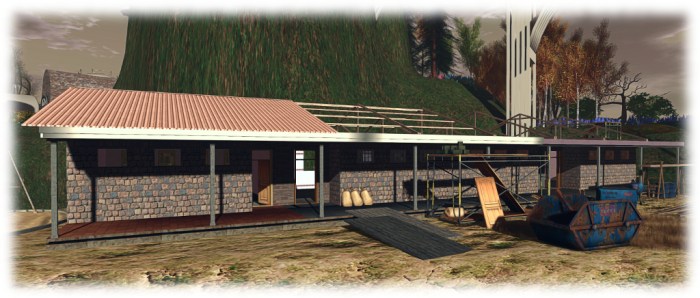
ragVR: the LLK / FAS Kenya school model

Whether or not you’re looking for someone to execute a custom design or build for you, a visit to ragVR is a demonstration of all that is possible in Second Life from prim (do not miss the Alien Ice Cream!), through landscaping to mesh and scripting. It reminds us that SL can be both an entertaining environment through games and gacha whimsies, and a place which can support physical world activities, such as building a school in Africa.

And if you are looking for a superb brewer of fine mesh, an expert shaper of prims and artisan sculptor of land, then taking a tour a is doubly recommended, as RAG could well be your man. You can contact him about projects and ideas and to discuss rates via IM, notecard or through e-mail (rag-at-ragmedia.com). A website in support of RAG’s work is also in development, and I’ll be adding the URL here once it is up and running.

SLurl Details

  • ragVR (Devil’s Moon, rated: Moderate)
The Sagan Planetarium in Second Life

Sagan Planetarium
Sagan Planetarium – click any image for full size

It’s no secret that I love space exploration and astronomy – hence my Space Sunday series. Both are subjects which fit wonderfully into the niche of virtual worlds and virtual spaces, so I’m always on the look out from locations expressing either in-world. It therefore came as complete surprise to learn about the Sagan Planetarium  courtesy of a Tweet and blog post by Ricco Saenz; so much so that I had to clear all other plans for region visits and move it to the top of my list of places to visit.

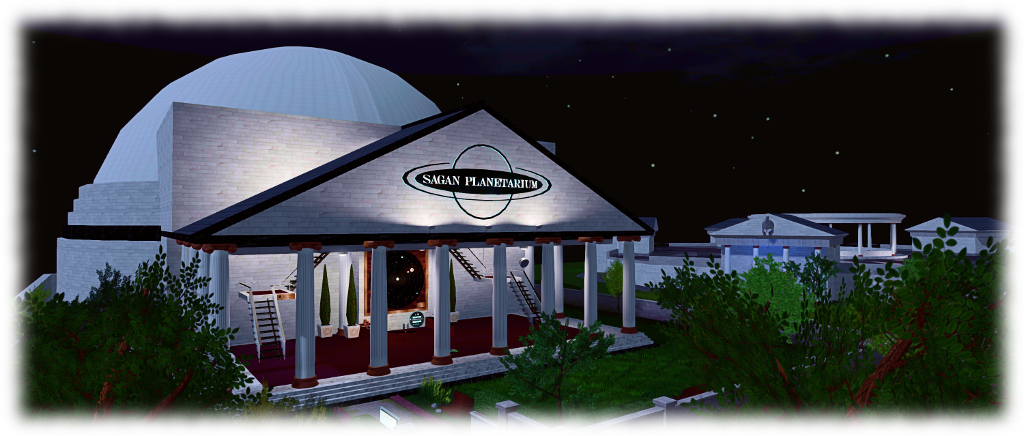
The planetarium – obviously named after one of the 20th century’s greatest intellects, the late astronomer and astrophysicist Carl Sagan – is the work of Josh Nitschke and is frankly a must-see visit, whatever your level of interest in astronomy and space exploration. The visitor spaces are split into four areas: the entrance lobby (I’ve used this as the landing point in the SLurls in this article), the Exhibition Hall, the main skydome and an outdoor orrery.

Sagan Planetarium
Sagan Planetarium – Exhibition Hall

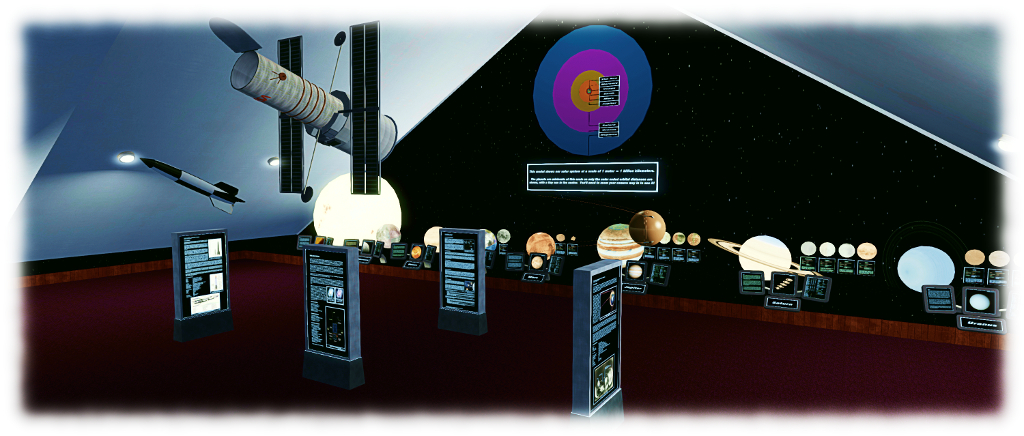
The exhibition area provides information boards on galaxies, nebulae, space missions such as Sputnik and the Hubble Space Telescope, and more. However, it is the interactive model of the Sun and the major planets of the solar system which is liable to hold attention. This provides a set of (not-to-scale, for obvious reasons!) models of the major planets from Mercury to Neptune, each with its significant moons (where applicable) and a sets of data panels. Given there is a wealth of information available about the planets, Josh has provided an excellent breakdown for each, although you’ll have to zoom right in to the panels to read it all. Touch the Sun and any of the planets, and you’ll get an annotated cutaway of the interior.

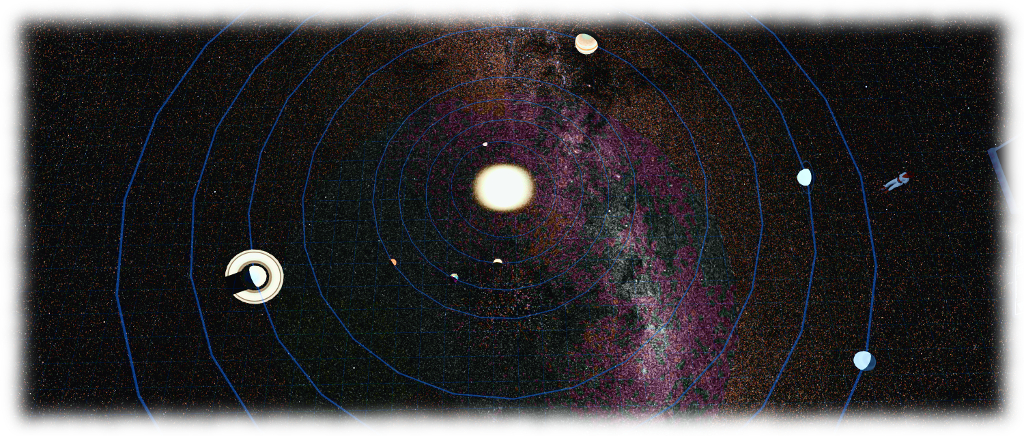
Above these is a model of the solar system going from the Sun to the orbit of Neptune – and this is to a scale of 1 metre to 1 billion kilometres. You can get an idea of the vastness of the space immediately around us, though, as none of the planets are visible in the model; only their orbits are shown, colour-coded – and you’ll have to zoom all the way in to even see the pinpoint of the Sun.

Sagan Planetarium
Sagan Planetarium – Skyhome show: that’s me in white over on the right to give an idea of scale. Note Saturn’s shadow falling across its rings in keeping with its position relative to the Sun

The skydome currently offer a single show – the Solar System. Lasting a little over 34 minutes, this is a multi-media presentation, requiring visitors accept the audio stream narration, written by Josh and given narrated by Phoenix Colter (this can also be obtained in a note card, but trying to read and watch the show is cumbersome; far better to listen if you can). Split into a number of elements, this show takes visitors on a journey through the solar system, from the Sun to the Kuiper belt, going by way of the cosmos at large. It incorporates the solar system’s creation, a look at the Sun and the major planets (and little Pluto – Charon, so far absent due to Pluto’s reclassification as a minor planet), and our emerging understanding of the solar system.

The wealth of information within the show is again extraordinary, and includes interactive elements: you can zoom at touch the planets when they are the focus of the show, for example, and see their interior structures. Two more shows are  – or have been – in preparation for the skydome, one on the Apollo missions and one on the moons of the solar system. Assuming they’re both still in preparation (I’ve IM’d Josh to ask), I look forward to seeing them.

Sagan Planetarium
Sagan Planetarium – Exhibition Hall planetary display

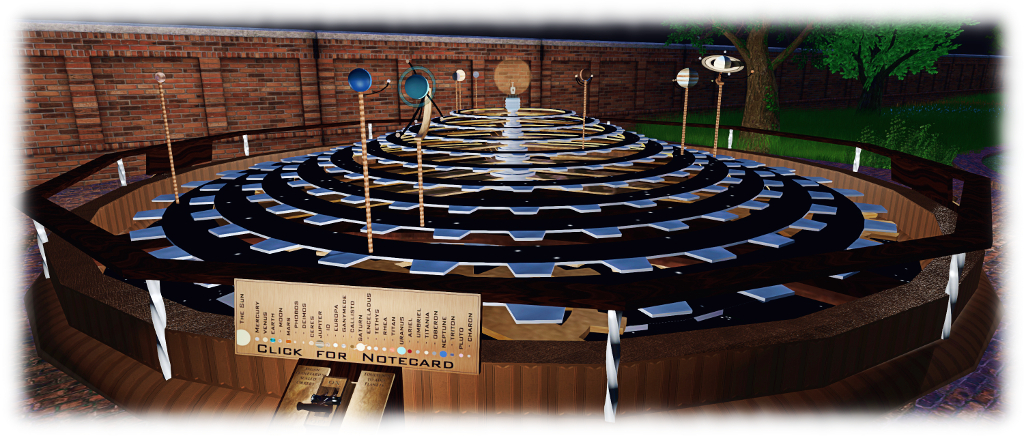
The orrery is located outside of the planetarium building and should not be missed. Beautifully ornate and in full working order – simply pull the control lever – it is the icing on the cake of a superb installation.

This is a fabulous build and presentation – the more so for all the core elements having been designed, written and scripted by Josh himself. As a planetarium, Sagan Planetarium stands head and shoulders above anything of this kind I’ve seen elsewhere. Yes, the presentation may be a little out-of-date courtesy of Dawn, Juno, New Horizons, and Rosetta, but this doesn’t in any way detract from what is presented. Sagan planetarium is a superb demonstration of what can be achieved within Second Life, visually and educationally.

Sagan Planetarium
Sagan Planetarium – the Orrery

I cannot recommend this enough – late though I might be in visiting myself! When visiting, please do consider a donation towards the upkeep of the facility, either directly or via the purchase of one of Josh’s brilliant models on sale in the gift shop.

SLurl Details

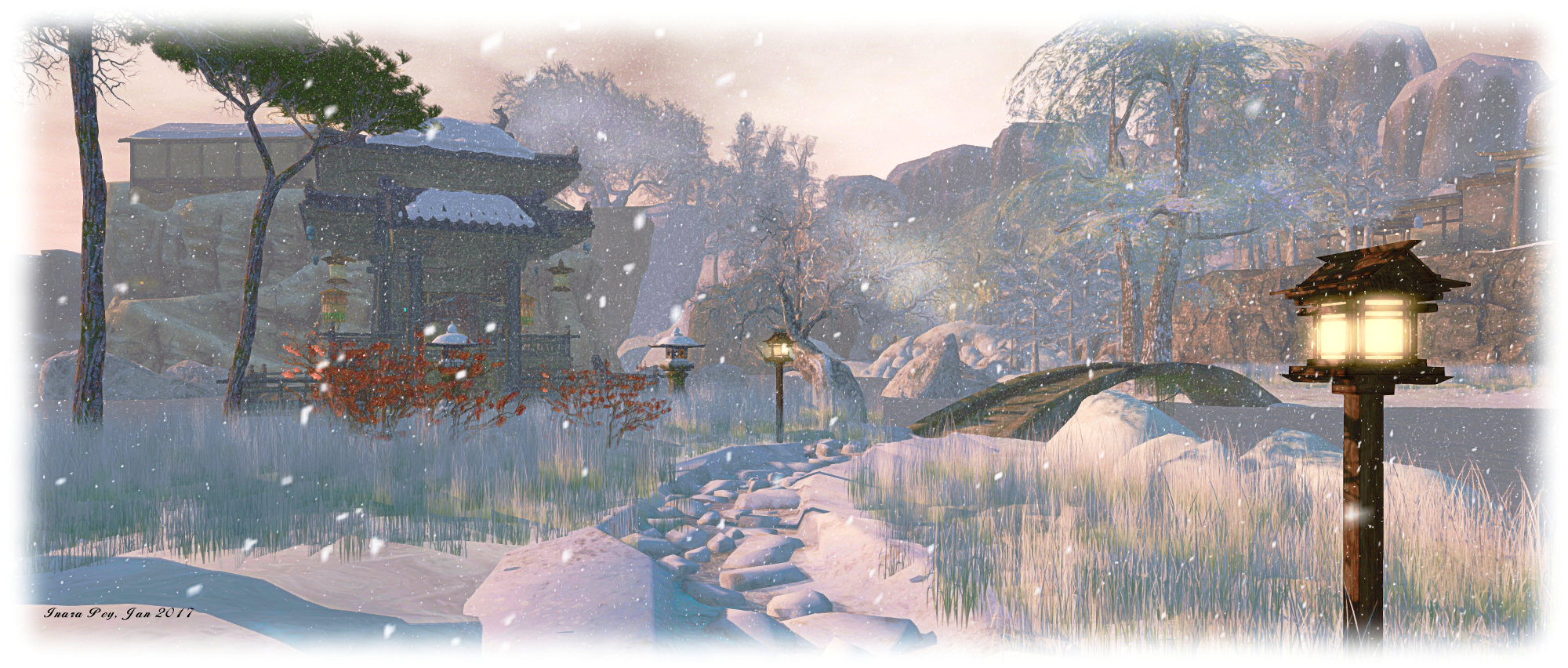
Nagare no Shimajima, Restless Times, Second Life

Nagare no Shimajima, Restless Times; Inara Pey, January 2017, on FlickrNagare no Shimajima, Restless Times – click any image for full size

In October 2013, I visited Nagare, the home of the Blue Lotus Clan, offering both a place to visit and the opportunity for those who enjoy the art of traditional Japanese katana, nagi and short blades traditional fighting to join the clan’s C:SI (Combat Samurai Islands system) dojo. At that time, Nagare occupied a quarter region parcel on Southern Cross. A lot has changed since then, and thanks to a nudge by Loverdag, I realised it was high time I revisited.

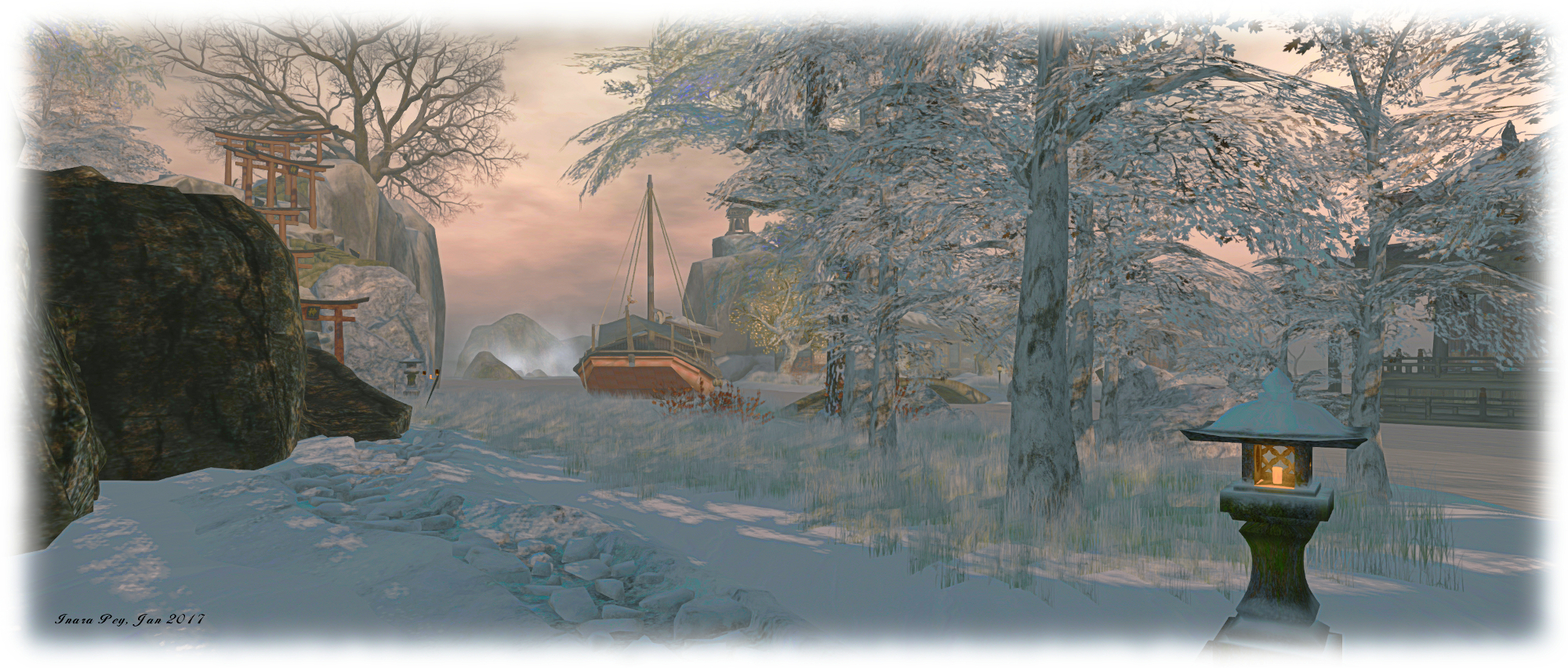
Today, Nagare – now called Nagare no Shimajima  (Nagare Islands, or Flow Islands) – occupies a homestead region of its own: Restless Times. One of the original designers of Nagare, Lila Aquacade is still responsible for much of the design the region, sharing the work with  Ratatosken Karu, and Roll (Pradalia) and Be Ino (Inorelin Ragowski), while the region is home to both the Blue Lotus clan and the Eternal Blades clan.

Nagare no Shimajima, Restless Times; Inara Pey, January 2017, on FlickrNagare no Shimajima, Restless Times

Given Lila’s involvement, there are many echoes of the original Nagare to be found here – the rugged landscape mixed with water channels, the large house boat occupying one of the latter and so on – but the increased space of an entire region means, obviously, that there is far more to explore.

As Nagare no Shimajima is a combination of public spaces and residential areas, the creators have defined a clever way of differentiating the two: public spaces are all connected via bridges; the more private residential island can only be reach via the little boats at the wooden quays. These can be rowed, sampan-style, by clicking on the boat to obtain a pole before boarding. Obviously, if you do take one, please respect the privacy of people’s domiciles, and do return any boat you use to its originating quay when done.

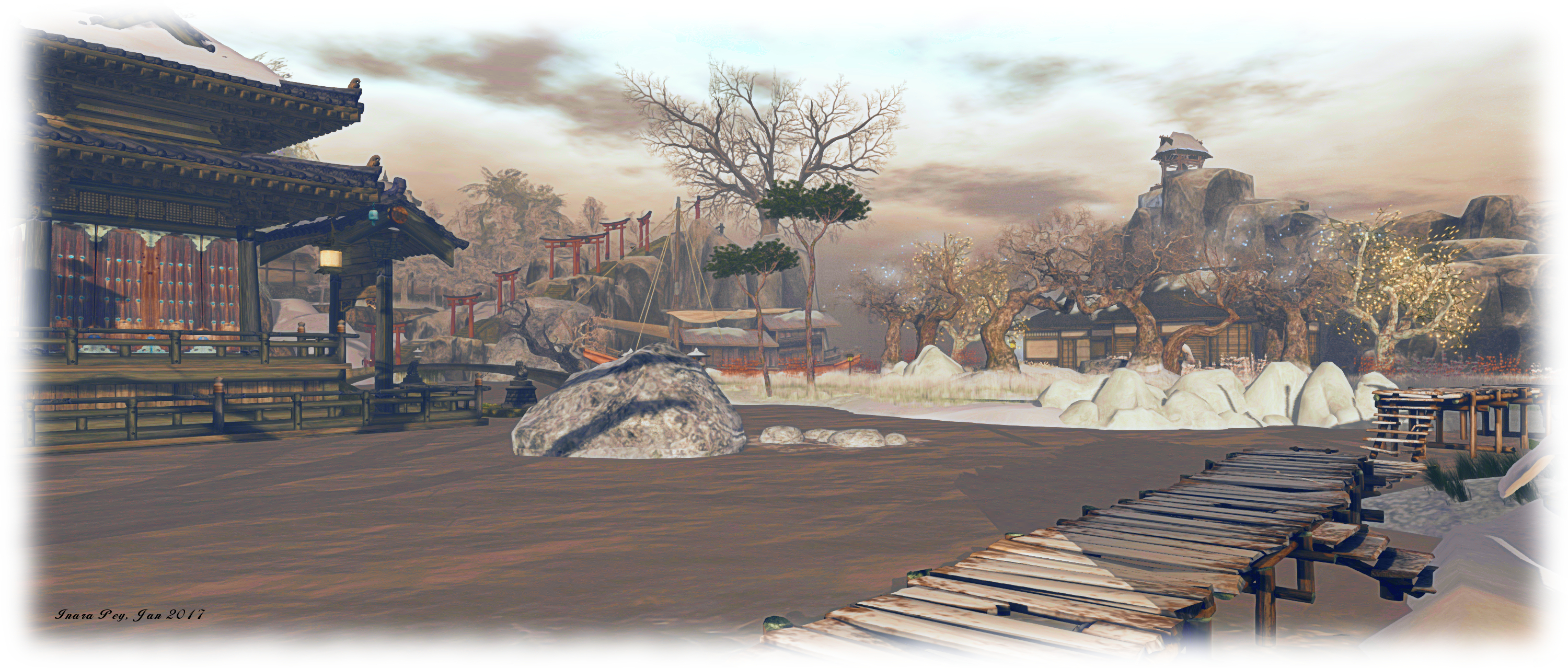
Nagare no Shimajima, Restless Times; Inara Pey, January 2017, on FlickrNagare no Shimajima, Restless Times

The landing point is located alongside the walled sparring area, occupying a broad sweep of rocky ledge between a wall of cliffs forming the west side of the region and a sharp drop down to the channels and bays which break up the eastward lay of the land. A path, marked by an aged torii gate, winds down to the lower levels of the region, where the bridges span the water. However, before leaving the landing point pagoda, I strongly recommend you collect the Nagare no Shimajima information card: it provides a wealth of information on where to go, the history of Nagare and the Blue Lotus and Eternal Blades clans, as well as information on Japanese religions and spirits in a highly conversational and engaging manner. In short, it is an excellent read.

Through this card, one can also about some of the little touches which have been added. Take heed of the warning about attempting to leave one of the cliff-top shrines before you have completed offering up prayers! That said, it does appear to be in need of a slight revision: while it refers to the teleporter being within the watchtower overlooking the sparring area, the only system I could find is located alongside the landing point pagoda (with another at ground level sitting on a snowy slope), while the sky dojo appears to be undergoing (re)construction.

Nagare no Shimajima, Restless Times; Inara Pey, January 2017, on FlickrNagare no Shimajima, Restless Times

In 2013, I thoroughly enjoyed my visit to Nagare-as-was, my natural bias towards oriental regions notwithstanding. Visiting Nagare no Shimajima brought back several of those memories and was equally enjoyable.  Right now the region is caught in the depths of winter. I believe its appearance changes with the seasons, going on some photos I’ve seen. I’ll certainly be returning to find out!

SLurl Details

Going away with Captain Nemo in Second Life

The undersea world of Blake Deeps

Update: Fancy’s Deep has been relocated to Blake Cove and the SLurls in this article have been updated to reflect this. The submarine tour mentioned also no longer appears to be operating, but the relocation of the town means it is now alongside the regions devoted to the merfolk community.

Back in 2015 I wrote about the merfolk of Fanci’s Deep, who were holding a week of underwater activities to encourage folk to explore their undersea community, centred around the four regions of Fanci’s Deep. These form a part of the Blake Deeps, covering roughly 13 regions to the east of Blake Sea and south of  Blake’s Passage as it cuts its way westward from Blake Sea to Second Norway.

Recently, Caitlyn and I have been spending time within the Deeps, and so I felt a further blog post was overdue on their secrets.

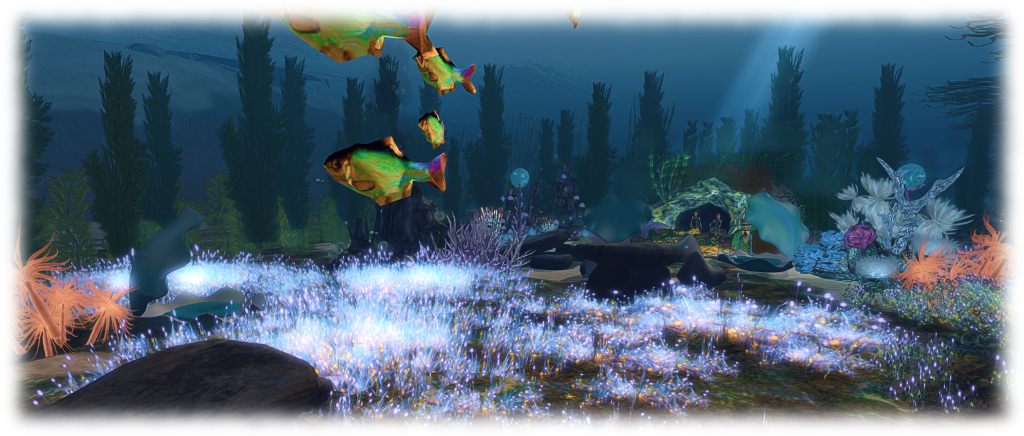
One of the many garden spots in Blake Deeps where you can dance with merfolk

With 13 regions to visit, it can be a little hard to know where to start. However, there are several places which can serve as a base for wider explorations, and I’ve listed them at the end of this article (as well as mentioning them in the text). For me, one of the best locations to start your explorations is the historic Freeport Township of Flotsam, Blake Cove.

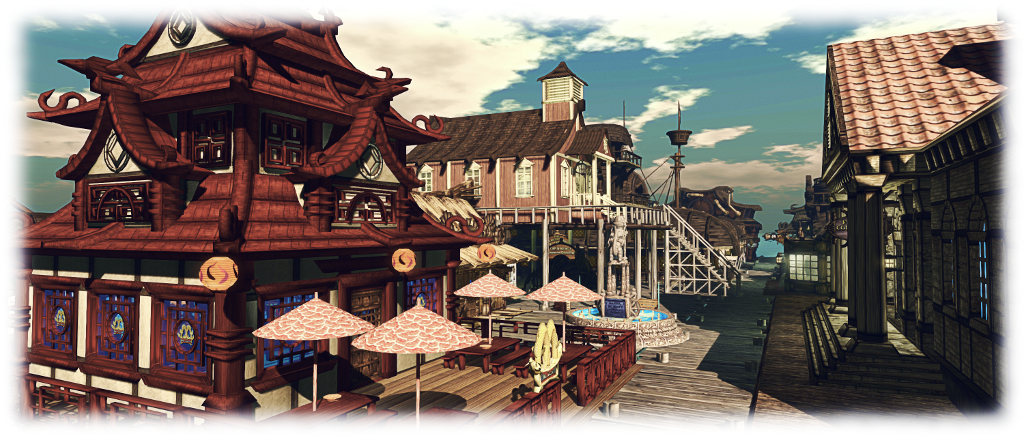
Designed by Aley, Flotsam is a wonderful mix of humour and homage, focused on pirates, but with a literary aspect. Built entirely on  wooden platforms over the water, the town boasts a bank, shipyards, shops, quayside moorings and even the golden arches of a McSushi’s!

The freeport of Flotsam
The Freeport Township of Flotsam

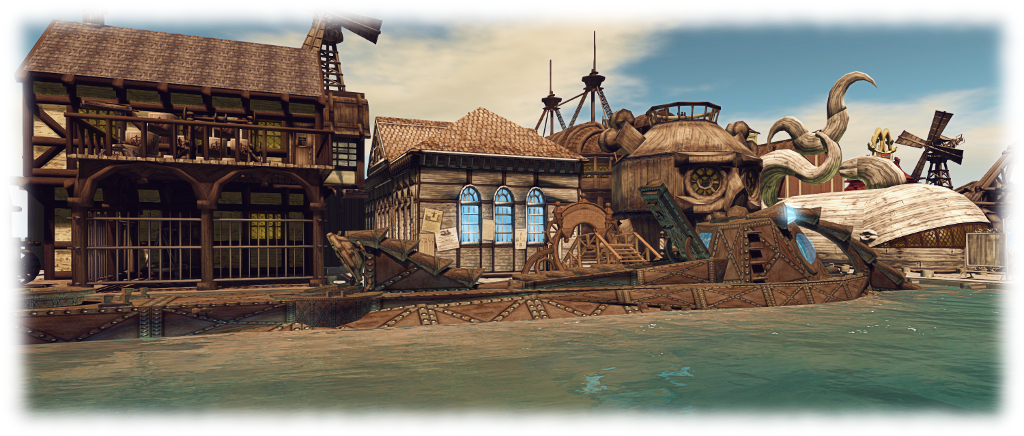
A clue to the literary homage can be found berthed at one of the quays: Captain Nemo’s submarine Nautilus, from Jules Verne’s 20,000 Leagues Under The Sea and as visualised Walt Disney 1954 film; feel free to board her and look around. There is also a reference to Journey to the Centre of the Earth: a “mole” tunnelling machine, also to be found on the south side of town. If you take your seat inside, you’ll be taken on just that journey – although finding your way through it does take a little time and effort; not all the routes are at first obvious.

There’s a further reference to Nemo, as well (as there is elsewhere within the Deeps): look for the tunnel leading down to the Captain’s undersea observatory, which sits directly under the town on the sea bed.

The Nautilus at Flotsam
The Nautilus at the Freeport Township of Flotsam

Given all this, the town really is worth a gentle wander – there is so much to see, both in the design of the buildings and within them. When walking the quays on the south side of the town, keep an eye out from the Kraken – itself a literary reference. Look out for the fire pits as well, as they offer a teleport system around points of interest around the region as a whole.

Flotsam is also the home to a submarine tour, although sadly not aboard the Nautilus. This is perhaps the best way to gain a feel for all that is available within the Deeps. At 30+ minutes in length, it’s a long tour, but your guide – Annie – makes it more than worthwhile, providing as she does a wealth of information on the history and myths of the regions. And she’s not against offering an opinion or two (“Don’t even get me started with his ideas about “Sea Chickens”, she grumbles whilst discussing Nemo’s undersea farming project, which apparently involves genetically modified cows and attempting to “grow tuna in their cans”).

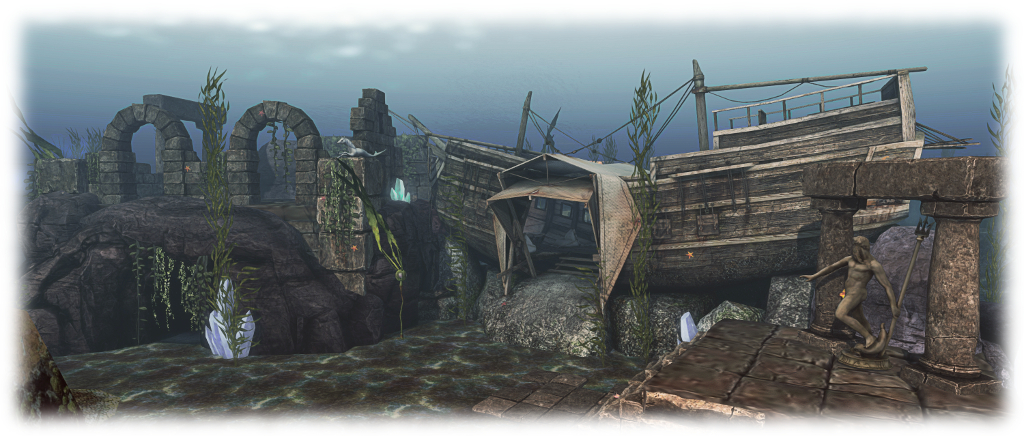
Merhomes around Fanci's Deep take many forms: caves, conventional houses, shells - even the wrecks of sunken ships
Merhomes around Fanci’s Deep take many forms: caves, conventional houses, shells – even the wrecks of sunken ships

Another starting point for explorations is the Fanci’s Deep welcome area. Here you can obtain assorted freebies to help you feel at home – such as mertails or a diving helmet and even a mini-sub. Advice is provided on the best viewer settings by which to enjoy your underwater experiences and where to go and what to visit. Alongside of this is the Safe Waters Foundation, which offers further information, complete mer outfits and transformation kits, and information on mer communities across Second Life.

The welcome centre provides walking / swimming access to the four Fanci’s Deep regions, were both public spaces and private merhomes can be found. Do please respect the privacy of the latter, but feel free to enjoy the former, most of which offer underwater dances every different to those found in a land club!

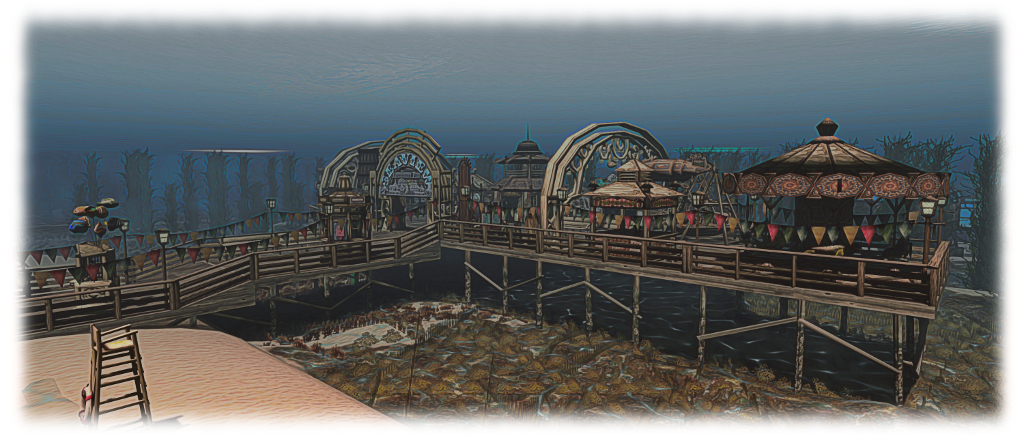
Why not enjoy the beach and fun fair whilst under the sea?

Elsewhere, you can try your hand at undersea chariot racing, visit sea farms, even have a day out at the (undersea) beach, complete with pier top funfair and an aquatic circus nearby!

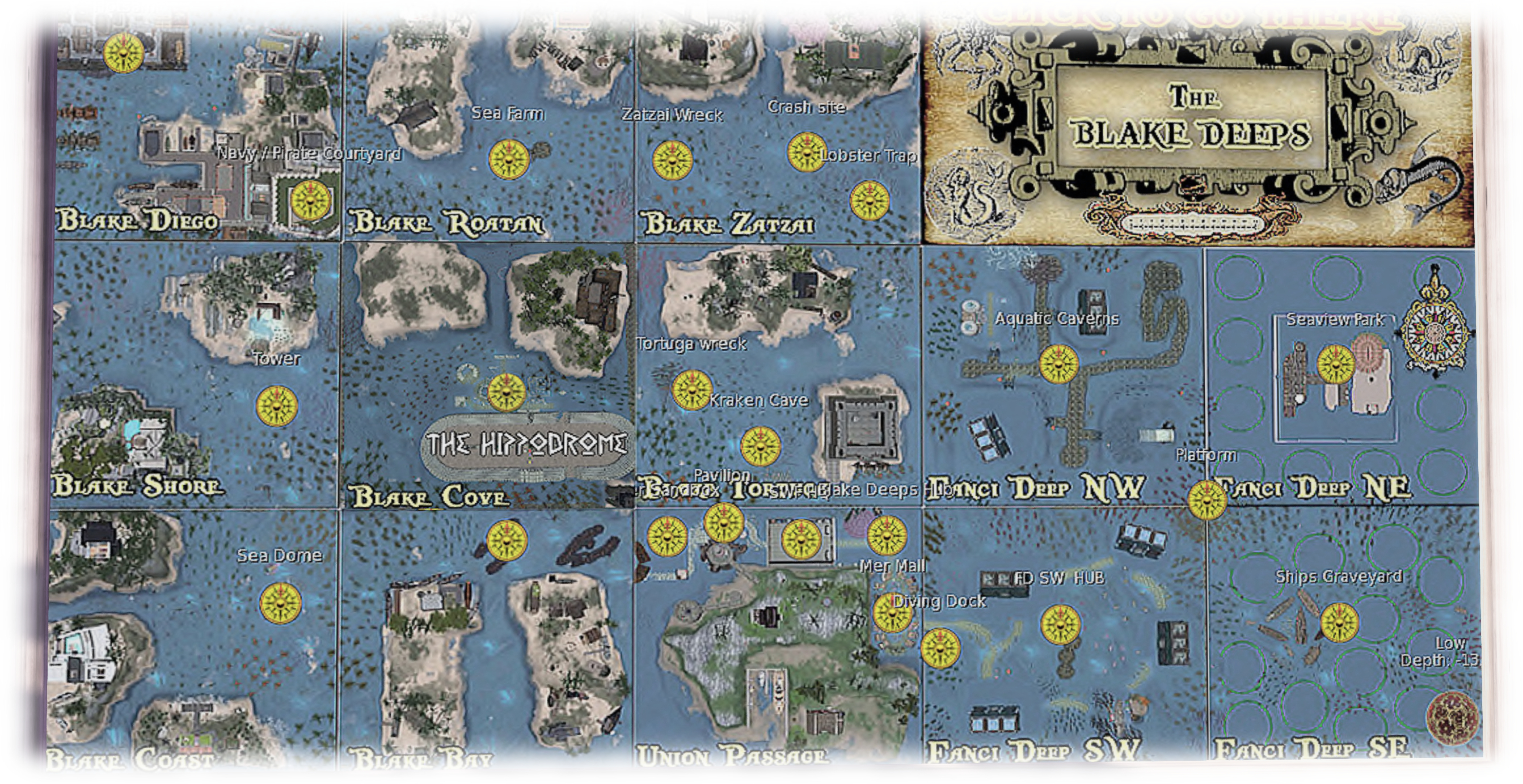
When visiting the various locations within Blake Deeps, keep an eye out for the maps similar to the one shown at the top of this article – they offer map-based teleports to many of the locations to be found throughout the regions. However you travel around the Deeps – teleport, swimming, tour sub, your own sub or simply by following your nose and swimming / walking, these are an enchanting set of regions to visit.

Given their nature and the aforementioned Nemo references, it seems appropriate I finish this piece with a song from Sarah Brightman.

SLurls

All locations rated Moderate.

Returning to It’s A New Dawn in Second Life

It's A New Dawn, Lemon Beach; Inara Pey, January 2017, on FlickrIt’s A New Dawn, Lemon Beach – click any image for full size

In December I visited Silvermoon Fairey’s lovely A Painter’s Link (see here), and her two seasonal settings, 50 Words for Snow (which is located over A Painter’s Link) and December Will Be Magic Again (an wrote about both here), located over her other region design, It’s a New Dawn. As I last visited the latter in November 2015, it seemed logical that I start my 2017 Second Life travels by making a return, and in doing so complete a tour of Silvermoon’s settings.

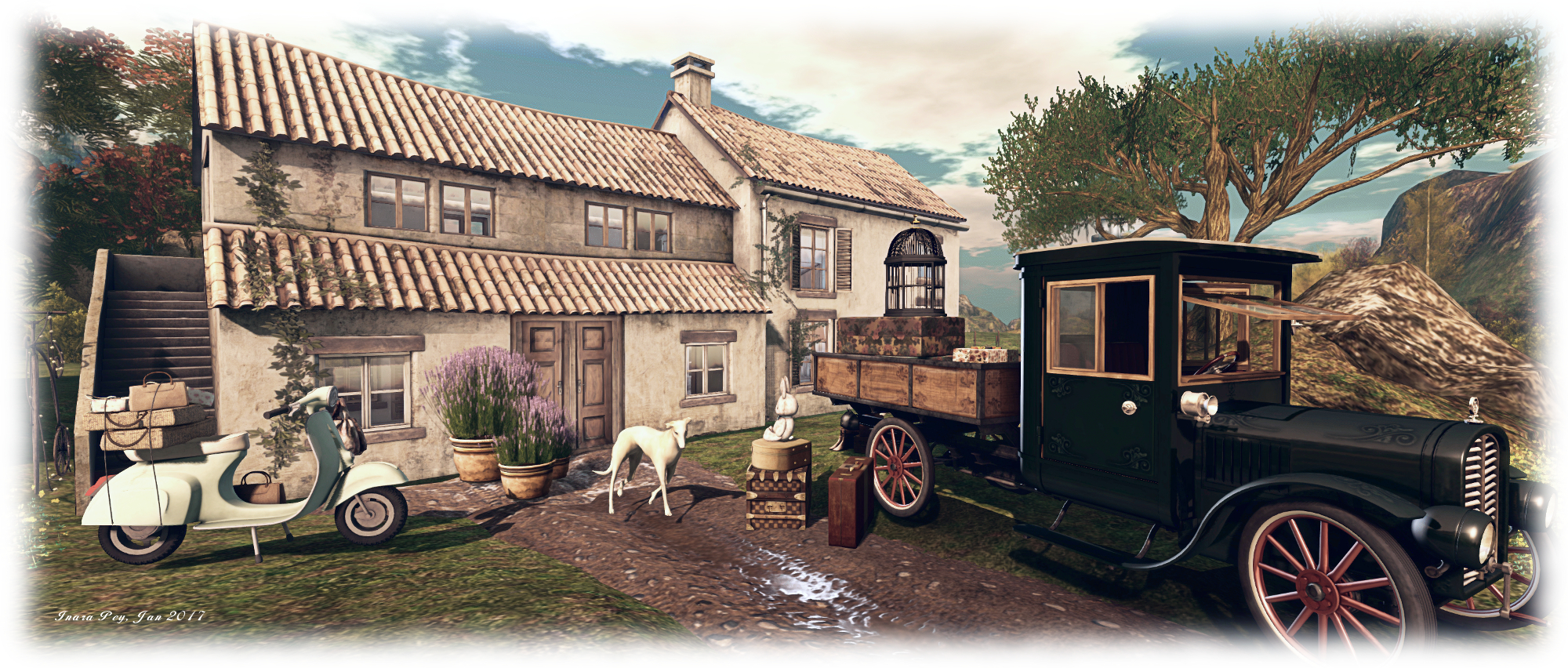
At the time of my last visit, It’s a New Dawn presented a rugged, rural island settings which in some respects put me in mind of the Scottish islands. Since then, and unsurprisingly, much has changed; however, the rural look and rugged feel to the region remains, although the location now might be somewhat closer to the Mediterranean than the North Sea.

It's A New Dawn, Lemon Beach; Inara Pey, January 2017, on FlickrIt’s A New Dawn, Lemon Beach

Visitors arrive on a small sand cove at the base of a high rocky table. The beach and cover are watched over by the  study, brick-built tower of a lighthouse close by. Reached via a path zigzagging its way up the face of the rock, an old farmhouse occupies the top of the table, presenting a commanding view of the region as it is spread out to the east and south, a second twisting path leading back down to the lands below.

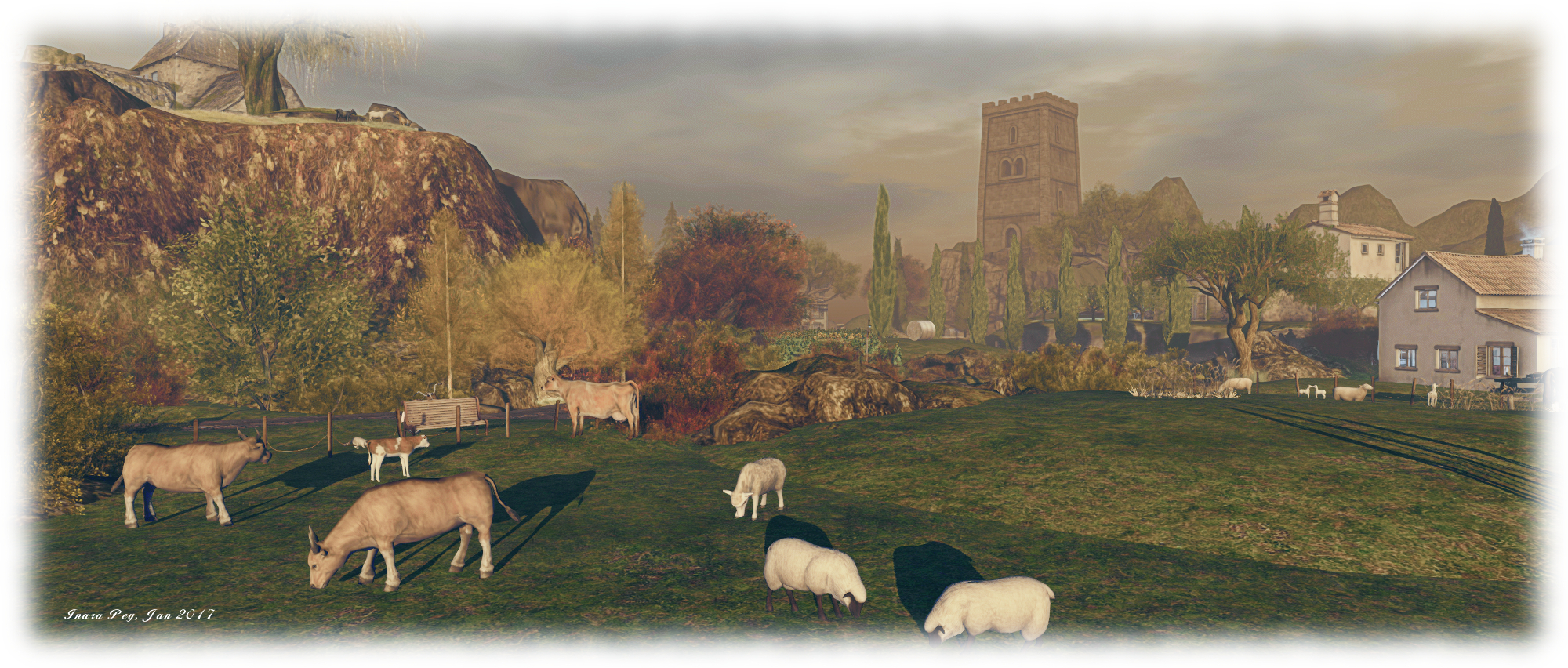
However, if you’re not in the mood for a climb, following the sands of the cove southwards around the base of the rock will bring you to a track which heads east and inland. It passes over a gently undulating pastoral setting where sheep and cows graze, skirting around the shoulder of rock to pass between the tall stems of sunflowers. Beyond these, it joins with the track leading away from the path coming down from the high plateau, pointing the way to an old stone bridge crossing a meandering steam.

It's A New Dawn, Lemon Beach; Inara Pey, January 2017, on FlickrIt’s A New Dawn, Lemon Beach

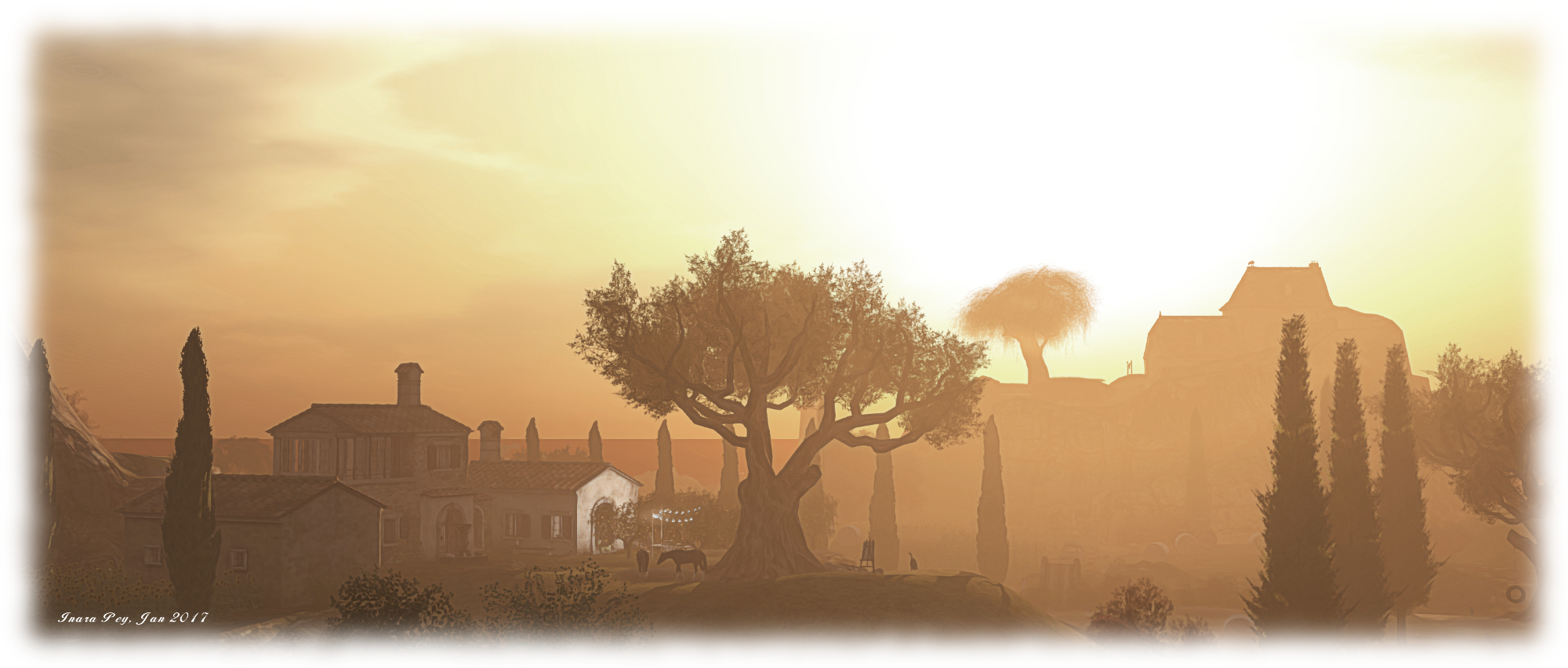
It is on the far side of the bridge that things take more of a Mediterranean turn. Cypress trees stand in neatly regimented lines along track and field edge, while Tuscan styled villas sit on lower, flat-topped hills or alongside the water’s edge.  Bales of hay, neatly rolled, are scattered across the landscape, as are places to sit and enjoy the view, while horses wander, enjoying the light grazing.

All of this sits under the gaze of a great stone tower anchored to another rocky plateau to the north-east, facing the old farm across the valley between the two. Behind this tower, which is also reached by twisting track and path, the land marches to the south as a series of humped hills and rocky climbs, shoulders sheltering the villas and fields below. These hills turn westward in their march, dipping briefly through more pastures only to rise to a high knuckle of rock crowned by a great and aged tree.

It's A New Dawn, Lemon Beach; Inara Pey, January 2017, on FlickrIt’s A New Dawn, Lemon Beach

With offshore islands, a further beach to the south-east and plenty of places to sit and enjoy the sights and sounds, all held beneath the soft glow of a westering sun (top and bottom images), It’s A New Dawn remains an eye-catching visit. For me it was the perfect start for my 2017 wanderings; should you also enjoy your visit, please consider making a donation towards the upkeep of the region so others might also enjoy it.

SLurl Details