Visiting Hobbiton in Second Life

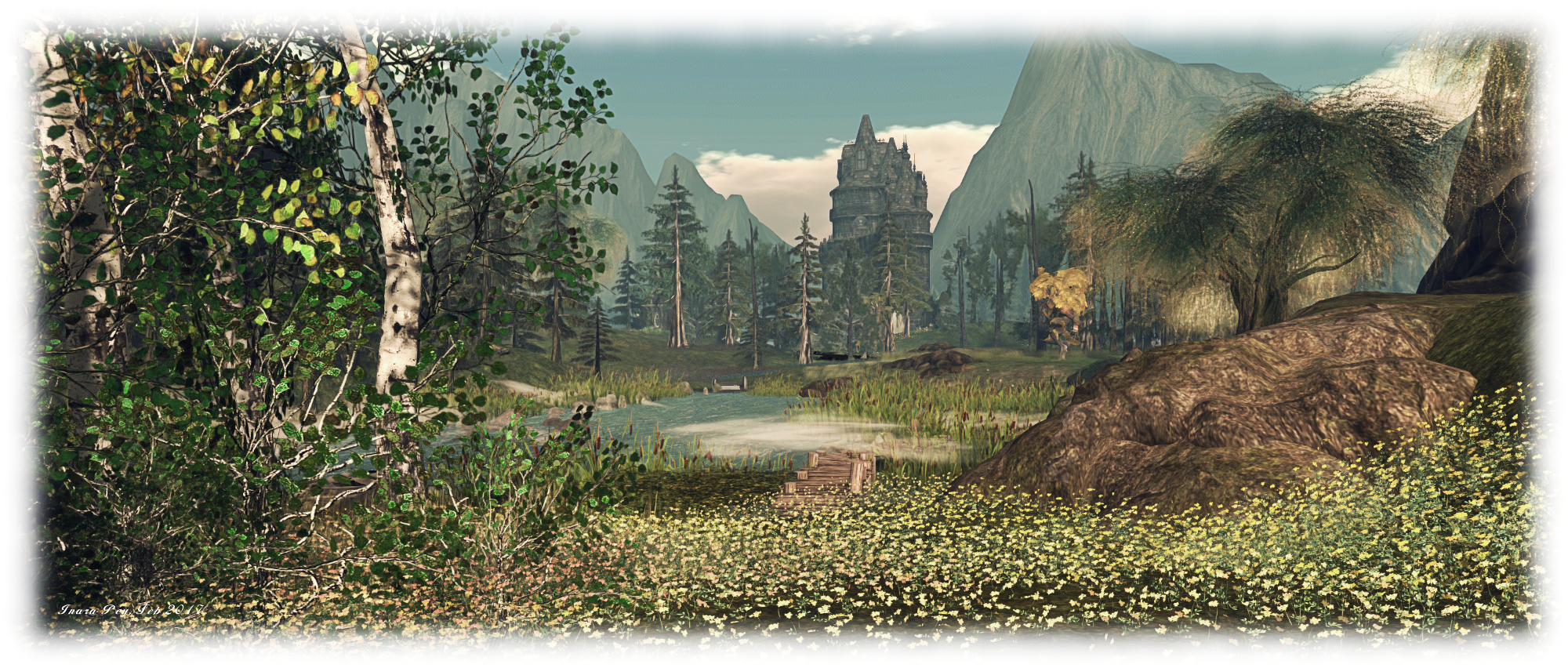
Hobbiton, Dragon Island; Inara Pey, February 2017, on FlickrHobbiton – click any image for full size

“Mae govannen! So good to have you here with us!” Zephira (Gidgette Adagio) greeted as Caitlyn and I explored her homestead region, Hobbiton. “I must confess, I am still working on texture terrain in Region details. I am a noob to this, but have wanted to do this for a long time and finally got the courage to try!”

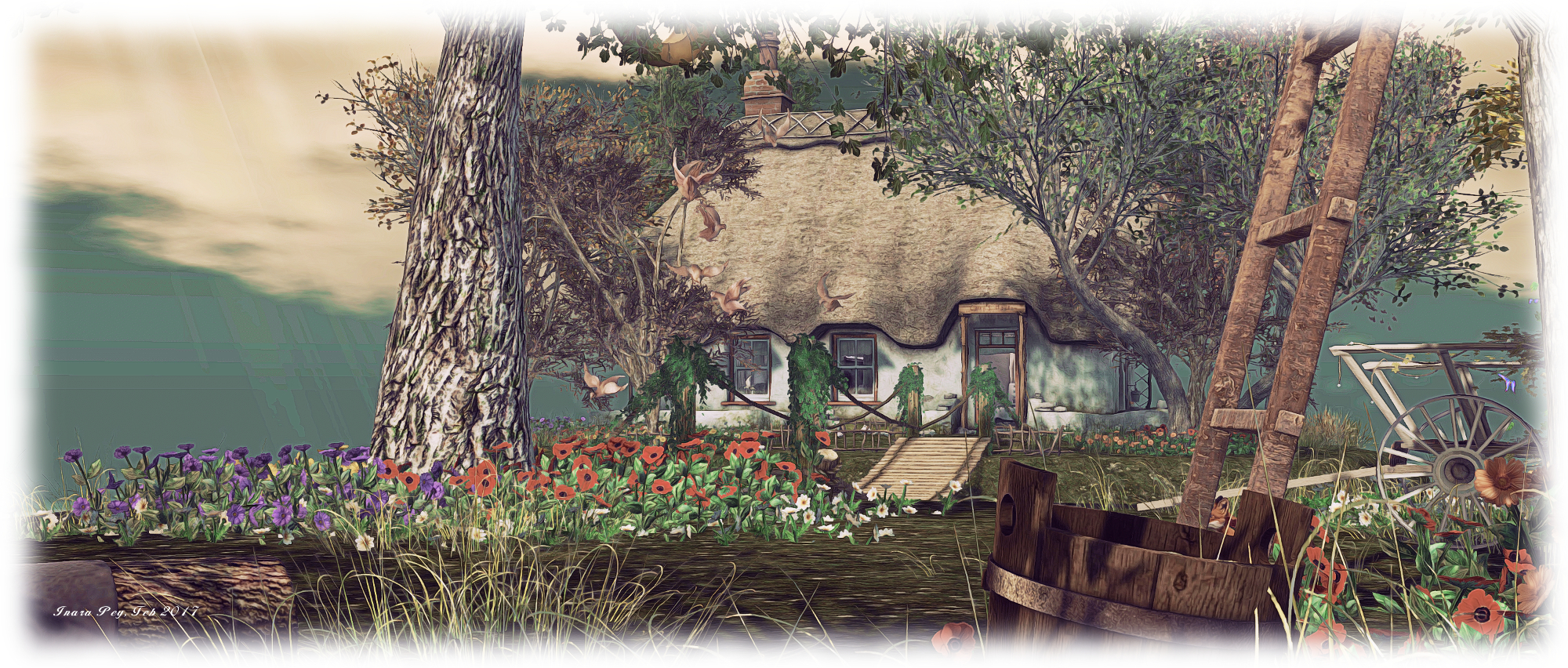
Truth be told, Zephira undersells herself. Hobbiton is a picturesque region beautifully brought together and welcoming to visitors. Inspired by Tolkien’s Middle Earth, it contains many touches and nods towards his tales without actually being specifically placed with a single realm of Middle Earth. So it is that Hobbit holes sit alongside (and beneath!) wizard’s towers while the houses of Big Folk can be found amidst the green, rolling landscape I have little doubt Tolkien would regard as being a slice of Middle Earth were he able to see it.

Hobbiton, Dragon Island; Inara Pey, February 2017, on FlickrHobbiton

This is a place of delight and natural beauty, full of little touches which make careful exploration a must. Light role-play is allowed (but not required) and the region is home to one or two people – so don’t be surprised if you bump into locals who are in character. As well as Zephira, we had the pleasure of bumping into Robin Brandybuck, a second cousin (once removed) to the famous Meriadoc Brandybuck!

Visitors are advised to use the region’s default windlight when exploring, and this casts the landscape into the shadows of evening, giving it an added air of mystery. However, such is Zephira’s design, it is well suited to a range of windlight settings, and for the purposes of the images here, I used one of my preferred pre-sets.
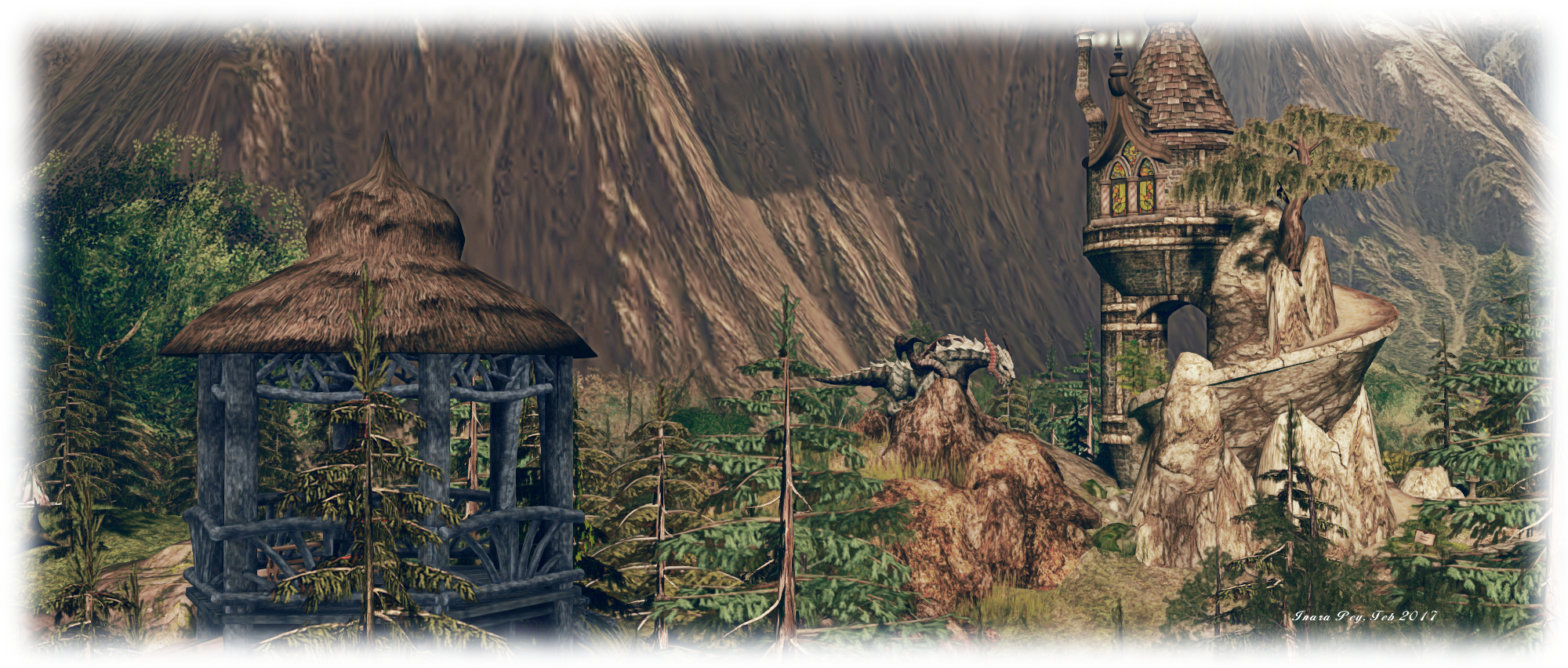
Hobbiton, Dragon Island; Inara Pey, February 2017, on FlickrHobbiton

There is no set path for exploration – simply follow wherever your feet take you. As the region is home to some, there are one or two places that are off-limits to visitors, but the majority of the land is open to wandering, whilst there are also several places where visitors can simple sit and observe the comings and goings of others.

Some of the highlights of the region are easy to find: the wizard’s towers, the Hobbit holes, the follies, and so on. However, when wandering, keep an eye out for all the little touches which both bring the landscape to life and reflect the tales which inspired it.
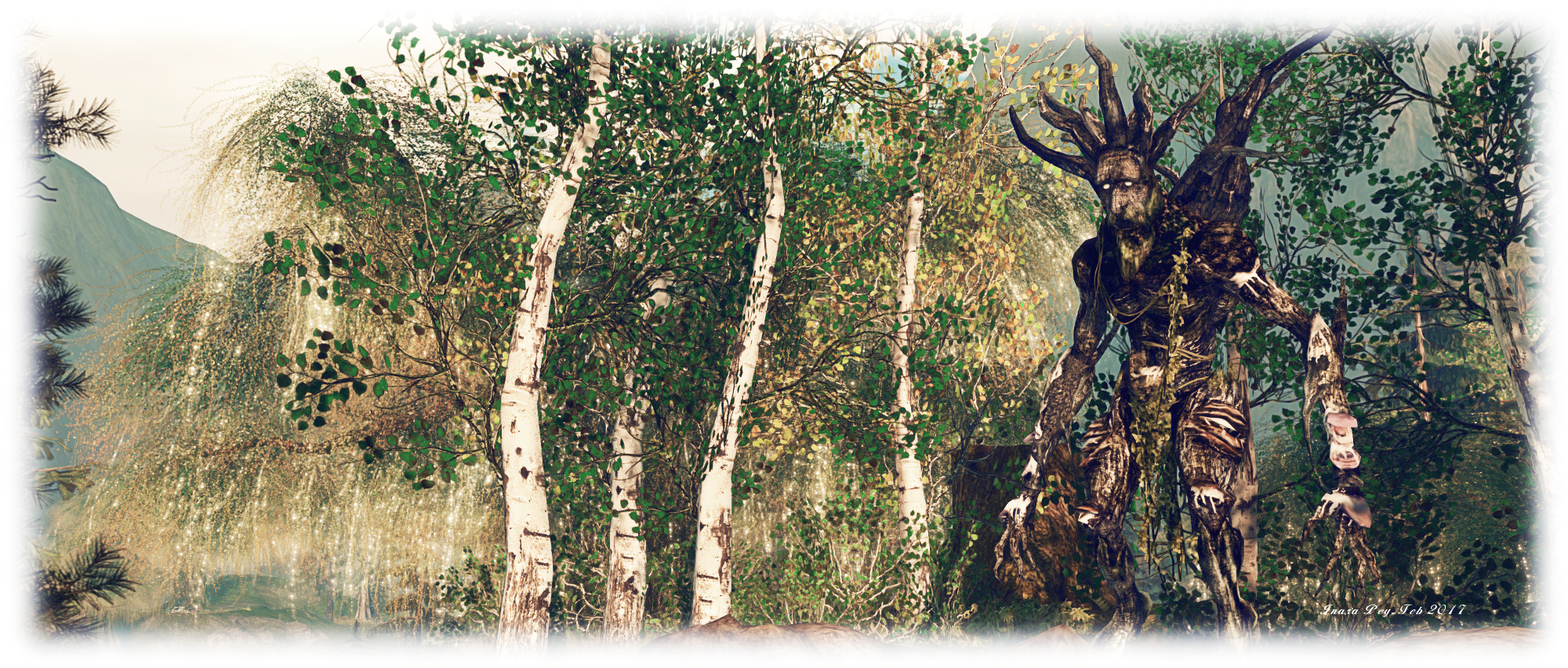
Hobbiton, Dragon Island; Inara Pey, February 2017, on FlickrHobbiton

For example, Smeagol can be found in one direction, hunched on a rock and wearing his Gollum face. Elsewhere a walk through the more wooded parts of the region might lead to an encounter with an Ent or two – although at least one (Treebeard himself?)  – can easily be missed if you hurry by too quickly. Elsewhere, a little mine reminds us that Middle Earth is the home to Dwarves as well, while a dragon stands watch on a rocky peak, and – across the waters – a single Eye stares out from the high tower of Barad-dûr.

Hobbiton makes for a delightful visit. My thanks to my region spotter, Shakespeare, for passing on word about it, and thanks from both Caitlyn and I to Zaphira for both sharing her vision with Second Life explorers, and for the warm greeting and time spent with us during our visit.

SLurl Details

Hobbiton (Thunder Dragon Island, rated: Moderate)
A NonStop visit in Second Life


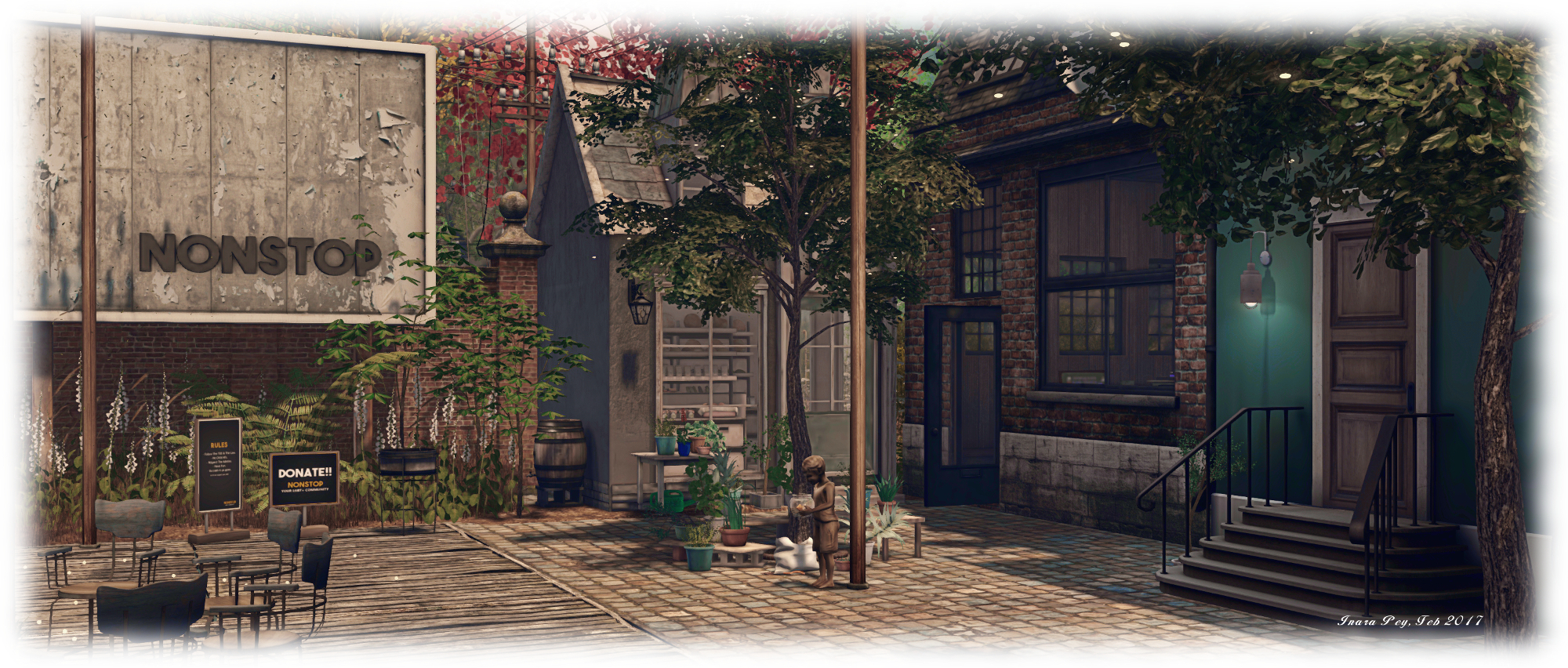
NonStop, NonStop; Inara Pey, February 2017, on FlickrNonStop – click any image for full size

Update: NonStop as described here no longer exists. See Exploring Puddlechurch in Second Life for details of a more recent region design by Cherish and Marty.

NonStop, a homestead region by Cherish Demonge and Matry Trellis, is presented as “Second Life’s ultimate forest”.  I’d personally regard the setting as more coastal / rural than “forest” – while there are trees aplenty, they mostly look and feel more like woodland, occupying the more rugged parts of the region and offering pleasant glades and walks between them, while leaving the low-lying parts of the region open for habitation.

Be this as it may, there is no denying the region is beautifully put together with an eye for detail, presenting visitors with plenty to see and enjoy.

NonStop, NonStop; Inara Pey, February 2017, on FlickrNonStop

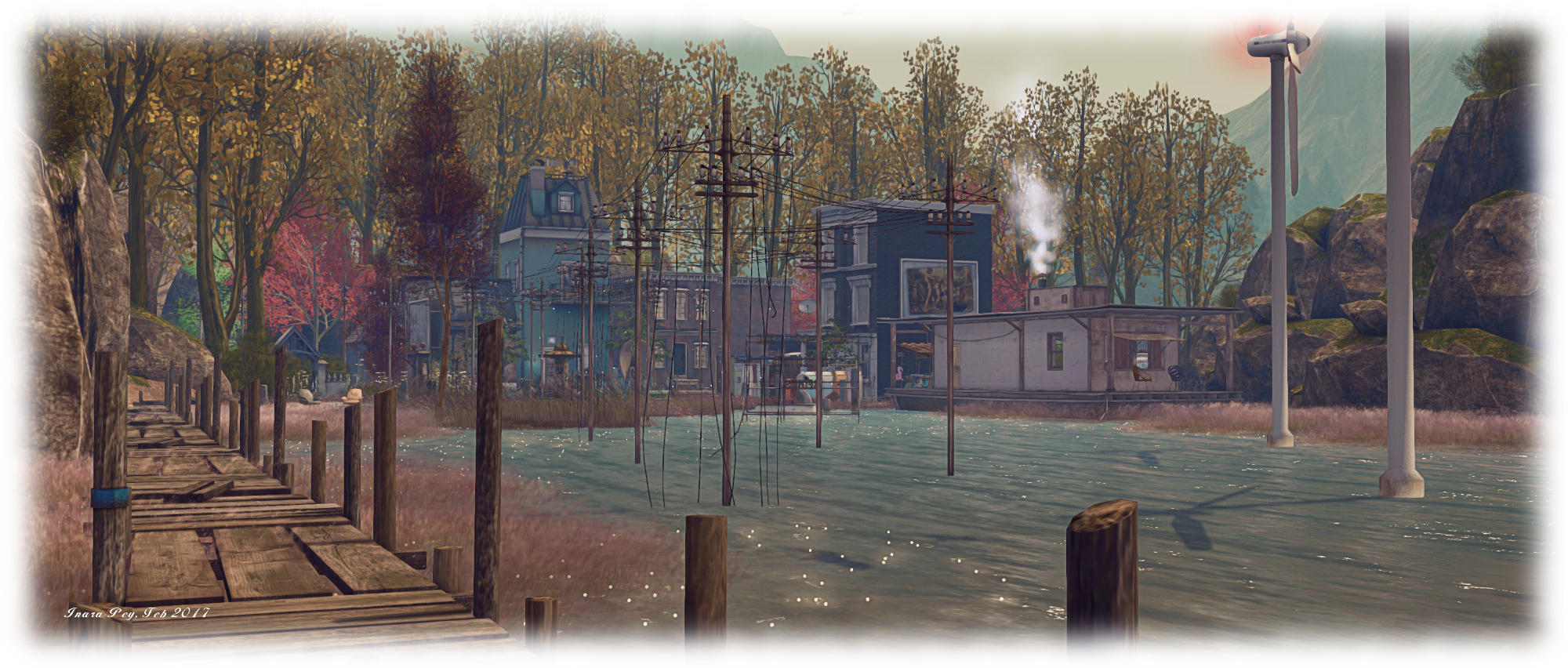
A visit begins in a little hamlet surrounded on three sides by rocky plateaus, and on the forth by an inlet with a narrow channel beyond, leading between distant peaks to the open sea. Wooden decking has been built out over the water from the narrow footpaths in front of the hamlet’s buildings, offering a makeshift town square  – a meeting point for new arrivals.

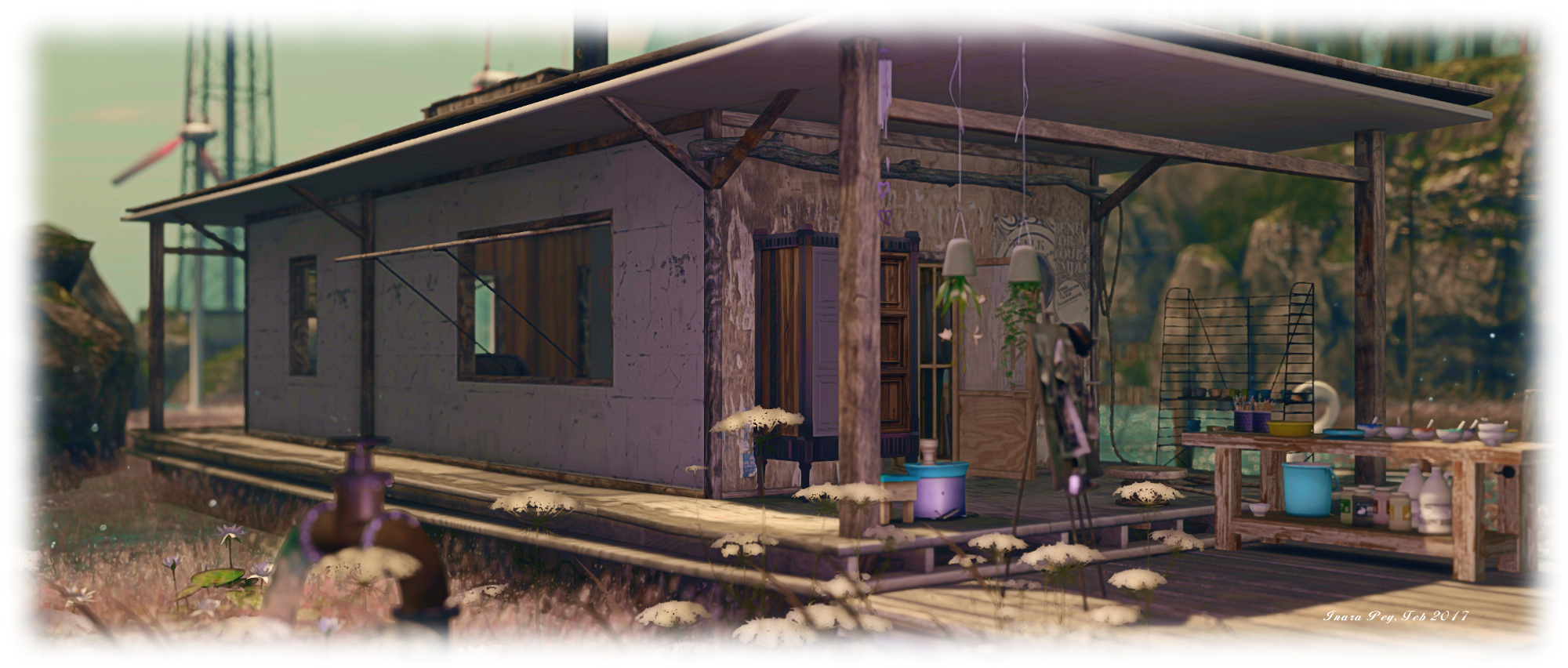
This would seem to be an eco-conscious community: rising from the waters of the inlet are the slender fingers of wind turbines, their blades quietly turning.  North-east of the hamlet lies a small farm, sheep grazing on tall grass, hay neatly baled, and a little market shack sitting at the end of the unpaved road leading out to it. Three more wind turbines sit out in the waters to the north, indifferent to the wreck of a fishing boat beneath them, or the second boat lying at anchor.

NonStop, NonStop; Inara Pey, February 2017, on FlickrNonStop

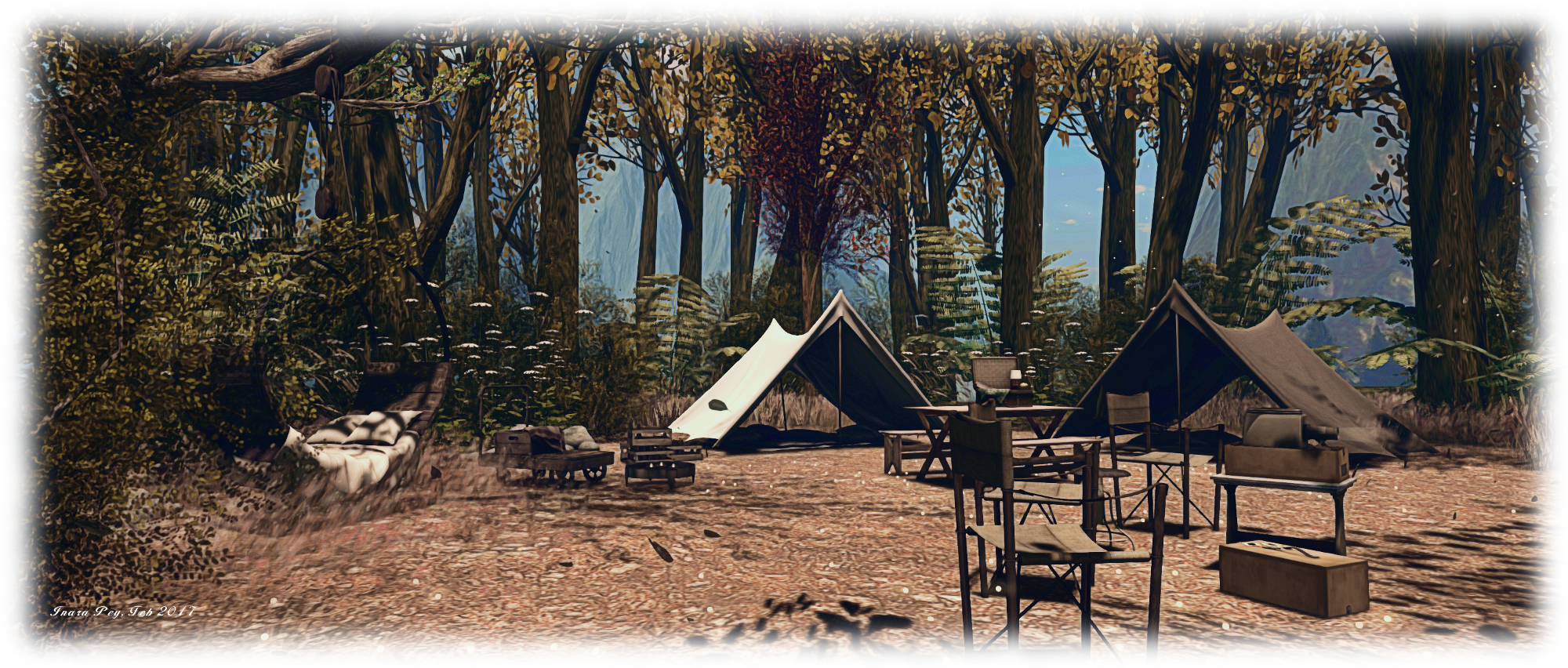
Facing the farm across another inlet, this one watched over by a squat lighthouse, sits a camp site amidst the trees at the top of one of the plateaus. Reached via a set of stone steps set into the blunt shoulders of the rocks, it offers a setting which feels genuinely isolated and forest-like.

To the west, and reach via a set of wrought iron gates, a cobbled path leads the way to a little trailer park. Or, if you prefer, a board walk hugs the foot of another plateau, pointing the way south to where a long-abandoned chapel sits on a tiny breach of land rising from the water, its only company an ancient tree and tall wild flowers.

NonStop, NonStop; Inara Pey, February 2017, on FlickrNonStop

Northwards, beyond the rocks safeguarding the trailer park, the woodland marches up the slope of a hill denuded of grass, sandy earth laid bare, reflecting the autumnal hue of the leaves on the trees. A similar stretch of sandy earth lies to the west as well, more golden-leaved trees marching across it and over the flat top of the rocky uplands it abuts.

Caught in a late summer or early autumn frame, complete with matching windlight, NonStop really is picturesque and decidedly eye-catching. There are numerous places throughout where people can sit and chat or play games, as couples or in groups. There are also indoor spaces to explore – such as the houseboat alongside of the hamlet, although there are one or two little oddities to be found as well, adding a touch of cursory intrigue to the little town.

NonStop, NonStop; Inara Pey, February 2017, on FlickrNonStop

Adult rated, NonStop can be the home of some colourful language among the locals, but is nevertheless welcoming and more than worth the time needed to explore. My thanks, as ever, to Shakespeare for the pointer!

SLurl Details

The streets and paths of Anduril in Second Life

Anduril, Anduril; Inara Pey, February 2017, on FlickrAnduril – click any image for full size

Anduril is a homestead region which has been designed as a collaborative piece between Asa Vordun and Marina Breen. I’ve long been a fan of Asa’s region design work, having first encountered it with Caprice and Easy A back in 2014, then following the development of Caprice, and after it, L’Arc-en-Ciel, which closed in 2015. So it was with a sense of anticipation that I hopped over with Caitlyn to see what this latest build might be.

Now, to be perfectly honest, with a name like Anduril, I was expecting a build which might exhibit at least hints of Tolkien or have something of a Middle Earth look or feel. However, this is not the case; which should not be taken to mean the region in any way lacks magic; quite the reverse.

Anduril, Anduril; Inara Pey, February 2017, on FlickrAnduril

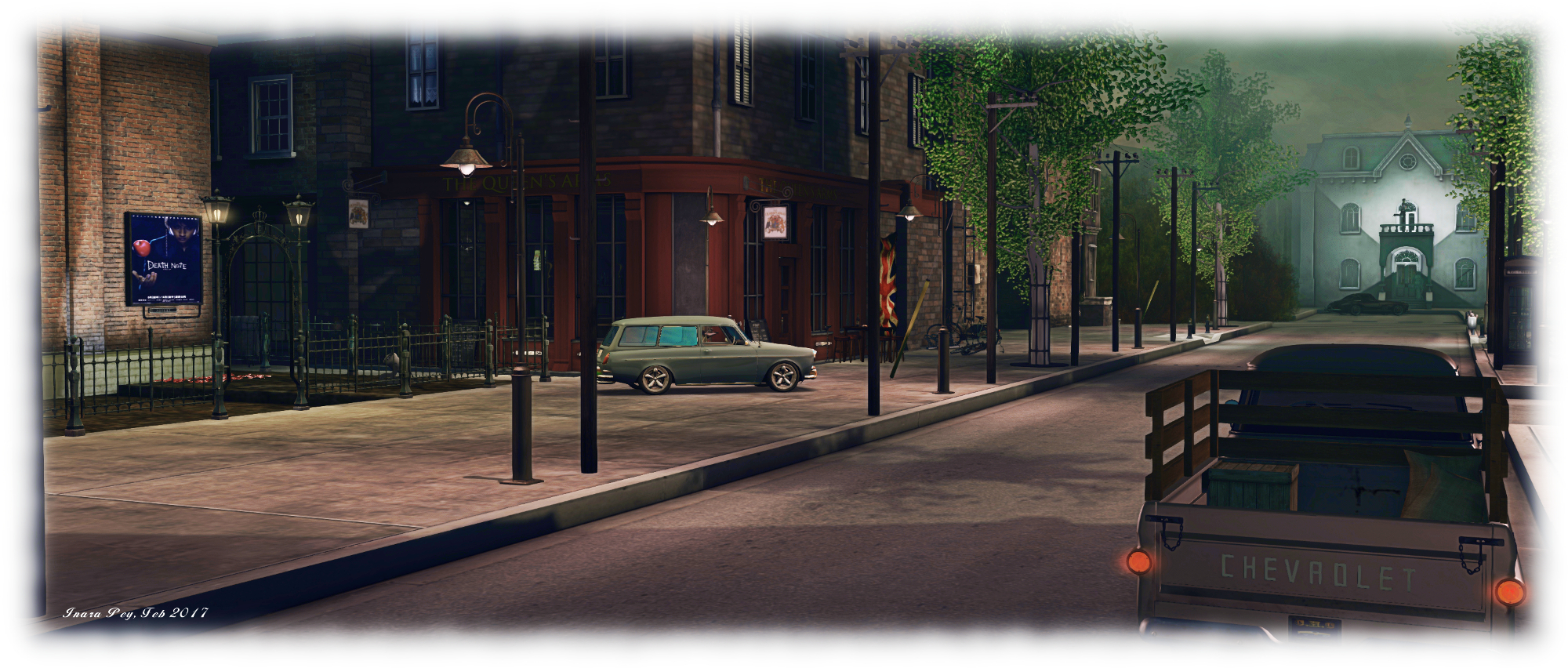
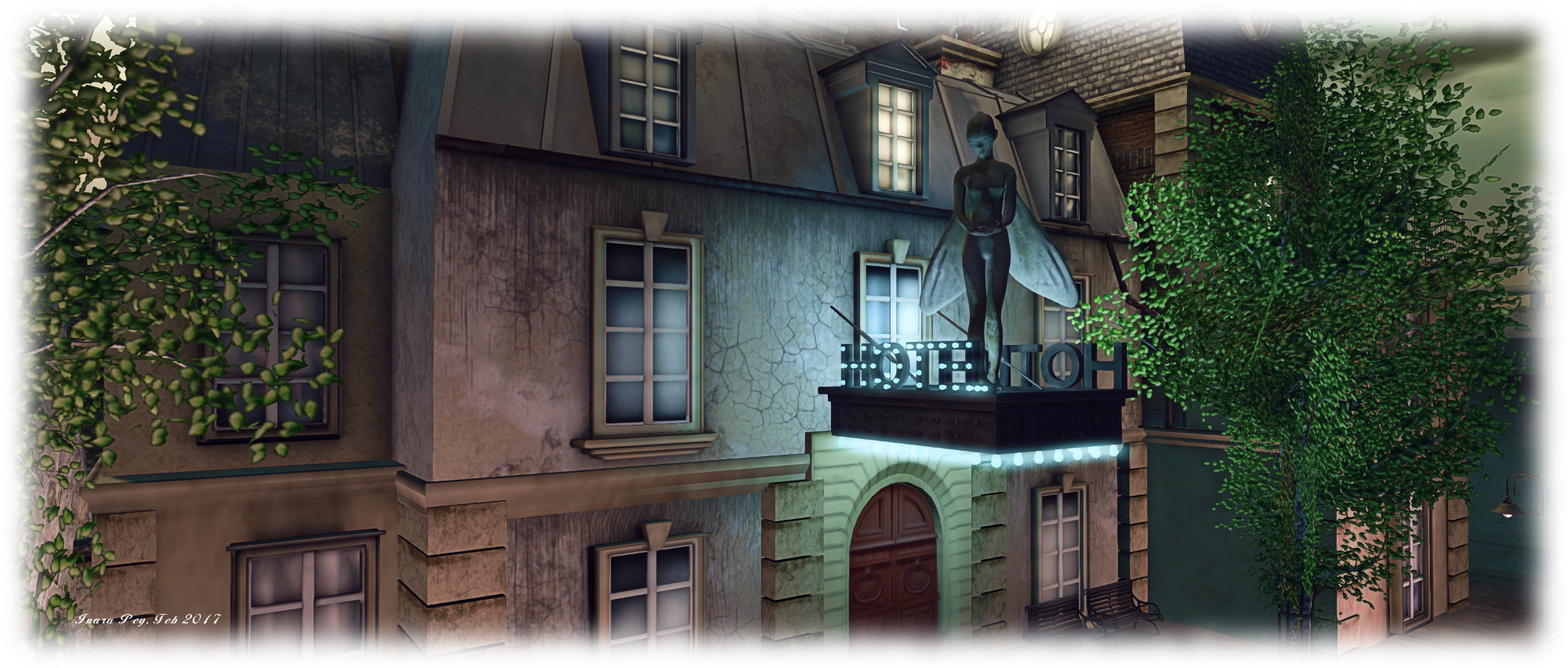
Visitors arrive in what appears to be the main street of a small town. A hotel stand on one side of the paved road, a pub and warehouse-cum-cinema / club on the other. Close by, the rounded tower of a lighthouse rises from a blockhouse base, suggesting this is a coastal town, and indeed, it is surrounded by water, although hills are visible beyond, so perhaps it lies within the estuary of a great river.

Everything is caught in the filtered light of morning, the Sun to the east, masked by heavy cloud and casting a warming glow over the distant hills. Along the street lights gleam from windows or illuminate the fronts of houses. A sailing boat rocks gently, moored within the arms of concrete piers, and cars reflect the lights in their polished finishes. It is a picture of calm suburbia; only the soft moaning of the wind gives the scene an edge of suspense, leading to the question of, “where is everybody?”

Anduril, Anduril; Inara Pey, February 2017, on FlickrAnduril

A walk along the street in one direction will take you past the moored boat and to the white front of a ballet school, where a latter-day Marcel Marceau uses the lights illuminating the school to highlight an impromptu performance up on a balcony. Turn inland from the main street, passing under the bridge between lighthouse and hotel, and you’ll enter a rugged landscape, cut by a channel of water beyond which sheer, bridge-topped cliffs rise, reached via broad stairs, while rusted gates point the way to where a dirt track curls out over a blunt headland.

With the stairs, the track, and a low bridge spanning the dark waters, where you go from here is up to you – but be sure to explore all routes carefully. There is much to be discovered as you explore, be it wooded paths leading to reclusive places to sit and cuddle, the slender finger of old ruins bridging the gap between land and tiny island, the alone sentinel of a small hall sitting atop the vertical face of high cliffs, or the sheltered gorge where pandas play.

Anduril, Anduril; Inara Pey, February 2017, on FlickrAnduril

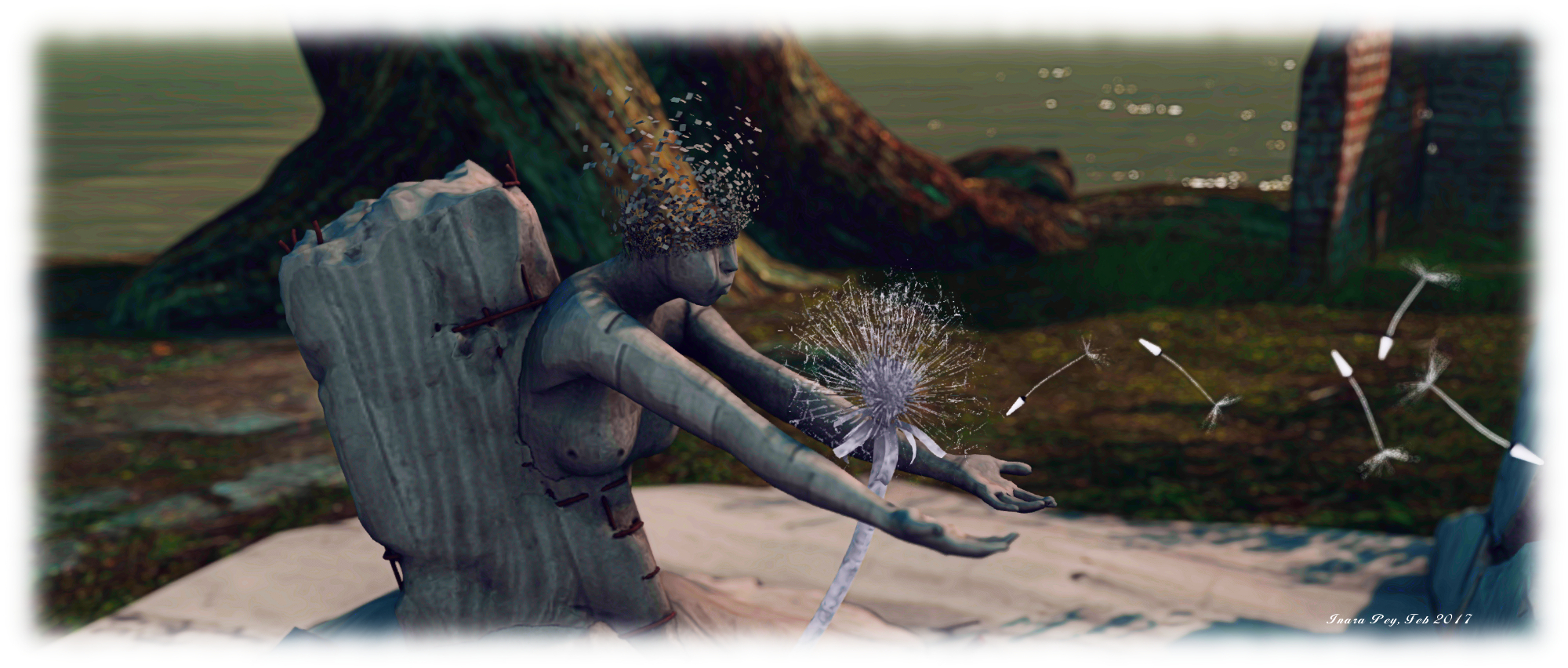
Throughout all of this there are statues by the likes of Bryn Oh, Kadaj Yoshikawa, Mistero Hifeng and Silas Merlin to be found, both indoors and outside. These perhaps mark Anduril as a place where art is highly regarded – and may even be symbolic.  Whilst not all the building are accessible, those that are should be explored as well, as each sets out its own little vignette – although you might have to look carefully to find your way into the blockhouse on which the lighthouse sits!

Atmospheric, beautifully put together and married to a subtle sound scape, Anduril makes for an engaging visit.

SLurl Details

  • Anduril (Anduril, rated: Moderate)
Can you help the East River Community in Second Life?

East River Community

Located on the mainland continent of Sansara, the East River Community (ERC) will this year celebrate its ninth year of operations in Second Life – although it can trace its roots as far back as 2006 with the MBYC, one of the first sailing clubs in Second Life – and sailing remains very much a part of the ERC’s activities.

Comprising a federation of groups, the intent within East River has always been to create an open, collaborative and convivial space for residents and businesses, nurturing the growth of relationships, friendships, personal projects, and encouraging collaborative activities  with both members and non-members of the community.

ERC has always been particularly engaged in fostering cultural activities and in enhancing the Mainland experience by demonstrating an attractive residential and commercial environment can be created purely through resident action. Newcomers are always welcome to explore the community’s regions, which offer a wide variety of public spaces including art galleries, cafés horse riding tracks, entertainment venues, nautical events, a harbour and airport for boating / flying enthusiasts and, for those wanting to get their first taste of water-based activities, a variety of free-access zero-cost boating.

Arriving at one of East River Community's airfields
Arriving at one of East River Community’s airfields

One of the mainstays of ERC has been its founder, Indigo Mertel – who has also contributed immensely to the Second Life community as a whole through a wide range of user-focused activities from establishing and building East River through to her work in curating and disseminating Second Life news form a wide range of notable sources, to the benefit of all users.

Indigo Mertal by Paola Tauber

Not only did Indigo found East River, and has been active within the community throughout its live and growth, she has been responsible for holding and managing six of the community’s regions, including meetings much of the financial cost in maintaining them. She recently contacted me with some sad news – and with her permission, I’m reprinting it here in the hope that one or more people might be able to step forward and help.

“I’ve been contributing to the East River Community with land for years,” Indigo revealed in a note she passed out to bloggers on Sunday, February 5th. “But many things have changed in my physical life these past months, and I am now in the sad position of no longer able to contribute to the community as I have done in the past.

“I’ve procrastinated this decision for a long time, because I was very uncomfortable with the idea of harming or breaking a community many have put so much effort into helping to build. But eventually, I had to come to a decision.

“We all want the East River Community to survive, and so I’m putting out a call to everyone, both within ERC and beyond, in the hope we can find donors willing to offer tier to the group so that East River can continue to be a vibrant part of Second Life. And with this in mind, I intend to continue covering the costs involved for a limited time, so that those with a desire to help ERC can contact me directly.”

If you are in a position to help ensure ERC continues as we know it today, regardless of whether you are active in the community or not, please contact Indigo in-world.

You can find out a lot more about ERC by visiting the ERC website, and by watching a Designing Worlds special on the community, which I’ve embedded below.


Links

Navigating Natural Falls in Second Life

Sol Farm, Story of Infinite; Inara Pey, January 2017, on FlickrNatural Falls V

I was drawn to Natural Falls V in part after seeing Loverdag’s images of its predecessor, Natural Falls IV, at the end of last year. I didn’t get to see that iteration of the build. so when I saw the newest design in the Destination Guide, I took a rapid leap over to see for myself.

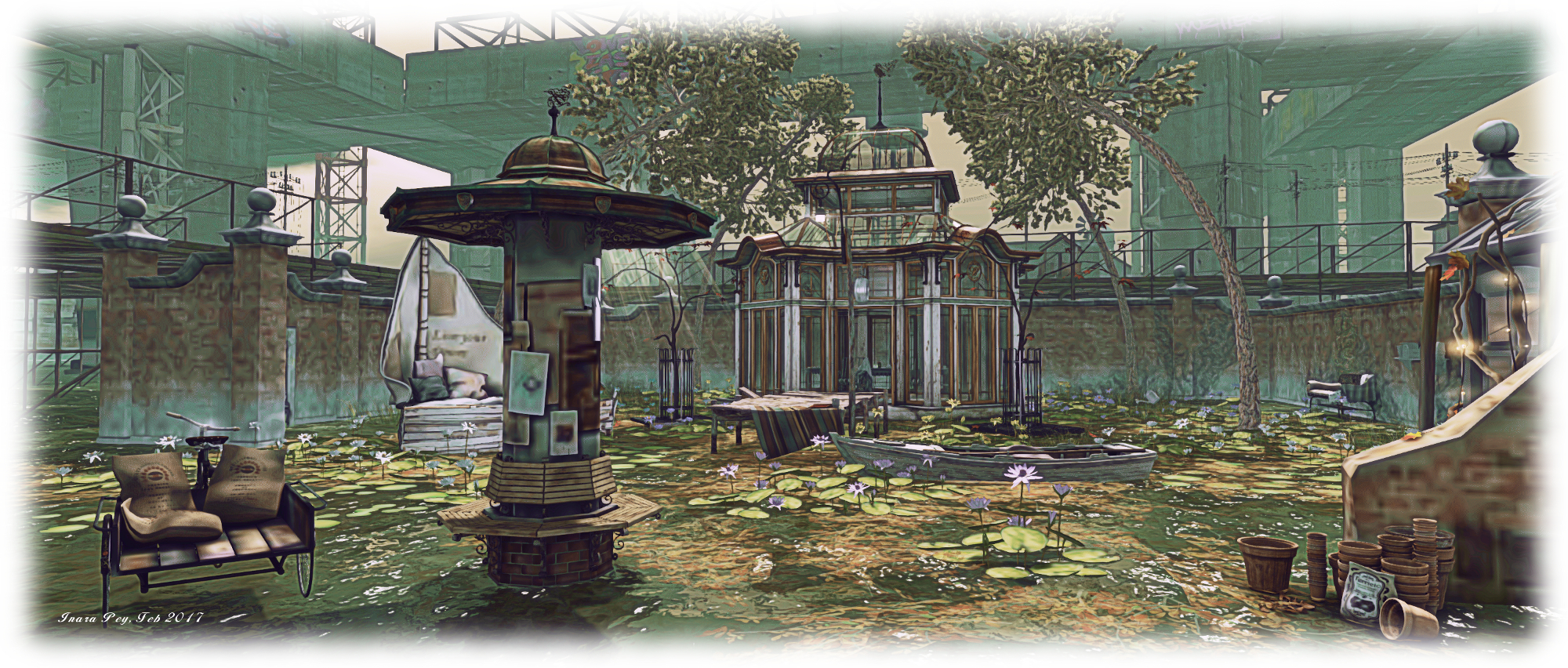
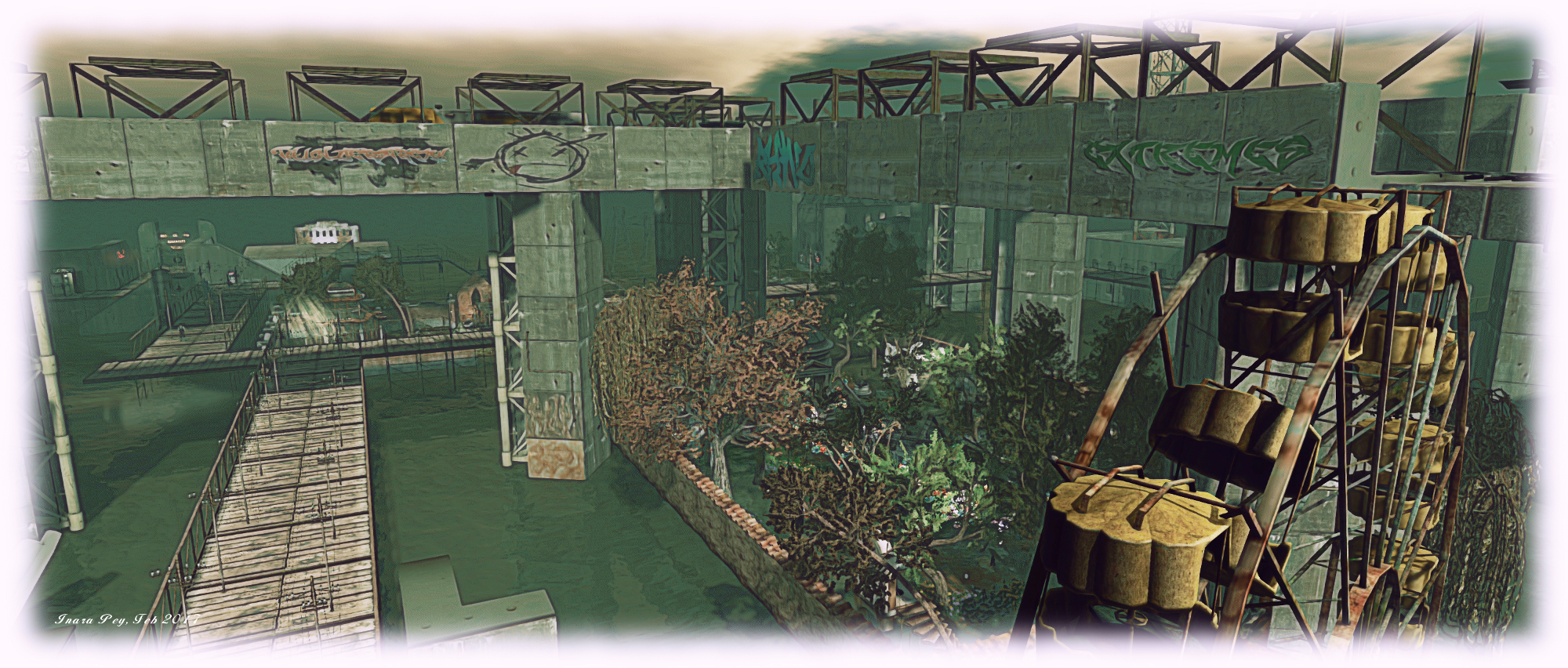
Natural Falls is the work of Dann (DannChris), who appears in Second Life as a highly industrious hamster with talent for, among other things, intriguingly descriptive prose. “Natural Falls,” he notes, “is located in an abandoned, flooded metropolis slowly decaying under a derelict, elevated railway.”  It’s an evocative description, and the build – which also sees Natural Falls located in a new sim – more than lives up to it while once again amply demonstrating Dann’s skill in increasing a captivating, atmospheric environment rich in content and potential narratives.

Sol Farm, Story of Infinite; Inara Pey, January 2017, on FlickrNatural Falls V

Visitors commence their time in the region at a boardwalk landing-point. This offers a variety of routes around the flooded setting, some of which end in stairways leading down to the water. Above this, seated on tall steel and concrete piers sits the elevated railway. From above, board walk and railway divide the region into an uneven grid-like pattern, as if sectioning this water-claimed city as it sits beneath a brooding sky complete with low-lying clouds.

Blocky, cement-like walls occasionally sit alongside the boardwalk, their many glass-less windows staring over the failing remnants of what was once a thriving urban hub, now reduced to deserted houses, shops and industrial units rising from the slow-moving waters. The detritus of a vanished community litters the flooded streets, and everything at first glance appears to be trapped in the gloom and grey of neglect and desertion.

Sol Farm, Story of Infinite; Inara Pey, January 2017, on FlickrNatural Falls V

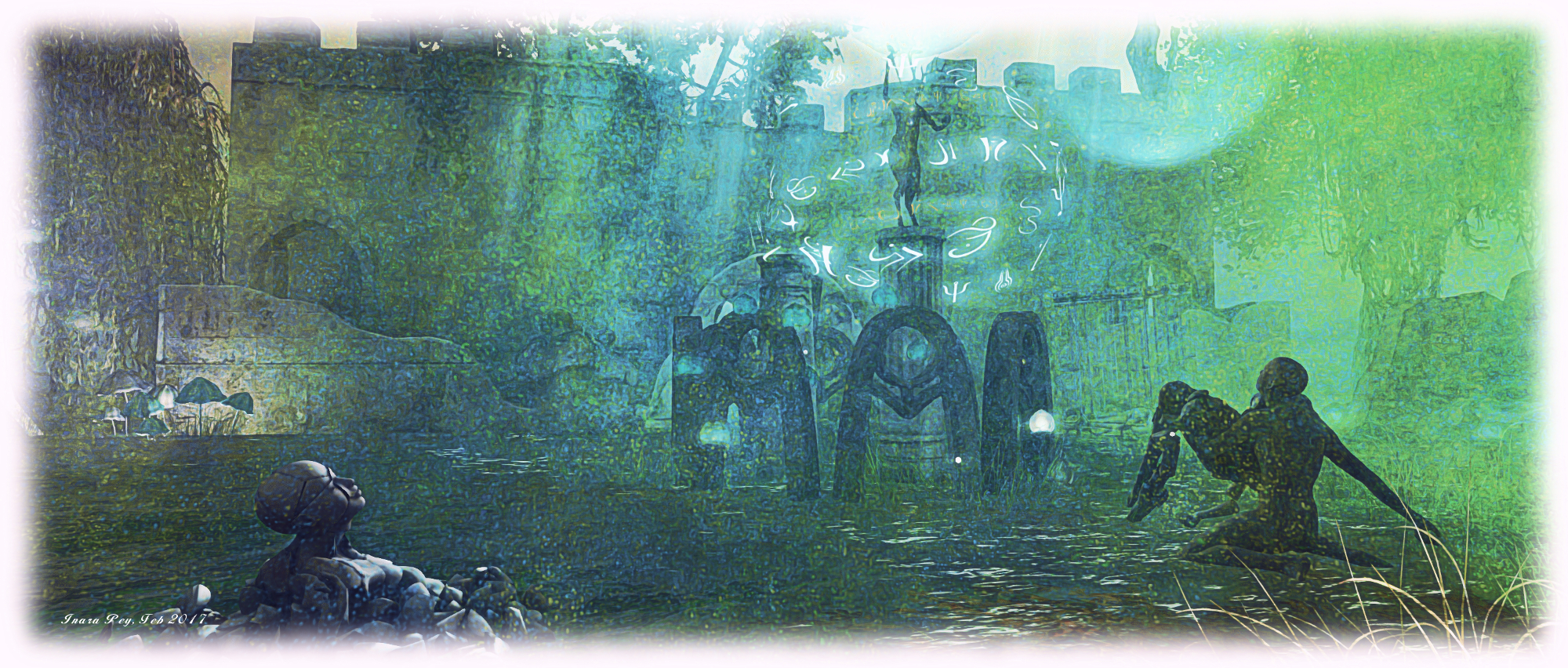
But – look again, and you’ll realise there is more to see than you may have thought when arriving. Colour sparks across the region, be it from the broken windows of a long-empty shop, the bloom of flowers in a flooded garden, or the splash of graffiti on a wall. While in the distance sits the beckoning glow of many-hued lights. Once seen, this draws visitors to a mystical corner, a world of almost otherworldly allure, suggesting that that even amidst this urban decomposition, something  quite beautiful survives.

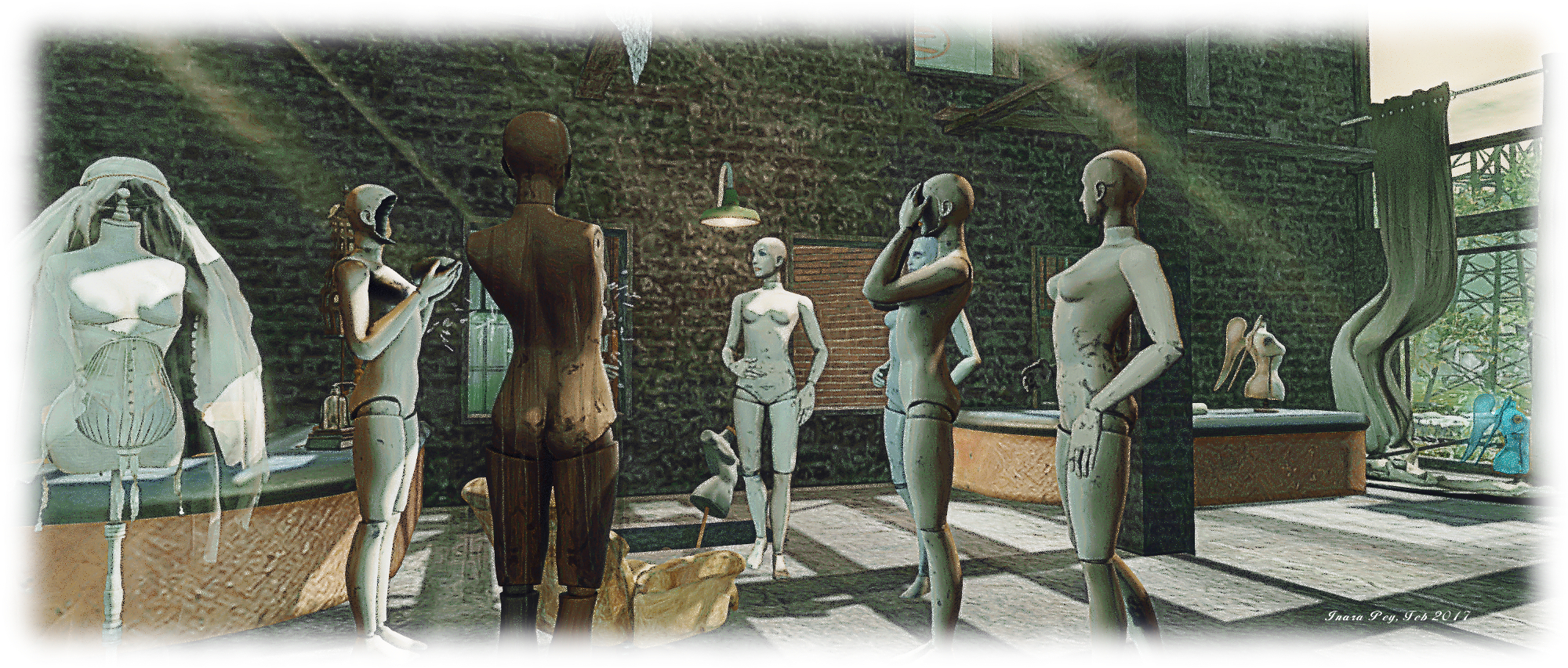
This blending of art and colour within the wider setting of decay and loss encourages exploration. Nor does everything reside outdoors as well. Thus, time and a careful eye are recommended as a part of any visit, lest something is overlooked along the way.

Sol Farm, Story of Infinite; Inara Pey, January 2017, on FlickrNatural Falls V

And when you feel you’ve toured the ground levels enough, remember to check the teleport mirror by the landing point. It’ll carry you up to a haven of light and colour above the clouds, a little island of cosiness to be enjoyed alone or with someone special.

Natural Falls V continues what has been – from the images I’ve seen on the Flickr stream – a fabulous unfolding story, rich in content and presentation, and most assuredly well worth a visit.

Sol Farm, Story of Infinite; Inara Pey, January 2017, on FlickrNatural Falls V

SLurl Details


A day at Sol Farm in Second Life

Sol Farm, Story of Infinite; Inara Pey, January 2017, on FlickrSol Farm – click any image for full size

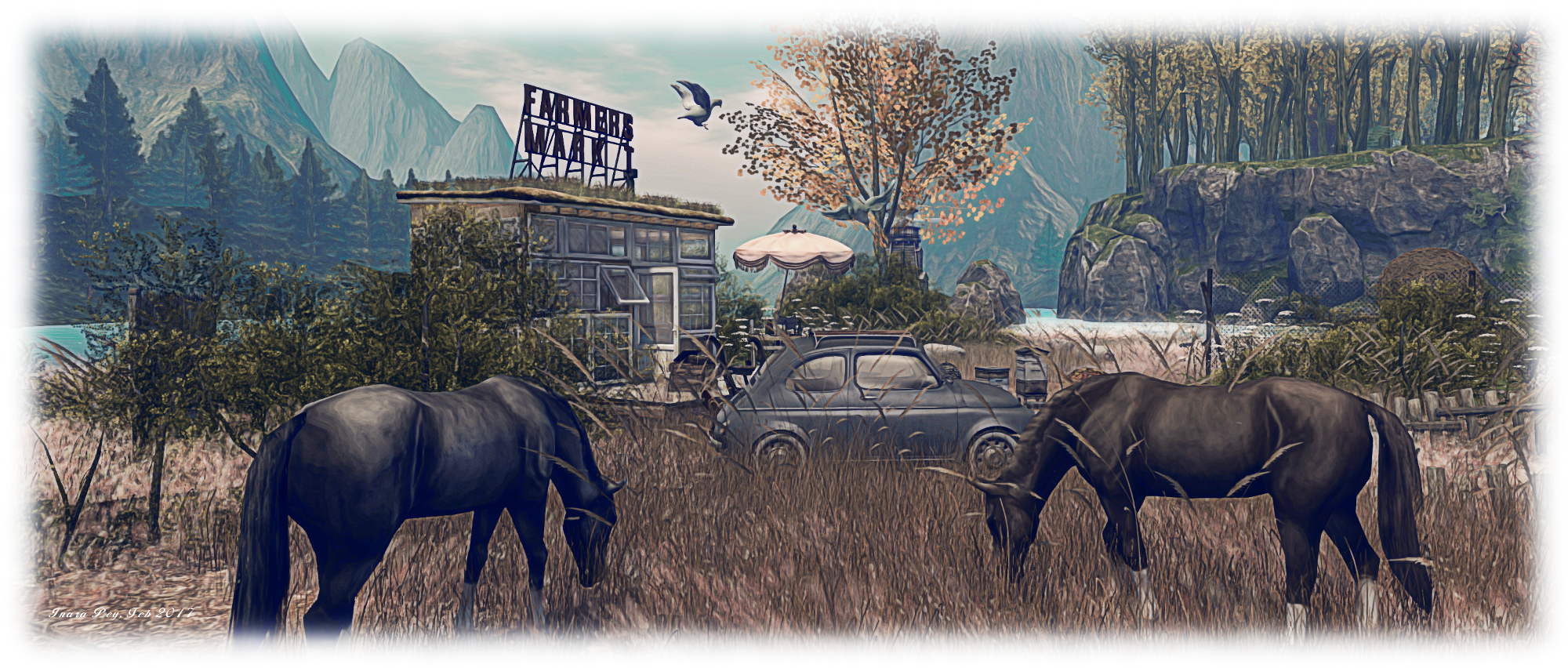
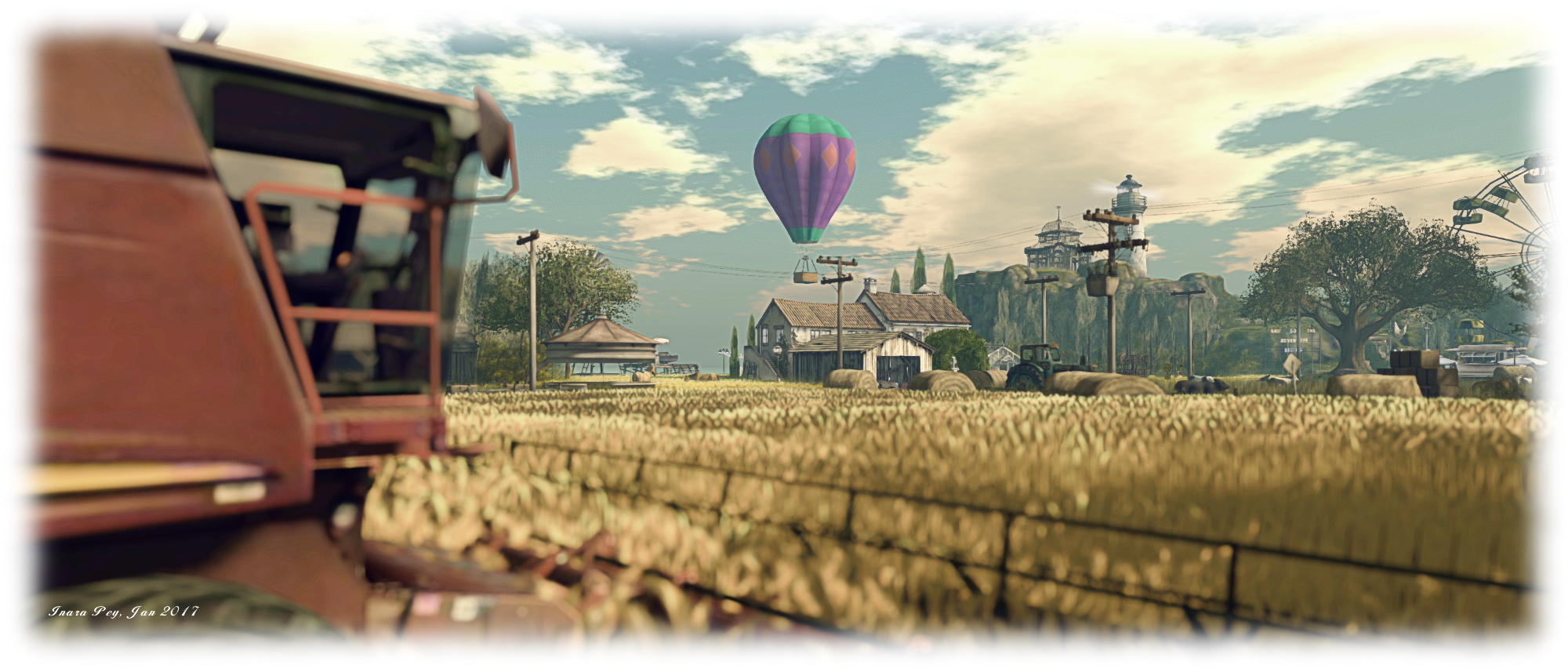
Sol Farm, Story of infinite, is a gorgeous, rural build by Show Masala, which really has to be visited to be appreciated. Given this Full region is almost exclusively built on the one level, with only two significant changes in elevation, and a good portion of it is flooded, it looks and feels far bigger than the single region it occupies.

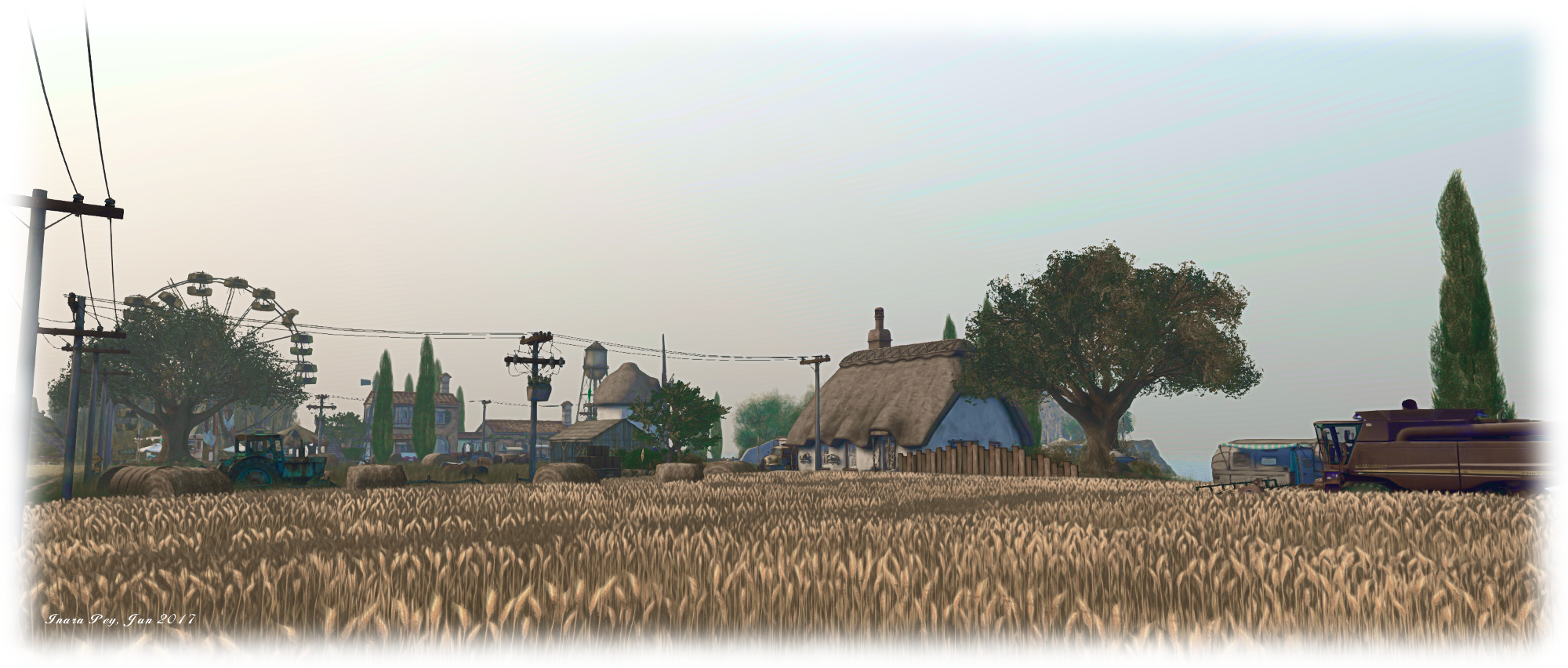
This is a largely rural setting, centred around Sol Farm, complete with thatched farmhouse, fields of crops and livestock, outbuildings, and many of the mechanical accoutrements of a working farm. However, there is much more here than may at first be apparent. South of the farm sits a house with decidedly Mediterranean looks, complete with whitewashed walls and shutters for the windows. While it may at first seem to be another farm, flanked as it is by fields, the terraced pool behind it overlooking the region’s encircling beach suggests it is perhaps a holiday home.

Sol Farm, Story of Infinite; Inara Pey, January 2017, on FlickrSol Farm

The Mediterranean feel continues westward as well, where a Tuscan style villa can be found, also overlooking the beach on one side. This, however, would appear to be a working farm, with livestock grazing in the grounds, produce from the garden on sale on tables and trestles and a tractor parked to one side. This smaller farm has a slightly incongruous neighbour: a long-deserted and broken fun fair. It strikes a different chord to the farmlands, without actually appearing out-of-place. A little open-air café sits within it, served by a converted tram sitting on tracks leading to a disused tunnel.

It is the flat-topped hill over the tunnel which offers one of the regions two elevated points. It is the home to a squat lighthouse as it keeps a revolving set of eyes on both the land below it and the sea surrounding it. A set of stone steps offer the easiest route up to it, while it the graceful form of a glass pavilion keeps it company.

Sol Farm, Story of Infinite; Inara Pey, January 2017, on FlickrSol Farm

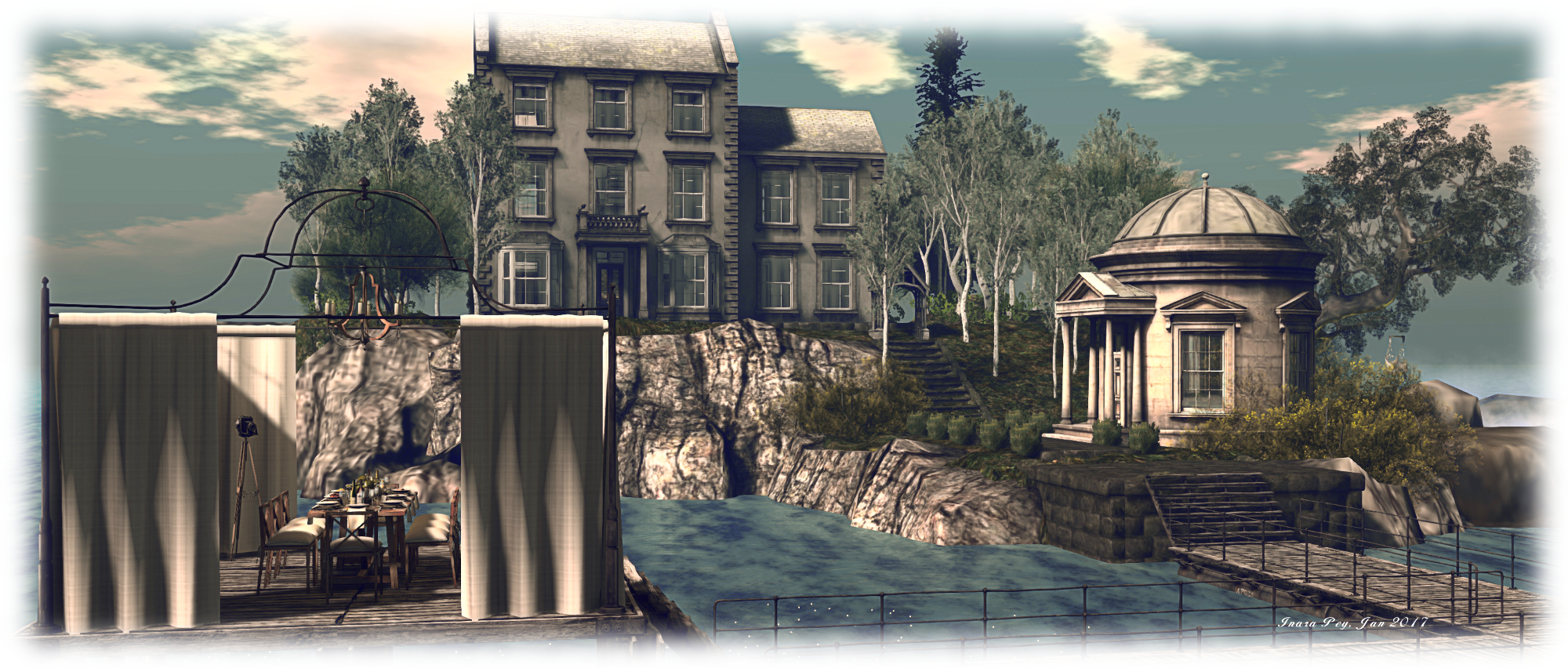
North of all of this sit two islands. The first is connected to beach by a wooden board walk, which invites visitors out to the island. Two decks can be reached from the mid-point in the broad walk. The first provides space for a carousel, perhaps rescued from the old fun fair and restored; the other offers an over-the-water dining spot ready to entertain a small party. Beyond these sits a tall house with a folly guarding the steps to its gabled gate. While unfurnished, it’s hard not to picture this as an upmarket bed and breakfast, offering a unique dining experience down on the board walk.

The second island is entirely isolated from the rest of the region. Designed by SUNAO (hasunoahana) and YURU (yururikaze), it is in fact private property, and not open to casual visitors. It sits across a narrow channel from another of the region’s little incongruities: a small Japanese village, complete with Torii gates and festooned with lanterns. While this may also appear to be a separate environment, a rocky wall sitting between it and the farm fields, it is in fact a part of Show’s landscape, and can be freely explored.

Sol Farm, Story of Infinite; Inara Pey, January 2017, on FlickrSol Farm

South of this, sitting behind an old stone wall, is an open space of wild grass and trees, with a rocky pond. Held as a separate parcel by Powder Grau, this also appears open to explorers,  seamlessly blending with Show’s landscaping and the surrounding beach.

Nor is this all. Throughout the region are lots of little touches and spaces which both encourage wandering and offer places to tarry, be they the little coffee shops, or the picnic blankets or shaded and open cuddle spots. Should you prefer flying to walking when exploring, you might want to touch the barrel in the back of the little truck next to the coffee shop I’ve used for the SLurls in this article; it’ll give you a soap-bubble to fly around in. And do keep an eye out for the occasional tornado which seems to appear in the fields!

Sol Farm, Story of Infinite; Inara Pey, January 2017, on FlickrSol Farm

Caitlyn and I enjoyed our time visiting Sol Farm – and once again, our thanks to Shakespeare (SkinnyNilla), for the pointer. Should you decide to visit and find you also enjoyed your time there, please consider making a donation towards its continued presence in Second Life, via the tip urn at the coffee shop I’ve used for the SLurl in this review.

SLurl Details

  • Sol Farm (Story of Infinite, rated: Moderate)