Visiting Crystal Gardens in Second Life

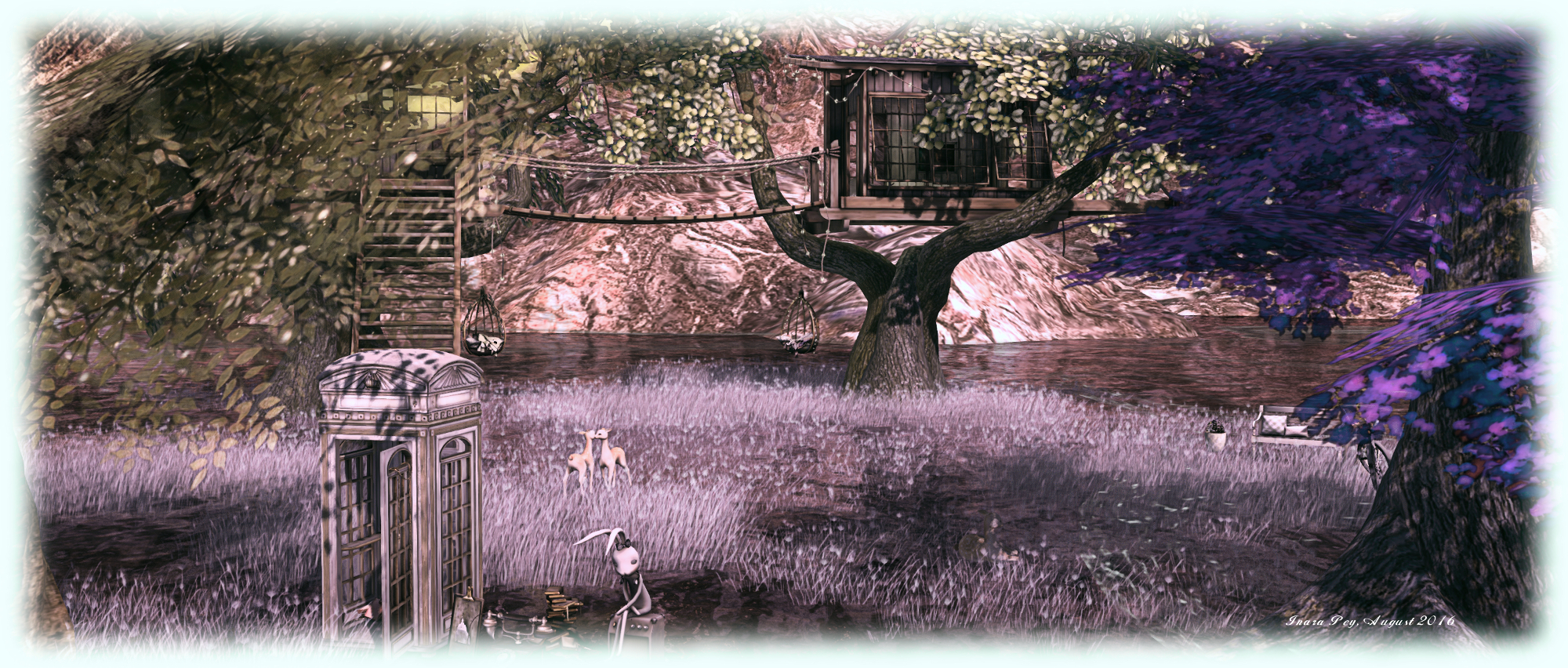
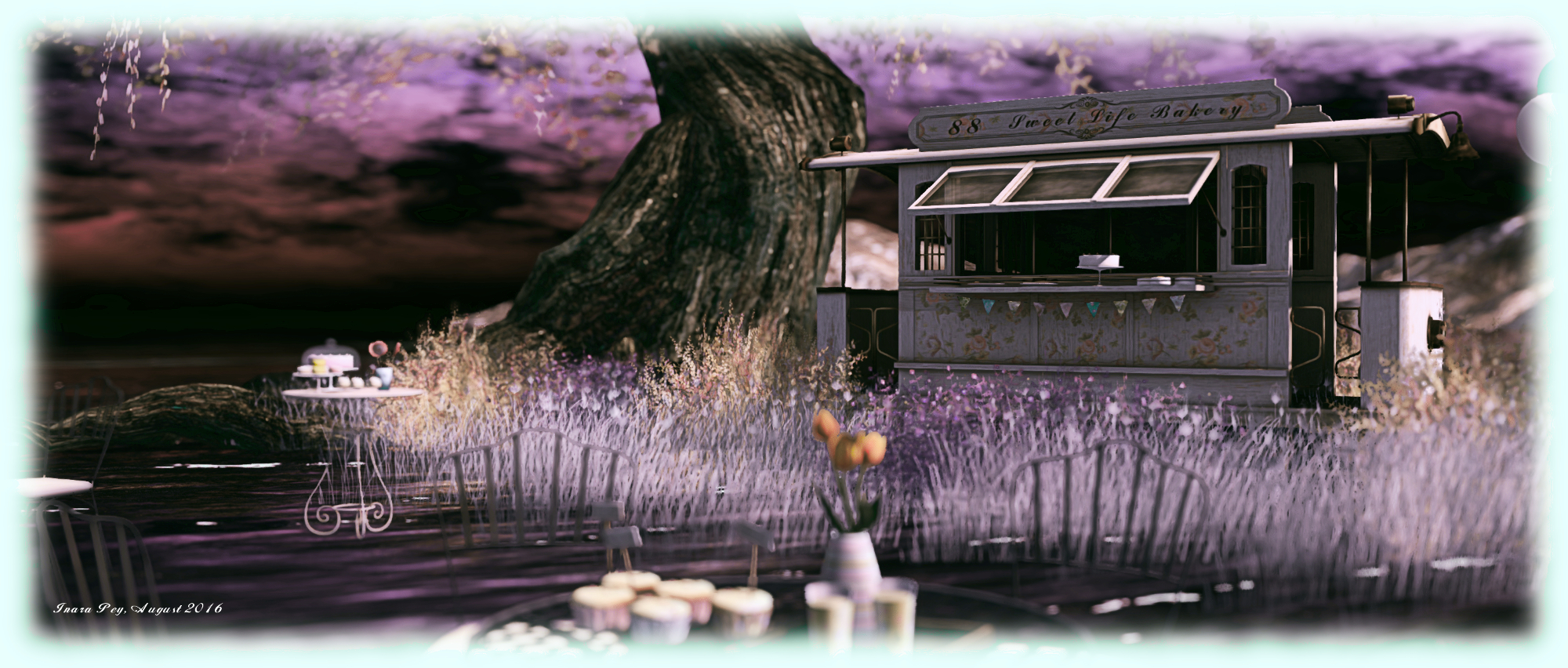
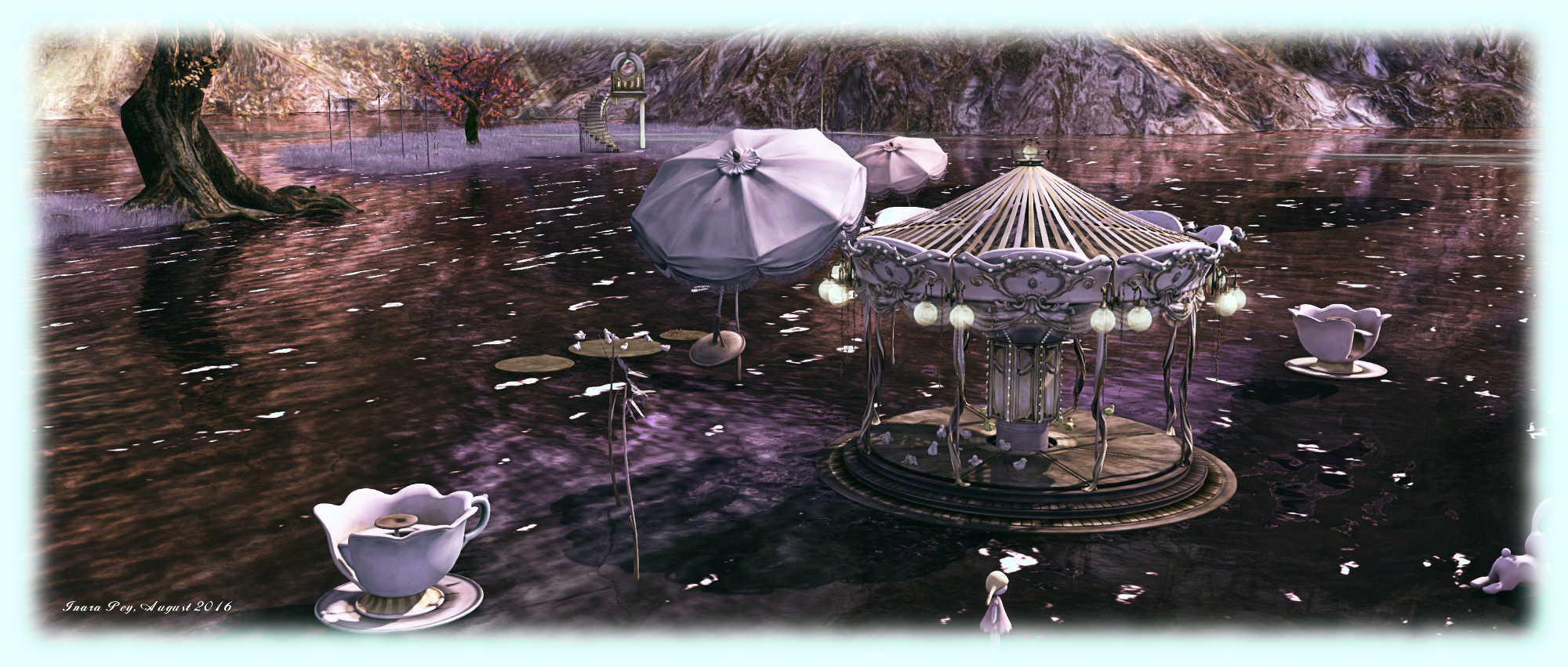
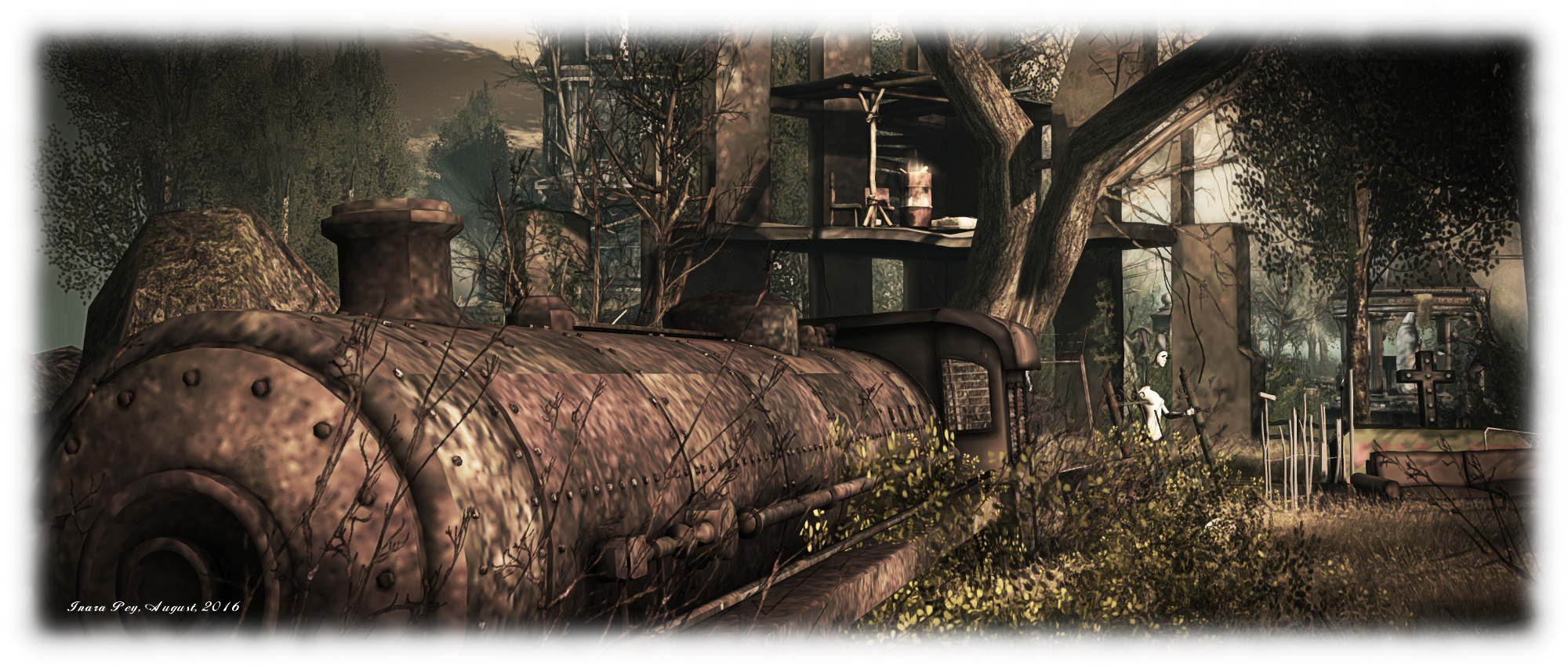
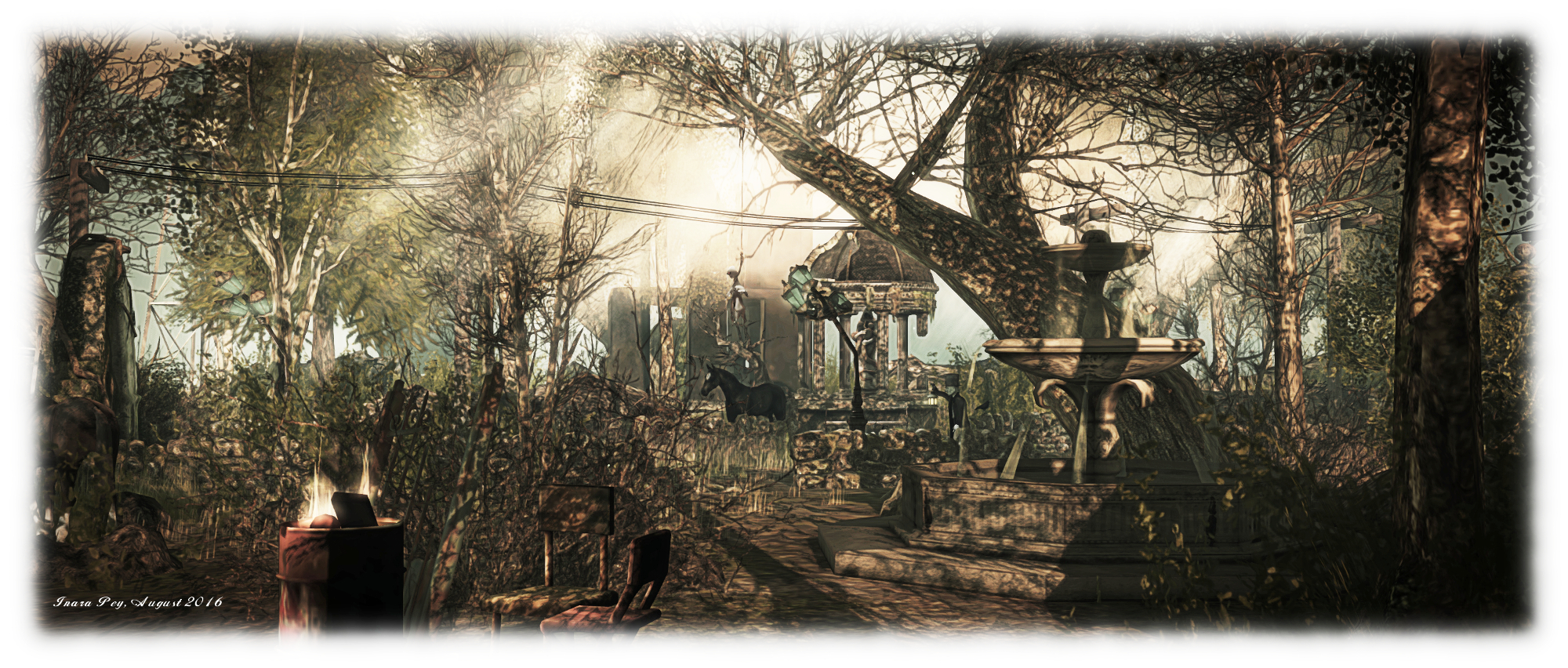
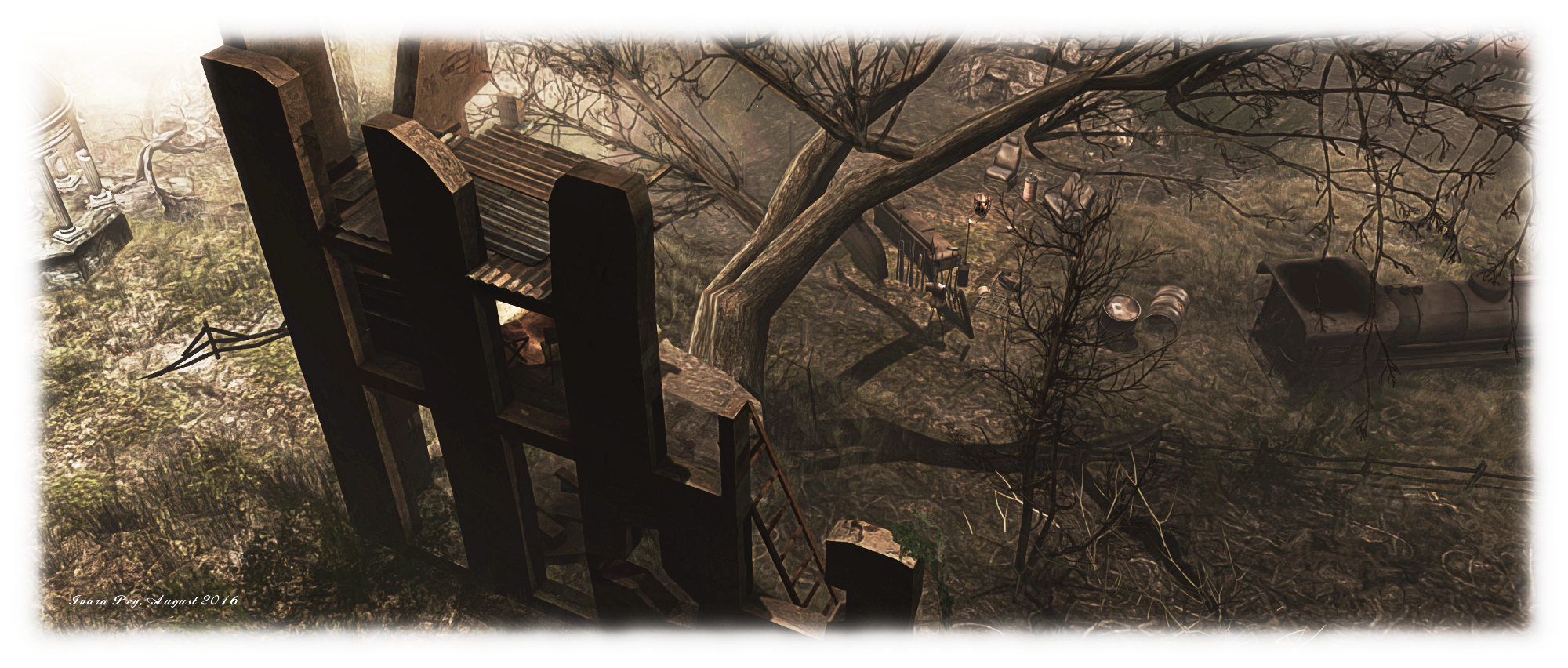
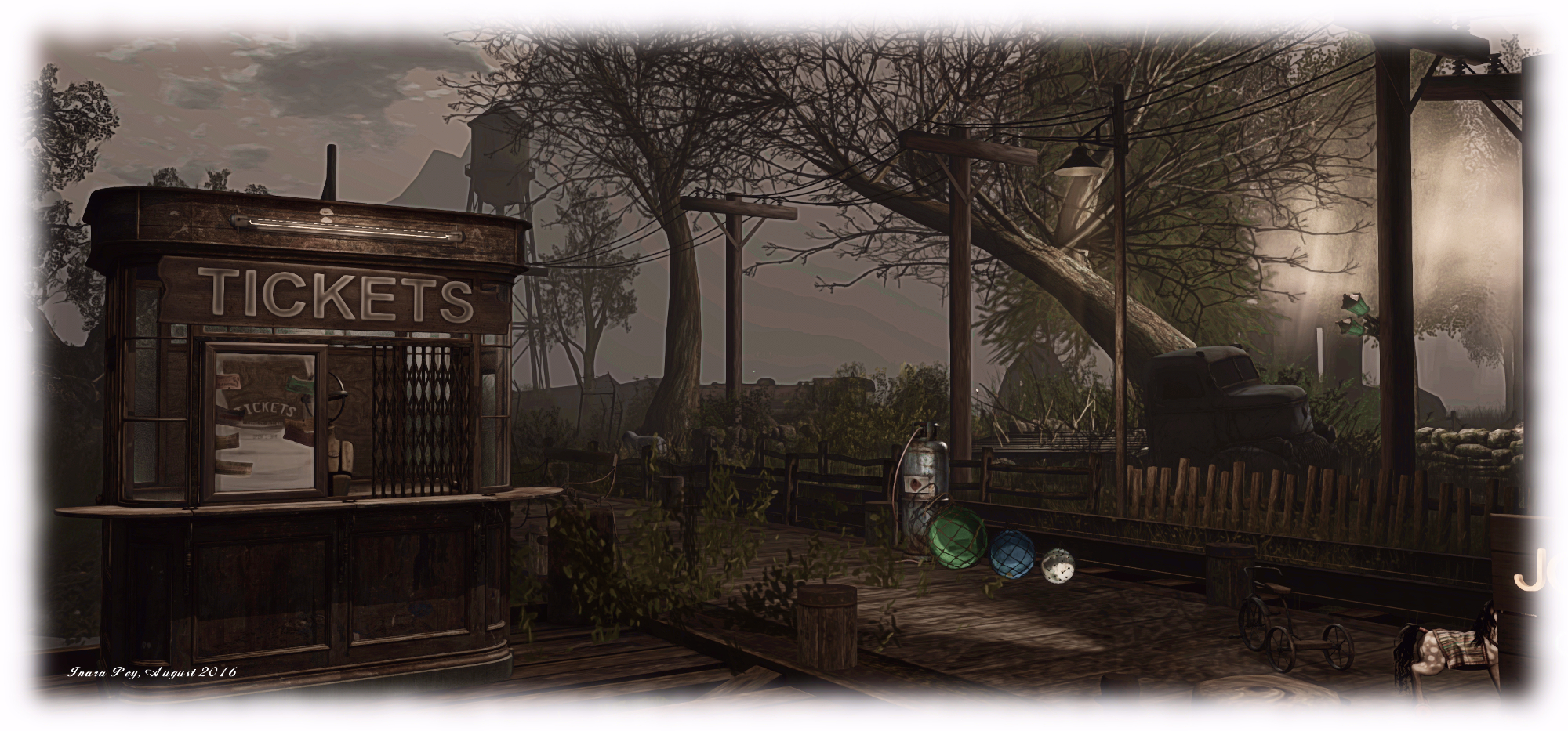
Crystal Gardens; Inara Pey, August 2016, on Flickr Crystal Gardens – click any image for full size

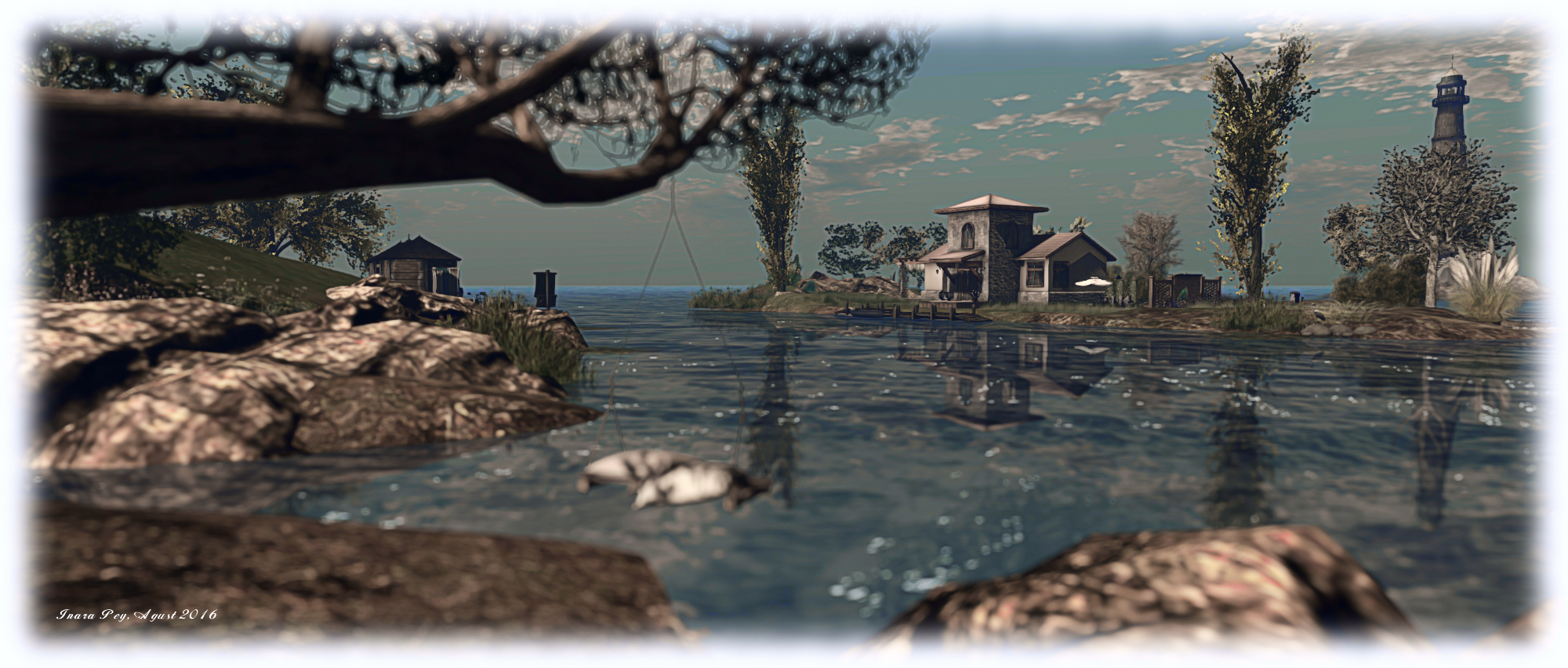
Crystal Gardens, designed by Sandi Beaumont (Sandi Benelli) is presented to Second Life travellers as a place for photography and exploration, offering visitors a ruggedly beautiful pastoral seam which is stunning in its simplicity and looks. This is my third visit to Sandi’s designs, having previously written about her work with her partner, Mikal, in February and July 2015.

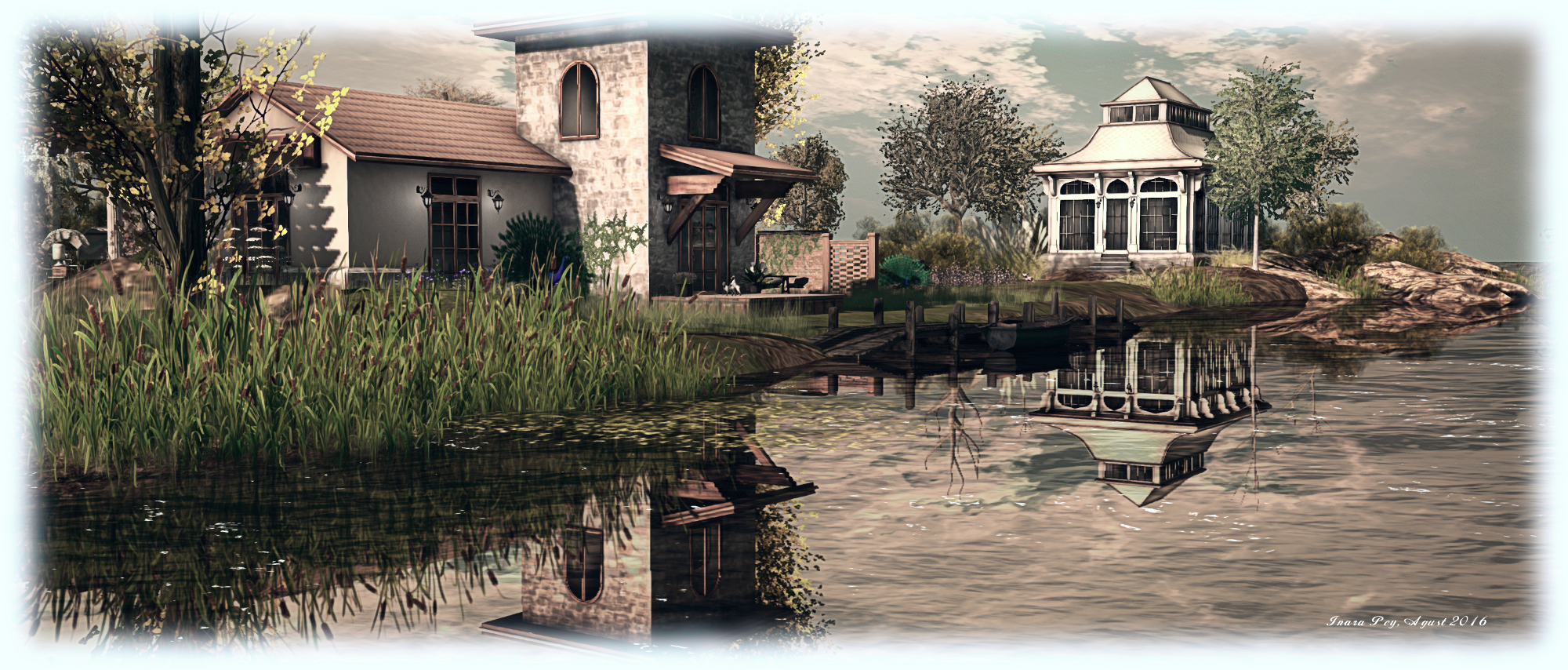
A homestead region, Crystal Gardens currently comprises three north-south oriented islands separated by a channel of water. The more westerly pair form a finger of land, the tip of which has been sliced off by a further, narrow channel spanned by a log bridge. Both are low-lying and somewhat rugged – the smaller island to the north decidedly more so than its southern cousin. On it sits a conservatory with a distinctly French feel to it, offering visitors comfortable armchairs in which to relax, a small selection of drinks at a small bar, and the promise of possible entertainment, given the microphone and amplifier. It’s a place which hints at being a refined little club, tucked away where only those in the know might find it.
Crystal Gardens; Inara Pey, August 2016, on Flickr Crystal Gardens

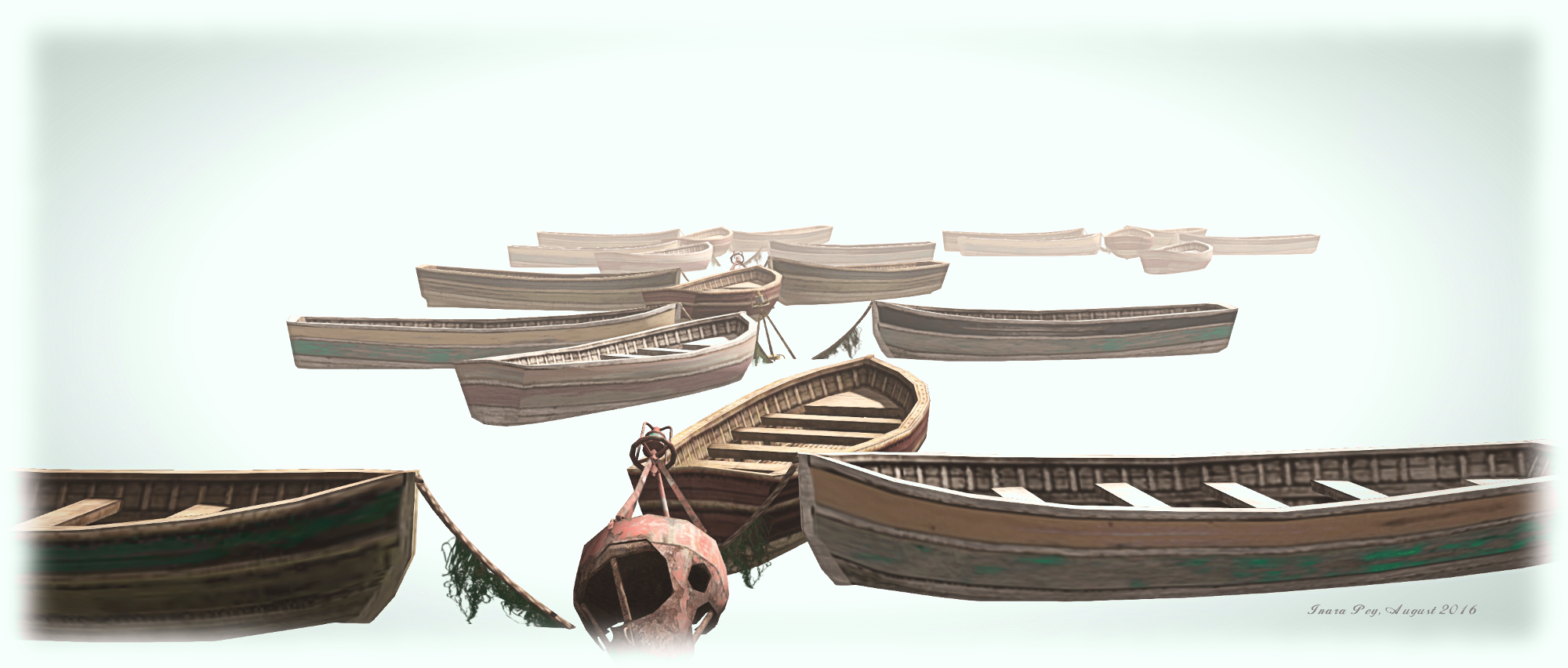
A bar area also comprises part of the southern island, located on the terrace of a Mediterranean villa which appears to be someone’s studio. Bee hives close by offer the promise of fresh honey, while a rowing boat tied up at the wooden jetty offers couples the chance for a little dalliance on the water.

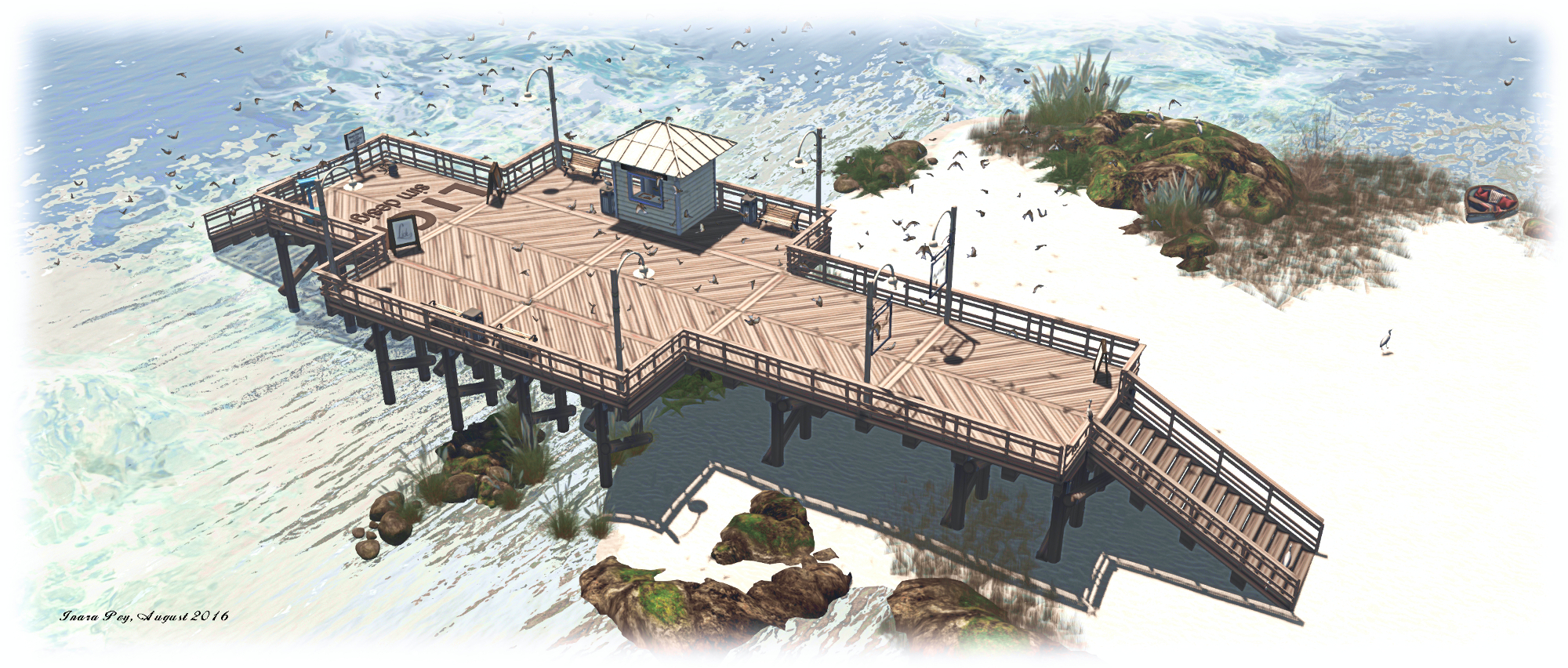
The twin of this rowing bow sits alongside the jetty across the narrow channel separating the largest of the islands from the others. It is here, outside a row of little beach huts that visitors first land. A cooked breakfast awaits anyone feeling peckish on their arrival, and a raft hints at possible adventure at one end of the jetty.
Crystal Gardens; Inara Pey, August 2016, on Flickr Crystal Gardens

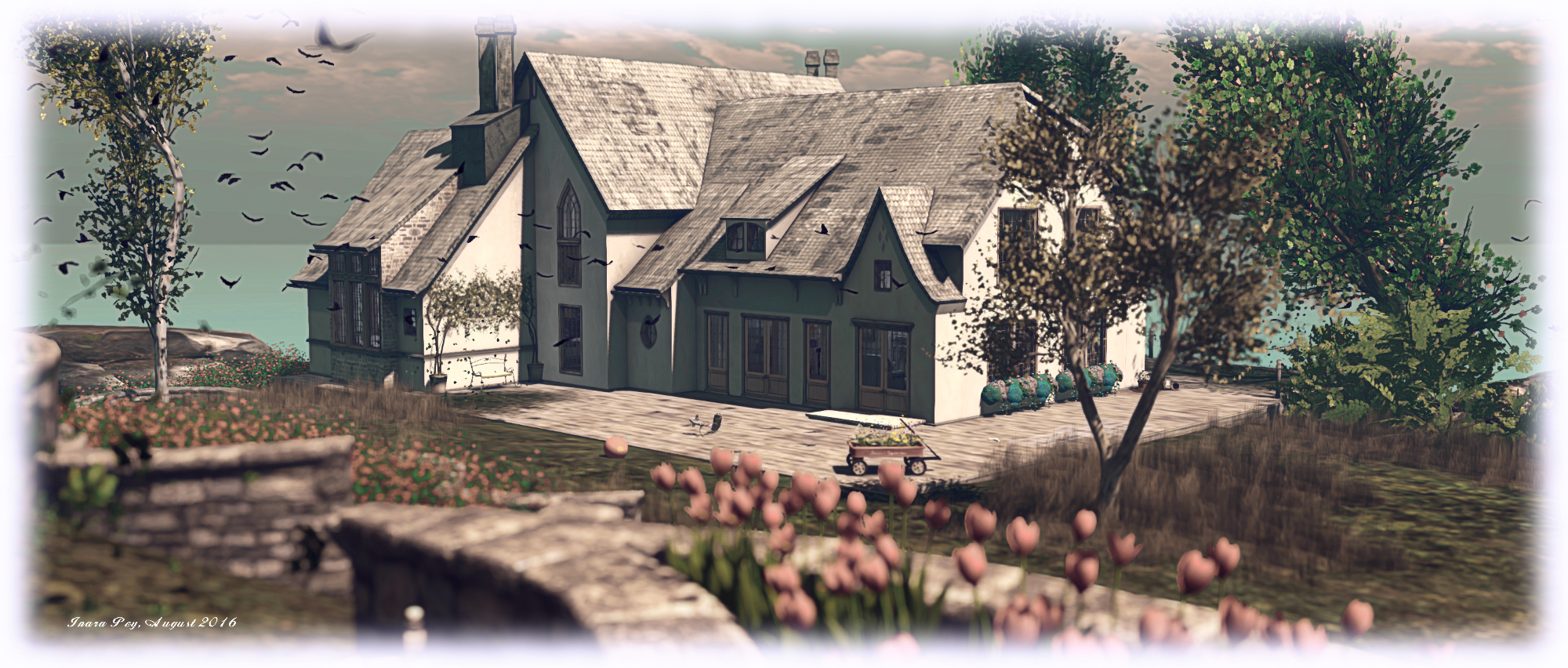
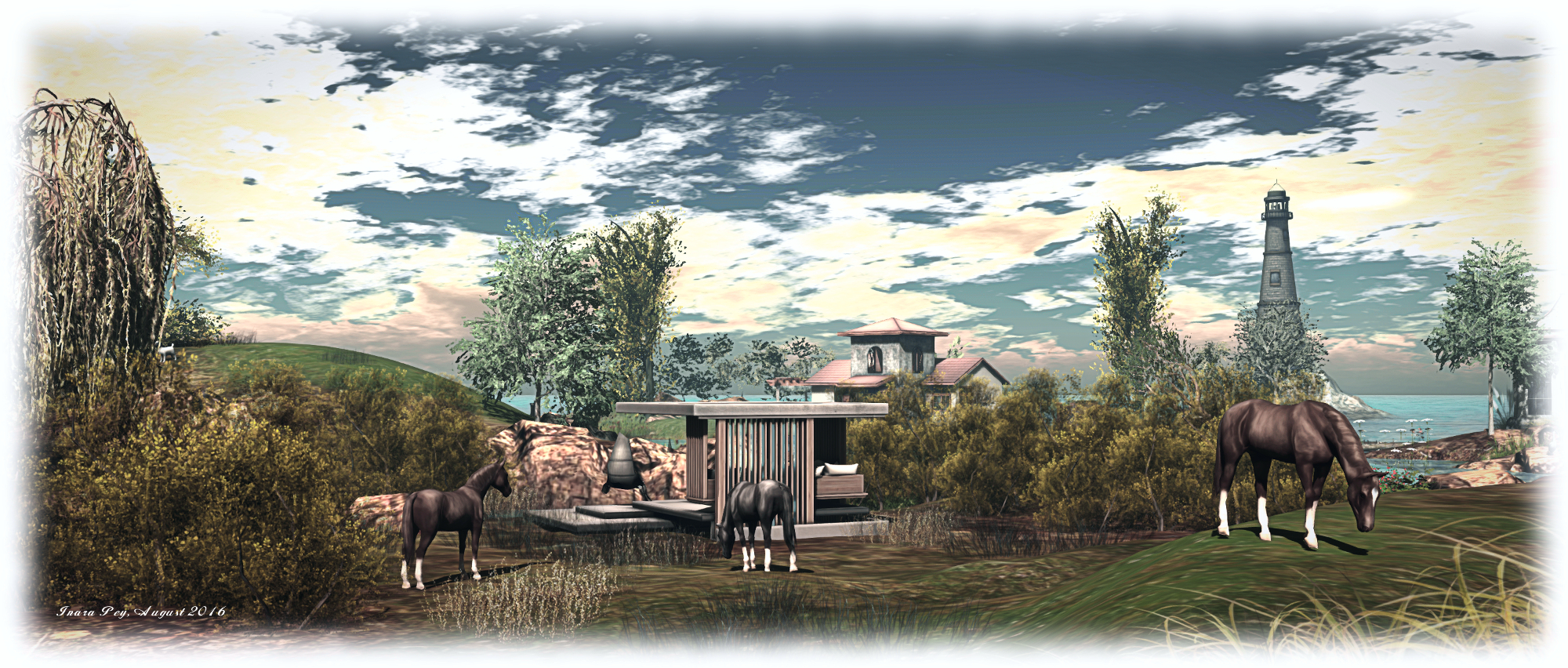
Beyond the beach huts, the island opens out into a gently undulating scene ripe for exploration. To the south sits a small farm of distinctly Tuscan design, whilst northwards, over the low hill marking the centre of the island, a narrow rugged bay cuts deeply into the land, a distinctly modern, open-sided summer-house overlooking it, with horses grazing close by. The summer-house might belong to the occupants of a converted workshop sitting on the east coast of the island. This has been converted into a comfortable home, while the ramshackle pier on which it sits suggests both have seen a hard-working life in the past.

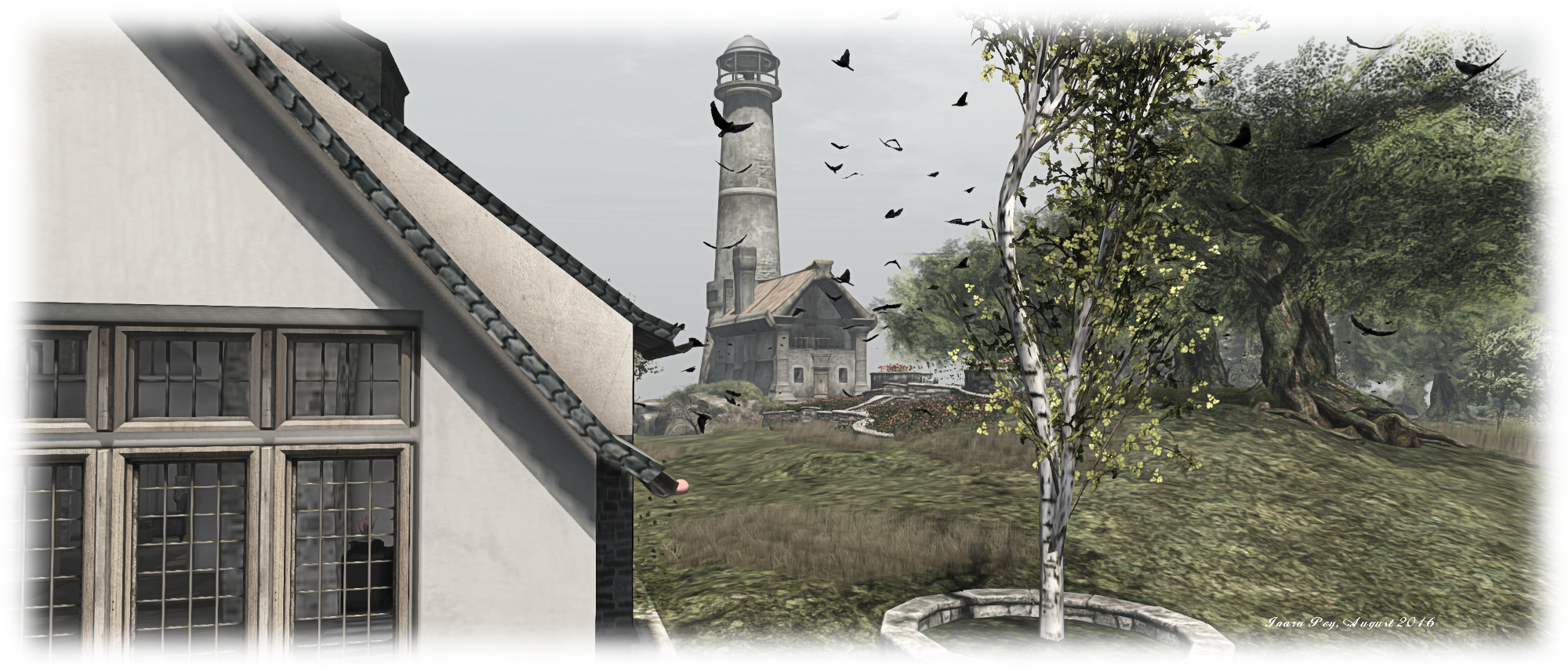
Watched over by two lighthouses, one to the north-east, and the other to the west and off-sim, Crystal Gardens suggests itself as a small, private island lying just off the coast of somewhere like Scotland or perhaps the Canadian coasts (although I couldn’t help but picture it lying Lundy-like in the Bristol Channel). It is ruggedly beautiful, with an air of serenity about it which naturally encourages visitors to tarry.
Crystal Gardens; Inara Pey, August 2016, on Flickr Crystal Gardens

For photographers there is much to be found here. While entirely natural in look and feel, and flowing as a considered whole, Crystal Gardens also offers the locations and scenes scattered across its rocky isles and around its coastline as individual vignettes, ripe for the camera – and I hope some of my efforts here show. So attractive is it for photography, it is very easy to lose track of time when taking pictures!

Whether looking for somewhere to take pictures, a place to explore or somewhere to simply pass the time of day, Crystal Gardens has everything you could need. Beautifully conceived and executed by Sandi, and topped with a matching ambient sound scape, it’s a place which should be on every SL traveller’s itinerary.
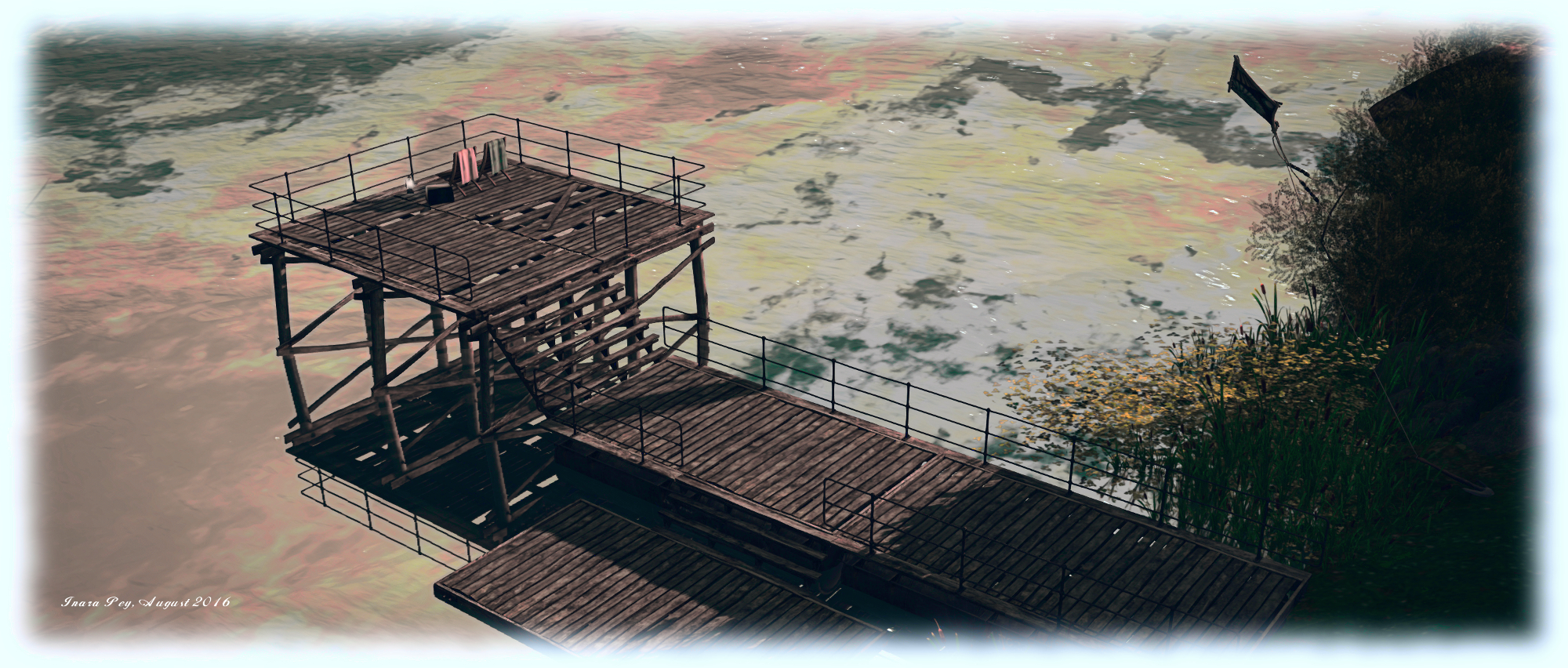
Crystal Gardens; Inara Pey, August 2016, on Flickr Crystal Gardens

SLurl Details

Little Yoshiwara, Second Life

Little Yoshiwara
Little Yoshiwara

I’ve been in an oriental frame of mind recently, hopping around regions with Japanese and Chinese flavours. I’ve been helped in this by a set of note cards put together by Sayu  白湯 (EmpressRoslyn Winslet), who is also one of the people involved in Little Yoshiwara on the mainland continent of Satori,  which Caitlyn and I jumped over to visit one lunch time recently.

Founded in 2007 by Xuemei Yiyuan, and landscaped collaborative by Xuemei and Sayu, Little Yoshiwara is a combination of public, free-form role-play and residential environment modelled after the final years of the Edo period in Japan, which were referred to as Bakumatsu (幕末, literally meaning “closing curtain”), between (roughly) 1853 and 1867. These were tumultuous times for Japan, encompassing both internal strife and external interventions on the part of America, France, the Netherlands and the United Kingdom (including the joint bombardment of Shimonoseki in 1864).

Little Yoshiwara
Little Yoshiwara

Given this, one might expect Little Yoshiwara to be perhaps leaning toward the militaristic in look and feel, but this is not the case at all. Instead, visitors find themselves in a region-wide environment (which actually spills into neighbouring Ribush to the south and connects with two parcels in Chodron to the west), given over to a range of cultural aspects of traditional Japanese life. Through the town, one can find a wide range of classes covering geisha, samurai and shinto traditions, together with classes for those interested in learning about Kabuki (歌舞伎), the classical Japanese dance-drama.

What is particularly pleasing about Little Yoshiwara is the very natural layout: public buildings and classrooms intermingle with private residences; houses rubs shoulders with farm small holdings; shines sit at the sides of paths and tracks, while woodlands, gardens and water features bring everything together. This approach encourages visitors are encouraged to explore widely, increasing the opportunities to encounter local members of the various communities.

Little Yoshiwara
Little Yoshiwara

A subtle aspect to the region is the use of cushions. These can be found scattered across the public areas, but rather than for sitting, they are in fact a networked teleport system, allowing you to hop around various locations, including the Sky Dojo and theatre. To use them, simply right-click and sit, and you’ll be presented with a menu of destinations – although for the most part, I recommend letting shanks’ pony take the strain, it will bring you just as easily to the temples and shrine, as well as some of the more unusual parts of the region – such as the haunted forest.

There are perhaps one or two incongruous elements to Little Yoshiwara; a helicopter parked in the garden of an Edo period house caught me a little off-guard, and there is also a resident’s airport up in the sky (group rezzing of vehicles only). but while surprising at first glance, these speak to the all-embracing nature of Little Yoshiwara as a community; something further reflected in the modern dance / event area.

Little Yoshiwara
Little Yoshiwara

As noted towards the top of this piece, role-play does take place in the region, but visitors are neither required to join-in or to wear period costume; all that’s asked is a respect for private residences, and an openness to discovering and learning about old Japanese culture.

There are a number of activities to be found throughout the town, although some may require group membership (such as the archery, which I tried, but was unable to rez my arrows whilst attempting to shoot). Even so, with its many places to sit and relax, contemplate things spiritual, its many paths and locations, Little Yoshiwara makes for an enjoyable and engaging visit.

SLurl Details

Astralia, Second Life

Astralia; Inara Pey, August 2016, on Flickr Astralia – click any image for full size

Astralia is the name of the homestead region held by artist and blogger Oema, and which is currently featured in the August 26th Destination Guide Editor’s Picks. It is offered as a surreal landscape in which visitors are free to relax, roam, take photographs and view the art on display.

Surrounded on three sides by off-sim mountains, Astralia is a water bound place, waves gently foaming in from the surrounding mountains towards a calmer centre while a gentle breeze caresses wind chimes, filling the air with their gentle reverberations. The rich azure of the waters here is a perfect reflection of a cobalt sky flecked with cloud, beneath which a ribbon of aurora ebbs, rolls and curls.

Astralia; Inara Pey, August 2016, on Flickr Astralia

Across the region lie nine vignettes, each offering its own unique look and opportunities for photography or relaxation. Some of these feature buildings or structures, some form a small island of grass, some sit directly on the water. They all face or flank a crystal palace which also rises from the water, home to a small art gallery, while a further island sits in the air nearby, offering a further floating sanctuary.

By default, the region windlight presents Astralia as something of a watercolour painting, the surrealist element coming not so much from the watery setting, but from the globe of mighty Jupiter,  who marches around the region behind the mountains, Great Red Spot staring down like an ever-present eye, watching all comings and goings.

Astralia; Inara Pey, August 2016, on Flickr Astralia

For photographers, Astralia’s default windlight works well, whilst the region is well suited to a good cross-section of others as well – I used Annan Adored’s Tricoloured II for the images here. For those wishing to simply sit and relax, the region offers plenty of spots to do just that, and presents a smoothing piano audio stream ideal for putting the stresses of life out of your head and simply losing yourself in your surroundings.

SLurl Details

Arranmore in Second Life

Arranmore; Inara Pey, August 2016, on Flickr Arranmore – click any image for full size

Now open in Second Life is Arranmore, the latest region designed by Lauren Bentham. Although its name from Arranmore (Árainn Mhór, essentially “large island”), the largest inhabited island off the west coast of County Donegal, Ireland, this is an entirely a fictional place of dark fantasy – and extremely atmospheric to boot.

Lauren has a long history of region design in Second Life, offering some of the most popular destinations for SL traveller on the grid. From the Baja group of region (Baja Norte, Baja Cove, Baja Bay and Baja Sands), through the likes of Storybrooke Gardens (a personal favourite – see here and here), Bentham Manor, Everwinter, to her most recent prior design, Netherwood (see my April 2016 review), Lauren’s work is deservedly known and appreciated. I’ve little doubt Arranmore will be the same.

Arranmore; Inara Pey, August 2016, on Flickr Arranmore

Visitors arrive on the west side of the region, on a small platform alongside a single railway line which curls south-to-north along the west side of the island without actually going anywhere: the two extremes of the track end in buffers. Perhaps it once went further – the fallen mass of a lighthouse suggests a calamity befell the north-west end of the island, so perhaps the tracks were washed away in whatever storm may have been responsible for bringing down that tower.

Ringed by the high peaks of surrounding islands, Arranmore broods beneath a sombre, storm-laden blanket of heavy grey cloud. Thunder rolls around the rugged peaks of the other islands, a deep booming against the plaintive cry of gull and moan of wind. Lightning flickers and forks, reflected by the mist rolling in from the sea as it drifts inland between the island’s trees like a living thing, watched over by the ever-rotating eye of a surviving lighthouse.

Arranmore; Inara Pey, August 2016, on Flickr Arranmore

On arrival, newcomers are invited to take a torch, offered alongside the region’s rules. If you’re keeping to the default windlight – which I suggest you do while initially exploring – the torch is a handy thing to have. Across the tracks from the little railway platform sit the entrance to the grounds of a once great manor house. This, we are told, was had been the home to Lord & Lady Inman and their family, all of whom mysteriously vanished whilst on holiday. Since their disappearance, the house has slowly fallen into ruin and the fortunes of the island had declined.

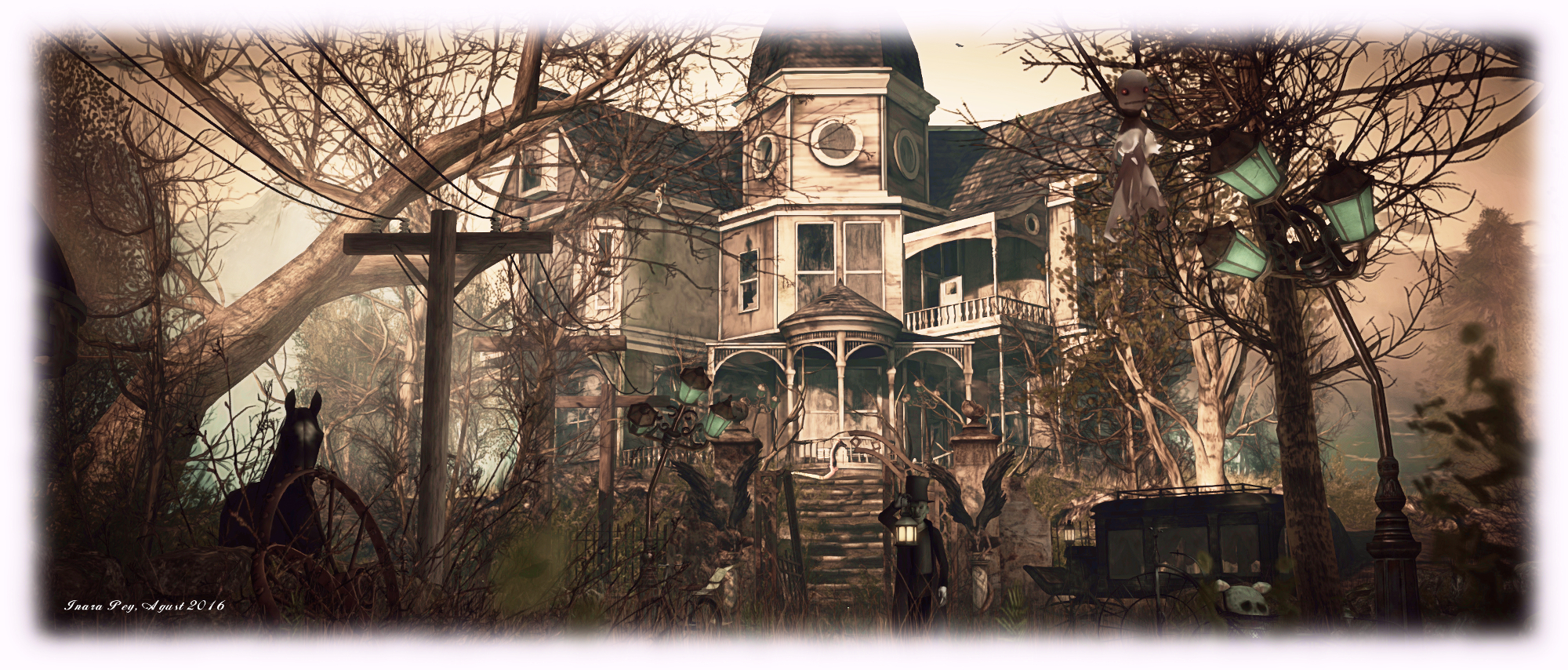
It is along the path leading towards the brooding form of the manor house that we come across the first signs that this is indeed a place where those still living on the island might be somewhat Lovecraftian in their ways – or perhaps it was the Inmans themselves? Just over the wall from the path sits a rotunda, its broken dome still offering some protection for a statue of an adult figure holding an tentacled infant child close to his or her chest. Even along the path to the house strangeness can be found: an empty hearse, a mildewed stuffed toy, its eyes apparently cut out, occupying the basket of a tricycle, and the gaunt figure of a local, funereal in his top hat and tails, holding aloft a lantern – whether in greeting or warning is yours to decide.

Arranmore; Inara Pey, August 2016, on Flickr Arranmore

As with all of Lauren’s region designs, there is a lot to see here, be it in the manor house as it slowly moulders away, or in the surrounding grounds and other building on the island. All of it is beautifully composed to create an environment that is a curious mix of the dark, the beautiful, the mysterious, the unsettling, and utterly captivating. One which really needs to be experienced rather than simply written about.

Lauren notes that the region is primarily for enjoyment and photography – those wishing to rez props in support of their photo work can join the local group for L$175 and do so – but role-play is welcome. There is a warning in the rules that weapons are not allowed – although seeing a member of the admin team walking around carrying an assault rifle seemed  a little at odds with the spirit of the rules :). There’s also a Flickr group for those so minded to add their pictures.

Arranmore; Inara Pey, August 2016, on Flickr Arranmore

Definitely a must for any SL traveller’s itinerary.

SLurl Details


A Chinese Garden in Second Life

A Chinese Garden
A Chinese Garden

There are many spiritual centres throughout Second Life offering a range of environments and opportunities for rest, spiritual comfort, recovery, teaching and more.

One such region is Qoheleth (Hebrew:  gatherer / assembler; an assembly). I’ve been drawn there a couple of times over the course of the last year – although admittedly not out of any spiritual want or needs – because the region is largely given over an oriental theme, something of which I’m rather fond. In particular, it includes A Chinese Garden, designed by Camryn Darkstone with the assistance of region holder Grath (Grath Helgerud), as it is this garden which has tended to attract me.

A Chinese Garden
A Chinese Garden

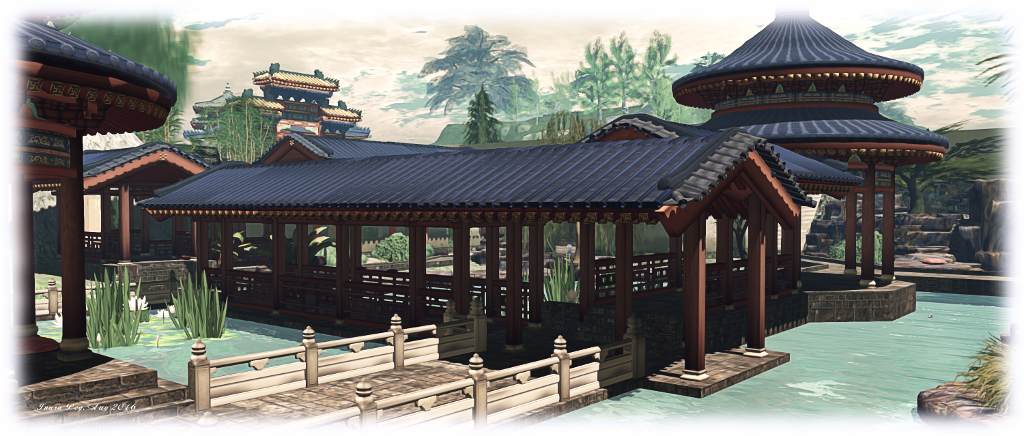
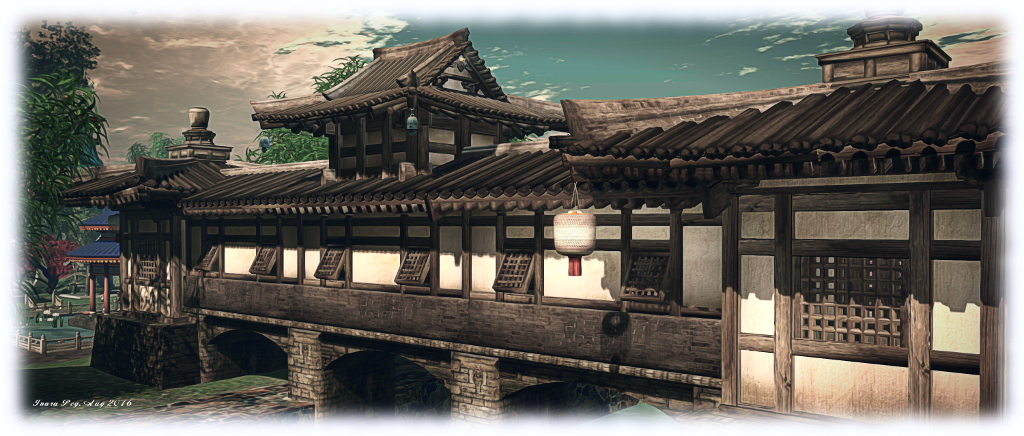
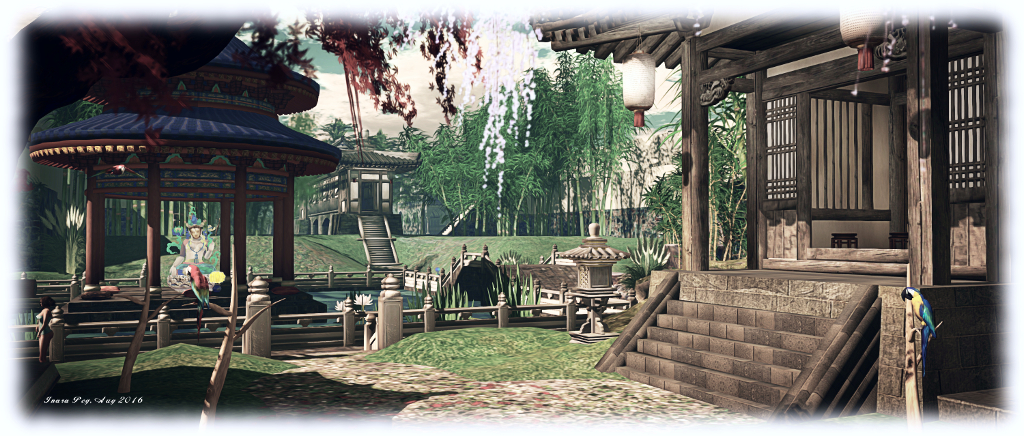
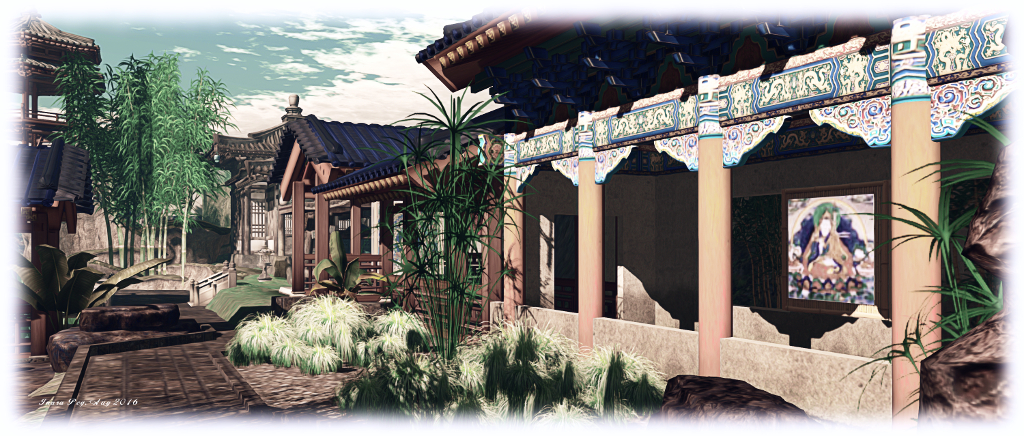
Surrounded by tall walls, through which circular gateways provide access to the rest of the region, A Chinese Garden offers visitors a place to wander under sky and along open-sided passages, look out over quiet waters, and generally relax and enjoy themselves away from the demands of the rest of Second Life. It is, in a word, a peaceful setting.

What makes it particularly attractive is not only that it works well under a range of windlight settings, but the outside of three notable building and things like handrails, almost all the structures within the garden have been designed and built by Camryn, thus harking back to the days when so much in SL was very much DIY, rather than prefabricated.

A Chinese Garden
A Chinese Garden

In an age where so much creative expression in Second Life has perhaps shifted towards being more about landscaping and object placement (which can be as creative and rewarding as gluing prims together, make no mistake), it is good to visit places like the Chinese Garden and be reminded of just what can be done with the humble prim and a little time.

The Sino-Japanese theme continues beyond the immediate walls of the garden, as does the broadly spiritual theme of the region, operated by the Psychoanalytic Round Table discussion group – about which I know little beyond that provided in an information note card. However, just outside of the immediate Garden grounds is a Chinese theatre, again designed by Camryn, and woodland tracks leading over bridges and under trees to other locations of interest, such as the Nanyangong Citadel, and the Stone Circle, where one can learn about Ubuunto – “what it takes to be human”.  There’s even a companion house sitting among the trees beyond the garden walls for those seeking company – although I have no idea how active it might be.

A Chinese Garden
A Chinese Garden

For those seeking spiritual rest or renewal, Qoheleth sits amidst three over regions with community / faith / spiritual leanings. These I have not explored, but leave it to those who might to do so. As someone who does enjoy oriental themed locations in SL (and I have a couple more lined-up for upcoming posts!), A Chinese Garden makes for a charming and relaxing visit.

SLurl Details

Byrd Island in Second Life

Byrd Island, Oyster Bay; Inara Pey, August 2016, on Flickr Byrd Island, Oyster Bay – click any image for full size

The homestead region of Oyster Bay is a regular stopping-off point on my rounds of Second Life. This is because Sera Bellic, the region holder, uses it to demonstrate her region design skills, changing the layout several times a year, thus periodically offering all of us something to new visit. This is currently the case with the regions latest iteration as  Byrd Island, which Caitlyn and hopped over to explore as the start of our weekend.

Visitors arrive at the island’s ferry pier, located on the island’s north-west side, where birds circle overhead, the first indications of how – spelling allowing – the island may have come by its name. Herons patrol the sandy tongue of land on which it sits, the only low-lying point of the entire island, which otherwise stands as a 30-metre high tower of rock rising from the surrounding mist-laden sea.

Byrd Island, Oyster Bay; Inara Pey, August 2016, on Flickr Byrd Island, Oyster Bay

Two routes to this high plateau are offered: a wooden elevator occupying a steel girder tower, or a rope ladder. The former gives visitors the option to stop off at a rocky observation shelf on their way to the top of the island, whilst for the adventurous, the rope ladder presents a climb directly to the platform at the top of the cliffs serving both it and the elevator.

From the platform, an arched hedge sitting between tall firs presents itself as a gateway to a gently undulating, and in place rugged, plateau with rolling grass, rocky outcrops and a mix of tress and bushes offering scattered places to sit and paths to wander. It all makes for a pleasing landscape well-suited to soft sunlight settings.

Byrd Island, Oyster Bay; Inara Pey, August 2016, on Flickr Byrd Island, Oyster Bay

The paths, cut from the trunks of fallen trees, wind across the landscape, point the way towards the three buildings occupying the island: the tall lighthouse with attached lodgings; an expansive house to the south-east and a small stone-built lodge to the east. Across the landscape birds wheel and caw, sing and sit … and watch.

“The lighthouse keeper and his family abruptly left the island never to return.” Sera states in the land description. “Could it have been the birds, or something else?” Whatever might have caused the departure, the birds weren’t telling, but had one of the raven keeping an eye on things spoken up with, “Nevermore!” as Caitlyn and I passed, I really wouldn’t have been surprised; there is a faintly Hitchcockian edge to the island under its default windlight which naturally gives rise to thoughts of certain films, or of Poe on spotting the ravens.

Byrd Island, Oyster Bay; Inara Pey, August 2016, on Flickr Byrd Island, Oyster Bay

Which is not to say that just because the island has this slightly mysterious edge to it, it is deeply sinister. Take away the misty look with an alternative windlight – I found Annan Adored’s Morning Dream worked really well (among several others!) – and Byrd Island becomes the kind of place where get-away-from-it-all weekends should be spent. A place where late breakfasts in bed are the only way to start the day, followed by leisurely strolls across the island and afternoons lazing in the shade of trees, before seeing out the evening quietly, watching the sun set over the rippling ocean.

In all my visits to Oyster Bay, I’ve rarely been disappointed in the designs Sera has offered us; each one has been special, from the Adirondacks, back through the likes of Bellack House and The McFly Project and beyond. However, I admit to finding Byrd Island perhaps her best yet. It has an elegance and openness about it which makes exploration a pleasure, and is presented in a way not often seen in island design in-world, complete with a sprinkling of atmosphere and back story to add further flavour.

Byrd Island, Oyster Bay; Inara Pey, August 2016, on Flickr Byrd Island, Oyster Bay

SLurl Details