Women of Science in Second Life

Women of Science History Museum

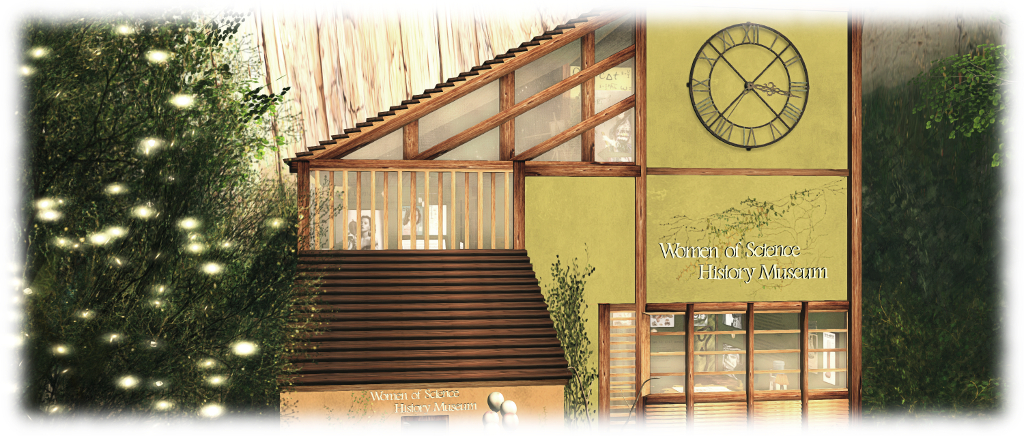
Tucked into a little corner of Second Life, and easily overlooked, is the Women of Science History Museum. I first visited it in early October, after noting it featured as an Editor’s Pick in the Destination Guide, but it’s taken me a little while to sit down and write about it!

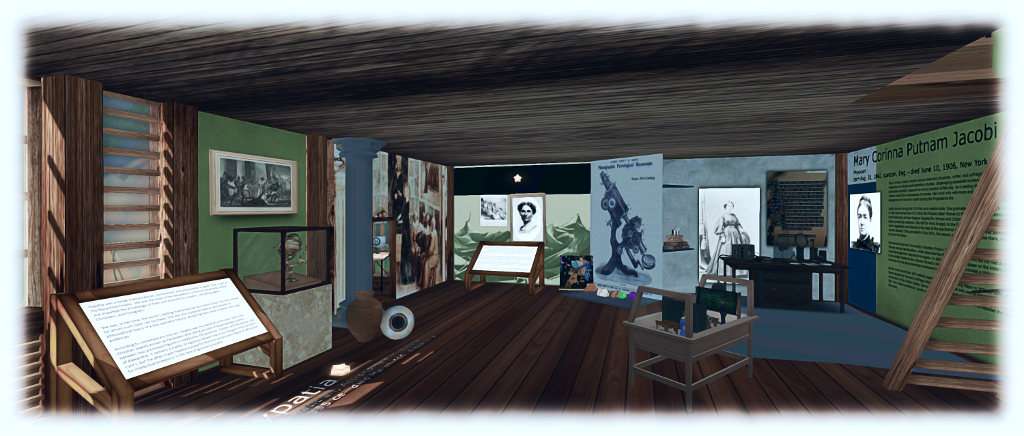
Occupying a modest garden offering a place for visitors to sit as chat, the museum is curated by Elliot (LadyAngelDust), and occupies a three storey structure to one side of the garden. Inside is a selection of informative biographies of some of the women who have contributed to our understanding of the sciences over the years.

Women of Science History Museum

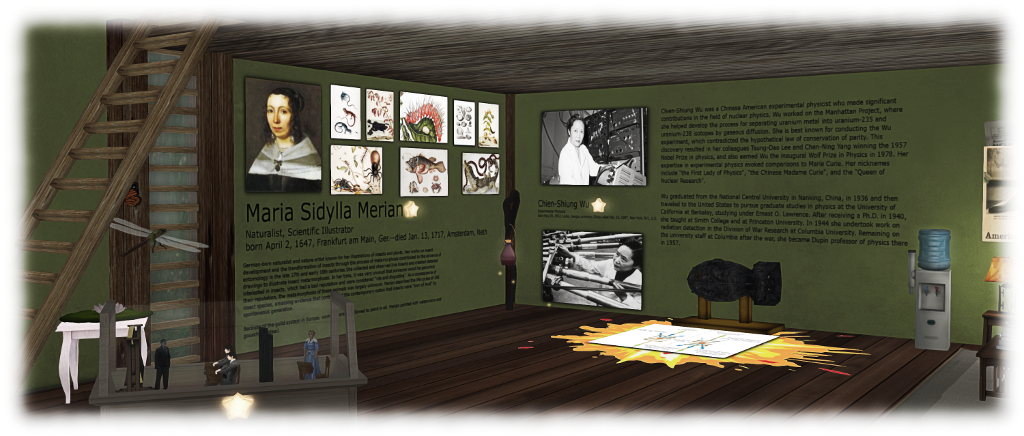
It’s an eclectic and diverse group; some will be familiar to many – Hypatia (355-415 ce), Ada Lovelace (1815-1852) and Marie Curie (1867-1934) to name three – while others may be less well-known, such as Mary Sherman Morgan (1921-2004) and Chien-Shiung Wu (1912-1997), with a total of twelve women from history represented across the three floors of the museum.

Each woman is represented by a display which includes props representing their field, photographs and a biography – the latter of which can also be obtained in note card form by clicking on the gold star alongside their names.
Women of Science History Museum

Wisely, they are not presented by science background or in chronological order (although the second floor exclusively features women born in the 20th century). This encourages fully exploration through the museum, which leads visitors up to the upper floor and a teleporter sitting in a corner.  This provides access to the planetarium and the biographies of four more women, including a personal heroine of mine, Claudia Alexander.

There is perhaps a slight bias towards American women evident at times, particularly in the planetarium section, where it would have been nice to see someone like Nicole-Reine Lepaute recognised. I also felt it a shame that Mary Anning, who was denied proper recognition for her ground-breaking work in palaeontology during he own lifetime, is not included. But these are minor niggles, and it’s fair to say there are a lot of women who might justifiably be included, but the museum only has so much space. Certainly as minor critiques, they do not detract from the fact the museum does make for an informative visit, and is fully deserving in being recognised as a DG Editor’s Pick.
Women of Science History Museum

SLurl Details

A mystical Telrunya Winter in Second Life

Telrunya Winter; Inara Pey, November 2016, on Flickr Telrunya Winter – click any image for full size

At the start of 2016, I wrote about Telrunya – Forest of Dreams, a resign design by Nessa Zamora (Noralie78). It was a beautiful, tranquil place which I likened to an elven corner of Tolkien’s Middle Earth.

Well, time has moved on since then, and places have changed; the Forest passed into the west some time in 2016. However, Telrunya’s spirit has now returned to Second Life in the form of a new design by Nessa, in a new location, and with a new name.

Telrunya Winter; Inara Pey, November 2016, on Flickr Telrunya Winter

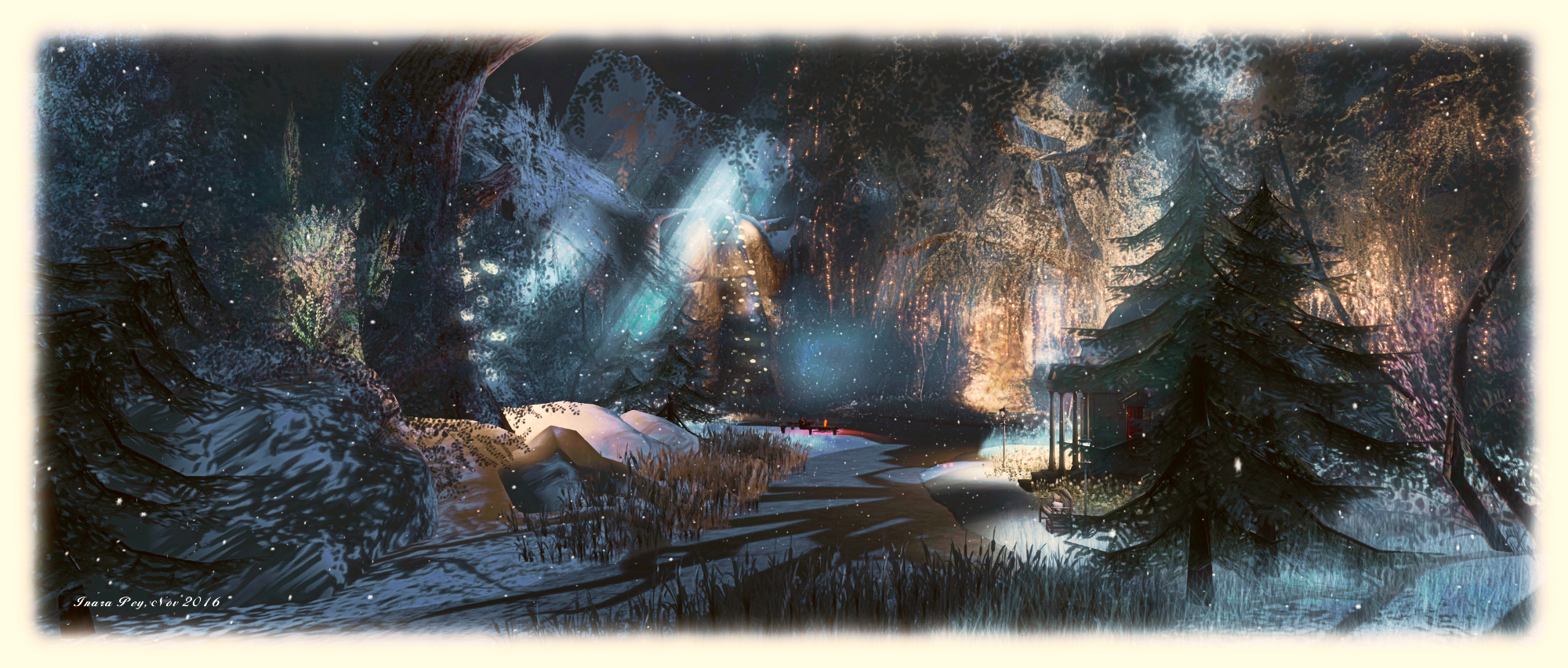
Telrunya Winter, occupying the homestead region of Diamond Island presents visitors with a winter wonderland of snow, night skies, shafts of Moonlight filtering through frosted trees and the glow and scatter of winter lights. It is at once very different to the Forest  of Dreams while at the same time bearing an echo of that build.

From the landing point under the dome of a Victorian gazebo, visitors are invited to explore the region on foot or via ice skates – sets are available with snowballs at the landing point for a small fee. A frozen river offers plenty of scope for the latter, as it curls away from an ice-covered pond. And if you take the right direction, you might find a little surprise.

Telrunya Winter; Inara Pey, November 2016, on Flickr Telrunya Winter

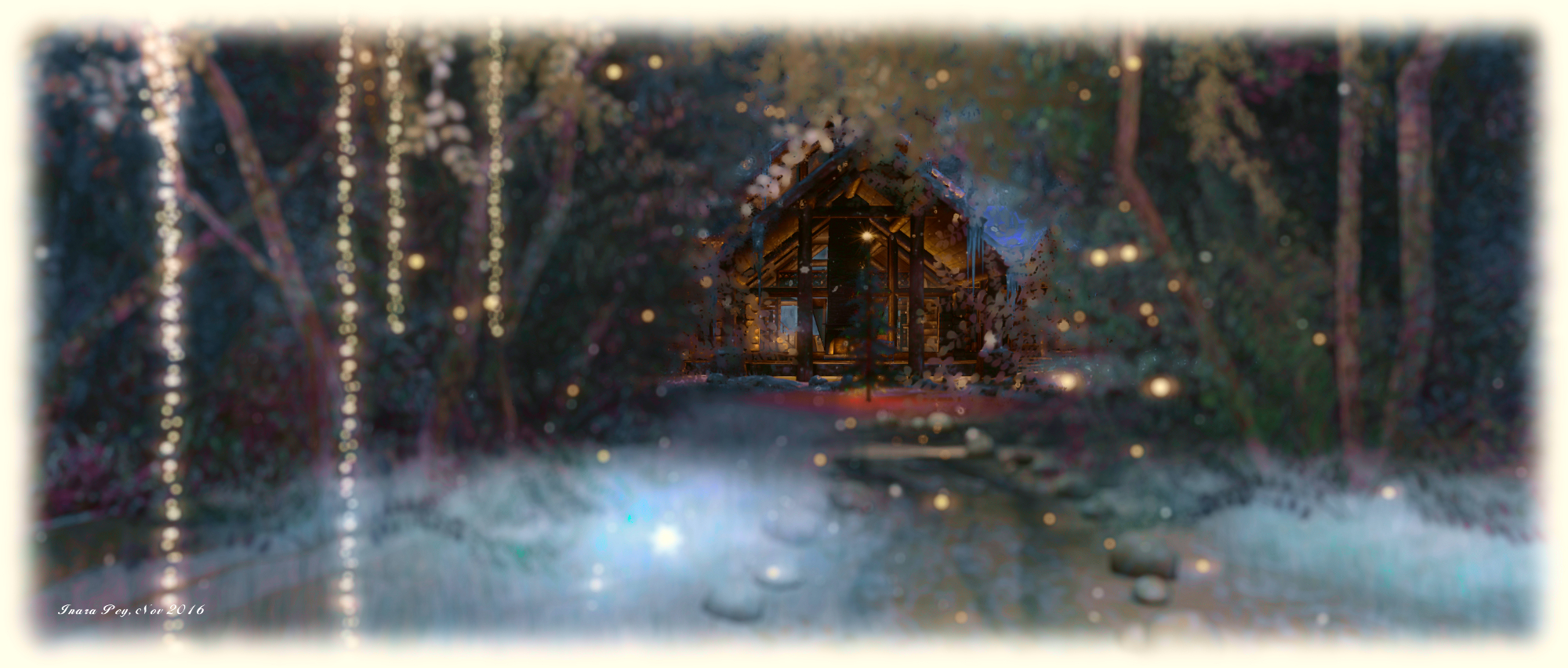
For those whole prefer walking, the crisp, white snow is inviting of footfall, and walking across it, one can almost hear that soft, fresh crunch of it being compacted underfoot. Follow the stone-edged trail over a bridge and under bough, and you’ll find your way to a wood cabin. Here, light and warmth invitingly pour forth; fires burn brightly in hearths, warming rooms furnished with deep armchairs and sofas. For those not yet ready to come inside, another fireplace on the covered porch offers warmth to those wishing to use the bench alongside to sit in comfort and continue to appreciate the aurora-washed sky and the gently falling snow.

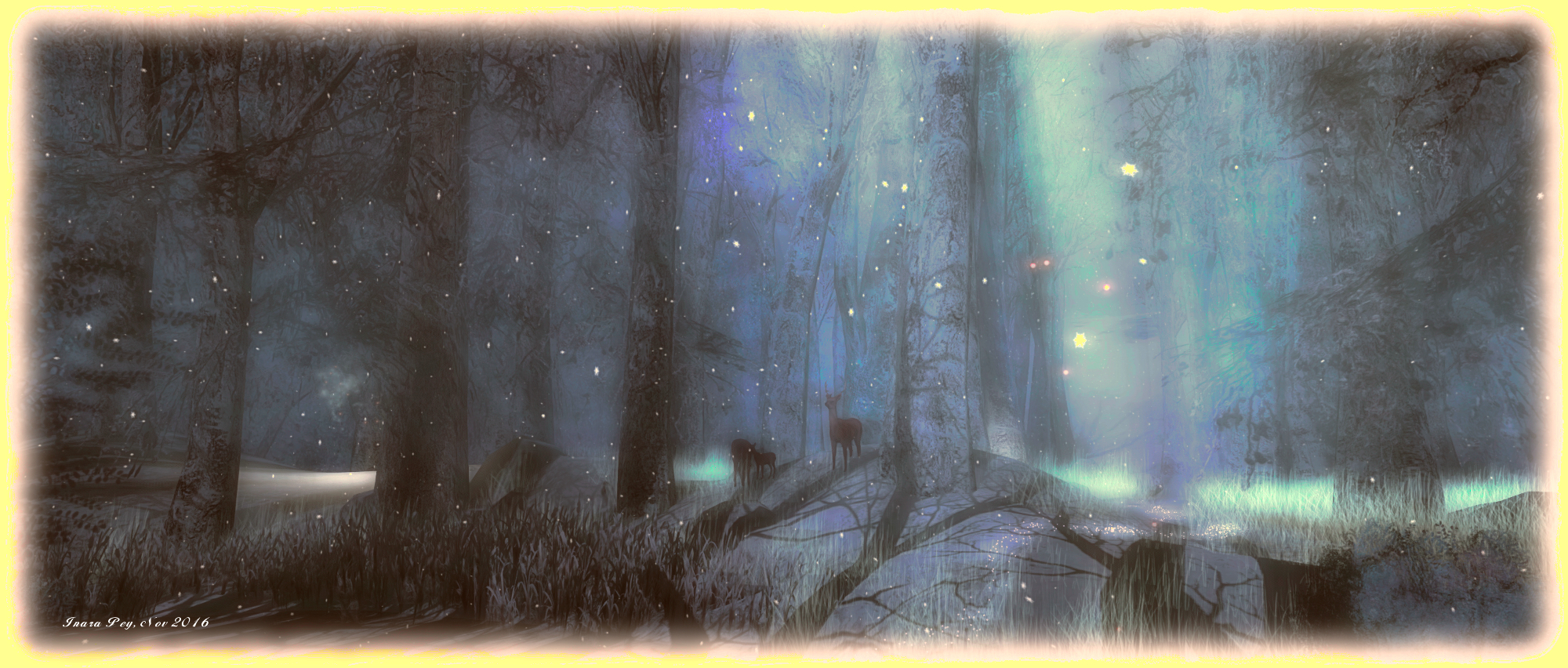
South of the gazebo, across ice and snow, a low rocky plateau pushes upwards from the otherwise almost flat land, a table on which ancient ruins sit, arches lit by naked flames as they look out between the snow-draped shoulders of the high surrounding peaks. Elsewhere, strings of lights hang from the bare arms of trees, deer walk between moonlit trunks, lanterns glow and float through the air, giving the entire region a feeling of otherworldly magic, with places a-plenty to sit and ponder and enjoy, alone or with a friend or loved one.

Telrunya Winter; Inara Pey, November 2016, on Flickr Telrunya Winter

With winter closing around us in the northern hemisphere, it is traditional to see winter landscapes come to the fore in Second Life. Telrunya Winter is the first I’ve visited since the start of the year, and it certainly won’t be the last. However, it will be special, Nessa has a talent for creating places with a mystical air and feel, as Telrunya Winter amply demonstrates. It is a tranquil slice of winter not to be missed.

SLurl Details

A pilgrimage of the prim in Second Life

Temple of the Prim
Temple of the Prim

There are many places in Second Life from which legends and tales are sprung. As I recently noted, there is the famous Prim Rig of ANWR, itself linked to the deeper legends of Magellan Linden, Heterocera, Nova Albion, et al. Then there is the mysterious fairground at Pyri Peaks from whence Moles were said to have vanished (see here) and the equally mysterious Cape Ekim, involving Professor Linden (see here), to name but two more.

Another such place of mystery is the Temple of the Prim, located in Corsica. This strange site, ancient and perhaps hallowed, lies atop the south-east corner of the continent’s great rocky plateau, at a point where the naked rock thrusts outwards in a shoulder-like ridge. But to reach it requires no small amount of dedication, as to visit it properly requires something of a pilgrimage.

Temple of the Prim - walkway
Temple of the Prim – walkway from Viktarin

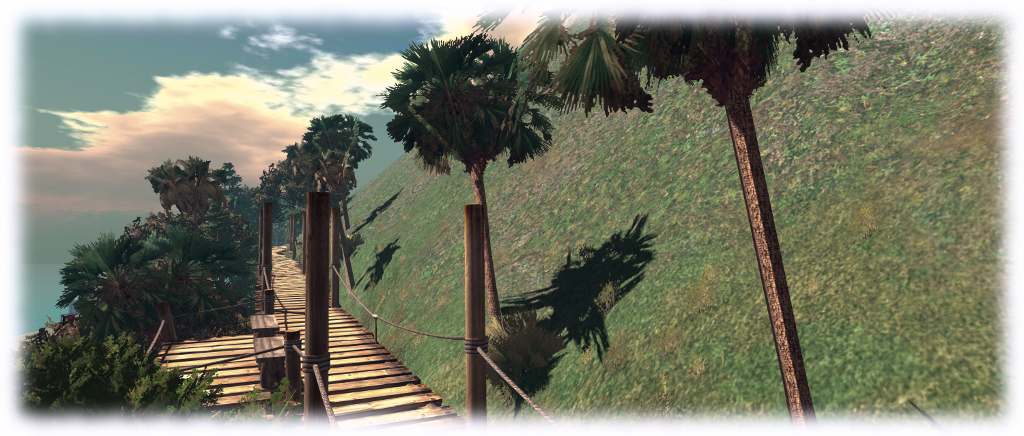
First, one should begin at the beginning – a wooden walkway strung from pole piled into the grassy ground, which slowly and gently winds its way around the base of the ridge, Trees line the walkway, and there are little rest points along the way where you might catch your breath – and you’ll need plenty of breath! Why? Because at the end of this walkway lies the start of the next part of your journey: a switchback climb up the side up the ridge.

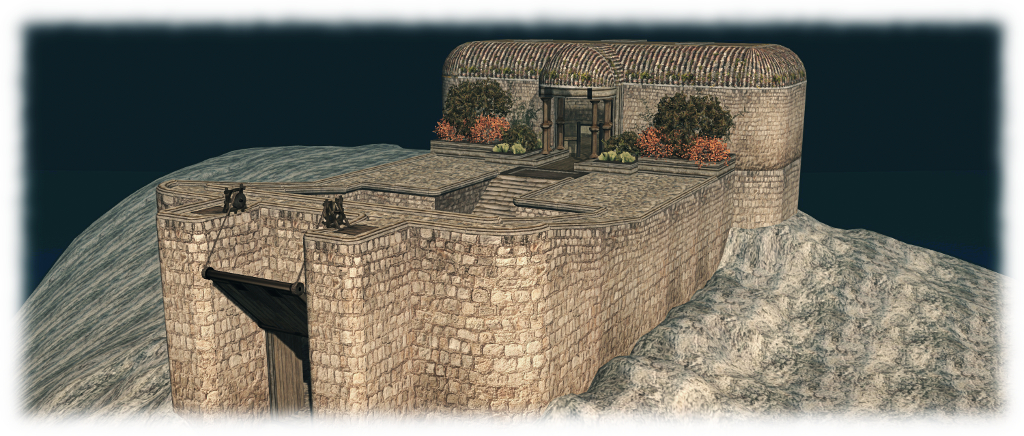
While this starts on the grassy lower slopes, it quickly leaves all forms of flora behind, to cut its way up the side of the living rock, twisting sharply back and forth as it does so. And just as you feel you can climb no more, it turns and levels out suddenly, and there stands the Temple, its great stone walls towering over you, thick and strong, a massive gate raised between two defensive towers, inviting you to enter.

Temple of the Prim
Temple of the Prim

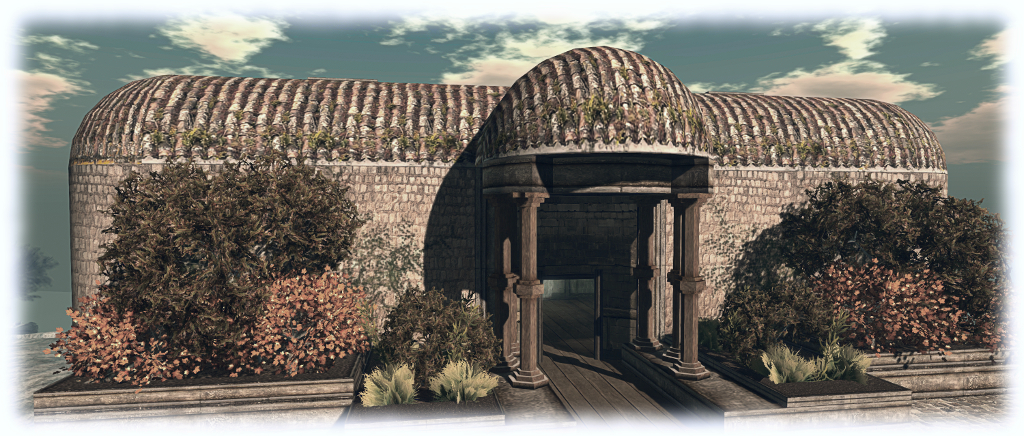
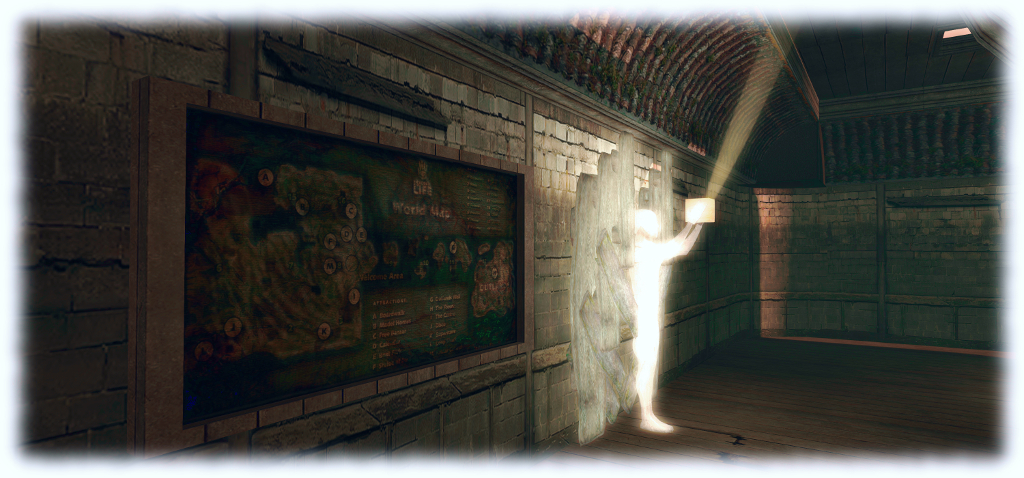
A at the top of the great stone ramp rising from the courtyard sits the Temple proper, its domed entrance flanked by trees and shrubs. Within its great hall stand three great statues, each holding aloft a giant prim so that it catches sunlight pouring through openings in the roof. Such is the intensity of the captured light, the statues themselves glow in its radiance.

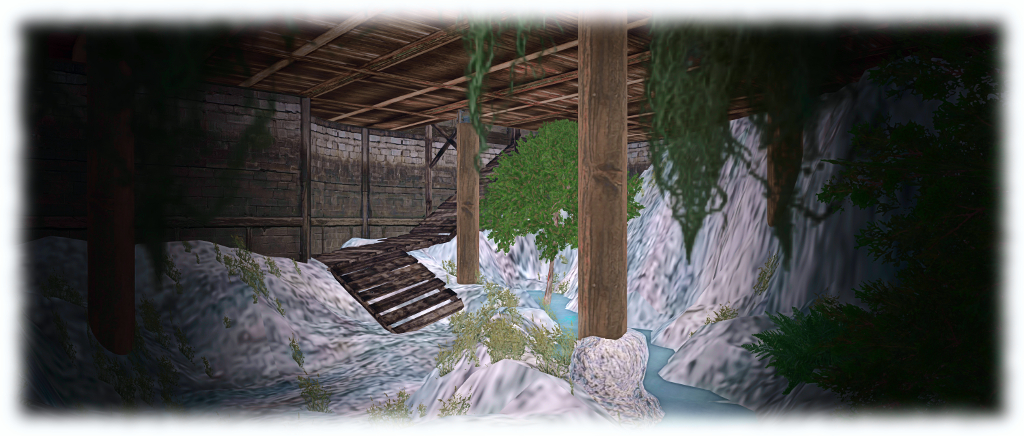
On the wall close to one of the statues, aged and slowly fading, is an ancient map, perhaps the very first ever made back at a time when this world was new, revealing the (then) known lands. To one side of the room is a wooden stair, leading down to a lower level, and thence to an underground river which strangely rises and falls within the walls of the Temple’s foundations.

Temple of the Prim
Temple of the Prim

But what are we to make of all this? I turned to the one authority I could think of: the legendary Michael Linden himself, ensconced in his dusty office at the LDPW.

“Ah yes!” he replied. “After traversing several hundred meters of precarious rope bridges, you come to the bottom of an enormous stone mountain. A path winds up the face of the mountain. At the peak is a stone fortress, clearly meant to repel invaders. Passing through the gate you find yourself in a courtyard; majestic steps lead up to the Temple of the Prim.”

“Yes!” I replied, “I know!” But what is it for?”

He sat in thought for a moment, eyes reflecting the light of the fire burning slowly in the hearth, nose twitching. Then he looked up, eyes still shining. “You know, I haven’t the foggiest! The DPW cleared away the dust and sediment, but many questions remain!”

Temple of the Prim
Temple of the Prim

Perhaps one day, they will be answered. But for now, the Temple of the Prims stands tall and strong against the march of time, open to visitors and pilgrims alike.

Will you be one?

SLurl Details

Quotes from Michael Linden in part borrowed from an old and dusty forum post which spurred this article.

A taste of Dystopia in Second Life

Dystopia // [flit ink] + aberrant; Inara Pey, November 2016, on Flickr Dystopia // [flit ink] + aberrant – click any image for full size

Dystopia is the home of the [flit ink] and Aberrant brands. It is also another of those in-world commercial locations well worth a visit whether or not you’re looking for avatar accessories, simply because of the amount of care and attention which has gone into making the region both photogenic and open to the potential for casual role-play.

As the name might suggest, together with the About Land description, the role-play in this case centred on a dystopian, post-apocalyptic future where climate warming has run amok, and (it would seem) civilisation has broken down, leaving the shattered remains of an urban area – where is not stated, although it presents a curious blending of American, British and Japanese cultural elements – which now appears to be in the hands of gangs, or perhaps tribal units.

Dystopia // [flit ink] + aberrant; Inara Pey, November 2016, on Flickr Dystopia // [flit ink] + aberrant

It’s a haunting place, roughly divided between the three districts: Dystopia, Carnage City and The Slums, and caught in a perpetual night, although I opted to use daylight settings when taking pictures. All three areas naturally flow one to the next, providing a continuous setting for role-play and / or photography.

The given landing point drops visitors on the upper level of the region, alongside the two stores.  Nearby, a fuel tanker is ablaze, perhaps the first indication that things are amiss. Across the road a deserted children’s playground overlooks the weed-choked river which diagonally cuts through the town, its far bank home to a strange conglomeration of buildings and metal shipping containers. Litter lies on the tarmac, graffiti covers walls, and everywhere windows are boarded, batter or broken.

Dystopia // [flit ink] + aberrant; Inara Pey, November 2016, on Flickr Dystopia // [flit ink] + aberrant

Follow the road past the burning tanker and around the corner and you’ll walk past rudimentary club houses, shattered shops and what appears to be a hastily evacuated school-house, now given over to the base of operations for a local gang. Just beyond this, a bridge provides access to the remnants of a decaying amusement park. This sits alongside the shanty-like village of containers and wooden structures  first seen from across the river. Built with the aid of a massive construction crane, this shanty town, with its ladders and connecting aerial walkways looks to have been built for defence as much as anything else.

To the west of all this, and lying on lower ground, the rest of the town has been overtaken by rising sea levels. Here the sidewalks are barely above water which has turned the streets into rivers. The futuristic awning of a subway station rises from the flood, the handrails of steps down into its bowels offer a forlorn pointer to the platform and rails submerged below, where a strange mix of Japanese signage and very British destinations can be found – although unsurprisingly, all trains to them have been cancelled.

Dystopia // [flit ink] + aberrant; Inara Pey, November 2016, on Flickr Dystopia // [flit ink] + aberrant

With a smaller, more rural elements which include dirt tracks, shingle sided church, tree houses, and hilltop moonshine still, a trailer park a plane wreck and even a small run of tunnels, Dystopia offers a lot of space for exploration and – as noted – casual role-play for those so minded.

For those interested in the role-play element, the region has an accompanying website where more information can be found. However, this doesn’t appear to have been updated in a while, so I’m not at all sure how active the region is RP-wise or events wise – but still offers a good starting point for finding out more.

All told an engaging design by Flit Ulrik (of Flit Ink), Dylain Nikita (of Aberrant), Epidural hematoma (Epimitheus), and MollyWolliDoodle, Dystopia makes for and interesting visit.

Dystopia // [flit ink] + aberrant; Inara Pey, November 2016, on Flickr Dystopia // [flit ink] + aberrant

SLurl Details

With thanks to Loverdag for the pointer, and apologies to Epidural hematoma for missing his name off the list of designers. 

A journey to the source of prims in Second Life

The Prim Rig, ANWR Channel
The Prim Rig, The ANWR Channel

“Pey!”

The familiar bellow had me on my feet and in the Editor’s office before it had finished reverberating across the office.

“Chief?” I enquired from the doorway of his inner sanctum. He tossed a folder across his desk at me. I crossed the room to look at the cover, then at him, puzzled. “The new prim allowances? I’ve covered them, Chief…”

“Yeah? Well it seems some are concerned about the supply, given those changes. I want 500 words on my desk about prim production before the end of the day!”

I opened the folder and saw a ticket for one to Heterocera and details of a charter helicopter which would get me to the ANWR Channel. I looked up at the Editor, “You want me to visit the Prim Rig?” The look I got in reply told me all I needed to know. Pausing only to grab my camera and notepad from my desk, I headed for the elevator…

"I flew out to the rig via helicopter...."
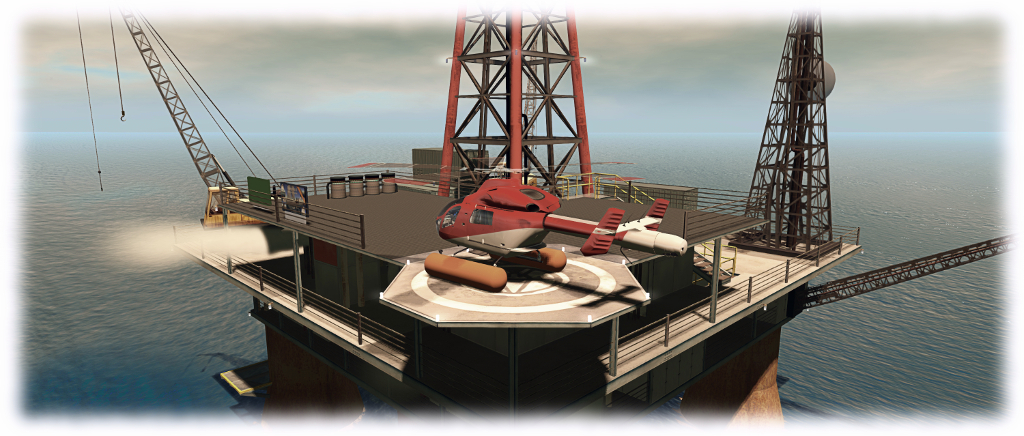
“After circling the Prim Rig to afford me a good view, the pilot brought us in to a safe landing”

ANWR – named in respect of the to the Arctic National Wildlife Refuge – forms part of the body of water connecting the continents of Heterocera (Cercopia region) and Sansara (Cyclops and Purple regions) to the south. It is the home of the Prim Rig, a massive drilling rig sitting in the midst of the water which – as legend has it – is where all the prims in Second Life come from.

"You'll need this," the rig Foreman said, handing me a yellow hard hat as I stepped off the helipad. "We run a safe operation here!"
“You’ll need this,” the rig Foreman said, handing me a yellow hard hat as I stepped off the helipad. “We run a safe operation here!”

The idea for the rig is actually a part of an initiative to add some “back story” to Second Life through the character of Magellan Linden. However, it has gained a life of its own as the place where “primoleum” is drilled, pressed into the prims we need, and then funnelled to dry land via a pipeline.

I opted to take a trip out to the rig and blog about it when Patch brought it to mind in discussing the new region prim allocations, joking that he had been out to the rig to ensure production had been increased to meet the demand brought about by the new allocations.

Easily reached via water – and hard to miss when boating / sailing – the rig can also be reached via hot air balloon, SLGI tour trains (which fly out to the rig when they come to the end of their ground lines) or the regular sailings of the resupply vessels to / from the rig. Those wishing to fly to it via helicopter can do so from any of the airfields near the coasts of the two continents (as I did from the , travelling from the Calleta City Airport, Cecropia, where the prim pipeline comes ashore. When flying to the rig, do be aware that the helipad can be used by other vehicles as well and that auto return is set to 10 minutes, with no rezzing on the rig.

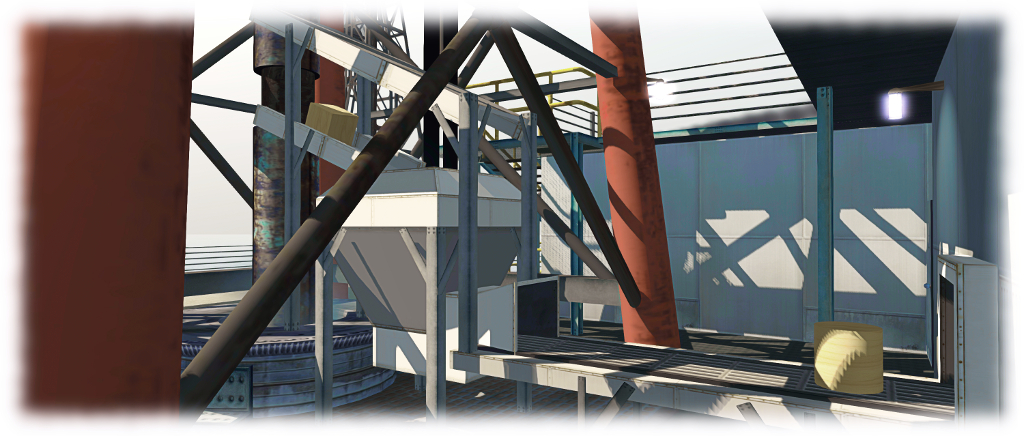
"We toured the rig, the Foreman showing me how raw Primoleum is brought up from deep under the sea bed, the raw cubes quickly smoothed or rounded into cylinders before passing on for pipeline delivery. It's all a highly automated affair..."
“We toured the rig, the Foreman showing me how raw Primoleum is brought up from deep under the sea bed, the raw cubes quickly smoothed or rounded into cylinders before passing on for pipeline delivery. It’s all a highly automated affair…”

It’s a very industrial place, as you might expect; the tall central drilling derrick rises into the sky like a latter-day spire, the square bulk of the rig surrounding it, waste stacks angling outwards over the water, burning off unwanted gases safely away from the massive structure. Cranes, containers and the Helipad occupy the upper deck, but it’s the deck below that offers the main attraction; that’s where the prims first appear, ready for onward transfer for use by residents!

There’s a lot of history bound up with the ANWR drilling rig – the fable of the prim, the legend of Magellan Linden, his discovery of Heterocera – all of it so much a staple part of Second Life’s history and back story mythology. All of which makes it a “must see” stopover for any SL explorer serious about discovering the grid 🙂 . Should you choose to do so, you might also want to check-out the Valda Experimental Wave Energy Hub to the south and west of the rig; but for me, that’s the subject of a future blog post – maybe!

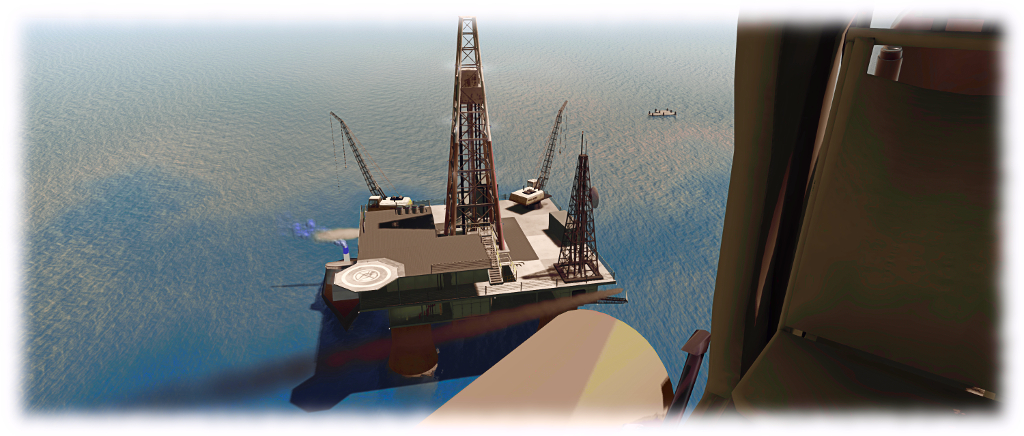
"As we lifted off from the helipad, I took a last snap of the rig, knowing that as long as it was standing, prim needs in Second Life would always be met..."
“As we lifted off from the helipad, I took a last snap of the Prim Rig through the helicopter’s open door, knowing that as long as it was standing, prim needs in Second Life would always be met…”

SLurl Details

The haunting beauty of Everwinter in Second Life

Everwinter; Inara Pey, October 2016, on Flickr Everwinter – click any image for full size

I make no secret of being a fan of Lauren Bentham’s region designs. I’ve covered several of them in these pages; they are always beautifully conceived and wonderfully executed – even when the theme might be a little on the dark side – making them a joy to visit and explore.

Take Everwinter. It is a dark design, and might easily be taken to be in keeping with the time of year. However, its roots go far deeper than Halloween or any “traditional” apocalyptic setting. As Lauren notes in her introduction to the region, Everwinter takes its inspiration from a place in the physical world, and centre of a very specific event.

Everwinter; Inara Pey, October 2016, on Flickr Everwinter

Located in northern Ukraine, close to the border with the Republic of Belarus in 1970, Pripyat City was the ninth nuclear city (a kind of closed city) dedicated to supporting the Soviet Union’s burgeoning nuclear power industry. By early 1986, its population was over 49,000 – but by the end of April that year,  it lay a ghost town. It has remained that way ever since; and while most of us might not know its name first-hand, few of us are unfamiliar with the name that brought about Pripyat’s desertion: Chernobyl.

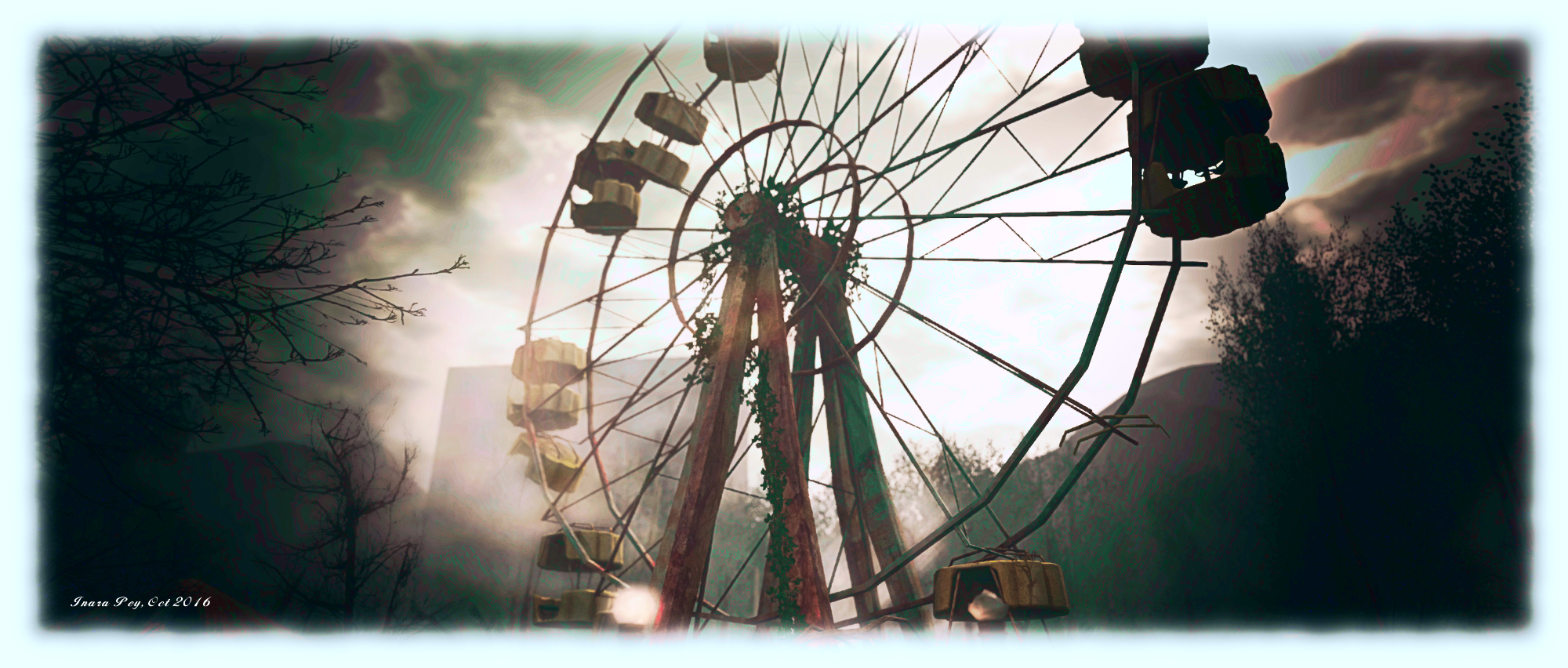
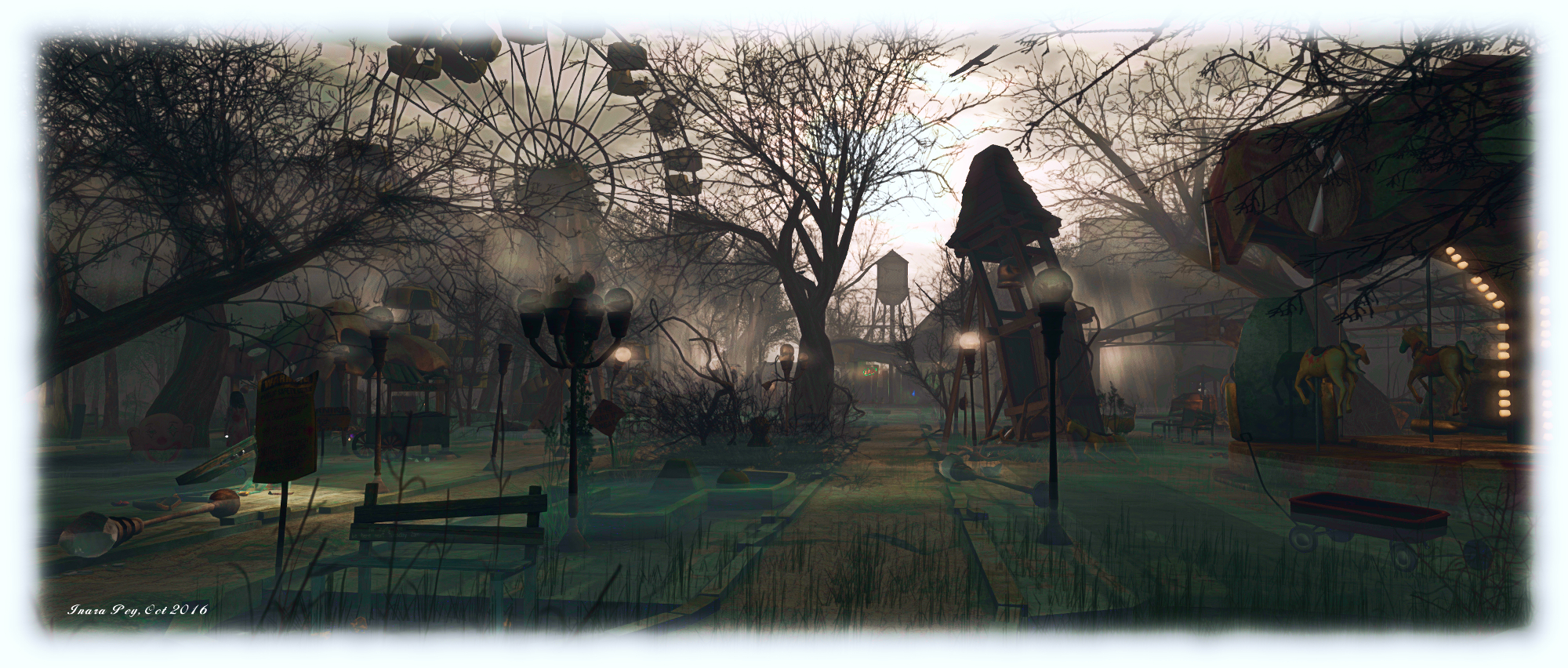
Pripyat’s sole purpose was to house all those involved in running and maintaining the Chernobyl nuclear plant, giving those workers and their families all the necessities of life: housing, shops, schools, public amenities including a public swimming pool and an amusement park. But when a systems test at the power station went disastrously wrong, the entire city was evacuated on the afternoon of April 27th, 1986, leaving the great Ferris wheel of its amusement park as one of the most enduring photographic images of the aftermath of the Chernobyl accident.

Everwinter; Inara Pey, October 2016, on Flickr Everwinter

It is the amusement park which forms the centre of Lauren’s build at Everwinter – but as she points out, this is not intended to be a recreation of either Pripyat park, or a reflection of the Chernobyl disaster itself, although she provide some starting statistics about both in her introductory notes, and they make sobering reading.

From all of this, you can probably guess expect, Everwinter is an atmospheric build; one which should be visited with local sounds enabled. By doing so, arriving visitors can hear the actual evacuation message just as it was broadcast that chilling afternoon in April 27th, 1986.

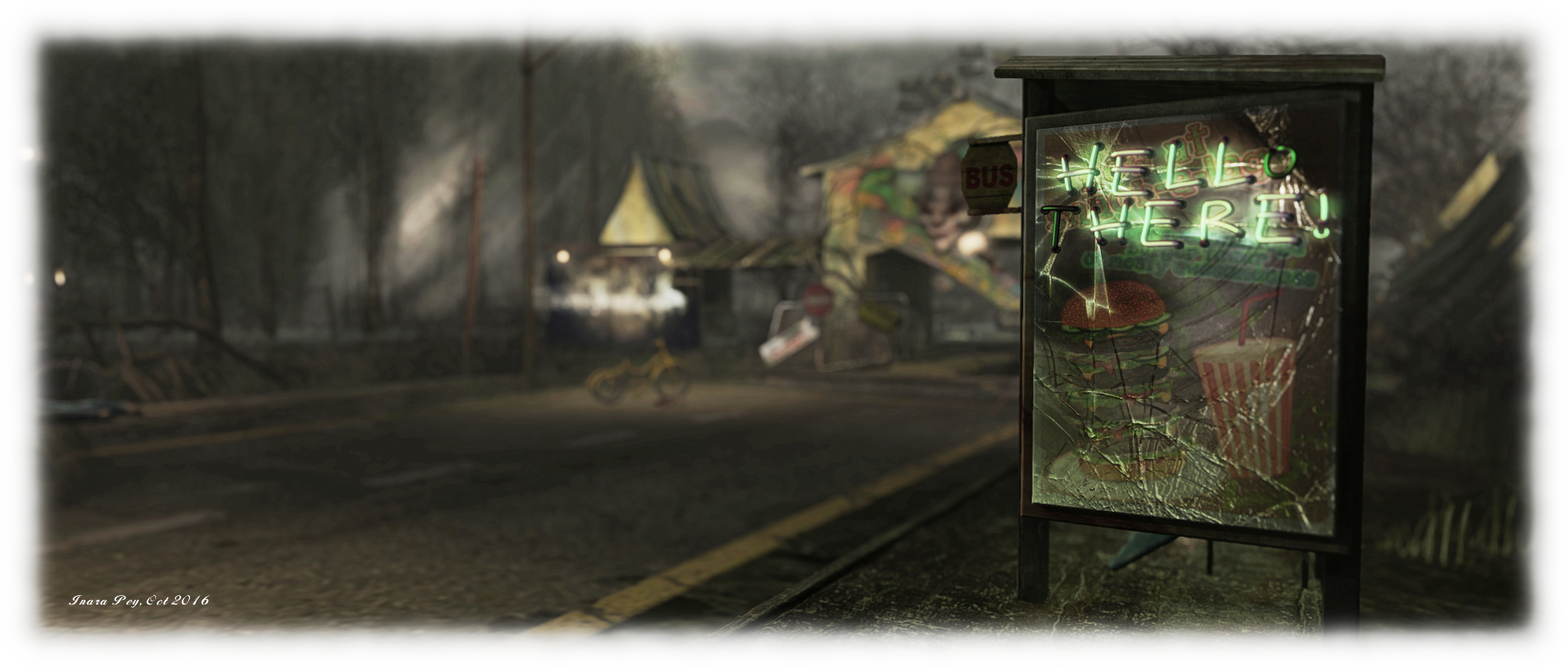
A ruined, broken road leads away from the landing point, neon signs  – in English, a further demonstration that Everwinter is not intended to be a historical recreation of Pripyat – glow faintly, competing with a lowering Sun which lights the old amusement park in the distance. Along this cracked road, tumbleweeds roll in the wind, vehicles lie rusting and broken, and locals stand, heads encased in gas masks.

Everwinter; Inara Pey, October 2016, on Flickr Everwinter

The amusement park stands deserted, the Ferris wheel rising into a cloudy sky, its cars broken and arms rusting, caught in flickers of lightning. Mist – or what appears to be mist – drifts across the ground beneath and wraps itself around trees and the remains of the park. But is it really mist? Look again and none the flickers of pigment within it, like tiny particles suspending in the air – a symbol, perhaps of the deadly nuclear poisons which sparkles and shifted through the air over the city in the wake of Chernobyl’s meltdown.

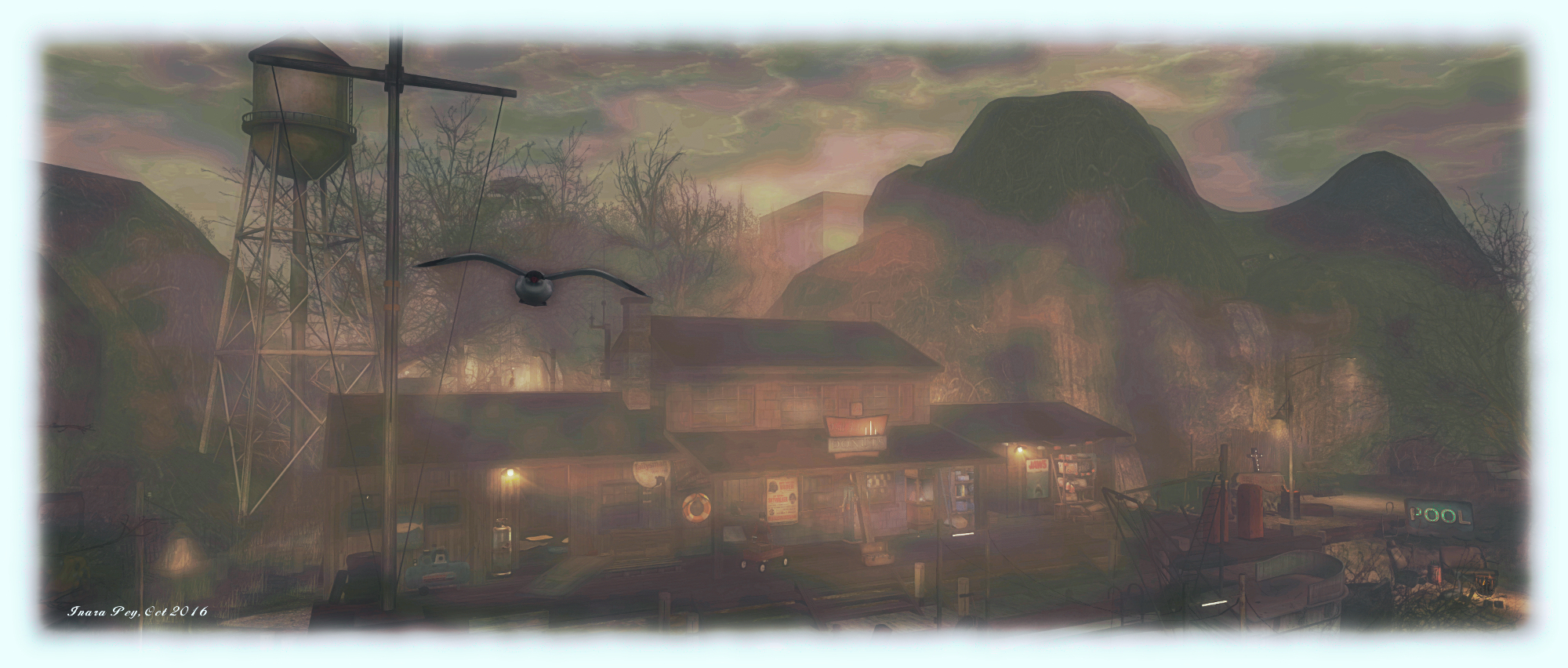
Dark, with the shells of concrete apartment buildings blurring with rugged hills to form the region’s edge, broken only by the route to a small area of coastline, Everwinter is a foreboding place. The home of dangerous mists and even stranger, haunting clowns and creatures. Yet one nevertheless photogenic and encouraging exploration. A masterpiece of design; the ideal destination for those seeking an engaging and very different kind of haunting visit.

SLurl Details