A little bit of Hemingway in Second Life

Hemingway's Wine Cellar
Hemingway’s Wine Cellar

I recently wrote about Casablanca in Second Life, a fabulous recreation of the film and its sets, built by TracyLynne Carpenter for Sommer Carpenter, who hosts the build in the sky over her home.

Following that article, Sommer and TracyLynne both contacted me, and Sommer extended an invitation for Caitlyn and I to visit another of TracyLynne’s builds which demonstrates their joint passion for art, films and literature, which this time takes the form of an homage to writer Ernest Hemingway. It’s a build that is not open to the public (in fact it can only be accessed via a number of secret, or hidden entrances, making fining your way in an adventure in itself) so I’m not including a SLurl, but Sommer did give me permission to write about it.

Hemingway's Wine Cellar
Hemingway’s Wine Cellar

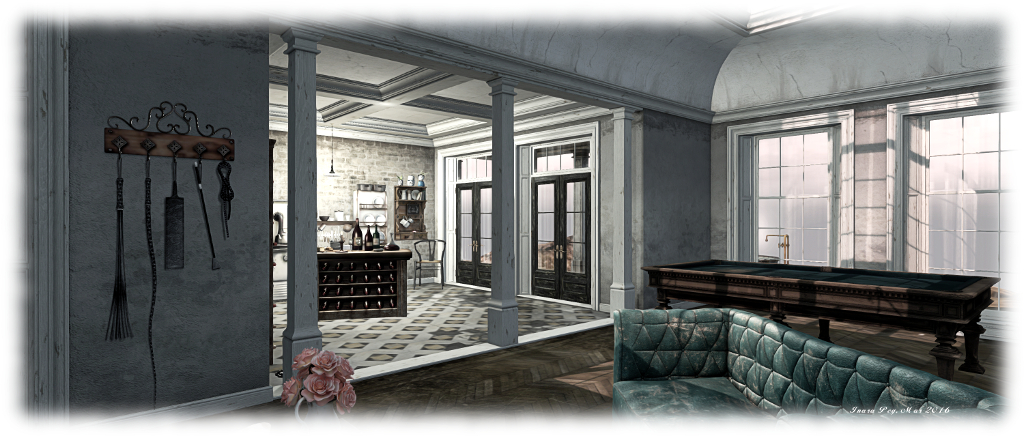
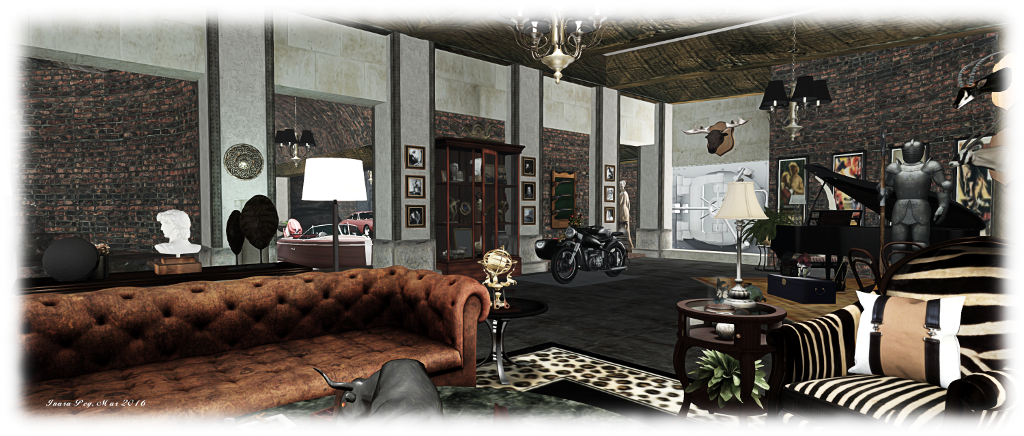
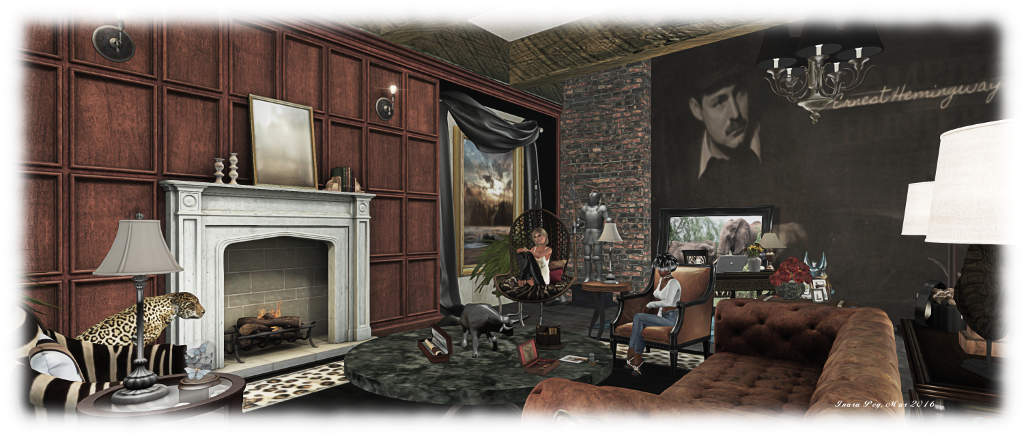
Residing under the grounds of a vineyard and winery, the “front door” to the build is cunningly hidden behind a secret door tucked away within a waterfront wine cellar, itself nested against the rocks of the vineyard island. Behind this, a brick-walled passageway leads the visitor to an underground lounge area. Comfortably furnished, this contains many nods and mementos to Hemingway, from the motorbike sitting against one wall, through to the posters of the film adaptations of his works, moving by way of nods to his love of hunting, enjoyment of cigars (and time in Cuba), photographs of the man himself, and more.

Adjoining this is a vaulted room, off of which sits a small bar area decorated in the manner of a gentlemen’s club. In both of these are more references to Hemingway – although some might be a little more esoteric. Is the model of the Titanic, for example, simply an adornment, or is it an oblique reference to Glenway Wescott, whom Hemingway unflatteringly presented through the character of Robert Prentiss in The Sun Also Rises, and once wished had perished, “with all his irk” in the Titanic disaster? Is the first aid cabinet a reference to Hemingway’s time as an ambulance driver in World War One?

Hemingway's Wine Cellar
Hemingway’s Wine Cellar

More obvious are the nods to Hemingway’s love of boats and fishing: tackle and rods are to be found, while on a wall hang images of Pilar, the fishing boat he acquired in 1934; and his love of the “occasional” tipple noted by the bar (and wine cellar setting).

There are further rooms to be found here as well. One of these, decorated in an oriental style, is hidden behind a further secret door, a tunnel leading from it back out to the sunlight and another nod to Hemingway’s love of sea fishing. Others are a little more obvious – such as the bathroom sitting behind the huge silver door normally found guarding a bank vault, while a bedroom, complete with a reminder of Hemingway’s time in Key West, Florida, can be found at the end of another brick walled passage opening of the main lounge area.

Hemingway's Wine Cellar
Hemingway’s Wine Cellar

Together with the above ground design of the island, this is another marvellous build by TracyLynne.  Beautifully detailed, magnificently brought together and beautifully atmospheric, Caitlyn and I thoroughly enjoyed out time exploring.

Our thanks to Sommer for extending the invitation to visit, and allowing us to wander and enjoy the comforts of this hidden treasure.
Hemingway's Wine Cellar
Hemingway’s Wine Cellar

A return to Binemist in Second Life

Binemist; Inara Pey, March 2016, on FlickrBinemist – click any image for full size

There are certain places in Second Life to which I always enjoy making a return. One of these is Binemist, Biné Rodenberger’s Homestead region, which changes as the mood or season takes her, and which has long been a particular favourite of mine. I was therefore surprised to realise that it is actually more than a years since I last blogged about it, and almost a year since I last dropped in.

Those familiar with the region (you can also read about it here, here and here if not) will know it has traditionally been a water region – one of the reasons it has always endeared itself to me. However, in its new iteration for the start of 2016, this is no longer the case: Binemist has become a desert landscape.

Binemist; Inara Pey, March 2016, on FlickrBinemist

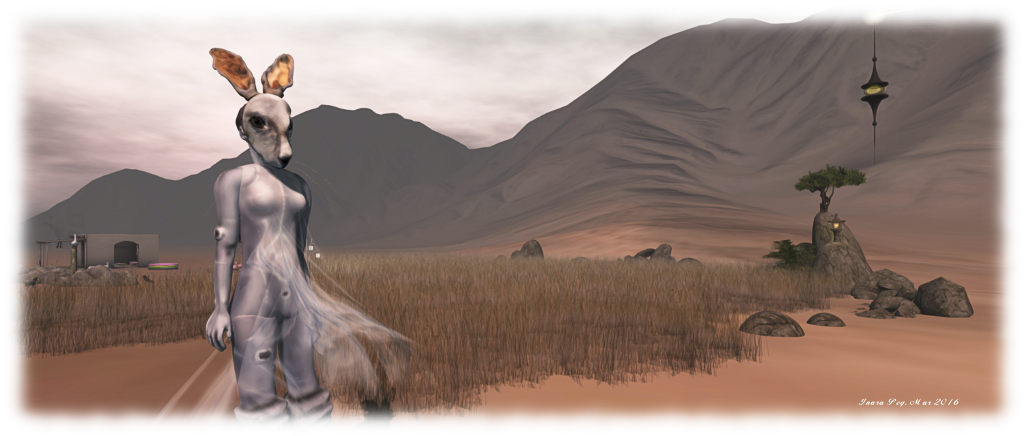
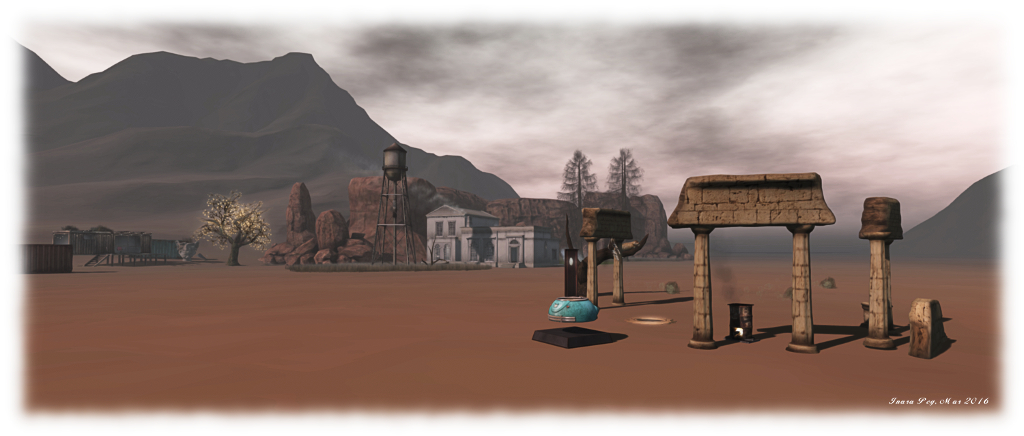
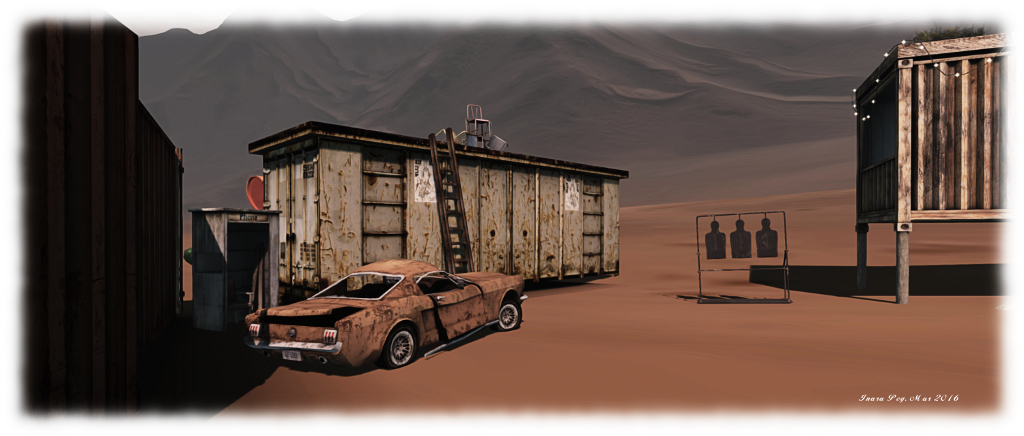
“I love the colours, and I love the early morning sun,” Biné say of the new design, and I have to admit it is dramatic: an iron flat expanse of sand bounded by mountains on two sides, and across which are scattered a series of scenes visitors are invited to explore as crab-like robots skitter across its sandy surface.

Two of these, located south of the landing point, are dwellings:  a stone-built house with its own lush garden, complete with an attempt to cultivate a carpet of grass beyond its high walls, and a converted shipping container sitting among a collection of its peers (which also  features a most unusual and adult take on a playground ride!). It is alongside these two homes that the otherwise flat expanse of the land is broken by a rocky upthrust of rock offering two plateaus linked by a stone span.

Binemist; Inara Pey, March 2016, on FlickrBinemist

Northwards, across the sands from these, sits a little vignette visitors to Binemists Past will likely find familiar: the Buddha and floating eye, a gathering of pink flamingos, a grouping of mystic stones with an ethereal floating spire nearby and, standing at the very edge of the region while staring off to a distant horizon snuggled between the mountains, Bryn Oh’s White Balloon. Also, Just off sim to the east sits the familiar form of the wrecked Viking ship  which has always been a motif got the region, while over in the north-west corner of the region sits Haveit Neox’s Ship of Fools.

In addition to the ground level layout, the landing point offers two teleport portals to skyborne locations. The first of these is the sky rock which used to be the landing point for the region, where sits a rural scene reached by a teleport hole set in the ground. The second is a skybox set out as the interior of a house, where Biné experiments with interior design, and which is reached via a teleport door.

Binemist; Inara Pey, March 2016, on FlickrBinemist

The new Binemist is very different to past iterations, and even though I perhaps miss the water and what could be found beneath it, there is a wonderful, desolate beauty about the new design which is equally as attractive and photogenic. And for the adventurous, there’s also the opportunity to ride around the sand in a novel little “bubble car”!

SLurl Details

Free-form role-play in Second Life

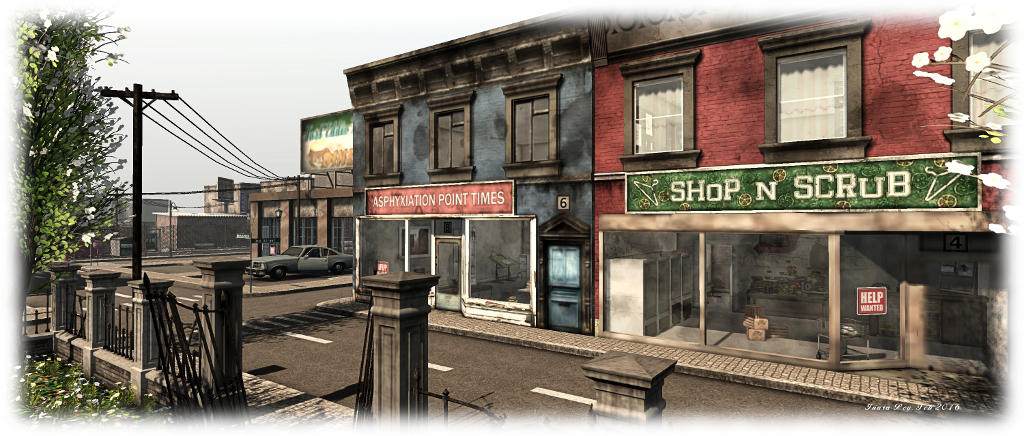
Asphyxiation Point; Inara Pey, February 2016, on Flickr Asphyxiation Point – Upper Town

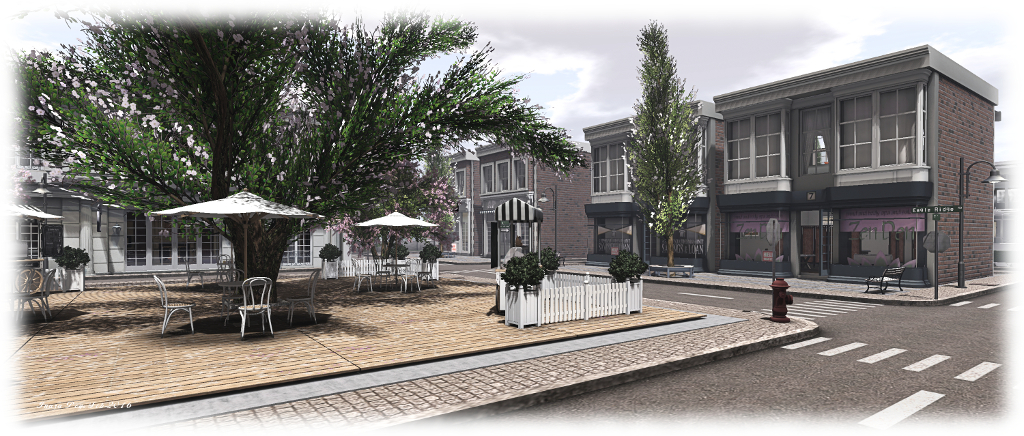
Asphyxiation Point wasn’t always the town that you see today. In fact, there was a time when it was nothing more than a small rocky outcrop jutting out of the ocean. The only way to get to it was past straits so narrow that sailors would hold their breaths as they made the perilous trip. And so the rock was named Asphyxiation Point and largely shunned for centuries.

All that changed when two fishermen – Jeremiah Newton and Fredrick Perry – happened to venture past the straits in search of new lobster hunting grounds.

So opens the back story to what is probably one of Second Life’s most immersive urban role-play environments to be opened in recent years. It is an elaborate story, rich in content, which steers the reader through a history which is both palpable and entirely believable; a story sharing the same depth and detail as the region itself.

Caitlyn and I were invited to tour Asphyxiation Point by one of the prime movers behind the role-play environment: Charles Newton Kuluk

Caitlyn and I were invited to visit Asphyxiation Point by one of region’s Admins and a prime mover in Asphyxiation Point’s development, Charles Newton Kuluk (kuluk).

Prior to his invitation, I’d only faintly heard of the region, knowing little more than it offered urban role-play. Charles was quick to offer more information, including the link to the region’s excellent website, which offers a wealth of detail for the interested visitor to the town.

“Asphyxiation Point was founded exactly one year back on February 22nd, 2015,” Charles said to me as we discussed a visit. “We’ve since grown to over 3000 members and enjoy a high level of both role-play activity and events, and my motivation for inviting you is  primarily to get more people interested in the idea of free-form role-play, and also hopefully break down  some misconceptions as to why a lot of such regions are labelled as Adult.”

As a free-form role-play environment, Asphyxiation Point doesn’t have a set structure on what it is necessarily about. There are no paragraph-heavy rules; common sense in the order of the day. Nor are there any pre-defined factions, political affiliations or anything else which might be found in more rigidly defined role-play environments. Players are free to establish their own factions and affiliations according to their in-game wants and needs; even the combat is role-played, rather than employing any metered system. Instead, the approach to role-play is perhaps best described by borrowing from the website:

A small fishing village turned tourist town, Asphyxiation Point is both beautiful and dangerous. [A place] ​where characters live, laugh and love while crime, despair and conflict brew just under the surface. Will you succumb to the darkness or will you rise above it all? Where will your adventure take you? Who will you be? 

In other words, those joining the role-play here are free to read-up on the back story of the town, develop their character accordingly, immerse themselves in its environments and gain familiarity with ongoing story lines and existing RP, and to naturally engage and role-play with one another. Hence why there is no insistence that visitors employ any observer or out-of-character (OOC) tags.

Asphyxiation Point; Inara Pey, February 2016, on Flickr Asphyxiation Point – Lower Town

“We believe in negotiation here,” Charles said of the latter. “So don’t worry about it. Stick to IMs once you leave the landing point. If you are approached in RP, just IM them and let them know you are observing / photographing or whatever.”

One way of keeping up with all that’s going on is to peruse the community’s local newspaper. In it you’ll find reports on the latest happenings in town, reviews on popular places and news on public events, such as the recent Mardi Gras festival. Again, the emphasis here is on community immersion and involvement: helping to make visitors and player feel fully a part of the local community.

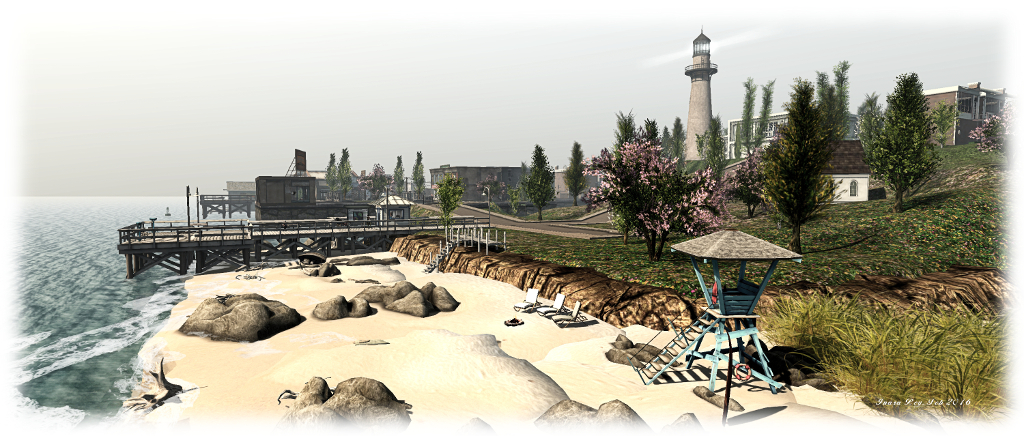
Asphyxiation Point; Inara Pey, February 2016, on Flickr Asphyxiation Point – the beach and Upper Town to the right, Lower Town and the Red Light District in the distance

Players can further invest themselves within the community through the businesses established as a part of the role-play environment, or by starting their own business (again focused on role-play). A section of the website again provides a comprehensive guide to both, including an overview of the sim-owned businesses (which players can apply to run) located through the four districts of the town.

“Our objective is to promote diversity in RP opportunities and see what happens,” Charles told Caitlyn and I during our visit. “The build is cleaner in looks than a lot of urban RP environments, because we didn’t necessarily want crime on the surface – well, maybe except for some places like the Red Light District. But we did want to give opportunities to the more criminal elements too. The sewers are spread all under town and give folks an alternative path to stay out of the cops eyes.”

Continue reading “Free-form role-play in Second Life”

Casablanca: a classic movie in Second Life

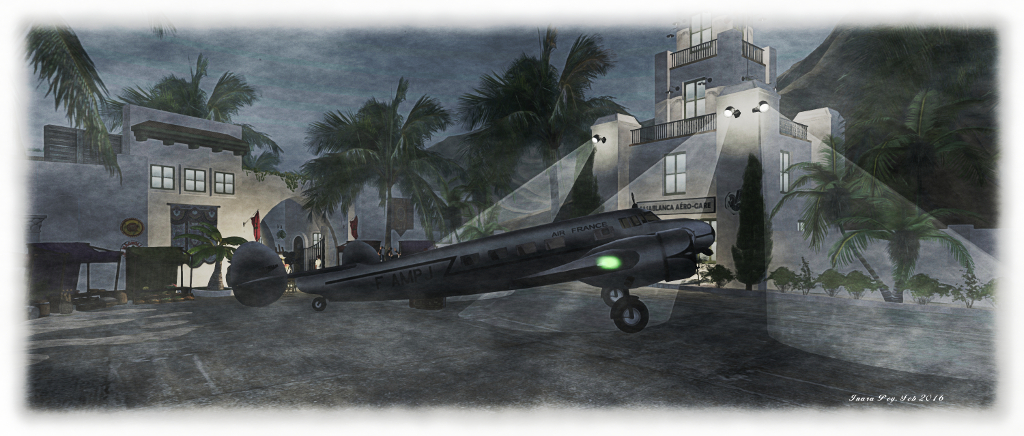
Casablanca: Aero Gare - "Here's looking at you, kid"
Casablanca: Aerogare – “Here’s looking at you, kid”

Update, February 29th: Sommer contacted me to let me know the Casablanca build will remain open for the foreseeable future – as long as visitors continue to behave themselves! – so if you’ve not already done so, done miss the opportunity of a visit!

Update, February 27th: TracyLynne dropped by to read this post, and afterwards IM’d me in-world to let me know she had, and that the chess table mention in the piece as missing, and which featured in Rick’s exchange with Peter Lorre’s Signor Ugarte where he is given the Letters of Transit for safe-keeping, has now been added. Thank you, TracyLynne!

It’s one of the all-time classic romance films of the 20th century, the tale of American Rick Blaine in Casablanca during 1941, trying to run his own bar and ostensibly stay out of the war. However, he is drawn into matters when his former lover, Ilsa Lund, now married to a fugitive Czech Resistance leader Victor Laszlo, walks into his bar, trying to find a way to reach the still neutral United States – and he happens to have the means by which they might do so.

At the time it was made,  no-one involved in it expected Casablanca to become the iconic film we know it as today. But in the years and decades following its initial release in 1942, it has become adored for its leading pair of Bogart and Bergman, its many quotes, its memorable theme song and its atmospheric sets. And, until around the end of the month, Second Life users can immerse themselves in this cinematic legend thanks to TracyLynne Carpenter and Sommer Shepherd.

Casabalanca
Casablanca

Sitting above Sommer’s full region of Nantucket Island, lies a beautiful recreation of some of the key locations from the film. It started life as the setting for an in-world party, but Sommer has opened it up for public visits, and it is a place any lover of the film or great and photogenic Second Life builds is not going to want to miss.

Teleporting to the build brings you to the location of the film’s iconic finale: the concrete of Casablanca Aerogare, where an Electra aeroplane bound for neutral Lisbon awaits its passengers. It is here, on a foggy night that Rick persuades Ilsa to board the flight with her husband rather than staying with him, warning her that  if she doesn’t, she will regret staying. “Maybe not today, maybe not tomorrow, but soon and for the rest of your life.” Then, as the plane departs, Rick walks off into the fog with his new comrade-in-arms, Captain Louis Renault. Regarded as one of the finest endings to a movie (and one in places ad-libbed by Bogart), it is the perfect opening to your visit.

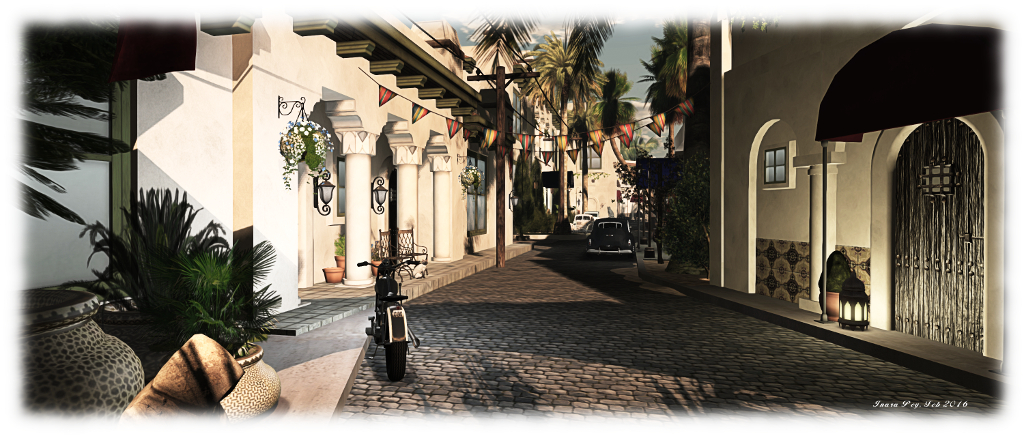
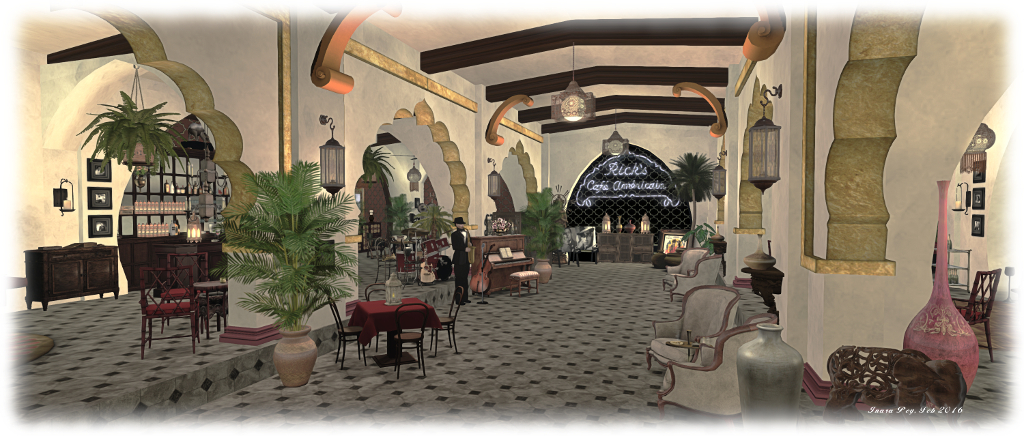
From the airport, you can walk down one of the winding streets of Casablanca, past the headquarters of the Vichy police, to Rick’s Café Américain, the central set of the movie, fabulously reproduced (perhaps only missing the chess board – see the comment at the top of this piece – over which Rick first learns of the means by which he will eventually be able to help Ilsa and Laszlo), when Signor Ugarte persuades him to look after two “letters of transit”  he has acquired, guaranteeing the holders free passage throughout German-controlled Europe.

Casabalanca: Rick's Café Américain - "Of all the gin joints, in all the towns, in all the world, she walks into mine."
Casablanca: Rick’s Café Américain – “Of all the gin joints, in all the towns, in all the world, she walks into mine.”

But this is more than just set pieces from Casablanca, it is an imaginary glimpse into the making of the film. Cam along some of the buildings on the street leading to Rick’s bar, and you’ll find them to be wooden façades, propped into place from behind, indicating this is in fact one of the sound stages on which the film was made – albeit one lovingly blended into a suitable desert environment through the magic of Second Life.

Take a walk around the back of the set, and you’ll find film supplies, spare cameras, tented catering and make-up facilities, and the caravans which might have been used by Bogart and Bergman had they really been on location, offering them places to rest between takes or rehearse lines. Other hints that this is a film set can be found elsewhere, such as the camera and director’s chairs sitting alongside the arrival point, or the camera set up in Rick’s bar.

Casablanca: inside Rick's Bar: "You played it for her, you can play it for me! "
Casablanca: inside Rick’s Bar – “You played it for her, you can play it for me!”

This really is the most marvellous build; one which shouldn’t be missed while there is the opportunity to visit. if you haven;t yet dropped into Rick’s Café Américain, neither Caitlyn nor I can urge you strongly enough to make sure you do. You may not encounter Bogart of Bergman when visiting, but if you love the movie, I can guarantee you’ll hear their lines echoing around you.

SLurl Details

Spellbound by Imesha in Second Life

Imesha; Inara Pey, February 2016, on Flickr Imesha (click any image for full size)

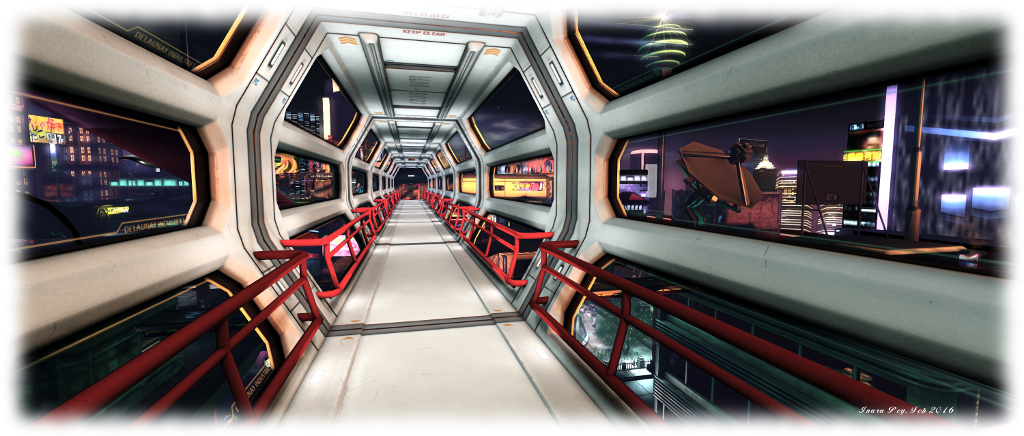
Arriving in Imesha, Shaman Nitely’s and Ime Poplin’s multi-level cityscape, one might be forgiven for thinking they’ arrived in a corner of a city made famous on the big screen though the likes of Blade Runner or on television via Total Recall 2070. Buildings rise on all sides,  elevated roads and sidewalks passing along the deep gorges formed between the gaudily lit towers, ramps and stairways providing links between the different levels, allowing passage between them. Each level is perhaps just a little darker than the one above, until at the lowest, the visitor eventually comes to  brick buildings of a much earlier era, graffiti strewn façades tired, old original roads, where visible, cobbled and aged.

But Imesha is no direct homage to either Ridley Scott’s film (or those which copied its approach to a dystopian view of future cities), nor is it an echo of the Los Angeles of Total Recall 2070. While it may contain similar fusion of occidental-Sino-Japanese influences, it is very much its own place, and a quite spectacular one at that.

Imesha; Inara Pey, February 2016, on Flickr Imesha

From the upper levels s setting sun can be seen, limning the tallest buildings, its glow competing with their own brightly lit surfaces and myriad lights. Flashing billboards stare down at visitors from side sides of some of the buildings, the oriental faces on them flickering and smiling, the ambient sound scape shifting and changing to suit the environment as one explores.

And there is plenty to be found when exploring! “We added as much detail as we could for a homestead,” Shaman informed me when I bumped into him and Ime re-working a part of the landing area. “That’s why we are constantly replacing stuff with lower prim alternatives!”

Imesha; Inara Pey, February 2016, on Flickr Imesha

As we chatted, a Chinese paper lantern drifted by, doubtless riding on the air currents winding around the buildings. Watching it pass, I commented on the nods to Blade Runner etc. “Yes we wanted that Sci fi look,” Shaman replied, “but we also wanted to make it a bit more homely; not cold.”

A teleport system is available at the landing point, providing the means to hop directly to the various local destinations – the club, the diner, the art garden, etc. However, I’d strongly advise anyone making a visit to eschew this and strike out of foot. The best way is through the doors leading to the club space, or up the stairs alongside them. Both will lead you to routes connecting the platform to other parts of the region.

Imesha; Inara Pey, February 2016, on Flickr Imesha (click any image for full size)

Finding your way between all the levels may take a little time, but this will also allow you to hopefully see all of the detail and care put into this build. Do make sure you have ALM enabled as well (you don’t have to enable Shadows, which are the big performance hit); excellent use of materials is made in much of the region, so having ALM on increases the visual appeal of the Imesha.

All told, this is a fabulous deign and build, and one that should be enjoyed by all who visit. Should you do so, please consider supporting Ime’s and Shaman’s efforts to offer it to Second Life, by making a donation at one of the tip jars found throughout the region.

SLurl Details

The Yorkshire Moors in Second Life

The Yorkshire Moors; Inara Pey, February 2016, on Flickr The Yorkshire Moors (click any image for full size)

It’s no secret I’m from the UK. In fact, while I now reside in the southern half of the country, my family has its roots in the north, and I have an abiding love of Northumberland and a deep affection for North Yorkshire.  So it was with interest that I heard PinkRayne had modelled the region on which her store is located after The Yorkshire Moors.

Now, I’ll be honest here. The Yorkshire moors have always been set in my mind as the rugged, rolling countryside with short, tough grass and oceans of summer heather one passes through en route to Pickering or Whitby in the summer months. A landscape split by meandering streams and dry stone walls and over which stone built farms outhouses are scattered. As such, I was a little surprised by the overall flatness of the region; I had expected to see something perhaps a little more undulating.

The Yorkshire Moors; Inara Pey, February 2016, on Flickr The Yorkshire Moors

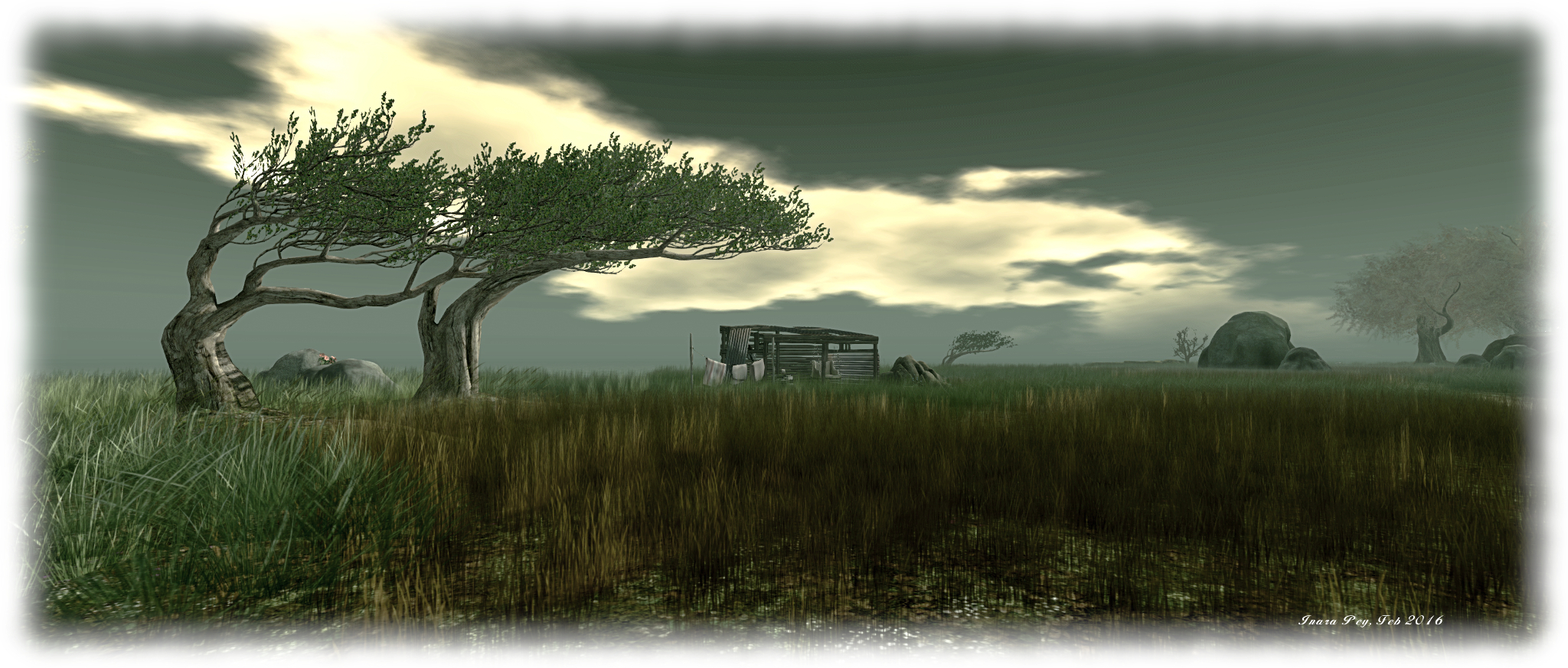
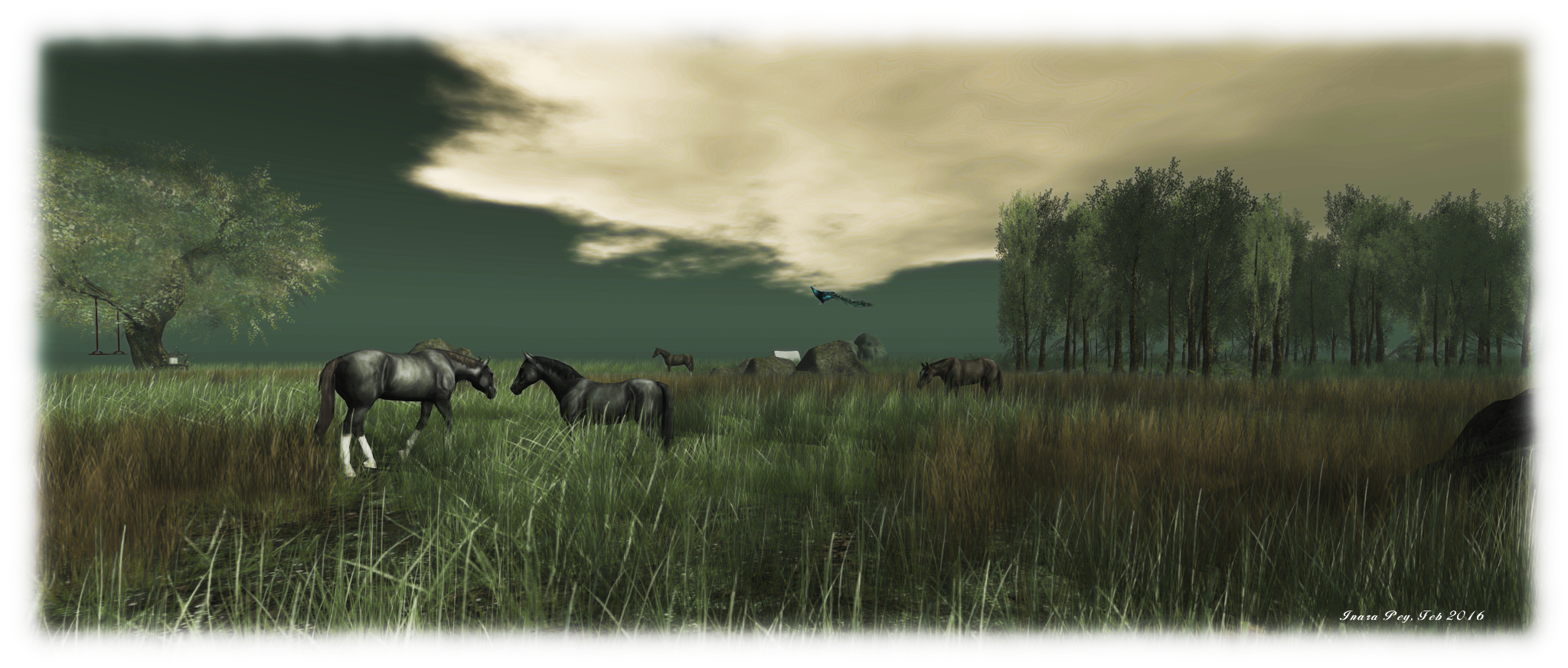
Which is not to say the region does reflect the open countryside of Yorkshire; as you enter the region, Pink’s store behind you, there is no mistaking the parallels. The grass here is tough and tufted, many of the trees bend their backs to the wind, while the landscape is cut by dry stone walls behind which sheep and horses graze.

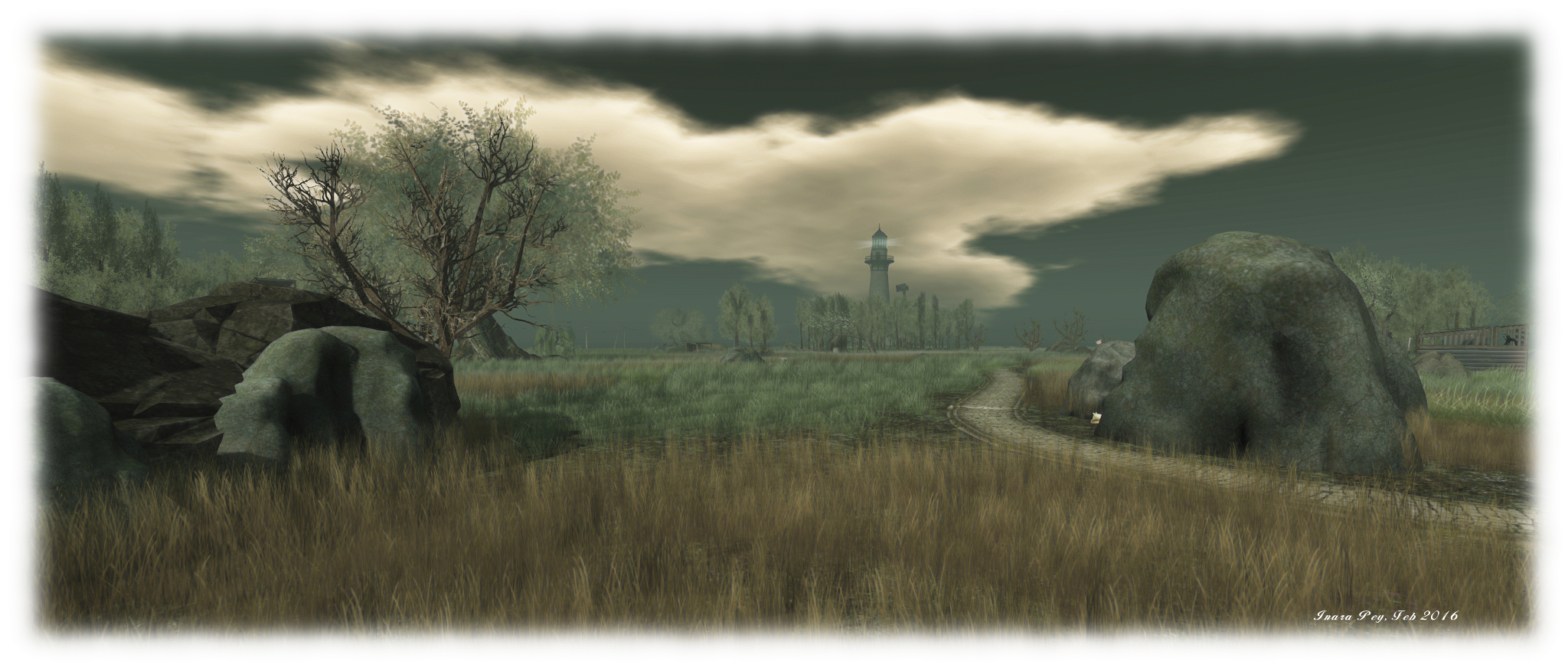
Towards the south-east corner of the region stands a single lighthouse, it’s Cyclopean light roving over land then sea, back to land again, reminiscent of the Flamborough Head lighthouse. Between it and the store, a meandering stream opens into an area of flooded land which offer a nod towards the North Cave Wetlands.

The Yorkshire Moors; Inara Pey, February 2016, on Flickr The Yorkshire Moors

A single path winds through the landscape from the store in the north-east, looping southwards and then back to the north before eventually arriving at a little rocky cove on the west side of the region.  A rowing boat sits on the water here, offering a place to sit for individuals or couples; one of several places people can sit and enjoy one another’s company or look out across the beautifully bleak and windswept landscape, the view uninterrupted by hill or rise, bringing the flatness of the region into its own.

With the ambient sounds matched to the landscape, the windlight suggesting a late autumnal evening, The Yorkshire Moors makes for an atmospheric visit, offering excellent opportunities for photography. And for those looking to add to their wardrobe, there’s also Pink’s store for a little after-visit shopping.

The Yorkshire Moors; Inara Pey, February 2016, on Flickr The Yorkshire Moors

SLurl Details