The Rains of Castamere in Second Life

The Rains of Castamere; Seek; Inara Pey, August 2016, on Flickr The Rains of Castamere – click any image for full size

Doubtless any Game of Thrones fan will recognise the main part of the title of this travelogue. The Rains of Castamere is a song immortalising the obliteration of House Reyne by Tywin Lannister when the former tried to rebel against his father, and can be heard in part several times in the TV series. It is also now the name of a new region designed by Arol Lightfoot (who designed Just Another Tequilla Sunrise – see my 2014 post here, and who shares the design honours with Krys Vitas for Rosemoor, which I featured in  May 2016).

The Rains of Castamere is not, however, a Game of Thrones role-play region. While there are many motifs from the books / series within it, Arol notes in her introduction that it also includes  other fantasy elements, and is intended to offer an environment SL photographers can enjoy – and it does so quite admirably.
The Rains of Castamere; Seek; Inara Pey, August 2016, on Flickr The Rains of Castamere

Split into two by a meandering channel running east to west, the region is mostly low-lying, with grassy banks rolling down to the water’s edge, although there are some  rocky aspects at either end of the dividing channel. One of the two land masses is sparse of tree and shrub, the other offers a broader expanse of land which is host to a mix of woods and open spaces.

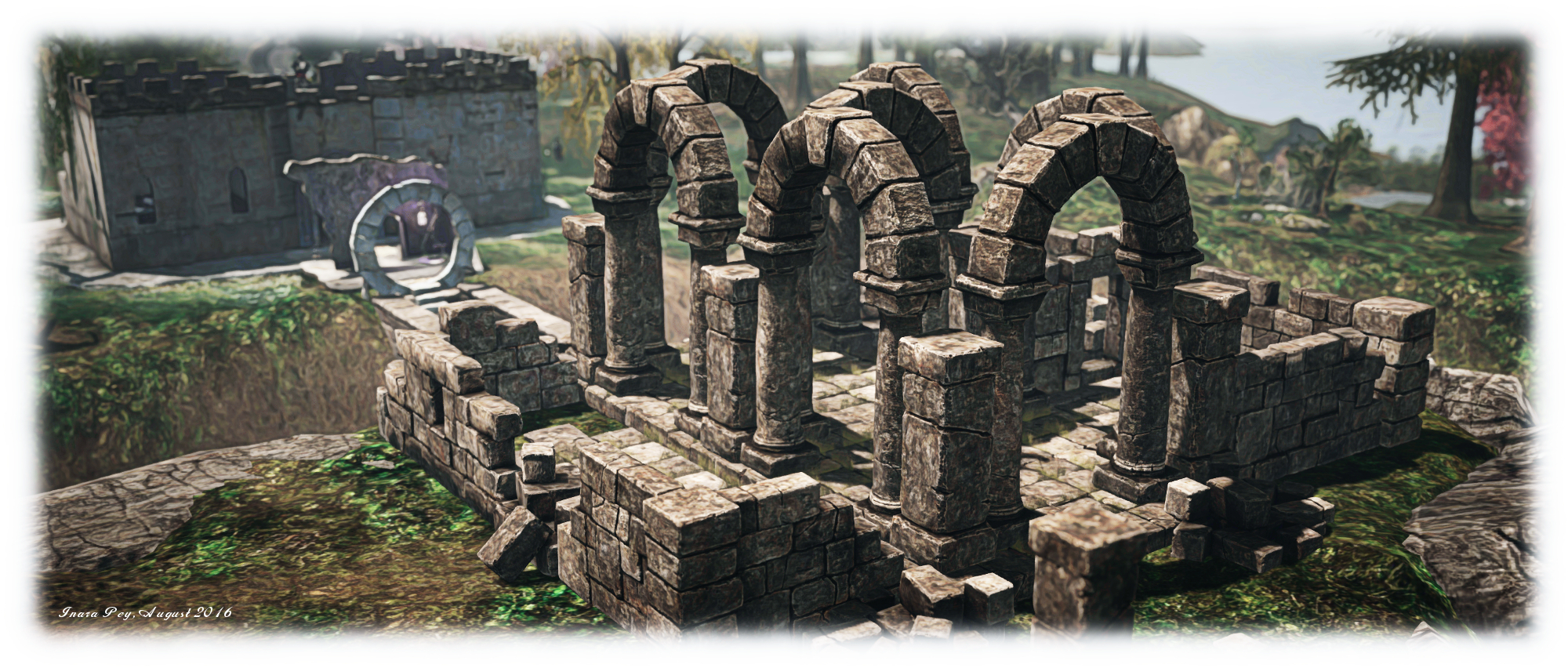
The references to the world of Games of Thrones can be found throughout the region. There’s the tall tower of stone to the south-east sitting atop of a rock plateau, clearly representative of Casterly Rock, the ancestral seat of House Lannister. Two ruins lie relatively close to hand, either of which might be taken to reference House Reyne from the song, whilst the two bridges spanning the narrow channel carry on their sides the carved head of a lion, a nod towards the golden lion sigil of House Lannister.
The Rains of Castamere; Seek; Inara Pey, August 2016, on Flickr The Rains of Castamere

Across one of these bridges sits a stone castle topped by an iron throne, while two lions face off against two large wolves down below. All of these stand as motifs for Kings Landing and the enmity between the Lannisters and House Stark, whilst the looming figure of the armoured knight alongside the throne might be taken as a reference to Gregor “The Mountain” Clegane, bodyguard to Cersei Lannister – and by extension, Cersei’s hold on the throne.

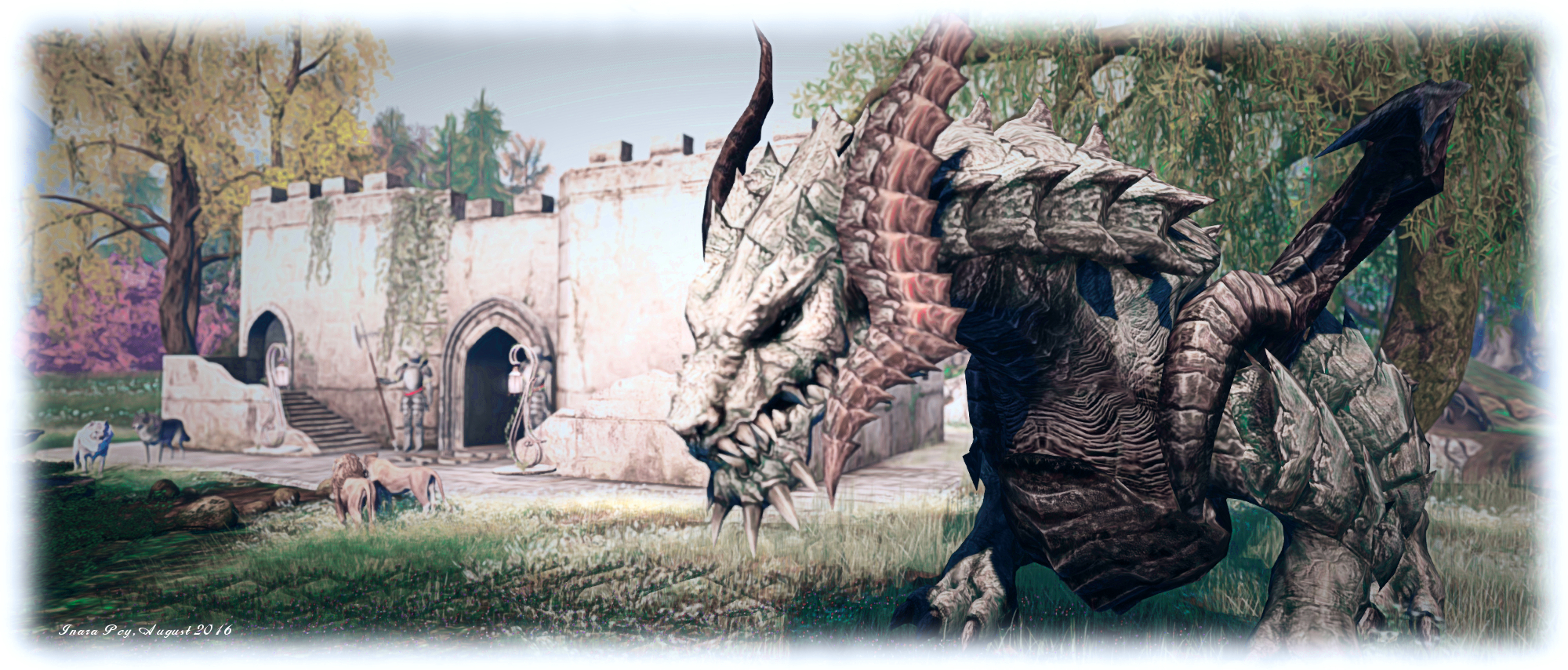
The Starks gain further reference amidst a woodland of fir trees (themselves symbolic of northern latitudes) north and east of the castle. These arc protectively around a weirwood tree to one side, the symbol of the old gods historically worshipped by the Starks. However, perhaps the clearest reference to the GoT universe lay with the dragons. These can be found on the ground and in the air, and their reflection of House Targaryen is clear. One even flies above a ship on the west side of the region, and is surely a allusion to the coming to Westeros of Daenerys Stormborn, Mother of Dragons, as seen at the end of the sixth season of the series.
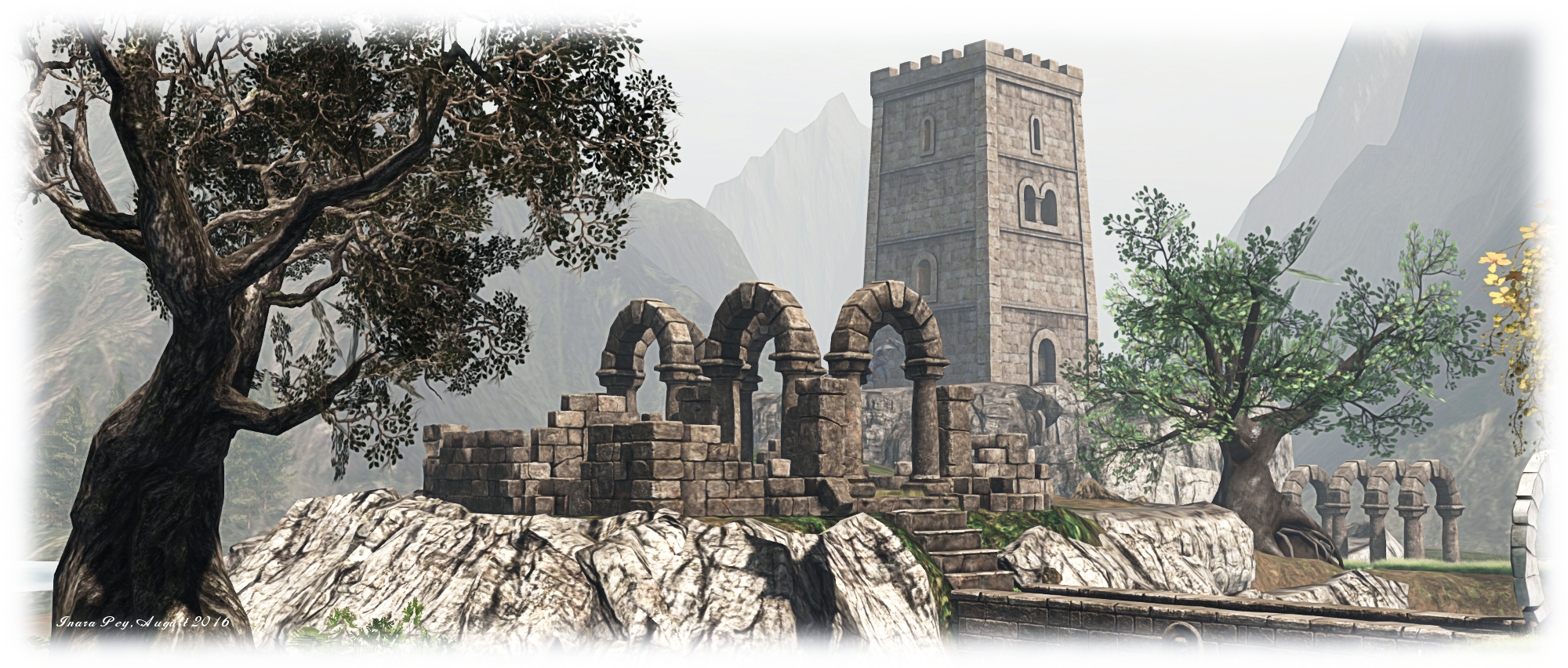
The Rains of Castamere; Seek; Inara Pey, August 2016, on Flickr The Rains of Castamere

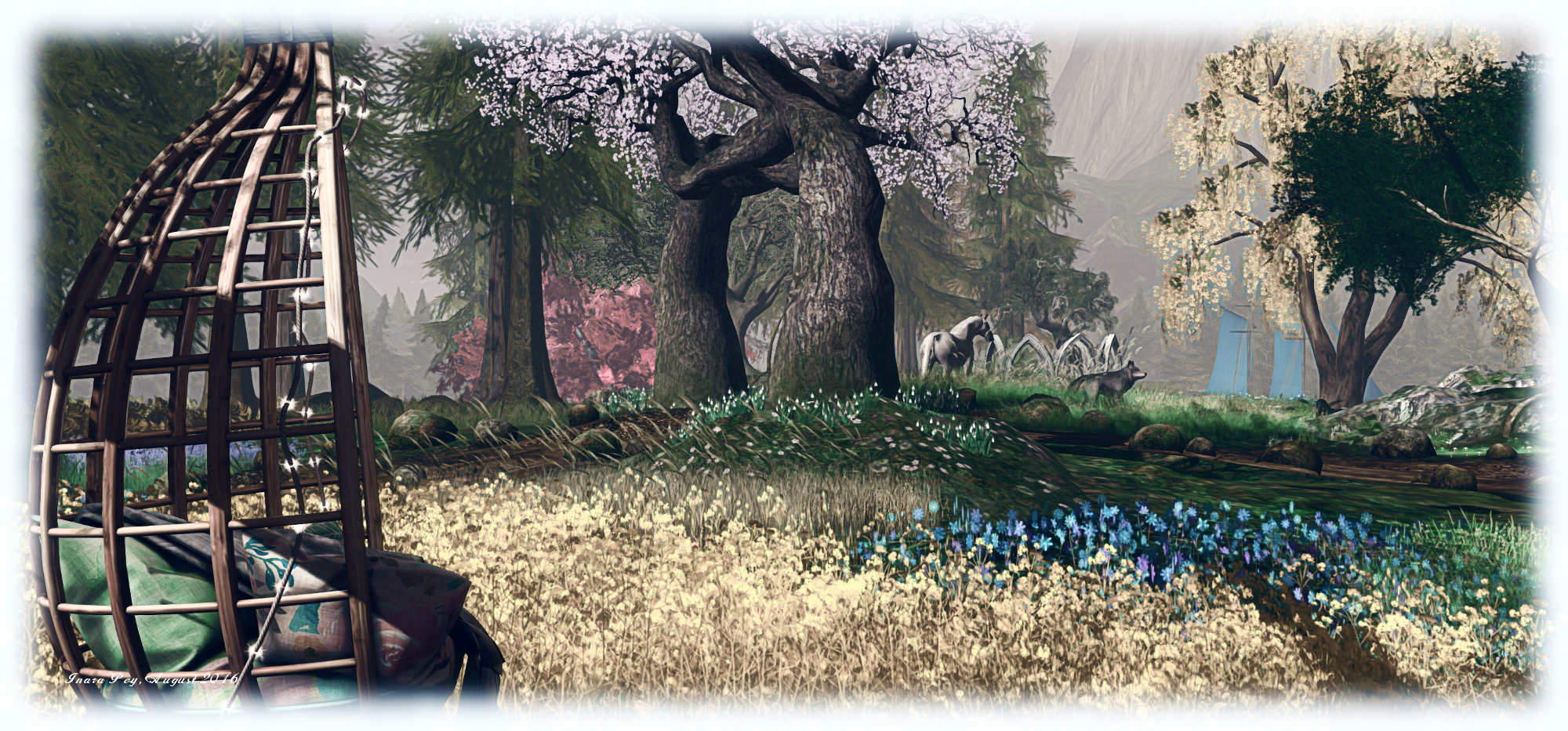
Other fantasy elements are also to be found across the region in the form of unicorns, elven arches and lanterns, trolls, a dryad – look around and you’ll discover them. Many of the locations offer the opportunity to pose, sit and / or cuddle, thus furthering the photographic opportunities here (and more were appearing even as I visited).

The Rains of Castamere is an interesting approach to a region; while the landscape natural flows from point to point, so too does each location within it stand on its own as a photographic setting quite distinct from those around it. Opportunities for both landscape images and avatar studies can be found throughout, the latter obviously well-suited to cosplay shoots.

Whether you’re into Game of Thrones or seeking a new location for your photography, The Rains of Castamere has much to offer. And given the title of the region, it seems only appropriate that I close this piece not only with a recommendation to visit, but also with a rendition of the song.

SLurl Details

Hide and Seek in Second Life

Hide & Seek; Inara Pey, August 2016, on Flickr Hide & Seek – click any image for full size

It affects us all at one time or another, that feeling of wanting to get away from things for a bit and find somewhere serene where we can wander with our thoughts. Somewhere away from the bricks and mortar, where tracks allow our feet to make decisions for us, and where there are opportunities to just sit or lie down and watch the clouds drift by overhead or the waves wash over soft sands, either on our own or in the company of someone close.

Hide and Seek offers us the chance to do just that in Second Life. This homestead region, the work of Seth Theodore Delwood-Reign (SethCohen Nirvana), is open to the public “for a limited time”, and offers a tranquil simplicity which invites exploration.

Hide & Seek; Inara Pey, August 2016, on Flickr Hide & Seek

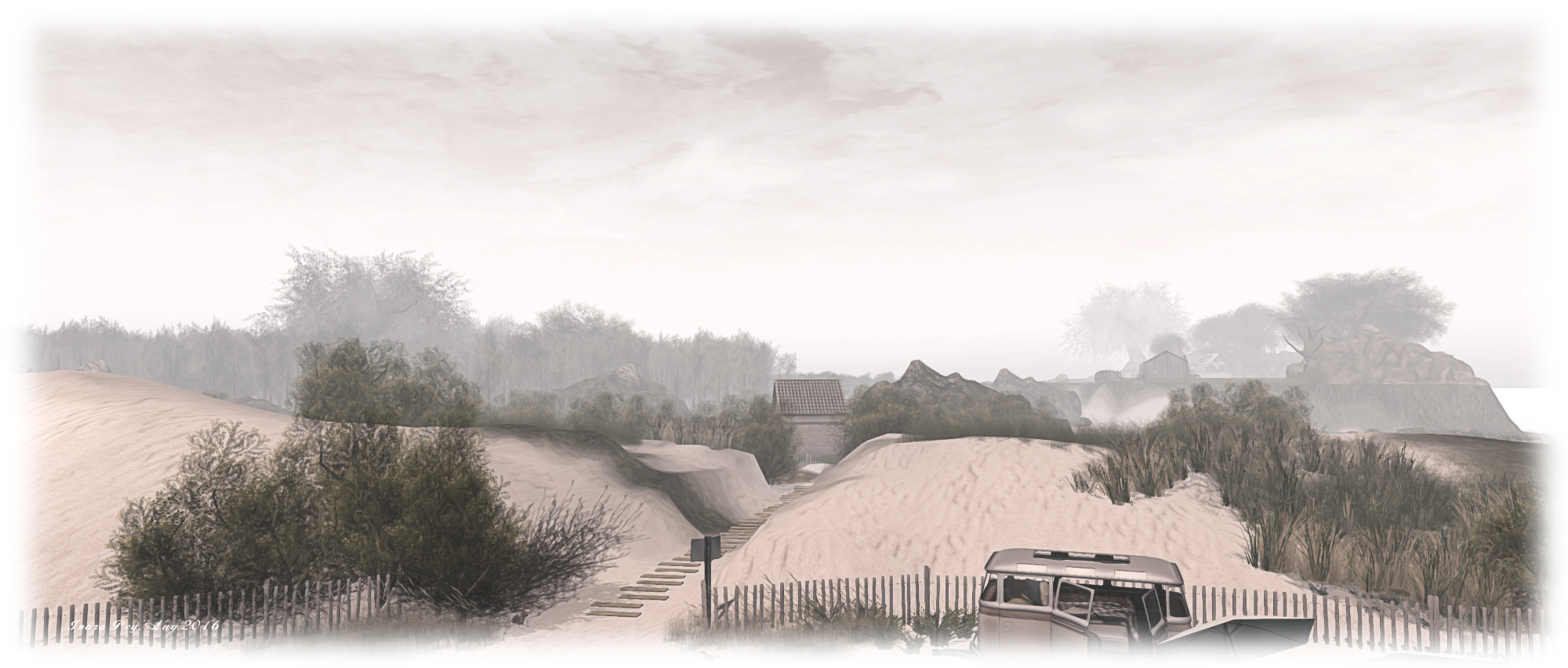
From the landing point in the north-west corner of the region, visitors have a choice of a walk around the beaches to the west and south, or to head directly south-east through the island’s woodlands.

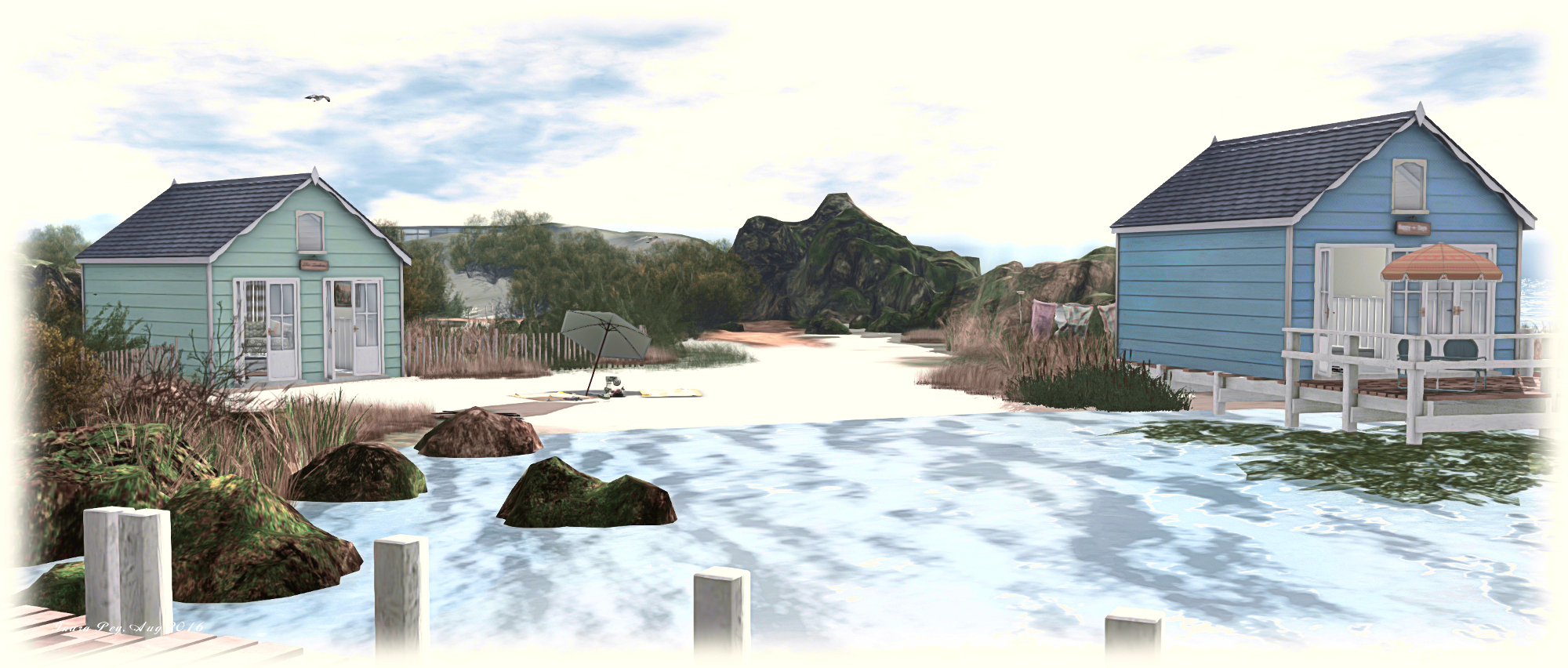
The beaches, separated one from another by grassy dunes, offer plenty of opportunities to sit and relax, either indoors or outside, under the sun or in the shade of broad parasols. Wooden beach houses vie with a little motel for visitors’ attention. The former offer seaside holiday charm, the latter the promise of air-conditioned rooms, cable TV and wi-fi, together with sitting cuddle poses. Nearby sits a partially completed building possibly destined to become a doughnut concession, a dirt track meandering by on its way to the grassy plateau occupying the south-east corner of the region.

Hide & Seek; Inara Pey, August 2016, on Flickr Hide & Seek

This plateau is the home of a small holding – but whether it still operates as a farm or is now a holiday home is perhaps open to debate. While there is an run-down barn outside with a tractor parked beside it, the presence of a barbecue and the general decor of the house suggest it is perhaps used more for vacations than anything else.

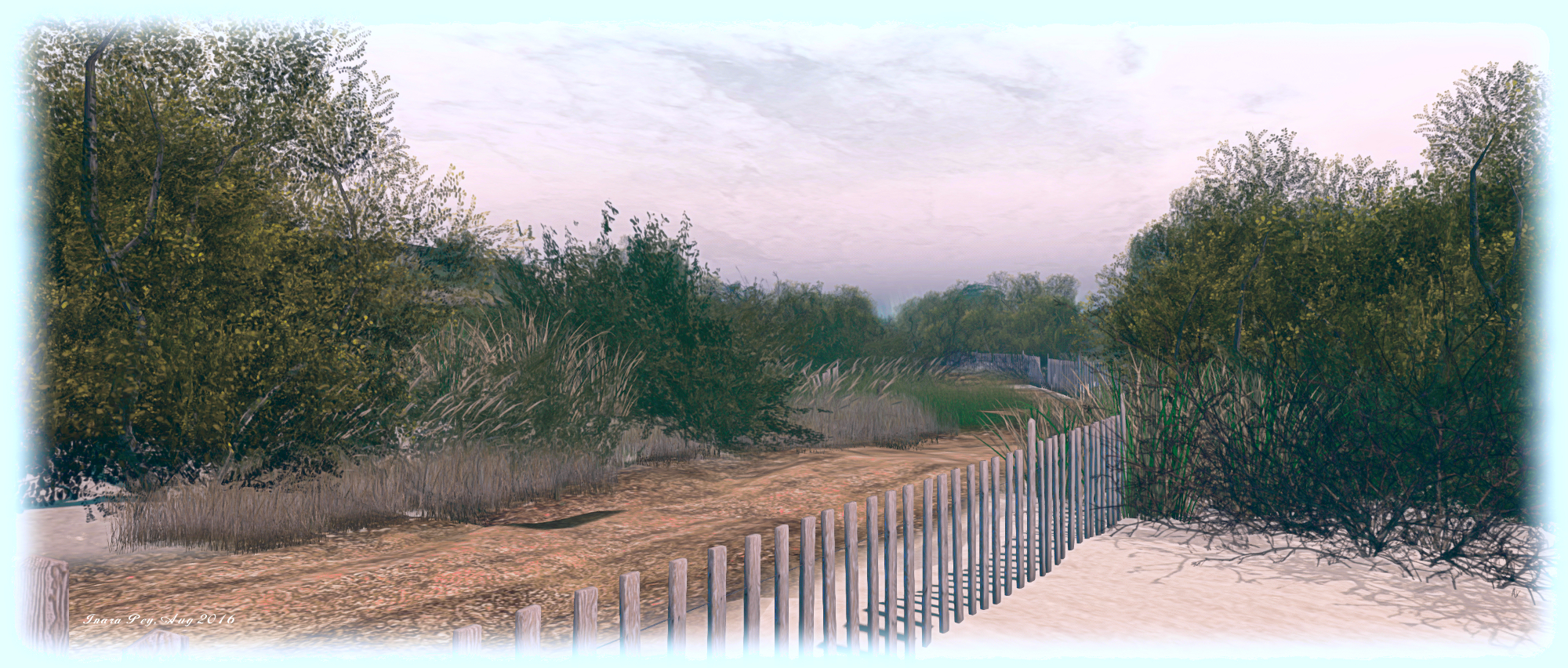
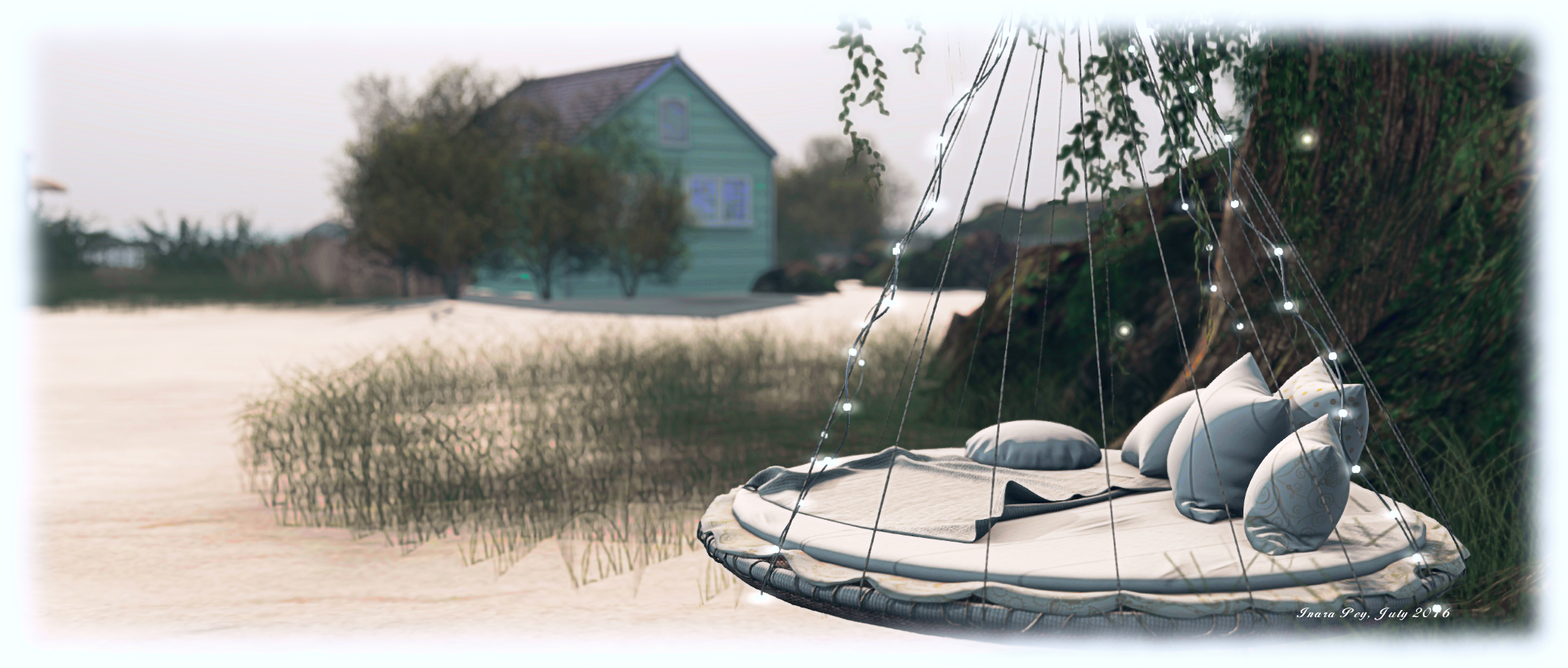
A track rolls down the side of this little massif, winding its way into the woods below to become the same path as leads the way under the trees from the landing point. Follow this, and you’ll find other tracks branching left and right: one leading back to the beach, another offering a short walk to a little camp site in the shade of the trees, and still another providing access to a cosy drive-in style movie theatre, again with opportunities to sit and / or cuddle. Elsewhere, hanging chairs sit below tree boughs and clearings beckon wanderers. There’s even a chalkboard on the southern side of the woods, hidden from the rest of the beachy sands by bushes, where folk can write and draw to their heart’s content.

Hide & Seek; Inara Pey, August 2016, on Flickr Hide & Seek

All-in-all, Hide & Seek offers the opportunity for a relaxing visit, complete with a gentle ambient sound scape, and an ideal destination for that getaway wander. Or if you prefer, you can grab a bicycle from the landing point and pedal your way over the tracks and sand. Should you visit, do keep in mind the house sitting on the small island in the north-est corner of the region is a private home; otherwise the island is free to roam.

SLurl Details

A Beautiful 4 Seasons in Second Life

Beautiful 4 Seasons; Inara Pey, July 2016, on Flickr Beautiful 4 Seasons – click any image for full size

“This region is my labour of love :D,” Inkie (inkie Loudwater) tells me as I admire the latest iteration of her Homestead region, Beautiful 4 Seasons. “I change  it every season; it’s an ongoing process, so the more people enjoy it, the better it is!”

Looking around the region it’s hard to imagine it not being a staple part of people’s itineraries when exploring Second Life. It sits as a mostly low-slung island in the centre of a lake. Across the water and completely surrounding it, a patchwork quilt of fields recede towards misty, distant hills and rounded, grassy peaks. it’s not quite England’s Lake District – but it could be.

Beautiful 4 Seasons; Inara Pey, July 2016, on Flickr Beautiful 4 Seasons

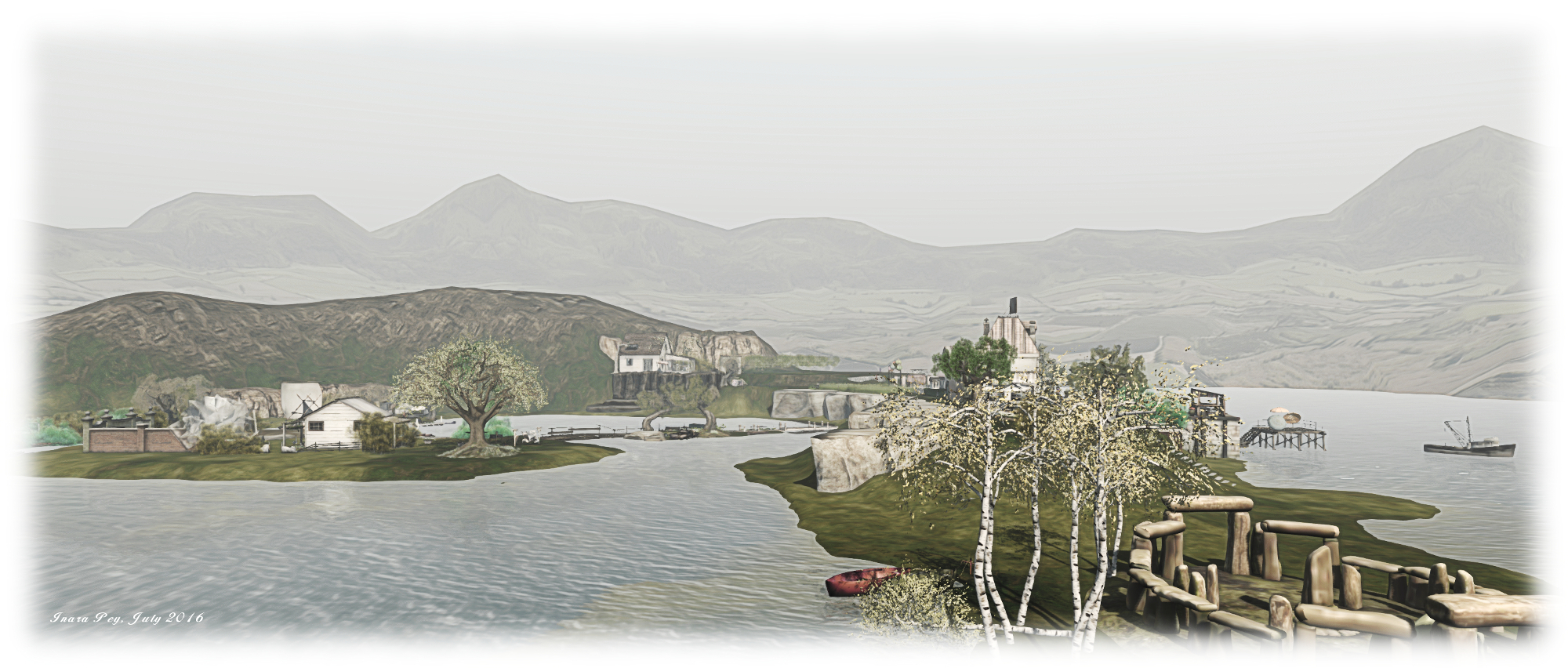
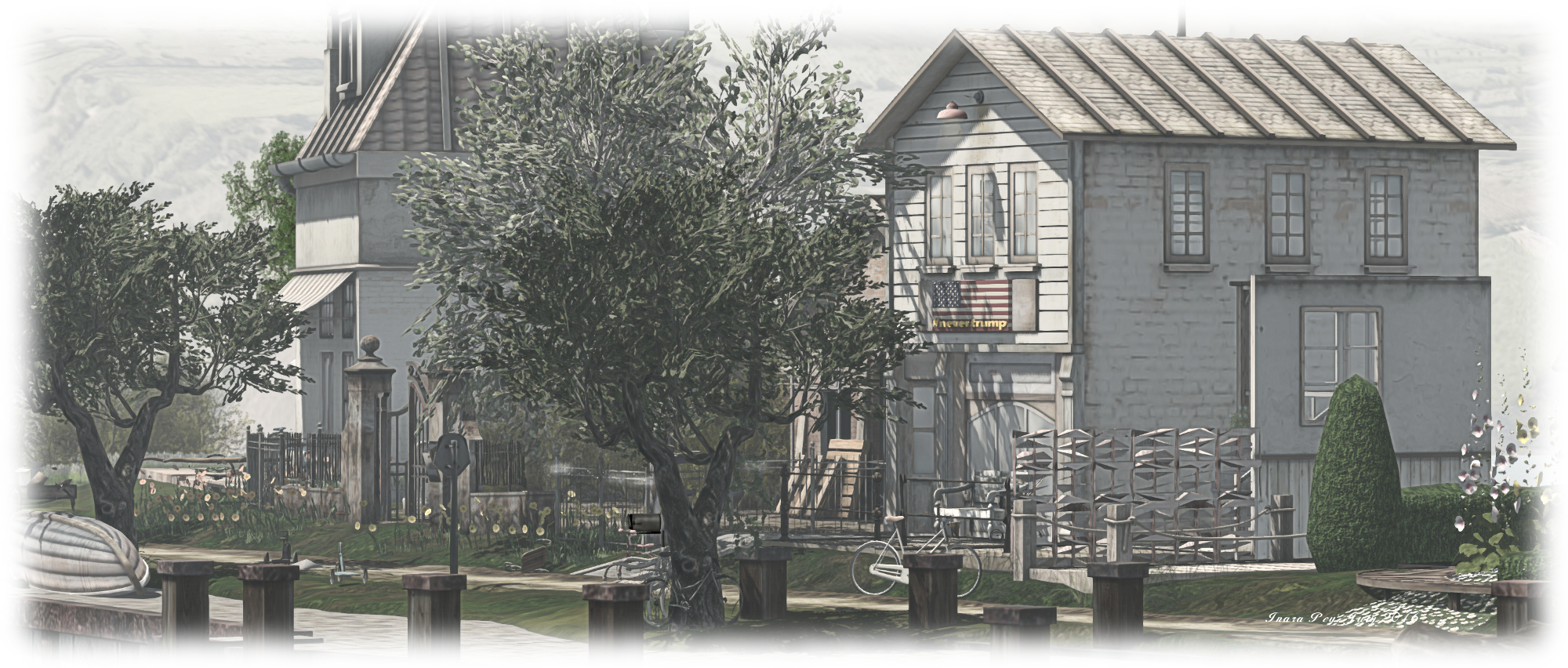
The island forms a west pointing C, a smaller island nestled within its curving arms. A tiny hamlet sits along one arm of the C, perched on a slender finger of rock facing the waterfront to the south, with rowing boats and small craft drawn in close to the single wooden pier and stone flanks of an old harbour wall. Behind the little row of buildings forming the hamlet, stone stairs offer a way down between the rocks to where wooden bridges hop from the main island over a little nub of land poking above the waters, to the smaller island, occupied by a small summer-house and partially walled garden.

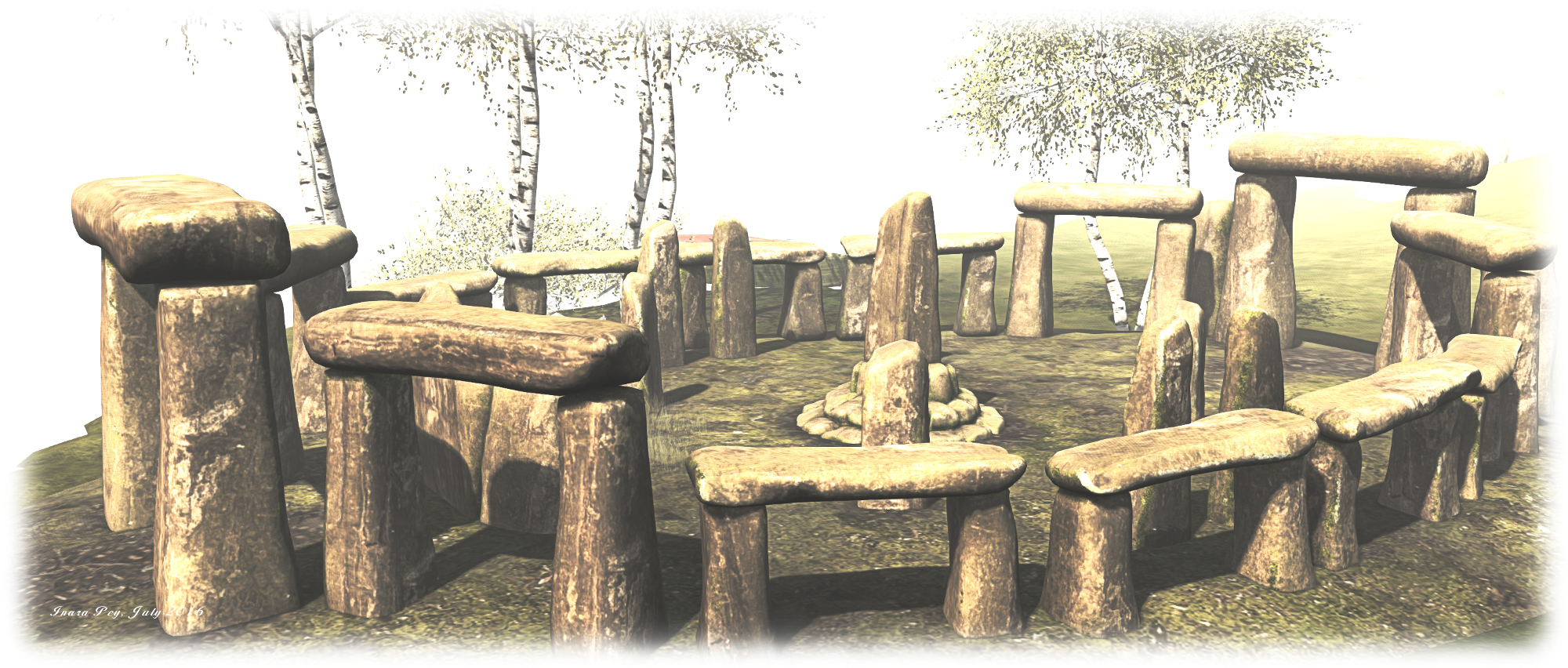
Westward of the hamlet, the land drops away gently to s small circle of standing stones, an elongated henge with lintel stones still in place to connect rough-hewn columns. Eastwards, and the land curves and climbs to its highest point, a rocky shoulder to the north-east. A house shelters in its lee of the hill as the island curls northwards, looking out over the water to the smaller of the two islands.  Below the house, the land slips gently downward and across a grassy tongue lapping at the water’s edge, where sits an intriguing camp site awaiting visitors.

Beautiful 4 Seasons; Inara Pey, July 2016, on Flickr Beautiful 4 Seasons

The entire impression here is of a small, possibly private, holiday island; a place where people can escape the hassle of everyday life, sitting beyond the distant hills, and simply wander and relax. It’s a place where bikes and scooters are popular – but which is best explored on foot. It’s the kind of place where even strangers are on first-name terms within minutes of meeting, and where the entertainment, going by the makeshift outdoor theatre, is as home-made as the bead in the bakery.

There is also subtle mystery of stories awaiting visitors here. The bakery is well-stocked, the summer-house is set for dinner while the deck outside invites people to sit and have a drink; across the water; the camp site shows signs of use, and here and there, washing hangs on the lines. But where are the locals? As busy as the little island seems, the houses sit unfurnished, motor scooters sit deserted, and dogs stand and stare into the distance, as if waiting on someone’s return. Are the locals all off across the water? If so, where might they have gone for the day? Or are we, as a part of our visit, “the locals”? And if so, what might our stories be as a part of this little community?

Beautiful 4 Seasons; Inara Pey, July 2016, on Flickr Beautiful 4 Seasons

Beautiful 4 Seasons is, in a word, charming; the kind of place I could happily holiday within; so much so that I wish I’d seen some of the earlier iterations of the region. It is, however, quite firmly penned-in to my list of regions to revisit in the future. but that’s the join of Second Life, isn’t it? The chance of discovering / hearing about new places to visit, explore and photograph.

SLurl Details

Preiddeu Annwn: immersive education in Second Life

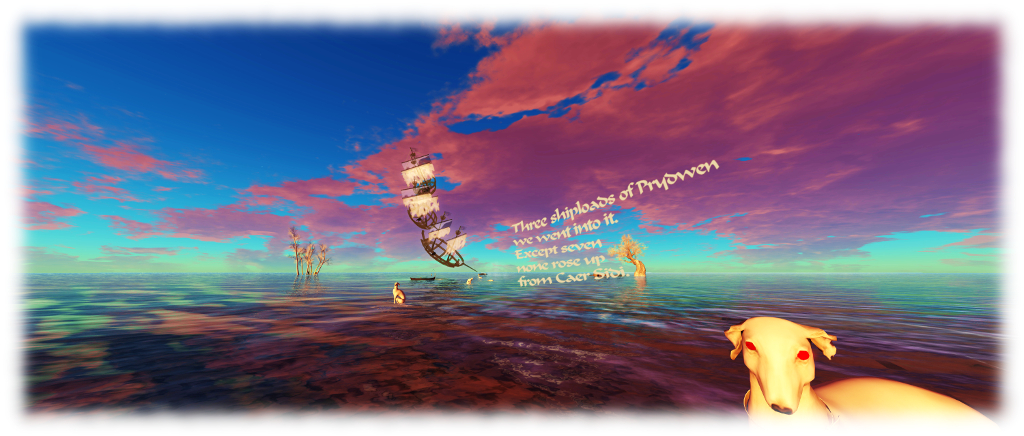
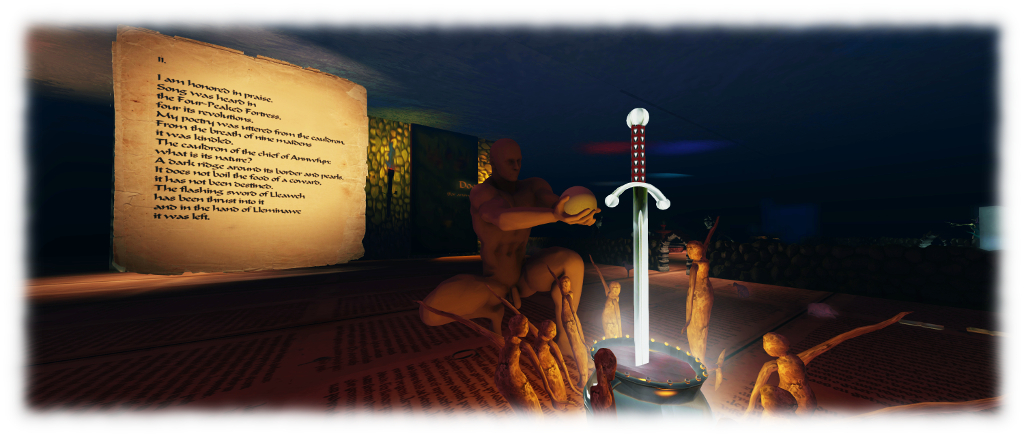
Preiddeu Annwn: “Three fullnesses of Prydwen / we went on the sea.”

Preiddeu Annwn (or Preiddeu Annwfn, “The Spoils of Annwfn“), is one of the most famous gnomic / philosophical poems to be found in the Middle Welsh Book of Taliesin. In just eight irregularly versed stanzas, it records a journey the poet (possibly intended to be the 6th Century poet Taliesin, although the poem itself dates from around the 14th Century), made with King Arthur to the Otherworld (the Annwfn of the title)  – a place of eternal youth and delights, which is common to Welsh mythology (appearing in, for example, the Four Branches of the Mabinogi).

It is also now the subject of an immersive environment itself entitled Preiddeu Annwn, designed by Hypatia Pickens, a professor of English at the University of Rochester,  New York, and her students. Its function is to provide an interactive means by which the poem and its themes can be explored and better understood, both within itself and with regards to broader medieval Welsh mythology and medieval literature. It is also an extraordinary piece of scholarly art.

Preiddeu Annwn: “The cauldron of the chief of Annwfyn: / what is its fashion? / A dark ridge around its border / and pearls.

The arrival point offers a series of notes to visitors, including how to best experience the environment. It is more that worth the time to read these in order to make sure you enjoy the installation fully. Once you have done so, keep the instruction “follow the white dogs to where the boats are going [and] sit when you are asked to sit”, and then touch the teleport disc.

This delivers you to ground level, where waters ebb and flow over the eight stanzas of the poem beneath a beautiful sky, representing the start of Arthur’s expedition, and far on the horizon stand his three ships, white dogs pointing the way to them. In turn, the ships stand over the entrance to the Otherworld, on which your are to sit.

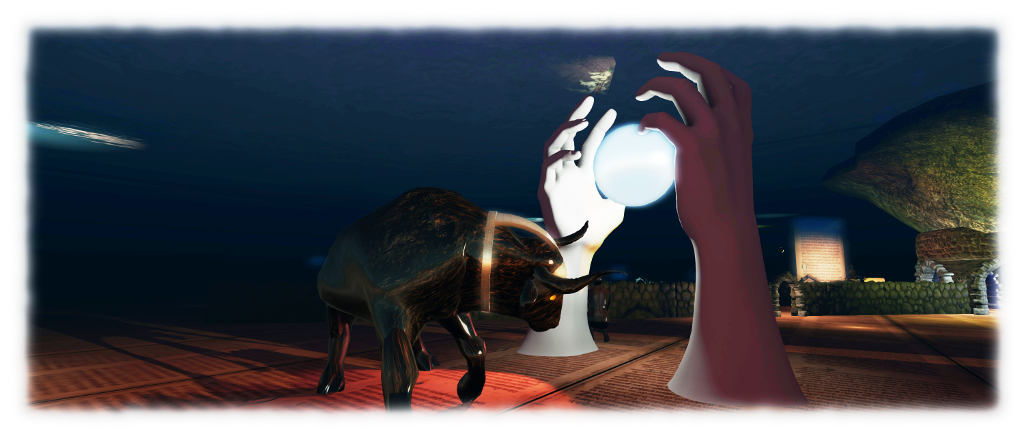
Preiddeu Annwn: They do not know the brindled ox, / thick his headband. / Seven score links / on his collar.

Doing so will deliver you to the Otherworld, in which the stanzas of the poem are presented through words and vignettes as an endless cycle, requiring considered exploration (the order in which you do so is yours to choose). As well as the poem, broader aspects of Welsh mythology are touched upon, such as the aforementioned Mabinogi. Do make sure you have media enabled (again, via the movie camera icon, top right of the viewer) to enjoy a reading of the poem by  Blake Harriman, set to music and vocals by Hypatia herself.

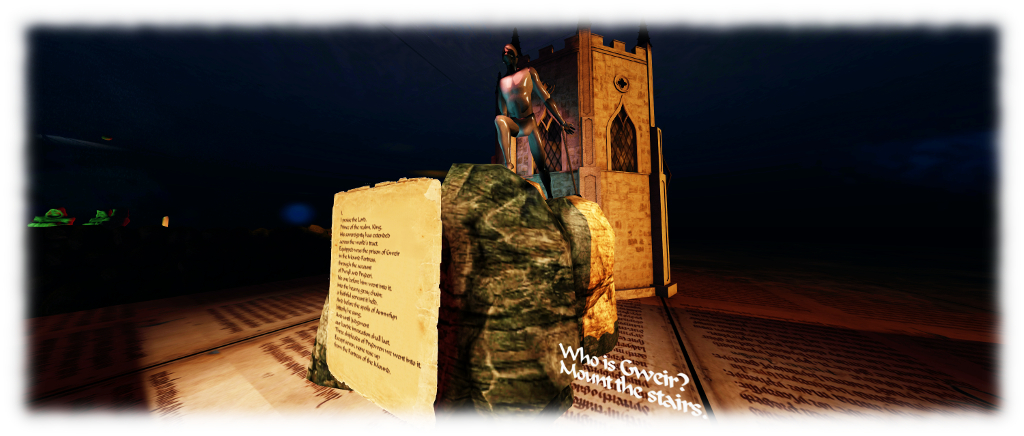
Eventually, however, you must make your way to Yyns Wair (“Gwair’s Island”, referred to in the poem as Cair Sidi – the Glass Fortress / “Fortress of Four-Peaks” encountered by Arthur and his men -, and believed to be modern-day Lundy in the Bristol Channel), in order to free Gwair / Gwier. This involves passing through the Door of Hell to explore the tower of Gwair’s imprisonment. which in turn gives you the opportunity to collect the poem, hear it recited in the original Middle Welsh by Hypathia herself, and read the thoughts of her students about the use of virtual environments in study.

Preiddeu Annwn: “into the heavy blue/gray chain; / a faithful servant it held”

Preiddeu Annwn has been made possible through the support of the Russell Hope Robbins Library at the University of Rochester. A medieval studies library containing holding in all aspects of medieval literature, history, art and theology, the Library is also represented in Second Life, and can be visited directly, or by “following the waves” once you have reached Yyns Wair within the Preiddeu Annwn installation.

All told, this is an extraordinary demonstration of the power of virtual spaces as a tool for education and the exploration of art, history, mythology and language, with the virtual Russell Hope Robbins Library equally so. I spent in excess of four hours in exploration and contemplation of both; anyone with any interest in medieval literature, Arthurian mythology, Middle Welsh or medieval history in general cannot help but be enthralled by both.

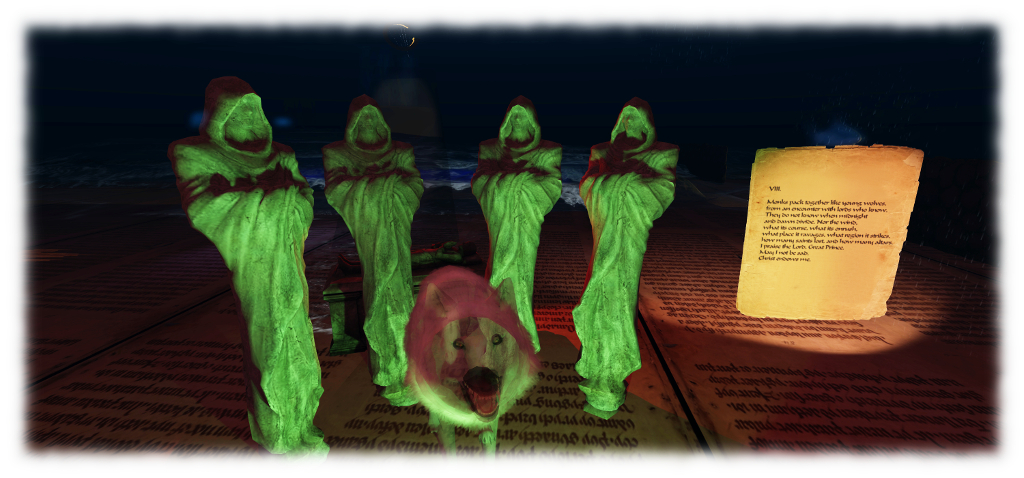
Preiddeu Annwn: “Monks pack together / like young wolves”

Related links

A Starship Enterprise in Second Life big enough for an avatar crew

"Space. The Final Frontier..."
“Space. The Final Frontier…”

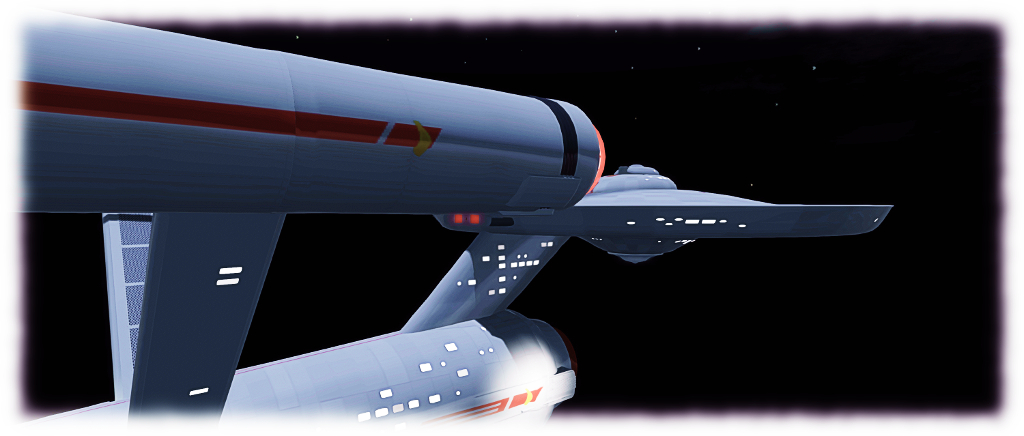
Cathy Foil is a creator of note. Among her many talents, she was the first to introduce fully sculpted foot in SL and put it in a high heel; she is the creator of the MayaStar mesh rigging plug-in for Maya, and she is, alongside the AvaStar folk, one of the prime movers in the Bento project. She is also a huge fan of The Original Series of Star TrekTM.

How big a fan, you ask? Well, let me put it to you this way: in 2008, before the birth of mesh in Second Life, she start started building an avatar-sized, scale replica of the Enterprise itself.  Almost two regions in length, with interiors from the Bridge to Engineering, it was a huge undertaking – albeit unfinished.

"These are the voyages..."
“These are the voyages…”

Part of the ship is currently once again rezzed in-world, although unfortunately in a location that is not open for public access. However, given July is being used to mark the 50th anniversary of Star TrekTM with the release of the 3rd film instalment from the “Abramaverse”, I took the opportunity to join Cathy on a tour of the original starship Enterprise NCC-1701.

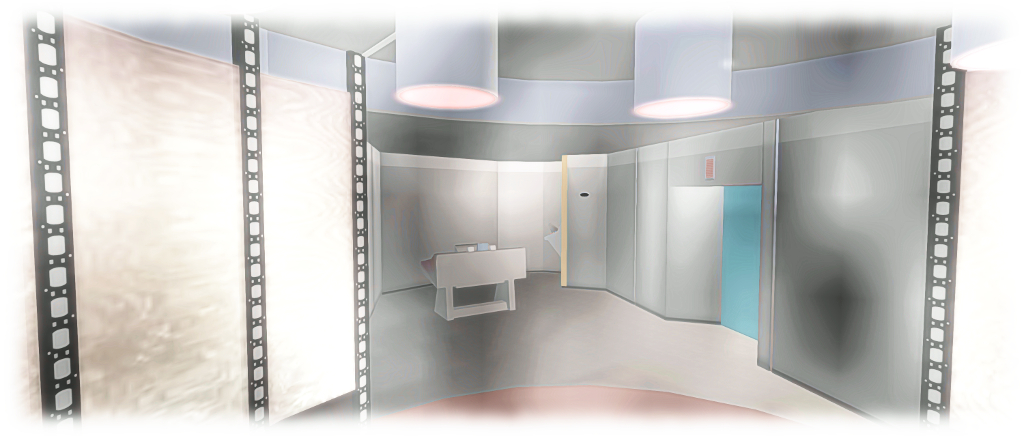
“You best be in Mouselook when we beam up to her,” Cathy informed me as we arrived at two innocent-looking transporter disks lying in the sand. Following her instructions I stood on a pad, brought up the menu and slipped into Mouselook before alt-clicking my destination: Mr. Kylie’s Transporter Room 6. For a second, nothing happened; then a familiar hum filling the air, the beach before me started to sparkle, my universe flickered for a second, then the sparkling and noise faded and the transporter room emerged out of the glow.

Beaming aboard the Enterprise
Beaming aboard the Enterprise: the transporter room materialises before my eyes

Never have I felt quite so “on” the Enterprise as I did at that moment; stepping off the pad, I expected to see Mr. Kylie himself behind the transporter station and then hear that magical high-pitched hiss of the doors as Kirk and Spock arrived.

“The entire project took about eighteen months to get this far,” Cathy said as I admired the transporter, the control console and monitoring station, all beautifully re-created in prims and sculpts. “Most of the ship is rendered as sculpts with prim walls and floors,” Cathy said, leading me to the door which did give that squeaky hiss of opening at we approached. “That way we could reduce the prim count and make things manageable.” Sculpts they may be, but sculpts designed with care: no waiting for things to pop into existence in my view at all during the tour.

"Captain Kirk to the bridge!"
“Captain Kirk to the Bridge!”

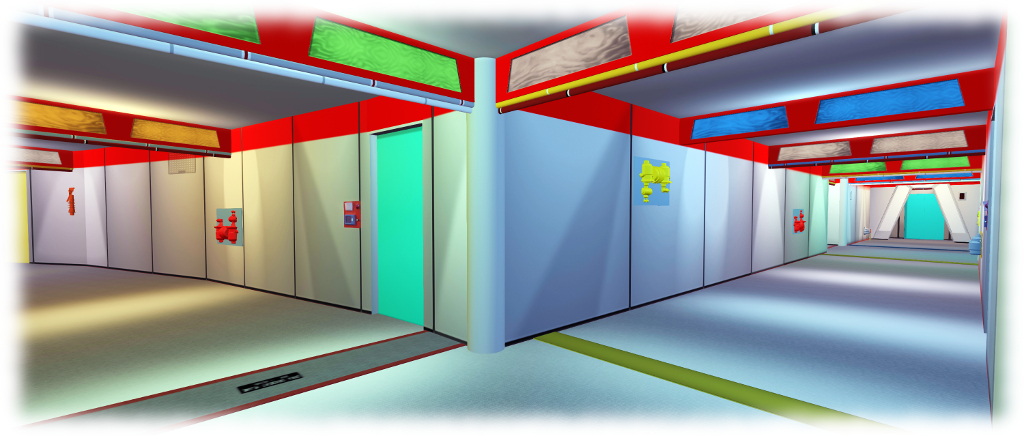
The corridors outside were equally marvels: the familiar bold colours born of 1960s colour television programming, the intercoms at junctions, the gaudy doors (behind which, and depending upon which deck you’re on, sit crew quarters, officers quarters, the sickbay,  briefing rooms, offices, and main engineering), doors hissing in greeting or departure as you enter / leave. At the end of many of the corridors sit the familiar triangle archway of a turbolift station.

“These are all a single sculpt,” Cathy told me, as we walked to one of the arches, triggering an automatic call for a turbolift. “It includes the walls that connect the archway to the sides of the corridor so everything blends.” The car arrived and we stepped in. Touching the familiar handles gave a choice of destination. We headed for the Bridge.

The Bridge
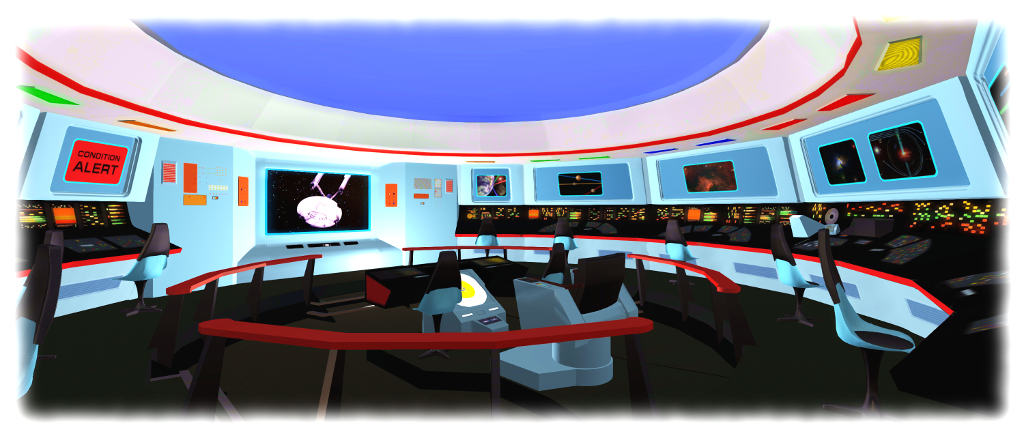
The Bridge

“Most of the ship, including the textures, I made,” Cathy said in answer to my question as another spine-tingling sound – that of a turbolift in operation – filled the air. “Lora Chadbourne also contributed the shuttlecraft bay and some of the consoles like the monitoring console in the transporter room, another builder produced the interiors of the warp nacelles.”

The detail is extraordinary. The bridge stations are all painstakingly reproduced, the centre seat has the expected wood trim, Spock’s science station has the familiar scanner. Elements within the bridge are interactive. Touch the helm console, and up come a range of options – go to warp, fire phasers or photon torpedoes, accelerate to warp 8, etc., while the viewscreen offers a range of images, including that of the destroyed USS Constellation, as seen in the episode The Doomsday Machine and the Romulan Warbird from Balance of Terror. And all around are the familiar background noises.

"Spock, analysis!" - a close-up of Spock's library computer station
“Analysis, Mister Spock?” – a close-up of Spock’s library computer station

This level of detail and interaction is present throughout the ship – as are the ambient sounds. Back in the transporter room for example, you can toggle switches and operate the famous transporter activation sliders, while in Engineering, you can examine the ship’s dilithium crystals in their rack. A clever “stacked” use of textures gives an excellent a 3D effect in grilles and grates.

Drop into the briefing room, and you can flick individual rocker switches, call up images on the tri-screen, or use the intercom to call someone elsewhere in the ship. Down the corridor at the ship’s medical facilities you can work out to “Bones” McCoy’s satisfaction or pop into his lab where he has one of the parasites from Operation: Annihilate! under observation – although the little bugger is not averse to getting loose! Against the back wall of the lab sits the decompression chamber from Space Seed nearby. With working food replicators in the mess hall (fortunately tribble-free) and all the ambient sounds from the original, this is s ship that is really alive.

"Ma poor bairns!" Scotty's Engineering - note the floor plans marking the layout
“Ma poor bairns!” Scotty’s Engineering – note the floor plans marking the layout

To ensure accuracy, Cathy used a mix of the Franz Joseph blueprints from the ship, together with plans from the studio in laying out the interior spaces, although as she notes, she had to upscale things a little. “The whole ship is like 115% to scale, she said. “Had to be bigger than 100% because average male avatar in SL is like 7 feet tall, and then there is the camera position on top of that!”

As note above, the ship isn’t a completed model. Circumstance brought the project to a halt in 2009 when the two regions over which the Enterprise was located were let go, ending all Trek role-play there. When touring the ship, signs that it is still a work-in-progress can be found on the floors, some of which are textured with copies of the original Desilu Studio set plans from the show. Rather than detracting from the model, these add a further layer of authenticity and care in its construction.

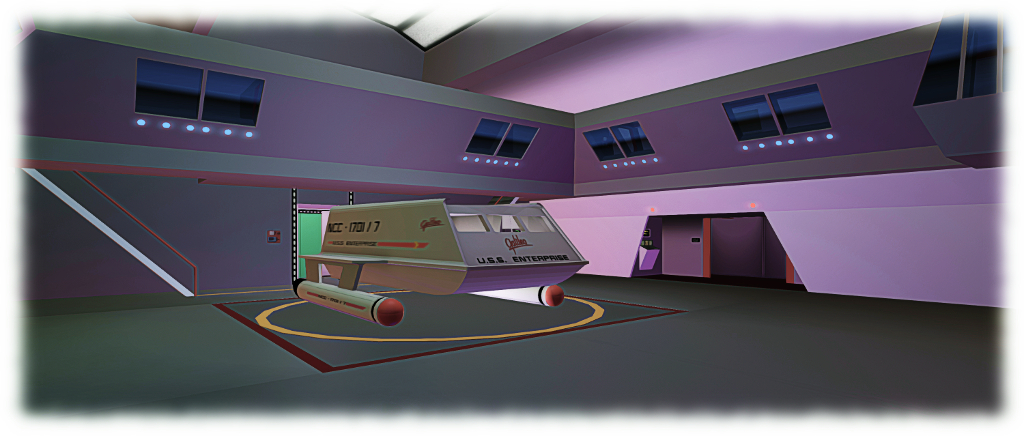
The shuttlecraft bay is awash with detail
The shuttlecraft bay

Continue reading “A Starship Enterprise in Second Life big enough for an avatar crew”

Of time in Elysium City in Second Life

Elysium City of Templemore; Inara Pey, July 2016, on Flickr Elysium City of Templemore – click any image for full size

Whilst perusing the latest Destination Guide Highlights, I was pleasantly surprised to see a new entry for the Elysium City of Templemore. by Luis Lockjaw. In the past, I’d visited the old Hesperia of Templemore, but never managed to blog about it; the closest I’d come was a piece on isle of Mousai, Templemore’s former sister region, also designed by Luis. So the new DG entry spurred me into jumping over and correcting things.

A new design this may be, but the magic of the “old” Templemore is retained. Folded within the within the arms of tall mountains, and reached only by the single channel of water cutting between them, there is a sense that Elysium City lies hidden from the rest of the world. It is a place which invites exploration and which suggests stories lying just around the next corner or behind each door – a place which awakens the imagination and draws the visitor into its tales and whimsy.

Elysium City of Templemore; Inara Pey, July 2016, on Flickr Elysium City of Templemore

From the landing point in the west, bordered by a narrow band of beach curving away to the north and south, you walk across sandy grass to the city gates, standing slightly ajar and silently beckoning.  A short walk away, across sandy grass, the city gates beckon, drawing you to them, and the cobble streets beyond. Step through them and you enter a new realm, a place where time both passes with a steady heartbeat whilst everything also seemingly caught within a single moment.

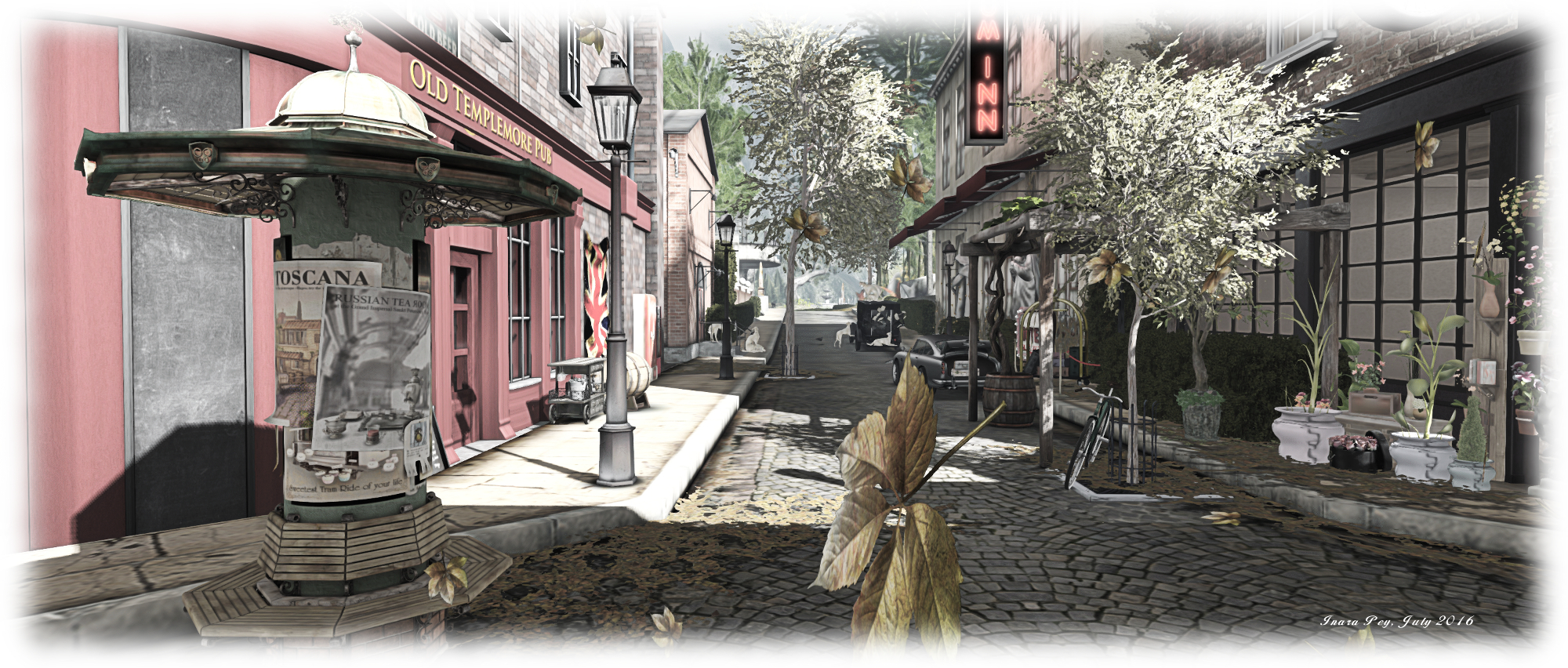
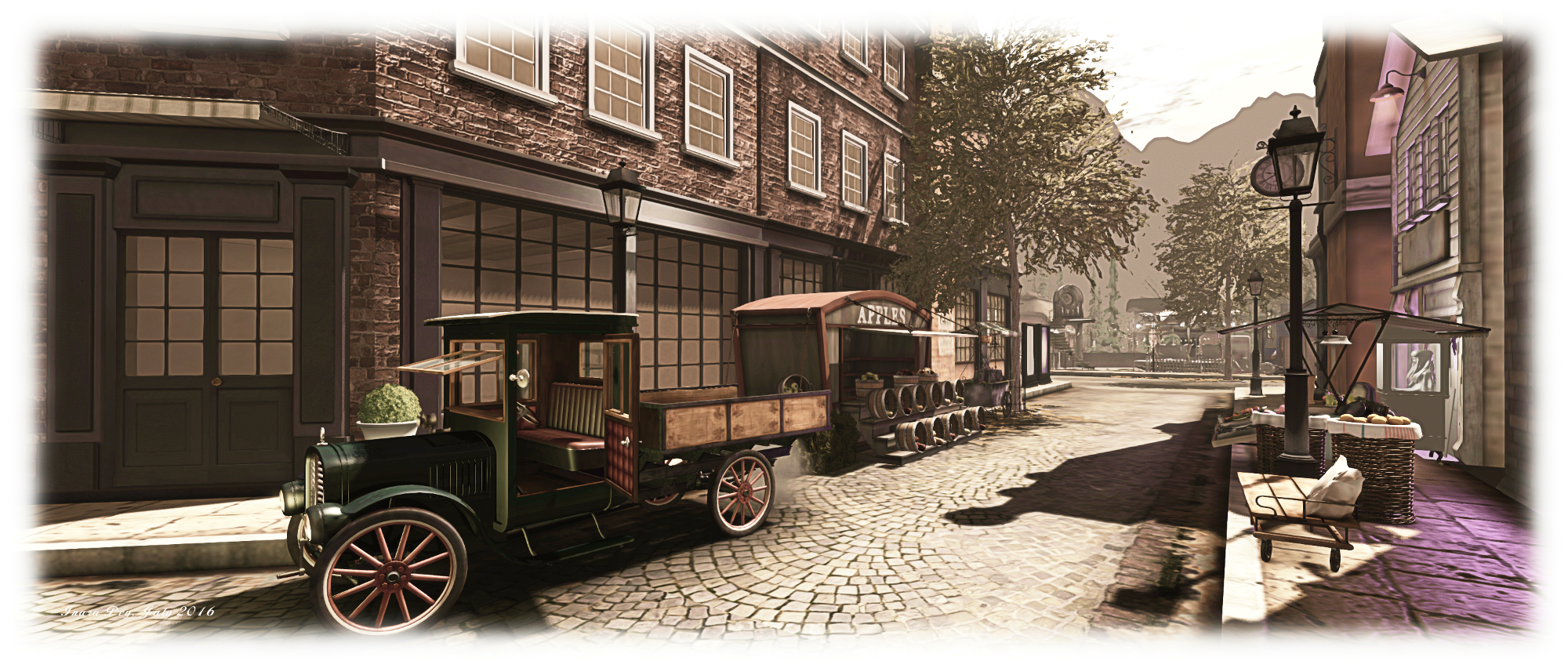
The cobbled streets, mostly bordered by tall brick buildings of a bygone era, appear at first glance to have been lifted from the heart of an English metropolis -but look again. Among them sit Tuscan villas and French street café booths, while a distinctive American wood-framed house sits within an eerie green light, drawing you towards its hidden mystery.

Elysium City of Templemore; Inara Pey, July 2016, on Flickr Elysium City of Templemore

To the north and south sit a tall factory and the Elysium Theatre, their respective bulks standing sentinel-like on either shoulder of the city.  Along the streets, clocks hang from walls marking the passage of time, yet pages from a book and leaves freed from their life on boughs, hang motionless in the air, whilst statues watch all who pass before them.

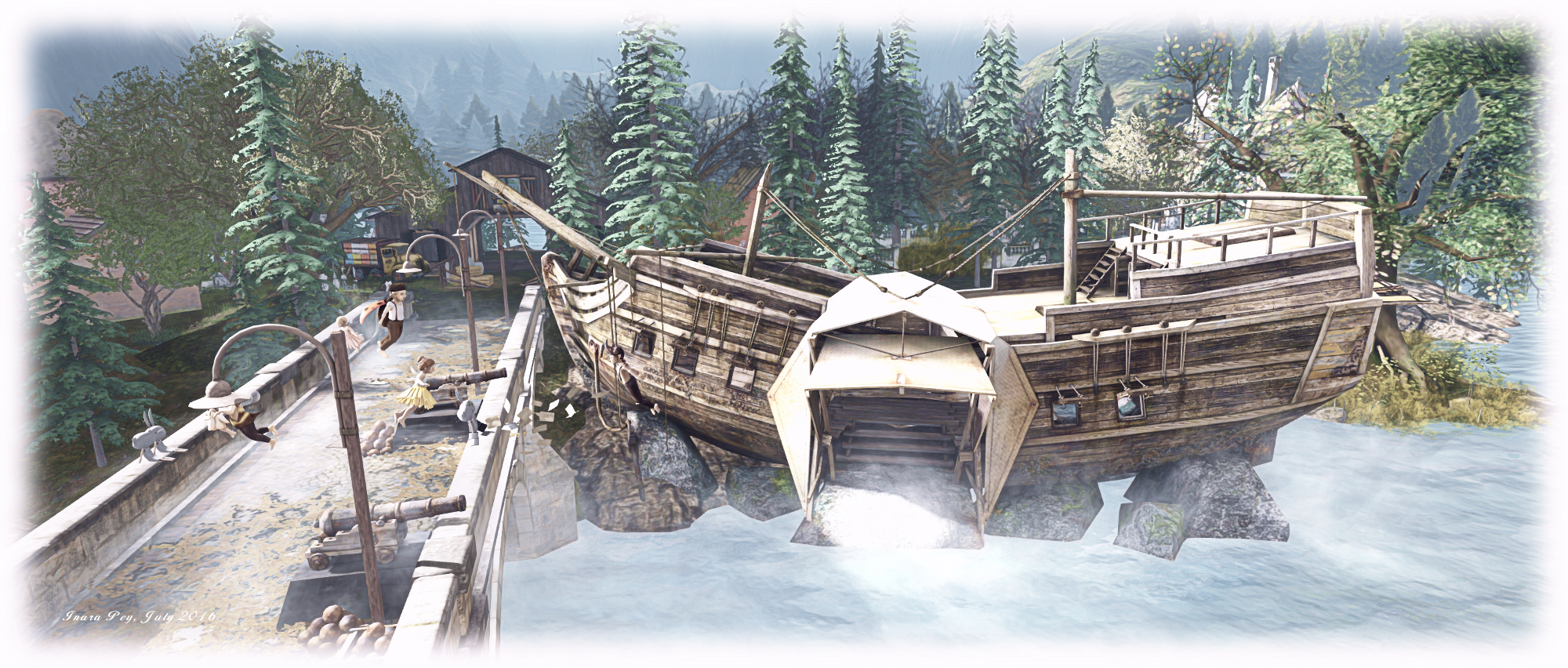
Eastward, across the city, lies a river spanned by a single bridge, its arches shrouded in mist, the wreck of a once proud brig, now broken against the rocks. Winged fairies, like brightly coloured lost Boys and Wendys, hover over bridge and water, and while the ticking of a clock cannot be heard, it’s not hard to look down at the misted waters and imagine the tick of one echoing faintly from under an arched span of the bridge…

Elysium City of Templemore; Inara Pey, July 2016, on Flickr Elysium City of Templemore – click any image for full size

Beyond the river, the city gives way to a rustic setting, wherein sits a little farm, a loose wooden board walk pointing the way to another mansion-house rising above the trees. This area is a place of whimsy and smiles, as can be seen as soon as you reach the end of the bridge.

As noted at the top of this article, music is still at the heart of Templemore, and the landing point gives news on upcoming events (at the time of writing, the next concert was due to be held on Sunday, July 24th from 13;00 SLT).

Elysium City of Templemore; Inara Pey, July 2016, on Flickr Elysium City of Templemore – click any image for full size

Elysium of City of Templemore is a joy to visit. While there are welcome echoes of Hesperia for those who remember it, the City offers a richly layered sense of immersion which is entirely its own. The mix of urban and rustic settings is perfect, and needless to say, photo opportunities abound, both under the atmospheric default windlight and in those of your own choosing.

If you’re so minded, your photos are welcome in region’s Flickr groupShould you enjoy your visit, please consider a donation towards the region’s future upkeep.

SLurl Details