Going Somewhere

Another Somewhere, Hamoa Island; Inara Pey, June 2014, on FlickrAnother Somewhere, Hamoa Island (Flickr) – click any image for full-size

Another Somewhere is a half homestead region of delight. Created by Azriel Xue, it is another reminder that it doesn’t necessarily require a 15,000 prim land capacity to create something eye-catching and memorable (or even 3,750 for that matter).

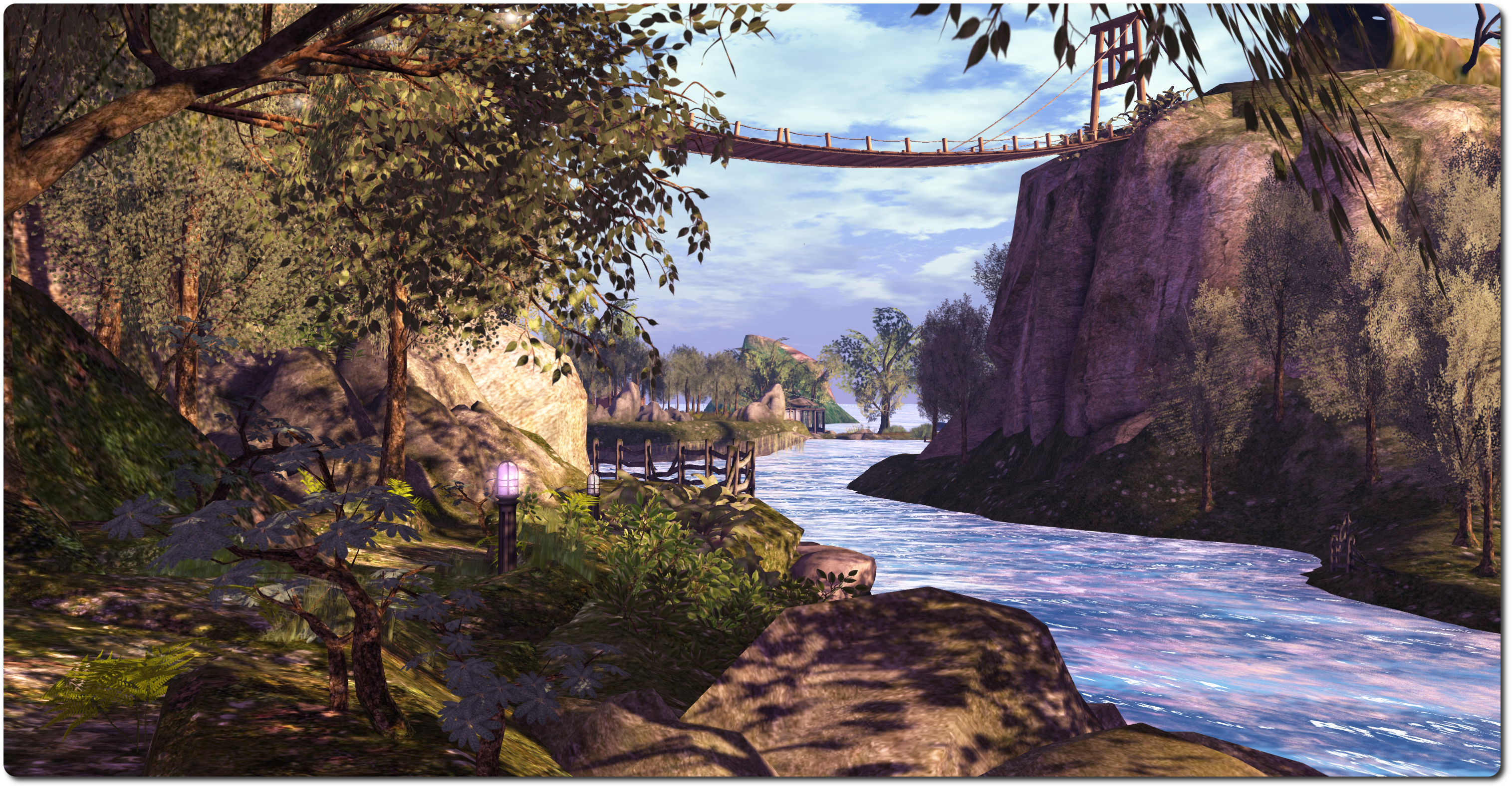
Wilderness is the theme here; rugged cliffs, perhaps leading up to mountains tall and cold, stand over a stretch of coastline hugged by blue waters which surround three nearby islands. These can be reached by boat, and are in turn watched over by larger islands further out to sea (off-sim).
Another Somewhere, Hamoa Island; Inara Pey, June 2014, on FlickrAnother Somewhere, Hamoa Island (Flickr)

Footpaths follow the shoreline, winding their way around the base of the cliffs and overlooking the water, before branching to climb steps worn into the rock and then branching again. Little red huts stand over the waters, precariously balanced on wooden piers out-thrust from the sheer rocky faces.

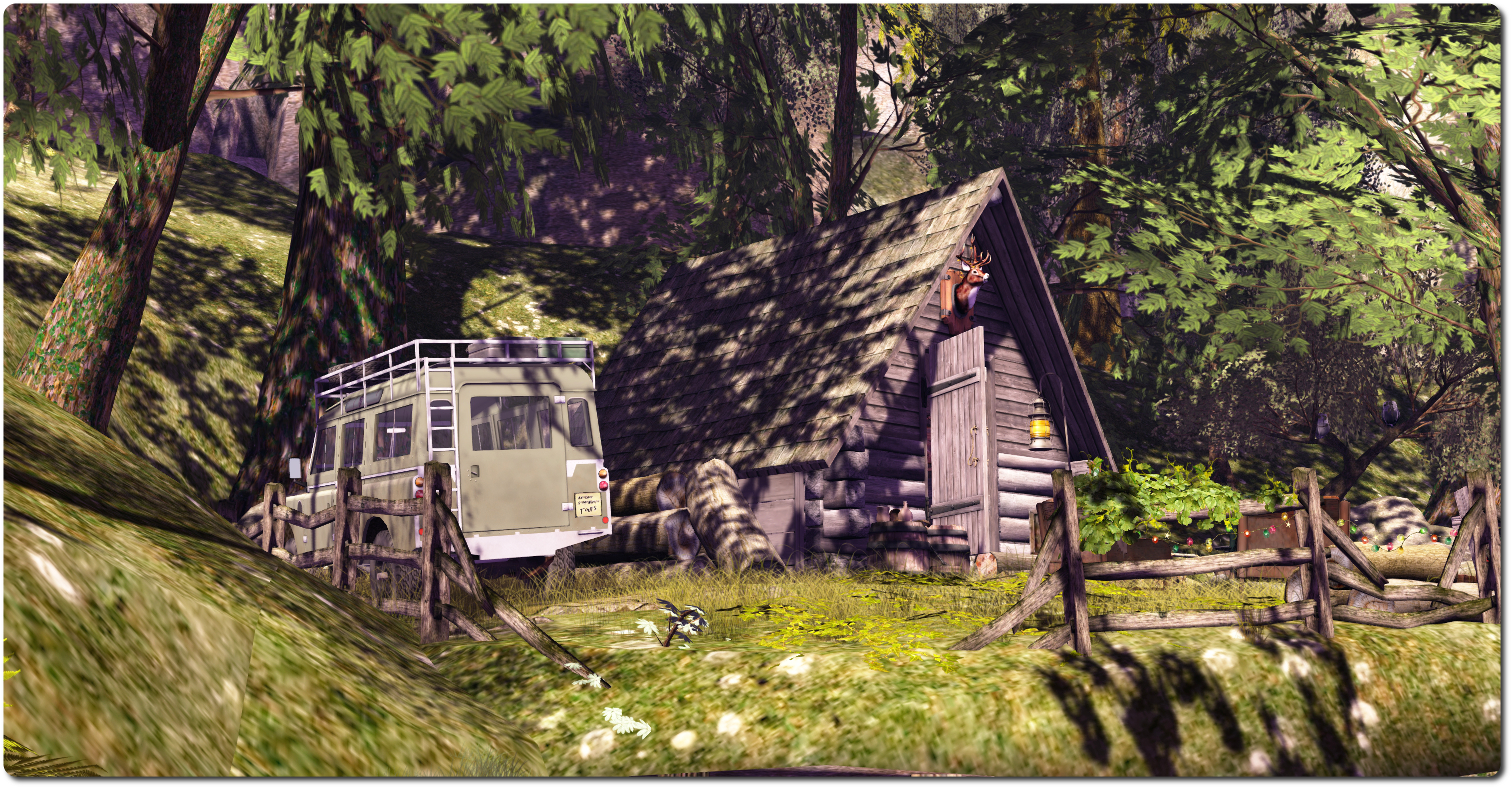
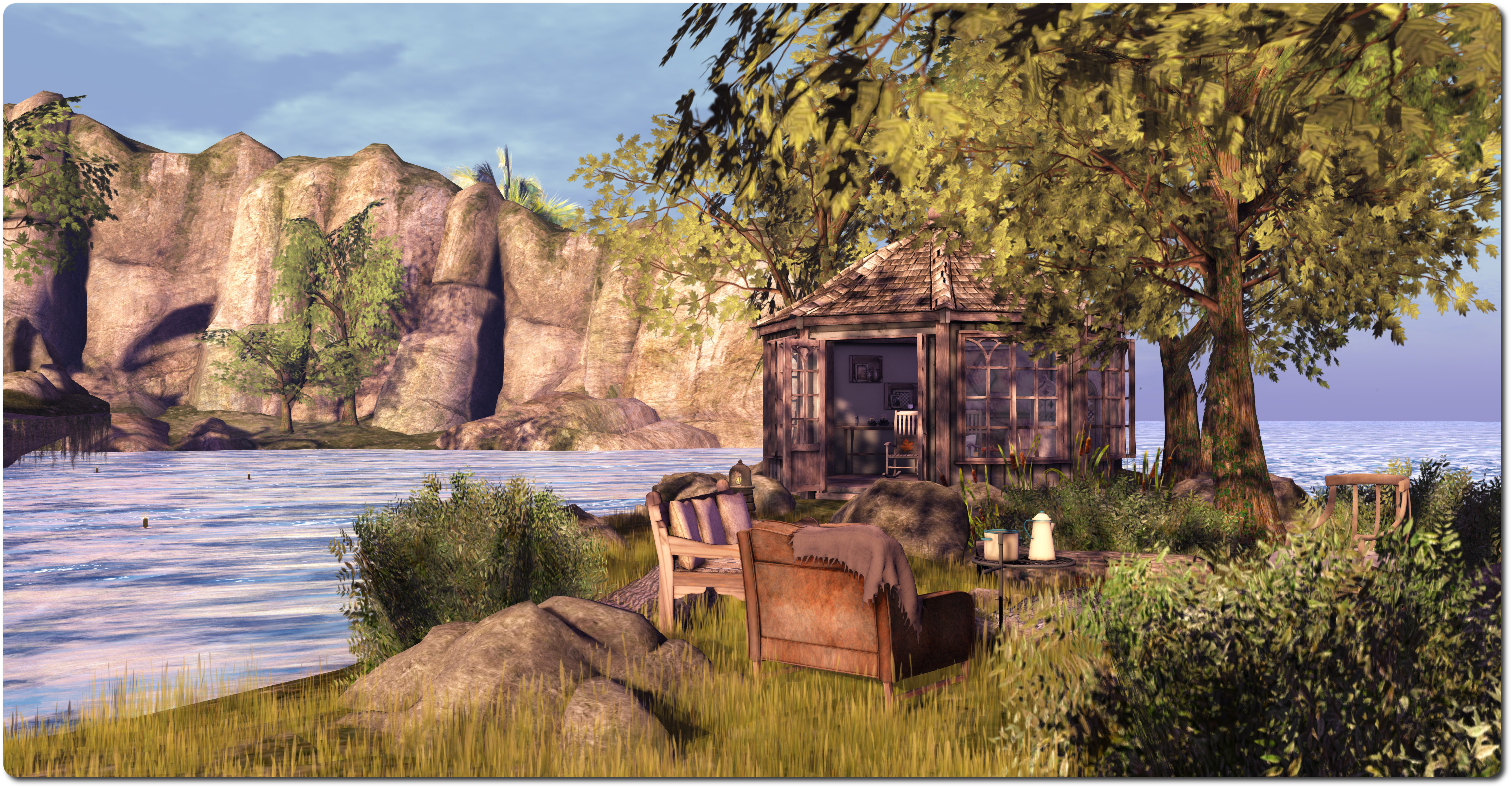
Part of the water passage between coast ansd islands has been dammed, squared-off stone bricks allowing a path to reach the largest of the islands. Here sits a rustic cabin, offering home comforts and fresh water from deep well. An improvised jetty of old railway sleepers offers a place where you can grab a motorboat and make your way to the other islands (although I confess, the rezzer didn’t want to work for me 😦 ).
Another Somewhere, Hamoa Island; Inara Pey, June 2014, on FlickrAnother Somewhere, Hamoa Island (Flickr)

The outermost of the remaining two islands offers a place to sit out with friends under leafy shade, enjoying a cup of coffee or a bowl of what looks to be chowder, both simmering over an open fit pit. A gazebo offers a warm fire and place to sit sheltered from any wind, for those who prefer.

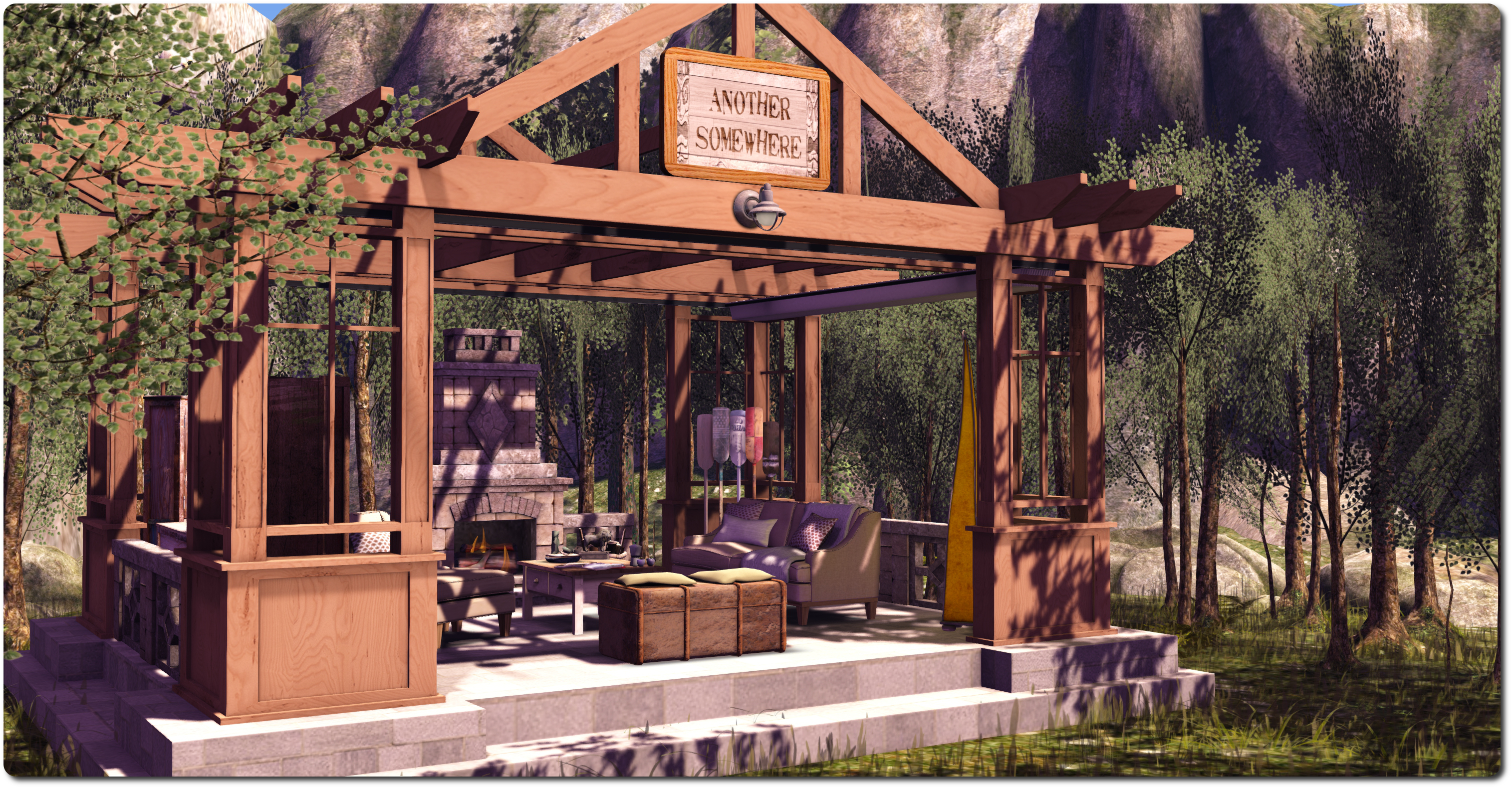
Across a narrow stretch of water, a wooden pergola sits atop a grassy upthrust of rock, a solid pier again offering a place to rez boats, stout wooden steps leading up to the pergola as it sits amidst a small copse on the island. Another well is also to be found on this island, so the water is fresh for those wanting a cup of tea or mug of coffee. Here is another place where friends can meet and relax – although for the adventurous, a zip slide links it to the gazebo’s little island. Just mind the tree at the end of the line! I had a bit of a George of the Jungle moment sliding down…
Another Somewhere, Hamoa Island; Inara Pey, June 2014, on FlickrAnother Somewhere, Hamoa Island (Flickr)

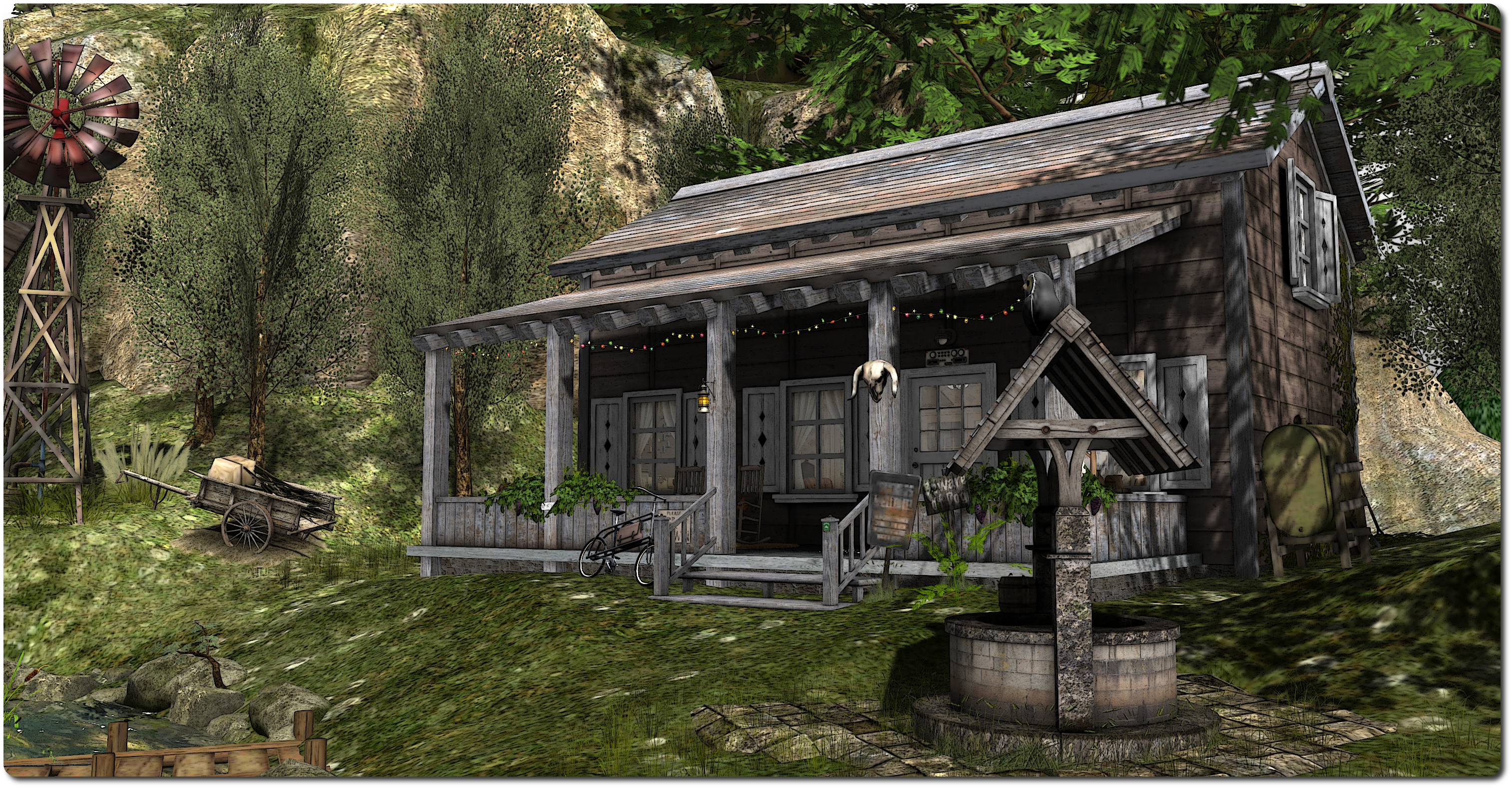
Across the water, you can follow the paths upwards, where there is more to discover: one leads to a look-out point, another gives access to an old mountain shelter, now perhaps serving as a hunting lodge. Follow a follow a third, and it will take you into the foothills and to a high wooden footbridge spanning the gorge between the cliffs and the rocky outcrop sheltering the  cabin.

For SL photographers and those seeking new places in SL to enjoy, Another Somewhere presernts itself as an excellent place to visit. I also have to admit to liking Azriel’s outlook on life, summed up in a quote from Lauren Myracle: I live in my own little world. But its ok, they know me here. I know that feeling ony too well!
Another Somewhere, Hamoa Island; Inara Pey, June 2014, on FlickrAnother Somewhere, Hamoa Island (Flickr)

Related Links

Of pigeons and a Meaningless wander

Pigeon Island, Neverending; Inara Pey, June 2014, on FlickrPigeon Island, Neverending (Flickr – click any image for full size)

Amelie Knelstrom (Raein) offers visitors to her homestead region two very different places to explore, both of which invite the imagination to create little stories to suit them.

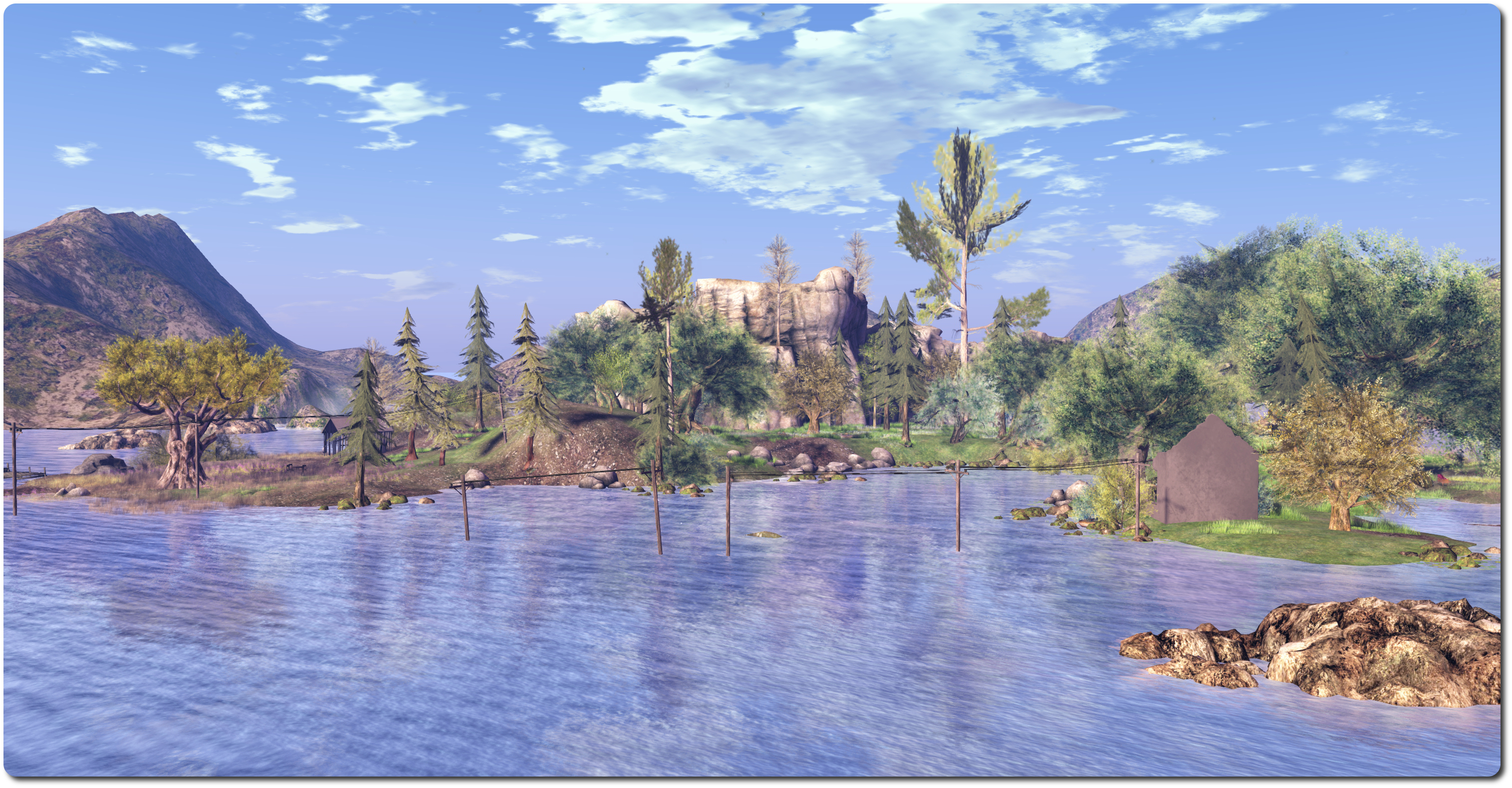
The first is Pigeon Island, which is also the arrival point for visitors. This is a slightly rugged island of temperate disposition, sitting in a bay (or perhaps a fjord?) which, given the lush green of the grass, may see more than its share of rain at times.

A farm looks to have once been here, although little now remains, other than the ruins of a small house or cottage (the actual landing point for the region) and an old shed which faces it across the curve of a rocky little bay. Old telegraph poles march out into the waters of the bay in two lines, still carrying their wires and looking like they may have once met, but their comrades have at some point either fallen into the blue waters or have been taken away. Did the lines running between them carry messages, or did they once bring electrical power to this little place?

Pigeon Island, Neverending; Inara Pey, June 2014, on FlickrPigeon Island, Neverending (Flickr)

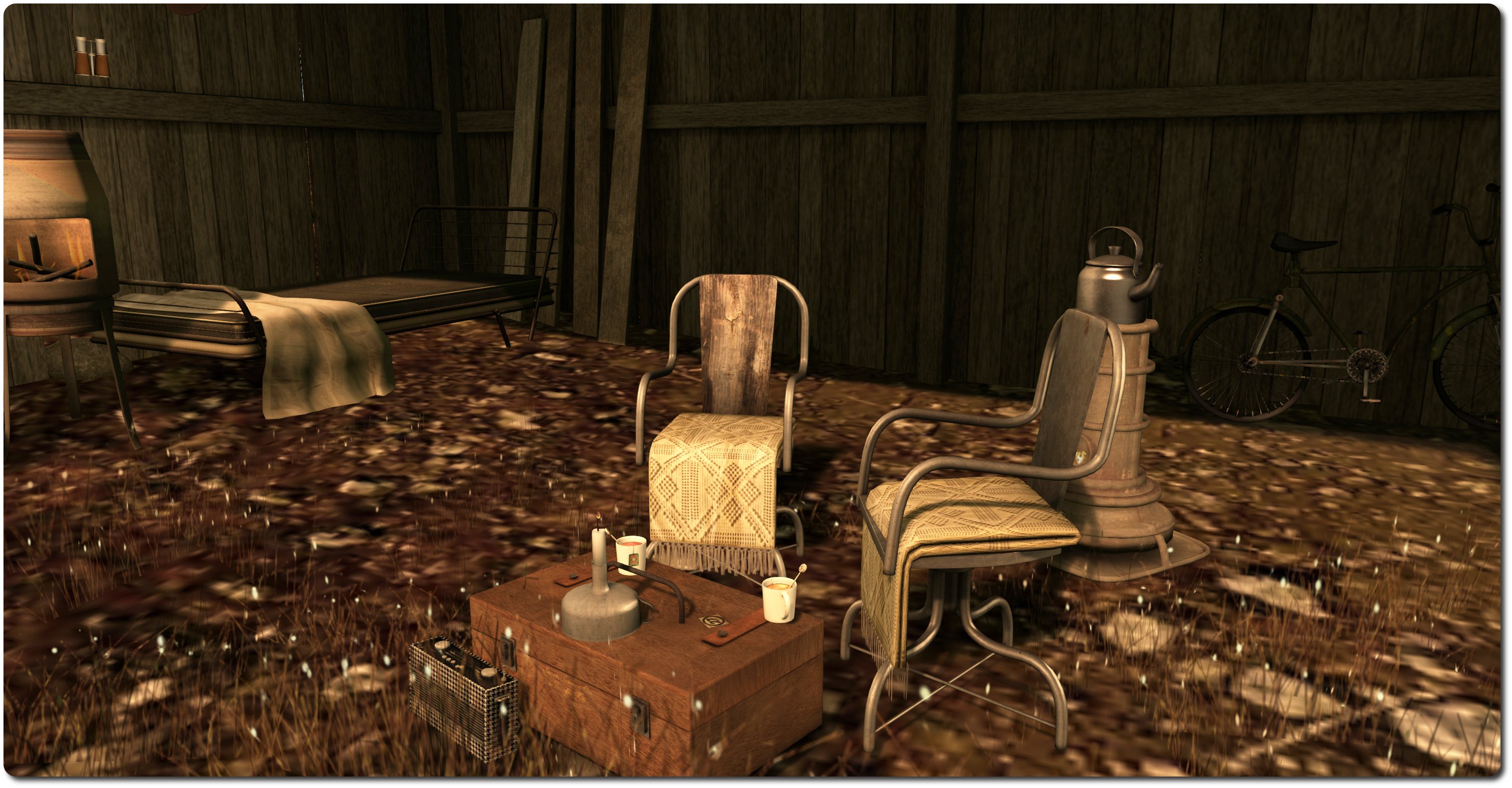
Not that the island is deserted; far from it. Sheep wander the low-lying parts of the island, grazing on the grass, and the little shed shows signs of habitation: there are chairs and couple of wood-burning stoves (one with a kettle atop it), while a bed sits in the corner; all signs that someone finds their way to the island, perhaps to make sure the sheep are fairing well, or perhaps to escape some noisier place across the water. There are other signs of life to be found as well: a hammock here, swings there, a table and chairs under the open sky, blankets out on a wooden pier, a telescope … all await your discovery.

The western side of the island is given over to a huge upthrust of rock. Flat-topped and with stair and path cut into its flank, it overlooks both island and bay, a gravel-like beach of stone and eroded rock separating it from the blue waters of the latter. Follow this rough path around the base of the rock, and you’ll find your way to a secluded beach sheltered between rocky shoulders, and more signs of habitation: a bed made in an old rowing boat and a small tent pitched well back from the water, while an old fishing boat sits at anchor.

Pigeon Island, Neverending; Inara Pey, June 2014, on FlickrPigeon Island, Neverending (Flickr)

Pigeon island is a wonderful rustic coastal scene, ripe for the SL explorer and photographer. But it’s not all that can be found here. Sitting in the wall of the old farmhouse / cottage is a single wooden door. Open it, and you can be transported high overhead to the streets of Meaningless City.

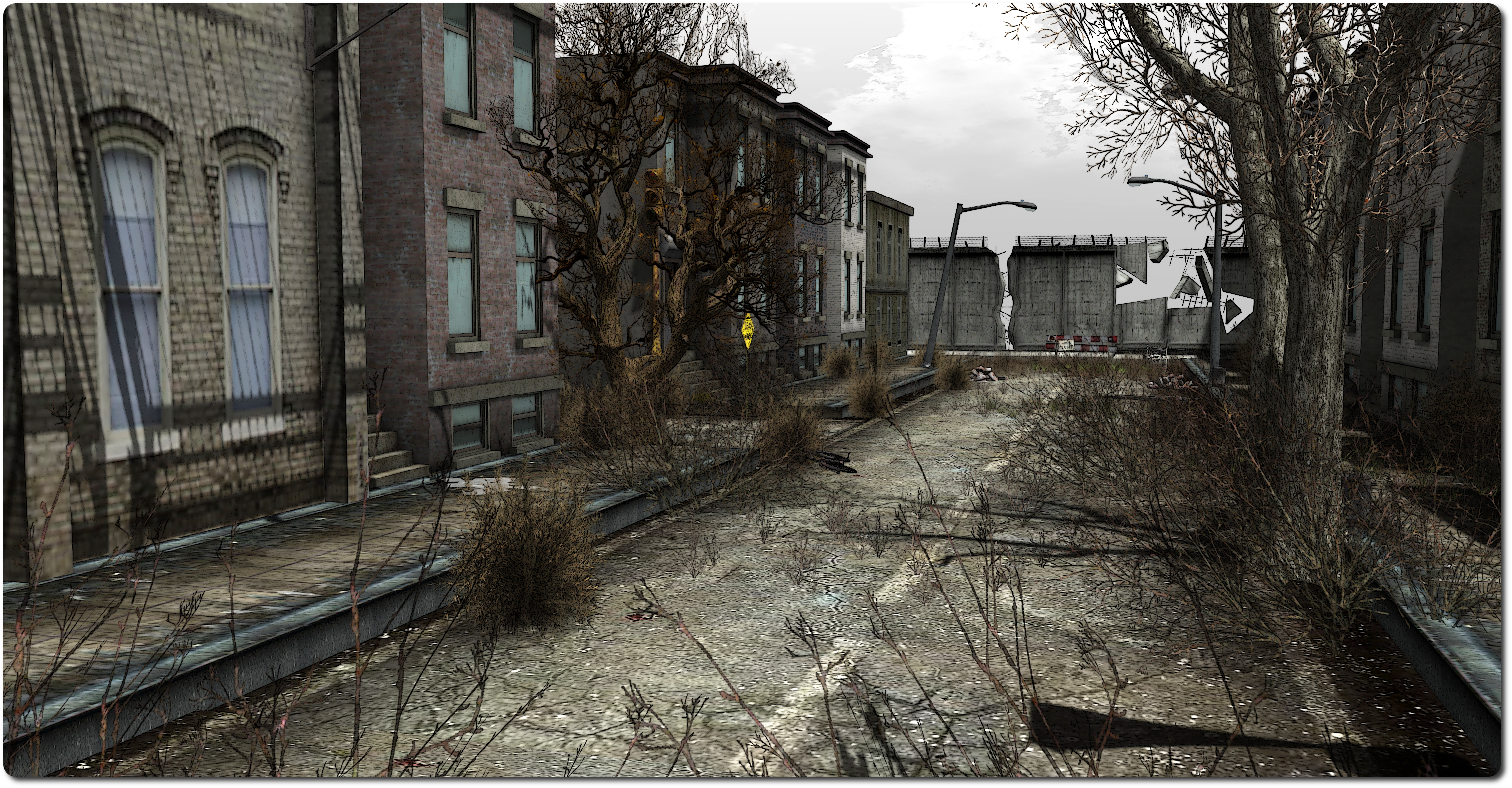
Here is a place very different to the island’s natural beauty. The streets are deserted, their tarmac cracked and breaking, weeds and grass pushing their way up through the gaps;  concrete walls are cracked and damaged, holes revealing their steel reinforcement. All of the houses stand deserted, grime and dirt turning their empty windows into opaque, sightless eyes as crows circle overhead. In the playground, a lone children’s slide stands rusting and forgotten, barrels with flammable warnings adorning their sides sitting close by…

Pigeon Island, Neverending; Inara Pey, June 2014, on FlickrPigeon Island, Neverending (Flickr)

It is clear something has happened to cause the inhabitants to leave this place – but what? Do those barrels with their dire warnings of fire offer a hint, or is it something else? Why are the streets all closed-off by the gaunt forms of concrete walls, the barbed wire along their tops ominously turned inward? And what of the tall, silent sentinel of an old siren standing at one end of a street? What part does that play in the stories waiting to be told here?

Pigeon Island and Meaningless City are poles apart, yet such are the strong contrasts between them, coupled with the strands of stories running through them, that they complement one another in many ways.

Why not pay them both a visit and see what tales they whisper to you?

Related Links

In the garden of The Snow Lion

The Snow Lion, Oceanside dAlliez; Inara Pey, May 2014, on FlickrThe Snow Lion, Oceanside dAlliez (click for full size)

The roar of the Snow Lion is a call for the awakening and integration of the body and the mind.  This garden is dedicated to that perfect integration and to the resulting bliss.

Thus reads part of the description for The Snow Lion, which occupies a quarter of Oceanside dAlliez; a place of serene beauty and tranquil settings.

The design, by parcel owner Sethos Lionheart, carries a strong oriental theme – which is the reason it caught my eye when browsing the Destination Guide – and is cleverly laid-out, offering paths to explore and secluded spots to discover.

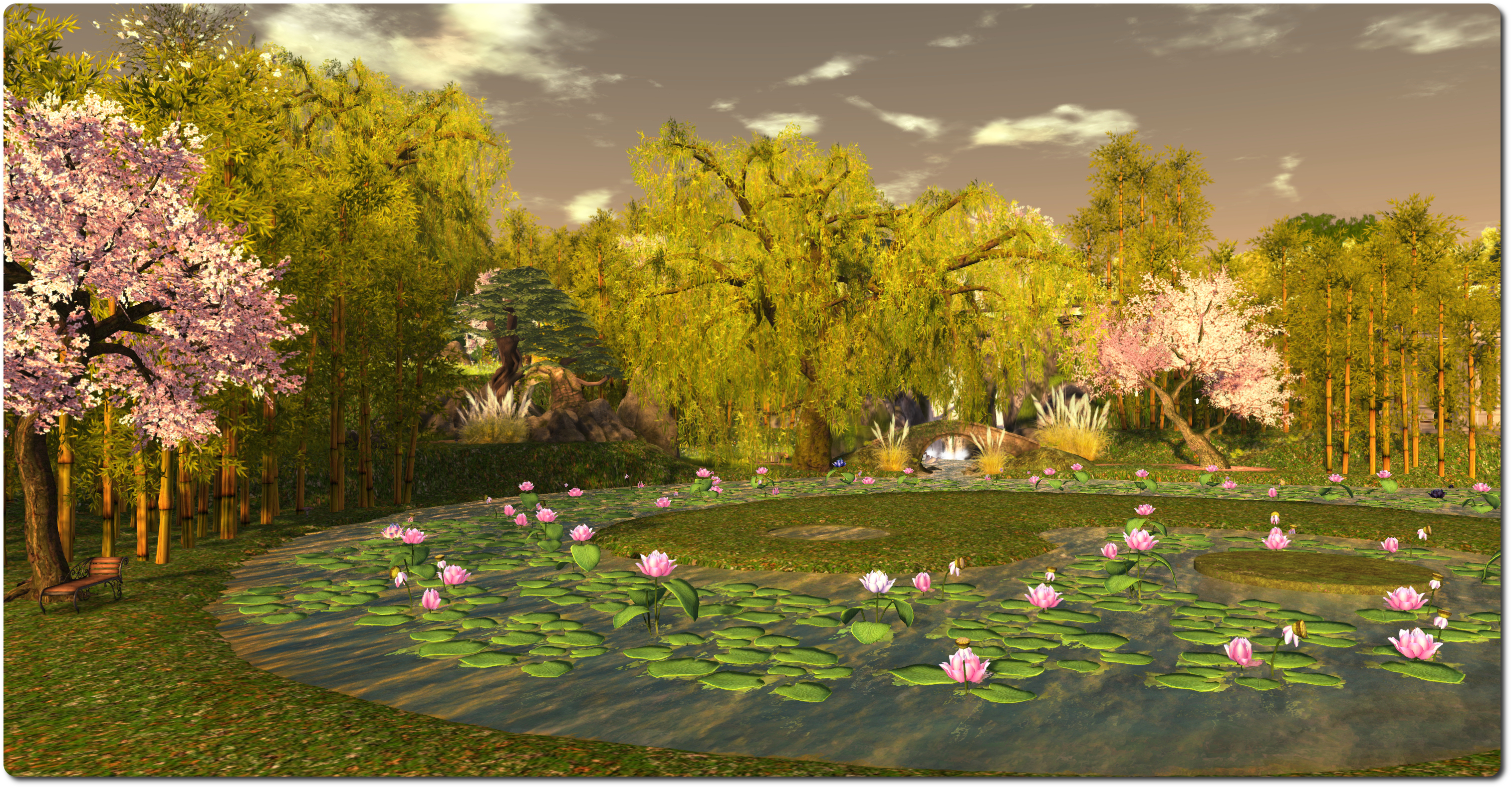
The arrival point is in the lower portion of the garden, and the motif here may not be readily apparent until you cam out a little. When you do, you’ll realise land and water have been carved into a yin-yang, the Chinese philosophical concepts used to describe how apparently opposite or contrary forces are actually complementary.

The Snow Lion, Oceanside dAlliez; Inara Pey, May 2014, on FlickrThe Snow Lion, Oceanside dAlliez (click for full size)

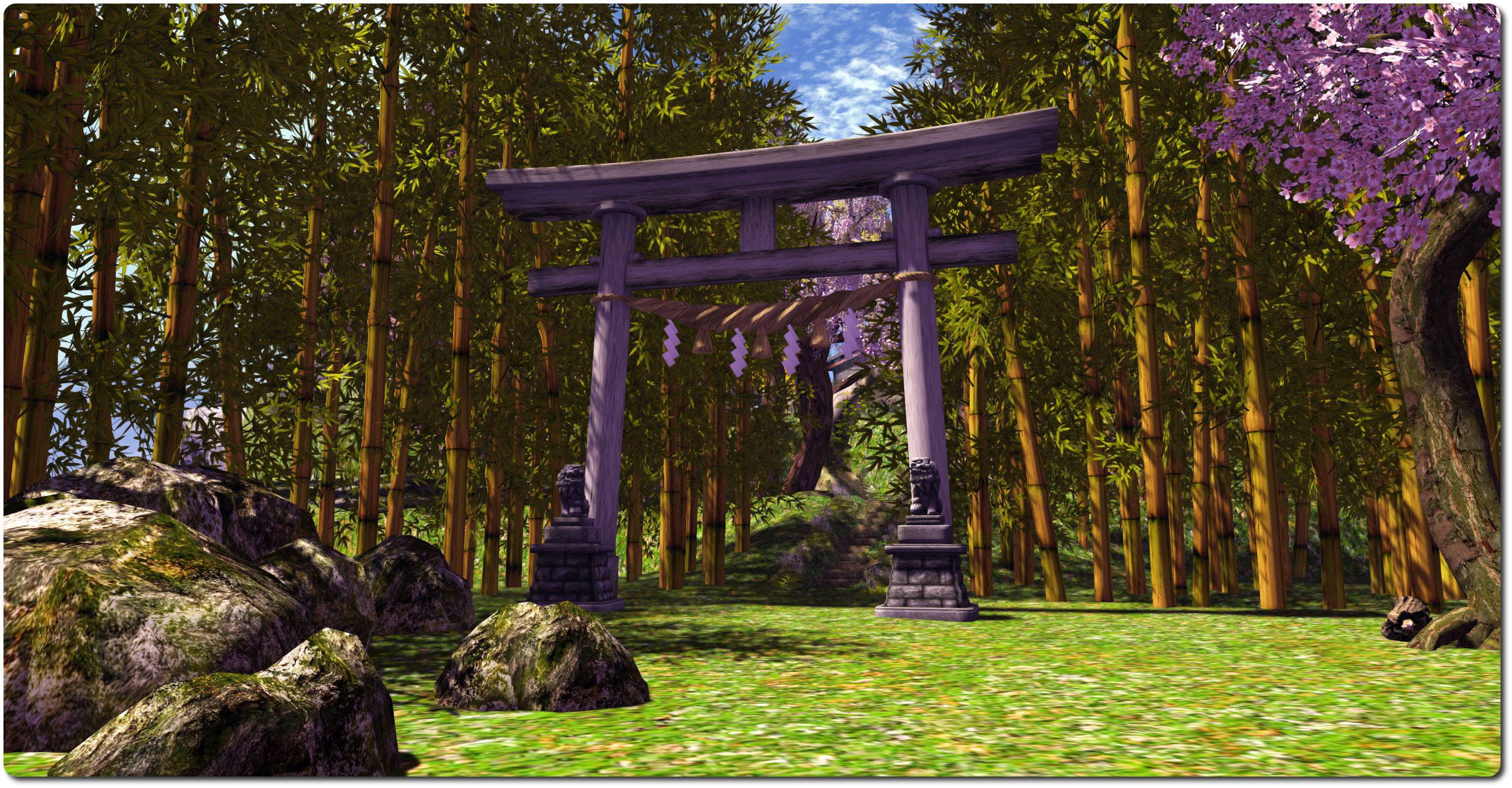
The cleverness of this design is easy to miss: the yin is formed by the water element – in keeping with its passive, soft, and wet characterisation and its association with water. It is rich with water lilies as it curls around the landing-point to join with the sea. The yang element, by contrast, forms a sweep of land, fully in keeping with its solid, hard character. Follow its curve, and it will lead you to a torii gate sitting before a bamboo grove and guarded by two lions. Here the path climbs upwards, passing under a stone arch before splitting left and right.

Follow the path to the right, and it will take you on around the lower part of the garden to a natural-looking pool, fed by water from falls on one side, and open to the sweep of the water “yin” on the other. A stone bridge arches over the water, offering the way to a western-style folly and a quiet place to sit.

To the left, the path runs past a stone terrace, home to a grand piano shaded by the boughs of a huge cherry blossom tree, before climbing more steps upwards to a grassy nook. Here sit cut logs on which to sit, and a harp to play, while the path passes onward  to come before the stone figure of The Wise General, branching right and left before him.

The Snow Lion, Oceanside dAlliez; Inara Pey, May 2014, on FlickrThe Snow Lion, Oceanside dAlliez (click for full size)

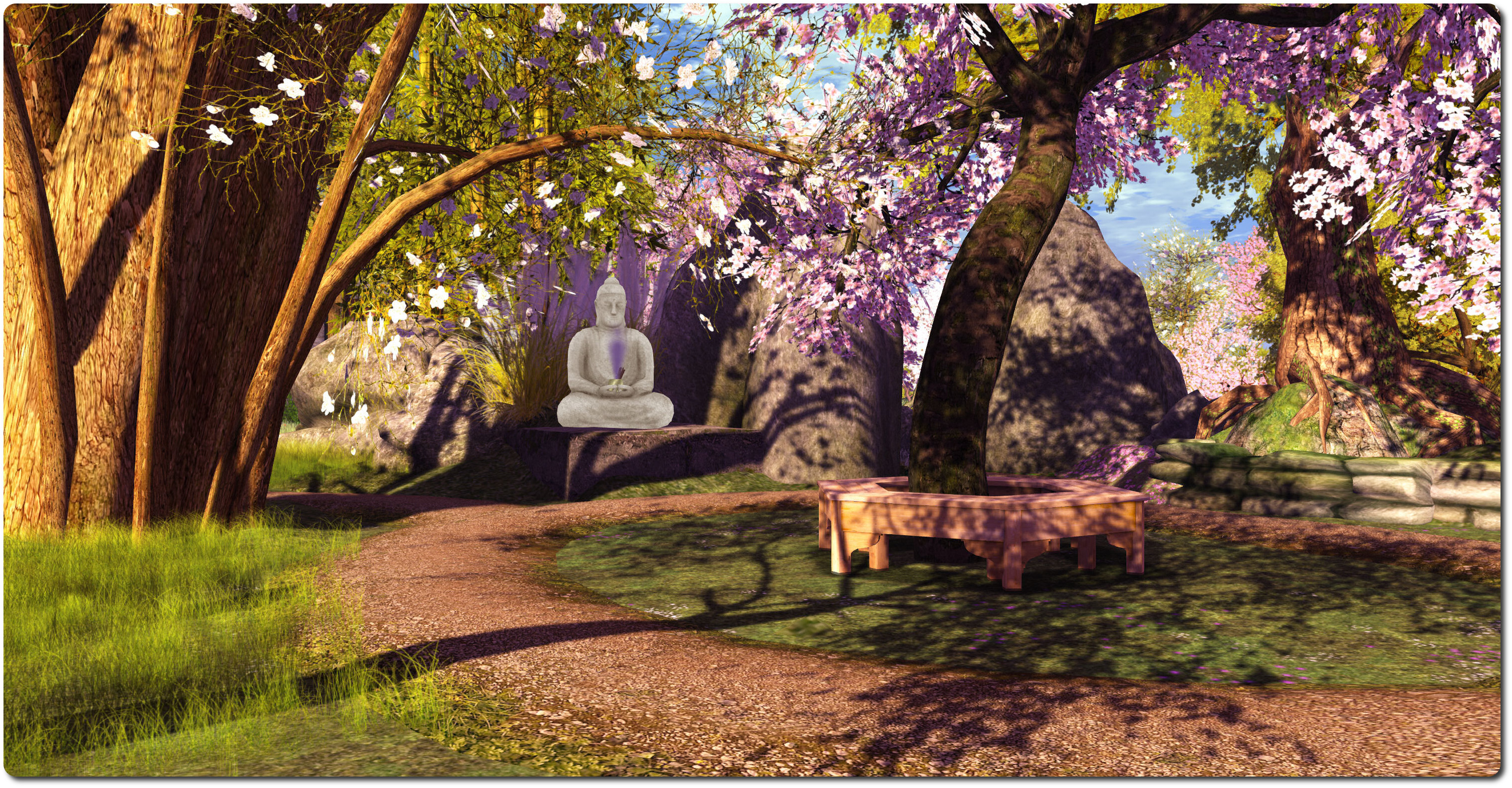
Whichever branch you take is up to you. Follow one through the mid-level of the garden to tranquil lily pond where one can sit alone or with a friend, in quiet contemplation beneath a leafy canopy which naturally hides it from the garden above. Take the other, and it will lead you by stair and bridge to the highest level, passing another quiet glade along the way, this one presided over by a white figure of Buddha.

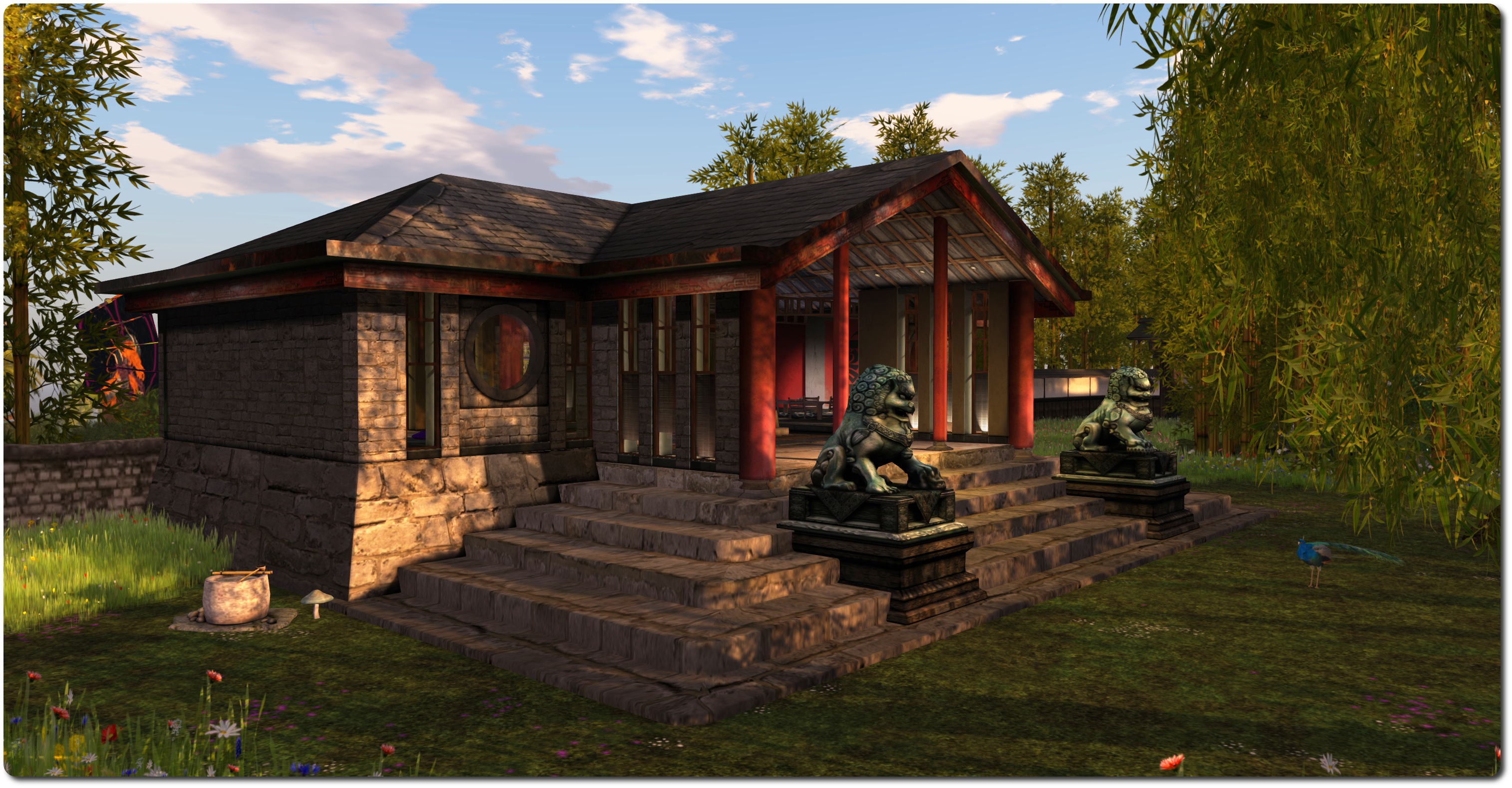
It is on this uppermost level that you’ll find the garden’s single building, a place of decidedly Tibetan looks, yet guarded by two Chinese Imperial lions. It offers a place to meditate or to partake of yoga or to enjoy a cup of simmering Japanese tea. A garden of wild flowers links it with a broad stone terrace, walled on both sides and watched over by the tall forms of torii gates, and which runs the length of one side of the garden.

The Snow Lion, Oceanside dAlliez; Inara Pey, May 2014, on FlickrThe Snow Lion, Oceanside dAlliez (click for full size)

Here you will find speaking scrolls made by  Sethos Lionheart, each one bearing an image of traditional design and which offer words of wisdom when touched. These can be purchased for a modest L$50 each, and would grace the wall of any home. Along this terrace, through a set of wooden gates, another place for contemplation can be found.

The garden offers many places to sit, with poses for individuals, couples and friends exploring together; discrete bird boxes offer opportunities to dance for those who would like to do so. Paper lanterns hang from the cherry trees to light the path at night,  while kimono-dressed foxes hold up lamps to illuminate terrace and folly.

The Snow Lion, Oceanside dAlliez; Inara Pey, May 2014, on FlickrThe Snow Lion, Oceanside dAlliez (click for full size)

All told, The Snow Lion is a lovely place to visit, and an attractive demonstration of yin-yang at work. These can be found in everything from the simple divisions of the path as it leads to very individual points in the garden, each with its own focus, yet still part of the whole, through the expression of the harmonious nature of high and low as you travel up and down through the different levels, to the complementary mix of cultural influences revealed as one explores: Chinese, Japanese, and western. Do make sure, as well, that you have local sounds enabled as you wander the paths and enjoy the terraces and glades.

A Goodnight dream

Goodnight Photography, Berlengas; Inara Pey, May 2014, on FlickrGoodnight Photography, Berlengas (Flickr – click any image for full size)

Jeff Goodnight is an SL photographer who has a well-deserved reputation for taking some incredible pictures in SL, as both his blog and his Flickr stream reflect.  So when I discovered he’s completed his own region and was inviting people to visit, I knew I had to hop over and take a look.

Jeff describes Goodnight Photography as a, “labour of love and has been 5 weeks in the making.  After a couple of starts and restarts, I finally decided on the look I was going for and this is the result.  I wanted a tropical sim but I also wanted to infuse some color and warmth into it as well and this is what I eventually ended up with.” It’s fair to say that he’s achieved all that and more.

Goodnight Photography, Berlengas; Inara Pey, May 2014, on FlickrGoodnight Photography, Berlengas (Flickr)

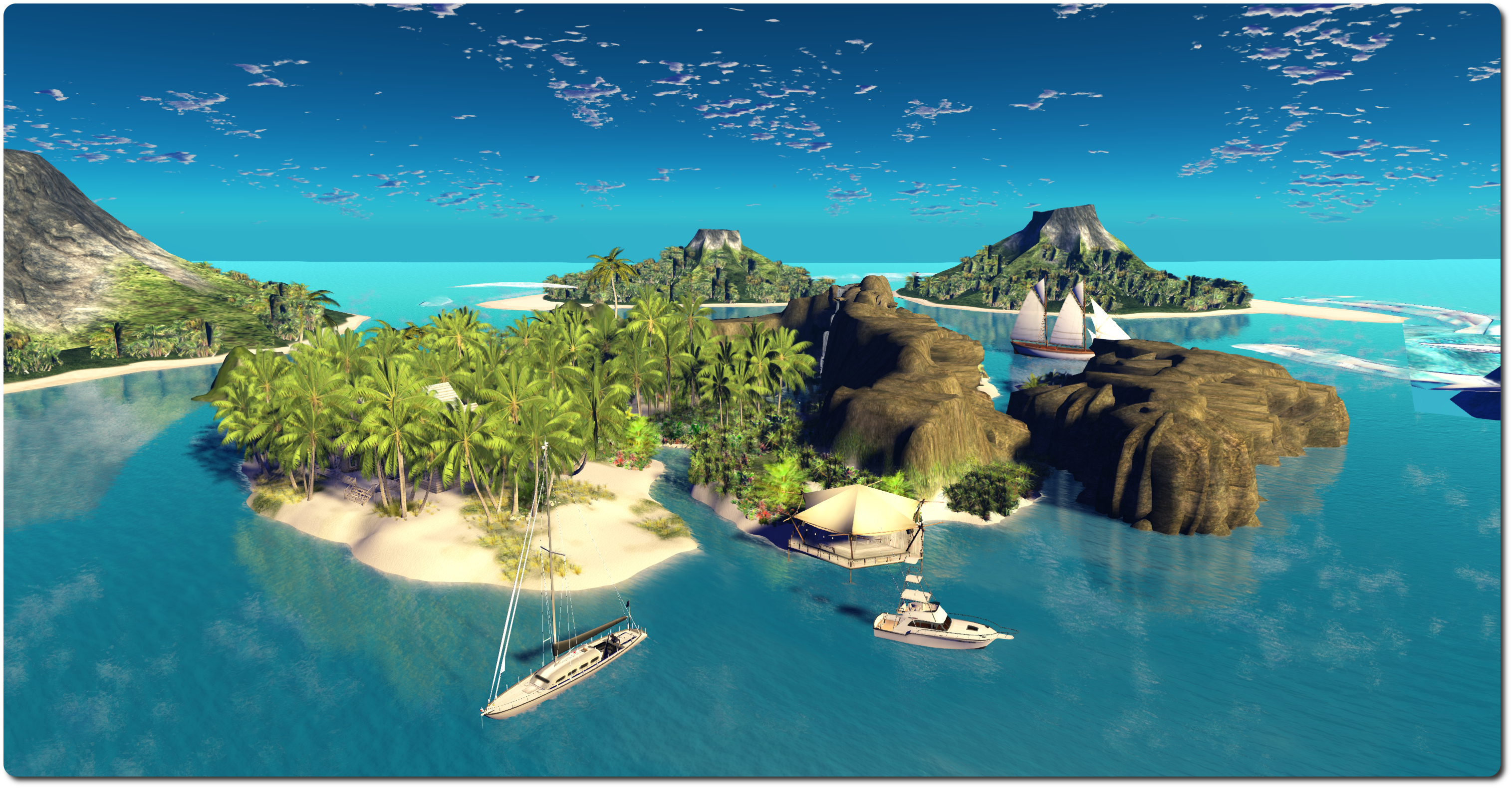
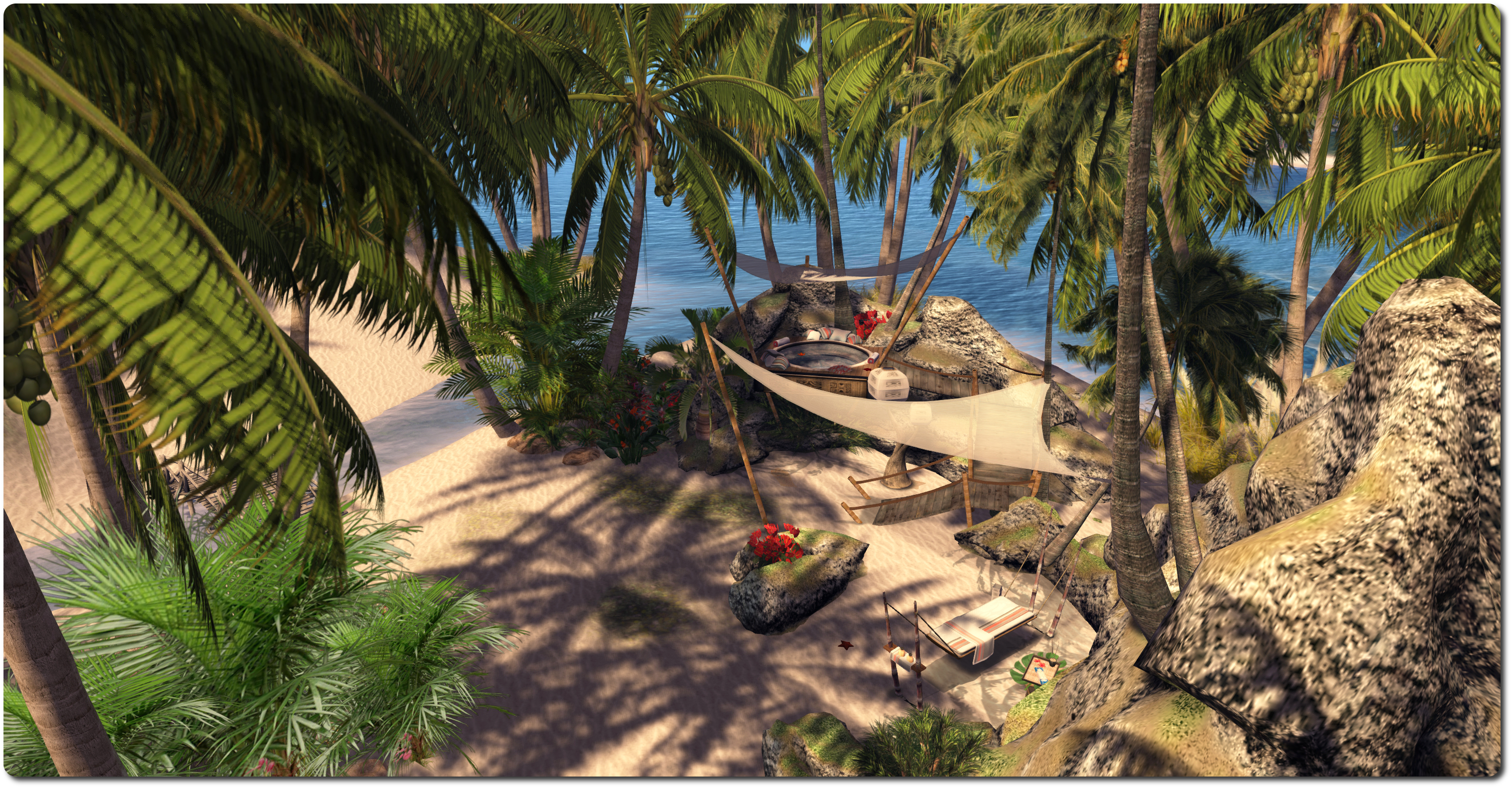
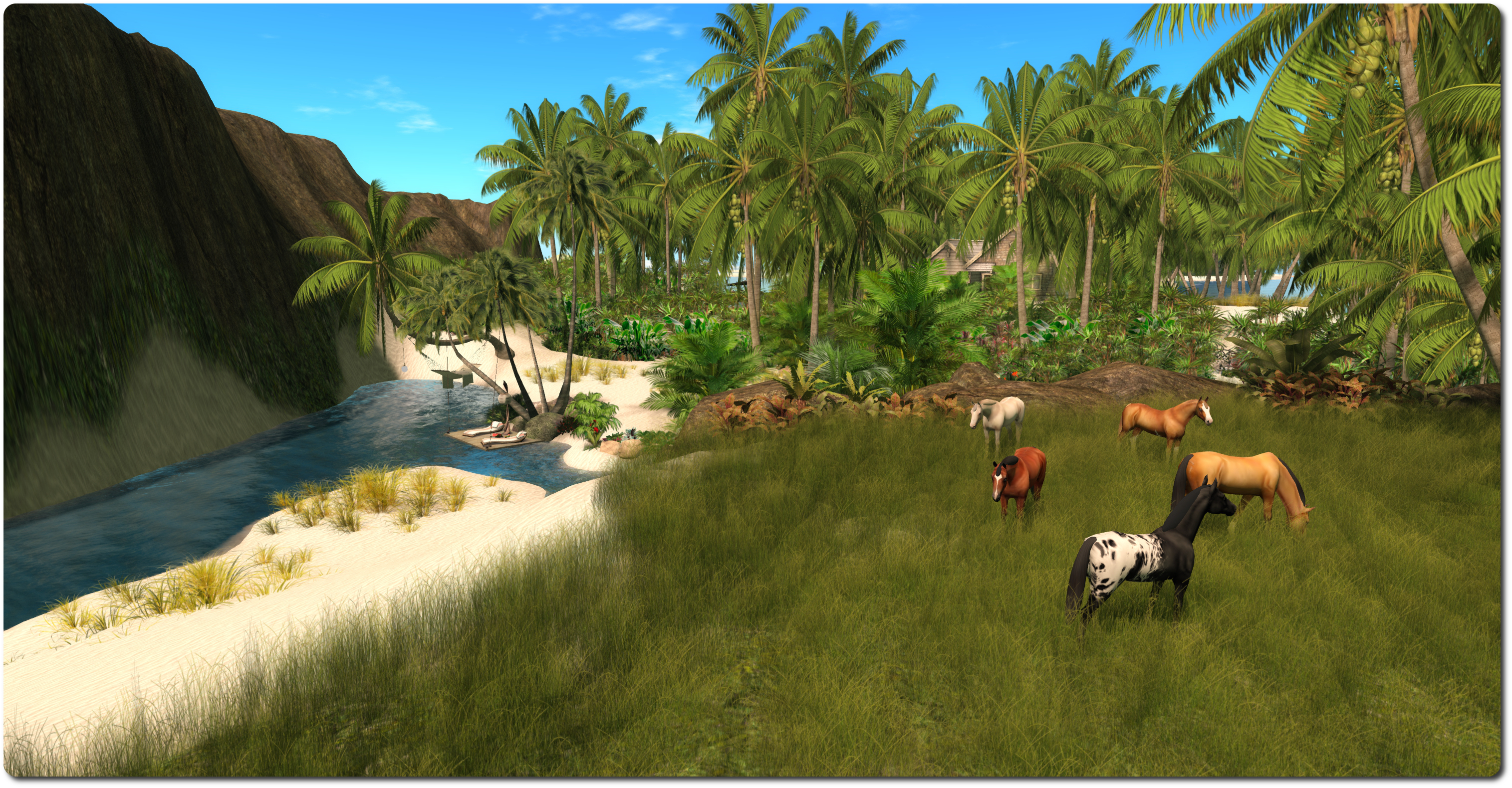
On arrival one is presented with a tropical paradise, a beautiful island within a small archipelago, on which he’s built a stone house, its colour blending perfectly with a setting  which offers some wonderful opportunities for photography.

Given the surrounding islands, it is easy to imagine the island sitting within the caldera of some long-submerged volcano, perhaps amidst the Indonesian or Philippines islands. Indeed, looking out at the peaks surrounding the place, vents from the old volcano would still appear to be somewhat active!

Goodnight Photography, Berlengas; Inara Pey, May 2014, on FlickrGoodnight Photography, Berlengas (Flickr)

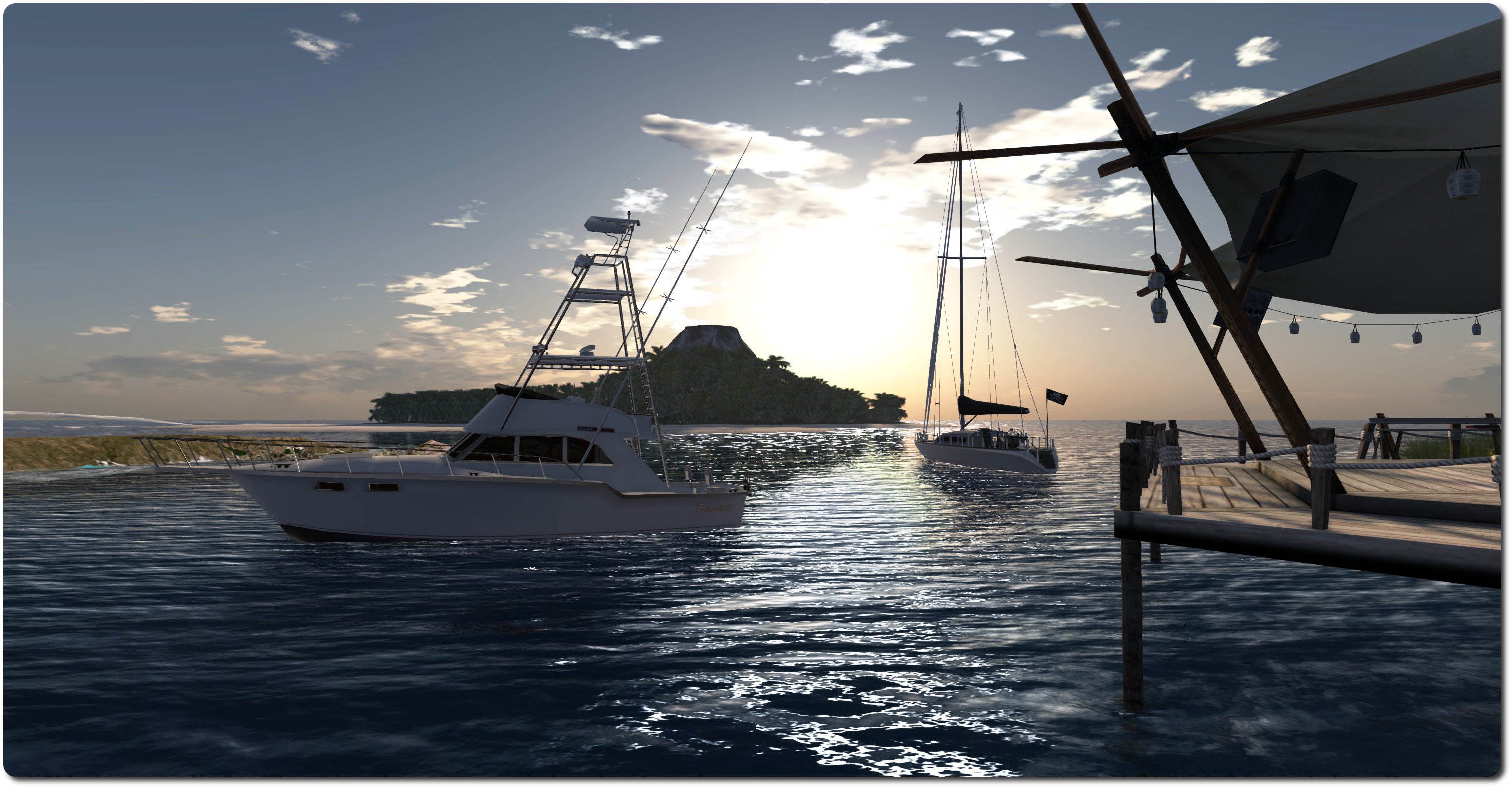
The design here is that of elegant simplicity, suggestive of an island which has been “tamed” just enough to provide a comfortable home, but which has not been unduly spoiled in doing so.  There are trails, low-lying beaches, high cliffs, grassy meadows where horses roam, places to lie in the sun or the shade, boats anchored just offshore, streams cutting through the rocks and around the house, rich colour and opportunities galore for photography. So much so, that it’s hard to point to a single aspect of the island as particularly photogenic – everything works so perfectly.

Goodnight Photography, Berlengas; Inara Pey, May 2014, on FlickrGoodnight Photography, Berlengas (Flickr)

On the subject of photography, Jeff has this to say about the island:

Not only do I want people to visit, enjoy, and photograph it, but I also want to use this as my launch into avatar photography.  Besides the setting on the ground, I have other photographic items set up to accommodate many requests.  If you would be interested in having your pictures done, either for profile pics or something more personal, please do not hesitate to contact me.  I would be more than happy to discuss them with you.

In the case of the former – people taking their own photos, rezzing is allowed on the island; just do please remember to clear-up again should you choose to put out a prop or two. In the case of the latter, should you have something in mind photo-wise, be it individual portraiture, group shots or something else, please do give Jeff a call in-world. If he’s not on-lin when you do, he’ll certainly get back to you.

Goodnight Photography, Berlengas; Inara Pey, May 2014, on FlickrGoodnight Photography, Berlengas (Flickr)

Related Links

Afternoon tea in Second Life

Rico's Tea House, Isle of Flux, May 2014; Inara Pey on FlickrRico’s Tea House, Isle of Flux, May 2014 (click any photo for full size)

Afternoon tea is a very English tradition, and something I enjoy. I’m fortunate enough to live a pleasant drive away from a country house hotel occupying a former stately home, and which opens its doors during the summer weekends for those wishing to indulge themselves in a very formal (and filling!) afternoon tea.

I mention all of this because browsing the Destination Guide, I came across an entry for Rico’s Tea House, and was immediately put in mind of that hotel, and decided to hop over an investigate.

Rico's Tea House, Isle of Flux, May 2014; Inara Pey on FlickrRico’s Tea House, Isle of Flux, May 2014

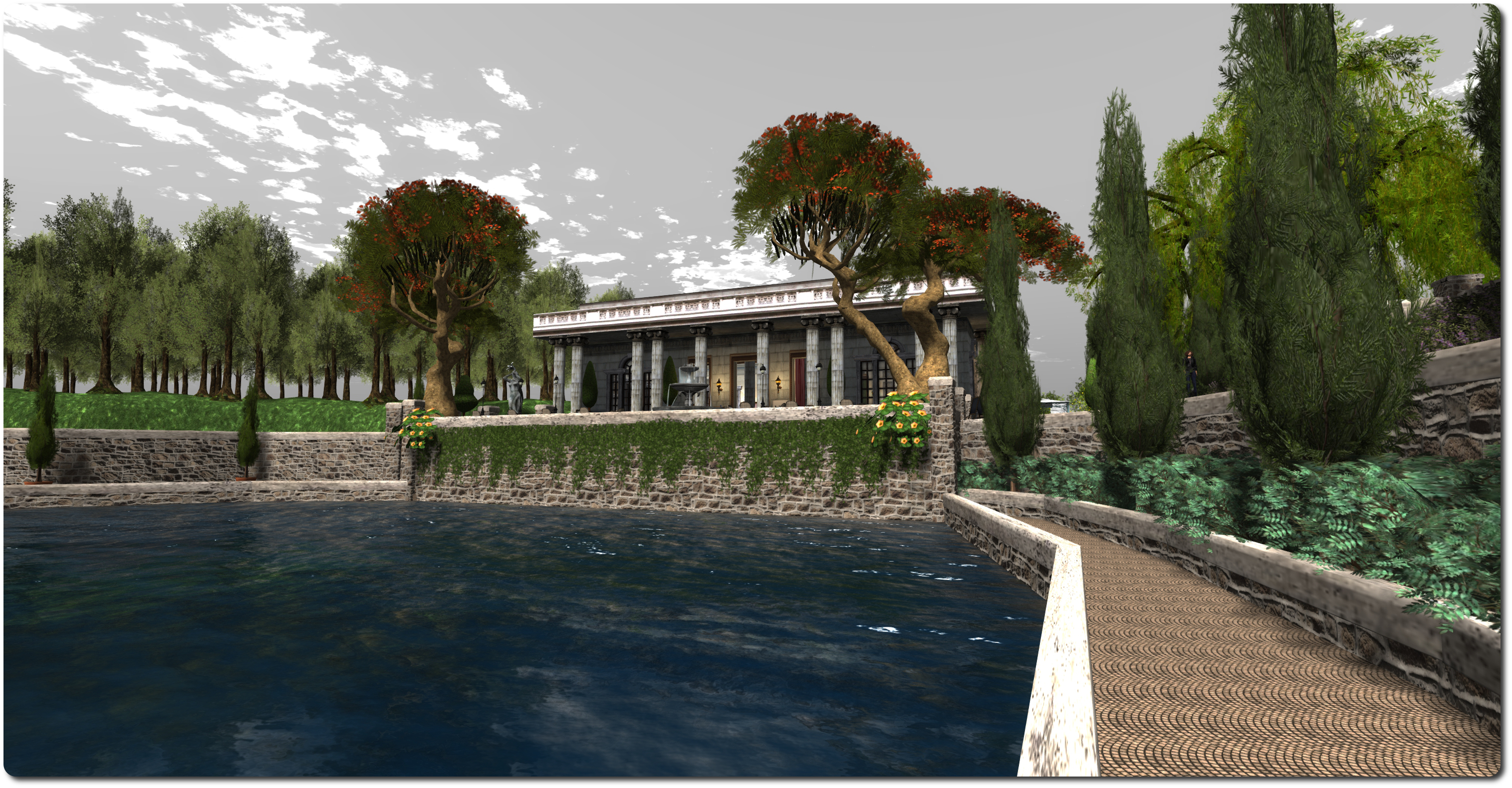
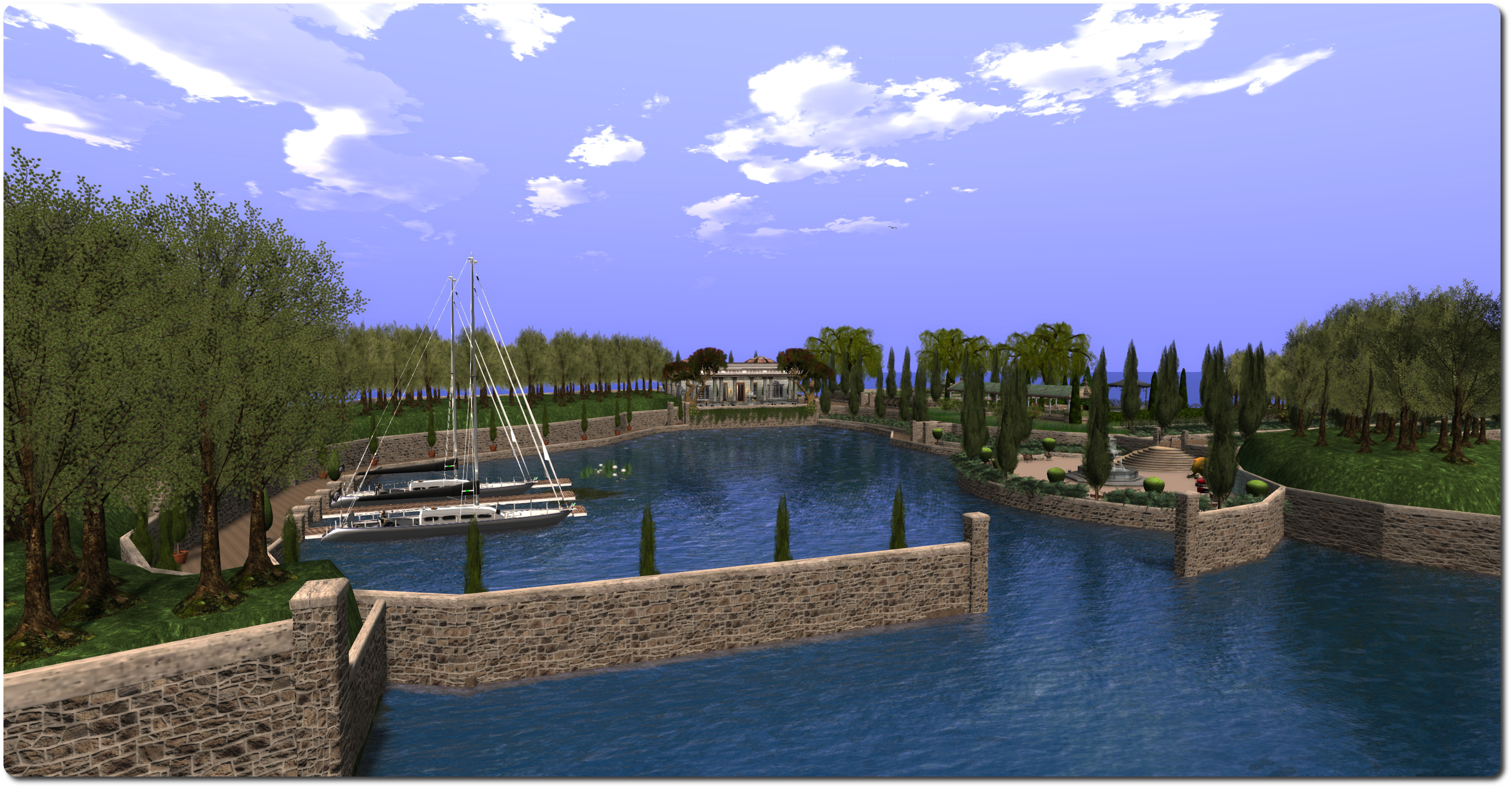
Located on the east side of the Isle of Flux, Rico’s Tea House forms a part of the Clairty-Flux  (of LTD fame) estate, with the private home of Editorial and Rico occupying the neighbouring region. The tea house sits opposite the entrance to a bay which offers mooring for up to four yachts, and which is in turn bordered on one side by woodland and the other by a meadow and a lawned garden with a gazebo and covered walk.

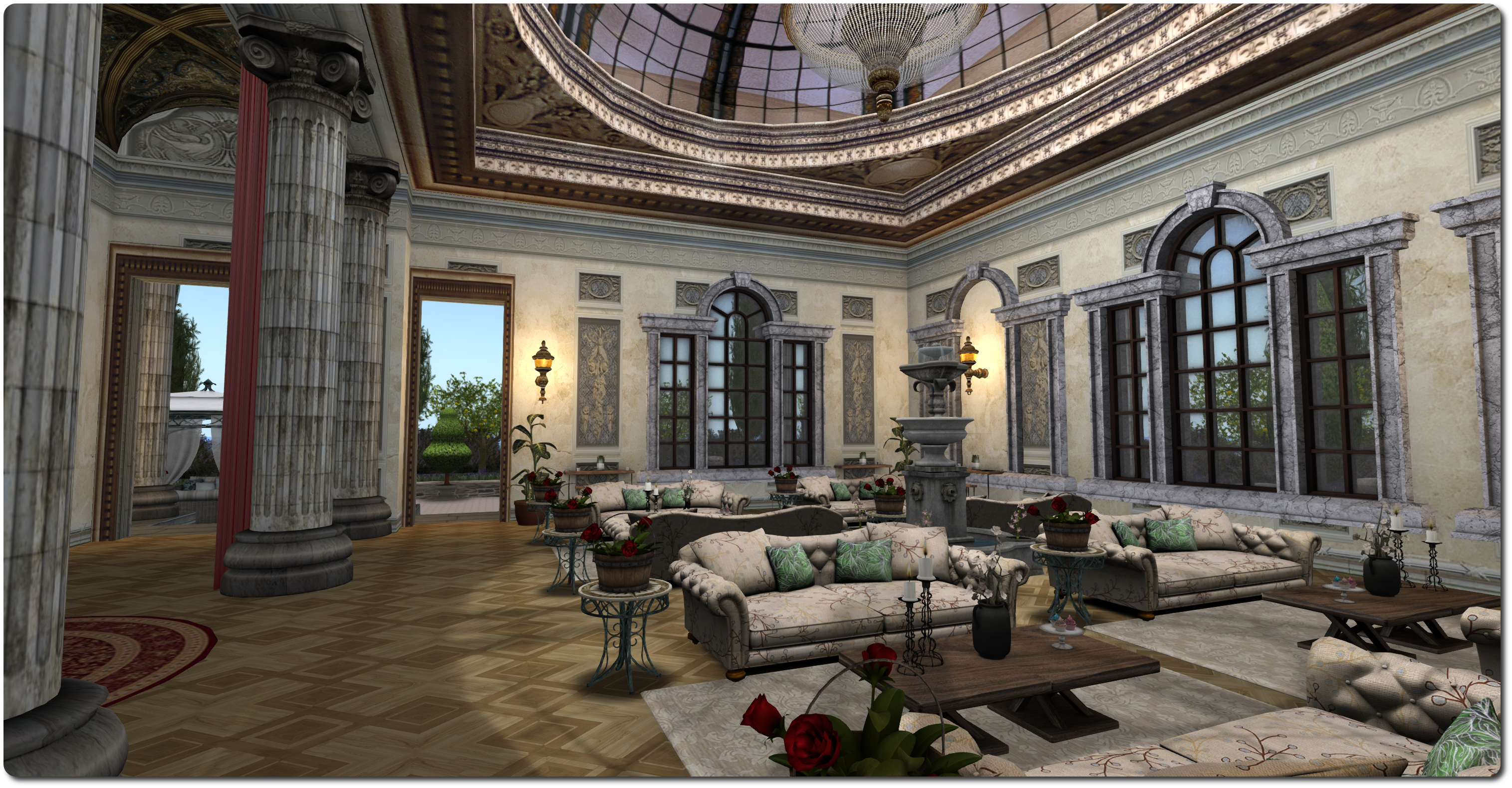
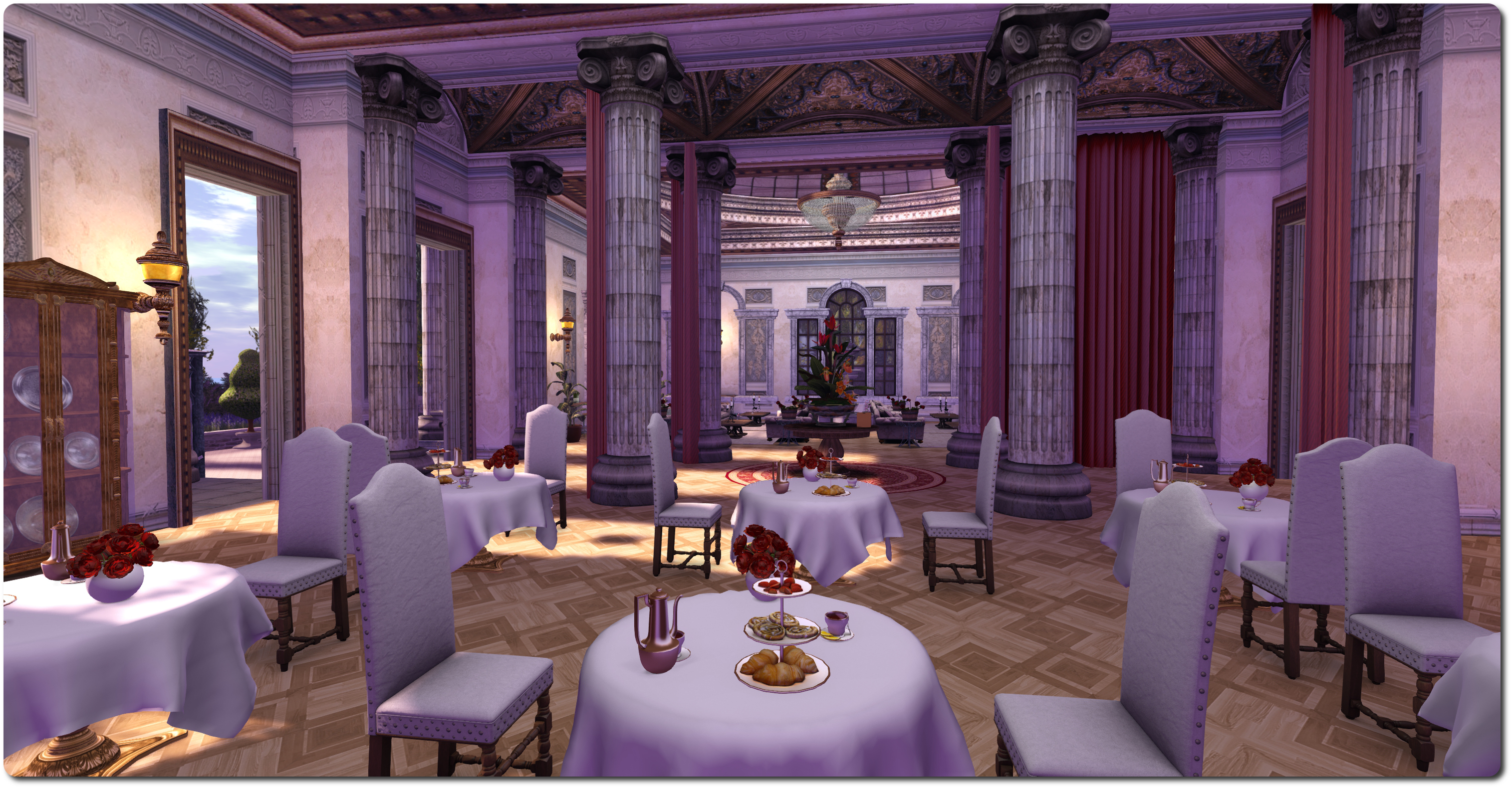
Designed by Kaya Angel, Rico’s Tea House is of a style which fits-in well with the stately look of Editorial’s and Rico’s home, suggesting it is a part of the estate which has been specially converted for its current purpose and opened to the public. Inside, and under the two ornate glass domes of the roof, it is divided into two. On the one side is a luxurious lounge area and on the other, a dining area serving afternoon tea, complete with cake stands sitting on white-clothed tables.

Rico's Tea House, Isle of Flux, May 2014; Inara Pey on FlickrRico’s Tea House, Isle of Flux, May 2014

For those who prefer to sit outside, the terrace to the front of the tea house offers elegant rattan chairs and low wooden tables where guests can sit and look out over the bay, while on the terrace to the rear offers two gazebos, each presenting visitors with comfortable and shady seating, both of them surrounded on three sides by fruit-bearing citrus trees which give things a touch of the Mediterranean.

The meadow, rich with flowers and with a fountain at its centre is home for a couple of dairy cows and a horse, but also offers places for couple to sit and cuddle. Those who fancy a walk can do so along the upper path, which leads to a small orchard and the square lawn and its surrounding flowerbeds beyond, or they can descend down to the paths which sit either side of the bay, and wander along these to the entrance of the bay.

Rico's Tea House, Isle of Flux, May 2014; Inara Pey on FlickrRico’s Tea House, Isle of Flux, May 2014

Rico’s Tea House is open to the public, and is billed as a place to meet and make friends. It’s a delight place to visit and offers some great opportunities to the SL photographer. All told, it is a lovely setting to visit.

Related Links


Of dreams and memories: rare things, fine as a Beeswing

Beeswing, Banana Island, May 2014; Inara Pey, on FlickrBeeswing, Banana Island

I was drawn back to Banana Island, Bowie Zeplin’s homestead region, which I last visited in March, due to a post from Honour which indicated Bowie’s new build is now close to completion. As her work is always stunning to see, as anyone who saw Pangloss will know only too well, I knew I’d have to hop over and see for myself as soon as the opportunity presented itself.

As with her previous pieces, Beeswing is beautifully composed, striking to the eye and with a “natural” surrealism which makes it truly unique.

Beeswing, Banana Island, May 2014; Inara Pey, on FlickrBeeswing, Banana Island

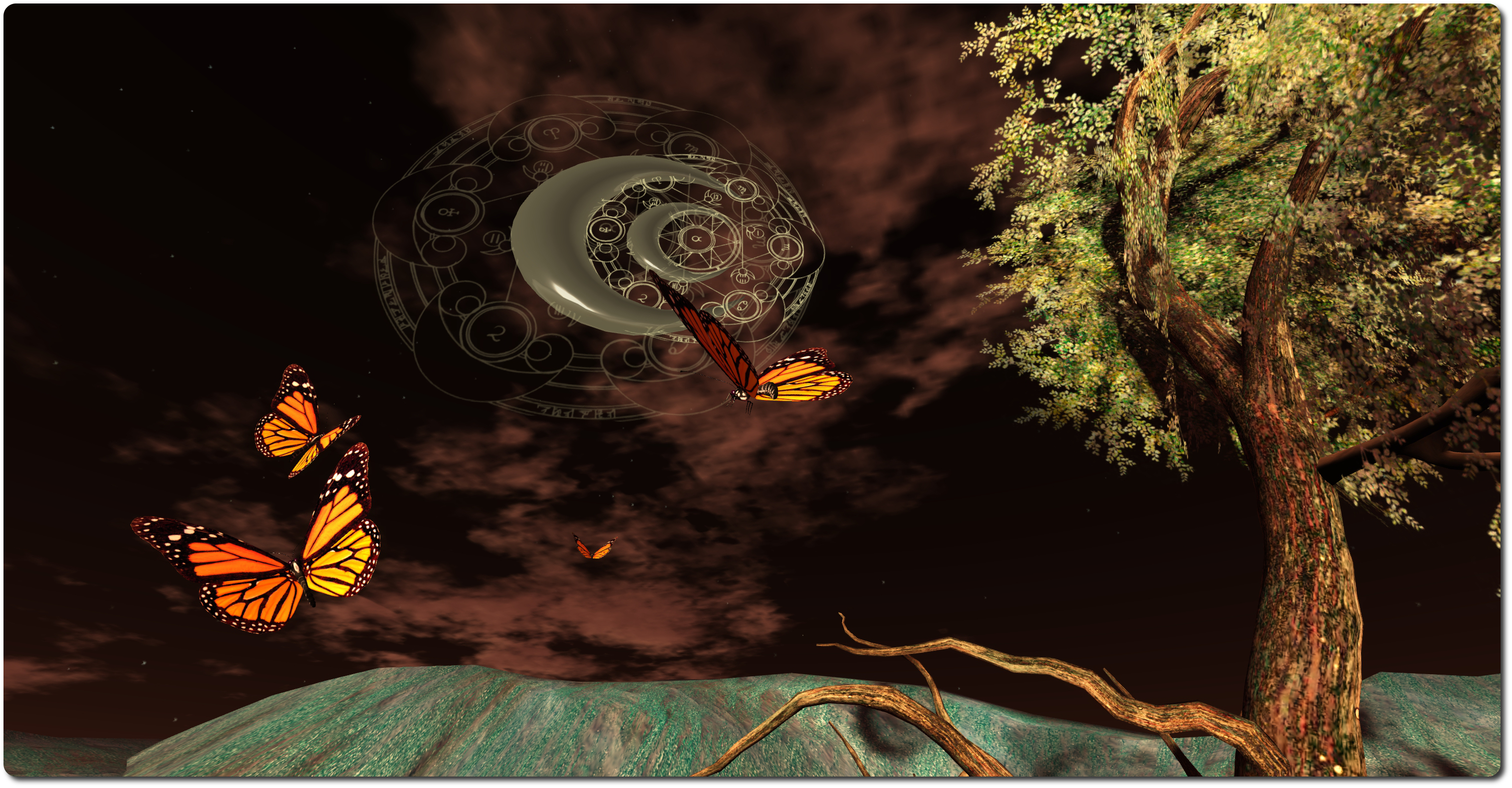
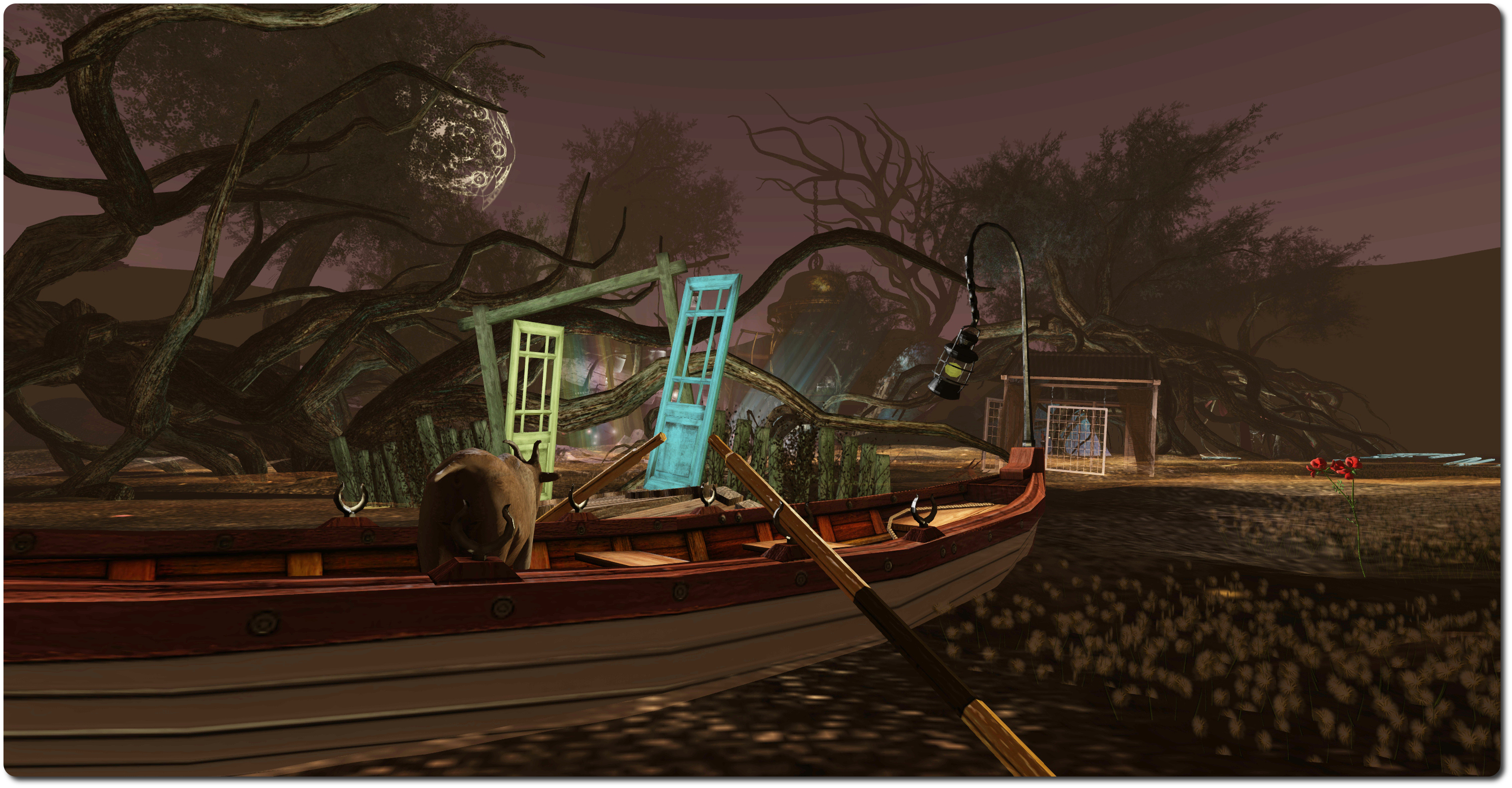
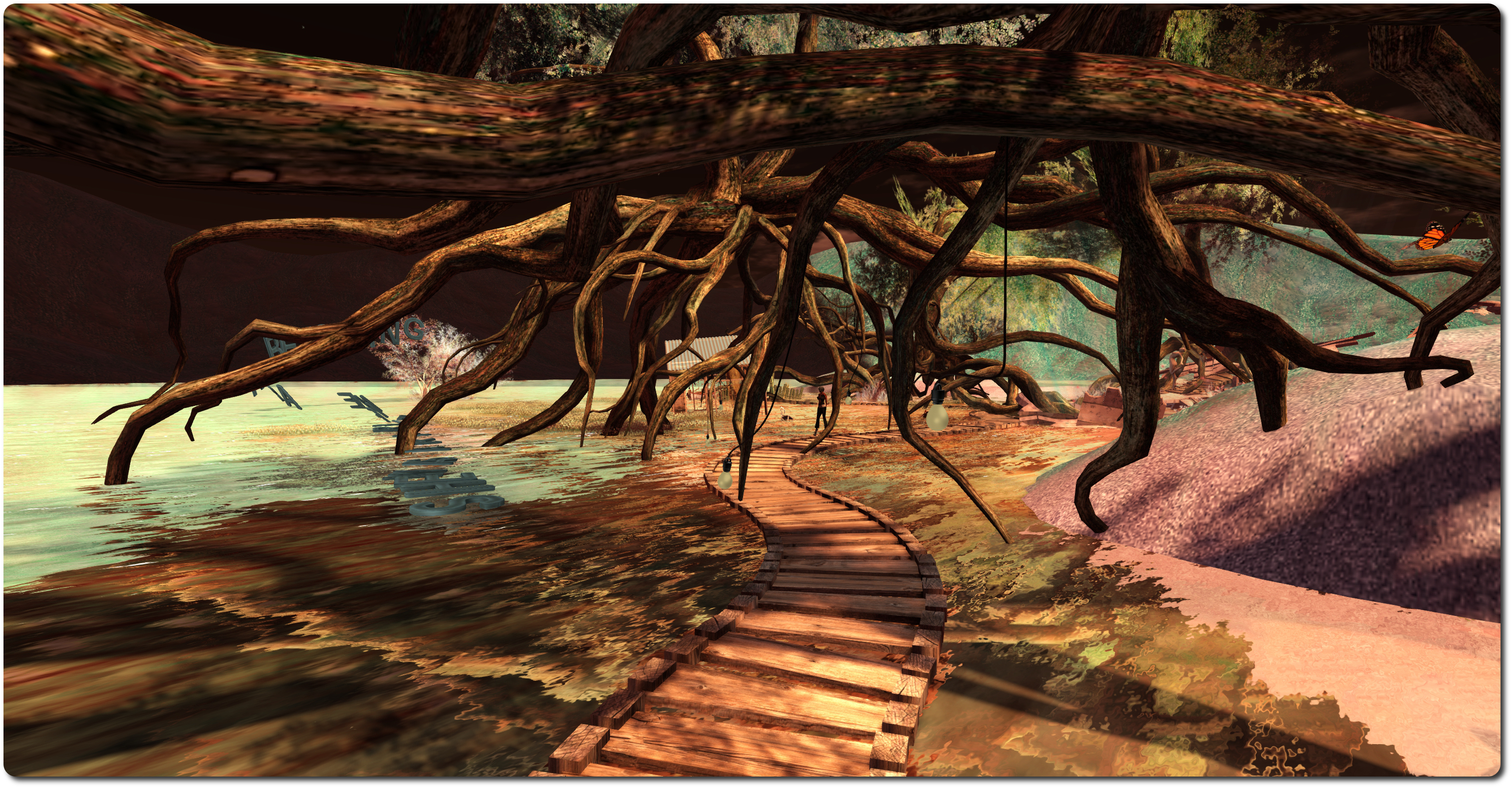
The first thing you’ll notice on arrival is the region is darkly atmospheric – I’ve taken the liberty of either toning-up my images or of using a slightly different windlight to the default. The landscape is largely given over to water surrounded by hills, and features raised wooden walkways which wind through the region and under the thick roots of trees which float serenely overhead.

Wander the walkways, and you’ll come across vignettes, large and small, many of which appear to be memories of childhood or of events from childhood. Some may be happy: an innocent game of hopscotch or a favourite book. Others appear less happy: the tiny apartment house, ripped open by an upthrust tree, perhaps an echo of a parental divorce, the shattering of a home, the tiny figure within the broken building representing a daughter standing isolated and alone as her parents go their separate ways.

Beeswing, Banana Island, May 2014; Inara Pey, on FlickrBeeswing, Banana Island

Elsewhere, the images appear to be all that remains of dreams and hopes once held, or the memories of roads not taken: the dancer under a single spotlight; the naked figure rising from water displaying ever-changing images, her hand extended towards a star above her, as if reaching for her future. Mixed with these are other little vignettes I’ll leave to you to interpret.

Toward one side of the region sits a gilded cage, doors flung wide, within which sits an idyllic image: a house sitting in a beautiful landscape, smoke rising from its chimney as water tumbles from a waterfall nearby to feed a crystal blue lake before passing under a quaint stone bridge. The kind of thing society tells us is the ideal lifestyle we all should strive to attain; yet still those gilded cage doors sit, both inviting us in and perhaps warning us of the price we may yet face should we do so …

Beeswing, Banana Island, May 2014; Inara Pey, on FlickrBeeswing, Banana Island

To determine a meaning here, if one is indeed intended, is not easy. Nor, frankly, is it required, given the captivating beauty apparent in each of these scenes. To me, if there is a theme here, then perhaps it echoes the meaning behind Richard Thompson’s song Beeswing, a refrain from which can be found in the region; that the installation is about the choices we make in life, or which are thrust upon us, and the price they carry.

If that sounds dark, then don’t be put off: Beeswing is an evocative place, stunning in composition and with a beauty as fine as a bee’s wing. More than worth the time taken to visit it.

Related Links