Desura and Linden Lab: through the founder’s eyes

Update: Linden Lab sold Desura to Bad Juju Games on November 5th, 2014.

I came across a short interview conducted by the Linux-focused Root Gamer with Desura founder Scott Reismanis held shortly after the news broke that the Lab had acquired the digital distribution service, but which seems to have gone unnoticed elsewhere.

Since the announcement of the acquisition, there has been considerable interest in whether it means Desura / LL will compete more directly with others in the same marketplace – notably Steam. In a recent interview with Gamasutra’s Kris Ligman, which I also covered here, Rod Humble had a few pokes at this himself (although some of his comments on competition would appear to have a much wider context which includes Second Life). Reismanis sees the “competition” element of the acquisition in terms of providing Desura with much-needed additional ability to pro-actively attract games developers, rather than having to react to overtures from games developers, commenting:
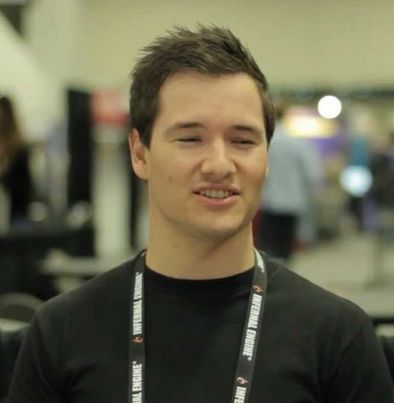
Scott Reismanis
Scott Reismanis

At the moment we are largely dependent on developers reaching out to us about getting published – that’s what our small team had time to do. With Linden Lab help we will expand our team working with the game developers helping us target and bring more on board.

In reading both Reismanis’ and Humble’s comments around the acquisition, it would appear that both are very much of the same mind in how they regard the Lab’s initial relationship with Desura and in terms of future plans.

Both, for example, couch the Lab’s role as initially being more supportive than directive; providing additional muscle in key areas to assist the Desura team to carry on with their business in a more structured and focused manner, rather than the Lab charging in and absorbing everything and trying to reinvent the wheel. In this, the approach appears to be more of a partnership more than an outright acquisition and, given the marketplace is new to Linden Lab, not an unwise move.

Not that this means there won’t be any visible changes. Work is already underway to overhaul (or at least update) the Desura client in order to make the Lab’s involvement more apparent. Exactly what form this will take isn’t clear at present, but the work is seen as priority, although dependent upon Desura (or the Lab?) bringing in new staff.

Desura and the Lab: proceeding more as a partnership? (image courtesy of Root Gamer)

The interview also hints that both Humble and Reismanis share the same grand ambitions for the future of a service – and that the ambitions may have been there prior to the acquisition (and by extension, might have been one of the reasons the Lab was attracted to Desura).

Commenting on the Desura blog about the acquisition following the formal announcement, Reismanis give additional insight as to what he believes this means for developers and customer using the service:

To date Desura has been built and run by a dedicated small team – and it’s grown to the point where we list over 1,000 games and have served over 1,000,000 customers. We are very passionate about the developers and community we represent, and I want to assure you now this policy isn’t changing.

With Linden Lab’s support, we plan on expanding our team and providing you with more co-ordinated coverage, sales, marketing efforts, reporting, and assistance from us. We want to solve challenges like discoverability and giving your customers’ choice, and we look forward to doing so. We are going to continue to polish and innovate so Desura stands out and does its most important job better: getting your game into customers’ hands.

So far reaction to the acquisition from within the Desura community appears to be mostly positive, with those responding to the news wishing Reismanis and his team good luck, although there are obviously some questions about what it means in practice for game developers in terms of publishing, DRM, etc., – all of which are liable to only become clearer once the initial dust has settled and both the Desura team and the Lab have worked out priorities and directions and have settled into working together over long distances.

It’ll be interesting to see how this develops over time, starting with the roll-out of the new Desura client, and whether the approach does develop along lines of a partnership rather than a buy-out, and if so, for how long.

Related Links

Desura and Blocksworld debut on LL’s corporate pages

LL logoUpdate: Linden Lab sold Desura to Bad Juju Games on November 5th, 2014.

Both Desura and Blocksworld have made their individual debuts on Linden Lab’s corporate website, with Desura appearing on Friday July 26th, and Blocksworld a little earlier in the week.

Both have links to introductory pages which in turn lead to their respective websites, as well as  banners at the top of the corporate site’s home page.

Blocksworld and Desura both now appear on LL's corporate website, with links to introductory pages and their own banners
Blocksworld and Desura both now appear on LL’s corporate website, with their own banners at the top of the home page and links to their introductory pages

The Desura introductory page includes a brief description of the service, which reads:

Desura is a community-driven digital distribution service for gamers, putting the best games, mods and downloadable content from developers at gamers fingertips, ready to buy and play.

The free Desura application can serve and patch games, mods, and add-ons directly for customers around the world.

Developers and publishers can share news, images, videos, and other content through their profiles, while every member of the Desura community can post comments, submit reviews, and upload screenshots from their own playing experiences.

The page also includes an introductory video from August 2011 entitled Introduction to Desura and (presumably) narrated by DesuraNET’s founder, Scott Reismanis.

While in-depth and useful for someone wanting to get to grips with Desura, the video is not really in keeping with the other promotional videos on the other product pages, so I wouldn’t be surprised if it is swapped-out for something a little lighter from the Lab in the near future (“Hello everyone. I’m Rod Humble, CEO of Linden Lab, makers of shared creative spaces…” ;-)) .

The link from the page goes directly to Desura’s website, which has yet to show any signs of rebranding – which is hardly a surprise, all things considered. The Lab has some grand ambitions for the service, and so it’s likely to be a while yet before we start seeing significant changes and updates.

The last time I reported on Blocksworld, I pointed to rumours that it could be launching in July. These came via All Things D’s Eric Johnson, following a Q&A with Rod Humble which appeared at the start of July.

The new(ish) Blocksworld introductory page on the Lab’s website is a little less forthcoming, stating only that it is coming soon to the iPad, with the rest of the text reading:

Blocksworld is a lighthearted build-and-play system for kids and grownups alike that brings the imaginative play of toy blocks to your iPad’s touch-screen, allowing you to bring your digital creations to life.

Snap together colorful 3D blocks to create anything you can imagine – from crazy characters to cars, space rockets, animals, robots, planes, monsters, and much more – and then bring your creations to life and play with them!

The Lab’s “official” Blocksworld video also appears on the page, and while it is good, I confess to still preferring Boldai’s own videos, but I’m again including it here for completeness.

The Blocksworld website hasn’t changed since my last report on it, and it most likely won’t until we do see the app launched. I wonder if the Lab will still push the product forward on Android, once it has launched…

Related Links

Desura – grand ambitions

Update: Linden Lab sold Desura to Bad Juju Games on November 5th, 2014.

Kris Ligman over at Gamasutra had an interesting chat with Rod Humble recently, in which the Lab’s CEO discussed the acquisition of Desura earlier in July, providing more of an insight into why it was done and – perhaps – some of the longer-term thinking going on at the Lab.

I’ve been intrigued by the acquisition since first reading the press release. Of all of the Lab’s moves to establish itself beyond SL, this is perhaps the one which could stick, and stick well – if they can follow-through on it. For one thing, Desura isn’t a start-up facing an uphill fight to gain a marketshare. It’s already established and, despite being a minnow to Steam’s whale, has nevertheless carved out a niche for itself in a sector which offers the potential for growth.

I’m not a gamer by any stretch of the imagination, but in digging around Gamasutra, Desura et al, I tend to agree with Iris Ophelia on the positives around the move.

Desura: have LL boxed clever on their latest acqusition

There would also appear to be attractions beyond those Iris states. For a start, there could be the opportunity for something of a symbiotic relationship between the Lab and game developers which grows out of the acquisition.

The Lab is looking around and trying to establish a broader portfolio of products and hopefully develop them into revenue streams. At the same time, it is possible that some game developers are looking at Desura as a means of honing skills and perhaps getting noticed “out there” by a games house. Thus, through Desura, the Lab potentially gains a platform through which they can scout talent they may wish to recruit at some point, and game developers have a service they can use to promote their offerings without jumping through hoops or fighting for attention, as Iris points to being the case with Steam’s Greenlight, and be aware that the Lab might just see something they like and snap them up.

While it is unlikely to have been a consideration in the acquisition, Desura does now mean the Lab has a direct channel-to-market for any PC / Mac  / Linux games and software they produce – such as Patterns, which is already offered through Steam, but which would appear to be a good fit for Desura as well. Might we yet see the hinted-at versions of Creatorverse for PC and Mac popping-up on Desura at some point in the future (assuming Creatorverse is actually still under active development)?

Patterns: an additional channel-to-market via Desura?

However, Humble’s comments in the article make it clear that the Lab is looking at Desura in far broader and more ambitious terms. In framing the reason for acquisition to Ligman, Humble states (emphasis mine):

[We want] to make it the most open, developer- and user-friendly distribution service for all kinds of digital goods, starting out with games and mods and going from there. For us it’s a natural step… We’re about user-to-user transactions and empowering people’s creativity.

This is a pretty hefty ambition, and suggests that the Lab might be willing to take Desura into more open competition with Steam, which started offering “other” digital goods in the form of non-games software last year. And while this is pure speculation on my part, could it perhaps also be that LL have their eye on content creators interested in being able to sell their mesh creations to users of virtual worlds – not just SL, but OpenSim (and perhaps even Cloud Party)?

This may not happen immediately (if at all), but the idea needn’t be that much of a stretch. Desura is already geared to handle payments in the user’s local currency, so it would be relatively easy – and attractive to content creators – to provide a means by which they could potentially reach multiple grids without having to fiddle-fart with local on-line markets or deal with different virtual currencies. Sure, users would mostly likely have to upload whatever they buy to their chosen grid (and pay any associated upload costs), but this needn’t necessarily be a huge blocker to the idea.

Pushing my own speculations to one side, that the Lab does have ambitions for Desura inevitably raises a couple of questions: can the Lab actually live-up to its own ambitions. and will it actually be allowed to do so?

In terms of the first question, the concerns are twofold. Desura is community-oriented, and the Lab’s track record of community relations within SL hasn’t exactly been stellar. Can they fare better with the Desura user community? The other, perhaps more vital, point is that while it is already up and running and has its own community, Desura is still pretty small and needs a lot of commitment and nurturing in order to grow. This will require time and effort on the Lab’s part – do they actually have the patience and willingness to run the course (as well as the expertise to run it well), particularly among the board, who are liable to have one eye firmly on ROI? In this, it is interesting that the Lab may not actually be looking to go it alone, with Humble admitting they could well be looking to bring-in partners.

The answer to the second question  – will the Lab be allowed to develop Desura in keeping with their ambitions – in a way comes down to Valve and Steam. Currently, Steam’s focus is slewed towards the bigger names in games development, and Steam Greenlight currently appears to have a number of barriers standing in the way of the smaller developers. However, should Valve sense that Desura is getting a little too big, there would be nothing stopping them from making their own offering far more appealing to game devs across the board, undermining Desura’s appeal, and leaving it starved for growth.

The interview with Ligman is perhaps one of the more forthcoming Humble has given – in some respects, would that he’d be as candid when talking SL. It’s fair to say that in the piece he’s gone a good way to answering the question of “why?” regarding the acquisition, and which has been on a lot of lips since the move was announced. As to the additional questions as to whether they can bring their ambitions for the service to fruition – well that, as they say, will be determined in time.

Related Links

Linden Lab acquires Desura games distribution service

LL logoUpdate: Linden Lab sold Desura to Bad Juju Games on November 5th, 2014.

On Wednesday July 10th, Linden Lab announced they had acquired Australia-based digital distribution service  Desura Pty Ltd, which distributes games and related media online and which might be said to be somewhat akin to Steam.

The Lab’s announcement reads in part:

Desura puts the best games, mods, and downloadable content from developers at gamers’ fingertips, ready to buy and play. The free Desura application can serve and patch games, mods, and add-ons directly for customers around the world. Developers and publishers can share news, images, videos, and other content through their profiles, while every member of the Desura community can post comments, submit reviews, and upload screenshots from their own playing experiences. Desura also demystifies user-made mods and add-ons for games by making them as easy to find and install or update as professional titles.

“Desura’s talented team, thriving business, and impressive technology are a great fit for Linden Lab,” said Rod Humble, CEO of Linden Lab. “This acquisition gives us a global platform for serving creative developers of all kinds, and we’re looking forward to growing both Desura’s global community of gamers and its fantastic portfolio of thousands of games, mods, and other content.”

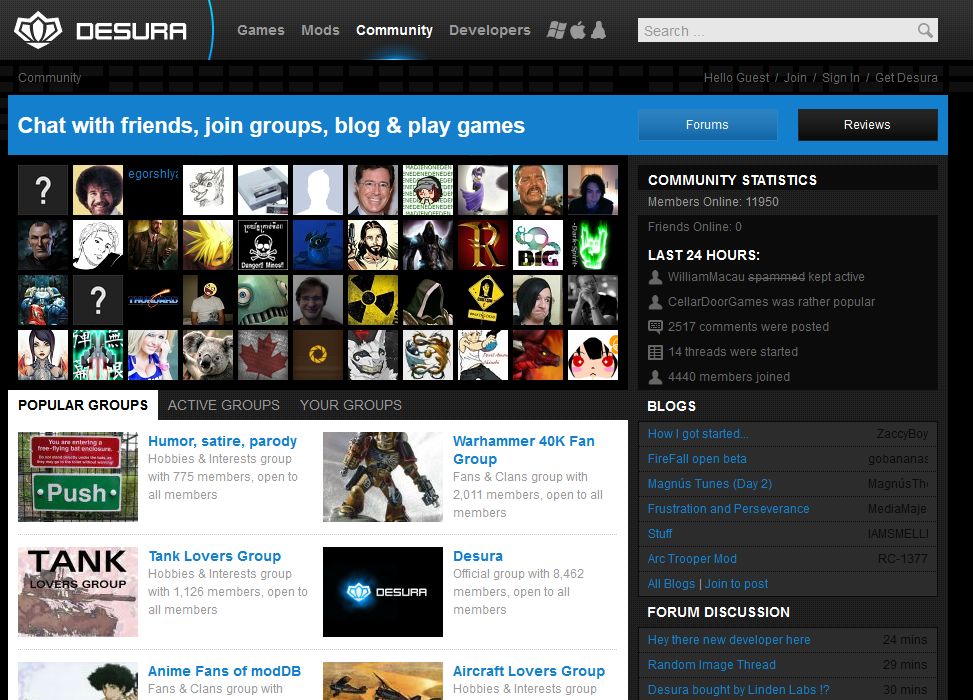
The Desura website
The Desura website

This is an interesting move on the Lab’s part on a number of levels, and one which is bound to provide a range of reactions. In terms of the former, for example, does it indicate that the link-up with Steam has been abandoned?

Announced in August 2012, the deal to promote Second Life through Steam never materialised. More recently, there had been unofficial hints coming out of the Lab that a technical hitch with provisioning the viewer through Steam may have delayed matters at some point. Whether or not these had stopped the deal dead in its tracks is unclear, but when talking to Rod Humble recently, I found it interesting he drew something of a line from the non-appearance of SL on Steam with the hook-up with Amazon which came towards the end of 2012.

The Desura acquisition is also obviously interesting in what it says about the Lab’s broader ambitions. Although somewhat similar to Steam – but nowhere near as large – Desura is aimed at a different market. Whereas Steam predominantly distributes titles from larger software houses, Desura leans towards smaller indie games produced by smaller developers who do not necessarily have the clout to deal with Steam.

In this, Desura would appear to be something of a potentially good fit for the Lab, giving their acquisition of small houses such as LittleTextPeople and Boldai – they gain the exposure they are seeking within the indie market by potentially building a name as a distributor of games and a host for the indie game / modding communities (Desura provides a strong modding capability for games and also boasts something of a community-centric environment for users).

The Desura community pages

There may also be some speculation as to what this might mean to Second Life. A potential attraction of the Steam hook-up was the possibility of enticing games modders and 3D content makers interested in building for SL (particularly given the opportunities for selling their content in-world and / or through the SL Marketplace). Depending upon how the Desura acquisition is developed and prompted, a similar opportunity might exist here. Time will tell on that.

If nothing else, the Lab had set itself a pretty big goal in acquiring Desura – which is available on the Windows, Linux and Mac platforms. This is, according to Humble’s quote in the Lab’s press release, “To invest and support the Desura team in making it the most open and developer-friendly platform in the world.”

It’ll be interesting to see what rebranding of Desura takes place (if any) as a result of this move.

Related Links

My thanks to Julian Slade for contacting me and pointing me to the Games Industry International article & this acquisition.