Space Sunday: More from India and Japan, plus SLS & Starship

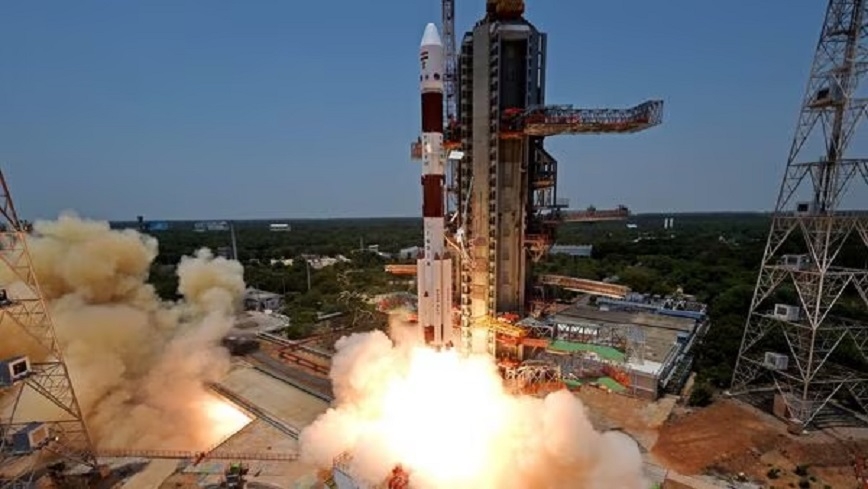
An Indian Polar Satellite Launch Vehicle (PSLV) lifts-off from the Satish Dhawan Space Centre (SDSC) at 06:20 UTC on September 2nd, 2023, marking the start of the Aditya-L1 mission to observe the atmosphere of the Sun and solve some of its mysteries. Credit: ISRO

In my previous update, I noted that the Pragyan rover element of India’s Chandrayaan-3 lunar mission had been put to sleep in preparation for the onset of the long lunar night settling in, the little rover having completed its core mission. Within hours of that report being published, and again, a little ahead of schedule, the Vikram lander was commanded to place itself in hibernation in readiness for some 15 days without sunlight.

Again, the reason for this was simple: the lander had completed its entire primary mission, and controllers hoped that by allowing it time to fully charge its batteries ahead of the onset of the lunar night-time, it will have sufficient power to run its electrical circuits through until the Sun rises over the landing zone on around September 22nd, 2023.

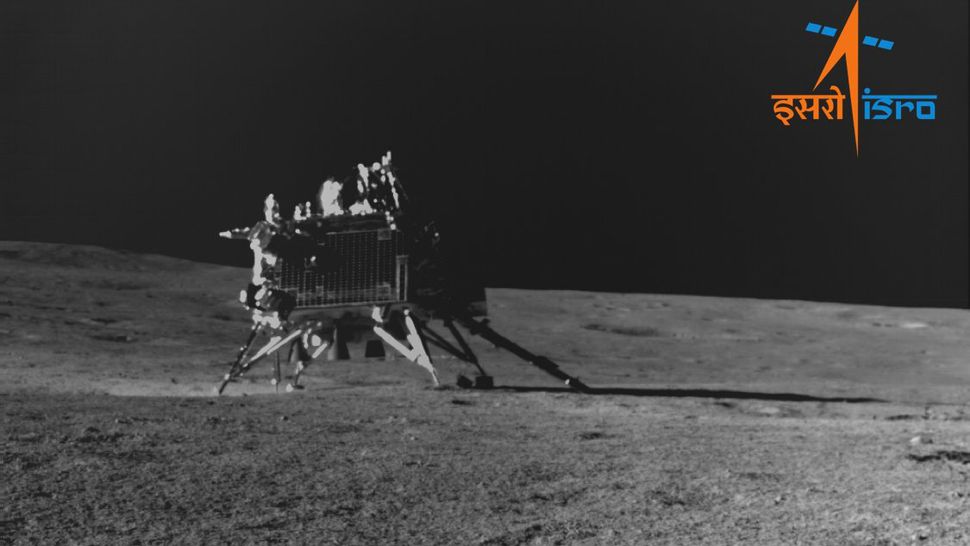
This image of the Vikram lander was captured by the navigation camera on the Pragyan rover during the Chandrayaan 3 mission to the Moon’s South Polar Region. Credit: ISRO

Neither lander nor rover have any direct heating systems with which to keep themselves warm, and so both are reliant on the heat produced by the batteries being sufficient to keep their electrical circuits from freezing in temperatures which may get as low as -120oC, and that the batteries will last long enough so they can be recharged once sunlight does return.

Most impressively, shortly before the command to go into sleep mode was sent, Vikram was commanded to perform a short “hop” on September 2nd, using its landing motor to jump around half a metre, turning itself in the process so its solar array will more directly face the rising Sun.

The mission’s success and catapulted India’s growing space ambitions into the spotlight – the country is well along the road to gaining a human spaceflight capability thanks to the in-development Gaganyaan vehicle, capable of flying up to 3 people to orbit for up to 7 days. Currently, this project is targeting 2024 for two uncrewed test flights for the craft, to be followed by a crewed launch in 2025, which would make India the 4th nation to have an independent humans-to-orbit capability after Russia, the United States and China.

An artist’s impression of India’s Gaganyaan crewed space capsule and service module, due to make its first uncrewed test flight in 2024. Credit: ISRO

Meanwhile, and in terms of science missions, India has already followed Chandrayaan-3’s success with another ambitious mission: that of its first dedicated solar observatory, Aditya-L1 (“Aditya” being the Sanskrit for “Sun”).

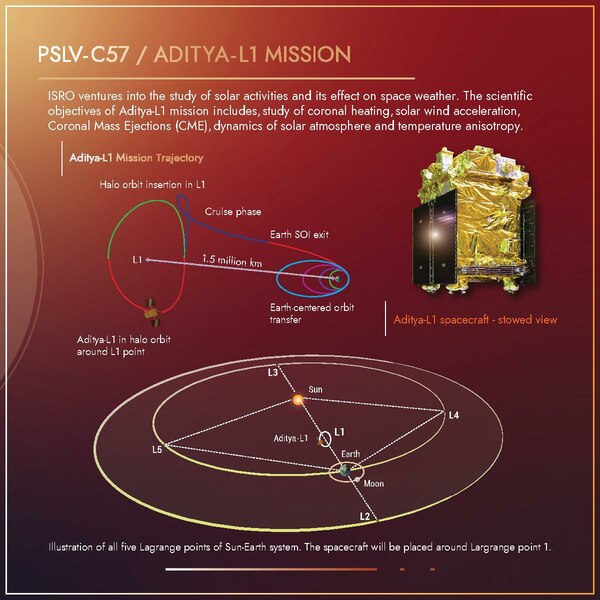
Launched via India’s medium-lift Polar Satellite Launch Vehicle (PSLV) from the Satish Dhawan Space Centre (SDSC), Sriharikota, at 06:20 UTC on September 2nd, the observatory separated from the launch vehicle around 63 minutes into the flight to start a 109-day journey to the Sun-Earth Lagrange L1 position, 1.5 million km from Earth, and lying between Earth and the Sun.

The first part of this comprised a series of polar orbits around the Earth carried out through until September 10th, which increased the vehicle’s apogee to move it further from Earth using minimum propellants. Two more such manoeuvres will take place during mid-September, allowing the observatory to transfer itself across to a halo orbit around the L1 position, which it should reach in early December 2023, and from where it can observe the Sun continuously.

The Sun-Earth Lagrange points and the flight of India’s Aditya-L1. Credit: ISRO

The mission’s primary objectives are:

  • Observation of the dynamics of the Sun’s chromosphere and corona. In particular, to engage in studies of chromospheric and coronal heating, examine the physics of partially ionised plasma, of coronal mass ejections (CMEs) and their origins, and observe coronal magnetic field and heat transfer mechanisms, and flare exchanges.
  • Observation of the physical particle environment of its immediate surroundings.
  • Probe drivers for space weather, and the origin, composition and dynamics of solar wind.

A unique aspect of the telescope will be its ability to obtain near-simultaneous images of the different layers of the solar atmosphere, allowing scientists to observe how energy is channelled through it. This will allow scientists to make determinations about the sequence of processes in multiple layers below the corona that lead to solar eruptions. One of the mysteries of the Sun is that its upper atmosphere has a temperature of 1,000,000ºK, as opposed to just 6,000ºK at the Sun’s surface. As such, it is hoped that this kind of simultaneous observation of multiple layers of the Sun’s atmosphere will reveal a new understanding of solar dynamics and the interplay of solar weather and Earth which had thus far escaped understanding.

Japan Launches XRISM and SLIM

Although 10 days later than originally planned, Japan has launched its XRISM (pronounced “crism”) space observatory and SLIM Moon lander (also called “Sniper”), when a H-2A rocket lifted off from Tanegashima Space Centre at 23:42 UTC, and both craft deployed successfully less than an hours after the launch.

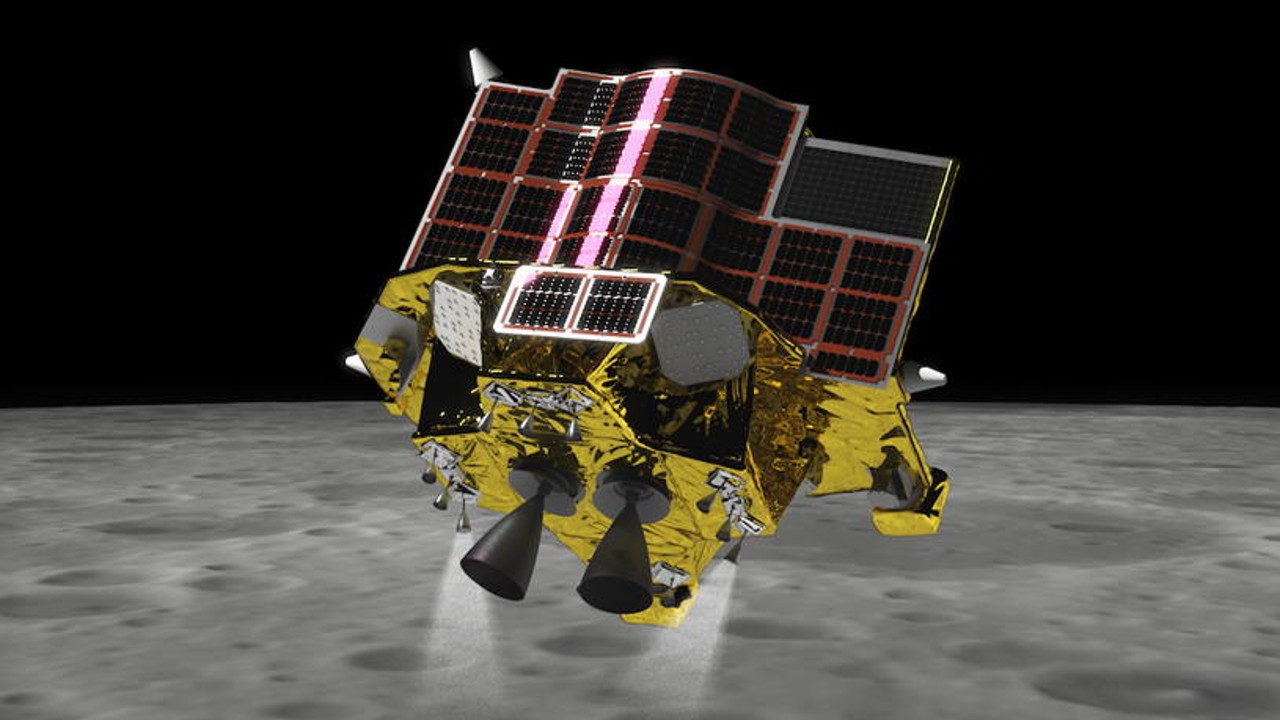
As I’ve previously reported, the Smart Lander for Investigating Moon, massing the 590 kg including its propellants, is Japan’s first attempt to land on the Moon. It is primarily a technology demonstrator, due to land within the relatively young (and small – just 270m across) Shioli impact crater, located just below the Moon’s equator, in 3 to 4 months time. Despite its tiny size, the lander is equipped with a suite of science instruments and will also deploy two palm-sized lunar rovers.

An illustration of SLIM approaching the moon’s surface. Credit: ISAS/JAXA

XRISM – the X-Ray Imaging and Spectroscopy Mission – has a much closer destination than the Moon: an orbit just 550 km above the surface of Earth. Here, over an initial primary mission of 3 years, the 2.3 tonne telescope – defined officially as an “interim” observatory, which should not be taken to mean its role is unimportant –  will attempt to provide breakthroughs in the study of structure and formation of the universe, outflows from galaxy nuclei, and dark matter.

A successor to Japan’s Hitomi X-Ray telescope, lost in March 2016, just a month after its launch in February 2016 thanks to an attitude control system failure, XRISM is also an international venture, involving both NASA and the European Space Agency. In particular, it will not only be a science instrument but also a technology demonstrator for ESA’s Advanced Telescope for High Energy Astrophysics (ATHENA) telescope, due to be launched in 2035.

XRISM carries two instruments for studying the soft X-ray energy range, Resolve and Xtend, each with its own telescope. Resolve is an X-ray micro calorimeter developed by NASA’s Goddard Space Flight Centre, whilst Xtend is an X-ray CCD camera. Both will operate in concert with one another, with a combine focal length of 5.6 metres.

NASA’s SLS “Unsustainable”

The US Government Accountability Office (GAO) has issued an audit report in which it notes that NASA’s Space Launch System (SLS), the backbone of the American-led Artemis Project to return humans to the Moon, is at risk of becoming “unsustainable”.

With one successful flight under its belt – Artemis 1 – the project has thus far cost NASA US $11.2 billion since development commenced in 2011 (an amount which covered everything up to and including Artemis 1). A further US $11.2 billion has been requested by the White House to sustain SLS from 2024 through until the end of 2028, to allow NASA to further develop and enhance the system.

The core stage of the Artemis 2 SLS launch vehicle under construction. the US GAO suggests the costs associated with the SLS programme are “unsustainable” unless NASA becomes more transparent in its costings. Credit: NASA

This is somewhat at odds with a 2022 announcement by NASA that it plans to develop a contract with Boeing and Northrop Grumman, the prime contractors for SLS and operating under the name Deep Space Transport, which the agency states will include up to 10 SLS launches while will over time reduce the production costs for those vehicles by up to 50%.

In their report, the GAO points out that the methodologies NASA uses to determine the costs associated with SLS are not easy to define. As, such, while there has been “some progress” in the agreement with Deep Space Transport, there is a real risk SLS costs will spiral, and suggests NASA starts to be more transparent in their SLS estimates and in how it manages expenditure.

NASA does not plan to measure production costs to monitor the affordability of the SLS programme. These ongoing production costs to support the SLS program for Artemis missions are not captured in a cost baseline, which limits transparency and efforts to monitor the program’s long-term affordability.

US GAO Audit, September 2023

In this regard, the GAO notes that while NASA has been forced to acknowledge the overall timeline for Artemis continues to slip for assorted reasons, costs associated with various missions have not been updated to reflect this. As such, whilst NASA has stated the cost of building the SLS vehicles to be used with Artemis 3 and 4, the reality is that the costs for these vehicles are actually increasing. As a result, an despite statements to the contrary by NASA, GAO believes SLS launches are liable to remain at around US $4.1 billion each rather than decreasing over time to around US $2 billion each.

The report is the latest of a string of GAO audits across almost a decade, all of which have critiqued NASA over a lack of proper baselining and transparency with regards to Artemis and SLS. At the time of writing, NASA had yet to respond.

SpaceX Starship Update

The Federal Aviation Authority (FAA) has issued the final version of a report into the failures of the first orbital launch attempt by SpaceX using their massive Starship / Super Heavy vehicle. The report, production of which was led by SpaceX, will not be made public due to “proprietary and export-controlled information”, identified “multiple root causes” for the failure of the Booster 7 / Starship 24 combination – none of which are to be made public either.

In a separate statement, SpaceX pointed to “propellant leaks” within the engine bay resulting in fires which severed connections with the primary computer system being a significant factor on the vehicle loss. Whilst in essence accurate, the statement totally avoids mention of the fact the leaks were most likely due to the force of the Super Heavy’s thrust excavating the unprotected concrete apron directly under the the launch mount, throwing significant amounts of concrete up to a kilometre from the launch site – and almost certainly into the engine bay to cause damage which may have resulted in at least dome of the leaks.

Some of the concrete debris scattered on the beaches of the Boca Chica wildlife reserve following the failed launch attempt of SpaceX Starship 24 / Booter 7, April 20th, 2023. Credit: AP News

As many – myself included – noted, the April 20th flight was on questionable value even before it lifted-off. Since then SpaceX have sought to rectify the most glaring omission from the launch facility – a water deluge / sound suppression system (which has shown promise under a couple of short, partial-power tests, but which has yet to prove itself under the full thrust of a Super Heavy booster, and likely will not do so until the next launch).

In addition, there have been multiple changes to the flight software and systems, together with a wide range of physical updates to the vehicles, some of which pre-dated the April 20th launch attempt and rendered Booster 7 pretty much obsolete. How many of the modifications count towards the 63 “corrective actions” the FAA report states must be made before it will grant SpaceX a license for a further launch attempt, is unclear. Finally, and whilst unrelated to the launch failure, SpaceX have further altered the design to allow for  “hot staging”: allowing Starship to ignite some of its engines prior to separation from the Booster, potentially increasing the payload-to-orbit capability.

Booster 9 and Starship 25 stacked at the SpaceX orbital launch facility in Boca Chica, Texas. Credit: SpaceX

And if it sounds odd that SpaceX led the investigation into the loss of its own vehicle, it is not. The FAA simply doesn’t have the breadth of expertise to complete such an investigation itself. Instead, it relies on input from a range of agencies as required – such as the National Transportation Safety Board (NTSB), the US Air Force, the US Space Force, NASA, etc., and, in the case of a commercial launch provider – the provider and its contractors, as and where required.

Meanwhile, in a move which has SpaceX fans making assorted proclamations about an imminent further launch, the next vehicles designated to attempt to reach orbit – Booster 9 and Starship 25 – have been “stacked” on the repaired and updated launch mount. However, and in response to comments on such an “imminent” launch from fans (and Musk himself), the FAA has indicated that the original launch license was only for the April 20th launch – so SpaceX must show it has complied with the accident report and apply for a further license before it will be allowed to proceed.

A further twist to this is that the FAA is itself being sued by a number of environmental and other groups over the SpaceX site at Boca Chica. They claim that by allowing SpaceX to largely author the original Programmatic Environment Assessment (PEA) relating to SpaceX’s use of the site, combined with the April 20th failure, the FAA has materially failed to meet its obligations, and should therefore be ordered to carry out a full Environmental Impact Study (EIS) – a process which could take 2-3 years. Depending on when hearing on the case are held, it is possible the groups involved could seek an injunction on launches until the court rules in the matter of the EIS.

Space Sunday: of comets and of landers

An image from 20th December 2011, showing long period comet C/2011 W3 (Lovejoy) as seen from the European Southern Observatory’s Paranal Observatory in the Atacama Desert, Chile (the two structures are two elements of the Very Large Telescope at Paranal). Discovered on 27th November 2011 by Australian amateur astronomer (and comet hunter) Terry Lovejoy, C/2011 W3 is, like C/2023 P1 Nishimura (below), believed to have originated at some point in the past in the Oort Cloud (although it has likely made at least 6 passes around the Sun). Whether C/2023 P1 will have an impressive a tail as it reaches perihelion remains to be seen. Credit: Guillaume Blanchard

Astronomy is a field of observation / science / study that is pretty much open to anyone with a passion and understanding of things celestial to make a contribution, whether amateur or professional in the field.

Take Hideo Nishimura, for example. As an amateur astronomer living in Kakegawa, Japan, he decided to take advantage of the clear skies overhead on August 11th, 2023 and take some photographs of the sky using his telescope and imager. It wasn’t the first time he’s done this – like many other amateur astronomers he gets enormous pleasure out of imaging and studying the night sky. However, the results caused a little more excitement than expected in the Nishimura household when Hideo noticed that in one of his images, taken towards the direction of the setting Sun showed an object that shouldn’t have been there. After contacting the International Astronomical Union, which followed-up his observations via the Minor Planet Centre, Hideo was informed he has discovered a comet making what is likely to be its first – and only – passage through the inner solar system.

Now called C/2023 P1 Nishimura in his honour, the comet is believed to be an object originating in the Oort cloud, and was knocked out of its distant orbit around the Sun by collision or some other interaction, and has been gradually “falling” towards the Sun ever since.

Such objects are not uncommon – the “C” in the title of such objects indicates they likely originate from the Oort cloud and either end up passing through the solar system and long-period comets (i.e. taking anything from a couple of hundred years to several thousand to loop around the Sun) such as C/2011 W3 (Lovejoy) seen at the top of this article. However, occasionally,  some end up accumulating sufficient velocity during their inward “fall” towards the Sun that rather than looping around it and staying in an elongated orbit, they are accelerated like a pebble out of a slingshot, escape the Sun’s influence altogether, to eventually vanish into interstellar space.

And that’s exactly what C/2023 P1 Nishimura looks set to do (the 2023/P1 in the title indicated its year of discovery and the fact it was the first such object to be discovered in the first half of August (the IAU splitting the months in two alphabetically for objects like comets – So January 1th through 15th is A; then January 16th to 31st is B, with February 1st through 15th C, and so on, with both I and Z ignored to avoid confusion with 1 and 2).

C/2023 P1 Nishimura (centre and naturally green-tinted), photographed by amateur astronomer Dan Bartlett from his back garden in June Lake California, USA on August 15th, 2023, using a Celestron EdgeHD 35.6 cm Schmitt-Cassegrain telescope and a Zwo ASI2600MC Pro imager. Via Astrobin

Currently, the comet is at a magnitude of around 9.4, meaning it can only be seen using telescopes of 15cm or larger. However, as it approaches the Sun, it is expected to grow much brighter, potentially becoming visible to the naked eye at around a magnitude of 4.9 in the period September 10-15th (during which time it will be at its closest to Earth, around 0.85 AU distant) and may by that time demonstrate a tail.

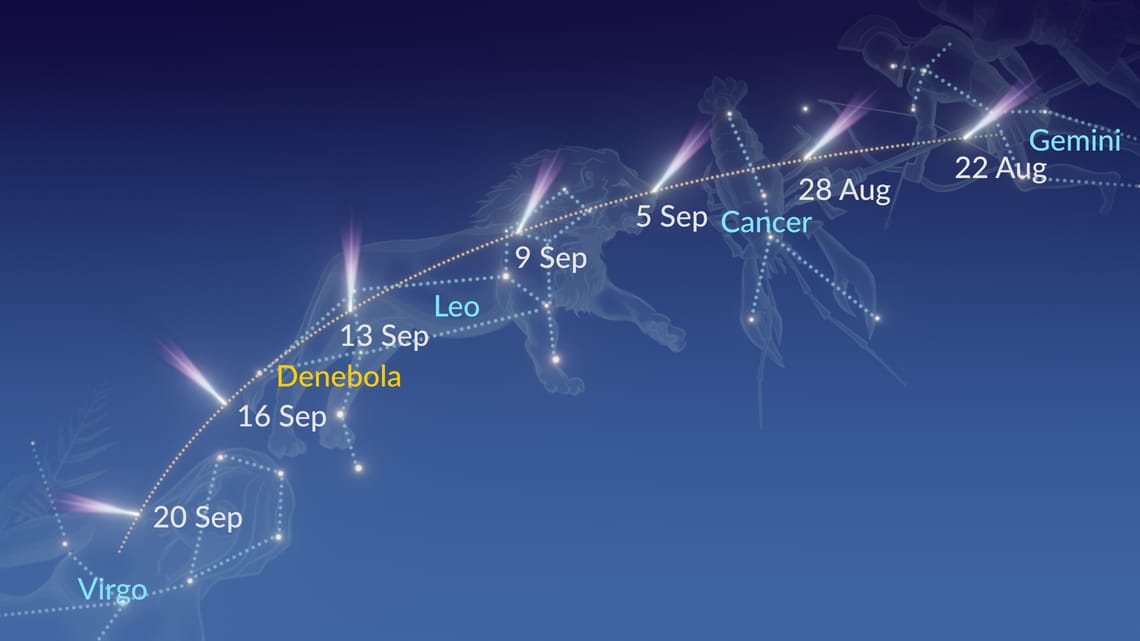
Between September 10th and 12th, period, the comet will be visible for a few hours before dawn in the constellation Leo. From September 13th, it will transition to being an evening object visible immediately after sunset. It will reach perihelion (closest approach to the Sun) on September 18th, when it will appear to be in the constellation of Virgo, about 12° away from the Sun. Perihelion is also the point at which C/2023 P1 Nishimura faces its greatest threat: in passing around the Sun, it is possible the differential forces of its acceleration and the Sun’s gravity might cause it to break up.

C/2023 P1 Nishimura’s progress across the sky. Credit: Vito Technology, Inc.

Following perihelion the comet will start to move away from the Sun – and out of the solar system – offering those in the northern hemisphere with perhaps the best opportunities to view it, although it will diminish in brightness quite rapidly, and once again require a telescope to see it from October onwards.

Those who are interested in astronomy and use apps as an adjunct to their skywatching might like to know that both Sky Tonight and Star Walk 2 apps (the latter may require the purchase of an add-on), provide the comet’s trajectory and brightness in real-time, giving you the most accurate and up-to-date information on where to view it

These are some of the upcoming dates for observations. Note that use of naked eye, binoculars, etc., and visibility in general dependent on factors such as eyesight, location, amount of light pollution, etc.):

Date Magnitude / Visibility Approx location / status
August 26 9.2 – telescope Enters the constellation Cancer
September 5 6.9 – binoculars with 7x magnification or above Enters the constellation Leo
September 7 6.3 – binoculars / possibly naked eye Passes 0°16′ away from the star Ras Elased Australis (mag 3.0) in the constellation Leo
September 9 6.3 – binoculars / possibly naked eye Passes 0°20′ away from the star Adhafera (mag 3.4) in the constellation Leo
September 9 5.6 – binoculars / possibly naked eye Passes 0°20′ away from the star Adhafera (mag 3.4) in the constellation Leo
September 13 4.3 – naked eye Reaches its closest approach to the Earth at a distance of 0.29 AU in the constellation Leo
September 15 3.7 – naked eye Passes 0°10′ away from the star Denebola (mag 2.1) in the constellation Leo
September 16 3.4  – naked eye Enters the constellation Virgo
September 18 3.2 – naked eye Reaches perihelion the constellation Virgo (do not use optical aids when looking towards the Sun while it is above the horizon)
September 22 4.3 – naked eye Passes 1°30′ away from the star Porrima (mag 2.7) in the constellation Virgo
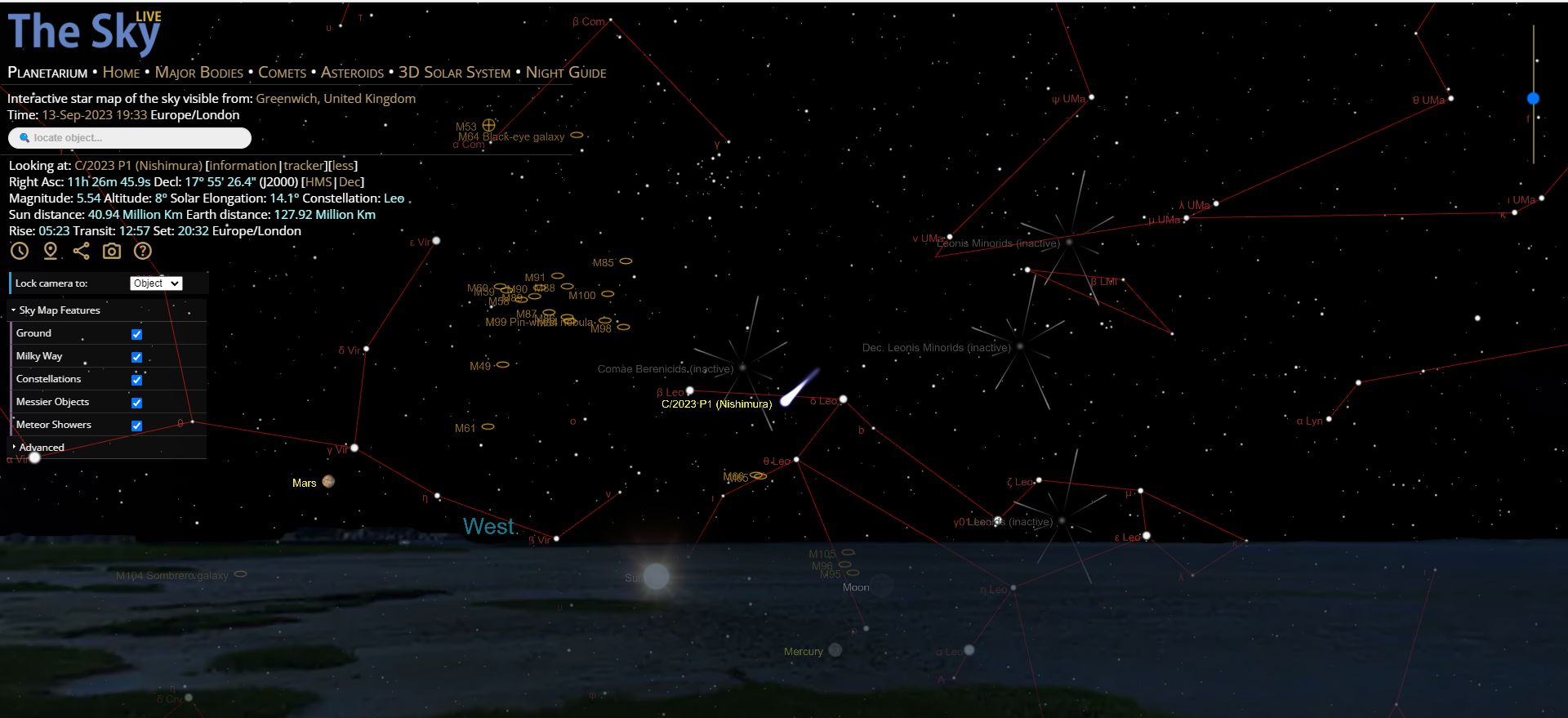
A projection of C/2023-P1’s position at 18:33 UTC, as seen from a location near :London, UK, as offered by The Sky Live – click for full size

Lunar Missions Update

My recent Space Sunday pieces have been in part covering two robotic missions to the surface of the Moon – India’s Chandrayaan-3 and Russia’s Luna-25.

Whilst having launched almost a month after Chanrayaan-3, Luna-25 – by dint of using a more powerful launch vehicle coupled with a somewhat more direct (“spiral”) flight to the Moon – actually arrived in a position from which a landing attempt could be made first.

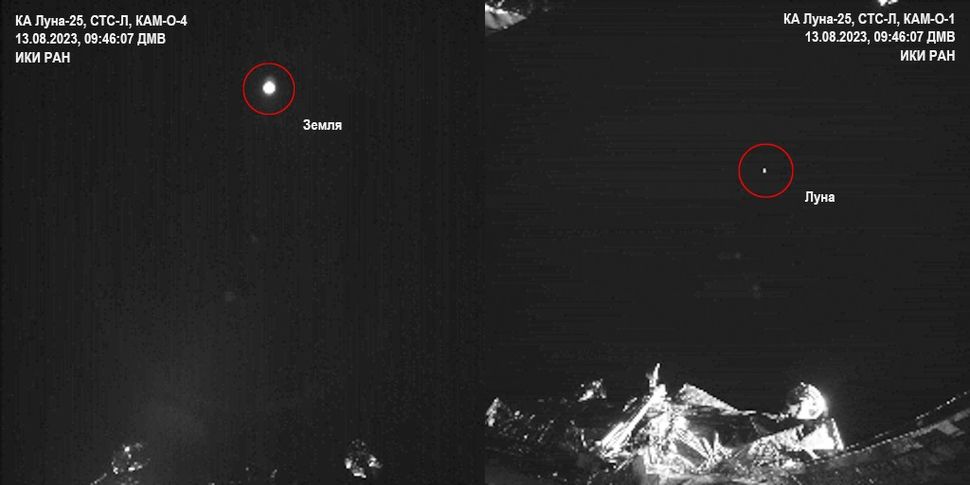
An image taken on August 13th, 2023 from Russia’s Luna-25 mission as the spacecraft spiralled away from both the Earth (circled left) and the Moon (circled right) so it could “drop” towards the latter and enter an orbit from which it could reach the Lunar South Polar Region. Credit: Roscosmos

Thus, on August 19th, 2023 (UTC) the Russian lander – which had performed flawlessly throughout the mission to this point – commenced an engine burn which unfortunately did not go well.

Thrust was released to transfer the probe onto the pre-landing orbit During the operation, an emergency situation occurred on board the automatic station, which did not allow the carrying out of the manoeuvre within the specified conditions.

– Roscosmos statement on Luna-25 released via Russia’s Telegram messaging service

The command to start the manoeuvre was sent at 23:10 UTC on August 19th, the engine burn intended to orient and position the vehicle ready for a decent and landing on August 21st. However, direct communications with the vehicle were lost at or around 23:57 UTC.

Later on August 20th, Roscsomos issued an update in which it was confirmed that all attempts to re-establish communications contact with the vehicle had failed, and the a preliminary review of the flight data received prior to contact terminating suggested the craft had deviated from its flightpath during the engine burn sufficiently that it afterwards crashed into the Lunar surface – although at the time of writing, investigations into the loss were obviously still very much in the initial phases.

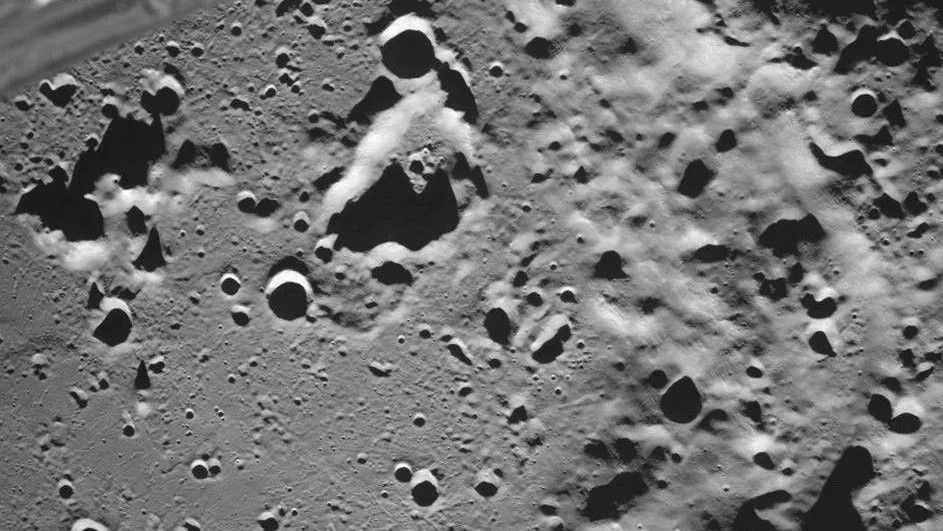
The first detailed image of the lunar surface returned by Luna-25, on August 16th, 2023. It shows a portion of the Lunar South Polar Region from the far side of the Moon. Credit: Roscosmos

Meanwhile, on August 17th, the Chanrayaan-3 lander / rover combination launched by the Indian Space Research Organisation (ISRO) in July successfully separated from their propulsion module, 12 days after initially arriving in an extended lunar orbit. Separation placed the lander / rover combination under their own power and allowed them to start their final set of manoeuvres in preparation for a descent and landing. The first of these was performed on August 19th, when the Vikram lander made the first of the small adjustments needed to bring it down to the 100 km altitude from which the landing attempt will be made on August 23rd.

In PR terms, both of these missions are relatively “high stakes” for both Russia and India. Chanrayaan-3 is intended to overcome the loss of the lander/rover combination which crashed onto the Moon on September 6th, 2019 as a part of the highly ambitious Chanrayaan-2 mission. That loss still overshadows the fact that the third element of the mission, the lunar orbiter, continues to orbit the Moon carrying out its own very successful science mission. In this, it will be joined by the Chanrayaan-3 propulsion module, which although not by definition a satellite, nevertheless carries a small suite of instruments intended to study Earth’s atmosphere from afar, and – according to the ISRO – also scan exoplanets to assess their potential for habitability.

Luna 25, meanwhile, was intended to herald Russian’s return to independent deep-space exploration 47 years after its last lunar mission (Luna-24) and 34 years since its last attempt at an interplanetary mission (Phoboos 2) – both of which were soviet-era missions. It was also intended to demonstrate Russia’s ability to be a major player in the China-led International Lunar Research Station (ILRS) – the launch of the mission even having one of the senior Chinese officials for that programme, Wu Yanhua present.

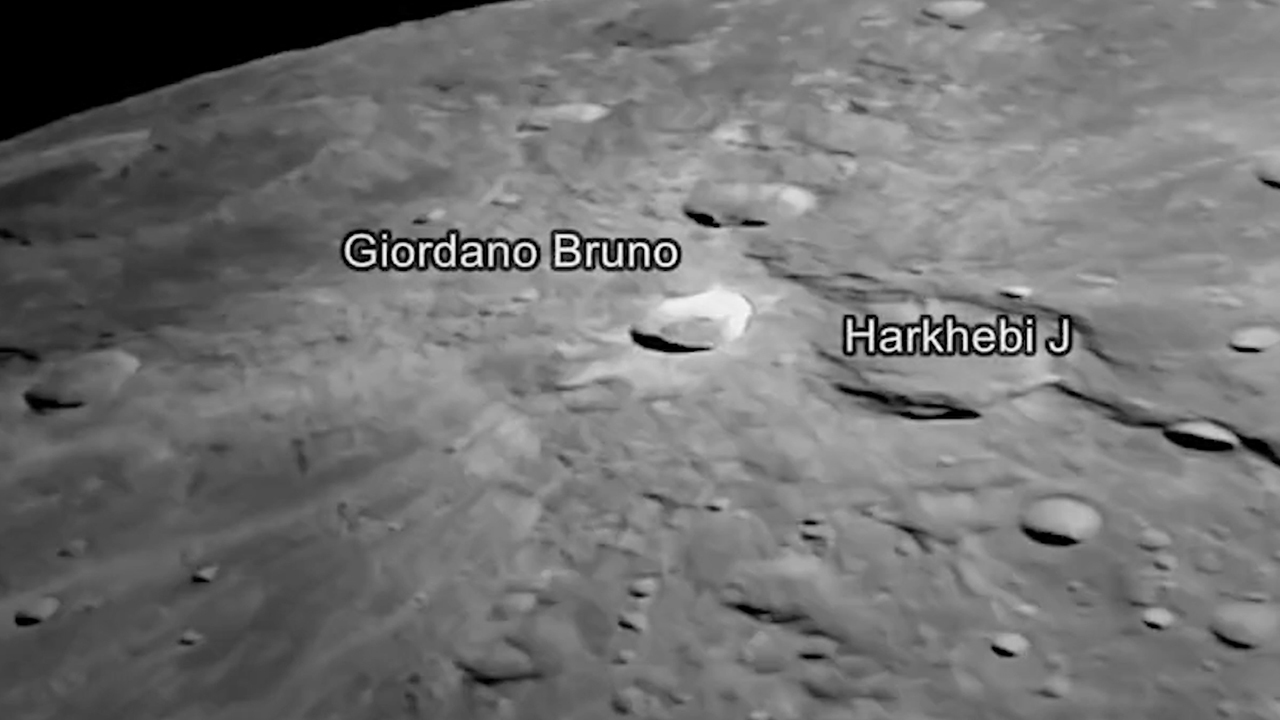
An image returned by the Vikram lander, following its separation (with its rover vehicle) from the Chanrayaan-3 propulsion module on August 17th. This show a portion of the lunar far side, featuring the 22-km wide crater Giordano Bruno. This was created by an impact which may have been witnessed by monks at England’s Canterbury Cathedral in 1178. Close by to the North-west (north is at the bottom of this image) is the much older impact crater Harkhebi-J, lying within the still older Harkhebi walled plain, the remnant of a much older impact site. Credit: ISRO. 

These are far from the only missions heading for the Moon over the next few years. Japan, for example, is due to launch its Smart Lander for Investigating Moon (SLIM) vehicle on August 25th (UTC). This is a technology demonstrator designed to make exploration more precise and economical, and which is cadging a ride on the H-IIA launch of Japan’s X-Ray Imaging and Spectroscopy Mission (XRISM, pronounced “crism”) space telescope.

Unlike Luna 25 and Chanrayaan-3, SLIM will not be going to the lunar South Pole, but will be heading for a group of volcanic domes located in Oceanus Procellarum, 18oN of the lunar equator, where it will attempt to guide itself to a landing close to the Marius Hills Hole, a lunar lava tube entrance. Nevertheless, its landing will be as challenging as those for any mission to the Moon, and the loss of Luna 25 reminds us that lunar exploration is still a hazardous undertaking.

Also heading to the Moon – this time in November – will be Nova-C lander, the first private mission to the Moon to be carried out by Intuitive Machines under the mission title IM-1. Selected as a part of NASA’s  Commercial Lunar Payload Services (CLPS) programme, the mission will deliver a suite of science instruments and mini-rovers to at Malapert A near the lunar south pole. I’ll likely have more on this mission and Japan’s XRISM and SLIM in a future update.

Space Sunday: the Moon, money and the universe

A GSLV variant of India’s LVM-3 expendable medium-lift launch vehicle carrying the Chandrayaan-3 mission lifts off from Satish Dhawan Space Centre on July 14th, 2023. Credit: ISRO/You Tube

India has finally launched its third lunar exploration mission, Chandrayaan-3, after a series of delays pushed it back from a November 2020 target to August 2022 (thanks largely to the COVID pandemic), and then back to July 2023. Part of an ambitious programme initiated by the Indian Space Research Organisation to join in international efforts to explore the Moon (under the umbrella name of Chandrayaan – “Moon Craft” – initiated in 2003), the mission is also the result of an earlier failure within the Chandrayaan programme.

The first mission – Chandrayaan-1 – delivered a small orbiter to the Moon in 2008. It scored an immediate success for ISRO, when a lunar penetrator fired into the Moon’s surface by the orbiter confirmed the existence of water molecules trapped within the lunar sub-surface, whilst the orbiter did much to profile the nature of the Moon’s almost non-existent atmosphere.

In 2019, ISRO launched Chandrayaan-2, comprising an orbiter, a lander (Vikram,  named after cosmic ray scientist Vikram Sarabhai, regarded as the founder of India’s space programme), and a small rover called Pragyan (“Wisdom”).

An artist’s impression of the Chandrayaan-2 orbiter studying the lunar surface. Credit: ISRO

The orbiter is currently approaching the end of its fourth year of continuous lunar operations out of a planned 7.5-year primary mission. However, following a successful separation from the orbiter in September 2019, the Vikram lander deviated from its intended trajectory starting at 2.1 km altitude, eventually crashing onto the Moon’s surface, destroying itself and the rover, apparently the result of a software glitch.

Originally, that mission was to have been followed in 2025 by Chandrayaan-3, part of a joint mission with Japan and referred to as the Lunar Polar Exploration Mission. However, following the loss of the Chandrayaan-2 lander and rover – both of which were also testbeds for technologies to be used in 2025 -, ISRO decided to re-designate that project internally as Chandrayaan-4, and announce a new Chandrayaan-3 mission to replicate the lander / rover element of Chandrayaan-2 mission.

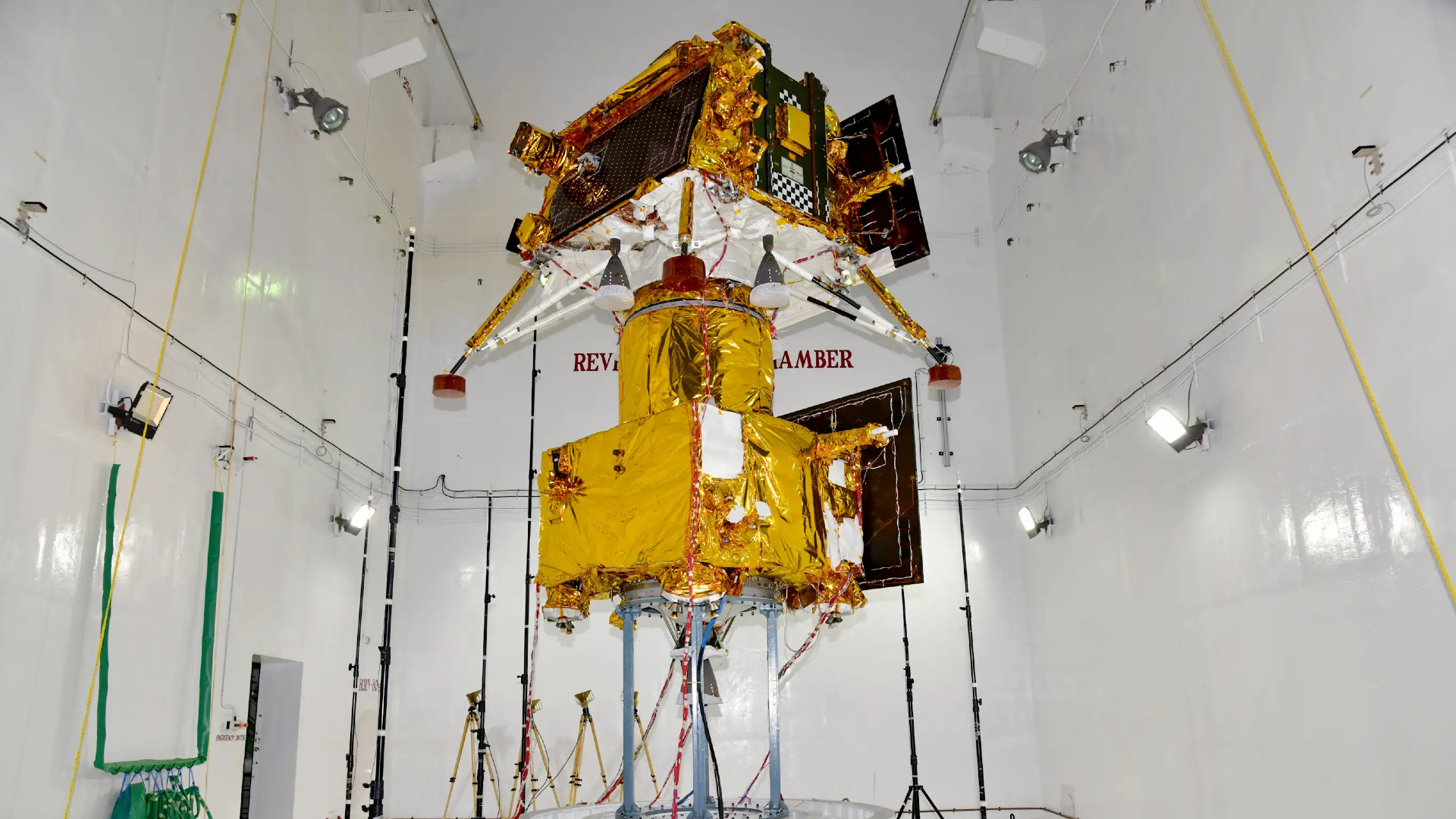
The Chandrayaan-3 Vikram lander mounted on its propulsion module during acoustic testing by ISRO. Credit: ISRO

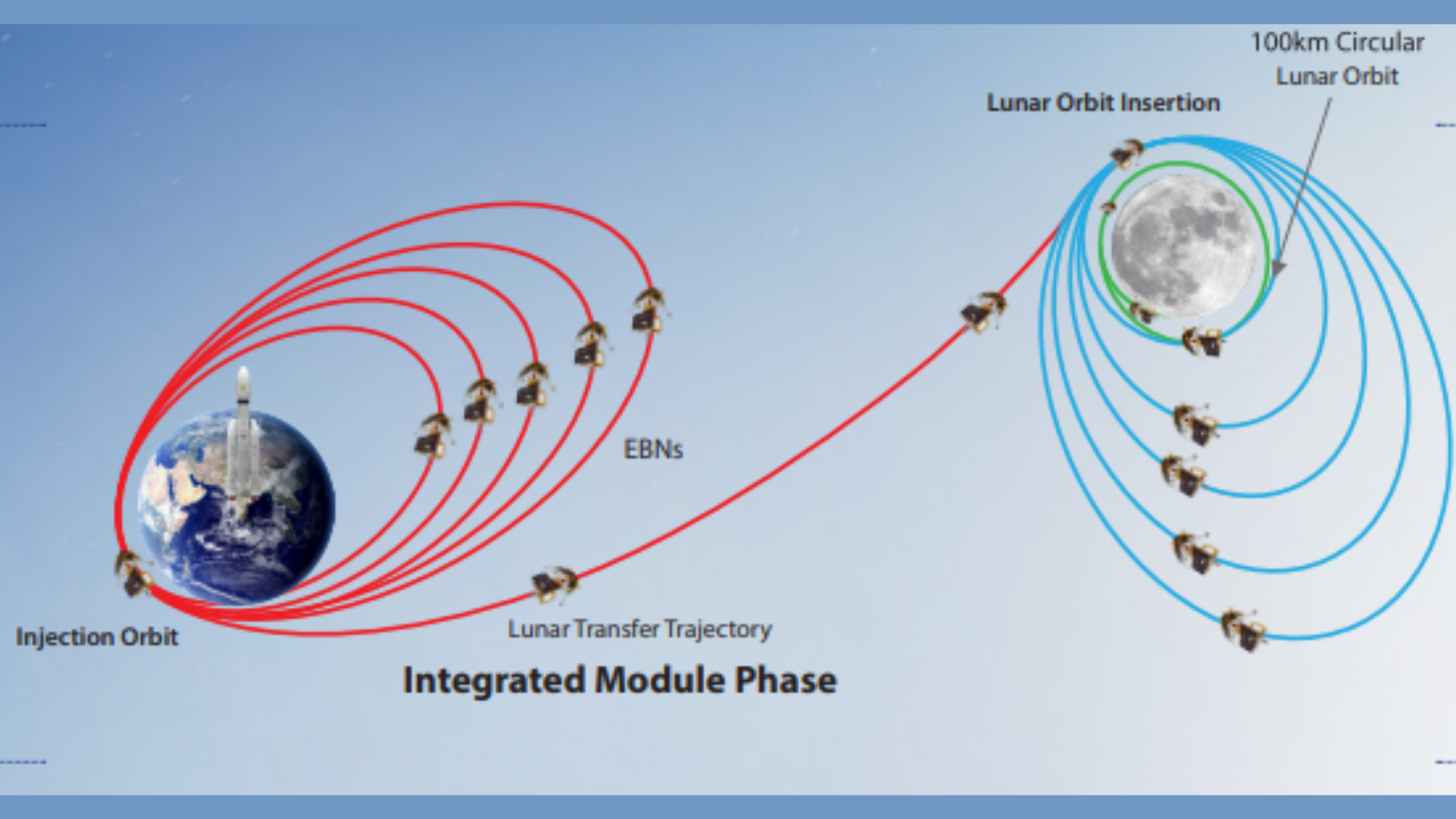
The revised Chandrayaan-3 mission lifted-off Satish Dhawan Space Centre at 09:05 UTC on July 14th, entering an elliptical orbit around Earth with a perigee of 173km and apogee of 41,762km. Over the next couple of weeks, the mission’s power and propulsion module will use 5 close approaches to Earth to further extend its orbit’s apogee further and further from Earth until it can slip into a trans-lunar injection flight and move to an initial extended orbit around the Moon around August 5th.

After this, the orbit will be reduced and circularised to just 100km above the Moon’s surface at this point, around August 23rd or 24th, 2023, the lander – also called Vikram, this time meaning “valour” – will separate from the propulsion module and attempt a soft landing within the Moon’s south polar region.

From Earth to the Moon: the three-phase flight of Chandrayaan-3 to the Moon. Credit: ISRO

If successful, rover and lander will then commence a 15-day mission  – the length of time sunlight will be available to power them before the onset of a month-long lunar night. The lander will conduct its work using three science instruments, and the 6-wheeled rover using two science payloads. These will be used to probe the composition of the lunar surface and attempt to detect the presence of water ice in the lunar soil and also examine the evolution of the Moon’s atmosphere. Communications with Earth will be maintained by both the orbiting propulsion module and the Chandrayaan-2 orbiter. If, for any reason, a landing on August 23rd or 24th cannot be achieved, the lander and rover will remain mated to the propulsion module through until mid-September, when the Sun will again deliver light (and power) to the landing area, allowing the landing attempt to be made.

How Old is the Universe?

It’s long been assumed that the universe is around 14 billion years old – or 13.7, according to a 2021 study using the Lambda-CDM concordance model. However, such estimates fail to account the likes of HD 140283, the so-called “Methuselah star”, which also estimated to be between 13.7 and 12 billion years old – as old as the universe itself, which in theory it should be a good deal younger.

This oddity has been further compounded by the James Webb Space Telescope locating numerous galaxies which appear to have reached full maturity – in cosmic terms – within 300 million years of the birth of the universe, rather than taking the billions evidenced by the vast majority of the galaxies we can see – including our own.

In an attempt to try to reconcile these oddities with our understanding of the age of the universe, a team led by Rajendra Gupta, adjunct professor of physics in the Faculty of Science at the University of Ottawa, has sought to develop an alternate model for the age of the universe – and appear to have revealed it could be twice its believed age.

They did this by combining a long-standing (and in-and-out of favour) theory called “tired light” with tweaked versions of certain long-established constants. “Tired light” suggests light spontaneously loses energy over time, and as it travels across the cosmos over billion years, it naturally red-shifts and so gives a false suggestion of cosmic expansion. It’s an idea which fell out of favour when other evidence confirmed cosmic expansion, but has regained so popularity since JWST started its observations; however, it doesn’t work on its own, so the researchers turned to various constants deemed to by immutable in terms of the state of the universe – the speed of light, the charge of an electron, and the gravitational constant.

By tweaking these, in a manner that is possible given our understanding of the universe, Gupta and his team found that it is possible to model a universe that appears younger than it actually is – in their estimation, 26.7 billion years of age. However, there is a problem with the idea: when you start tweaking known constants which cannot be proven to have changed, and it is potentially possible to come up with any model to fit an assumption. Ergo, the research cannot be seen as in any way definitive.

To counter this, Gupta points out there are a couple of hypothetical constants we use to account for the universe appearing and acting as it does – dark matter and dark energy. As I’ve noted previously, the latter is believed to be in part responsible for the expansion for the universe, and thus its age. However, its influence is currently hypothetical, and thus also subject to potential revision as such, the study suggests that if in influence of dark energy is found to be different to what is generally believed, it might yet indicate that the universe is a good deal older than is generally accepted.

Time will tell on this, but with ESA’s recently-launched Euclid mission is attempting to seek and characterise and potentially quantify both dark matter and dark energy, an answer might be coming sooner rather than later.

Continue reading “Space Sunday: the Moon, money and the universe”

Space Sunday: a “dark” mission, recycling water and a round-up

Credit: European Space Agency

July 1st, 2023 saw the launch of a new space telescope – the European Space Agency’s (ESA’s) Euclid – on one of the most intriguing space missions yet started.

Classified as a M(edium)-class mission within ESA’s Cosmic Vision campaign, Euclid was originally to have been launched via Russian Soyuz ST-B; however, following Russia’s invasion of Ukraine, ESA ended all partnerships with Roscosmos, the Russian space agency, and the mission was  – with NASA’s assistance – shifted to using a SpaceX Falcon 9 rocket launching out of NASA’s Kennedy Space Centre (KSC), Florida.

Following a flawless launch from Pad 39A, KSC at 15:12 UTC, the booster lifted the observatory to orbit, the second stage of the rocket successfully sending it on its way towards the Earth-Sun L2 Lagrange point, with the telescope will commence observations, in a 30-day gentle transit. Along the way, the instruments and systems on the spacecraft will be powered-up and go through check-out procedures so as to be ready for commissioning as the craft arrives at the  L2 position.

For those unfamiliar with the term, the  L2 position is one of five points of equilibrium for small-mass objects under the gravitational influence of two massive orbiting bodies (points where the gravitational influences of the larger bodies effectively “cancel one another out”). Also known as libration points, they are: the L1 position sitting between both bodies, but nearer the smaller than the larger; L2, located on the opposite side of the smaller body relative to the larger; L3, located on the opposite side of the larger body relative to the smaller; and L4 leading the smaller of the two in it orbit around the larger, and L5 trailing.

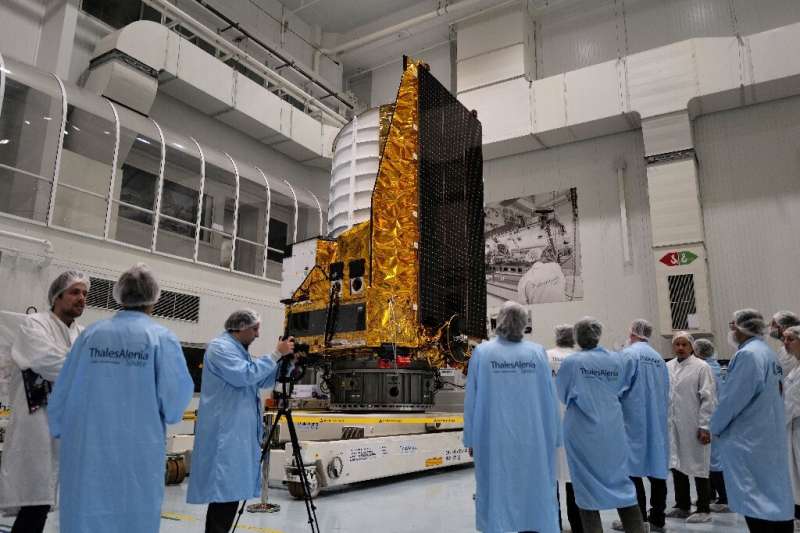
The Euclid spacecraft, pictured before being sent to Florida, will blast off on a mission to find out more about the ‘dark universe’. Credit: Airbus / ESA

Those familiar with the Lagrange points will likely recognise the L2 position as being the focal point for the James Web Space Telescope (JWST) in its journey around the Sun. On arrival, Euclid will enter a similar 1-million km wide elliptical orbit around the L2 position in a manner which will prevent it ever falling into Earth’s shadow. once in place, the 1.4 billion Euro spacecraft will spend a nominal 6 years within this orbit using a combination of a visible light camera and a near-infrared spectrometer/photometer in an attempt to gain a better understanding of dark energy and dark matter.

Sometimes (often in bad science-fiction) conflated as the same thing, dark matter and dark energy are two different entities. In simple terms, dark matter is a hypothetical form of matter with a physical mass, and thought to account for the so-called “missing mass” of the universe (some 85% of its expected mass). The “dark” of the name refers to the fact that it does not absorb, reflect, or emit electromagnetic radiation, making it extremely difficult to defect. However, various gravitational effects which can be observed can only take place if there is more matter involved than can be detected – thus implying dark matter’s existence.

Dark energy, however, is an unknown form of energy which was first suggested in 2011. Up until that point, it had been believed that the expansion of the universe – the result of the big bang – was slowing imperceptibly down through the aeons, the result of the gravitational mass of the billions of galaxies within it gradually overcoming the momentum imparted to them by the big bang. However, careful analysis of the measurement of numerous supernovae suggest that the expansion of the universe is actually accelerating – which could only be due to some unknown force acting on all the galaxies. Thus, the concept of dark (again meaning hard / impossible to directly detect) energy was born, a force potentially responsible for as much as 68% of the total energy contained with in the present-day observable universe.

Animation of Euclid (purple) in a halo orbit around the the Earth-Sun L2 position (light blue), as seen from “above” and following launch from Earth (dark blue). Credit: Phoenix777 utilising data from ESA / NASA

To try to better pin down both dark matter and dark energy, Euclid will use its instruments to chart some 2 billion galaxies across one third of the night sky relative to Earth, capturing light that has taken up to 10 billion of the universe’s 13.8 billion-year lifespan to reach us. In doing so, it will measure their shape and the degree of red shift evident, whilst also using the effects of gravitational lensing on some to reveal more data about them. From this, it is hoped that astrophysicists might be able to construct a model to explain how the universe is expanding which might both explain the nature and force of dark energy and potentially offer clues as to the actual nature of dark matter – the mass of which must be having some impact on dark energy as it pushes a the galaxies.

However, this is going to take time; from the start of operations in a couple of months, it will take the Euclid team 2 years to gather sufficient data  which can start to be meaningfully analysed. After that, it will take four years of gather additional data which might be used to refine and improve the initial analyses, and offer up at least some answers.

Urine is a Key to Mars

If humans are to travel to and from Mars, there are a number of issues which need to be addressed, among them the issue of drinking water for the 6-9 month trips to / from Mars (assuming the use of chemical propulsion).

One of these is how to supply the crew with water. NASA state that trained astronauts required 4.4 litres of water per day for drinking, food preparation, hygiene and cleaning. For a crew of four going to Mars that’s between 3.16 and 4.75 tonnes of payload mass alone (+ reserves for emergencies on top of that). While that mass might also be used to supplement a vehicle’s radiation shielding, the fact remains that carrying large amounts of water is just so much deadweight compared to other, more efficient means of providing radiation protection (such as Kevlar and high density polyethylene, or HDPE). To make water efficient, it needs to be recycled.

This is already the case on the International Space Station (ISS). As a part of the Environmental Control and Life Support System (ECLSS), the US / International element of the ISS has long been able to supply recycle water back into usable drinking water (the Russian segments of the station rely more heavily on resupply from Earth for water, as the Russian saw this as the easier solution to developing efficient and space-taking recycling systems).

The Brine Processor Assembly (BPA), prior to its transfer to the ISS in 2022. Credit: NASA

Within the US ECLSS are two water recycling systems – the primary Water Purification Assembly (WPA), which literally plucks water out of the station’s atmosphere in the form of condensate, sweat, exhale water molecules, water drops escaping during food processing and other acts, and water used for hygiene, and the Urine Processor Assembly, a subset of the WPA, which does exactly was that name suggests.

However, both systems have always been limited in their efficiency (the UPA to just 85% of all urine being recycled to a state where it is properly purified water). But over the last several years, various improvements have been made to the systems, raising their overall efficiency to 93.5%. In particular, urine recycling efficiency was raised to 87% through improvements in 2019/2020 and by cycling the semi-clean water through the primary WPA system to produce purified water suitable for drinking. However, a sticking point remained urine brine – a mix of water and body chemicals which could not be put through the WPA, but was simply tanked and disposed of.

Now water can even be extracted from that brine for recycling, thanks to a new addition to the ECLSS recently installed on the ISS and which has been undergoing evaluation. Called the Brine Processor Assembly (BPA), it is a combination of filter membranes and a heating system. The former traps the chemicals in the brine whilst allowing the water through. The water is then heated by the elements in the unit, forming a humid air flow which is then fed to the WPA, where the water is extracted alongside that gathered from other humid air captured by the WPA, and purified for re-use.

The result: up to 98% of all water consumed or used on the international segments of the ISS can now be recycled – an additional 4.5% compared to pre-BPA amounts. This is significant because NASA has always seen a 98% water recycling capability as a break-point for long duration space operations. It doesn’t eliminate the need for some measure of reserve supplies – but it drastically reduces the additional mass of water that might otherwise need to be carried, bringing the potential for crewed missions to Mars a little step closer to being practical.

Continue reading “Space Sunday: a “dark” mission, recycling water and a round-up”

Space Sunday: of Earth and moons

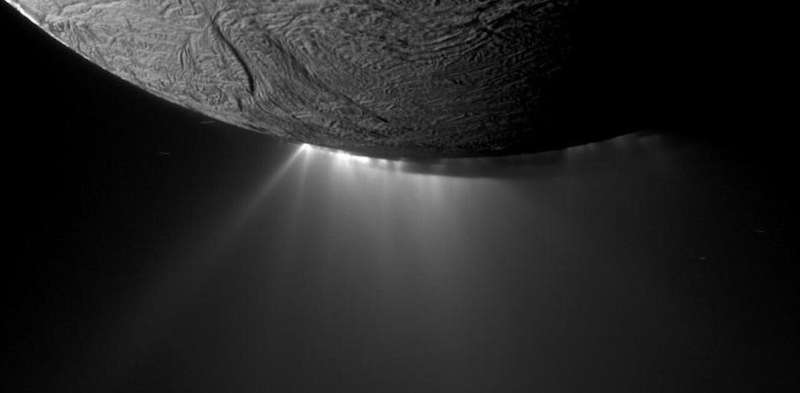
Ice particles, with just a trace of phosphates, venting from near Enceladus’s south pole, as imaged by Cassini in 2010. Credit: NASA/JPL-Caltech/Space Science Institute

Even as Europe’s Jupiter Icy Moons Explorer (Juice) is commencing its long trek to the Jovian system in order to study Ganymede, Callisto, and Europa, three of Jupiter’s Galilean moons, more is being learned about Europa and its far more distant “cousin”, Enceladus, as the latter orbits Saturn.

In the case of Europa, the findings of a new study suggest that it may have formed somewhat differently than has long been thought, and that it may actually be less subject to deep heating and volcanism that has been thought – potentially decreasing the chances for it to harbour subsurface oceans and possible life.

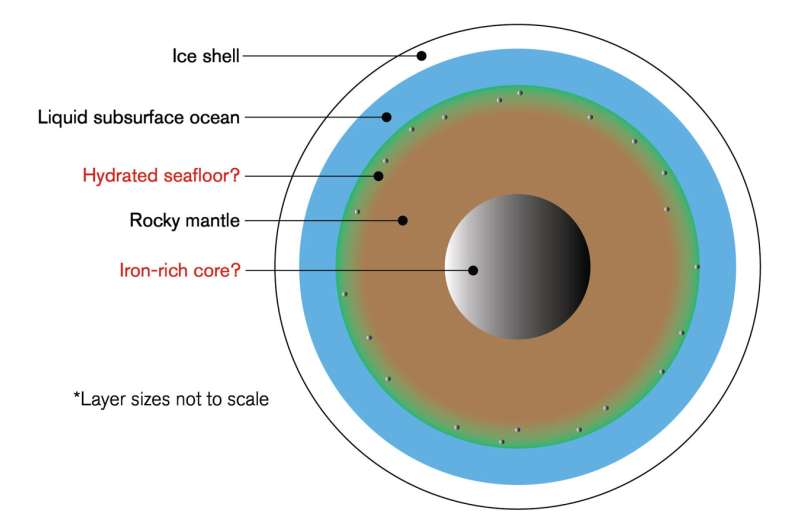
As has been mentioned numerous times in this column, Europa is of fascination because it is covered in an icy shell which appears to cover a liquid water ocean, churning over a rocky mantle and kept liquid due to a combination of internal heat radiating out from the Moon’s molten core and the gravitational “push/pull” inflicted on it by both Jupiter and other three Galilean moons, which give rise to heating through subsea volcanism and hydrothermal vents (which might also pump the ocean full of biologically useful molecules).

However, Kevin Trinh, a planetary scientist at Arizona State University (ASU), and his follow researchers suggest that Europa may have formed a lot slower than previously assumed, and somewhat differently to how it is generally assumed planets and small moons form, and that even now, it may not have a fully-formed core – possibly a result of its distance from the Sun.

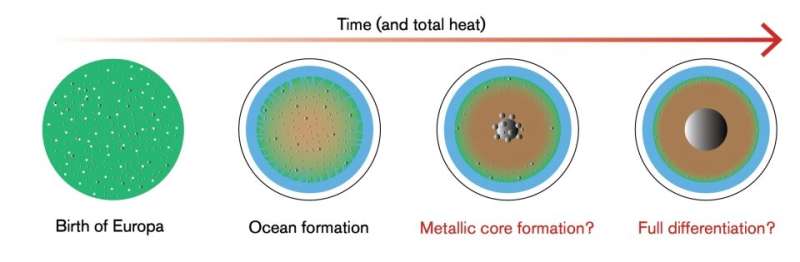
Internal evolution of Europa. Credit: Kevin Trinh/ASU

The accepted theory for the formation of solid planets and moons is that as they coalesced out of ice, dirty, rocks, etc., and were compressed under increasing gravity – assisted by the Sun’s heat – underwent melting, the heavier filling into the centre of the planet / moon to form the core, with the “middleweight” rocks forming a semi-liquid, hot mantle, and the outermost becoming the brittle crust.

But given its size and distance from the Sun, Europa may never have reached the stage of the heaviest elements separating out of its mantle to for the core – or that it is still going through the process, but at a much slower rate and assisted by the gravitational flexing imposed on it by the other large Jovian moons and Jupiter itself.

This doesn’t mean the moon doesn’t have an ocean – Trinh and his colleagues believe the evidence for the ocean is too great to deny –, but rather its formation was different to previously thought, and may have been the result of a metamorphic process, which continues to power it today. In short, the rocks of the mantle were naturally hydrated (that is, contain water and oxygen), as the interior heat increased, it caused the water and oxygen to be released, forming the ocean and its icy shell.

For most worlds in the solar system we tend to think of their internal structure as being set shortly after they finish forming. This work is very exciting because it reframes Europa as a world whose interior has been slowly evolving over its whole lifetime. This opens doors for future research to understand how these changes might be observed in the Europa we see today.

– Carver Bierson, ASU’s School Of Earth and Space Exploration.

Just how far along the formation of a core might be, assuming this ASU study is correct, is an unknown. The study suggests that the core started to form billions of years after Europa’s formation, and that full differentiation has yet to occur.

Credit: Arizona State University

If the theory is correct, it has some significant implications for Europa as a possible abode of life. As noted above, the traditional view is that the moon has had a hot, molten core which could, thanks to the gravitational flexing by Jupiter and the other large Jovian moons, power subsea volcanism and venting sufficient to create hotspots of life in the ocean depths. Without such a fully-formed core, however, it is unlikely that such is the case. But this does not mean that Europa is necessarily lifeless.

It could be that the heat within the rocky mantle – again driven by gravitational flexing – could lead to a more uniform heating of the sea floor, allowing for life to be more widespread around Europa and feeding on the minerals and chemicals released by the hydration process.  However, the flipside to this is that such heating could equally leave much – if not all – of the ocean little more than an icy slush, either limiting any life to a very narrow band of heated water very close to the sea floor, or frozen out in the slush.

In the meantime, while Enceladus is even further from the Sun and a lot smaller than Europa – but the evidence for it having a subsurface ocean is more compelling. The southern polar area has long been subject to out gassing material into space – material which is known to be contributing to the growth of Saturn’s E-ring.

The out gassing was first imaged by NASA’s Voyager 2 vehicle in the 1980s and again by the joint European-NASA Cassini mission, which saw the Cassini spacecraft actually pass through some of the plume of material several times, confirming the presence of water vapour and other minerals, all of which are almost contributing to the tiny moon having a very tenuous atmosphere.

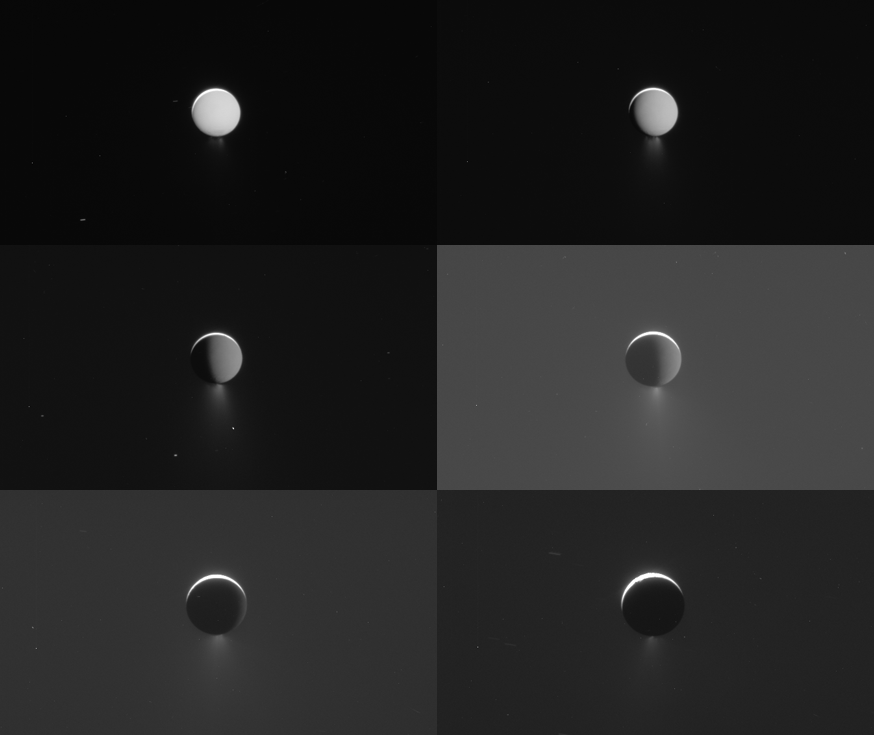
A sequence of images of Saturn’s moon Enceladus taken by the Cassini mission. Image credit: NASA/JPL-Caltech/Space Science Institute

Data on the plumes gathered by Cassini have been the subject of extensive studies since they were gathered, revealing that do contain very simple organic molecules and even molecular hydrogen and silica. All of this indicates that chemical reactions between water and warm rock are occurring on the seafloor under Enceladus’ ocean, most likely around hydrothermal vents.

For the last 5 years, a team of scientists at Freie Universität Berlin, have been studying data from a number of sources – Cassini and Earth-based observations – relating to the materials found within Saturn’s E-ring, which, as noted, is at least in part made up of material ejected from Enceladus in an attempt to both better understand the composition of the ring and its relationship with material coming from the moon. What they’ve found has come as a surprise to many planetary scientists: phosphorus.

The importance here is that phosphorus is the rarest of six elements which life here on Earth utilises in various forms – such as combining it with sugars to form a skeleton to DNA molecules and also helps repair and maintain cell membranes. What’s more, the concentrations of the mineral within the plumes are about 500 times greater than the highest known concentrations in Earth’s oceans. While the phosphorus has been detected within Saturn’s E-ring rather than within the plumes rising from Enceladus, its discovery nevertheless is seen as offering “the strictest requirement of habitability” within the moon’s ocean, given that Enceladus is blasting material into the E-ring at the rate of 360 litres per second.

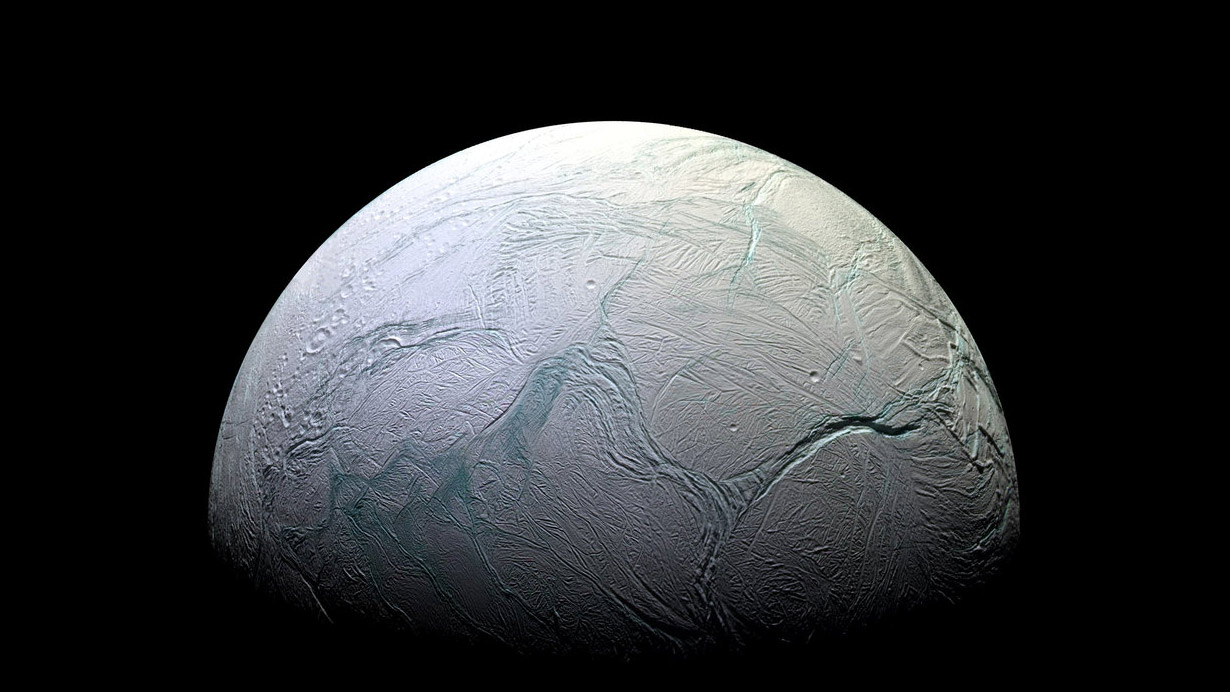
An image of Saturn’s moon Enceladus taken by NASA’s Cassini spacecraft. Image credit: NASA/JPL-Caltech

A 2018 study involving Enceladus’s ocean and the likely minerals in might contain had drawn the conclusion that any phosphorus concentrations on the moon would have been depleted in the moon’s oceans a long time ago, and thus unavailable for potential life. However, in reviewing the new findings, the team behind the 2018 study have stated their findings have now been overturned.

In particular, the Freie team also identified the presence of  orthophosphate within the phosphates of the E-ring. This is the only form of phosphorus that living organisms can absorb and use as a source of growth. This suggests that not only are phosphates “readily available” in Enceladus’ oceans, it is in forms simple life can make use off to help in its development. Coupled with the fact that the oceans of Enceladus are likely warm and rich in a broad range of minerals and chemical elements, further raises the potential for the moon to harbour microbial life. This had already led to renewed calls for a dedicated mission to the little moon for a more direct investigation.

Continue reading “Space Sunday: of Earth and moons”

Space Sunday: aiding three space telescopes

The Hubble Space Telescope, the Chandra X-Ray Observatory and the Spitzer Space Telescope. Credits: NASA

They are the grande dames, so to speak, of space-based astronomy, observatories launched into orbit around Earth and the Sun to provide us with unparalleled insight into the cosmos around us, born of ideas dating back to the early decades of the space age. They form three of the four elements of NASA’s Great Observatories programme, and all operated, or continue to operate well beyond their planned life spans; they are, of course, the Hubble Space Telescope (HST – launched in 1990), the Chandra X-Ray Observatory (CXO and formerly the Advanced X-ray Astrophysics Facility or AXAF – launched in 1999), and the Spitzer Space Telescope (SST, formerly the Space Infrared Telescope Facility or SIRTF – launched in 2003).

Today, only Hubble and Chandra remain operational. The fourth of the observatories (and 2nd to enter space after Hubble), the 16.3-tonne Compton Gamma Ray Observatory (CGRO), had its mission curtailed in June 2000, after just over 9 years, when it suffered an unrecoverable gyroscope failure. With fears raised that the failure of a second unit could leave the observatory unable to control its orientation, the decision was made to shut it down and de-orbit it in a controlled manner so it would break-up on entering the atmosphere and any surviving parts fall into the Pacific Ocean, rather than risk an uncontrolled re-entry which could shower major pieces of the observatory over populated areas.

Whilst the “youngest” of the surviving three observatories, Spitzer was placed into a “safe” mode in January 2020, ending 16.5 years of service. By then, the nature of the observatory’s orbit – it occupies a heliocentric orbit, effectively following Earth around the Sun  – were such that it was having to perform extreme rolls back and forth in order to carry out observations and then communicate with Earth, and these were affecting the ability of the solar arrays to gather enough energy to charge the on-board batteries. The “safe” mode meant that Spitzer could continue to recharge its batteries and maintain electrical current to its working instruments, potentially allowing it to be recovered in the future. However, while it is true that Hubble and Chandra continue to work, neither is without problems.

Hubble orbits close enough to Earth that even at over 500km, it is affected by atmospheric drag, causing it to very slowly but inexorably lose altitude. This used to be countered through the semi-regular servicing missions, when a space shuttle would rendezvous with HST to allow astronauts to carry out work, and then gently boost the telescope altitude using its thrusters. But the shuttle is no more, and the last such boost was in 2009 to 540 km; currently Hubble is at around 527 km, and at the present rate of decent, it will start to burn-up in another 10-15 years. However, a boost now could see Hubble – barring instrument / system failures – continue to operate through the 2050s.

The Hubble Space Telescope sitting on its holding platform in the cargo bay of the space shuttle Atlantis in 2009, seen through the orbiter’s rear deck windows during the 5th and final (and most extensive) servicing mission. Credit: NASA

Chandra, meanwhile, faces a different challenge. It lies in a highly elliptical orbit around the Earth, varying between 14,508 km at its closest and 134,527 km at its most distant. It has therefore been operating untended for its entire operational life, and is starting to show signs of wear and tear. In 2018, it suffered a glitch with one of the gyroscopes designed to keep it steady during observations (and orient it to look at stellar objects). Whilst the gyroscope was recovered, it was put into a reserve mode lest it fail again. This led to fears that should a second gyro fail, either orientation control might be lost if the 2018 gyro fail to come back on-line correctly to take over the work. Also, and while the main science instructions are in good order, they are aging and presenting concerns as to how well they are actually doing.

Ideas for both boosting Hubble’s orbit and carrying out a robotic servicing of Chandra have been floated for the last few years – but there are now signs both might actually get potentially life-extending missions.

In December 2022, NASA issued an RFI on how Hubble’s orbit could be boosted, and have received eight responses, one of which has also been publicly announced and would seem to offer potential. It involves two companies: Astroscale Holdings and Momentus Space, a US-based company. The former is in the business of clearing space junk from Earth’s orbit, and has already flown prototype vehicles capable of doing this in orbit. This includes the ability to carry tools to mate or grapple junk and then move them. Momentus, meanwhile, are in the satellite servicing business and recently demonstrated a small “space tug” in orbit that was largely successful in meeting its mission goals (7 out of nine small satellites deployed into individual orbits).

In their proposal, the two companies indicate Momentus would provide a variant of their tug, and Astroscale a dedicated capture tool designed to use the grapple holds on Hubble. Following launch, the Momentus craft would self-guide itself to Hubble’s orbit and rendezvous with it using the Astroscale mating tool. Once attached, the Momentus vehicle would use its thrusters to gently raise Hubble’s orbit by 50 km, then detach. The vehicle could then be used to remove orbital debris in orbits approaching Hubble, thus protecting it from the risk of collision.

NASA has yet to comment on any of the proposals received under the RFI, but the Momentus / Astroscale option, using equipment already being flight-tested and refined and which is of relatively low-cost, would appear to be a real option.

A similar, but more expensive and complex idea has been proposed by Northrop Grumman – the company effectively responsible for building Chandra – to help keep the X-Ray observatory going. This would involve the construction and deployment of a “mission extension vehicle”, a “space tug” capable of departing Earth and gradually extending and modifying its orbit to rendezvous with Chandra and link-up with it, taking over the operations related to orienting and steadying the platform using gyros, potentially extending the mission by decades.

This is important because Chandra has already proven invaluable in supporting the James Webb Space Telescope (JWST) which operates in the infra-red. The ability to observe targets in both X-ray and infra-red can reveal a lot more about them.

A set of X-ray images of regions of space – including supernova remnants and merging galaxies – captured by the Chandra X-ray Observatory, released by NASA in 2009 to celebrate the telescope’s 20th anniversary. Credit: CXC/NASA, SAO

NASA has given no word on whether it would finance such a mission, although Northrop Grumman has apparently forwarded the results of its own study on the idea to the US agency. However, given the most recent U.S. decadal survey in astrophysics, released in 2021, included mention of a new X-ray telescope to replace Chandra, a servicing mission – even one this complex – capable of extending Chandra’s operations for decades at a fraction of the cost of a new telescope, which itself would take years if not decades to develop, could be highly attractive.

Continue reading “Space Sunday: aiding three space telescopes”