Of oppositions and blood moons

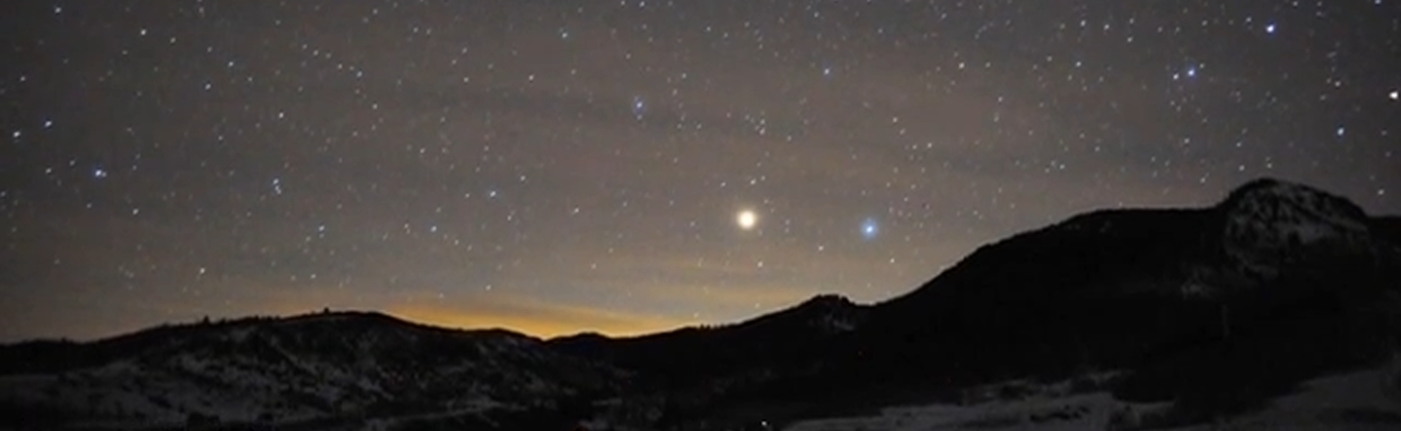
Mars at opposition: The bright disc towards the centre of this image, just above the horizon is Mars, as captured by photographer Jimmy Westlake
Mars at opposition: The bright orange disk towards the centre of this image, just above the horizon is Mars, as captured by photographer Jimmy Westlake (click for full size)

Regular readers of this blog know I have something of a passing interest in space exploration and astronomy. I’ve been covering the Mars Science Laboratory mission since its arrival on Mars, and have also covered other space / astronomy related events and occurrences.

In keeping with this, I thought I’d mention two astronomical events of some interest which occur over the next two weeks. Neither of them is exactly rare, but if you’re lucky enough to be in the Americas, you’ll get to enjoy both at the same time – and a little bit more.

The first of these is the upcoming opposition with Mars, the time at which the Red Planet is at its closest to Earth. Oppositions happen around once every 26 months, and are so-called because they mark the time when the Sun and Mars are on opposite sides of the Earth to one another. During periods of opposition, Mars can appear as one of the brightest objects in the night sky and can come within 100 million kilometres of Earth.
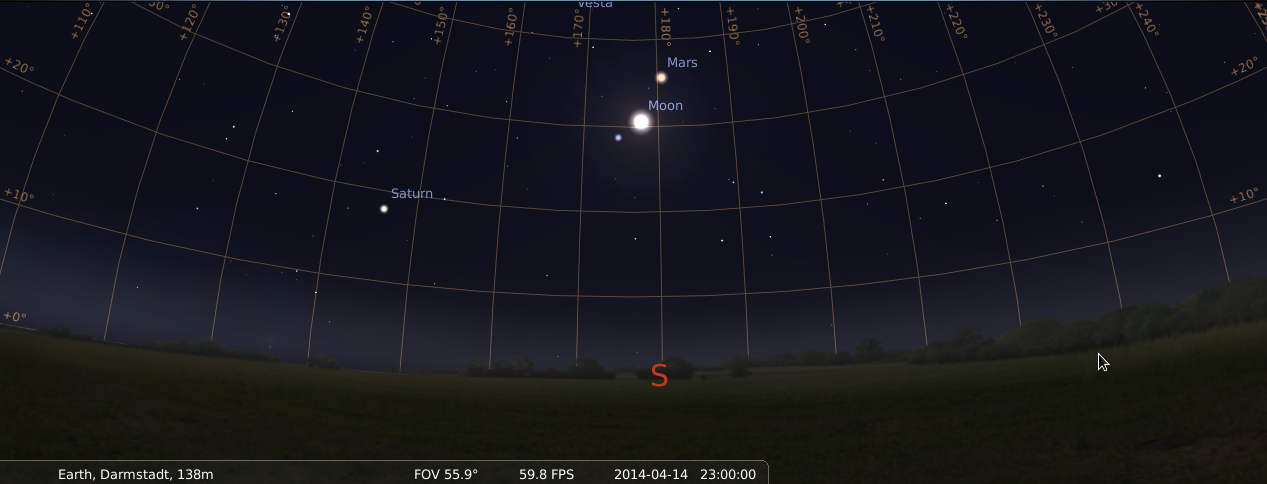
Mars on the 15th April at approx 02:00 BST / 03:00 CET (21:00 EDT of the 14th April), and making its closest approach to Earth in six and a half years, will be clearly visible in the constellation of Virgo, along with the Moon and Spica (image: ESA) – click for full size

This year, Mars will reach opposition with the Earth on Tuesday April 8th, when it, the Earth and the Sun will be aligned in an almost straight line. However, because of the nature of the orbits of the two planets, they will not reach their point of closest approach to one another until the night of Monday April 14th / Tuesday 15th, 2014. At that time, they’ll be just 92 million kilometres (57.5 million miles) apart – the closest their respective orbits have brought them to one another at opposition for six and a half years.

During April, Mars appears as a bright red “star” in the constellation of Virgo. At the period of opposition, it will be just above and to the right of the Moon, with Spica, the brightest start in Virgo, to the lower left of the Moon.

To mark this year’s opposition, NASA has produced a nice little video explaining matters some more.

As mentioned towards the top of this article, this year’s opposition is only half the story. This is because the night of closest approach is also the night of a total lunar eclipse which should be visible from almost all of North America and significant parts of South America, with the majority of USA in particular getting a front-row seat.

Things will get underway at around 23:00 PST (02:00 EDT) on the night of the  Monday 14th / Tuesday 15th April, when the Moon enters partial eclipse. Totality will be reached just after midnight PST (03:00 EDT). At this point those under the path of the eclipse should witness a “blood moon” in all its glory, flanked on either side by Spica and Mars.

A lunar eclipse "blood moon" seen Idaho, December 2011 (image: Matt Mills / Reuters)
A lunar eclipse “blood moon” seen Idaho, December 2011 (image: Matt Mills / Reuters) – click for full size

“Blood moon” is the term sometimes applied to a total eclipse as a result of the Moon appearing to turn orange-red in colour, the hue slowly intensifying as the eclipse progresses until it reaches a bloody colour during the period of totality (about an hour and a half), before fading once more. This change in colour is the result of the Sun’s light passing through the Earth’s atmosphere as our planet moves between the Sun and the Moon, and then shining on the face of the Moon. A paler colouration of this kind can also be seen across at least a part of the Moon’s face during a partial lunar eclipse.
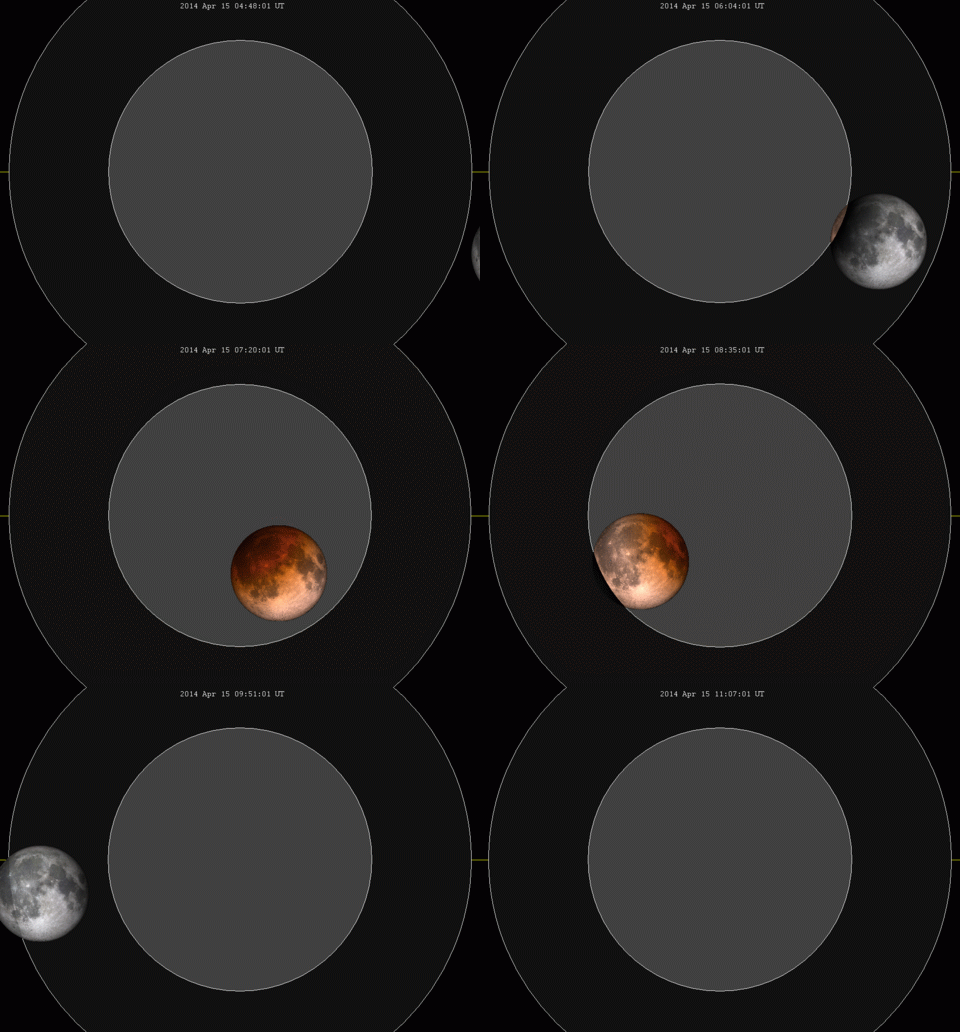
A total lunar eclipse and the gradual change in the Moon’s colour as seen from Earth which sees total lunar eclipses sometimes referred to as “blood moons” – the result of sunlight passing through the Earth’s atmosphere and striking the Moon’s surface (animation: Wikipedia)

The eclipse is certainly something that should generate opportunities for some stunning photographs, particularly given the positions of Mars and Spica (itself the 15th brightest star  in the night sky, and a close binary star).

And that’s not all; April 15th actually marks the first of a total of four consecutive total lunar eclipses – referred to as a tetrad,  all of which can be observed from North America, and which occur at roughly 6 month intervals to one another, the rest being October 8th, 2014, April 4th, 2015 and the last on September 28th, 2015.

NASA has also produced a video on the upcoming eclipse and the phenomena known as tetrads.

Some have pointed to this tetrad as marking the start of the end times, because the phenomena are supposedly “rare”, and this particular one commences on Passover.

However, while there can be long periods of time between occurrences of tetrads, they can also pop-up relatively frequently. For example, this century will see a total of nine tetrads occur, the first having taken place in 2003/4. Nor is the fact that the upcoming tetrad occurs on Passover particularly unusual; there have been eight tetrads so far coinciding with Passover since the first century AD.

So, if you’re in a position to be able to do so on the night of the 14th / 15th April, ignore the doom merchants and go outside and enjoy the night sky view!


Boldly going …

On August 25th 2012, while the eyes of the global space community were focused almost entirely on the happenings in a crater on Mars, a significant event took place approximately 18 billion kilometres (11 billion miles) from Earth. Voyager 1 passed through the heliopause, the boundary between what is regarded as the “bubble” of space surrounding the solar system (heliosphere) which is directly influenced by the Sun, and “true” interstellar space.

The heliosphere and its component elements

That the spacecraft might be nearing the so-called “bow shock” area where the solar wind meets interstellar space was indicated by engineers and scientists working on the Voyager project in June 2012; however, it was not until September 2013 that NASA JPL felt confident enough in the data they’d received to confirm that Voyager 1 had in fact passed into interstellar space in August 2012, the first man-made object to have done so, some 35 years after having been launched from Earth in what was a highly ambitious programme of deep-space exploration.

The Voyager programme actually had its roots in a much more ambitious programme, the so-called Grand Tour. First put forward by NASA engineer Gary Flandro,  The Grand Tour proposed the use of a planetary alignment which occurs once every 175 years, together with the potential to use the gravities of the planets as a means by which space probes could explore the outer planets of the solar system.

The idea of using gravity of the planets to help propel a space craft had first been realised by a young mathematician, Michael Minovitch, in 1961. With the aid of the (then) fastest computer in the world, the IBM 7090, Minovitch had been trying to model solutions to the “three body problem” – how the gravities of two bodies (generally the Earth and the Sun) influence the trajectory and velocity of a third (generally a comet or asteroid) moving through space; something astronomers and mathematicians had long wrestled with.

The men behind Voyager: Michael Minovitch (l), circa 1960; Gary Flandro (c), circa 1964; and Ed Stone (r), the project scientist and long-time advocate of the mission, circa 1972 (Stone later when on to serve as NASA's Director at JPL)
The men behind Voyager: Michael Minovitch (l), circa 1960; Gary Flandro (c), circa 1964; and Ed Stone (r), the project scientist and long-time advocate of the mission, circa 1972 (Stone later went on to serve as NASA’s Director at JPL)

Through his work, Minovitch showed how an object (or space vehicle) passing along a defined trajectory close to a planetary body could, with the assistance of the planet’s gravity, effectively “steal” some of the planetary body’s velocity as it orbited the Sun, and add it to its own.

At the time, his findings were received with scepticism by his peers, and Minovitch spent considerable time and effort drawing-up hundreds of mission trajectories demonstrating the capability in order to try to get people to accept his findings. But it was not until 1965, when Flandro started looking into the upcoming “alignment” of the outer planets (actually a case of the outer planets all being on the side of the Sun, rather than being somehow neatly lined up in a row) due in the late 1970s, that Minovitch’s work gained recognition.

Recognising the opportunity presented by the alignment, Flandro started looking at how it might be used to undertake an exploratory mission. In doing so, he came across Minovitch’s work and realised it presented him with exactly the information needed to make his mission possible, and so the Grand Tour was born.

Voyager: the most prominent element of the vehicle is the communitactions dish; below and to the left of this is the nuclear RTG power source; extending out to the top left is the insstrument boom, and to the right the imaging boom and camera system
Voyager: the most prominent element of the vehicle is the communications dish; below and to the left of this is the nuclear RTG power source; extending out to the top left is the instrument boom, and to the right the imaging boom and camera system

This mission would have originally seen two pairs of spacecraft launched from Earth. The first pair, departing in 1976/77 would form the MJS mission, for “Mariner (then the USA’s most capable deep-space vehicle)-Jupiter-Saturn”. These would fly by Jupiter and Saturn and then on to tiny Pluto; while a second pair of vehicles launched in 1979 which would fly by Jupiter, Uranus and Neptune.

Budget cuts at NASA following Apollo eventually saw the Grand Tour scaled-back to just two vehicles, Voyager 2 and Voyager 1, but the overall intent of the mission remained intact under the Voyager Programme banner, now led by Ed Stone. In the revised mission, both spacecraft would perform flybys of Jupiter and Saturn, with Voyager 2 using Saturn to boost / bend it on towards Uranus and from there on to Neptune, while Voyager 1 would approach Saturn on a trajectory which would allow it to make a flyby of Saturn’s huge Moon Titan, of significant interest to astronomers because of its thick atmosphere.  This route would preclude Voyager 1 from reaching Pluto, as it would “tip” the vehicle “up” out of the plane of the ecliptic and beyond even Pluto’s exaggerated orbit around the Sun, and push it onto an intercept with the heliopause.

Continue reading “Boldly going …”

The Blue Marble turns beautifully black

Since we first ventured into space, there have been a number of images returned to us with show both the beauty and the fragility of the place we call home – the Earth, with perhaps two of the most iconic being Earthrise and The Blue Marble.

Earthrise was taken by William Anders aboard Apollo 8 on December 24th, 1968 as he, mission Commander Frank Borman and colleague Jim Lovell became the first men to travel around the Moon and back to Earth. While there has been some dispute over the years as to who took the image, Borman and Lovell both having grabbed the camera on which the original was taken to capture shots of their own, it remains perhaps one of the most famous images of modern history.

1990 – “Earthrise” (click to enlarge)

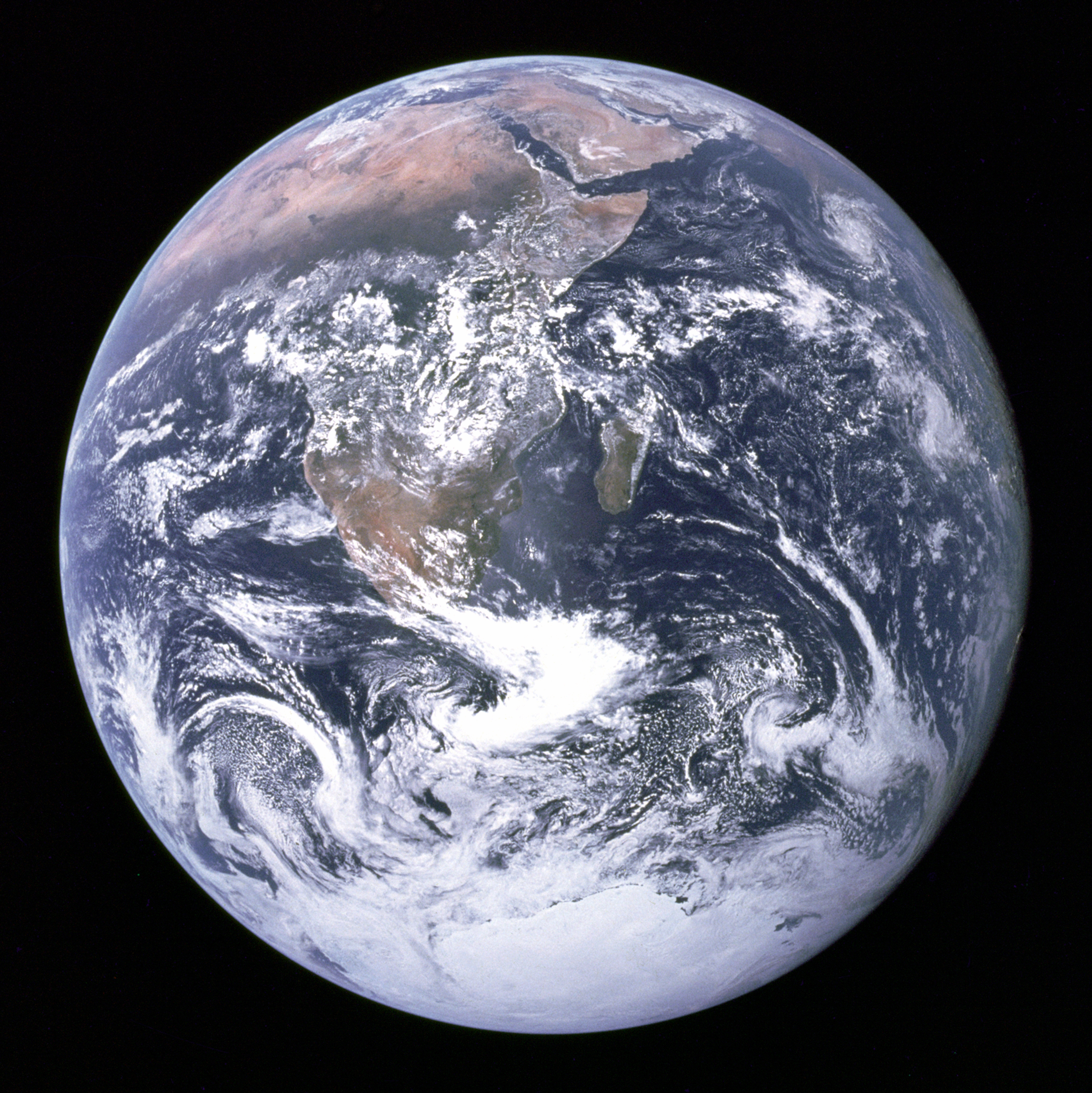
In 1972 came The Blue Marble, an image captured from Apollo 17 on December 17th, 1972 from a distance of 45,000 kilometres (28,000 miles). While the term has been subsequently applied by NASA to a wide range of images of Earth returned from orbiting satellites, the original Apollo 17 photograph remains the most famous.

1972: The Blue Marble (click to enlarge)

On December 6th, 2012, NASA released three composite high-definition pictures of images captured by the Suomi NPP meteorological satellite using its VIIRS (Visible Infrared Imaging Radiometer Suite) instrument. Part of a series of images captured by the satellite which reveal the Earth at night in stunning detail, the three images are “whole Earth” pictures showing views from over Africa, the Americas and Australia and Asia.

All three are amazing views of the planet, but I have to confess that of them all, it is the picture  showing Africa and Europe which is for me the most stunning. Not because I’m from the UK, which can just be seen in the image, but because the picture says so much about our place on Earth. Just look at the lights of our cities spread across Europe, and the seemingly tiny sprinkling of lights around Africa.

2012: The Black Marble (click to enlarge) – via the BBC

All of these images deserve to become as iconic as Earthrise, The Blue Marble and other famous images such as 1990’s Pale Blue Dot, taken from a distance of 6 billion kilometres (3.7 billion miles) by the Voyager 1 spacecraft revealing the Earth as a tiny pinpoint of reflected sunlight hanging in space.

Together, all of these images remind us that in all the vastness of space, we only have one place to call home. It belongs to us all, and we’re all responsible for it. Let’s make sure we take care of it.

Related Links

All images reproduced courtesy of NASA

“When I consider your heavens….” – SunAeon update

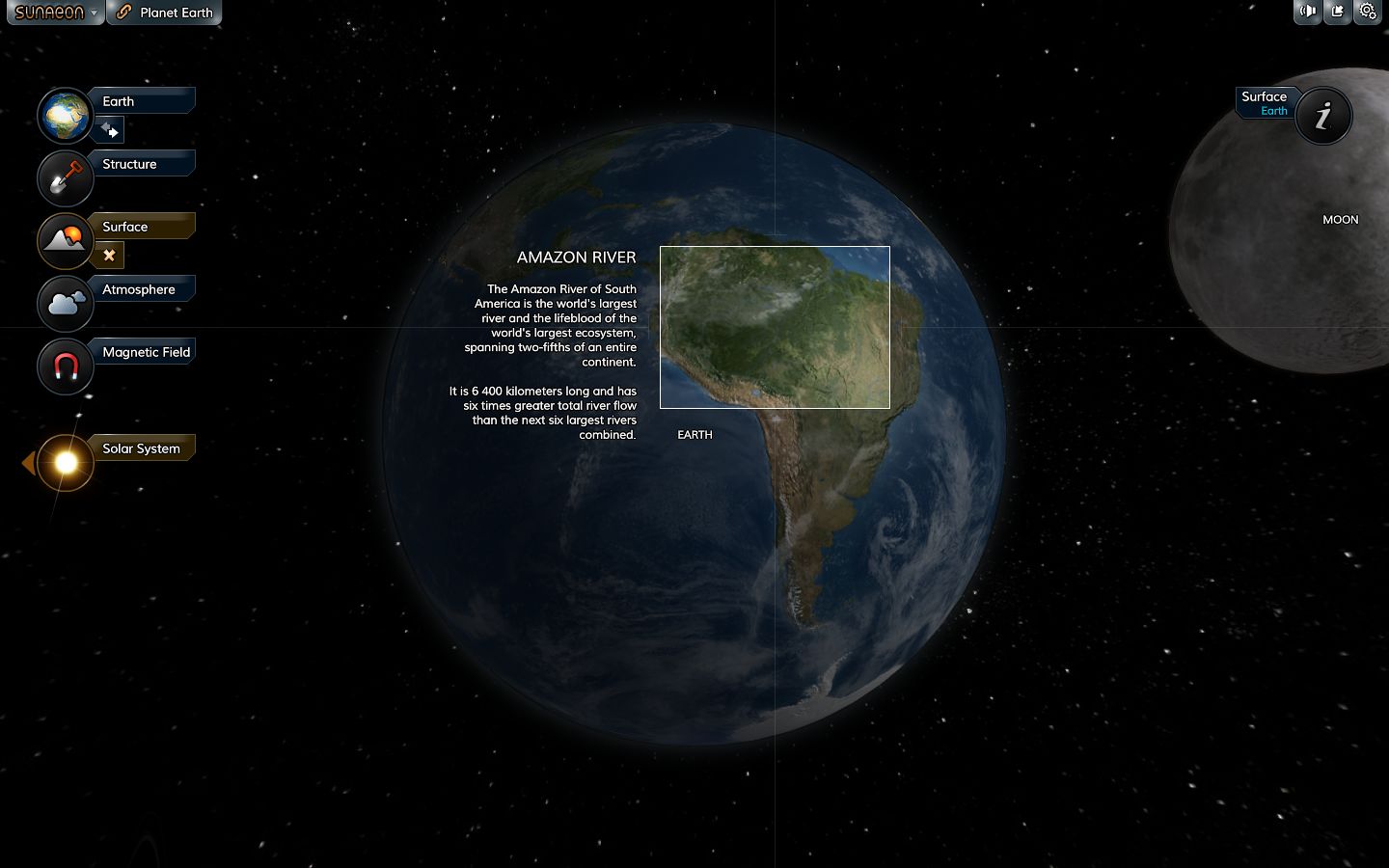
The SunAeon team have been working on the primary site, and adding a raft of new features, which launched on Wednesday 26th September. Once again, I was very honoured to be asked to contribute to the site, providing information on the Earth, the Moon, the Sun and little Pluto.

Launching SunAeon presents you with a new introductory video, a virtual tour of the Sun, the eight planets and Pluto, showing each in turn, together with notable surface features in the case of the Earth, the Moon and the Sun, and cutaway views of the interiors of the major planets.

The main screen navigation tools remain unchanged, although the Navigate drop-down menu (accessed from the SunAeon button, top left of the screen), now includes the Sun, Earth, Moon and Pluto. Clicking on any of these will take you to your topic of interest and present the familiar surface view of the target, and the data display options.

Data Display for the Sun

The amount of information available for each target is currently a little variable – Earth and the Sun, for example, have a lot more data options available for them, including panels for their atmospheres as well as internal structures (blame me for that – I may have overloaded Mito and the team with text!). Surface features are also now annotated for them, and for the Moon, allowing specific points / features to be focused upon and dedicated information panels displayed for them. I confess I wasn’t involved in these panels, but now I’ve seen them, I hope very much that Mito and the team will include a similar approach for the other planets as well – such as coverage of Olympus Mons, Gale Crater, Gusev Crater, the Vallis Marineris on Mars; Jupiter’s Great Red Spot, and so on.

An additional surface features pop-up panel for Earth

Some of the planetary data display pages now also include videos, provided courtesy of NASA. The pages for the Sun, the Moon and Mars all now incorporate optional videos, one of which features the upcoming MAVEN mission to study the upper atmosphere of Mars, and which is scheduled for launch at the end of 2013.

Ace of Space

This update also includes a very simple game as well. Called Ace of Space, This is essentially racing a small spaceship around the eight planets of the solar system, passing just close enough to each to make a checkpoint. The race is against the clock, and planets can be tackled in any order (although there is a degree of planetary alignment which can be used if you hit on the right course). Controls are simple – the arrow keys, with UP firing your main engines and DOWN firing your retro motors (both burning your fuel allowance, which can be renewed), and LEFT and RIGHT turning your ship. For those that feel up to it, you can also activate the planets’ gravity wells, which you can use to assist your flight – as long as you’re careful!

Flying past Mars in Ace of Space

Ace of Space is lighthearted fun, and includes a “free flight” mode. It’s hopefully a sign of more sophisticated space flight / exploratory capabilities will be added to SunAeon as time goes on, in accordance with the original roadmap for the site. The game can also be downloaded, for those who prefer to play it directly on their desktop / laptop, and the code is available to embed into webpages as well. If I have any critique at all, it is that the only way to get back to the main SunAeon solar system model appear to be going via the HELP option in the game or clicking the BACK button on your browser – an on-screen option would make things easier.

This is another nice update to SunAeon, and I’m again honoured in being asked to assist with a small part of it. I’m now looking forward to seeing it grow to include more details on the planets, moons and other bodies in our solar system.

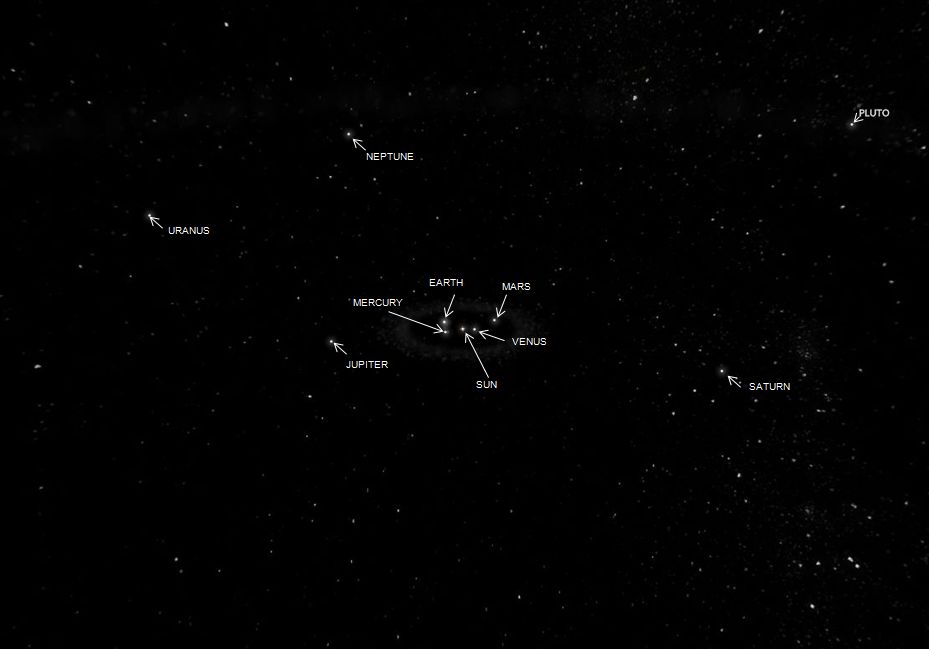
The Solar System is seen from space with SunAeon

Related Links

“We have whole planets to explore…” – A return to SunAeon

In April, I wrote about a new collaborative effort to build an interactive, immersive on-line guide to the Solar System and space exploration called SunAeon. Since then, the team behind the project have been hard at work, added features and capabilities, producing special updates – such as their model charting the recent transit of Venus). Today they launched a further update to the site – and I’m taking a little time out not only to report on it, but also (being totally honest) tooting my own horn a little – as I’ve been able to make a small contribution to the site.

The first notable change on visiting the SunAeon website is that the portal front page has been removed, and that after the familiar tree has been displayed, you’re taken directly to a Solar System view.

The new Solar System display at SunAeon

This now features a number of buttons and controls:

  • Top left:
    • SunAeon: opens a small menu that allows you to display a planet directly on your screen or see the SunAeon team’s biographies or a list of founding members or to visit the SunAeon Facebook page
    • Solar System: clears the SunAeon menu and returns you to the Solar System view
  • Find Planet: Located on the left of the screen, further down from the SunAeon and Solar System buttons, this opens a list of the eight planets of the Solar System (yes, eight planets of the Solar System now that Pluto has been downgraded), allowing you to select the one you wish to explore
  • Top right:
    • Volume: activates / mutes the music stream
    • Full screen: displays SunAeon full screen and sans adverts
    • Settings: opens the settings options, of which more below
  • View Settings: located further down the right side of the screen, this displays sliders allowing you to set the relative size of the model and planets on your screen – the more to the left the sliders are set, the more “real life” the planet sizes and relative distances between them. You can also add orbital paths around the sun and tag the planets with their names
  • Zoom: located bottom right, this allows you to zoom in and out of the model.

You can explore the planets in a number of ways:

  • Via the SunAeon – > Explore Planet list OR by DOUBLE clicking on a planet
    • Either option will zoom you immediately into the planet and display the planet’s information and data page
  • Selecting a planet using the Find Planet button OR by clicking ONCE on a planet:
    • Either option will focus the planet on your screen and circle it
    • Additional buttons will appear alongside the zoom button at the bottom right of your screen
    • An Explore Planet button will be displayed under the Find Planet button
Selecting a planet: additional buttons and options

The additional buttons in the lower right corner of the display allow you to:

  • Additionally focus on / zoom out from the selected planet (left)
  • Zoom in / out on the selected planet (middle)
  • Once zoomed on the planet, you can use the original zoom button (right) to adjust the proximity of your zoom on the planet.
Focused on Venus and zoomed in using the additional controls (bottom centre right) – use the zoom scale to further zoom in as required

Planetary Data Pages

When zoomed-in on a planet, you can click on the Explore Planet option to display the associated information and data (or you can go directly to the page by double-clicking on the planet or via the SunAeon menu, as described above).

This displays some basic information about the planet, in a scrollable window.

Basic planetary information

To the left of the planet are three buttons:

  • The planet button:
    • Click on the planet’s name to display the basic information window or
    • Click the right arrow under the planet’s name to open a list of planets and go directly to its information and data display (clicking the left arrow will close the list)
  • The structure button: click this to display basic information on the planet’s structure and (where relevant) atmosphere (see below)
  • Solar System: click this to return to the Solar System view.
Basic planetary structure information

I was very honoured to be asked by the team to provide the text for both the information and the planetary structure windows, and am very pleased – not to mention proud – that the material I was able to provide has been of use to the team and helped them further develop the site.

Note that when zoomed-in to a planet in the Solar System view, or when displaying the basic information about the planet, you can still rotate it on your screen by click-holding the left mouse button and then moving your mouse. You can also use this method to rotate the entire solar system in your field of view.

Settings Options

The embedded media player

The settings button (top right of the SunAeon display allows you to set the overall quality of the displayed images (very noticeable difference in the Solar System view).

From here you can also access the built-in media player to set the volume for the site’s music and select the track from which you want it to start playing.  The pieces Travis Fitzsimmons produced for earlier models by the team have now been integrated into this model to provide further variety of musical options. You can leave the player open on your screen, or simply select a piece and then close it – the player will cycle through the pieces automatically.

The beautiful shepherded rings of Saturn

Summary

SunAeon continues to grow and add functionality, and as such continued to grow as a learning tool that opens up the Solar System to anyone with a computer (capable of running Flash!). I’m proud to have been asked to contribute to the website, and hope that I’ll be able to further help in its development in the coming months / years.

A high quality, full-screen image from SunAeon – note the dust clouds around the “ices”of the Kuiper belt

* The title for this piece is taken from a piece written by Francis “Dick” Scobee, Commander of STS-51L. The quote reads in full: “We have whole planets to explore, we have new worlds to build, we have a Solar System to roam in. And even if only a tiny fraction of the human race reaches out towards space, the work they do there will totally change the lives of all the billions who remain on Earth.”

Transit of Venus

Update June 7th: Two additional images added to this article showing the Black Drop and a wonderful sunset view from Greece.

Well, we didn’t get an in-world venue sorted, but on the night of 5th / 6th of June 2012, a bunch of us gathered (with thousands of others) on Twitter to share in the Transit of Venus. Feeds were widely available from NASA and elsewhere, although many of us stayed with http://www.slooh.com, which provided feeds from telescopes right across the world – Norway, Sweden, mainland USA, Japan, Hawaii, the Pacific, New Zealand, Australia – ten locations in all, hoping to ensure the widest possible coverage should inclement weather interfere with things.

The transit itself has been written about rather a lot – so if you want an overview of the historical context, Wikipedia offers a very informative piece, including the sad tale of Guillaume Le Gentil, which was referred to several times in the SLOOH webcast, and which has itself been immortalised in a the play Transit of Venus. The article also touches on James Cook’s role in observing the transit of 1769.

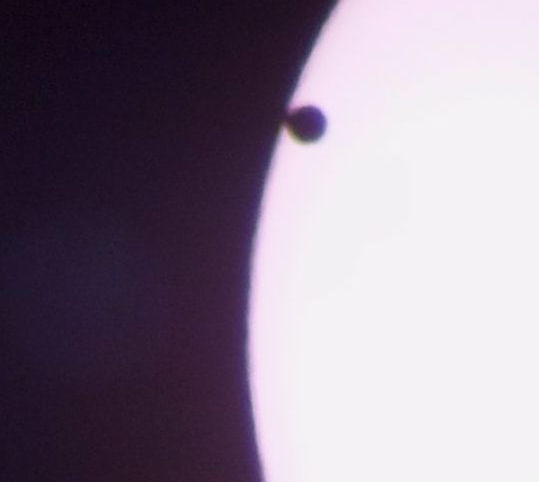
Balu Pulipaka of Indiana captured this image of the “Black Drop” effect as Venus passes through 2nd Contact
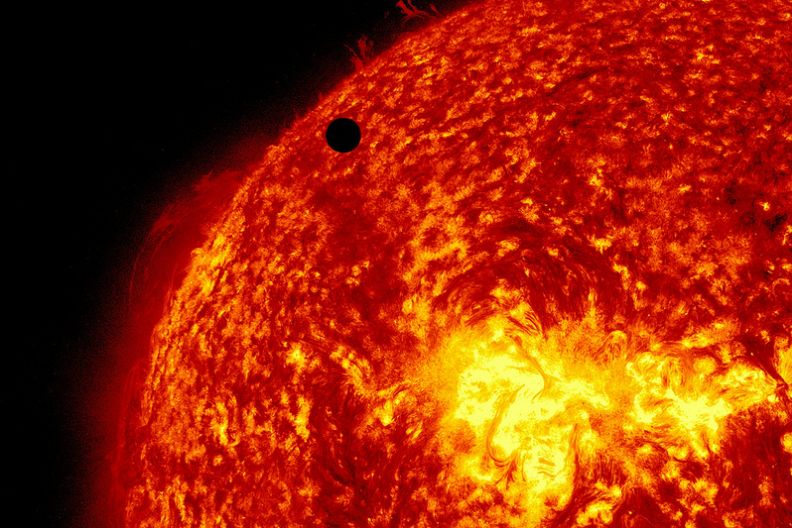
Venus imaged by NASA’s Solar Dynamics Observatory

Today, the Transit is no longer used to help us understand the broader sweep of the solar system per se, but has, in both 2004 and 2012,  been used to assist scientists in the study of exoplanets. In this, the 2012 transit is liable to have been more valuable than 2004, due to increased solar activity as we approach a period of Solar Maximum in the Sun’s (roughly) 11-year cycle.

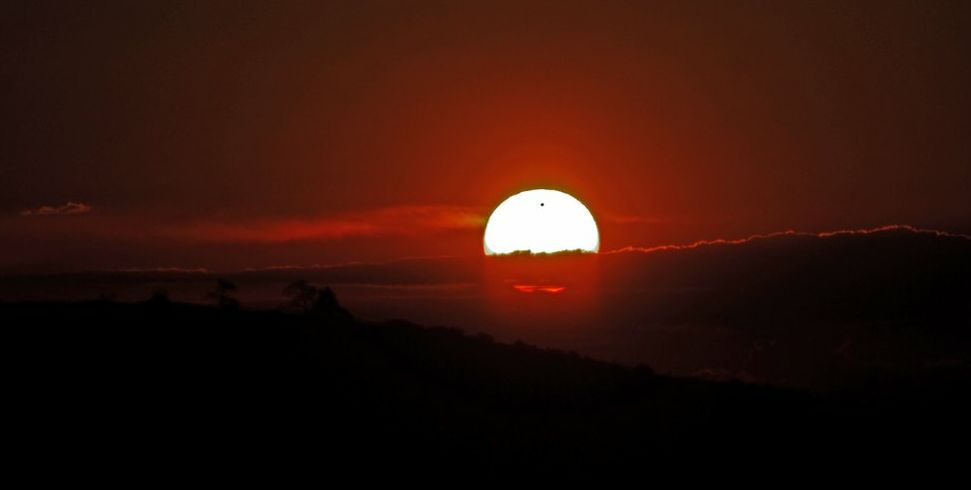
The view from Greece: Spyros Skikos captures a unique sunset with his camera, Venus prominent against the Sun
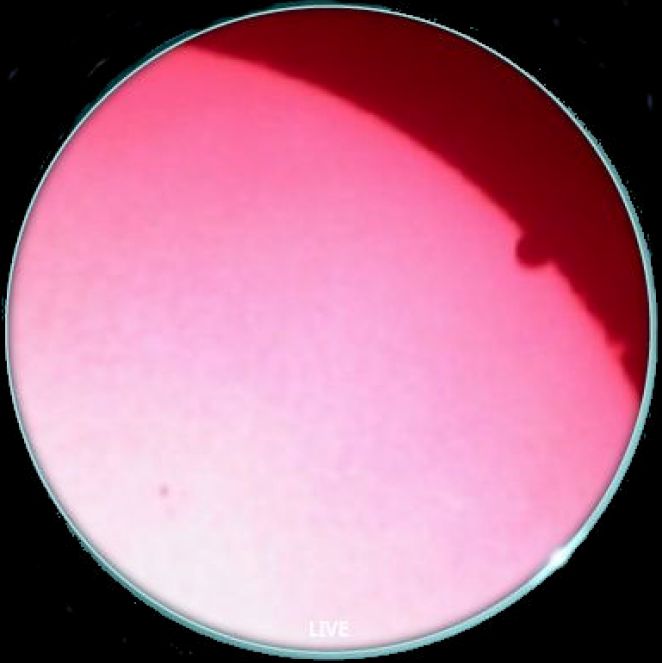
A pink-filtered image from the University of Oslo, showing the end of the transit, with Venus between 3rd and 4th contacts. Note the solar prominence on the limb of the sun just below it (image: http://www.slooh.com)

The 2012 event also helped with the calibration of instruments aboard NASA’s Solar Dynamics Observatory, while observations of the event taken from the Svalbard archipelago coupled with those from the European Venus Express mission in orbit around the planet will also hopefully increase our understanding of the planet’s atmosphere and climatology.

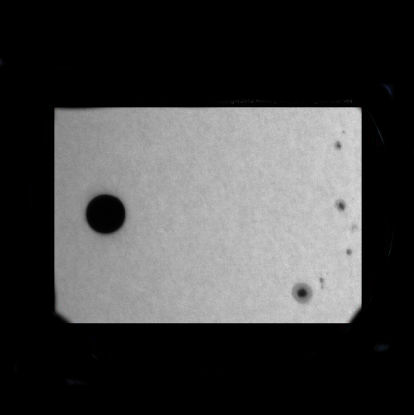
Black & white images from Broome, Australia, showing Venus (left) and sunspots on the face of the sun (image: http://www.slooh.com)

For casual observers, the four periods of contact were perhaps the most enthralling – the points where Venus first “touches” the limb of the sun, then slowly moves inside the sun’s disk until it is entirely “inside) (1st and 2nd Contact) and the point at which it touches the limb of the sun on the other side on its way “out” (3rd Contact), before vanishing entirely (4th Contact).

Of these in turn, the 2nd and 3rd contacts are of interest as they give rise to the so-called “black drop”. This is when light distortion possibly due to sunlight refracting through Venus’ atmosphere  appears to “pull” the edge of Venus to the edge of the sun, elongating it into a tear-like shape, with the limb of the sun appearing to “bend in” towards it.

I’ve compiled a modest slideshow of the event from a number of the SLOOH feeds. The first 10 are from the University of New Mexico feed, while the last ten are from Oahu and the Haleakala volcano observatory, Hawaii. You get the opportunity to see the next transit of Venus live until 2117…

(Click here to see the slideshow full screen)

NASA also offer a composite video of the event using images captured by SDO: