Space Sunday special: Nichelle Nichols, First Lady of Space

via NASA / Paramount +

While I have written about the passing of noted individuals involved in astronomy and space exploration in previous Space Sunday articles, this obituary – coming a little later than intended – focuses on the life of a woman who never actually flew in space or worked directly on any space programme, but who nevertheless has a profound impact on the shape of the US space programme from the late 1970s through mid-1980s. who who served as an inspiration for woman and those from diverse ethnic backgrounds to seek careers with NASA, and who sadly passed away on July 30th, 2022

Her name is Nichelle Nichols, known the world over as Lt. Uhura from the original Star Trek TV series and the first six of the franchise’s big screen outings, and this is her story.

Born Grace Dell Nichols on December 28th, 1932 to Samuel Earl Nichols, a factory worker who Lishia (Parks) Nichols, in Robbins, Illinois (a suburb of Chicago), where Samuel Nichols served as both the local mayor (1929) and its chief magistrate. From the start, she was determined in her aims: as a youngster, she informed her parents she did not like her given first name and asked them to change it, any they suggested “Nichelle”, which she adopted.

By the age of 16, Nichelle Nichols was singing professionally for Duke Ellington. Credit: Unknown

Studying ballet, dance, music and singing at High School and the Chicago School of Ballet, Nichols landed her first professional gig when just 16, singing in a revue at The College Inn, a well-known Chicago night spot.

It was there that jazz legend Duke Ellington witnessed her performance and he invited her to join his big band as a singer / dancer. This was followed by time with Lionel Hampton’s band, which she joined as a lead singer and dancer.

Nichols’ acting break came in 1959, when she appeared in Porgy and Bess, Starring Sammy Davis Jr., Sidney Poitier, Dorothy Danridge and Pearl Bailey. While she was uncredited in the film, her appearance led to a series of small stage roles, then in 1961 she was cast opposite Burgess Meredith in Oscar Brown’s Kicks and Co, a musical satire poking fun at Hugh Hefner’s Playboy.

The show wasn’t a success, closing not long after it opened, but it ran for long enough for a curious Hefner to attend a performance. He was so impressed by Nichol’s stage presence and singing voice, he immediately offered her the chance to sing at his original Playboy Club, which has opened to great success as a nightspot in 1960.

Three years later, Nichols gained her first TV part, a small role in The Lieutenant starring Gary Lockwood (2001 a Space Odyssey) and created by a certain Eugene “Gene” Roddenberry. The episode, entitled To Set It Right, guest-starred Don Marshall (Land of the Giants) and the legendary Dennis Hopper, and dealt with the controversial subject of racism – so controversial in fact that NBC initially refused to air it, a decision that Roddenberry later said helped spur him in his desire to create Star Trek and use the science-fiction format by which to tell morality tales and socially-aware stories without upsetting the network censors.

Nichol’s role in The Lieutenant was small but memorable (and actually led to a short-lived affair with Roddenberry). More particularly, in appearing in the show, she joined a distinguished list of actors who would go on to have an impact on Star Trek, including cast members Majel Barrett (with whom Roddenberry also had an affair before eventually marrying her) Leonard Nimoy, William Shatner and Walter Koeing, and guest stars Ricardo Montalban (Khan Noonian Singh from Space Seed and later, Star Trek II: The Wrath of Khan) Paul Comi (Lt. Styles, Balance of Terror), and Lockwood himself (Lt. Commander Gary Mitchell from Where No Man Has Gone Before).

As Lieutenant Uhura in Star Trek, Nichols became an icon for women and people of colour the world over, and particularly in the Untied States. Her position as a female officer serving on the bridge of a quasi-military vessel (part of an organisation clearly modelled on the US Navy), was unprecedented, while the role itself was one of the first times an African American actress was portrayed a non-stereotypical role on television.

However, thanks to the core focus on the series leads – Shatner and Nimoy – by the end of the first season, Nichols was dissatisfied in having little to do, and on the final day of shooting, Wednesday, February 22nd, 1967, she handed her resignation to creator-producer Roddenberry, stating her intention to take an offer to appear on Broadway. Rather than accept, Roddenberry requested she take time to think about leaving the show some more before making her decision final.

Nichelle Nichols in her iconic and inspirational role of Lt. Uhura in Star Trek. Credit: Paramount – CBS

The following Saturday, February 25th, 1967, Nichols attended an event at the Beverley Hills Hilton in connection with the Nation Institute (although later attributed as an NAACP banquet) at which Dr. Martin Luther King Jr, was to speak. It was an event to go down in history as the first time Dr. King publicly condemned the war in Vietnam. However, for Nichelle Nichols it was memorable for another reason entirely. Ahead of King’s address, she was informed her “greatest fan” wanted to meet her.

I said, ‘Sure.’ I looked across the room and thought whoever the fan was had to wait because there was Dr. Martin Luther King walking towards me with this big grin on his face. He reached out to me and said, ‘Yes, Ms. Nichols, I am your greatest fan.’ He said that Star Trek was the only show that he, and his wife Coretta, would allow their three children to stay up and watch. When I told he I was leaving the series, he said, ‘you cannot, you cannot! For the first time on television, we will be seen as we should be seen every day, as intelligent, quality, beautiful, people who can sing dance, and can go to space, who are professors, lawyers … If you leave, that door can be closed because your role is not a black role, and is not a female role; he can fill it with anybody even an alien.

– Nichelle Nichols, recalling her 1967 meeting with Dr. Martin Luther King Jr.

So deeply affected by King’s words, Nichols didn’t only return to Start Trek and stay with it through the Star Trek VI: The Undiscovered Country, the last outing for the entire original series cast, she sought to do more for the people of whom King spoke.

Most notably, she helped found and run Women in Motion, a company that initially produced educational materials using music as a teaching tool and which focused on young women and girls. However, during a visit to a NASA facility, she commented about the lack of apparent diversity among the staff. NASA responded by asking her to help them broaden their recruiting activities, providing a grant to Women in Motion to help with the work.

Nichelle Nichols one one of the two Apollo Mission Operations Control Rooms (MOCR, popularly referred to as “Mission Control”) in 1977. Credit: NASA

Continue reading “Space Sunday special: Nichelle Nichols, First Lady of Space”

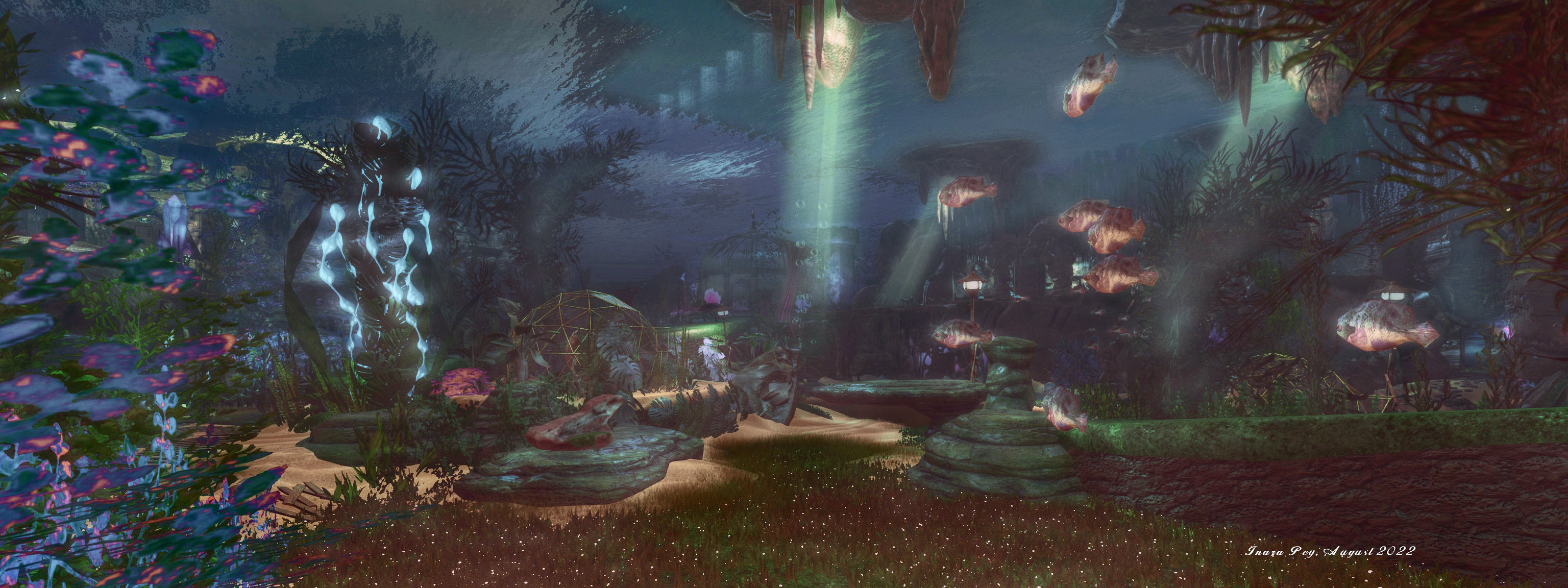
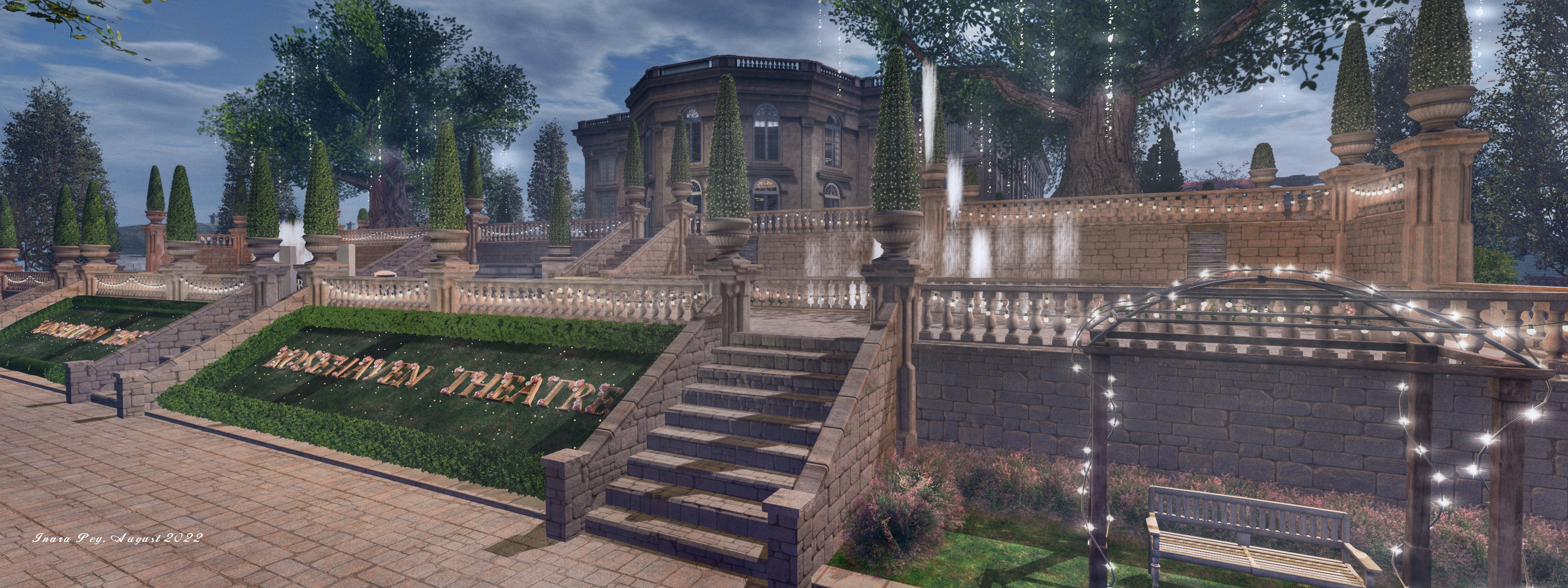
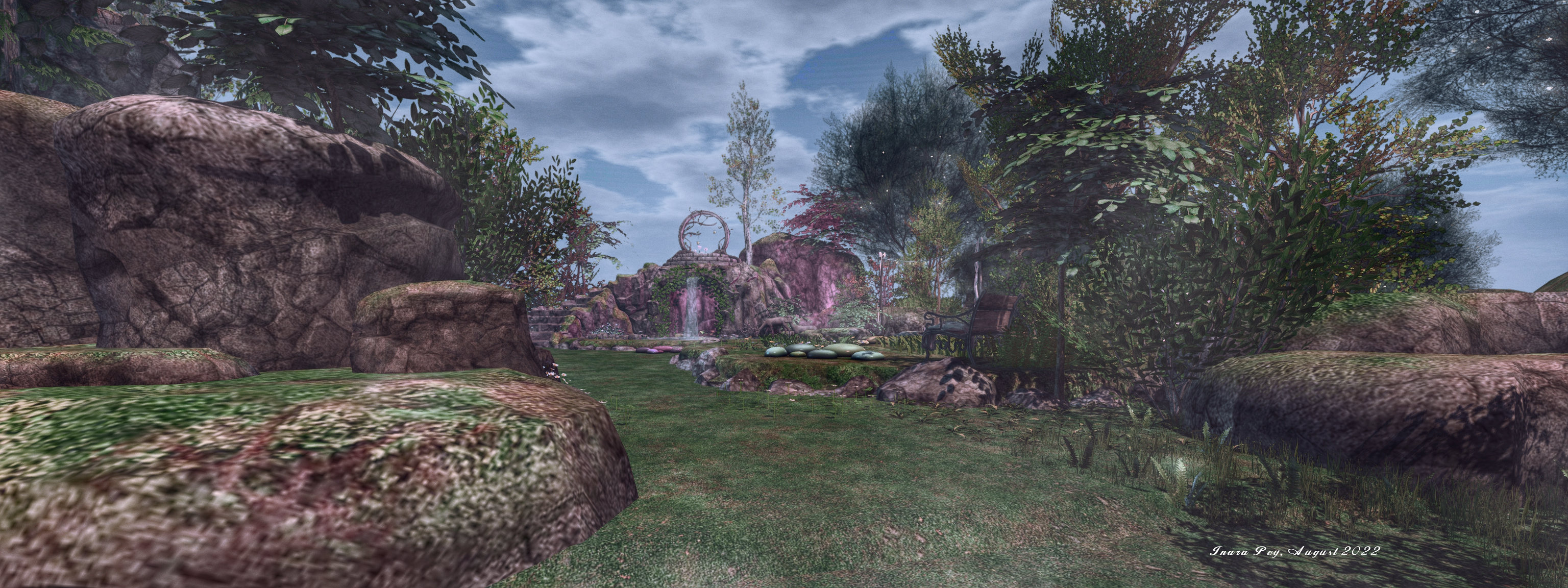
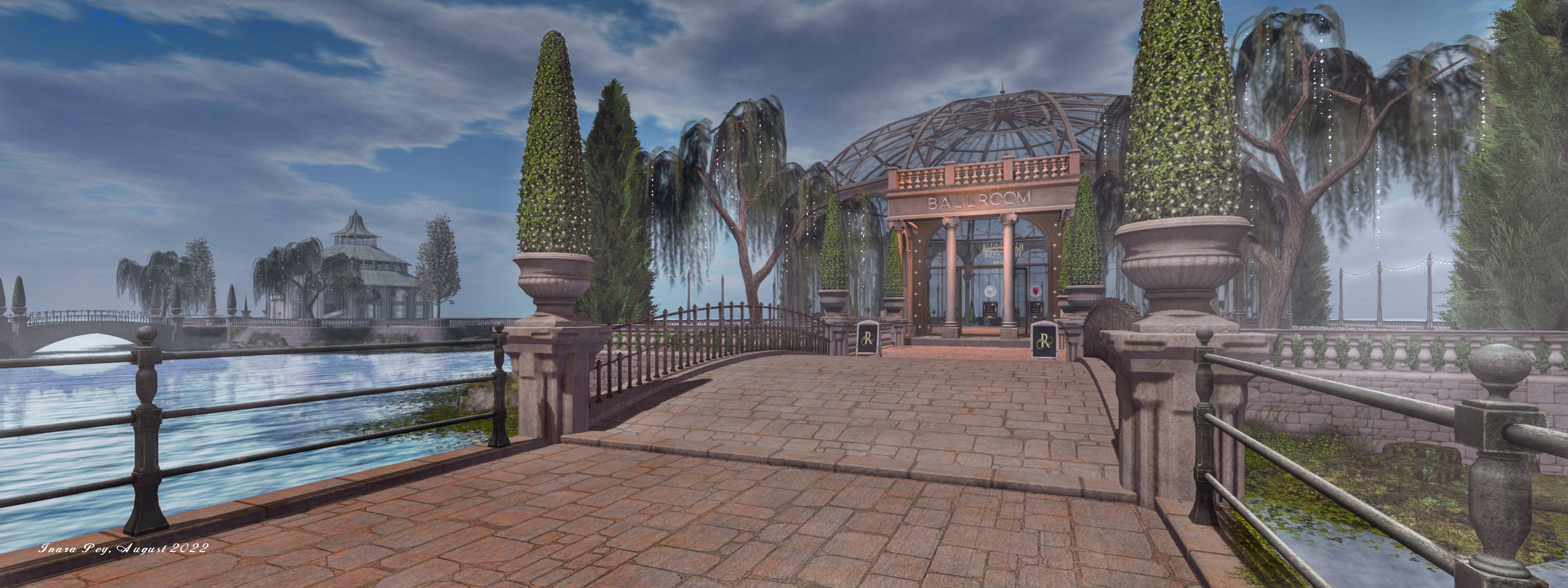
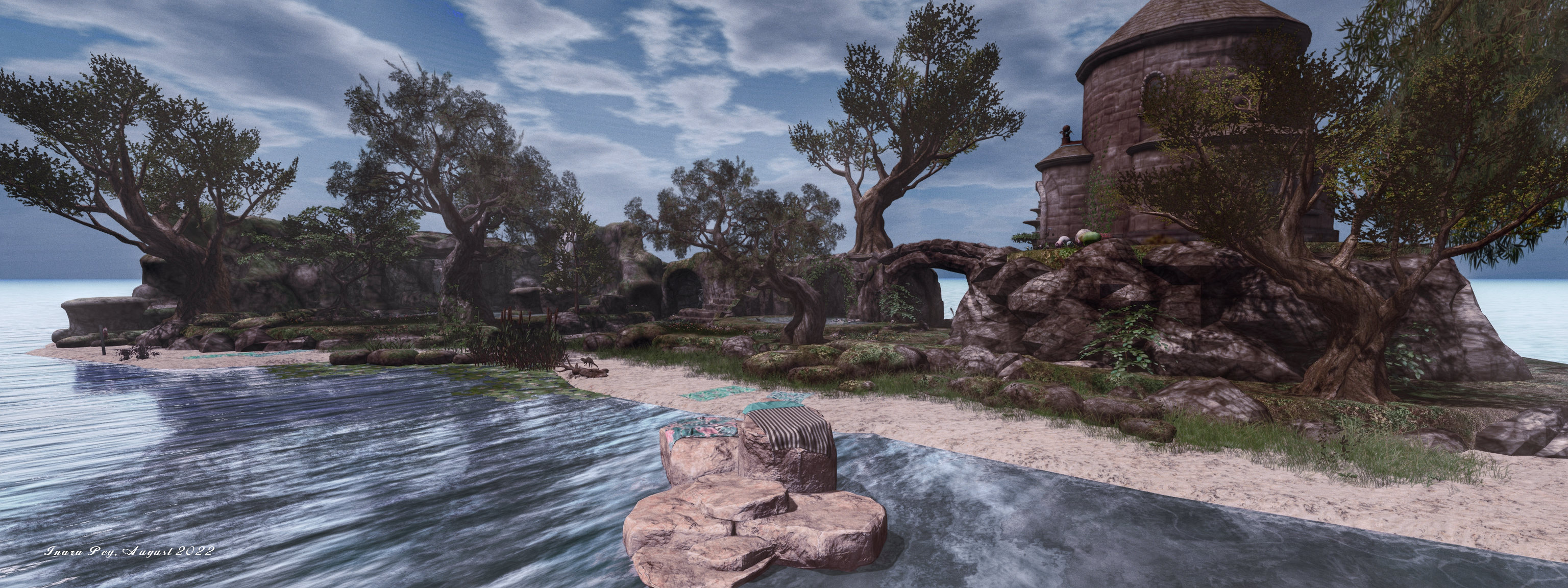
Rosehaven Seafolk Sanctuary in Second Life

Rosehaven Seafolk Sanctuary, August 2022 – click any image for full size

In July I received an invitation from Matticus Marinea (Matticus.Blinker), the lead builder for Rosehaven Seafolk Sanctuary to pay a visit to the latter and spend time exploring. It admittedly to me longer than I’d hoped to get there – my apologies to Matticus and region holder Owner of Rosehaven Valley and the rest of their community for this being the case.

Below a timeless European country estate, lies a watery realm of mysticism & tranquillity. Rosehaven Seafolk Sanctuary is an open refuge to all ocean dwelling residents of Second Life. We invite everyone to come and explore our large underwater caverns and seafloor. Discover the many hidden wonders, connect with others at the many scheduled events in a safe community atmosphere.

– via Matticus Marinea / Rosehaven Seafolk Sanctuary About Land

Given the location occupies a Full private region with the additional LI bonus, there is a lot to see, with visits starting either above or below the waves, depending on preferences.

Rosehaven Seafolk Sanctuary, August 2022

Merfolk will most likely want to start underwater, as this offers the most varied environment; it’s certainly where Imp and I started our explorations. The landing point here offers information on the region, together with two teleport boards – aquatic and land. Both offer quick access to key points under and above water, but I really recommend exploring by walking / swimming.

One thing that quickly becomes apparent when underwater, is the care that has been put into making things as diverse as possible, mixing larger public spaces with smaller, more romantic  /intimate spots that are tucked away between doors and inside caves or at the end of tunnels or beyond rocky arches.

Rosehaven Seafolk Sanctuary, August 2022

There is also more of a richness of architectural and floral expression to be found here that might be expected from a merfolk environment: places resembling tree houses, plants that might be as at home in a garden on dry land as one where octopi might tend.

Being a long time merman in Second Life, I have seen a lot of underwater sims come and go. A big problem we have as mer-builders is that there just isn’t enough diversity in items (foliage, rocks, buildings) which are made specifically for underwater spaces. Therefore, when I finally had the opportunity to work on something in this larger scale, I wanted to incorporate non-traditional plant life to create an experience that is distinctively different and yet familiar.

– Matticus Marinea

Rosehaven Seafolk Sanctuary, August 2022

Exploring can be done mer-style – by swimming (we slipped into a couple of mermaid-like looks!) or on foot; the central public spaces are neatly paved, and human walkways and paths are clearly marked, and stairs and steps link areas at different depths, while ladders and stairs offer various routes up to the dry land elements of the setting.

That said, finding your way around still requires a little patience and time; just when you think you’ve seen everything, it’s more than likely turning another corner around a shoulder of rock or climbing another set of steps will reveal something more, be it an underwater lawn complete with a miniature of Stonehenge, an oyster-like bed or a little nightclub awaiting a singer at the microphone – and more.

Rosehaven Seafolk Sanctuary, August 2022

Above ground, the region is laid out as a grand manor estate with outhouses. The manor sits with an elegant formal garden before it, the outhouses range around in a quadrangle. The manor, its garden and the majority of the outhouses are private, unless playing hose to an event. The only exceptions  to this are the Tourist information Centre, which forms the above water landing point (complete with information and teleport boards), and the café / bistro facing it.

These latter face a waterside walk, the water spanned by a trio of bridge which provide access to the Rosehaven Theatre, home to productions that include Broadway shows, ballet performances, variety shows, musicals, dance recitals and more, presented by the theatre’s troupe and cast. Alongside of sit the double tier of The Cabaret Club, offering an open air performance space on its flat roof and a further venue inside.

Rosehaven Seafolk Sanctuary, August 2022

A further bridge crosses a water channel between the Club and the Aviary – but as it was unclear whether or not the latter is open the public, we kept clear (there is another small island bracketing the theatre and Cabaret Clubs, and this is home to private residences, so please avoid trespass.

Two islands are also to be found tucked into the region. Within the south-east corner sits Sawyer Island. A little haven unto itself, separated from the manor and other structures by water, it is best reached by boat or  – for those wanting to come to it underwater – by finding the path, stairs and ladder that provide access to the island via a pool close to its centre. Please be aware that Sawyer Island area is a “clothing optional” space; naturists are always welcome but visitors should not confuse “a lifestyle of practicing non-sexual social nudity in private and in public” with anything sexual.

Rosehaven Seafolk Sanctuary, August 2022

Occupying the north-east corner of the region is Fae Haven. Again best reached by boat or by finding your way up to it from underwater, this presents an idyllic, relaxing retreat awash with magic and enchantment, perfect for those seeking a quiet place to relax with friends or to simply be at one with nature. It sits as a welcome refuge to the Fae Folk of Second Life: elves, fairies, sprites & fauns, with the Enchanted Pond often used as a gathering place for dancing and music.

For me, one of the most impressive aspects in Rosehaven is the use of space. The entire size of the region is use for both the above water and undersea settings without either directly impinging on the other. They can thus be enjoyed and appreciated entirely individually to one another, whilst also being gently bound together by their connected access points to present an integrated environment.

Rosehaven Seafolk Sanctuary, August 2022

Finished with an accompanying local soundscape, Rosehaven Seafolk Sanctuary makes for a richly detailed visit (which can take some systems by surprise, so do be prepared to make some viewer adjustments if necessary) with a lot for find and enjoy both above and below the waves.

SLurl Details

Rosehaven Valley is rated Moderate

2022 week #31 CCUG and TPVD meetings summaries

The Shambles, June 2022 – click any image for full size

The following notes were taken from:

  • My audio recording and chat log of the Content Creation User Group (CCUG) meeting held on Thursday, August 4th 2022 at 13:00 SLT.
  • The video recording by Pantera Północy of the Third-Party Viewer Developer (TPVD) meeting on Friday, August 8th, 2022 at 13:00  SLT. This video is embedded at the end of this summary, my thanks to her as always for recording the meetings.

These meetings are chaired by Vir Linden, and their dates and times can be obtained from the SL Public Calendar.

This is a summary of the key topics discussed in both meetings, and is not intended to be a full transcript of either.

Common to Both Meetings

Official Viewers Update

[TPVD meeting Video: 0:00-0:43]

  • On Thursday, August 4th, 2022, the Maintenance 2 RC viewer, version 6.6.2.573358 and dated August 1st, was promoted to de facto release status.
  • On Friday, August 5th, the Maintenance (N)omayo RC viewer was updated to version 6.6.3.573882.

The remaining official viewer pipelines are as follows:

  • Release channel cohorts:
  • Project viewers:
    • Love Me Render (LMR) 6 graphics improvements project viewer 6.6.2.573263, July 21.
    • Performance Floater project viewer, version 6.5.4.571296, May 10.
    • Mesh Optimizer project viewer, version 6.5.2.566858, dated January 5, issued after January 10.
    • Copy / Paste project viewer, version 6.3.5.533365, dated December 9, 2019.

Graphics Preferences Updates

[TPVD Meeting Video: 5:05-17:26]

  • LL is deprecating a number of Graphics Preferences from the viewer. These include:
    • A number of obsolete options (e.g. terrain detail slider, avatar cloth option).
    • The removal of the abilities to turn off the Advanced Lighting Model (ALM) and turn off atmospheric shaders.
  • The latter two have been previously indicated, and form a part of the PBR  / materials work, where the plan is to eventually have two rendering paths: ALM with PBR support and ALM without PBR support.
  • HOWEVER:
    • While the options to disable ALM / Atmospheric Shaders are being removed from the official viewer, the actual rendering code for non-ALM rendering (aka forward rendering) is not at this point being removed.
    • The rendering code will not be removed from the viewer until such time as Linden Lab has a high level of confidence there is no significant impact on users’ SL experience in having to run with ALM enabled all the time, across the vast majority of supported hardware / edge-cases do not emerge where forward rendering is required.
  • There is still work to be done in order to get ALM running at the (generally faster) frame rates seen with non-deferred rendering, and these are said to be “coming in” to the viewer.
    • This work includes adding a slider for the number of local lights, so that users on lower specification hardware can dial-down the number of such lights that are rendered, thus helping to boost performance.
    • However, it was noted that if some doe experience issues due to running their viewer at High / Ultra settings (and their hardware cannot really handle this with ALM enabled), the will be encouraged to lower the quality slider.
  • Work still to be done on implementing a “data saving” / low bandwidth mode for those on metered Internet connections that will reduce the amount of data (e.g. materials maps) the viewer has to receive. However, the extent of this work and what it touches on in the viewer is still being specified / investigated.
  • LL is “reasonably confident” that content will look as intended under both non-PBR and PBR rendering, and that it will run as well under ALM as it does currently with ALM turned off.
  • It is hoped that eventually Second Life will reach a point where the ability to “turn off” PBR rendering could be removed from the viewer – however, it is acknowledged that there is hardware feature required by PBR that isn’t support by all client systems, so this dependency needs to be removed before this can be done.

CCUG Meeting Specific

Materials and PBR Work

Please also see previous CCUG meeting summaries for further background on this project.

  • Work is progressing both on the back-end and with the viewer, although the latter is not ready for any form of public consumption.
    • The plan remains to produce a test view that will be made available in the near future, and have regions on Aditi (the Beta grid) where it can be tested. Most of the viewer-side work is focused on bug fixing.
  • Overall, the focus remains on supporting the core glTF 2.0 specification, particularly now this is a recognised international standard (ISO/IEC 12113:2022).
    • This will provide six supported channels remain Albedo, Normal, Emissive, Ambient Occlusion, Roughness, and Metal.
    • Subsurface scattering and terrain support will not be part of the initial release.
  • While interest has been expressed in seeing a glTF mesh uploader in the viewer, this will also not be a part of the initial PBR supporting viewer; the focus is on getting the adopted core specification elements working before attempting to add additional capabilities.

Custom Pivot Points

There have been numerous requests over the years for allowing custom pivot points in mesh at upload (while pivot points can be defined in a .DAE file, they are currently ignored at upload). However, investigation has suggested provision of a solution is more complex than had been thought, prompting a discussion that ran through the majority of the meeting. The following is an attempt to provide a reasonable summary of that discussion.

  • Arbitrary pivot points can be defined using LSL. However, this is far from perfect.
    • It places a severe load on the simulator due to the number of object updates (rotation and translation)  that must be exchanged between the simulator and viewers as the object is moved.
    • As rotation is, by default around an object’s or linkset’s centre, LSL solutions often rely on workarounds by creators to achieve a desired result (such as by physically placing a small mesh triangle away from the object and then linking them, so as force the centre point between them to be offset relative to the object). Unfortunately, such techniques can have issues of their own (bounding box sizing, physics upsets, etc).
    • It relies on somewhat arbitrary interpolation to achieve a smooth rotation / pivot.
  • Some years ago, a code contribution was made to LL which would enable the pivot points / offsets set within a mesh .DAE be preserved at upload (e.g. by the addition of a simple check box in the uploader which would instruct it to import the file with the offset data).
    • Unfortunately this solution has its own potential limitation – it effectively bakes the offset point into the object, precluding any further manipulation of the offset were any required – it is thus not viewed by the Lab as optimal unless it can be shown it would in fact work for the vast majority of potential use-cases requiring custom pivot points.
  • One alternative solution might be to add a new parameter to all volumetric primitives which defines their origin point / centre. This would potentially be more flexible that the above approach, but also carries issues of its own, including:
    • It still may not work for all use-cases, leading to further alternative approaches being taken, leading to potential conflicts in execution between to different approaches.
    • What happens in linkset where child prims are specifically targeted for manipulation? if a custom pivot point is set within the root of the object, will it play nicely with the child prims that are themselves being manipulated (e.g. moved), or will things like scaling errors be introduced?
  • Perhaps the biggest issue identified with providing support for custom pivot points (and which has bearing elsewhere within and for Second Life) is that the platform has no real concept of a node hierarchy – it simply sees all items in the linkset as “children” of the root, whether or not they are linked to it directly or “via” other items in the linkset. (e.g. if you link prims “A” and “B” together, A is a “child” of “B”; if you then link “B” to “C”, SL sees “A” and “B” as equal “children” of C; whether in a node hierarchy, “B” would be seen as a child of “C”, but “A” would remain a child of “B”).
    • Such a hierarchy would more readily allow for pivot points, as they would be executed according to their parent child relationships, eliminating the need for additional script calculations to ensure the correct rotation / positioning of child primitives.
    • Unfortunately, implementing a node hierarchy at this point in Second Life’s development is not a trivial undertaking, and more work is required to fully understand the overall benefits implementing it would bring compared to the potential issues / drawbacks – and there does seem to be an appetite among some at the Lab to move in this direction.
  • Overall, no solid conclusions were drawn at the meeting – other than the fact that more structured discussion is required (including encompassing avatar attachments, which have their own raft of considerations).
  • In the meantime it has been suggested that an “amend” version of the code contribution that would allow pivot points / offsets defined within a mesh during creation are recognised and maintained by the uploader, rather than being ignored, is implemented within a test viewer, and this could be made available to creators for review / testing.

TPVD Meeting Specific

Changes to the Official Viewer Repositories and Build Process

[Video: 1:12-4:42]

  • This is an initiative to improve continuous update integration in the viewer and improve the viewer deployment process.
  • For TPVs and developers, the most visible aspect of this is moving the viewer repositories from BitBucket to GitHub.  This includes the viewer code base and the other public code bases currently in BitBucket (Autobuild, LLCA, etc.).
  • There are a number of reasons for doing this, including future potential to:
    • Automate pull requests for code.
    • Potentially simplifying the Code Contribution licence.
  • There work is being carried out in two phases: move the repositories to GitHub and then establish the infrastructure to take advantage of GitHub’s capabilities.
  • LL expects to spend a “couple of months” getting things in place before they are ready to offer a more precise timeline on the repository migration (which will be of core value to viewer developers), and will be looking to discuss this in future TPVD meetings.

Next Meetings

  • CCUG: Thursday August 18th, 2022.
  • Friday, September 2nd, 2022.

Invisible Cities: Fighting Women at Nitroglobus in Second Life

Nitroglobus Roof Gallery: Debora Kaz – Invisible Cities – Fighting Women

Invisible Cities – Fighting Women is the title given to a combined 2D and 3D art installation by Debora Kaz that is currently open to the public through until the end of August 2022 at Nitroglobus Roof Gallery, curated by Dido Haas.

Supported by a custom lighting environment created by Adwehe, this is perhaps one of the most complex installations and layered installations I have seen – something that in itself is saying a lot: Dido has a consummate skill in challenging the artists she invites to exhibit at Nitroglobus, consistently leading to installations that stand head-and-shoulders above those found elsewhere in Second Life in terms of their richness of presentation, meaning, and narrative.

Perhaps the best way to describe the installation is to use Debora’s own words, both from the introductory notes (available via the giver at the landing point) and the open letter Debora has written form women and which is displayed on the north side of the gallery space (and which is included with copies of each of the pieces in the exhibition when they are purchased):

Invisible Cities – Fighting Women wants to show the pain and difficulty of being a woman in a world where women historically were portrayed as objects of desire, exposed to consumption, which induces rivalry, resulting in us women not having a real union to fight the violence that is directed at us.

– Debora Kaz, introducing Invisible Cities – Fighting Women

Nitroglobus Roof Gallery: Debora Kaz – Invisible Cities – Fighting Women

Whether we like it or not, we live in a world that is largely derived in terms of patriarchy, be it societal, historic, or religious or a mix of all three. It is a global environment where even today, women are faced with a broad range of physical violence (1 in 3 women world-wide will be beaten or raped or face other forms of direct violence at the hands of males at least once in their lives) and more subtle psychological violence.

It is something many women the world over are trying to address and overcome through projects and activities such as One Billion Rising, through protests, activism and even through art – as has often been seen here in Second Life.

Nitroglobus Roof Gallery: Debora Kaz – Invisible Cities – Fighting Women

However, as Debora moves to point out in Invisible Cities – Fighting Women, we so often undermine these efforts by committing “violence” upon ourselves and one another: we cave to the demands of advertising, objectifying ourselves, turning ourselves into things of desire to attract others; we seek to dominate one another at work or socially, and so forth.

Within this capitalist game of consumption and desire, women compete with each other attack each other in an irrational way; and most of the time, they are not aware of it, because of the superstructure. Structural misogyny occupies the minds of not only men, but it is also present in the formation of every woman who is born objectified. The demand to be desired grows and seeks to be desired all her life – by men, but mostly by women; to be desired by another woman is to have power, to be better than others is wanting to be better than any other woman.
With this in mind, the union that women desire [in order] to combat violence against women [as] imposed [by] the history of patriarchal societies becomes unviable. It is not possible to unite when someone wants to have one power relationship over another.

– Debora Kaz, Invisible Cities – Fighting Women

Through the 16 images and 5 sculptures, Debora presents aspects of all of this in quite vivid and engaging pieces. Within them, we can find reactions to patriarchal dominance (Fuck God) to the need for mutual support (I’m By Your Side), and more. Throughout all of the pieces, colour pays a major role. Pink references both female empowerment and the struggles we face  – external and internal – to be understood as individuals, while harder, courser colours are used to represent emotional and the turmoil they can and create and the conflicts – again, internal and between one another – they induce.

Nitroglobus Roof Gallery: Debora Kaz – Invisible Cities – Fighting Women

Individually, these are striking pieces; each carries a weight of narrative that has impact – this cannot be denied. However, I would be remiss if I didn’t admit to being somewhat confused in understanding the core theme and message of this installation. I’m not sure if this is down to a shortfall on my part or because the artist has accidentally cast her net too wide and introduced to much in the way of narrative and subtext. As such, I encourage you to visit and explore Invisible Cities – Fighting Women for yourself and free from any confusion on my part.

SLurl Details

August 2022 Web User Group summary: Search

The Web User Group meeting venue, Denby

The following notes cover the key points from the Web User Group (WUG) meeting, held on Wednesday, August 3rd, 2022.

These meetings are generally held in-world on the first Wednesday of the month, with dates and venue details available via the SL public calendar. They are usually chaired by Reed Linden, who is the Lab’s Product Manager for the Second Life front-end web properties (Marketplace, secondlife.com, the sign-up pages, the Lab’s corporate pages, etc.).

A video of the meeting, courtesy of Pantera, can be found embedded at the end of this article (my thanks to her as always!), and subject timestamps to the relevant points in the video are provided. Again, the following is a summary of key topics / discussions, not a full transcript of everything mentioned.

Forum Policy Changes

[Video: 1:48-17:12]

Note: Forum governance (and governance & policy topics in general do not fall under the remit of the web team, and so are usually not a part of discussions at the Web User Group. However, an exception was made at this meeting, to allow Keira Linden to discuss the recent policy and moderation changes made to the SL forums.

As her comments and the feedback from some attending the meeting have no bearing on the Lab’s Web properties per se, I have separated them into a separate article, Forum changes: Keira Linden speaks, and I refer those interested to that summary (video included). This article will focus pure on the discussions concerned the Lab’s web projects.

Premium Plus and Name Changes

[Video: 17:38-23:15]

  • Features continue to be added, and tweaks made to the service.
  • Most recently, Name Changes were added to Premium Plus for a fee of US $14.99, with the Premium price lowered, and the service extended to Basic accounts as well – see: SL Name Change fees updated & service extended to Basic accounts for more.
  • In addition, the one-time price reduction for those joining Premium Plus on the monthly payment plan (so $24.99 for the first month instead of $29.99) has been extended through to Monday, August 8th, 2022 – see Premium Plus sale last chance (via linden Lab) for more.
  • [Video 51:40-51:53] An upcoming feature for Premium Plus is “VIP Regions”.
    • The grid infrastructure to support these is now in place.
    • Exactly how these will be used was not specified.

Search Relevance

[Video: 23:34-31:15]

Note: the following refers the web Search and the in-viewer Search, it does not currently apply to the Marketplace.

  • As a part of (continuing) work to improve web Search, LL implemented a “search relevance engine” machine learning tool, designed to observe how Search performs and gradually improving the relevancy of results.
  • This tool has now been in use for a couple of months or so, and LL is now has some meaningful results from it.
  • Prior to the tool being implemented, it was possible:
    • To search for the same term using different case sensitivities (e.g. “apple” and “APPLE”) and get completely different search results.
    • To search for a precise brand name (e.g. “Maitreya”), but have to scroll through multiple result before finding the brand store itself.
  • With the new tool, issues such as these are gradually being identified and corrected (based on searches users are making) by the tool itself, without the need for human intervention.
  • As more searches are made and recorded by the tool, so it is anticipated that more users should start seeing the relevance of their search results improve.
  • In addition:
    • More data is being gathered on users’ search behaviours (e.g. how often do people click on items on the first page of a set of search results as opposed to scrolling down the list), so this information can also be fed back into the search relevance engine.
    • The Search team is starting to work on fuzzy matching, which it is hoped will assist those who have typing issues, or form whom English is a second language, so so may mis-spell terms / names.
  • TPV developers repeated a request for an API to be provided, so the updated search capabilities can be leveraged by legacy search capabilities used by TPVs.

Marketplace

[Video: 31:20]

  • Work on Marketplace variances – now called Styles – is progressing, with al the required infrastructure now in place.
  • The remaining work for this is front-end related, and is targeted for completion later in the year.
  • The Marketplace rebuild (see my June 2022 and July 2022 summaries) is targeted as a 2023 project.

In Brief

  • There are a “lot of struggles” going on around a mobile / web client, and is “not a straightforward product”.
    • Some of these “struggles” revolve around whether the Lab should being its own solution or partner with a third-party (perhaps one already providing a solution for mobile / browser access to SL) to develop a solution.
    • In this, LL has been working with the Speedlight team, but there is nothing that should be currently perceived as a formal partnership between the two.
  • TPVs representatives also requested:
    • LL give serious thought to a long-promised Events API to allow TPVs to pull events from the web events lists and promote them through the viewer (e.g. via the Splash screen).
    • BUG-231714 “[WEB] Please make Linden Lab splash screen data public in documented XML or JSON files” be given greater consideration.
  • Access to real-time traffic data (avatars within a region / parcel) was again been requested in relation to search results (so when you search for a place you can see how many are there).
    • This is described as difficult to provide, as simulators would have to be polled every single time a location on them is searched – which could be multiple times, with search having to be frequently re-indexed to reflect the updated traffic figures.
    • Search indexing rates are being increased, but they are not at a point where that indexing is frequent enough to support real-time traffic data.
  • Multi-Factor Authentication: no further progress since extending it to the viewer. However, the Lab still hopes to move away from a wholly third-party app based approach, although there are no time frames for when this might be achieved.
  • There is a (non-Web) discussion on the “secret sauce” of SL, the complexities of the viewer, questions around splitting the viewer into two modes (as seen with the Basic and Full viewer, circa 2010-11), none of which is particularly relevant to this summary, but can be video in the video.

Next Meeting

  • Wednesday, September 7th, 2022. Venue and time per top of this summary.

Forum changes: Keira Linden speaks

via Linden Lab

There have recently been a number of changes make the the Second Life Forums. Some of these are physical (layout, requiring an additional log-in to view some topics, and so on, while on July 29th, 2022, the Lab rolled out new Policy and Participation Guidelines for all of the major forum Topics.

Most of these Guidelines are relative innocuous (e.g. no advertising products, no solicitation, etc.), and each set has been tailored to define the function of the Topic to which it relates and (particularly) was is / is not permissible in terms of discussions / thread within the Topic.

However, some of the new Guidelines – such as the General Discussion Policy and Participation Guidelines and those that relate to Topics that might be seen as allowing discussion of non-Second Life specific subjects – have been worded in such a way so as to generate an understandable amount of concern, as has what has been seen as a sudden, and at time apparently heavy-handed, increase in forum moderation by the Lab.

Because of the latter, Keira Linden – who, as the Support Operations Manager, now has Governance directly under her management – attended the August Web User Group meeting to try to provide insight into the reasoning behind the policy changes and their implementation.

The meeting was recorded by Pantera Północy, and will be subject to one of my usual Web User Group summaries. However, for the benefit for forum users who prefer to read notes rather than watch video, I am using this article to offer a summary of the comments and feedback from the WUG meeting, together with a relevant extract from the video.

When reading the points below, please note:

  • I have attempted to organise the comments made and feedback given into some form of logical order, so this summary may not reflect the order of discussion in the video.
  • This is intended as an objective summary of comments made at the meeting devoid of subjective feedback from me, so that those most affected by the changes can directly digest the comments and feedback for themselves.

Keira’s Comments

  • LL believes it has always had a fairly “open-door” policy towards discussion on the forums: so long as threads and comments adhere to the Lab’s Terms of Service, Second Life Terms and Conditions and Community Standards, they have – in general – been allowed.
  • However, in the last few years there has been a lot going on in the world which has generated an increasing amount of “hot button” topics within the forums which have no direct relationship with / bearing on Second Life per se, but which have significantly complicated matters of moderation.
  • As a result, and after internal discussions, etc., the decision was taken to implement the new Topic-specific Policy and Participation Guidelines.
  • It is understood that some of these new Guidelines are proving unpopular, as people do see them as impinging on their ability to discuss subjects that are of import to them as a global community – but it was felt that approaching matters in this way was the most direct means of encouraging the core aim of maintain the focus of threads and discussions within the forum on Second Life, and not on world affairs.
    • As a result, moderation (and the potential locking) of threads deemed to be “inappropriate” will now be more stringent going forward.
    • However, due to their “historic” significance some threads and discussions will remain “as is”.
  • While this has been a change driven entirely out of the Lab with little in the way of forewarning to users, Keira is open to hearing feedback on the changes, and people can e-mail her via keira-at-lindenlab.com with their feedback / opinions / suggestions for alternate approaches.

User Feedback at the Meeting

  • As implemented, the changes are still allowing some of the issues they were designed to prevent – such as political derailment of threads – to persist, whilst giving users the impression that they can no longer engage in general banter or any discussion of “real life” for fear of receiving a warning.
    • Keira indicated that the Lab is still trying to be flexible in its approach to issues of derailment: where it happens but the topic / thread “self rights” to get back on topic, than there is an attempt to recognise this and not use blunt force moderation.
  • Other critiques of the changes voiced at the meeting included:
    • While there is a large LGBTQ+ community in SL, few engage in the forums, as they already feel unsafe because of the more virulent political commentary, and some of the new Guidelines do little to make them feel any safer.
    • Those who lurk in the forums reading rather than posting, feel less sure about engaging in threads due to what appears to be unevenness in response to posts by the moderators single the guidelines came into force.
    • The changes appear to be predicated on the idea that Second Life “is separate” from matters occurring in the physical world – yet Linden Lab itself raises political and other discourse through its support of physical world issues such as gender equality and BLM, its public stand against transphobia and Russia’s invasion of Ukraine, etc. In this, it was further noted:
      • That the specific clause within some of the new Guidelines marking “Social Justice Issues” as being “not allowed” ignores the fact that these issues which exist within Second Life, and have thus formed a part of forum discussions.
      • Trying to place a fence between Second Life and “real life” within the forums is damaging, because for many SL users, the platform is an extension of their “real lives”, not something entirely separate.
    • Even the wording of the moderation warning being send out for “casual banter” appears to be overly aggressive [“Additional violations could result in your forum access being revoked, or additional action taken on your account”] and potentially discouraging users for continuing to use the forums.
  • In response to these critiques, Keira noted:
    • The Lab does try to look at threads, content and comments on a case-by-case basis and in context, rather than immediately turning to moderation / warnings, etc., the set wording of warnings notwithstanding.
    • In terms of written warning, she acknowledged that things can be adjusted where required, and is willing to discuss specific cases with those involved.
    • The Lab is not trying to force any form of separation between “SL” and “RL”, but is rather trying to address / remove complications of forum moderation and management that have notably increased over the last few years, noting that some forum discussions could better handled through other channels – including discussing them in-world – rather than using the forums.
    • She also noted that the intention is not to preclude elements of “RL” discussions from the forums:
      • So long as such discussions / threads pertain to, or reflect on, people’s SL activities / lives (or on Linden Lab / Tilia) in a reasonable way and reflect the TOS / CS, then they shouldn’t be a problem.
      • The Lab would just prefer not to have to moderate / manage forum threads on topics that have absolutely no bearing on / relationship to Second Life [e.g. “post your RL pet pictures here!”].
  • With regards to Keira’s comments on moving the discussion of some topics in-world, Reed Linden reiterated that insofar as in-world discussions and conversations, Linden Lab has always been, and remains, committed to the individual’s right of positive expression. Thus, there is no reason why topics such as transphobia, BLM, etc., cannot be openly discussed in-world.

Footnotes

  • While general comments are always welcome on this blog, please note that if you have specific feedback / suggestions on the above that you wish Linden Lab to read, please ensure that you forward them to Keira Linden via e-mail (keira-at-lindenlab.com) – or perhaps via in-world note card if you prefer not to use e-mail. While this blog is read by the Lab, there is no guarantee that ides and suggestions posted here will be read & recorded by Lab staff.
  • My thanks to Pantera for recording the meeting and making the video available via her You Tube channel.
  • Please note that the extract was set-up to play the relevant part of the meeting video (from 1:48 through 17:12). However, it appears You Tube may have nerfed the use of both a start and end time stamp in the same iframe code (preferring the use of only one OR the other). So, if the video plays on beyond the 17:12 mark, feel free to tell it to shut up 🙂 – the rest of its contents, as they pertain to the Web User Group meeting can be found in my summary of the rest of the meeting.