The Blue Pond of Second Life

Aoi-ike, November 2022 – click any image for full size

Jade Koltai has opened a new region design in the tradition of the work she started with the late (and still missed) Serene Footman. It offers a personal interpretation of Japan’s famous Blue Pond  (青い池, Aoi-ike), located in the country’s second-largest island, Hokkaidō.

Occupying a homestead region, Aoi-ike presents the pond in the depths of winter, offering visitors a setting blanketed in snow to explore and plenty of opportunities for suitable time-of-year photographs. Pride of place is given to the pond itself, the waters the rich azure blue of the original, albeit caught beneath a cloud-laden sky.

Aoi-ike, November 2022 – click any image for full size

The physical world Blue Pond is entirely artificial, the result of work intended to protect the town of Biei following the December 1988 through March 1989 eruptions of Mount Tokachi. These caused a series of pyrrolastic events and associated mudflows which threatened the town, so following them, a series of dams were built to prevent future eruption-generated mudflows which might use the Biei River as a root through the locale.

In doing so, the dam trapped the water of the Shirahage waterfall, a series of falls passing over a cliff rich in aluminium to reach the river. This aluminium, coupled with volcanic sulphates in the water which whiten the rocks on the bed of the pond and so heightening their light-reflecting nature, gives the water of the pond its distinctive blue sky colour.

Aoi-ike, November 2022 – click any image for full size

This unlikely colour is not the only interesting feature of the lake; the plants present also participate in the surreal atmosphere of the place. While the pond is surrounded by living trees, in the middle there are skeletons of larch and birch that once grew on the ground before the formation of the pond. These trees are also present in Jade’s build, although the upriver falls are understandably absent.

Blended with a region surround that helps represent the surrounding mountains (the region around Biei is famous for a mountainous hiking trail that loops between Mount Tokachi and the (slightly) smaller Mount Biei as it sits between the Biei and Shintoku townships). While this loop is too big to recreate in a region, it is possible to circumnavigate the pond on foot along both trails and open ground – although if you have a wearable horse, the setting is also ideal for horse riding.

Aoi-ike, November 2022 – click any image for full size

The lightly wooden and most flat land is heavy in snow and light on structures – the latter comprising a Finnish-style suoja, a metal watchtower, a covered bridge, a little Japanese hut, and a flat-roofed cabin. Cosily furnished, the cabin offers the best respite from the snow and cold, the décor continuing the Japanese theme very nicely. The souja offers a small retreat with a comfy bed and the bridge includes a trio of theatre-like chairs warmed by a heater and where those using them can have a hot cup of tea.

Perhaps the most unusual feature in the setting is located on its northern edge, a short walk from the landing point. It takes the form of a large stone sculpture of a cat seated on a stone plinth and backed by a lower stone wall. It appears a little shrine-like in nature (if a big shrine!), and adds an interesting twist of character to the setting.

Aoi-ike, November 2022 – click any image for full size

Wildlife can be found scattered across the region – deer, owls, bear, cranes, weasels, and black swans – although some might need a little seeking out in order to spot. Also waiting to be found are further places to sit outside of those already mentioned: benches, deck chairs, and so on.

Easy to explore, reflective of the location that inspired it without being heavily tied it it, Aoi-ike presents an engaging winter setting for people to enjoy, entirely free from the more usual “seasonal” trappings generally found in winter-themed reasons at this time of year.

Aoi-ike, November 2022 – click any image for full size

SLurl Details

  • Aoi-ike (Overland Hills, rated Moderate)

The digital mastery of Chuck Clip in Second Life

Elven Falls Art Collective, November 2022: Chuck Clip

Chuck Clip has perhaps been most widely known as a tireless promoter and curator of art in Second Life through his Sinful Retreat regions, which have housed a stunning mix of personal art as well as exhibitions and a home for both 2D and 3D artists from across the platform and the world at large. However – and as I’ve noted in the past in these pages – he is himself an accomplished artist in the physical world and in Second Life (where he has also exhibited widely, if often quietly), working in a range of digital mediums, including prims, which he still sculpts today in preference to using mesh and external-to-SL tools like Blender.

I’ve long been attracted to Chuck’s work, particularly his 2D art, because of its powerful expressiveness, and his ability to take and mix a range of digital techniques to create pieces of art that are visually captivating and impactful whilst carrying messages of social conscience either directly or through more esoteric means using the surreal, the fantastic and the dark – elements which may be born in part out of his own life path – to offer insights into the human psyche, love, life, death, religion, and the (my term here) ambivalent nature of the human condition.

Elven Falls Art Collective, November 2022: Chuck Clip
I went to Rochester Institute of Technology initially for medical illustration. After set backs with mental illness, I returned to school, graduating from duCret School of Art for graphic design. Aside from a few small shows in local galleries, mostly I freelanced to make ends meet … My 2D work is created mostly digital using a variety of methods, from photography, to digital painting, to compositing, and more recently, using artificial intelligence to enhance and evolve these pieces into something entirely new. 

– Chuck Clip

Many of these aspects of Chuck’s work can be seen and appreciated at Elven Falls Art Collective, owned and operated by operated by Ant (AntoineMambazo) and Aires Hax, where the main gallery is currently given over to an extensive exhibition of chuck’s art across its two floors and which opened on November 18th, 2022.

Elven Falls Art Collective, November 2022: Chuck Clip

Starting with the two pieces facing visitors as they enter the gallery’s foyer and progressing right throughout the seven halls (three on the lower floor, four on the upper, reached via the foyer elevator) this is a veritable tour de force of artistry at its finest.  Each and every piece is layered both in terms of its physical composition and its meaning / interpretation. Some aspects of the pieces offer might disturb the sensitive; other might upset the deeply religious – but all will challenge and give pause for thought as to the statements each carries.

The narratives found within the offered works may be as direct as highlghting the role of formalised religion has often played fomenting war, death, and destruction (the entire upper rear hall of the gallery); or more subtle reflections on human nature  – such as the mindset setting behind the avatars we encounter in Second Life (Behind the Avatar, within the lower floor, right-side hall) or the fact that as evolved as humanity might appear, we are as a race still prone to the drive of the primeval within us (Modern Man, within the lower floor right-hand hall).

Elven Falls Art Collective, November 2022: Chuck Clip

Each of the seven halls in the gallery also offers a 3D sculpture by Chuck. Each offers something of a reflection of the core themes to be found within the 2D art presented within it (perhaps most powerfully through Holy War, again to be found in the gallery’s upper rear hall); however, they also stand as a statement to artistic expression in Second Life, as Chuck also notes in his biography:

As a prim sculptor I’m largely self taught. I learned by trial and error and by going to places where the works of the old prim sculptors are still shown, examining them for hours on end just trying to figure out what they did to achieve certain effects. I am forever indebted to the old prim sculptors, for they paved the way for people like me. It is their legacy that I try to perpetuate as prim sculpture slowly but surely becomes a lost art in SL. Second Life has provided us with this wonderful medium, and it is my hope that one day it becomes recognized again for the greatness it can achieve.

Chuck Clip

Elven Falls Art Collective, November 2022: Chuck Clip

Bold, emotionally-charged, rich in narrative and marvellously enfolding digital and virtual artistry, Chuck Clip is a genuine maestro of digital art, and his exhibition at Elven Falls Art Collective stands as a powerful underscoring of this fact.

SLurl Details

Space Sunday: Artemis rises, a star is (almost) born

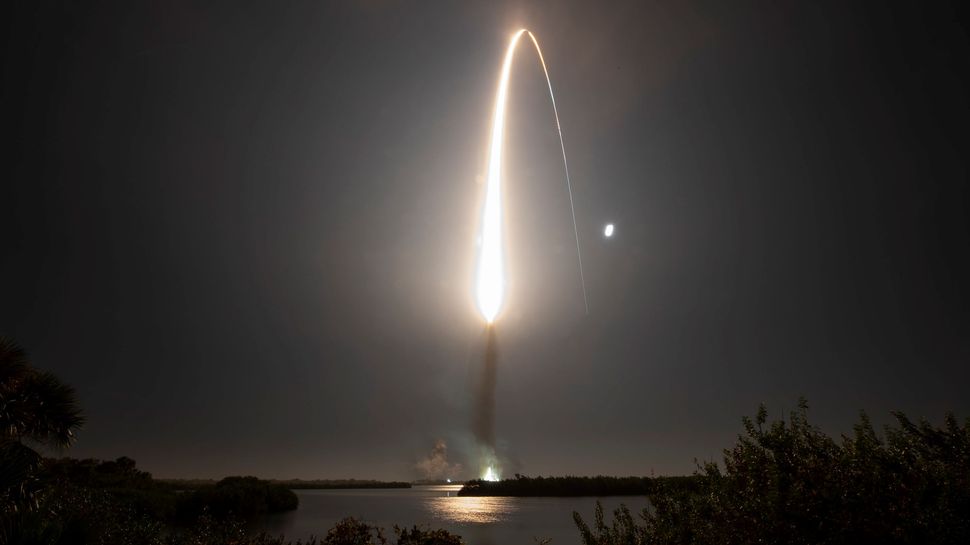
NASA’s SLS rocket soars into the Florida early morning sky, November 16th, 2022, at the start of the Artemis 1 mission to cislunar space.. Credit: United Launch Alliance

On November 16th, 2022 NASA launched what is – for a time at least – the world’s most powerful  rocket, the Space Launch System (SLS), on its maiden flight. The uncrewed mission marks the first flight of a human-capable vehicle to the vicinity of the Moon under the aegis of NASA’s Project Artemis.

Lift-off came at 06:47 UTC on the morning, and the rocket – roughly the size of the Apollo Saturn V but massing around 400 tonnes less and with engines generating 5 meganewtons greater thrust – was no slow climber like Saturn V; instead it fairly leapt into the night sky, thundering from 0 to 120 km/h in just a handful of seconds as it lifted an Orion capsule and service module away from the launch pad and on their way to orbit.

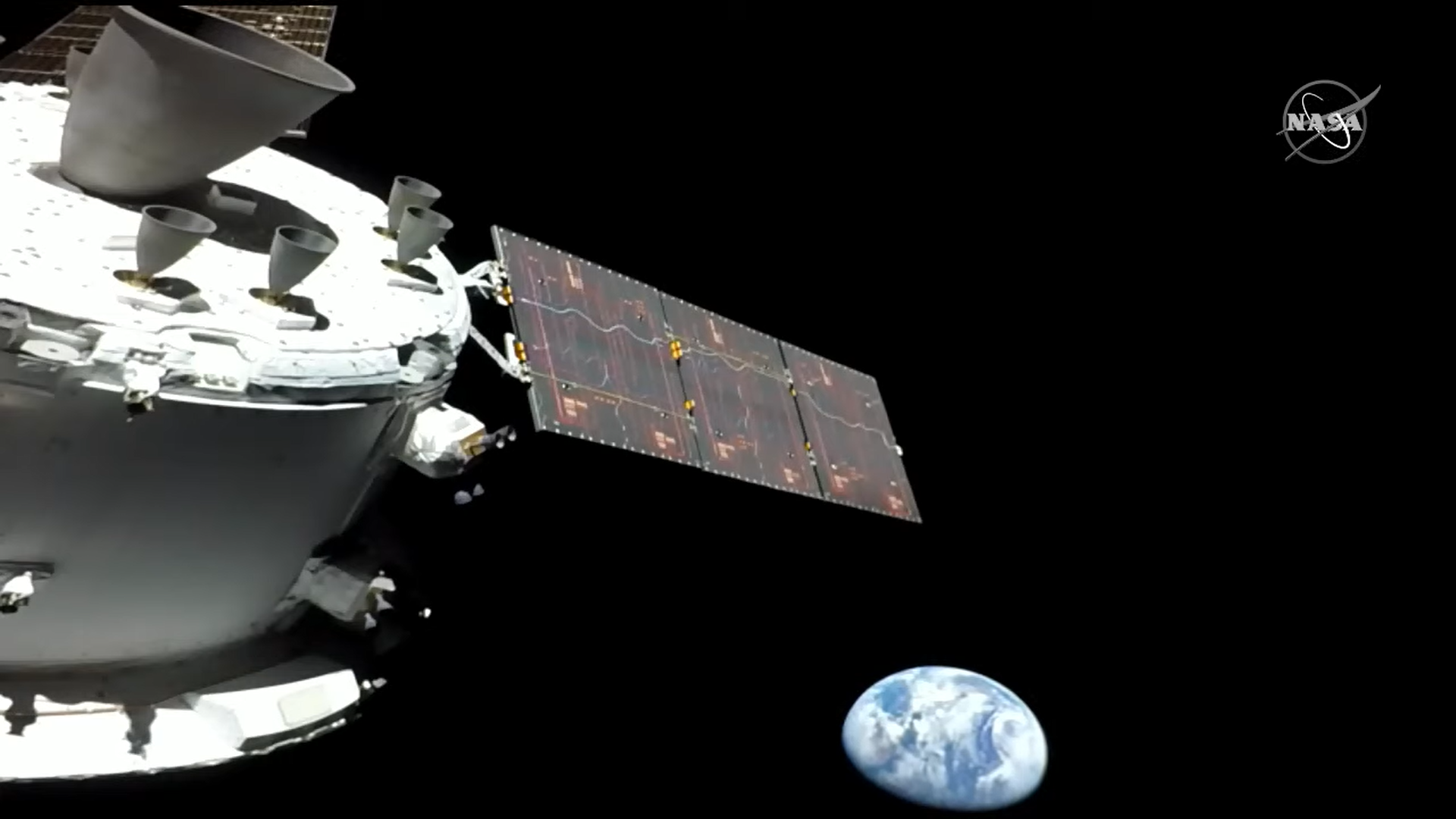
The view home: a camera mounted on one of Orion’s four solar arrays looks back at Earth from a distance of almost 92,000 km, 12.5 hours after launch as the vehicle makes a sweeping 6-day arc out from Earth to the Moon. Credit: NASA TV

It was actually a launch that also nearly didn’t take place (again); during fuelling operations immediately ahead of the launch, a leak was detected. Such leaks have been the bane of this rocket’s existence, and for a time it was uncertain if NASA would stop or delay the fuelling operation – and even scrub the entire launch attempt.

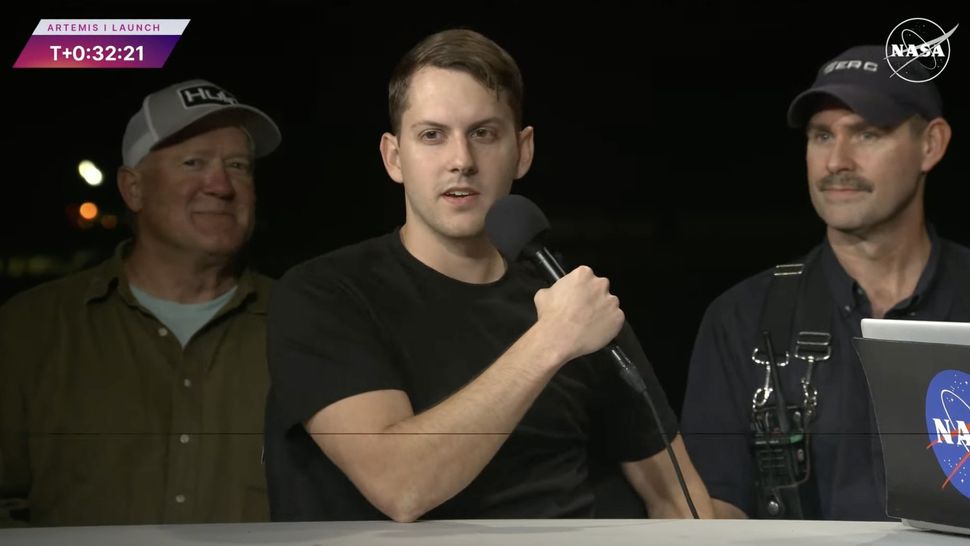
Instead, a risky decision was taken to send in a Red Team to Pad 39B at Kennedy Space Centre to try to fix the leak with the liquid hydrogen propellant feed at the base of the rocket, even with propellants in the tank and the risk of a spark causing an explosion. The team – engineers Trent Annis, Billy Cairns and Chad Garrett worked under the “living” rocket – these monsters do not stand quietly when even partially fuelled, they creak, groan and periodically vent excess gasses – to tighten the “packing nuts” designed to hold the seals on the propellant feed line tightly in place. The crew arrived on the pad just 3.5 minutes ahead of the launch and had to work fast to fix the issue if a launch scrub was to be avoided.

The three-man Red Team address reporters following their trip to the launch pad to fix a liquid hydrogen propellant leak during fuelling operations. Credit: NASA TV

Obviously, the team was successful – which does not lessen the risks they took as unsung heroes of the launch – and at 07:01 UTC, the Interim Cryogenic Propulsion Stage (ICPS) upper stage of the rocket placed the Orion vehicle in an initial orbit, and just over 30 minutes afterwards, the Orion service module successfully deployed the four solar arrays required to provide it and Orion with electrical power.

An hour later, after raising Orion’s orbit, the IPCS stage re-lit is engines to propel Orion from Earth orbit and into a trans-lunar injection orbit at 08:37 UTC, the stage separating from the space vehicle at 09:13 UTC.

Since then, the mission has progressed precisely as planned. At 14:30 UTC, Orion completed its first engine burn, correcting its flight to the Moon, and then late in the day a camera mounted on one of the service module’s solar panels captured a shot of Earth as seen from the vehicle, already almost some 92 thousand kilometres from Earth. On November 18th, the vehicle returned a further image of Earth – in greyscale – as it reached the 299,000 km from Earth mark.

A view of Artemis 1 simulated by AROW – he Artemis Real-time Orbit Website – showing the vehicle as it approaches the Moon on Sunday, November 20th. Note the vehicle appear to be travelling sideways in order to keep its solar arrays facing the Sun. Credit NASA AROW

The next major milestone for the flight comes on Monday, November 21st, 2022, Orion will complete the first stage of its leisurely, widely-curved outbound flight to the Moon. At 12:44 UTC on that day, with the vehicle passing around the far side of the Moon at a distance of 130 km, the vehicle will undertake a 2.5 minute burn of its main engine to direct itself into a distant retrograde orbit (DRO) which will carry it as far as 432,000 km from Earth.

The critical aspect of this manoeuvre is that it will occur when the vehicle is out-of-communication with Earth, thanks to the Moon being in between. The entire manoeuvre will therefore be carried out entirely by the onboard flight systems.

The flight so far has tested almost all of Orion’s flight, navigation and other systems, with only 13 issues, the majority defined as “benign”, being recorded. The most significant issue has been the star tracker – part of the flight navigation system. This was getting “dazzled” by thruster plumes as the vehicle adjusted its orientation during flight. While the tracker itself was designed to ignore the plumes, their brightness did confuse the flight software – something that hadn’t been considered could happen during testing. However, now it has been identified, the problem can be dealt with by Mission Control.

More substantial damage was actually done by the rocket itself at launch; the sheer power on the four RS25 engines and two solid rocket boosters did unspecified, but apparently extensive, damage to the mobile launch platform and launch tower. How much damage they sustained is unclear, but Pad 39B has been known to cause launch platforms using it damage. This was particularly noticeable following the launch of Apollo 10 in ay 1969 and again with the Ares 1-X launch in October2009 which resulted in some US $800 million in damages to the pad, platform and tower – although this was in part due  the vehicle having to be launched slightly off-vertical, resulting exhaust plume physically striking the tower.

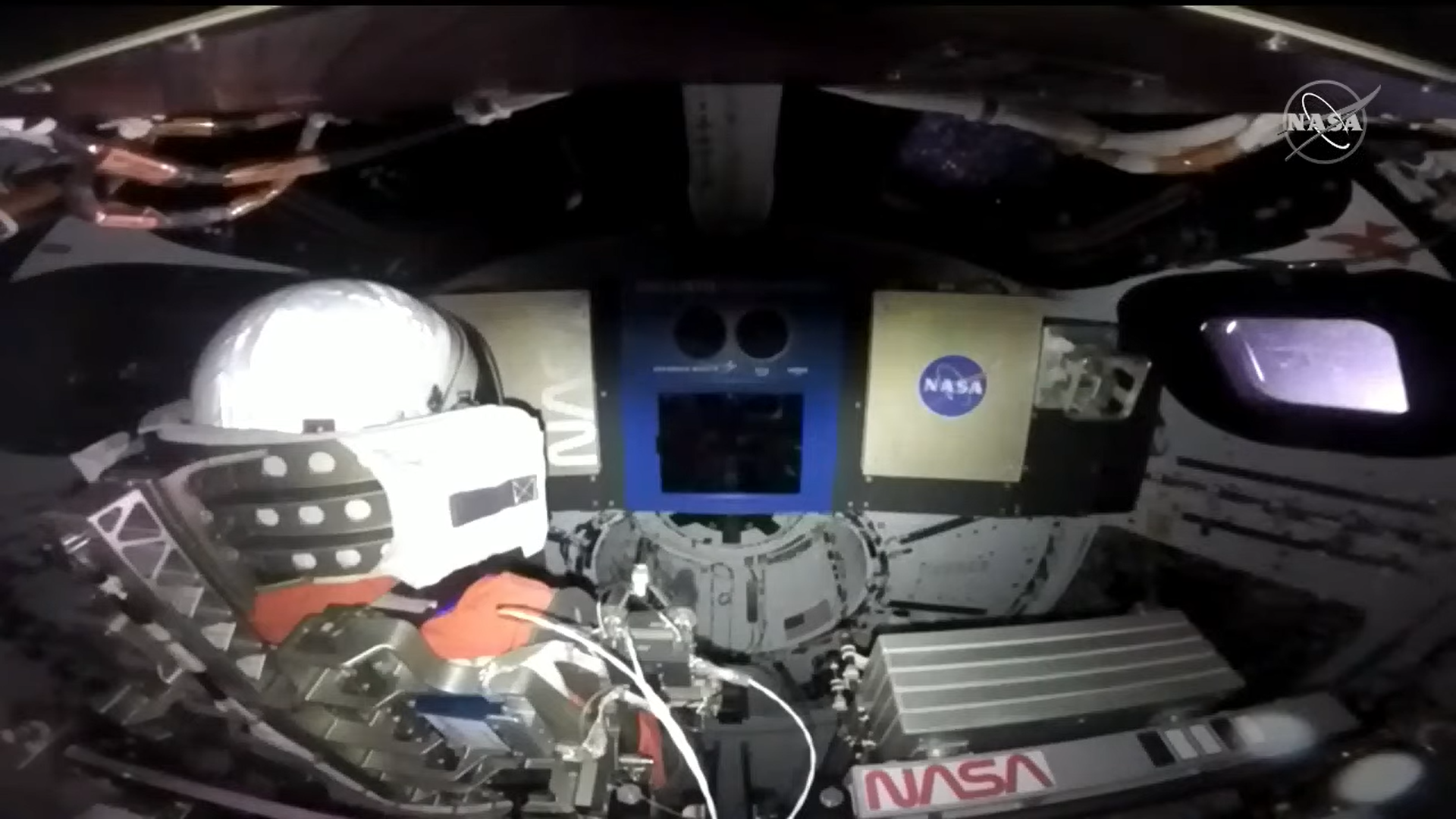
The view inside Orion: “Commander Moonikin Campos” seated in the command position aboard Orion, facing a set of dummy digital display panels. The mannequin is testing the Orion Crew Survival System Suit (OCSSS), designed to keep crew alive in the event of the vehicle’s life support system experiencing a malfunction. Credit: NASA TV

As  I noted in my previous Space Sunday report, Orion is carrying a range of experiments onboard, all of which are being monitored throughout the flight. Chief among these are the radiation experiments which will come into their own as the vehicle enters its extended orbit around the Moon, where it will remain through until it again uses the Moon to swing itself back onto a return course to Earth in December 2022.

If you want to interactive track Artemis 1, you can do so via NASA’s Artemis Real-time Orbit Website (AROW). In the meantime, the video below captures the stacking of the Artemis 1 SLS vehicle inside the Vehicle Assembly Building at Kennedy Space Centre, together with the original roll-out to the pad earlier this year, and the night-time roll-out ahead of the launch, together with the initial phase of the mission’s ascent to orbit.

Continue reading “Space Sunday: Artemis rises, a star is (almost) born”

The coffee houses of Heterocera in Second Life

Le’eaf and Tinsel Café, Heterocera – November 2022

Exploring Second life – particularly the Mainland continents – can be thirsty work. Fortunately there are often spots along the way that people have provided for the enjoyment of refreshments and a little sit-down.

Coffee is often the beverage of choice (although with the northern hemisphere winter and the holiday season approaching, hot chocolate is liable to start rivalling it as an option!), and that’s just fine with me, as I’m a genuine coffeeholic / coffee snob in the physical world :).

Take Heterocera as an example. Like all of the mainland continents it has plenty to see, particularly along its road and rail network – although the former is generally the easier way to spot public places awaiting visitors. I’m not going to try to offer an extensive review of all the cafés across the continent in this piece, instead, I’ll cover a trio I’ve enjoyed dropping into on occasion.

Le’eaf and Tinsel Café, Heterocera – November 2022

The first comes on the north side of the continent and, given its latitude and the time of year, is appropriately dressed for winter. Snuggled against the southern side of Route 3’s north-eastern curve, Le’eaf and Tinsel is reached via a short climb up a set of stone steps from the side of the highway.

Snow crunches softly under your feet as you wander the white dusted trails. Among the trees and gently falling snow you will find a winter wonderland and of course… Coffee. Le’eaf&Bean Coffee truck is onsite for your caffeine and cocoa fix.

– Le’eaf and Tinsel About Land

The work of T Lefevre (Teagan Lefevre), this 2,800 sq metre parcel sits under her Le’eaf portfolio of parcel and regions designs. Like her other work, the parcel forms a part of the Mainland Preservation Society & The Nature Collective – with Teagan working with Emm Vintner (Emmalee Evergarden) – and there will be more on this in a moment.

Le’eaf and Tinsel Café, Heterocera – November 2022

Small the parcel might be, it nevertheless offers an engaging visit, the path from the step meandering to the left between rocks, trees and shrubs to reach a little wooden bridge. Following the path offers hints of more to be found beyond the hedges: the walls and roof of a building and the top of a van. However, as the shrubs extend along the side of the path all the way to the bridge, visitors need to make a right turn at the top of the steps and follow the right arm of the path.

This also meanders somewhat, but leads to where a skating rink sits beyond a picket fence to the right (touch the sign alongside the rink for skates), and to the left is a fire pit warming outdoor seating. The building – a converted barn – and the van sit on the south side of the parcel; the former is home to a little bakery, the latter the Le’eaf & Bean coffee wagon; both lie alongside a winding boardwalk and have further outdoor seating snuggled between them.

Winter Wonders of Comelia Street and the Toe Beans Cat Café and Rescue, Heterocera – November 2022

The wooden bridge within the parcel spans a narrow stream, the path beyond passing through a set of high gates and into the next parcel and the second of the café destinations I want to talk about – the Winter Wonders of Comelia Street and the Toe Beans Cat Café and Rescue.

Both are the work of Emm Vintner as a part of her Nature Collective brand, with the former offering an almost winter-streets-of-New-York-meets-Dickens’-Victorian-England vibe. The cobbled street is lined to one side by tall apartment buildings and a cosy bookshop. With more snow falling from above, the north side of the street offers winter seasonal elements that help with the more timeless feel to the parcel – an outdoor hot chocolate stand, a snowman, and tall street lamps that might be a gaslight, together with a little place selling fir trees for the holiday season – complete with a modern machine for netting them to allow easier transport.

Winter Wonders of Comelia Street and the Toe Beans Cat Café and Rescue, Heterocera – November 2022

The far end of the street from the gate to Le’eaf and Tinsel provides access to the café, assuming you’re following my footsteps through he parcels.

As its name suggests, the Toe Beans Cat Café and Rescue is a place for both humans and cats – and particularly the latter! Kitties of all ages await visitors, with some also helping themselves to the café’s offerings! A novel aspect of the café is the ability to help toward local tier by “adopting” a cat from the board just inside the door to the left. L$25 will bring you a copy of one of the offers cats (just right-click and PAY the photo of the cat you desire).

Winter Wonders of Comelia Street and the Toe Beans Cat Café and Rescue, Heterocera – November 2022

The square outside the café is warmed on one side by a propane heater for those who would like to  sit outdoors, and one of the tables includes a game of draughts which might be enjoyed while munching on the roasted chestnuts available from the little vendor cart in one corner of the yard. Or visitors can sit on the bench next to the cart, which is also warmed by another of the propane heaters.

The final destination for this piece lies on the south-western side of Heterocera and is a place – again possibly befitting the more southerly latitude – which is snow-free for those looking for somewhere warmer to visit. It also, again if you’re following in my footsteps, continues the kitty theme found at the Toe Beans Cat Café in that there is a certain moggy presence to be found here.

Hi Café, Heterocera – November 2022

The work of Hitsu Ruby, the Hi-Café sits alongside the Atoll Road and sits within a cosy 1536 sq m parcel. The café itself sits adjacent to the cobbles of the Atoll Road, a tall brick-built building watched over by the aforementioned moggies and with an inviting, modern décor.

Caught in the shades of Autumn, the setting offers the café, with a span of a canal behind it cutting through the parcel to separate the café from Hitsu’s modest store, where she sells prefab buildings. Both the store and the café are also Hitsu’s own designs, but they appear to be custom builds rather than units she sells.  Those interested in her commercial builds can obtain demos through the store, or take a peek at the neighbouring parcel to the west, and her Store #11 on display.

Hi Café, Heterocera – November 2022

The canal itself is bordered on either side by paved footpaths complete with wildling flower beds, places to sit (allowing for the cats laying claim to portions of them!), the two halves of the parcel spanned by a pair of bridges. The rest of the parcel is peppered with little details – the bus stop (/landing point) alongside the road, the little second-hand bookstall / newspaper stand, a Parisienne-style kiosk, a fountain – all of which add character to the setting.

Those wishing to rez props for photography can do so by joining the local Group, and there is a 30-minutes return time for objects that are rezzed; however, if you avail yourself to the opportunity, do be sure to pick up your items hen done, so that other can rez without having to wait.

Hi Café, Heterocera – November 2022

All three locations are equally attractive, offering their own points of attraction. They are not the only such places to be found in Heterocera or SL as a whole, but I offer them here as a small selection, and may well do more pieces like this one in the future.

SLurl Details

2022 week #46: CCUG and TPVD meeting summaries

Vue Sur Mer, September 2022 – blog post

The following notes were taken from:

  • My audio recording and chat log of the Content Creation User Group (CCUG) meeting held on Thursday, November 17th, 2022 at 13:00 SLT.
  • My audio recording and chat log from the Third-Party Viewer Developer (TPVD) meeting held on Friday, November 18th, 2022 at 13:00 SLT. Pantera attended the meeting, but was unfortunately held-up beforehand, so around the first 10 minutes is absent from her video (embedded at the end of this summary).

Both meetings are chaired by Vir Linden, and their dates and times can be obtained from the SL Public Calendar.

This is a summary of the key topics discussed in the meeting and is not intended to be a full transcript.

Official Viewers Status

[Video: 0:00-2:00]

Available Viewers

The following reflect the list of current official viewers available through Linden Lab.

  • Release viewer: version 6.6.7.576223 – MFA and TOS hotfix viewer – November 1.
  • Release channel cohorts:
    • Maintenance P (Preferences, Position and Paste) RC viewer version 6.6.8.576431 on Monday, November 14.
    • VS  2022 RC viewer, version 6.6.8.576310, issued November 4 – utilises Visual Studio 2022 in the Windows build tool chain.
  • Project viewers:
    • PBR Materials project viewer, version 7.0.0.576331, issued on November 3.
      • This viewer will only function on the following Aditi (beta grid) regions: Materials1; Materials Adult and Rumpus Room 1 through 4.
    • Puppetry project viewer, version 6.6.3.575529,  issued on October 12.
    • Performance Floater / Auto-FPS project viewer, version 6.6.5.575378, October 4.
    • Love Me Render (LMR) 6 graphics improvements project viewer 6.6.2.573263, July 21.

General Viewer Notes

  • There is unlikely to be any major changes to the list above in week #47, as this is a short working week for the Lab due to the Thanksgiving holiday (Thursday / Friday).

Github Changeover and Streamlining the Code Contributions Process

Github Work

As previously announced, there is an initiative to improve continuous update integration in the viewer and improve the viewer deployment process.

  • For TPVs and developers, the most visible aspect of this is moving the viewer repositories from BitBucket to Github. This includes the viewer code base and the other public code bases currently in BitBucket (Autobuild, LLCA, etc.).
  • There is still no firm date as to when the actual switch-over to using the new repositories will occur, but the viewer development team is working steadily towards it, and the plan remains to provide plenty of advanced warning to TPVs on when LL plan to cut over to the new repositories before making a clean cut-over.

Status

  • The switch-over to using Github is now slated for “early in the morning” (PST / SLT) on Monday, November 21st, 2022.
  • This means that from the point of switch-over, the Bitbucket repositories will be locked and carry a warning that they are no longer current, and developers / viewer builders should use the GitHub repositories, as directed to in the warning.
  • The master viewer branch is already up-to-date on GitHub as of Friday, November 18th, 2022.
  • Notes on the switch-over were posted to developers on the open-source developers list.
  • There is no plan in place to phase out the Bitbucket repositories immediately, but they may well be removed in time.

PBR: Materials and Reflections

Project Summary

  • To provide support for PBR materials using the core glTF 2.0 specification Section 3.9 and using mikkTSpace tangents, including the ability to have PBR Materials assets which can be applied to surfaces and also traded / sold.
  • To provide support for reflection probes and cubemap reflections.
  • The overall goal is to provide as much support for the glTF 2.0 specification as possible.

Status

  • Please also see previous CCUG meeting summaries for further background on this project.
  • The  viewer is available as a project viewer via the Alternate Viewers page, but will only work on the following regions on Aditi (the Beta grid):  Materials1; Materials Adult and Rumpus Room 1 through 4.
  • The focus is currently on reviewing bugs reported by those testing the viewer, and creators using glTF PBR workflows to create content are encouraged to test out their content on the project viewer to ensure things look as expected when imported into SL.
  • One aspect of SL that does require testing is EEP assets; changes have had to be made to the shaders which mean that commercial EEP settings may not render as expected (things like haze density my  be modified, etc).
    • EEP creators may therefore want to test their settings using the project viewer, and Jira issues – please include “non PBR viewer” shots of how the settings should look and shots taken with the PBR project viewer for easier comparison / understanding of the issues seen.
  • Issues with alpha blending are being investigated – particularly linear space alpha blending and how best to carry forward “pre-PBR” alpha blending, which does not use linear space.
  • It has been reported that the PBR project viewer generating some 10% more CPU temperature and 17% more GPU temperature – this may be the result of the viewer having to work that much harder with PBR in order to maintain frame rates.
  • Reflection probes: concern was again raised over people excessively using probes (e.g. attaching them to all their products / objects they own).
    • Providing a means for users to disable probes attached to objects they purchase has been previously discussed within the project / CCUG meetings.
    • It is hoped the latter (people just randomly setting-up probes all over their house / land) can be mitigated against through a mix of education and explicit warnings / actions in the viewer.
    • Concern was also raised about the potential of localised reflection probes (essentially an invisible prim) could interfere with intended interactions (e.g. a probe enclosing a chair could block people’s ability to sit on the chair). If cases like this are found in testing, a request has been made for bug reports.
    • The PBR viewer does include a Build / Edit option to “ignore invisible prims” so that when building / editing, an attempt to select an object within the volume of a reflection probe prim will ensure the object is selected, not the probe prim, but it is acknowledged that this kind of operation needs to be better integrated with other mouse click options.
  • (TPV Meeting video)
    • It was noted that this project also marks the start of the deprecation (and eventual removal) of some real-time console performance reports, such as Fast Timers.
    • It has been reported that some testing the PBR viewer are finding that within the texture console, Bias is constantly being reported at 5 (which tends to cause texture thrashing in non-PBR viewers). However, within the PBR viewer  a Bias of 5 should indicate that the viewer is swapping – and keeping to – a lower texture resolution, and so should not result in any texture thrashing.

Screen Space Reflections (SSR)

  • LL does have a “subtle” SSR system working to replace Linden water reflections as currently rendered.
  • There is some further work to be carried out before it is “viewer-ready”, with the focus being on ironing out the bumps and cleaning-up bugs.
  • It was made clear that while this implementation of SSR will be applicable to scenes as a whole, it is not intended to be a replacement for creating mirrors – and so expectations should be set accordingly.

CCUG Meeting Specific Notes

The majority of the meeting was given over to a general discussion, per the cliff-notes below:

  • VR hardware and Second Life:
    • While frame rates are not so much an issue now in broad terms, there is still the need to get a high frame rate on a consistent basis for VR viewing to be enjoyable – and this is still not a giving with SL.
    • However, VR isn’t just about headsets; its about the “full” experience in using a range of associated peripherals: controllers, haptic gloves, the ability to have a “full-body experience” that VR users would want and expect, such as seeing your hand and arm when going to pick something up, being able to grip an object in your hands and feel responses from it when using it (e.g. the strike of a blade against another or a baseball sat against the ball, etc.).
    • The level of support for this more complete sense of immersiveness requires some extensive re-engineering of Second Life (e.g. facilitating a full and proper Inverse Kinematics system  as a single example).
    • The Puppetry project may facilitate some work towards this. However, the focus of this project is not on providing any form of in-depth VR support (it is intended to work with a broader range of peripherals, notably webcams, although use of some VR software support via OpenVR is being considered), being intended for use by as broad a cross-section of SL users as might be interested in it.
    • Another problem is determining what people want from VR; is it purely a mechanism for games, or does it need to be capable of “realistic” social interactions (some do still proclaim games, other demand social capabilities; the truth is probably more a blending of the two, just like life in the physical realm).
  • New users and their experience:
    • Much was made of the need for a completely new avatar system (LL is actually working on a new all-mesh “starter avatar”, but using the existing skeleton) – but overhauling / replacing the current avatar system raises its own compatibility / market issues.
    • A fair point was raised by LL concerning the use of eviction / ban scripts that specifically ban avatars that are less than X days old and / or avatars that do not have Payment Information On File.
      • These tend to get used at event spaces etc., to try to prevent griefers / trolls using throwaway accounts from accessing the space, rather than using other available moderation tools (which, admittedly tend to require human intervention with the right permissions, which might not always be available).
      • The problem here is that often, a “genuine” new user will often sign-up, go through the new user experience, then try to go to a event – only to immediately find they are denied entry or are ejected without warning or explanation, and as a result, they log-out.
      • The need for improved tools to handle griefing and trolling are likely required – but no discussion on what form these might take.
  • Audio: a general conversation on the potential of “full” spatial audio, including directional (e.g. so an audio stream at a disco appears to be coming from the speaker system in the venue) and also sound volumes.
    • Nothing is currently planned for audio in the roadmap, but it was noted that the first test of using volumes (reflection probes) is in Aditi testing, and LL will obviously seeing how well that works.
  • It  was made clear that scripts will “NEVER” be allowed to create new assets (so no ability to generate notecards from a script). One of the reasons cited for this is the cost of storing assets if there is an uncontrolled ability to generate them through scripts (particularly given SL’s asset count is already in the petabytes range in terms of storage).

TPVD Meeting Specific Notes

Atlassian Jira and Bug Reporting

  • Atlassian has announced it will be restructuring how it licenses the Jira bug reporting product from 2024 onwards. Currently, LL can run a public-facing Jira reporting system that effectively allows every Second Life user to create an account on it to view all the public SL bug reports and feature requests.
  • Under the 2024 pricing restructure (which will be pretty much per-account), this will be prohibitively expensive for LL, so they are starting into the process of looking for an alternative means to provide some form of user-facing bug reporting mechanism.
    • one option being considered is to continue to use Jira internally (where the number of licensed accounts can be controlled), and use a different mechanism for public bug reporting, with a bridge between the two.
    • Another is to move away from Jira entirely.
  • No decision has been made as yet, but as Firestorm also use Jira, the suggestion has been made that the two develop a joint plan to resolve the situation in terms of future tools.
  • The topic lead to a general discussion on possible options, but no conclusions drawn – and there is sufficient lead-time on the matter for various options to be looked into, allowing for the time required to transition to any alternate that might be selected / finding the means to keep the wealth of information on the SL Jira available for reference.

General Notes

  • There is a report that Active Voice on at least some viewers is not updating correctly (e.g. following a teleport, and it is proving easier to enable  / disable Voice morphing vie the menu than to disconnect / reconnect Voice in order to correct.
    • The issue here is not so much which is the preferred method to correct the problem, but whether the Active Voice list failing to update is a widespread issue with viewers, and whether it can be reproduced on the official viewer & a bug report raised.
  • Beq Janus has written a post on alpha blending issues (see: Alpha blend issues? Get them sorted – subtitled Making it easier to avoid alpha-clashes with Second Life and OpenSim outfits). Rather than have me  decimate the discussion, please refer to the video fat 35:56 through video end for more.

Next Meetings

  • CCUG: Thursday, December 1st, 2022.
  • TPVD: Friday, December 23rd, 2022.

The Face of Beauty in Second Life

Carmel Art Community: Hermes Kondor – The Face of Beauty

The Carmel Art Community is home to many SL artists, offering both boutique studio spaces in which they can display / sell their work, and regular art-related events through the year. It’s a community I’ve covered in terms of facilities and exhibitions in the past in these pages – and will continue to do so. However, for this piece I want to focus on just one newly-opened exhibit, as it is focused on an tool that is fast becoming very popular with artists the world over, and one I’ve mentioned rather a lot of late: Midjourney AI art generator.

The exhibition in question is The Face of Beauty, by Hermes Kondor. Comprising a total of 14 pieces, it has attracted me due to the manner in which Hermes has used Midjourney;  one that is somewhat different to the exhibitions featuring its use I’ve so far mentioned in these pages.

Carmel Art Community: Hermes Kondor – The Face of Beauty

As  I’ve mentioned previously, Midjourney utilises descriptive text and text terms to curate together / generate images. The results can be far ranging, from almost perfectly capturing the artist’s intent in the most realistic of fashion, to entirely abstract or impressionistic results, depending on what is defined. For example, “/imagine a city in Japan at night” will result in something close to the description, whereas, “/imagine a knight in battle, cinematic, epic, detailed, octane render, intricate” may result in something more abstract – or at at least, unexpected.

For the images presented in The Face of Beauty, Hermes has used his own descriptions – or as he terms it, “personal concept and prompts”, then taking the results and further processing them using PhotoShop. The result is the most remarkable collection of head-and-shoulder portraits of women from around the world, dressed in period / floral / regional dress. Such is the craft involved – and allowing from the human touch in post-processing, it is difficult to comprehend these were images defined by the use of algorithms rather than captured on film or committed to canvas in oil.

Carmel Art Community: Hermes Kondor – The Face of Beauty

To describe these pieces further is to defeat the objective of having them displayed by the artist; therefore I’ll leave you with the images here as a taste and suggest you pay a visit and witness The Face of Beauty first-hand.

SLurl Details