Chang’an with a twist in Second Life

Chang’an, May 2023 – click any image for full size

It’s pretty well established in these pages that I tend to be drawn to things with an Oriental theme running through them in much the same way as a moth is drawn to a source of illumination. Part of this is doubtless the result of having spent some of my childhood years in Hong Kong (and some of my early adult years traveeling to places on that side of the world). However, it’s also likely born of the rich history of the Far East, a history which I’ve always found to be more engaging than the histories of western nations.

Which is a roundabout way of saying that when I copped the Destination Guide entry for Chang’an, I knew it would be skating up my list of places to visit; if nothing else, the DG description was enough to raise my eyebrow as curiosity was piqued.

Explore the virtual Chang’an, the capital of the Tang Dynasty (AD618-907) in China. You can see ancient Chinese (East Asian) cultural factors, including palaces, Buddhism temples, and gardens. Here you can dance, sing, entertain, and shop.
Chang’an, May 2023

This is an introduction which immediately gives a first hint of this Full private region’s over-arching theme: that of a fusion of Oriental / East Asian elements with a particular (but not exclusive) emphasis on China and Chinese history. Not that the setting is intended to be purely historical in context; in much the same way as it offer a fusion of influences, so too does it present a combining of periods, ancient and modern.

Designed and built by 大鱼 (Deo Rain), the region’s DG and About Land descriptions tell only a small part of Chang’an’s long history. The name belongs to what is now regarded as Xi’an, the capital of Shaanxi Province, and the third most populous city in north-western China. Over the last 40-ish years, and keeping pace with China’s overall modern economic development, Xi’an has re-emerged as an industrial, political and educational centre and, particularly, a cultural centre of note.
Chang’an, May 2023

As a centre of import, Xi’an’s roots go back to Neolithic times when it was a centre for the Yangshao culture, and areas within the city and its surroundings were used by several Chinese dynasties as their capital. These included the first half of the Zhou Dynasty, with centres at Feng Jing and Haojing, the Qin Dynasty, thanks  to China’s first emperor Qin Shi Huang (he of the Terracotta Army fame and responsible for starting construction of the Great Wall), moved the Qin capital to Xianyang in what is now the northern part of Xi’an. From here, it became central to the majority of the major dynasties through to the Ming and Qing Dynasties (the latter being the last imperial dynasty of China prior to the country becoming a republic in 1911).

The city of Chang’an is generally regarded as coming into being in 200 BC, when Emperor Liu Bang of the Han Dynasty ordered the construction of Weiyang Palace and, six years later, that of the first of the Chang’an city walls. However, it is under the Sui and – as noted by Deo in his descriptions for the region – the Tang Dynasties (which consecutively spanned a period from 581 CE through 907 CE) that Chang’an came to full prominence. This was kicked-off during the Sui Dynasty, when a new city was built south and east of the Weiyang palace, when it was initially called Daxing before being renamed Chang’an (meaning Perpetual Peace or Eternal Peace) during the Tang Dynasty.
Chang’an, May 2023

During this period, and prior to its destruction in 904 CE, Chang’an grew to enclose an area of some 84 km2 within its walls, split into three major districts: the civilian city, the imperial city and the palace itself.  During this period it was the third largest city in the world, boasting centres of commerce, learning, religion and culture, with paved roads and avenues of impressive proportions (Zhuque Avenue, the city’s grand street, was an impressive 155 metres across!).

As well as the palace, the city featured the Giant Wild Goose Pagoda, which together with the Small Wild Goose Pagoda survived the destruction of Chang’an (although it did suffer extensive earthquake damage in 1556 CE). It was built as the repository for sutras and figurines of Gautama Buddha that were brought back to China from India by Xuanzang, who also brought over 600 Sanskrit scriptures to Chang’an, where he established a centre for their translation, work which contributed enormously to the growth of both Chinese and East Asian Buddhism.
Chang’an, May 2023

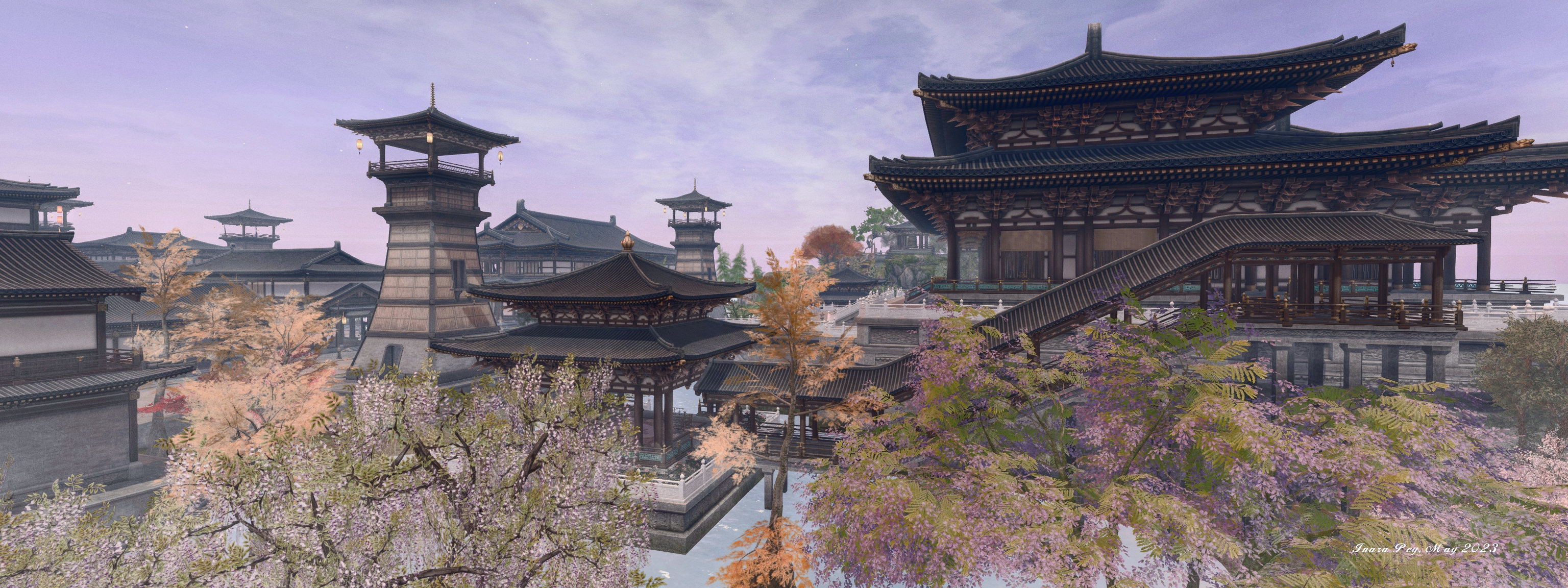
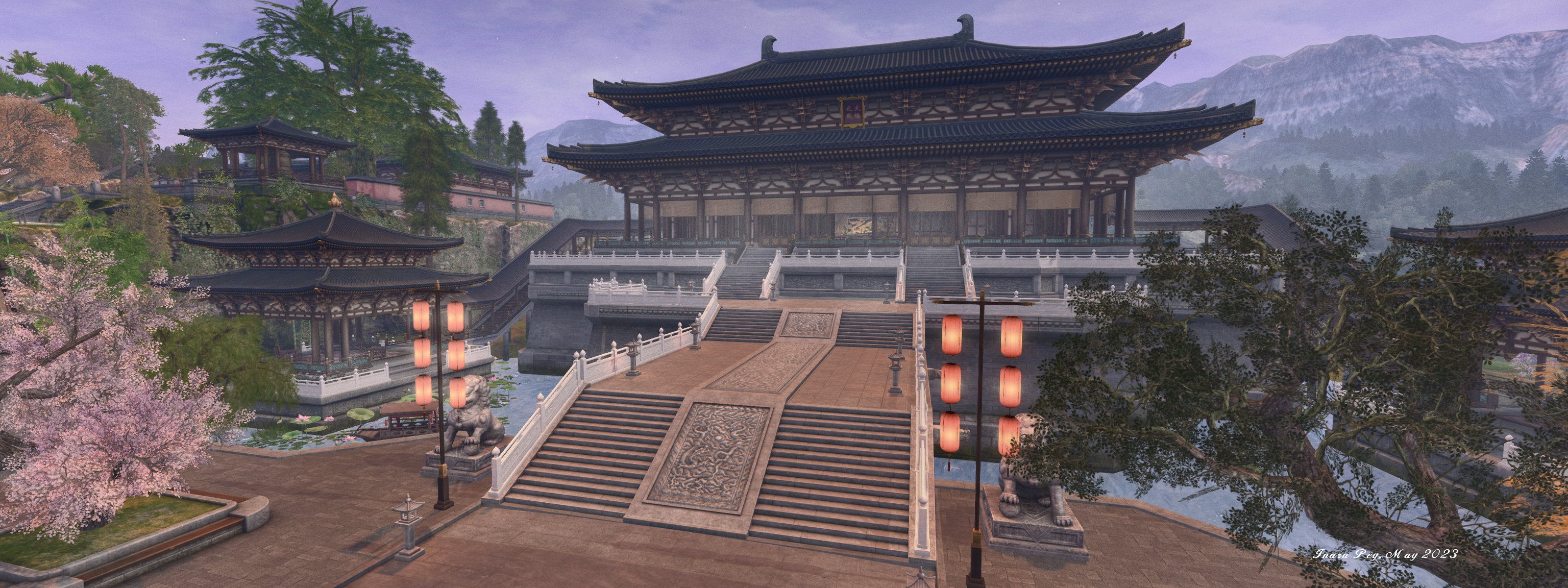
Much of this is celebrated in Deo’s build. Like its namesake, the later can be broadly split into three areas: the commercial centre (with stores available for rent), a cuisine district, and the palace-like Taiji Hall, sitting elevated at one end of the region, a broad paved footway running to it in the manner of Zhuque Avenue from the citadel gates, neatly separating the commercial and cuisine districts from one another in the process. The hall sits apart from most of the rest of the citadel as befitting its status as a near-palatial building, thanks to a broad body of water almost completely slicing through the northern part of the region.

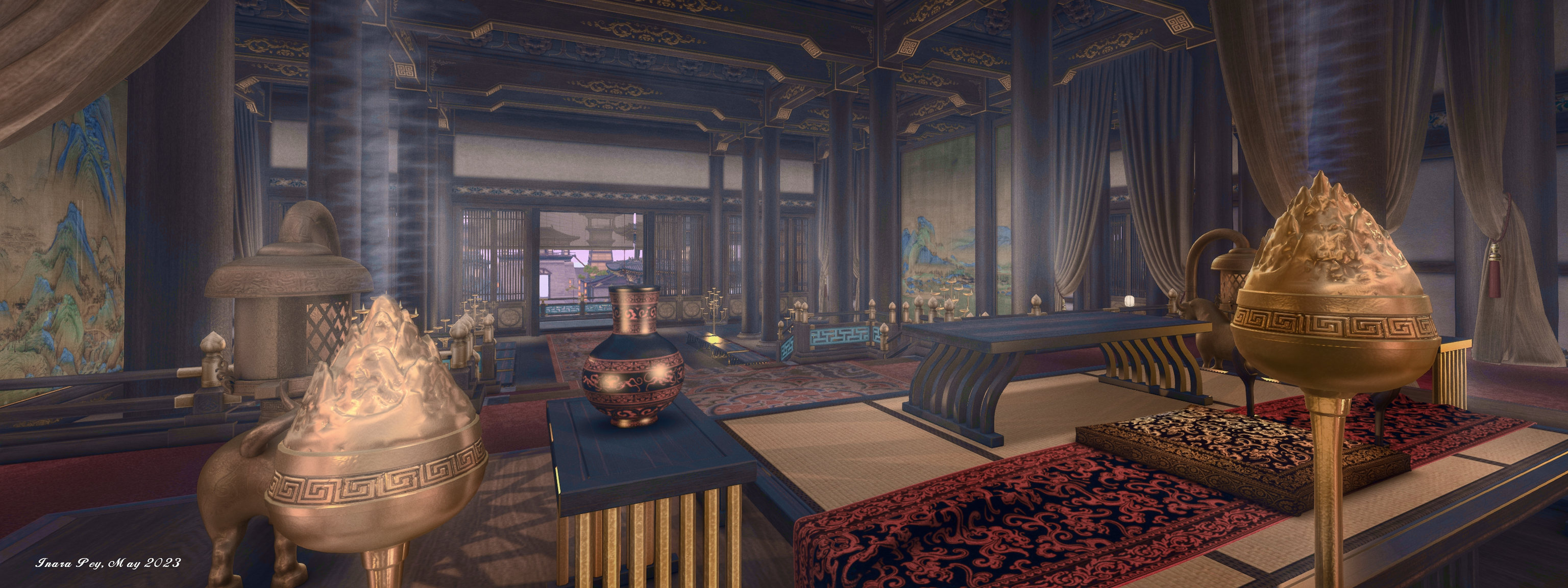
Two tall watchtowers stand guard on either side of the broad stepped bridge spanning the water to reach the main hall, and while these may not be particularly pagoda-like, but it is hard not to imagine them standing in for the Wild Goose pagodas of Chang’an. Taiji Hall itself is huge and of genuine beauty and craftsmanship (although apparently still under construction in places from what I saw whilst taking a sneaky cam around it!), which speaks to Deo’s skills as a designer: like the rest of the buildings within the region, it is entirely his own design.

Chang’an, May 2023

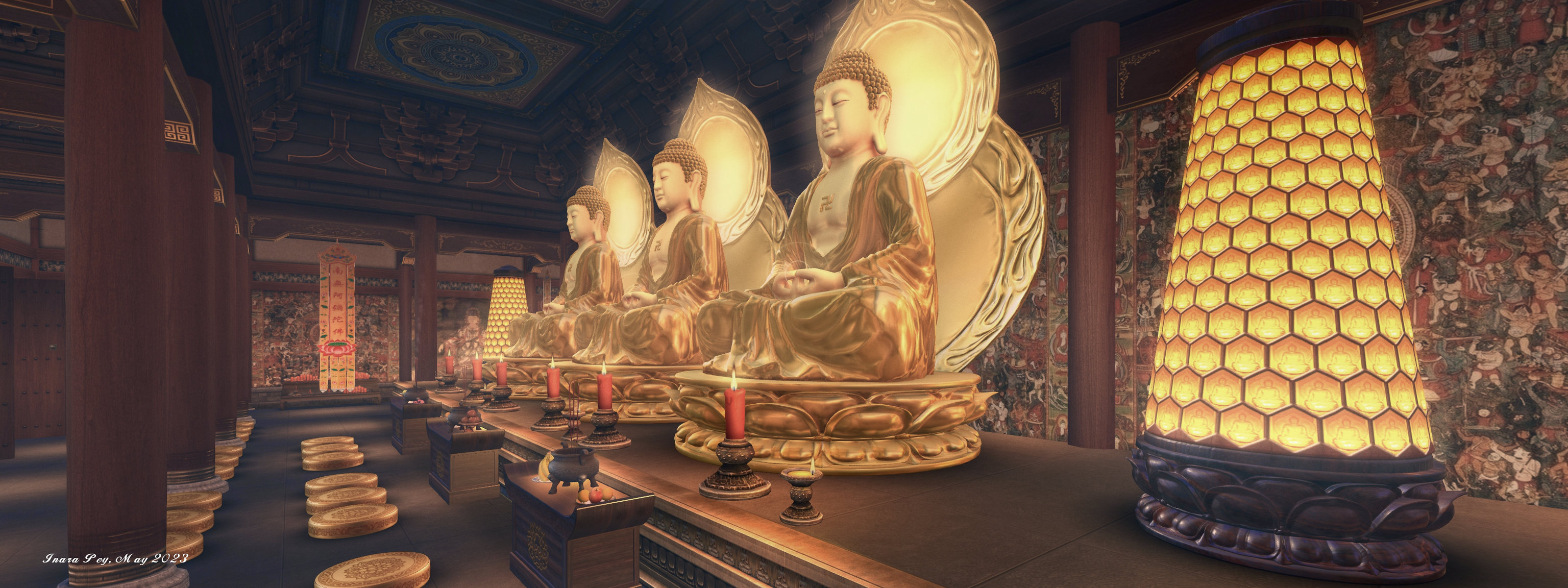
The most prominent elevated element of region sits to the north-west as a high plateau. It is topped by a temple which appears to offer a nod towards the Republic of China, carrying as it does the name of Anping. Built around a main courtyard, the temple has two primary buildings, the larger of the two dominated by three large figures of Buddha, and the smaller by a gold-covered figure of Guanyin, the East Asian representation of Avalokiteśvara. Thus, this retreat would seem to be an acknowledgement of Xuanzang and his seat of translation / study founded at Chang’an. But – how does one reach it? From the terraces of the palace and the paved streets below it, there does not seem to be an obvious route.

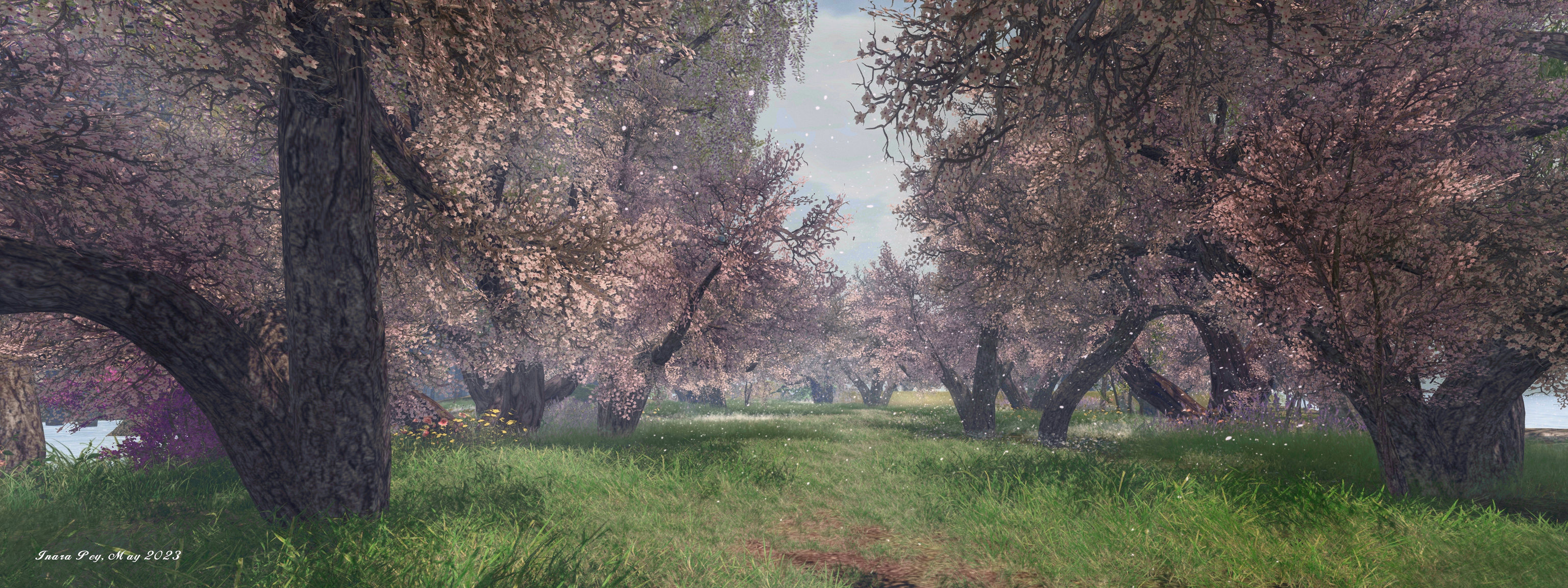
The answer lay close to the southern gateway where, between the eatery and the club-come-bathhouse which help fuse past and present within the build, a covered walkway might be found. Not only does this provide access to the engaging south-west section of the build (which hides its own pavilion and butterfly garden), and thence north to where a paved footpath meanders back towards the palace. As it does so, the paved path passes the start of a second, loosely-laid path winding into a gorge as it cuts into the base of the plateau. The far end of this path marks the start of a winding climb upwards. It’s a route of exploration I highly recommend, as it offers a sense of pilgrimage it is meandering route, as means to see parts of the region which might otherwise be missed, and a superb way to look out over the citadel as the path is climbed to reach a promontory just below the temple proper.
Chang’an, May 2023

When visiting Chang’an, I would recommend taking time out to study the map provided close to the landing point, as it will help point out the locations within the region – including those I’ve not mentioned or really described in this article. I would highly recommend a visit, as the region does offer an interesting fusion of ideas, and – quite frankly – Deo’s architecture is gorgeous.

 SLurl Details

2023 SL viewer release summaries week #21

Logos representative only and should not be seen as an endorsement / preference / recommendation

Updates from the week through to Sunday, May 28th, 2023

This summary is generally published every Monday, and is a list of SL viewer / client releases (official and TPV) made during the previous week. When reading it, please note:

  • It is based on my Current Viewer Releases Page, a list of all Second Life viewers and clients that are in popular use (and of which I am aware), and which are recognised as adhering to the TPV Policy. This page includes comprehensive links to download pages, blog notes, release notes, etc., as well as links to any / all reviews of specific viewers / clients made within this blog.
  • By its nature, this summary presented here will always be in arrears, please refer to the Current Viewer Release Page for more up-to-date information.
  • Note that for purposes of length, TPV test viewers, preview / beta viewers / nightly builds are generally not recorded in these summaries.

Official LL Viewers

  • Release viewer: Maintenance S RC viewer, version 6.6.12.579987, dated May 11, promoted May 16.
  • Release channel cohorts (please see my notes on manually installing RC viewer versions if you wish to install any release candidate(s) yourself).
    • glTF / PBR Materials project viewer, version 7.0.0.580330,  May 25.
    • Maintenance T RC viewer, version 6.6.13.580262, May 24.
  • Project viewers:
    • No updates.

LL Viewer Resources

Third-party Viewers

V6-style

V1-style

Mobile / Other Clients

  • No updates.

Additional TPV Resources

Related Links

Kayly Iali at the the Windlight Loft in Second Life

Kultivate Magazine Loft Gallery: Kayly Iali

It’s been a while since I’ve had the opportunity to visit an exhibition by Kayly Iali in Second Life, so when Kultivate Magazine announced the opening of such an exhibition of her paintings within their Loft Gallery, I decided to make amends for this and hop on over.

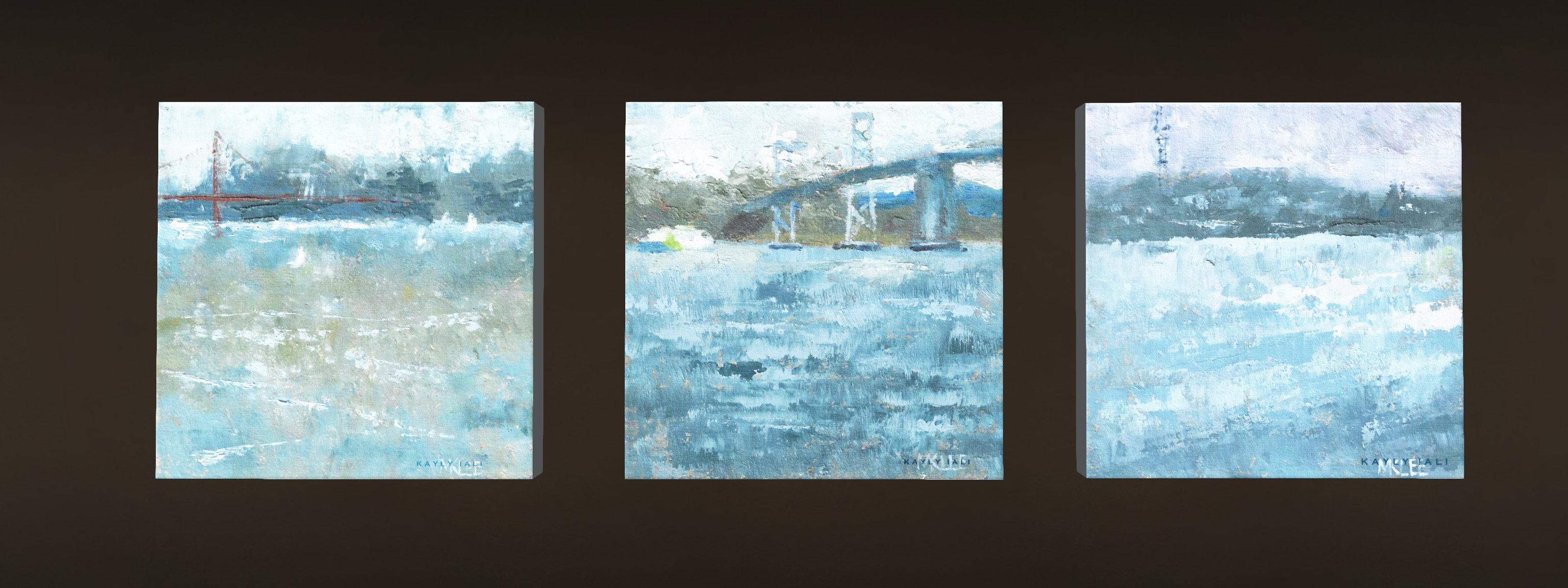
Kayly is an artist in the physical world who uses Second Life as a means of reaching a global audience and present her work. She most frequently works with watercolours and oils, and describes herself as an impressionist in terms of her style of painting, utilising relatively small, thin, yet visible brush strokes, open composition with an emphasis on an accurate depiction of light and movement within her work. Her subject range encompasses still life, portraits and landscapes, and she has a reputation for producing engaging commissioned portraits of pets belonging to Second Life users, some of which have also featured in her in-world exhibitions.

Kultivate Magazine Loft Gallery: Kayly Iali

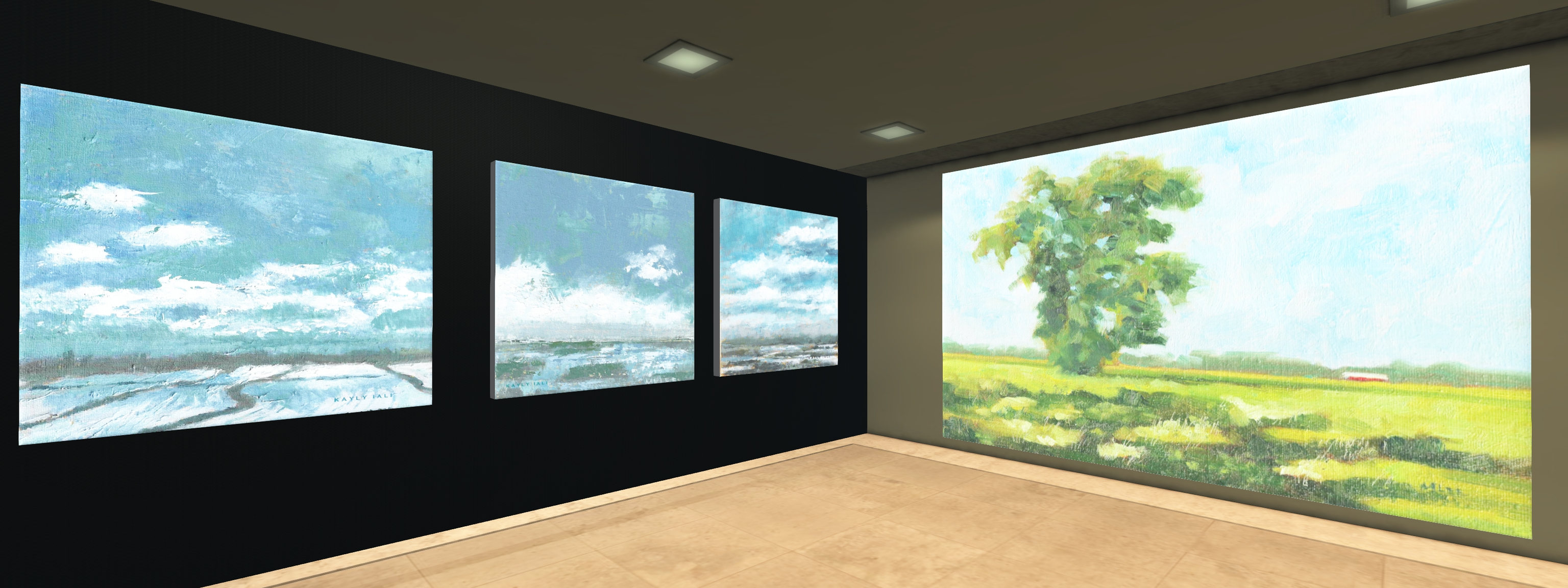
At the loft, Kayly presents a modest selection of her landscape art – twenty in total – featuring locations and sights to be largely (exclusively?) found within her home state of California. Whilst all of them are individual pieces, some might also be drawn together as themed sets or pairings – such as those featuring various landmarks in San Francisco, the “causeway” paintings, and the “Vacaville” pairing. The majority are presented in that impressionist approach noted above, although the “San Francisco trio”, as I’ll loosely refer to it and featuring Alcatraz and both the Golden Gate and Oakland bridges, also leans  towards something of an abstract styling.

Whilst all originating in the physical world, these are pieces that could just have easily had their inspiration rising from within Second Life. As such, they offer something of an artistic bridge between both the physical and the digital, reminding us that our two worlds, whilst never exactly meeting are nevertheless closely intertwined.

Kultivate Magazine Loft Gallery: Kayly Iali

These are engaging pieces which form an equally engaging exhibition; they are also – given the way the link our two worlds – pieces that will grace any Second Life home.

SLurl Details

A touch of rural Wales in Second Life

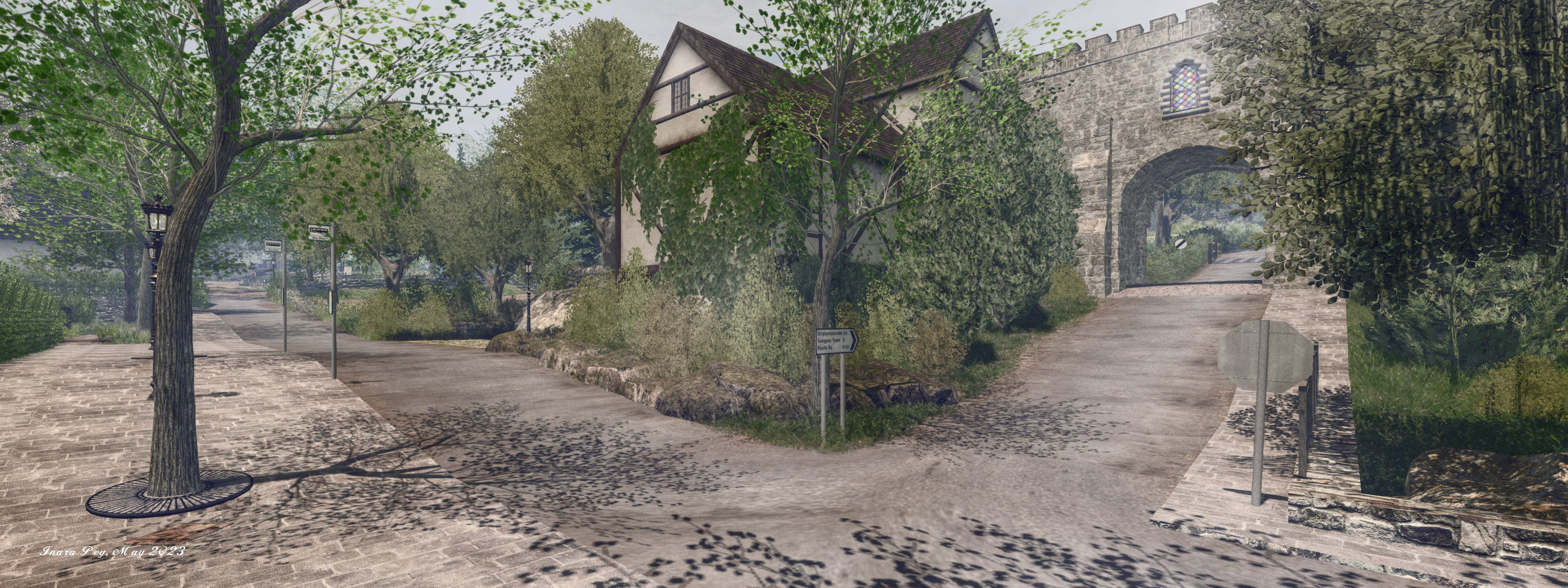
Seogyeo Town, Seogyeoshire, May 2023 – click any image for full size

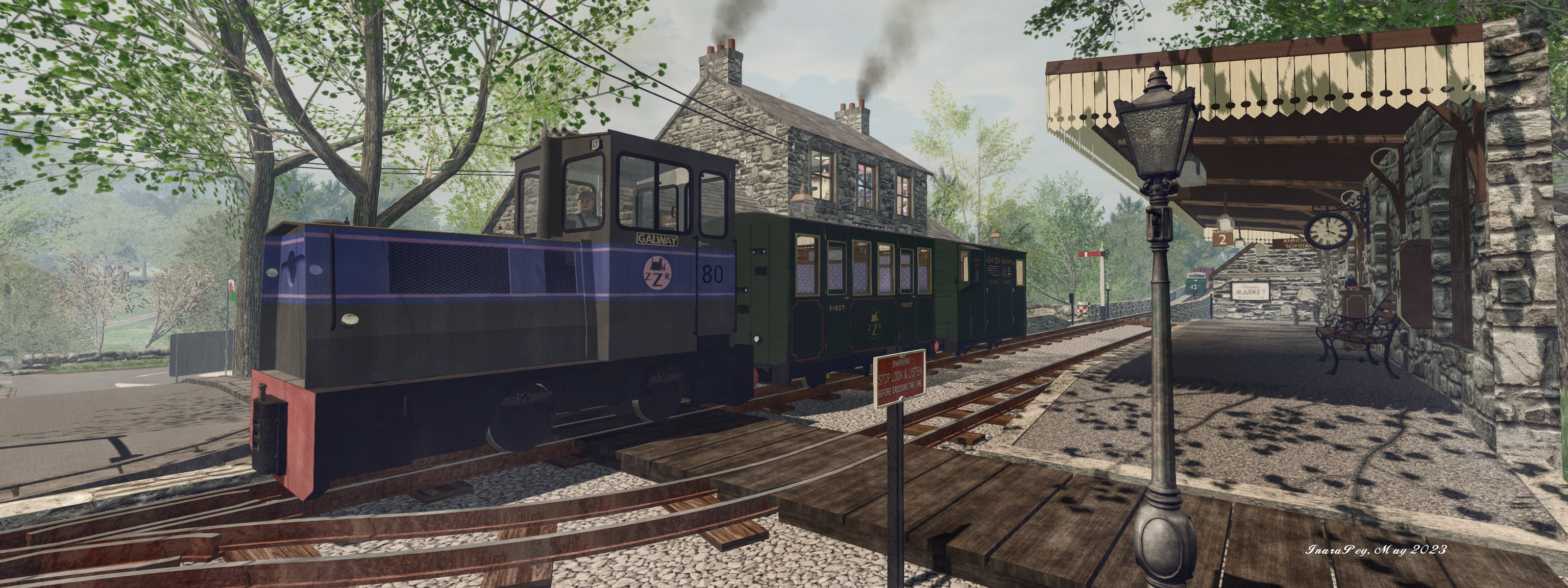
In April 2021, I took a trip on Zany Zen’s superb narrow-gauge railway as it charts its way through north-west Jeogeot (see: Letting off steam with Zany Zen Railway in Second Life). The results of the trip led to a short series on some of the narrow-gauge railways in Second Life (see: A Ride on the Valkyrie and Climbing a Mountain in Second Life and GLTSL 3: Dreamshire Village, Second Life).

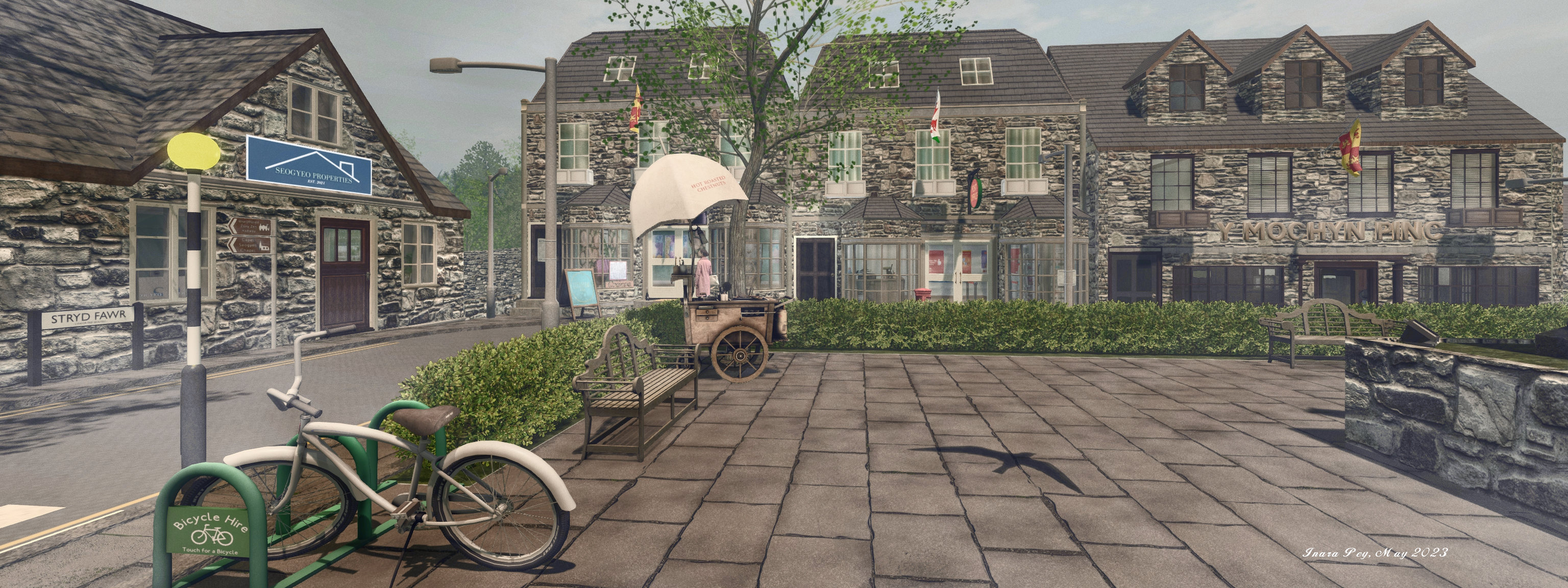
The Zany Zen runs from the little coastal setting of Little Coverston to Somdari. In doing so, it runs through a total of seven settlements, all of which have come together to form the Welsh-themed Seogyeoshire, modelled after a traditional county of  the UK and centred on the county town of Seogyeo, which forms the official mid-point of the Zen’s route. The result is a truly engaging, picturesque setting that captures the scenic beauty of rural Welsh and (dare I say it), English counties bordering Wales.

Seogyeo Town, Seogyeoshire, May 2023

The seven villages and towns of Seogyeoshire comprise Little Coverston and Brigbymoorside to the north on the Gaori coast, Middle Claydon, Seogyeo Town itself, Verney Junction, Bempton and the delightfully named Little Framerate (which is anything but 🙂 ). These flow one to the next through landscaped countryside on either side of the Zany Zen, managed by the local community as overseen by the local town and parish councillors (aka Seogyeoshire’s admins).

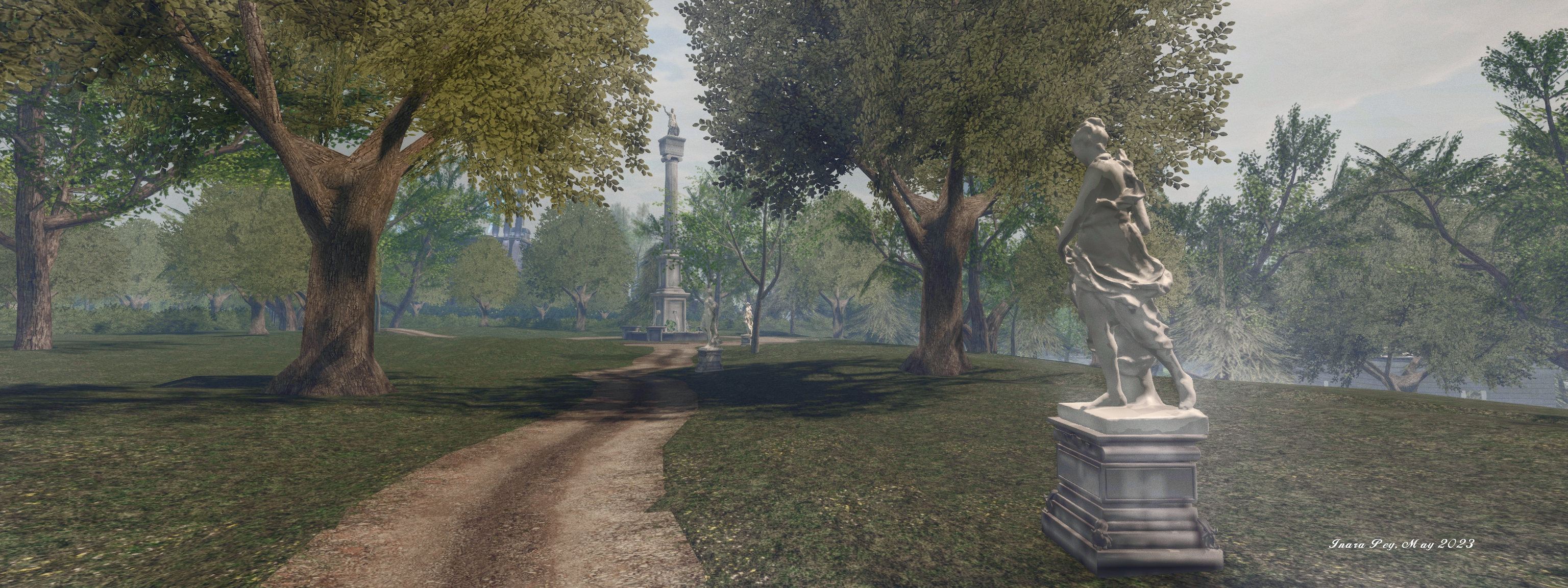
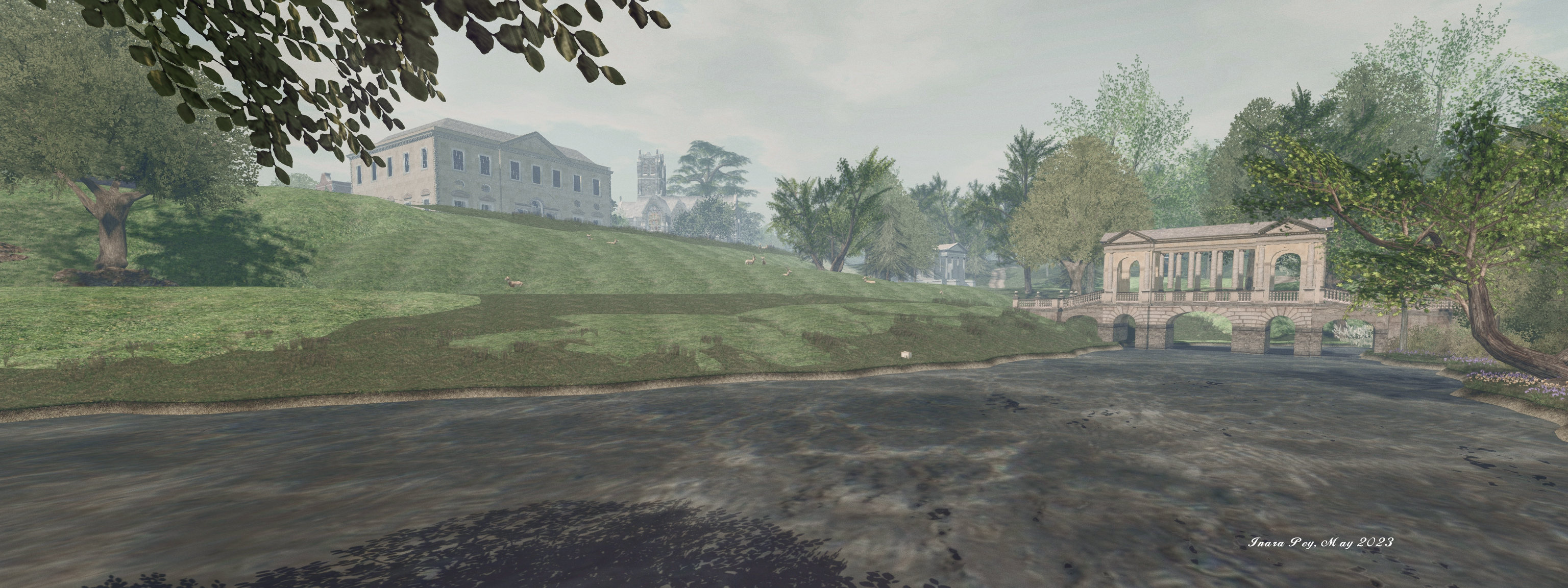
As the largest of the population centres, I focused much of my visit which gave birth to this article on Seogyeo Town and its immediate surroundings – including Claydon House and its parklands – although some of the images herein are taken from other parts of the county, so if you want to truly experience the county, do make sure you visit it!

Seogyeo Town, Seogyeoshire, May 2023

The place to start explorations of the town is the local square – the target of the town’s landing point. Here, overlooked by a figure on horseback (who is, for reasons unknown wearing a pair of motorcycle goggles!), visitors can receive a map of the county which highlights the points of interest awaiting discovery.

This map demonstrates the care with which the community at Seogyeoshire maintains the overarching theme of presenting a touch of Wales / Britain: the map is clearly modelled after those produced by Ordnance Survey (OS), the national mapping agency for Great Britain, and the first such agency to be established (dating back to 1747).

Seogyeo Town, Seogyeoshire, May 2023

The attention to detail continues with the use of recognisably “British” street name signs (which, given this is a corner of Wales present names in both English and Welsh), road traffic signs and road markings, the use of Belisha beacons at public road crossings,  very British public rubbish bins, and so on. The humour is typically subtle and easy-to-miss unless you happen to be from these shores. I wonder how many visiting the town get the joke of the local OP-CO food store, or appreciate the dry humour behind the “Grimsby Would We Really Miss It?” election poster (in almost-Conservative-blue!) or recognise the intentional irony in the naming of Long Street.

Seogyeo Town and Seogyeoshire as a whole have a sense of age and history common to the majority of rural areas and older towns of Britain: modern buildings rub shoulders with those dating back hundreds of years; the local parish church sits well above the rest of the town to remind the people of its presence and to come to worship, its graveyard speaking to the long history of settlement here. Sites of antiquity are carefully marked and preserved, and more “modern” institutions have attempted to fit quietly within the community rather than setting themselves aside. For example, there’s the post office cuddled against the local pub; the local police station tucking itself quietly inside the converted ground floor of a house, the upper floor of which offering the officer and their family a small apartment-style home.

Seogyeo Town, Seogyeoshire, May 2023

This sense of history enfolds a length of canal which appears to have once reach all the way to the base of the hill on which the large bulk of a brewery sits. Whilst its western end has been built over and its eastern end converted into a pond and public space commemorated Queen Elizabeth II, the canal perhaps once brought grain and hops to the brewery in the early years of the industrial revolution, before steam trains robbed the longboats of their trade.
Incidentally, the brewery speaks to the manner in which some of the Seogyeo community’s neighbours have entered into the spirit of things. Whilst resembling a building born of the industrial revolution, it is in fact a façade which allows the Buildables SL building supplies store. Thus, it allows the store to blend into the Seogyeoshire’s general ambience rather than painfully clashing with it.

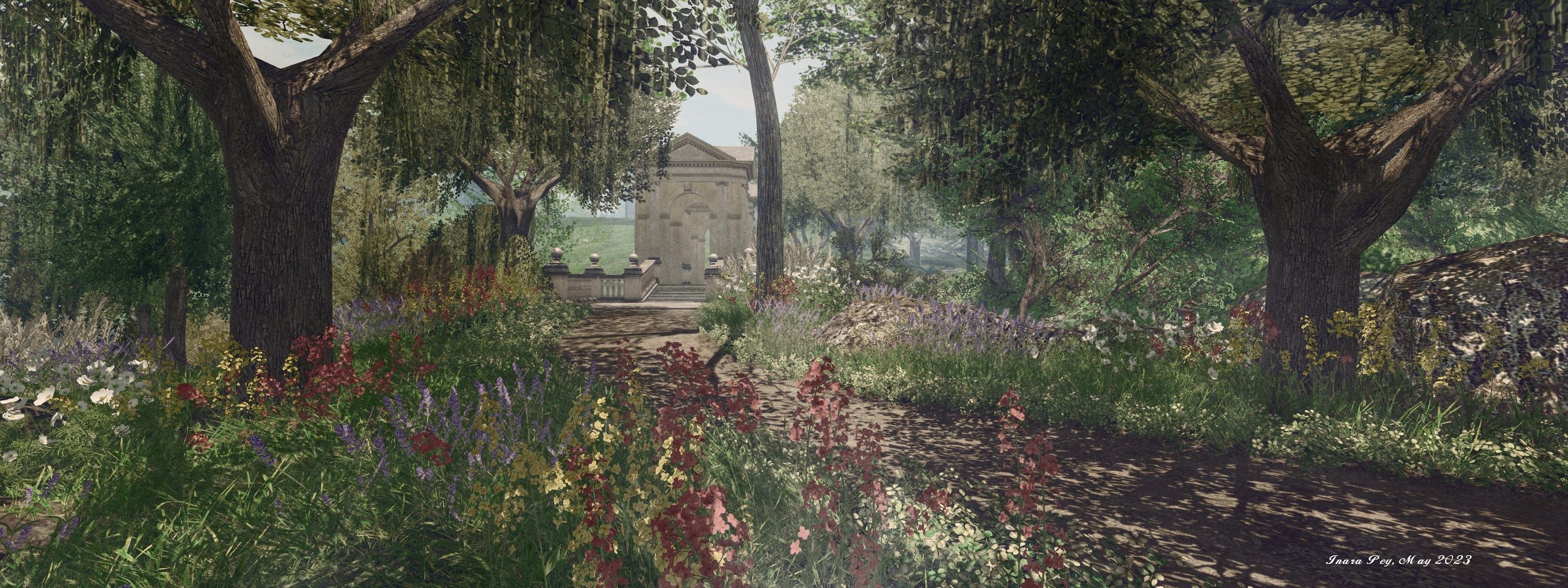
Across the road from the pond marking one end of the canal sits a much broader lake. This in turn marks the boundary of public parklands running up to the impressive Georgian-style estate of Claydon House. Backed by extensive coaching houses and stables, Claydon (although still under construction at the time of my visit), boasts its own large family chapel, formal gardens and lawns which all appear to be open to the public.

Seogyeo Town, Seogyeoshire, May 2023

A further beauty of Seogyeoshire is the manner in which towns and villages have been blended with the landscape in a manner reflective of rural Britian. There are no hard lines, just a gentle blurring of fields available for crops or grazing and marked by dry stone walls with farmhouses, tended trees at the roadside, an increase of road signs – including those bearing the name of the town / village, and the arrival of a village itself which rises and then gently folds itself back into the surrounding fields and landscape once more. Here and there, ancient towers, gatehouses and the remnants of fortifications which also speak to Welsh-English history.

Outside of the Zany Zen railway, the roads running through the county offer the most obvious means of getting around and seeing all that is available; however, if walking doesn’t appeal, there are bicycle rezzers scattered around (one at the town square landing point at Seogyeo, for example), offering an entirely comfortable means of spending a pleasant time exploring.

Seogyeo Town, Seogyeoshire, May 2023

One thing I would say here when it comes to exploring is this. There are a number of individual EEP environments scatter through the setting. If you want to avoid the time of day transitions they create, do remember to apply your own preferred EEP asset to your avatar so you can maintain consistent environment lighting throughout your meanderings.

Now featured in the Destination Guide, Seogyeoshire makes for a thoroughly engaging visit. And with that said, I’ll simply point you in the direction of Seogyeo, and say, “Croeso i Sirol Seogyeo!”

Seogyeo Town, Seogyeoshire, May 2023

SLurl Details

  • Seogyeo Town and Seogyeoshire (Seogyeo, Gaori, etc, all rated Moderate)

Invisible Cities: The Future in the Present Overflows in Second Life

Artsville Galleries and Community – Debora Kaz:  Invisible Cities: the Future in the Present Overflows

Friday, May 26th saw the opening of Invisible Cities: the Future in the Present Overflows at the Artsville Galleries and Community, operated and curated by Frank Atisso. The work of Debora Kaz, the exhibition is a further instalment of her Invisible Cities series, which I first encountered in August 2022 when  Dido Haas hosted Invisible Cities: Fighting Women at her Nitroglobus Roof Gallery (and which is reviewed here).

With Invisible Cities: The Future in the Present Overflows, Debora once again tackles a societal issue and the lasting effect it can have on the lives of those subjected to it: violence, in all its forms, visible and invisible; physical and mental / moral.

In this exhibition, the idea is to suggest parallels between past, present and future of lived stories where violence is present since childhood. To bring out the need to talk about these stories, to heal, survive and protect. Violence as an instrument of power … brings with it disorders and dependencies, fragilities that need support, affection and respect. [This is] An exhibition to put you in a place less critical and more solidarity.

– Debora Kaz, introducing Invisible Cities: The Future in the Present Overflows

Artsville Galleries and Community – Debora Kaz:  Invisible Cities: the Future in the Present Overflows

However, before getting into things, there are a couple of points to note up front. The first is that it should be viewed using both the local environment settings (World → Environment → Use Shared Environment) and with Advanced Lighting Model (ALM) enabled (Preferences  → Graphics → make sure Advanced Lighting Model is checked); Shadows do not need to be enabled as well, so flipping ALM on (if you usually have it disabled) should not impact viewer performance.

The second is that the installation is multi-level, the three levels linked by a teleport system. This takes the form of an atom-like structure. Right-clicking on it will sit you and display a list of numbered destination options. While it is not implied by the ordering or within the introduction, I would perhaps suggest that in starting a tour, you first use the teleport to visit the elements labelled Past 1 through Past 6. These will deliver you to the uppermost elements of the installation, representing childhood and the past. Within each is a father / daughter combination, each with what appears to be a duality of purpose. At first, they might seem to simply represent a parent / child relationship – out walking, holding hands, a loving pat on the head, the gestures of nurturing care.

But look again, particularly at the likes Past 2, Past 6 and Past 1; note the body language of the child, the way the adult’s arm grips wrist or upper arm:  these suggest something less than loving and closer to restraint, control, subjugation. Now take the hand resting on the child’s shoulder and the apparent head-pat; are these actually gentle gestures of love, or might they also be further suggestions of restraint and subjugation aimed at the child?

Artsville Galleries and Community – Debora Kaz:  Invisible Cities: the Future in the Present Overflows

Thus, within these six dioramas is manifested the idea of violence present in childhood, the lances extending from these bubbles to the lower levels representing the way such violence can literally spear every aspects of a life exposed to it from that point on.

Between them, the mid and lower levels of the installation offer reflections (so to speak) of the present and future of a life spent in the receipt / fear of violence, with the lower level offering a series of rooms in a house which can either be reached via the teleport system or simply explored on foot once within them.

The house and its contents is a poignant tour-de-force of a life riven by fear – rational or otherwise – resulting from the persistent pressure of both physical and mental violence. It is a metaphor for both solitary comfort a home can offer  those so afflicted – and the prison it can be become, where fears can still haunt and the world beyond the windows seem full of threats.

Within it, the images reflect the fear – the flight reaction – under which those affected by prolonged violence of deed and word find themselves almost constantly feeling; the figures reflect the confusion, the sense of self-blame and guilt they feel for allowing the violence  they suffered and the fear they are now living with and their self-perceived weakness in being unable to cope within a world which too often tells them much the same.

Artsville Galleries and Community – Debora Kaz:  Invisible Cities: the Future in the Present Overflows
The victim is trapped within a cycle of violence that is almost impossible to get out of. The mental damage, the fragility, the feelings of impotence cause paralysis, guilt and frustration. And [while] while all the help in the world might be useless, [by] letting the victim know that she can count on someone may be the only hope for life. All together we can care and protect – and most of all, love.

– Debora Kaz, introducing Invisible Cities: The Future in the Present Overflows

Invisible Cities: The Future in the Present Overflows might not be the easiest installation to grasp or feel comfortable with; but that’s the point. This is a challenge to all of us living in a world increasingly riven by attitudes, outlooks and beliefs that are increasingly polarising and driven by the need to “other” those who refused to adhere to ideals and morals that are – frankly – immoral, and to foster violence upon them in the process, that perhaps we all should endeavour to rise above such actions and reach out, love and nurture our children and those around us because they are different, and that pain, ostracization and brutality of action and word should have no place in a civilised society.

SLurl Details

Re-visiting Strandhavet Viking Museum in Second Life

Strandhavet Viking Museum, May 2023

In April 2021 I visited the Strandhavet Viking Museum, curated and operated by Katia (katia Martinek) and sitting within Second Norway, the estate which has been “home” for the last few years. At the time, I enjoyed my visit (see Strandhavet Viking Museum in Second Life). Unfortunately, life being what it is, Katia had to close the museum for a time and relinquish the half island on which it stood. However, it appears that Odin himself may have appreciated Katia’s work, because when she felt she wanted to re-establish the museum, the entire island on which it originally stood was available for rent, allowing her to both return to the museum’s roots, so to speak, and make use of the increased space to revamp it entirely, expanding the exhibition spaces. So when she dropped a note to me explaining all that had happened I knew I’d have to make a return visit.

Visits commence at the southern end of the north-south oriented island, where a wharf (landing point) sits with a ferry alongside, as if the latter had just disgorged visitors. A broad paved walkway runs north from here, passing outdoor exhibit spaces before reaching the imposing form of a Viking long ship sitting outside the museum’s new main hall.

Strandhavet Viking Museum, May 2023

It is not unfair to say that the Viking culture and society has (notably from the 18th century onwards) tended to be romanticised, leading to the popular – if incorrect – conceptions that Vikings were predominantly violent, piratical heathens driven by a need to plunder and subjugate; attitudes which also happened to drive them to intrepid acts of seamanship and exploration. In the 19th century and during the Viking revival – which also saw attempts in Scandinavia to put the Vikings on a correct historical footing – this romanticising of myth and legend particularly came to the fore in the United Kingdom and in Germany; for example: the idea that all Viking men tromped around wearing horned helmets owes more to opera by one Wilhelm Richard Wagner (and perhaps, by indirect extension, the influence of Warner Brothers cartoons on young minds in the mid-20th century!) than anything factual.

Whilst the Vikings did wage war where necessary (who didn’t in those times?), their society was actually highly structured, with laws and codes of conduct, own art and architecture, writing (runes) and religion (later subsumed by the rise of Christianity – easily as bloody a religion as Viking paganism)/ The majority of Viking men tended to be craftsmen, fishermen, builders, farmers and traders first, and warriors second. In this regard, it was – like most civilisations – the desire to trade and explore that led Vikings to spread out from their Scandinavian homelands and achieve an impressively expansive presence right across Europe to Asia, Iran and Arabia in one direction, and the continent of North America in the other.

Strandhavet Viking Museum, May 2023

This desire to trade and explore is recorded in one of Viking-style structures sitting alongside Strandhavet’s broad path. Within a two-roomed house of typical Viking design, visitors can learn about the extensive travels of Viking ships and Viking traders. through a series of maps and charts. These trace the routes taken through The Baltic, down through Europe and onwards and eastward, via and and river. They also chart westward travels to Iceland and onwards to Greenland and then what we now call Canada and the United States, and the voyages that sent Vikings to Britain, France, and down and along the Mediterranean.  From the settlement formed by many of these expeditions arose the Normans, Norse-Gaels, Rus’ people, Faroese and Icelanders. Of course, conflict inevitably arose from this expansion, and some of this is also recorded with the “Map House” as well.

Across the path from the “Map House” and standing within a cobbled, open-sided courtyard between the excavated Viking long ship mound and the museum’s main hall, can be found a slideshow open for anyone to use. It offers further insight into one of the elements of Viking society – its spread across Europe as far as Miklagard (or Miklagarðr, from mikill ‘big’ and garðr ‘wall’ or ‘stronghold’) – the city also known as  Byzantium or Stamboul or Constantinople, and which we today call Istanbul. This slideshow is just one of several interactive elements to be found within the museum.

Strandhavet Viking Museum, May 2023

Within the expanded main hall of the museum there is much to be admired and appreciated. The lower floor has been divided into a series of topic-based exhibition areas through which visitors can amble. These cover subjects such as Viking mythology, Norse heroes, the role played by magic / ritual / religion, the use of runes, a timeline of the Viking era, insights into the Viking lifestyle, laws, beliefs, and the legacy left by Viking society.

Superb use is made of the increased floor space within the building, and Katia should be congratulated not just on the wealth of information she has drawn together (available through note cards obtains by touching individual display plinths and stands), but in the way she has brought together items from multiple Second Life content creators and use them to create miniatures and models, together with artefacts we might imagine to have been uncovered by archaeologists. These help to give the museum a mix of authenticity and immersion that builds on the legacy of original whilst also broadening it.

Strandhavet Viking Museum, May 2023

On the upper floor of the museum is what might be rotating displays related to Vikings. At the time of my visit, these included representations of the Överhogdal tapestries – textures dating back 1,000 years and in remarkably good condition, and which appear to incorporate both pagan and Christian influences within them. The actual Överhogdal tapestries are carefully preserved and displayed at Jamtli, the regional museum of Jämtland and Härjedalen in Östersund, central Sweden – and the reproductions within Strandhavet are nicely annotated as being “on loan” from that museum!

Also on display on the upper level is Viking Women, presenting the opportunity to learn about 12 actual Viking women of extraordinary stature in Viking society down the years.

Strandhavet Viking Museum, May 2023

Richly expanding on its original concept and build, Strandhavet Viking Museum’s return to Second Life is both welcome and deserved; the love and care put into it by Katia can only be admired, and a visit to the museum by any and all with any interest in medieval history is to be highly recommended (and do consider a donation towards the museum’s continued existence should you pay it a visit!

SLurl Details