Land Impact change: “Is it a prim? Is it a sculpt? It’s a…”

Update May 14th: Speaking at the Simulator User Group meeting on May 1tth (transcript), Falcon Linden confirmed that under the new mesh accounting system, sculpts will be capped at 2: [16:43] Falcon Linden: Namely that sculpts will be capped at 2.0 streaming cost, not 1.0. (Note, that’s a CAP, so if they were less than 2.0 in new accounting before, they’ll still be less than 2.0).

Update May 5th: Nalates carries a very in-depth piece on the proposed Land Impact changes and pathfinding in general, written as a result of recent UG meetings.

Nalates Uirriah caries more on the proposed Land Impact changes which look as if they will be implemented as a part of Pathfinding – and the news carries something of a possible warning.

While the new accounting system promises to offer benefits with regards to prims, and help encourage scripting efficiency within rezzed linksets, just how it will impact sculpties is unclear.

Sculpts have always been something of a problem-in-waiting since their introduction. Like complex prims (tori, etc.), sculpts were given the same “impact” cost as “regular” prims under the old accounting (prim count) system. So wither you rezzed a cube, a torus or  sculpt, they all had an impact of 1. However, like mesh, sculpts are more complex than regular prims and could be said to be somewhat more complex than tori in terms of their download weight due to the need for a texture and a sculpt map to be downloaded and applied to the object.

When Land Impact (initially PE, or Prim Equivalence at the time) was introduced, sculpts continued to be treated as prims – although from comments made at the time, it was evident that, at least on technical grounds, some Linden Lab staff were unhappy with this. However, it is hard to see how the accounting system could have been adjusted to account for the extra “cost” of sculpt without causing mass upset and potentially some breakage across the grid.

The new accounting system that has been proposed, and was revealed in part last week by Falcon Linden as Nalates reported, is specifically to be applied to “legacy prims”.  However, whether sculpts are to be classed as “legacy prims”, it would appear, is still a matter to be determined within the Lab.

Speaking at Monday’s Content Creation Group meeting, Nyx Linden had the following to say on the proposed changes:

The proposed streaming cost cap, if implemented and deployed (nothing is final until it is released), would affect legacy prims – streaming cost of meshes would not be capped. It would affect legacy prims even if they are linked to meshes (and thus fall under the new accounting system). Please note that this is a proposal, and we reserve the right to change any part of it if necessary before release.

“Whether sculpties will be considered “legacy” or not in this context is not 100% determined yet. Since they do require more texture data to display properly, we need to carefully consider exactly how to weight them. The proposed server cost change would be independent of prim type. It’s still in the early stages so bear with us if we end up needing to make tweaks between now and release, but we wanted to let everyone know that changes would be coming.”

After noting that the new accounting process will also be used for linksets using the new physics shape types as well as those containing meshes, Nyx concludes:

“I don’t want to speculate as to the exact status of sculpties under the new streaming cost rules, as we’re still discussing it internally, but your concerns are being considered when looking at the numbers and algorithms.

The problem here of course is that LL are once again in something of a corner. Altering the impact cost of sculpts is going to have potentially far-reaching effects which are unlikely to be seen as positive. It may even negate the changes being made to llVolumeDetect(TRUE), given this hack is often used in linksets involving sculpts. At the same time, and has been pointed out by Chalice Yao, sculpts could be considered tori, so treating them as legacy prims would make the new accounting system even more worthwhile.

Similarly, Qie Niangao points out that currently, the LI calculations are somewhat biased with regards to mesh:

Yes, but on the other hand, the LI calculations are terrifically generous to Mesh content for exactly the reason that Nyx (bizarrely) mentions as a problem with sculpties: extra textures. Although it’s true that a sculpt necessarily involves a sculptmap as well as a (single) surface texture, a single Mesh can have eight 1024×1024 textures and still get a 0.5 land impact.

It is clear that things are in a state of flux – and that LL are considering options and concerns. Overall, the proposed changes are being regarded as being favourable to all at this time where script costs are concerned. Whether this remains the case will be dependent on what – if anything – needs to be changed in order to handle sculpts.

Related Links

Pathfinding: llVolumeDetect(TRUE) and Land Impact changes

There are a couple of changes in the works relating to the forthcoming arrival of Pathfinding in Second Life.

llVolumeDetect(TRUE) Exploit

In the first, the use of llVolumeDetect(TRUE) to create partially phantom linksets will no longer work. Always something of a system exploit / hack, this approach has nevertheless seen widespread use across SL in buildings and vehicles. So much so that when it was discovered that the hack no longer worked in the Pathfainding test regions, it was initially reported on the JIRA as a Pathfinding bug (Pathbug-69).

However, as Falcon Linden points out in the “bugs” JIRA:

Thanks for your interest and passionate comments. First, let me address one of the root issues here: reliance on undocumented behavior that is known to be a bug. I realize that there are many cases of this in SL. I also realize that all of us, as game developers either in RL or SL, will do whatever it takes to implement a feature we want, even if that means exploiting known bugs or idiosyncrasies. The problem is that continued development of a platform (e.g., SL) often precludes backwards compatibility, particularly when systems have exploited “micro details” of the platform. 

Which is not to say Linden Lab is unsympathetic to the issue. Far from it; as in the same statement Falcon goes on to explain:

All of that being said, we as SL developers continue to try to preserve backward compatibility where we can. In this case, I have been able to find a compromise between new features and existing content. Here’s how it will work:

1) If a linkset uses the hack and also uses new accounting (aka mesh accounting or land impact), the first time it is rezzed on a pathfinding sim the hacked prim will be set to physics shape type none. Since the linkset already uses new accounting, this will not negatively impact land impact (in fact, it might reduce your land impact). It may affect a small amount of content that relies on link number of higher numbered prims in collision events by way of llDetectedLinkNumber()

2) If a linkset uses the hack and does NOT use new accounting, the relevant prims will be modified such that they collide only with the terrain. Other than that, behavior should be unchanged. This may impact some land vehicles that previously had hacked phantom prims which did not collide with the terrain.

3) No new linksets can be created that use the hack, and any linking or unlinking event (other than seating an avatar) will remove the hack on existing content.

This should address most of the concerns here. In the future, to create content where only some prims are involved in physics collisions, you will have to use the physics shape type feature.

Ergo, while the arrival of Pathfinding will herald a closure of the llVolumeDetect(TRUE) exploit / hack, LL are attempting to ensure that the impact of the closure in terms of content breakage will be minimal – if it is noticed at all.

Changes to Land Impact Calculations

Coupled to the above change is the announcement that Linden Lab is looking into changing how Land Impact is calculated as a part of the overall Pathfinding roll-out. Nalates Urriah was the first to break the news on the proposal, which  will bring a greater degree of granularity to Land Impact increases.

Under the current system, adding scripts to linksets can result in a sudden (and sometimes dramatic) leap in the Land Impact value. With the proposed changes, this will no longer be the case, with changes resulting from the use of scripts being more gradual. Speaking at the Simulator User Group meeting attended by Nalates, Falcon Linden explains the proposed changes thus:

[17:00] Falcon Linden: Changes to Land Impact that you’ll actually like for a change!
[17:01] Falcon Linden: We’re changing streaming cost for prims to be capped at 1.0 and we’re changing server weight to be: 0.5 * num_prims + (0.25 * num_scripts) but capped at num_prims
[17:01] Falcon Linden: so instead of going from half prim count to prim count by adding one script, it will be a more gradual change to encourage fewer scripts
[17:01] Falcon Linden: right now it’s not capped 
[17:03] Falcon Linden: okay
[17:03] Falcon Linden: here we go
[17:03] Falcon Linden: I have here a linkset of three distorted torii
[17:03] Falcon Linden: The two child prims are shape type NONE and the root is convex hull
[17:04] Falcon Linden: under the current scheme, its download weight is 13.7, its physics weight is 1.6 and its server weight is 1.5
[17:04] Falcon Linden: total LI 14
[17:04] Falcon Linden: under the new scheme, download weight will be 3, the other weights will be the same in this case, and the overall LI will be 3
[17:05] Falcon Linden: if I add one script to it now, the server weight will go from 1.5 to 3.
[17:05] Falcon Linden: In the new scheme it will go from 1.5 to 1.75.

It should be noted that the latter change is still very much a proposal, although it does appear that it is more than likely to go ahead, given it is beneficial to both Pathfinding and the platform as a whole.

With thanks to Innula Zenovka.

Mesh Deformer 0.3 code available

Update: Sometimes working on multiple posts to your blog isn’t a good idea. Between drafting and pushing this one, Qarl updated his code, as Cinders points out. Sorry Qarl! Correct link is here

Slightly later than he’d hoped, but keeping to his promise, Qarl has released version 0.3 of the Mesh deformer, stating:

Quick announcement – I’m releasing version 0.3 of the deformer code. Primary changes: 1) should now apply cleanly to recent linden viewer code, 2) deformation tables are computed in the background on another thread, so no frame stalls.

There appear to be a couple of elements missing from the patch – as spotted by Henri Beauchamp in a comment following Qarl’s post, so developers may want to hold-off grabbing the code for a bit.

I’ll be watching the various Viewer blogs for updates to see when the patch is incorporated. It’s likely to make an appearance in the likes of Cool VL and Dolphin very rapidly, providing the code is stable. Niran V Dean is planning to make a Full release of Niran’s Viewer 1.33 in the next couple of days, so this might also see the code included – we’ll have to wait and see.

Linden Lab had a Development Viewer in the offing for the deformer. This actually dates back to January, but didn’t get any further than an optional development Viewer due to assorted issues. Marine Kelley, who uses the V.3.2 reported that she’d removed the deformer from her last release due to crash issues, which may be related to reasons why LL never moved the code further along their Development cycle. However, as Qarl appears to have specifically addressed some (or all) of the issues, we may yet see the deformer appearing in something like an official Project Viewer sooner rather than later.

Parametric deformer: Qarl updates (2)

It’s been a while since we’ve had news on the mesh parametric deformer project.  So it was good to hear Karl Stiefvater (Qarl Fizz, formerly Qarl Linden), the man behind the code, to provide a brief update on matters in this week’s  Metareality podcast:

[27:58] Sorry guys; so here’s an update on the deformer. I have been obscenely busy in the last three months work-wise, and I have not had the chance to work on it much. That said, I did start working on it again on Monday [the 16th April] and I should have a release this weekend … The deformer’s going to happen, you don’t need to worry about that. Linden Lab has committed to getting it working; if they reject it for dumb reasons, I think that would – while they’ve done dumb things in the past, I don’t think that will happen; that would surprise me.

Given that there have been unfounded rumours circulating that Linden Lab are trying to “kill” the deformer  – which seem largely based on the premise that the project doesn’t appear to be progressing as fast as some people believe it should – hopefully, Karl’s update will set matters to rights, and see an end to such rumours.

For my part, I’ll be keeping an eye on Karl’s website at qarl.com, and will relay any news that is forthcoming.

In the meantime, there has been an interesting discussion going on within the SL official forums relating to standard sizes in SL and mesh. It’s worth a read and gives pause for thought – particularly Max Graf’s very considered input to the discussion.

Related Links

With thanks to Gianna and the Metareality podcasts.

Pathfinding: Main grid beta commences

Coming on top of the request for region owners to involve themselves in pathfinding testing on the Main grid (Agni), Linden Lab has announced a broader public beta being commenced on Agni, using fifteen of specially configured sandboxes:

Note that access to the four Snack regions is dependent upon joining the Second Life Beta group.

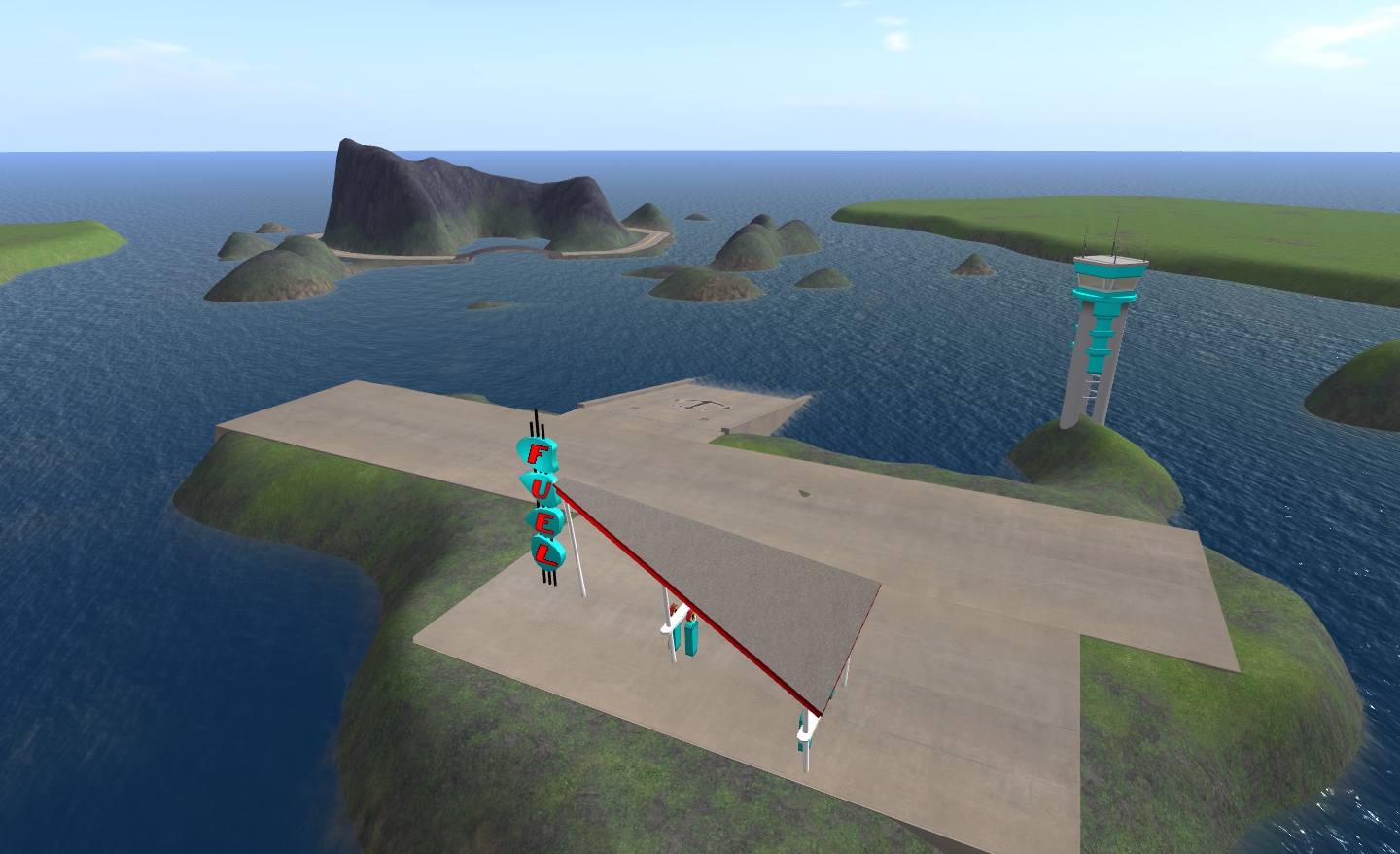
Looking across Limia and Arowana: suitable for pathfinding vehicle testing on land / water

Pathfinding Viewer

Beta tester will require the Pathfinding Project Viewer, of which two variants are available:

Formal Call to Region Owners

Owners for full regions can still involve themselves in the beta. Those wishing to do so are requested to:

  • E-mail pathfinding-beta@lindenlab.com from the e-mail address associated with your account
  • Include your account name and region you want added to the beta.

Related Links

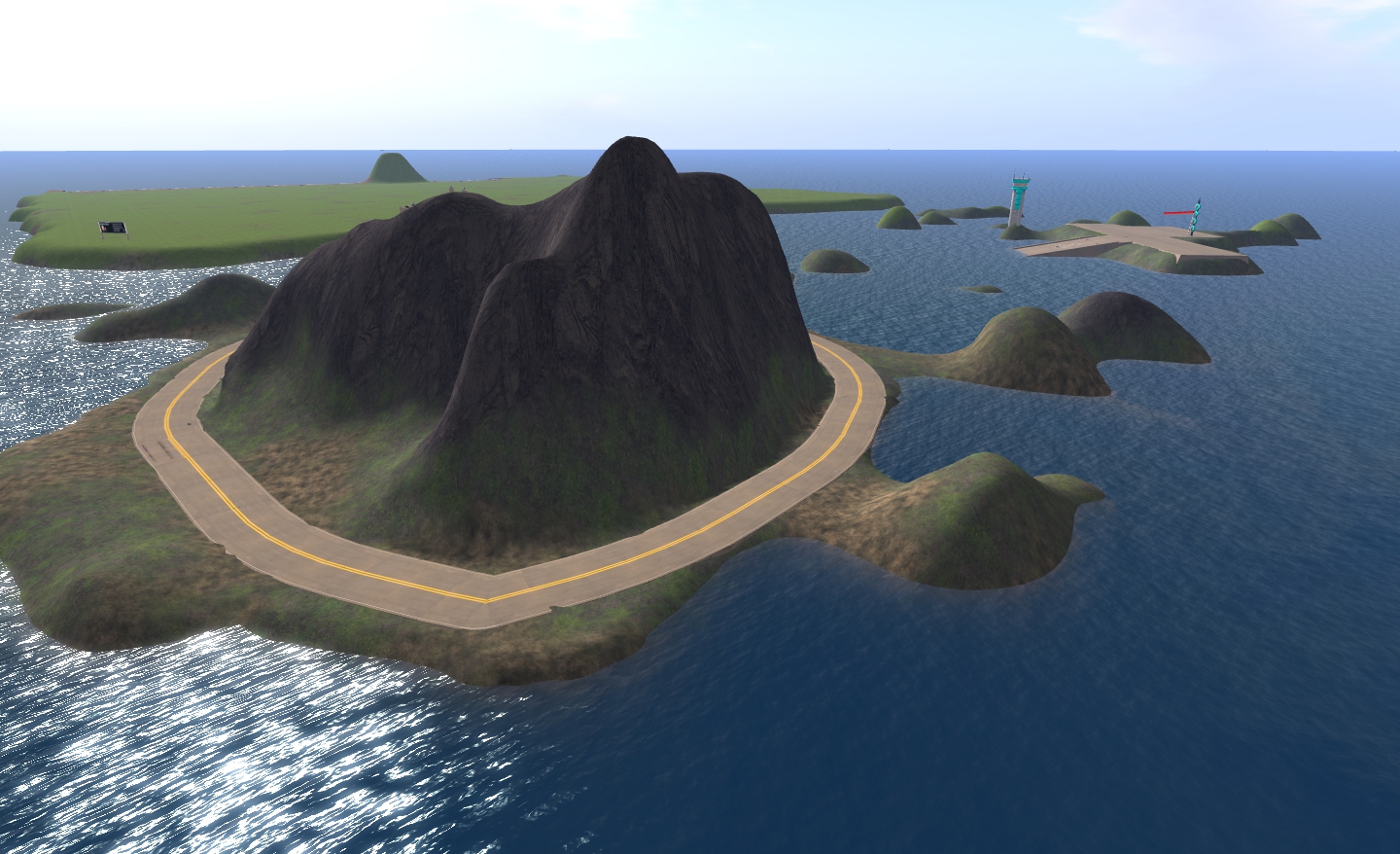
Another view of Arowana and Limia

Main grid pathfinding beta

With the Linden Wilderness experience opening to demonstrate pathfinding capabilities, word hasn’t spread too widely concerning a call for region owners to volunteer for a pathfinding beta on the main grid.

The call came during the SL Simulator meeting of the 16th March, and was made by Falcon Linden, to whit:

[16:39] Falcon Linden: (3) There will be an Agni beta for pathfinding in the coming weeks. The beta will only be open to region owners (though once pathfinding is released gridwide, it will not require you to own a region to use it). If you are interested, please e-mail pathfinding-beta@lindenlab.com

No further details are supplied, but any region owners who are interested should follow-up with an e-mail.

The pathfinding tools themselves are now available through an Alternate Viewer (scroll to Pathfinding), which can be used by anyone with an interest in pathfinding when used in conjunction with the pathfinding enabled regions on the Beta grid (Aditi):

  • PathTest1 (secondlife://Aditi/secondlife/PathTest1/131/101/23)
  • PathTest2 (secondlife://Aditi/secondlife/PathTest2/100/170/26)
  • PathTest3 (secondlife://Aditi/secondlife/PathTest3/103/127/23)
  • PathTest4 (secondlife://Aditi/secondlife/PathTest4/127/194/29)

The easiest way of reaching these is to log-in to Aditi and use the World Map to locate the PathTest regions.

One of the PathTest regions on Aditi

Details on the tools themselves can be found on the (in development) pathfinding page of the SL wiki.

There is apparently going to be a Pathfinding User Group starting in the near future. Keep an eye on the UG listings page (or possibly the main pathfinding page of the wiki) if interested.

With thanks to Ciaran Laval for the pointer to the Simulator Group meeting transcript.