The Drax Files 11: the power of creativity

There are always challenges and there are shortcomings. Sometimes you just want to bang your head against the wall. But then you realise it’s really a world without limitations, and puts no restrictions on your imagination … Before Second Life, how could you have done what you can do now?

These words, spoken by Dante Spectre in episode 11 of The Drax Files sum-up the technical dichotomy that is Second Life. On the one hand, it is a platform that offers people the freedom to create anything they want, participate in almost any activity be it social, educational, creative, game-oriented, health-related, research-focused and so on; and to be almost anyone or anything, enjoying a freedom of expression which may not so easily be found in real life. Then on the other, it can be a real PITA when things go wrong or new capabilities hiccup as they are introduced, and so on.

Very often, for those of us involved in SL, it’s all too easy to focus on the latter, the challenges and shortcomings, than it is to remain focused on the former. Which is why this episode of The Drax Files serves as a useful reminder that – as Dante says, if not for SL, how could we do what we do in-world?

Dwarfins!
Dwarfins!

In exploring the world of Dwarfins, created by Dante and his wife (and project manager!) Judy Chestnut, together with their “adopted daughter”, Jaimy Hancroft, this episode reminds us of the incredible power Second Life puts at our fingertips, whether in the ability to create something as technically advanced as the Dwarfins themselves, or to create fantasy environments we can enjoy with friends and others, which can be populated by NPCs like the Dwarfins.

This is also a piece that reaches out to those beyond the walls of the Second Life garden and really tries to frame the reasons why many of us involved in SL are so involved. Where other segments have been framed more around the human aspects of people’s lives and their time with SL, this show unashamedly dives into more of the inner workings of the platform, more directly picking-up the threads laid in earlier shows and weaving them together to create a picture of how Second Life is a user-created world and how it allows people to be creative and, if they so wish, enjoy something of a financial return on their work.

Dwarfin-3_001In many ways the Dwarfins team are an ideal showcase for this; as they demonstrate the fact that virtual environments allow people to develop a shared interest which helps to creatively enrich their real lives, and which forms bounds of friendship, family and even entrepreneurial endeavour around the globe.

“In real life I would never have met Jaimy, or anyone like Jaimy,” Judy tells us. “First of all she’s in Belgium; she’s about twenty years younger than me, almost. I very much feel a mother / daughter relationship with her … except she doesn’t really listen to me, either. So it really is a mother / daughter relationship!”

In expressing this, Judy opens the door on the ability of virtual worlds to provide whole avenues of very human interaction between people, regardless of age, background, geographical location and to develop genuine friendships and relationships with one others which simply would not otherwise happen. This is again something so often missed by those outside of Second Life; indeed it’s fair to see it’s an element of the platform almost completely overlooked when promoting Second Life – not that it is particularly easy to portray.

Judt and Dante
Judt and Dante (and Drax!)

Similarly, Judy and Dante have enriched their own relationship through this joint endeavour of creativity and invention, just as another couple may well share and enjoy an evening of putting up photos on Facebook or whatever.

In episode 11, Drax once again provides a fascinating insight into how people relate to Second Life and what it is such a captivating and immersive world. More than this, however, is that he also shines more of a light on why people become involved in SL and how it can present opportunities and freedoms unmatched by other digital mediums. And he does so in a way that encourages a greater curiosity about the platform which might just lead some to take another look.

Continue reading “The Drax Files 11: the power of creativity”
The Drax Files 10: The magic of Second Life

[With] every single thing that has ever happened in Second Life people have yelled, “It’s the end of Second Life as we know it!” And in fact it is – because it keeps getting better.

So states Robin Sojourner. And if anyone is in a position to make that point, it is Robin. She has been involved in Second Life for just shy of ten years (her anniversary falls on September 16th). This being the case, and given this is SL’s tenth anniversary, it is perhaps fitting that she be a subject for an episode of The Drax Files.

I’m going to take a little time out here and confess that when Drax confirmed to me that Robin was to be appearing in the series, I was overjoyed. I’ve long been an admirer of her work both inside and outside of Second Life, and it was one of her products which formed my first “really useful” purchase in SL way back in time – and which I still use today. So I make no apologies for dwelling as much on her work outside of SL as in; Robin is someone very much worthwhile getting to know – even if I do only know her distantly – and she and her work very much deserve discussion.

Robin-3

As well has bringing the perspective of being involved in SL almost since the beginning, Robin also brings another unique perspective to the table when discussing Second Life. She is a member of what the UK media refer to as “the silver surfer generation” that is, a member of an older demographic of computer users. I say “unique” not in respect of her seniority per se, but rather because that on the one hand, she represents the very broad appeal Second Life can have with people, while on the other, she represents a demographic that – perhaps – the Lab is gradually shying away from in its push to build an audience among younger generations.

Robin came to Second Life as a result of suffering from Fibromyalgia, which impacted heavily on her ability to create and draw and, being a creative person, she sought alternative avenues by which she could continue to create, and SL offered her one of the most comfortable mediums.

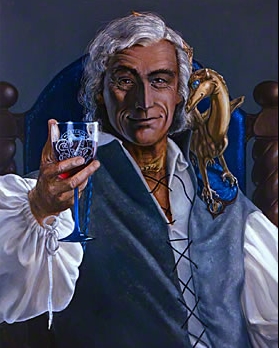
Robinton, Masterharper of Pern

As I mentioned above, I’ve long been an admirer of Robin’s artwork ever since I discovered it back in 2007, which I admit is rather late-on in the day.

If you’ve never visited her website, I cannot recommend it highly enough as a place to visit; it is a veritable Aladdin’s Cave. Within it you’ll find samples of Robin’s art, such as her magnificent Robinton, Masterharper of Pern, a piece which has gained worldwide recognition for its depiction of one of Anne McCaffrey’s most-loved characters from her Dragonriders series.

The image is stunning in its detail, and very evocative, perfectly capturing its subject in his later years, his glass of Benden wine raised in salute, his quizzical smile and eyes hinting at the depth and breadth of his intellect and his wry humour. Little wonder Anne McCaffrey bought the original!

Within the website you’ll also find information on Robin’s books which include a must-read for all cat lovers and owners, The Theory of Cat Gravity, as well as her titles on Tarot and Wicca. Robin’s essays are also to be found here as well, and they make thought-provoking reading for anyone prepared to approach them with an open mind, and reveal much of Robin’s heart, intellect and the warmth of her humanity.

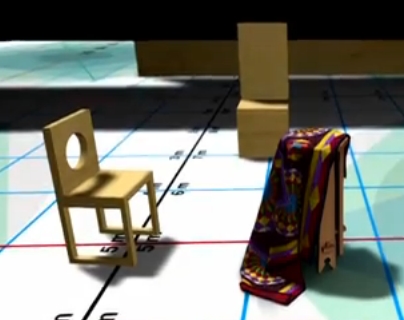
As a content creator within SL, Robin started with the very humble  prim – basic shapes, no flexies, no sculpties. Since then she’s been able to observe each and every change wrought in SeCond Life in terms of tools and capabilities for content creation, and to do so objectively enough to be able to recognise their benefits without all of the ballyhoo which all too often marks change within the platform.  Instead, she’s simply accepted them, learned about them and been at the forefront of putting them to good use – as the shots of her use of materials in the video demonstrate.

Tehn an now: Robin's original 1-prim chair and her recent mesh "1-prim" creation: a stool draped with a quilt
Then and now: Robin’s original 1-prim chair and her recent mesh “1-prim” (1 LI) creation: a stool draped with a quilt

She’s also very aware of the empowerment latent within the platform for people to reach beyond themselves through it  – if they are prepared to make the effort. As she says of her own observations of the platform, and her real life experiences as a teacher, Second life offers people who have no idea that they are creative or who have convinced themselves, due to the pressure of society or through some inner self-editing process that they are not the “creative type”, discover that actually, they are.

In this, it makes no difference if people make the discovery using prims and then move on to other tools outside of Second Life. As she says later on in the programme, when talking about the so-called “Second Life / real life divide”, there is no dichotomy in starting out with in-world creation, then moving on to tools outside of SL. It is simply people learning skills, developing techniques and using tools, all of which combine to enhance their creativity, increase their pleasure and self-expression and  – ultimately – help to continue to make Second Life better.

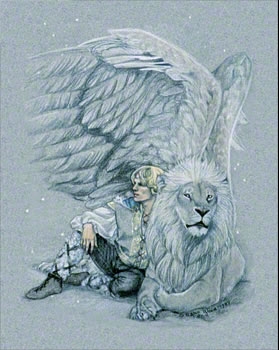
Robin's Watcher in the Snow
Robin’s Watcher in the Snow

In terms of the idea that those engaged in Second Life somehow need to go out and get a life, Robin has a very simple response, one which also offers up a huge an essential fact about the so-called “SL / RL divide” – it doesn’t have to exist.

“I can go out and smell the flowers,” she says of the idea that people need to go “get a life”, “But if I spend all day outside smelling the flowers, I’m going to get a horrible sunburn. ”

She goes on to point out that life is about balance in things, and Second Life very much plays a part in achieving that balance. In her case, it allows her to create a quilt pattern through one programme, import it into Second Life and create a finished quilt there and use the pattern in the real world to create a quilt of her own. Thus, Second Life is a natural part of a blending of the creative process which mixes the real world and the digital world bringing a completeness to both. But as Robin points out, the ability for the platform to bring together the real and the digital goes further than that.

“I don’t think that there is as much difference between virtual stuff and real stuff as people seem to think that there is,” Robin continues. “Emotionally, there is not any difference between doing stuff in real life and doing stuff in Second Life. It hits you emotionally in exactly the same place.”

Which is why there is no need for those engaged in SL to consider going out and getting a life. The vast majority do have a life, and see Second Life as it is meant to be, as another vehicle by which they can express and enjoy themselves. In this, it is actually no different to the freedom and enjoyment some find in painting their faces and going to a large stadium with several thousand others to watch two teams kick  / carry a ball around a large rectangle of grass.

Providing one is prepared to approach it openly and honestly, Second Life can provide positive emotional fulfilment; that it can is no reason to shun it or depict the fact that it does as a weakness in those who use it.

Rather the reverse. It’s another aspect of the magic of Second Life.

A Conversation with Drax

Sadly, real life at the moment, coupled with extremely poor planning on my part meant that I didn’t have the time over the last couple of weeks to clear my schedule, sort out thoughts and questions as this episode of The Drax Files was coming together, and get to sit down with Drax and Robin as I’d hoped. So unfortunately, no conversational piece this time around :(. All things being equal, we’ll be back next time around.

Related Links

Print images © Robin Wood Ent, used with permission.

The Drax Files 9: Fashioning your world

Elie Spot is a name well-known in the fashion world of SL. The co-owner of Mon Tissu and Celoe, now both on their dedicated and stylish region of Mayfair, she’s also the subject of episode 9 of The Drax Files.

Involved in Second Life since 2006, Elie is very much an example of the way in which the physical and the virtual can blur together and complement one another. Given her father designed games and her mother is a graphics artist, it is perhaps not surprising that Elie herself is a designer in the digital domain. But to leave things here would be to miss out on the most interesting part of her story.

May-9_001
Mon Tissu and Celoe in Mayfair

Having joined SL at nineteen as a means to escape a very hectic daily routine, she has not only established two successful brands in-world, she’s found the additional skills and understandings she’s gained through running those businesses have helped to enable her to take-up business opportunities in real life, such as with Cake & Whiskey, which she co-founded in Spring 2013, following-on from the creation of Offbeat and Inspired in 2012.

Elie-spot

As one might expect from both a content creator and long-term resident of Second Life, Elie has an understanding of the nuances of the platform, and the reasons people find it so attractive and appealing. The ability to create almost anything you want, for example, or to be able to create and build a business or brand, to share with others in a myriad of ways, and the opportunities for escape and to be whomever or whatever you want.

In discussing this and Second Life, Elie touches on one of the stigmas attached to Second Life from the world at large.

“It’s just a very common misconception that if a person sits down at a computer and starts talking to other people online that they’re hiding, or that they don’t have social skills.” she says. “I mean to take a personality type and look down on it like that and to project that on an entire culture of people? It’s just a little bit strange.”

It’s what I’ve been known to refer to as the “Star Trek syndrome”: the views that people involved in Second Life and platforms like it need to somehow “get a life”. Sad to say, the attitude isn’t necessarily restricted to people on the outside looking into Second Life; there are a lot of examples of people engaged in the platform taking a stance of perceived moral  / social / intellectual superiority over others, simply based on how those others like to portray themselves within SL, even though in doing so they do not impinge upon the lifestyles or in-world activities of those looking down on them.

DF_WM_E9_dollparty
Freedom of expression

That people do is really a shame, because Second Life can be liberating, and allows us all to reach past barriers and inhibitions defined by circumstance and / or society, and enjoy a freedom of personal expression and freedom of interaction with others from around the globe whose interests overlap with our own. The fact that some people are unable to accept others purely on the basis of how they seek to express themselves through their in-world appearance, perhaps speaks more to the prejudices of those unable to give acceptance, and to their own limitations of imagination and creativity.

Elie’s insights aren’t restricted to the unfortunate habit of stereotyping SL users, however. She is, first and foremost a very successful businesswoman in Second Life, and as such has some very clear and practical advice to give to those wishing to start-up a business of their own, as well as touching (again) on the wealth of opportunities presented in SL for doing to and the freedoms one can experience which are in may respects unique to the platform.

This is another excellent insight into Second Life and the broad potential of the virtual medium. Elie’s narrative is both clear and direct, but also carries a warm passion for the platform which is a joy to listen to, marking this as yet another outstanding piece in what is already an outstanding series.

Continue reading “The Drax Files 9: Fashioning your world”

The Drax Files 8: Gaming Second Life

“Second Life is not a game.” How often have we heard that claim? And it’s true in many respects. Second Life doesn’t by default have any of the mechanisms associated with games. There are no levels to achieve, no goals to attain, no objectives to meet, and so on. So to simply dismiss it as a “game” is to both underestimate the potential of the platform and demonstrate a lack of understanding about it, and we’re right to point out that it isn’t, of itself “a game”.

However, there are times when “Second Life is not a game” can be used as a rolling-pin with which to thwack Linden Lab because of changes they bring to the system which appear to be focused on gaming or because of initiatives the Lab takes to reach out to potential users. When I come across this latter aspect of the rallying-cry in forum threads blog comments, etc., I’m actually surprised and not a little disappointed.

True, Second Life may not itself be a game – but that doesn’t rule out the fact that it is a very legitimate platform for game play in a wide variety of forms (of which role-play is perhaps the largest, and possibly the reason why (leaving the sex aside) a good proportion of SL users keep logging into the platform. It’s also a more than capable platform for game development and offering people many and varied means of game-like entertainment.

The fact is that Second Life is a platform which allows you to log-in and say, “OK, today, I will be a pirate!” and go off and sail the high seas,” or, “Time to go dogfight over the trenches of World War 1”, or don a period costume and explore some of the history of 18th Century France where yesterday you logged-in a followed the clues to solve a mystery (and gained some nice prizes and trinkets along the way) before engaging in some combat with friends, and tomorrow you might set-out to kill a few zombies before sitting down and enjoying a few rounds of a board game.

madpeaOne team of people who perhaps best exemplify the ability of Second Life as an environment which can enable and support games are MadPea Games, the subject of the eighth segment of The Drax Files.

Started five years ago by Kiana Writer (Mari Mitchell in real life), MadPea Games has become synonymous with the provision of immersive, imaginative and genre-leading games in Second Life and stands as a shining example of something Rod Humble recently pointed-out in an interview with the San Francisco Chronicle: that while it may be true that “big business” initially jumping into SL and then deserting SL, this didn’t leave the platform dead. Rather, it left the way clear for “amateurs” and “specialists in it” (the platform) to establish very successful business presences in Second Life – and in some cases, extend their reach well beyond SL.

MadPea Games is an international team. With Kiana leading the operation out of Finland, other team members are based in France, Germany, The Netherlands, the UK and the USA. Over the years they have created a broad range of games in Second Life, spanning the genres of mystery, adventure, horror, cartoons, hunts, role-play – and more.

“I really don’t know why more people are not using virtual worlds like we do,” Kiana states at the start of the video. Looking at MadPea’s résumé, she makes a fair point. Not only have the team produced some of the most memorable games in Second Life, they’ve also worked on a  number of SL / real-world cross-over projects as well. In 2009 they produced The Kaaos Effect interactive adventure in collaboration with Orange. A second collaboration with Orange in 2012 resulted in Firefly, described as a “haunting love story”.

notesMadPea have also worked with Nature Publishing Group and MacMillan Publishers to produce Notes from the Voyage, an educational game about the travels of Charles Darwin, and with Sigma-Aldrich to create Reaction, an interactive means to learn about chemistry. All of these demonstrate the sheer power of Second Life as a immersive medium – and the value in allowing gameplay and game-like mechanisms within it.

Kiana was not herself a “gamer” but more of a storyteller, and in Second Life she immediately saw a new potential, “I came to Second Life and I was, ‘Hey! This is a great place! I could actually bring my stories to life here!'” In describing the uniqueness of the platform compared to other games, she observes, “Immersive storytelling is when you get so lost in the story that you become the hero of the story; you’re feeling the whole environment. This is why our games are working … because with a lot of console games you become a totally different person, but in Second Life, so many people identify themselves as their avatars, so they get to play as themselves, and that’s really huge.”

Of course, there are limits to what can be achieved in Second Life; as a dynamic environment where so much is open to the users themselves in terms of how they develop their avatars, there has to be a number of checks and balances to keep gameplay in line with some of the more limiting factors of the platform, as Kiana notes, “I don’t think many people actually realise how much work it is to make sure the island is smooth. Everything is so optimised that there is absolutely zero lag. And then the crowds come in, (laughs) and then they start complaining, ‘there’s a lag! there’s a lag!’, and it’s like, ‘Yeah, because you are, as an avatar, taking most of the resources of the sim!'”

Explosions! Gunfire! Chases! Elephants!  - Unia promises to break the boundaries
Explosions! Gunfire! Chases! Elephants! – Unia promises to break the boundaries

Throughout their time in SL, MadPea Games have constantly pushed the boundaries and repeatedly raised the bar on what they strive to achieve. In keeping with this – and as teased during the show – their next project Unia, promises to do so again, as they work to implement an action game within SL.

Fittingly, this segment of the show is itself a rich piece of storytelling, demonstrating not only the power of creativity within Second Life, but also the way in which it can bring people from around the globe together both as colleagues engaged in collaborative efforts and as friends. It is also one which dives into the complexities of creating immersive, interactive environments not so much by what is said, but by what is shown – kudos again to Drax for bringing together an ideal mix images and scenes to perfectly underline Kiana’s words and views.

And I have to say, I really like the role-reversal!

Continue reading “The Drax Files 8: Gaming Second Life”

The Drax Files: a Humble view of the world

Second Life is ahead of its generation, but very traditional in the fact that it enables creativity, and I believe that that is the most powerful form of entertainment.

So speaks Rod Humble in the seventh segment of The Drax Files. which aired on Monday June 3rd.

The plan had been to keep the guest a surprise for as long as possible (I was sworn to secrecy back before the segment had even been filmed), but word started leaking out after Rod made several in-world appearances using both his primary account and some of his alts.

Rod Humble at The Arrival
Through his alter-ego, Rodvik Linden, Rod Humble contemplates echoes of the future

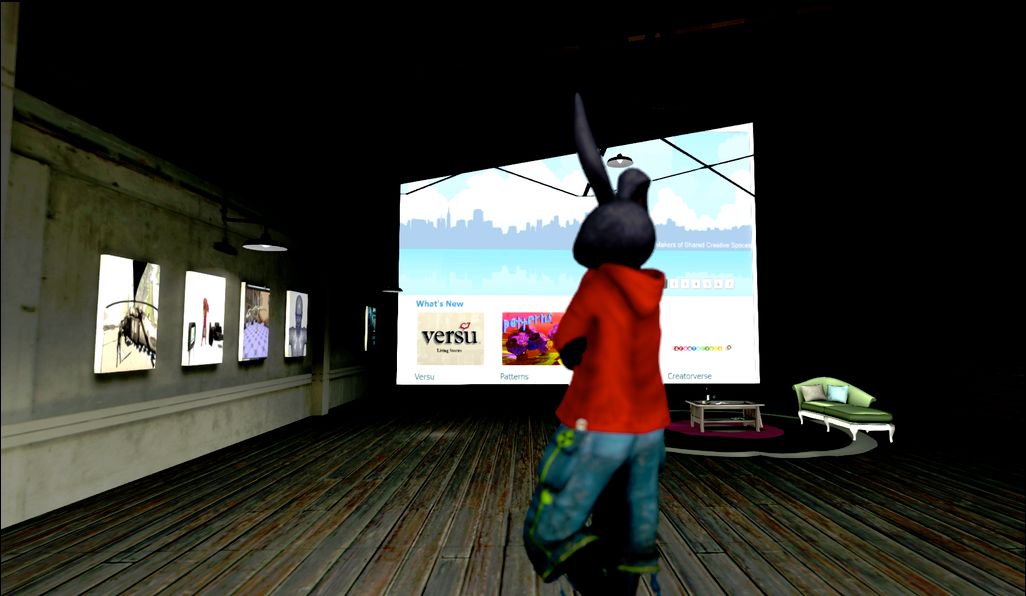
Featuring footage shot both in-world and at the Lab’s main offices in Battery Street, San Francisco, the segment is a rapid-fire overview of Second Life, its impact on the world and how senior management at the Lab view what is happening to the platform and how they think it is fairing. As such, it is possible that some of Rod Humble’s comments may come across as superficial and be critiqued as such. However, this is only a five-minute piece, and the established format of the show isn’t suited to any in-depth analysis or reporter-led interrogative, and to expect it to be so would be unfair.

What does emerge from the segment is a picture of a man who has both the responsibility for ensuring Second Life maintains a comfortable level of success which at the same time and who – contrary to popular belief in some quarters – does actually “get” Second life in many fundamental ways, even if he may not have a complete understanding of its appeal.

There is admittedly a juxtaposition here; on the one hand, Rod Humble has spent more than two years of hard grind at the helm of Linden Lab, and has steered the company into new waters of unknown depth while at the same time pushing for very real investment in their flagship product and driving forward a range of new technical initiatives for Second Life. All of this does speak of someone who has an eye on the future for the platform and who recognises its many technical weaknesses.

Yet, on the other hand, he talks with disarming honesty about the bemusement he feels towards SL’s continued success and longevity and the fact that why it is successful remains something of a mystery – and something which appears to be completely missed by the tech industry and media as  a whole.

Avatar identity and pseudonymity (and the individuals' right to the latter) are matters of import to Rod Humble (images courtesy of Draxtor Despres)
Avatar identity and pseudonymity (and the individuals’ right to the latter) are matters of import to Rod Humble (images courtesy of Draxtor Despres)

There are some familiar themes in the piece which anyone who is reasonably familiar with Rod Humble and his past commentaries is likely to instantly recognise. His comments on matters of privacy and anonymity, for example, are pretty much echo what he said at the last of the Second Life Community Conventions in 2011.  Similarly, the numbers quoted are pretty much the same as we’ve been hearing for the last couple of years. But  repetition alone doesn’t invalidate what is being said.

Things like avatar identity and pseudonymity / personas are matters which concern many SL users, so the fact that Rod Humble hasn’t shifted his stance of the matter in the course of his tenure at the helm of Linden Research should be taken as a positive sign.

Similarly, while many of us within SL would like to see more visible moves towards getting more of the 400,000 monthly sign-ups to stick, we also need to remember that this video isn’t about dissecting Second Life this way or that: it is about presenting the world with a better understanding of the platform and why people enjoy it so much – and hopefully encourage people to come and give things a try. As such, Rod’s message is very much on topic and in keeping with past segments of the show.

Rod Humble roams SL in one of his many alts (image courtesy of Draxtor Despres)

Another aspect of the anonymity element in the segment is the way in which it serves as a reminder that just because we don’t people moving around and through Second Life wearing “Linden” tags doesn’t mean actually mean Lab don’t spend time in-world and among users.  As Rod comments:

I love flying around with my alts. Sometimes I’m dressed as a Greek philosopher, sometimes I’m a spaceship, sometimes I’m dressed as an animal! I mean, it’s great! And [in] each one of those personas you can fully engage in a way community in a way that you can’t when everybody knows it’s Rod Humble.

Obviously, this doesn’t mean Lab staff are in-world every minute of the day – but it is a comment which should be born in mind when critiquing the Lab with claims that staff are “never” in-world.

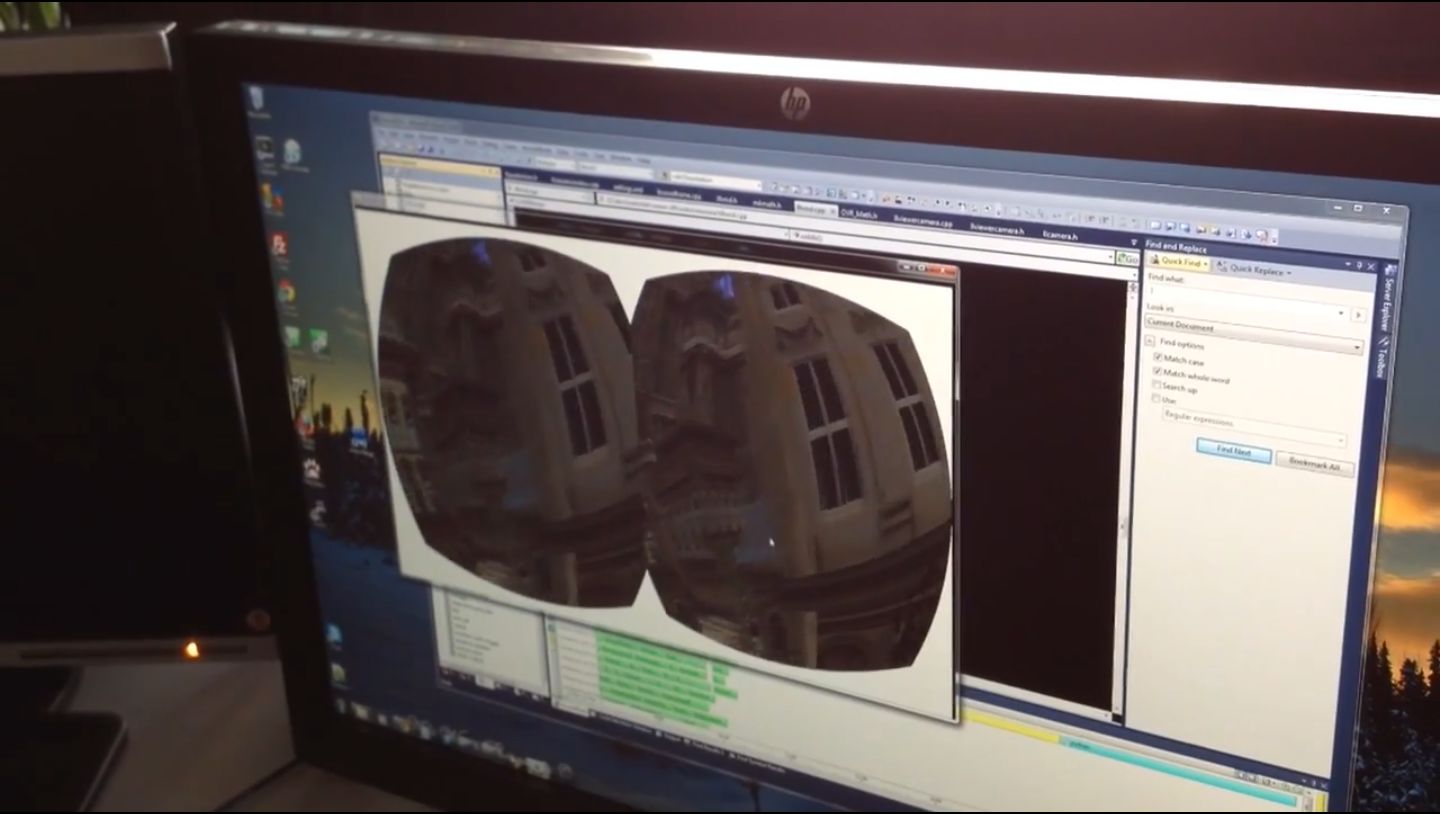
"we have the Oculus Rift working within Second Life, and we are working to make it a triple-A experience, particularly around the user interface..."
“we have the Oculus Rift working within Second Life, and we are working to make it a triple-A experience, particularly around the user interface…”

As noted at the top of this piece, the show also demonstrates that Rod Humble still intuitively “gets” the power of Second Life, even if he doesn’t by his own admission fully understand why the appeal is the way it is (something I think true of a lot people, even if we each have our own ideas and theories). Not only does he “get” it, he is actually leading the charge to make SL a better, more enjoyable experience for all of us, old and new.

The fact that LL have invested considerable time and effort into SL over the course of the last year or more should stand as a reminder that the company still believes the platform is viable – and that is good news for the platform and its future, even if the projects concerned aren’t that visible or what people might view as being “sexy” (which has been used at times as a reason to bash this work and the Lab). While such efforts may not solve all of SL’s woes, they do at least demonstrate that the Lab’s commitment to the platform is still there.

And as we approach SL’s 10th birthday celebrations, that really is worth while remembering.

Continue reading “The Drax Files: a Humble view of the world”

The Drax Files 6: An animated Second Life

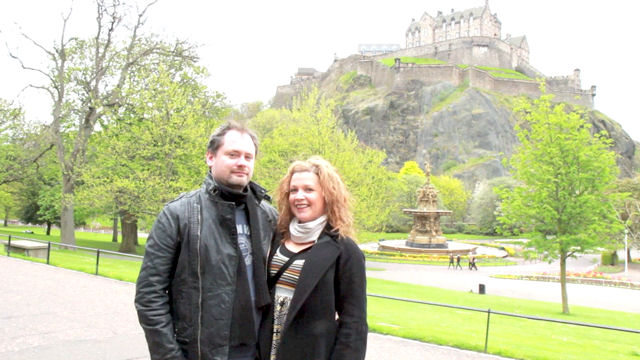
The sixth episode (webisode?) of The Drax Files come relatively close to home for me, as the focus of the segment is Edinburgh, Scotland, where Abramelin Wolfe of Abranimations fame has both his home and his base of operations.

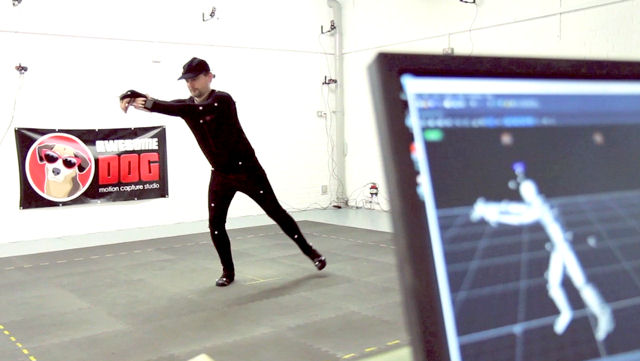
I’d never actually really considered the amount of work which goes into creating in-world animations – or the real-world expense. Obviously, I’m aware that it involves motion-capture and digtising movement, but when hearing how Abramelin’s first motion-capture outfit cost him £14,000 ($21,300), I admit my jaw flapped somewhat.

Going through the mitions: at work
Going through the motions: Abramelin at work

“Body language and human motion is something that we see every day,” Abramelin says, explaining why he started creating animation in Second Life. “If we’re very rigid and not moving, it stands out like a sore thumb; it’s very unnatural, there’s lot’s of subtleties. I mean, if you say to someone ‘stand still’, they’ll probably in their head think that they are rigid and not moving. But in reality, people are actually moving a lot; a subtle shake of arms and the way that weight displaces. So I think that by having a very fluid motion which is very life-like helps people feel immersed in that universe.”

Operating their business out of Edinburgh, Abramelin and his wife focus on Second Life as their primary market, producing not only animations, but also a range of avatars and other creations, very much working as a team; he creates the animations and rigs them, she creates the avatars.

Abramelin and his wife in Edinburgh

Abramelin very much regards Second Life as a frontier and those using it as pioneers.

“It’s such a world of possibilities for invention and innovation,” he says, still as enthusiastic and engaged with the platform as when he started in 2004. “Pioneers? Yeah! We want a universe we can step into and actually be there!”

Animations are something almost all of us use in SL, yet we perhaps seldom give any of the creative process which goes into them more than a passing thought; as such this segment serves as a fascinating insight into a brand which is something of an SL household name (my very first AO was from Abranimations!), and on the entire creative process involved in developing life-like animations – as well as yet another look through the eyes of others at why Second Life is so engaging.

A Conversation with Drax (part 2)

The Drax Files have taken Second Life by storm. After seeing the first segment, I took time out with Drax to find out more about the man behind the show and also about the series itself. In the first part of our conversation, we discussed what led to the creation of The Drax Files and how reaction to the series has affected him before touching on future plans – which is the starting point for continuing our chat.

Inara Pey (IP): The current series has focused very much on content creation, covering the work of some of the top content creation merchants, and the use of SL to create immersive environments such as the 1920s Berlin Project. You’ve more recently moved on to look at SL as a means of global action with the very excellent piece on Fantasy Faire and Relay for Life, and also examined music and live performance in SL.  In the past, you’ve also looked at art and design – I’m thinking here specifically about your piece from November 2011 on IDIALAB at Ball State Uni, Nov 2011. Did you opt to tackle content creation first, as you felt it was a better means of helping people grasp the potential of SL, and where might we be seeing future segments of the show going?

Draxtor Despres (DD): Oh, the Art and Design thing! That was basically a one-off thing back then. It was a great project with IDIALAB. I just called it “The Drax Files”, a play on “The X Files” and it was fun. But yeah, the initial approach with content creation was to grasp the potential of SL for an audience outside of SL.

Continue reading “The Drax Files 6: An animated Second Life”