Tripping out in Second Life

It isn’t every day that one enters an art installation comes with a health warning. Yet that’s exactly what you get with Thoth Jantzen’s Mediamorphosis, the notecard for which opens:

WARNING!!
Seriously, If you suffer from epilepsy or are otherwise adversely affected by flashing lights and colours, do NOT play media here.  You won’t get the proper experience, but you may just survive!

"My God, it's full of stars!" - a Bowman-like start to Mediamorphosis
“My God, it’s full of stars!” – a Bowman-like start to Mediamorphosis

This is a fully immersive multimedia presentation which features a mix of music, particle effects, set-pieces, art and a touch of interaction. There’s an extensive backstory to the piece, which forms a narrative and helps points the way towards explorations, but as Thoth points out, there are many ways through the piece (and several points where you can sit back and enjoy the show). Equally, while there is a certain depth and purpose to the piece, it’s not intended to be meaning-of-life deep.

Mediamorphsis
Mediamorphosis

The key thing with this piece is to make sure you have streaming media on and set to play all (if using a media filter) and use the local windlight (or set your viewer to midnight) and – explore.

When you arrive, you’ll find yourself in a white room with a single exit – the wormhole. Walk through – you’ll find the 2001 motifs clear – and the teleport to the exhibit proper in the form of one of the set pieces, the Hopper Cafe. Read the notecard offered and then follow the road. Along the way you’ll find pods you can jump into and enjoy a trippy little ride or two mixing particle effects, art and the various set-pieces, into an immersive show.

Mediamorphosis
Mediamorphosis

You can also spend time inside the Hopper Cafe and witness some of the show projected onto the windows, or you teleport to the other builds which make up the installation, where there are additional opportunities to sit and watch the light / image show. Just be aware that wherever you go – you have yourself become a part of the show for anyone else watching!

Metamorphosis is a piece which is hard to quantify. As the artist himself says in explanation of it, “Huh?  What..?” … It is a piece which should, by its nature, be experienced rather than described – although it’s certainly not going to be everyone’s cup of tea. Or coffee, for that matter.

Mediamorphosis
Mediamorphosis

Ican only say enjoyed my time exploring and trying out the first-person pods and seats in which you hand over control of your camera to the scripts controlling the exhibit itself, leaving you with nothing to do but just enjoy (and the show is great with the lights out in the room!). Everything is looped, so “rides” take only a few minutes, although it is worth running through things a couple of times to enjoy the complete magical mystery tour.

If I have any complaint at all, it is that there should perhaps be more choice in the music – a loop of just three tracks which can be heard throughout one’s visit to the installation can start to get one’s teeth grinding by the time the fourth or fifth loop is reached…

However, this is just a niggle. Overall, Mediamorphosis is immersive, engaging, unusual and, well, trippy.

Go see for yourself.

Mediamorphosis
Mediamorphosis

Related Links

A Hazardous journey resumed

A year ago, I visited Hazardous, an evocative build by Wendy Xeno and Mandingo Quan on Mandigo’s Homestead region on Misali.

After an extended period of being under construction, the region has just re-opened (and my thanks to Ziki Questi for the nudge that it had through her blog) and, while I’m often given to superlatives when exploring SL, it really is stunningly spectacular.

Hazardous
Hazardous

The fact that you’re in for a treat is evident from the start. The arrival point, hovering in the sky over the region, offers show very unique “teleport” stones. I’m not going to spill the beans on what happens – suffice it to say it is a very novel means of arriving in a region!

When you arrive at ground level, you could easily be in the rural county of Anywhere – all around you is grassland and tress, a few buildings and other bits. In fact, on my arrival, I couldn’t help but think of the grasslands of East Africa. Around you are several wooden signs welcoming you and warning you of several point of importance: that unattended child avatars will be sold to the circus, for example, and that the region has sharp edges…

Hazardous
Hazardous

It is this last sign which hints at why the new rendition of Hazardous is so spectacular: when you reach ground level, you are actually standing atop the most magnificent plateau rising over 30 metres above the surrounding sea, and which is cut through from one side to the middle by a deep gorge.

At the top of the plateau the grassland offer much to see and do, and is a veritable delight for anyone with a photographic bent, whether the default windlight setting is used, or one opts to experiment. Here you can wander through the grass, explore the old buildings scattered around, sit and pass the time with friends or dance away the hours, playing records on a portable record player (remember those?).

Hazardous
Hazardous

The attention to detail is, as ever, wonderful: the edges of the plateau blend perfectly with the uplifted terrain, the fences, telegraph poles, buildings and seating are all ideally located and speak of considerable time being taken in framing the entire region such that it presents a truly natural feel while offering scores of opportunities in which photographs can be framed.

Nor is the detail constrained to the plateau. There is also much to see down in the gorge and at sea level. The former, in contrast to the grassland above, is a lush, watery setting in which sits a show home reached by a boarded walk. Overhead, but below the lip of the plateau, birds wheel in tight flocks, as if seeking a resting place among the scattered tree-top before the sun sets…

Hazardous
Hazardous

Sea level can be reached via a set of steps, which also lead to a walk and a piano and places to simply sit and look out over the sea and … think …

Words really do not do justice to the way Mandingo has developed and landscaped Hazardous – it is something which has to be explored and experienced, and I really cannot recommend it highly enough as a destination really well worth visiting. When you do, keep an eye for clickable items – one of them will take you to the hidden pond.

Highly recommended.

Hazardous
Hazardous

Related Links

[gigya src=”http://www.flickr.com/apps/slideshow/show.swf?v=71649″ width=”625″ flashvars=”offsite=true&lang=en-us&page_show_url=/photos/inara-pey/sets/72157632742533137/show/&page_show_back_url=/photos/inara-pey/sets/72157632742533137/show/show/&set_id=72157632742533137&jump_to=” allowFullScreen=”true” ]

(view slideshow full-screen)

Inspiring Orientation: getting users started, stage 2

In June 2012, I reviewed MetaHarpers’ The Inspiring Orientation, an installation intended to be part gallery, part orientation course, with various interactive elements intended to teach new users the basics of getting around in Second Life – walking, flying, chatting, using the camera, sitting, etc.

The originia Inspiring Orientation - from the outside
The original Inspiring Orientation – from the outside

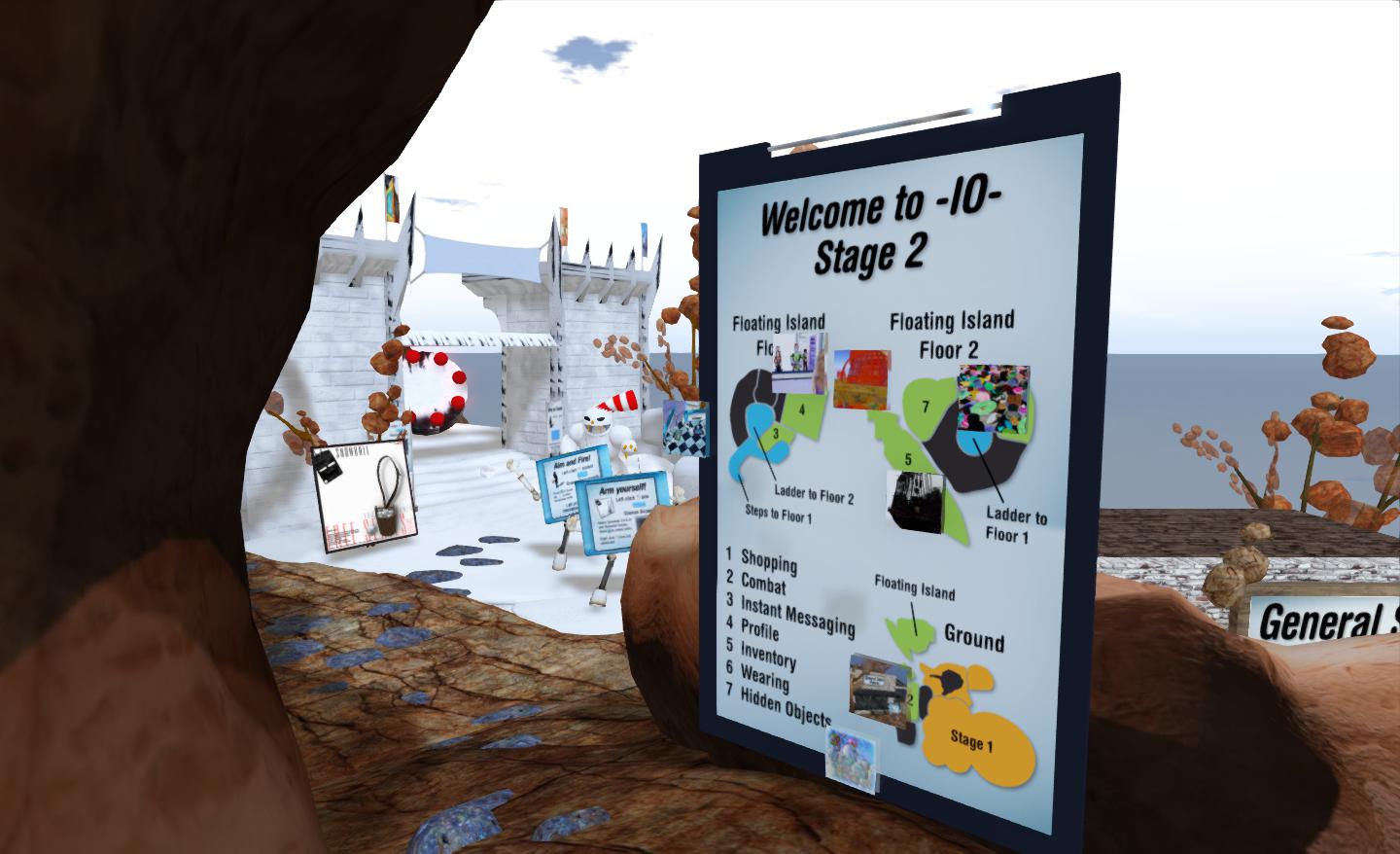
Opened to the public on February 5th, The Inspiring Orientation, Stage 2 now takes the concept a step further by providing additional interactive lessons covering such diverse subjects as in-world shopping, instant messaging, inventory management, profile creation, in-world combat and games, and exploration. At the same time, it revamps the original installation, and incorporates features such as media-on-a-prim. So what is it like?

On arrival, the installation appears familiar – the welcome area is the same as its first iteration, and the familiar tablet-like guides are still there. However, on stepping inside, it is clear things have been changed. Basic movement – walking and jumping – is quickly dealt with before moving onto the basics of camera control, which used to come somewhat later in the piece, and which is dealt with in a more compact manner. The rest of the initial elements of the piece remain largely unchanged until one arrives at the teleport portals, which in the original more-or-less marked the end of the process. While people can still teleport away at this point, a sign points the way to the new additions waiting to be explored.

Inspiring Orientation Stage 2
The Inspiring Orientation Stage 2

Here people can learn about shopping, instant messaging, profiles, inventory (including attachments, clothing layers, etc), dealing with “hidden objects” and combat, all in discrete units linked by footpaths, chair lifts and ladders.

There are several routes around this part of the installation, which can lead to a degree of repetition in instructions (accessing inventory, for example). However, this is no bad thing in that it allows for easy re-caps on lessons and pointers.

The Inspiring Orientation Stage 2

The inclusion of combat options might at first glance seem a little odd, but it actually does make sense given that, while “Second Life is not a game”, many people actually do join SL in anticipation of engaging in roleplay (which can include combat elements) and engaging in combat-related activities (the dreaded zombie hunting beloved of the official SL promo videos, etc). Ergo, getting people started on how weapons, HUDs, mouselook, etc., all work within the realms of combat isn’t necessarily a bad thing.

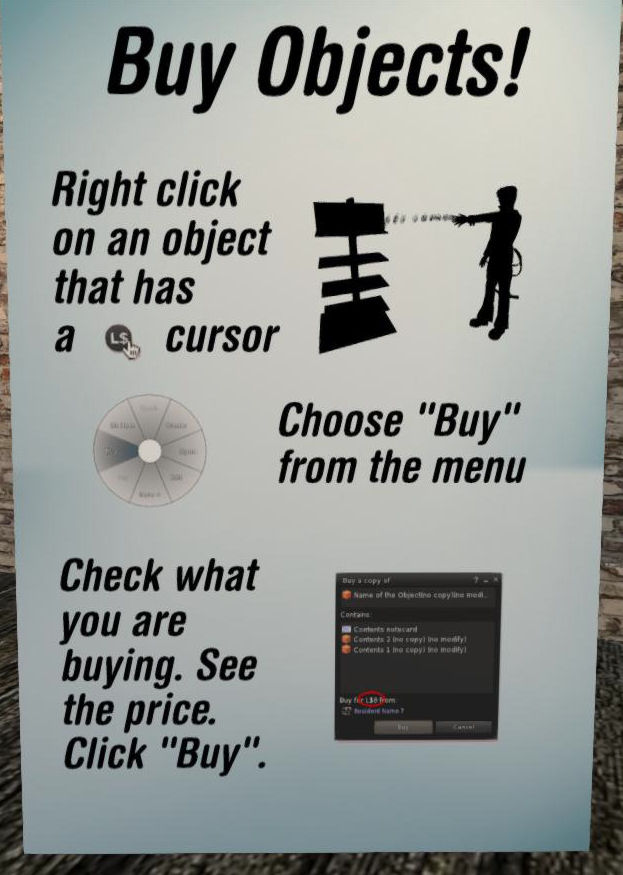
Whither the context menu?

The use of media-on-a-prim in the portal area, is both new and subtle. Drawing on the Destination Guide to provide a click-through list of destinations and descriptions related to the selected portal, it does much to present users with far more choice on where they go next, and on seeing where they are likely to meet other users.

That said, there are a few niggles with the update. Given this is an exhibition intended to demonstrate a new user orientation, the almost exclusive use of screen shots of a popular TPV is surprising. Yes, it may weel be the most popular viewer in use in SL, but given this is a new user experience, and presumably something the creators would hope users would encounter early-on in their explorations of Second Life, I can’t help but feel that there should perhaps be more emphasis on the official viewer – particularly as this is the viewer the majority of new users will initially be using when they log-into SL.

It could also be argued that other essentials are missed or given scant explanation as well – such as the Marketplace, the use of the world map, search and the concept of teleports (although teleports is touched upon throughout the exhibit, if not fully explained). However, the piece is a work-in-progress (the team behind it plan to move it to a location of its own at the conclusion of its time at the LEA), so these are matters which may still be addressed.

One thing that does still disappoint me with the update, though, is that it still fails to reference the viewer’s own means of providing help to users. The How To guide still goes unmentioned, as does the Help options in the menu. The How To guide is certainly worth a reference, given it forms an easy aide-mémoire to some of the lessons given during the orientation tour.

Some might argue that The Inspiring Orientation fails to offer any significant advantages over a more straightforward approach to user orientation such as that provided by the Phoenix Firestorm Support Region. In some respects, I’m inclined to agree; the latter has the beauty of keeping to a KISS approach which make progress perhaps seemingly less time-intensive. However, The Inspiring Orientation perhaps offers greater visual and aural stimulation, and thus may better hold a new user’s attention than a more traditional “walk-and-read” approach.

Whether it is viewed as a prototype / alternative approach to engaging new users and unlocking some of the mysteries of the viewer or whether it is seen purely in terms of an art installation which encompasses learning experiences, The Inspiring Orientation remains an interesting insight into how an engaging and interactive user experience might be built. As such, it has always made for  an interesting visit, and the Stage 2 updates provide plenty of additional food for thought, particularly for those interested in the new user experience ethos.

Related Links

Les évolutions dangereuses

This month sees the third round of the Linden Endowment for the Arts Artist-in-Residence programme drawing to a close. With applications for round 4 now open, I thought it time I caught-up on some LEA-related posts on various exhibits which have been in draft form over the past for weeks and got them blogged.

Given that science forms the basis for a large part of my non-SL posts here, I thought I’d begin with Kicca Igaly and Nessuno Myoo’s Danger in Evolution, currently on display at LEA27.

Danger in Evolution
Danger in Evolution

The artists describe the work, which comprises two separate but interlinked installations by each of them respectively, as:

The contradiction that is at the heart of any technological and scientific evolution when there is not  growth, maturity and an awareness of value potential risks that this implies evolution in the life of everyone. Especially when interests of prevarication or economic, social, religious interests come into play.

It’s a dark piece – literally, given the recommended windlight settings and overall hue and tone of the builds themselves – which is both provocative and rich in imagery, challenging us to consider the ethical, moral and religious challenges, both positive and negative, inherent both in the pursuit of science and technological development.

Danger in Evolution
Danger in Evolution

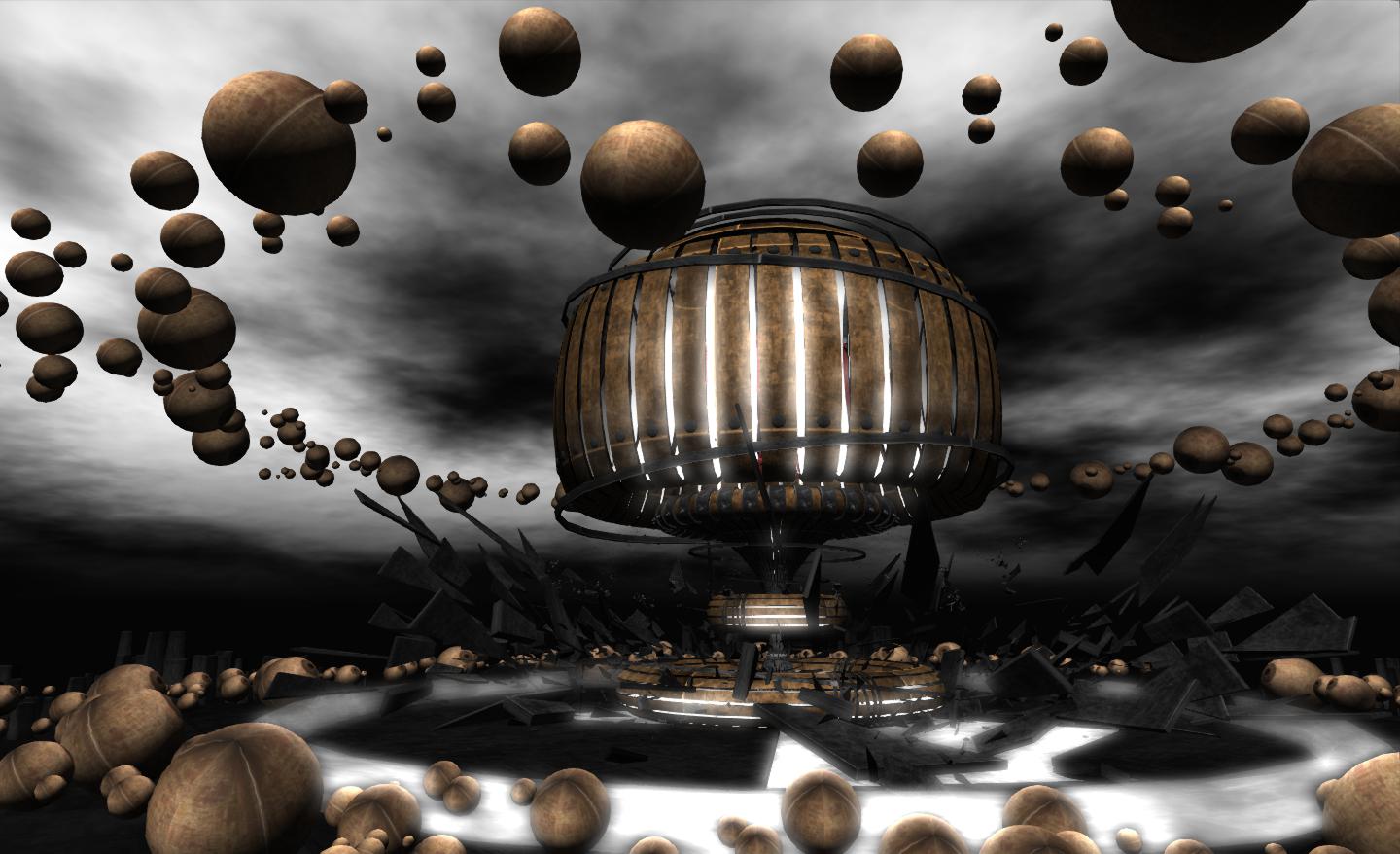
Nessuno Myoo presents us with a scene which is both chaotic and yet potentially joyful – a huge carousel-like ball on which people ride. From a distance all seems to be fun and laughter – but as one draws closer, it is apparent that this is not the case. Those riding the carousel are perhaps not really in control, but are perhaps trapped by the very thing they sought to create.

Closer examination still reveals that the carousel is far from innocent; at its heart lay a representation of of the atomic structure of uranium 235, of which the nucleus is that of “Little Boy”, the first atomic weapon ever used in anger, which exploded over the city of Hiroshima on August 6th, 1945. This brings the carousel’s design into sharp relief – it is in fact the mushroom cloud of a nuclear explosion, and thus the surrounding chaos can be understood, as can the myriad of eyes witnessing the scene.

Danger in Evolution
Danger in Evolution

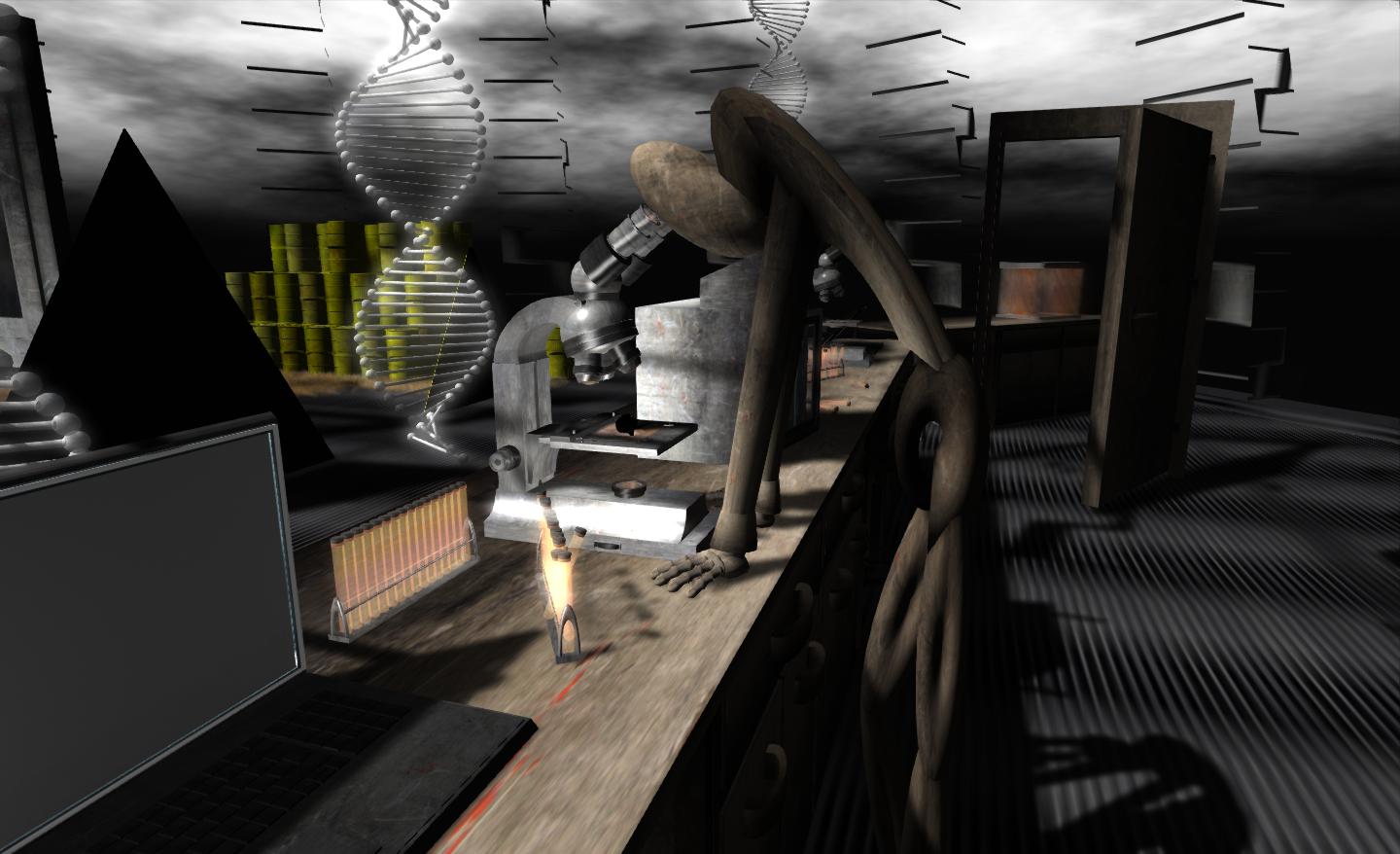
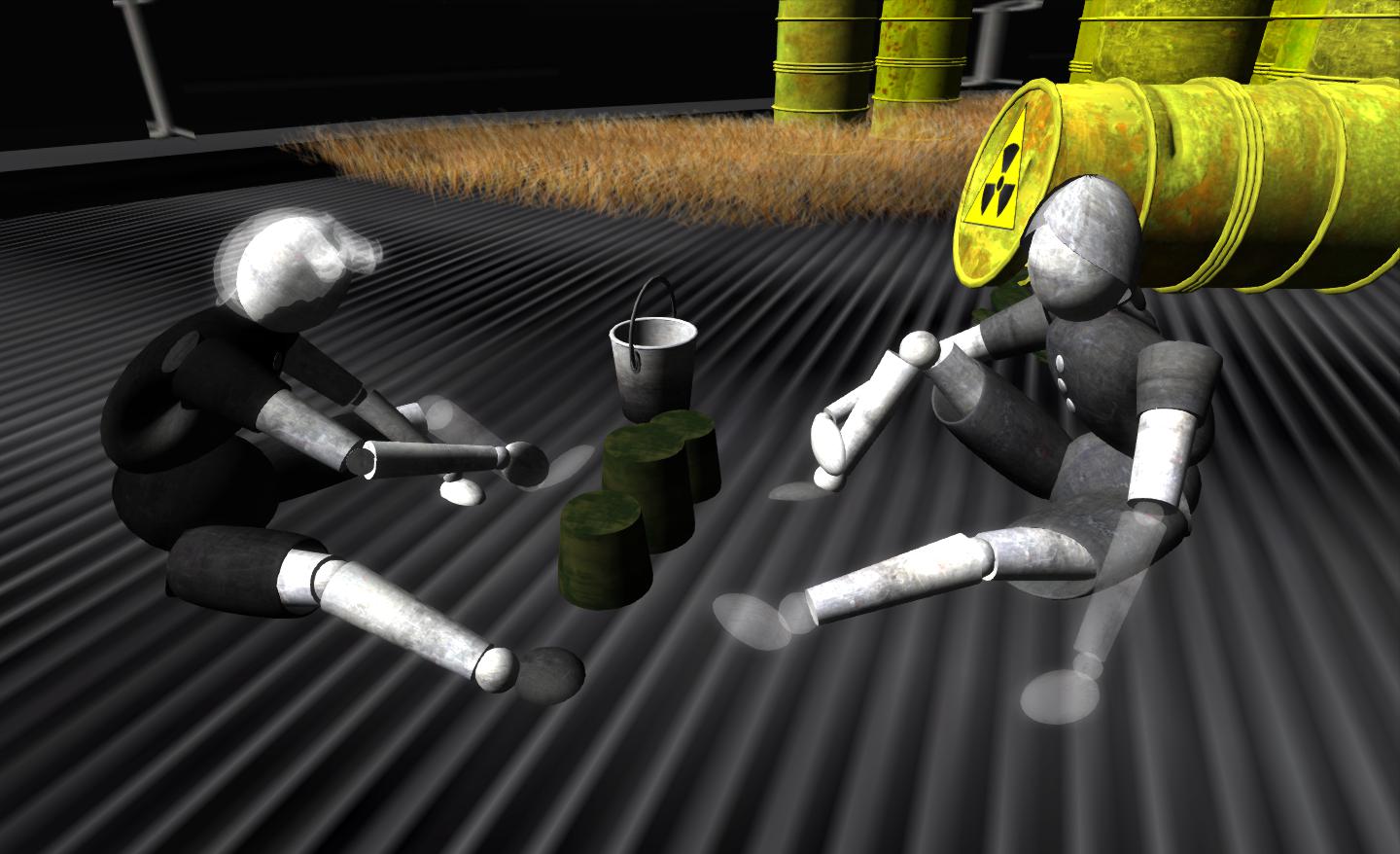
In her piece, Kicca Igaly continues the nuclear theme central to Nessuno’s work, as she presents a piece depicting nuclear research, wherein those performing the work are seemingly oblivious to the fact that while they have the benefit of every protection which can be afforded them in their work, the real nightmare is already out in the world in the form of nuclear waste which is poisoning the world, and ruining lives, as shown by the two children who innocently play with toxic waste, themselves seemingly oblivious of their own missing parts…

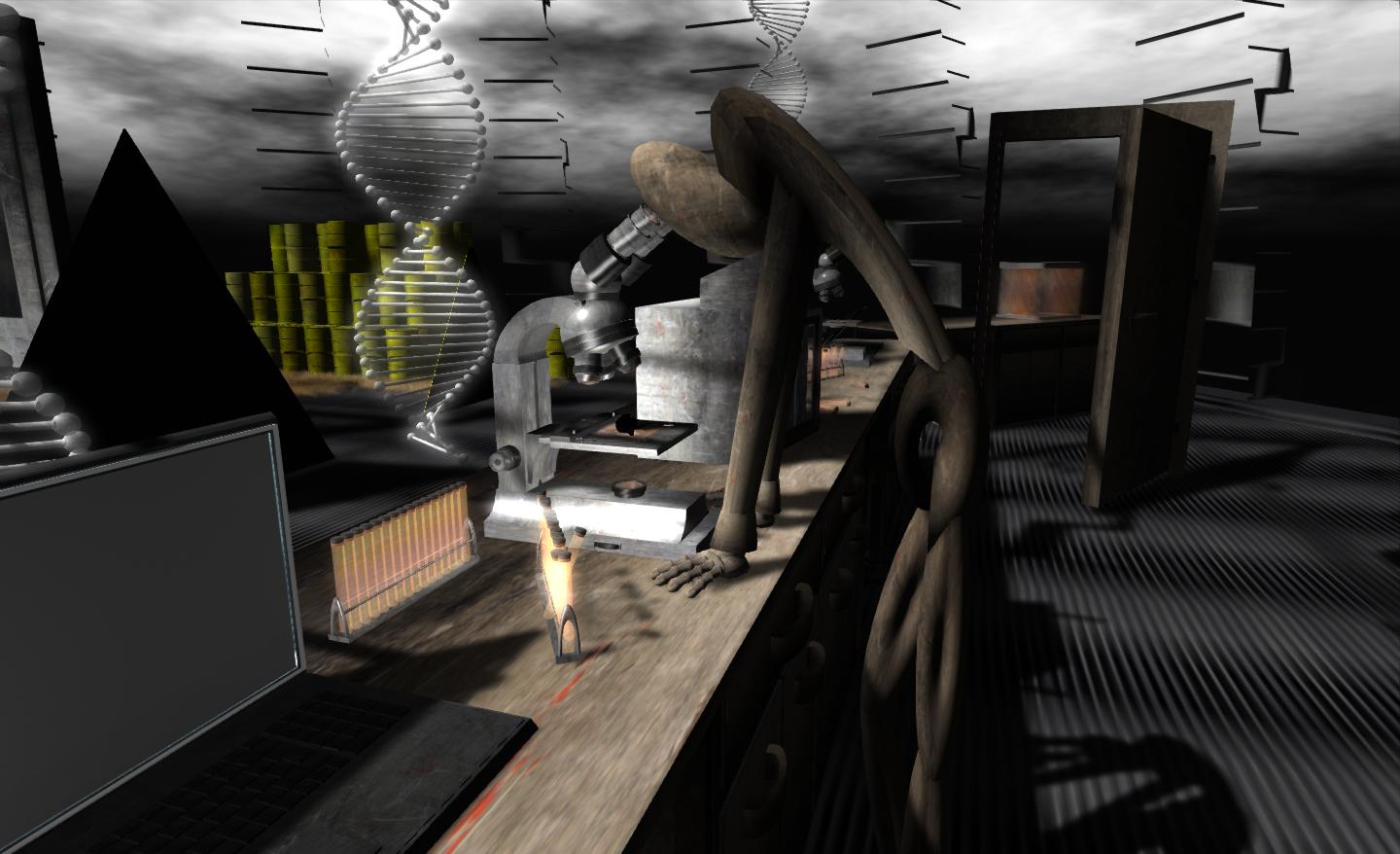
The children are perhaps a link into the second aspect of Kicca’s work, as she also presents a tableau depicting genetic research as a scientist, surrounded by models of DNA, peers steadfastly into a microscope. Will he find a new means of aiding the sick or overcoming sickness – or will his research result in further chaos and destruction? As Kicca notes, “The timing of the research are often too short to fully evaluate the consequences of what is produced afterwards. I wanted to emphasize in these scenes, that these aspects need to be taken into extreme account by researchers and by who finances them and often influence their activities, with cursory expectations. ”

Danger in Evolution
Danger in Evolution

Of course, scientific and technological advancement are often rarely without risk. That does not mean we should turn out backs on either – and neither Kicca nor Nessuno are implying we should. But we have reached a point in our own understanding of both science and technology where we do need to be more aware of both the broader potential and impact of scientific discovery and development. As such, we perhaps move to free ourselves from both the imperatives of financial gain arising from research and  – equally – the religious ignorance which often prevails against the potential for life-saving / life-enhancing research and development, and look upon things in a broader light – particularly where our endeavours can have such a wide-ranging impact on both our evolution and on the world around us.

Danger in Evolution is a powerful, evocative piece, however one looks at it, both directly and indirectly. The imagery is both intense and also subtle, challenging us to consider matters of evolution, development, research and science from all parts. Walking through Nessuno’s part of the installation in particular, I could not help but hear Oppenheimer’s quote when looking back on the detonation of the very first A-bomb during the Trinity tests in New Mexico, when he referred to a passage from the Bhagavad Gita,  “Now, I am become Death, the destroyer of worlds.”

This is also a piece that again demonstrates the sheer power of environments such as Second Life for staging immersive works of art which can so challenge our perceptions and thinking – and as such, it is not one to be missed.

Danger in Evolution
Danger in Evolution

Related Links

LEA: AIR-4 applications sought

LEA_square_logo_60On Wednesday February 6th, the Linden Endowment for the Arts announced the opening of applications for the fourth round of the Artist-in-Residence (AIR) programme. The announcement, as allows, reads in part:

The LEA AIR programme seeks to promote and nurture the arts in Second Life, through providing limited term full-sim land grants to be used for creative projects and art installations over the course of a few months. Recipients can be individuals or groups interested in creating or curating art, or proposing cultural projects which would require/utilise a full-sim build and can be completed within the allotted time frame (5 months). The LEA is able to offer land grants through the generosity of Linden Lab.

(image courtesy of LEA)

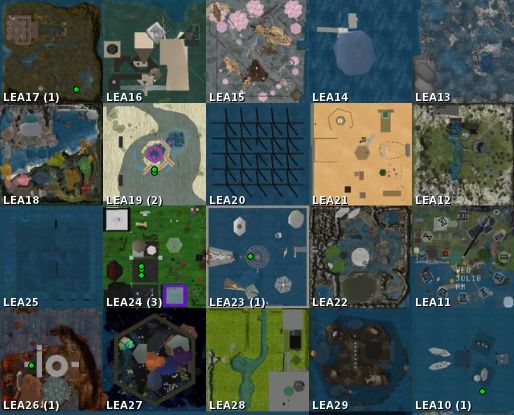
Up to twenty regions, donated by Linden Lab and managed by the LEA, are generally offered under the land grant programme, and successful applicants will be granted the use of one full region for a period of six months. The region may then be used on an individual or group basis for such diverse activities as:

  • Full sim exhibitions and / or immersive installations
  • Curated projects, especially those which have a connection to physical exhibitions and events (augmented reality)

Applications are not limited to visual art but are welcomed from all areas of artistic expression, including performance, music, and film.

Land grant regions: LEA10 through LEA29

Preference is for submitted works to be original in nature, although curated projects may present extant works. Successful applicants will have up to four months in which to execute their build, and must have it open for public viewing for at least the last two months of the grant period. Artists may alternatively use the land for multiple exhibits, but it is imperative that projects will be ready within four months from acceptance, and this time-frame should be considered (and reflected) in applications.

Key Dates

  • Applications open: February 5, 2013
  • Application deadline: February 19, 2013
  • Sim handover and public announcement: March 8, 2013
  • End of round: July 31, 2013

Applications forms can be found at the end of the LEA website announcement for Round 4, together with all other necessary information.

Related Links

Lust: loss, life and a little metaphor in Second Life

Had it not been for Miro Collas, I’d probably not have discovered The Sand Hills Country, Sei Ixtar’s powerfully evocative creation, for some considerable time. And I’d all the less for not having done so.

I often wax lyrical about the places I explore in Second Life, but The Sand Hills Country, covering the Homestead region of Lust, is deserving of everything I can say about it – and far more. It is not only a wonderfully immersive place to explore it is also one which I found – whether Sei (Sey to his friends) intended it to be or not – to be rich in metaphors, which adds enormously to its appeal.

The Sand Hill Country
The Sand Hills Country

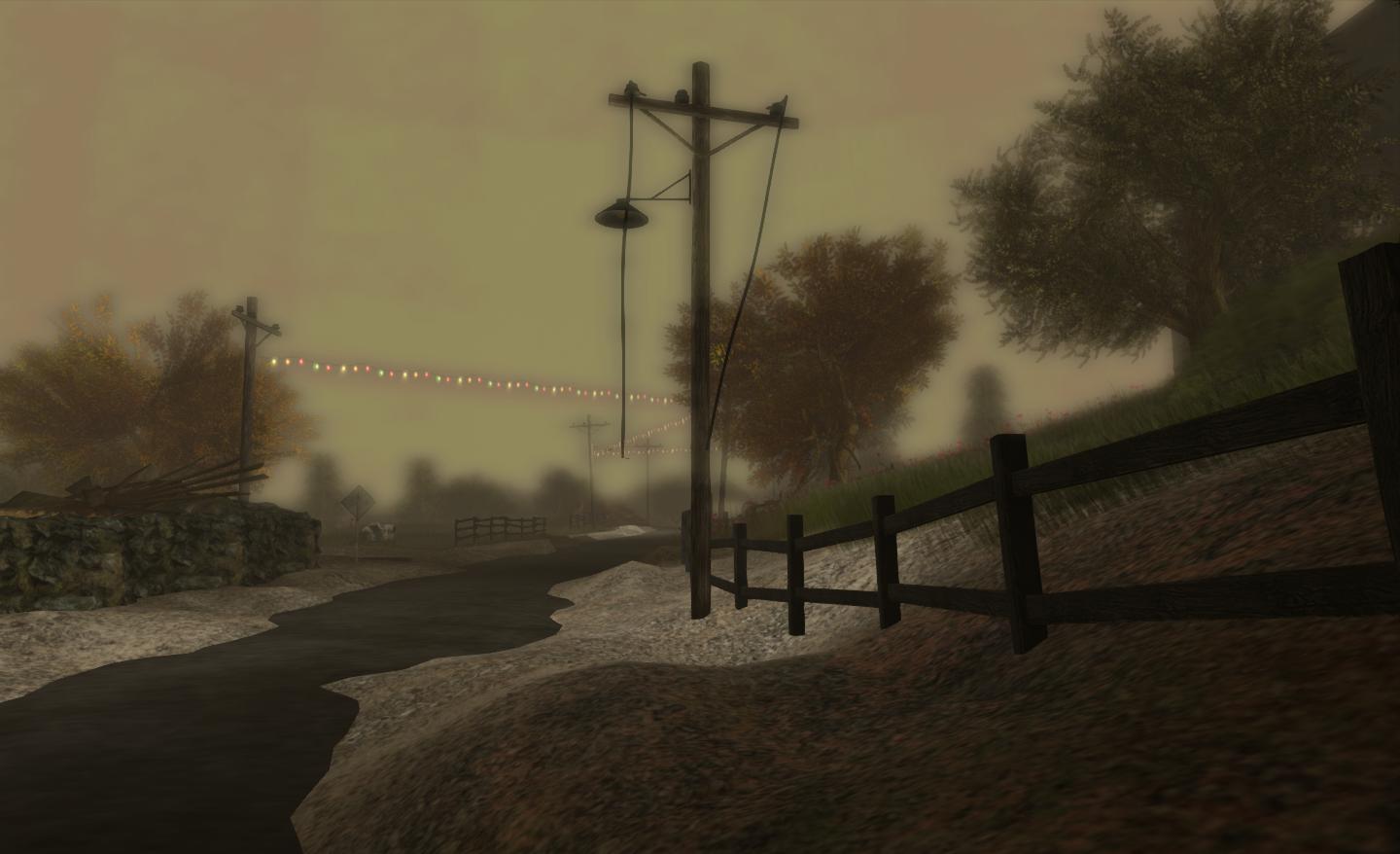
On arriving at The Sand Hill Country, the first thing you notice is the custom environment Sey has created. I’m one for frequently using the viewer’s depth-of-field to create some atmospheric (or as other might fairly put it, “blurred” :)) images. With The Sand Hills Country, Sey has added horizon haze, together with a “skydome” for the sky, both of which create incredible atmosphere and feel to the region, giving it a rich depth (although the skydome colour might also be somewhat reproducible using windlight) All of the snaps in this article and on my Flickr stream accompanying this post have been taken using the defaults applied to the region.

lust-26_001
The Sand Hills Country

A sign near to the arrival point (literally just across the road, at the bottom of the steps leading to a derelict house) is a notecard giver. This provides background information on the region, including the fact that autoreturn is OFF – so visitors are free to rez items when visiting, but are also asked to please clean things up before they leave.The description of the region is straightforward, yet also opens the door to allowing one’s thoughts to wander free:

A rural landscape overwhelmed by desert, but not only… Suspended between time and space, take a breath, explore, and enjoy this unique scene.

The Sandy Hill Country
The Sandy Hills Country

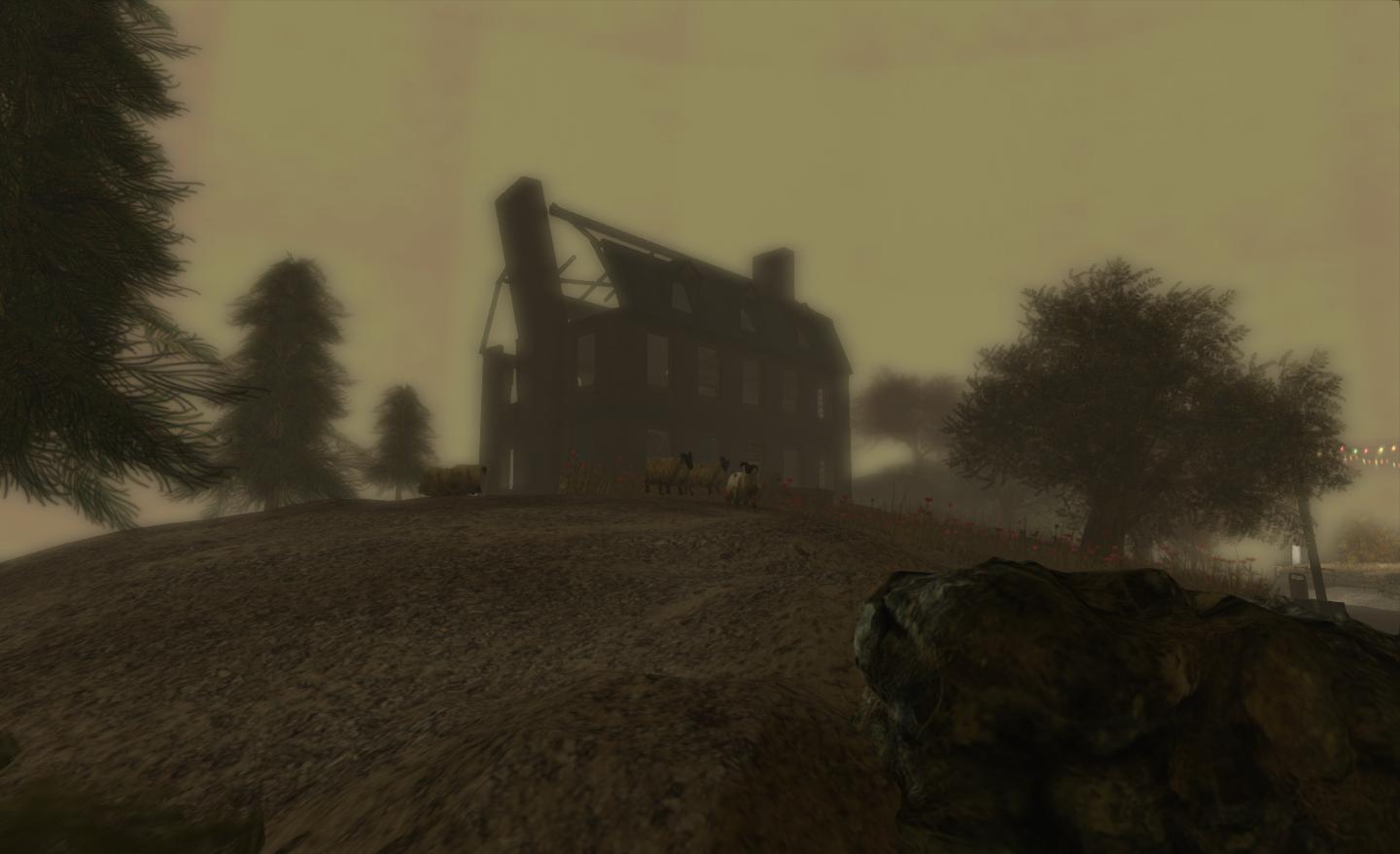
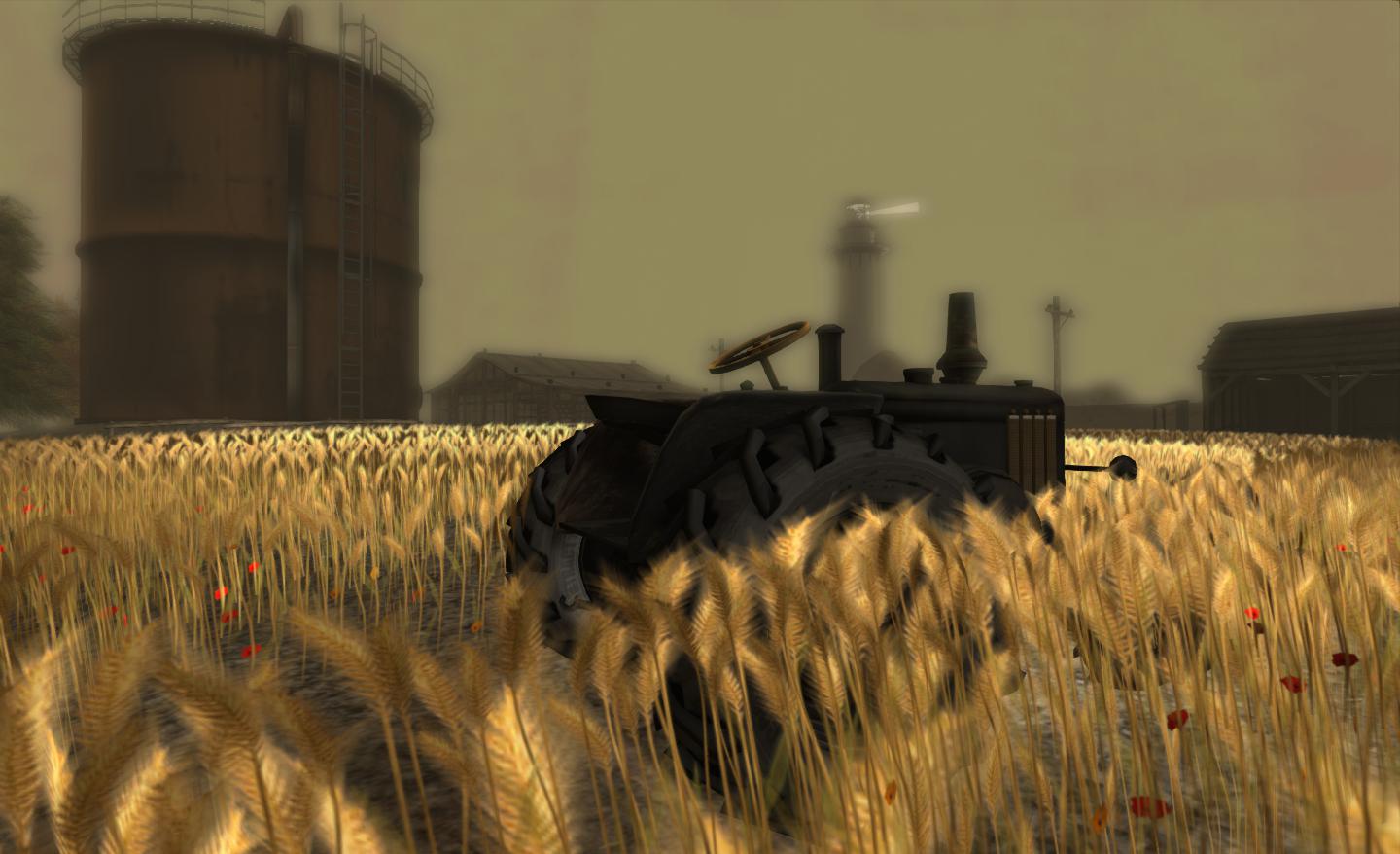
Looking around, it is hard not to imagine one has been transported back to Steinbeck’s dust bowl era and The Grapes of Wrath, although potentially with a bit more water here.  To one side of the region lay sand hills, ever-encroaching and washing against the edges of a lone farm. While wheat is still growing in the fields and sheep and cows do still graze, things are not going well; it would appear that people are up and leaving, as the shell of a house overlooking the wheat field testifies.

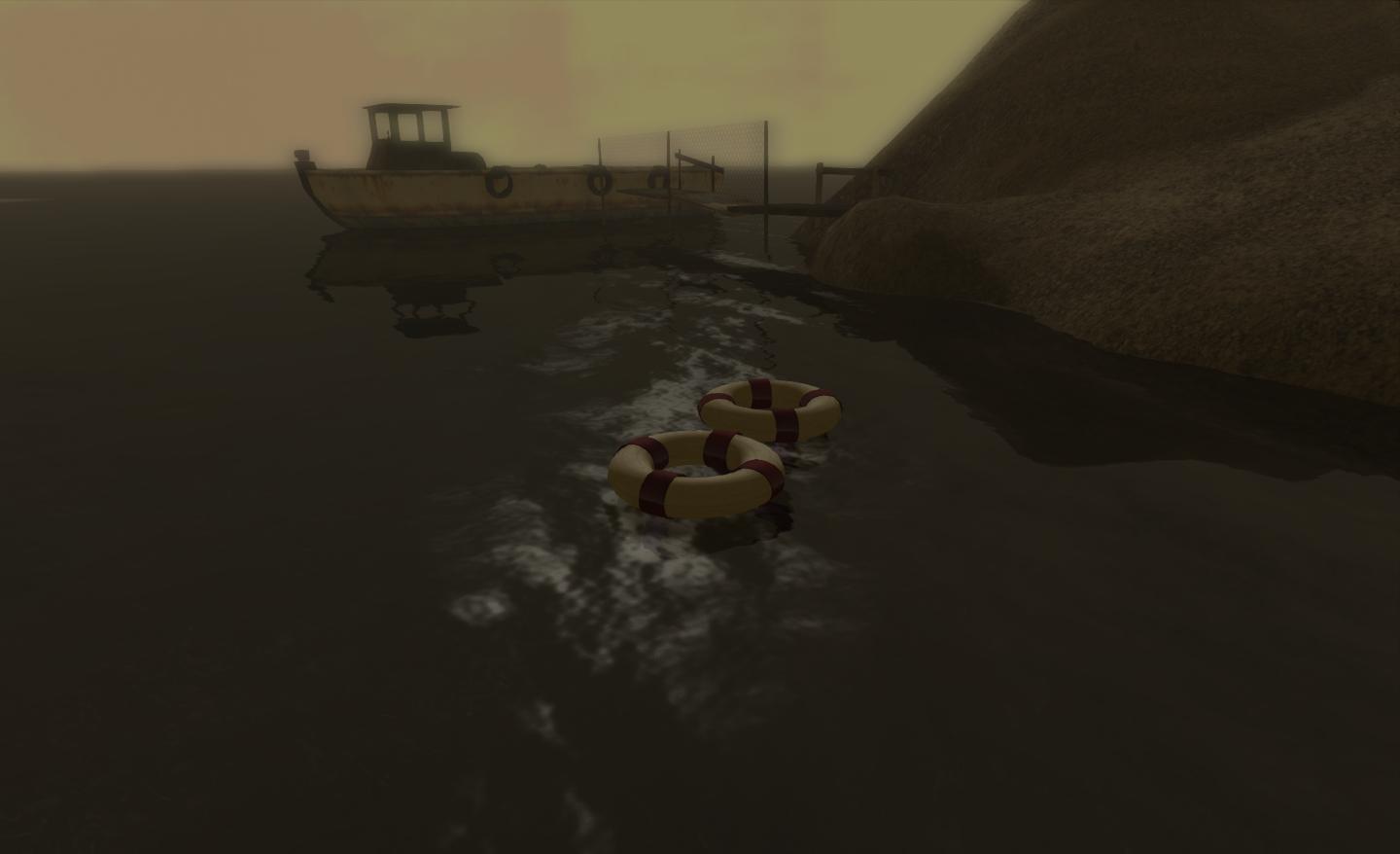
The poignancy of the imagery is evident elsewhere, be it in the nesting box with eggs within and a mother bird guarding the entrance or the old, silent, “nodding donkey” pumpjack. Such is the power of this imagery that it is hard not to view it as a metaphor for the whole of Second Life and our varying attitudes toward it. Many do see the platform as slowly dying, perhaps a victim of its own initial rapid growth as a result of premature exploitation; and this is perhaps mirrored by the encroaching sand in the region, and the broken pumpjack and shattered warehouse with the deserted house beyond. Everything is washed out, dull, empty. People have moved on, leaving vacant spaces in their wake. Certainly, I couldn’t help but find strong symbolism in the fact that the only real colour in this part of the region comes from a couple of lifebouys floating in the water…

The Sand Hills Country

Yet here is also hope for the future, crops are still being gown; sheep and cattle still graze, ducks swim and feed – and new life is still entering the world, as shown by a nest box filled with eggs and watched over by a mother bird; it’s almost as if nature is whispering, “There is still hope.”

I’ve no idea if any of this is intentional on Sey’s part, or simply the wanderings of my over-active imagination. And it doesn’t really matter. The Sand Hills Country is a beautiful and creative study, whether you are simply looking for a new place to visit and share, or if you are seeking a place which offers a rich vein of photographic opportunities or if you’ll feeling somewhat philosophical about (Second) Life, the universe or everything – or whether you feel a combination of all three.

Why not go see for yourself? I doubt you’ll be disappointed.

The Sand Hill Country
The Sand Hills Country

Related Links

With thanks to Miro Collas.