Artemis Gallerie: of WAR and violence

Friday, December 6th, 2013 saw the opening of Nino Vichan’s latest work in SL, WAR: We Annihilate Remotely, which opened at Galerie Artemis on Friday December 6th.

Nino’s work is both creative and visually stunning, and he is an artist unafraid of tackling political and social issues, presenting clear-cut messages within evocative pieces that challenge one to think. At the same time, his immersive work can be simply amazing and enjoyed in its own right – as with When the Mind’s I Listens, a brilliant use of space and particle generation which was displayed at LEA6 earlier in 2013.
Nino Vichon's WAR: We Annihilate Remotely
Nino Vichan – WAR: We Annihilate Remotely

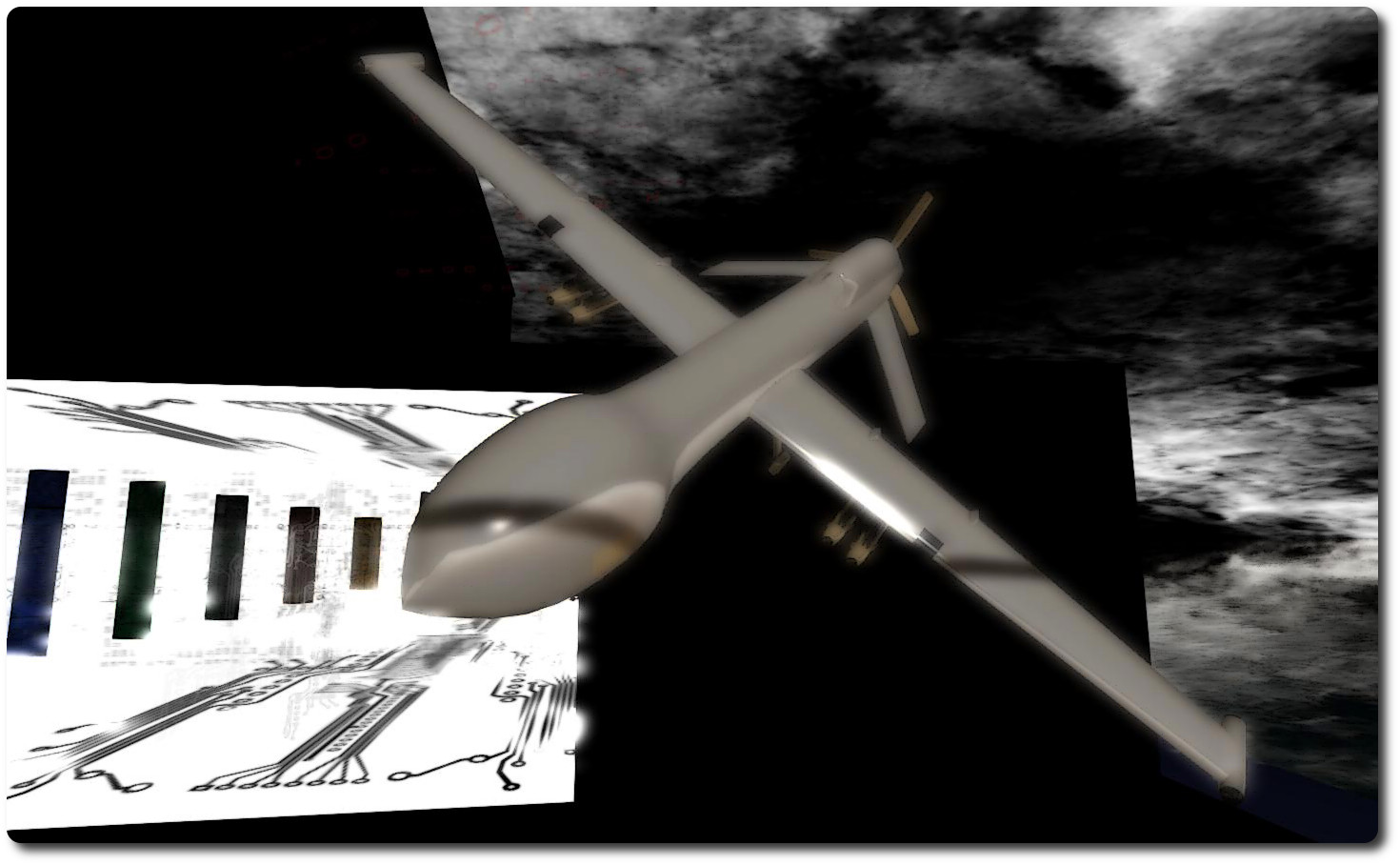
On the surface, WAR: We Annihilate Remotely appears to focus on what is a provocative and contentious issue:  the use of unmanned aerial vehicles (UAVs or drones) to undertake acts of aggression half a world away.

This is a topic worthy of debate and discussion; one which has many sides to it. Those who favour the use of UAVs and other unmanned weapons systems will point to both the fact that as they are operated remotely, they present zero risk to those operating them, and that they are so technologically advanced they can be used against a target aggressor with “minimal” risk to a wider (and potentially innocent) civilian population.

Nino Vichon's WAR: We Annihilate Remotely
Nino Vichan – WAR: We Annihilate Remotely

The flip side to this is of course, is the very fact that the use of such weapons platforms are so “risk free” and “surgically precise” perhaps encourages their proactive use. Something which is enhanced be the perception that they can be used to “manage” the loss of innocent lives down to “acceptable levels”. Even the fact that innocent lives can still be lost has itself been sanitised in the public consciousness  – they are no longer victims, they are “collateral damage”. In short, the very act of using such weapons becomes so clinical, so “clean”, that they risk becoming the preferred method of response to any situation, whether warranted or not.

There are wider aspects of the debate as well. Does the use of such systems enhance the security of those “back home” in the nation deploying them, or does it put them at greater risk of becoming retaliatory targets through acts of terror? As the use of use systems becomes more ingrained in the public consciousness, how long before the deployment of similar systems to deal with matters of domestic unrest or civil disobedience is seen as acceptable? There’s even the potential for cross-over discussion with virtual environments, where many excuse their own acts of aggression against others on the grounds that it is “only digital”, and “no real harm” is done.
Nino Vichon's WAR: We Annihilate Remotely
Nino Vichan – WAR: We Annihilate Remotely

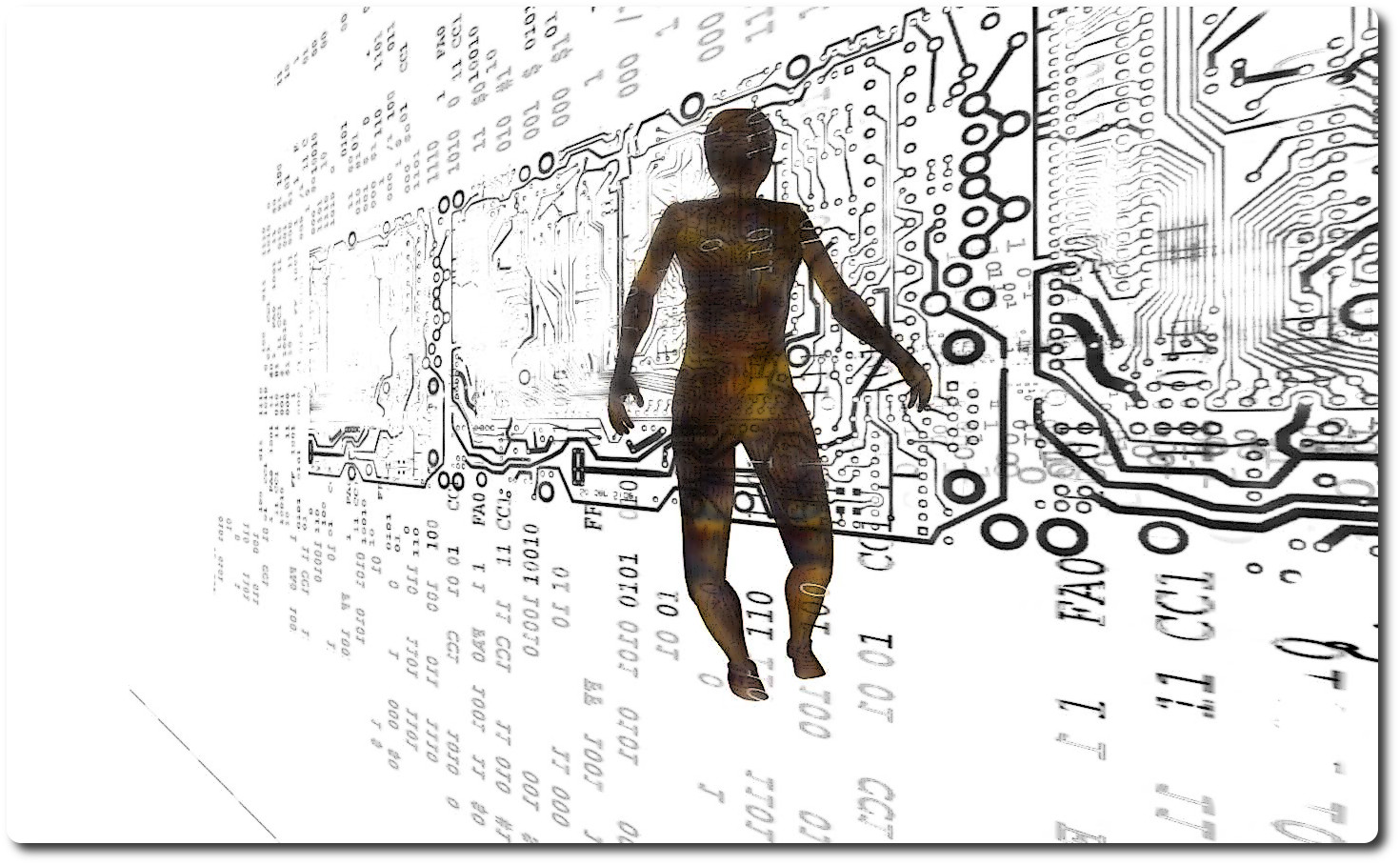
Sadly, WAR: We Annihilate Remotely fails to address either its intended target or any potential wider issues. Indeed, I have to say that from my perspective, it fails to deliver much of anything at all. Even the note card on the subject matter of the installation may not be an obvious find for some visiting the piece (click on the image of Nino to receive it).

Yes, there are some impressive models on display, and there is a minimalistic approach to the use of colour (everything is predominantly red, white or black), coupled with a clever use of binary and circuitry as imagery. But at the same time I couldn’t help but feel the piece lacks any real statement, and is perhaps superficial in its presentation. And that’s a shame, because there really is much to explore, real and digital, in the intended subject matter.

Also at Galerie Artemis, and running through until mid-December, is a collaborative exhibition forming a part of the 2013 2Lei project, entitled Regaining Freedom.

Kicca Igaly: Free...Free at Last! a part of Regaining Freedom
Kicca Igaly: Free…Free at Last! a part of Regaining Freedom

Now in its fourth year, 2Lei began as a project involving artists, gallery owners, musicians, etc., with the aim of raise awareness and disseminate events related to the International Day for the Elimination of Violence against Women, November 25th.

In Regaining Freedom, which opened on November 19th and runs through until Sunday December 15th, presents eight pieces of machinima created by SL artists as commentary on the many and varied forms of violence against women, all of which surround a centrepiece sculpture  created by Kicca Igaly entitled Free…Free at last!

As this is a presentation of videos, you’ll need to have media streaming enabled; just click on any of the media-on-a-prim (MoaP) whiteboards to watch a film. Images of the participating artists are located alongside each whiteboard, all of which include a YouTube link to the video in question, allowing you to watch them via a web browser if you’d prefer.

Not all of the pieces are original; some were originally created for other purposes, although their message remains clear. Some many not actually play in your country – I found Gregory Kappler’s Out of Paris blocked as a result of Warner / Chappell music’s PEDL. Some are highly charged and all are visually impressive.

The participating artists are: Kicca Igaly, Noke Yuzita, LeMelonRouge Onyett, Mary Wickentower, Natascha Randt and Karima Hoisan, Yesikita Coppola, Mauro Enyo, Gregory Kappler, Elros Tuominen and Holala Alter.

Related Links

A dream of Japanese snow

Yuki No Yume, Sand Bar Island; Inara Pey, December 2013, on FlickrYuki No Yume, Sand Bar Island (Flickr) – click an image for full size

Wherever Jac Mornington builds, I follow. It’s an immutable law of Second Life. True, I may not be right behind him (fortunately for him!), and in following him, I may well be treading where others have trod ahead of me (because his builds are to SL photographers as magnets are to iron filings: an irresistible force). Nevertheless, wherever he builds, I will surely gravitate.

Already this year I’ve covered three of his region-wide builds: Black Basalt Beach,  Baja Norte and Sol Existence, all of which have been stunning in their presentation, look and feel.

Yuki No Yume, Sand Bar Island; Inara Pey, December 2013, on FlickrYuki No Yume, Sand Bar Island (Flickr)

Now comes Yuki No Yume – A Dream of Snow. A homestead region, it presents to the visitor a winter scene of rural Japan, which is both simple in style and stunning in execution, with some marvellous attention to detail and lots of opportunities for the SL photographer.

The arrival point is located in the north-east corner of the region, atop a rocky outcrop, upon which sits the ruins of an old temple. with a forlorn bell, the rafters from which it was once suspended having long since split and collapsed, walls holed and partially boarded-up and with doors broken , one might think the temple deserted but for the lamp burning outside and the game of ban-sugoroku apparently in progress inside the temple shell.

Yuki No Yume, Sand Bar Island; Inara Pey, December 2013, on FlickrYuki No Yume, Sand Bar Island (Flickr) – click an image for full size

A path winds its way down the side of the rock face and past a small shine, down a snow-covered slope to the temple gate. Here sits a small spring, doubtless a place where pilgrims travelling up to the temple would have once stopped to refresh themselves in warmer days before starting on the steep climb. Now the water is frozen, and the gate stands as the entrance to the rest of the region.

Three other buildings occupy the land; a hot spring bathhouse and two small, traditional houses, neither of which is used as a residence so visitors need have no fear of invading anyone’s privacy. All three sit amidst a snow-covered landscape of trees, rocky outcrops, winding paths, streams, waterfalls and lakes (both frozen and with open water), all arranged to create a very natural environment surrounded by tall mountains, so suggestive of a highland rural region in Japan.

Yuki No Yume, Sand Bar Island; Inara Pey, December 2013, on FlickrYuki No Yume, Sand Bar Island (Flickr) – click an image for full size

Where the visitor goes from the temple gate is entirely up to their own muse; paths are available, but most of the region is open land, inviting people to wander where they will. There is plenty to occupy the eye here, both indoors and out, so it’s worth taking time in any exploratory and picture-snapping forays into Yuki No Yumi.

If you follow the stream up towards the waterfall, you’ll likely come across a group of Japanese macaques, otherwise known as snow monkeys, doing what they do best: sitting in a hot spring bath as the snow falls around them. Elsewhere, deer take advantage of an overturned crate of apples, seals sit on a snow-covered sand bank, apparently wondering who the hell has been messing the with water to make it solid, and red-crown cranes dance upon the partially frozen lake; all of which make for some excellent photograph opportunities.

Step into one of the houses, and you’ll find an opportunity to play a hand of Hanafuda (koi koi), listen to music on an old gramophone,  sit and warm yourself by an open fire, enjoy a cup of tea or rest for a while on a bed – assume the fox and rabbit will allow you!

Yuki No Yume, Sand Bar Island; Inara Pey, December 2013, on FlickrYuki No Yume, Sand Bar Island (Flickr) – click an image for full size

This really is another wonderful build from Jac and his partner, Rie Silverfall, one which is every bit worth the time taken to visit as his other in-world creations. For those who like taking photographs of the places they visit, there is also a Flickr group where images of Yuki No Yumi can be shared.

And as I mentioned Japanese macaques earlier, here’s little film of them in real life :).

Related Links

LEA open round six of AIR land grants

On December 1st, the Linden Endowment for the Arts committee announced the opening of the next round of land grants is now open in the Artists in Residence (AIR) programme. For artists not familiar with the LEA or the land grant process, the following is taken from the formal announcement:

The LEA Land Grant program seeks to promote and nurture the arts in Second Life, through a five-month land grant to recipients. Recipients can be individuals or groups interested in creating or curating art, or proposing cultural projects which would require/utilise a full-sim build and can be completed within the allotted time frame. The LEA is able to offer land grants through the generosity of Linden Lab.

Moving Islands [Rafts], a round 5 AIR entrant curated by Eupalinos Ugajin
Twenty regions, donated by Linden Lab and managed by the LEA, are generally offered under the land grant programme, and successful applicants will be given the use of one full region for a period of five months. The region may then be used on an individual or group basis for such diverse activities as:

  • Full sim exhibitions and / or immersive installations
  • Curated projects, especially those which have a connection to physical exhibitions and events (mixed reality).

Artists should take no more than 3 months to execute their build, so that they have opened to the public for at least the last 2 months of their grant. However, artists may also open their installation ahead of the three-month build deadline, and many artists in the past have used their land to have multiple exhibits. What is important is that any project accepted into the programme must be ready within 3 months from the date the land is granted, and this time-frame should be considered (and reflected) in all applications.

Musiclandia by Livio Oak Korobase

The announcement goes on to state:

Criteria

We feel one of the strengths of the LEA committee is that we come from different backgrounds – artists, architects, curators, historians, etc. – all of whom have different ideas on what makes virtual art great. We share a passion for this project, emboldened by differing viewpoints. What this means for the LEA Land Grant applicants is that there is no one ‘right’ project. Some committee members like immersive builds, others enjoy highly technical and scripted work, still others look for projects embracing collaborative, curatorial, or education projects. Some might wish to select those who have a history of successful exhibits in SL, while others are passionate about providing experiences to new and emerging artists. This is great news for applicants, as it means that ANYONE has a chance at getting sim, provided you show us you have an idea for a great project (even if it isn’t completely thought through, and we realise that this will most likely change in your working process).

APPLICATION TIMELINE

(Dates subject to change by LEA in the event of unforeseen circumstances.)

  • Applications open – December 1, 2013
  • Application deadline – December 30, 2013
  • Final Decision Committee Deadline – Mid-January, 2014
  • Notification period, and selection of alternates if need be – Around January 18, 2014.
  • Sim handover and public announcement – January 31, 2014
  • End of round – July 1, 2014

HOW TO APPLY?

Applicants should complete the form at the end of the LEA blog entry, taking care to provide as much information about the proposal as possible and include relevant SLurls and web links to their work (if possible) in order to help the LEA committee make an informed decision.

Speak again, bright angels: Romeo + Juliet winter season

Baz Luhrmann isn’t the only one to bring a contemporary beat to that most famous of tragic love stories of all times: Romeo and Juliet. Throughout most of 2013, The Basilique Performing Arts Company has been presenting its own unique re-imagining of Shakespeare’s tale of love, loss and tragedy.

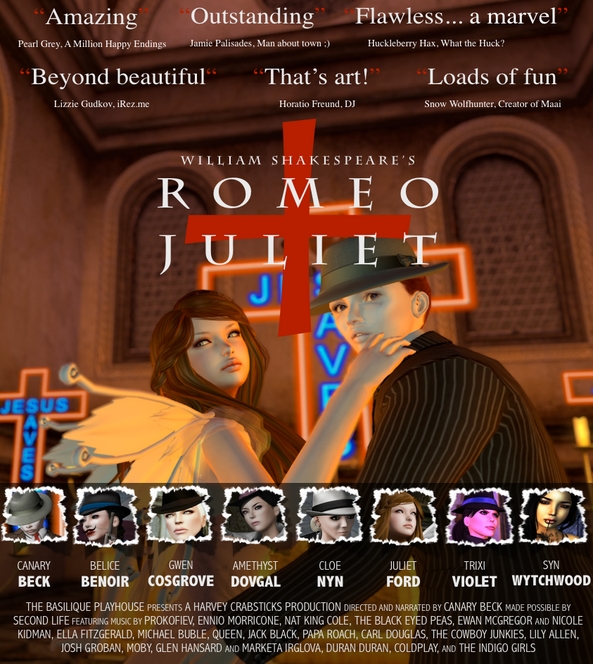
Romeo + Juliet production poster (courtesy of Canary Beck)

Conceived, directed and narrated by Canary Beck, Romeo + Juliet presents the story of star-crossed lovers in an inspired mix of  renaissance-inspired sets, 1940s costumes, and contemporary music from the likes of Nat King Cole, Ewan McGregor and Nicole Kidman, Michael Buble, Jack Black, Carl Douglas, Moby, Duran Duran, The Indigo Girls, Queen and more. At two hours in length, the show is a veritable tour de force of the creative and collaborative capabilities of the Second Life platform, and sets new standard for presenting dramatic pieces within SL, combining dance, animations, voice-overs, dialogue and an unforgettable sound track.

The show is now into its winter season, and if you haven’t seen it yet, now is the time to set a date in your diary and make sure you get along to the Basilique Playhouse to see this extraordinary show for yourself.

Upcoming dates are as follows – all times SLT:

December 2013:

  • Sunday December 8th 12:00 noon
  • Saturday December 14th: 13:00

January 2014:

  • Sunday January 4th: 12:00 noon
  • Saturday January 11th: 13:00
  • Sunday January  19th: 13:00
  • Saturday January 25th: 12:00 noon

February 2014:

  • Saturday February 1st: 13:00
  • Saturday February 8th: 13:00
  • Friday February 14th: 13:00
The cast at a curtain-call (image courtesy of Strawberry Singh / Canary Besk)

Notes on Attending a Performance

Do note that the Basilique Playhouse is located on an Adult-rated region, and that age verification is required in order to teleport there. The show itself does not feature sex or nudity, although one scene does suggest sexual relations. All performances are free, but gratuities to the cast and crew are always appreciated.

In order to enjoy the performance to the fullest, it is recommended that audience members:

  • Remove unnecessary scripted attachments (hair, accessories, and shoes tend to be the worst offenders)
  • Turn off nametags and Look-ats
  • Wear mesh if possible
  • Keep local chatter and gestures between scenes only
  • Set the following in their viewers:

Related Links

What makes us human? A UWA 3D challenge with a L$268K prize pool

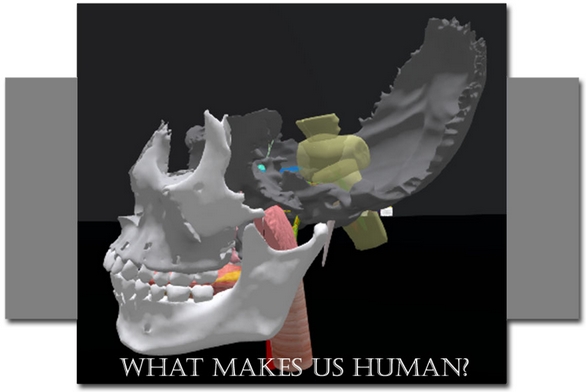
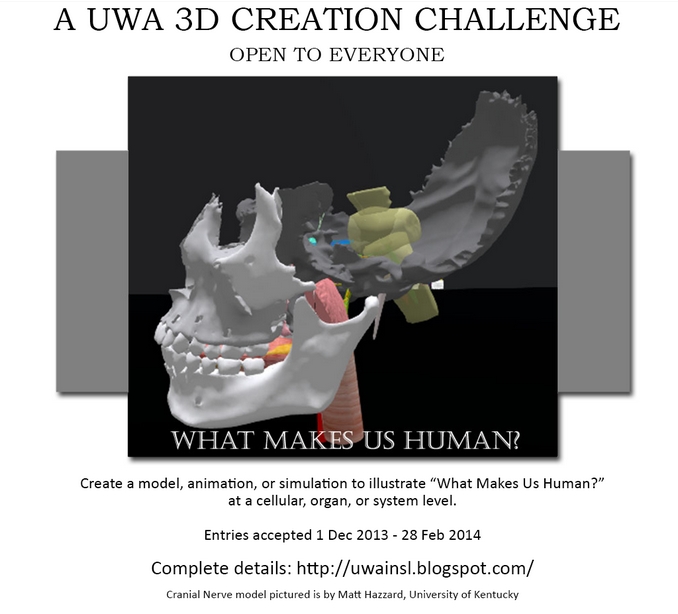
What Makes-1The University of Western Australia has launched its latest art challenge, with a total prize pool of L$268,750 on offer to prize winners.

The challenge is open to everyone, not just artists, and the challenge is to create a model, animation or simulation which reflects what make makes us human at the cellular, organ or system level.

Sponsored by the School of Anatomy, Physiology and Human Biology as well as the School of Physics at UWA, the challenge seeks to encourage entrants to create fairly accurate or representative creations or models that can be used for teaching, with the overall aim of enabling others to learn anatomical, histological, developmental and/or physiological concepts about the human body from the submitted work.

The UWA blog post announcing the challenge offers-up a few suggestions entrants might consider:

Histology (convey the microscopic structure of human tissues)

  • Nervous System: What are the various representations of different types of neurons?
  • Muscular System: Examine structural differences and/or similarities between skeletal, cardiac, and smooth muscle cells.

Anatomy (convey the gross structure of human body parts) & Histology

  • Embryology & Foetology: What are various stages of embryonic and foetal development?
  • Perhaps look at the transformation from embryo to foetus.

Anatomy

  • Skeletal System: What are the components of the human skeleton?
  • Present the anatomy of various types of joints.

Physiology (convey the processes that enable the human body and its components to function):

  • Nervous System: What are some of the neural pathways that enable us to perform day-to-day cognitive and motor functions?
  • Circulatory System: How does blood circulate through our body to meet the metabolic needs and maintain the normal function of cells/organs/and bodily systems.

Anatomy & Physiology

  • Circulatory System: How does the heart operate, and what are its different chambers and valves?

Histology, anatomy, and physiology are disciplines that go hand in hand. It is only natural that entrants may construct submissions that draw on more than one of these disciplines in order to facilitate the learning of concepts. Entrants are also encouraged to “think outside the box”, and portray/convey such aspects as the difference between normal features and functioning, and the abnormal or dysfunctional.

Other topics seen as relevant to the challenge include representations of anatomy, physiology and histology pertaining to the following systems: digestive, endocrine, exocrine, immune, lymphatic, reproductive, respiratory, urinary, and visual.

What Makes-2Prizes

There are five main prizes and three special prizes:

  • 1st prize: L$81,250
  • 2nd prize: L$62,500
  • 3rd prize: L$37,500
  • 4th prize: L$18,750
  • 5th prize: L$12,500

The three special prizes are for L$18,750 each, and will be awarded under the headings of Anatomy, Histology and Physiology Special Prizes.

How to Enter

Entries are being accepted from now through until 28th February 28th, 2014.

  • Entries should have no more than 300 prims
  • Mod / Copy entries are preferred to allow models to be displayed in temp rezzers
  • Entries must be accompanied by a Creator’s Notecard form (available from the contest entry receiver (see below), or by a note card bearing the title of the entry, a short description and the name of the creator. This may optionally include a brief biography and RL location information
  • Models  must be deposited in the contest entry receiver at the UWA Gallery – hold the CTRL key and drag the model from inventory onto the receiver’s billboard prim, which will turn red. Release the mouse button to deliver your item. Repeat for the accompanying note card.

If any problems are experienced with the receiver, please pass your model and note card to either FreeWee Ling (UWA Curator of Arts) or Jayjay Zifanwe (Jay Jay Jegathesan: UWA in Second Life Founder & Lead).

For all rules associated with the challenge and details on the judging panel and additional information, please refer to the UWA blog post.

Related Links

A garden of delight in Second Life

Crystal Oak Falls, Tobias; Inara Pey, December 2013, on FlickrCrystal Oak Falls, Tobias (Flickr)

Melinda Palianta recently revamped her private home with an autumnal build and graciously opened it to the public for a short period. I’m glad she did (open it, that is!); it’s one of the most stunning and natural builds I’ve seen in Second Life; a perfect blending of season, landscape, influences and more.

The essence of the build may well be New England in the fall, but there is also an oriental theme and look running through it, touched here and there with and almost English country feel, all of which is beautifully blended into a whole which really is marvellous to witness. It is also perfectly framed through the use of water to create streams and rocky channels which cleverly and very naturally break the garden into individual areas that flow into one another via footpath and bridge, providing a feeling of continuity as you wander and explore while also allowing the various aspects of the garden to exist on their own as more intimate, quiet spots one can enjoy in their own right.

Crystal Oak Falls, Tobias; Inara Pey, December 2013, on FlickrCrystal Oak Falls, Tobias (Flickr)

Crystal Oak Falls is another tour-de-force demonstration that one doesn’t need to own an entire region in order to produce something really amazing. Yes, the parcel may be a little larger than the average offerings supplied by estates, but it’s still well under a 1/4 region in size and has a lower land capacity than a Homestead. Nevertheless Melinda has packed an incredible amount into it, and with nary a hint of lag for the visitor.

From the ocean side arrival point at the front of the house, you can explore the garden at will; simply let the paths, bridges and steps lead you around, and drink in the settings. Part of what makes Melinda’s design so alive and rich is the way in which the garden changes as you wander through it; rather than being entirely pristine and looking like every minute available is spent tending it, this is a garden where  – just like in real life – things can get a little wild if left alone for a while. There are tall wild flowers growing near the stables; further towards the back of the garden, the steps leading up to the tent and camp are looking mossy and starting to get a trifle over-grown, all of which adds to the charm and realism of the build.

Crystal Oak Falls, Tobias; Inara Pey, December 2013, on FlickrCrystal Oak Falls, Tobias (Flickr)

With its oriental touches and use of water, this is obviously a place which very much appeals to my personal sensibilities, something which might be taken to mean I’m a tad biased in my point-of-view. However, I’ll wager a pound to a Linden dollar than Crystal Oak Falls is a place that can capture the eye and imagination of all but the hardest of hearts, and is a place that SL photographers will delight in seeing and snapping.

However, those who wish to see for themselves will have to move quickly; Melinda will be closing her land to public access on December 8th, after which she will be working on her winter build. I hope she’ll consider opening that to the public for at least a few days as well – it is bound to be as equally as gorgeous.

Crystal Oak Falls, Tobias; Inara Pey, December 2013, on FlickrCrystal Oak Falls, Tobias (Flickr)

If you do visit Crystal Oak Falls, do keep in mind that it is a private home;  while the gardens are free to explore, the house may not necessarily be so.  If you do enjoy your visit, consider leaving a small donation at the arrival point.

Related Links

Crystal Oak Falls, Tobias; Inara Pey, December 2013, on FlickrCrystal Oak Falls, Tobias (Flickr)